Winter turns your front yard into a blank canvas. Most people waste it on a single strand of lights and call it done. I used to be one of them, until my neighbor’s porch made mine look like an abandoned gas station.
That was the year I actually started paying attention to what makes a home’s exterior feel warm instead of just lit up.
There’s a real difference. FYI, it has almost nothing to do with how much money you spend.
This guide walks through the ideas that actually work, the ones I’ve tested myself, and a few mistakes I made so you don’t have to repeat them.
Why the exterior matters more than you think
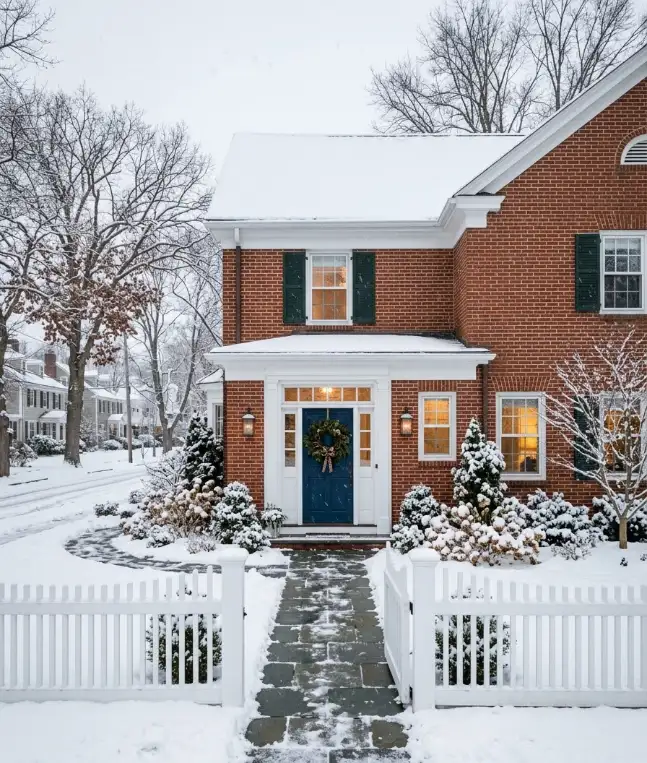
Your front door is the first thing guests see, and the last thing they remember on the way out.
A cold, flat exterior sets a cold, flat tone before anyone even rings the bell.
Think about the last time you pulled up to a house that felt instantly inviting.
Warm light spilling from the windows, a wreath that actually looks intentional, maybe some greenery catching the porch light.
That feeling doesn’t happen by accident.
According to Energy.gov’s winter home guide, sealing and prepping your home’s exterior for winter also cuts energy waste, so a lot of these ideas pull double duty. You get the cozy look and a lower heating bill. Not a bad trade.
Lighting: the fastest way to change the whole mood
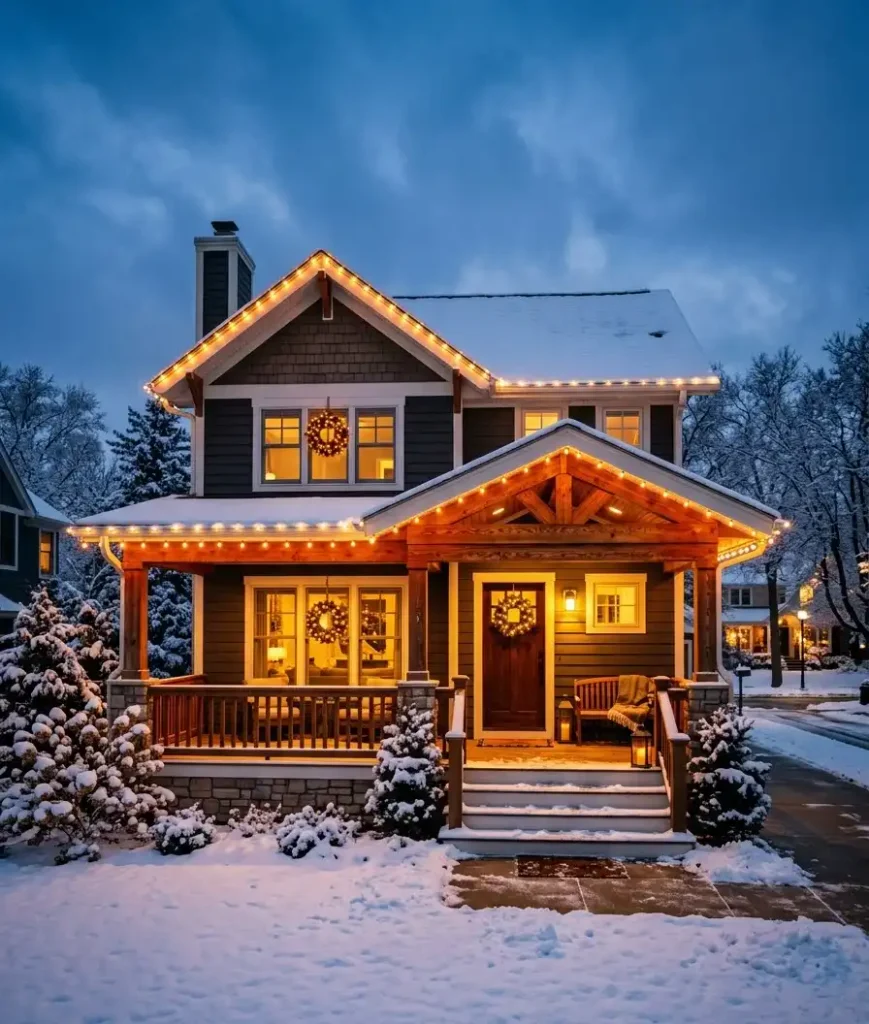
Lighting does more emotional work than any other element on your list. Bright white LEDs look sterile. Warm amber tones look like an invitation.
Warm white string lights, done right
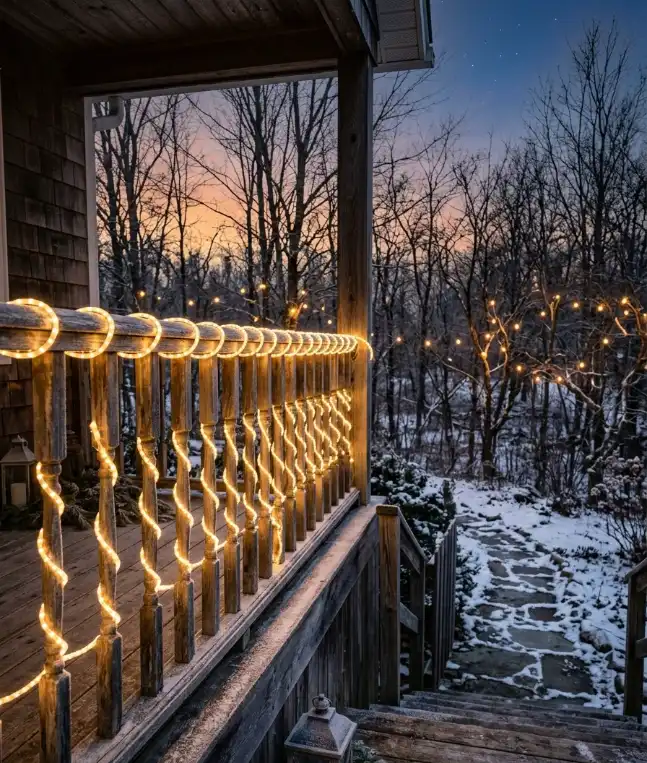
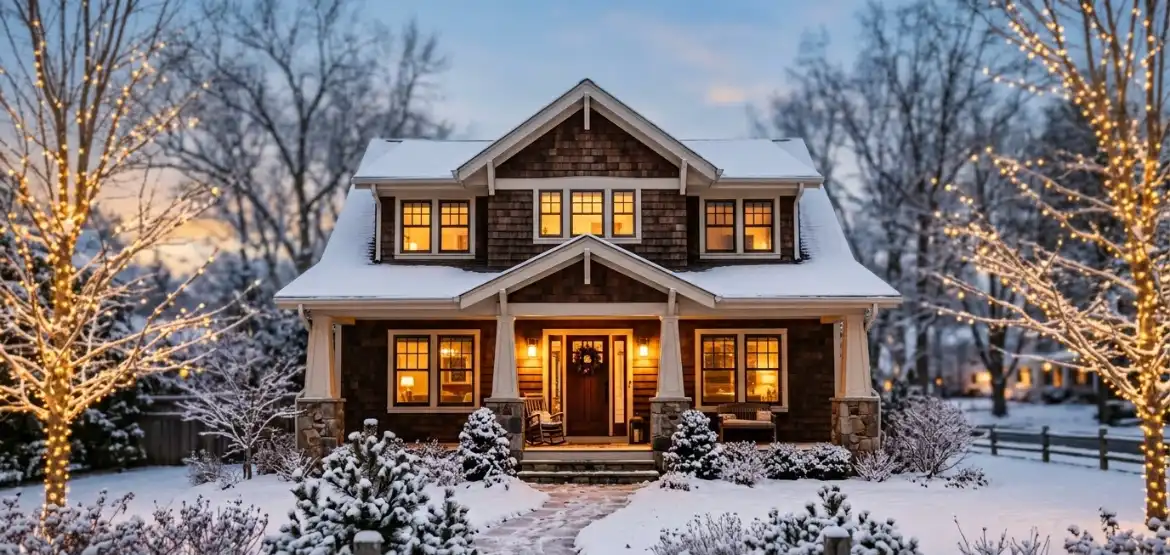
Skip the cool blue-white bulbs. Go for warm white or amber-toned LED string lights, and wrap them somewhere with intention instead of just draping them over a bush.
A few placement ideas that actually hold up:
- Along the roofline, kept tight and even, not sagging
- Wrapped around porch railings in a simple spiral, not clumped
- Woven through bare tree branches near the entryway for a soft glow effect
- Framing the front door in a clean rectangle shape
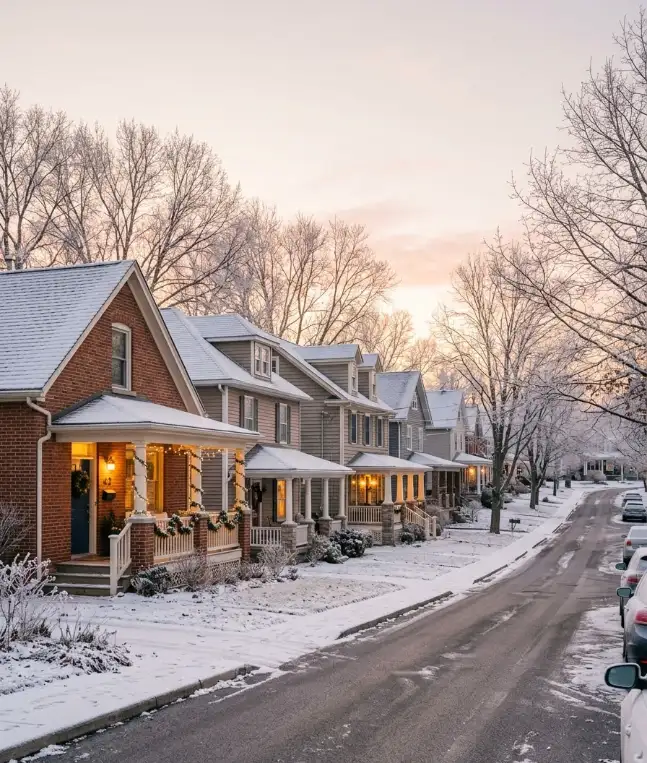
I tried the “just toss them over the shrubs” method one year. It looked like the bushes had been in a minor accident. Lesson learned.
Lanterns and low lighting
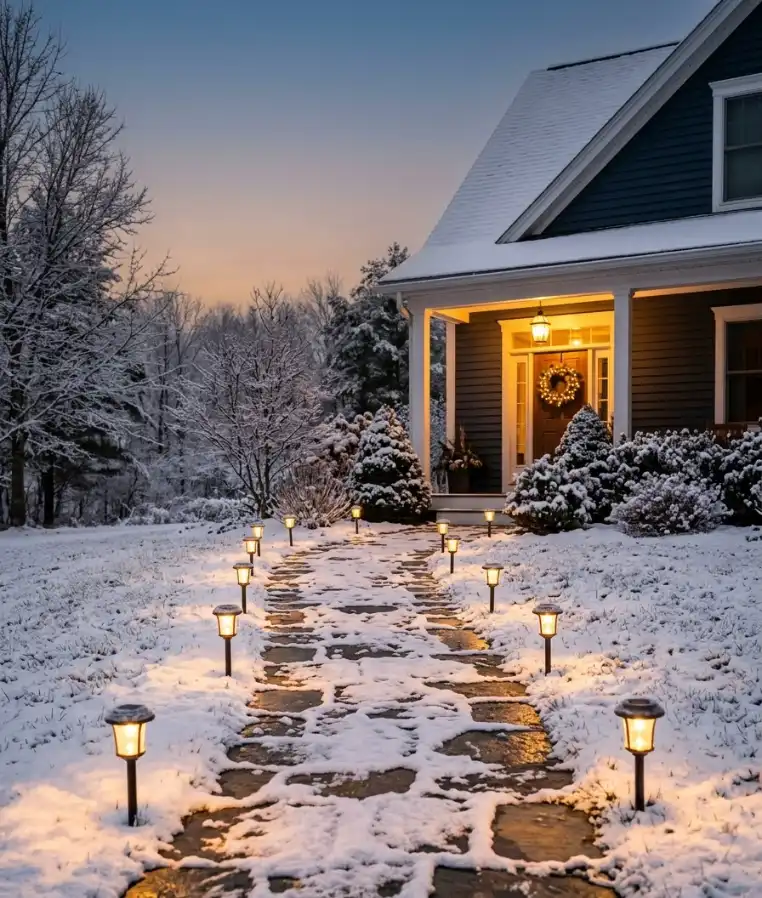
Solar lanterns lining a walkway do something string lights can’t: they create a path, not just a glow.
Place them every 3 to 4 feet along the walkway for a guided, warm effect without looking like a runway.
IMO, a pair of oversized lanterns flanking the front door beats a dozen small ones scattered everywhere. Fewer, bigger, better placed. That’s the whole trick.
Texture and layering: the part everyone skips
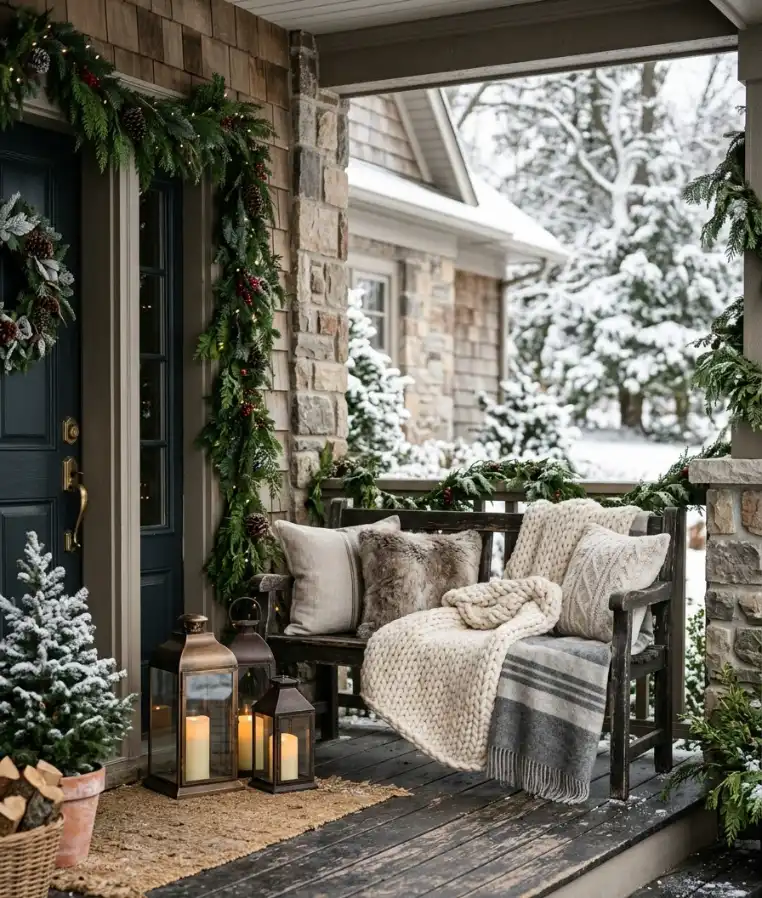
This is where most exteriors fall flat. People add one wreath, call it a day, and wonder why it still looks bare.
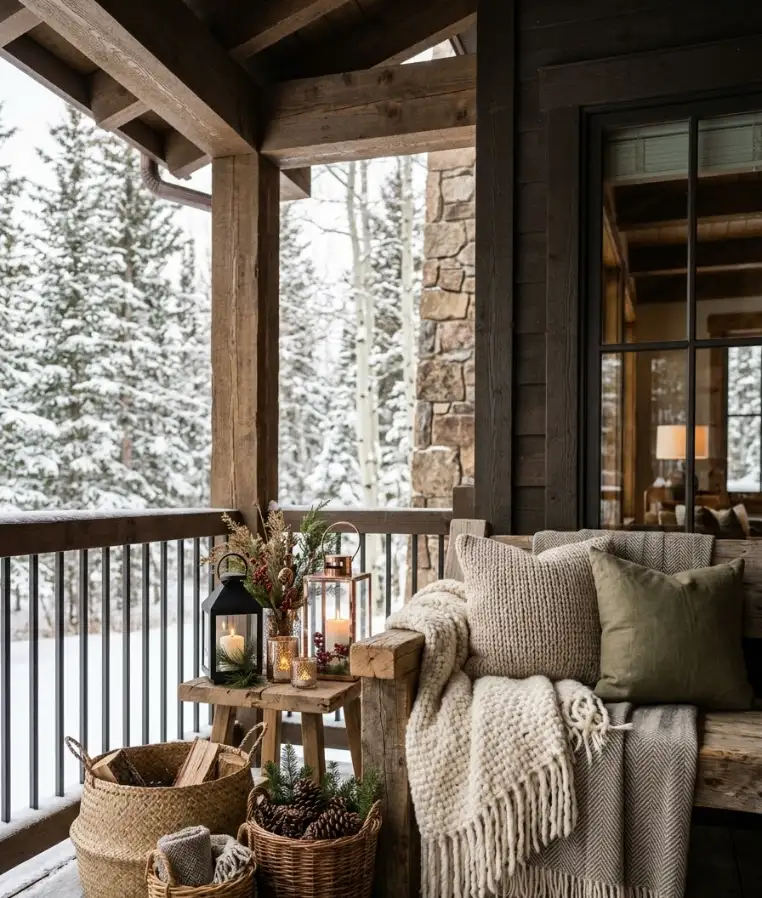
Layering means combining different materials so the eye has something to explore. Think wood, greenery, fabric, and metal all in the same small space.
Natural elements that actually smell like winter
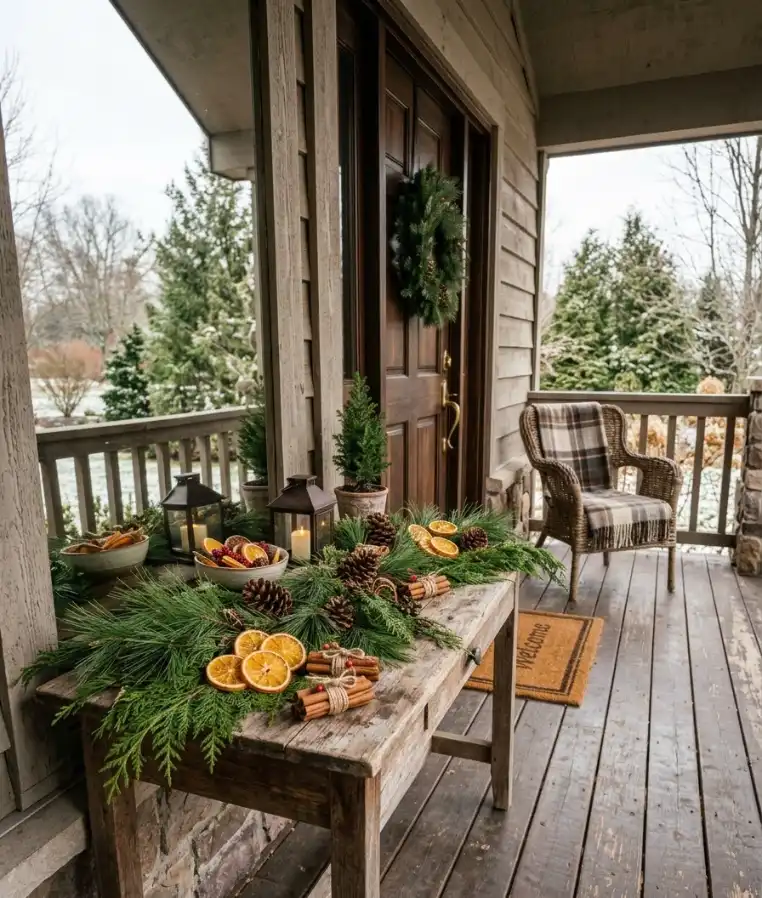
Fresh greenery beats plastic garland every single time, and not just visually.
Real pine, cedar, or fir branches carry a scent that plastic can’t fake, and that scent does more for “welcoming” than most people realize.
Try mixing in:
- Pinecones, either natural or lightly frosted with white paint
- Dried orange slices for a rustic, textured pop
- Small bundles of cinnamon sticks tied with twine
- Berries (real or faux) for a shot of color against all the green
Soft textiles for the porch
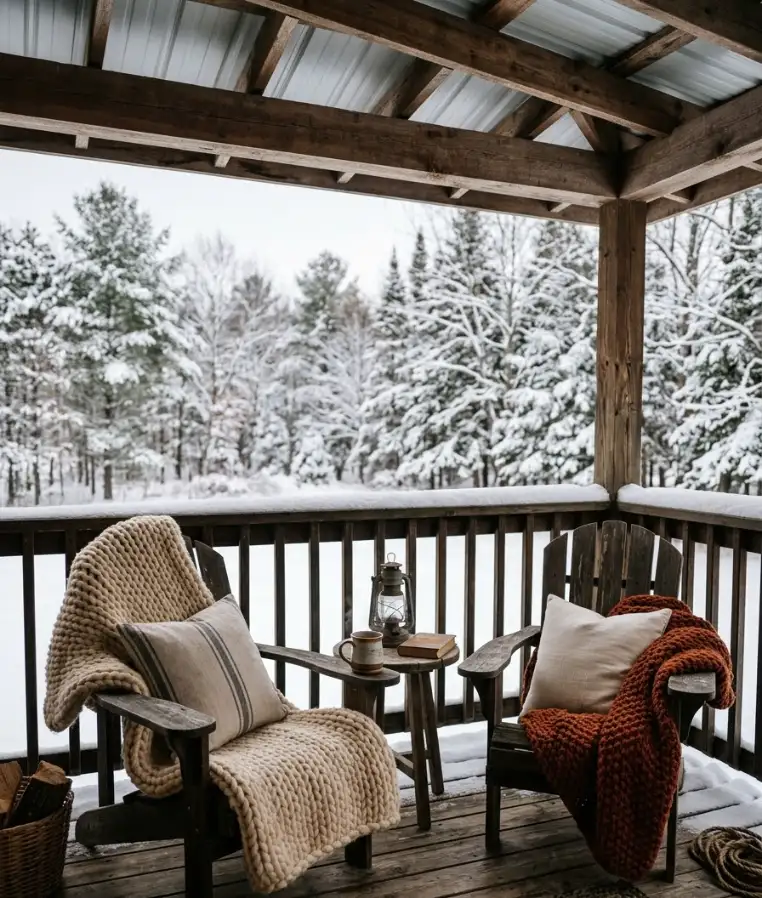
A bench or pair of chairs on the porch instantly needs blankets and cushions in colder months.
Chunky knit throws in cream, rust, or deep green do a lot of visual heavy lifting for very little cost.
Here’s an honest take: I bought expensive outdoor cushions once thinking they’d survive a Midwest winter untouched.
They did not. Buy weather-resistant fabric specifically, or bring the soft stuff in when snow’s coming. Learn from my $80 mistake.
Color palettes that feel warm, not garish
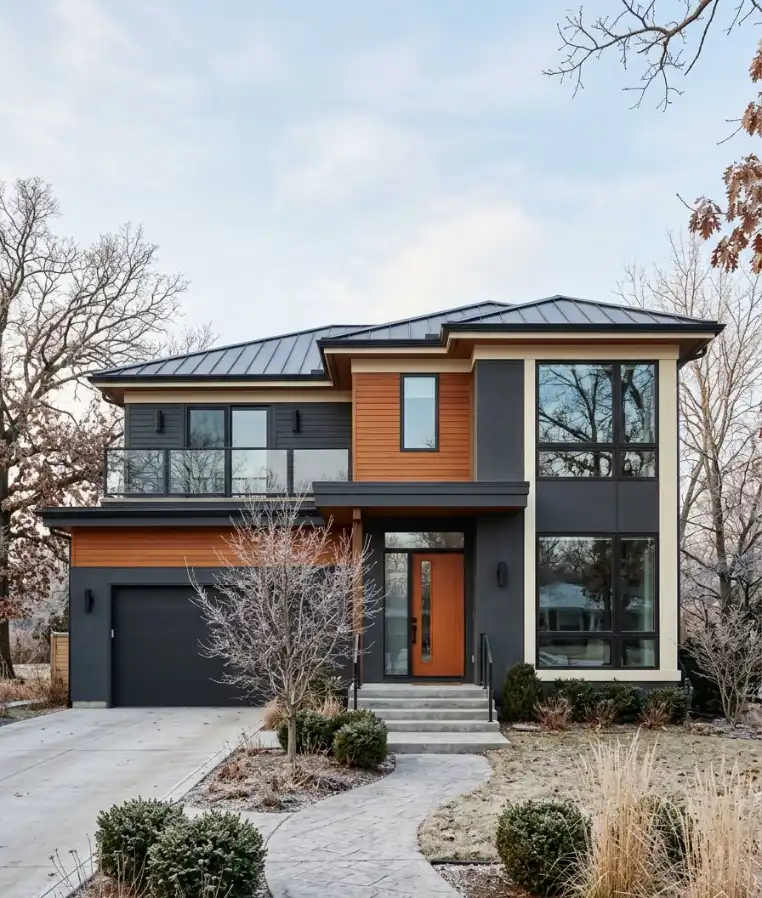
Color choice is where a lot of exteriors go wrong. Bright red and green everywhere reads more like a holiday store display than a cozy home.
A restrained, warm palette works better for that “welcoming all winter long” feeling, not just for the two weeks around a specific holiday.
| Color Palette | Best For | Mood It Creates | My Take |
|---|---|---|---|
| Cream, rust, deep green | Farmhouse or craftsman homes | Rustic and grounded | My personal favorite, ages well past January |
| Navy, gold, warm white | Traditional brick homes | Classic and elegant | Feels formal without being cold |
| Charcoal, burnt orange, cream | Modern homes | Bold but still soft | Great if your house already has clean lines |
| All white and silver | Any home style | Crisp, minimal | Pretty, but can feel a little sterile alone |
Pick one lane and stay in it. Mixing four color palettes on one porch is how you end up with visual chaos instead of a curated look.
The front door: your biggest opportunity
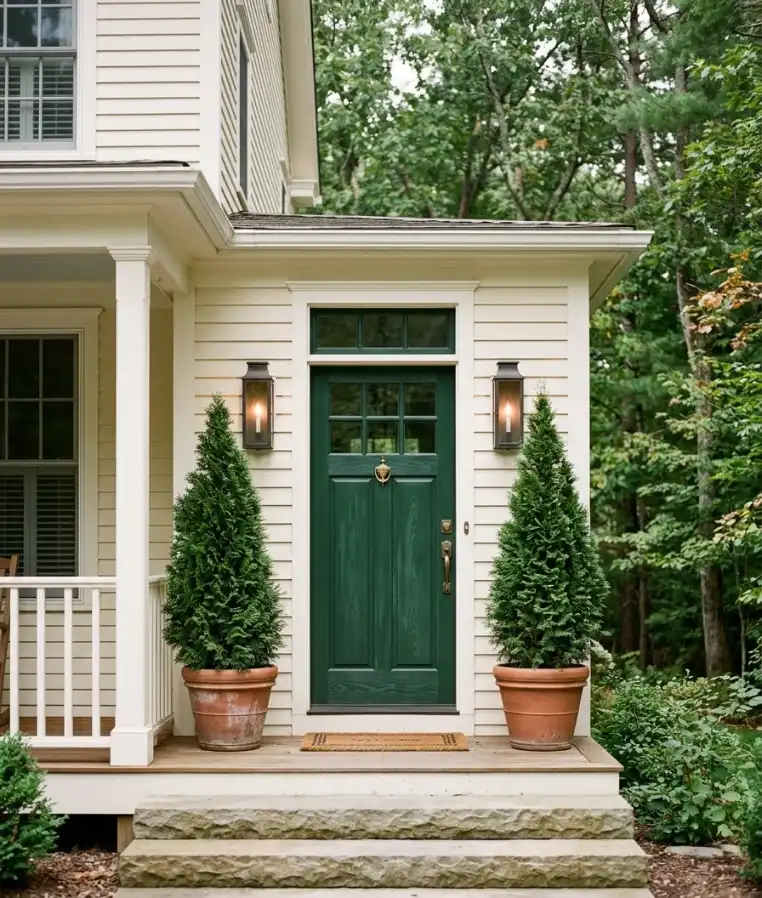
The door is the anchor of the whole exterior. If it’s plain, everything around it works twice as hard to compensate.
Wreaths that don’t look store-bought
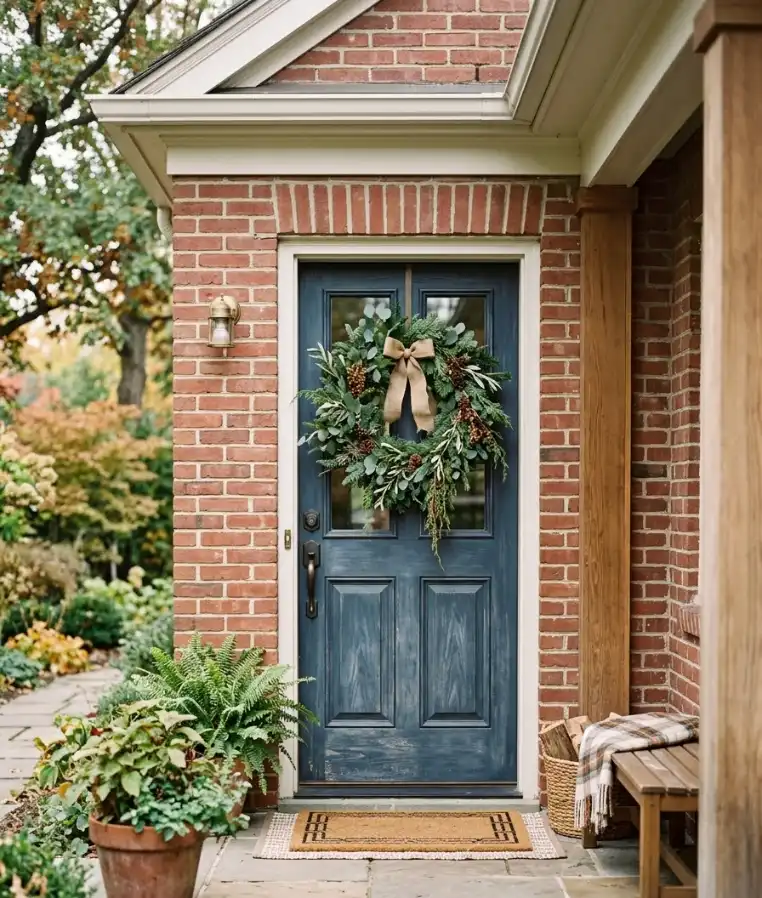
A wreath doesn’t need to be complicated to look intentional. Oversized, a little loose, with mismatched textures, that’s the look designers keep coming back to.
Skip the perfectly symmetrical, mass-produced kind if you want something that feels personal.
Add a ribbon in a texture that contrasts the greenery, like velvet or burlap, and it instantly reads as custom rather than generic.
A fresh coat of paint on the door
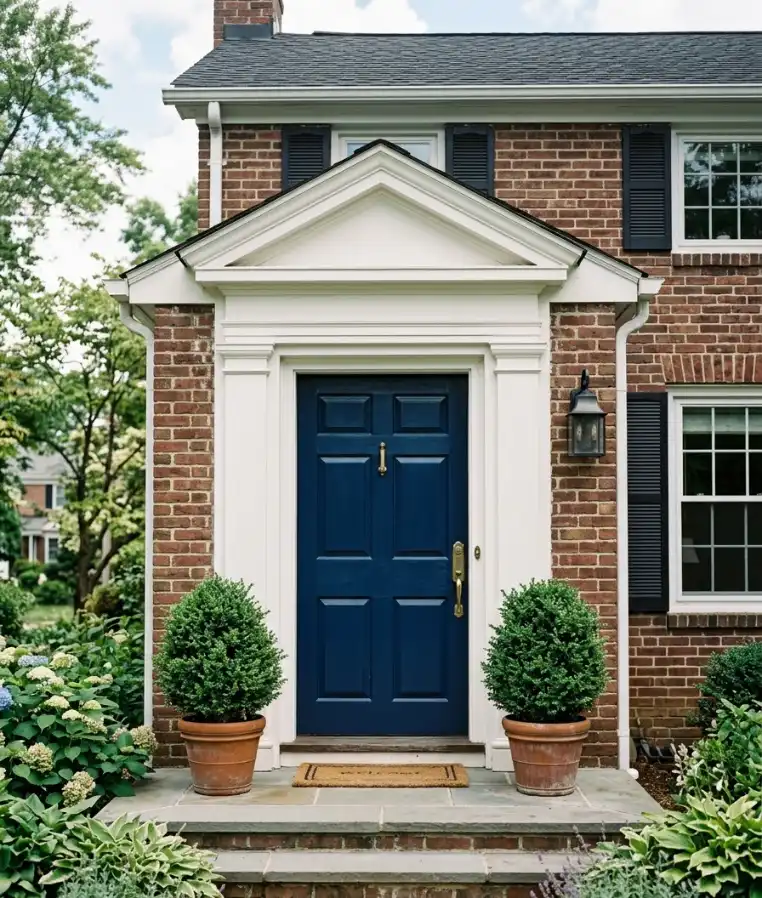
This one surprises people. A single afternoon repainting the front door in a deep, saturated color (think forest green, navy, or a rich burgundy) changes the entire feel of the house for a fraction of what a full exterior update would cost.
Sherwin-Williams’ color visualizer lets you test shades against a photo of your actual house before committing, which saved me from a truly regrettable maroon phase.
Fire features, because nothing says cozy like actual fire
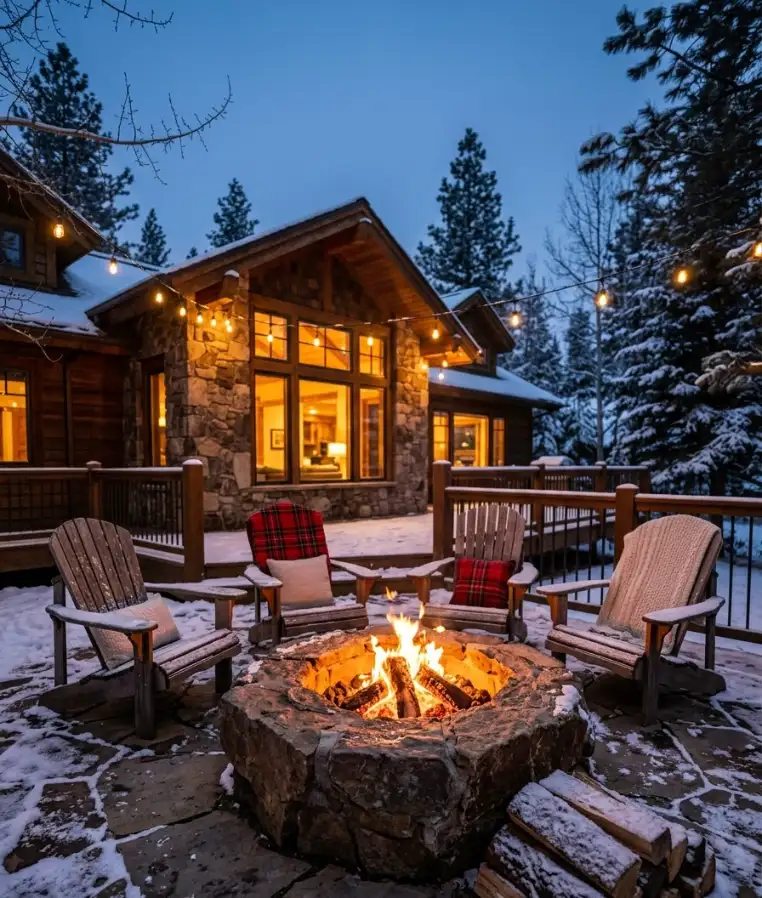
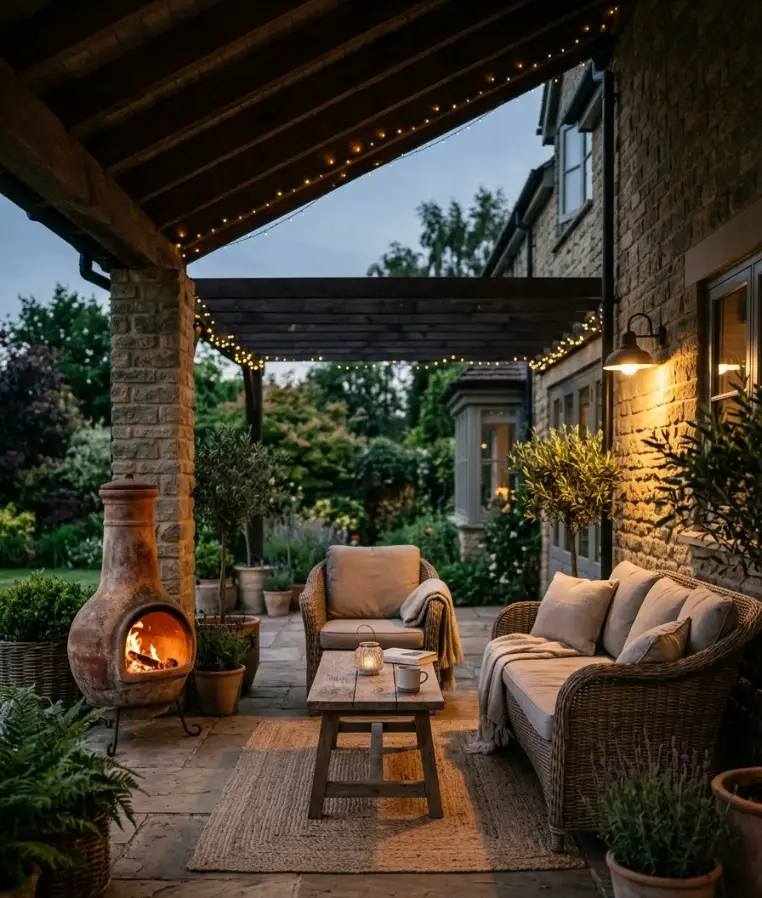
There’s something primal about firelight. It’s warm in a way string lights simply can’t replicate.
A few options depending on budget and space:
- A small fire pit on a patio or wide porch, if local codes allow it
- Battery-operated flameless candles in lanterns along the steps, a safer option for windy nights
- A chiminea tucked into a corner for a rustic focal point
Real talk: check your local fire codes before installing anything with an actual flame outdoors. Some HOAs and cities have restrictions that’ll turn your cozy idea into a fine. Not exactly the warm welcome you were going for.
Pathways and landscaping that survive the snow
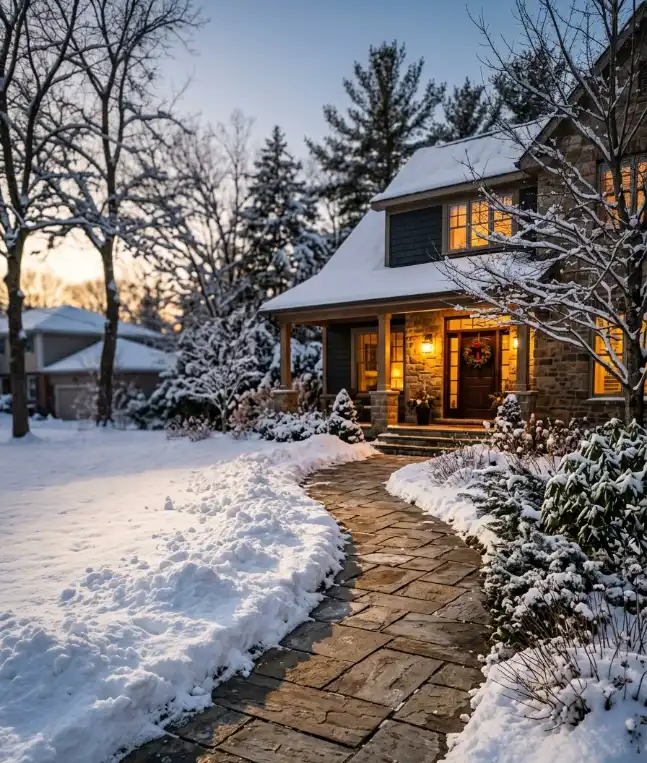
A gorgeous porch means nothing if the walkway to it looks abandoned or, worse, dangerous once ice hits.
Keep it functional first
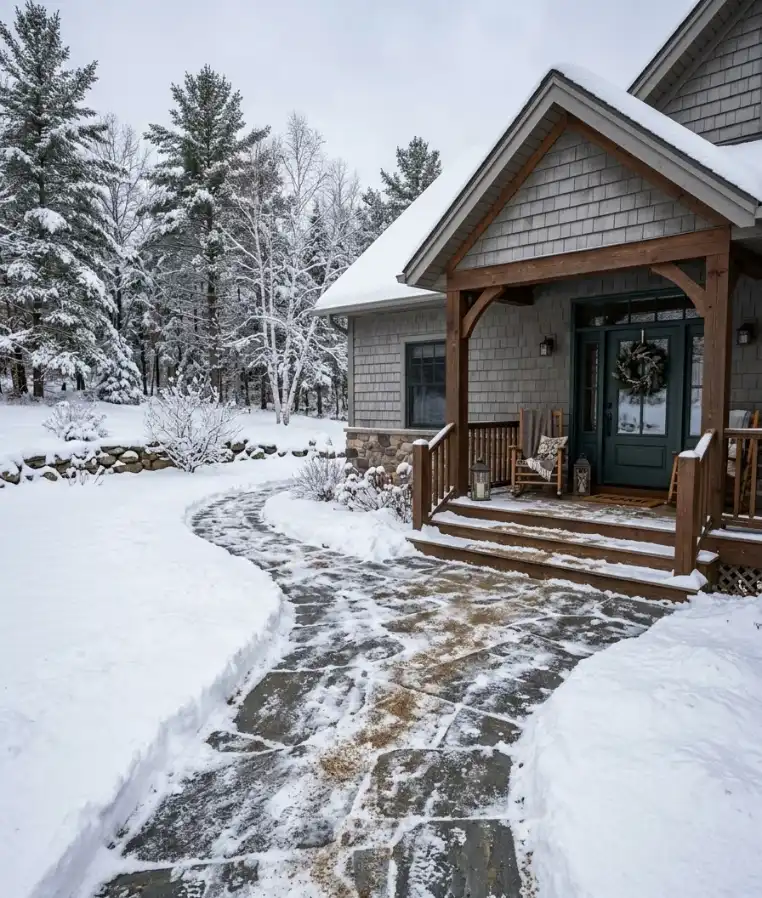
Before anything decorative, make sure the path is actually safe.
A slippery walkway undercuts every cozy detail you’ve added, and honestly, nobody’s admiring your lanterns while they’re gripping the railing for dear life.
Salt or sand for traction, a shoveled path wide enough for two people, and slip-resistant mats near the door handle the practical side.
Then the decorative layer goes on top.
Evergreen containers by the door
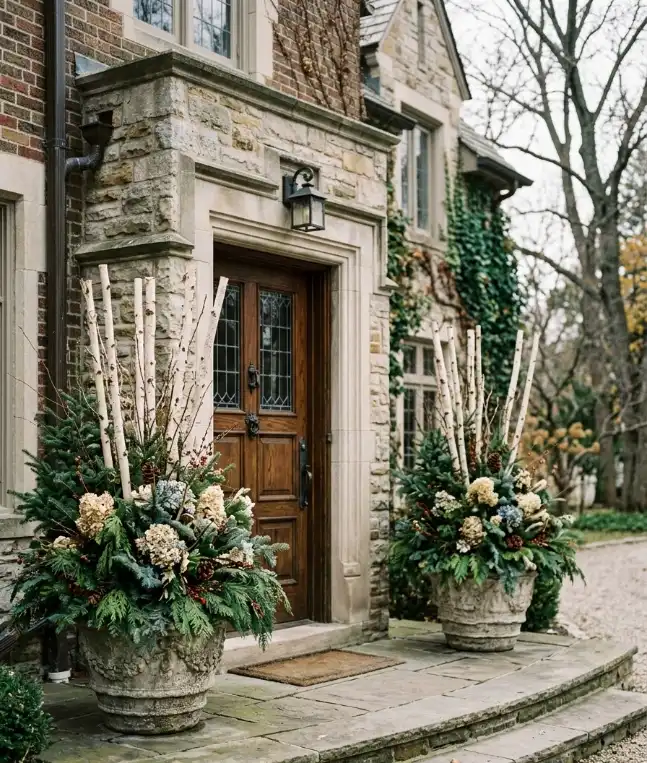
Large planters filled with evergreen branches, dried hydrangeas, and a few birch branches poking up create height and texture without needing anything to bloom.
They survive freezing temps and still look intentional in February, unlike that one sad pumpkin still sitting on the steps from October.
Honestly, unrelated thought here, but has anyone else noticed how much better everything smells right before the first snowfall? That weird, clean, almost metallic scent in the air.
I have no idea why that popped into my head while writing about planters, but here we are.
Small budget vs bigger investment
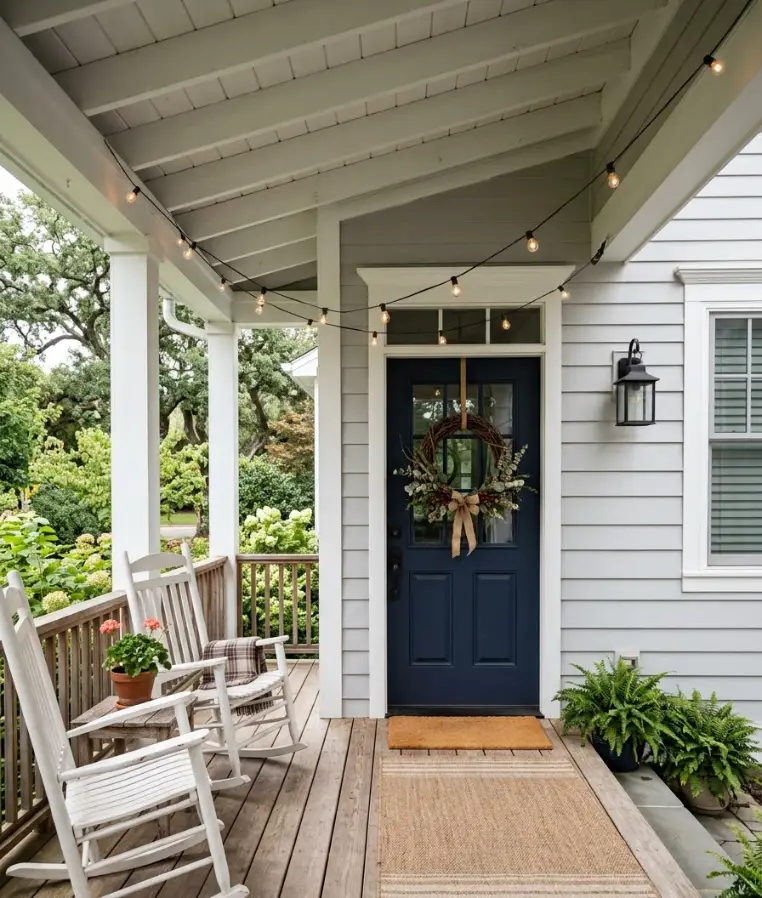
Not everyone wants to (or can) drop a few hundred dollars on exterior décor. Here’s how the choices break down.
Budget-friendly moves:
- Warm white string lights (often under $20 for a solid set)
- A DIY wreath from clipped branches in your own yard
- Thrifted lanterns spray-painted to match your palette
- A single bold-colored door mat
Worth the splurge:
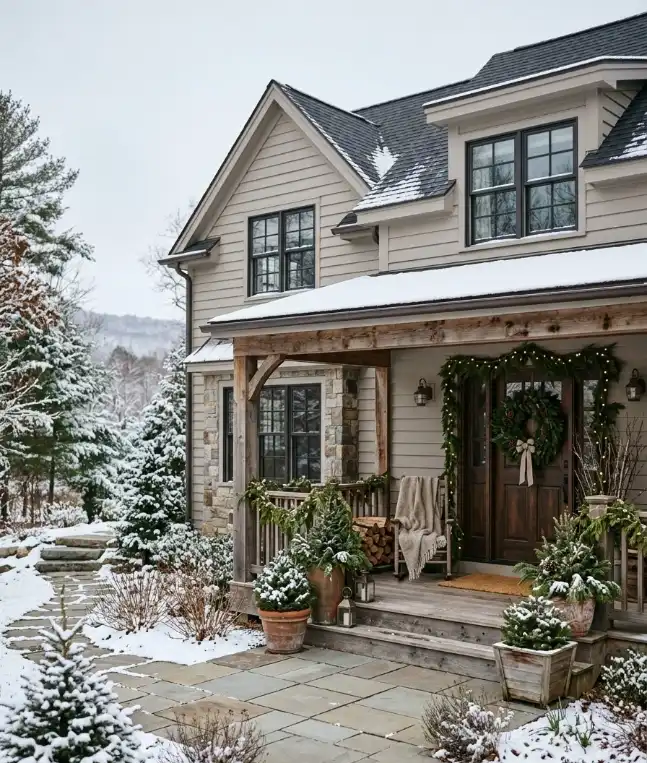
- Repainting the front door professionally
- A quality, weather-rated fire pit
- Custom-built planter boxes that’ll last for years
- Professional outdoor lighting installation for uneven or tricky rooflines
I’ve done both routes in different years, and honestly, the DIY wreath from my own backyard branches got more compliments than the $60 one I bought online. This is insane, but sometimes free actually wins.
A quick gut check before you start
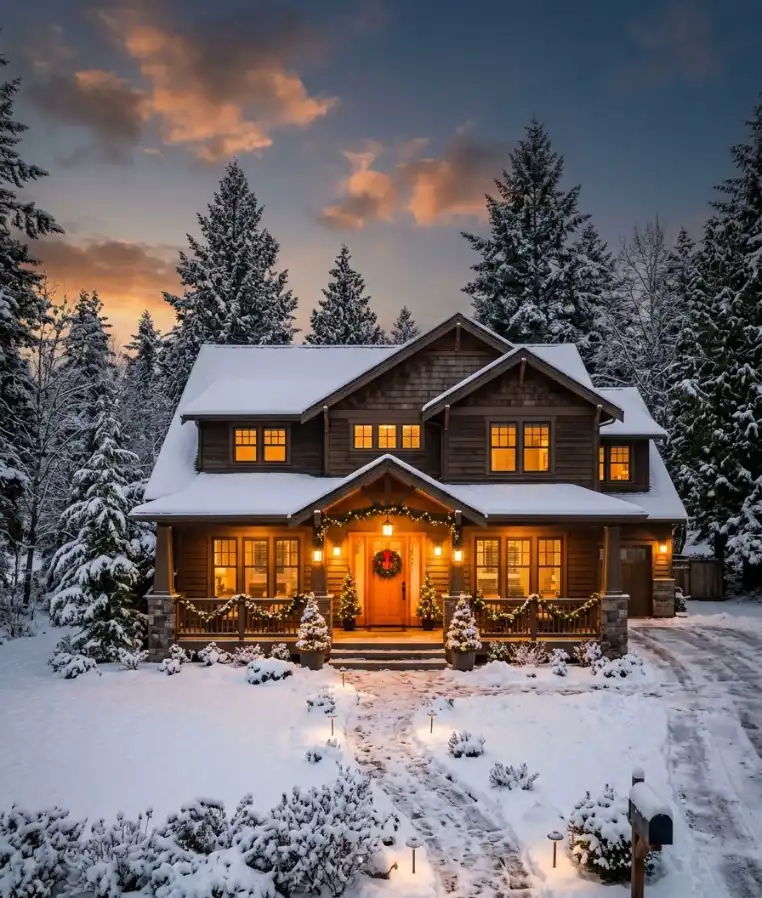
Ask yourself these questions before buying anything:
- Does this look good during the day, not just when lit up at night?
- Will it hold up through actual snow and wind, or is it more of an indoor decoration mistakenly placed outside?
- Does it match the rest of my home’s exterior, or does it look randomly plopped there?
If you can answer all three honestly, you’re in good shape. The Spruce’s winter curb appeal guide has more seasonal inspiration if you want to keep browsing ideas beyond this list.
FAQs
Do I need to take everything down right after the holidays?
Nope, and this is honestly the point. Keep the greenery, lanterns, and neutral-toned decor up through the whole winter season.
Save the specifically holiday-branded pieces (think red bows or Christmas-specific ornaments) for taking down in early January, and let the general winter coziness carry you through to spring.
What’s the cheapest way to make a big visual difference?
Warm-toned lighting, hands down. Swapping cool white bulbs for warm white ones costs almost nothing and changes the entire feel of a house within minutes of dusk.
Are real greenery arrangements a lot of maintenance?
Not really. Fresh greenery like pine or cedar can last 4 to 6 weeks outdoors in cold temperatures without much care.
Just give the branches a light mist of water occasionally if you’re in a particularly dry climate.
Final thought
A warm winter exterior isn’t about spending big or copying whatever’s trending on Pinterest this month.
It’s about picking a handful of details, doing them with intention, and letting the layers build up naturally over a season.
So, what’s the first thing you’re changing on your porch this year, the lighting, the door color, or finally ditching that lonely pumpkin from October?