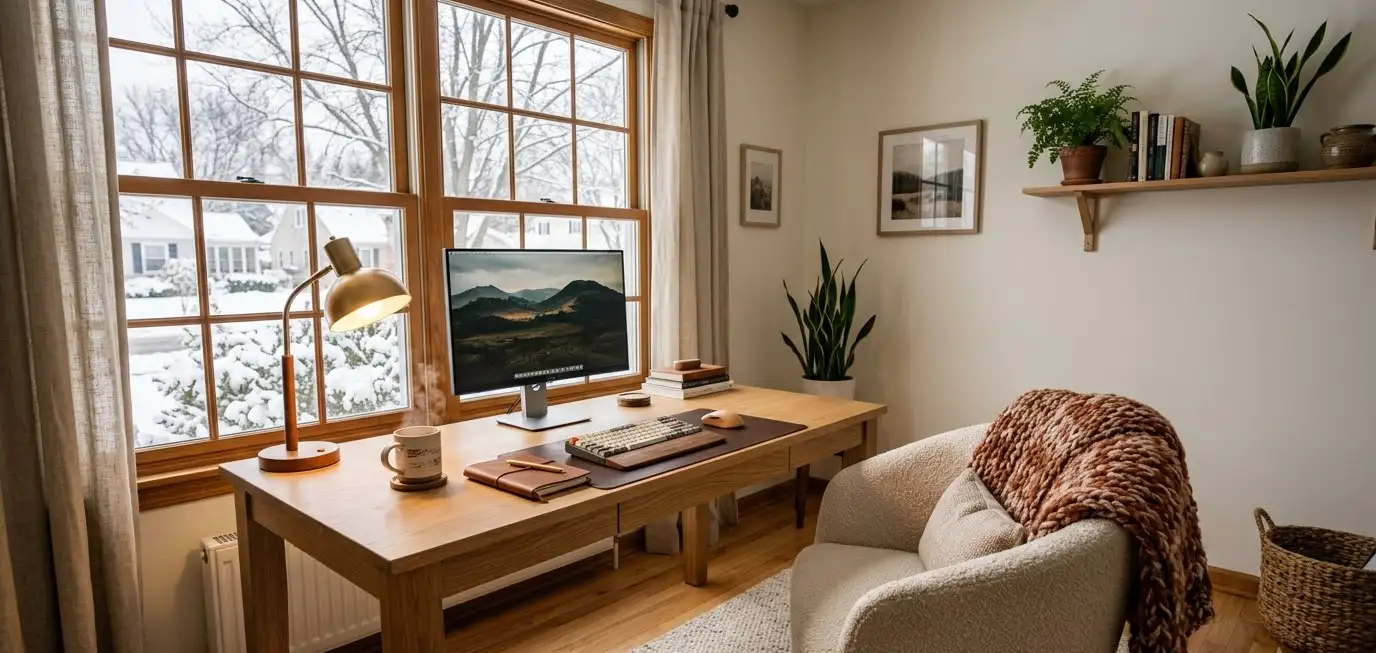
Nothing kills a good work morning like typing with numb fingers while your coffee goes cold in twelve minutes flat.
If you’re pinning “cozy office ideas” boards at 11pm because your actual office feels like a walk-in freezer, you’re in the right place.
I redid my home office three winters ago after I caught myself wearing fingerless gloves to type.
That’s not a productivity system. That’s a cry for help. So I went through every upgrade, tested most of them myself, and kept only what actually earns its spot in a small room.
This list mixes cheap fixes with a few splurges worth saving for. Pin the ones that fit your space and skip the rest. No guilt required.
- A heated mouse pad or wrist rest
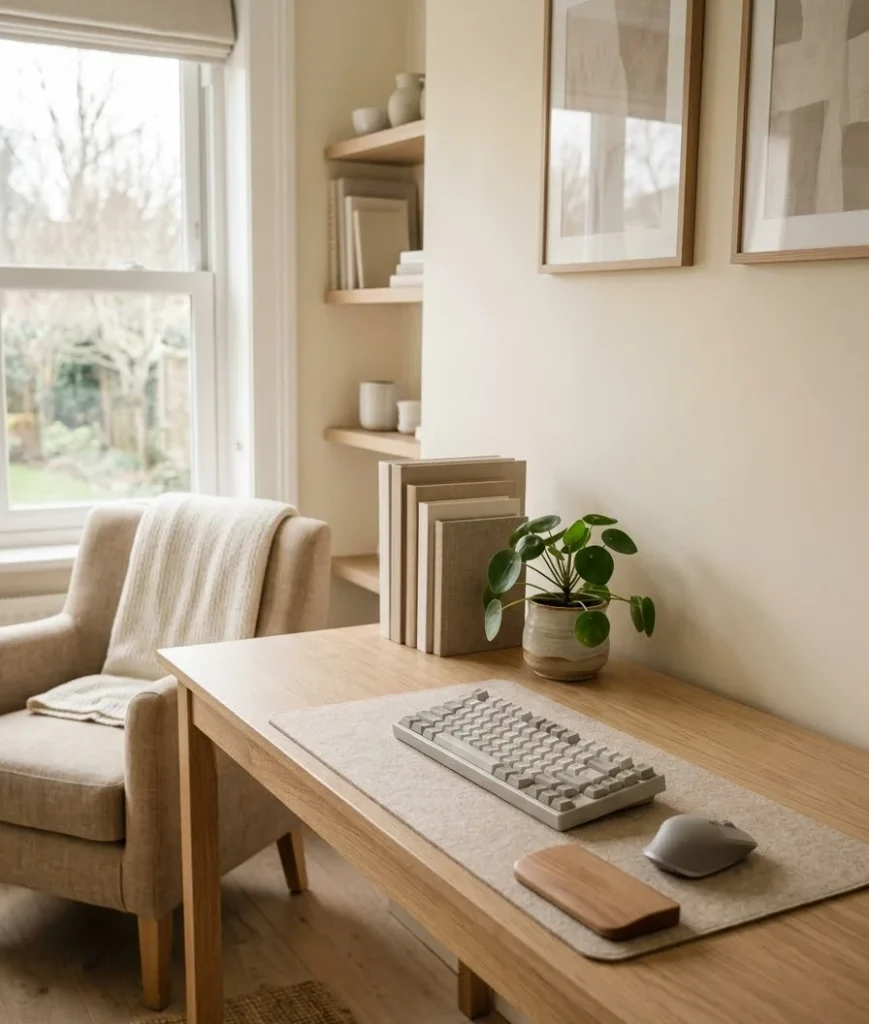
Cold hands make you type slower and click sloppier. A heated wrist rest plugs into USB and warms up in under a minute.
I keep mine on low all day and honestly forget it’s even electric until I touch it after lunch.
Look for one with a washable cover. Crumbs happen.
- A space heater rated for your actual room size
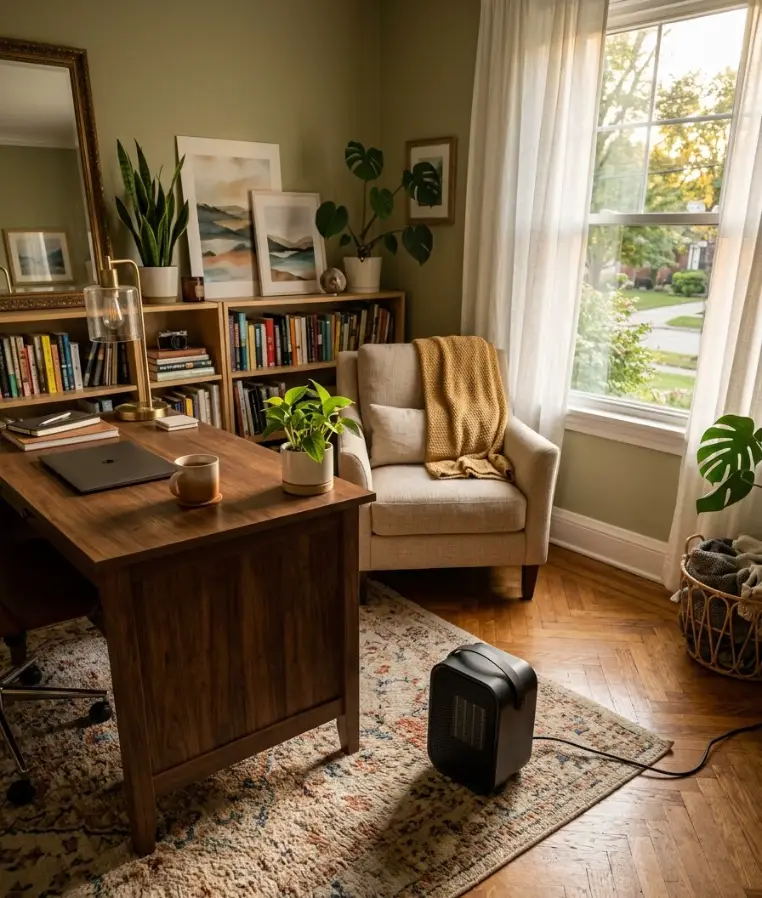
Most people grab the cheapest space heater at the store and wonder why their office still feels chilly. Heater output needs to match square footage, not vibes.
A 1500-watt heater works fine for a 150 square foot room, but it’ll struggle in anything bigger.
Check the Department of Energy’s guide to small space heaters before you buy one.
It covers wattage, safety features, and running costs, and it saved me from buying a heater way too small for my space.
A few things I’ve learned the hard way:
Keep it 3 feet from anything flammable, including your desk chair fabric.
Never run it while you’re out of the room, even for five minutes.
Ceramic heaters warm up faster than oil-filled ones, but oil-filled ones hold heat longer after you shut them off.
Skip the ones with exposed coils if you’ve got pets or kids wandering in.
- Layered lighting, not just one overhead bulb
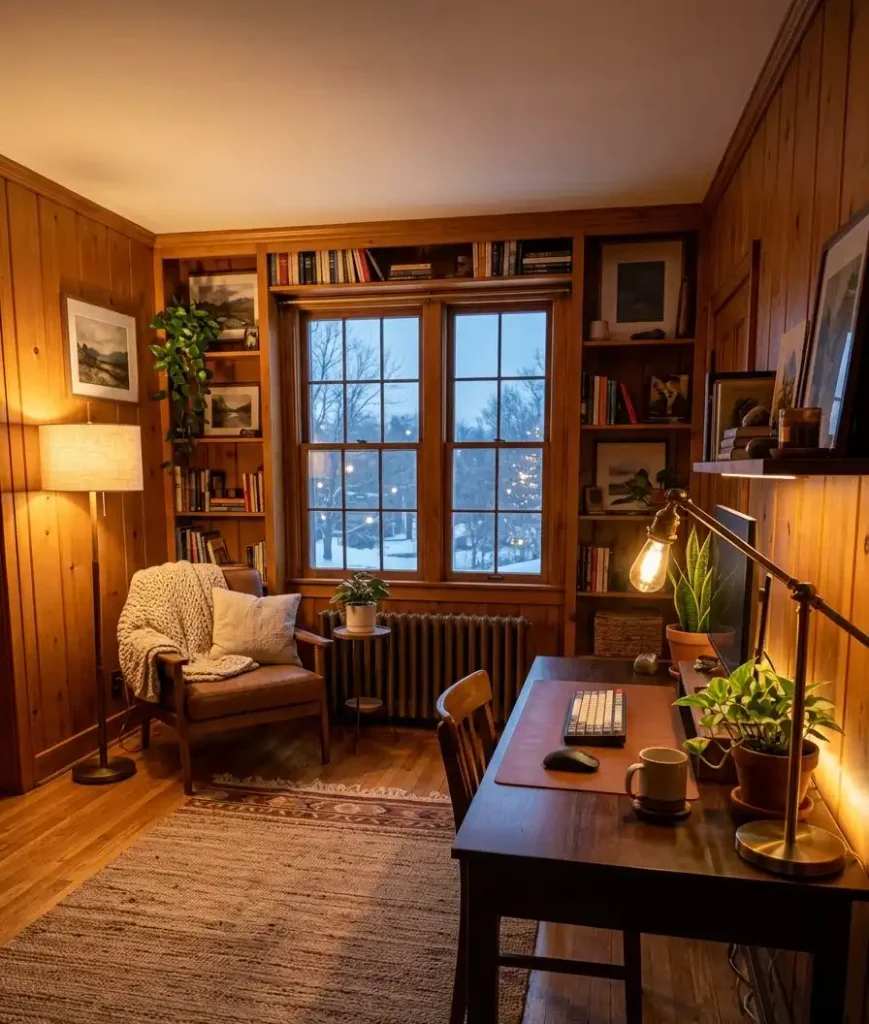
Winter light is garbage. The sun sets at 4:30pm and suddenly your “bright and airy” office looks like a cave.
One overhead light won’t fix that. You need layers: a desk lamp, a floor lamp, maybe a strip of warm LED tape behind your monitor.
I run a 3000K bulb on my desk lamp because anything cooler feels clinical, like I’m working in a dentist’s office.
Warmer tones photograph better for Pinterest too, if that matters to you (it matters to me, don’t judge).
- A light therapy lamp for the darkest months

This one surprised me. I was skeptical, honestly, because it sounded like a gadget for people who buy everything on late-night infomercials.
Then I tried a 10,000 lux lamp for 20 minutes each morning during December and January, and my afternoon slump got noticeably shorter.
The National Institute of Mental Health has solid background on seasonal affective disorder and how light exposure ties into mood and energy during shorter days.
Worth a read if winter consistently wrecks your focus, not just your comfort.
- A chunky throw blanket that actually fits your chair

Not the decorative kind that’s 40 inches wide and looks great folded but does nothing draped over you.
Get something oversized, wool or sherpa, big enough to wrap around your legs and shoulders at the same time.
I use mine constantly from November through March. It sits on the back of my chair so it’s always within reach, no getting up required.
- Insulated curtains or a draft stopper for the door
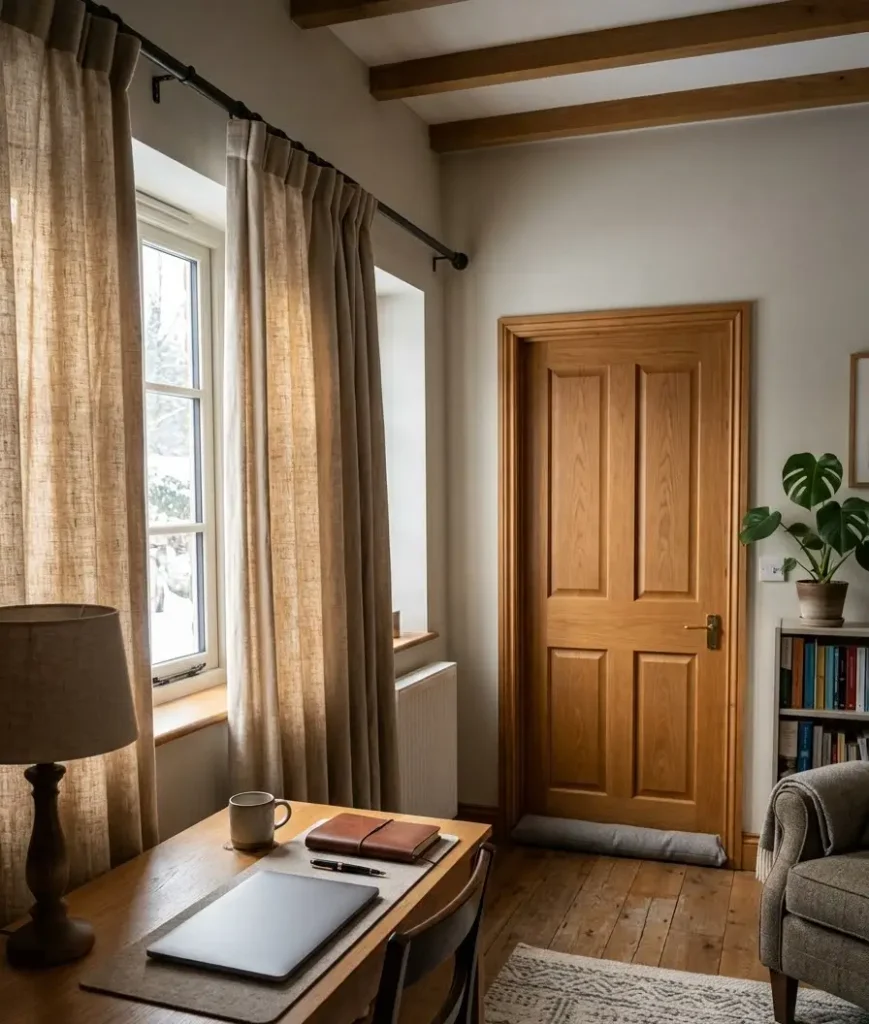
If your office has a window that lets in a breeze you can feel from your desk, that’s heat and money leaking out.
Thermal curtains cut drafts significantly, and a $12 draft stopper under the door does more than you’d expect for the price.
I didn’t believe this until I put a draft stopper under my office door and the room genuinely felt 2 to 3 degrees warmer within an hour. Small fix, real difference.
- A humidifier for that dry, static-shocky winter air
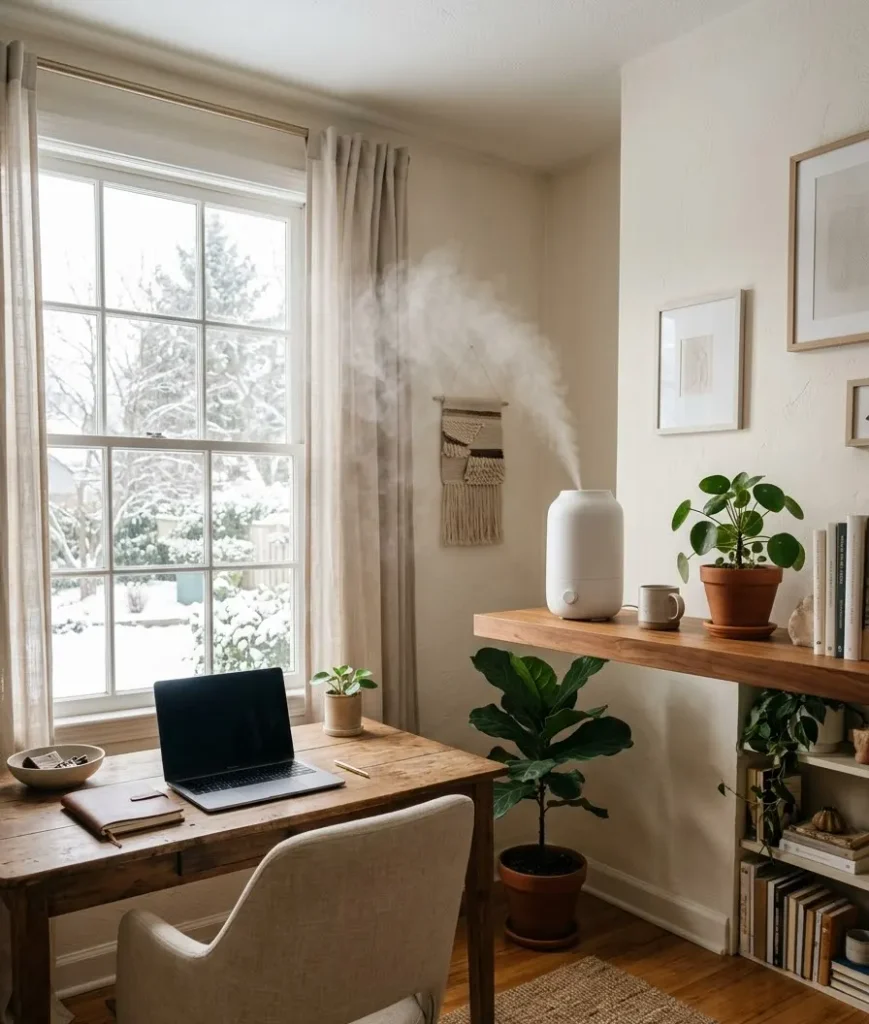
Heated air is dry air. Dry air means chapped lips, dry skin, static that zaps you every time you touch your doorknob, and sometimes a scratchy throat by 3pm. A humidifier fixes most of that, but only if you actually clean it.
The EPA has a straightforward guide on humidifier use and care that covers ideal humidity ranges and cleaning schedules.
Skip that step and you’re basically running a bacteria diffuser. Not cute.
Aim for 30 to 50 percent indoor humidity. Anything higher invites mold on your windowsills.
- Warm, textured rug under your desk

Cold floors sneak up on you. You won’t notice until your feet have been icy for two hours and your whole body feels tense because of it.
A rug, even a small one just under your chair and desk, changes that instantly.
Go for something with texture you actually enjoy touching. Sounds silly, but bare feet on a nice rug during a long work session is a small joy that adds up.
- A footwarmer or heated foot pad
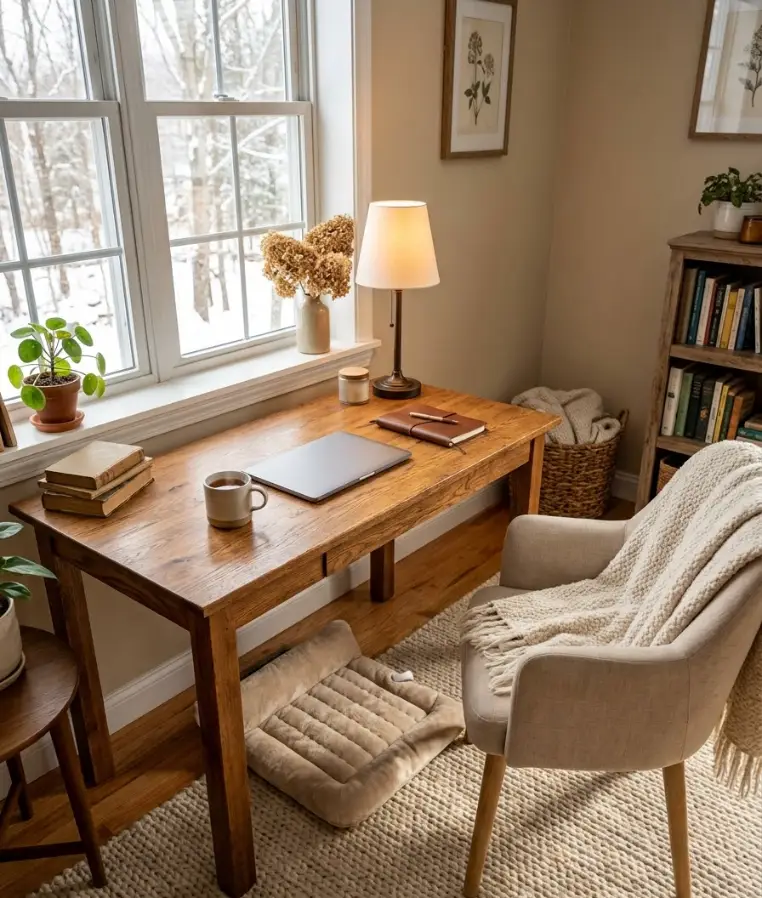
I resisted this one for years because it seemed excessive. Then my sister gave me one as a joke gift and, well, joke’s on me, because I use it every single day from October to April.
It’s basically a heated mat you slide your feet onto under the desk.
Cheap ones run $20 to $30 and plug straight into a USB port or outlet.
- Warm-toned candles or a wax warmer (fragrance-free near electronics)
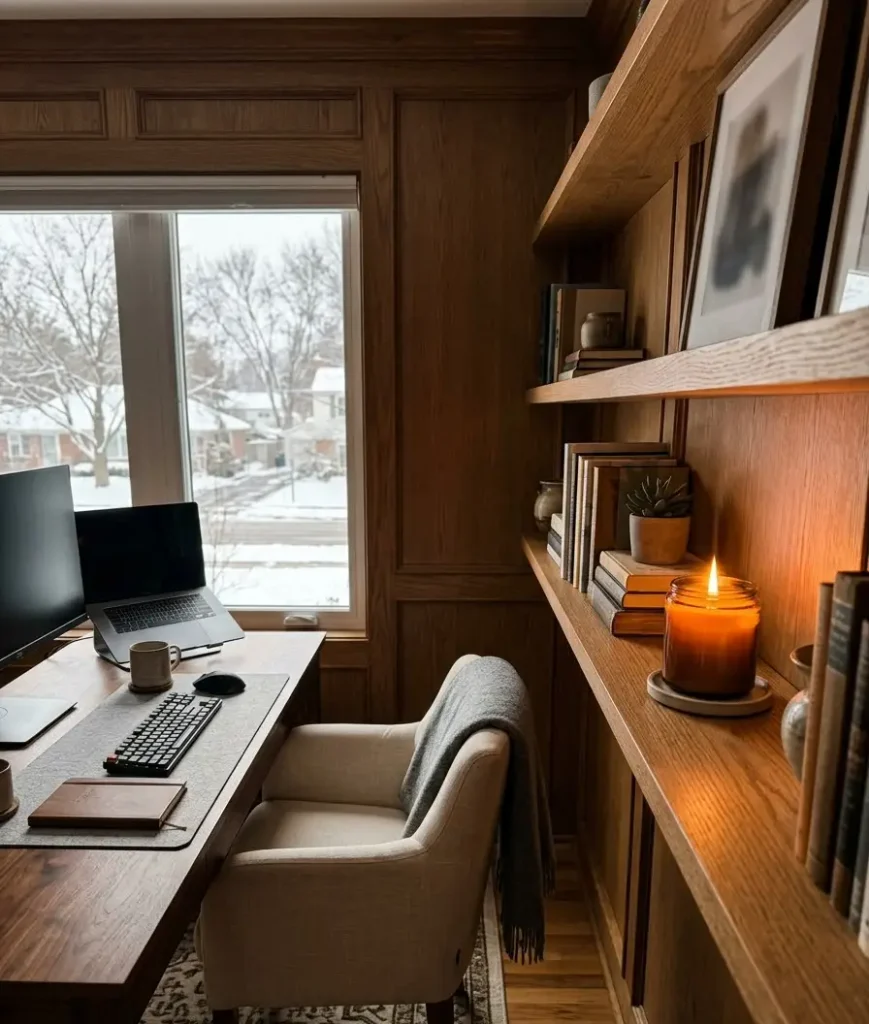
This is the aesthetic upgrade, not the functional one, and IMO it’s the one that makes an office actually feel cozy instead of just warm.
A vanilla or cedarwood candle sitting near your desk does something for the mood that heaters alone can’t.
Keep an open flame away from paper stacks and cables though.
A wax warmer is the safer bet if your desk is cluttered, which, let’s be honest,it probably is by February.
- A weighted or heated blanket for your desk chair seat
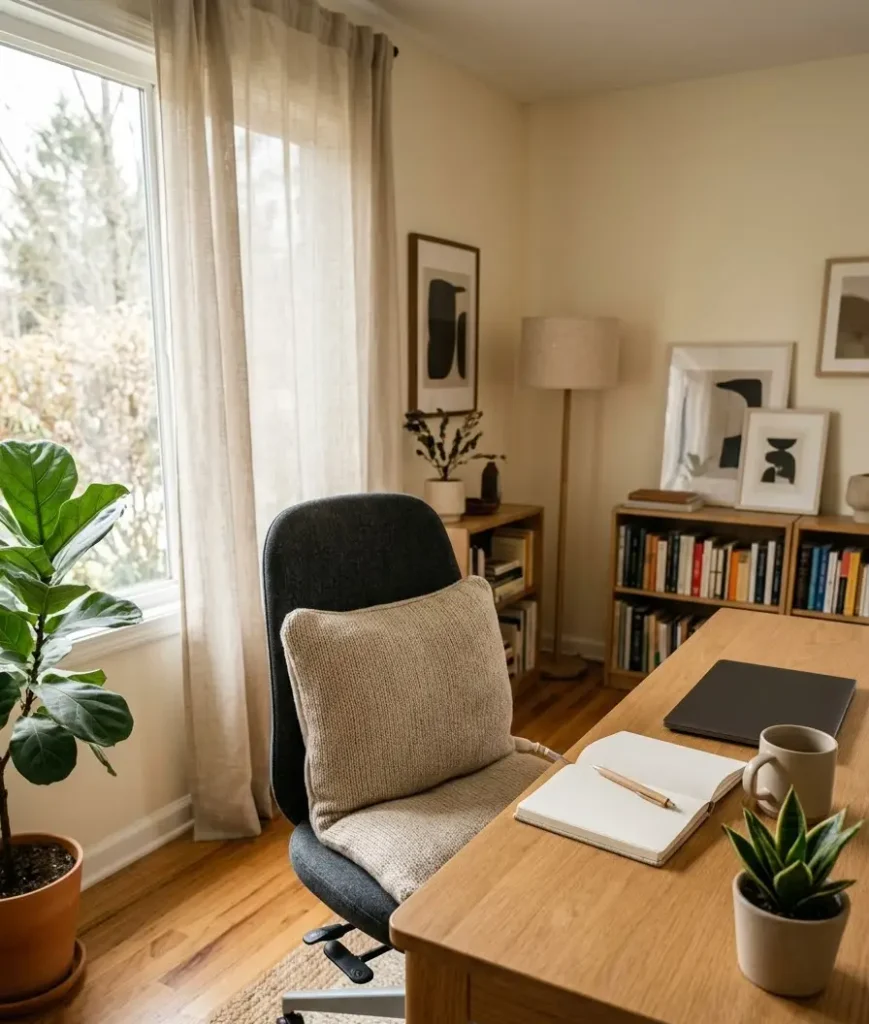
Different from the throw blanket, this one’s about the seat itself.
A heated seat cushion warms you from below, which matters more than people expect since chairs conduct cold surprisingly well, especially the mesh-backed ergonomic kind everyone bought during 2020.
- Ergonomic accessories that don’t ignore winter posture
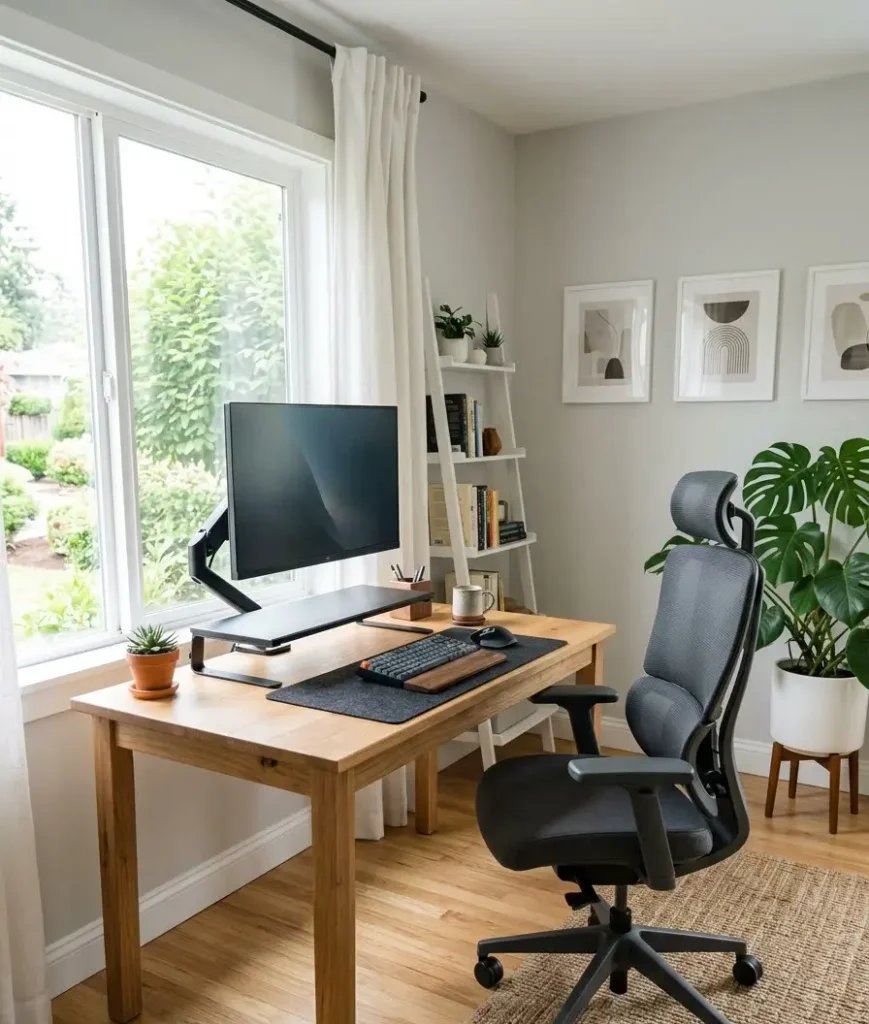
Cold weather makes people hunch. You tense your shoulders up toward your ears without realizing it, which leads to neck pain by week two of winter.
An adjustable monitor stand and a proper chair with lumbar support matter more in winter than summer, not less.
Random side thought: I once worked an entire December hunched over a laptop on my kitchen table because I was “just using it for a week” while my office got painted.
Six weeks later my neck felt like a question mark. Get the desk setup right, even if it’s temporary.
Especially if it’s temporary, actually, because temporary setups have a way of becoming permanent.
- Warm beverage station within arm’s reach

This isn’t groundbreaking advice, but hear me out: the fewer times you have to leave your warm office to refill a mug, the fewer times cold air from the hallway hits you.
A small electric kettle and a shelf with tea, cocoa, or coffee supplies right in your office keeps you in your cozy bubble.
An insulated mug also means you’re not reheating cold coffee every 40 minutes, which, let’s face it, tastes worse every single time.
- Blackout or thermal blinds for early sunsets
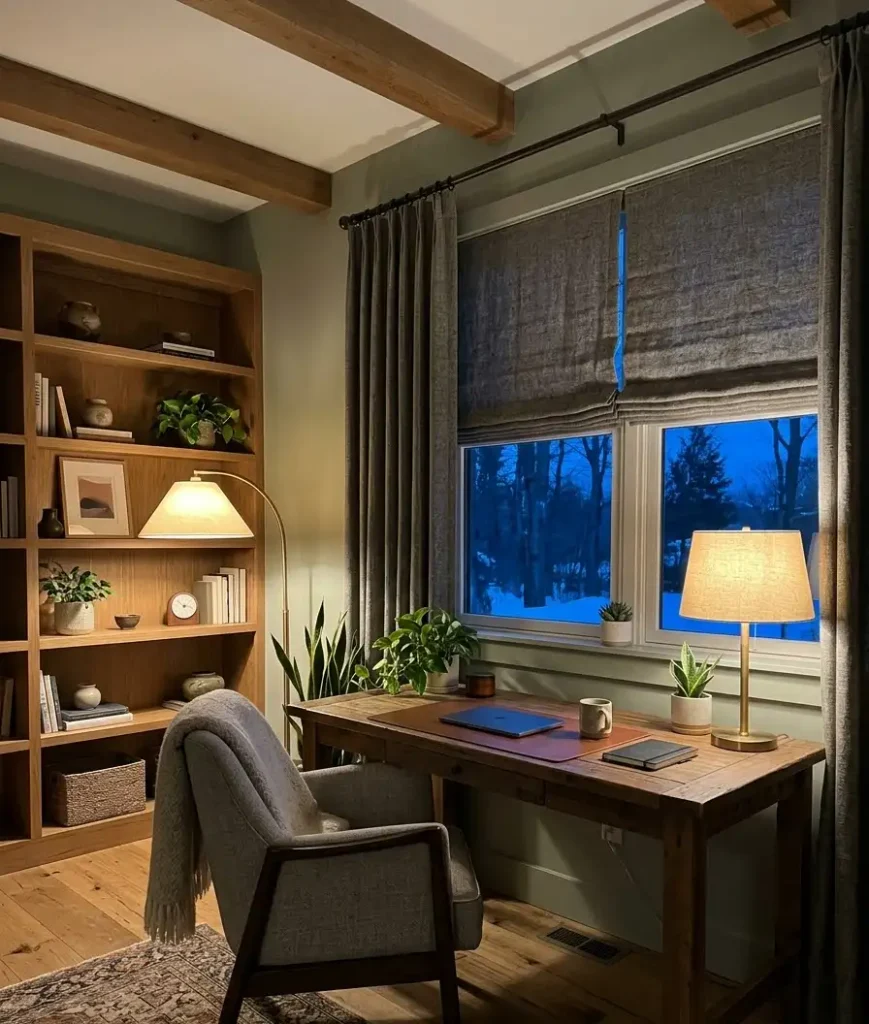
Winter sunsets mean glare on your screen at 3:45pm and then total darkness by 5.
Thermal blinds handle both problems: they block glare during the low afternoon sun and insulate the window once it’s dark outside.
- A small space that’s just yours, decorated the way you actually like

This last one isn’t a product. It’s a mindset thing. Your home office in winter should feel like somewhere you want to be, not just somewhere you have to be.
Add a plant that tolerates low light, hang up something that makes you smile, keep a photo nearby.
This is the upgrade that costs nothing but changes the most.
Quick comparison: heating options for a home office
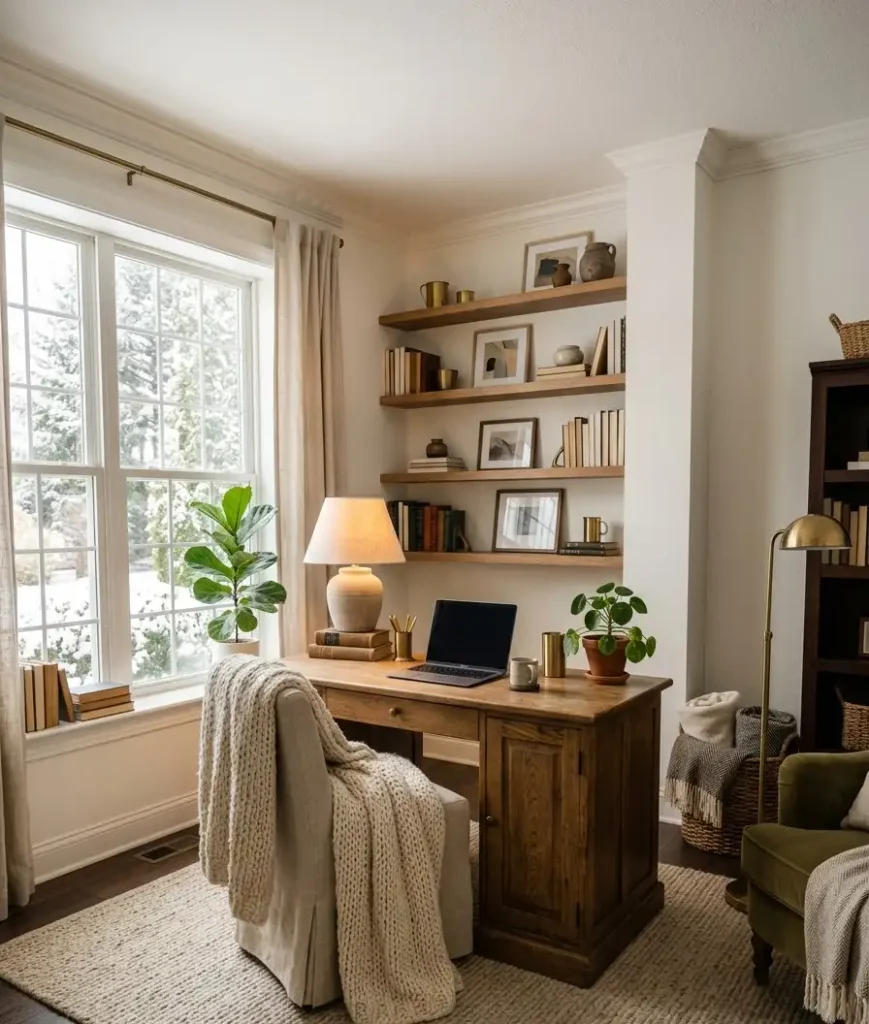
Option Best for Approx. monthly cost Setup effort
Space heater Fast, targeted heat $15-30 Low
Heated seat pad Direct body warmth $2-5 Very low
Humidifier Comfort + air quality $3-8 Low
Insulated curtains Long-term efficiency One-time cost Medium
I’d start with the heated seat pad if your budget’s tight. Cheapest option on this list and honestly the one I’d keep even if I could only pick one.

Frequently asked questions
Is it cheaper to heat just my office instead of the whole house?
Usually, yes.
Running a small space heater in one room costs less than raising the thermostat for the entire house, especially if you’re the only one home during work hours.
Just don’t run a heater and central heat at full blast at the same time, that adds up fast.
How do I stop static shocks in my office during winter?
A humidifier helps the most. Static builds up in dry air, so keeping humidity around 40 percent cuts it down significantly. Touching a metal object before your keyboard or mouse helps too, in a pinch.
Can a cold office actually hurt my productivity?
Yes, and this is backed by more than just personal complaints.
Cold hands slow fine motor tasks like typing, and your body burns energy trying to stay warm instead of focusing on work.
Warming up your space isn’t just comfort, it’s a real productivity fix.
Winter offices don’t have to feel like punishment. A few smart, layered upgrades turn a cold, dreaded room into somewhere you actually want to sit down and work.
You don’t need to buy all 15 things at once. Pick two or three that solve your biggest complaint right now and build from there.
What’s the first thing you’re adding to your setup this winter? Save this list, pin your favorites, and let me know how your cozy office turns out.










1 thought on “Cozy Winter Home Office Essentials: 15 Upgrades For Cold Weather Productivity”