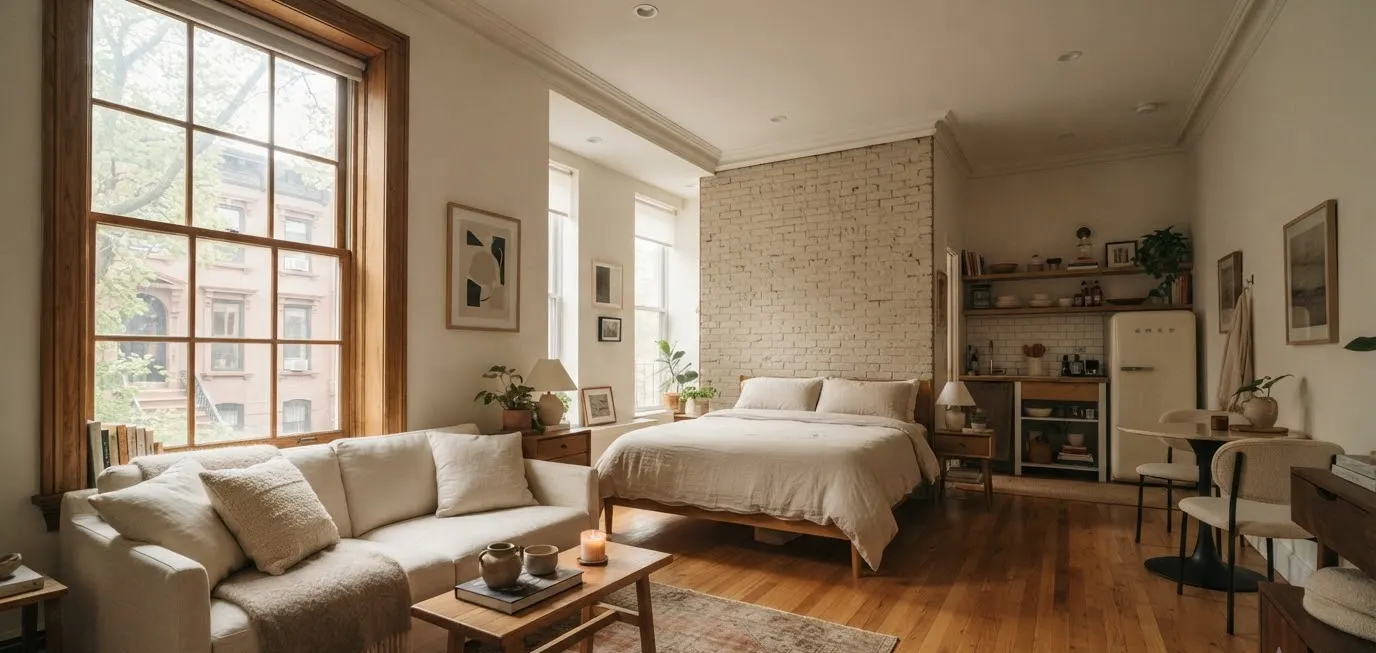
I moved into a 340-square-foot studio in Brooklyn three years ago, and my mother cried. Not happy tears. She stood in the doorway, looked at the “kitchen” (a hot plate and a mini fridge), and said, “You’re going to live like this?”
I did. And IMO, it turned into the best design education I never paid for.
Small spaces force you to get smart. You can’t hide bad decisions behind extra square footage. Every choice matters, from where you put the couch to what color you paint the trim.
So if you’re staring at your own tiny apartment wondering how anyone makes 400 square feet look like a home instead of a storage unit, you’re in the right place.
I’ve tested most of these ideas myself. A few flopped hard (RIP, the velvet room divider that made my apartment smell like a thrift store for a month). Most worked.
Let’s get into what actually makes a small space feel bigger, cozier, and like you actually chose to live there.
Why small studios feel cramped in the first place
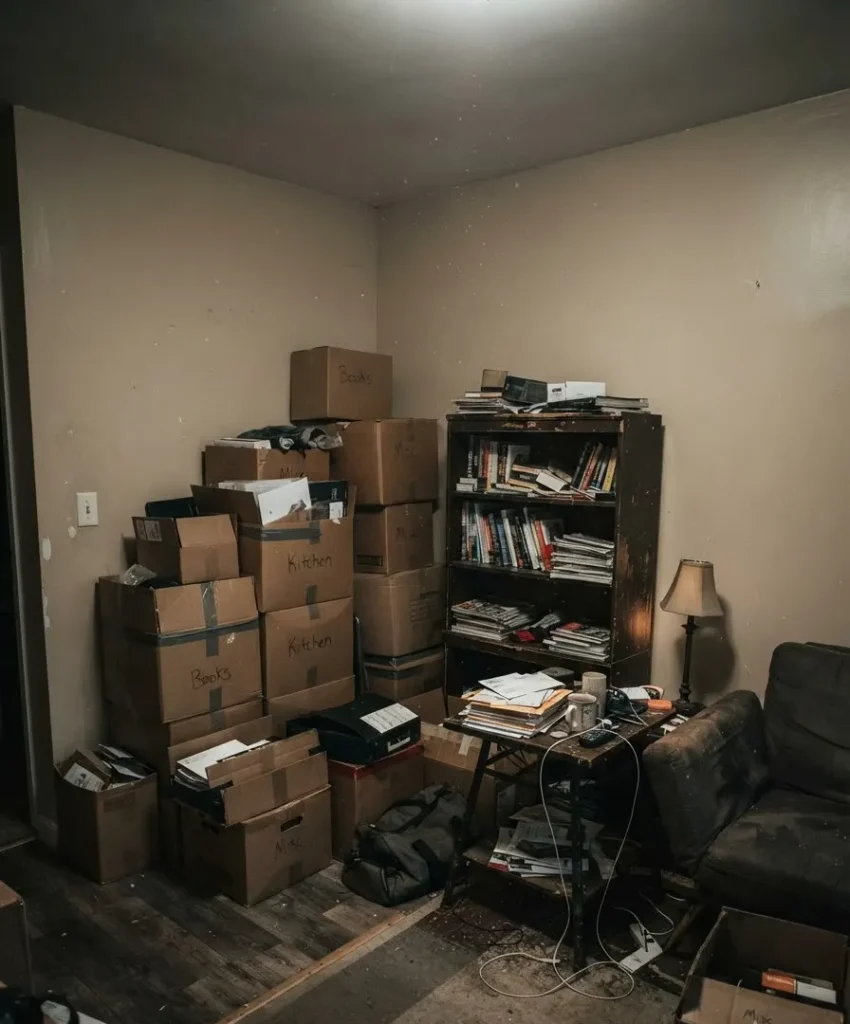
Before the fixes, it helps to know what’s actually working against you. Studios feel small for a few specific reasons, not just “lack of square footage.”
Clutter at eye level tricks your brain into registering a room as chaotic. Poor lighting flattens depth, so walls feel closer than they are.
Dark, heavy furniture absorbs light instead of bouncing it around. And too many small items scattered everywhere create visual noise your eyes can’t rest on.
Once you understand the problem, the fixes get a lot more obvious.
1. Pick one dominant wall color, not five accent colors
I used to think more colors meant more personality. Wrong. In a studio, every wall you paint a different shade chops the room into smaller visual sections.
Stick with one main wall color and let your furniture and textiles bring in variety.
According to Sherwin-Williams’ color guidance for small spaces, lighter, cooler tones tend to recede visually, which makes ceilings feel higher and walls feel farther away.
2. Go monochromatic, then add texture
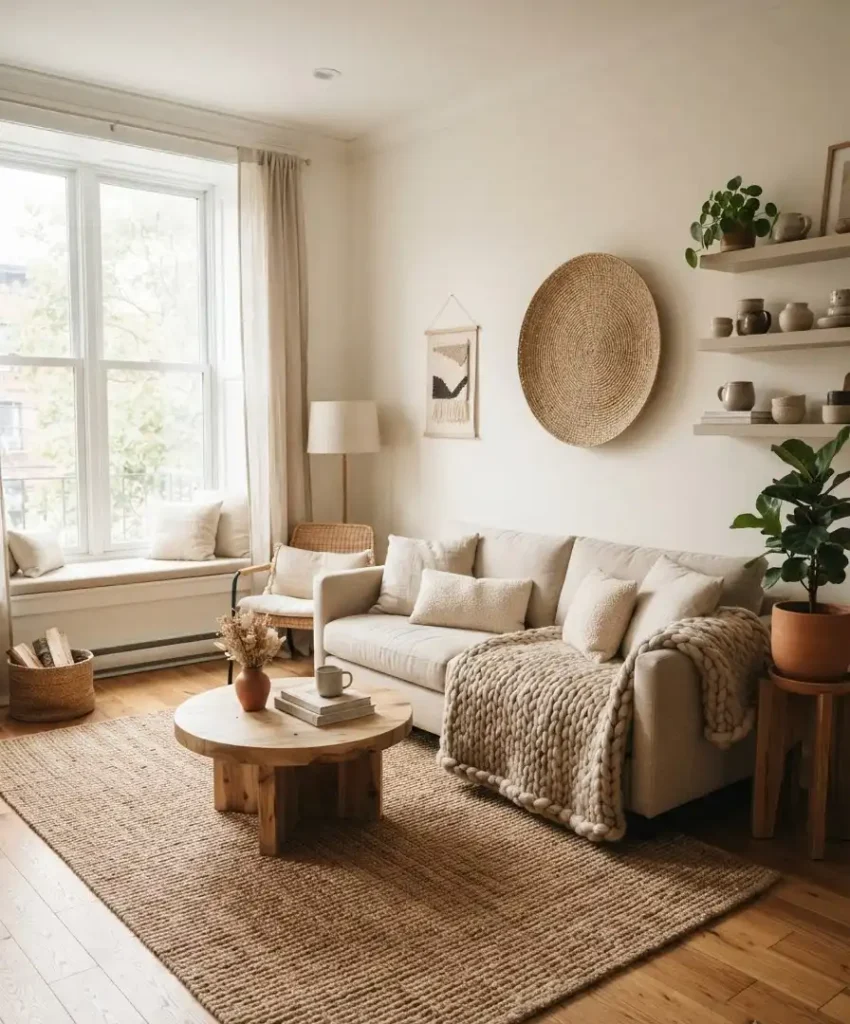
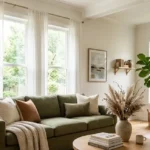
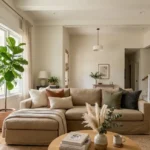
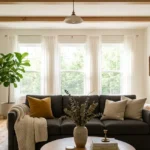
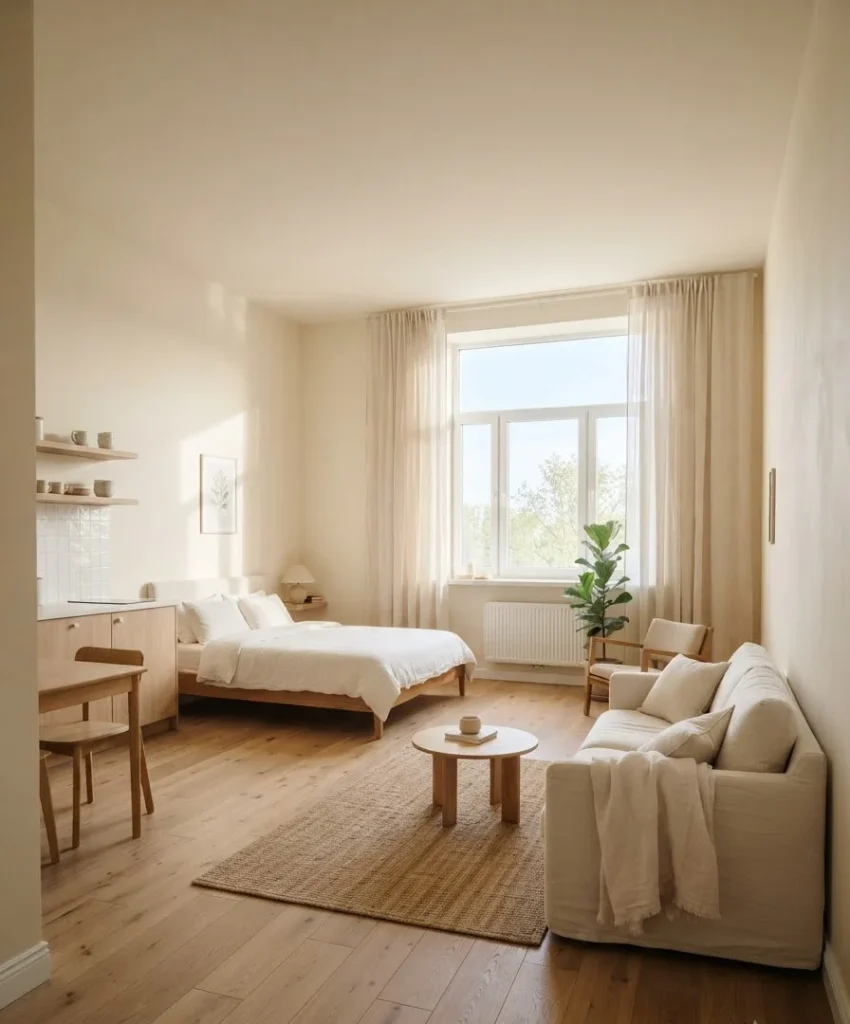
A monochromatic palette (think cream, oatmeal, and soft white) reads as calm and spacious. But flat color alone can look boring, so texture does the heavy lifting instead.
Add a chunky knit throw. A jute rug. A linen curtain. Texture gives your eyes something to explore without adding visual clutter.
3. Mirrors aren’t just a design cliché for a reason
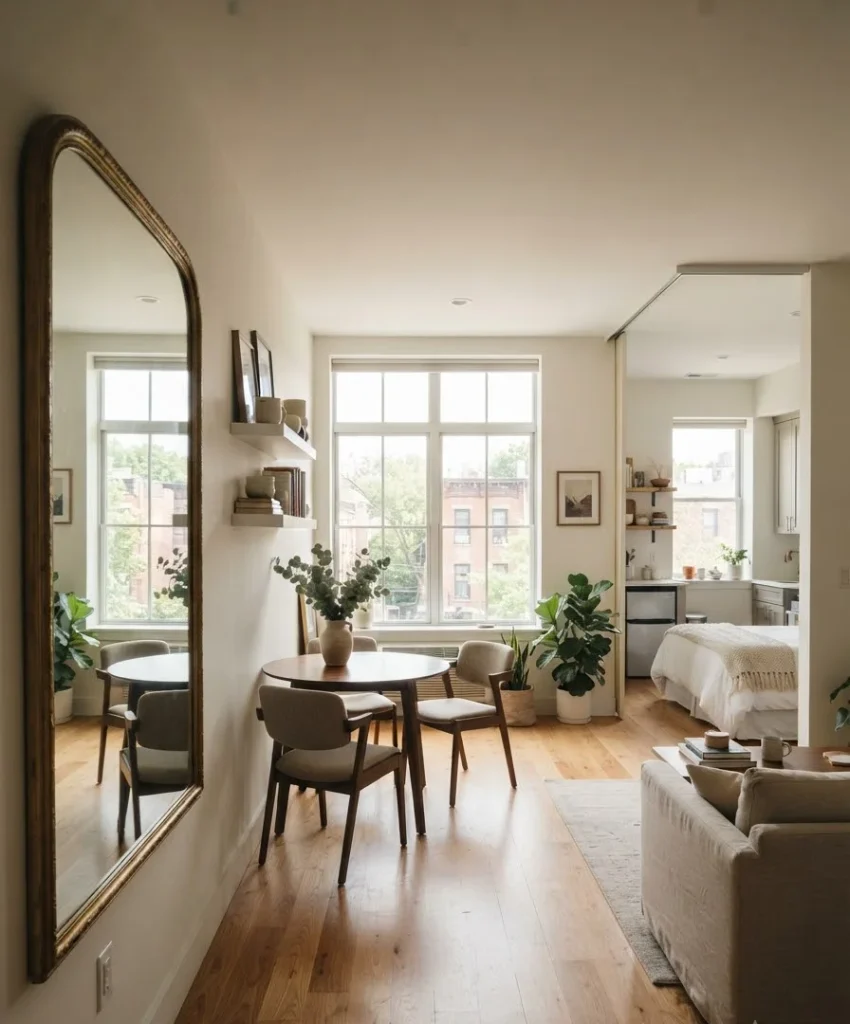
Everyone tells you to add a big mirror to a small room. Ever wondered why this advice refuses to die? Because it works.
A large mirror placed across from a window doubles the light bouncing through your space.
I put one behind my dining table, and guests genuinely ask if my apartment is bigger than it is.
4. Float your furniture off the walls (yes, really)
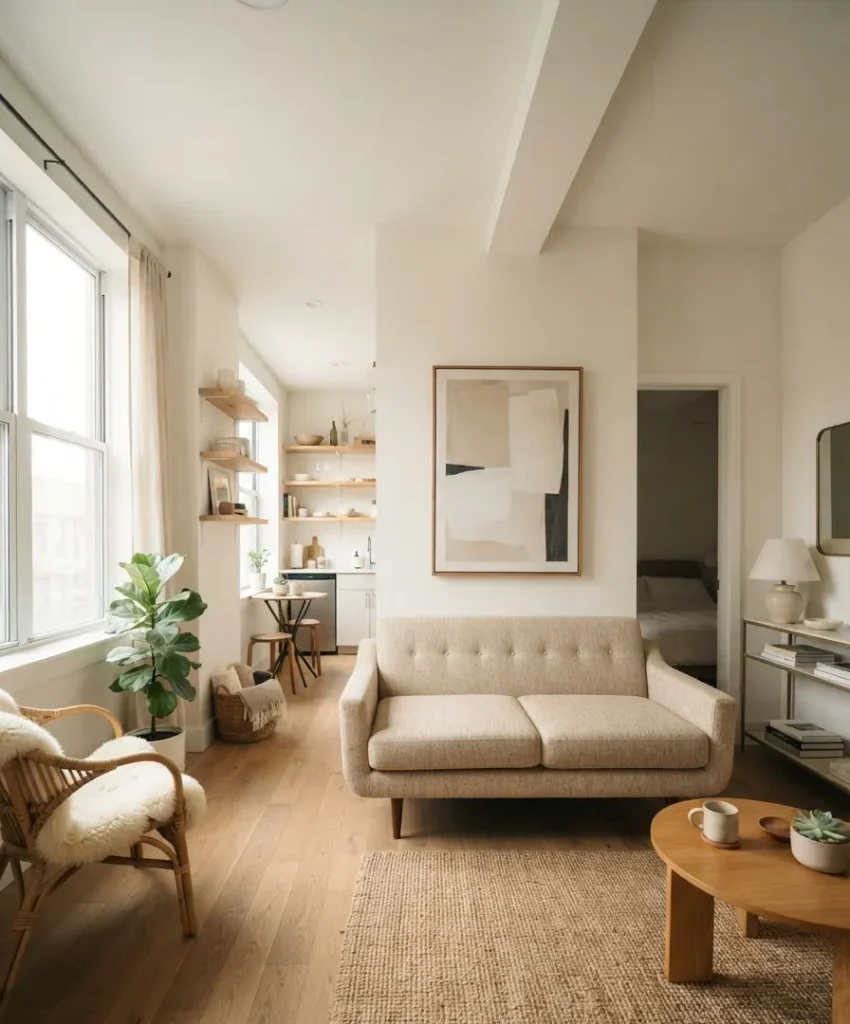
This one feels counterintuitive. Wouldn’t pushing everything against the walls open up more floor space?
Actually, no. Floating a couch or bed a few inches from the wall creates a sense of depth and flow, rather than a room that reads as a single flat box.
Interior designers call this “breathing room,” and it genuinely changes how a space feels to walk through.
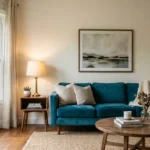
5. Choose furniture with visible legs
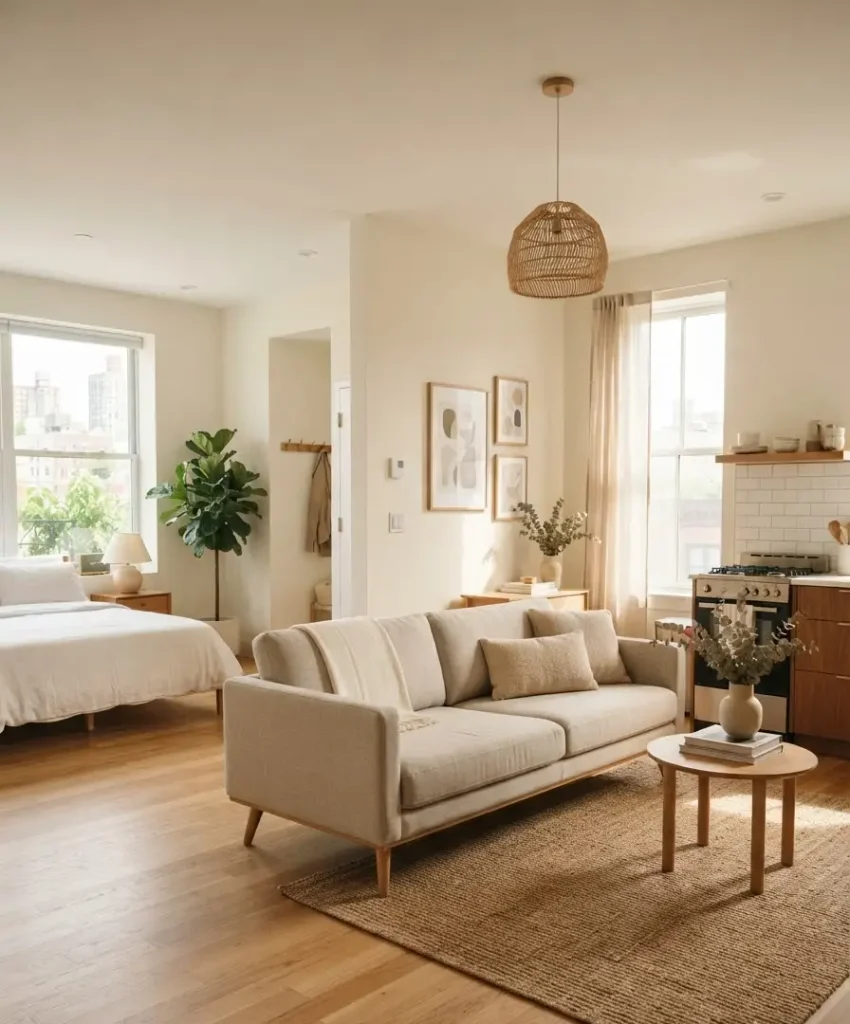
Furniture that sits flush to the floor blocks your sightline and makes a room feel heavier.
Furniture on slim legs lets light pass underneath, which tricks your brain into seeing more floor.
I swapped my old boxy sofa for one with thin wooden legs, and the difference was almost embarrassing. Same room, same size, totally different vibe.
6. Use vertical storage like your sanity depends on it (it kind of does)
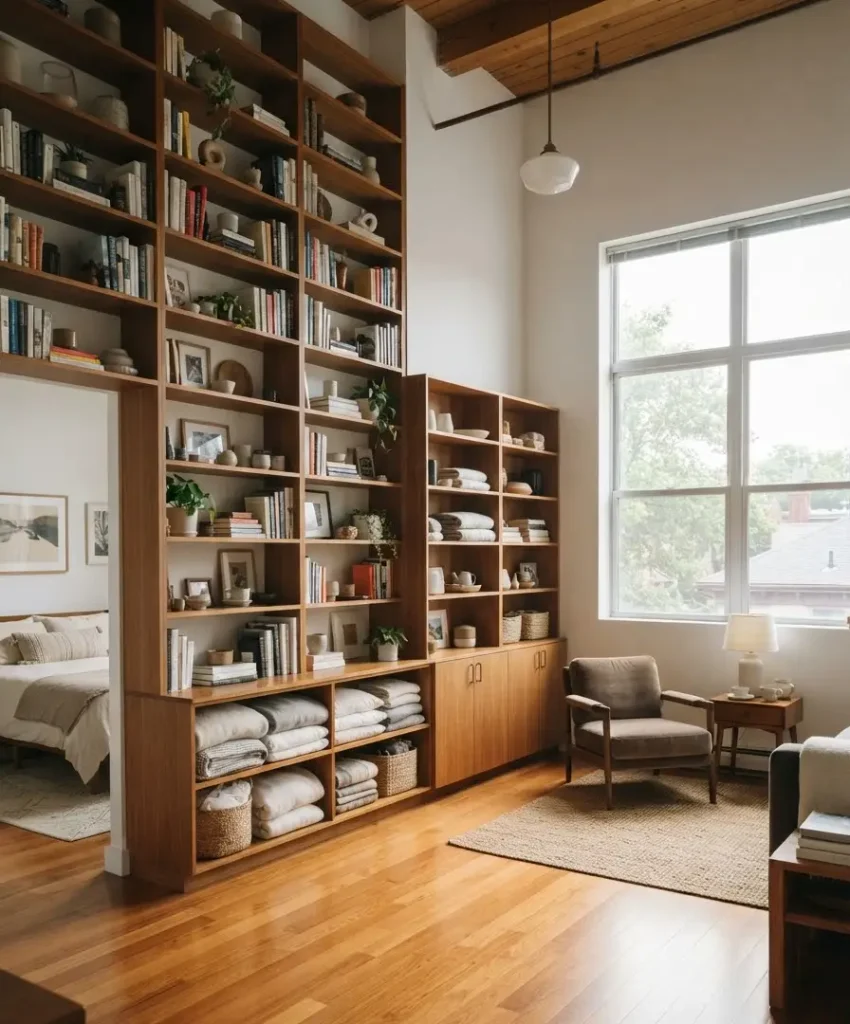
Floor space is precious in a studio. Wall space is usually wasted.
- Tall bookshelves draw the eye upward and add storage without eating floor real estate
- Wall-mounted cabinets in the kitchen free up counter space
- Pegboards in entryways hold keys, bags, and coats without a bulky console table
- Ceiling-height curtains make windows look taller than they are
7. Let your bed do double duty
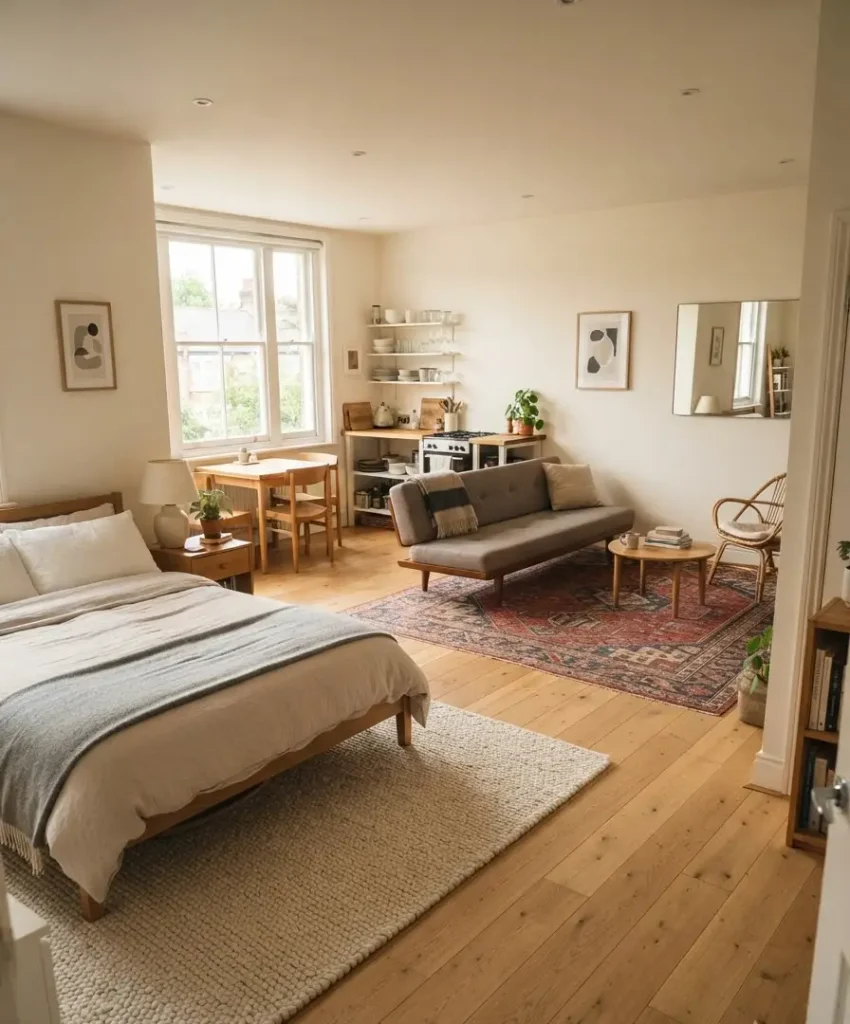
A studio means your bed and your living room share a zip code. So make the bed pull weight beyond sleeping.
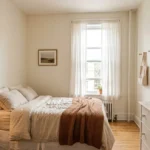
Add bolster pillows and a low bench at the foot of the bed, and suddenly it reads as a daybed during the day. I do this every morning, and it takes about 90 seconds.
8. Define zones without walls
You don’t need a wall to signal “this is the sleeping area” versus “this is the living area.” A rug does the same job.
Lay one rug under your bed and a different one under your seating area. Suddenly your brain reads two distinct spaces instead of one undifferentiated blob.
9. Curtains as room dividers, minus the thrift-store smell incident
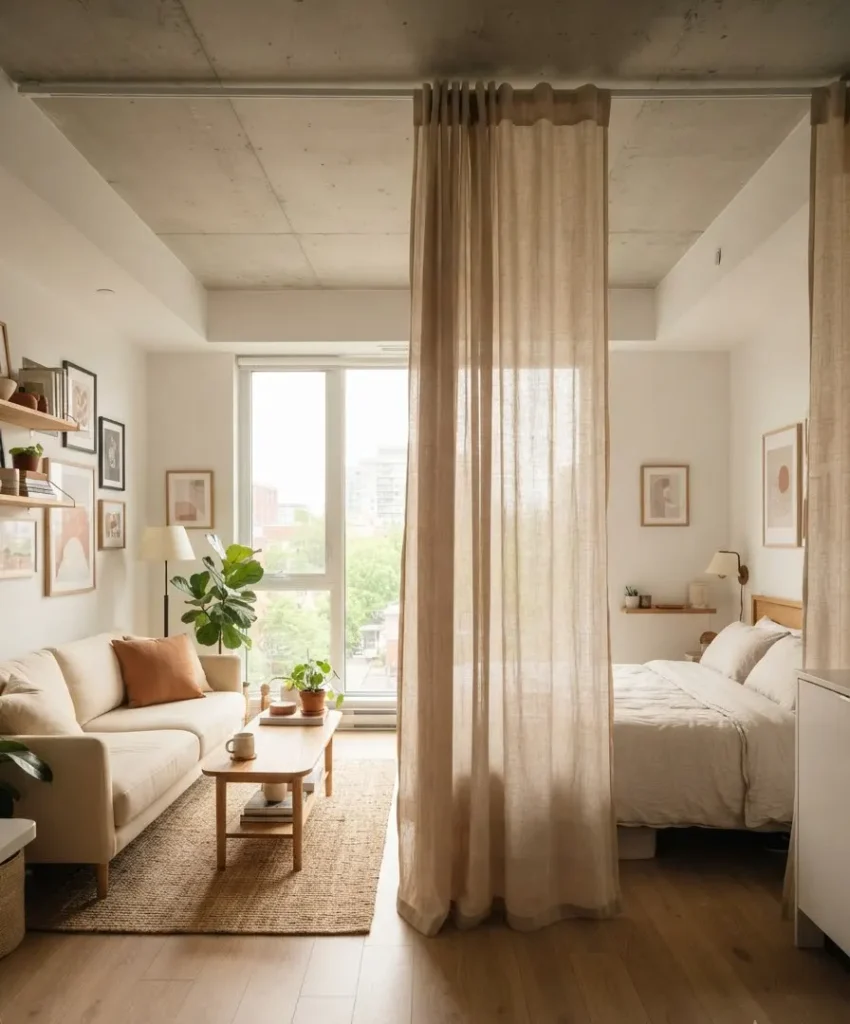
I mentioned my velvet curtain disaster earlier. Here’s the redemption arc: a lightweight linen curtain on a ceiling-mounted track can separate your sleeping nook from your living space without blocking light or feeling heavy.
Just wash the fabric before you hang it. Learn from my mistakes.
10. Multi-functional furniture is non-negotiable
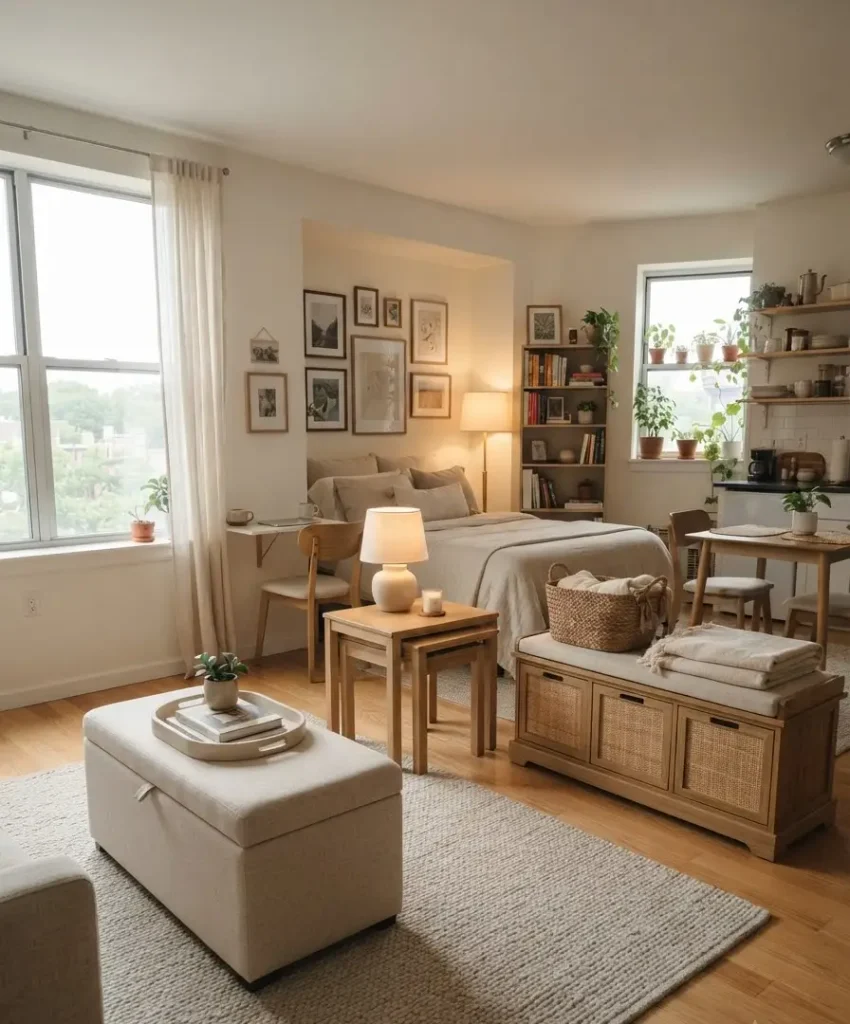
This isn’t optional in a studio. It’s survival gear.
| Furniture Piece | Hidden Function | Best For |
|---|---|---|
| Storage ottoman | Extra blankets, shoes | Living area |
| Murphy bed | Frees up entire floor | Sleep zone |
| Nesting tables | Stack away when unused | Small living rooms |
| Bench with drawers | Seating plus storage | Entryway |
11. Ditch the coffee table for a nesting set
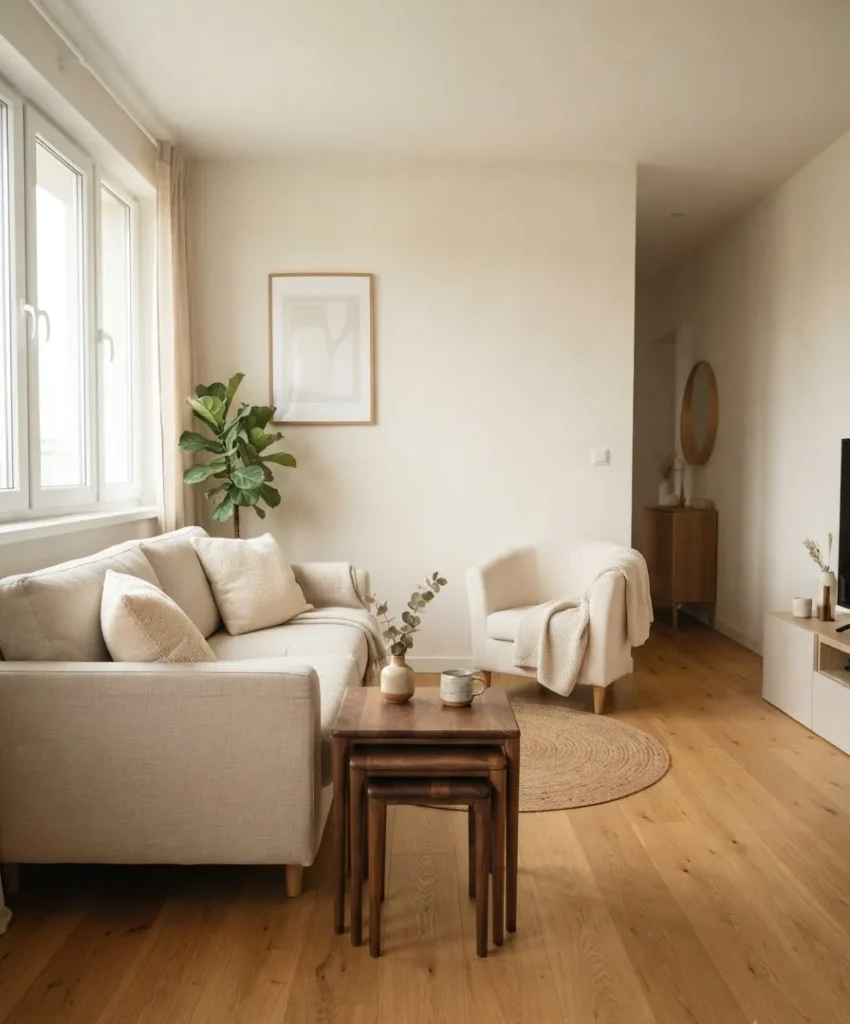
A single bulky coffee table eats visual space. Nesting tables tuck away when you’re not using them and pull apart when guests come over.
12. Under-bed storage is your best friend
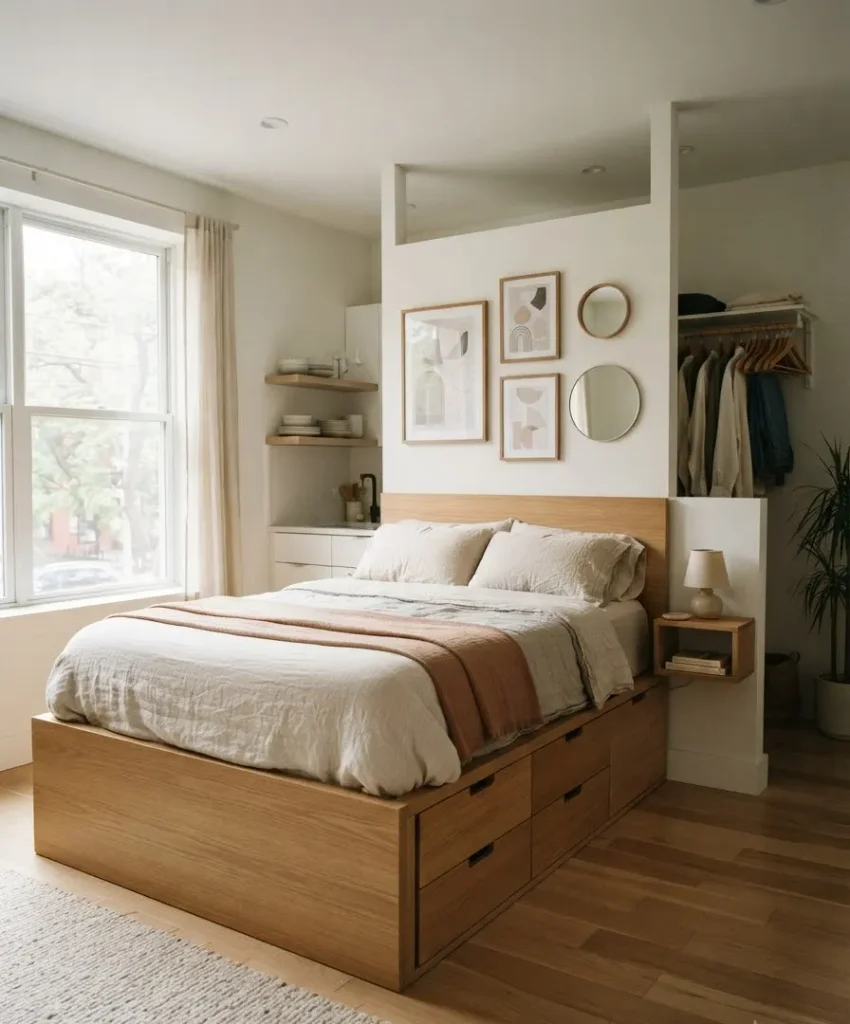
Bins, drawers, even vacuum bags under your bed frame hold off-season clothes and extra linens. It’s not glamorous. It works.
13. Command hooks over nails, always
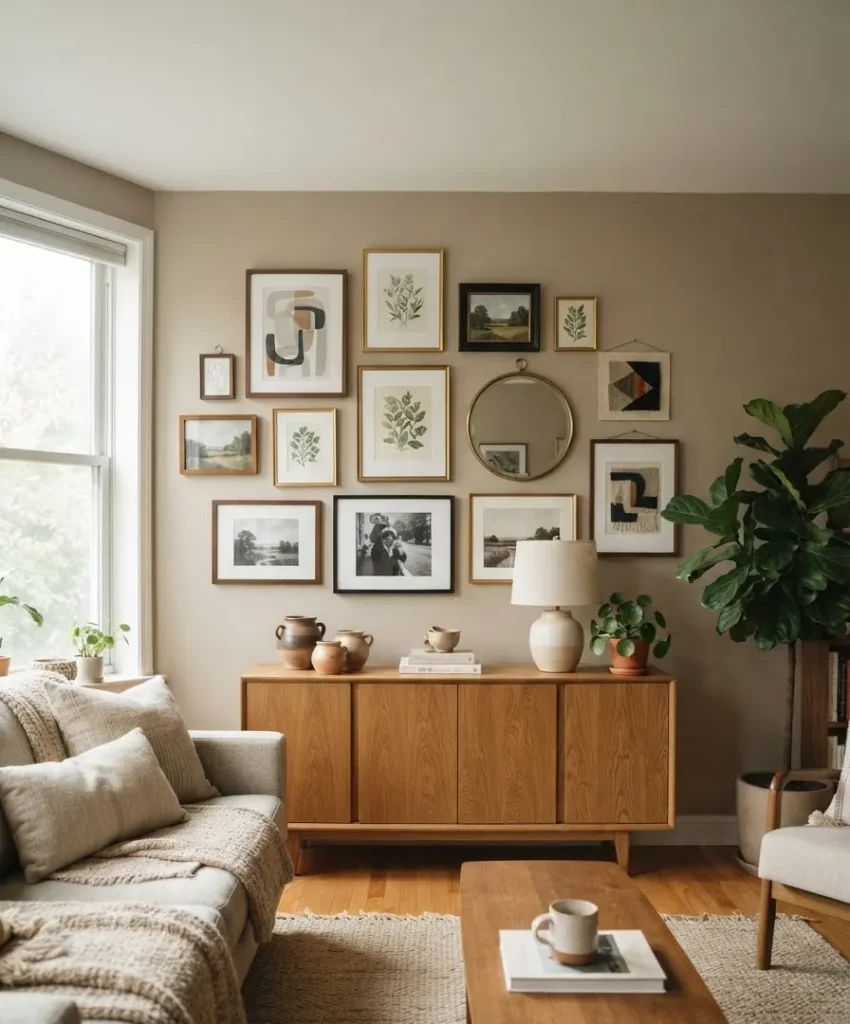
Renters, listen up. Command hooks let you hang art, mirrors, and plants without damaging walls, and you can rearrange as often as you want.
I rearrange my wall gallery roughly every three months because, honestly, I get bored. Command strips make that habit possible without a security deposit disaster.
14. Light layering beats one overhead fixture every time
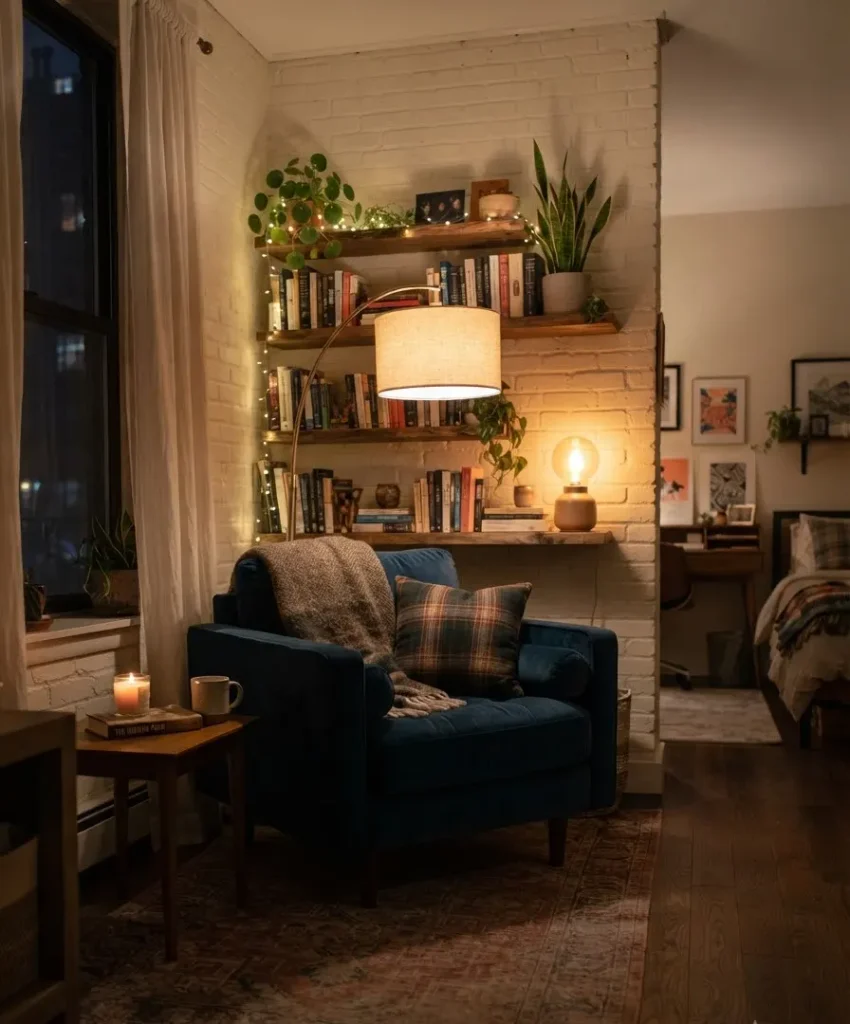
A single ceiling light creates flat, harsh shadows that make a small room feel institutional. Layer your lighting instead:
- A floor lamp in the reading corner
- String lights along a shelf or headboard
- A table lamp near the entryway
- Under-cabinet lighting in the kitchen
Multiple light sources at different heights create depth. Flat lighting flattens everything, including your mood.
15. Warm bulbs over cool bulbs
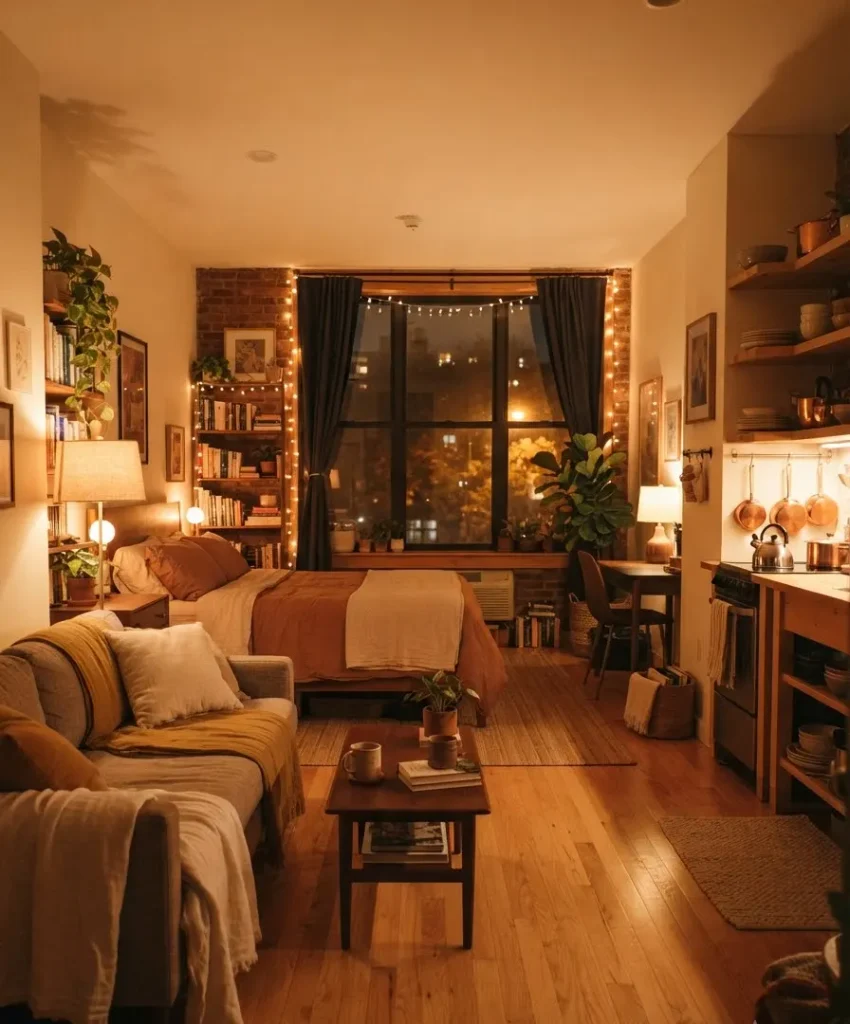
This one’s cheap and instant. Swap any harsh white bulbs for warm white (around 2700K). It’s the difference between “hospital waiting room” and “actual home.”
16. Hang curtains higher than your window frame
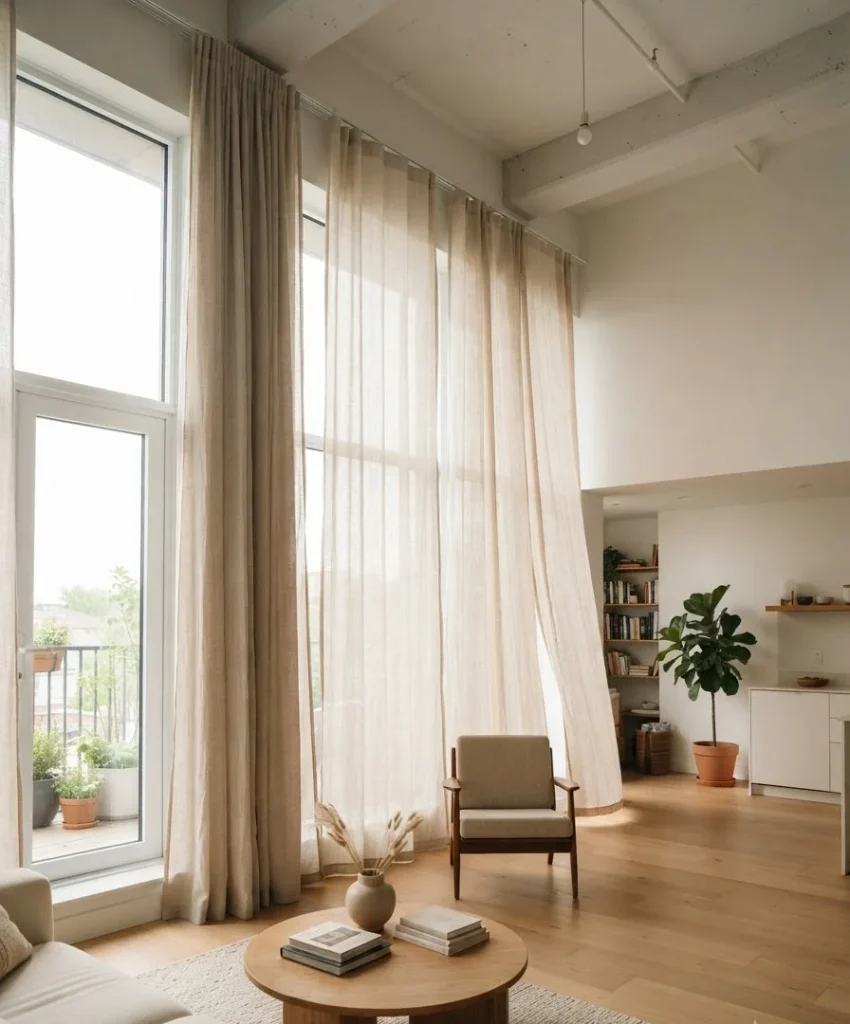
Mount your curtain rod six to eight inches above the window itself, and let the curtains fall all the way to the floor. This makes your ceiling look taller than it actually is, and it’s one of the cheapest tricks on this entire list.
17. Keep window treatments minimal
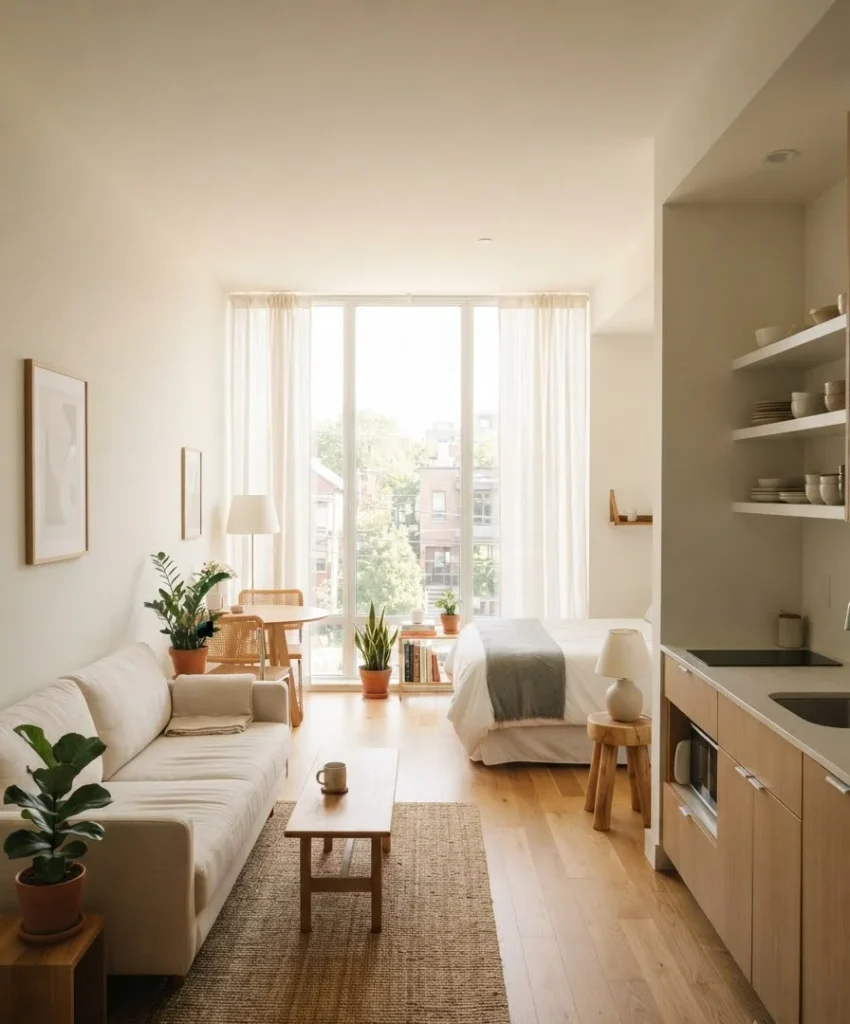
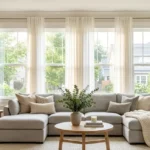
Heavy drapes block natural light, which is the enemy of a small space. Sheer or light-filtering fabric keeps privacy while letting daylight flood the room.
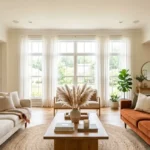
18. Add a statement rug, but keep it one shade
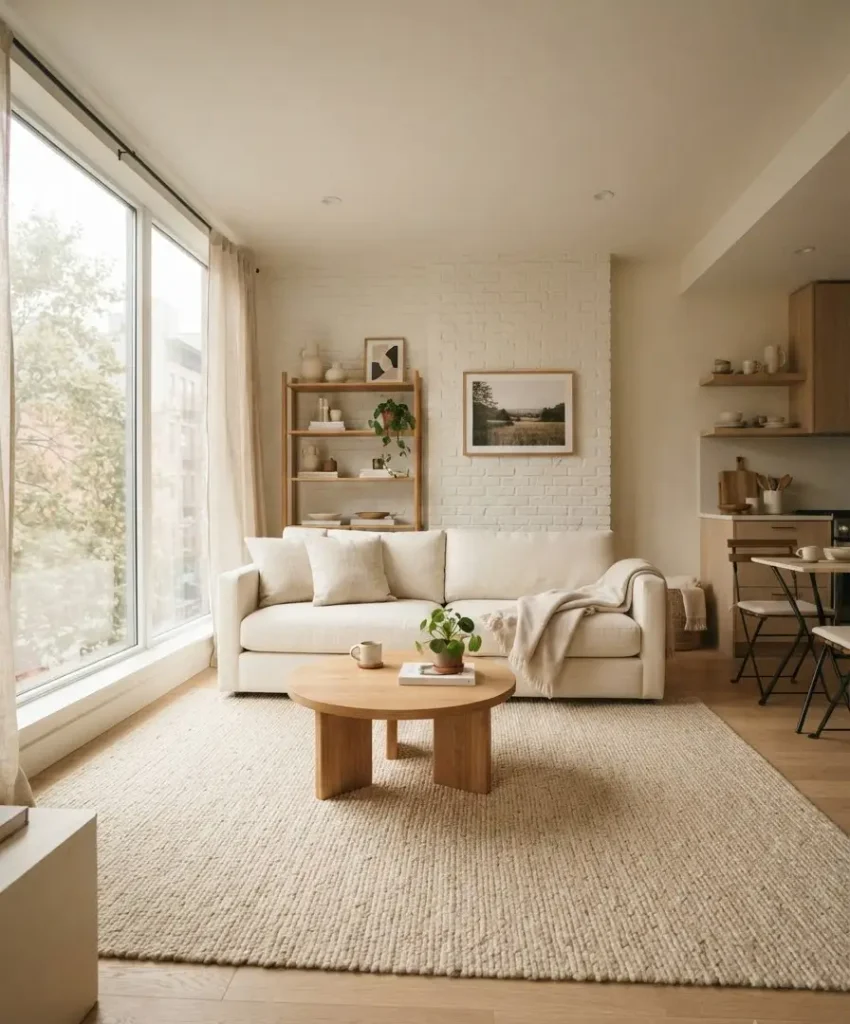
A patterned rug in busy colors chops up your floor visually. A rug in one or two tones, even with texture or a subtle weave, keeps your floor reading as one continuous surface.
19. Go big with one piece of art instead of a cluttered gallery wall
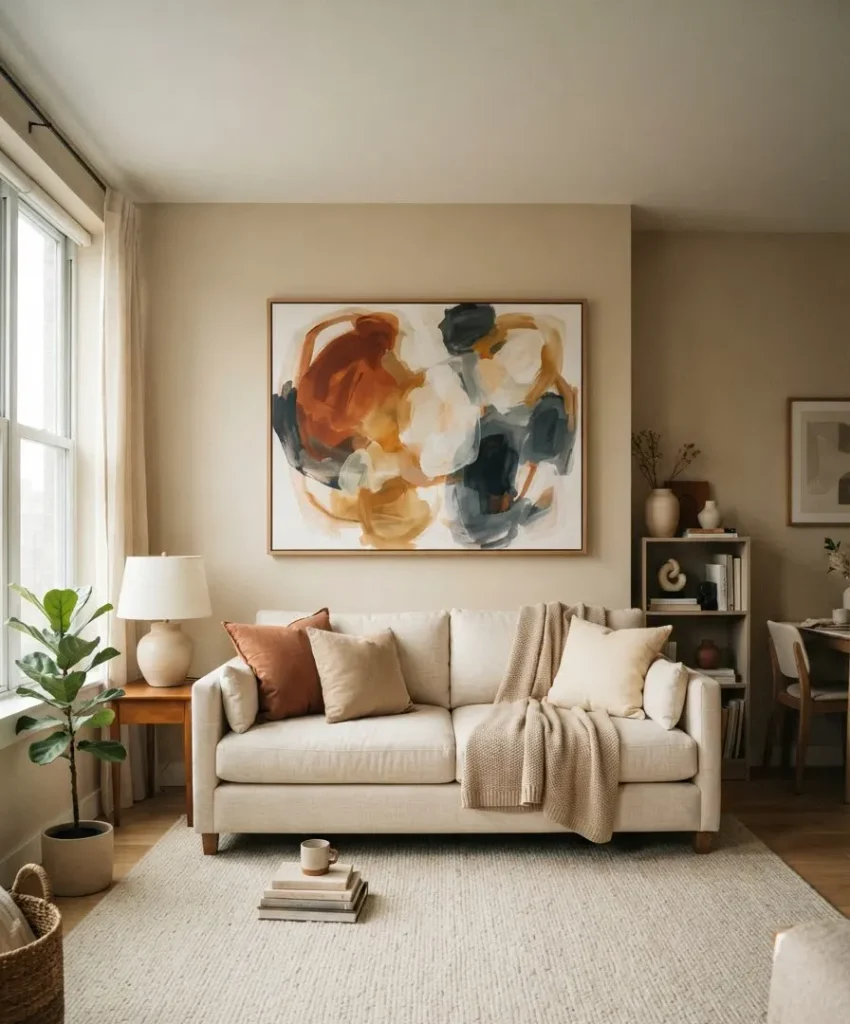
I love a gallery wall as much as the next person, but in a tiny apartment, one oversized art piece often reads as more intentional and less chaotic than ten small frames.
20. Use plants to add life without adding clutter
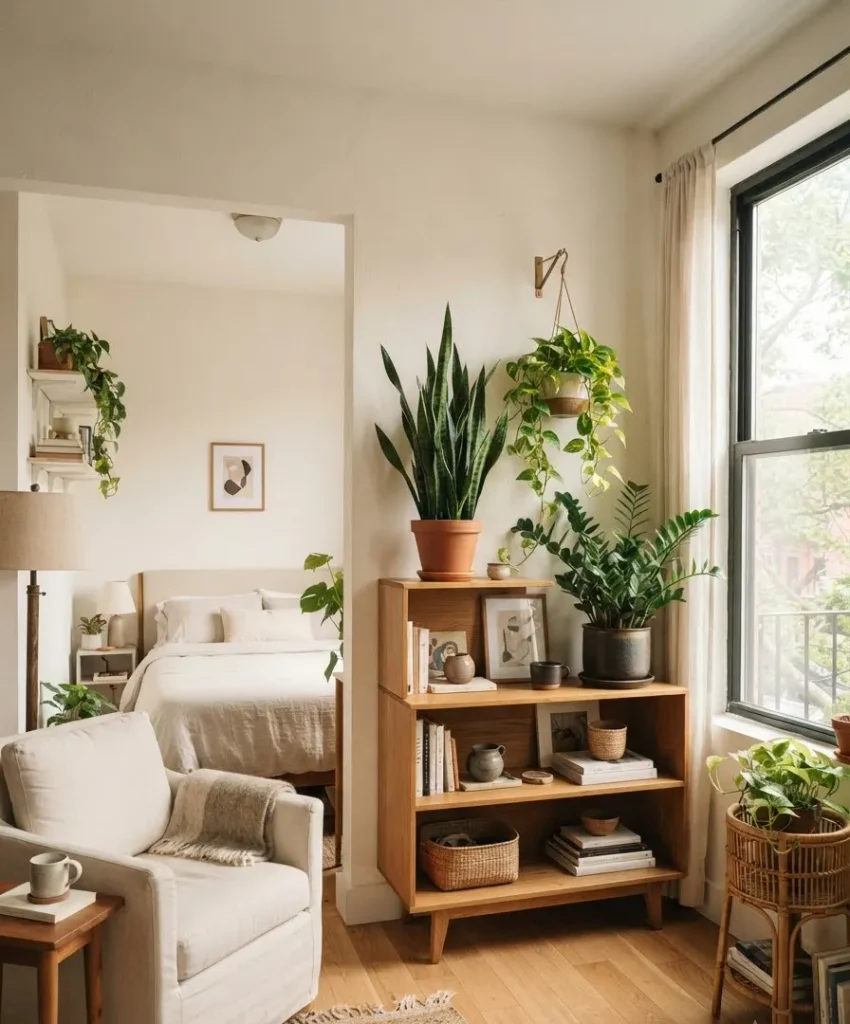
Plants bring warmth and color into a space that furniture alone can’t achieve. A few low-maintenance options work well in studios with mixed light:
- Pothos (nearly impossible to kill)
- Snake plants (tolerates neglect beautifully)
- ZZ plants (thrives in low light)
I’ve killed exactly one snake plant in my life, and I’m still not sure how I managed that.
21. Keep your kitchen counters clear
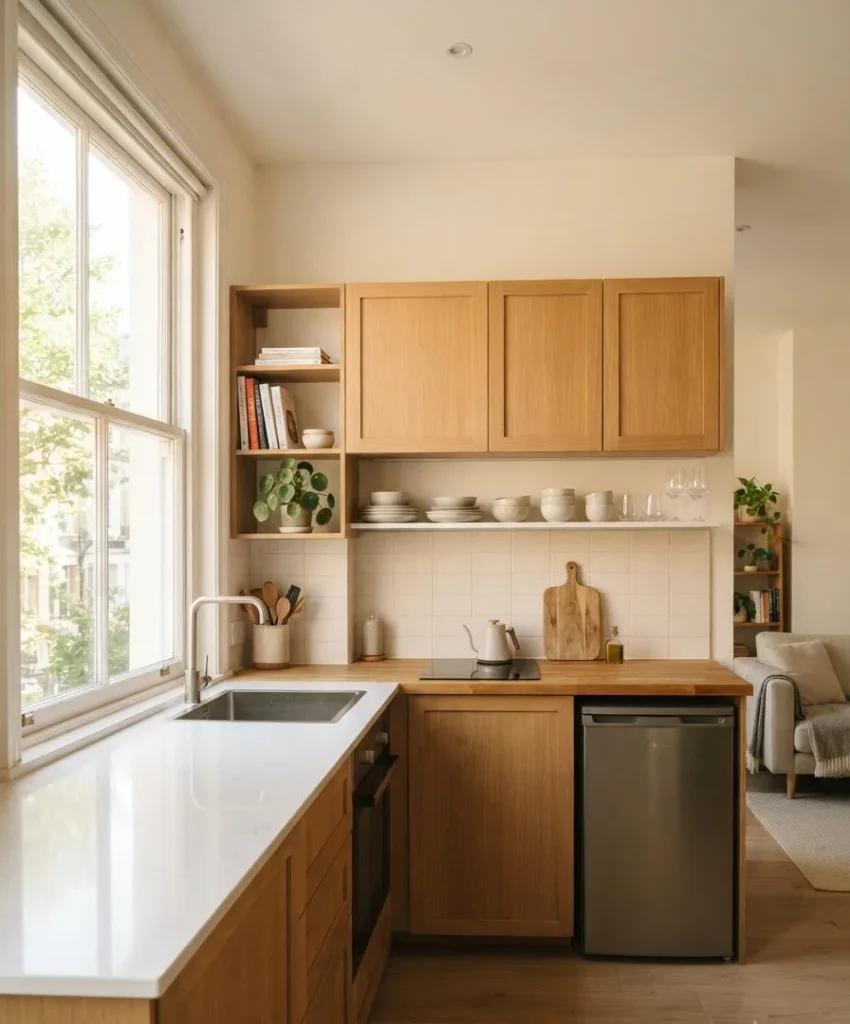
A cluttered counter is one of the fastest ways to make a small kitchen feel chaotic.
Store appliances you use less than weekly (looking at you, waffle iron) in a cabinet, and leave counters mostly bare.
22. Add a rolling kitchen cart
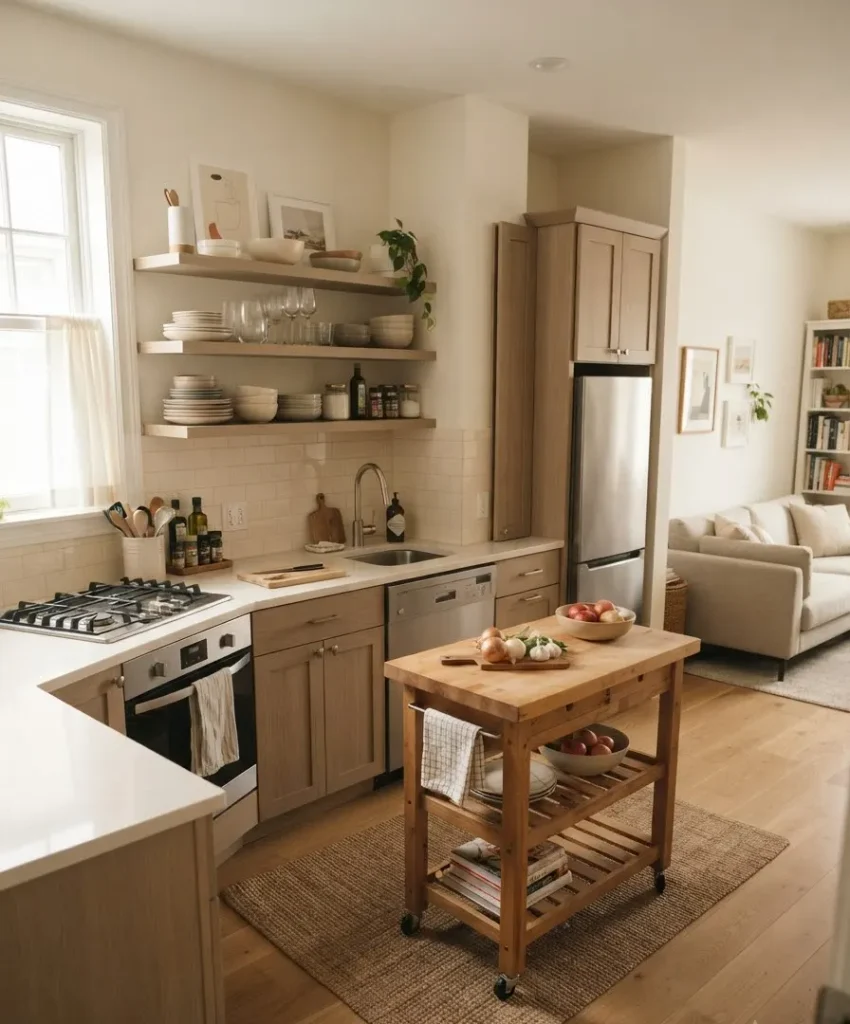
If your studio kitchen has zero counter space, a rolling cart adds prep space and storage, and you can push it out of the way when you’re done cooking.
23. Use closet organizers, not just hangers
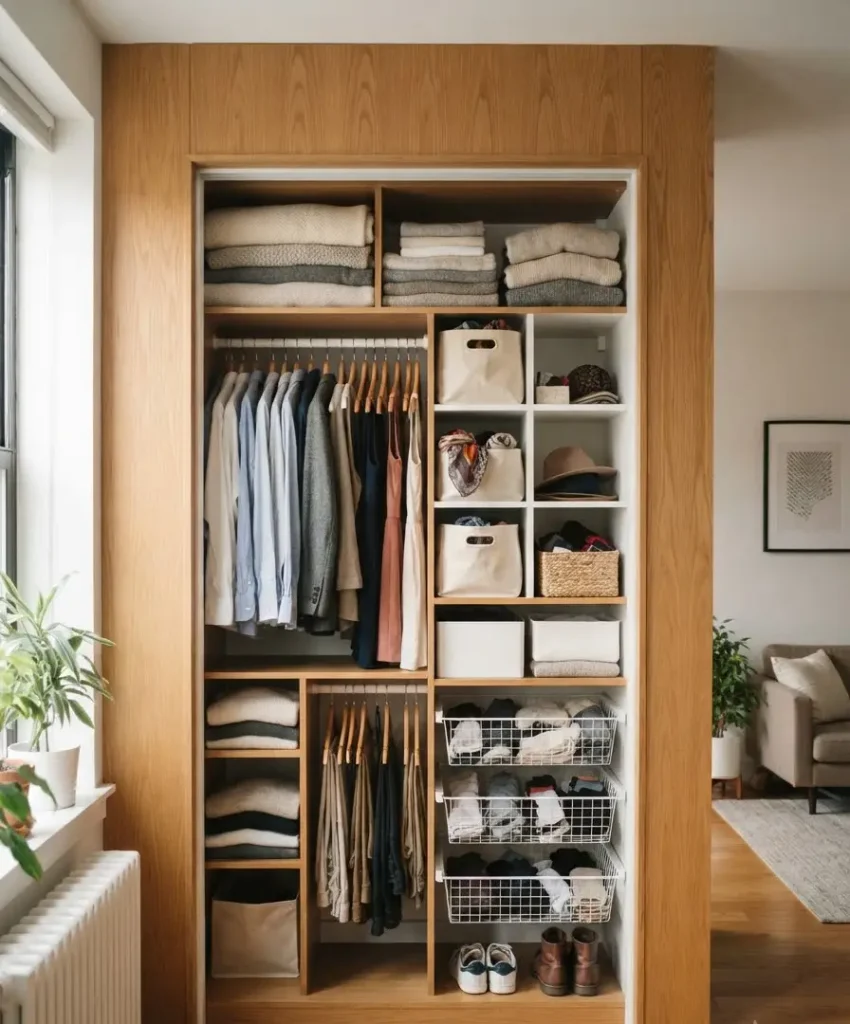
A basic closet rod wastes vertical space. Add shelving inserts, hanging organizers, and stackable bins to maximize every inch.
24. Choose a bed frame with drawers built in
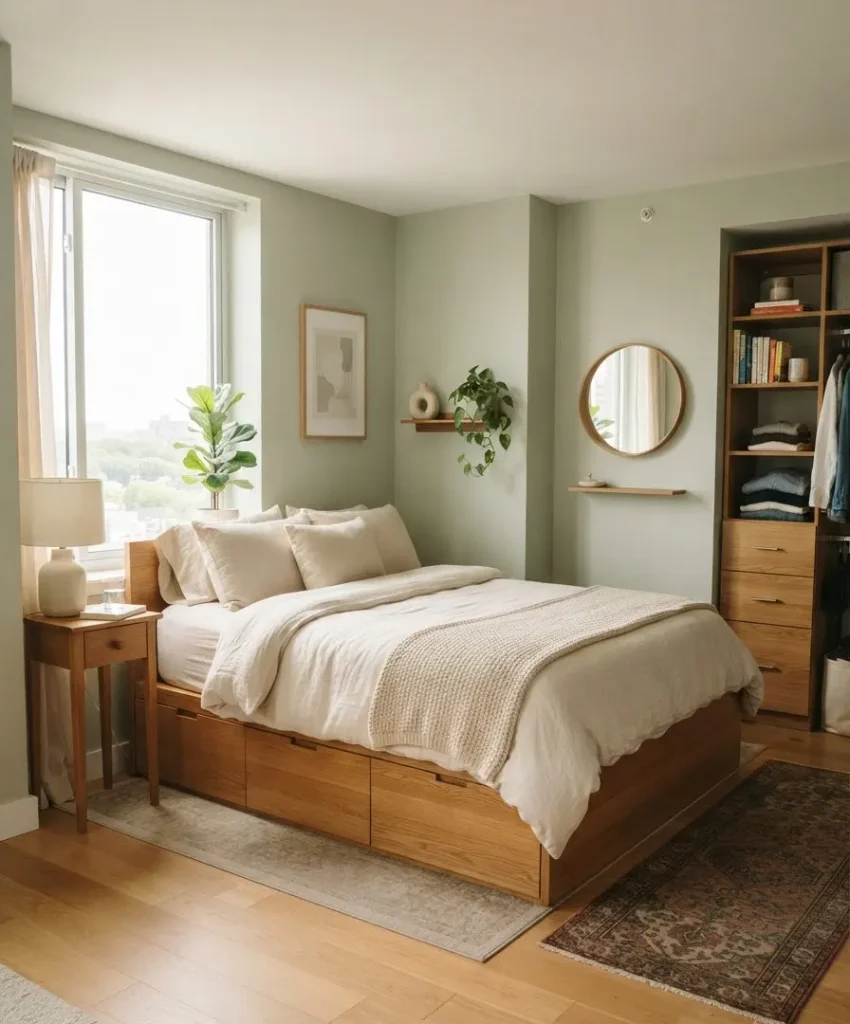
If you’re furniture shopping from scratch, a platform bed with built-in drawers eliminates the need for a separate dresser. That alone can free up several square feet.
25. Add a bar cart as a mini home office
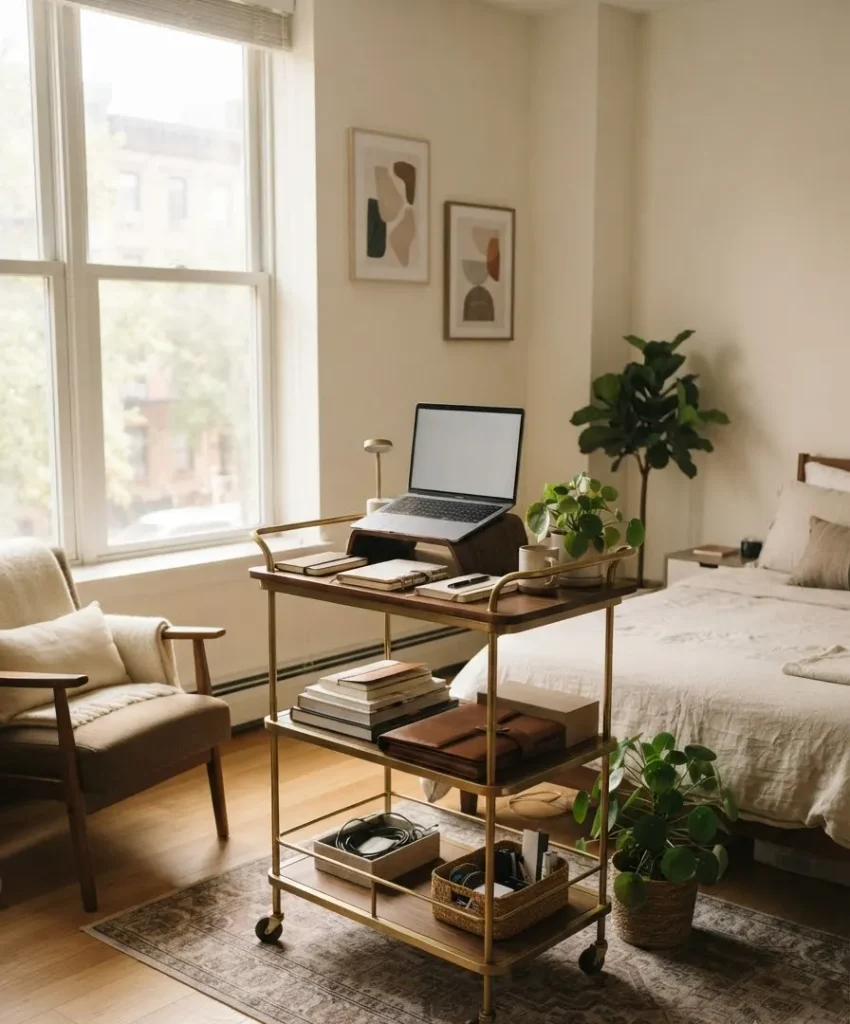
A rolling bar cart doesn’t have to hold liquor. Mine holds my laptop, notebooks, and a small desk lamp, and it rolls into a corner when I’m done working for the day.
26. Use a fold-down desk for work-from-home life
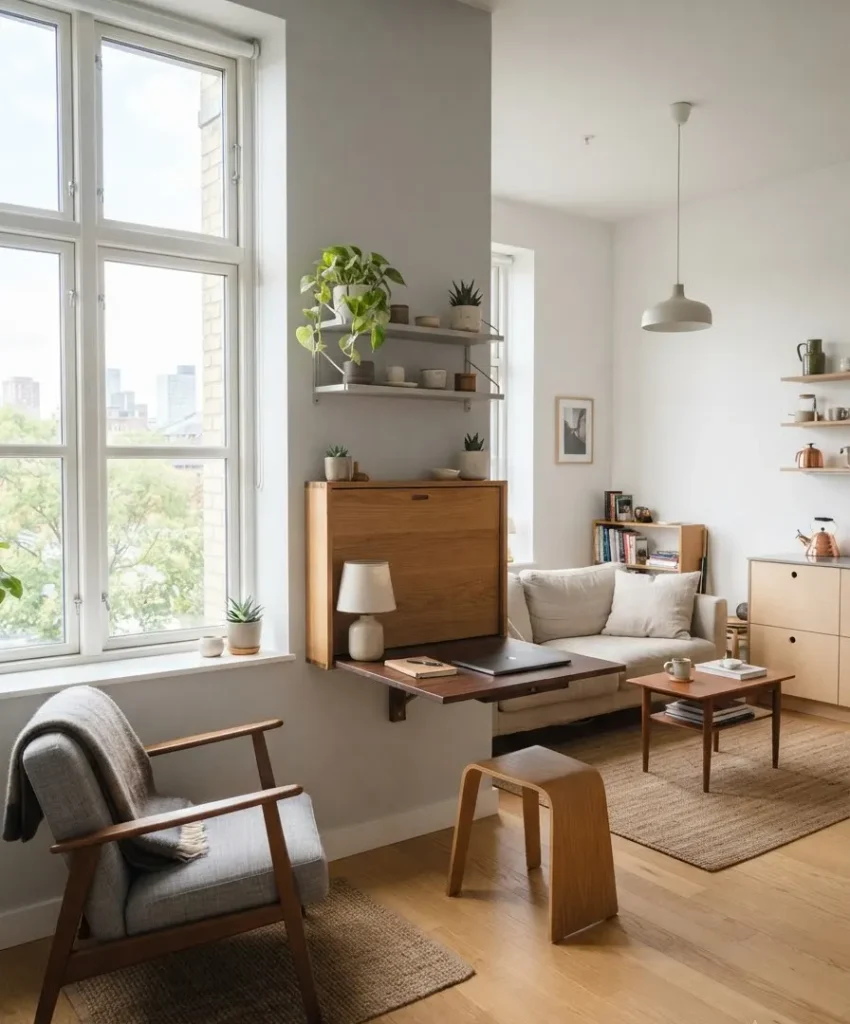
Wall-mounted, fold-down desks give you a workspace during the day and disappear at night.
If you work from home in a studio, this single piece of furniture might save your sanity.
27. Keep decor items in odd numbers
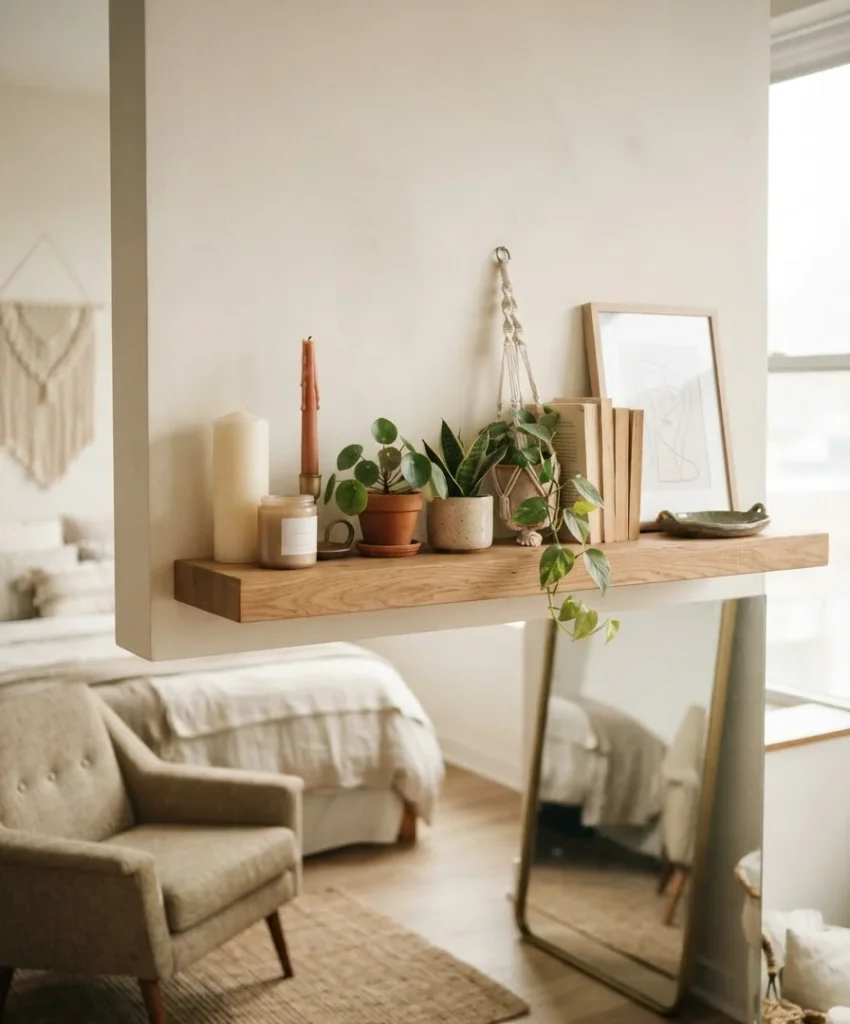
This is a small thing, but groupings of three (candles, books, small plants) tend to look more curated than groupings of two or four. Not sure why our brains prefer odd numbers, but they do.
28. Add a full-length mirror near your entry

Beyond function, a full-length mirror near your door reflects light back into the room and gives the illusion of an additional doorway or hallway.
29. Use scent to make a small space feel like an experience
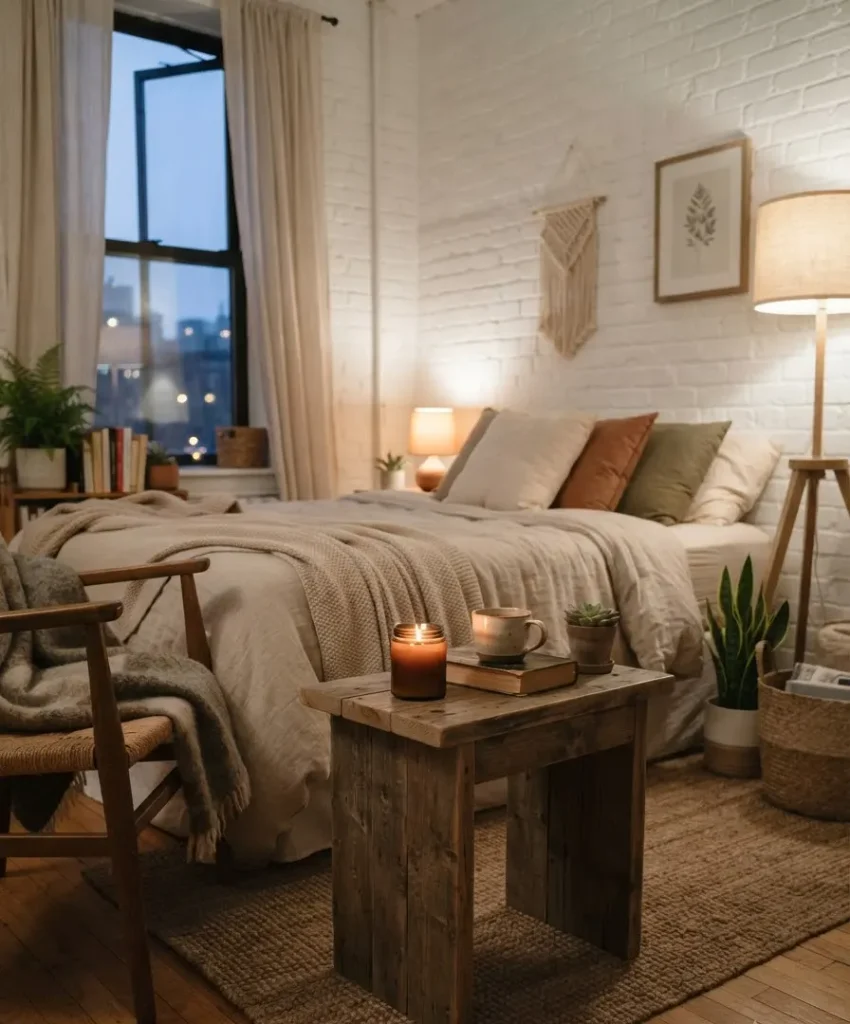
This one’s slightly off-topic, but hear me out: nothing kills the “cozy” vibe faster than a small apartment that smells like whatever you cooked three days ago.
A simple candle or diffuser does more for how “big and welcoming” a space feels than most people give it credit for. I learned this one the hard way after a particularly ambitious fish taco night.
30. Edit constantly
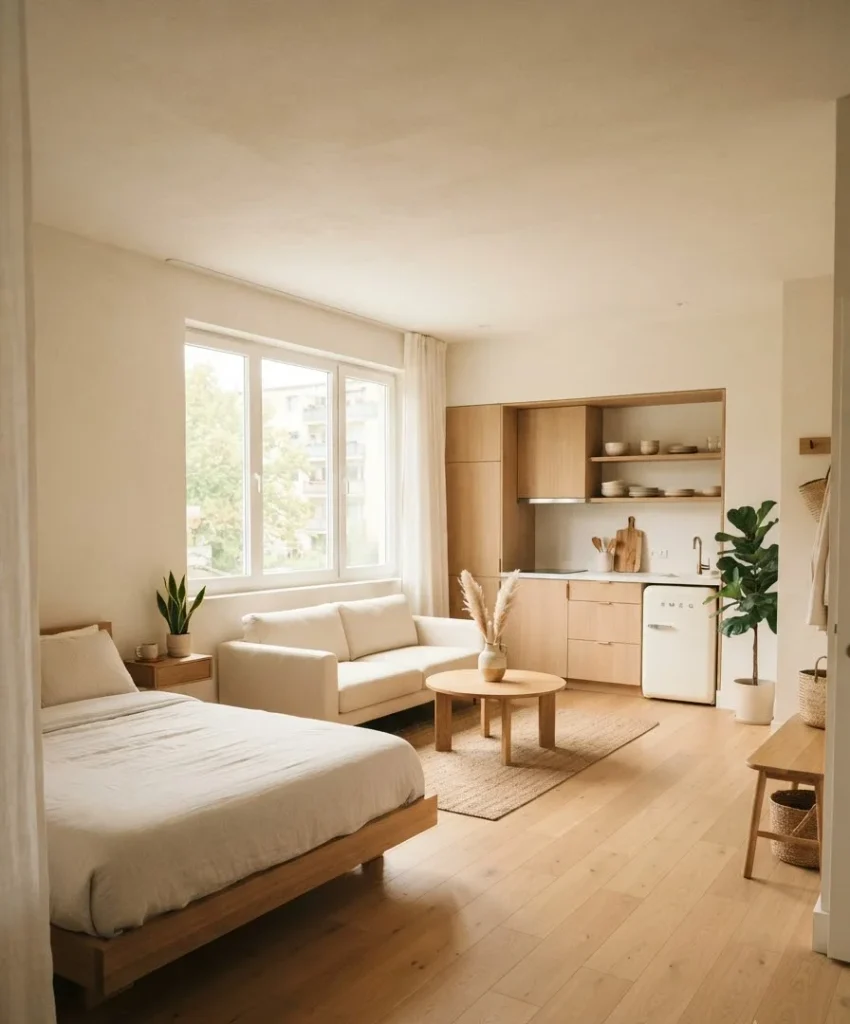
The last idea isn’t a purchase. It’s a habit. Every few months, walk through your space and ask what you haven’t used in 60 days. If you can’t answer, it probably needs to go.
Small spaces don’t stay small-feeling because of what you add. They stay open because of what you’re willing to remove.
Apartment Therapy’s small space series has some genuinely good before-and-afters if you want more visual proof this works.
A quick gut check before you start
| Question | If Yes | If No |
|---|---|---|
| Do I use this weekly? | Keep it | Store or donate |
| Does it block natural light? | Move or remove it | Leave it |
| Does it sit flush to the floor? | Consider replacing | Fine as-is |
| Is it one of five wall colors? | Simplify | Good to go |
FAQs
Do small studio apartments actually need less furniture, or just smaller furniture?
Both, honestly. You need fewer total pieces, and the pieces you keep should be scaled to the room.
A giant sectional in a 300-square-foot studio will dominate the space no matter how you arrange it.
What’s the single cheapest change that makes the biggest visual difference?
Warm lightbulbs and a well-placed mirror. Both cost under $30 combined, and both change how a room feels almost immediately.
Is it worth buying multi-functional furniture even if it costs more upfront?
In most cases, yes. A storage ottoman or a bed with built-in drawers replaces two or three separate purchases, which usually balances out the higher initial price.
So here’s my actual final thought: your studio apartment isn’t a smaller version of someone else’s house.
It’s its own thing, with its own rules, and honestly, once you stop fighting the size and start designing around it, it gets fun. Wow, I did not expect to feel this strongly about furniture legs when I started renting this place, but here we are.