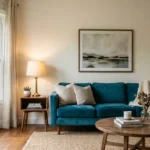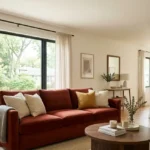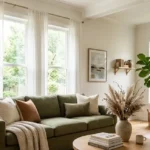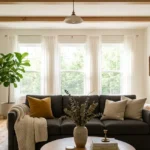
I redid my living room three winters ago because I was tired of it feeling like a hotel lobby. Nice enough. Completely soulless. One weekend of moving furniture and swapping lightbulbs later, it felt like a room I actually wanted to sit in.
That’s the thing about coziness. It’s not about spending a fortune on a full renovation. It’s about a handful of small, deliberate choices that add warmth, texture, and personality to a space.
I’ve pulled together 25 of them below, based on what’s actually worked in my own home and in rooms I’ve helped friends fix.
Pin this one. You’ll want to come back to it.
Start with color, because it does most of the work
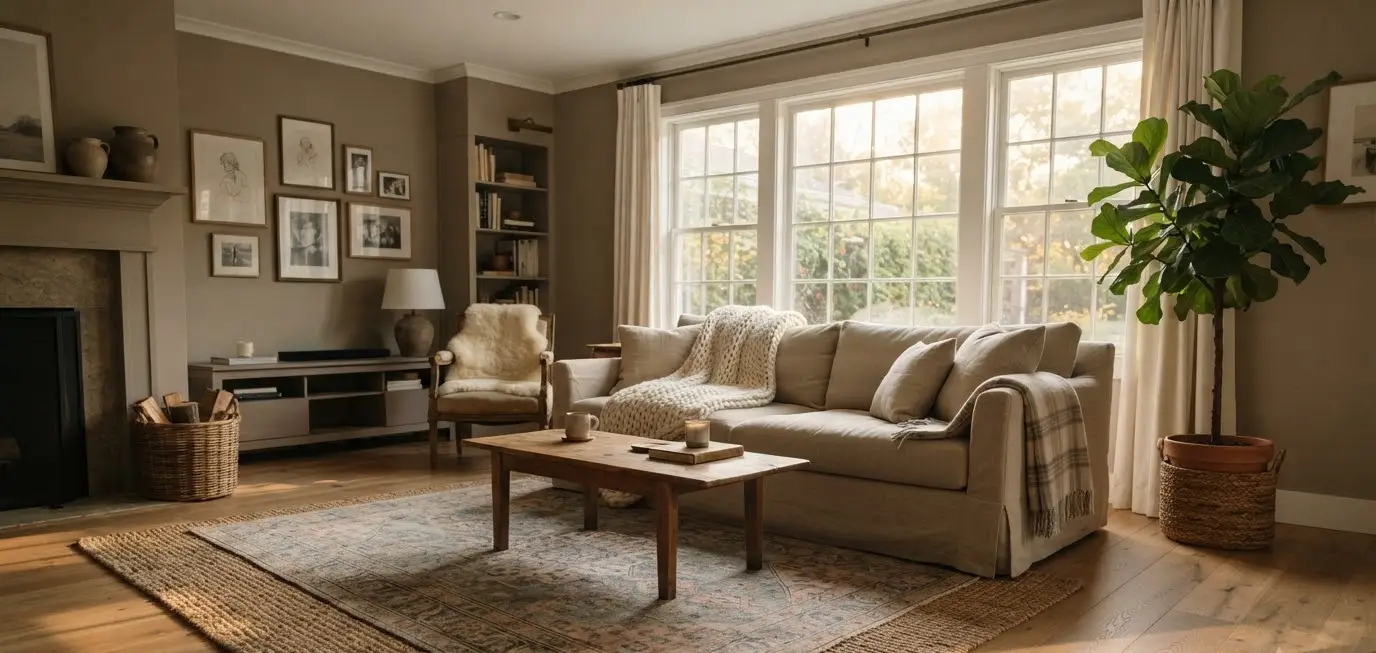
Color sets the emotional temperature of a room before anything else does. A cold white wall reads clinical no matter how many candles you light around it.
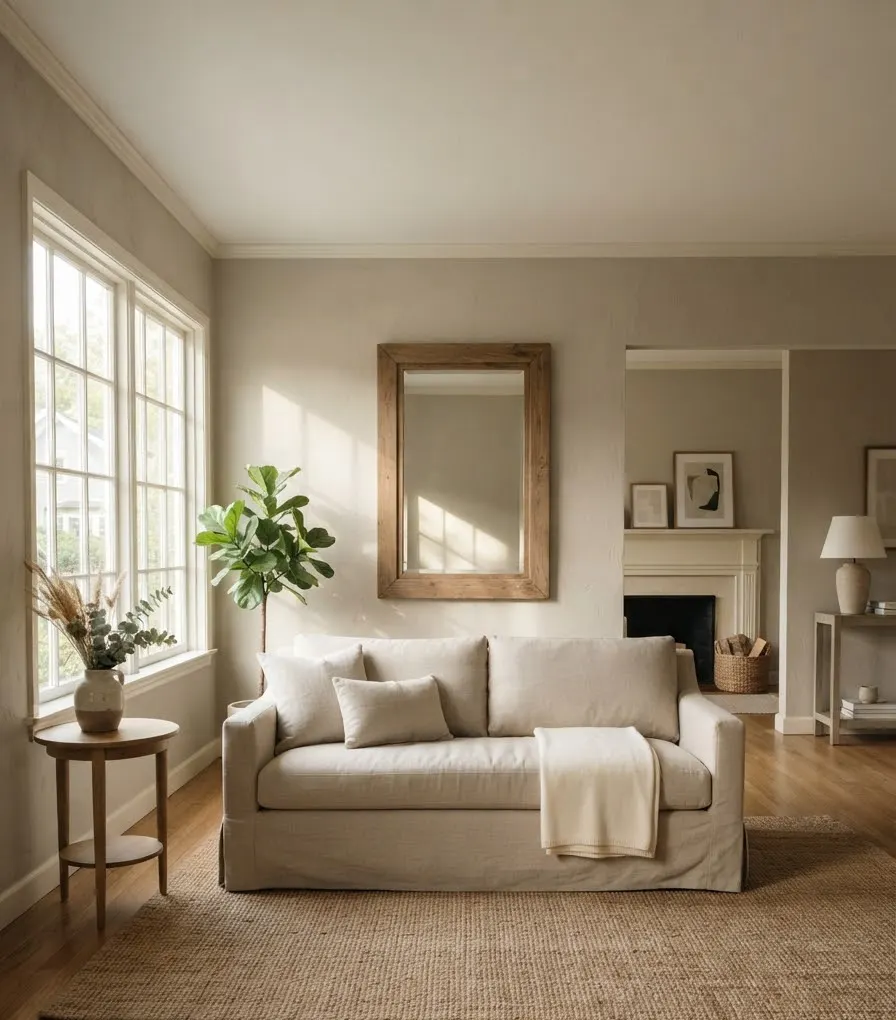
- Swap stark white for a warm neutral. Think greige, warm taupe, or soft ivory instead of bright white. It’s a small shift that changes how light bounces around the whole room.
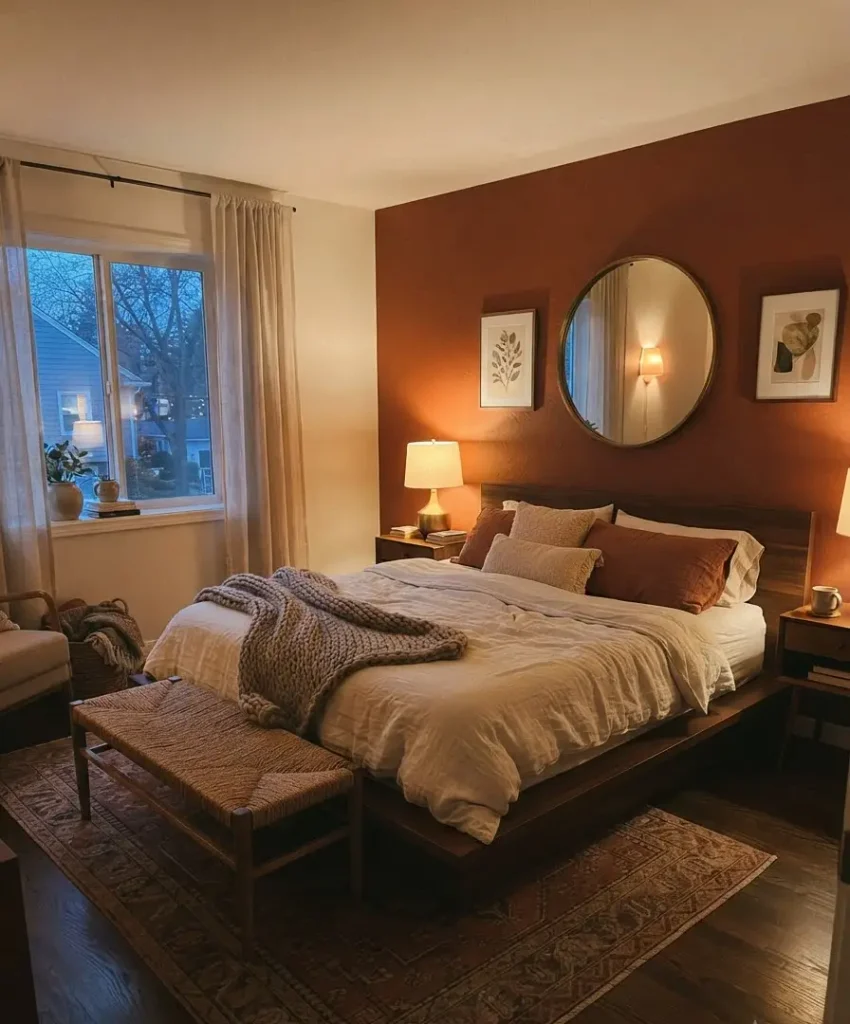
- Try a moody accent wall. Deep terracotta, rust, or forest green in one spot adds depth without overwhelming the space. I did this in my bedroom and it instantly felt like a room built for hibernating, in a good way.
- Change your lightbulbs to warm white (around 2700K). This one’s criminally underrated. Cool-toned bulbs make everything look like a break room. Warm bulbs make the same lamp feel like candlelight.
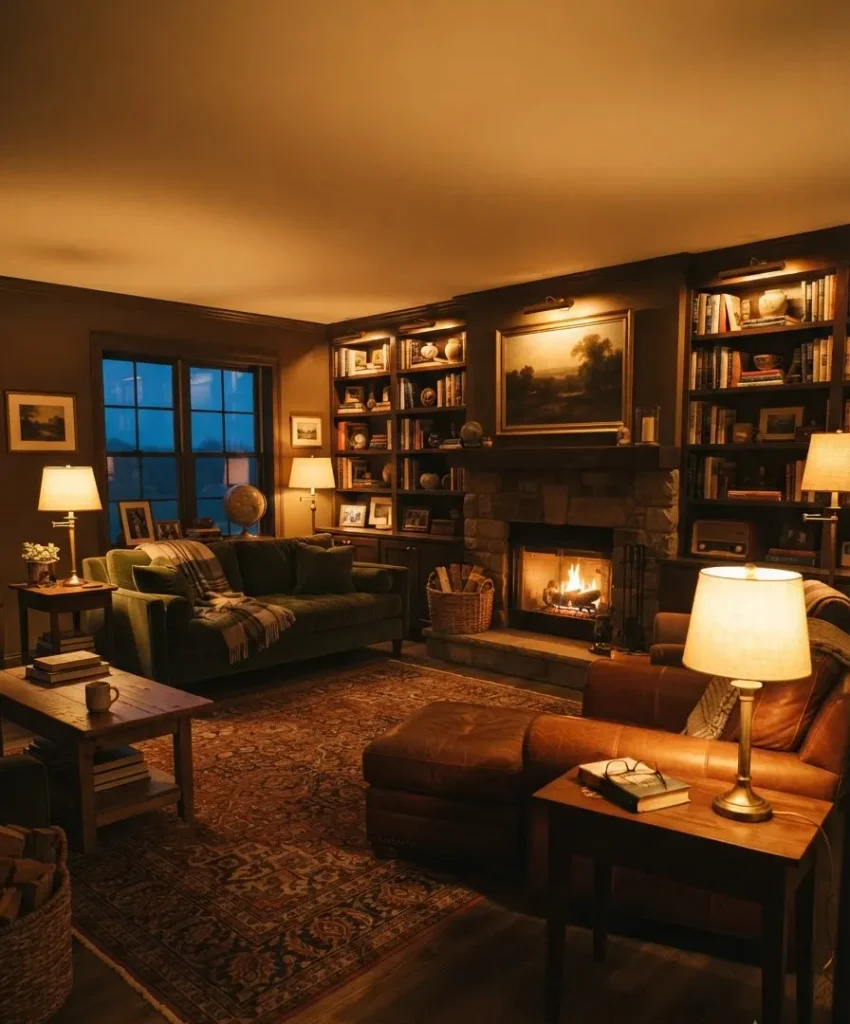
According to the Sherwin-Williams color inspiration hub, warm, earthy tones have stayed dominant in home palettes for a reason: they photograph well and they live well, which matters if half your motivation here is a nice Pinterest board.
Layer textures like you mean it
A cozy room almost always has more than one texture happening at once. Smooth, rough, soft, structured. That mix is what makes a space feel collected instead of staged.
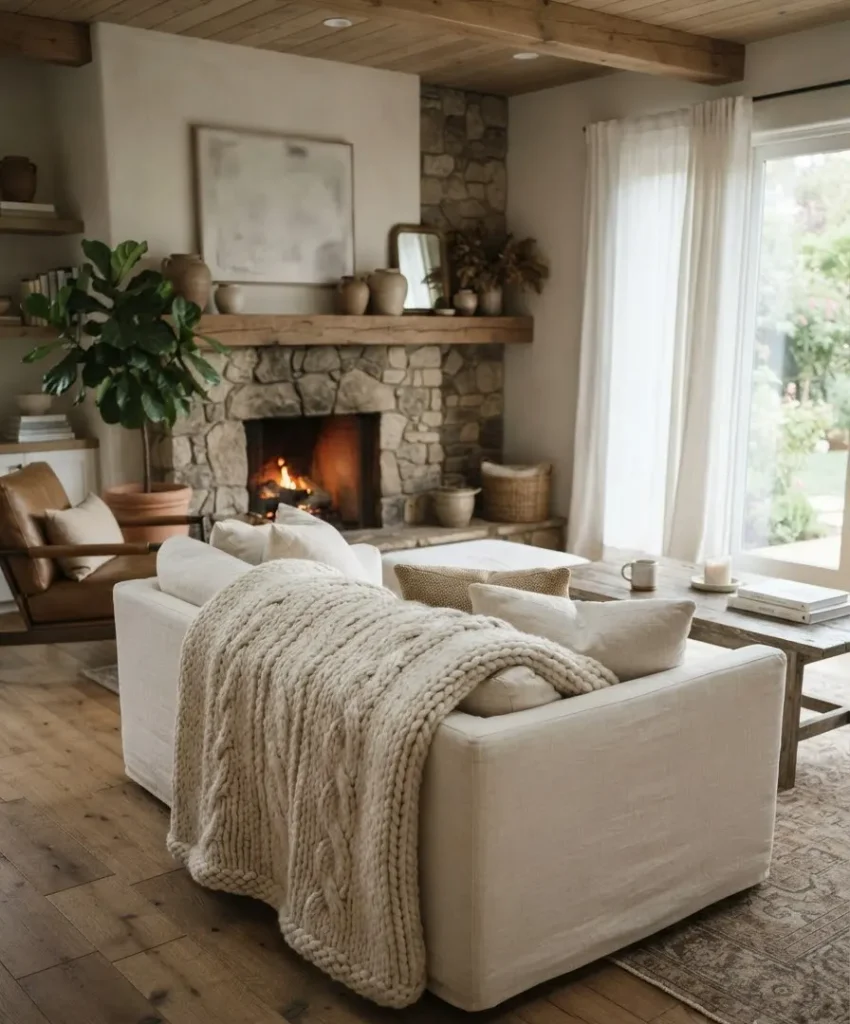
- Add a chunky knit throw somewhere visible. Draped over the arm of a sofa, folded at the foot of a bed, wherever. It signals comfort before anyone even sits down.
- Layer rugs. A smaller patterned rug over a larger jute or sisal one adds depth and softens hard floors. I was skeptical of this until I tried it in my hallway. It works.
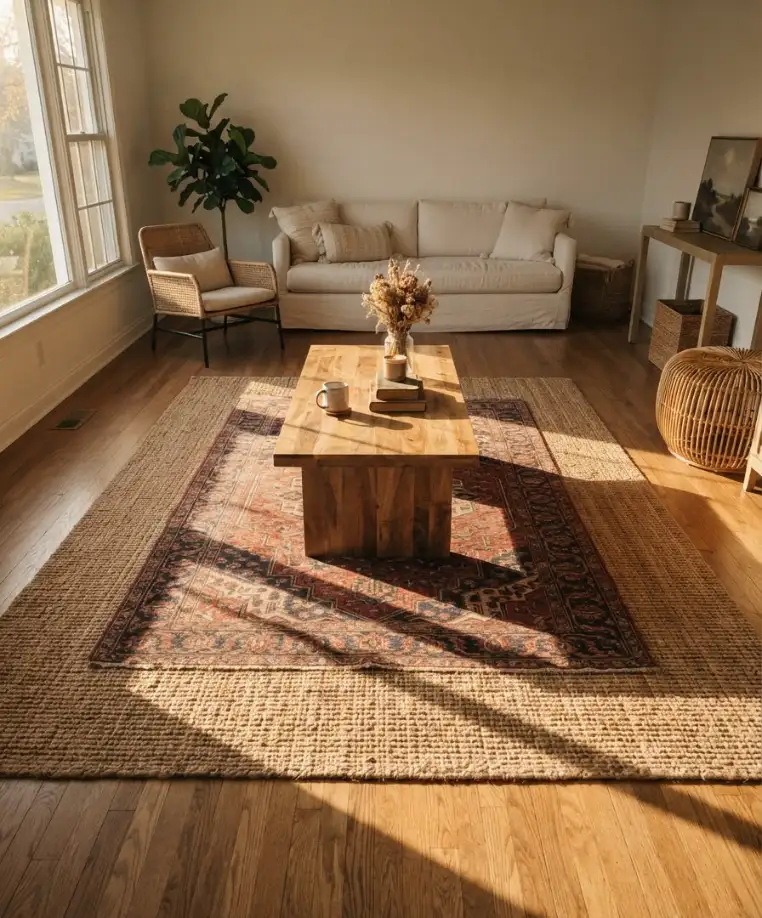
- Mix at least three fabrics in one seating area — velvet, linen, boucle, whatever you’ve got. One-note textiles look like a showroom.
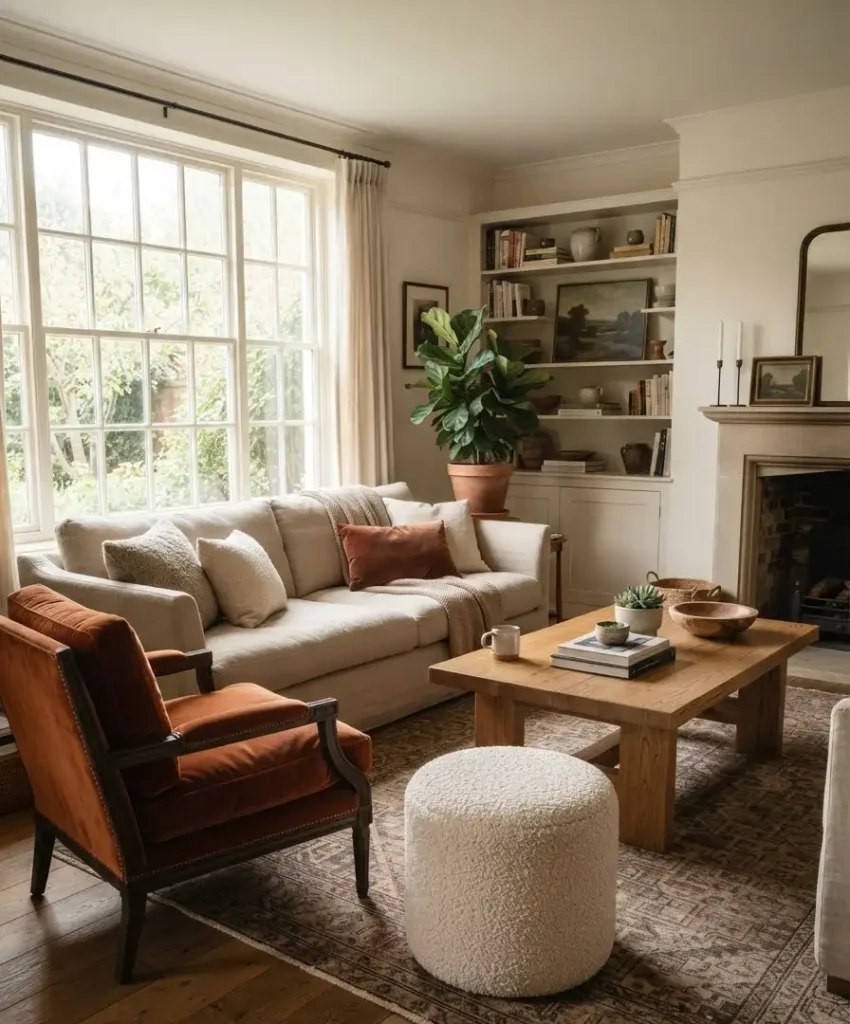
- Bring in a faux fur or sheepskin accent. A throw on a reading chair or a small rug under a coffee table adds instant tactile warmth without much cost.

Here’s a small opinion I’ll stand by: matching every cushion to the sofa fabric is a mistake. It looks tidy, sure, but it also looks like nobody actually lives there.
Fix your lighting before you buy anything else
Lighting is the single most effective, most overlooked lever in interior design. You could have gorgeous furniture and a killer color palette, and one harsh overhead light will undo all of it.
- Turn off the overhead light. Seriously, just try it for a week. Use lamps instead and see how different the room feels by 8pm.
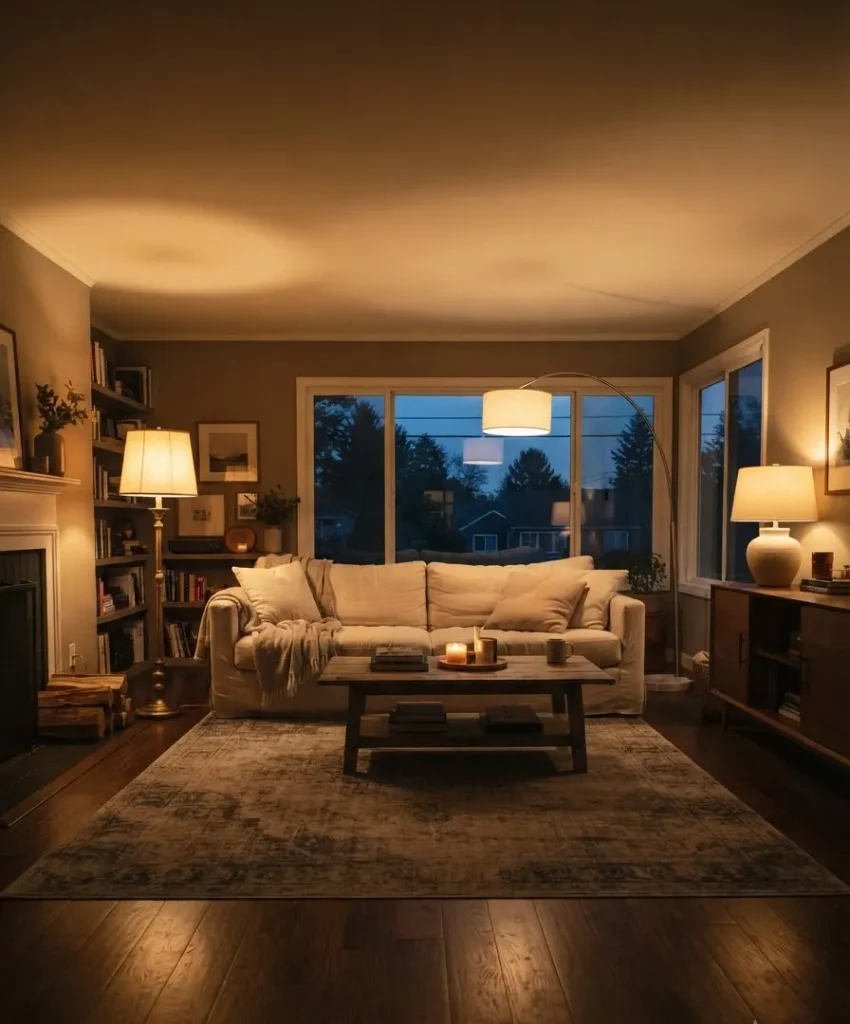
- Install a dimmer switch. It costs about 15 dollars and takes 20 minutes if you’re even slightly handy. This is one of those cheap fixes that punches way above its price.
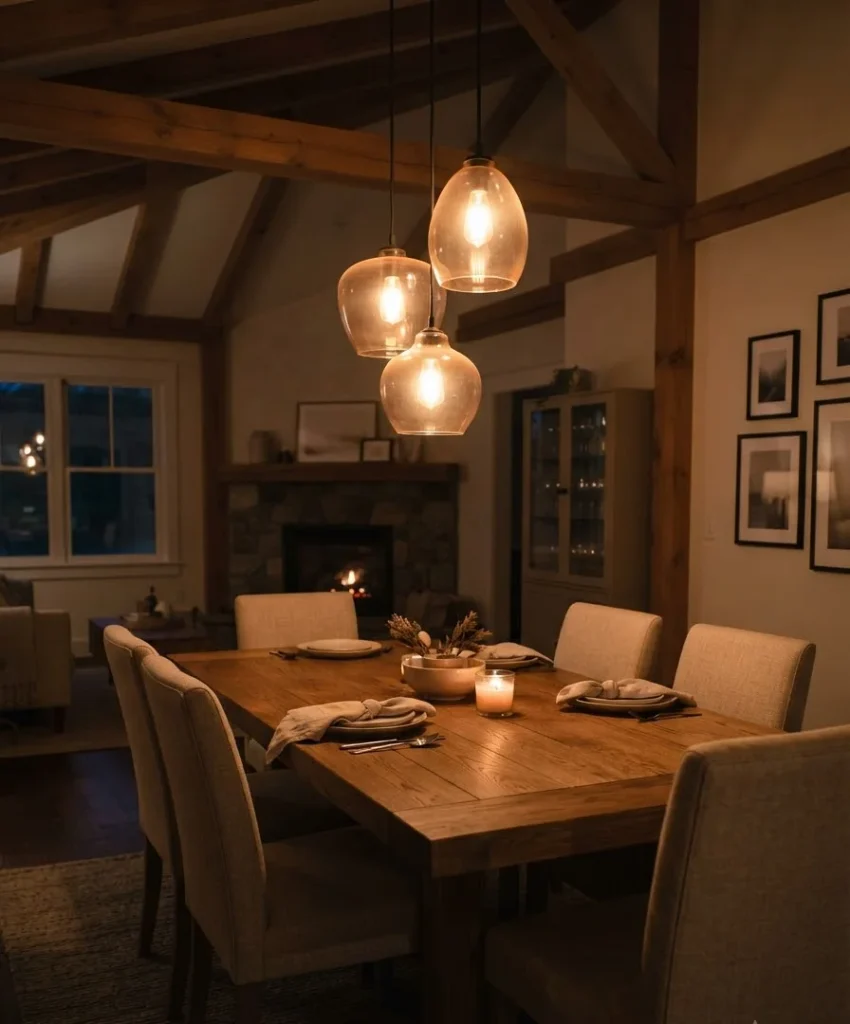
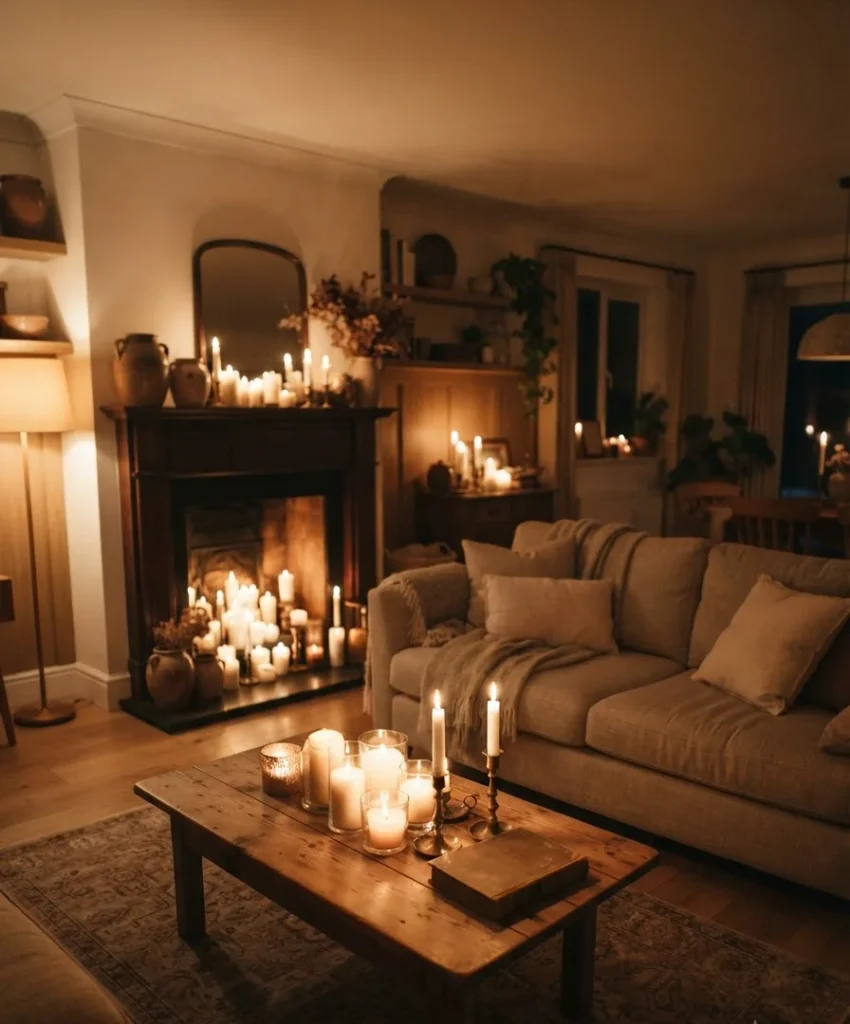
- Light actual candles, or use flameless ones if you’ve got kids or pets. The flicker does something a fixed bulb can’t replicate.
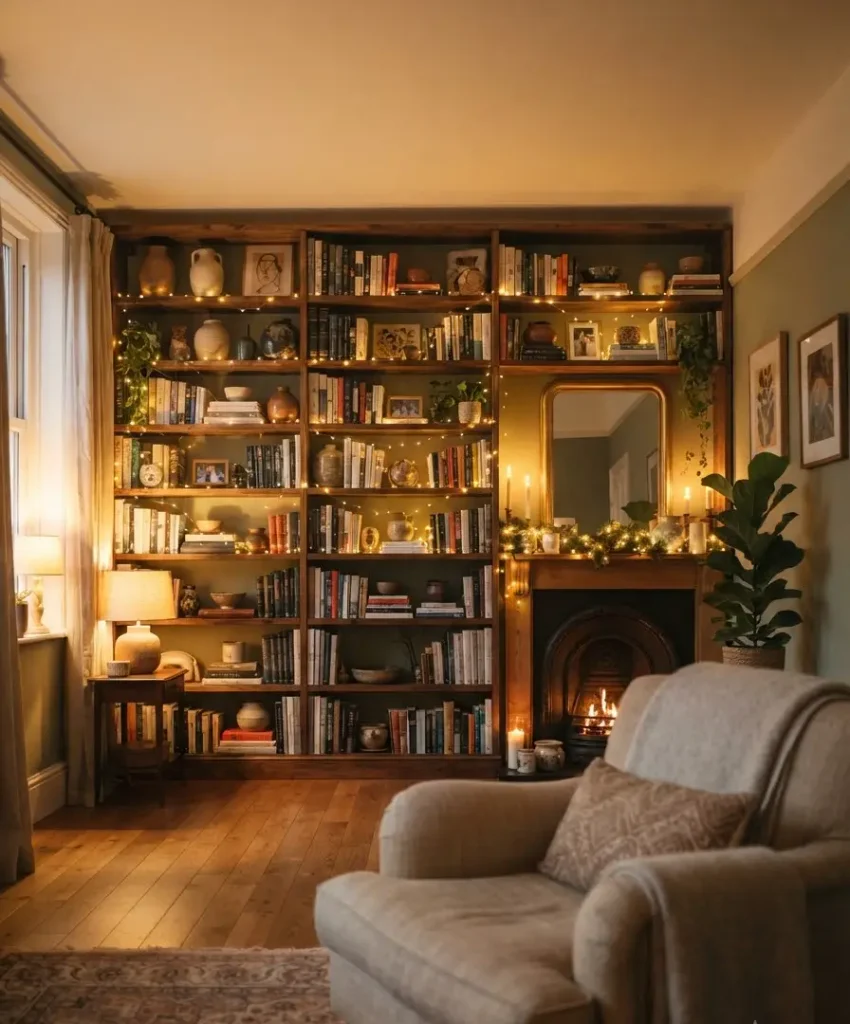
- String lights aren’t just for dorm rooms anymore. A warm-white strand along a bookshelf or headboard adds a soft glow that reads as intentional, not collegiate.
The HGTV design section has a good breakdown of layering ambient, task, and accent lighting if you want to go deeper on this. It’s worth the read if lighting is genuinely new territory for you.
Bring in something that used to be alive
Wood, plants, dried branches. Anything that connects a room back to the outdoors tends to soften it.
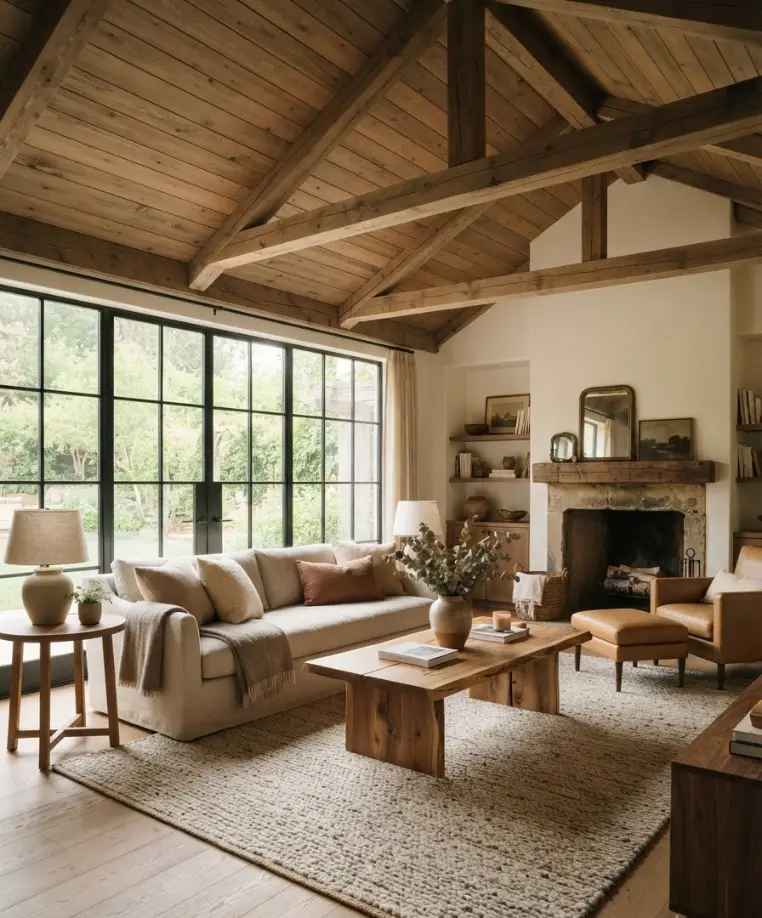
- Add one or two wood furniture pieces, even small ones. A side table, a stool, a tray. Wood grain breaks up flat, manufactured surfaces.
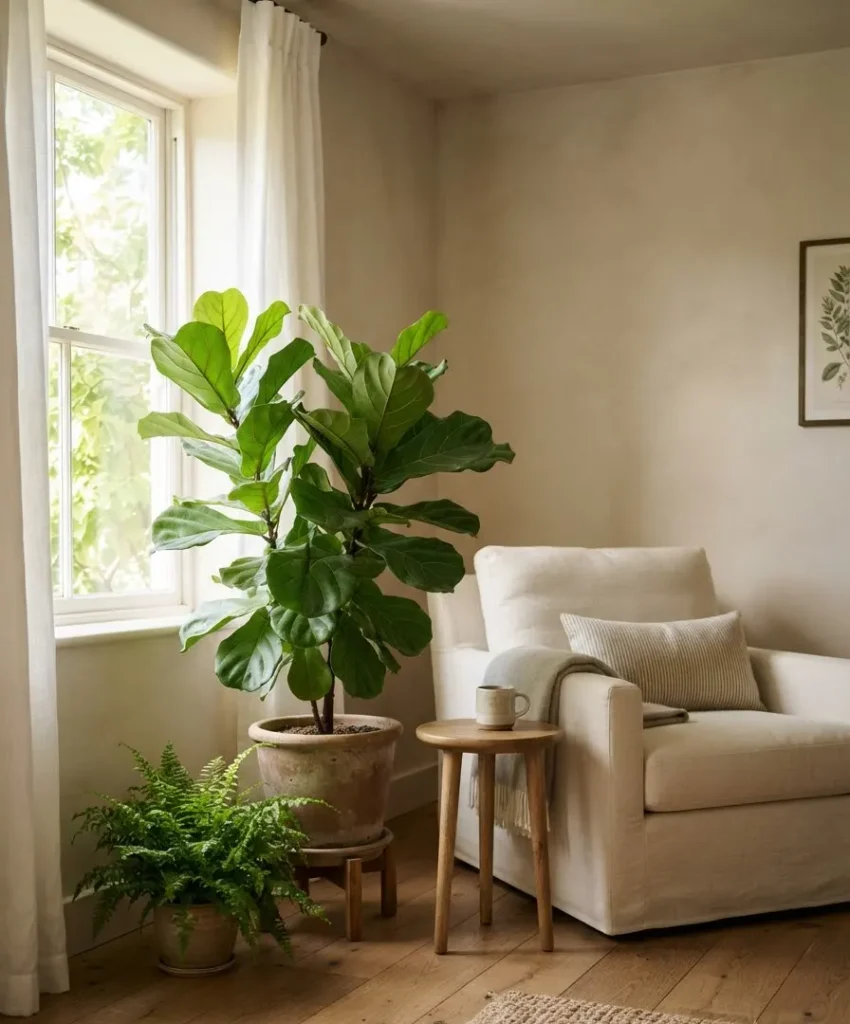
- Get a real houseplant. Fake ones are fine in a pinch, but a real plant changes the air quality of a room, literally and emotionally. I’ve killed my fair share, and I’d still rather have a slightly droopy real fern than a plastic one.
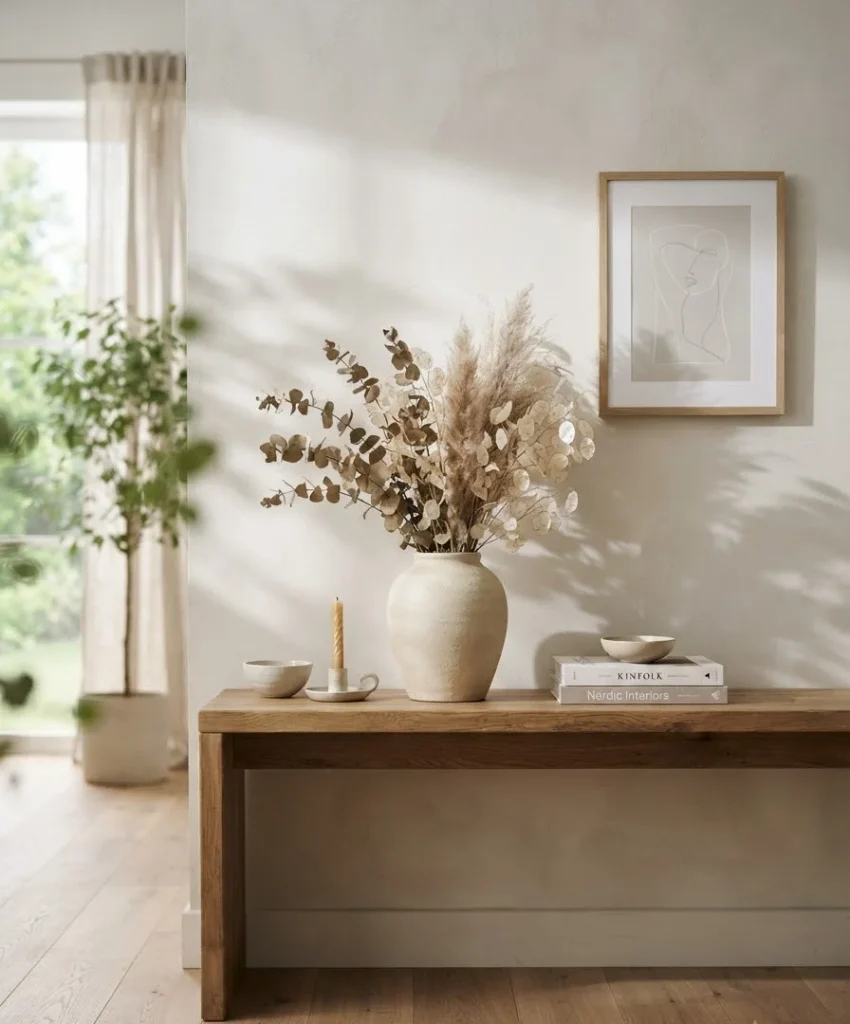
- Try dried flowers or eucalyptus in a simple vase. Zero maintenance, and they hold their look for months.
Quick tangent, because I can’t help myself: I once spent 40 minutes in a garden center debating between two nearly identical ferns like it was a life decision. Anyway. Plants matter. Moving on.
Rethink how your furniture is arranged
Sometimes a room feels cold not because of what’s in it, but because of how it’s arranged.
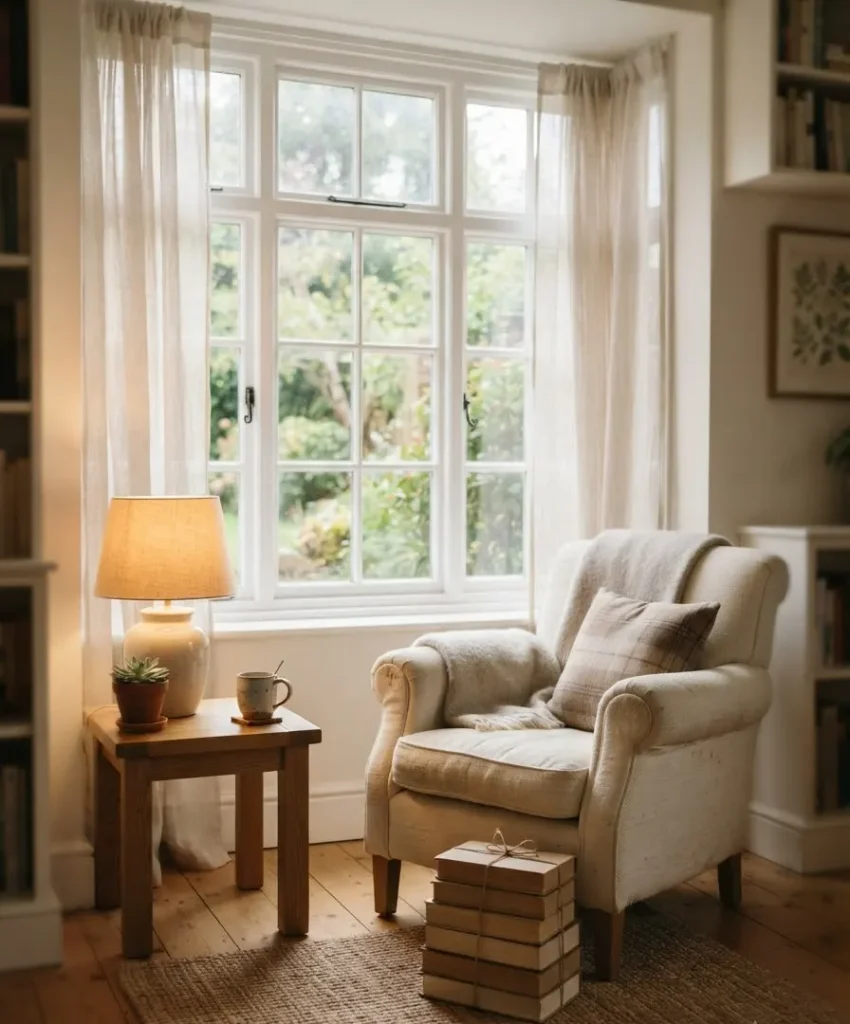
- Set up a reading nook, even a small one. A single armchair near a window with a lamp and a side table does more for a room’s warmth than a matching furniture set.
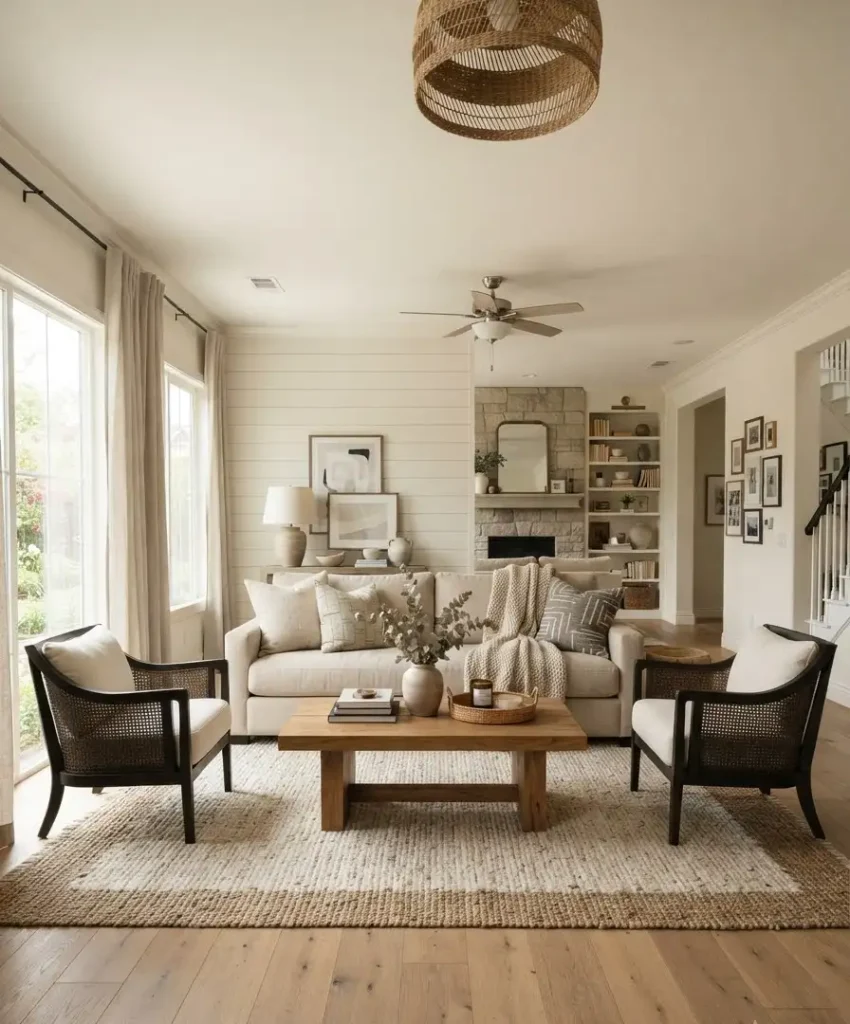
- Arrange seating for conversation, not just for the TV. A slight angle toward each other instead of a straight row facing a screen makes a room feel more social and less like a waiting room.
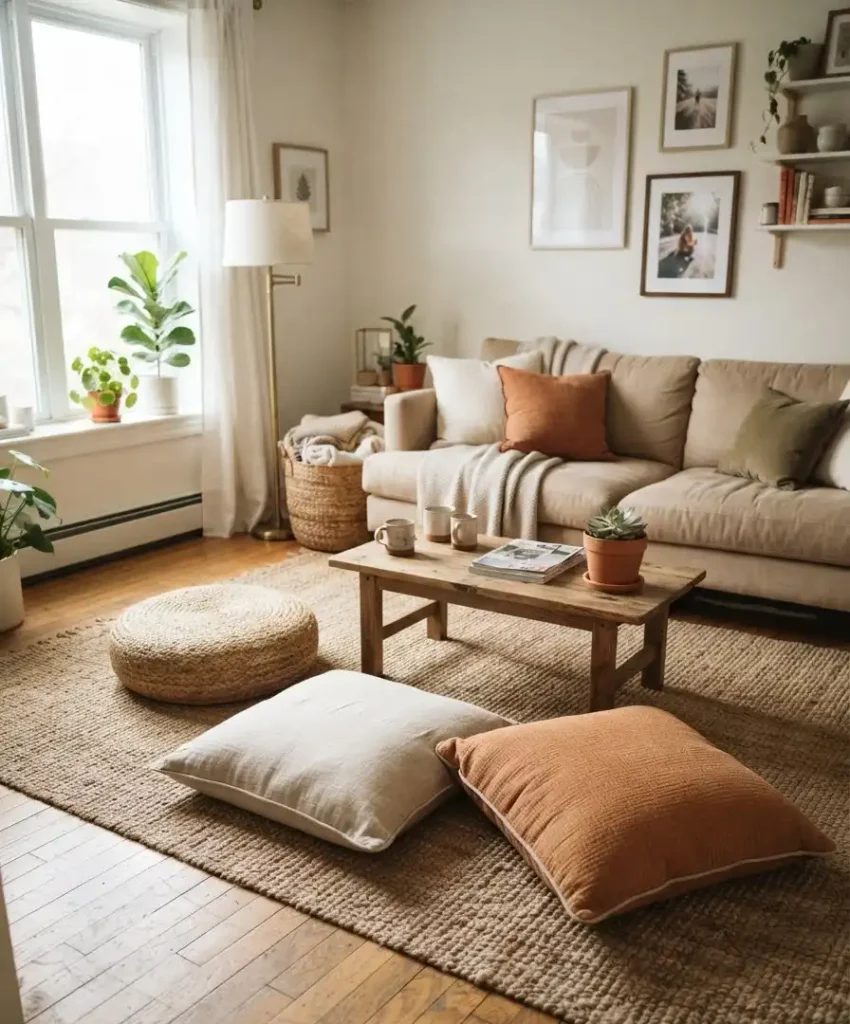
- Add floor cushions or a low pouf. Extra, informal seating invites people to actually sink into a space instead of perching on the edge of it.
Make it unmistakably yours
This is the part people skip, and it’s the part that matters most. A room can have every design trick in the book and still feel generic if there’s nothing personal in it.
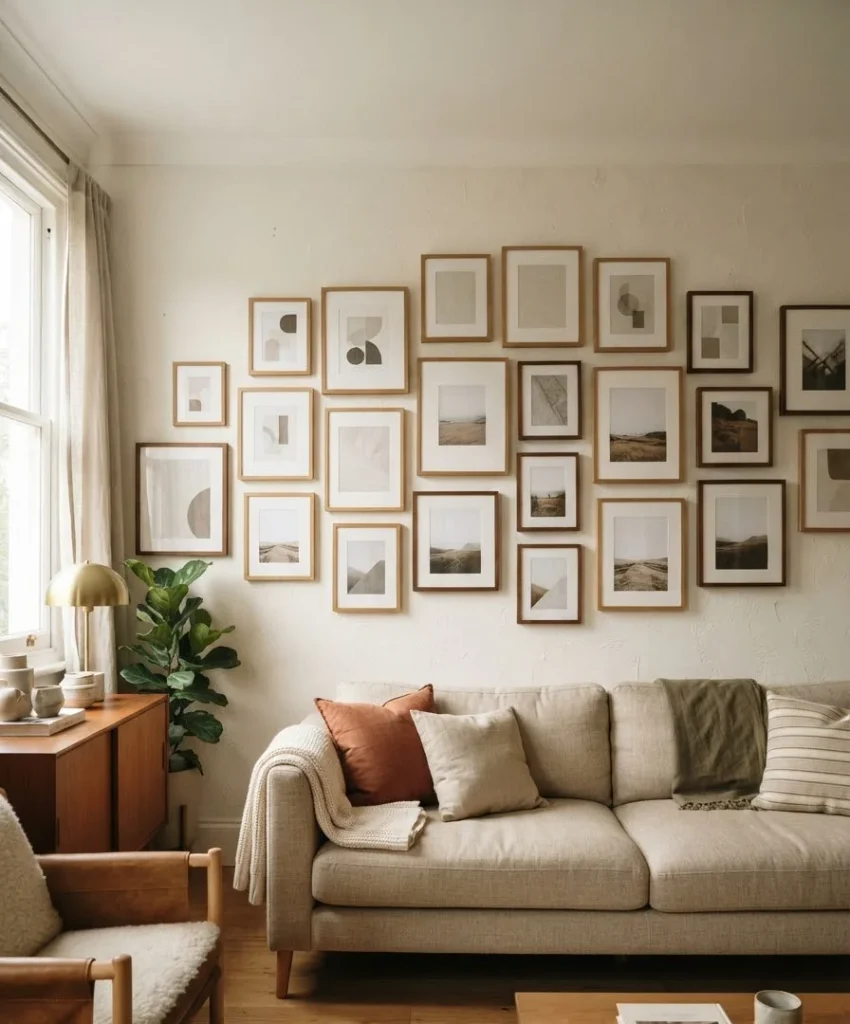
- Display photos you love, framed, not just on your phone. IMO this is the cheapest, highest-impact thing on this whole list.
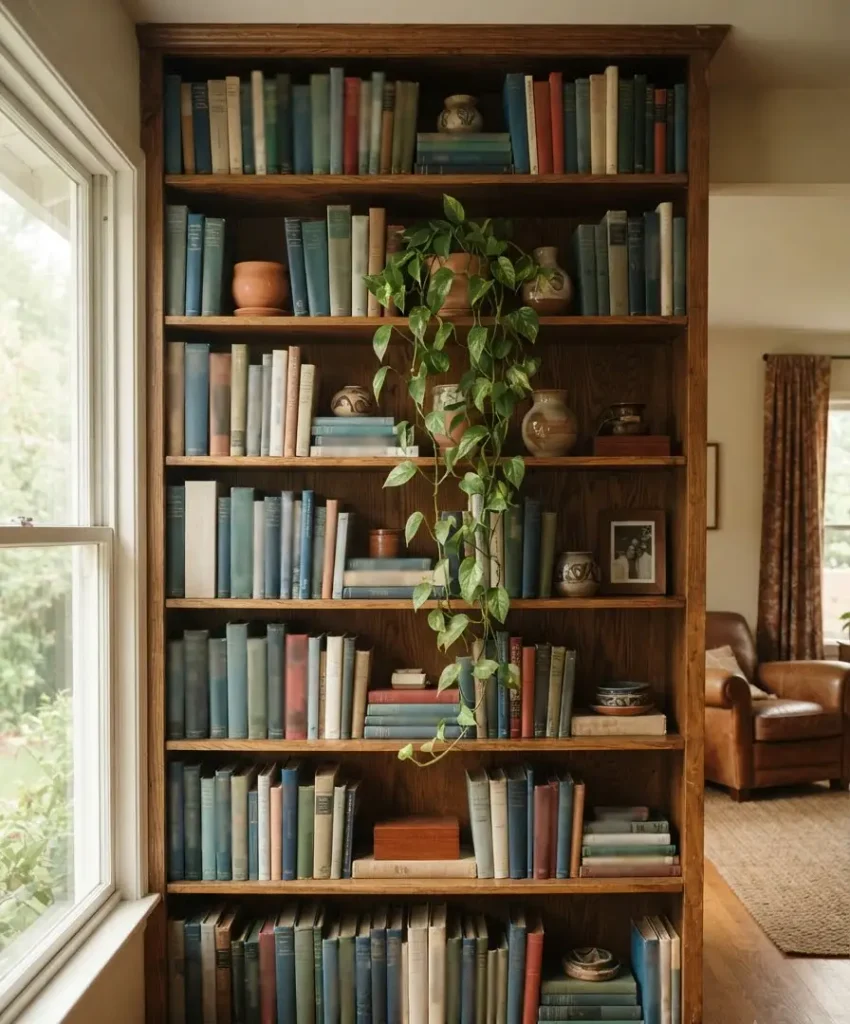
- Style your bookshelf with books you’ve actually read, not ones bought by the yard for color coordination. It’ll look a little uneven and a lot more real.
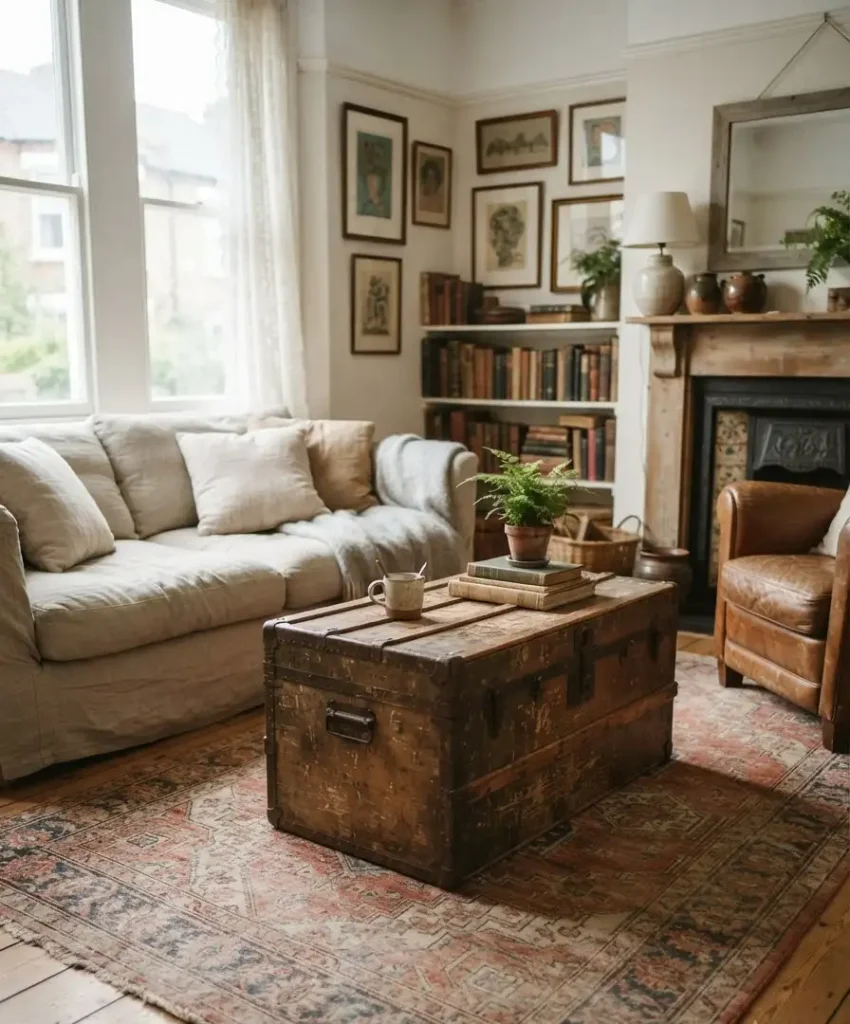
- Hunt for one vintage or secondhand piece. A thrifted lamp, an old trunk used as a coffee table, whatever has some history to it. New furniture can look sharp. Old furniture tends to look warm.
Small details that seal the deal
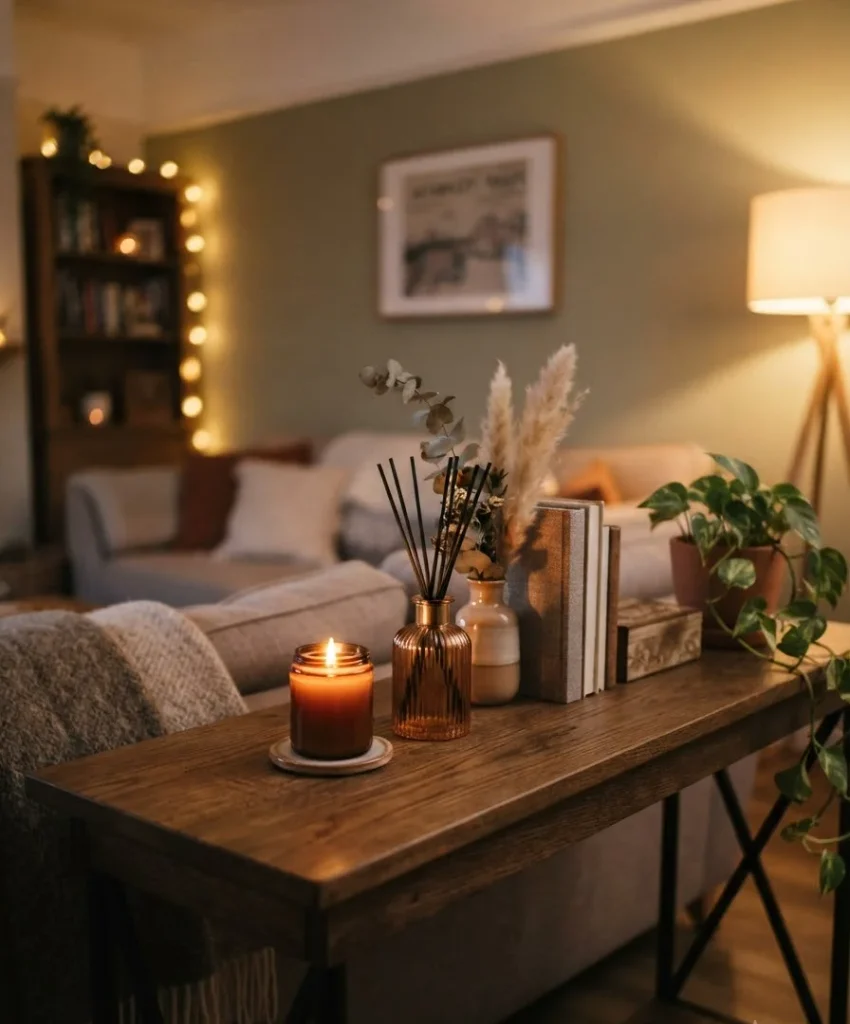
- Layer scent. A candle in the living room, a reed diffuser in the entryway. Smell is tied closely to memory and comfort, more than most people realize.
- Keep some kind of soft background sound going — music, a fan, anything but total silence. Dead silence in a room reads as unused.
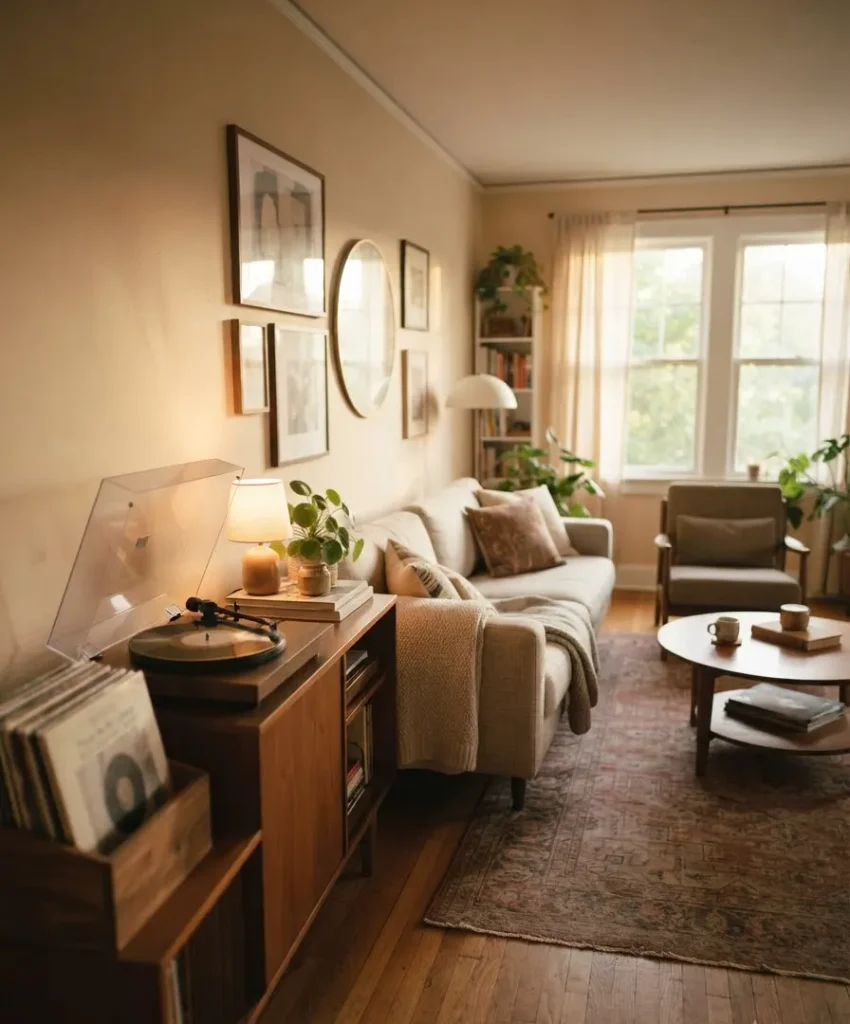
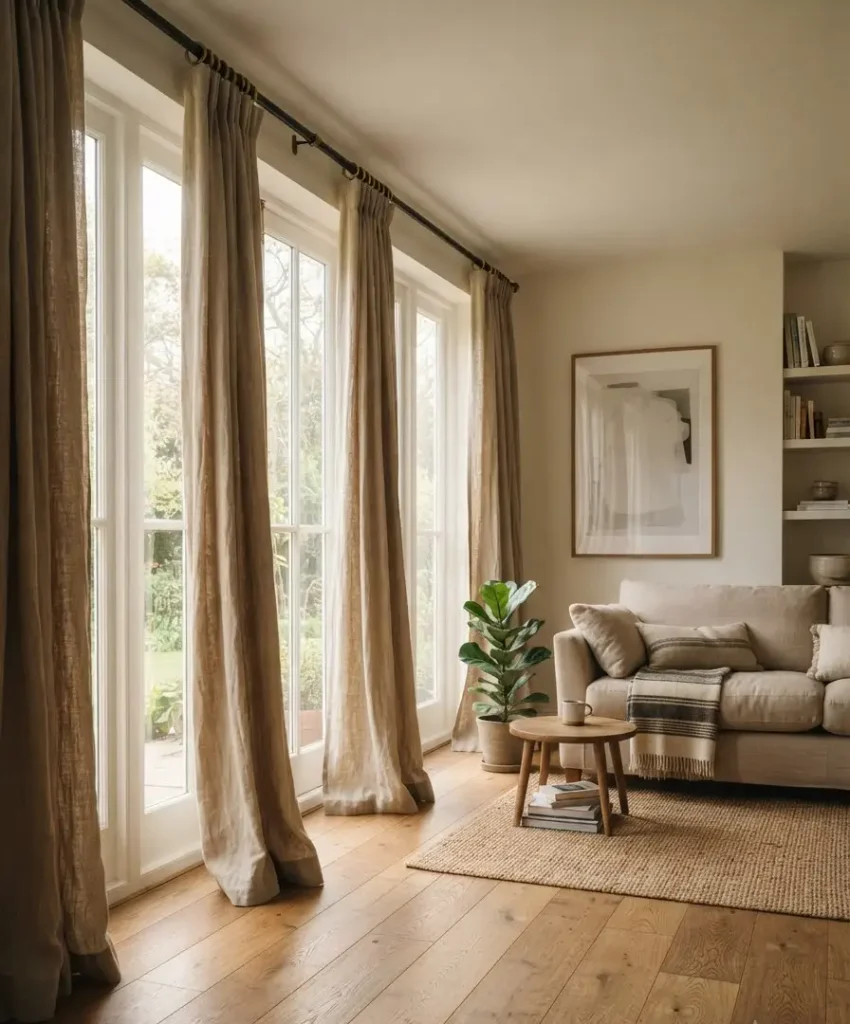
- Hang heavier curtains, even purely for the visual weight. They soften window light and make a room feel more enclosed and protected.
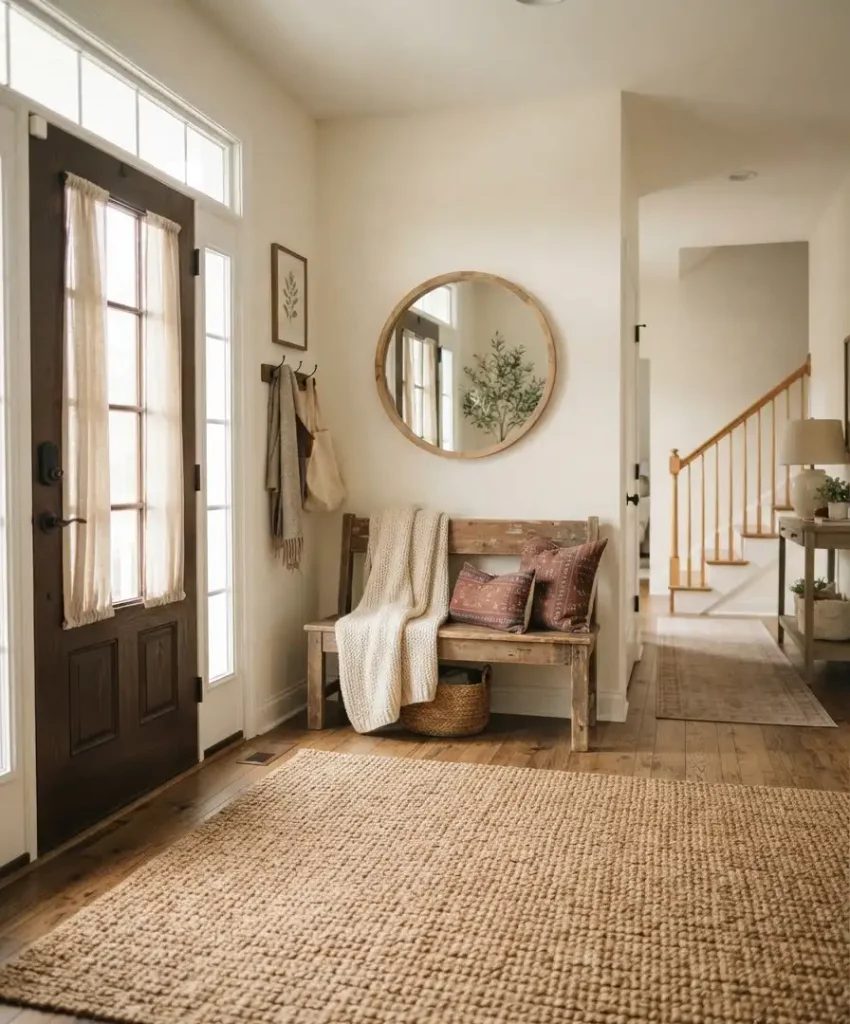
- Put a small rug or draft stopper by your entry door. It’s practical, but it also signals “this is a home,” right at the threshold.
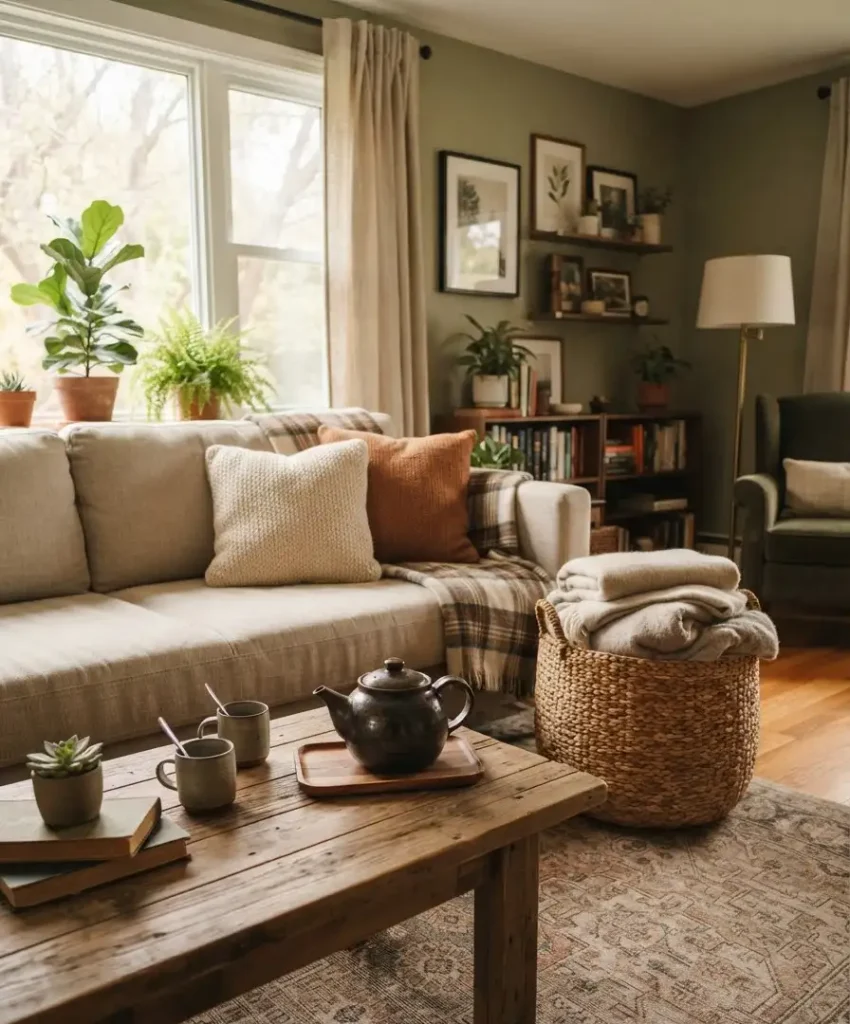
- Keep a basket of blankets near your main seating area, along with a small tray for tea or coffee. This is the detail that turns “nice room” into “room I don’t want to leave.”
Quick reference: cozy upgrades by budget
| Budget level | Example upgrade | Rough cost |
|---|---|---|
| Under $20 | Warm-white lightbulbs | $10-$15 |
| $20-$75 | Chunky knit throw or dimmer switch | $25-$60 |
| $75-$200 | Layered rugs or a reading chair from a thrift shop | $80-$180 |
| $200+ | Statement lamp or a small vintage furniture piece | $200-$400 |
A few things people always ask
Do I need a fireplace to make a room feel cozy?
No. Lighting and texture do more heavy lifting than a fireplace ever will. A well-lit room with a couple of throws and a rug will beat a cold, empty room with a fireplace every time.
How do I make a rental feel cozy without breaking my lease?
Focus on things that travel with you: rugs, lamps, curtains on tension rods, removable wallpaper, and plants. None of it requires touching the walls permanently.
What’s the fastest single change I can make this weekend?
Lightbulbs and a dimmer switch. This is insane how much difference it makes for how little effort it takes.