You bought the teal couch. Great. Now you’re standing in your living room at 11 p.m., holding three paint swatches, wondering why every wall color suddenly looks wrong next to it.
I’ve been there. My own teal sofa sat in a half-painted room for almost two months because I kept second-guessing myself.
Teal is bold, and it picks fights with the wrong wall color.
So here’s what I learned, what I got wrong, and what looks great on Pinterest and in real life (those aren’t always the same thing, FYI).
By the end, you’ll know exactly which wall colors work with a teal couch and why.
Why a teal couch is trickier than it looks
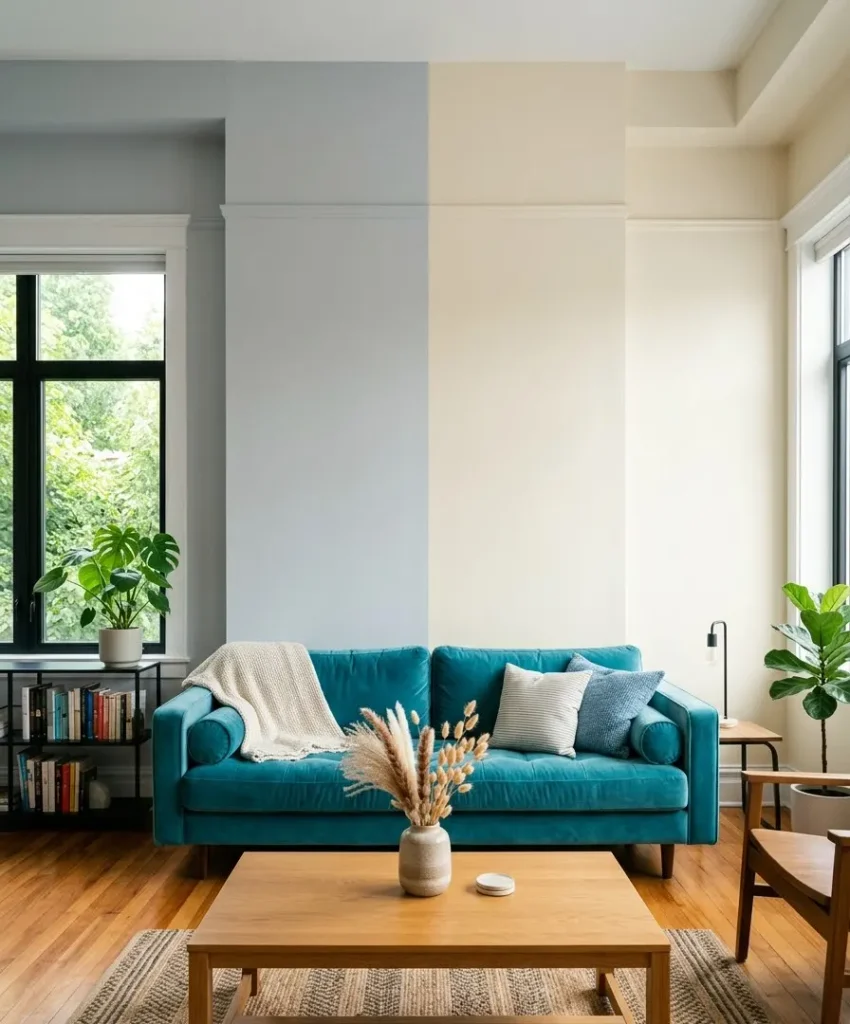
Teal sits between blue and green, which means it changes personality depending on what surrounds it.
Put it against a cold gray wall and it turns icy. Put it against warm cream and it looks cozy and a little retro.
That shifting behavior is why a teal couch photographs so well. It’s also why people freeze at the paint aisle.
Most sofa colors play it safe. Gray, beige, and navy all get along with nearly everything. Teal demands a decision, and I respect that about it.
Know your teal before you pick a wall
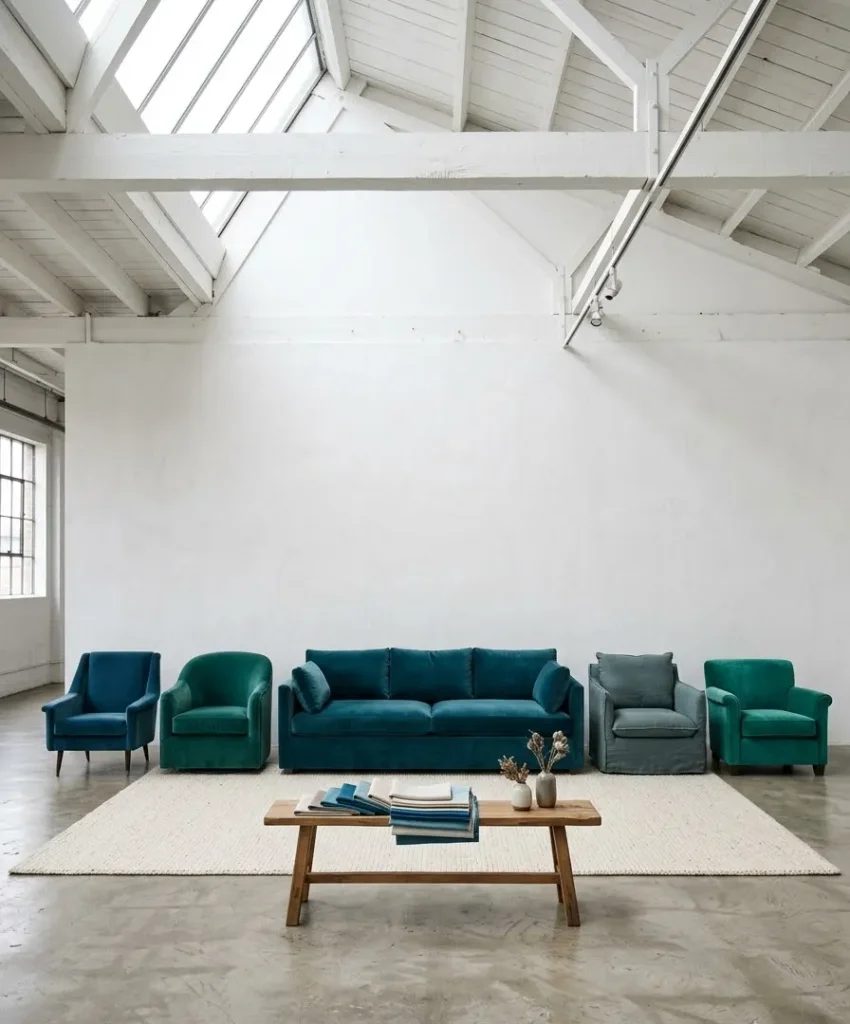
Not all teals behave the same. Before you buy a single sample pot, figure out which kind you own.
- Blue-leaning teal: Feels cool and calm. It loves warm walls and crisp whites.
- Green-leaning teal: Feels earthy and organic. It loves creamy neutrals and wood tones.
- Deep peacock teal: Feels moody and rich. It loves dark walls or a very pale backdrop that lets it shine.
- Muted, grayish teal: Feels soft and vintage. It loves almost anything, which makes it the easy one.
Hold a white sheet of paper next to your couch in daylight. If the couch looks bluer than the paper looks neutral, you own a blue-leaning teal.
Takes ten seconds, saves you a weekend of repainting.
The color wheel, minus the art class headache
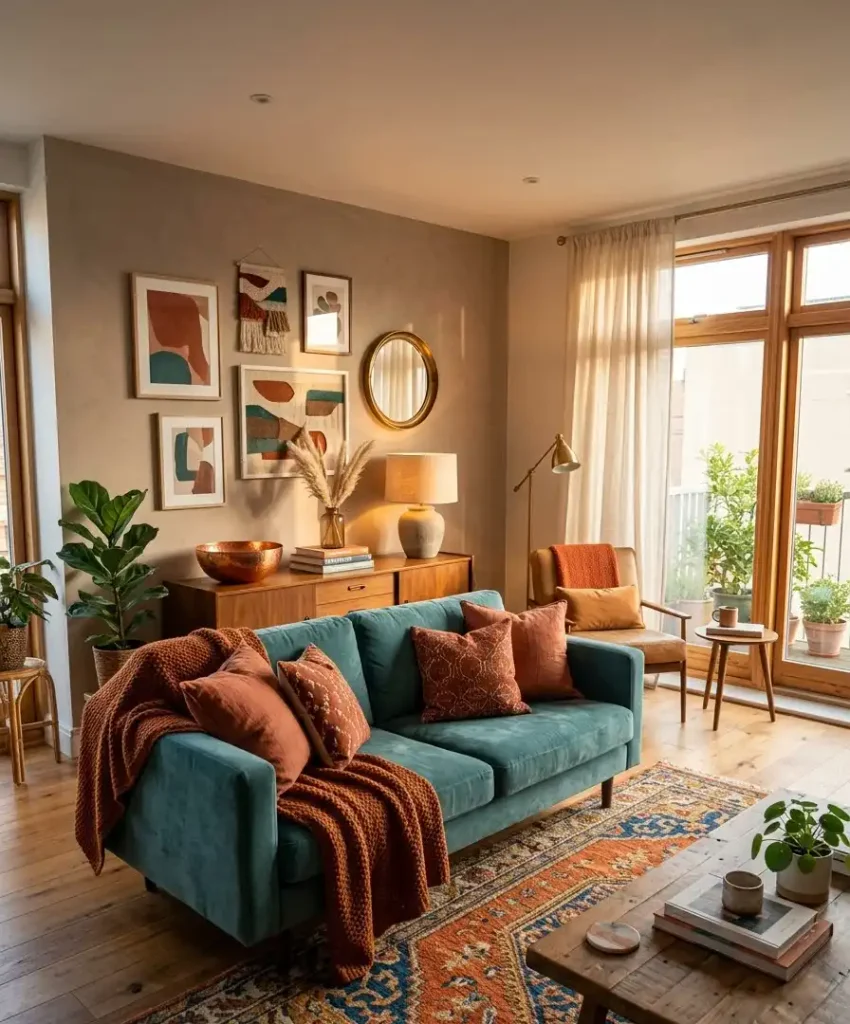
Teal’s opposite on the color wheel is a warm reddish orange. That’s the whole reason terracotta, rust, and coral look so good beside it.
Opposites make each other look more vivid.
Colors next to teal on the wheel (blue, green, and deep navy) create a calmer, layered look. You get depth without drama.
Neutrals sit in the middle and let the couch do all the talking. That makes them the safest path, and the one I’d tell a nervous first-timer to take.
Ever wonder why a rust-colored pillow on a teal sofa looks so right? Opposites.
That’s the entire secret, and designers charge real money to explain it.
White and off-white walls: the gallery approach
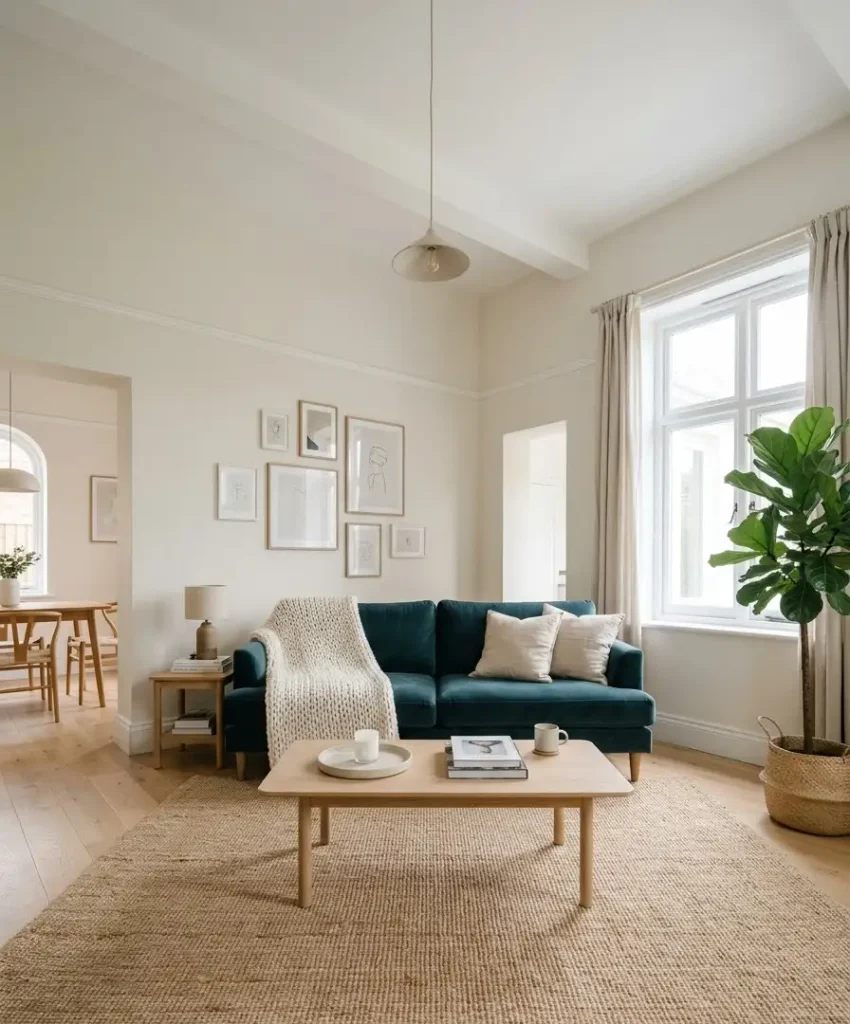
A white wall makes a teal couch look like the star of an art show. Nothing competes. Every curve of the sofa pops.
But white comes in about 400 shades, and a few of them look terrible. Stark blue-white can make teal feel cold and clinical. A cream-leaning white keeps everything friendly.
White paints I’d actually use
I’d start with these, all easy to find and easy to sample:
- Benjamin Moore White Dove: A soft white with a whisper of warmth. It’s my top pick for blue-leaning teal.
- Sherwin-Williams Alabaster: Creamier than White Dove, and lovely with green-leaning teal.
- Farrow & Ball Pointing: A chalky white that gives the room an old English cottage feel.
You can browse the full ranges at Benjamin Moore, Sherwin-Williams, and Farrow & Ball.
One honest opinion: pure white walls with a teal couch can feel a bit flat if you add nothing else.
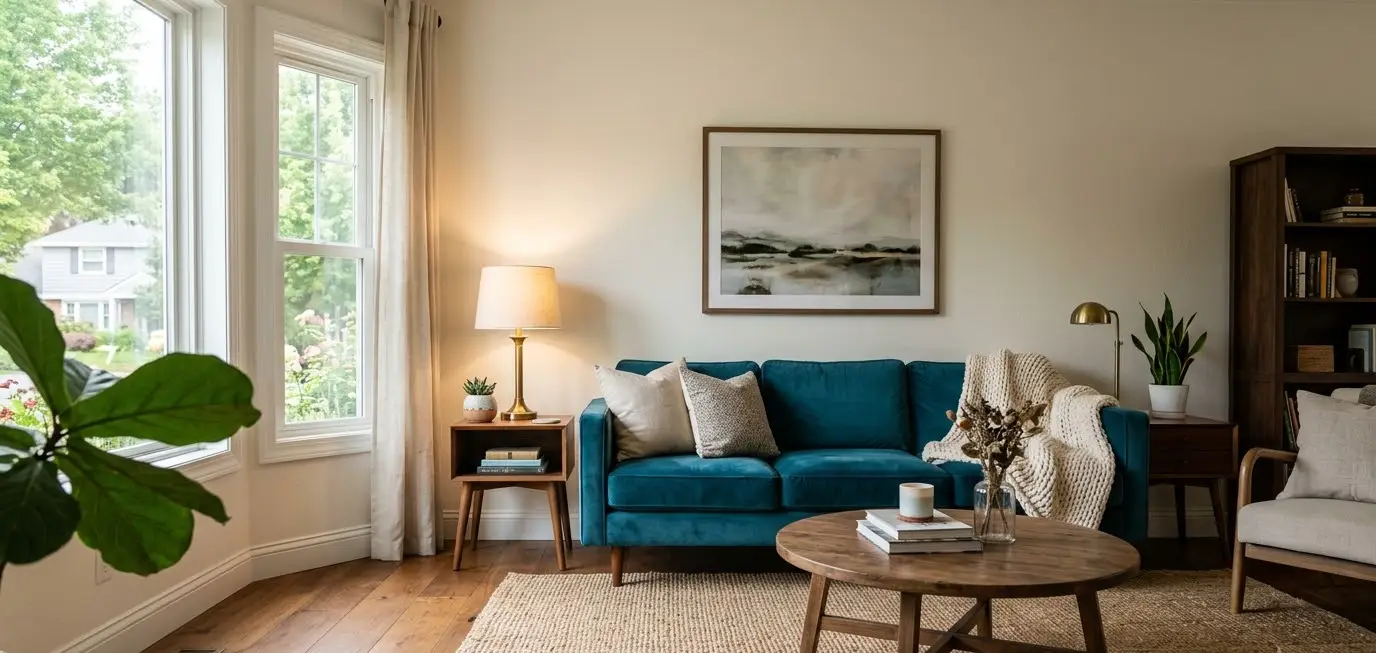
I always layer in texture, like a chunky knit throw, a jute rug, or a wood coffee table. Otherwise the room reads like a showroom.
Warm neutrals: cream, greige, and soft beige
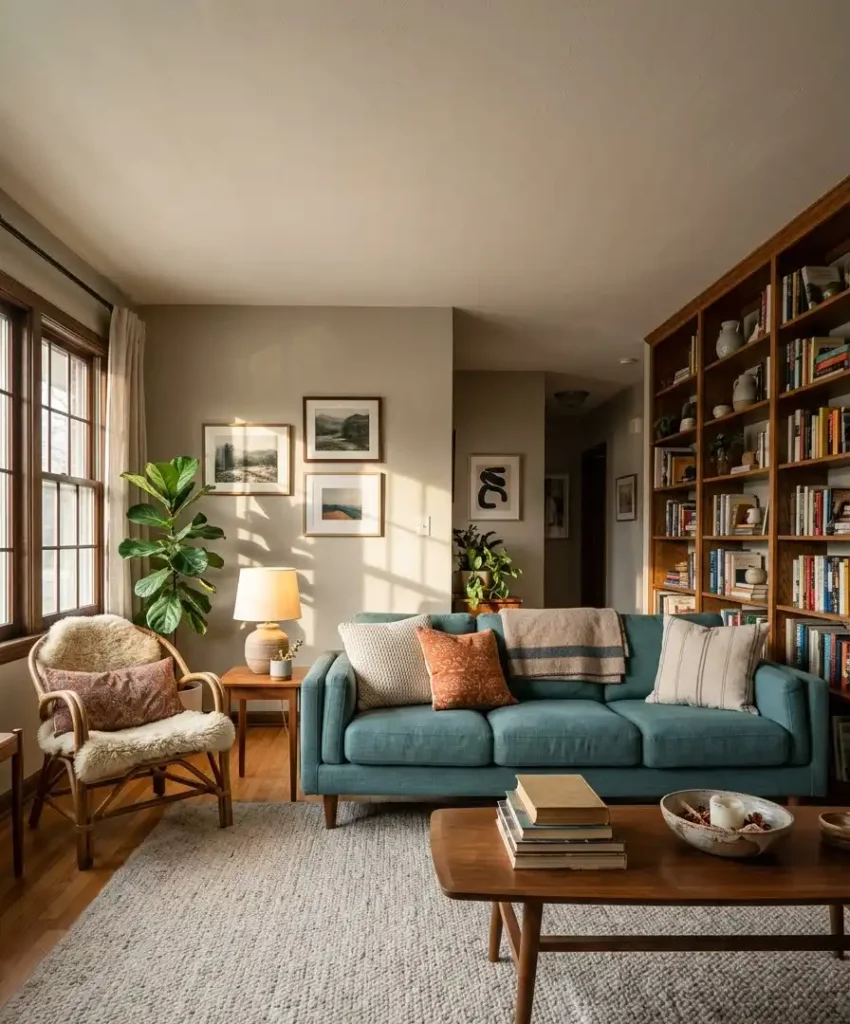
If you want a room that feels lived in, warm neutrals deliver. They soften teal’s intensity without muting it.
Greige (the gray and beige mashup that took over the 2010s) still works beautifully here.
It sits right in the middle, so it flatters both blue and green teals.
I painted my first teal living room in Sherwin-Williams Accessible Beige. It looked flat on the sample card and gorgeous on the actual wall once afternoon light hit it. Samples lie sometimes. 🙂
Warm neutral picks worth sampling
- Benjamin Moore Edgecomb Gray: A soft, light greige. It plays nicely with almost any teal.
- Sherwin-Williams Accessible Beige: A touch warmer, great for north-facing rooms that need a boost.
- Farrow & Ball Setting Plaster: A dusty pink-beige that makes teal look expensive.
Setting Plaster surprised me. It sounds odd, since pink and teal sound like a risky pair. But the muted, plaster-like tone calms the whole room, and the teal looks richer for it.
Gray walls: yes, they still work
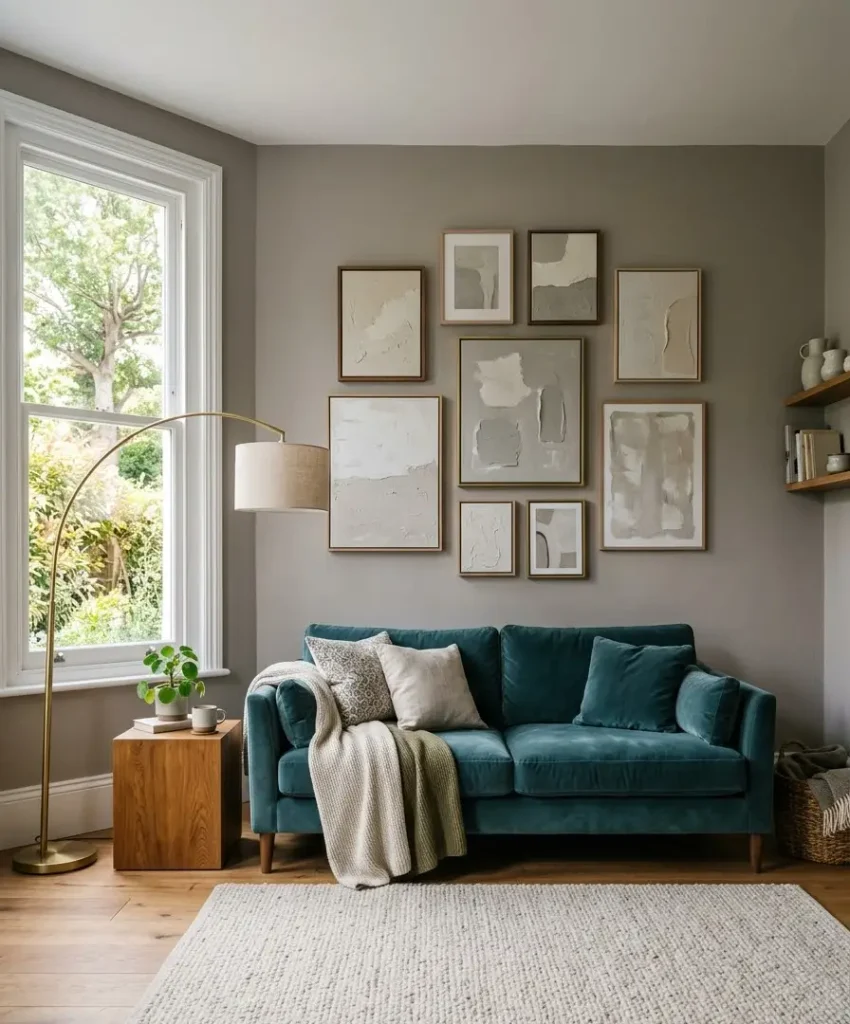
Gray gets a bad reputation these days, and I understand why. Cold gray plus cool teal equals a room that feels like a dentist’s waiting area.
Warm gray fixes that. A gray with a slight beige or taupe undertone gives teal something soft to lean against.
Light gray walls with a deep teal sofa also create a clean, modern look. Add brass lamps and a warm wood side table, and the whole room warms up fast.
Benjamin Moore Revere Pewter is the gray I recommend most.
It leans warm, it works in most lighting, and it makes teal look confident without shouting. Pair it with a white trim color so the room doesn’t feel heavy.
Dark and moody walls: for the brave
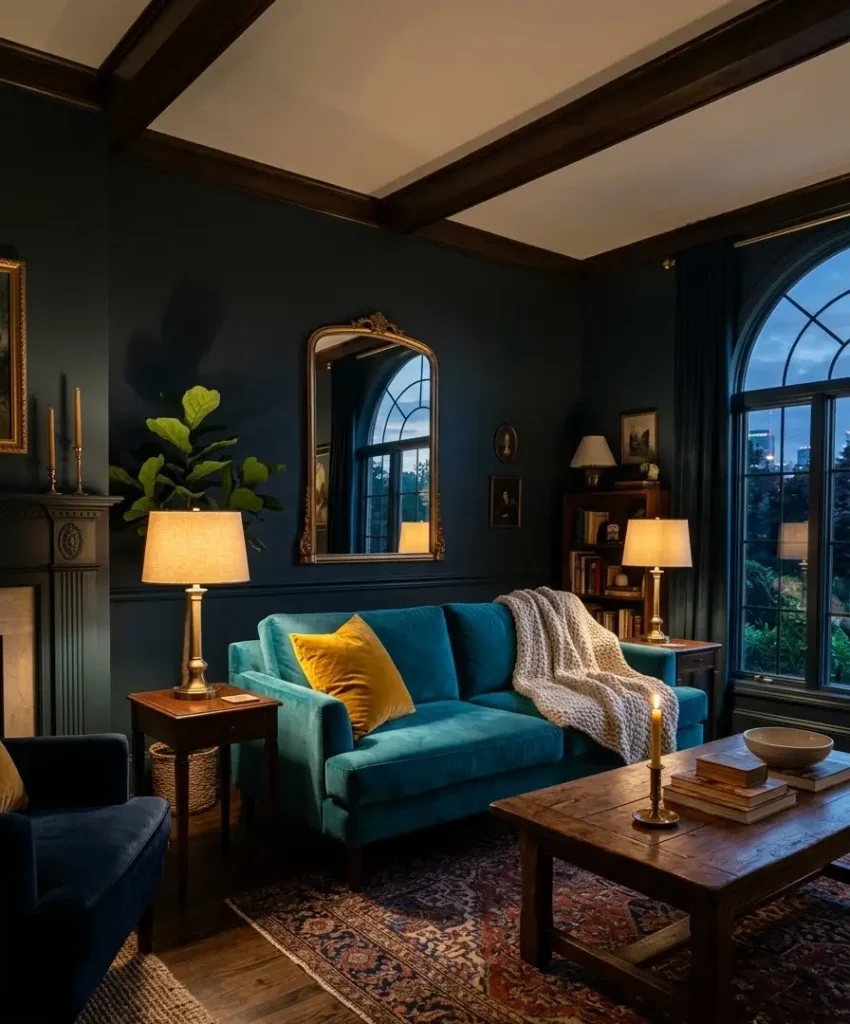
Here’s where teal couches get dramatic. A dark wall behind a teal sofa creates that cozy, wrapped-in-velvet feeling you see all over Pinterest.
Wow, when this works, it really works. When it doesn’t, you’ve painted a room you hate in a color that takes three coats to cover.
Navy
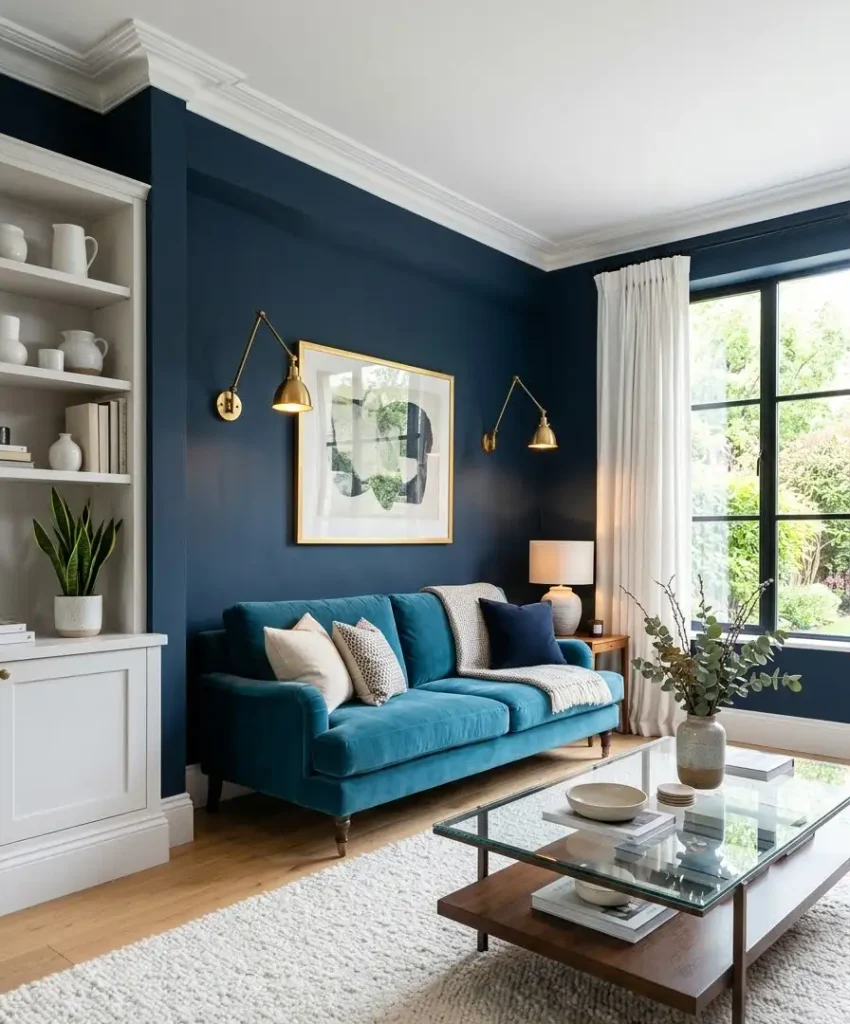
Navy is the classic choice. It sits right next to teal on the wheel, so the two blend into a deep, layered scheme.
Benjamin Moore Hale Navy and Sherwin-Williams Naval both look stunning behind a teal couch.
Keep the room bright with plenty of white, light wood, and metallic accents, or the navy swallows everything.
I learned that one the hard way in a small apartment.
Charcoal and near-black
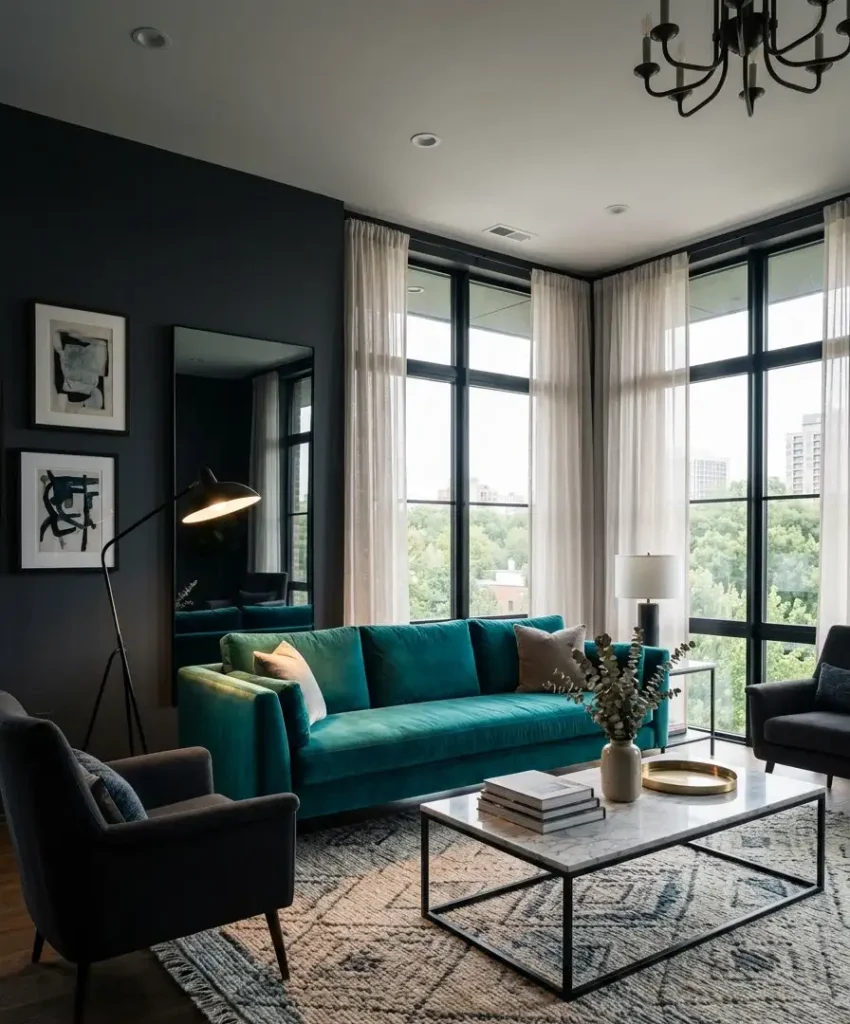
Charcoal walls turn a teal couch into a jewel. The sofa glows against the dark background. Farrow & Ball Railings is a lovely deep charcoal with a hint of green that pulls teal forward.
This works best in rooms with big windows. In a dim living room, you’ll want a lamp on at noon, and nobody enjoys that.
Deep green
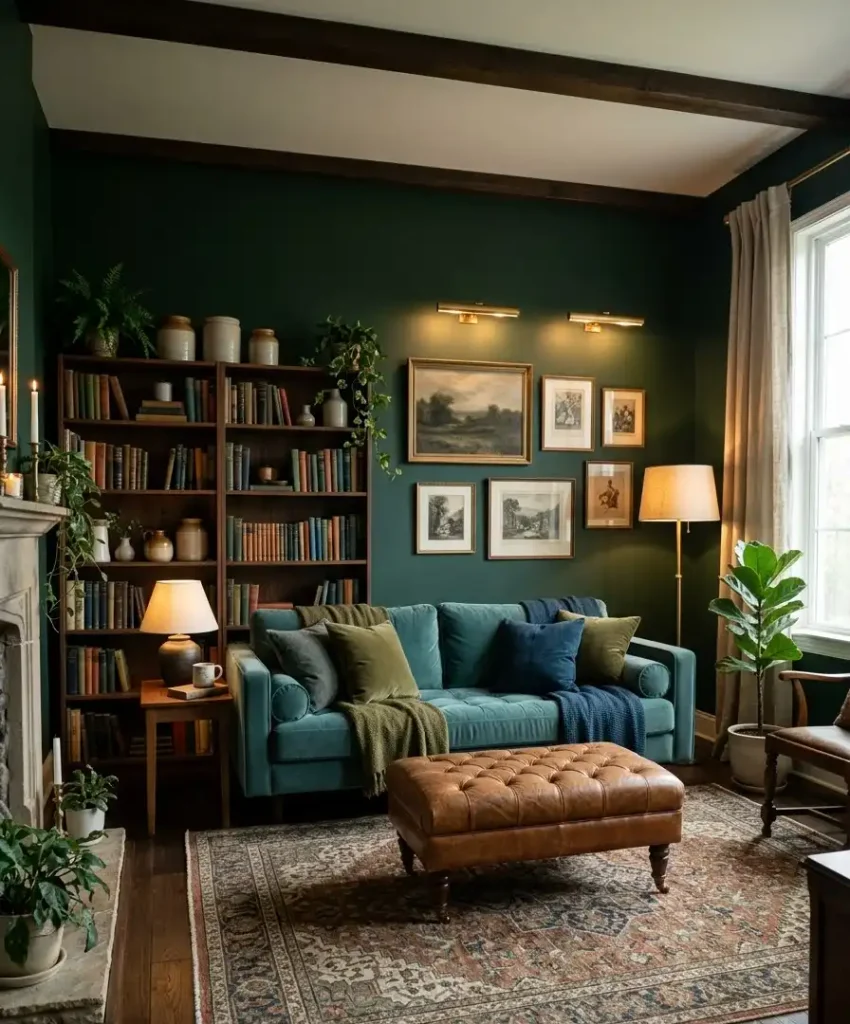
Forest green walls with a teal sofa sound like a lot, and honestly, they are.
But tone-on-tone color schemes look rich when you keep the finishes consistent. I’d pick a green with a yellow undertone so it doesn’t compete with the teal’s blue side.
Earthy and warm colors: the complementary play
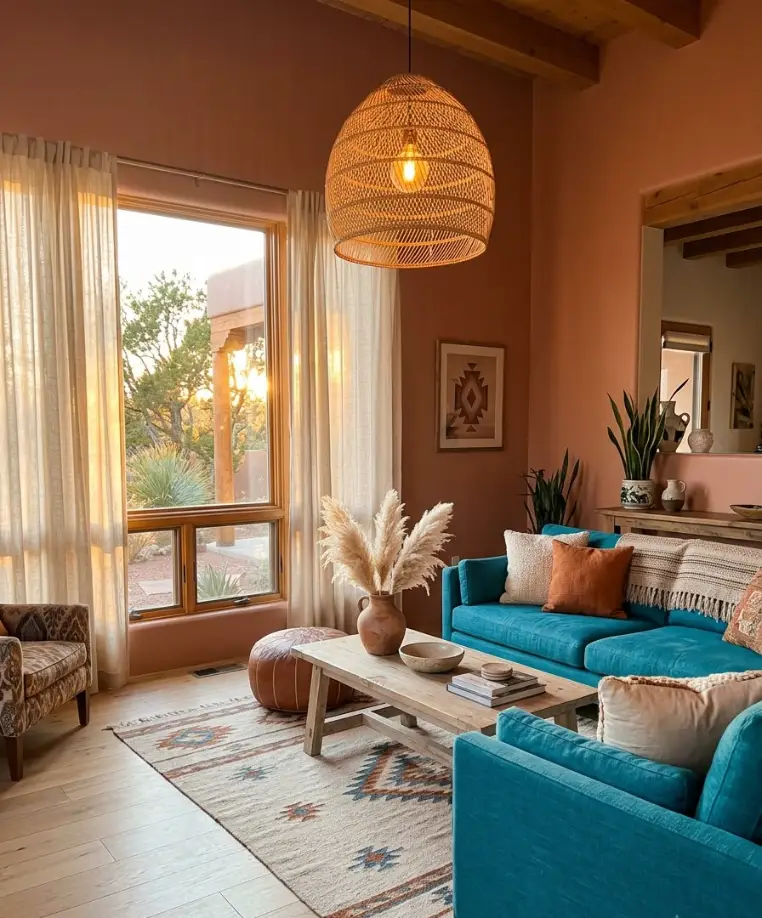
This is my favorite category, mostly because it surprises people. Warm, earthy colors sit across the wheel from teal, so they make the sofa look brighter.
Terracotta and rust
Terracotta walls with a teal couch feel like a sunset over a swimming pool. I mean that as a compliment.
The warm clay tone makes the teal look juicier.
Go for a muted terracotta, though, not a bright orange. Sherwin-Williams Cavern Clay gets close to what I mean. If a full wall feels like too much, paint one accent wall and keep the rest neutral.
Mustard and ochre
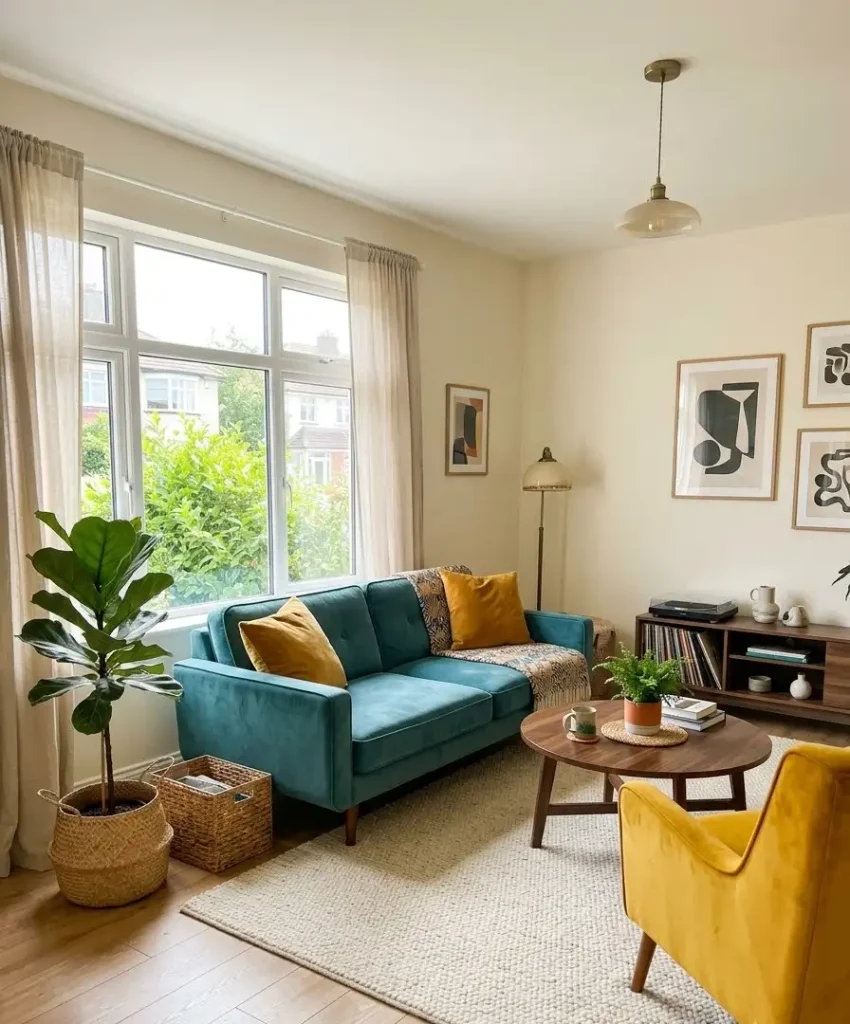
Mustard yellow works better as an accent than a full wall color, in my opinion.
A mustard armchair or a pair of ochre pillows beside a teal sofa looks fantastic. A whole mustard room can feel like a diner.
Blush and dusty pink
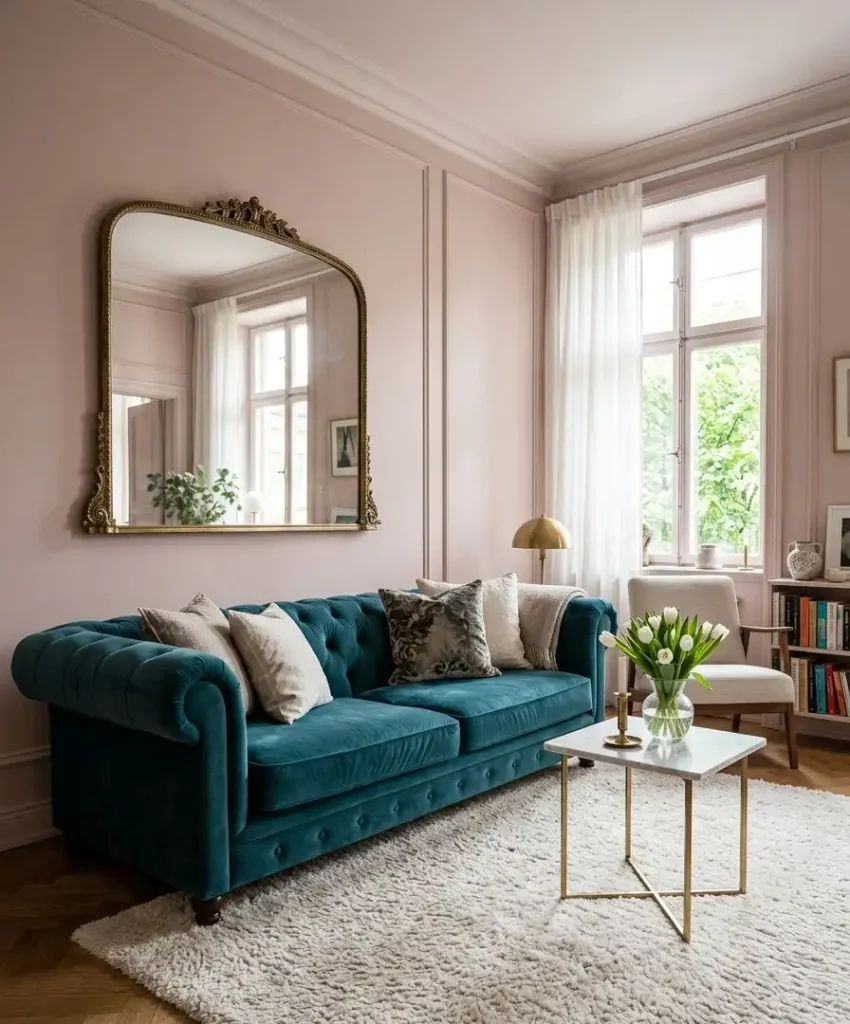
Blush pink is the sleeper hit here. A soft, slightly dusty pink wall makes teal look elegant and a little unexpected.
Farrow & Ball Dead Salmon is a famous example, and yes, the name is awful. The color itself is gorgeous.
Sage and soft greens: calm and connected
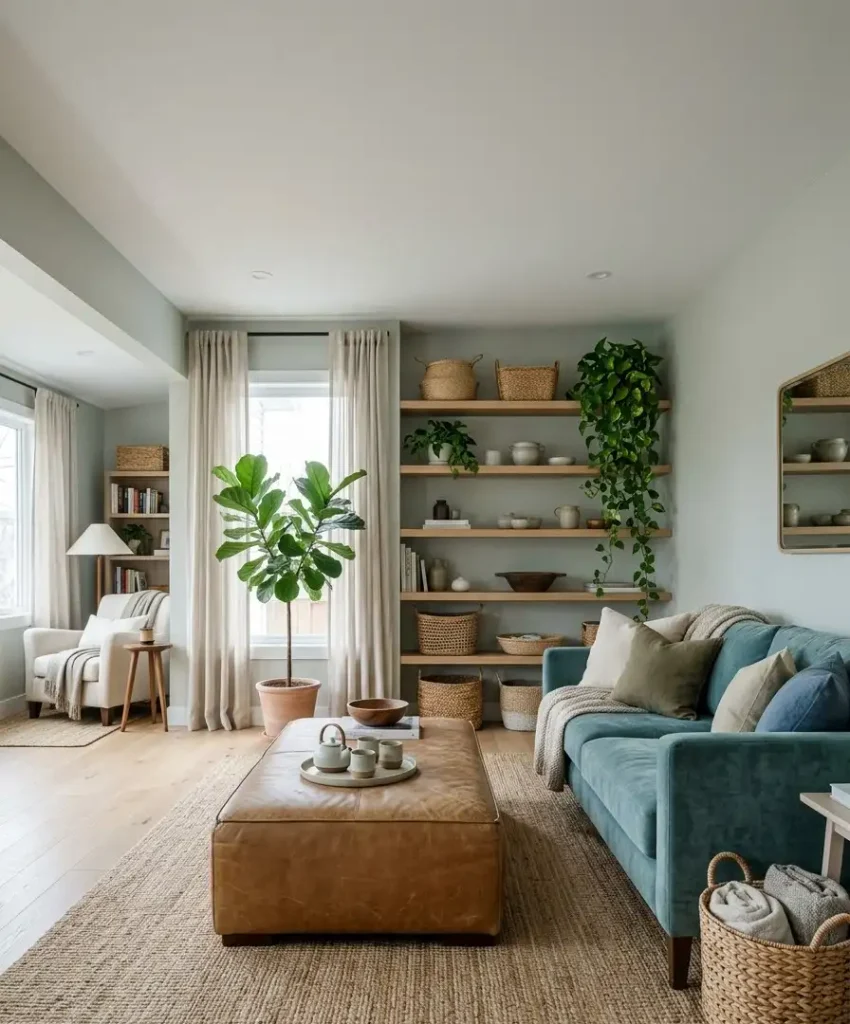
Soft green walls echo teal’s green side and create a spa-like room. Think gentle, grayed-out sage, not bright mint.
Sherwin-Williams Sea Salt is a pale green-gray that shifts with the light. It looks cool in the morning and warm at dinnertime. Teal looks lovely against it, especially with natural wood and woven baskets.
The risk here is a room with no contrast. Everything blends and the sofa disappears. Fix that by adding one warm contrast, like a tan leather ottoman or a rust throw.
A quick side note about my thrifting obsession
Totally off-topic, but I need to tell you: some of my best teal room finds came from thrift stores. A brass lamp for 12 dollars. A vintage wool rug for 40. A framed botanical print that cost less than a coffee.
Thrifted pieces carry a worn, collected look that new furniture can’t fake. Teal loves that. So before you order everything online, check your local secondhand shops first.
Okay, back to walls.
Wall color cheat sheet
Here’s a quick comparison so you can scan it on your phone while standing in the paint aisle.
| Wall color | Mood | Best with | Sample to try |
|---|---|---|---|
| Warm white | Fresh, gallery-like | Blue-leaning teal | Benjamin Moore White Dove |
| Greige | Cozy, balanced | Any teal | Benjamin Moore Edgecomb Gray |
| Navy | Dramatic, rich | Deep peacock teal | Benjamin Moore Hale Navy |
| Muted terracotta | Warm, lively | Green-leaning teal | Sherwin-Williams Cavern Clay |
Style your teal couch for Pinterest-worthy results’
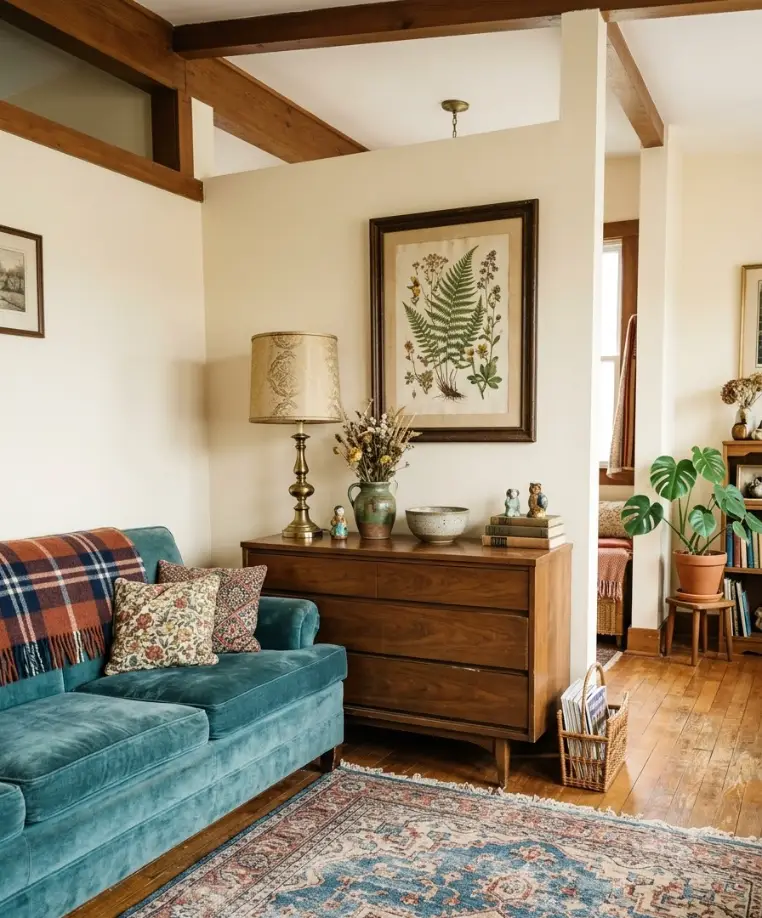
The wall is only half the story. The stuff around the couch decides whether your room looks styled or accidental.
Rugs, pillows, and wood tones
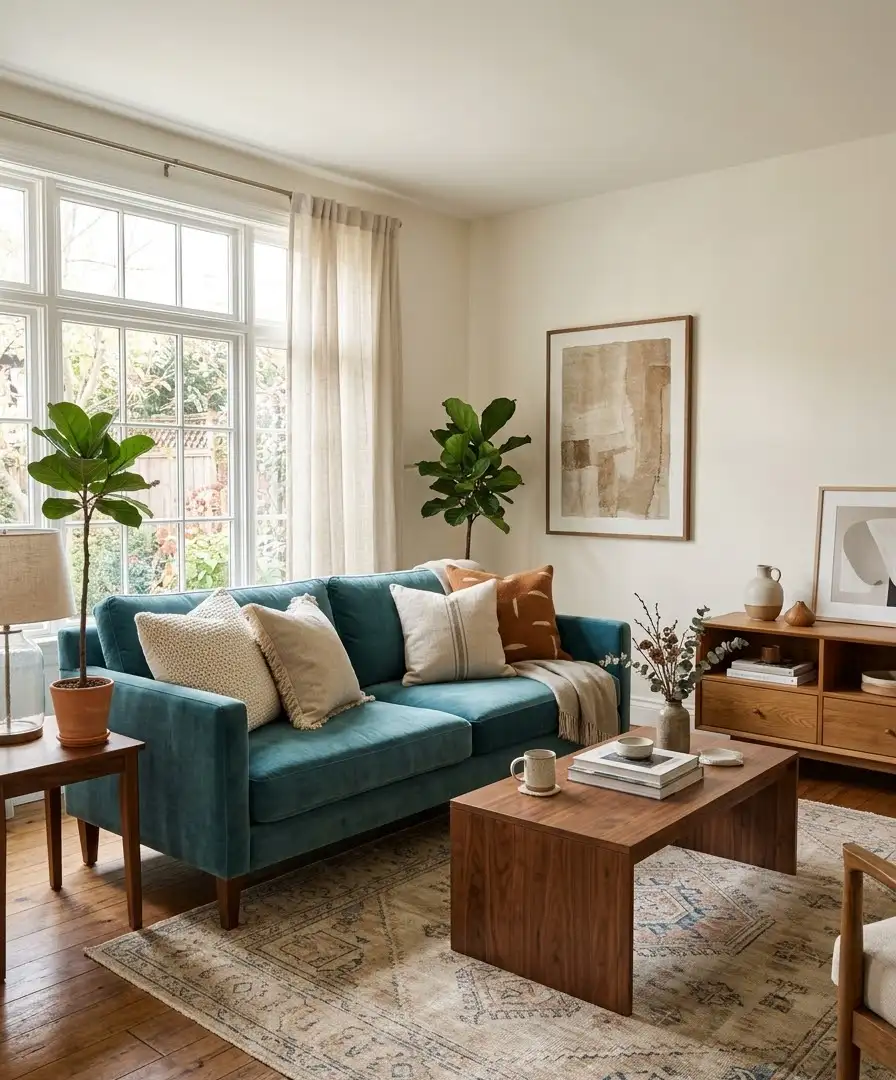
A neutral rug in cream, oatmeal, or soft gray grounds the sofa. A rug with a subtle pattern, like a faded vintage-style design, adds interest without fighting the teal.
For pillows, I stick to a simple formula: two in a warm color (rust, mustard, or blush), one in cream, and one patterned. It’s an easy rule and it rarely fails.
Wood tones matter too. Warm woods like walnut, oak, and teak look fantastic with teal. Pale ash and bleached oak give a lighter, Scandinavian feel.
Metals and plants
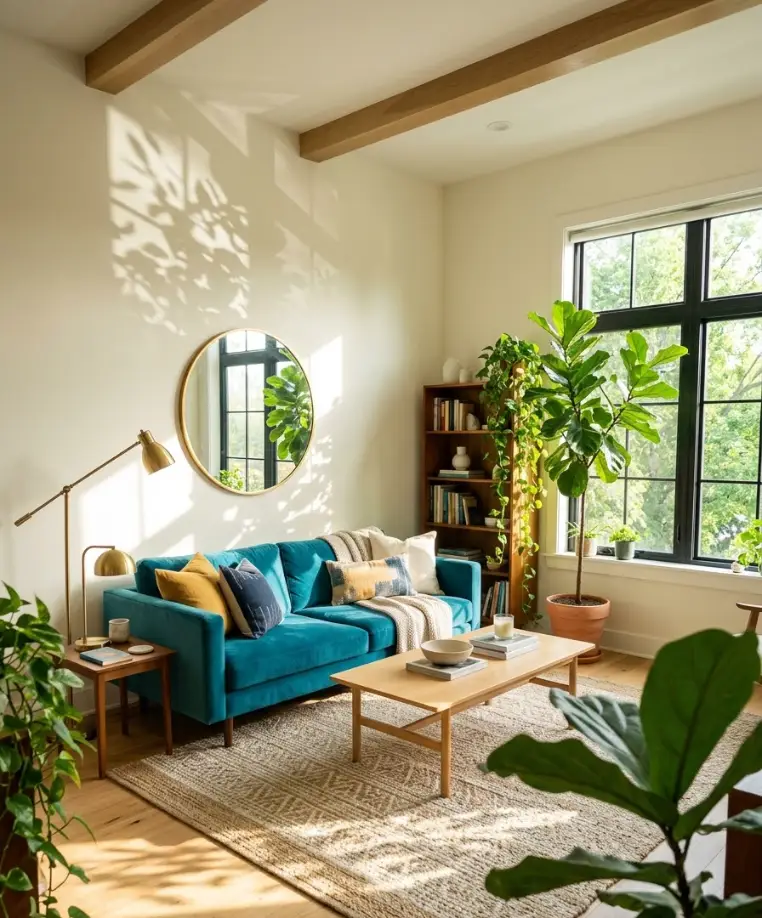
Brass and gold finishes warm up a teal room. Matte black adds a modern edge. I’d avoid too much chrome, since shiny silver plus cool teal can feel cold.
And plants. A fiddle leaf fig or a trailing pothos looks wonderful beside teal, because green and blue-green sit close together.
Real plants beat fake ones, even though I’ve killed more fiddle leaf figs than I’d like to admit.
My personal styling rules
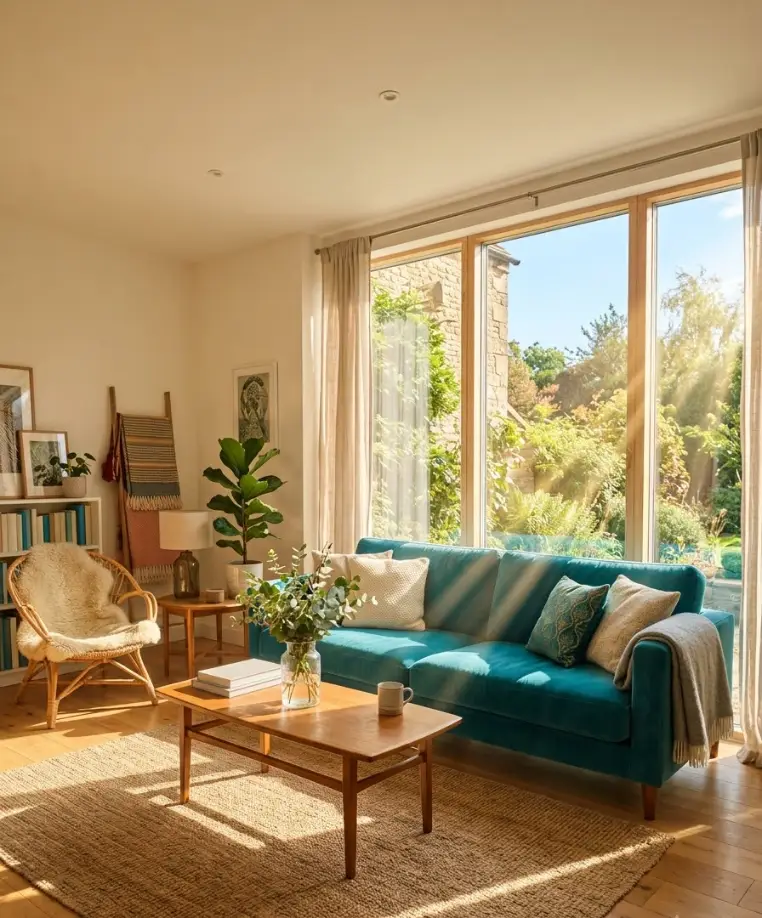
Here’s what I follow in every teal room I put together:
- Limit the palette to 3 or 4 main colors. A teal room with 8 colors looks chaotic fast.
- Repeat the teal once. One teal vase, a small pillow, or a piece of art echoes the sofa and ties the room together. (This is purely my opinion, but it works every time.)
- Add one warm accent piece. A copper bowl or rust blanket makes the sofa feel intentional.
- Skip matching sets. I prefer mixed furniture, so a matching coffee table and end table set bores me.
Light changes everything
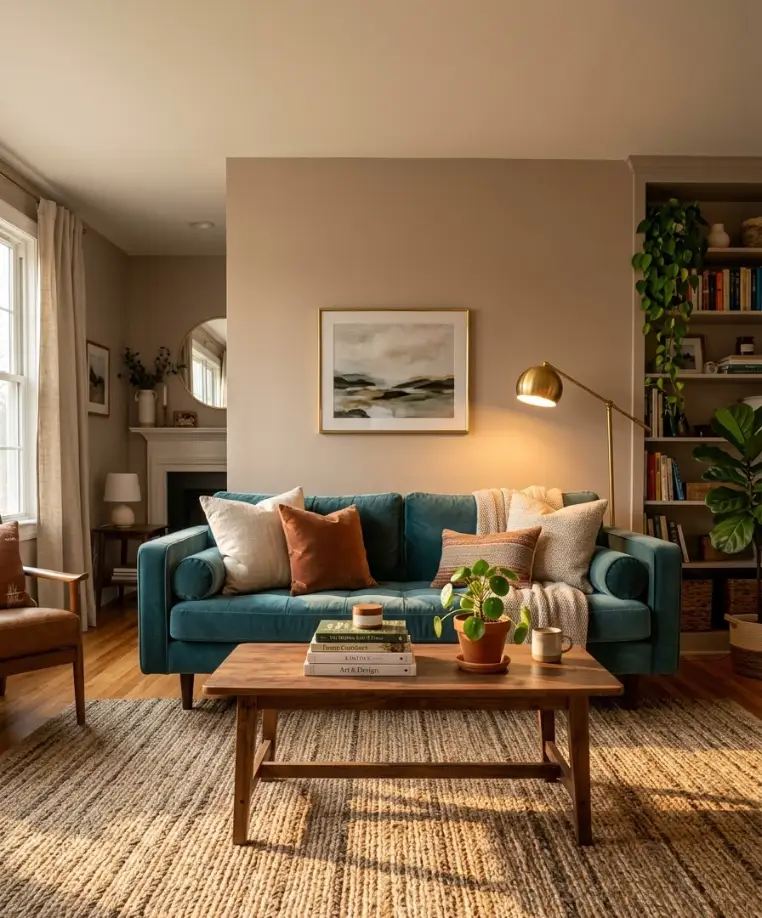
I can’t stress this enough. A paint color looks completely different in north light, south light, and under a yellow lamp.
North-facing rooms get cool, bluish light. Warm walls fix that. South-facing rooms get warm, golden light, so you can get away with cooler or darker colors without the room going cold.
Ever painted a wall that looked perfect in the store and awful at home? That’s lighting. Always test at home.
How I test paint samples
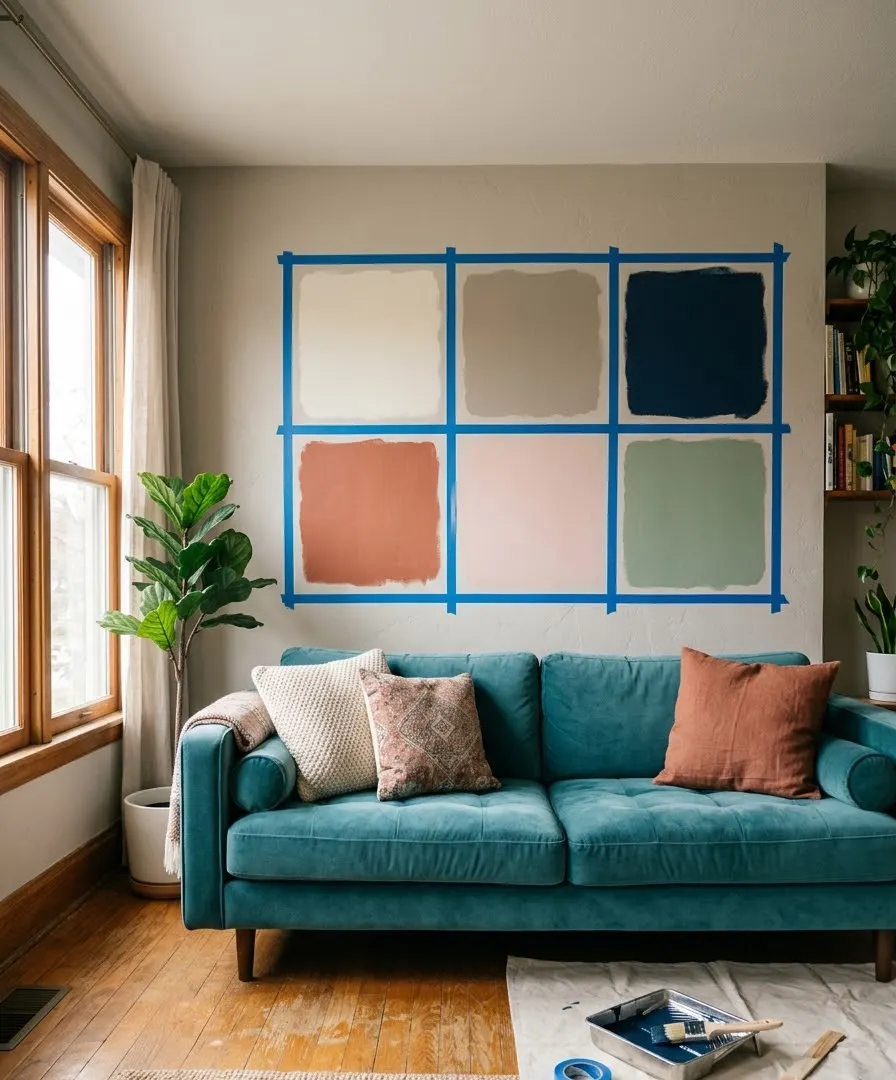
Paint a sample square about 2 feet wide, or buy peel-and-stick samples. Tape one on the wall behind your couch and one on a different wall.
Leave them for at least three days.
Then look at them in the morning, at midday, and at night with your lamps on. Pick the one that still looks good at all three times.
Boring advice, I know. It’s also the advice that saves you the most money.
Mistakes I see (and made myself)
I’ve made most of these, so no judgment here.
- Picking the wall color first, then buying the couch. Reverse it. Choose the couch, then match the wall.
- Forgetting about the trim and ceiling. White trim makes everything look crisp. Colored trim can look wonderful, but it takes confidence.
- Using too many patterns. A teal couch plus a bold wallpaper plus a loud rug equals visual noise.
- Ignoring sheen. Matte finishes hide wall flaws and look softer. Eggshell wipes cleaner. I use matte in living rooms and save glossier finishes for trim.
- Skipping the sample step. IMO this one hurts the most, because a full gallon costs far more than a sample pot.
You can also scroll Pinterest for real photos of teal sofas against different walls. Search “teal sofa living room” and save the ones that make you stop scrolling.
If you notice a pattern in your saves (lots of white walls, lots of navy), that pattern tells you what you actually want.
Teal couch living room FAQs
What color walls go best with a teal couch?
Warm white, greige, and soft beige are the safest options. They let the teal stand out without any clash. If you want drama, deep navy or charcoal makes the couch glow.
Can I use gray walls with a teal sofa?
Yes, as long as the gray leans warm. Cool, blue-toned gray can make teal look icy. A warm gray like Revere Pewter keeps the room friendly.
Should I paint an accent wall behind my teal couch?
It depends on your room. An accent wall in navy, terracotta, or blush behind the sofa creates a focal point, and it costs less than painting the whole room. Keep the other walls neutral so the space doesn’t feel busy.
Final thoughts
A teal couch gives you a color with real personality, and the right wall color just turns the volume up or down.
White and warm neutrals let the sofa shine. Navy and charcoal make it dramatic. Terracotta and blush make it feel lively and a little unexpected.
Start with samples, trust the light in your own room, and add a few warm accents to finish the look.
And if you still can’t decide, paint a sample of the weirdest option and live with it for a week. Sometimes the bold choice wins.
So what’s your teal couch situation: safe neutral or full dark and moody? Drop your wall color pick in the comments, and tell me if you’ve got a paint disaster story. I’ll feel better knowing I’m not the only one.