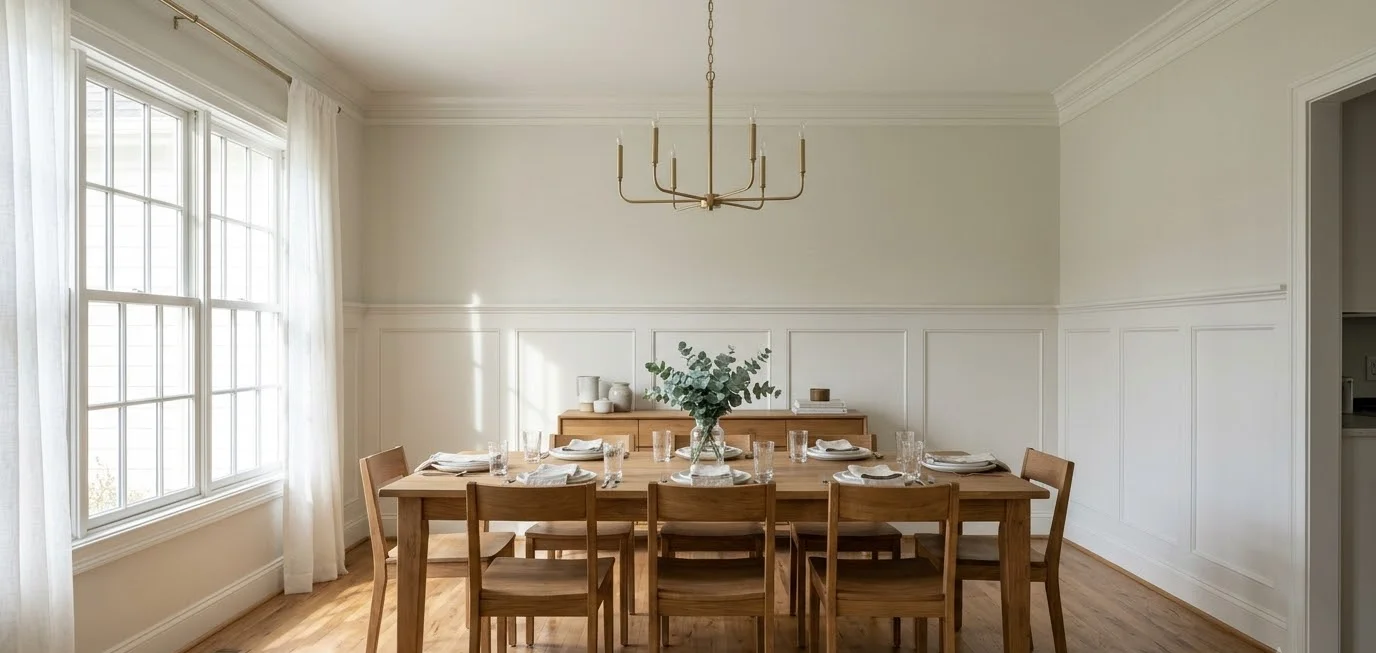
I pinned my first wainscoting photo at 11 p.m. and woke up with a board of 214 pins and a very sore wallet.
Dining rooms do that to you. They sit in this odd spot between formal and cozy, and the right wall treatment fixes both problems at once.
So here are 24 ideas I keep seeing designers use, plus the ones I’d happily copy myself.
I’ll tell you which ones I love, which ones I think are overhyped, and where you can save money. Grab a coffee. Your Pinterest board needs this.
Before you pick a style: the basics that save you money’

Wainscoting is wall paneling that covers the lower part of a wall. Traditionally it protected plaster from chair backs and scuffs.
Today it mostly makes a plain box of a room look expensive.
Most dining room wainscoting runs 32 to 36 inches high, which lines up with where chair backs hit the wall. Go lower and it looks stubby.
Go higher and it starts to feel like a different design altogether, which I cover below.
This Old House has a solid wainscoting how-to guide if you plan to build it yourself.
Here’s a quick cheat sheet on materials, with rough costs from my own shopping and what contractors have told me. Your local prices will differ.
| Material | Typical cost per linear foot | Best for | Watch out for |
|---|---|---|---|
| MDF panels | $5 to $12 | Painted looks, tight budgets | Swells if it gets wet |
| Solid wood | $15 to $35 | Stained finishes, heirloom rooms | Cost, plus seasonal movement |
| PVC or composite | $8 to $18 | Humid homes | Looks flat if you skimp |
| Peel-and-stick kits | $3 to $8 | Renters, quick refreshes | Edges lift over time |
I used MDF in my own dining room. It cost about a third of what solid wood quoted, and nobody has ever knocked on the wall to check.
Classic shapes with a modern edge
1. Shaker panel wainscoting

Shaker panels are flat rectangles with a simple square frame. They look clean, quiet and a little bit farmhouse without screaming about it.
Paint the whole thing one color and you get instant architecture.
IMO this is the safest pick for anyone who worries about regretting their choice in five years.
It also matches Shaker kitchen cabinets if your dining room opens into the kitchen. Pinterest loves it for good reason.
2. Picture frame molding

This one uses thin molding strips that form rectangles directly on the wall. No raised panel, just outlines.
You can build it for the price of some trim and a Saturday.
The trick is spacing. Keep the rectangles evenly sized and the gaps between them identical, or the whole wall looks drunk.
I measured mine three times and still nudged one frame a quarter inch. Worth it.
3. Raised panel wainscoting
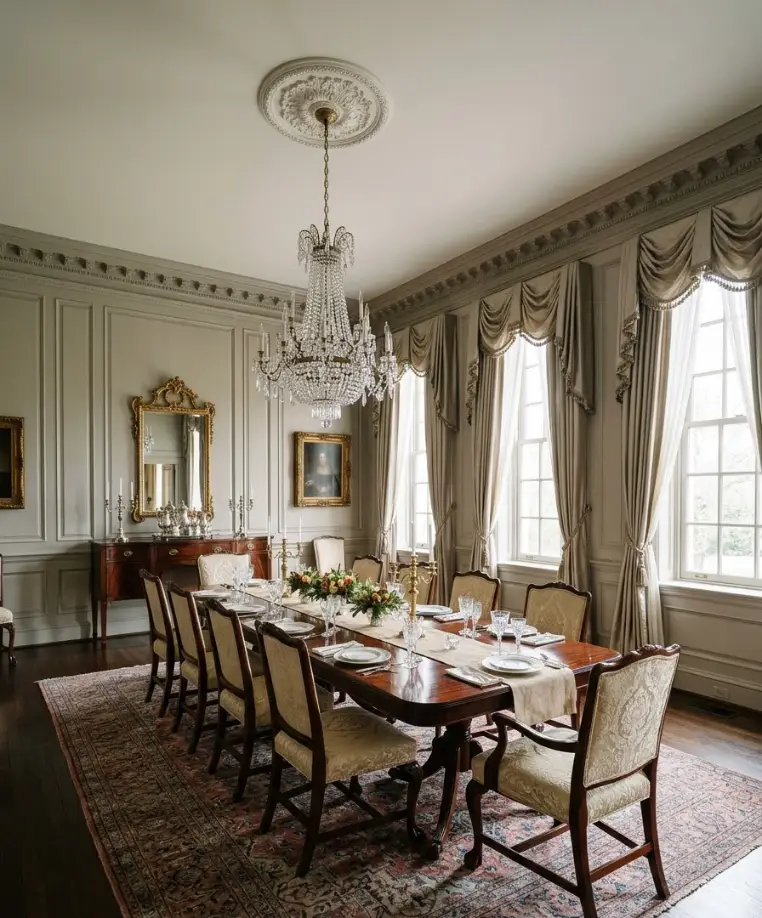
Raised panels bulge forward with beveled edges and give a formal, traditional look. They suit older homes and rooms with big chandeliers.
Walk into a Georgian dining room and you will see them everywhere.
Does it feel dated? It can, if you pair it with brown paint and heavy drapes. Paint it a soft gray or warm white and suddenly it looks current.
Color rescues more rooms than furniture does.
4. Board and batten

Board and batten uses flat boards with narrow strips covering the seams. The strips run vertically, which makes your ceiling look taller.
I think it works best in rooms with 8-foot ceilings that feel a bit squat.
Spacing the battens 12 to 16 inches apart looks balanced. Closer feels busy. Farther apart looks like a mistake.
5. Beadboard

Beadboard has narrow vertical grooves running in lines. It reads cottage, coastal, and cheerful.
You can buy it in 4-by-8-foot sheets, which makes installation fast.
I’ll be honest: beadboard in a formal dining room can feel too casual. In a small breakfast nook or eat-in kitchen, though, it looks adorable.
Match the style to the room, not to the trend.
6. Flat panel or slab wainscoting

Flat panels skip all the detail and use smooth, clean sheets. They look sleek and very modern.
Think of them as paneling for people who find molding fussy.
You can paint them a deep color or stain them a natural wood tone. They show every flaw in your wall prep, so sand carefully.
Cheap MDF with a perfect paint job beats expensive wood with a sloppy one.
Modern twists designers love right now
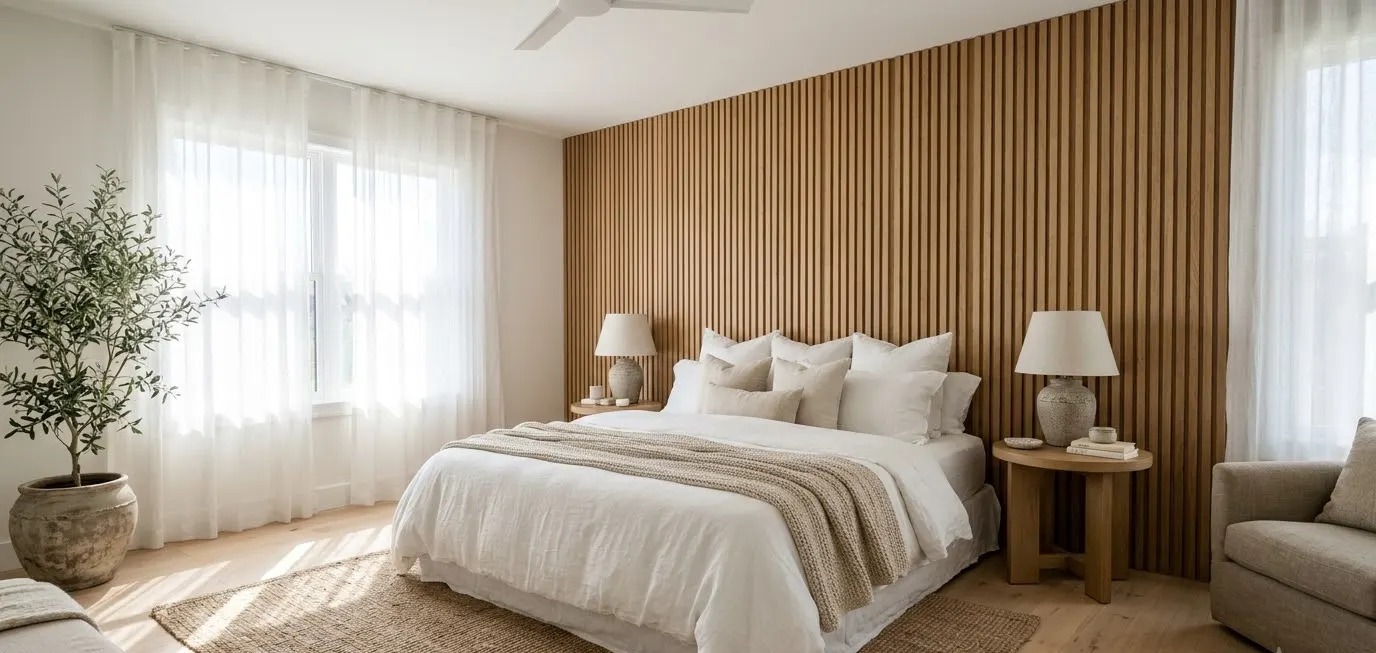
7. Slim vertical slats

Wood slats spaced a half inch apart, often with a dark backing, create a Scandinavian, spa-like look.
Designers put them on feature walls behind dining tables. The shadow lines between slats make the wall look deeper.
I saw this at a friend’s apartment and stared at it through an entire dinner. Wow, that wall did more work than her art. You can find slat wall inspiration on Houzz if you want to browse real installs.
8. Fluted or reeded panels

Fluted wainscoting has rounded vertical ridges that catch light beautifully. It looks like fancy hotel lobby design, but you can fake it with half-round dowels glued onto a flat panel.
Hot tip: stick them on with construction adhesive and a level.
Fluting is everywhere on Pinterest right now. I think it’s the trend with the best staying power because the texture changes through the day as light moves across it.
9. Two-tone wainscoting
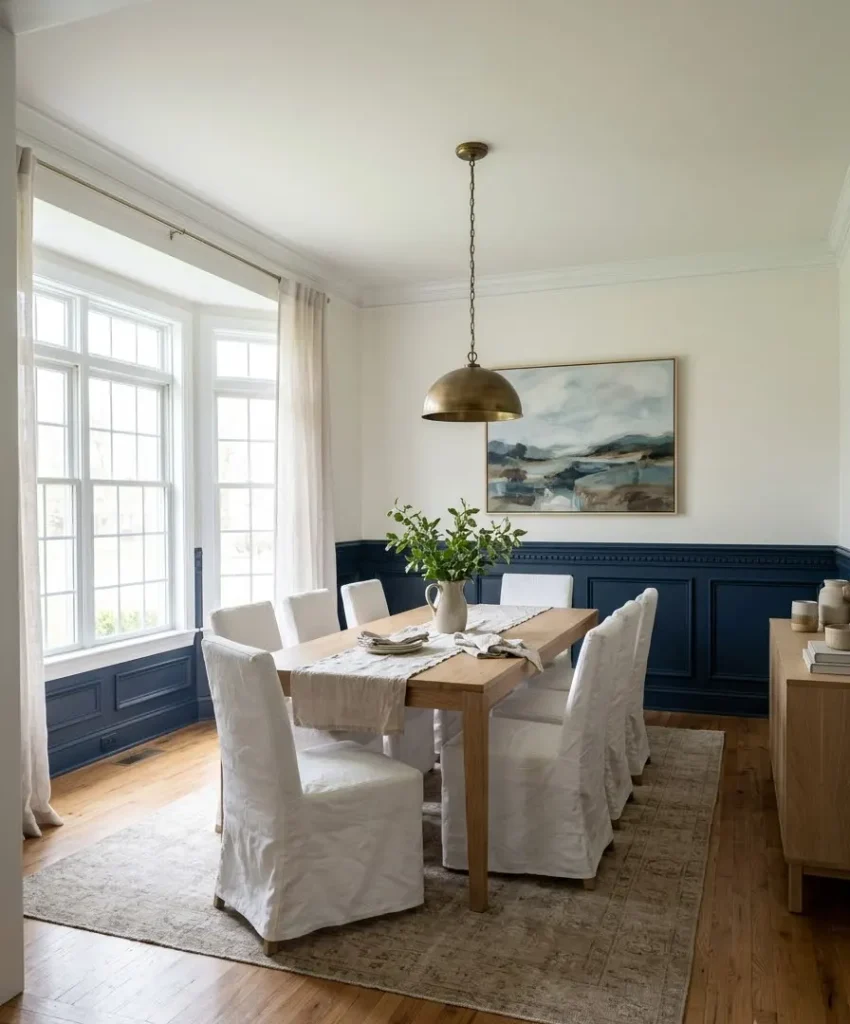
Paint the panels one color and the wall above another. The classic pairing is white below and a darker shade above, but you can flip it. A dark lower wall with a pale upper wall grounds the room.
Contrast sets the mood. Soft contrast feels calm, and heavy contrast feels dramatic. Test paint samples next to each other at night, not just at noon.
10. Black or charcoal wainscoting
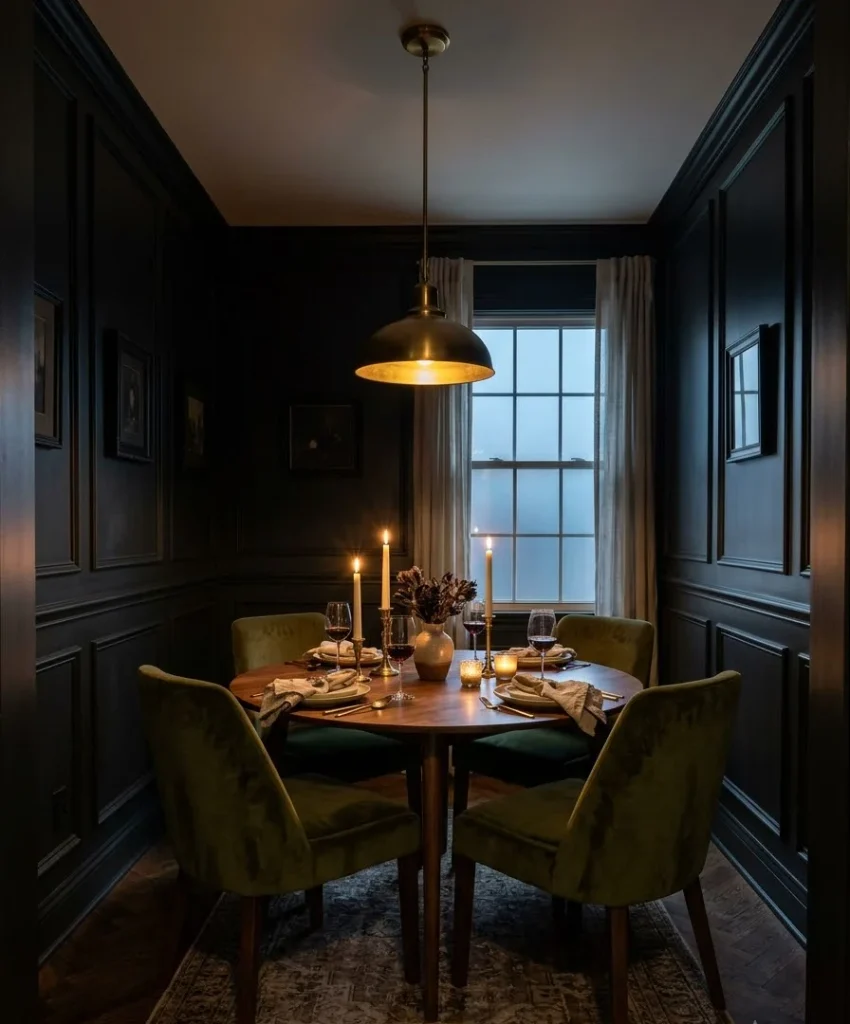
Black paneling looks dramatic, a little moody, and surprisingly warm under candlelight. It makes gold fixtures glow and makes food look good.
Designers use it in small dining rooms on purpose, because dark walls blur the edges of the space.
It does show dust, fingerprints, and every flaw. Use a satin or eggshell finish, not flat. And paint in a well-lit afternoon, or you’ll miss spots.
11. Wallpaper inside the panels
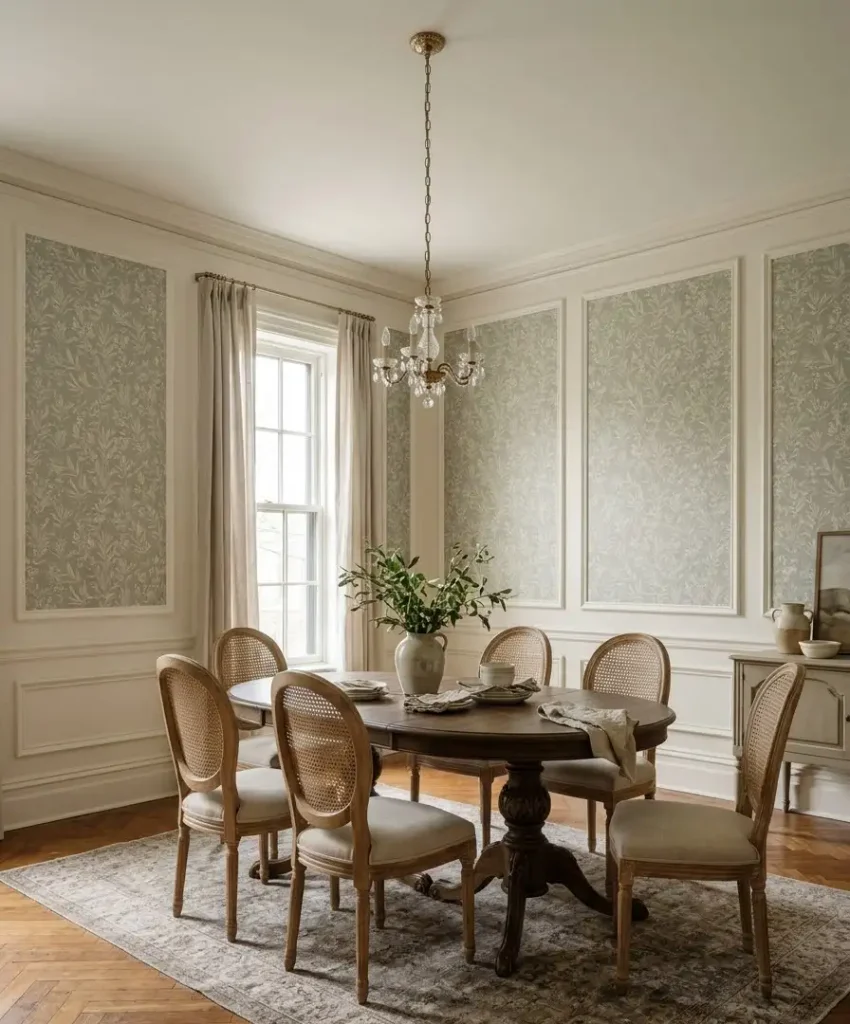
Instead of painting the panel centers, designers tuck wallpaper or grasscloth into them.
Each frame becomes a little framed artwork. This works especially well with picture frame molding.
You only need small pieces, so you can splurge on a gorgeous roll without a huge bill.
Farrow & Ball sells beautiful papers, and their paint and paper collection gives you plenty of ideas for combinations.
12. Oversized frames

Large frames, sometimes 30 inches wide or more, feel modern because they simplify the wall.
Fewer lines mean a calmer look. Smaller frames feel traditional.
I tried to pull this off in my hallway and learned that large frames need large walls. Measure first, and tape the layout up with painter’s tape before you cut anything.
Height and layout choices
Here’s a small tangent. I noticed that every dining room I love has a rug at least 24 inches wider than the table on all sides, and no wainscoting height can fix a tiny rug.
Wall panels get all the Pinterest love, but the rug quietly decides whether the whole room works. Okay, back to walls.
13. Classic half-wall height
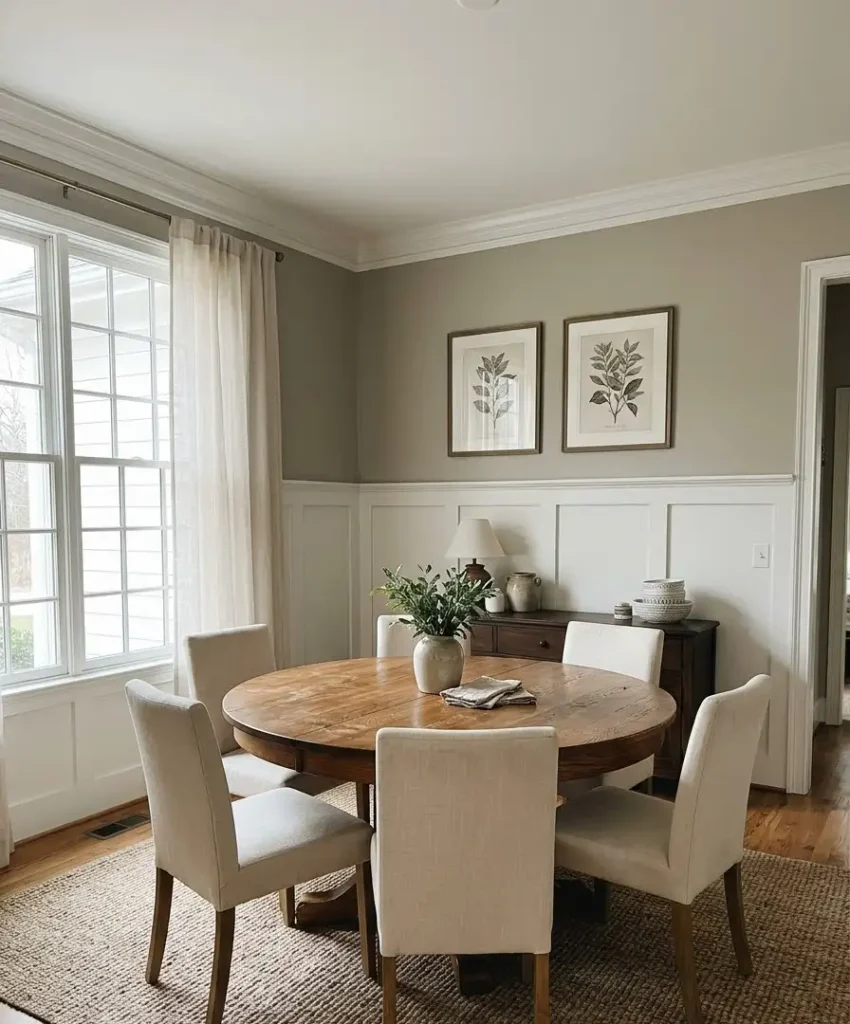
Thirty-six inches is the standard. It looks balanced, it protects your walls from chairs, and it works with nearly every ceiling height. If you feel unsure, go with this.
You can top it with a simple cap rail or a small shelf. A narrow ledge holds a few framed photos or a candle. Practical and pretty.
14. Two-thirds height with a plate rail

Raise the panels to about 54 or 60 inches and cap them with a plate rail. This looks old-world and gives you a spot to display plates, art, or small plants. It works beautifully in rooms with 9-foot ceilings.
I think this height looks best in dining rooms specifically, since your eye level when seated falls right around that line. In a hallway it would feel heavy.
15. Full-height wainscoting
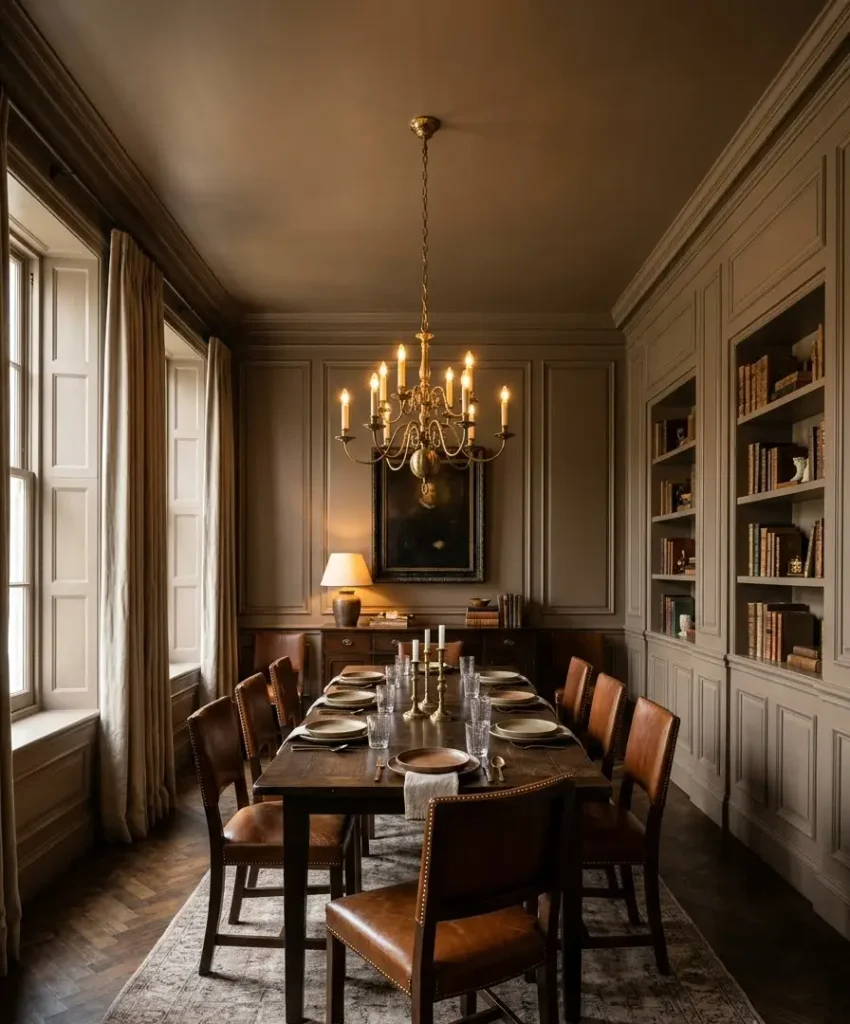
Full-height paneling covers the wall from floor to ceiling. It looks like a library or a boutique hotel.
Painting it all one color, ceiling included, creates a cocoon effect that people either love or fear.
It costs more and takes longer. But if you want a dining room that feels like a destination, this delivers. Wouldn’t you rather your guests say “wow” before they sit down?
16. Panels with mirror inserts

Set mirrors inside a few frames, and the room doubles in light. Antiqued mirror glass looks especially lovely at night with candles.
Designers use this trick in dark rooms with small windows.
Skip it if your dining room faces a messy kitchen. A mirror shows everything, including the dishes in the sink.
17. Wainscoting that wraps the ceiling

Some designers extend the paneling pattern onto the ceiling with matching molding.
This ties the walls and ceiling together and makes the room feel tailored. It looks expensive because it takes real planning.
I’d only try this with a good finish carpenter. A crooked line overhead stares back at you every meal.
18. Arched or curved panels
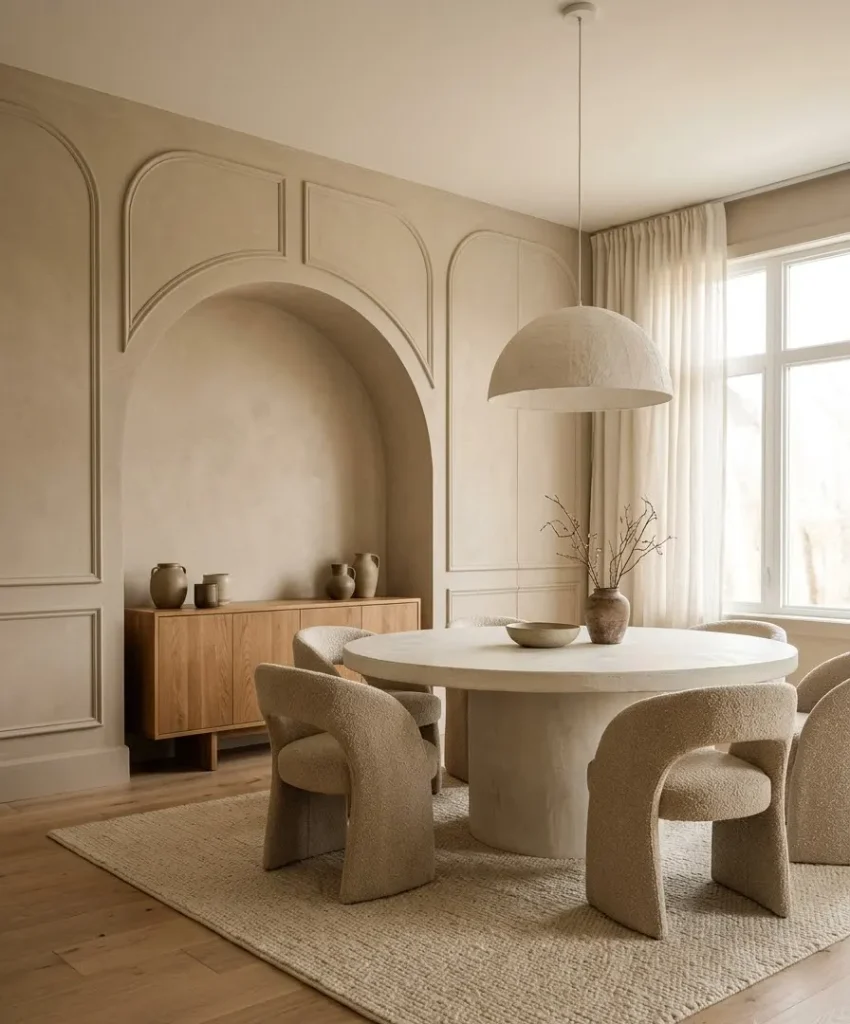
Arches have come back strongly. Designers cut arched tops into panel frames or build arched alcoves for sideboards. They soften all those straight lines.
Curved molding costs more and takes skill. If your budget feels tight, add one arch around a doorway or a mirror, and keep the rest simple.
Color, texture, and material ideas
19. Painted wainscoting with wallpapered upper walls
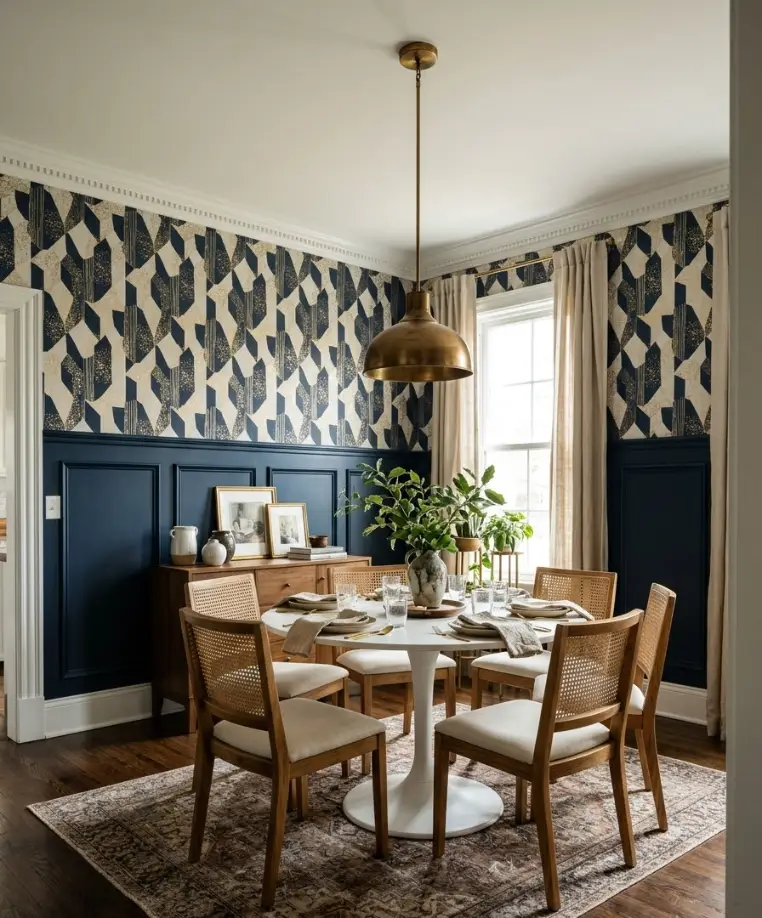
This combination is a Pinterest favorite. The lower wall stays calm and solid, and the upper wall carries the pattern.
You get personality without overwhelming the room.
A few combinations I like:
- Warm white paneling with a soft botanical paper
- Navy paneling with a gold-flecked geometric print
- Sage paneling with a pale linen-textured covering
- Charcoal paneling with a bold floral (my personal pick, because it feels a little rebellious)
20. Stained wood wainscoting
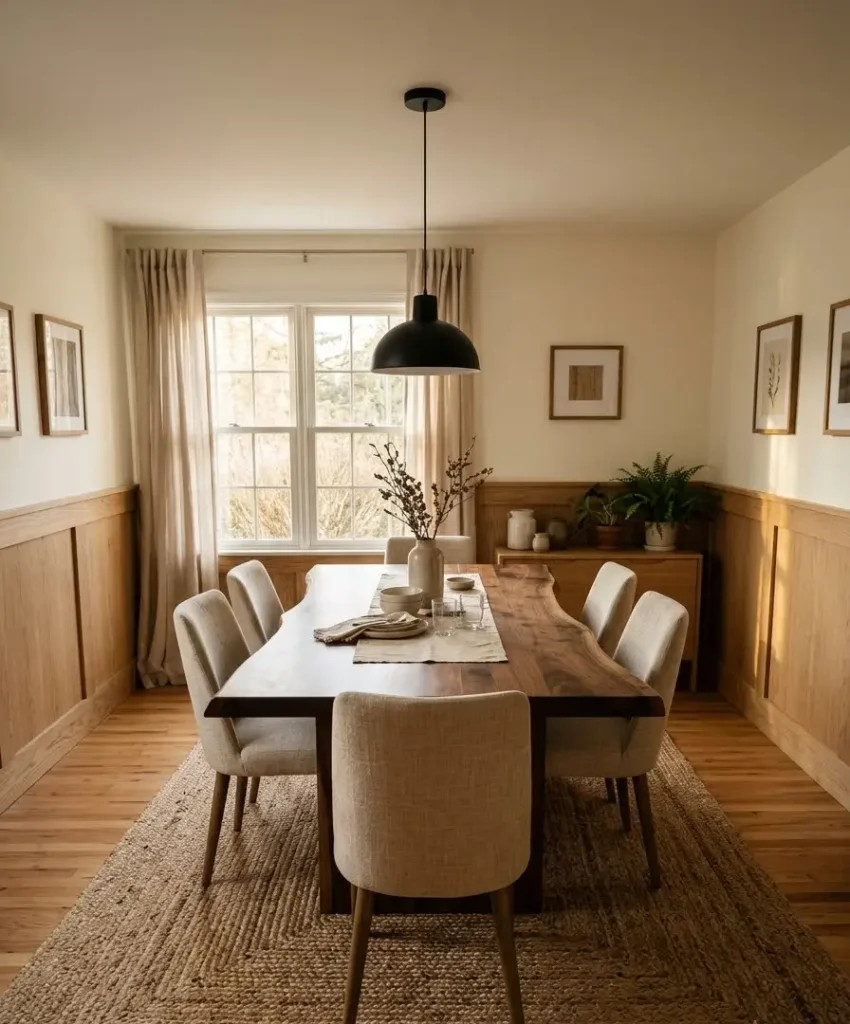
Natural oak, walnut, or even a gray-washed finish gives you warmth that paint can’t match.
Stained wood looks organic and pairs well with modern furniture. It also hides scuffs better than white paint does.
Quality matters here, since you can’t hide bad joints under paint. Budget more for the wood and the labor. I think it’s worth every dollar if your room has good natural light.
21. Limewash above the panels
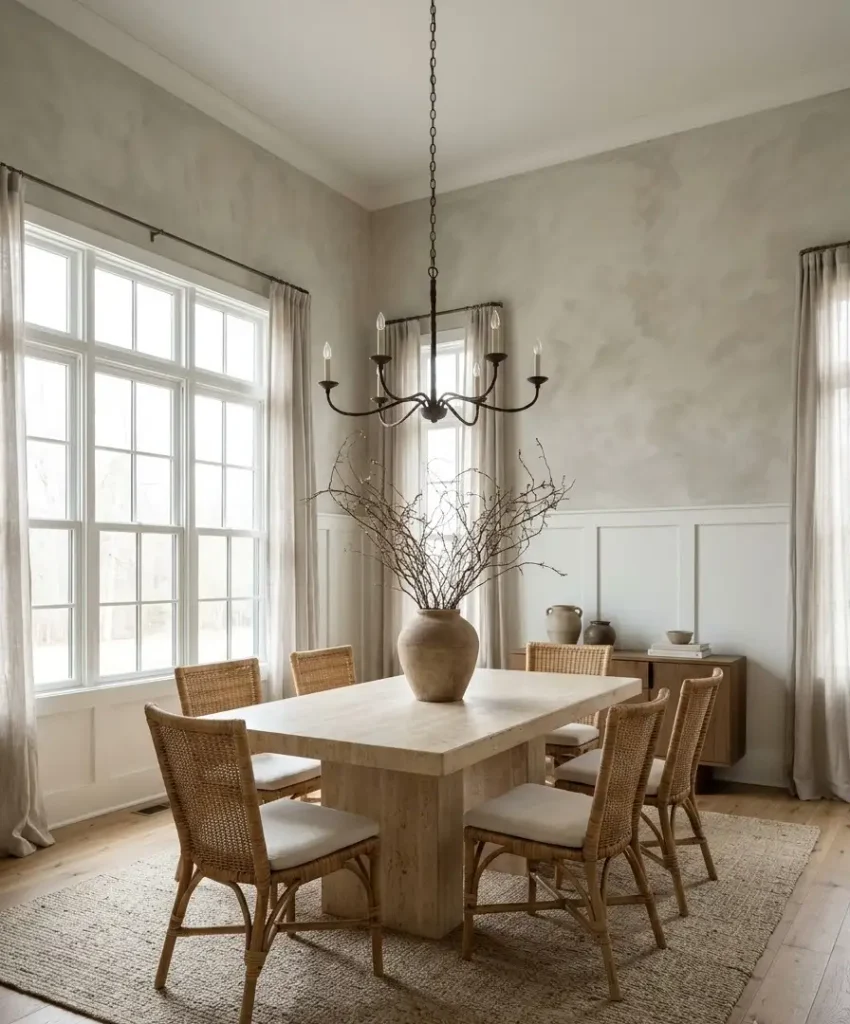
Limewash gives walls a soft, cloudy, almost plaster-like finish. Pair it with crisp painted panels for a mix of smooth and textured surfaces.
The contrast looks sophisticated without trying too hard.
Limewash takes practice, so test it on a scrap board first. Architectural Digest runs plenty of dining room design features showing how designers combine these finishes.
22. Deep green wainscoting
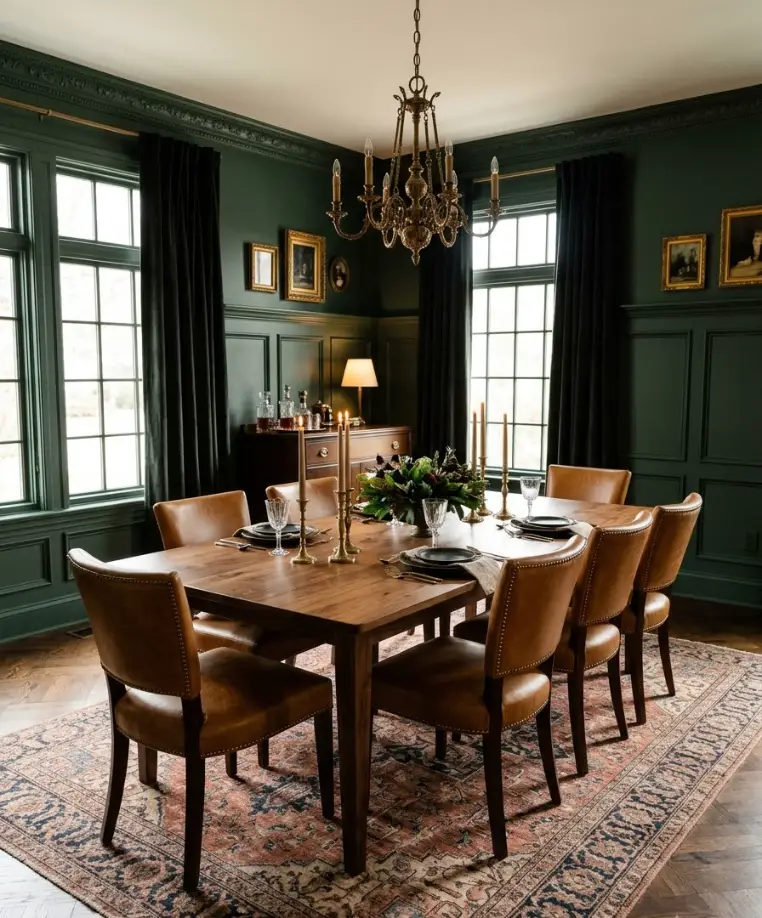
Forest green, olive, and moss tones continue to dominate dining room photos.
They feel rich and slightly vintage, and they flatter wood tables and brass lighting. Benjamin Moore’s color library lists plenty of green options to sample.
Paint a swatch bigger than a postcard. Green changes dramatically with light, and a tiny sample can fool you completely.
I once picked a green that looked like a hospital hallway at 7 p.m. :/
23. Peel-and-stick and kit options
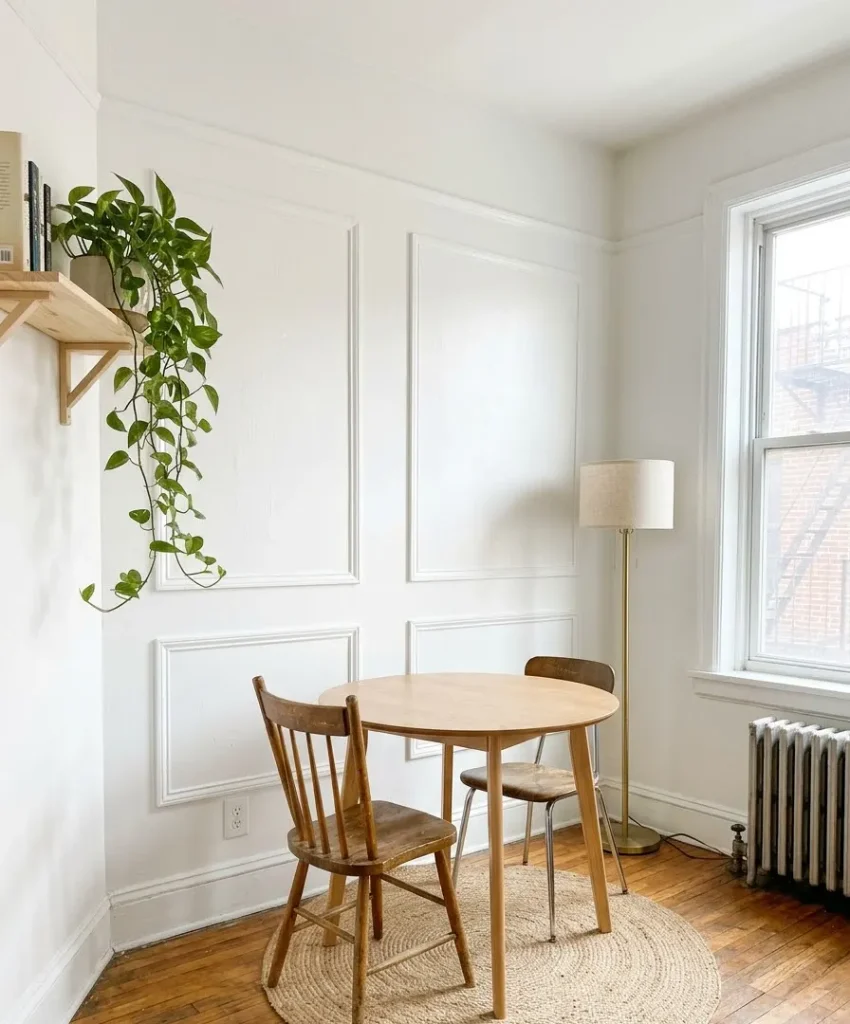
Not everyone owns their walls. Peel-and-stick panels and DIY kits give renters a way to add structure without damaging anything permanently.
Many kits ship with pre-cut pieces that snap together.
They won’t last forever, and the edges can lift in humid climates. Still, for a one-weekend glow-up, they beat staring at blank drywall.
24. Metallic and brass accents
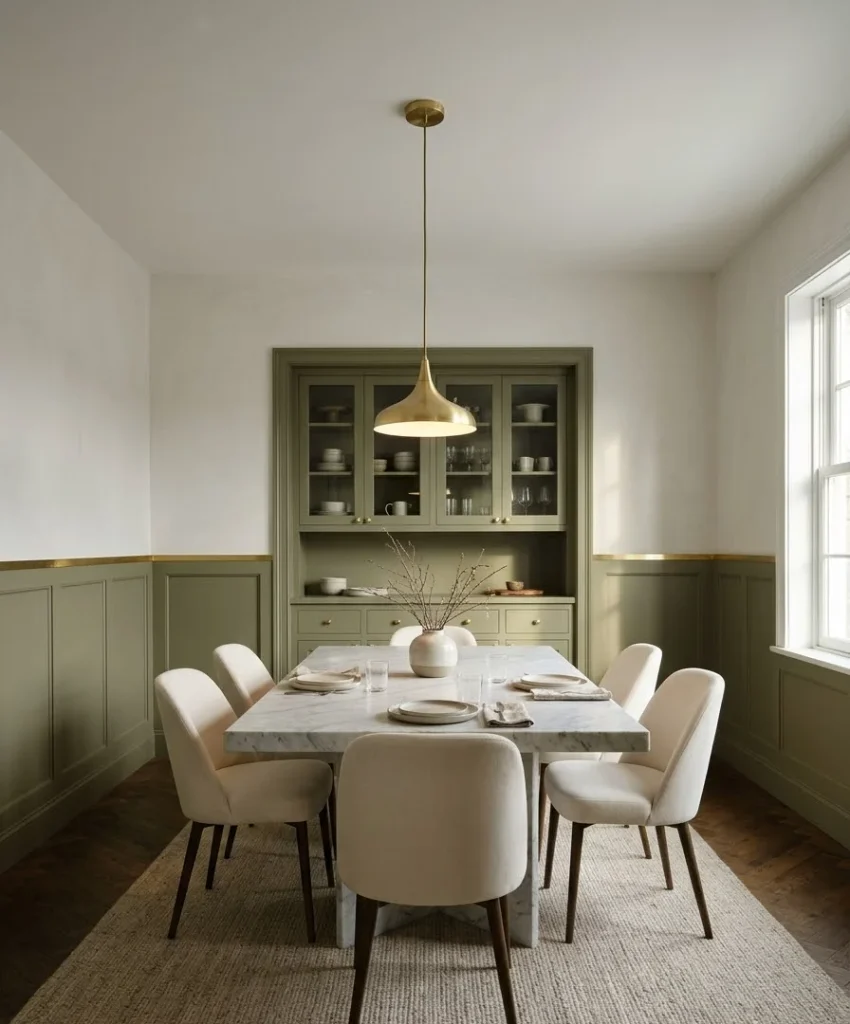
A thin brass strip along the top of the panel, or small brass hardware on a built-in cabinet, adds a quiet shine.
Metal accents look polished next to matte paint. Use them sparingly.
Too much brass turns a dining room into a jewelry store. One or two details are plenty.
How to choose the right idea for your dining room

Start with your ceiling height, because it limits your options. Eight-foot ceilings suit half-wall panels and board and batten.
Nine feet or taller gives you room for plate rails and full-height designs.
Then look at your light. Dark rooms with little sun can handle deep colors if you add warm bulbs. Bright rooms can carry almost anything.
Finally, think about how you actually use the room. If you host loud family dinners with kids, pick a wipeable satin paint and skip delicate wallpaper below chair height.
If you mostly eat takeout over the sink, well, maybe start with a small project.
Common mistakes I see (and made)

I made most of these myself, so I’m not judging. Here’s the short list:
- Hanging panels without checking that the wall is level
- Skipping caulk, which leaves gaps that scream “DIY” from across the room
- Choosing a sheen that’s too shiny, which shows every dent
- Forgetting outlets, so the panel cuts end up awkward (I did this, and my patience paid for it)
Take your time on prep. Paint hides a lot, but it can’t fix a crooked frame.
Quick FAQs
How high should wainscoting be in a dining room?
Most designers stick with 32 to 36 inches, which matches chair back height.
Taller options like 54 to 60 inches work in rooms with high ceilings and look best with a plate rail on top.
Is wainscoting still in style?
Yes. Designers keep reworking it with slimmer profiles, fluted textures, and bold colors. Classic shapes like Shaker panels stay popular because they adapt to nearly any decor style.
Can I install wainscoting myself?
Many people do. Picture frame molding and board and batten rank as the most beginner-friendly.
You need a level, a miter saw, construction adhesive, a nail gun, and plenty of patience. Raised panels and curved designs usually need a professional.
Final thoughts
Wainscoting turns a dull dining room into a place people linger. You can go classic with Shaker panels, moody with black paint, or textured with fluted wood.
The best choice matches your ceiling height, your lighting, and how you actually live.
My advice: save a handful of favorites to a Pinterest board, tape the layout on your wall for a few days, and see what still feels right.
Which of these 24 ideas would you try first in your own dining room?






1 thought on “24 Modern Wainscoting Ideas Dining Room Designers Use for an Elevated Look”