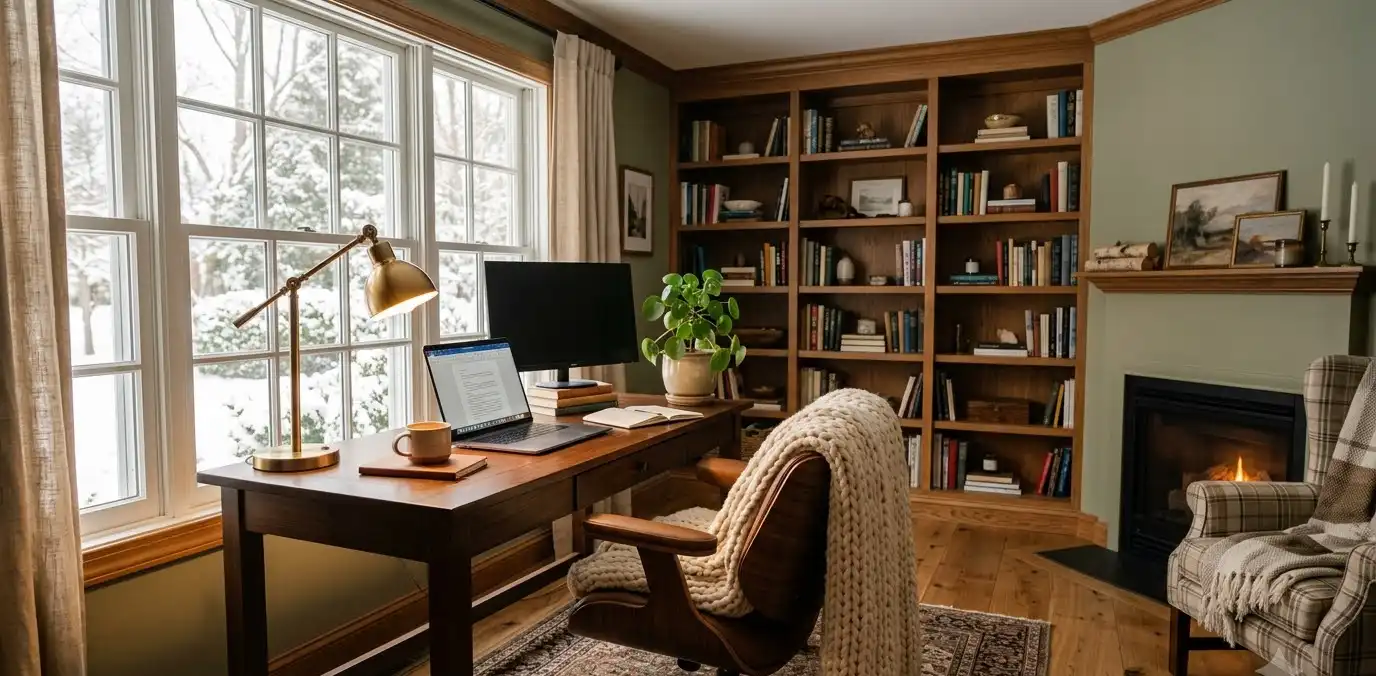
My home office used to be a corner of the guest room with a folding table and a chair I “borrowed” from the dining set.
Every January, I’d sit down at 8am, teeth basically chattering, and wonder why I dreaded logging on.
Turns out the answer was simple: the room felt like a waiting area, not a place I wanted to be.
It took me two winters to fix it properly. Not with a huge budget. Just with small, deliberate changes that made the space feel warm, personal, and genuinely mine.
If your home office currently feels more like a storage closet with a laptop in it, here’s everything I learned along the way.
- Start with layered lighting, not one overhead bulb
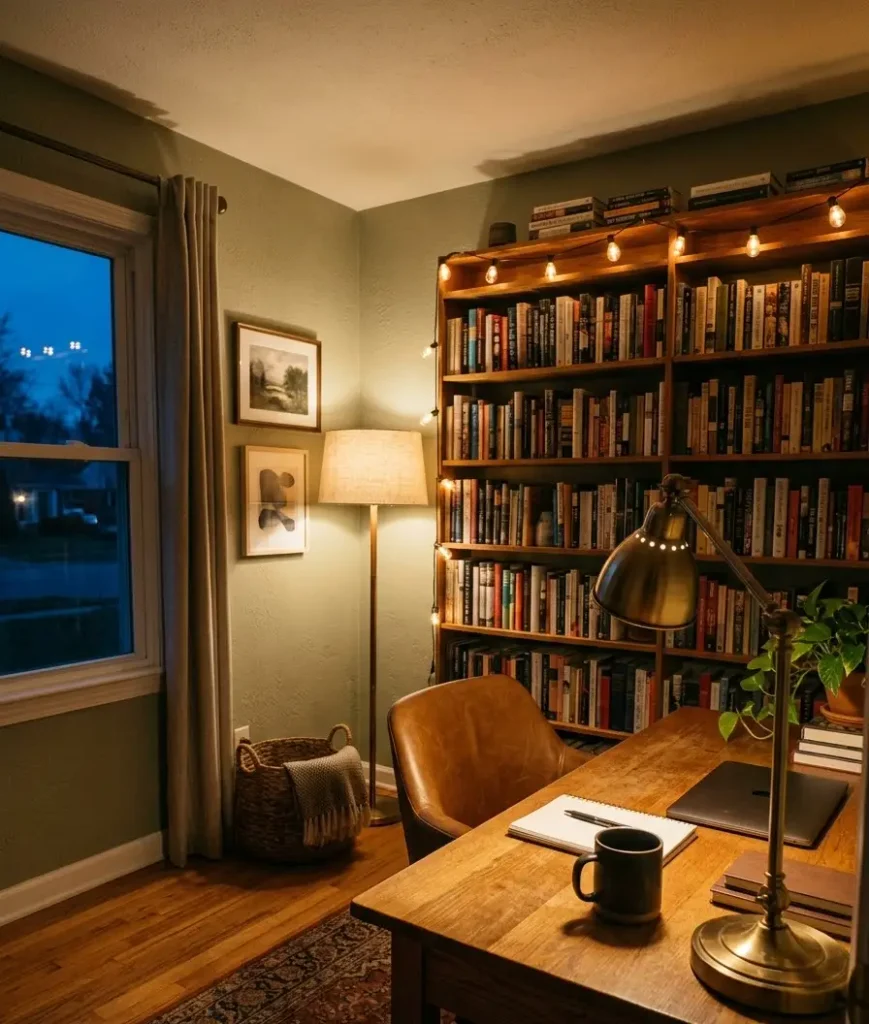
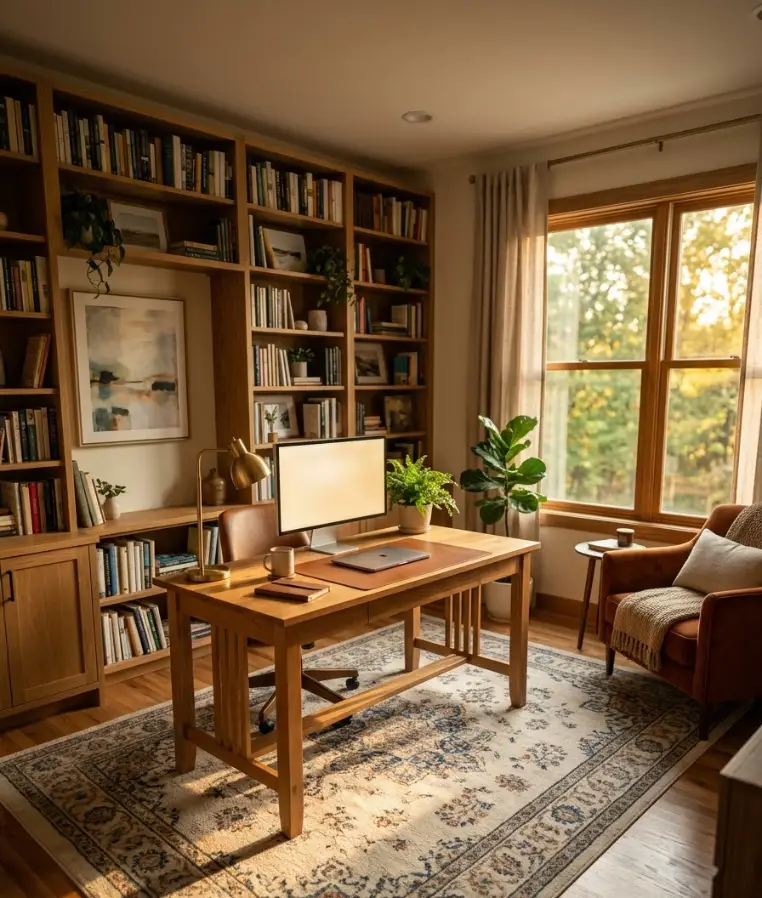
A single ceiling light makes any room feel clinical. I swapped mine for three light sources: a warm-toned desk lamp, a small floor lamp in the corner, and string lights along one shelf.
The difference floored me. Same room, completely different mood.
Aim for bulbs around 2700K to 3000K. That warmer color temperature reads as cozy instead of hospital-bright.
- Add a rug, even a small one
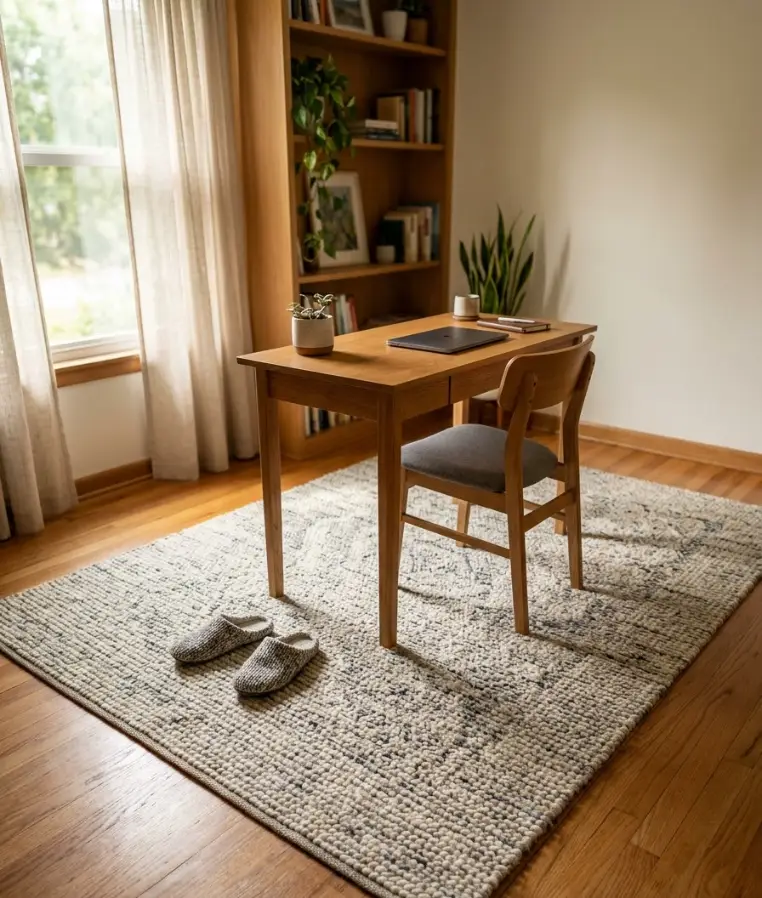
Bare floors in winter are brutal on bare feet, and they also make a room feel colder than it is.
I picked up a wool-blend rug for under $60 and it changed how the whole space felt underfoot. IMO this is one of the cheapest upgrades with the biggest payoff.
- Bring in a heated throw or weighted blanket
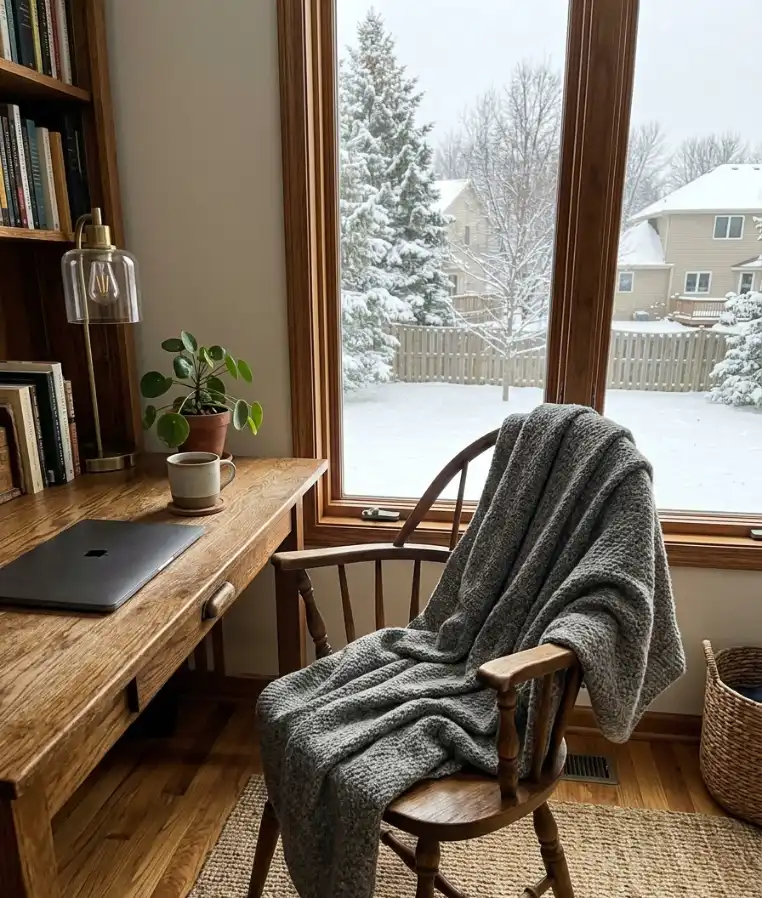
I keep a heated throw draped over my chair from November through March.
On days when the thermostat war with my husband is not going my way, this thing saves my productivity.
It’s a small detail, but it turns a work chair into a place you actually want to sit in.
- Get a proper space heater, and use it safely
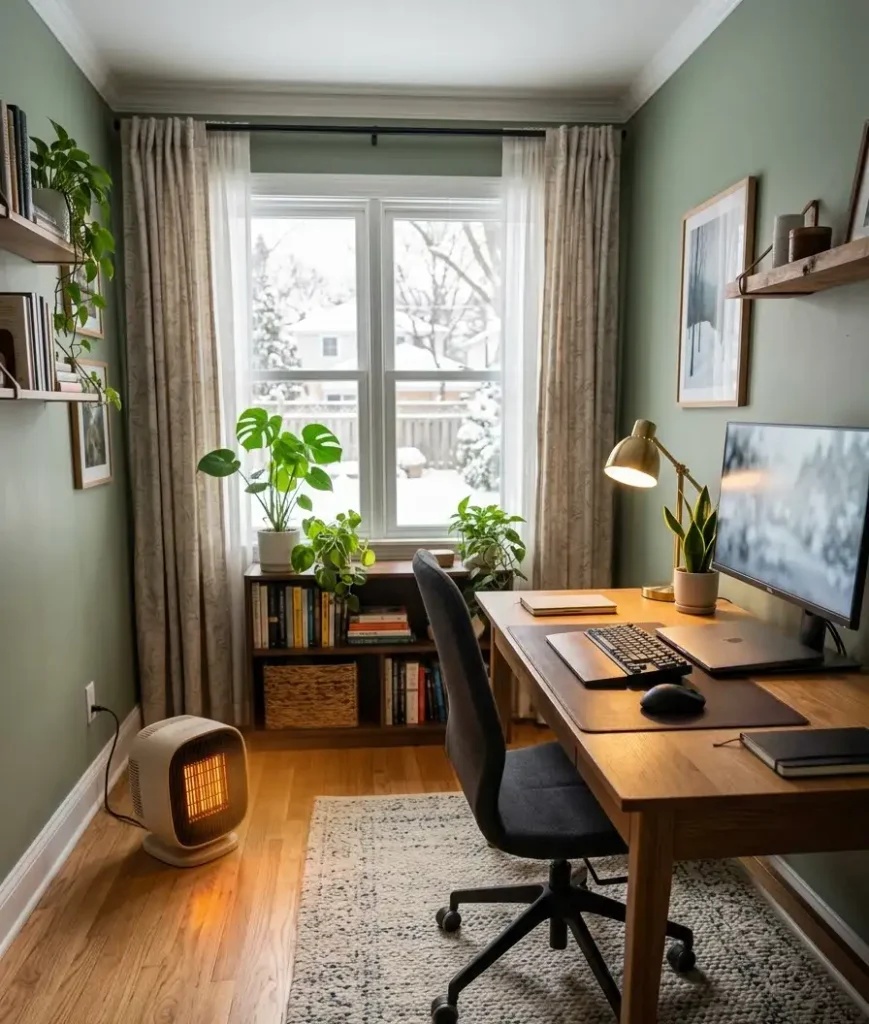
Central heating doesn’t always reach the far corner where your desk lives. A small space heater fixes that fast.
Just follow basic safety rules: keep it three feet from anything flammable, never leave it running unattended, and don’t run it on an extension cord.
The Department of Energy’s guide to small space heaters covers this well if you want the full rundown before buying one.
- Choose warm, muted wall colors over stark white
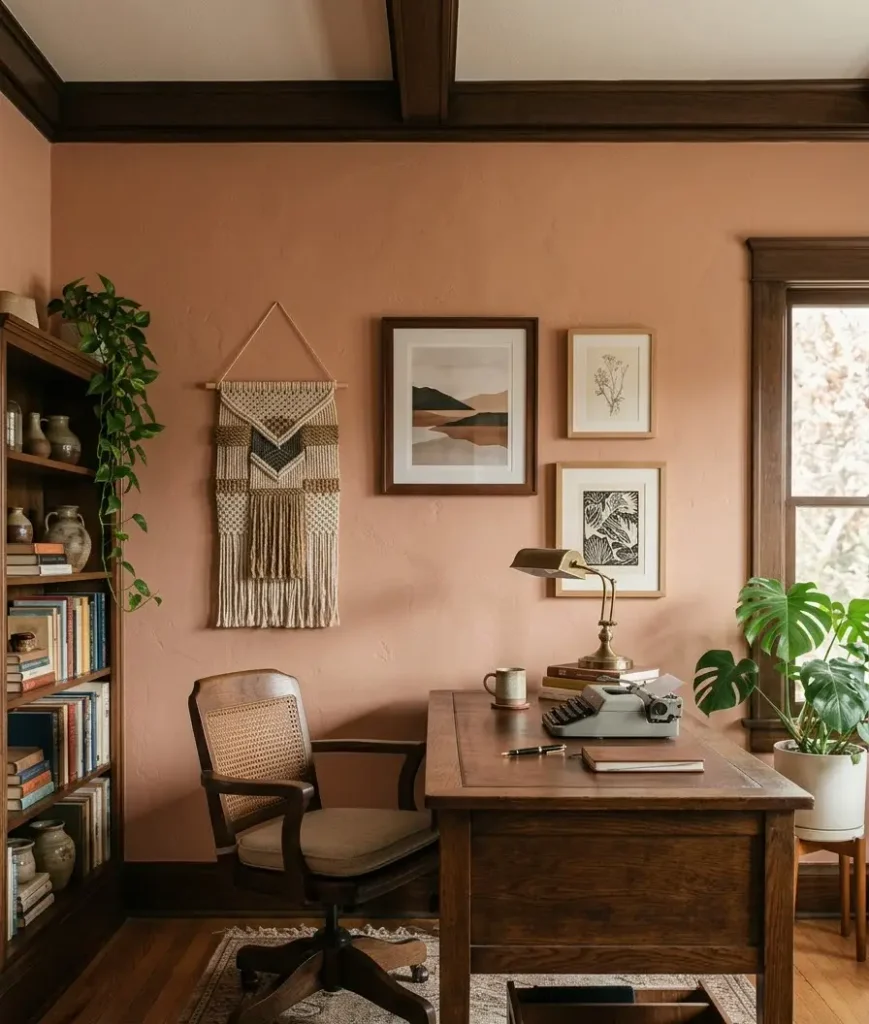
Stark white walls photograph well but feel sterile in person, especially in low winter light.
I repainted my office wall a soft terracotta and the room instantly felt ten degrees warmer, even though the thermostat said otherwise.
If painting isn’t an option, a large warm-toned tapestry or piece of art does something similar.
- Layer textures on your chair
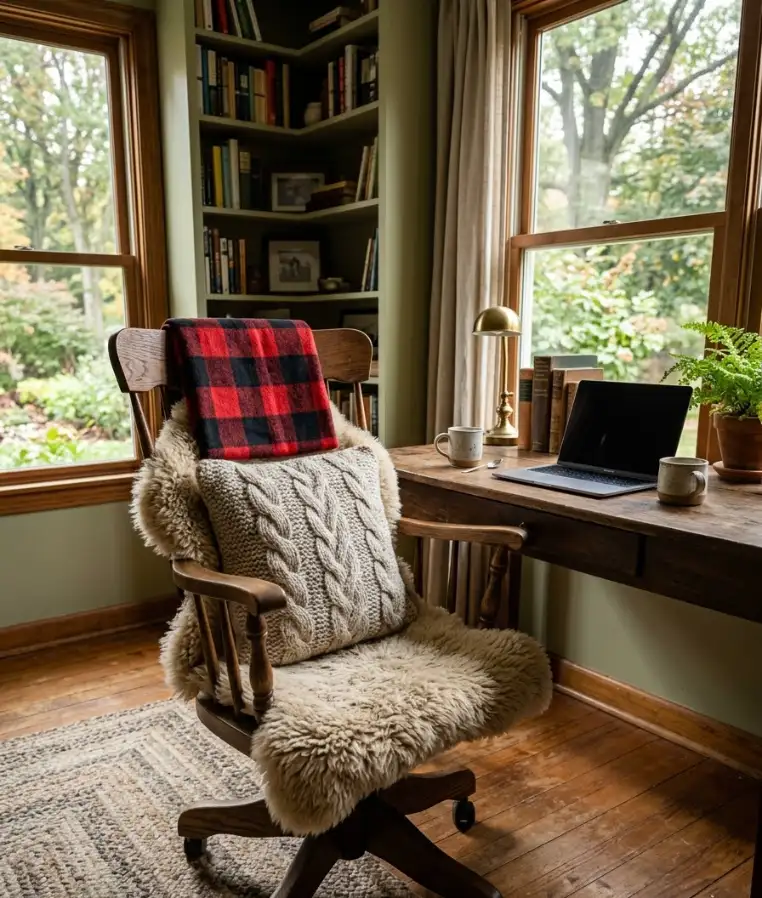
Sheepskin throw, knit cushion, even an old flannel shirt draped over the backrest.
Textures make a chair feel inviting instead of purely functional. This sounds like a small thing. It isn’t.
- Set up a hot drink station within arm’s reach
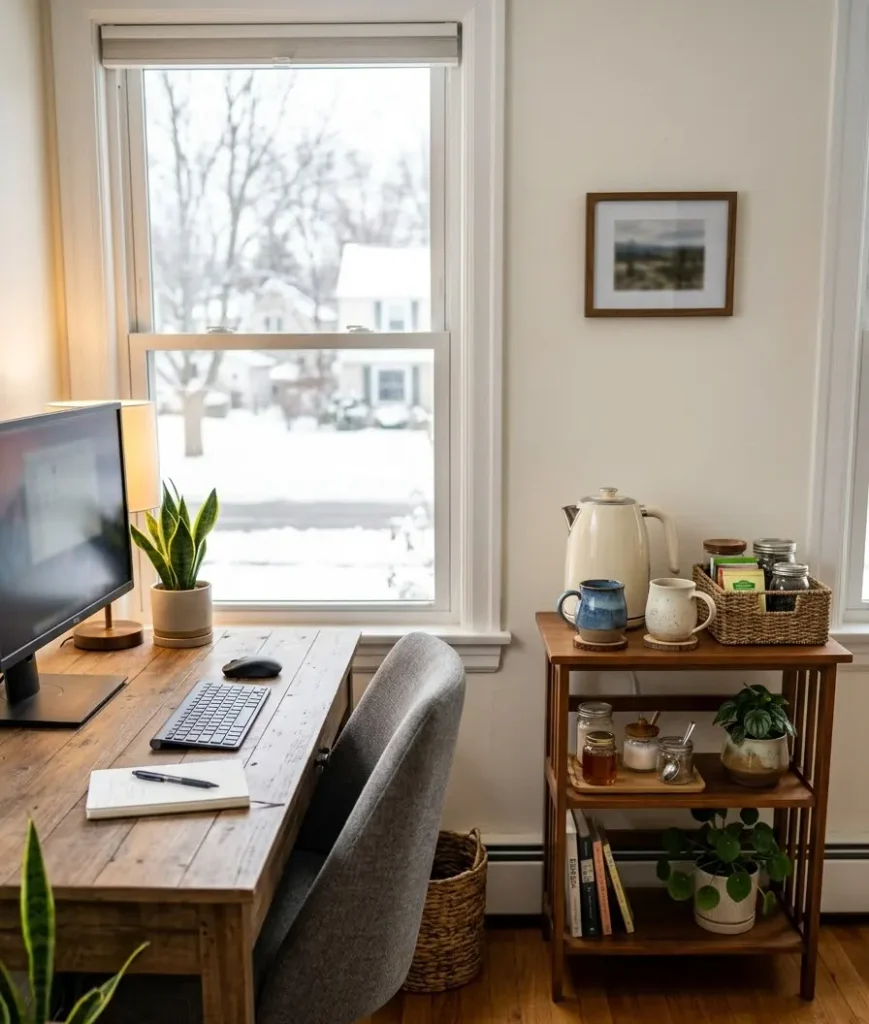
A kettle, a few mugs, and your favorite tea or coffee on a small shelf near your desk.
Getting up for a refill in the cold hallway breaks focus every single time. Keeping it close means fewer interruptions and more warmth, literally.
- Bring in real plants, not just decor
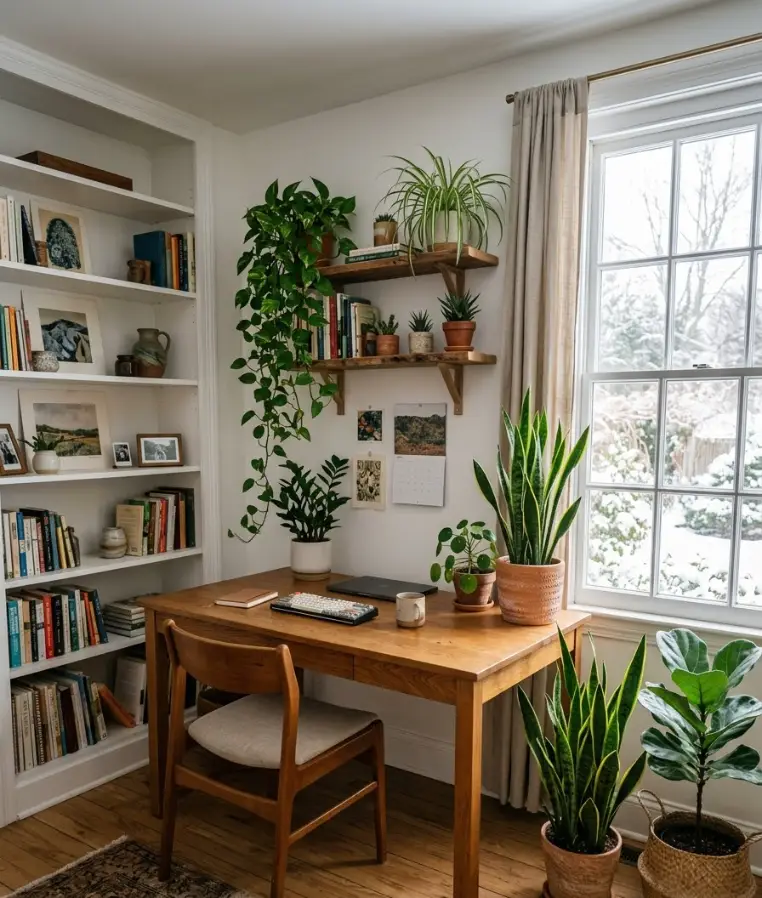
Greenery softens a room that’s otherwise full of hard edges: monitors, keyboards, cables.
Snake plants and pothos are nearly impossible to kill and tolerate low winter light well.
Houseplants also come with a genuinely interesting backstory: NASA’s original clean air study on houseplants sparked the whole “plants purify your air” trend decades ago, and while later research shows the effect is smaller in real rooms than in sealed test chambers, plants still do wonders for how a space feels.
- Fix your desk setup for actual comfort, not just looks
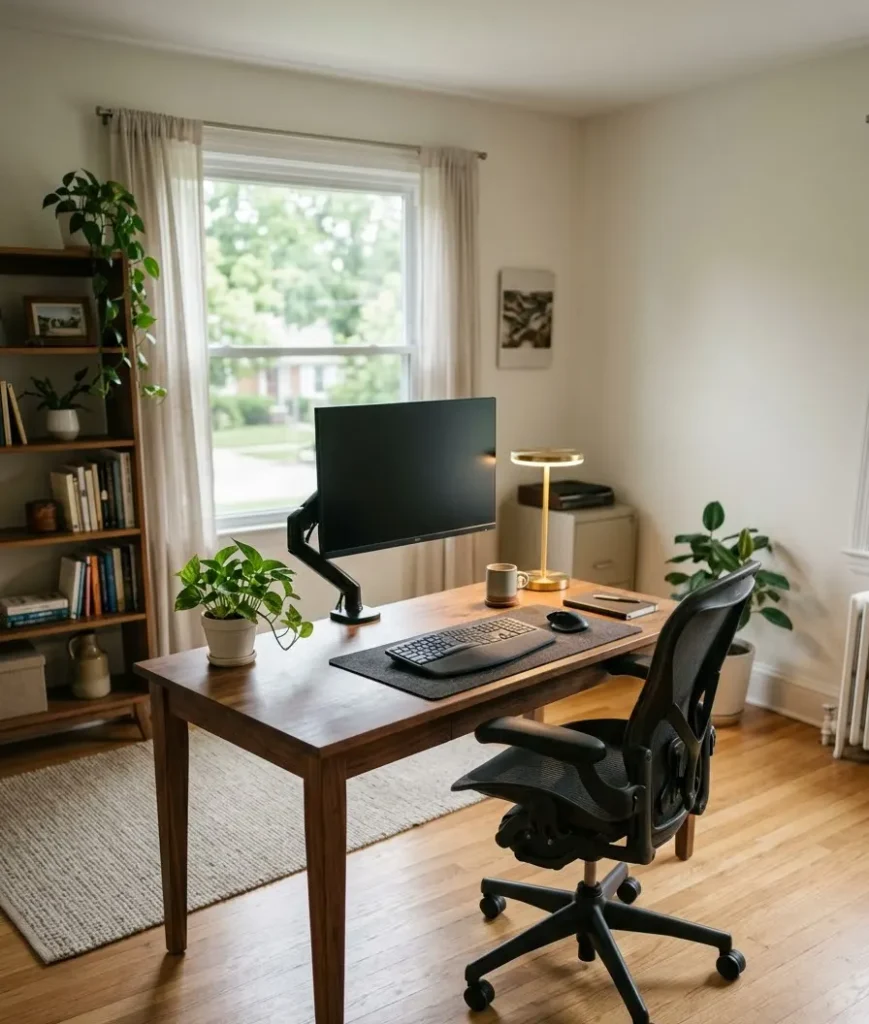
A Pinterest-perfect desk means nothing if your neck hurts by 2pm.
Get your monitor to eye level, keep your feet flat on the floor, and make sure your forearms rest parallel to your desk.
If you want the full breakdown, OSHA’s computer workstation guide is surprisingly readable and free.
- Swap your desk chair cushion for something insulated
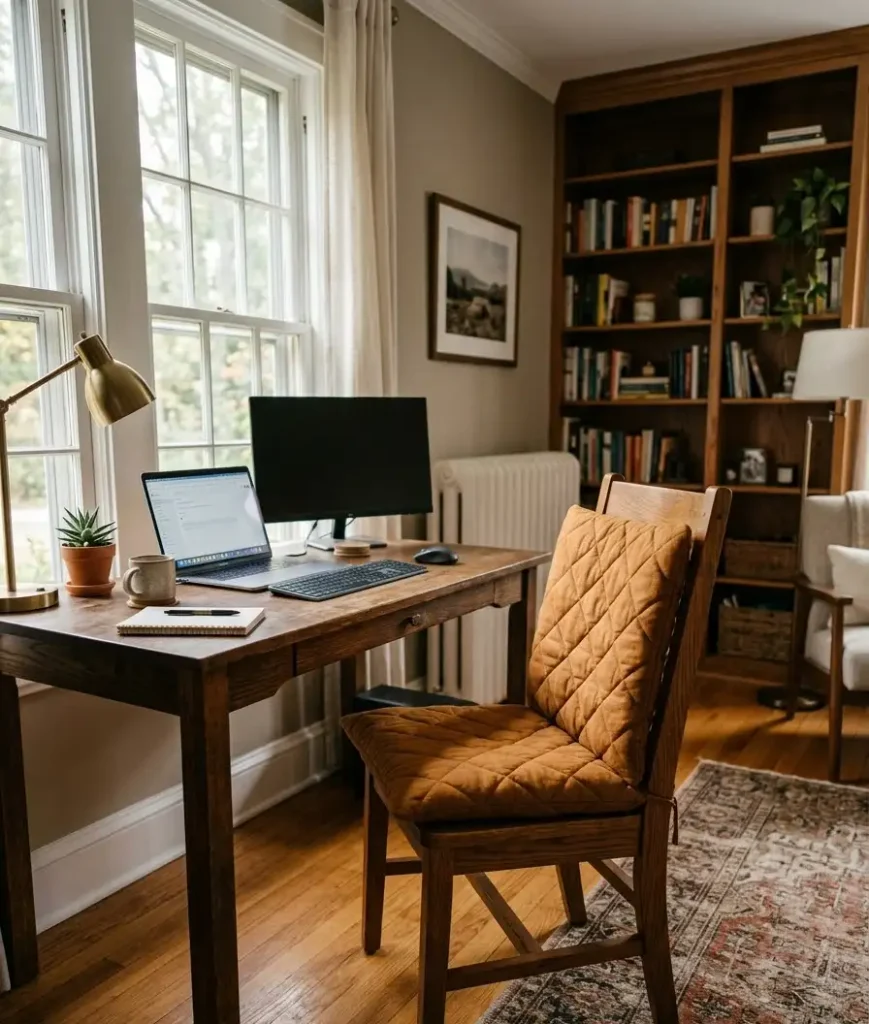
Cold vinyl or mesh chairs are miserable in winter. A simple quilted seat cushion adds both warmth and comfort, and it costs less than a fancy candle.
- Use candles or a diffuser with warm scents
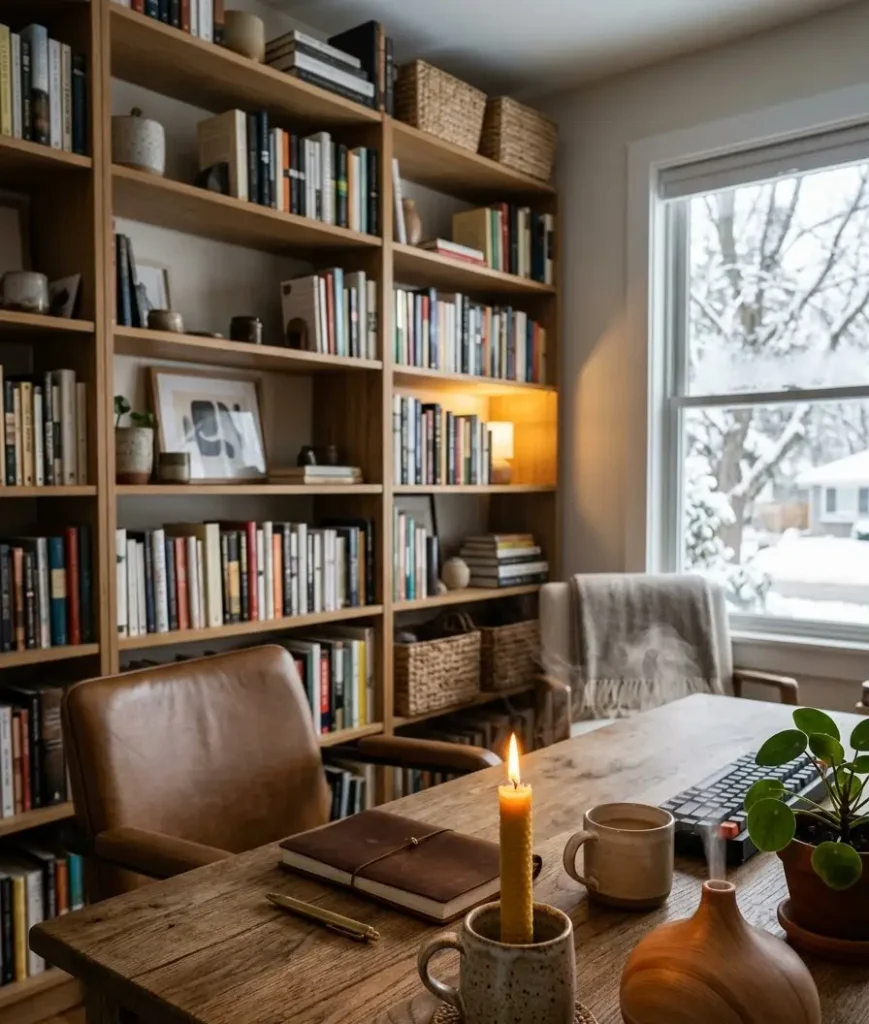
Cinnamon, vanilla, sandalwood, cedarwood. Scent does something lighting alone can’t.
I keep a diffuser running with a cedar and clove blend during work hours and it makes the whole room feel like a cabin retreat, not a converted closet.
- Hang heavier curtains
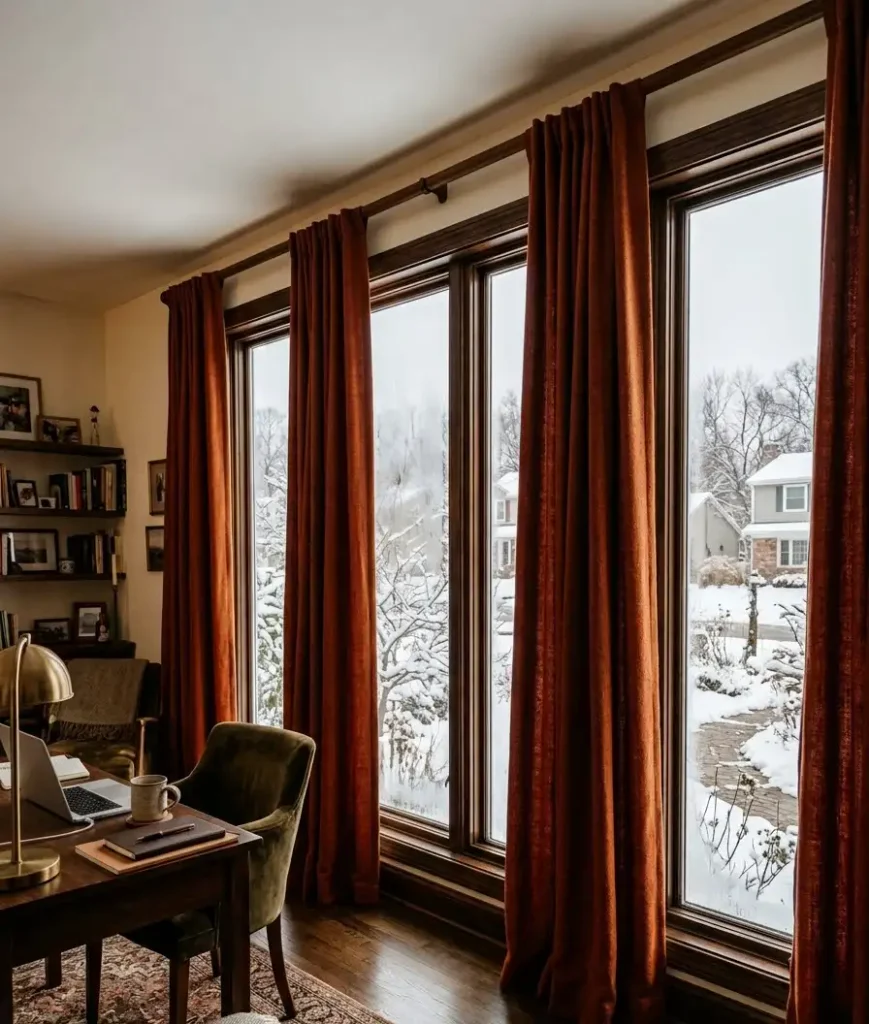
Thin curtains let cold air seep right through the window glass.
Swapping to thermal or velvet curtains cuts down on drafts and also blocks some of that flat gray winter light, replacing it with a softer glow once your lamps are on.
Quick comparison table: curtain fabric and winter performance
| Fabric type | Draft blocking | Light softening | Cost range |
|---|---|---|---|
| Thin cotton | Low | Low | $ |
| Velvet | High | High | $$$ |
| Thermal blackout | High | Medium | $$ |
| Wool blend | Medium | Medium | $$$ |
- Add a small area for reading or thinking
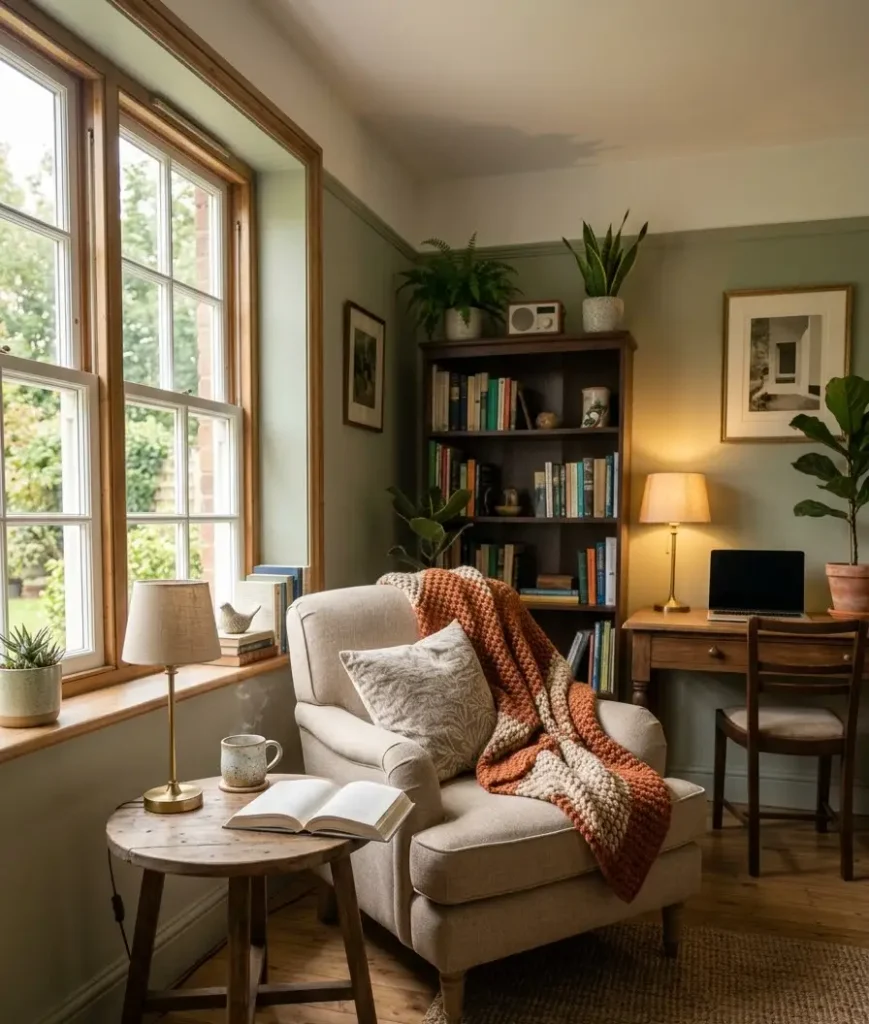
Not every task needs to happen at your desk. A reading chair with a blanket in the corner gives your brain a second “mode” for winter afternoons when staring at a screen stops working.
I use mine for phone calls and it’s honestly where half my good ideas happen.
- Bring in warm metal or wood accents

Cold chrome and glass read as sleek in summer but stark in winter.
Swapping in brass hardware, a wooden desk organizer, or a woven basket for cables makes the whole setup feel warmer without spending much at all.
- Personalize the walls with things that actually mean something
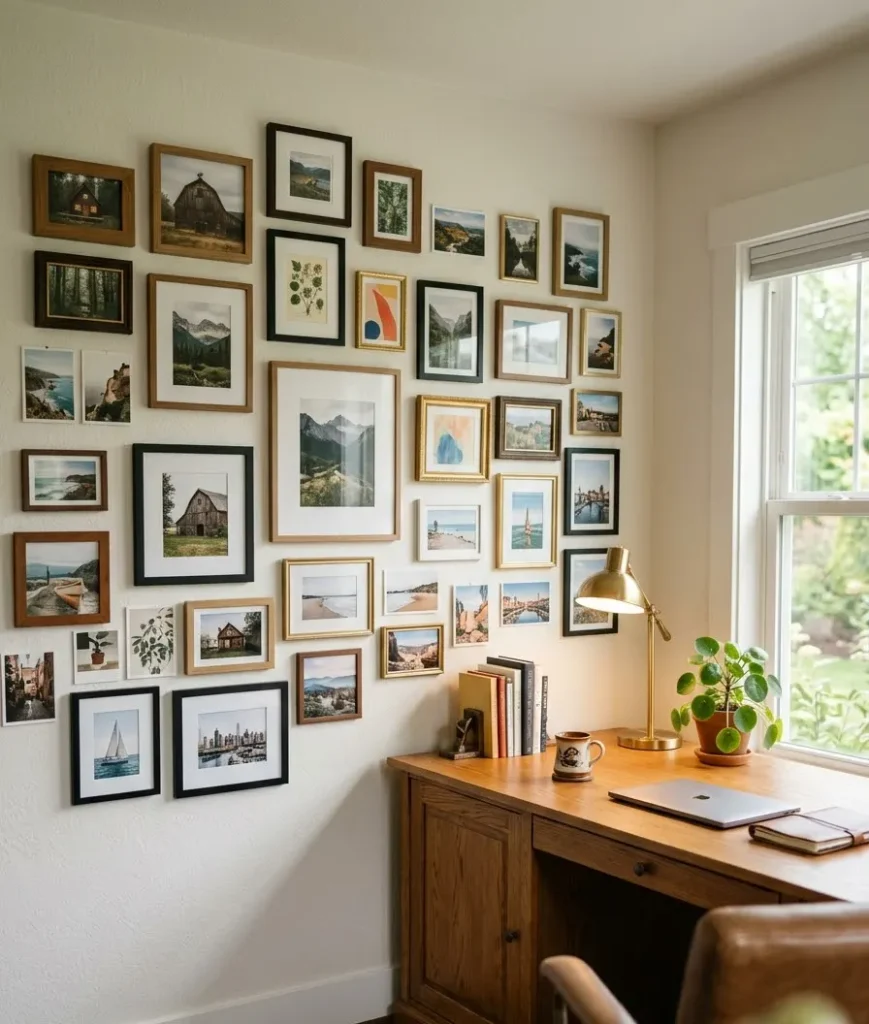
Generic motivational prints don’t do much for morale in February. Photos, postcards from trips, a kid’s drawing, whatever makes the space feel like yours.
This is the part people skip because it feels less “productive,” but honestly, it’s the opposite.
- Use a humidifier

Heating systems dry out indoor air fast, and dry air makes a room feel colder than the thermostat says.
A small humidifier on your desk fixes dry skin, scratchy eyes, and that “why does my office feel like the Sahara” feeling all at once.
Random aside: I once tried running my humidifier and diffuser at the same time in a tiny room and the whole office smelled like a spa that had a small flood. Lesson learned. Ventilate a little if you’re layering scent and moisture.
- Swap your desk lamp bulb for something dimmable
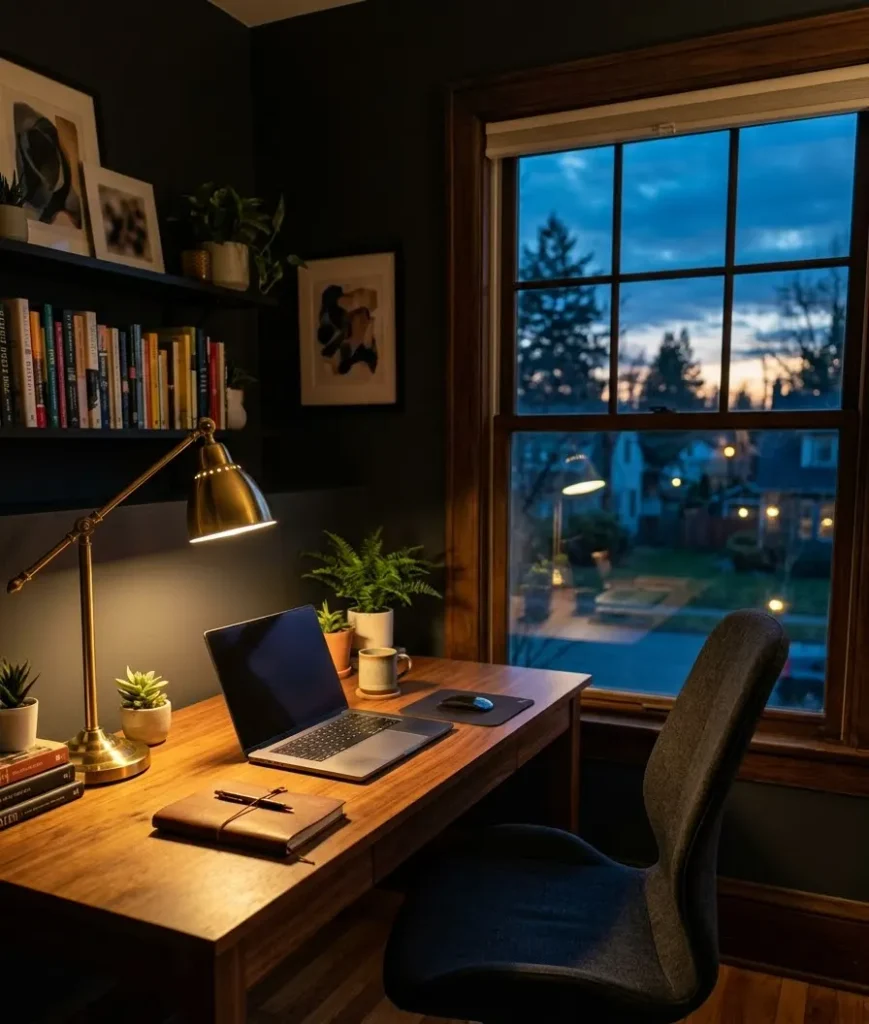
Being able to dim your lighting as the afternoon darkens matters more in winter than any other season.
A cheap dimmable smart bulb lets you shift from bright “focus mode” in the morning to a softer glow by 4pm without getting up.
- Add a soft ambient soundtrack
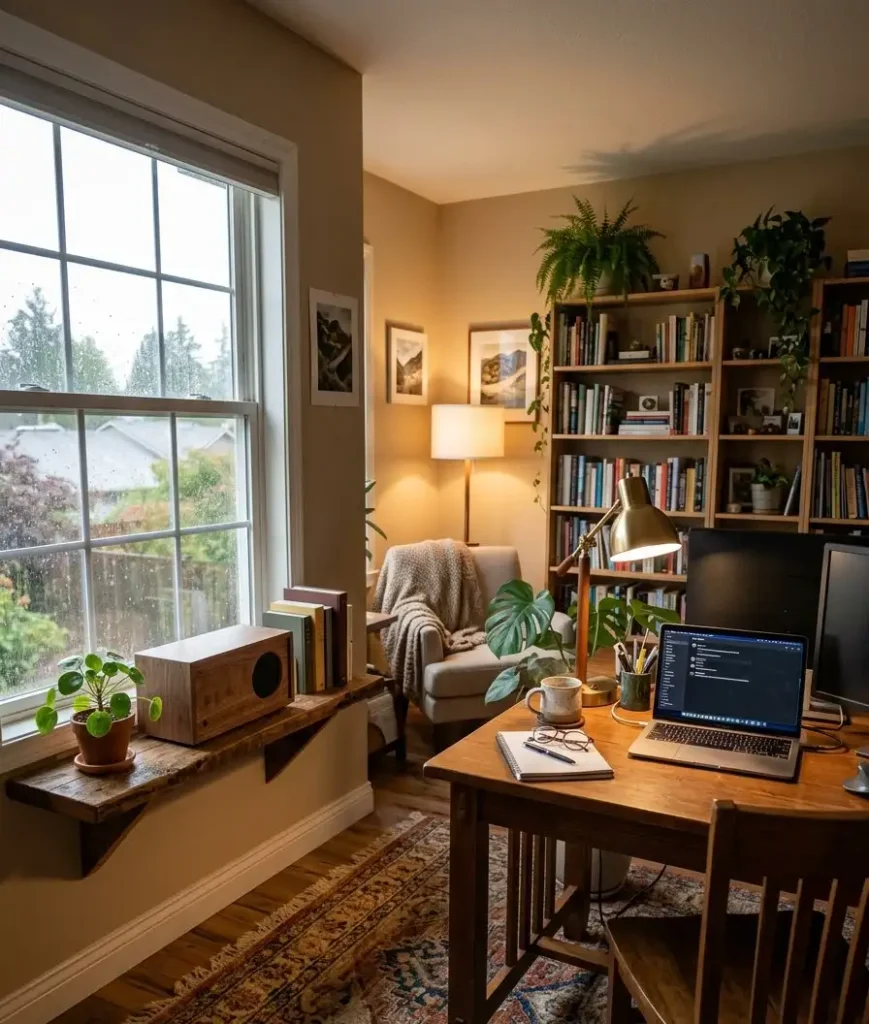
Silence in a winter office can feel isolating fast. I keep a low volume playlist of rain sounds or a crackling fire loop running in the background. It’s a small psychological trick, but it works.
Wow, it genuinely changes how long I can sit and focus.
- Keep a stash of cozy accessories nearby
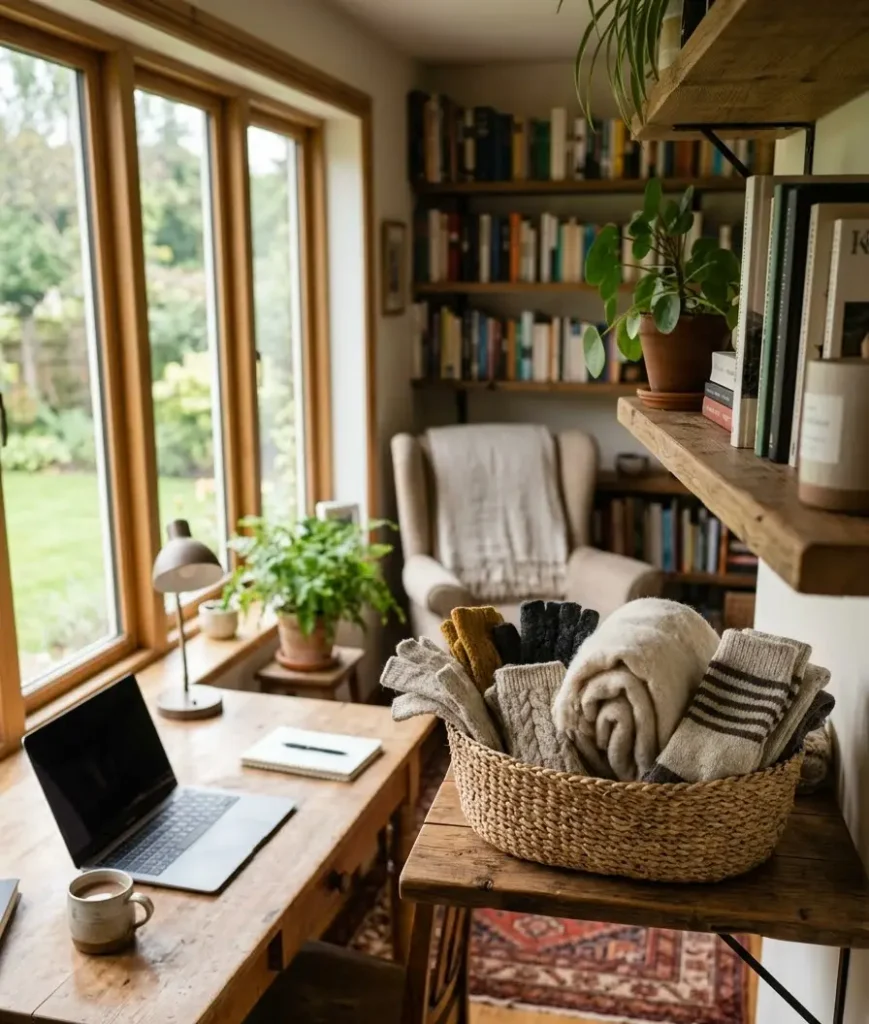
Fingerless gloves, a soft scarf, wool socks. Sounds excessive until you’re typing with cold hands at 9am and suddenly it’s not excessive at all, it’s necessary.
- Set a “shutdown” ritual to close out your day
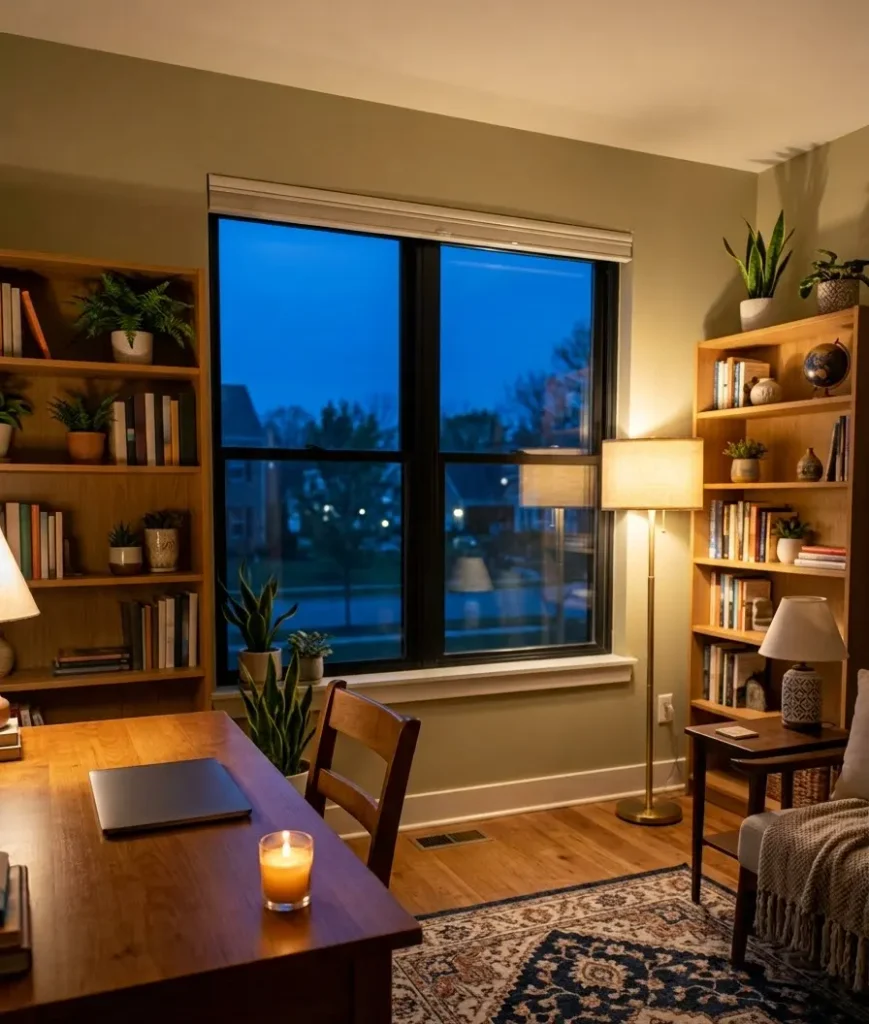
This one’s less about decor and more about mindset. Dim the lights, close your laptop, maybe light a candle for five minutes before you leave the room.
It signals to your brain that work is over, which matters even more in winter when the line between “work time” and “everything else time” gets blurry fast.
A few honest opinions before you go
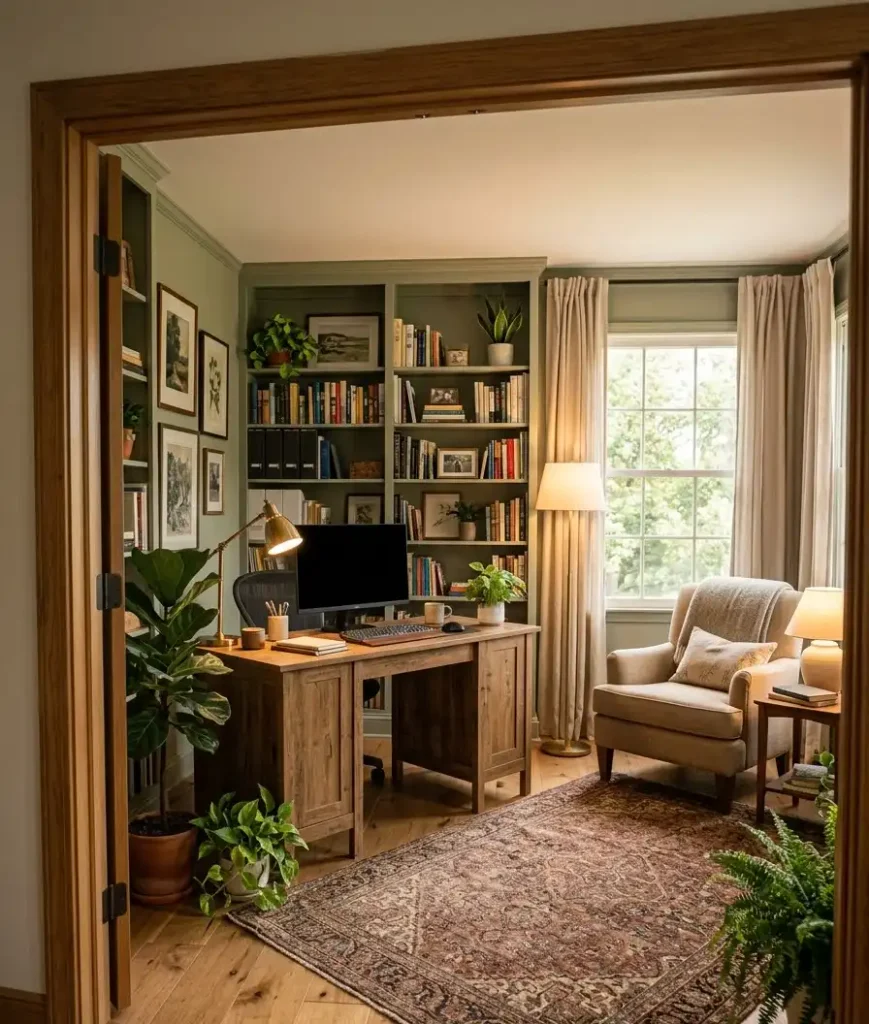
Not every tip here needs to happen at once. If I’m being real, my office took two full winters to feel finished, and I still add small things every year. Start with lighting and a rug.
Those two changes alone did more for how my space felt than anything else on this list, and they’re some of the cheapest fixes too.
FAQs
Do I need to spend a lot of money to make my home office feel cozy?
Not really.
Lighting, a rug, and a warm throw cost under $150 combined and make the biggest visible difference. Save bigger purchases like curtains or furniture for later.
What’s the single best change for a cold home office?
Layered lighting. Swapping one overhead bulb for two or three warmer light sources changes the mood of a room faster than almost anything else.
Can I make a rented apartment office cozy without painting or major changes?
Yes.
Rugs, curtains, lamps, plants, and wall art are all renter-friendly and reversible, and they cover most of what makes a space feel warm.
Final thought
A cozy winter office isn’t about spending a fortune or copying someone else’s Pinterest board exactly.
It’s about making small, honest choices that fit how you actually work and what makes you feel comfortable sitting there for hours at a time.
Which one of these are you trying first, the lighting swap or the rug? Save this post so you can come back to it once the temperature drops.