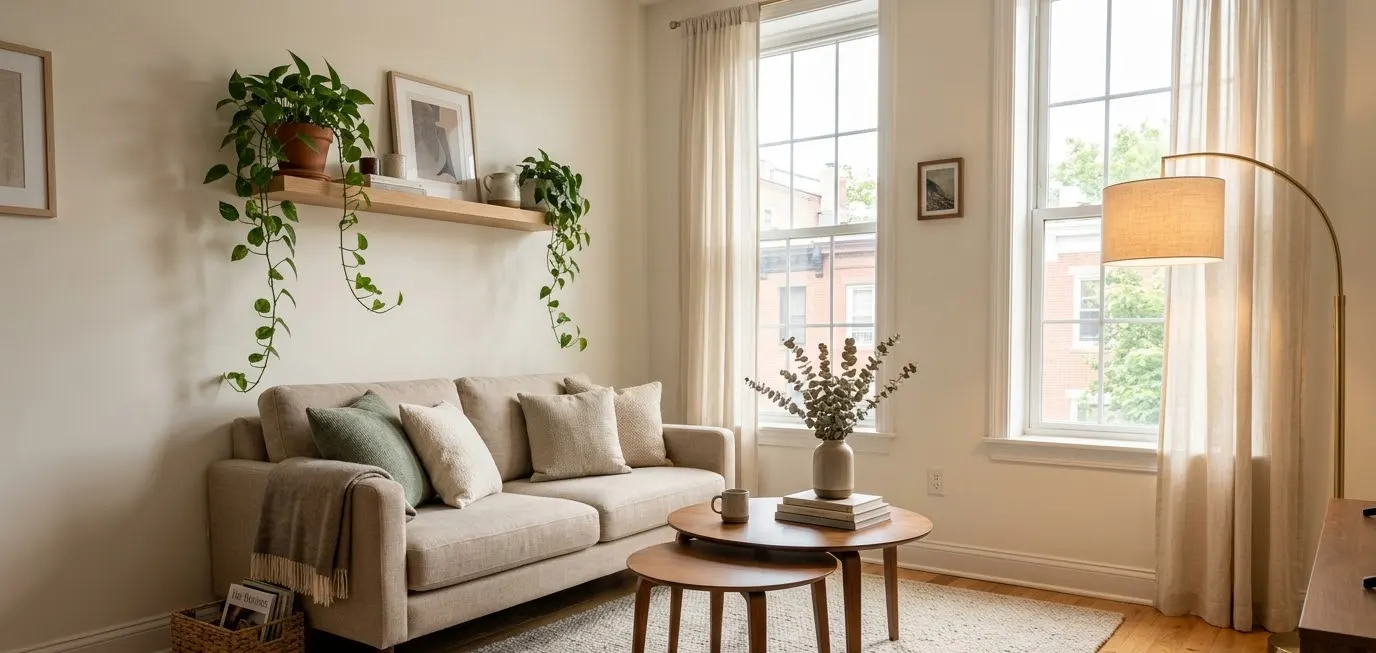
My first apartment living room measured 11 by 13 feet. I owned a sofa that weighed roughly as much as a small car, and I hauled it up three flights of stairs before I bothered to measure the doorway.
I’ve since redone that room four times, plus a few friends’ places.
Some fixes cost nothing. Some cost me a weekend and a bruised shin. All 33 below earned their spot.
If your living room feels cramped, cluttered, or just oddly hard to walk through, you’re in the right place. Grab a coffee and a tape measure.
Fix the layout first
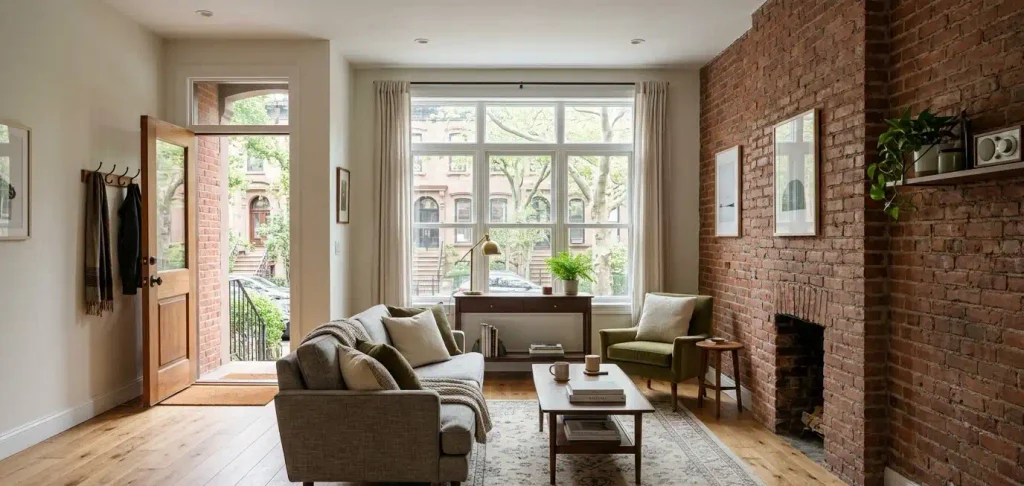
Layout decides how your room feels before a single throw pillow shows up. Get this part right and everything else gets easier.
1. Pull furniture off the walls
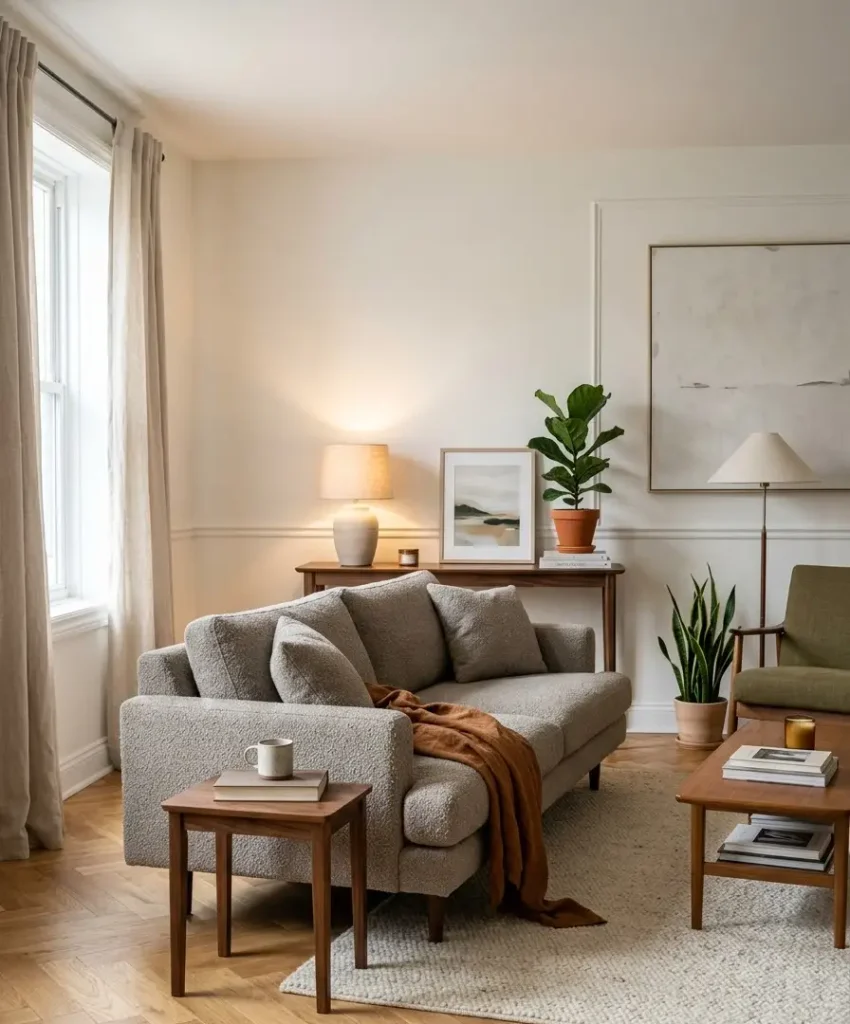
Most of us shove the sofa flat against the wall to “save space.” It usually makes the room look like a waiting area.
Slide it 6 to 8 inches forward and the room gains depth, especially if you tuck a slim console behind it.
2. Draw a walking path with painter’s tape
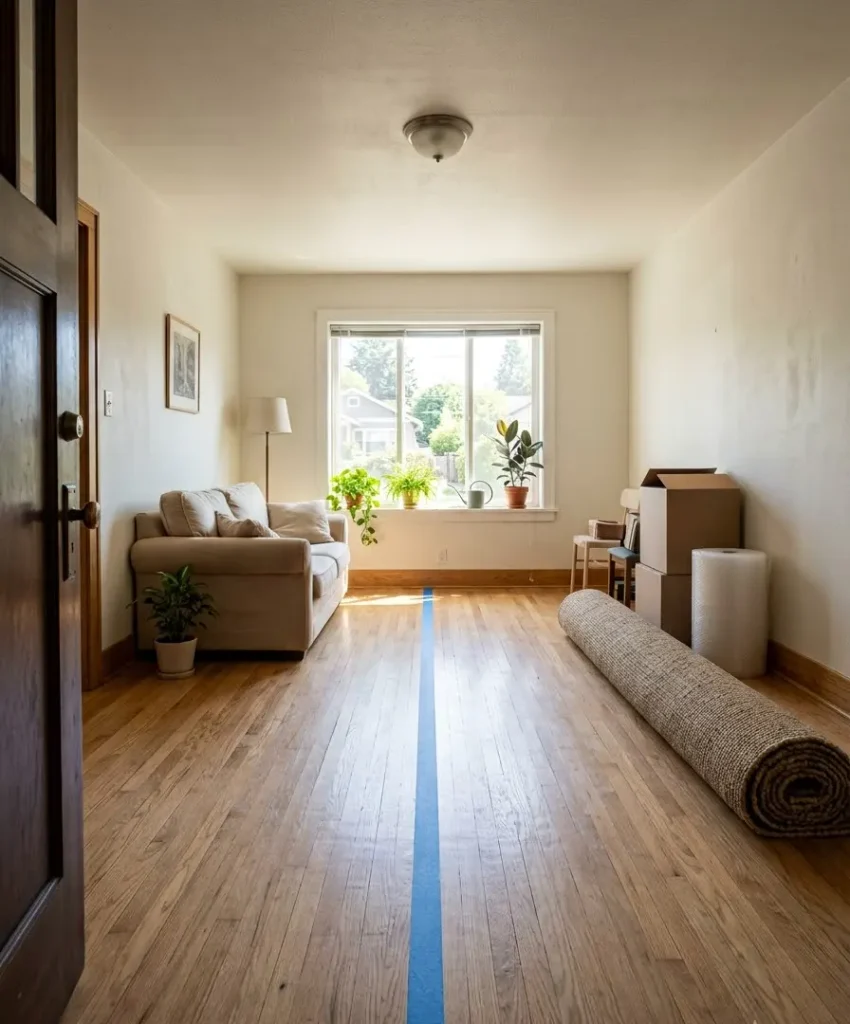
Before you move anything, tape a clear path from the door to the window. Then keep it free.
I aim for 30 inches minimum, because anything narrower makes me turn sideways with a laundry basket.
3. Choose one focal point
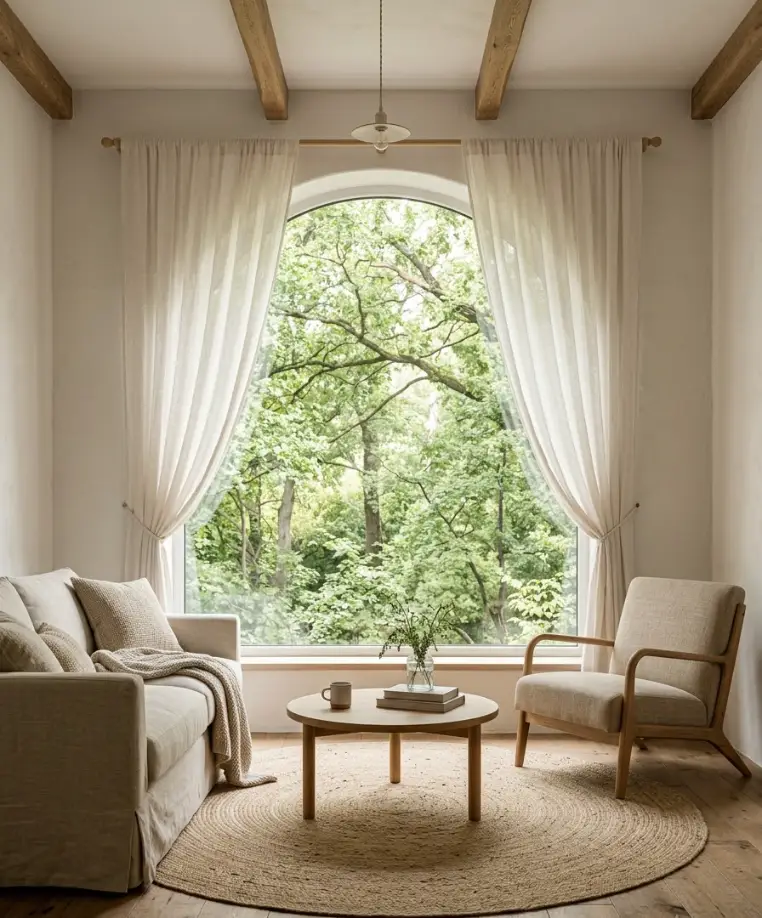
Pick the TV, the window, or a piece of art, and point the seating toward it.
Three competing focal points make a small room feel loud. I picked the window in my last place, and the whole space calmed down.
4. Float a rug in front of the sofa
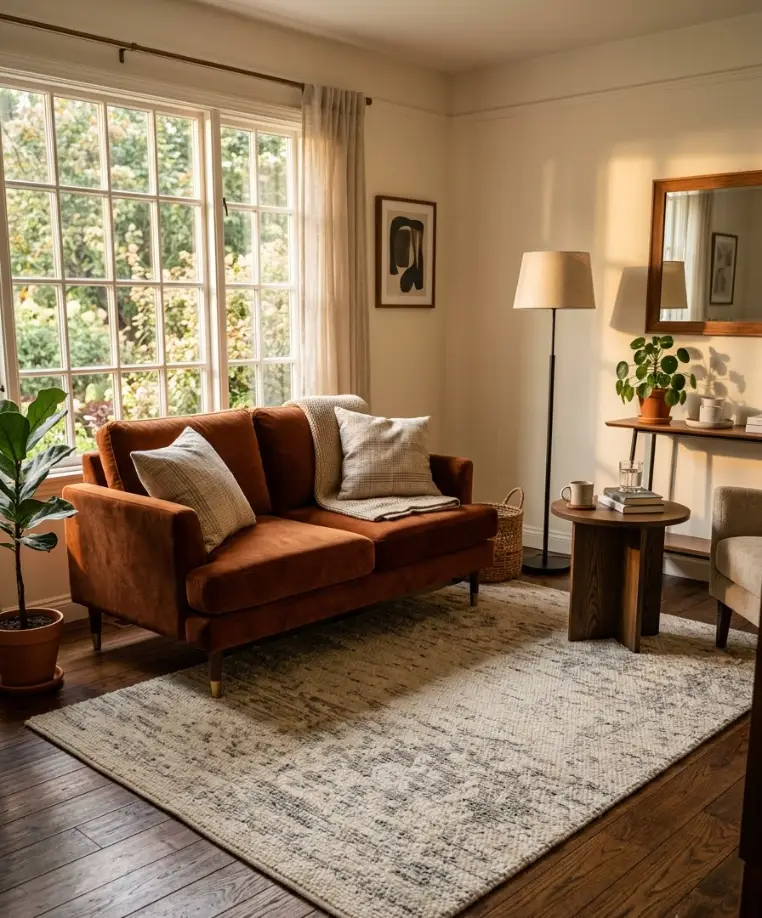
A rug that only touches the sofa’s front legs ties the seating together. It’s the cheapest way to define a “living room zone” in an open plan apartment.
Ever noticed how a rug that’s too small makes furniture look like it’s floating away?
5. Angle one chair
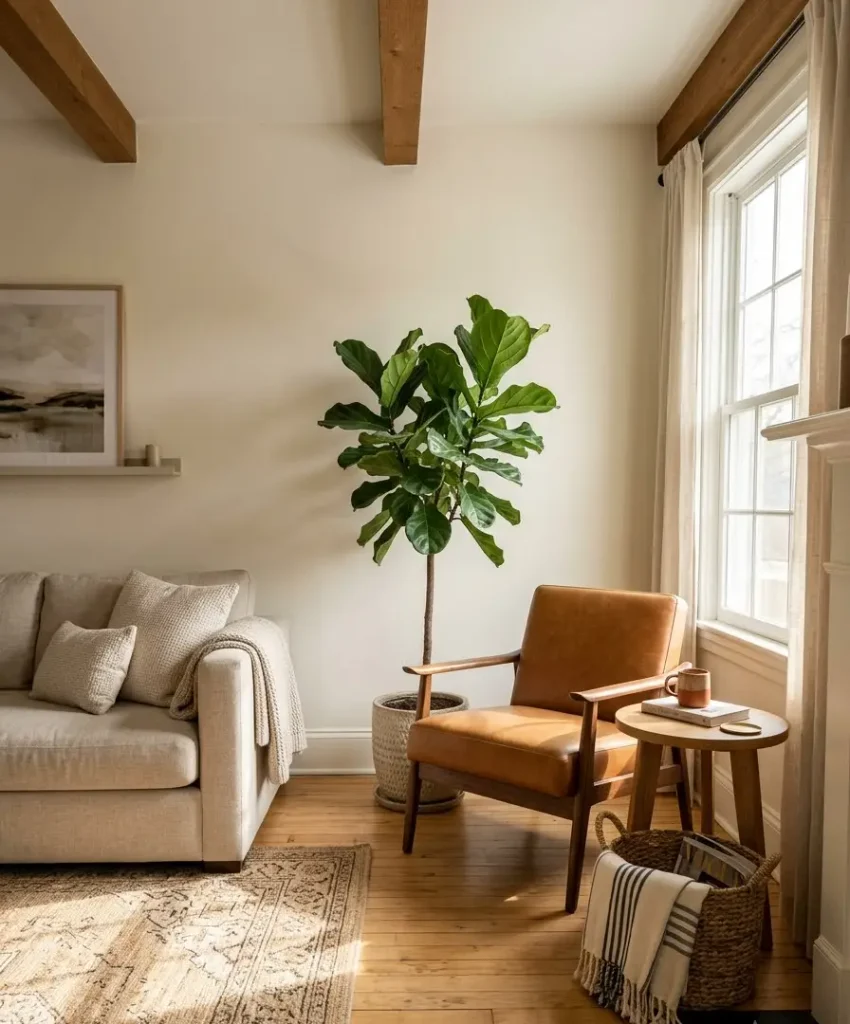
A single chair set at 45 degrees breaks up the boxy feel of a rectangle room. It also invites people to sit and talk instead of staring at the same wall.
I love this trick because it costs $0 and takes 10 seconds.
6. Leave one empty corner
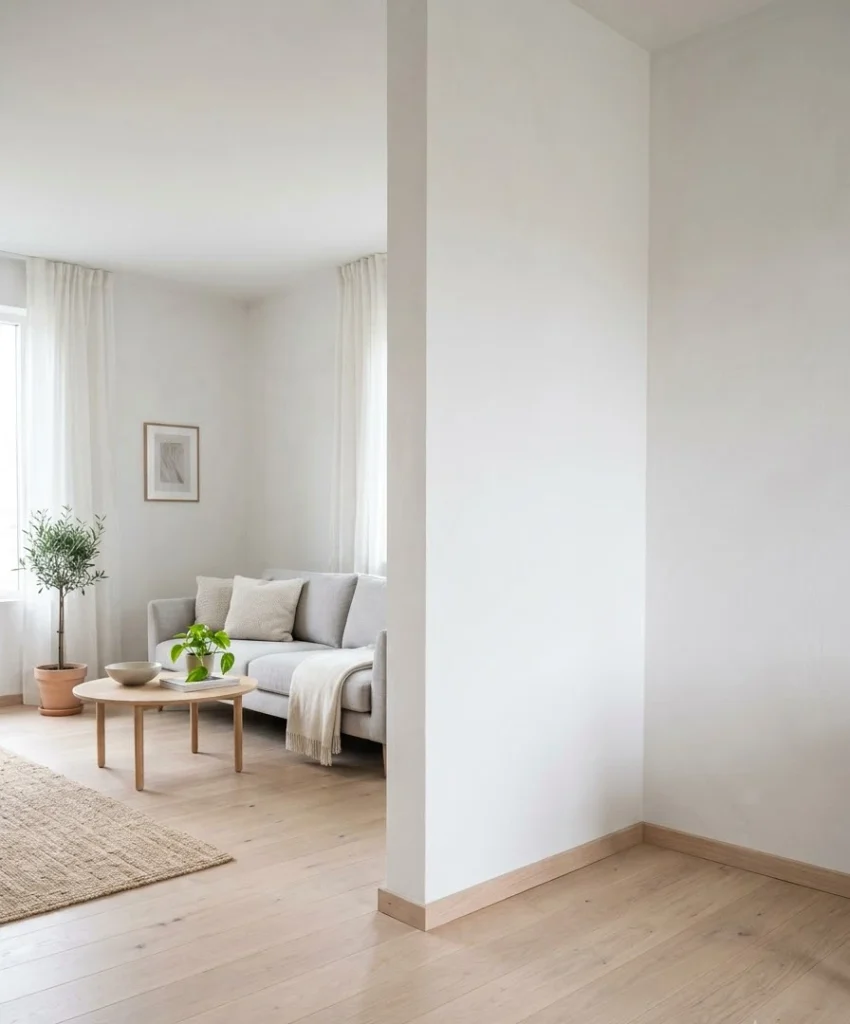
Yes, on purpose. A bare corner gives your eye somewhere to rest, and the room reads bigger.
Resist the urge to fill it with a plant stand and a basket and a floor lamp all at once.
Choose furniture that earns its footprint
Small rooms punish oversized pieces. Every item needs to do at least two jobs.
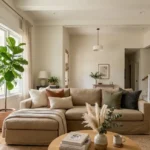
7. Buy a apartment-scale sofa
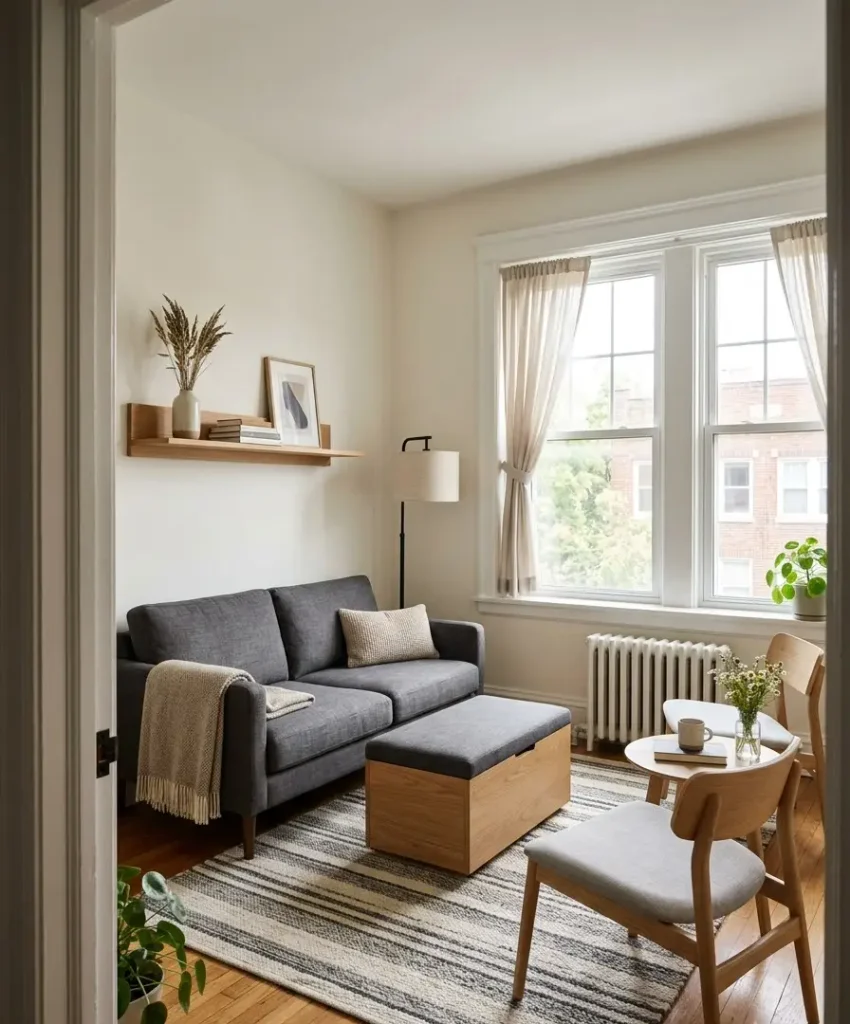
Look for 72 to 80 inches wide with slim arms. Wide roll arms eat 8 inches of seating space you’ll never use.
Brands like IKEA sell compact loveseats that fit through most doorways, which I now check before I buy anything.
8. Pick legs you can see under
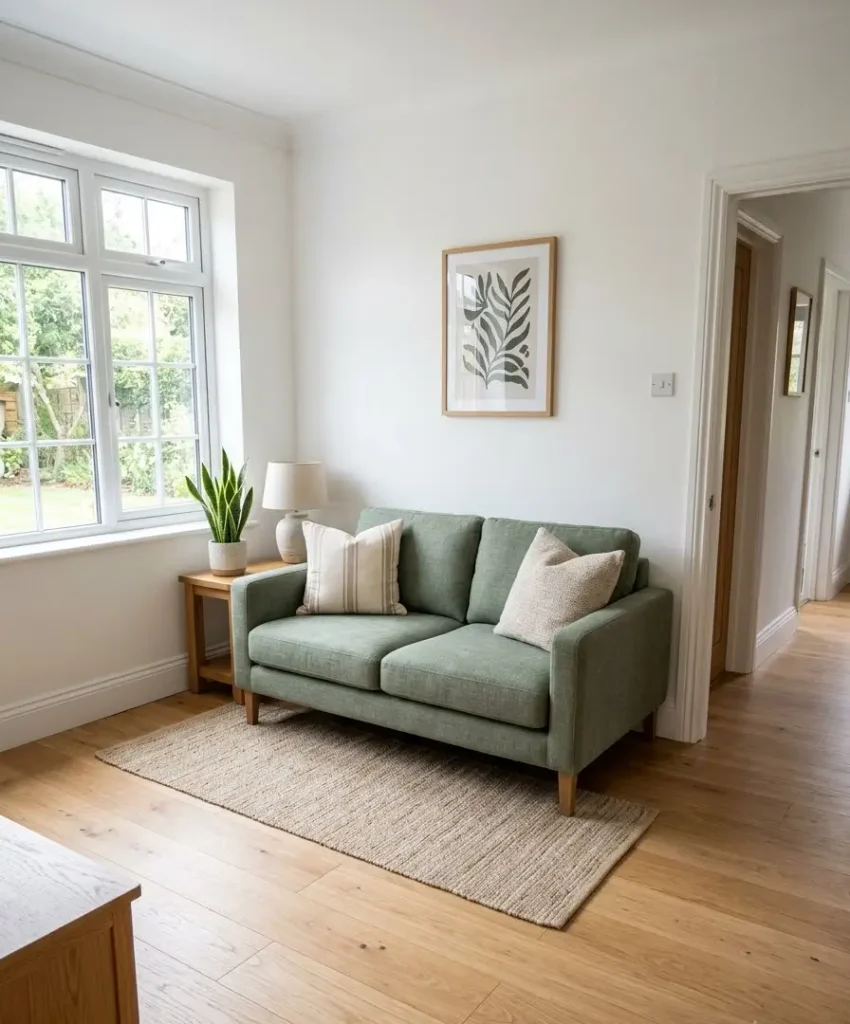
Sofas and chairs with exposed legs let light and your gaze travel underneath.
That sliver of floor makes the room look larger than a skirted couch does. IMO this beats any fancy paint trick.
9. Swap the coffee table for nesting tables
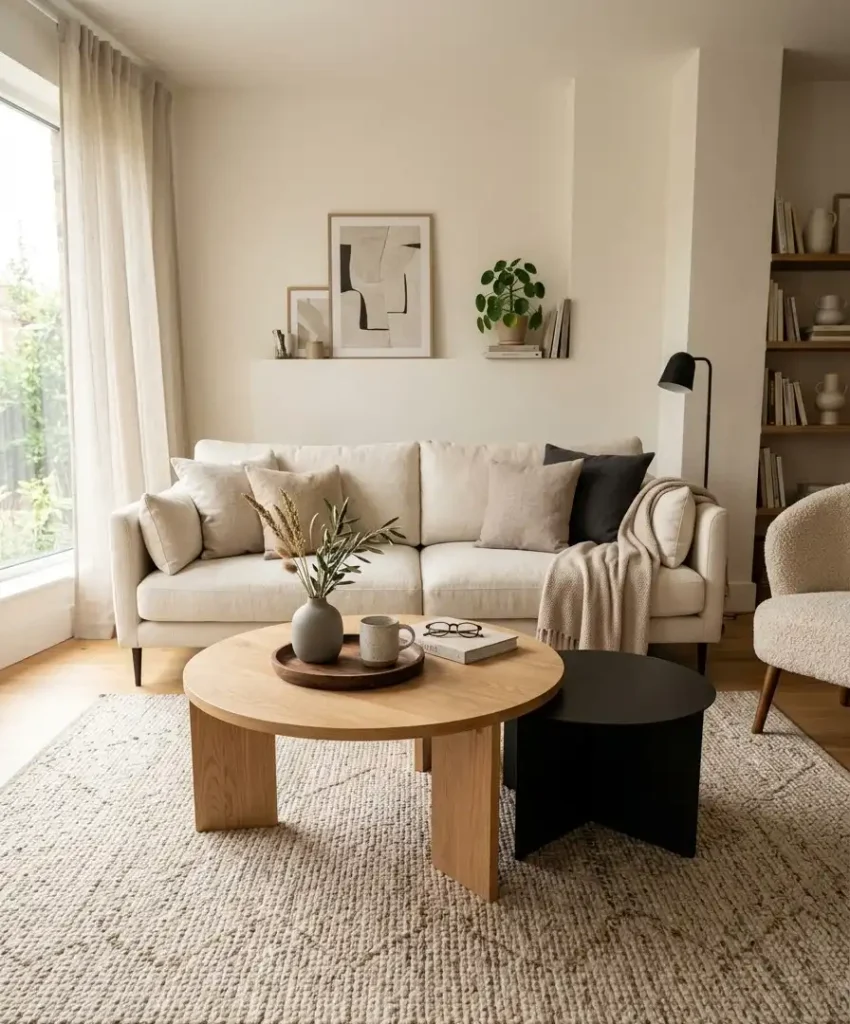
Two nesting tables spread out when guests visit and tuck together when you need floor space.
I sold my bulky coffee table and never missed it. Round shapes also spare your shins in tight corners.
10. Use a storage ottoman
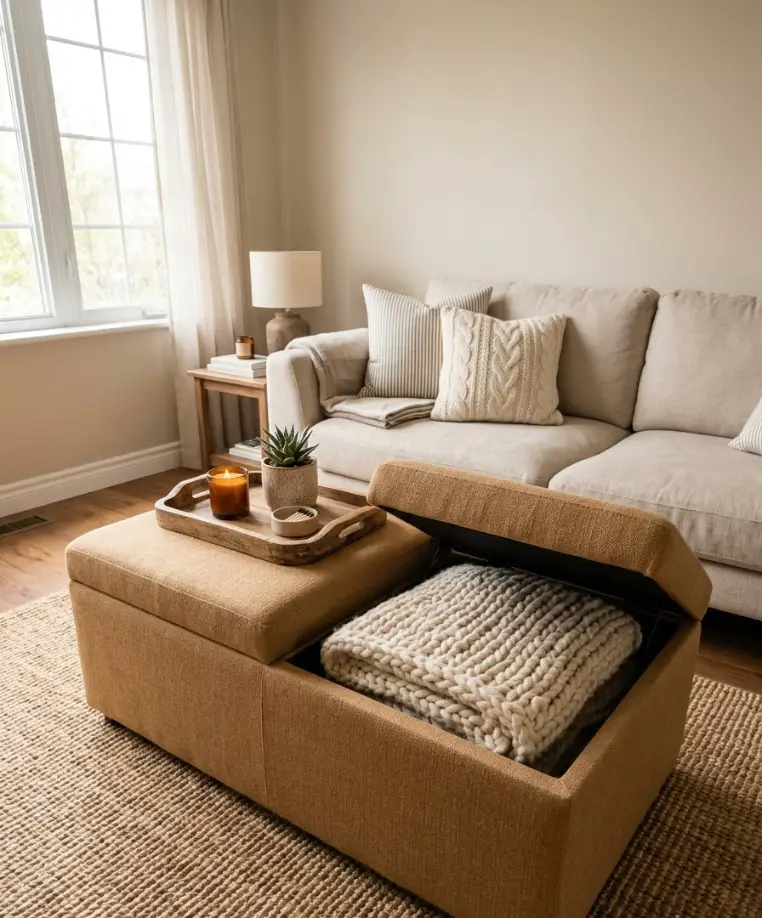
An ottoman with a lift-off lid holds blankets, remotes, and the board games you swear you’ll play.
It doubles as extra seating or a footrest. Mine also became a coffee table with a tray on top.
11. Try a wall-mounted drop-leaf desk
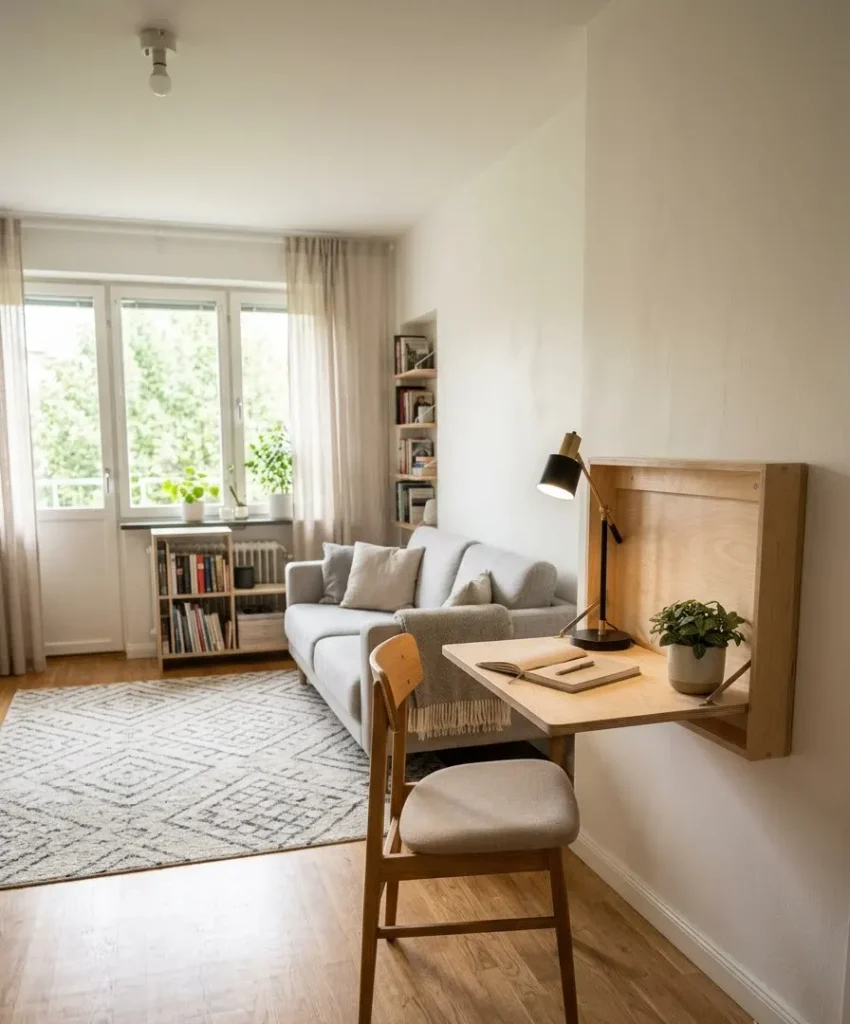
If you work from home, a fold-down desk saves you from parking a full desk in the room.
It closes flat when the workday ends. That mental reset matters more than I expected.
12. Go for armless accent chairs
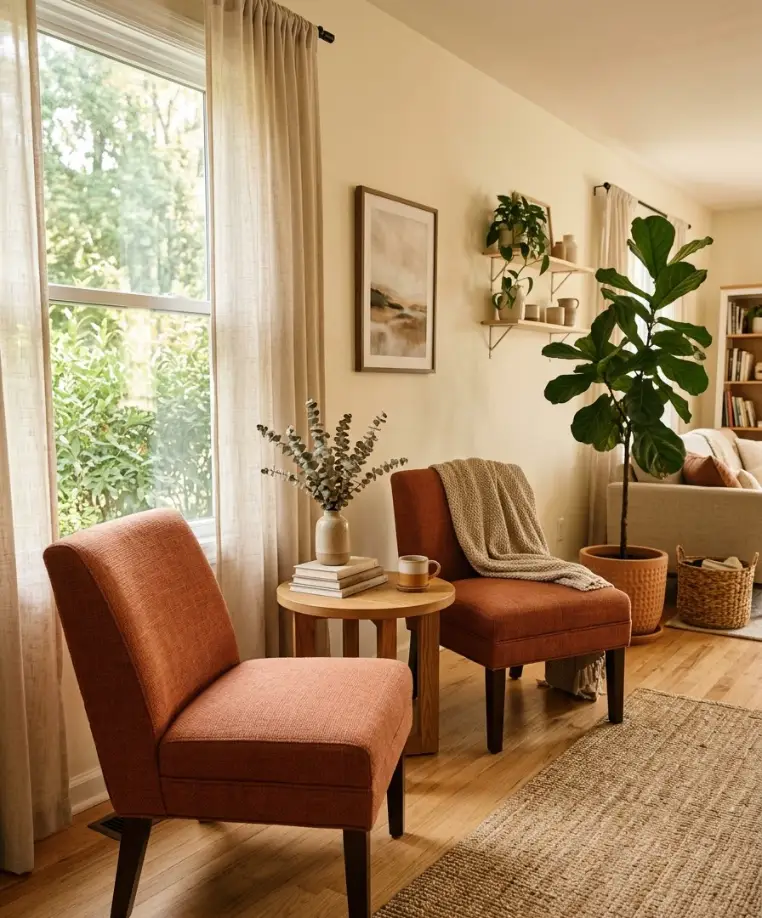
Armless chairs slide under tables and shuffle around easily. They also look lighter. I keep two in my current place and drag them wherever people gather.
13. Skip the matching furniture set
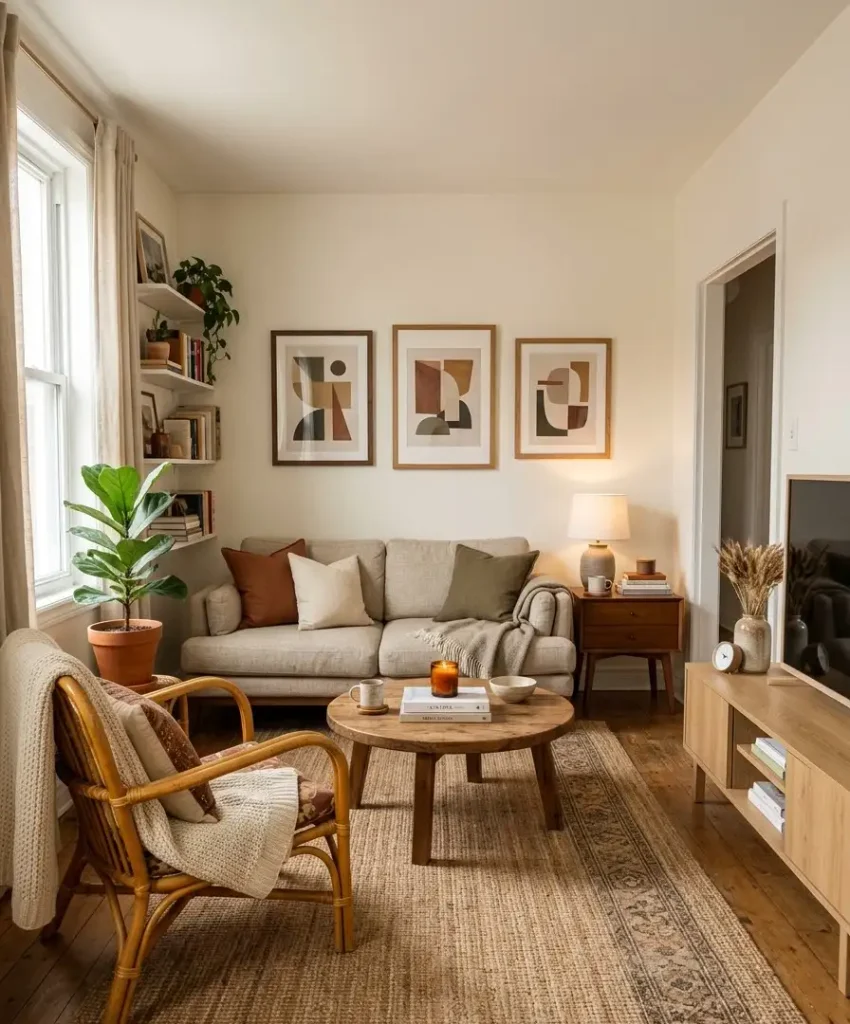
A matched sofa, chair, and table set makes a small room look like a showroom.
Mix woods and finishes instead. Slightly mismatched pieces feel collected, which is far cozier.
Play with light, color, and the illusion of space
You can’t add square footage, but you can fake it convincingly.
14. Hang mirrors opposite windows
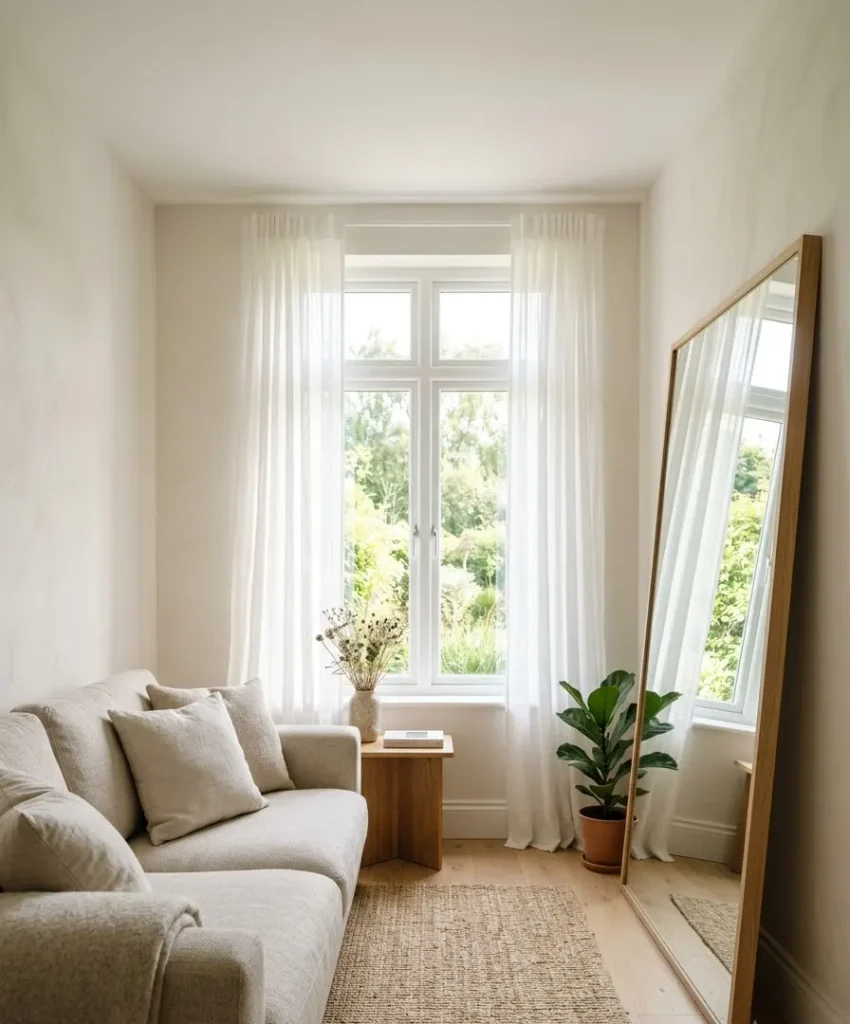
A big mirror across from a window bounces daylight deep into the room. I leaned a floor mirror against the wall in my old place and the room looked twice as bright. Wow, the difference surprised me.
15. Stick with a tight color palette
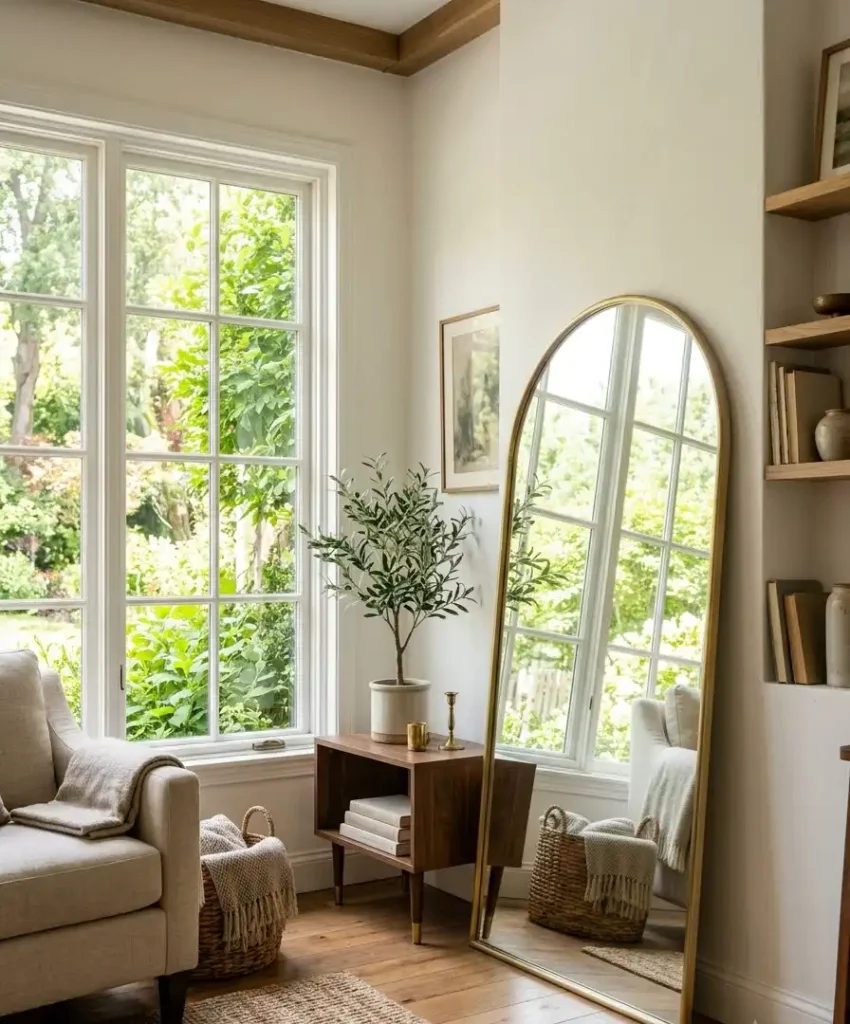
Pick 2 or 3 main colors and repeat them. Warm whites, soft greige, and one muted accent like sage or terracotta work well. The Apartment Therapy archive has hundreds of small-space palettes if you need inspiration.
16. Layer three light sources
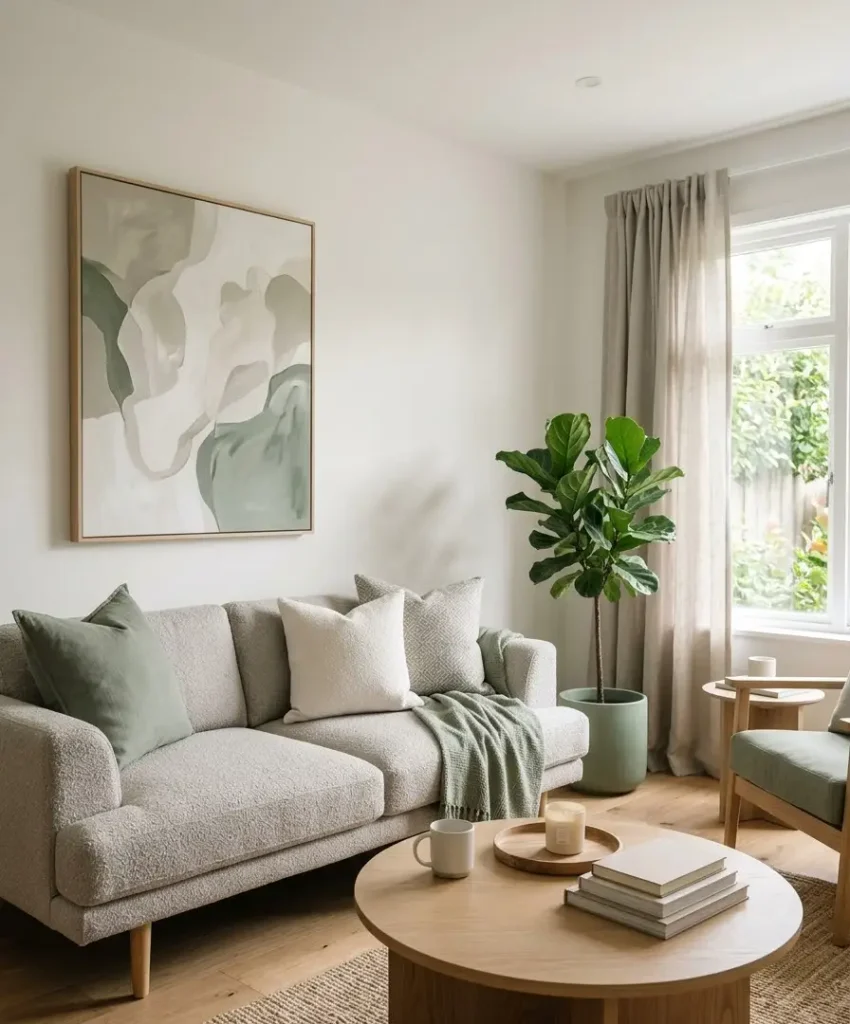
Overhead lighting alone flattens a room. Add a floor lamp and a table lamp, and use warm bulbs around 2700K. Light at different heights makes a small space feel layered and lived in.
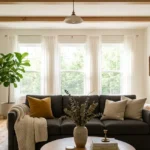
17. Hang curtains high and wide
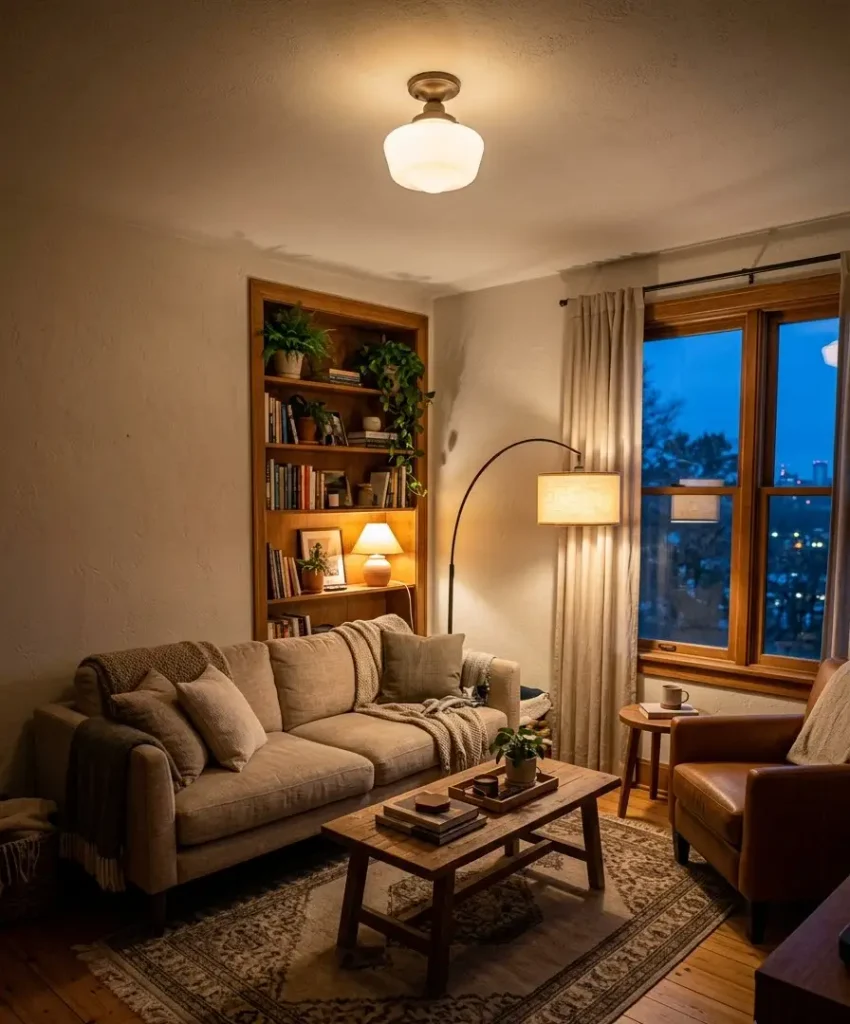
Mount the rod 4 to 6 inches above the window frame, or even near the ceiling.
Extend it past the frame on each side. Your ceiling reads taller and your window reads bigger.
18. Choose light, airy curtain fabric

Linen or cotton in white or cream lets daylight through while softening the glass. Heavy velvet drapes are gorgeous, but they swallow a small room. I save velvet for a single cushion.
19. Paint the ceiling a shade lighter than the walls
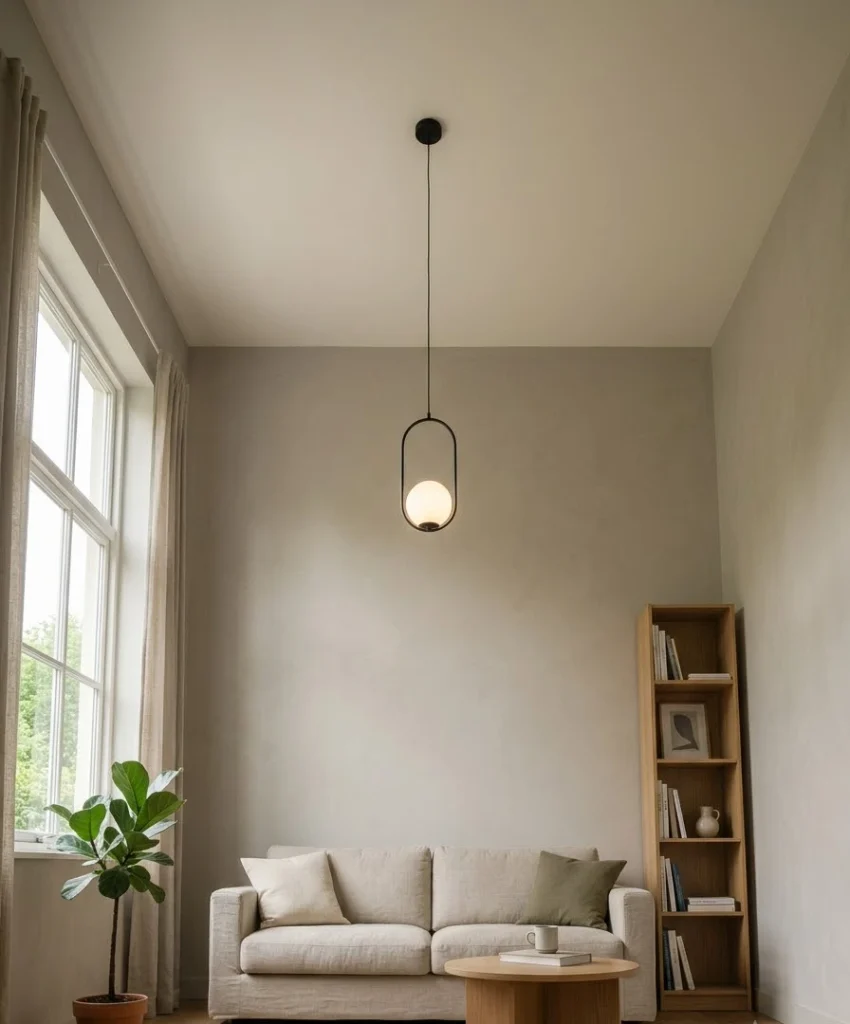
A slightly lighter ceiling pushes upward visually. Some people go bold with dark walls in tiny rooms, and that can look moody and wonderful. I tried it once, and I spent a month feeling like I lived in a cave.
20. Use glass and acrylic pieces
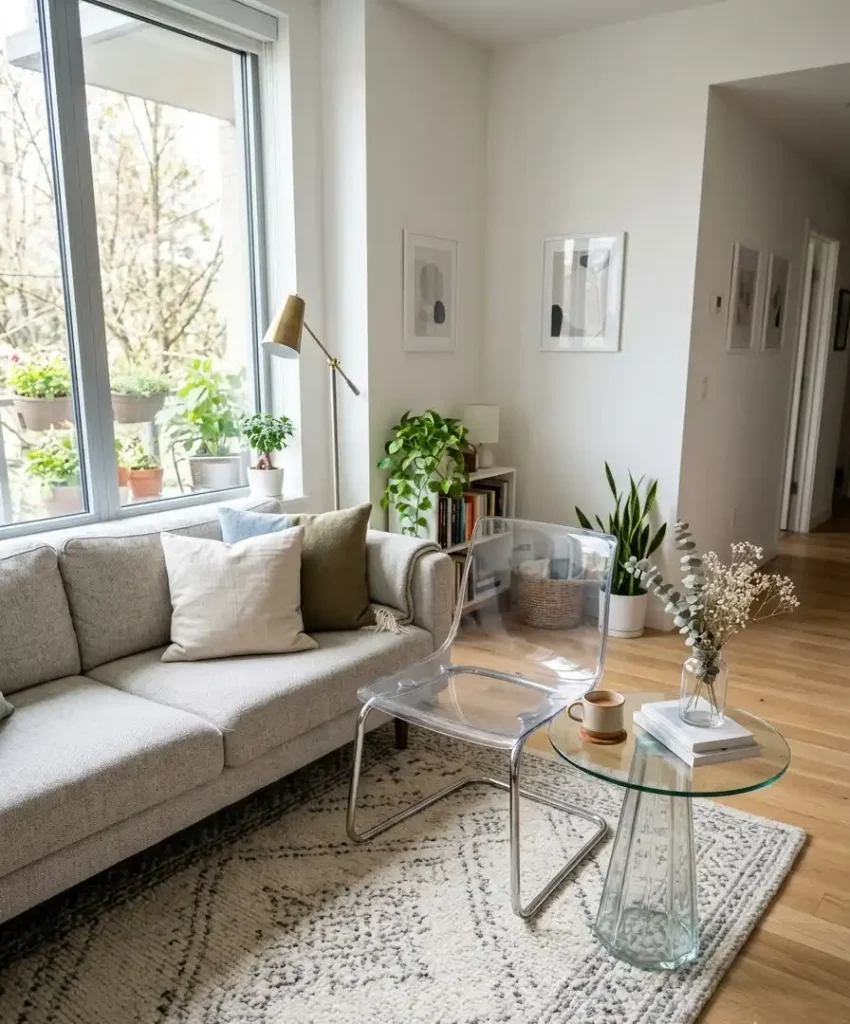
A glass side table or acrylic chair takes up physical space without blocking sightlines.
It’s one of the sneakiest ways to add seating in a small room. FYI, acrylic scratches, so keep drinks on coasters.
Storage that hides in plain sight
Clutter kills flow faster than any furniture mistake. These ideas keep stuff out of your way without hiding it in a closet you don’t have.
21. Go vertical with tall shelving
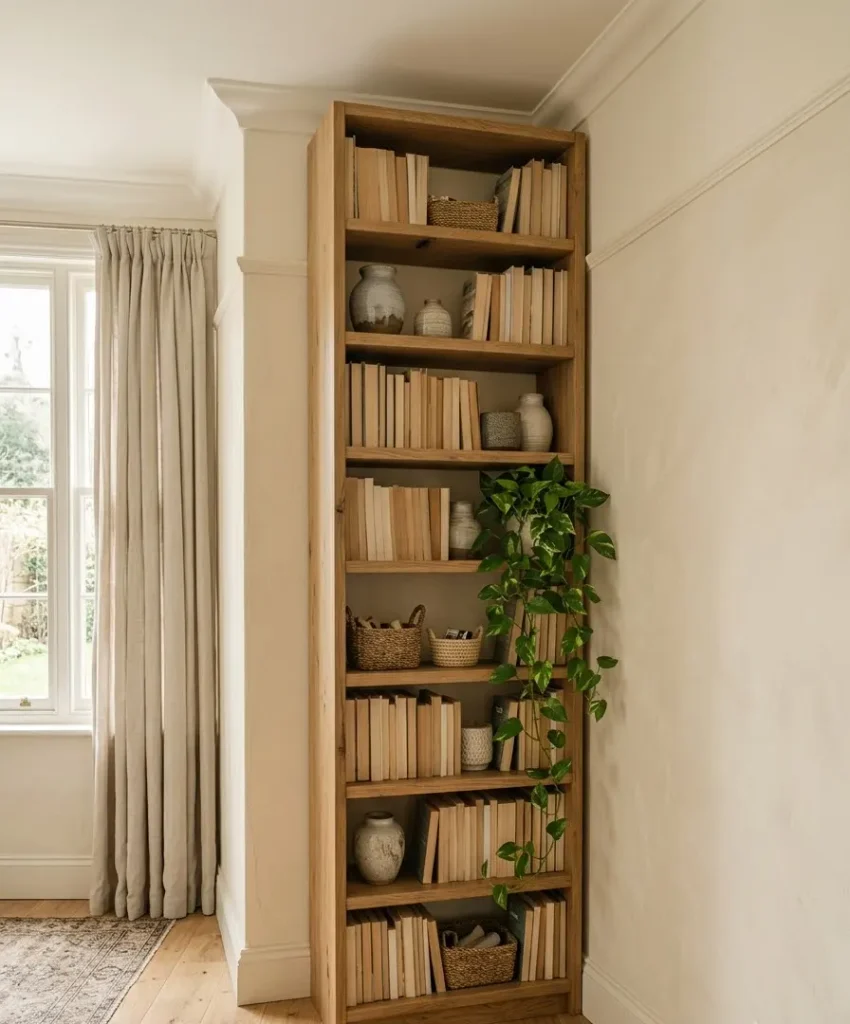
A narrow bookcase that runs floor to near-ceiling stores far more than a wide low unit. It keeps your floor clear. Anchor it to the wall so it never tips onto you or your cat.
22. Use closed storage for the ugly stuff
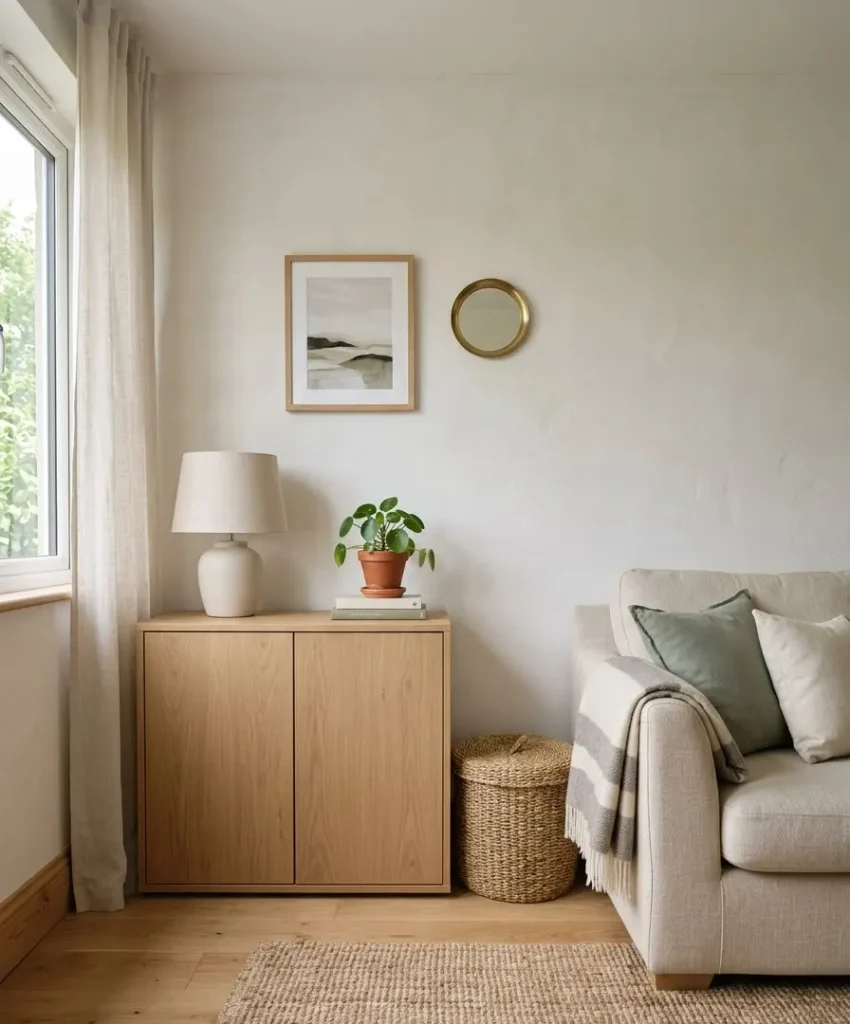
Baskets with lids and cabinets with doors hide cables, chargers, and mail piles.
Open shelves look pretty on Pinterest, but real life adds clutter within a week. I mix both: books and plants on top, mess behind doors.
23. Hang floating shelves above the sofa
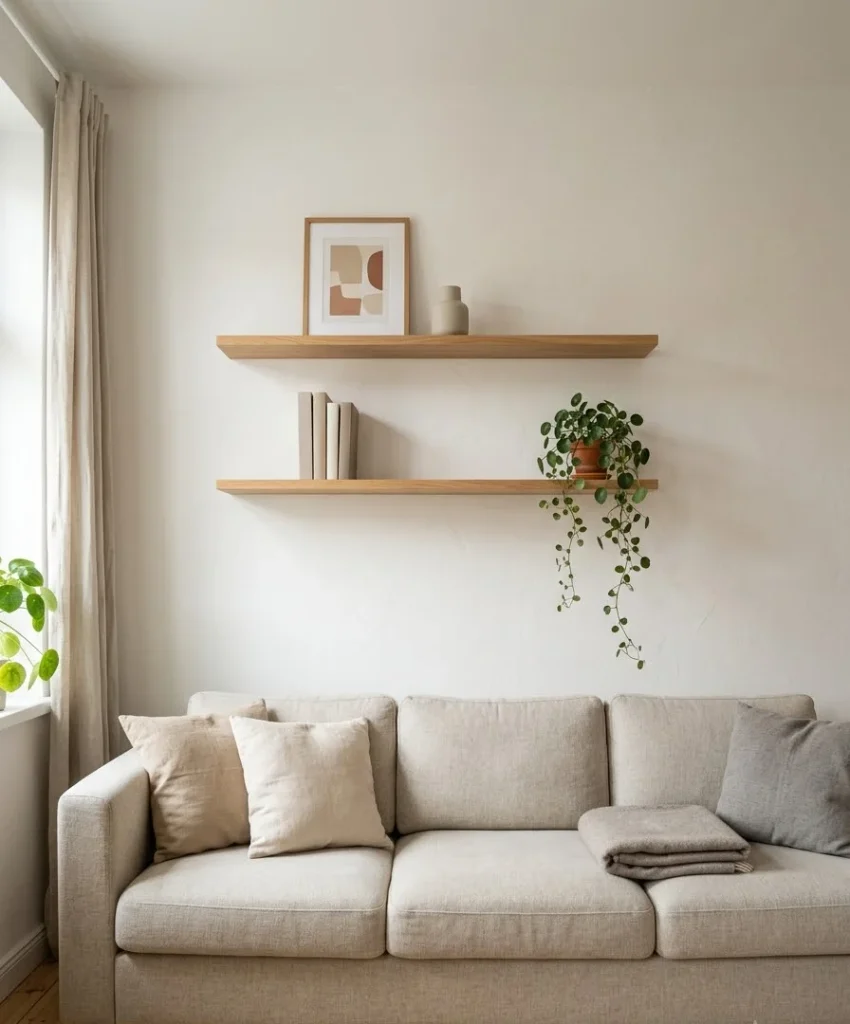
Two or three shelves over the sofa add display space at zero floor cost. Keep the items sparse, or the wall starts looking cluttered. I stick to a few books, one plant, and a small frame.
24. Add hooks by the door
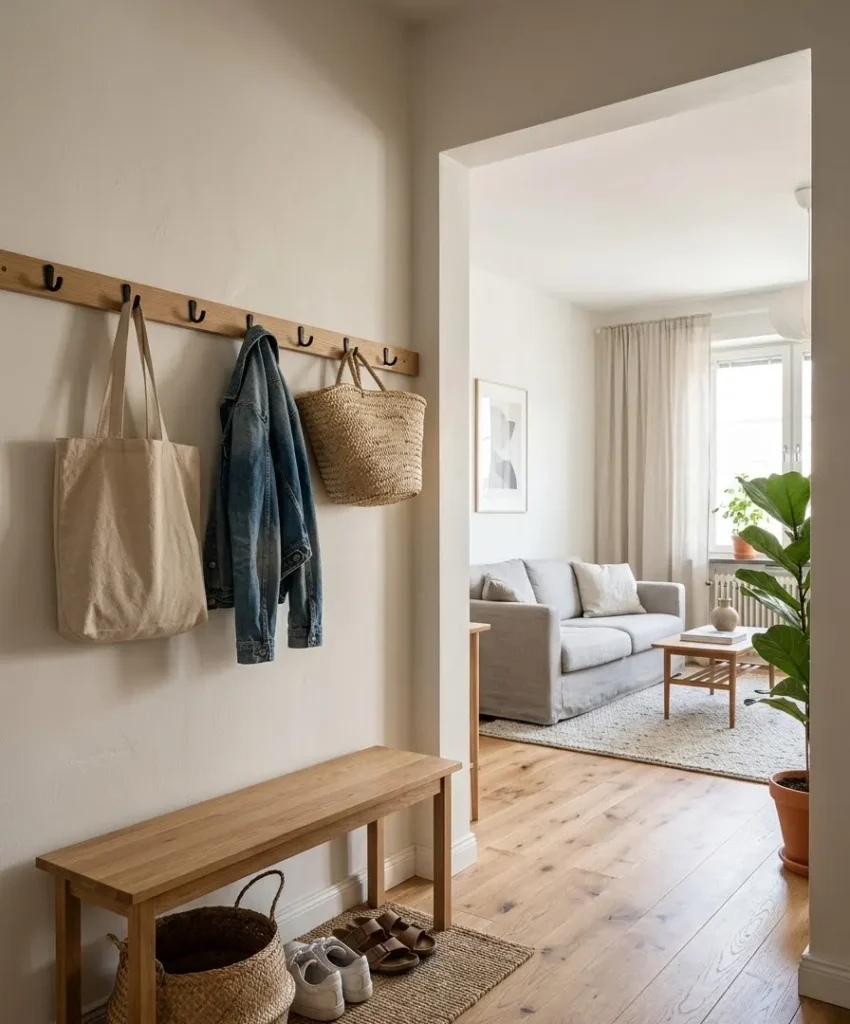
A row of hooks or a slim rail near the entry keeps coats and bags off your sofa. It sounds tiny, but it fixes the daily pile-up. My sofa arm thanked me.
25. Slide storage under the sofa
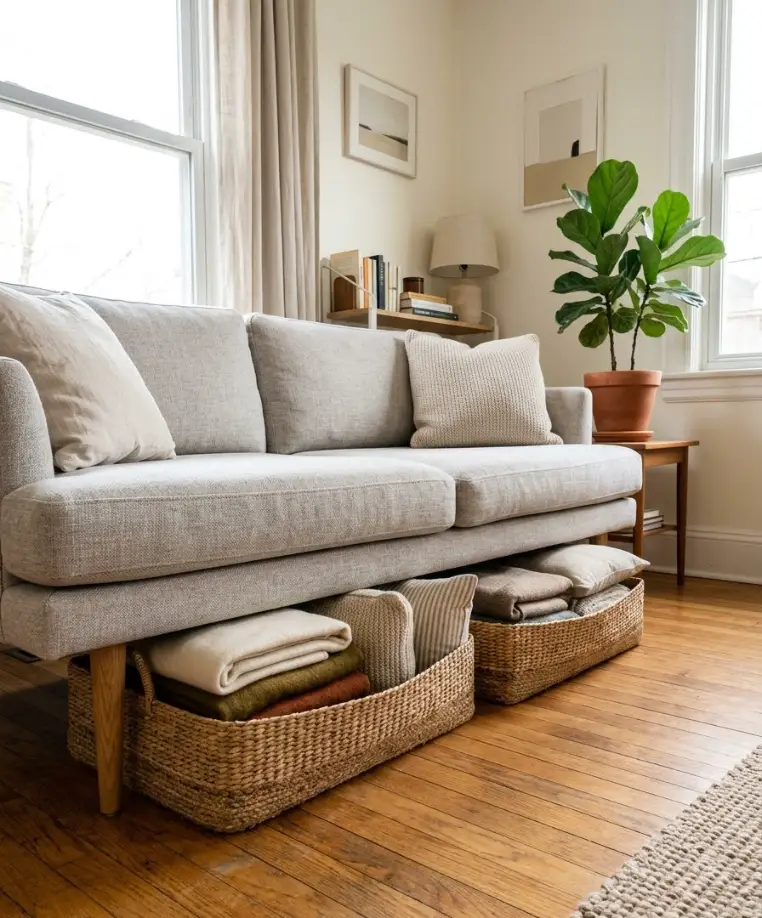
Flat bins or rolling crates fit under most sofas with legs. Use them for spare blankets, seasonal pillows, or shoes.
Measure the gap first, since I once bought bins 1 inch too tall.
26. Choose a media console with doors
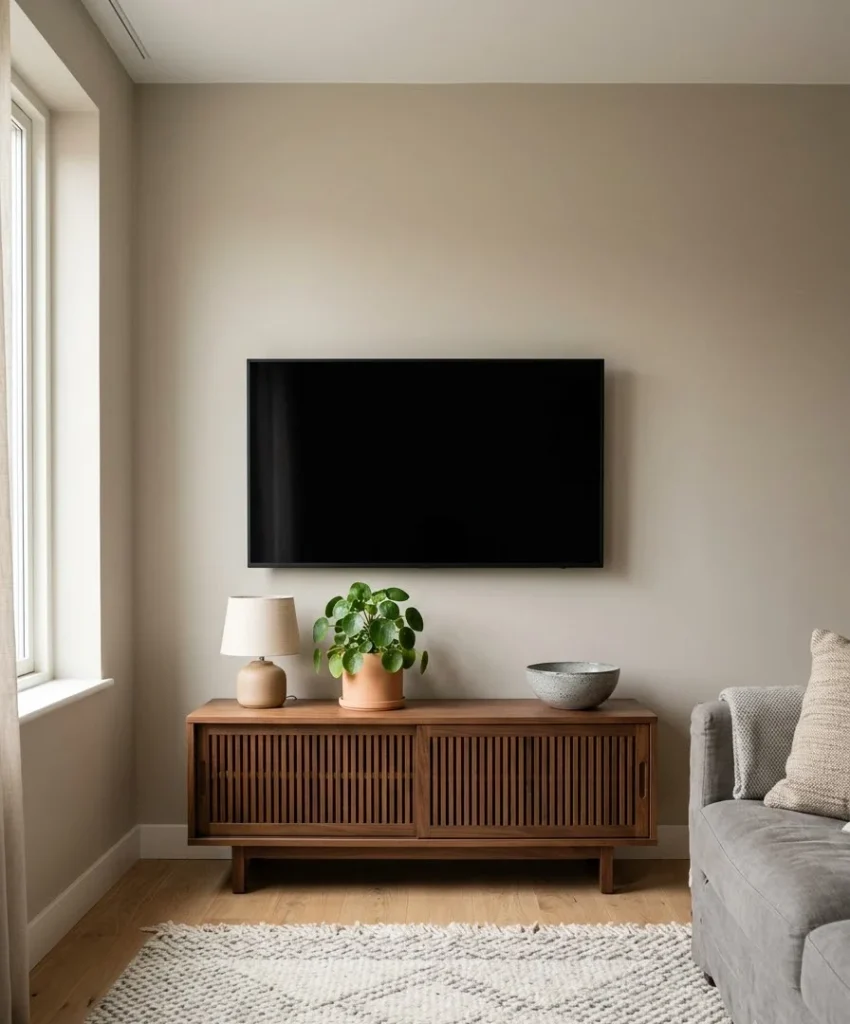
A low console with sliding doors hides the router, game consoles, and cable spaghetti. Wall-mount the TV if you can. That frees the top of the console for a lamp and a plant.
Quick sidebar before we get to the cozy stuff: my downstairs neighbor keeps a very fat cat named Biscuit who watches me hang shelves through the window every weekend. He judges my drill skills. I respect his honesty.
Cozy touches that cost almost nothing
A tiny room becomes a favorite spot once it feels warm. These touches do that job fast.
27. Layer textures, not more stuff
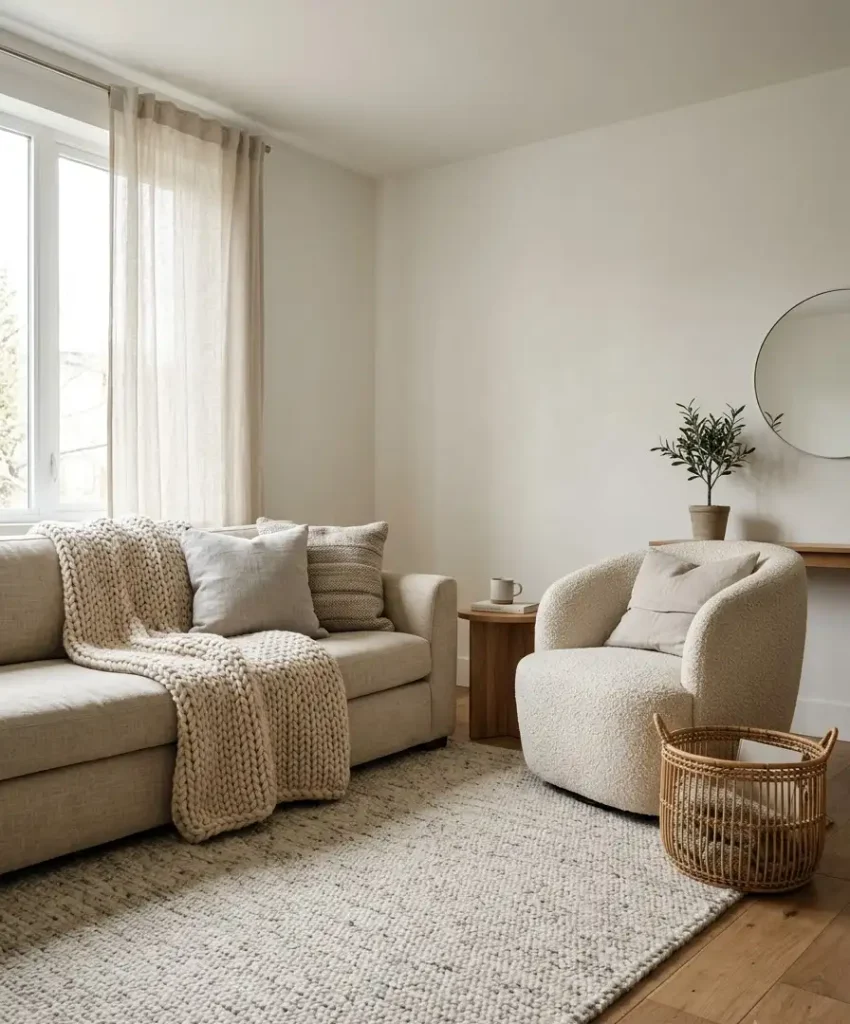
Mix a chunky knit throw, a linen pillow, and a wool rug. Texture adds coziness without taking up extra floor.
I think this is the difference between a room that looks staged and one that looks loved.
28. Choose a plant that fits your light
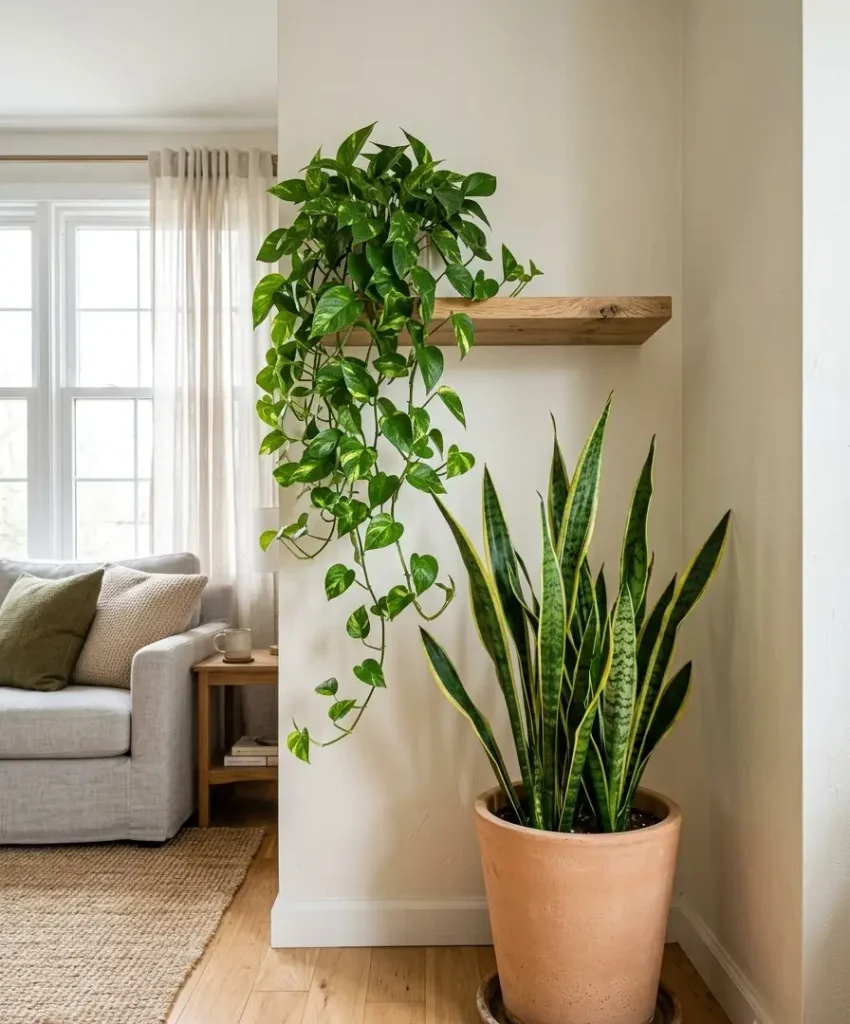
A trailing pothos on a shelf or a snake plant in a corner brings life without hogging space. Check your light level before buying. I killed two fiddle leaf figs before accepting my apartment is a snake plant kind of place.
29. Hang art at eye level
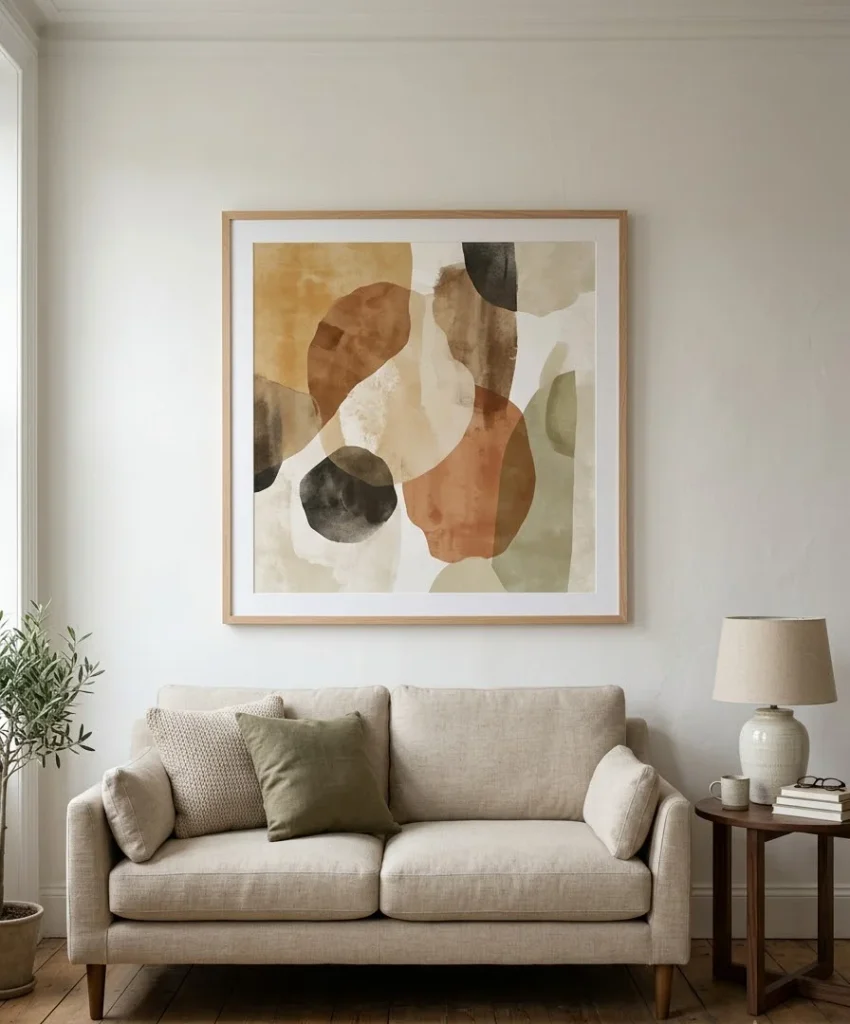
Center artwork around 57 inches from the floor. Too many people hang pieces near the ceiling, and it looks awkward.
A single large print beats six tiny frames in a small room. The Spruce has good framing guides if you get stuck.
30. Add candles or a warm lamp for evenings
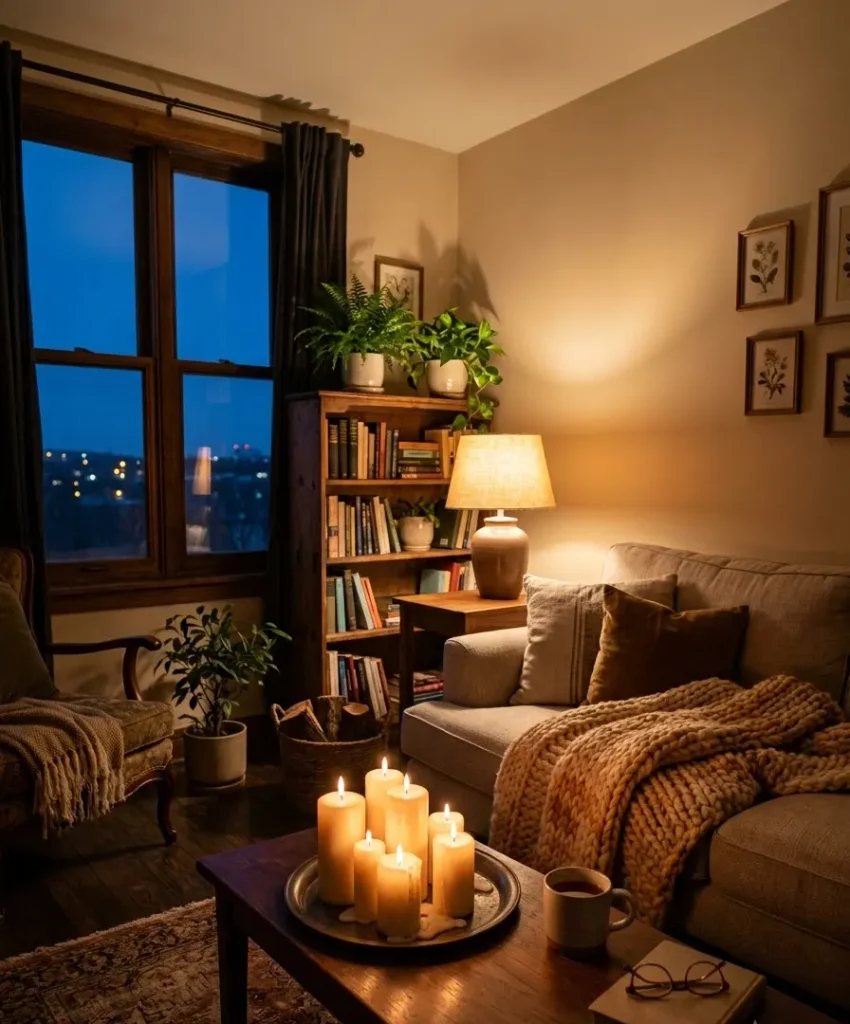
A few candles or a salt lamp create a warm glow after dark. Battery candles work fine if your lease forbids flames. This tiny move flips a room from “functional” to “hang out here all night.”
31. Use a room divider in open plans
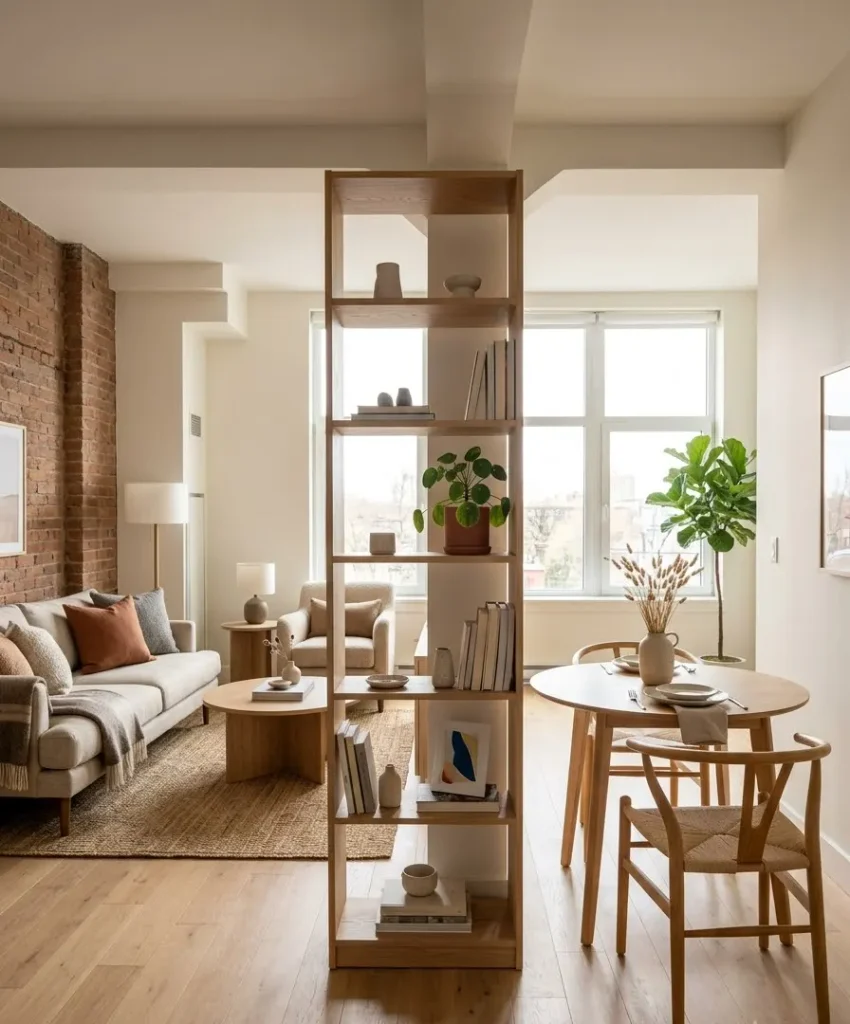
A slim bookshelf or a folding screen separates the living area from the dining or sleeping zone. It gives you a sense of “rooms” in an open apartment.
Open shelving lets light pass through, which keeps things bright.
32. Keep surfaces mostly clear
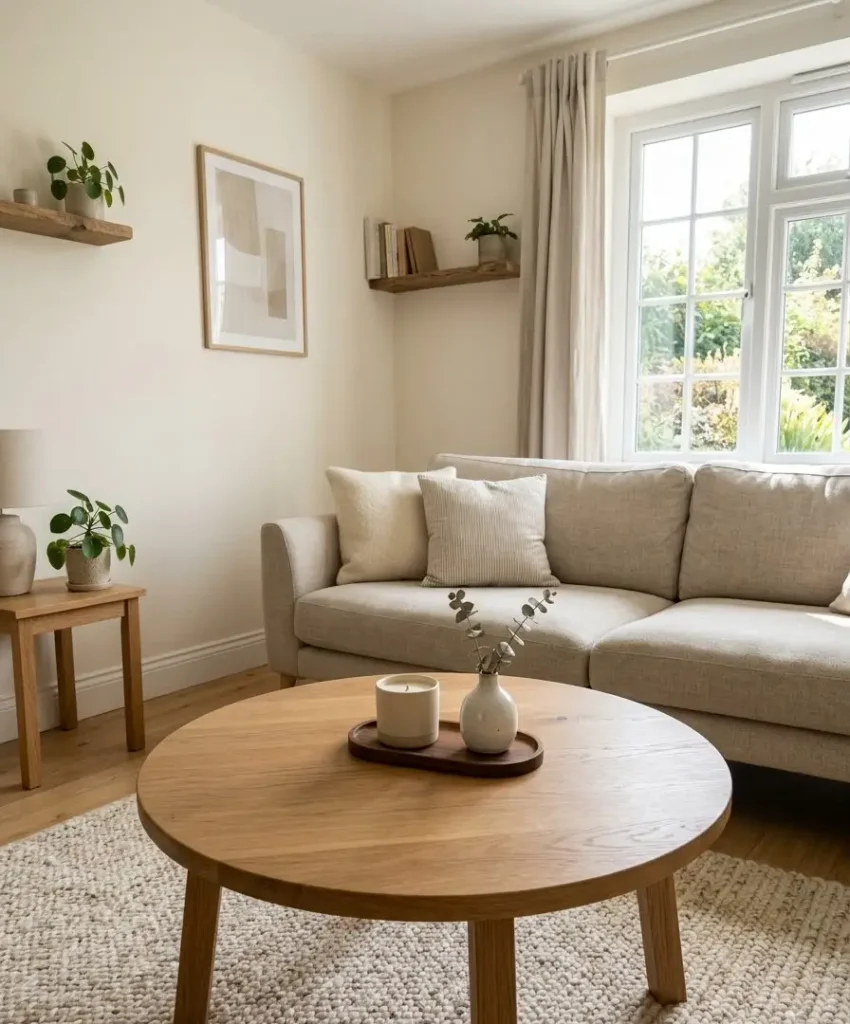
Leave 50 to 60 percent of any flat surface empty. A tray with two objects looks intentional. Ten objects look like a yard sale.
33. Do a weekly 10 minute reset
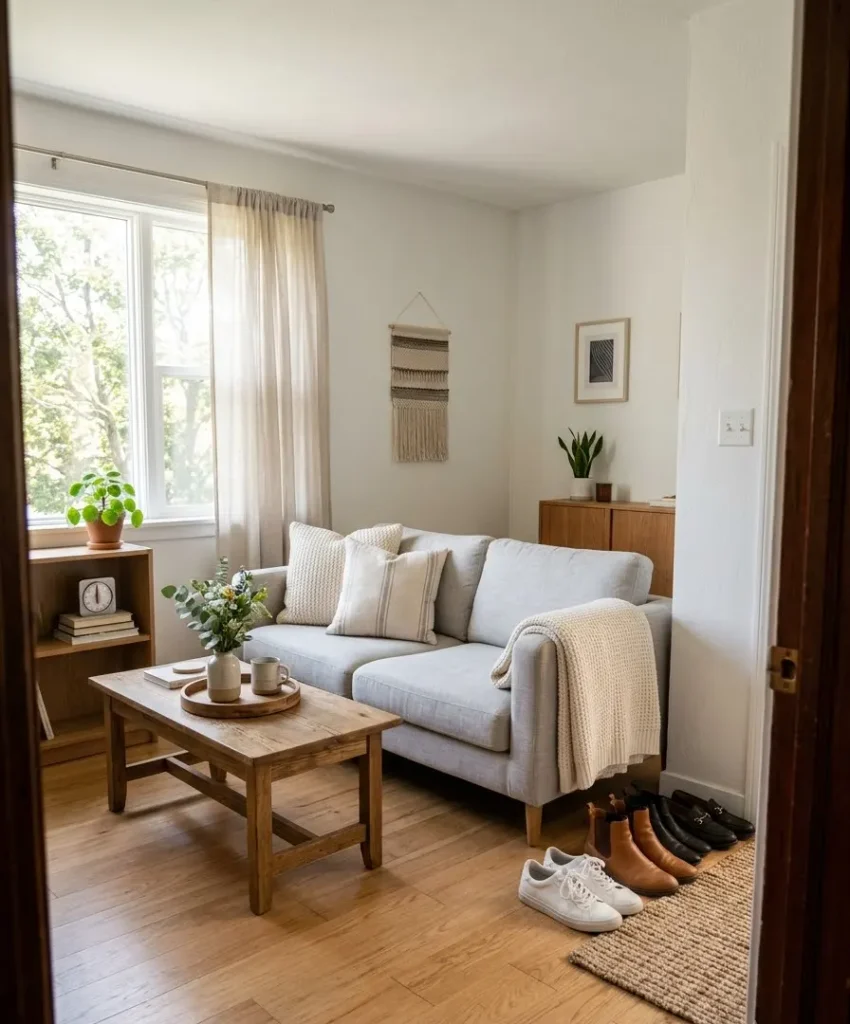
Set a timer and put things back where they live. Fold the throw, empty the coffee table, wipe the tray.
This habit does more for daily flow than any purchase, and I mean that.
Quick reference: what to try first
Here’s a short table to help you pick starting points based on budget and effort.
| Idea | Cost | Effort | Impact |
|---|---|---|---|
| Pull sofa off wall (#1) | Free | 5 minutes | High |
| Hang curtains high (#17) | $30 to $80 | 1 hour | High |
| Add a floor mirror (#14) | $60 to $150 | 10 minutes | High |
| Nesting tables (#9) | $50 to $120 | 5 minutes | Medium |
The mistakes I made so you can skip them
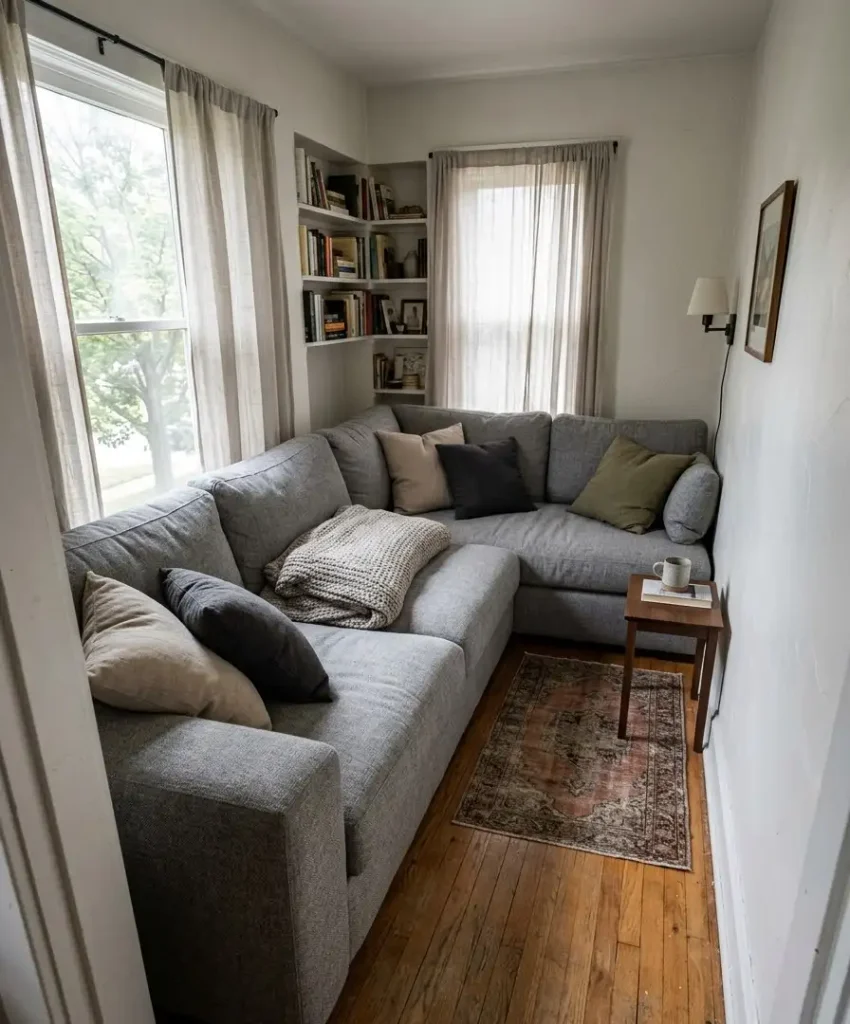
I bought a huge sectional for my second apartment. It looked amazing in the store and monstrous at home. I sold it at a loss and felt every dollar.
I also crammed floating shelves everywhere once, because they looked great in photos.
The wall started feeling like a hardware store aisle. Now I stop at one shelf group per wall.
And I ignored the doorway measurement more than once. Measure the door, the stairwell, and the elevator, then measure again.
Your future self will send you a thank-you note.
FAQ
What is the best sofa size for a small apartment living room?
Aim for 72 to 80 inches wide with slim arms and visible legs. Measure your walkway first, and leave at least 30 inches of clear path. A loveseat often works better than a full sofa in rooms under 12 feet wide.
How do I make a small living room look bigger without renovating?
Start with light curtains hung high, a mirror opposite a window, and furniture with exposed legs. Cut clutter, too. Those four changes cost less than $200 and make the biggest visible difference.
Can I use dark paint in a small living room?
Yes, if you like a moody, wrapped-in-a-blanket feel and you have decent natural light. Dark paint blurs corners, which some people find cozy. If your room gets little daylight, a light warm neutral stays safer.
Final thoughts
Small living rooms reward people who edit. Pick the ideas that fit your life, try two or three this weekend, and see how the room breathes. You don’t need all 33.
Personally, I’d start with the sofa float, the high curtains, and the weekly reset. Those three changed my daily routine more than any purchase.
So which idea are you trying first, and what’s the one thing in your living room you already know has to go?
1 thought on “33 Small-Space Apartment Living Room Decor Cozy Simple Solutions That Maximize Everyday Flow”