You don’t need a spare room for this. You need one corner and the willingness to move a laundry basket.
I say that because I spent two years assuming a sitting area was a “big house” thing.
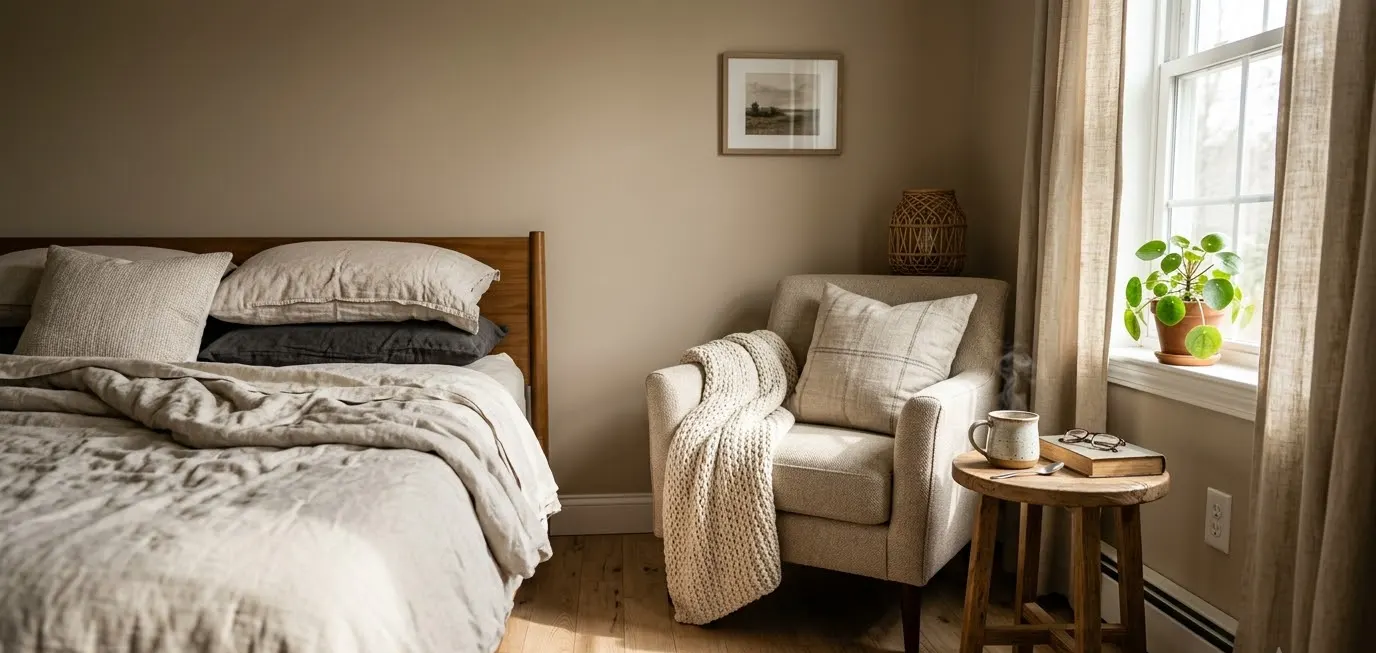
My bedroom fit a queen bed, a dresser, and not much else. Then I dragged a $35 chair from a thrift shop into the dead corner .
by my window and realized the space had been sitting there empty the whole time. I’d just never bothered to look at it.
This is for anyone who’s pinned 50 dreamy bedroom nooks and then looked at their own room and thought, “yeah, that’s not happening here.” It’s happening. Here’s how.
Why a tiny sitting nook actually changes a bedroom
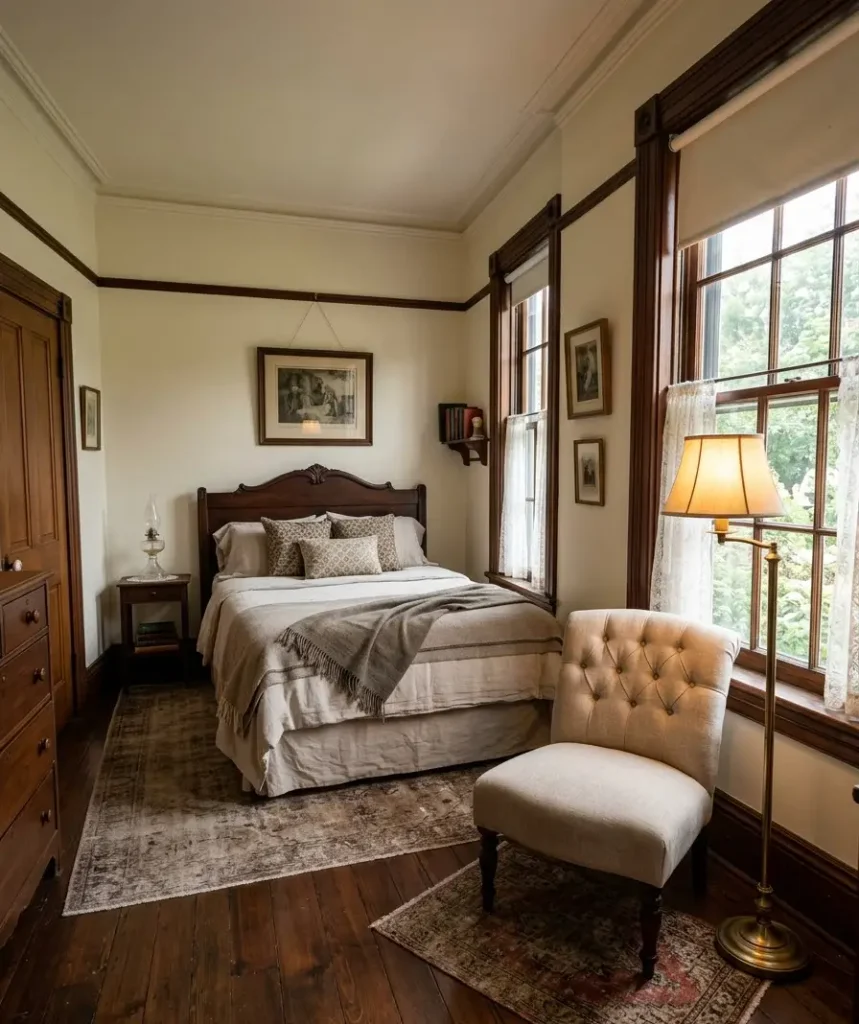
A bedroom that’s only for sleeping feels like a hotel room. Add one chair with a purpose, and it turns into a room you actually want to be in.
I use mine for coffee before anyone else in the house is awake. My sister uses hers for phone calls she doesn’t want her kids overhearing.
Neither of us needed more than about 9 square feet to make it happen.
Measure before you fall in love with anything
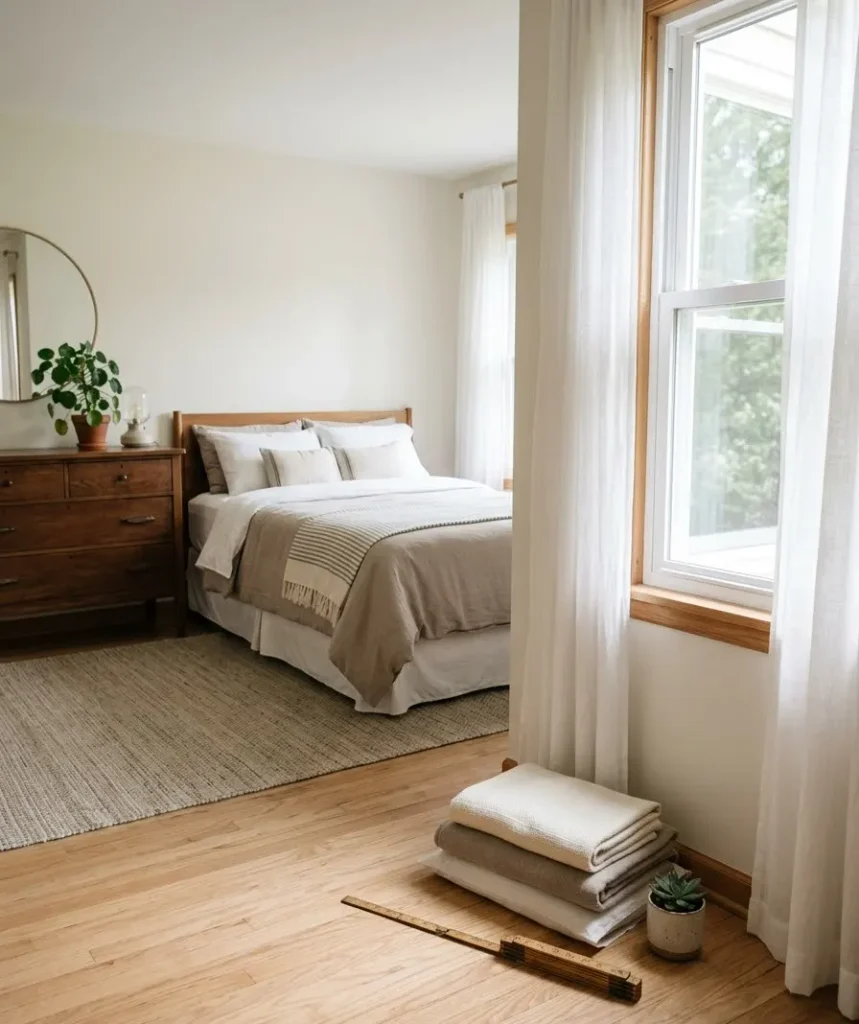
Skip this step and you’ll end up like I did once: hauling a chair up two flights of stairs only to find it blocked the closet door.
Measure the actual corner, not the vibe of the corner.
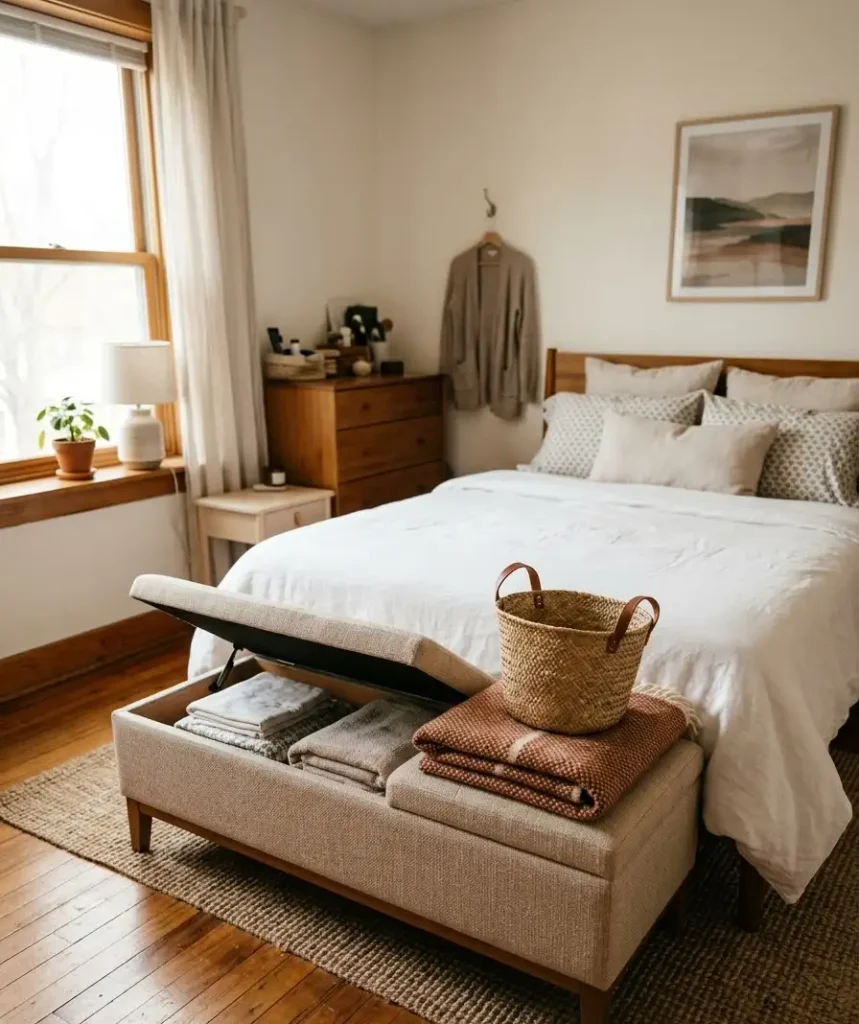
Good spots to check:
- The corner across from your bed, especially if it currently holds a hamper or a pile of “I’ll deal with this later” clothes
- Under a window, particularly one with a deep sill
- The foot of the bed, if you’ve got at least 3 feet of clear floor beyond it
- A leftover nook next to a closet that furniture never quite fits into
A single chair with a tiny side table needs roughly 3 feet by 3 feet. Tighter than that, look at a window seat or a floor cushion setup instead.
Furniture that fits without taking over
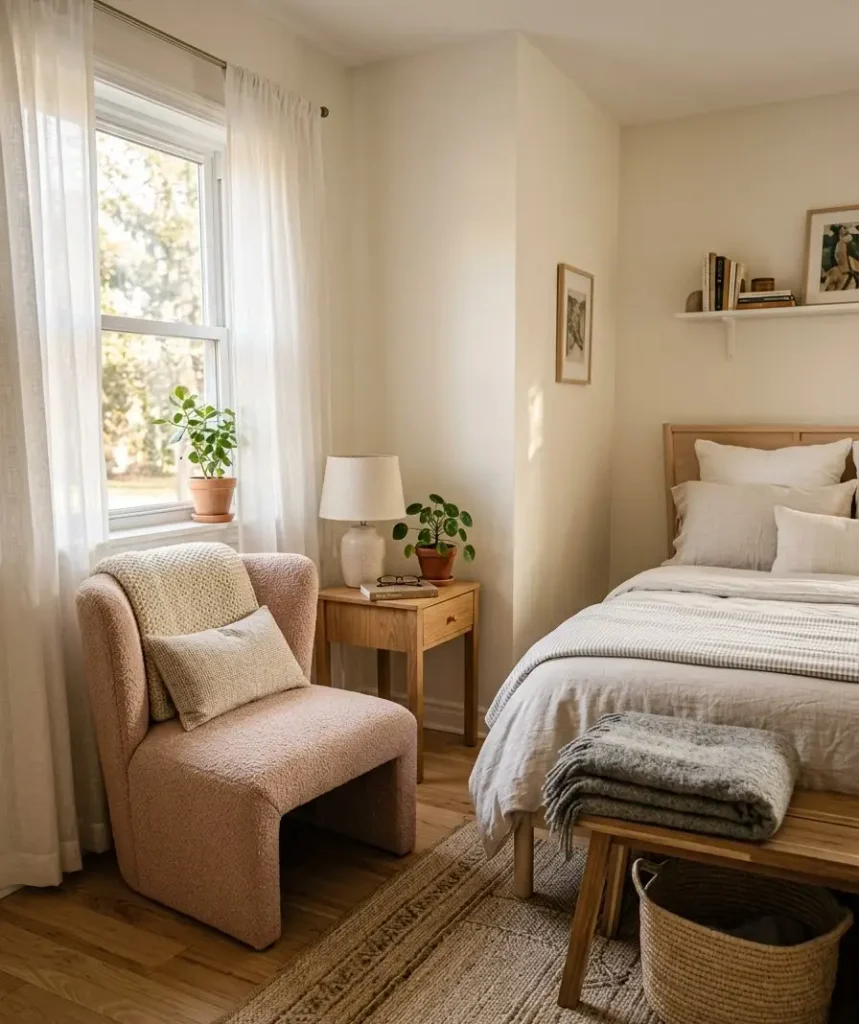
This is where most Pinterest boards lie to you a little. The gorgeous accent chair in the photo is shot in a room twice the size of yours.
Armless chairs, sometimes called slipper chairs, save 6 to 10 inches per side compared to anything with arms.
That’s the difference between a cozy corner and one you have to shuffle sideways past every morning.
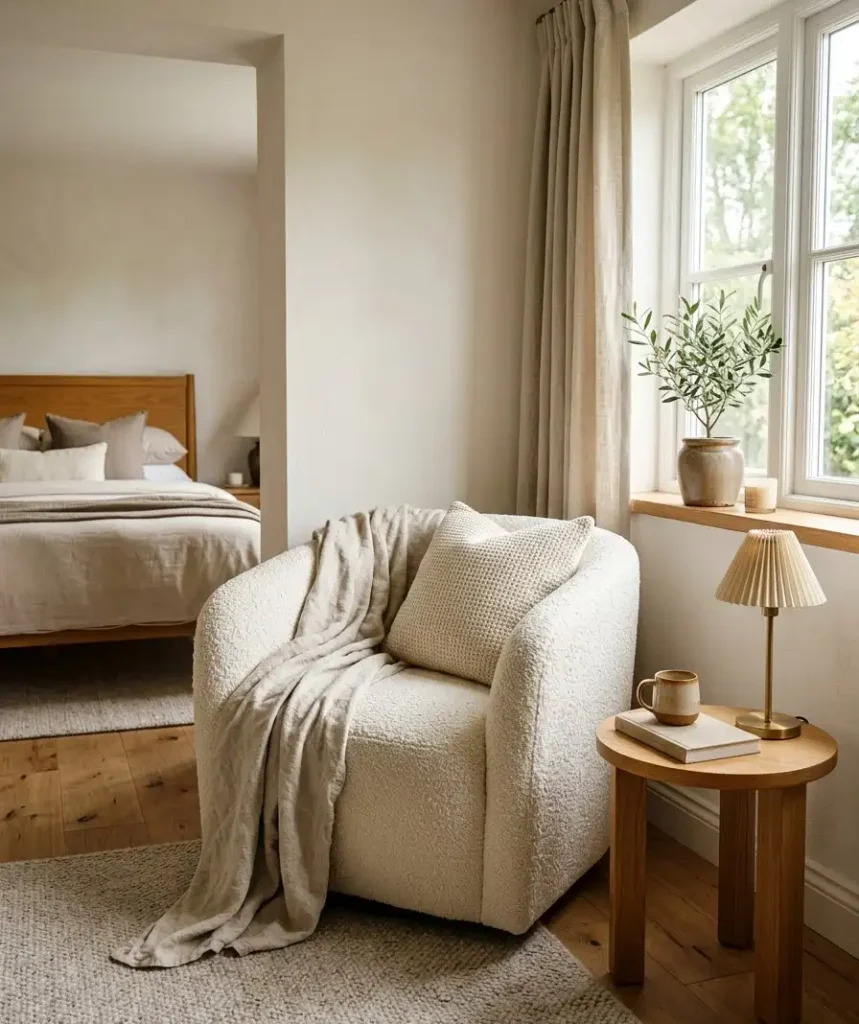
A narrow bench works even better if you’re tight on room.
It seats you and holds tomorrow’s outfit, and it doesn’t visually block the rest of the room the way a tall-backed chair does. I switched to a bench last winter. Genuinely prefer it now.
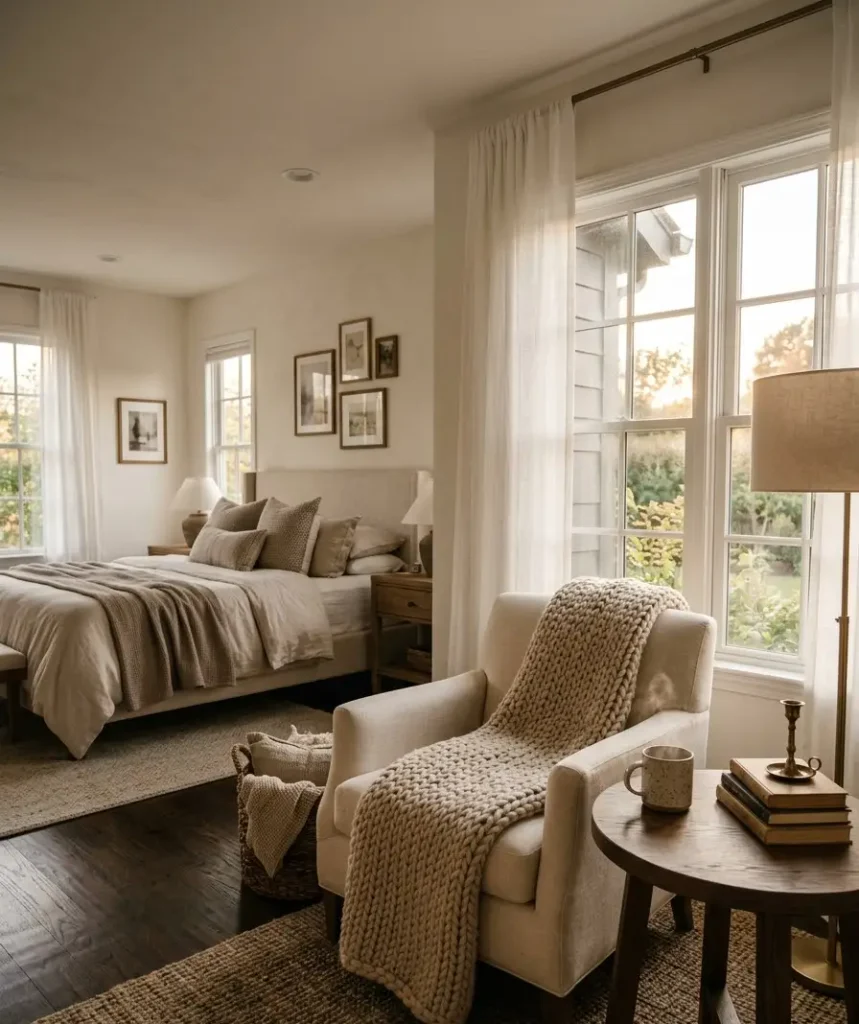
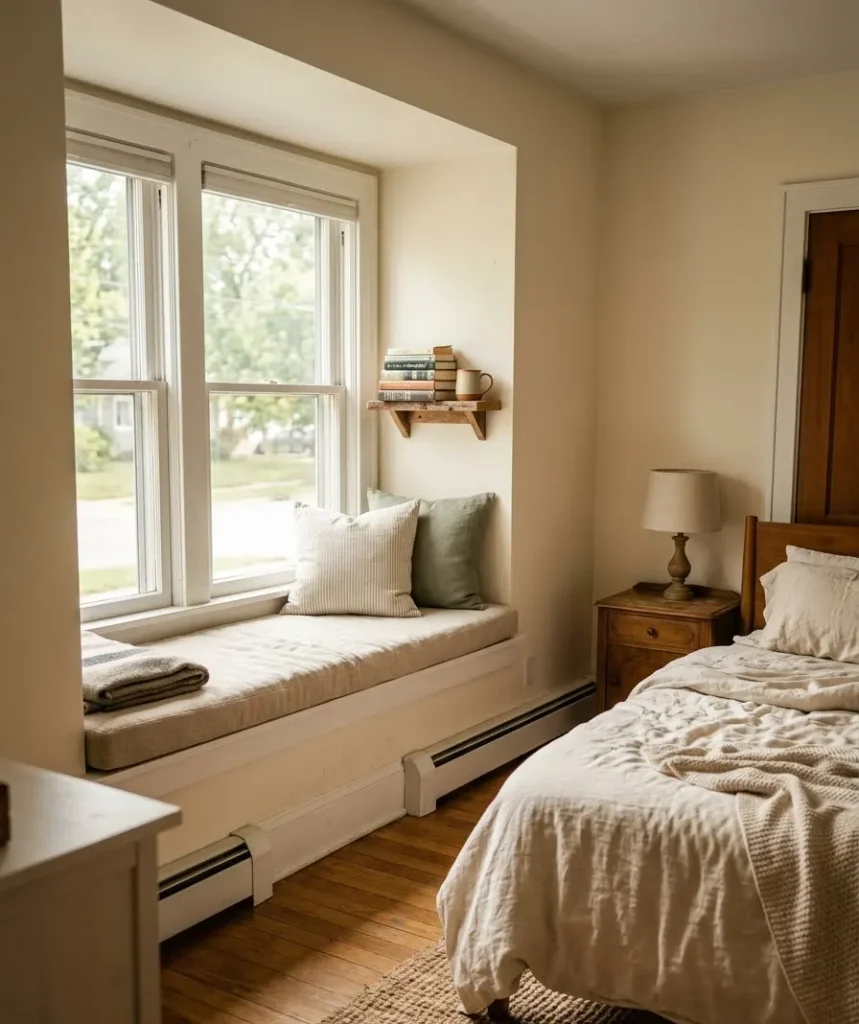
And if you’ve got a window with a decent sill or a radiator cover, build a seat right on top of it.
No new floor footprint at all, just a cushion and a couple of pillows on architecture you already own.
This one’s probably my favorite trick in the whole list, honestly, because it feels like you’re getting something for free.
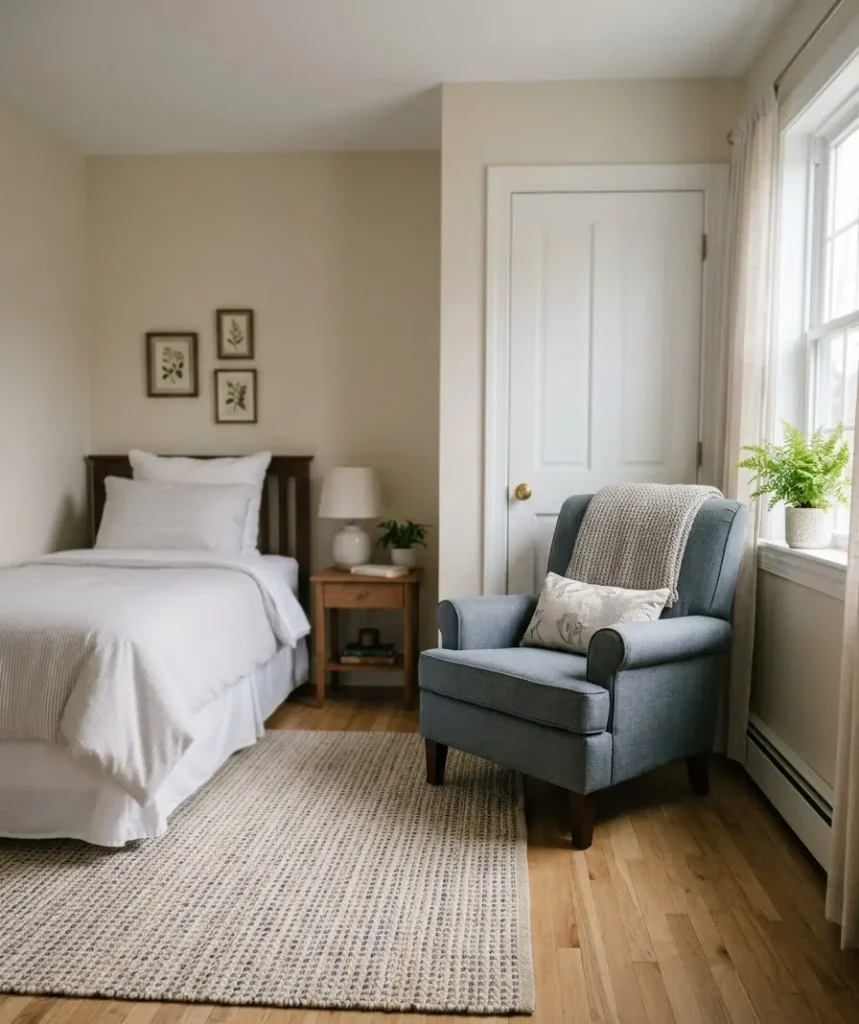
A quick side-by-side, because pictures alone won’t tell you this
| Option | Comfort | Storage bonus | Best for |
|---|---|---|---|
| Storage bench | Good | Excellent | Foot of bed |
| Slipper chair | Excellent | None | Corner or window |
| Window seat build | Good | Excellent if built over cabinets | Under windows |
Placement matters more than people think
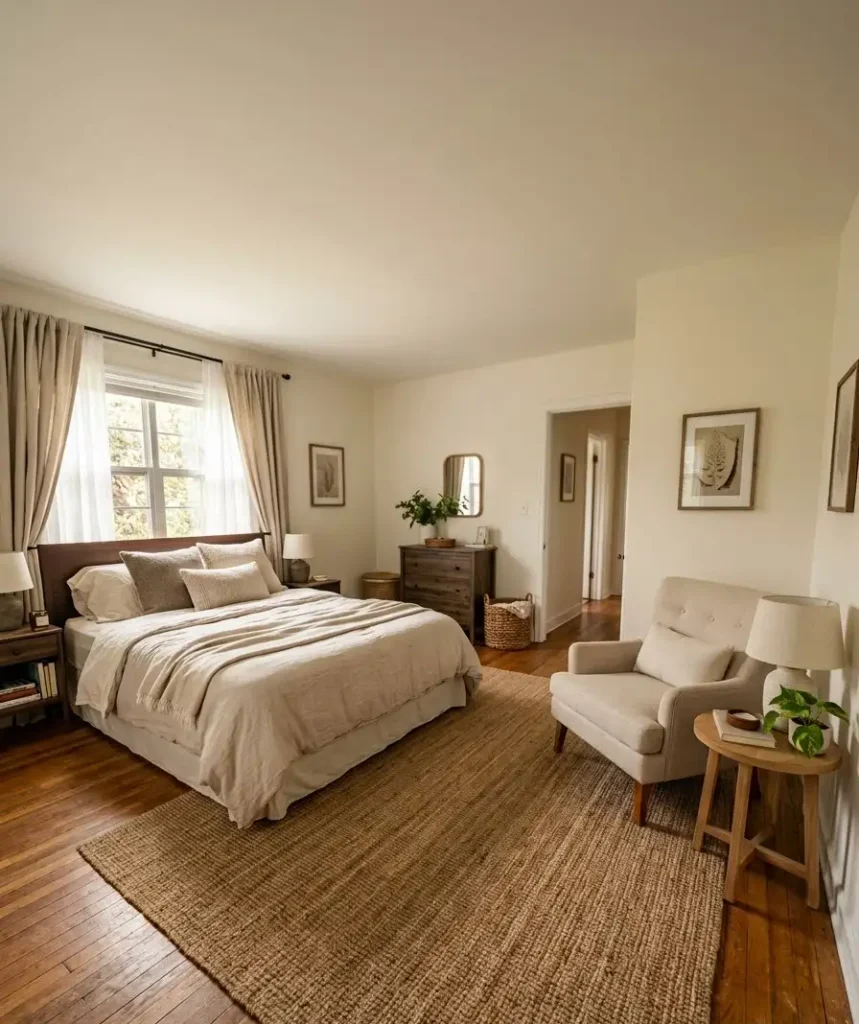
The same chair looks squeezed in one spot and totally natural six inches to the left. Weird, but true.
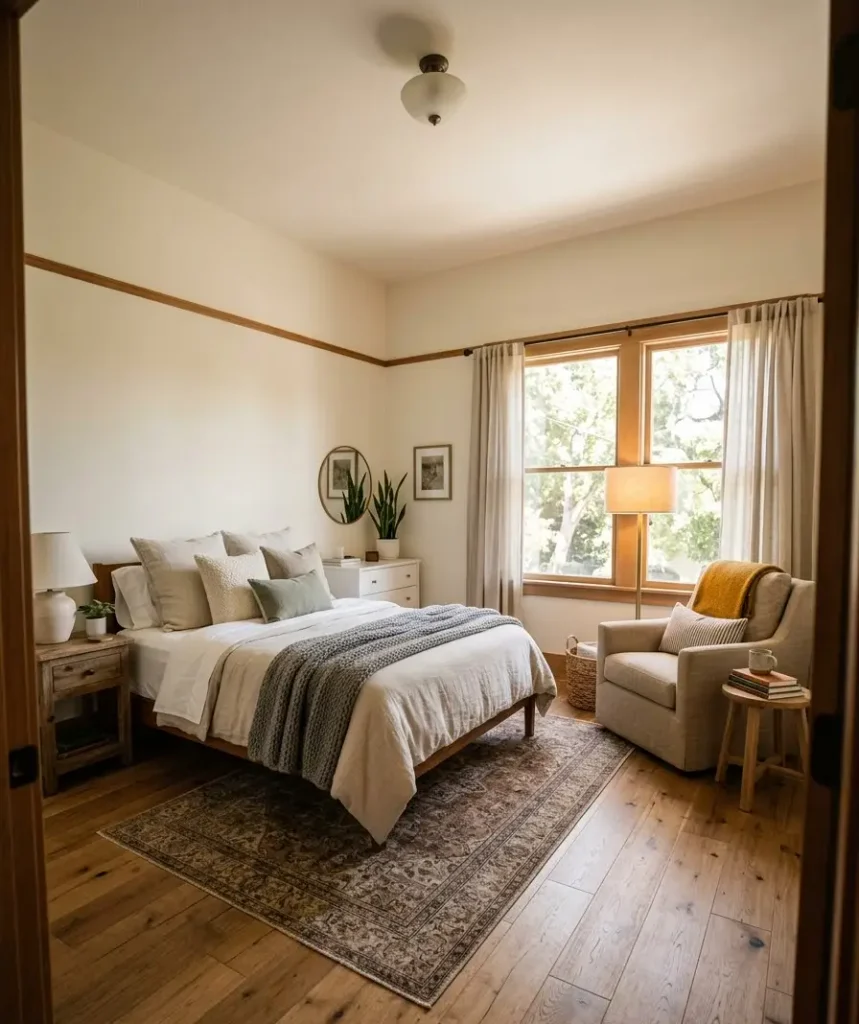
Angle it slightly, maybe 15 degrees off the wall, instead of squaring it dead-on. It reads as intentional rather than shoved into place.
Keep at least 18 inches clear for walking, even if that means sizing down the chair you wanted.
And don’t put the whole setup directly in the sightline from your bedroom door.
Off to the side works better, so it doesn’t compete with the bed for attention the second someone walks in.
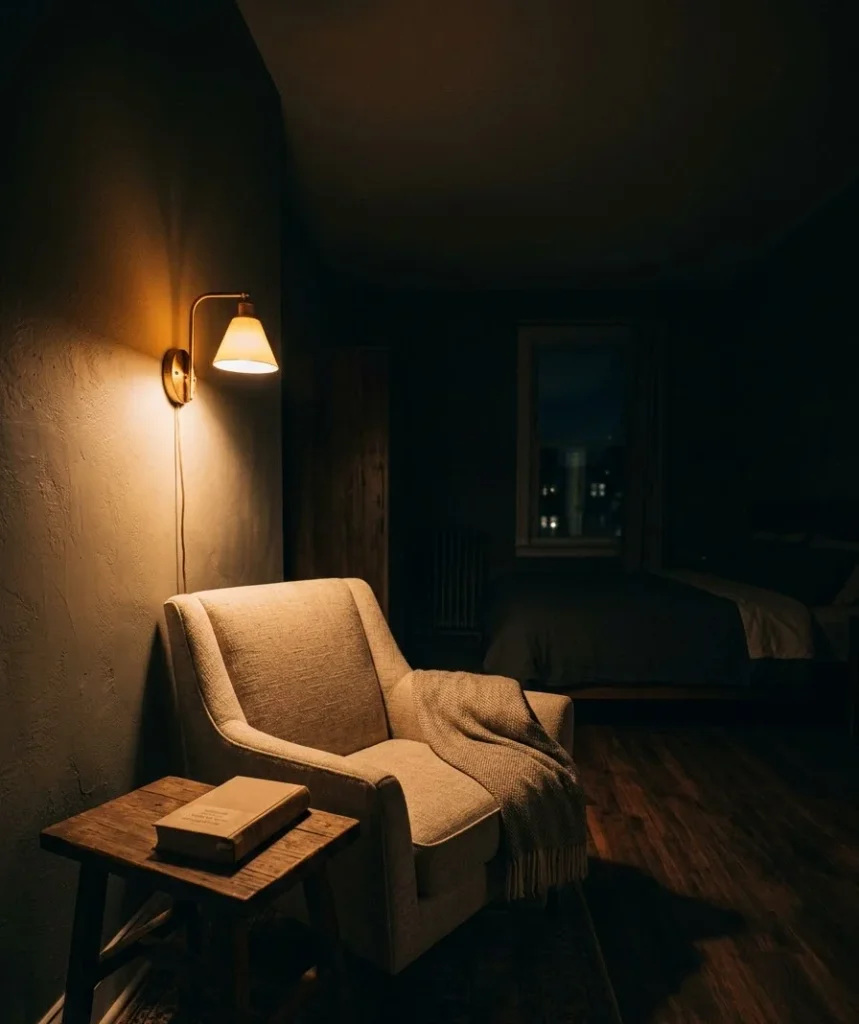
Lighting will make or break the whole thing
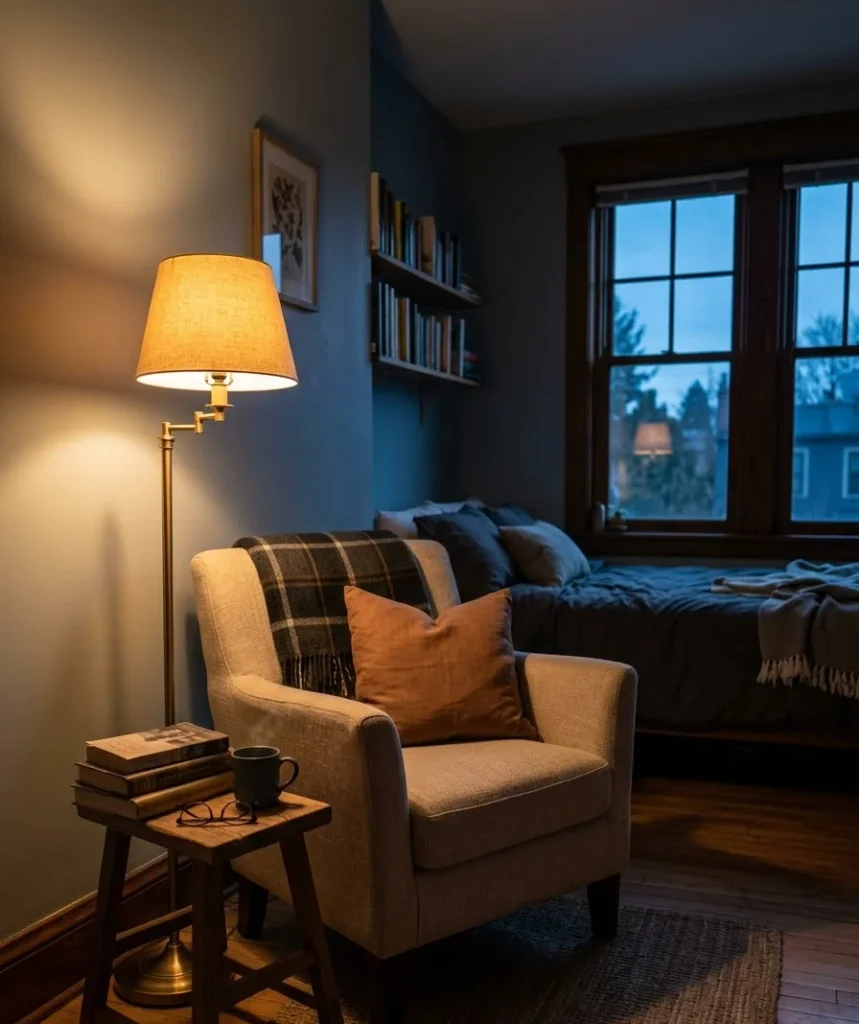
Here’s something I didn’t expect: the lamp mattered more than the chair. A warm bulb, around 2700K, in a cheap floor lamp turned my corner from “random chair” into an actual spot people want to sit in.
If there’s no floor space for a lamp, a plug-in sconce at reading height does the same job for zero square footage.
This is genuinely a case where a $20 fix outperforms a $200 chair.
Soft stuff pulls the whole look together
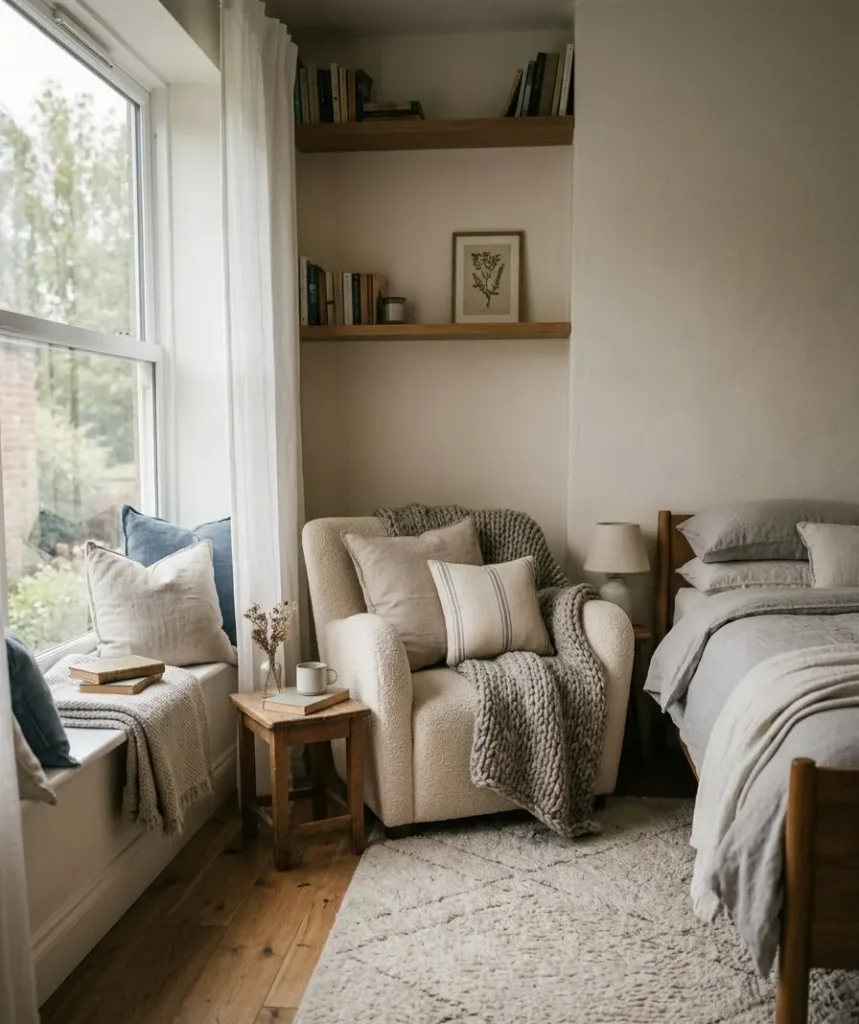
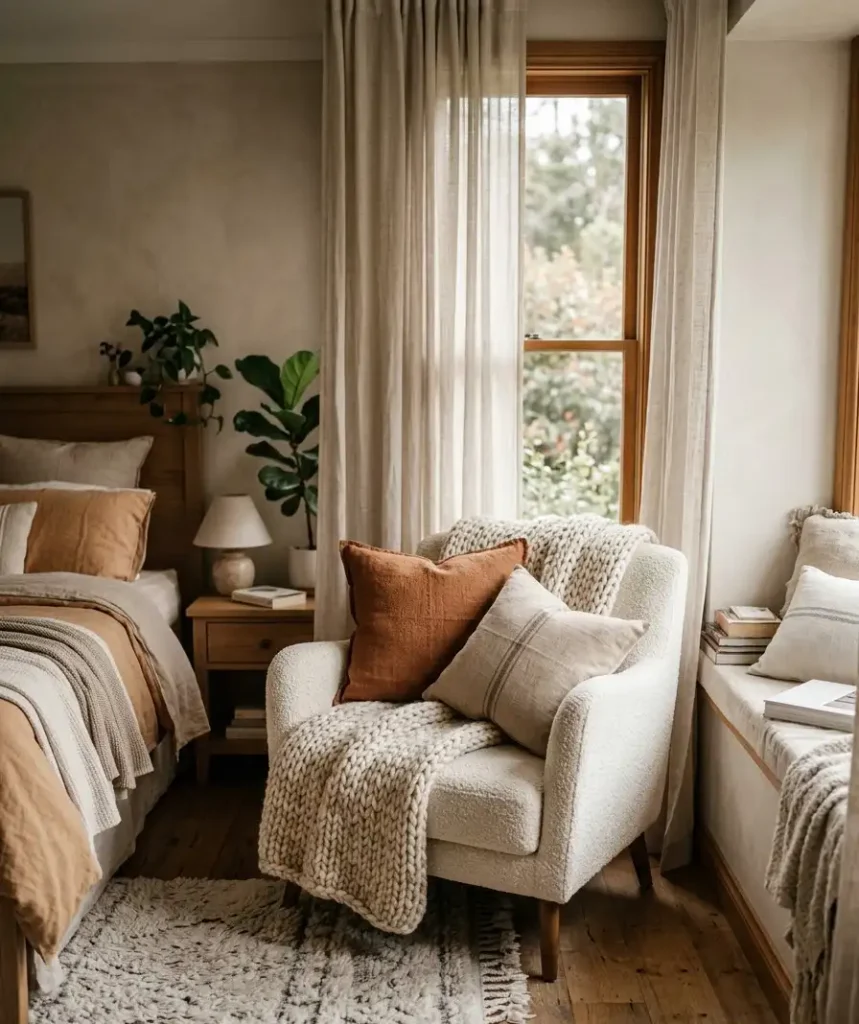
A throw blanket over the arm, two pillows of different sizes rather than four matching ones, and a small rug underneath to visually separate the corner from the rest of the floor.
That’s basically it. Texture does more work than color here.
A boucle chair with a linen throw looks richer than three loud colors crammed into a tight space.
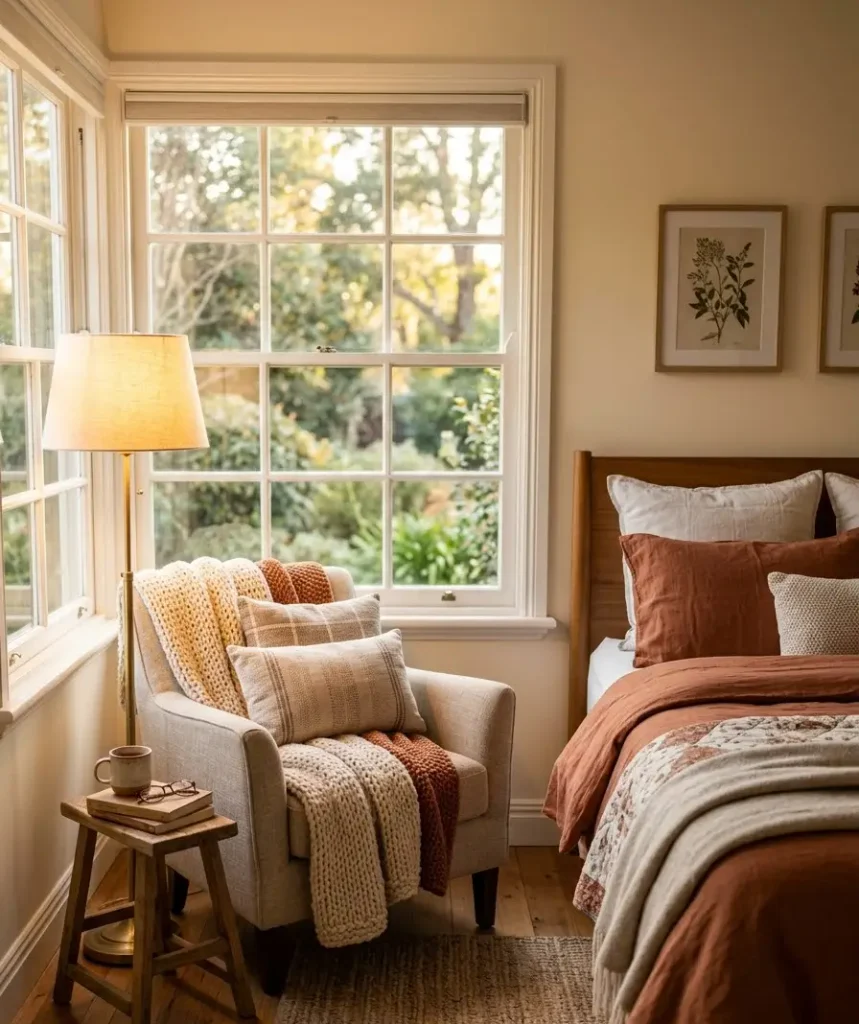
Random thought, slightly off track: I once repainted an entire wall three times chasing the “right” sage green before realizing my north-facing window was the actual problem.
Lighting direction changes paint more than the paint itself does. Anyway.
A real example, because theory only gets you so far

My friend Priya lives in a converted Victorian flat with a bedroom shaped like a shoebox. She wanted somewhere to journal that wasn’t her bed.
She found a 22-inch slipper chair secondhand, added a $15 lamp, and cut down a rug remnant herself. Total spend: under 90 dollars.
Wow, the difference in photos versus how small the actual space is genuinely surprised me.
It’s not a showroom. It’s a chair, a lamp, and a rug, placed with actual measurements in mind instead of guesswork.
Mistakes worth skipping
- I bought a chair before measuring the doorway it had to pass through. Learn from that.
- I picked a rug too small for the space, which made the whole corner look unfinished rather than designed. Go slightly bigger than feels necessary.
- I went a full year without dedicated lighting there and it just felt like storage, not a retreat.
- Arms on the chair, in a spot that really needed armless. I banged my hip on it constantly.
For more layout inspiration, the room planner tool from IKEA lets you test furniture placement digitally before spending a cent, and .
Apartment Therapy’s small-space archive is worth a scroll if you want more corner ideas specifically for tight bedrooms.
FAQ
How much space do I need for a small sitting area?
About 3 feet by 3 feet for a chair and side table, plus 18 inches of walking clearance. A window seat needs even less since it uses existing architecture.
What’s the cheapest way to start?
A secondhand chair, a warm-bulb floor lamp, and a cut-to-size rug remnant. Most people can pull this off under 100 dollars.
Does the sitting area need to match my bedding?
Not exactly.
A slight contrast in tone actually helps the corner read as its own space instead of blending into the bed.
So, what’s currently sitting in your dead corner? Go look right now, honestly.
Whatever’s piled there is probably in the way of a chair you’d actually use. Move it, measure the space, and see what fits.