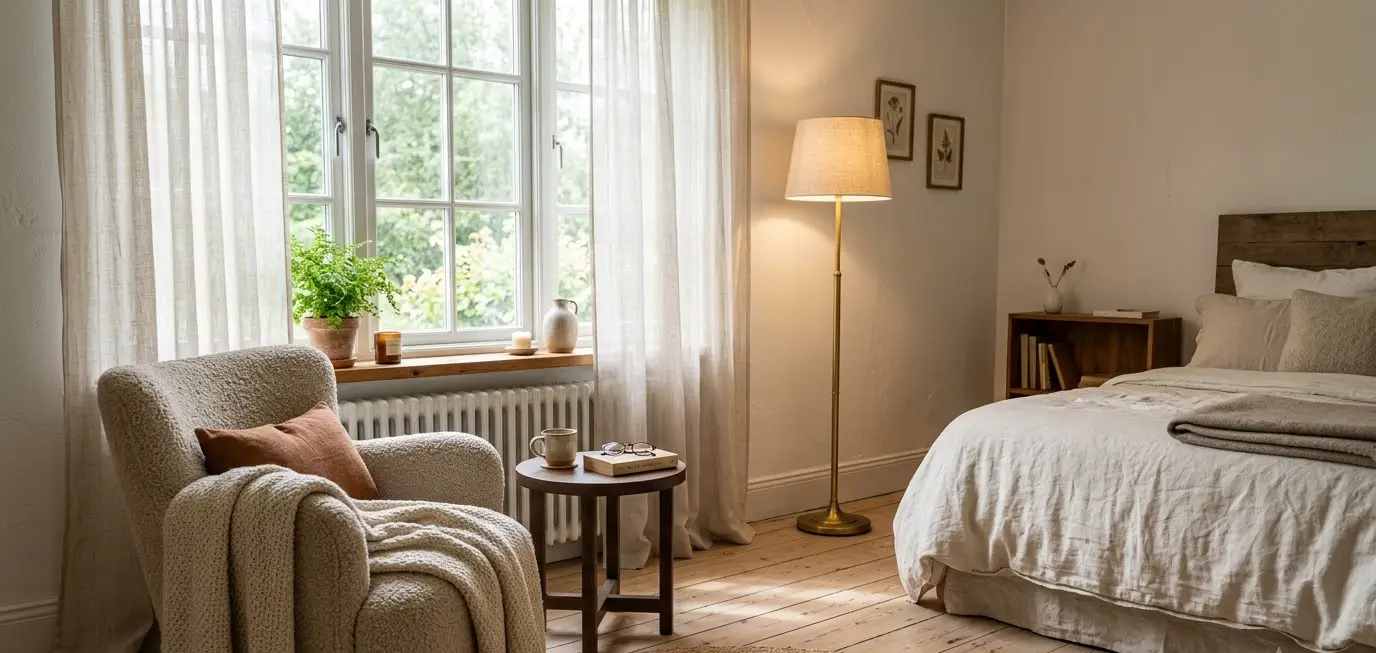
My first “sitting area” was a folding camp chair wedged between a radiator and a laundry pile. It looked awful.
I sat in it every single night anyway, because having one spot in my bedroom that wasn’t the bed changed how the whole room felt.
That was 6 years and 4 apartments ago. Since then I’ve built a reading corner in a 9×10 box room, .
a window nook in a rental where I couldn’t drill anything, and a closet-turned-chair-alcove that still gets saved on Pinterest more than anything else I’ve made.
So if you’re staring at 3 square feet of floor and wondering whether a bedroom sitting area is even possible, yes.
It is. You just need less furniture than you think and better lighting than you currently have.
Here are 37 ideas I’ve either used myself or stolen shamelessly from people with better taste than me.
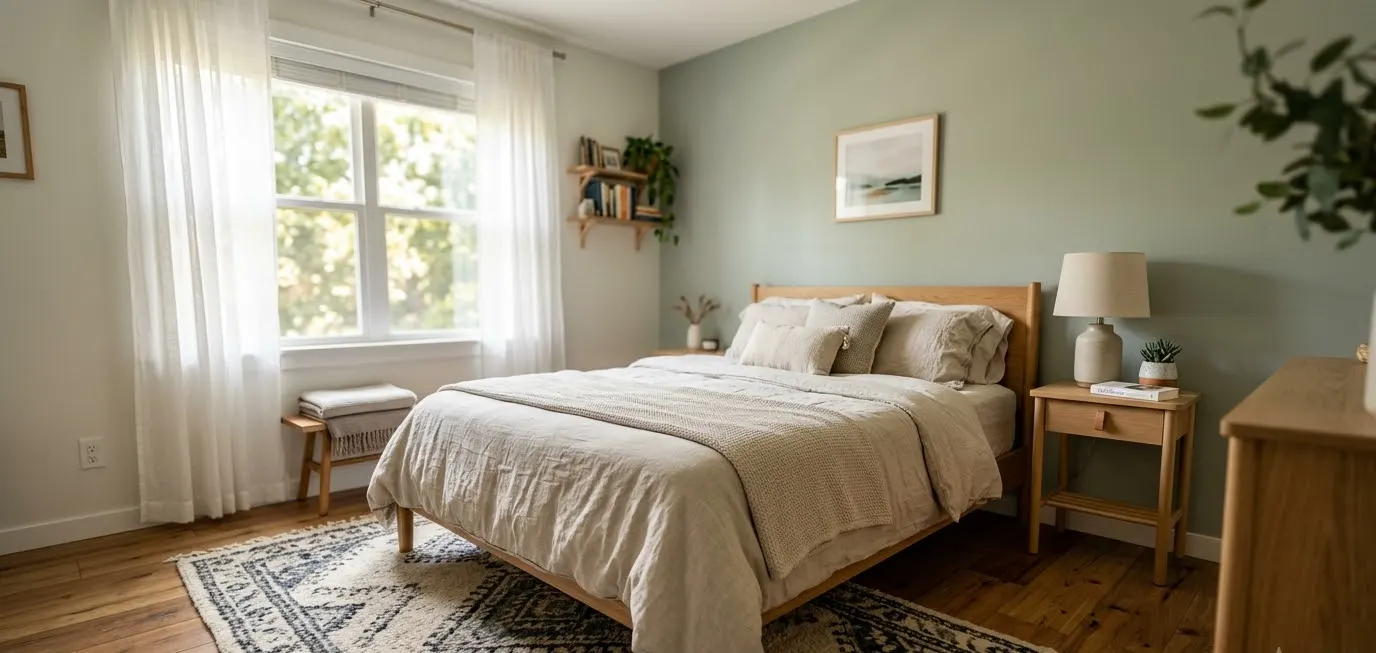
Why a small bedroom sitting area is worth the floor space
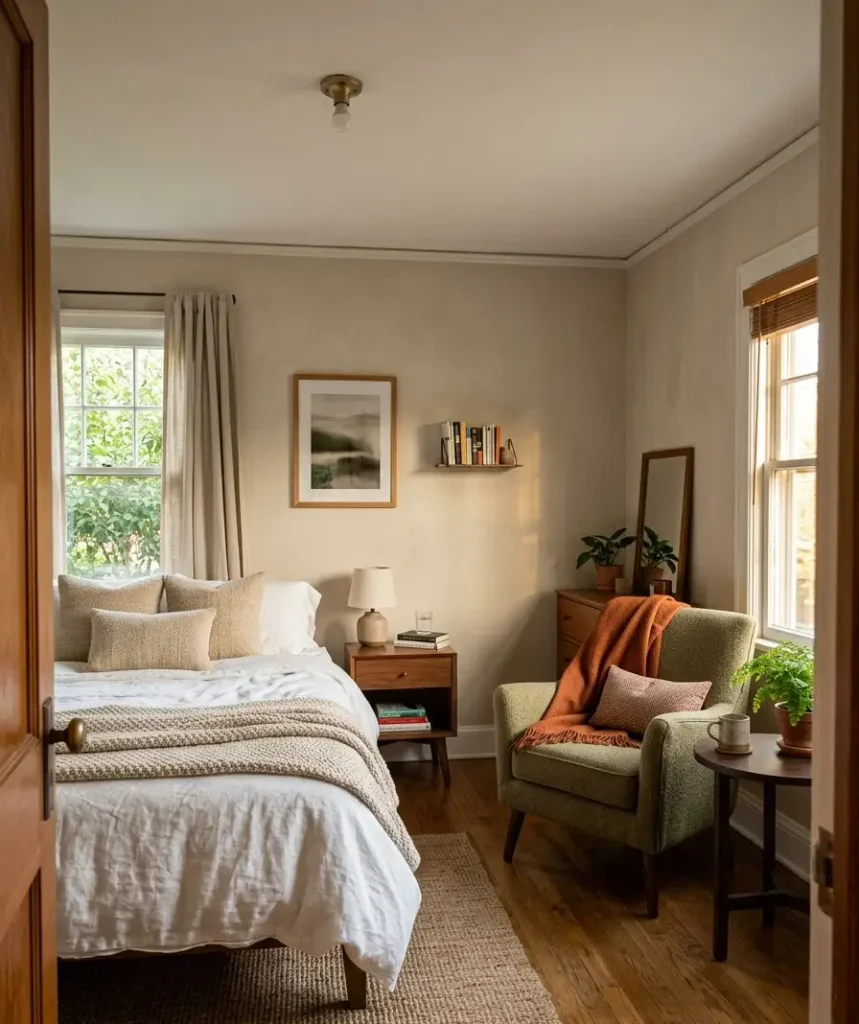
Your brain files places by what you do in them. Read in bed every night and the bed starts meaning “awake.
” The Sleep Foundation’s guide to designing a bedroom for sleep makes the same point about layout and clutter, and it lines up with what I noticed the month I moved my paperbacks 4 feet to the left.
A chair gives you somewhere to land that isn’t horizontal. That’s the whole pitch.
It’s also the part of the room that photographs well. A made bed is a made bed. A chair with a sheepskin thrown over one arm and a lamp glowing behind it? That’s the pin people actually click.
Measure before you buy anything (I learned this the expensive way)
I once ordered a beautiful wide-armed chair, waited 5 weeks, and discovered it blocked my wardrobe door by 2 inches. Two. I kept it for a year out of spite.
Grab a tape measure and check 4 things:
- Your available corner width. Anything under 28 inches means armless seating only.
- Depth from the wall. 30 inches is workable. 24 inches is tight but doable with a stool.
- Door and drawer swing. Open everything. Mark the arc on the floor with painter’s tape.
- Walking lane to the bed. Leave at least 24 inches or you’ll be shuffling sideways at 2am.
| Space you have | Best seating | Skip this |
|---|---|---|
| Under 28 in wide | Slipper chair or pouf | Anything with arms |
| 28 to 36 in | Barrel or accent chair | Full recliners |
| 36 to 48 in | Chair plus ottoman | Loveseats |
| Window wall only | Bench or built-in seat | Freestanding sofas |
Tape the footprint out on your floor first. Live with the tape for 2 days. It costs nothing and it’s saved me twice.
Seating ideas that fit where nothing else does
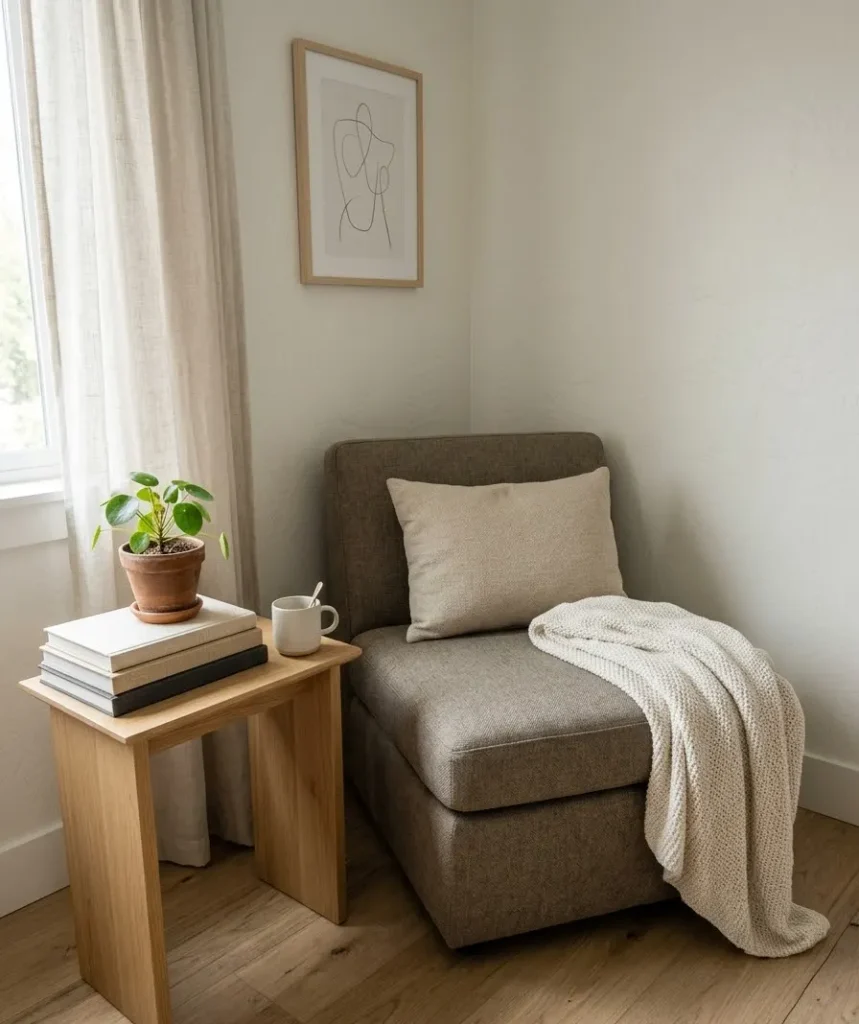
1. The armless slipper chair
The workhorse of small bedroom sitting areas. Losing the arms buys you 8 to 10 inches of width, and honestly you rarely miss them.
Mine cost £70 secondhand and has survived 3 moves.
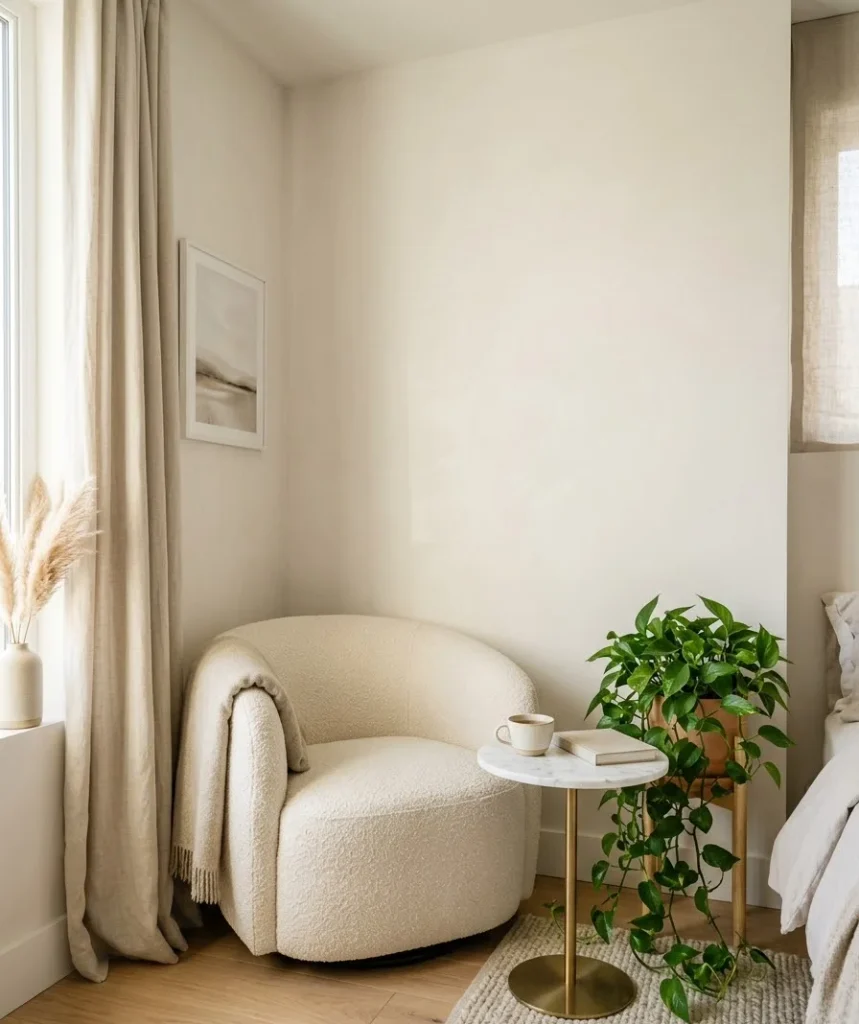
2. A round barrel chair in the corner
Curved backs eat corners better than square ones. The rounded shape softens a boxy room and gives your eye somewhere to rest.
IMO this is the single most flattering chair shape for photos.
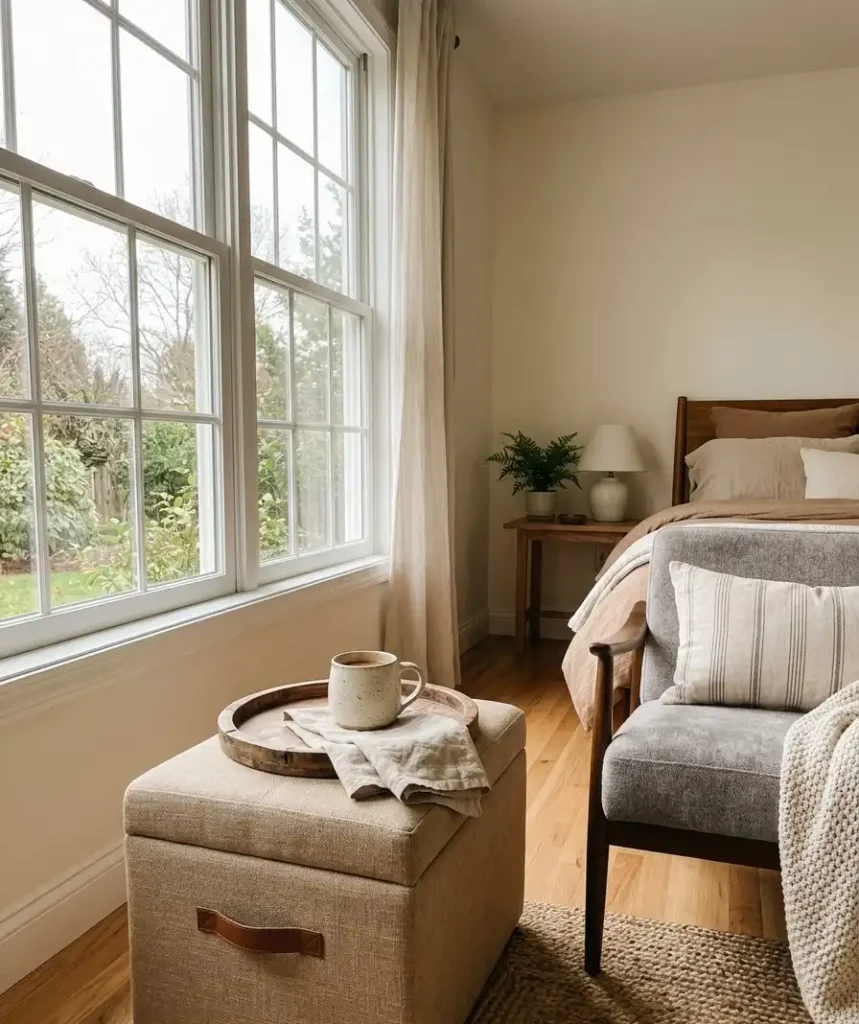
3. Ottoman plus tray
An ottoman is a footrest, a seat for a friend, and a coffee table if you drop a tray on it.
Three jobs, one 20-inch cube. Get one with storage inside and your spare blankets have a home.
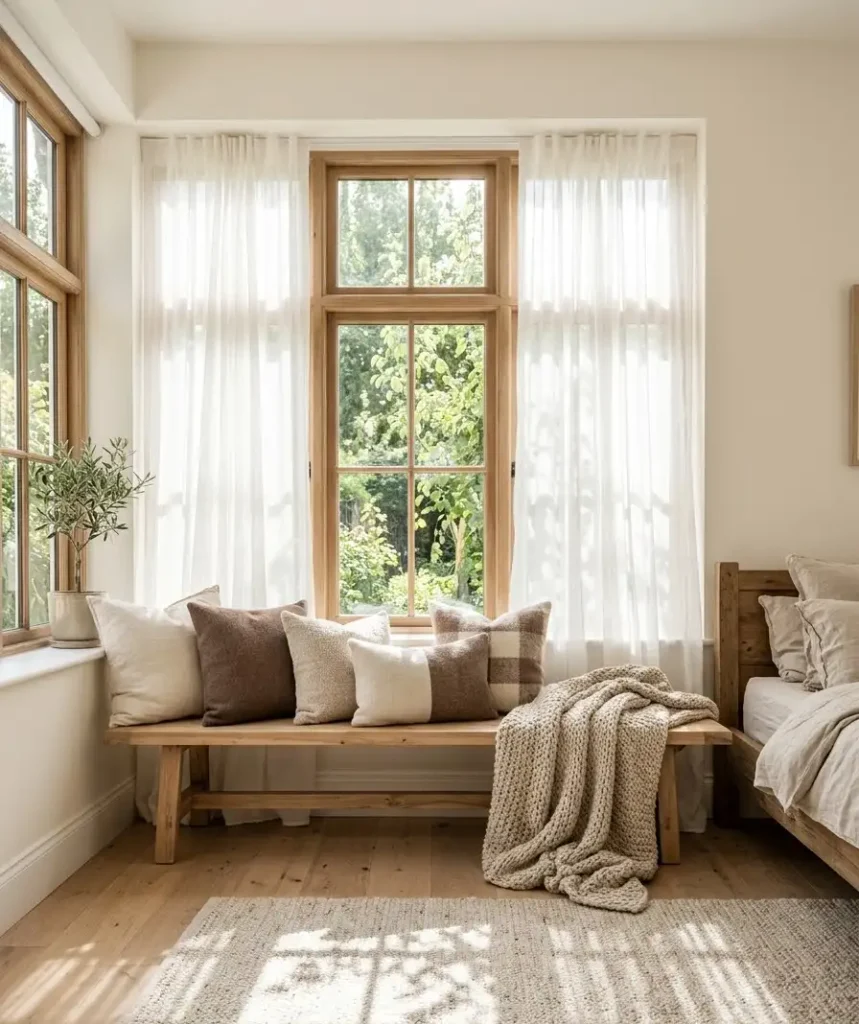
4. A window seat, even a fake one
No built-in? Push a low bench or a storage cabinet against the window and pile on cushions.
I used an IKEA shoe bench for this and nobody ever guessed.
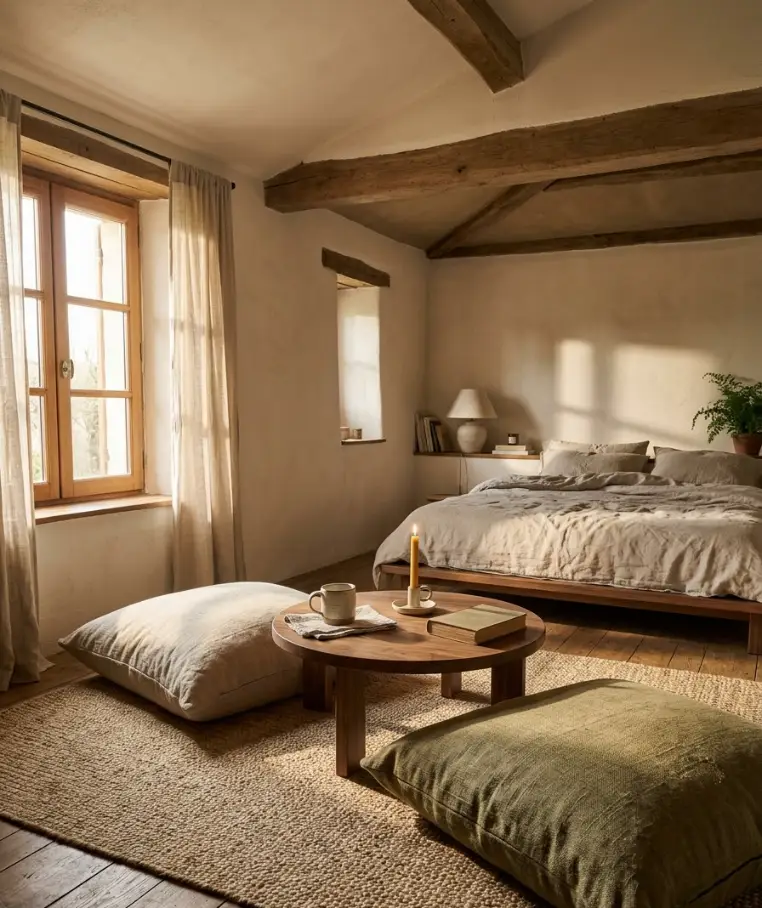
5. Floor cushions and a low table
Cheapest option on the list. Two large floor cushions, a rug, a 12-inch table.
Works beautifully in rooms with low ceilings because everything sits below eye level and the walls feel taller.
6. The papasan chair
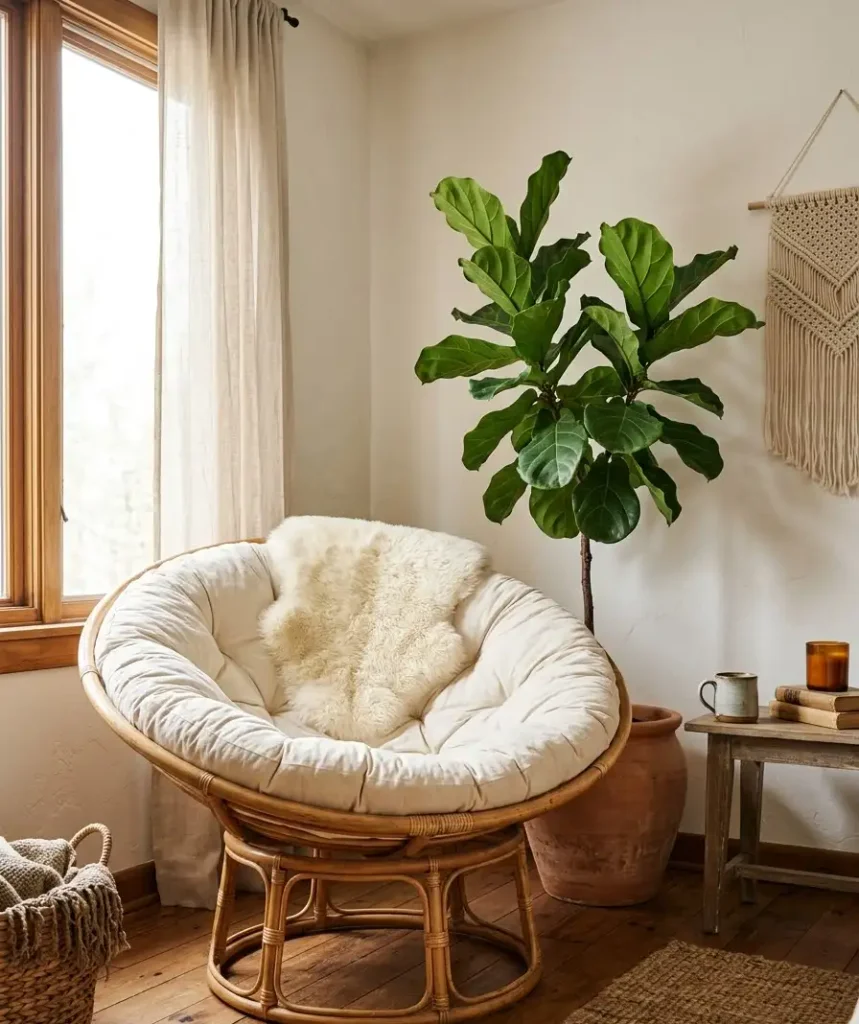
Big, round, slightly ridiculous, extremely comfortable. It swallows a corner but gives you the deepest sink-in seat of anything here.
Best in rooms with at least one clear 36-inch square.
7. A bench at the foot of the bed
Perfect when your corners are gone but the bed has breathing room behind it.
Great for sitting to put shoes on, which sounds boring until you’re 40. Look for one 6 to 8 inches narrower than your bed frame so it doesn’t visually widen the bed, and keep it under 20 inches deep.
Upholstered top if you want comfort, solid wood if you want it to survive being stood on while you hang curtains.

8. Two poufs instead of one chair
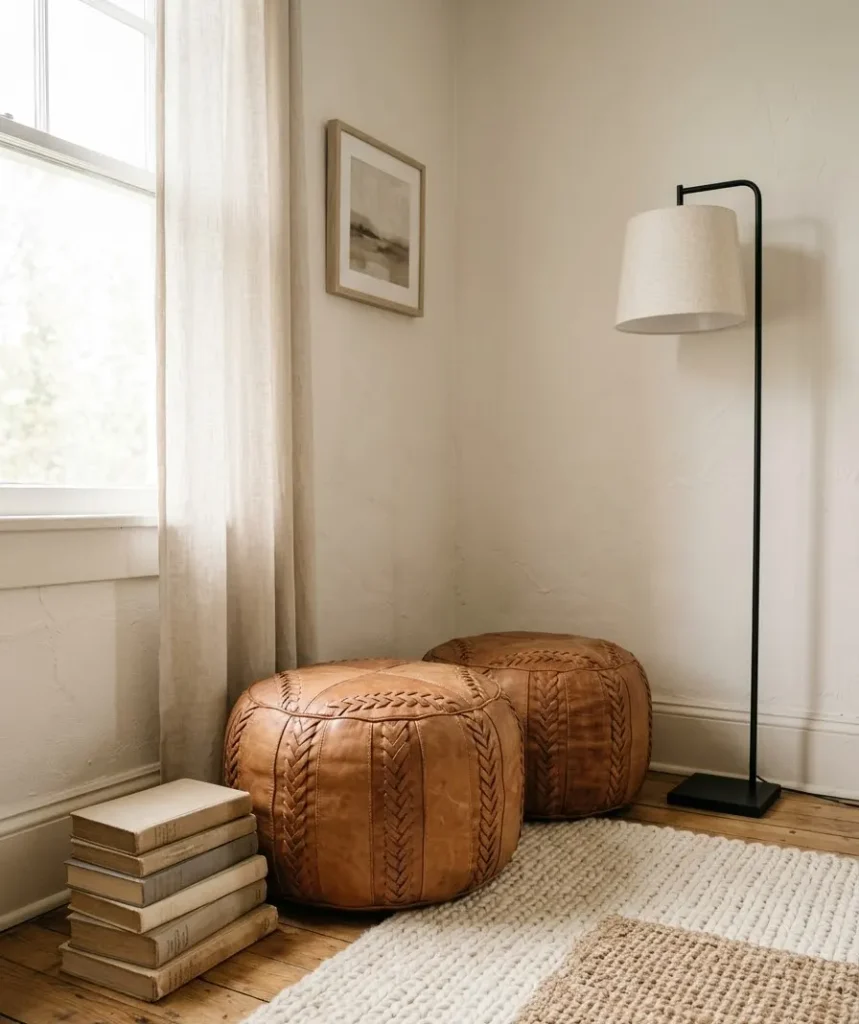
Movable, light, stackable in a pinch. Push them together for a lounger or split them apart when someone visits.
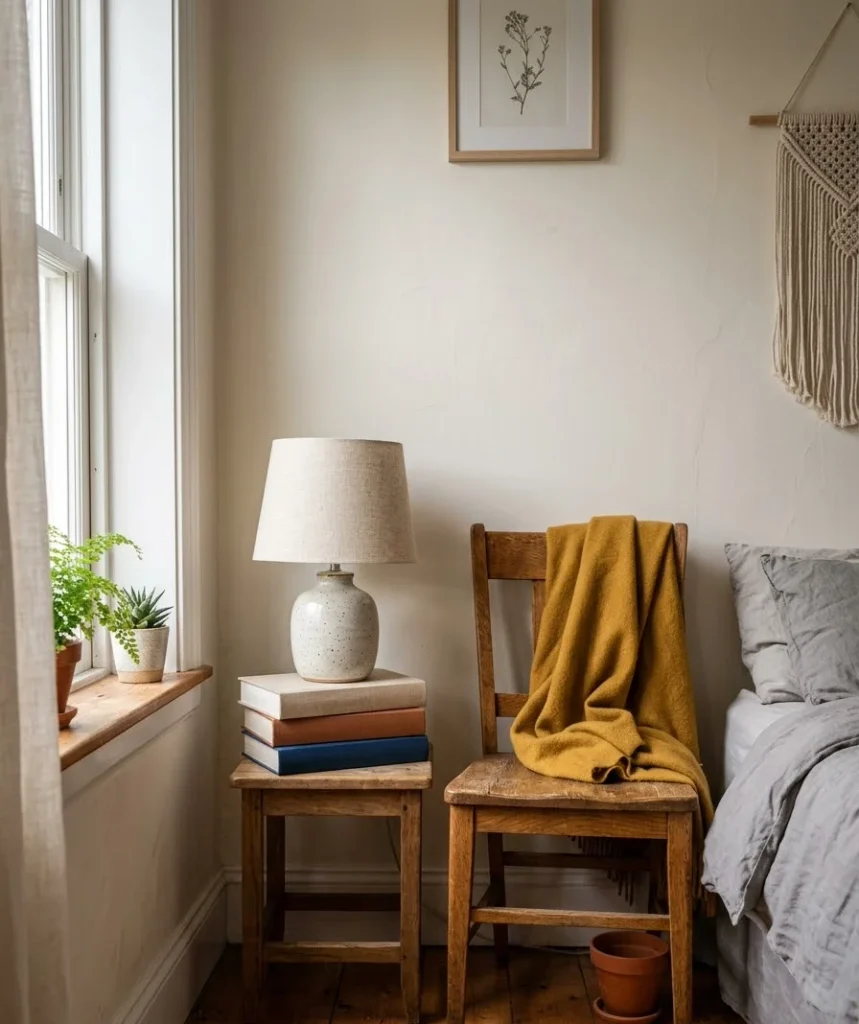
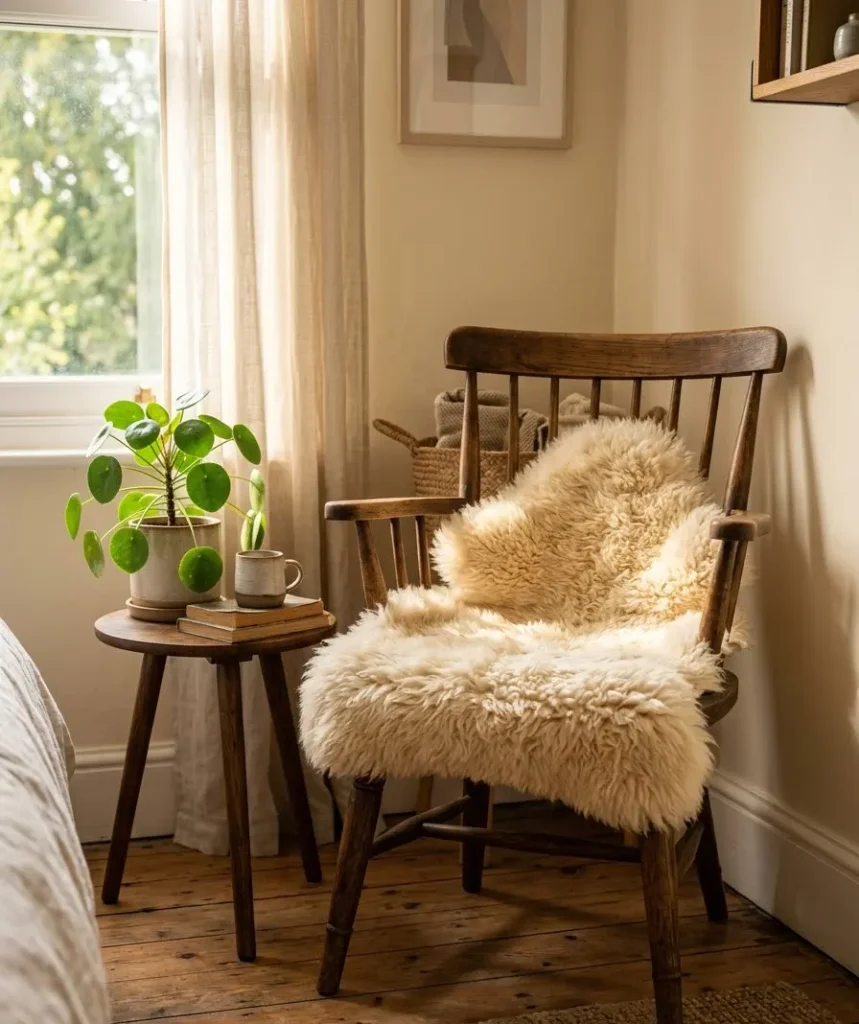
9. A vintage wooden chair with a sheepskin
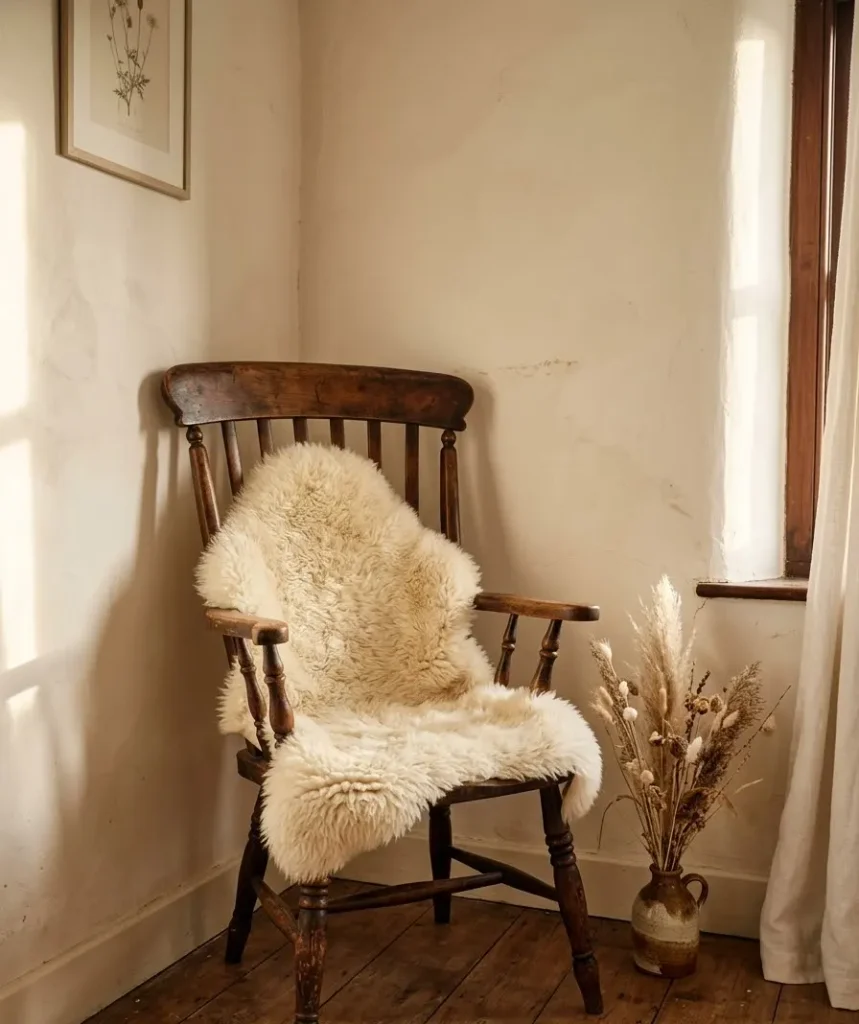
My personal favourite look. A plain spindle chair costs almost nothing at a car boot sale, and a sheepskin over the back does all the work. Warm, textural, and it never looks like a showroom.
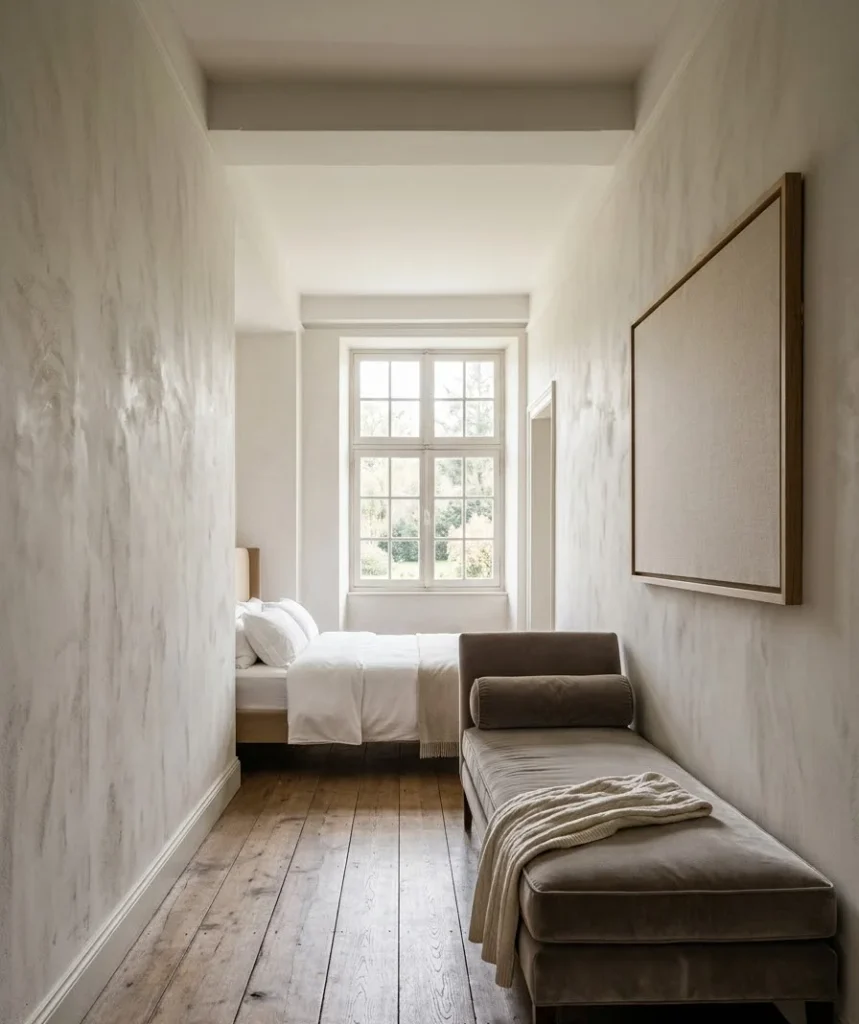
10. A narrow chaise against the long wall
Only if your room is long and thin. A 22-inch deep chaise along the wall reads as a proper lounge spot without stealing walking space.
Wow, the difference this makes in a narrow room.
Lighting is the part everyone gets wrong
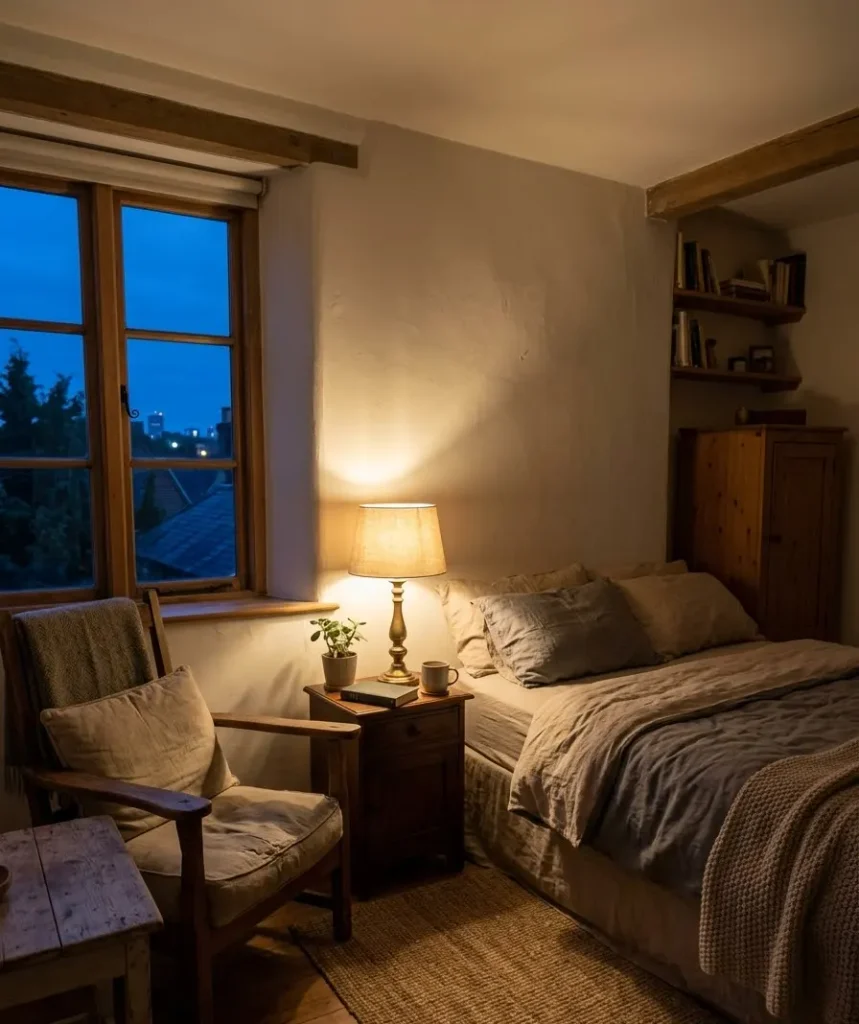
Here’s the honest truth about every dreamy bedroom nook you’ve saved: it’s 70% lighting.
Overhead lights kill the mood instantly. You need light at sitting height, coming from the side.
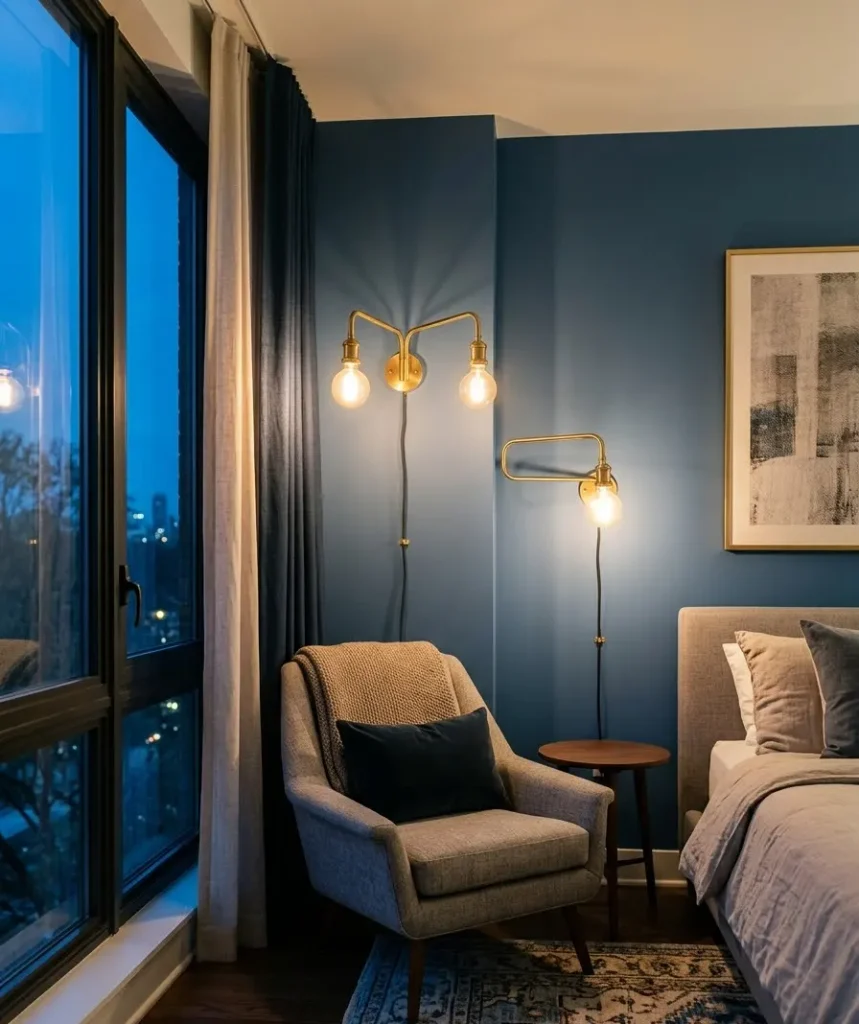
11. Plug-in swing-arm wall sconces
Renter-friendly, no electrician, and they free up your side table completely. Command hooks hide the cord along the wall edge.
This one change made my corner look 3 times more expensive.
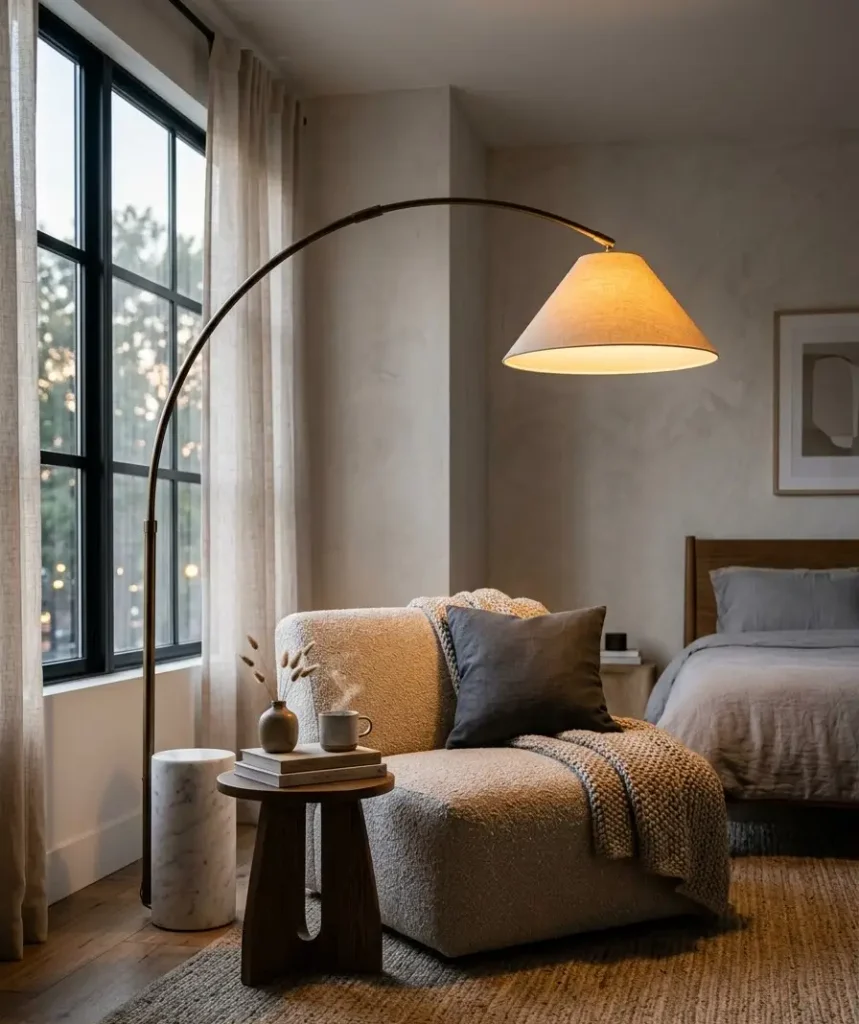
12. An arc floor lamp
Curves the light over your chair without a table underneath. Base tucks behind the chair, so it costs you roughly zero floor space.
13. A small lamp on a stack of books
When your side table is too tiny for a real lamp base, raise it. Three hardbacks under a compact lamp gets the bulb up near shoulder height where it flatters everything.
14. Warm bulbs, always
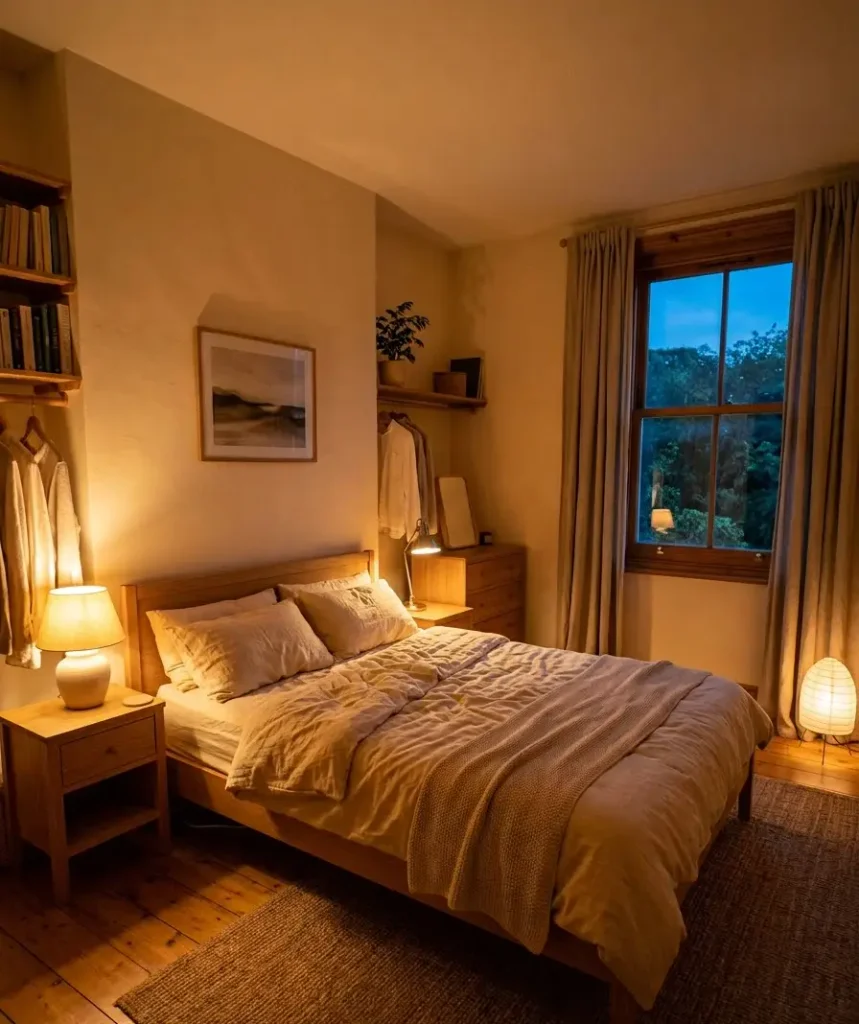
Aim for 2200K to 2700K. If you’re curious why numbers matter, color temperature explains it properly. Anything above 3000K makes your cozy corner look like a dentist’s waiting room.
15. A dimmer on everything
Smart bulbs or a plug-in dimmer. Being able to drop to 20% brightness at 10pm is the difference between a sitting area and a reading desk.
16. Candle cluster on the side table
Three different heights, same colour. Battery ones if you fall asleep easily, and let’s be honest, you do.

17. String lights along the curtain rod
Slightly obvious, still works. Keep them warm white and keep them thin. Fat multicoloured lights belong at Christmas.
Textiles: how the corner actually gets cozy
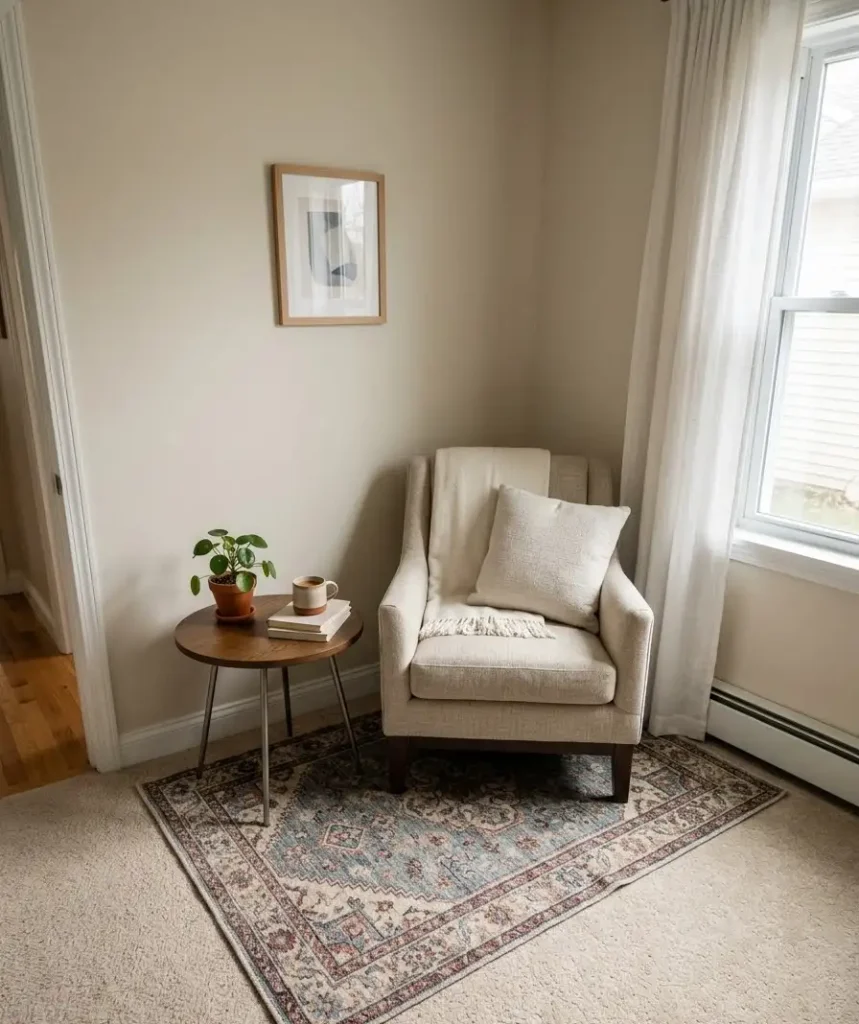
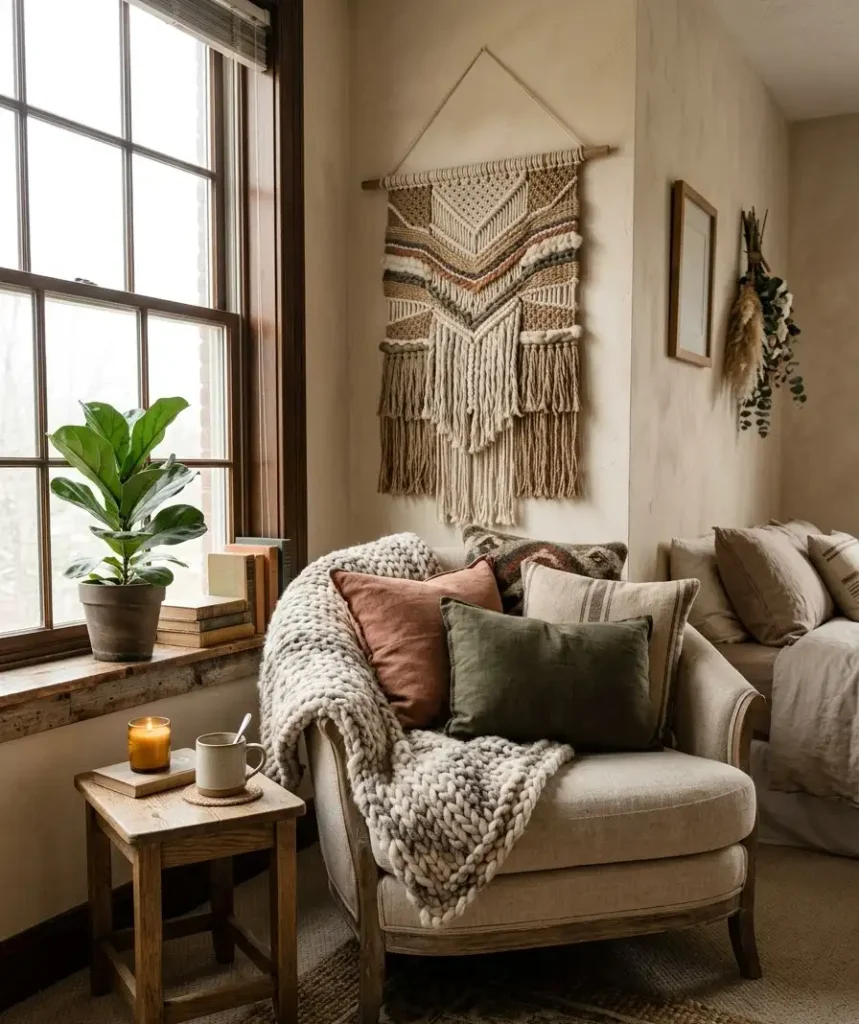
Hard surfaces bounce sound and light. Soft ones absorb both. A small bedroom sitting area with no textiles feels like a hotel lobby, and not the good kind.
18. A small rug to zone the corner
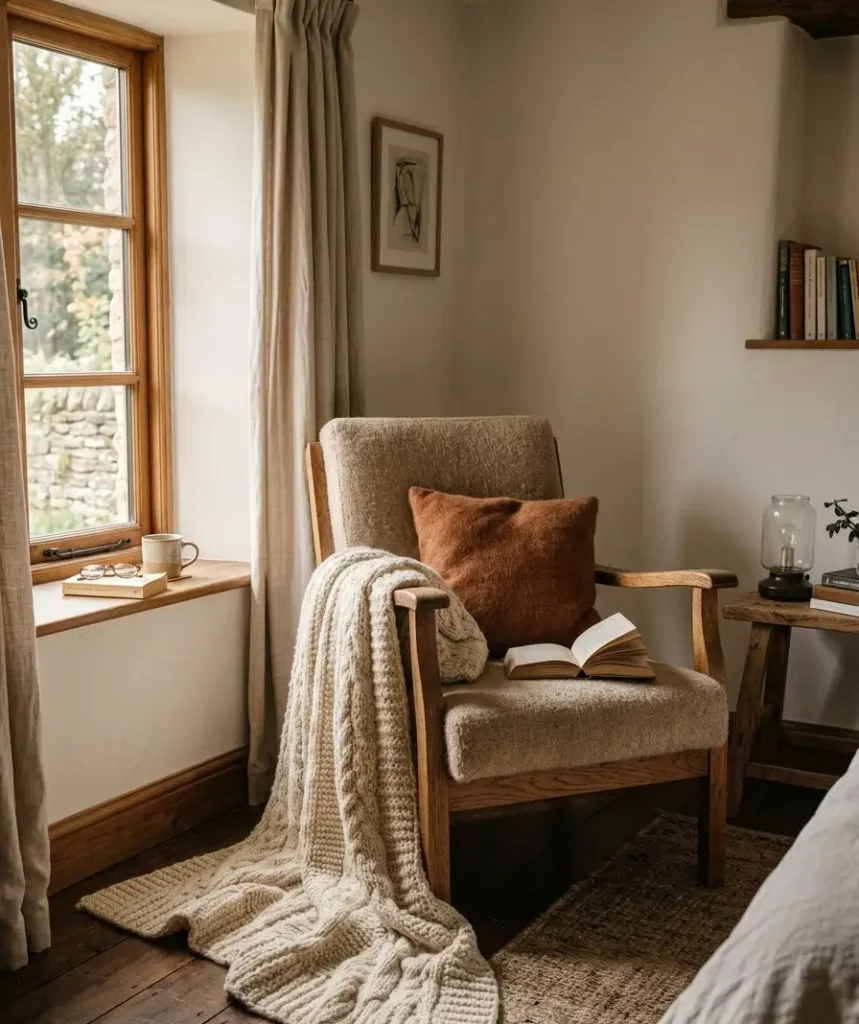
This is the trick that makes a chair look intentional instead of abandoned.
A 3×5 rug under the chair’s front legs draws a border around the space. Layer it over carpet if you’ve got beige rental carpet you hate.
19. One throw, draped, never folded
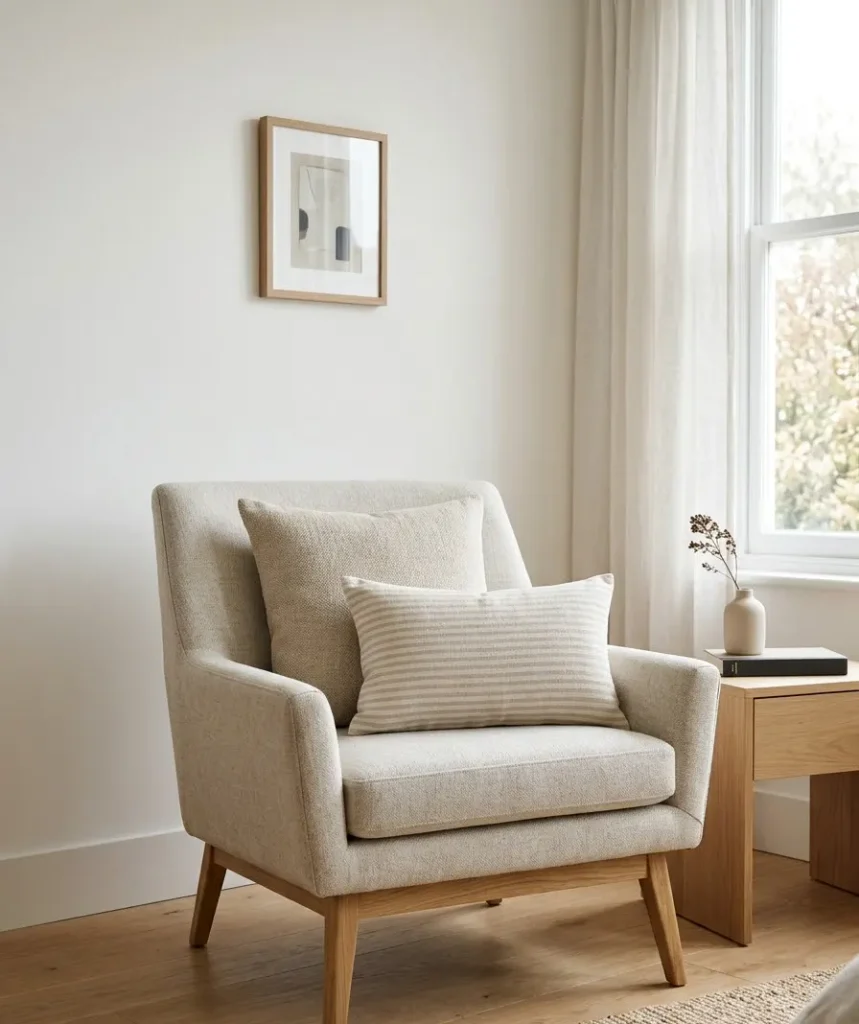
Fold it neatly and it looks like a store display. Drape it over one arm so it falls unevenly. Chunky knit, waffle weave, or mohair if you’re feeling rich.
20. Exactly 2 cushions
Two. A lumbar plus a square. I’ve tried 4 and you spend your life relocating them to the floor.
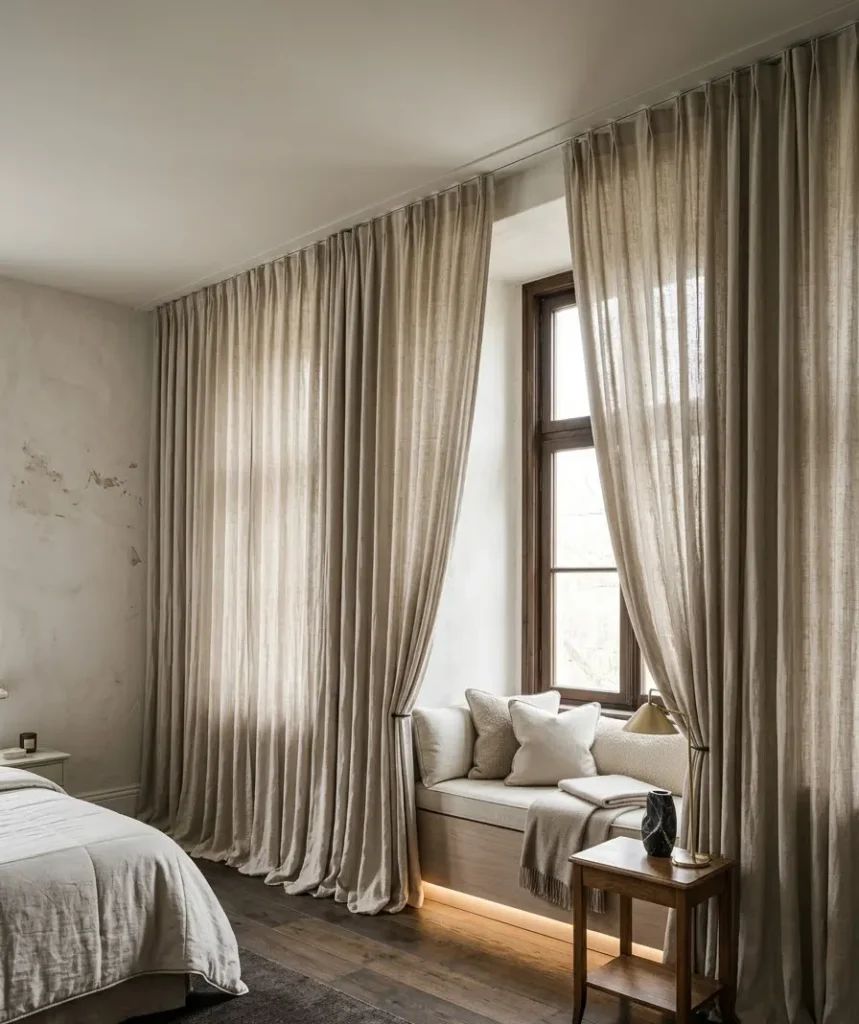
21. Curtains hung high and wide
Mount the rod 6 inches below the ceiling and extend it 8 inches past the window frame. Costs the same as hanging them badly and makes the wall look taller.
22. Sheepskin on the seat
Real or fake, doesn’t matter. It adds height, texture, and warmth to any hard chair.
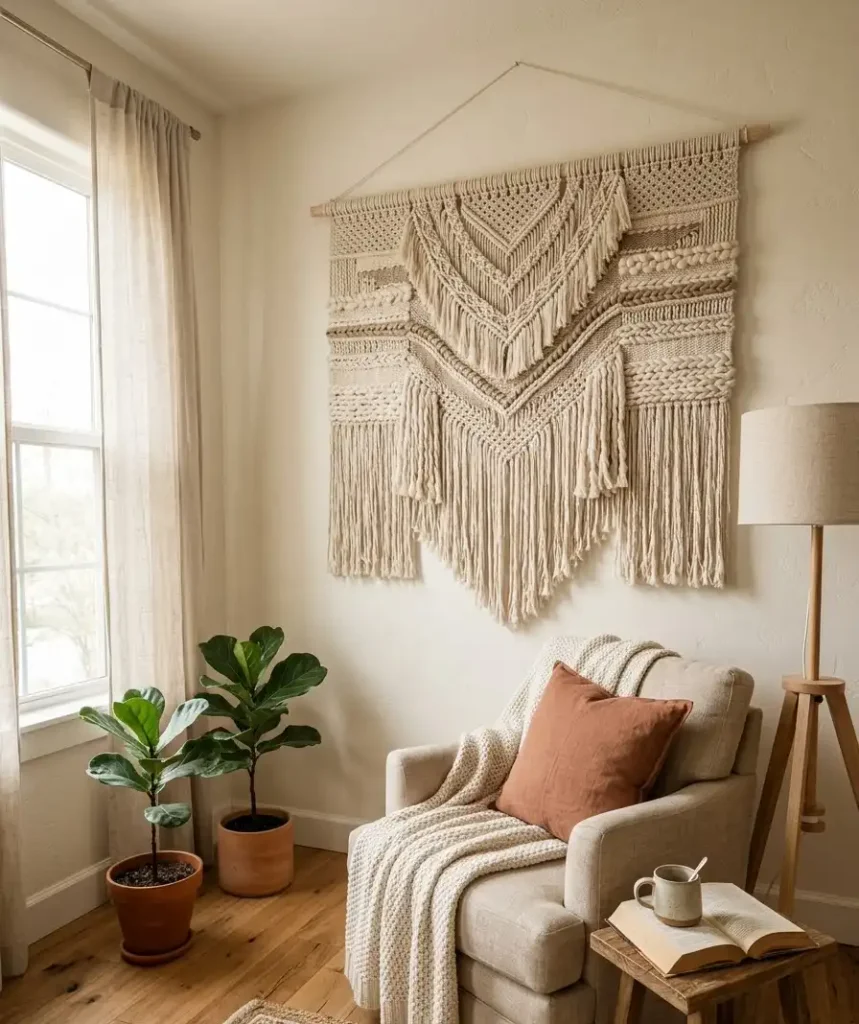
23. Something soft on the wall behind
A woven hanging, a quilt, a fabric-mounted panel. It frames the chair and kills echo. My macramé phase was embarrassing but the corner looked incredible.
Tiny tables and storage that pull double duty
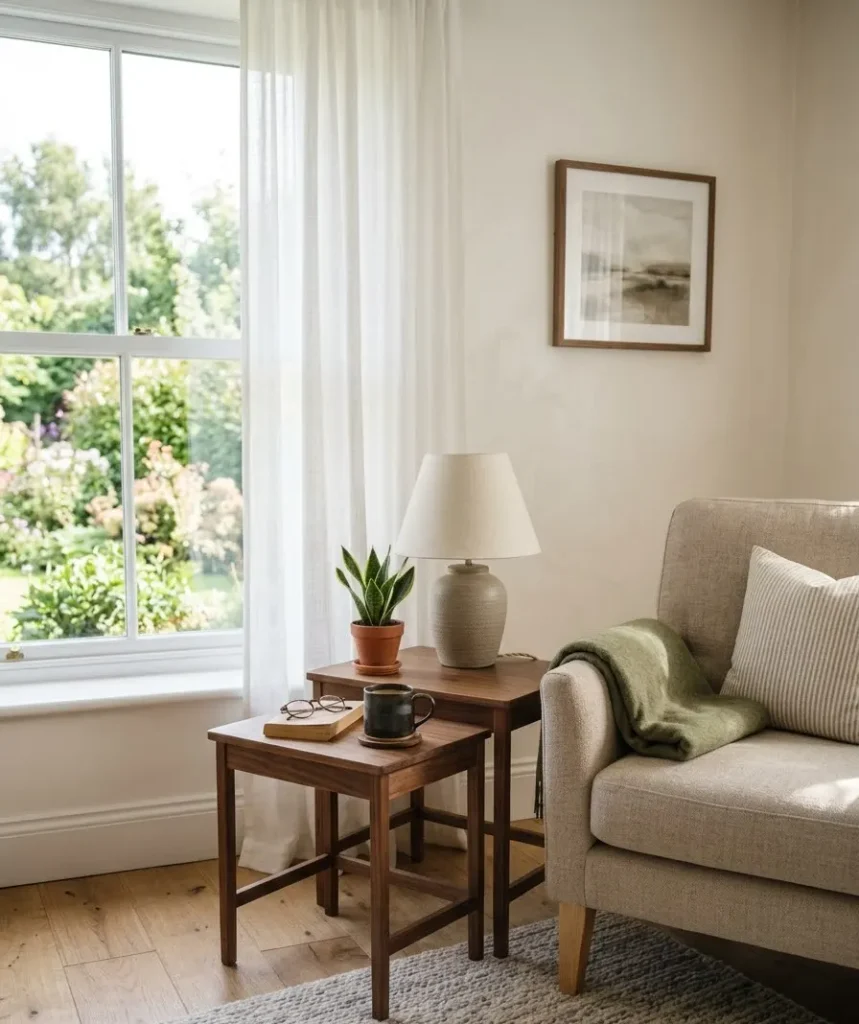
24. Nesting side tables
Two tables in one footprint. Pull the smaller one out when you have a mug, a book, and a snack going at once.
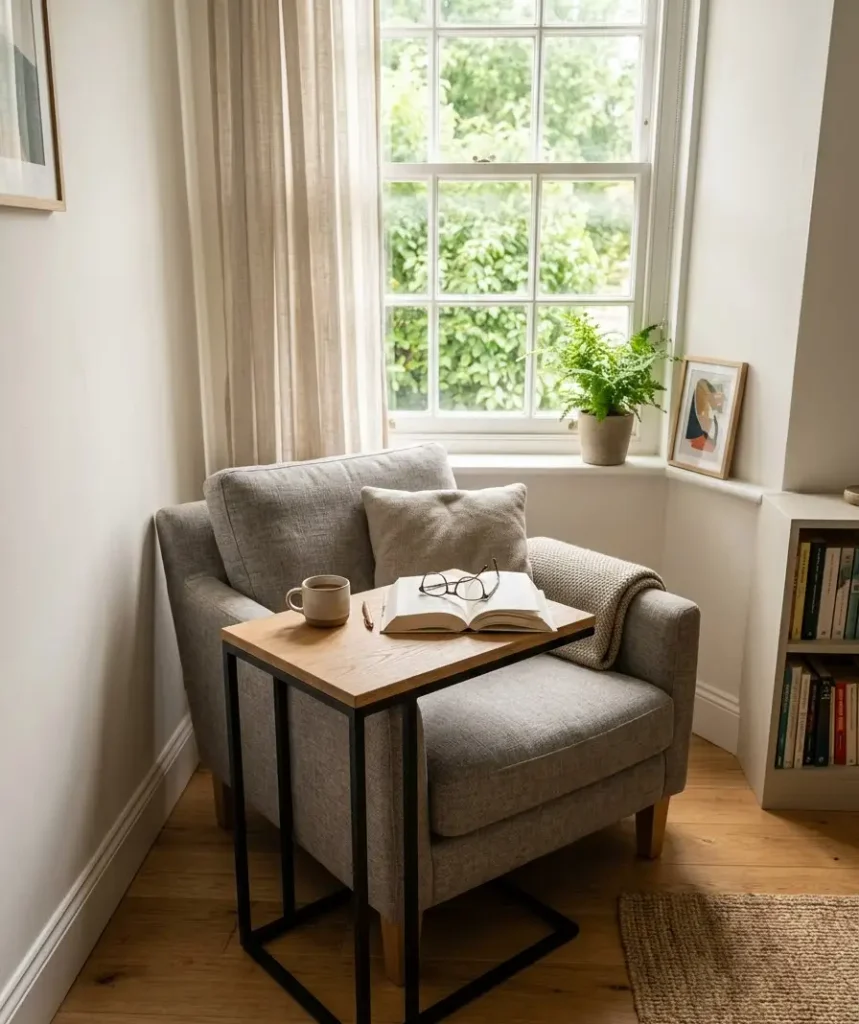
25. A C-table that slides under the chair
The base tucks beneath the seat and the top hovers over your lap. Best £40 I’ve spent on furniture, no contest.
26. A stool as a side table
Wooden stools are shorter than most side tables, which puts your mug at natural arm height. And you can sit on it when someone comes over.
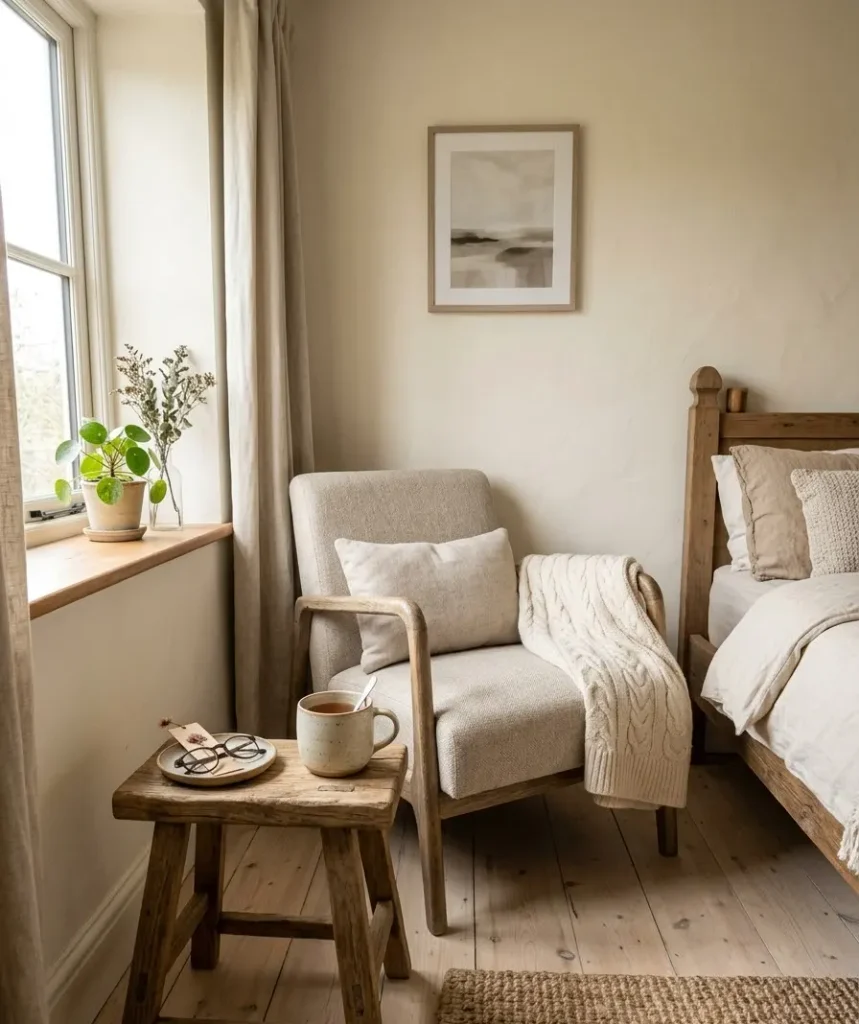
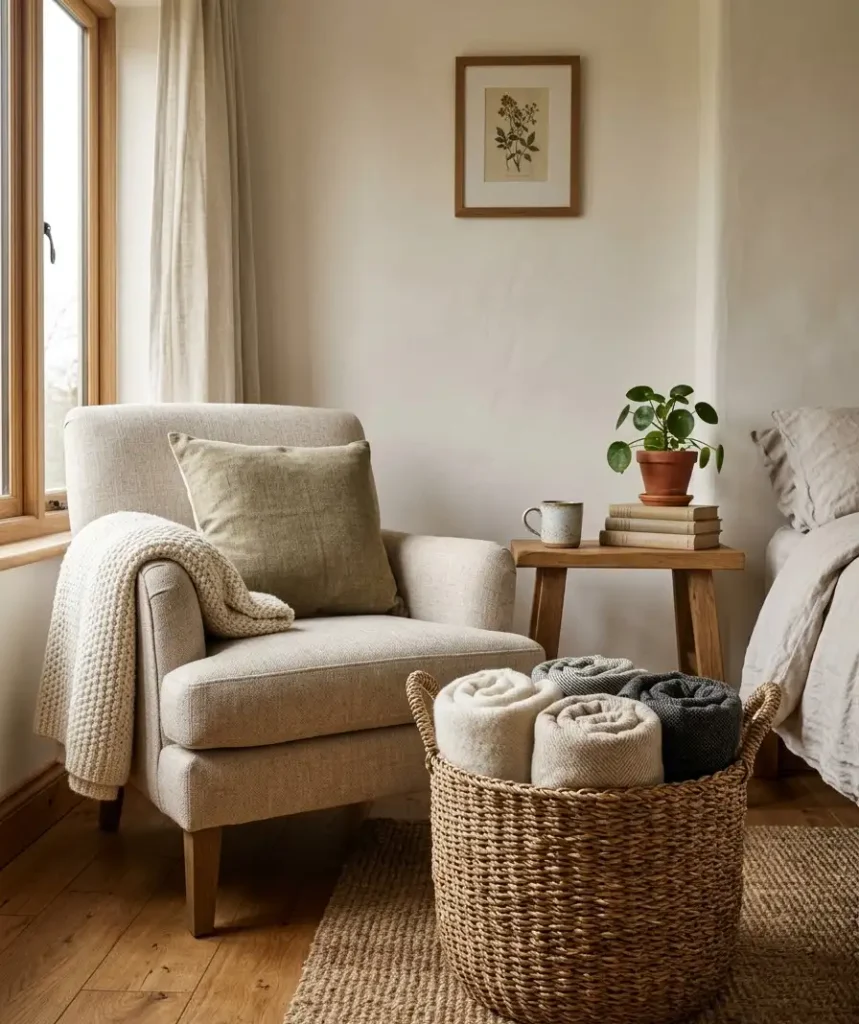
27. A basket for blankets
Round, woven, roughly 16 inches across. It hides the blanket chaos and adds one more natural texture.
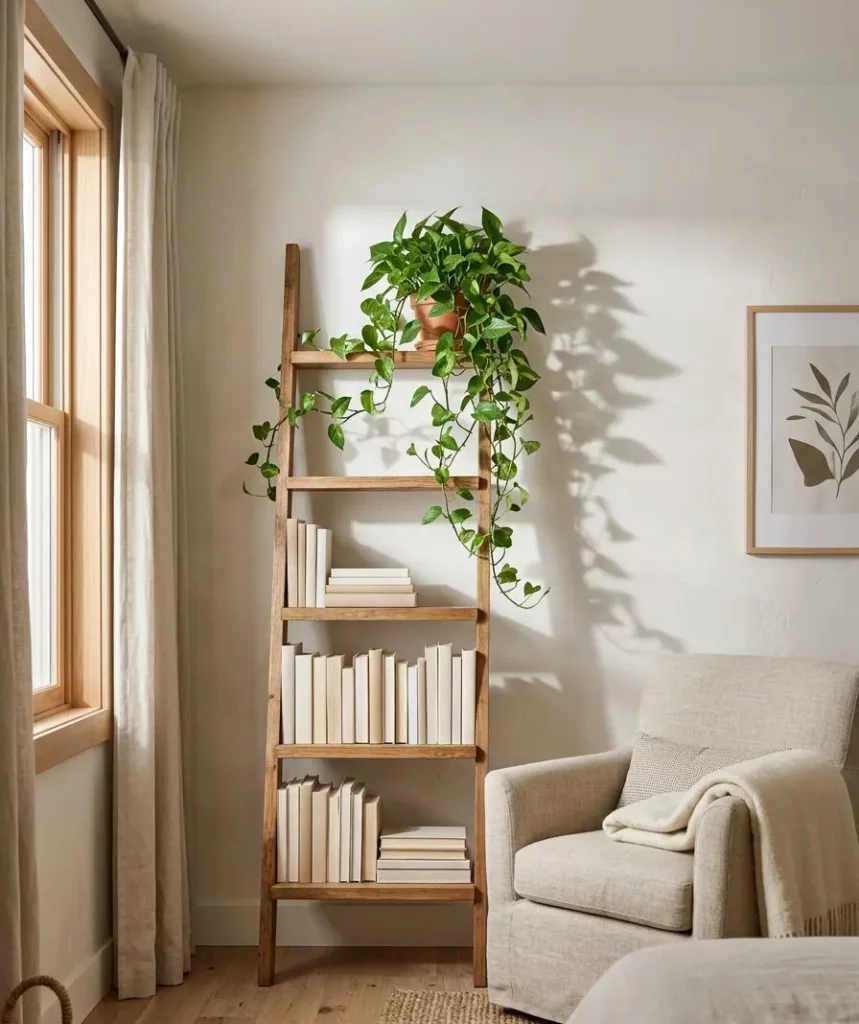
28. A ladder shelf in the dead corner
Narrow at the base, wide at the top, which is exactly the shape a small corner wants. Books on the bottom, plant on the top.
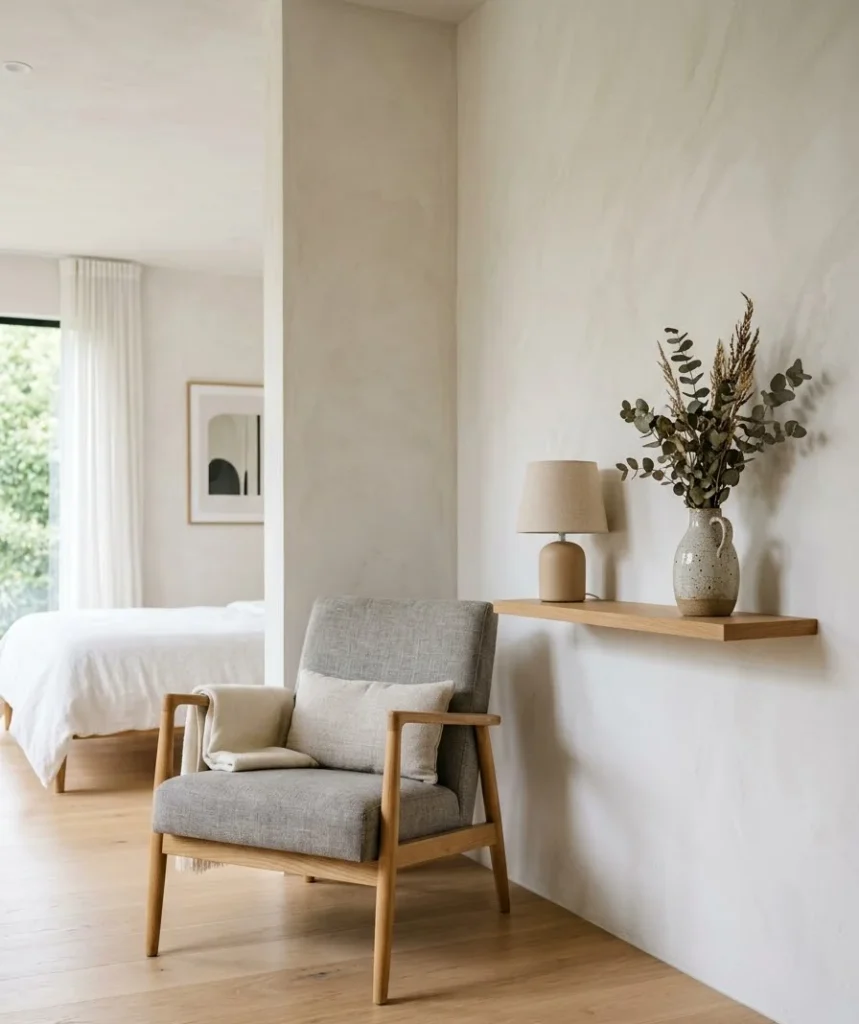
29. A floating shelf instead of a table
Mount it at 24 inches high beside the chair. Zero floor contact, which makes the room read bigger.
Renters, use the heavy-duty adhesive shelves and keep the weight under 5 pounds.
Layout tricks for awkward rooms
Random thought while we’re here: I have never once regretted buying a secondhand chair, and I have regretted 3 out of 4 new ones. Something about the wobbly ones having already survived 30 years. Anyway.
30. Angle the chair about 15 degrees
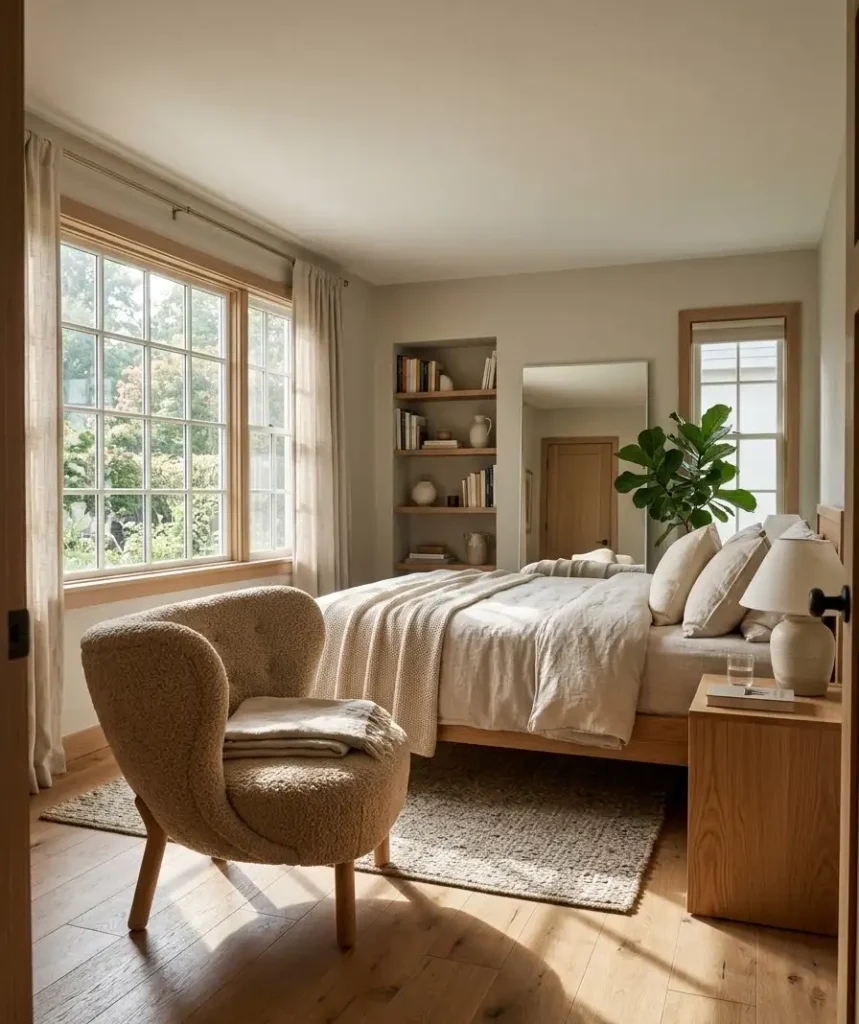
Square-on furniture looks like a waiting room. Turning the chair slightly toward the window or bed makes the corner feel arranged by a person.
31. Use the space behind the door
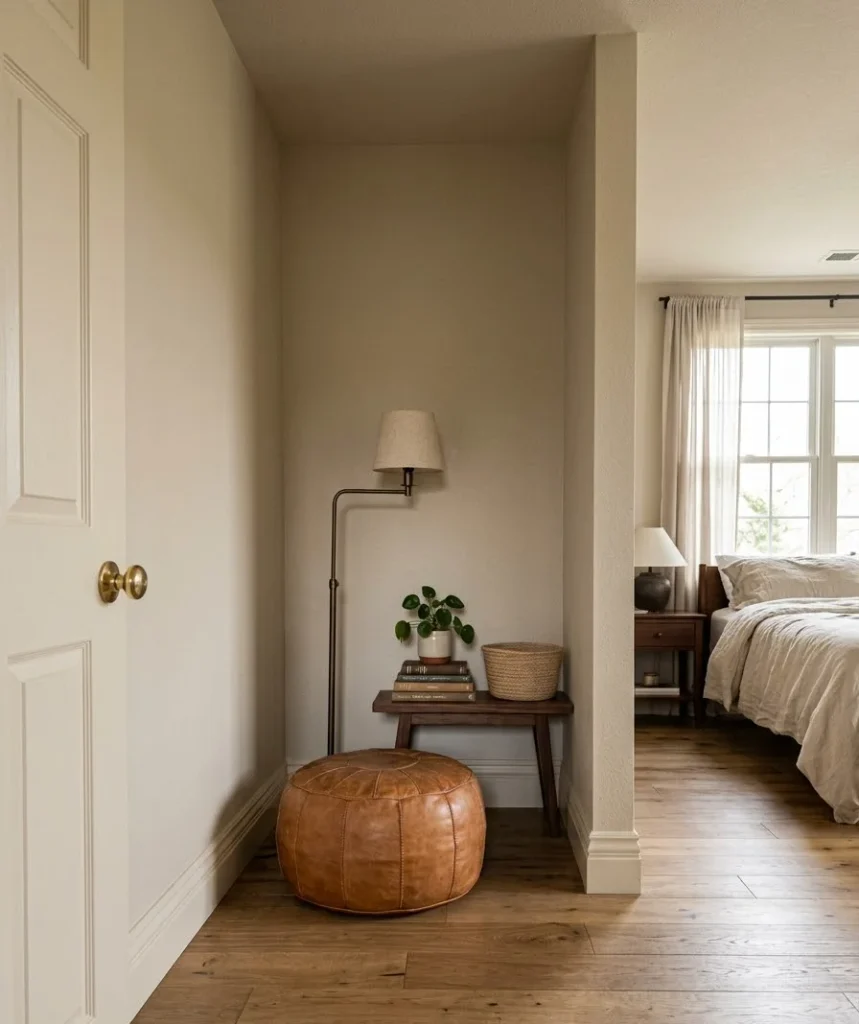
The dead zone behind an open bedroom door fits a pouf and a floor lamp in most rooms. Nobody looks there. Nobody ever has.
32. Float the bed off the wall
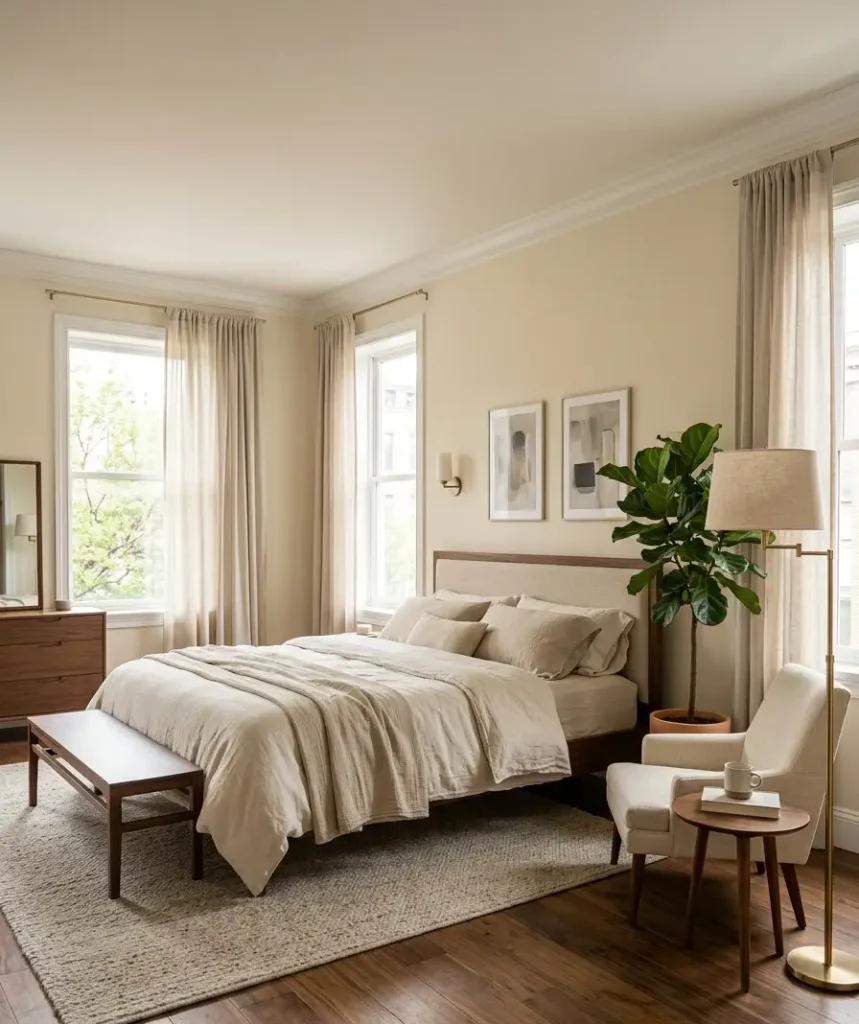
If your room allows even 12 inches behind the headboard, pulling the bed forward frees a whole corner. Sounds wasteful, works surprisingly often.
33. Convert a closet into an alcove

Remove the doors, paint the inside a deeper shade than the room, drop a chair and a sconce inside.
This is the one that goes viral every time I post it. Landlords generally don’t mind if you keep the doors in the garage.
34. Steal the under-window strip
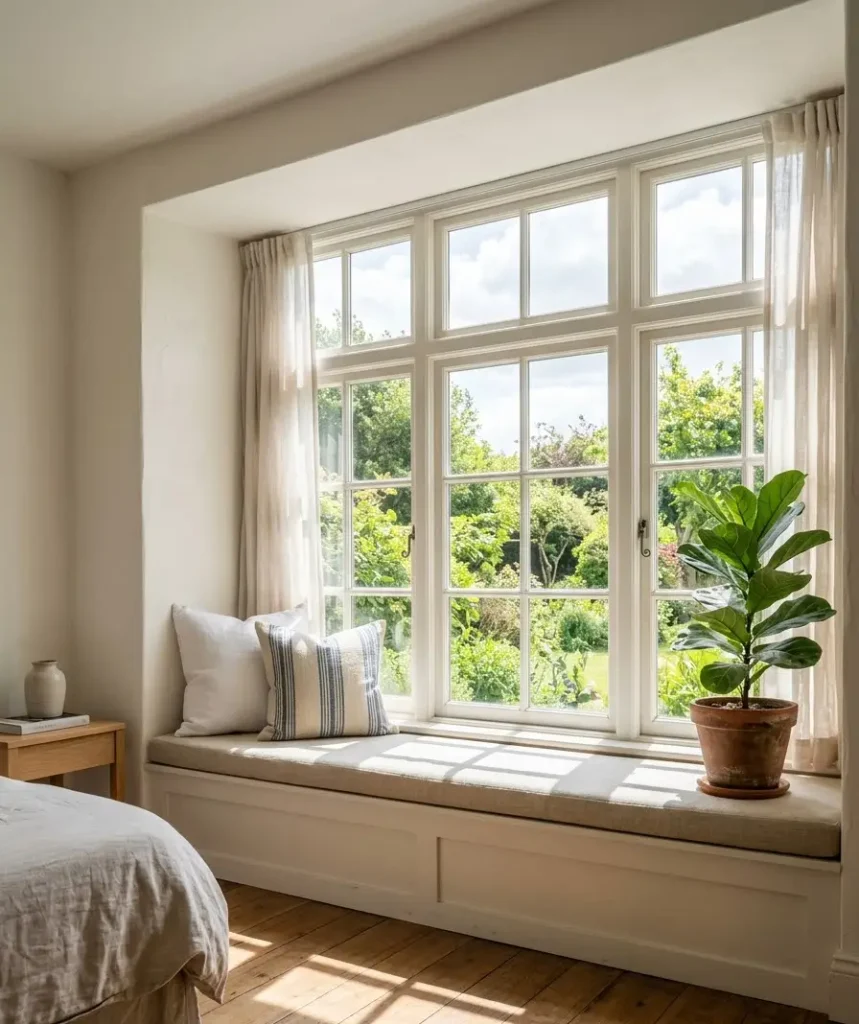
Windows usually have 20 to 30 inches of usable depth below them that furniture never claims. A low bench there gets natural light and doesn’t block sightlines.
Styling it so it actually looks good in photos
Pinterest is brutal about this. A well-designed corner shot badly gets scrolled past.
A mediocre corner shot at the right hour gets saved 900 times. FYI, that’s less about your camera and more about when you press the button.
35. Two neutrals plus one accent
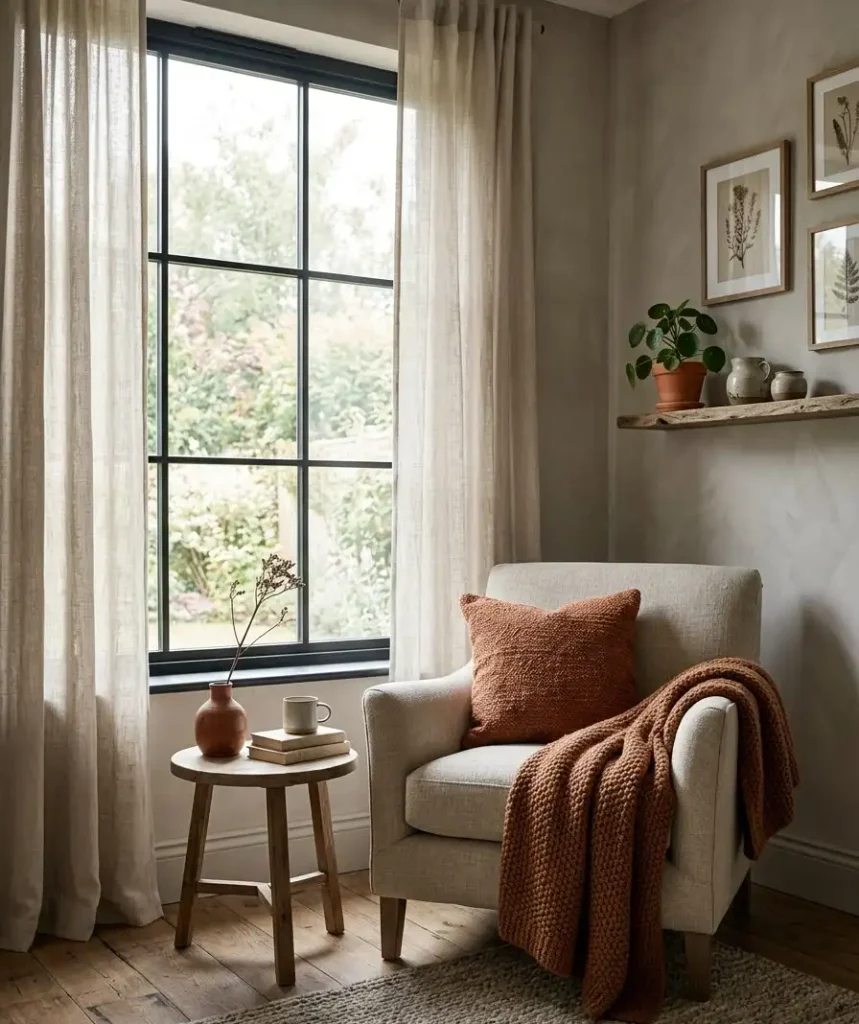
Pick your base (cream, oatmeal, warm grey), your wood tone, and one colour that repeats at least twice. Repetition is what makes a corner look styled.
36. Plants at 2 heights
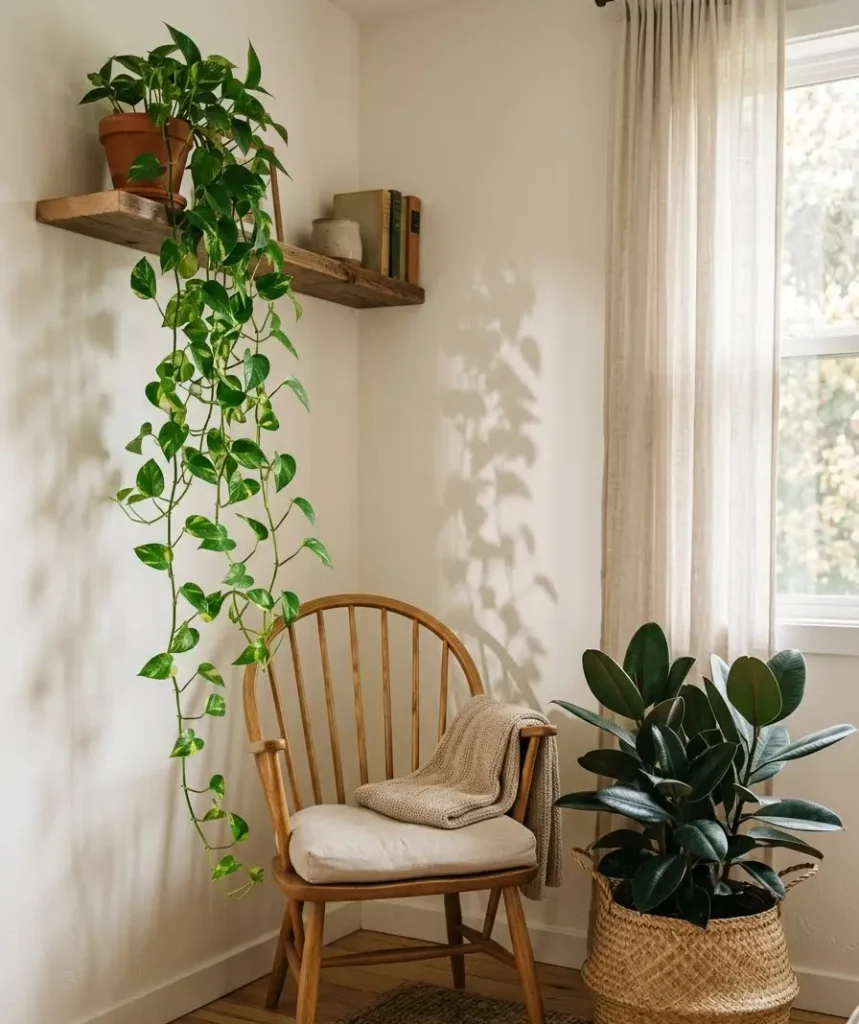
One trailing plant up high, one leafy thing at floor level. Pothos and a rubber plant if you kill things. I have killed 11 plants and both of those survived me.
37. Shoot in the last hour of daylight, lamp on

Turn the lamp on even though it’s still light outside. That mix of cool daylight and warm bulb is exactly the glow every saved pin has.
Shoot from the doorway at chest height, slightly wide, so the corner has context.
Quick styling checklist before you photograph:
- Clear every cable you can see
- One book open, one closed
- Blanket draped, cushions dented (a flat cushion looks fake)
- Lamp on, overhead off
- Shoot 12 frames, keep 1
Colour choices that make a tiny corner read bigger
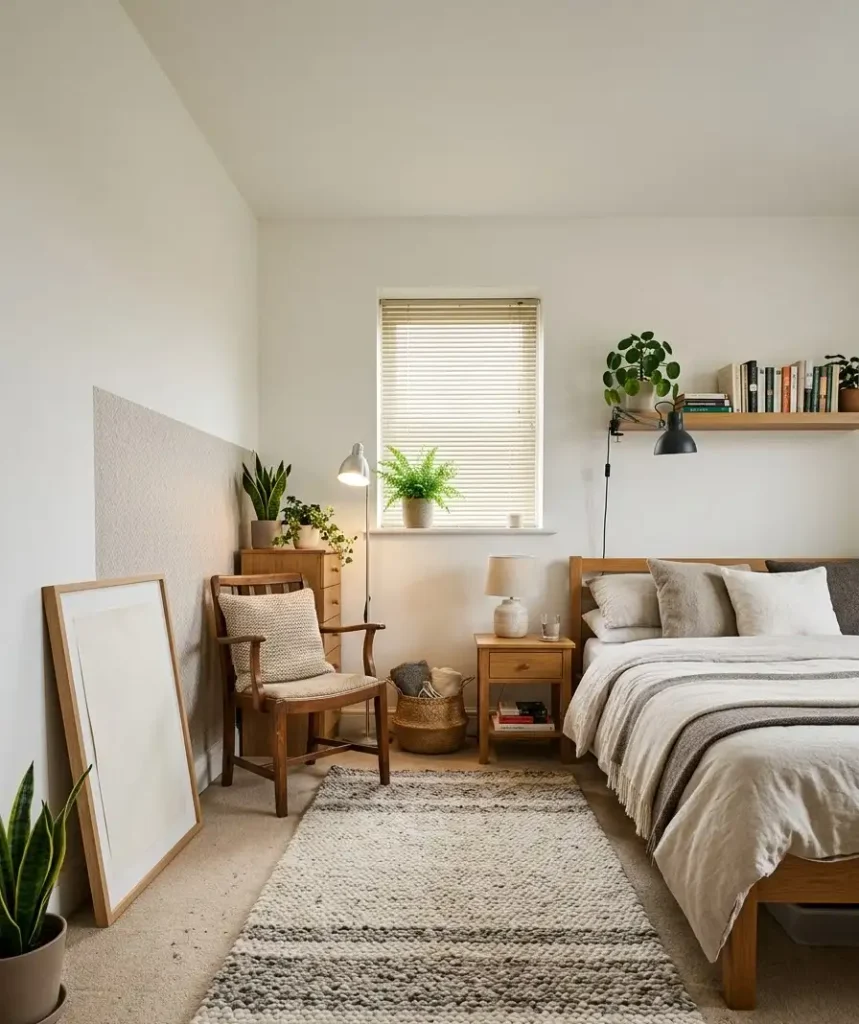
Everyone tells you to paint small rooms white. I did that in 2 flats and both times the corner looked like a spare room nobody had gotten around to.
What works better is contrast control. Keep the walls, the curtains, and the larger furniture within a few shades of each other, then let the chair and the textiles carry the interest.
Your eye stops registering where the wall ends and the furniture starts, so the room feels continuous.
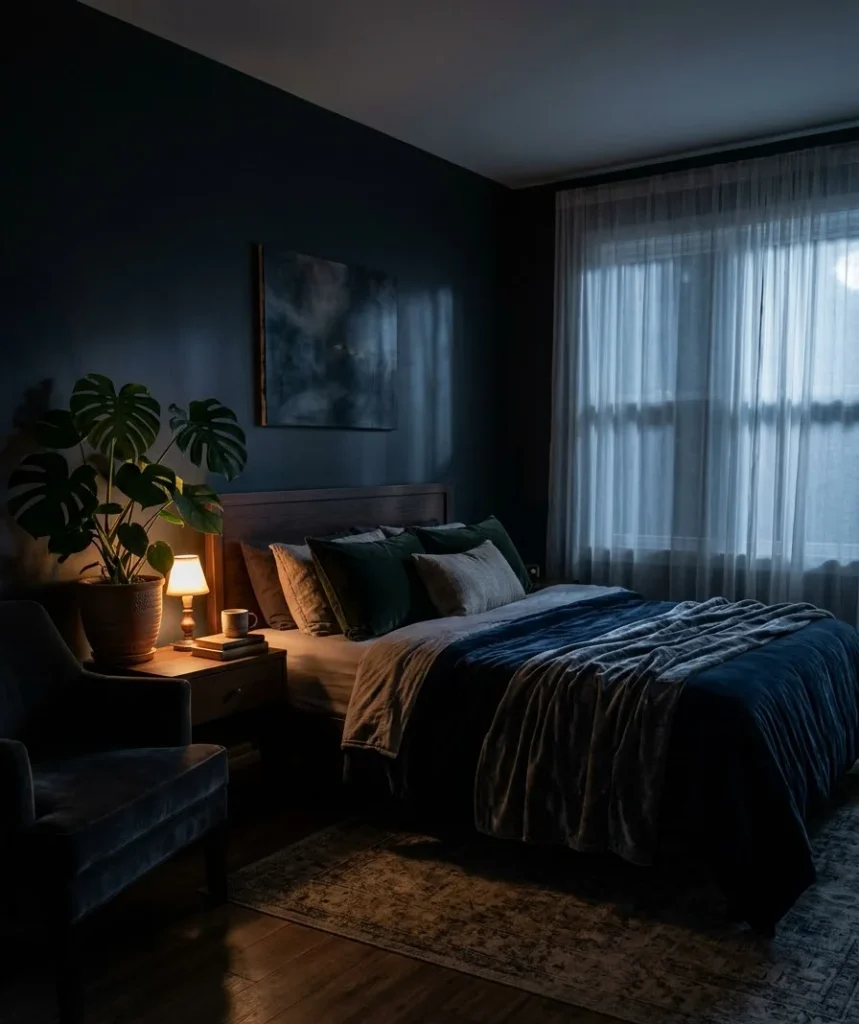
Deeper colours work too, as long as you commit. A clay, olive, or muddy blue corner with warm lighting feels like a snug.
The same colour under a cold ceiling bulb feels like a basement, which is why point 14 matters so much.
A few things I’ve tested across 4 rooms:
- Painting the alcove or corner darker than the rest of the room makes the chair pop and costs about £15 in tester pots. My favourite cheap trick.
- Matching your curtain colour to your wall colour removes a visual break and stretches the wall sideways.
- Keeping wood tones within 2 shades of each other stops the corner looking like a furniture shop clearance shelf.
- One black element somewhere (lamp base, picture frame, a candle holder) sharpens the whole arrangement. Without it, neutral rooms go slightly mushy.
Does this mean you can’t have a hot pink chair? Of course not. Just let it be the only loud thing in the frame.
Sound, scent, and the parts that don’t photograph
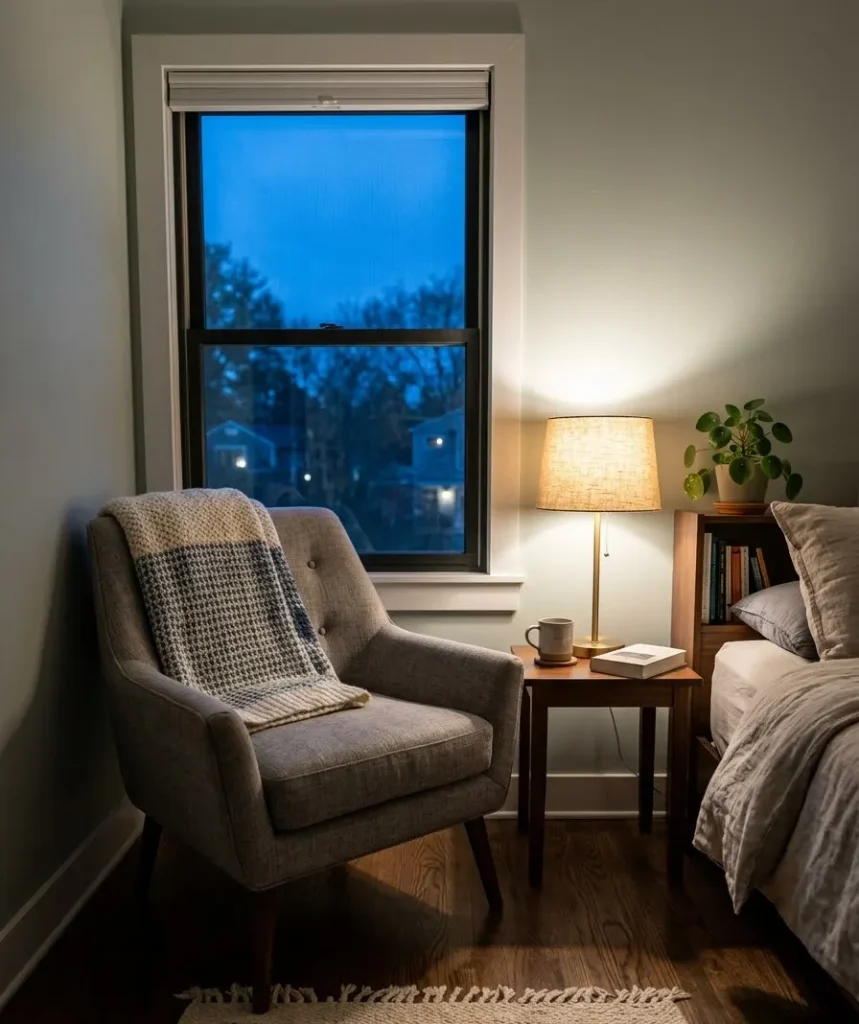
A corner can look right and still feel wrong. Usually that’s acoustics or smell, and neither one shows up in a photo.
Bare walls and hard floors bounce sound, which is why an empty room feels tense.
Curtains, a rug, and something soft on the wall behind the chair fix most of it.
I noticed the difference within a day of hanging thick curtains in my last bedroom, and I’d assumed that was interior-design folklore until it happened.
Scent is faster. A candle, a reed diffuser, or a small bowl of dried lavender near the chair gives your brain a cue that this spot means slowing down.
Sleep researchers keep finding links between calming scents and easier rest, and the Sleep Foundation’s bedroom environment hub has more on that if you want the science rather than my anecdotes.
Sound-wise, I keep a small bluetooth speaker behind the plant.
Low instrumental stuff, quiet enough that I stop noticing it after 5 minutes. That’s the whole setup and it cost £25.
Temperature is the last piece people forget. The corner nearest a window gets cold in winter, which is exactly when you want to use it.
A heavier curtain and a wool throw solve it. A space heater buzzing at your ankles does not, trust me.
Renter-friendly versions of every idea here

Roughly half the people who message me about this stuff can’t drill, paint, or change a single fitting. Fair enough. Here’s how each category translates.
For lighting, plug-in sconces and clamp lamps replace anything hardwired. Clamp lamps are underrated, by the way. £15, grips onto a shelf or a headboard, and directs light exactly where you want it.
For wall decor, use heavy-duty adhesive strips rated well above the weight of whatever you’re hanging, and check them every few months. Lean art against the wall on a shelf if you’d rather not risk it at all.
For colour, removable wallpaper on one small panel behind the chair gives you the dark-alcove look with no paint involved. I’ve used it twice and peeled it off with no damage both times.
For flooring, a rug over carpet is always allowed. Nobody has ever written a tenancy clause about rugs.
Mistakes I made so you don’t have to
Buying the chair first. Measure, tape, then buy. I’ve said it twice now because I’ve broken the rule twice.
Choosing a chair that’s too comfortable. My deep-seat armchair became a clothes mountain within 3 weeks because nobody actually sat in it upright. A firmer seat gets used more.
Skipping the rug. Without it, the chair floats. With it, the chair belongs. Cheapest fix on this entire list.
Overhead light only. I lived like that for a year and wondered why the room felt cold. If you take one thing from this article, add a lamp at sitting height.
Shopping-wise, I’ve had good luck mixing secondhand frames with one new piece.
If you want to compare small-scale options quickly, IKEA’s armchair and accent chair range is a reasonable size benchmark even if you buy elsewhere. Check the depth measurement, not the width. Depth is what wrecks small rooms.
FAQs
How small can a bedroom sitting area actually be? About 30 by 30 inches. That fits an armless chair and a small stool. Anything tighter and you’re better off with a floor cushion setup or a bench at the foot of the bed.
Will a chair make my small bedroom look cramped? Only if it’s the wrong shape. Legs you can see under, no arms, and a back below 36 inches tall all keep sightlines open. Bulky upholstered pieces with skirts are what shrink a room.
What’s the cheapest way to build a cozy corner? Secondhand chair, a small rug, a warm-bulb lamp, one throw. I’ve put that together for under $120 twice. The lamp is where I’d spend the most, since lighting carries the whole look.
Final thought
You don’t need a bigger bedroom. You need one chair, one lamp, and about 3 square feet you’ve been ignoring.
My camp-chair corner was ugly, and it still worked, because the point was having somewhere to sit that wasn’t the bed. Everything after that is styling.
So which corner of your room are you going to steal back this weekend, and what’s currently sitting in it that needs to go?