My first apartment had beige walls, beige carpet, and a landlord who treated every hole in the wall like a personal insult.
Not exactly cottage material. But three years and a security deposit later, I turned that box into something that actually felt like home, and I did it without blowing a paycheck on furniture I couldn’t return.
If you’ve been scrolling Pinterest for hours, saving pin after pin of gingham curtains and wildflowers in mason jars, you already know the look you want.
What you probably don’t know is how much of it you can pull off in a rental, on a real budget, without a single power tool. That’s what this is about.
I’m not a professional designer. I’m someone who’s moved four times in six years, tested a lot of cheap decor that looked cheap, and eventually figured out what actually works.
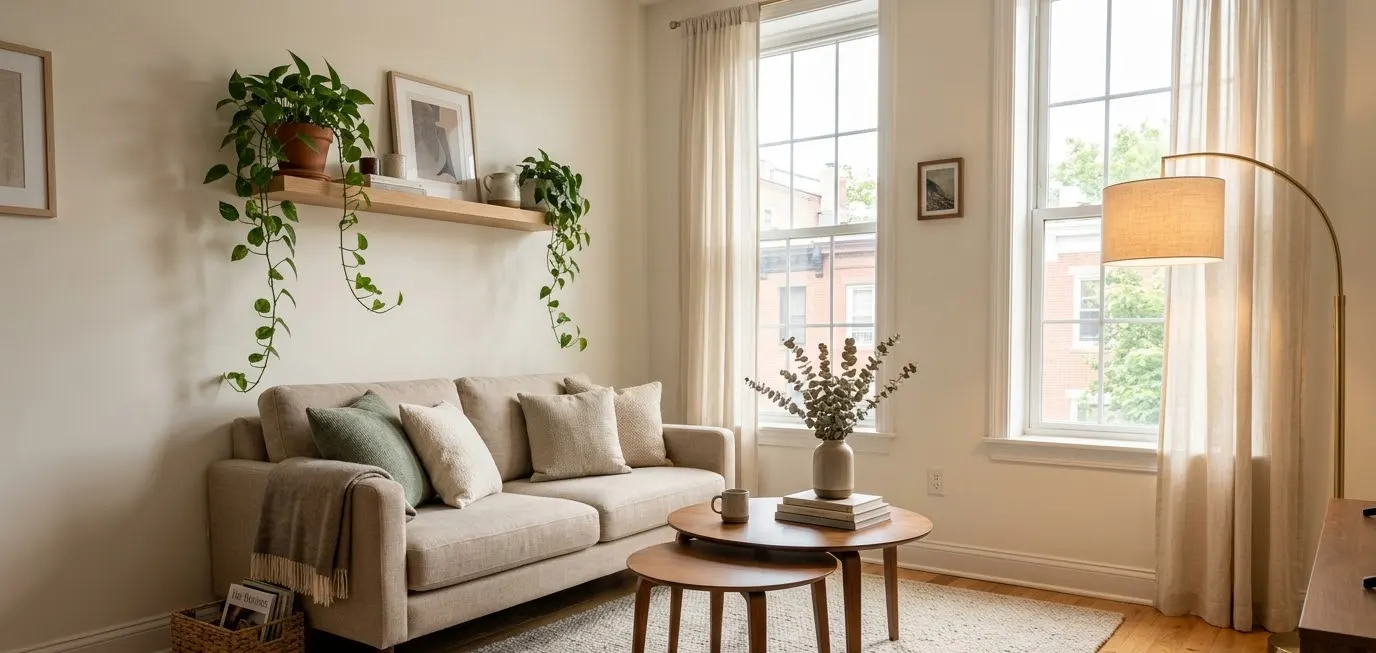
33 Small Space Apartment Living Room Decor Cozy Simple Solutions That Maximize Everyday Flow
Check It Out →So take this as a friend talking you through it, not a magazine spread.
What cottage charm actually means in an apartment
Cottage style gets lumped in with “cottagecore,” and honestly, the internet has muddied the two.
Cottagecore leans fantasy, think Pinterest boards full of mushrooms and lace and a slightly performative love of baking bread.
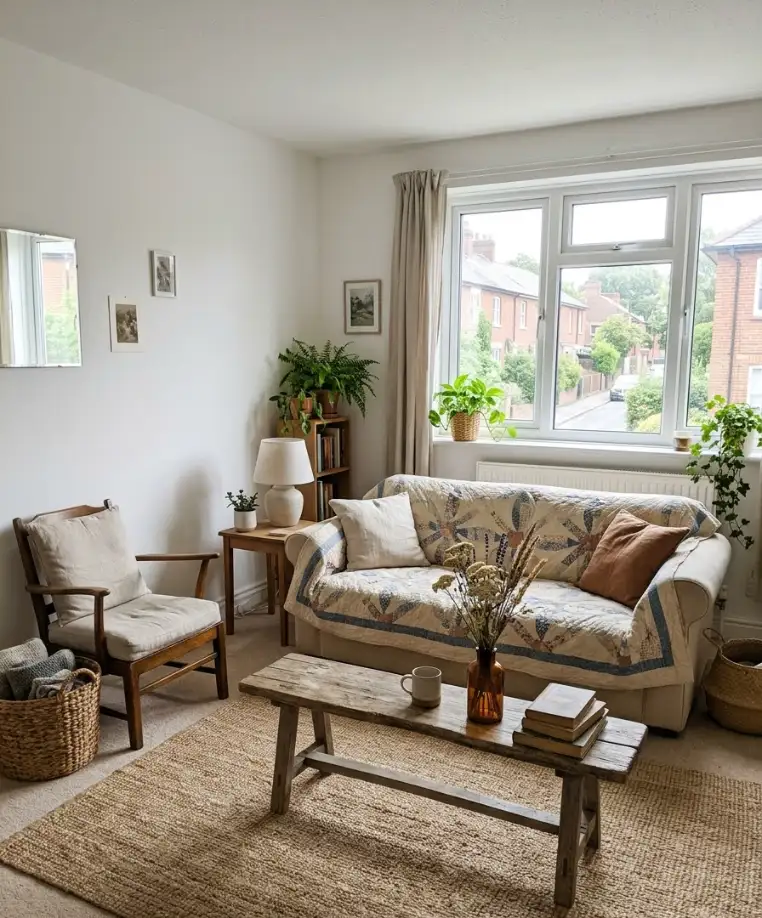
Cottage decor, the kind that works in a real 700-square-foot rental, is calmer.
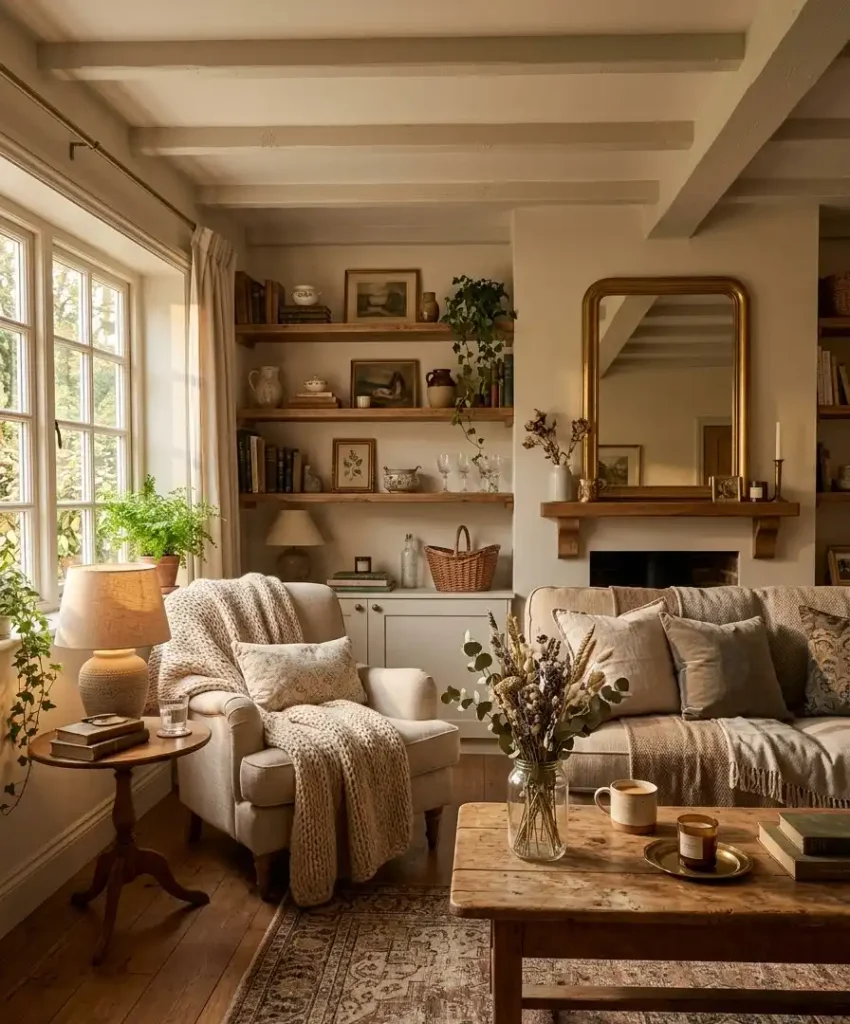
It’s about warmth over trend. Soft colors, natural materials, a little imperfection, and nothing that looks like it came out of a box yesterday. Worn wood beats glossy laminate.
A faded quilt beats a stiff new throw. If a piece looks too perfect, it probably doesn’t belong.
You don’t need a farmhouse or a garden to get this feeling. You need texture, warm light, and a handful of intentional choices. That’s genuinely most of it.
Start with color, and don’t repaint anything you can’t
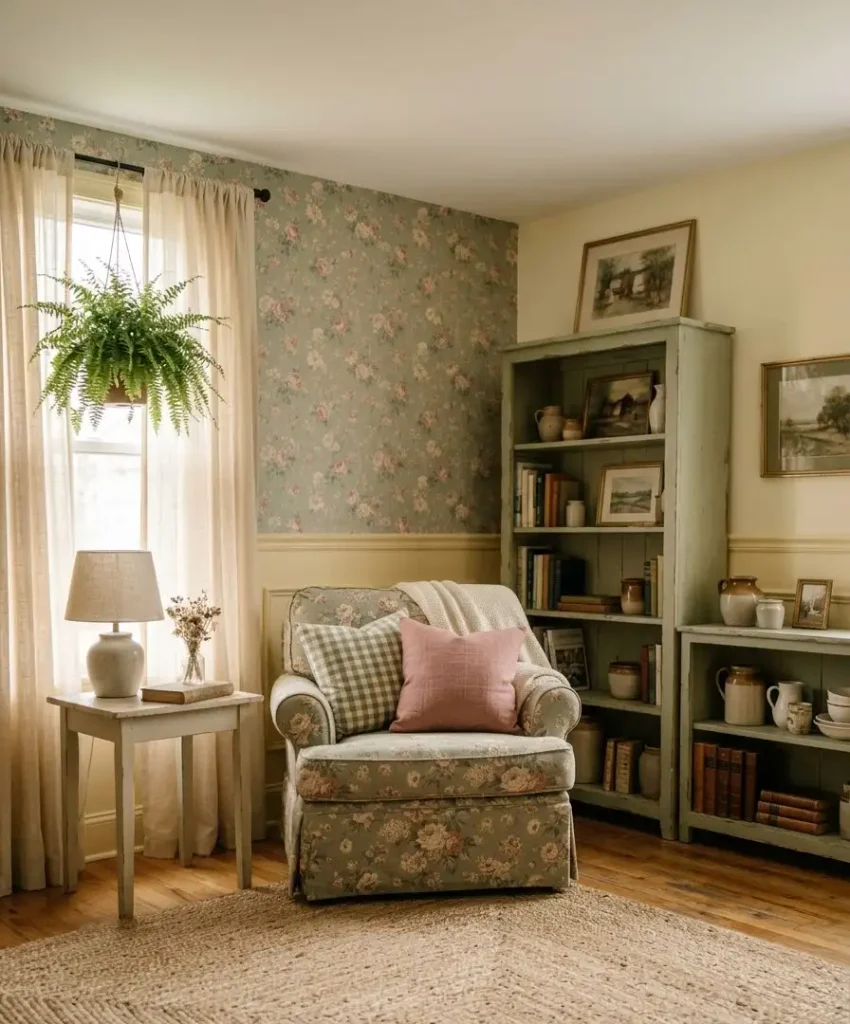
Most renters can’t paint their walls, and that’s fine. Color still does 80% of the emotional work in a cottage look, you just have to bring it in through fabric and objects instead of paint cans.
Think sage green, buttery yellow, dusty rose, warm cream, faded terracotta.
These are the colors that show up in every cottagecore living room you’ve ever pinned, and they work because they mimic what you’d find outside: moss, wheat fields, old brick.
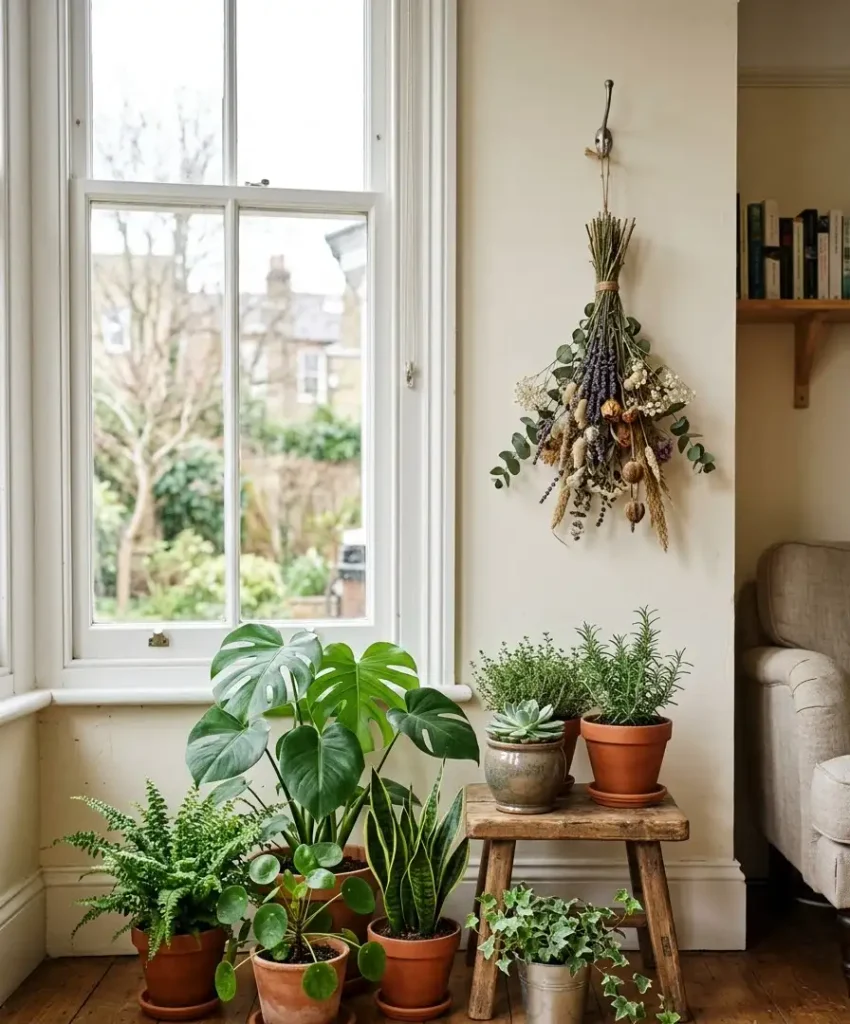
A few low-effort ways to bring these in:
- Throw pillows and a slipcover in a muted floral or gingham print
- A curtain swap, even sheer cotton in a soft tone changes a whole room
- A vintage rug with faded, warm tones instead of a bold geometric one
- Ceramic vases or bowls in earthy glazes left out on a shelf
If your lease actually allows it, removable wallpaper is worth the splurge on one accent wall.
I did this in a rental kitchen with a small floral print behind open shelving, and it transformed the whole room for about 40 dollars.
IMO that’s one of the best return-on-investment moves in this entire list.
Texture matters more than price tag
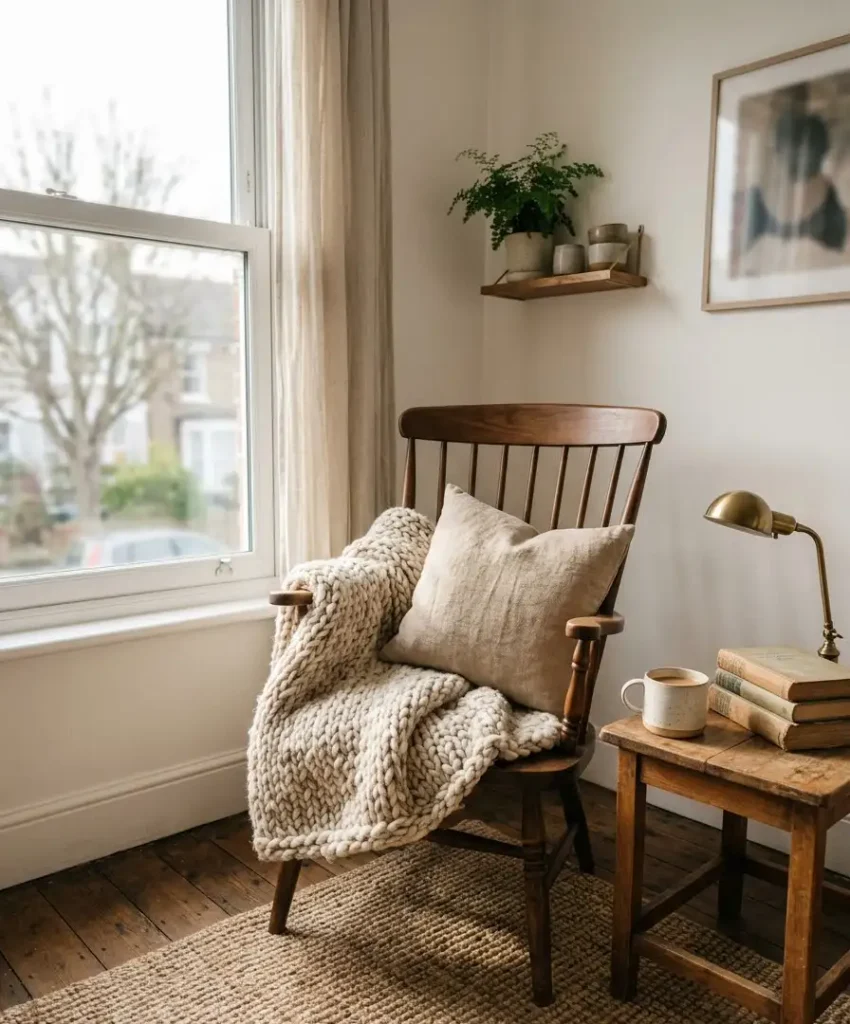
Here’s something nobody tells you outright: cheap decor looks cheap because of texture, not cost.
A 15 dollar throw blanket in cheap acrylic reads as dorm room. A 15 dollar chunky knit throw from a thrift store reads as cottage.
Layering is the trick. Cottage rooms never feel flat because there’s always something soft next to something hard, something rough next to something smooth.
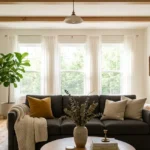
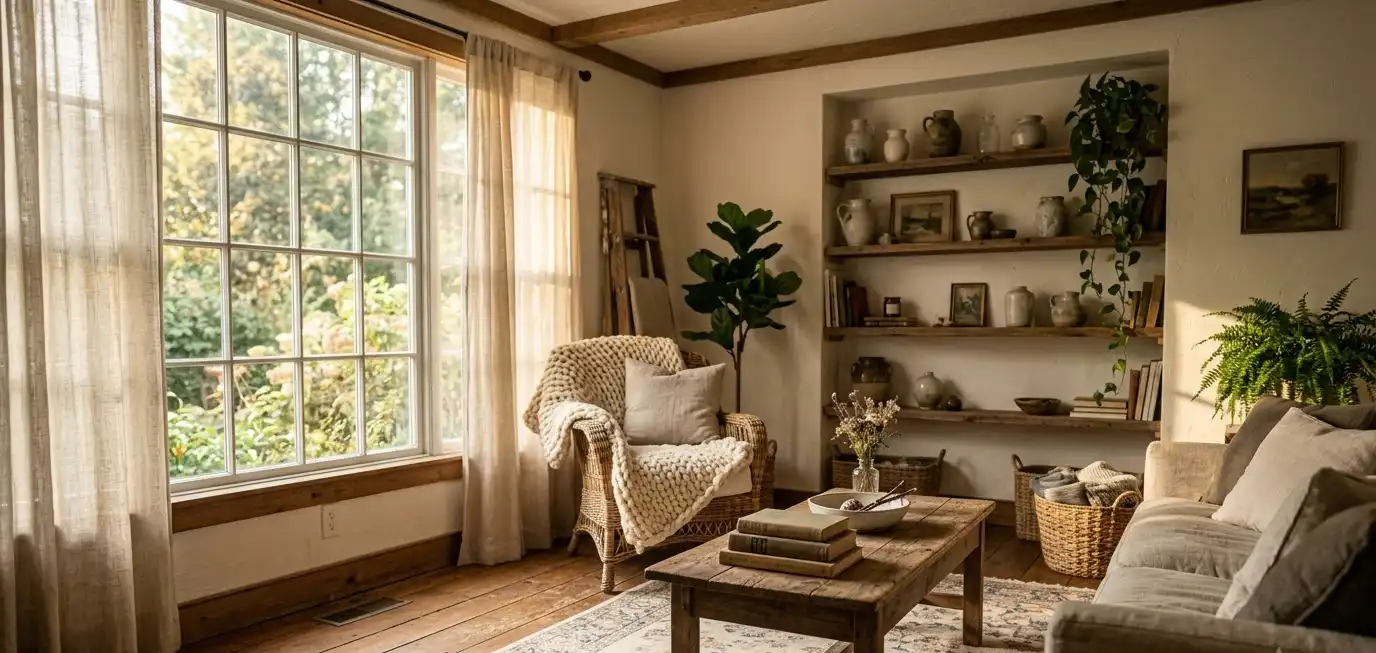
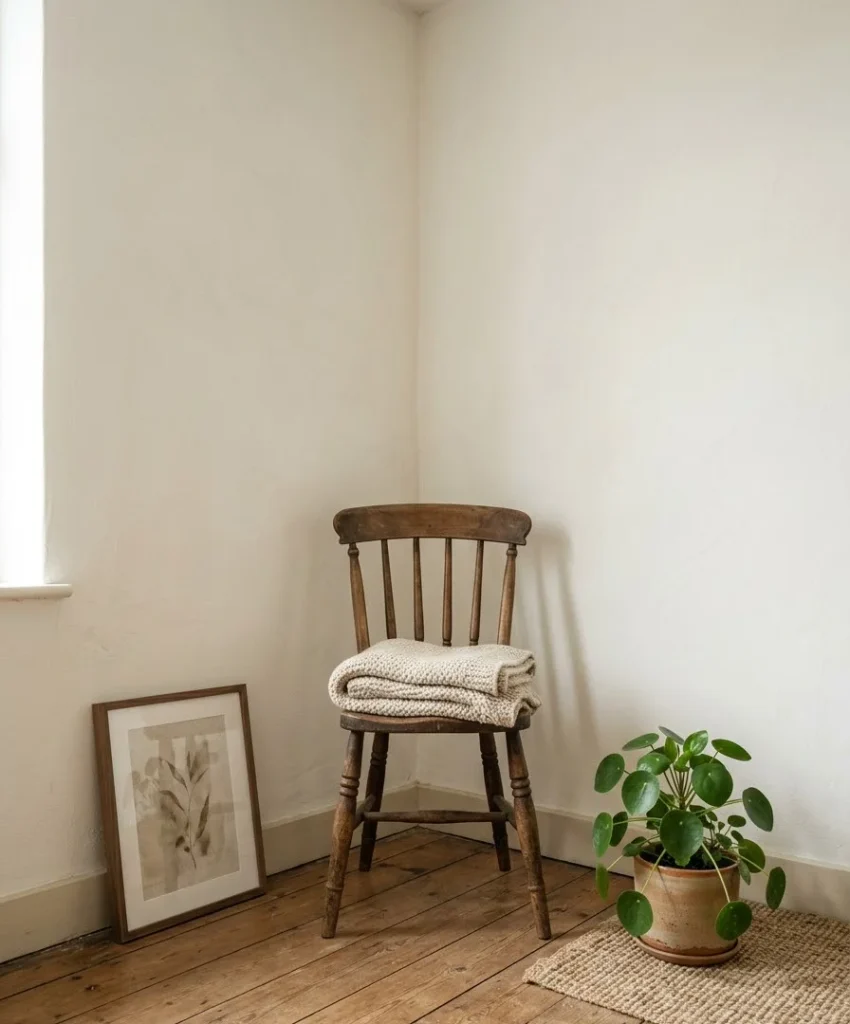
Try this combination in any seating area: a wooden or wicker chair, a knit or wool throw draped over the arm, and a couple of mismatched pillows in linen or cotton, not polyester.
That’s it. That’s the formula that shows up in nearly every cozy cottage photo you’ve saved.
Natural fibers are doing the heavy lifting here. Jute rugs, rattan baskets, linen curtains, wool blankets.
These materials age well and actually get more charming with wear, which works out great for anyone who can’t afford to replace things often.
Thrifting is where the real magic happens
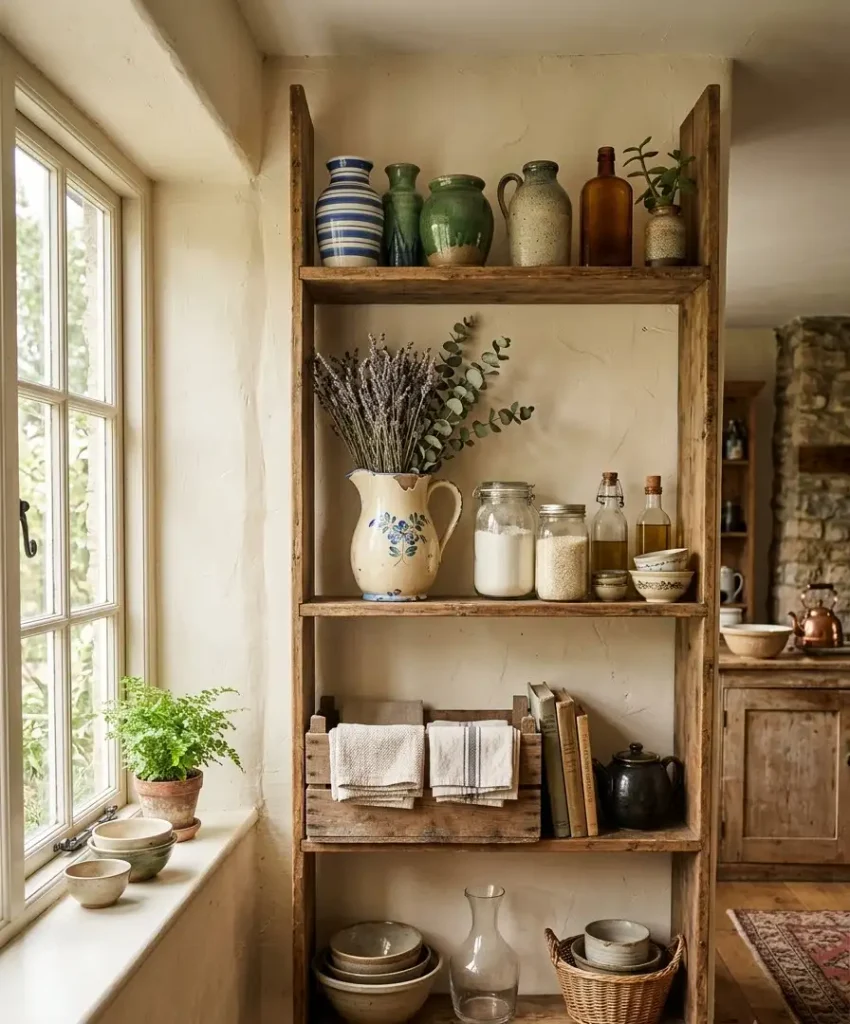
I’ll be honest, I used to think thrift shopping for decor was a hassle.
Digging through shelves of chipped mugs for one good find felt like a waste of a Saturday.
Then I found a hand-painted ceramic pitcher for four dollars that now sits on my kitchen counter holding wooden spoons, and I changed my mind completely.
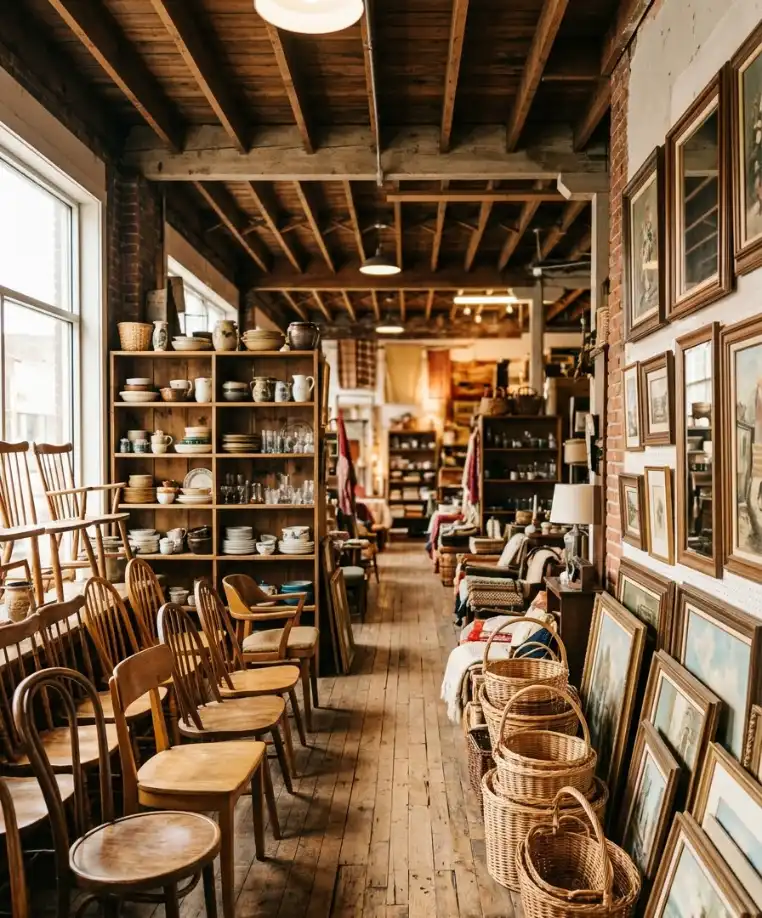
Cottage style practically requires secondhand pieces because the whole aesthetic is built on things that look lived-in.
A brand-new mass-produced “vintage-style” lamp from a big box store will never have the character of an actual old lamp with a slightly crooked shade.
Where to look:
- Estate sales, which often have genuinely old furniture and dishware for cheap
- Facebook Marketplace and local buy-nothing groups
- Thrift and charity shops, especially ones near older neighborhoods
- Flea markets, if you’re patient and go early
One of the best breakdowns I’ve read on this exact topic comes from Apartment Therapy’s cottagecore decor roundup, which pulls together a lot of small, affordable finds if thrifting in person isn’t realistic for you right now. And if you want a more structured, expert-sourced list of where to shop and what to prioritize, Ideal Home’s guide to cottagecore on a budget is genuinely useful, they interviewed actual interior stylists for it rather than just listing products.
Lighting changes everything, and it’s the cheapest fix on this list
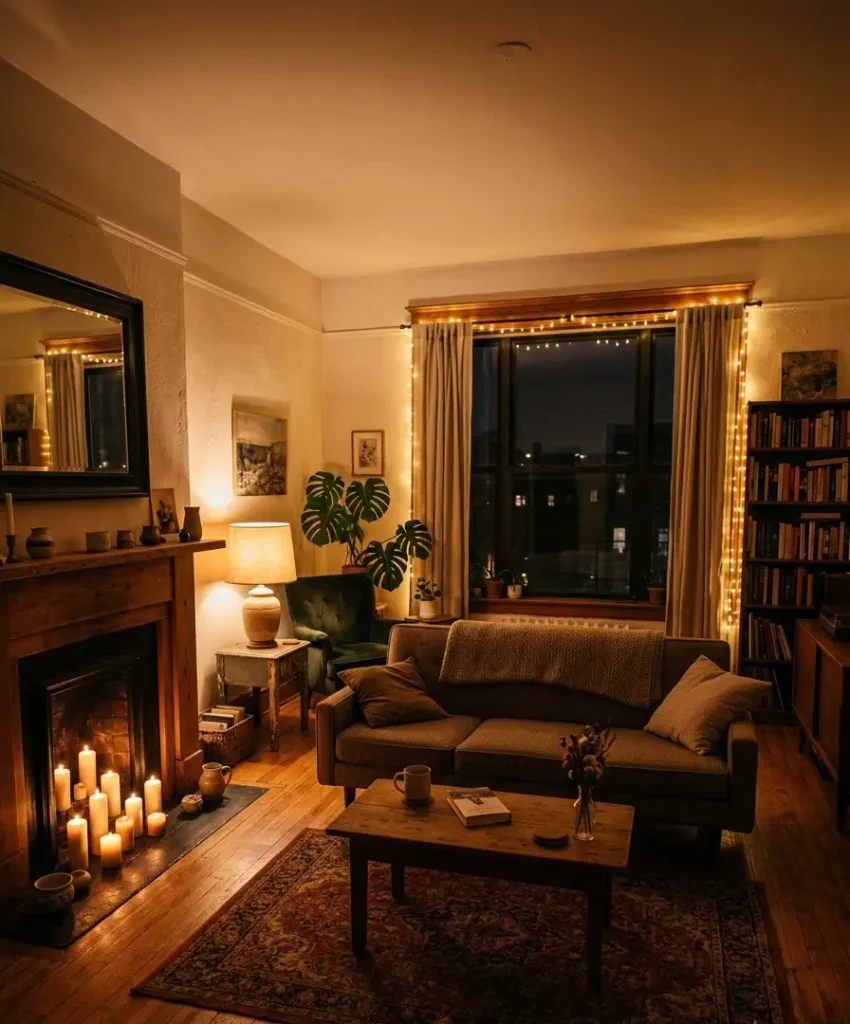
Overhead lighting is the enemy of cottage warmth. That harsh, flat, fluorescent-adjacent glow that most apartments come with makes everything look sterile, no matter how many throw pillows you own.
Swap it out. Not literally, most leases won’t let you touch the wiring, but you can absolutely change how a room is lit without an electrician.
A few things that helped my apartment feel warmer within a single evening:
- Warm-toned bulbs (look for 2700K, not the blue-white 5000K ones)
- A couple of thrifted table lamps instead of relying on the ceiling light
- Battery-operated string lights tucked along a shelf or mirror frame
- Candles, real ones if your lease allows, flameless if it doesn’t
Turn off the overhead light one evening and just use lamps and candles instead. It sounds small. It is small.
But it’s the single fastest way to make a room feel like a cottage instead of an office.
Bring the outside in, even without a garden
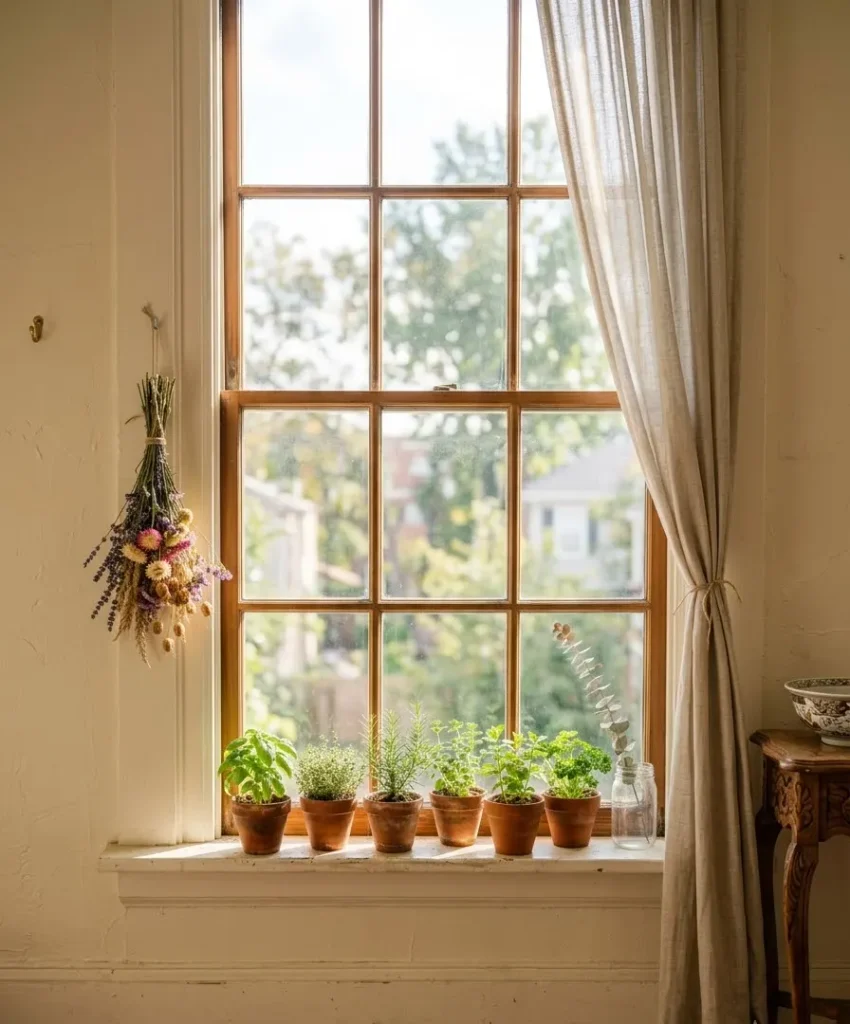
Cottage decor leans heavily on nature, and you don’t need a yard to fake it well.
A windowsill herb garden, a few dried flower bunches, or even a single eucalyptus branch in a jar does more than people expect.
Dried flowers are especially good for renters because they last for months and need zero maintenance.
Hang a small bunch upside down for a week or two to dry them out, then display them in an old jar or bottle. Wow, it sounds like a tiny thing, but it genuinely changes how a shelf reads.
If you’ve got a sunny window, a small collection of potted herbs (basil, thyme, mint) does double duty as decor and as something you actually use in cooking.
That’s the kind of practical charm cottage style is built on, nothing purely decorative for decoration’s sake.
The kitchen: small swaps, big cottage energy
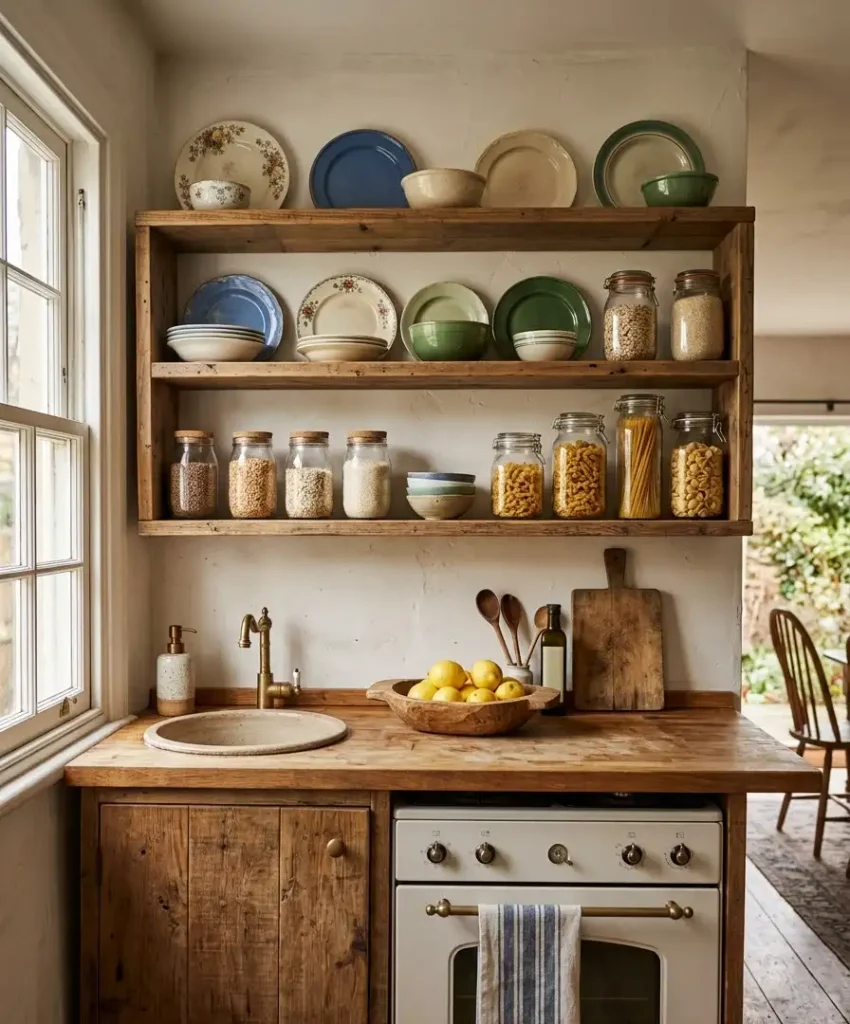
Kitchens are where cottage style shows up the most naturally, honestly, because kitchens are already functional and lived-in.
You’re just nudging what’s already there toward warmth.
Open shelving, even a single shelf, gives you a spot to display mismatched vintage plates, a few glass jars of pasta or grains, and a small potted plant.
If you can’t install anything, a simple wooden tray on the counter holding a few pretty bottles does something similar.
Swap plastic dish soap bottles for a ceramic dispenser. Replace a plain dish towel with a striped or checked linen one.
Keep a bowl of lemons or apples out instead of hiding fruit in a drawer. None of this costs more than 30 dollars combined, and it adds up fast.
The bedroom: where coziness actually gets tested
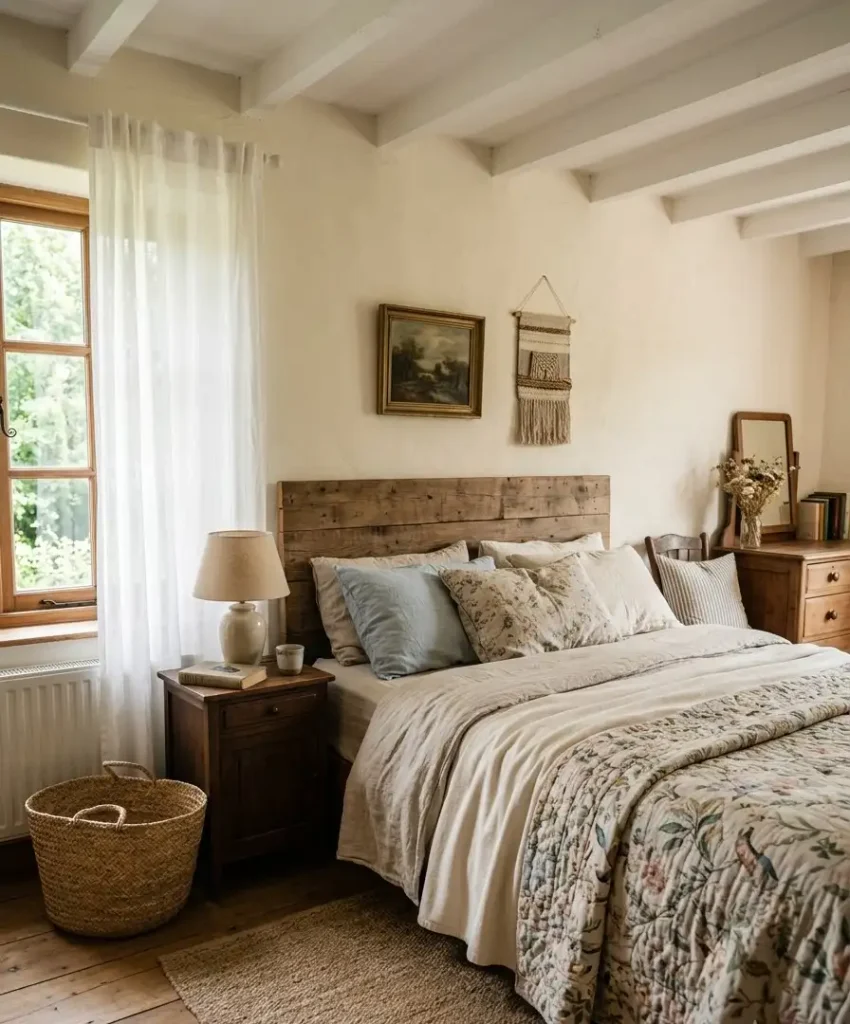
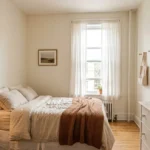
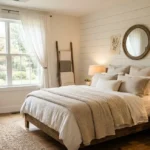
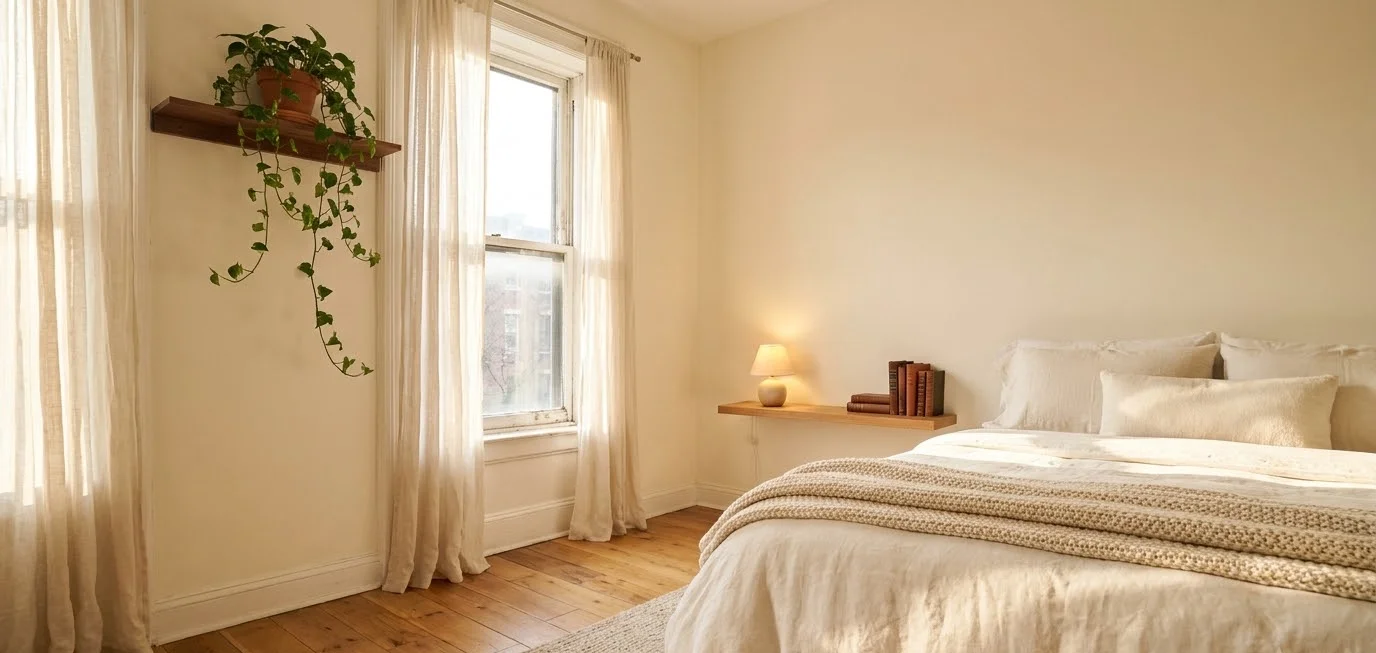
Your bedroom is where cottage style either works or falls flat, because it’s the room people actually spend unstructured time in. Layered bedding is the whole trick here.
Start with a base of soft, neutral or pastel sheets, then add a quilt or duvet in a floral, gingham, or striped pattern.
Top it with two or three mismatched pillows. It should look a little imperfect, like it evolved over time rather than being bought as a matched set in one trip.
A wooden headboard, even a secondhand one, adds warmth that a metal frame just can’t match.
Remax’s guide to designing a cottagecore bedroom has a solid rundown on layering patterns without making a room feel busy, which is a real risk with this style if you’re not careful.
A quick cost breakdown, because budgets are the whole point
Here’s a rough sense of where your money actually goes if you’re building this look piece by piece.
I’m basing this on real prices I’ve paid or seen recently, not aspirational thrift-store fantasy numbers.
| Item | Budget option | Cost range |
|---|---|---|
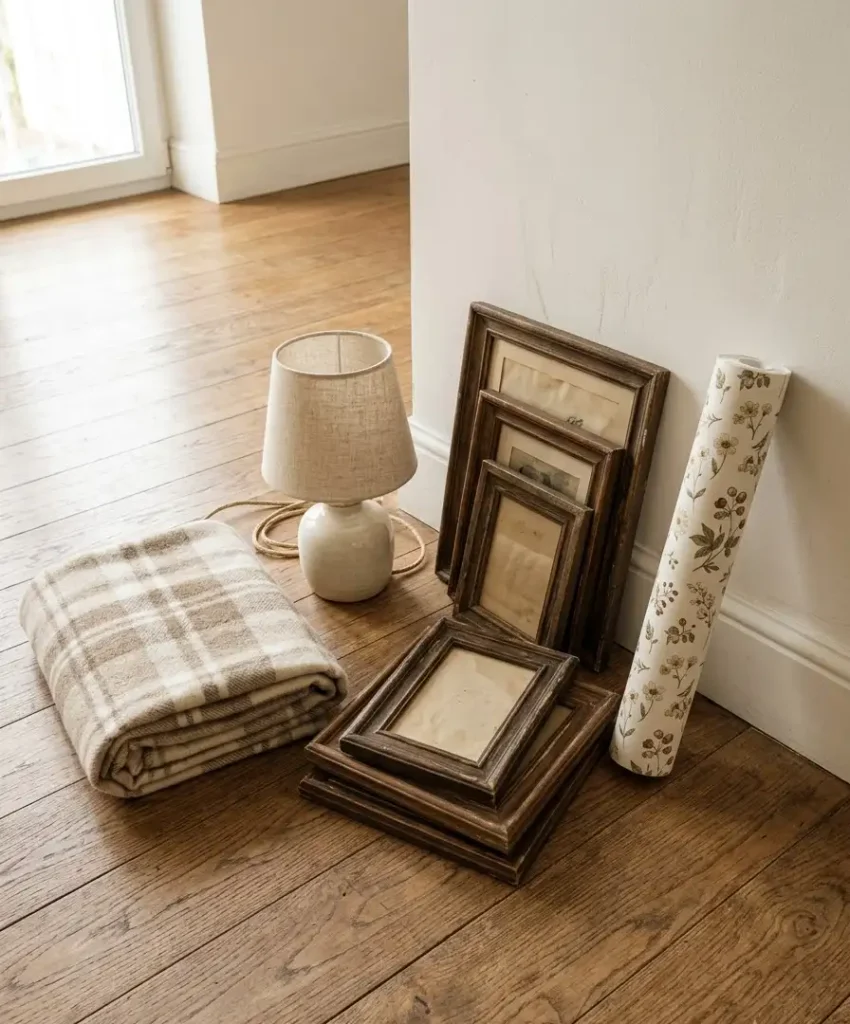
| Throw blanket | Thrifted wool or knit | $8–$20 |
| Table lamp | Secondhand ceramic or brass base | $10–$25 |
| Wall art or frames | Thrifted frames, printable art inside | $5–$15 |
| Removable wallpaper (one wall) | Peel-and-stick floral or gingham | $30–$60 |
Nothing on that list requires a big one-time purchase. That’s intentional. Cottage style, done right, is accumulated slowly, piece by piece, the same way an actual cottage would have filled up over decades.
Mistakes I made so you don’t have to
I want to be honest about what didn’t work, because a lot of decor advice skips this part. Here’s where I went wrong early on.
I bought too much at once. A room decorated in a single weekend looks staged, not lived-in, and cottage style depends entirely on that lived-in feeling. Give it time.
I also over-matched everything, one floral pattern repeated on curtains, pillows, and a rug made the room feel like a themed hotel room instead of a home.
Mixing two or three patterns loosely works far better than committing hard to one.
And a quick, slightly unrelated thought here: I also learned the hard way that scented candles marketed as “cottage” or “cabin” scents are almost always way too strong for a small apartment. Buy the smallest size first. Trust me on this one.
A few honest FAQs
Do I need to spend a lot to get a real cottage look?
No, and that’s kind of the point of the whole style. The best cottage rooms lean on secondhand finds, natural materials, and warm lighting, none of which require a big budget.
Spend your money on a couple of higher-quality textile pieces, like a good throw blanket, and thrift the rest.
Can renters actually pull this off without painting or major changes?
Yes. Nearly everything in this guide is removable: peel-and-stick wallpaper, plug-in lamps, curtain rods that use tension rather than screws, and furniture you already own or thrift.
You get 90% of the look through textiles, lighting, and small objects, not structural changes.
What’s the single best place to start if I’m overwhelmed?
Lighting. Swap your bulbs to a warmer tone and add one lamp. It costs under 20 dollars, takes ten minutes, and genuinely changes how the whole room feels before you’ve bought a single throw pillow.
Final thought
Cottage decor isn’t about recreating a Pinterest board exactly, it’s about making a rented space feel like it’s actually yours, one thrifted lamp and dried bouquet at a time.
Start with one room, maybe even one corner of one room, and build from there.
What’s the first thing you’re going to swap out this weekend, the lighting, a thrifted throw, or finally hanging those dried flowers you’ve been saving? Let me know, I’m genuinely curious what everyone’s starting point ends up being.