My first apartment had a living room the size of a parking space. White walls, a landlord-special ceiling light, and a couch I found on the curb. It looked like a waiting room, not a home.
It took me almost a year of trial and error (and a few Pinterest rabbit holes at 1am) to figure out what actually makes a small living room feel cozy. Square footage barely factors in.
Layers, light, and a handful of choices that punch way above their price tag do the real work.
If your apartment living room feels a little flat right now, you’re in the right place.
These 24 ideas are things I’ve tried myself, tweaked, or picked up from designers who know a lot more about this than I do. Some cost nothing. A few are worth the splurge. All of them work.
I should mention upfront: I’m not an interior designer. I’m someone who’s moved apartments four times in six years and had to solve the “this room feels cold” problem on a fairly tight budget every single time.
That’s the lens for everything below. Rental-friendly first, splurge-worthy second.
One more thing before we get into it. Cozy doesn’t mean cluttered, and it doesn’t mean expensive.
A lot of the rooms that look the most inviting on Pinterest are actually pretty minimal once you break down what’s in them. It’s the combination of choices, not the quantity, that does the work.
Start with lighting, not furniture
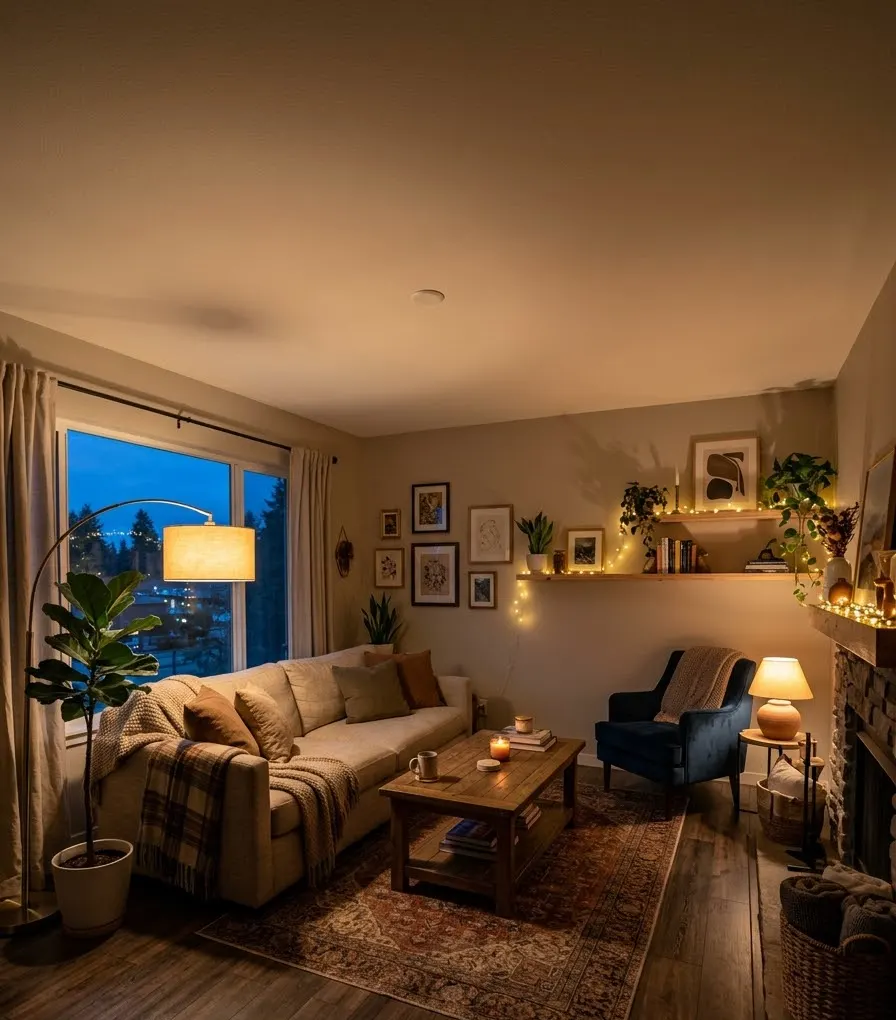
Most people redecorate by buying a new couch first. That’s backwards. Lighting changes the mood of a room faster and cheaper than anything else you’ll do.
Overhead lighting is the enemy of cozy. That single ceiling bulb makes every apartment feel like a dentist’s waiting area.
Once I swapped mine for a mix of lamps, the whole room felt different within a week, and I hadn’t bought a single new piece of furniture yet.
I still remember flipping the overhead light off for the first time and just standing there for a second.
It sounds dramatic for something so small, but the room genuinely felt like a different apartment.
That’s when I started paying attention to lighting before anything else, in every space I’ve decorated since.
1. Layer your light sources
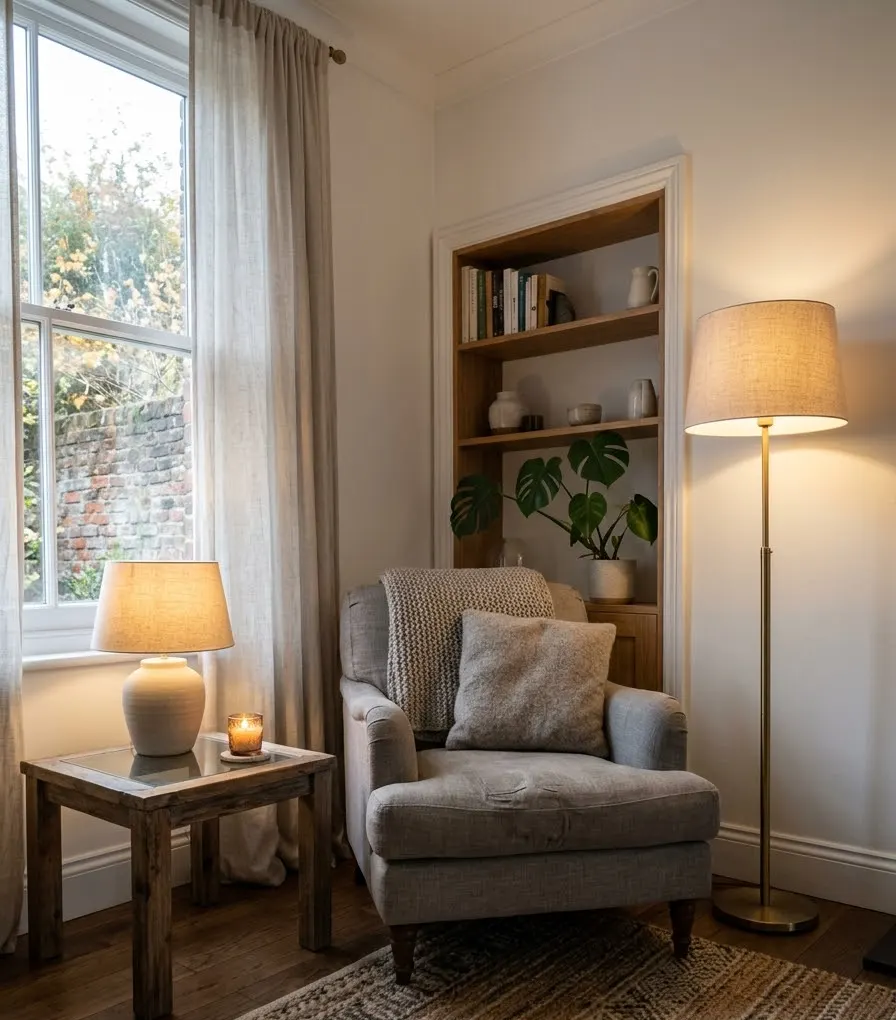
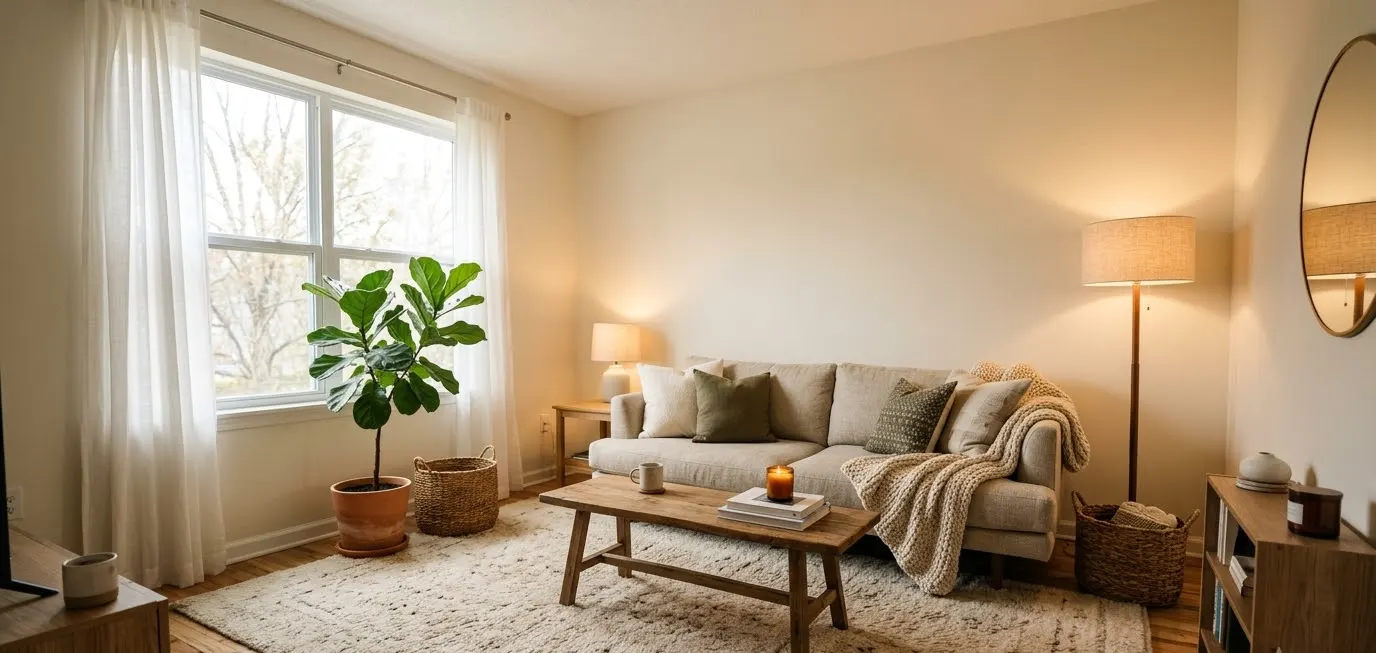
Aim for at least three light sources at different heights: a floor lamp, a table lamp, and something smaller like a candle or string lights. This mimics the way natural light falls in a room and removes harsh shadows.
Think of it in terms of heights rather than fixtures. Something near the floor, something at seating height, and something above eye level.
That spread is what makes a room feel dimensional instead of flat, the same way good photography avoids lighting a subject from just one direction.
2. Switch to warm bulbs
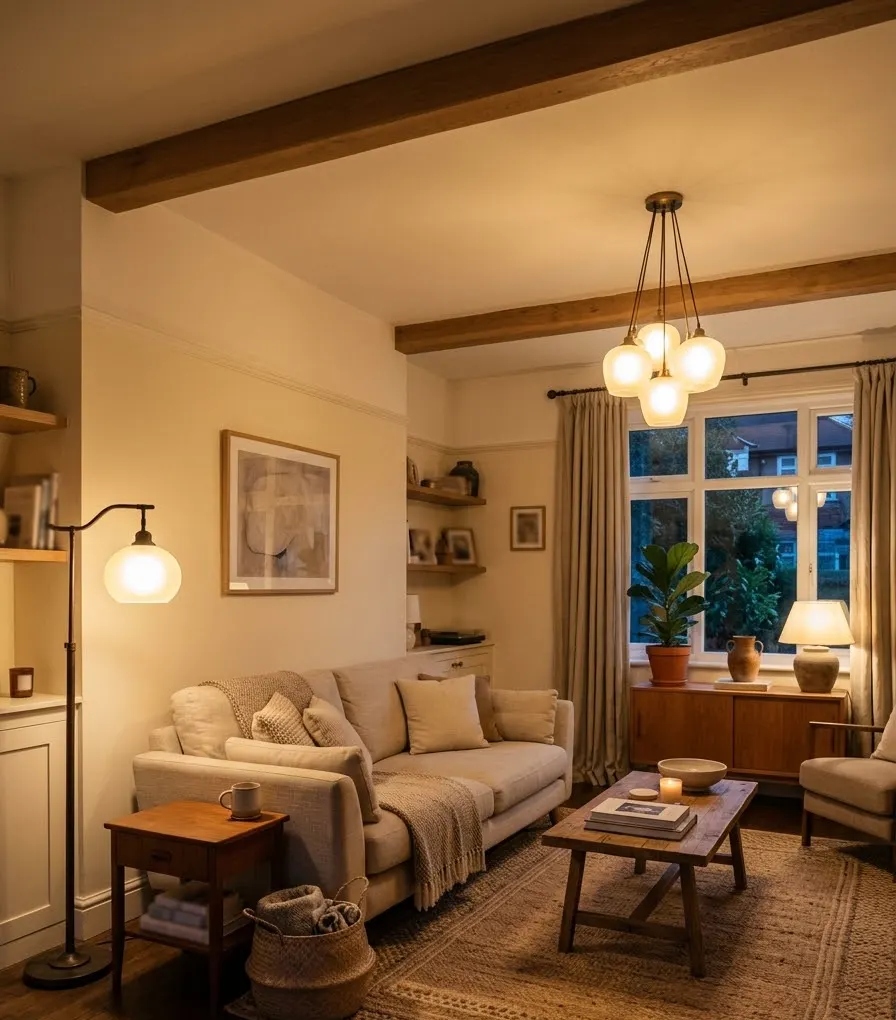
Stick to bulbs rated between 2700K and 3000K. Anything higher starts looking clinical.
According to guidance from the U.S. Department of Energy, warmer color temperatures are generally better suited to living spaces where you want a relaxed feel, while cooler tones work better in task-heavy areas like kitchens.
3. Add a dimmer switch
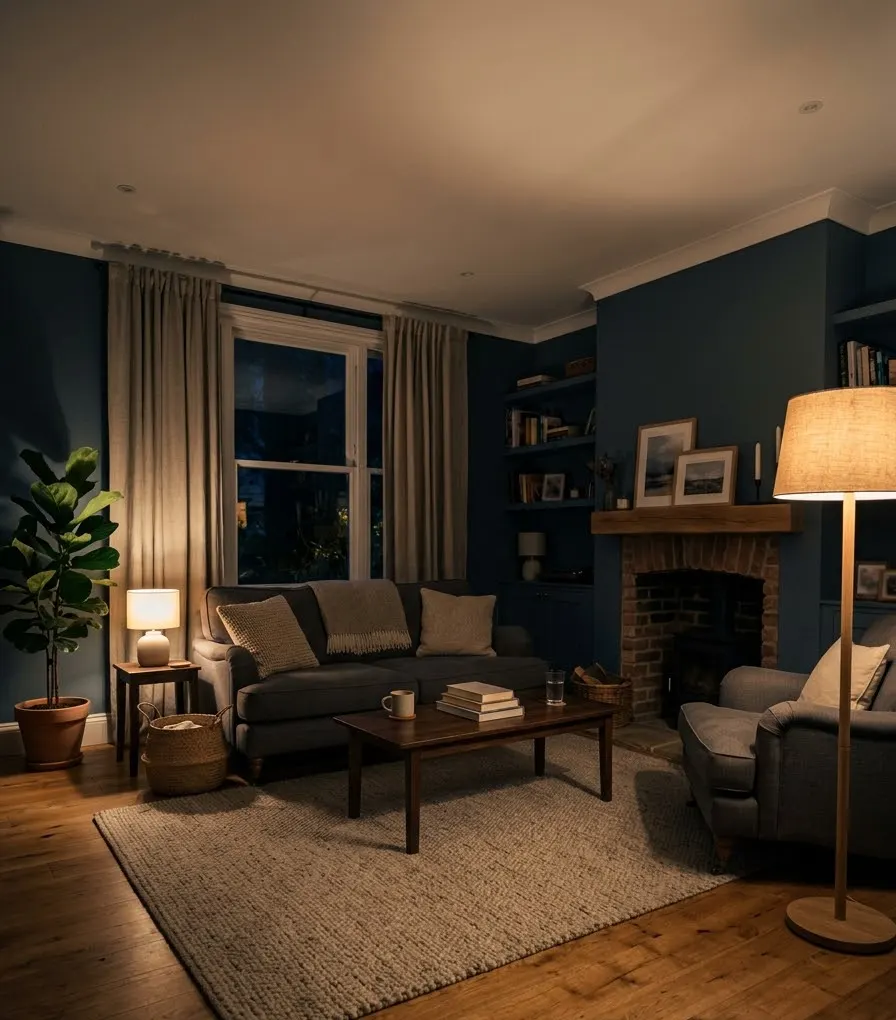
If your lease allows it, a plug-in dimmer for lamps costs less than a coffee run and gives you full control over the mood. Bright for cleaning, low for movie night.
4. Try candles or flameless alternatives
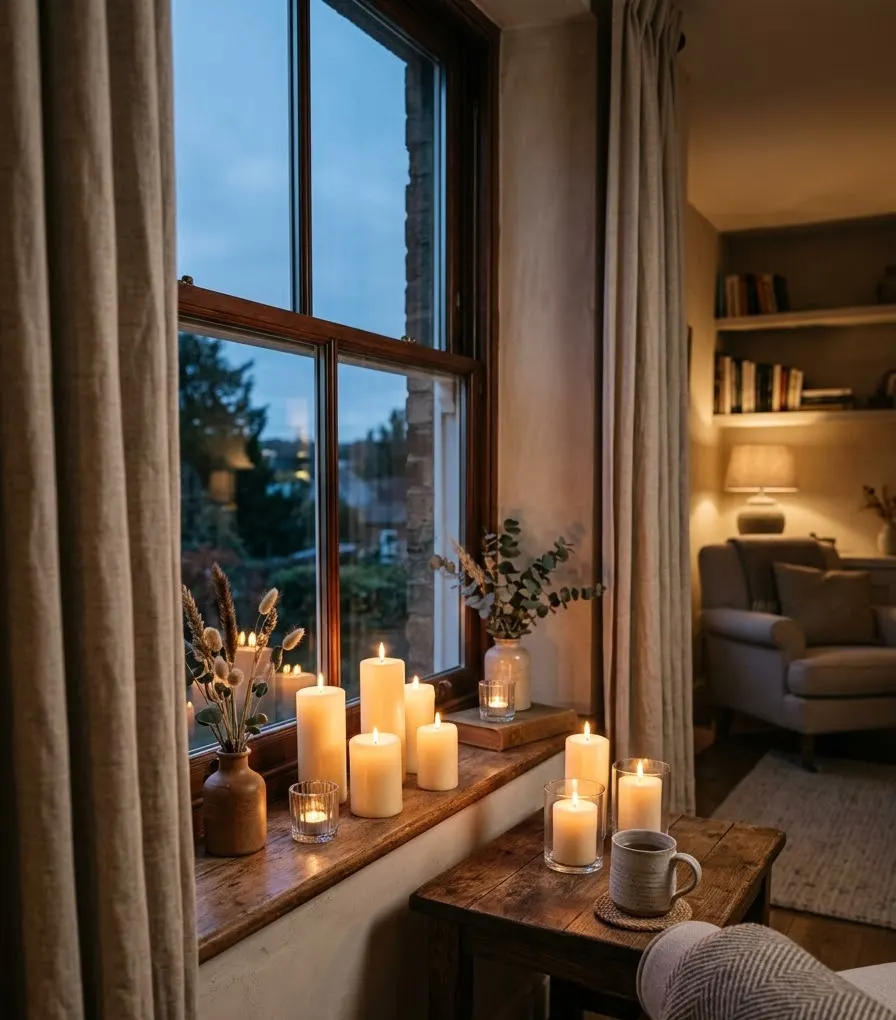
A couple of candles on a side table or windowsill do more heavy lifting than people expect.
If you’re renting and worried about wax or open flame, battery-operated candles have gotten genuinely convincing.
The flicker matters more than people assume. A steady lamp does one job, but something that flickers, even a fake flame, adds movement to a room the same way a fireplace would.
It’s a small trick, but it’s the kind of detail that makes guests ask what feels different about your place without being able to point to exactly what it is.
I’d also recommend paying attention to where your lamps sit in relation to where you actually spend time.
A beautiful lamp in a corner nobody sits near doesn’t do much. Put your best light source next to the chair you actually read in.
Texture is the real secret weapon
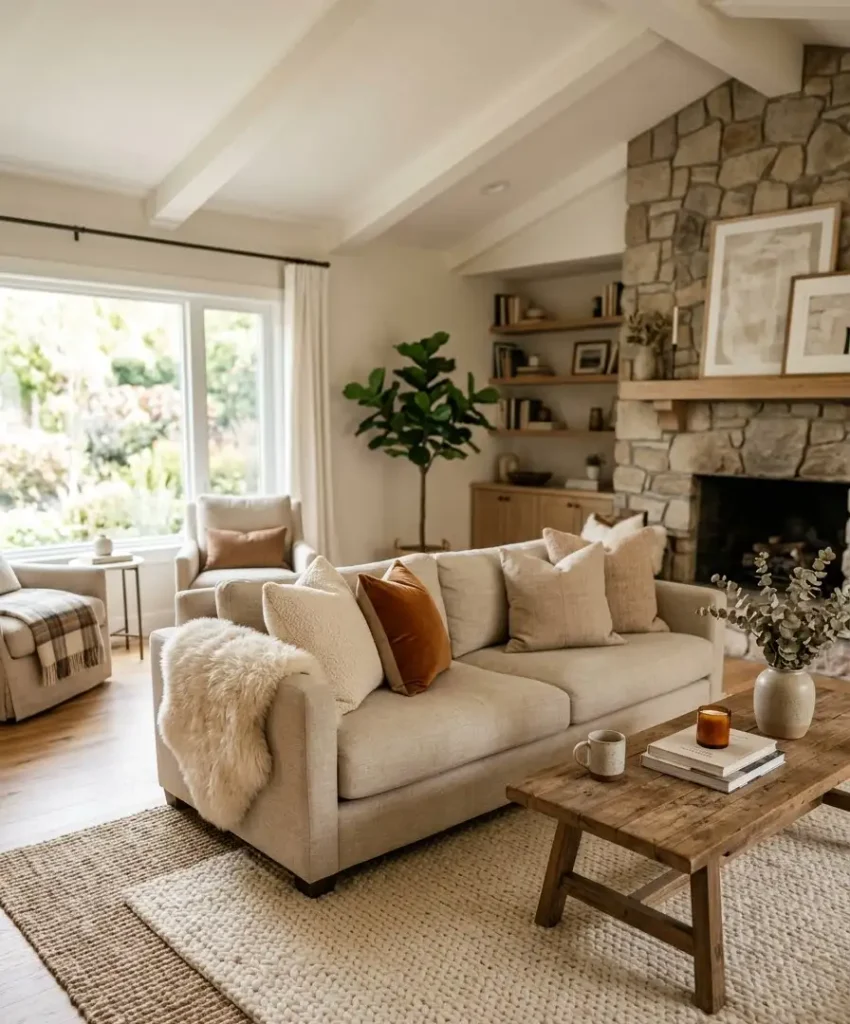
Color matters less than texture, and I say that as someone who spent way too long agonizing over paint swatches before figuring this out.
A room can be entirely beige and still feel warm if it has enough tactile variety. I learned this the hard way after painting an accent wall a deep green and still feeling like something was missing. Turned out the missing piece was texture, not color.
Think about the last hotel room or Airbnb that felt genuinely cozy to you. There’s a good chance it wasn’t the wall color you remember.
It was the weight of the blanket, the softness of the rug under your feet, the way the pillows felt when you sank into the couch. That’s texture doing the emotional work while color just sets the backdrop.
5. Layer rugs
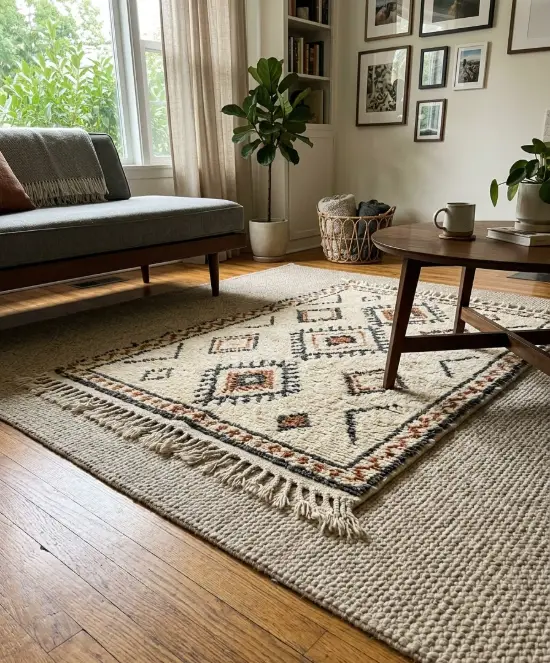
If you can’t replace your flooring (renters, this is for you), a plush rug does wonders.
Go one step further and layer a smaller textured rug on top of a larger neutral one for a designer-store look without the designer-store price.
6. Mix throw pillow fabrics
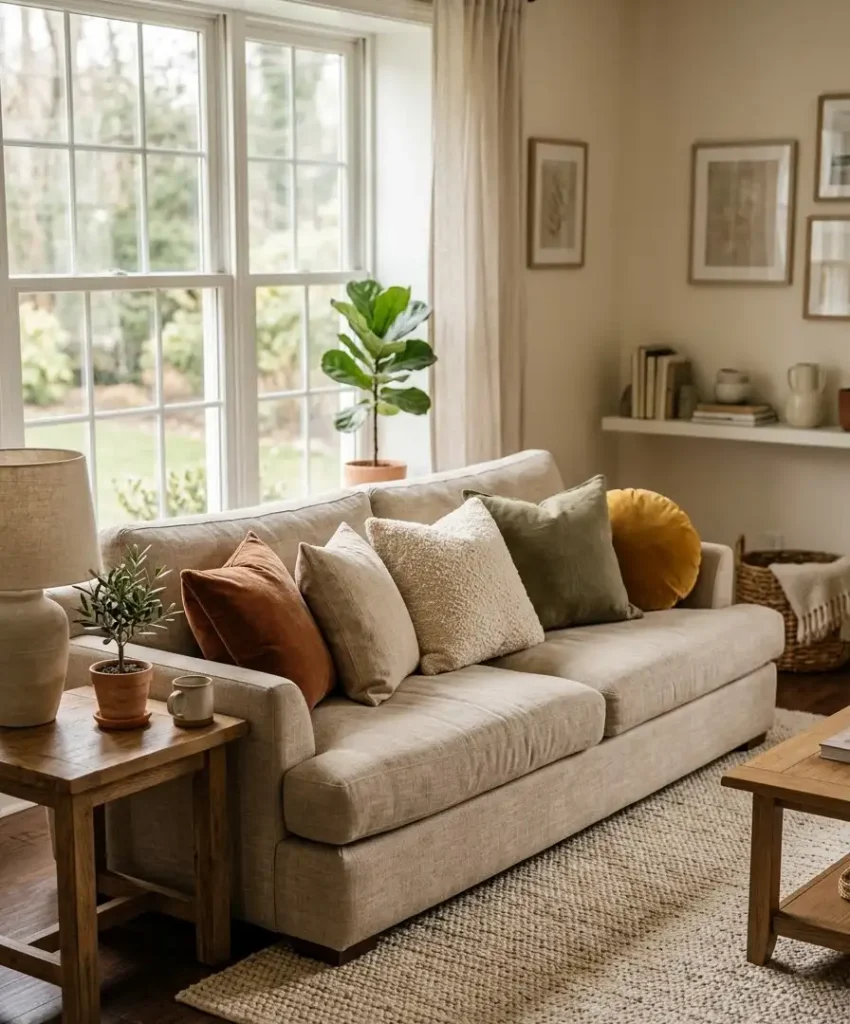
Velvet, linen, and boucle in the same seating area create depth that a matching pillow set never will. I’d stick to an odd number, usually three or five, so it doesn’t look too staged.
7. Bring in a chunky knit throw
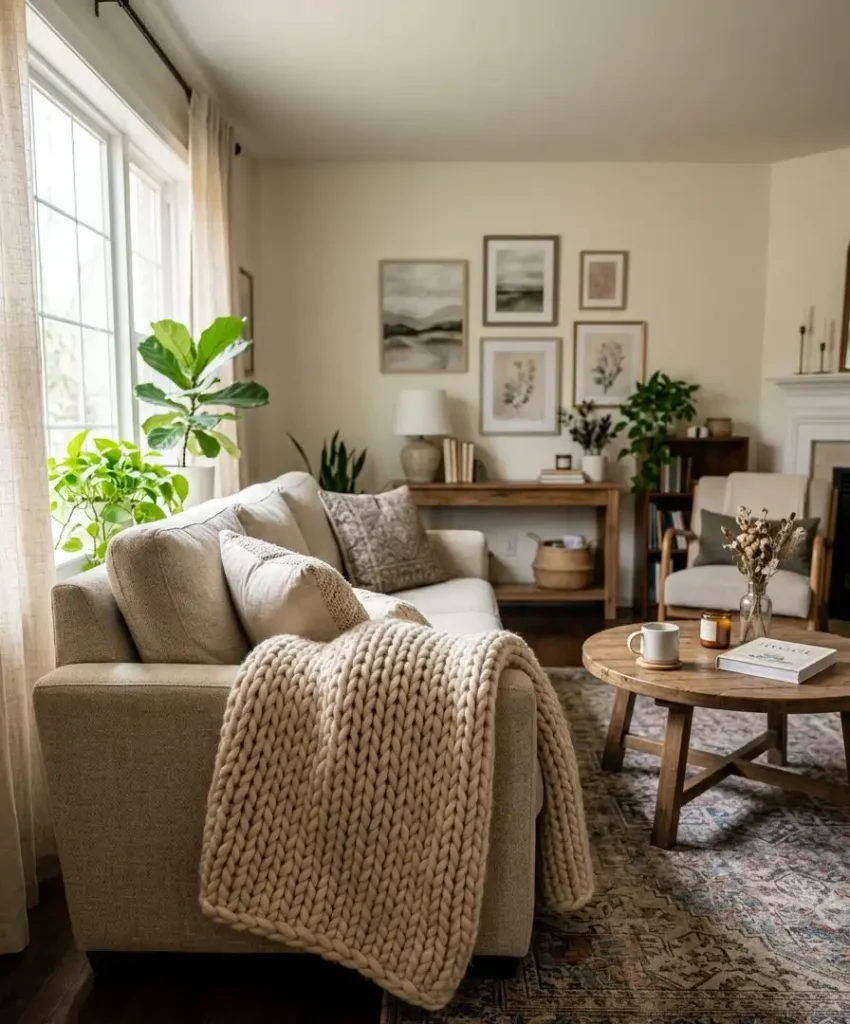
A blanket draped over the arm of a couch is basically a visual invitation to sit down.
Faux fur and chunky knit both photograph beautifully too, which matters if you’re sharing your space online.
8. Add wood accents
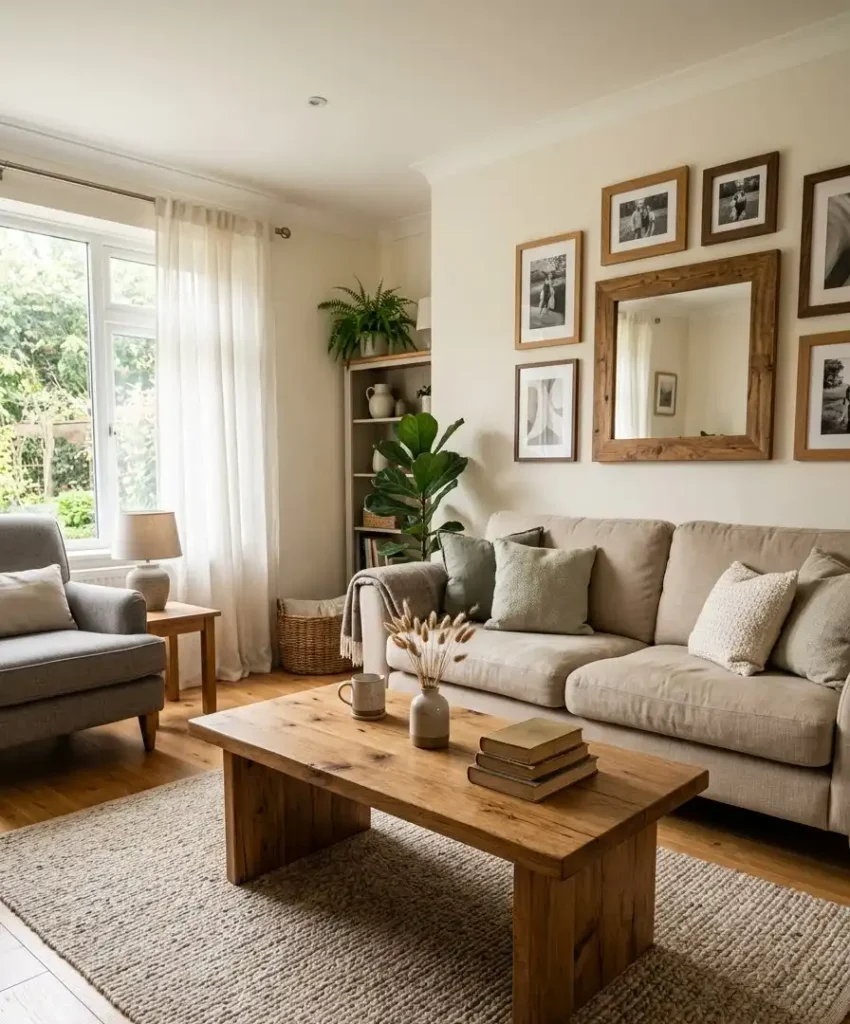
A wood coffee table, picture frame, or even a bowl of pine cones brings warmth into a space that glass and metal alone can’t. Natural materials read as inviting because, well, they’re natural.
9. Hang curtains, even fake ones
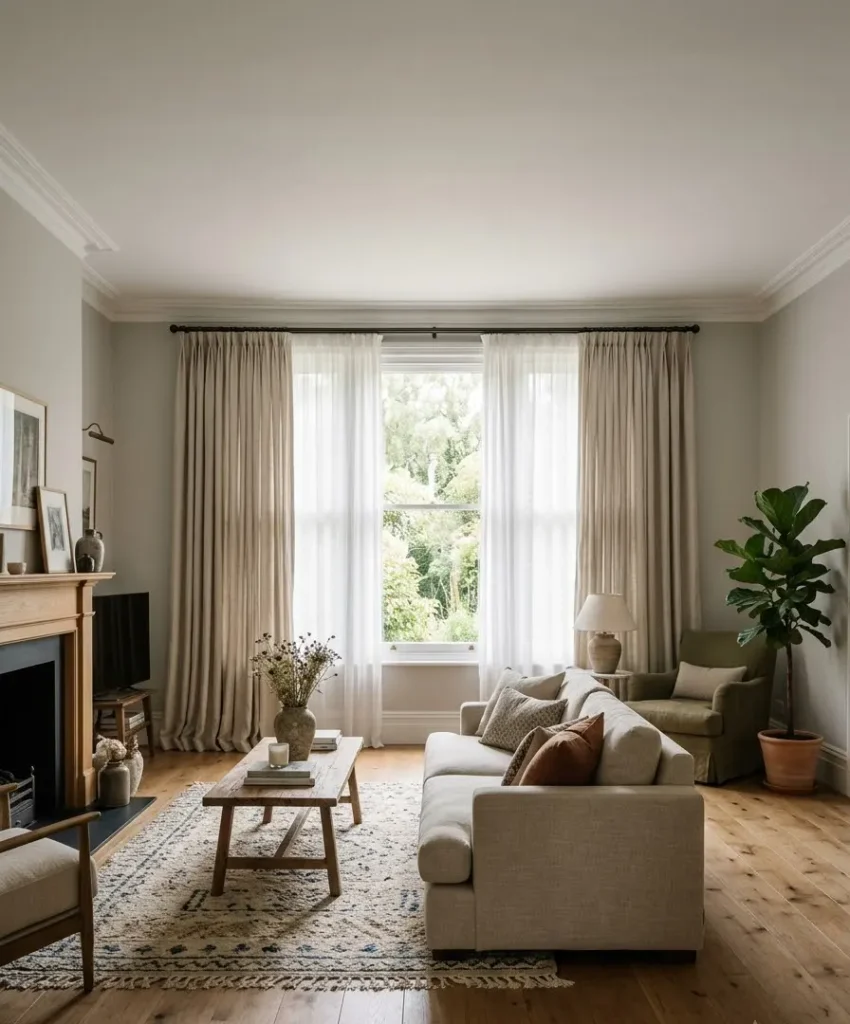
Curtains soften hard window lines and add fabric texture at eye level. If your apartment windows are small or oddly placed, hang the curtain rod wider and higher than the frame. It tricks the eye into thinking the window (and the room) is bigger.
I did this in my current apartment with a window that’s barely three feet wide, and it’s genuinely one of the cheapest upgrades on this entire list.
A rod that extends six inches past the frame on each side, hung a few inches above where the window actually starts, changes the whole proportion of the wall. Wow, the difference a $15 curtain rod can make.
Color choices that actually feel cozy
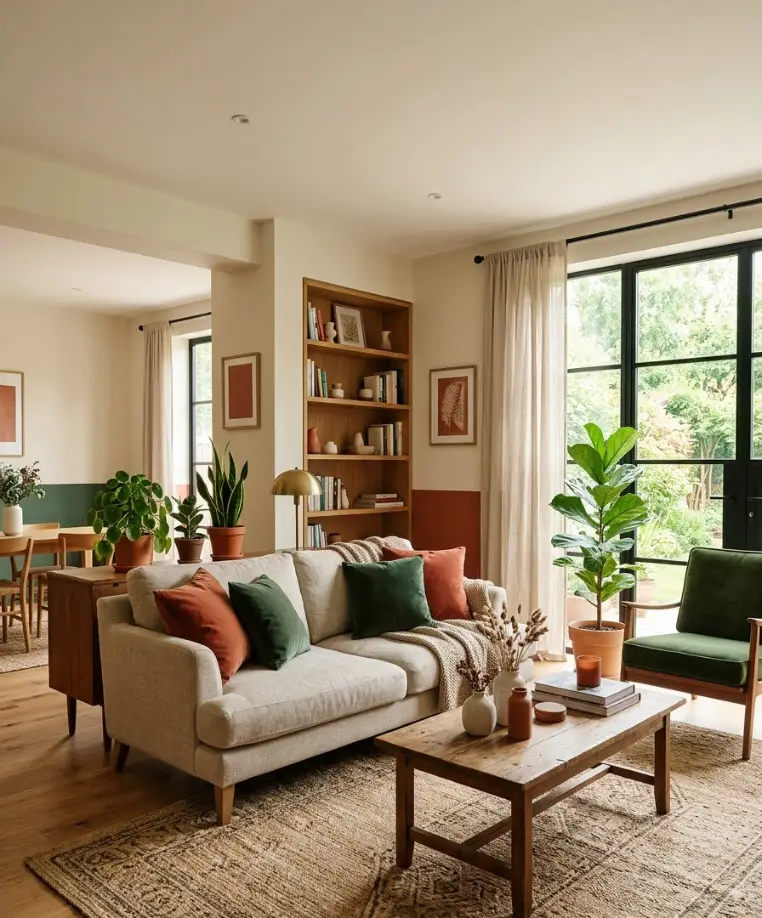
I’m going to be honest here: I used to think all-white rooms looked clean and modern. They do.
They also feel about as cozy as a hospital hallway. IMO, a little color commitment goes further than most people expect.
10. Go for warm neutrals over stark white
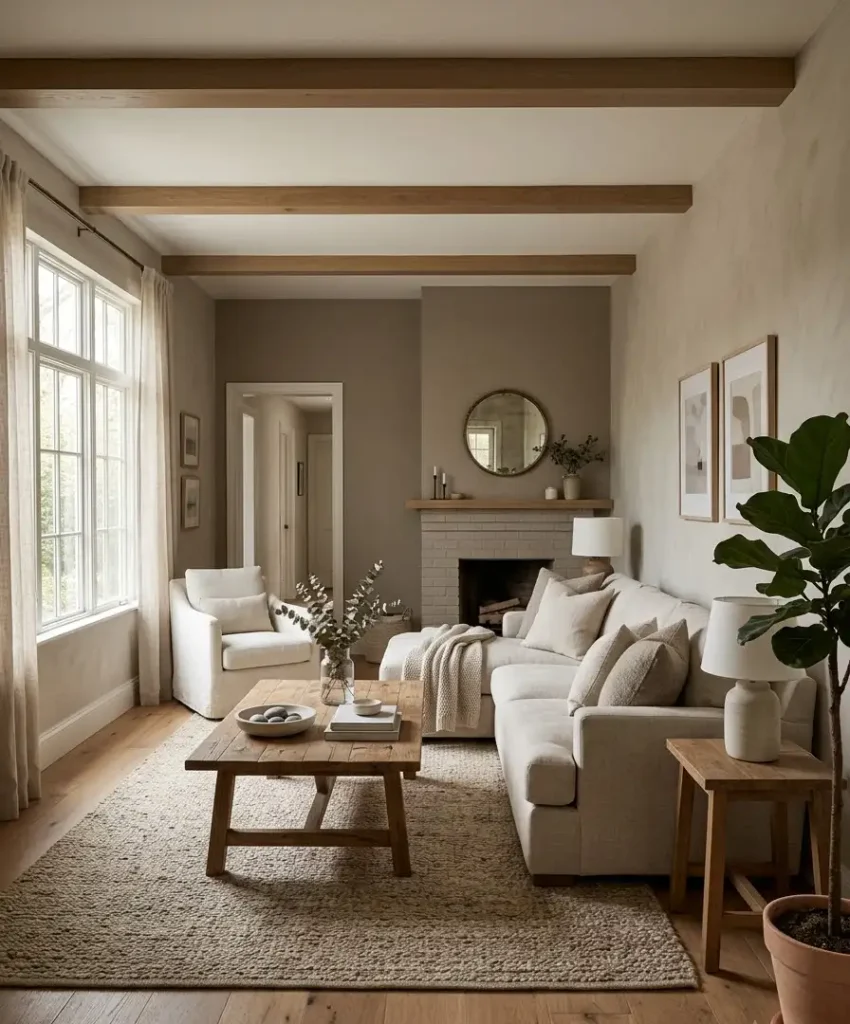
Cream, greige, and warm taupe read as soft instead of sterile. If you’re not ready to commit to a full paint job, this is where renter-friendly peel and stick wallpaper earns its reputation.
11. Try a deep accent wall
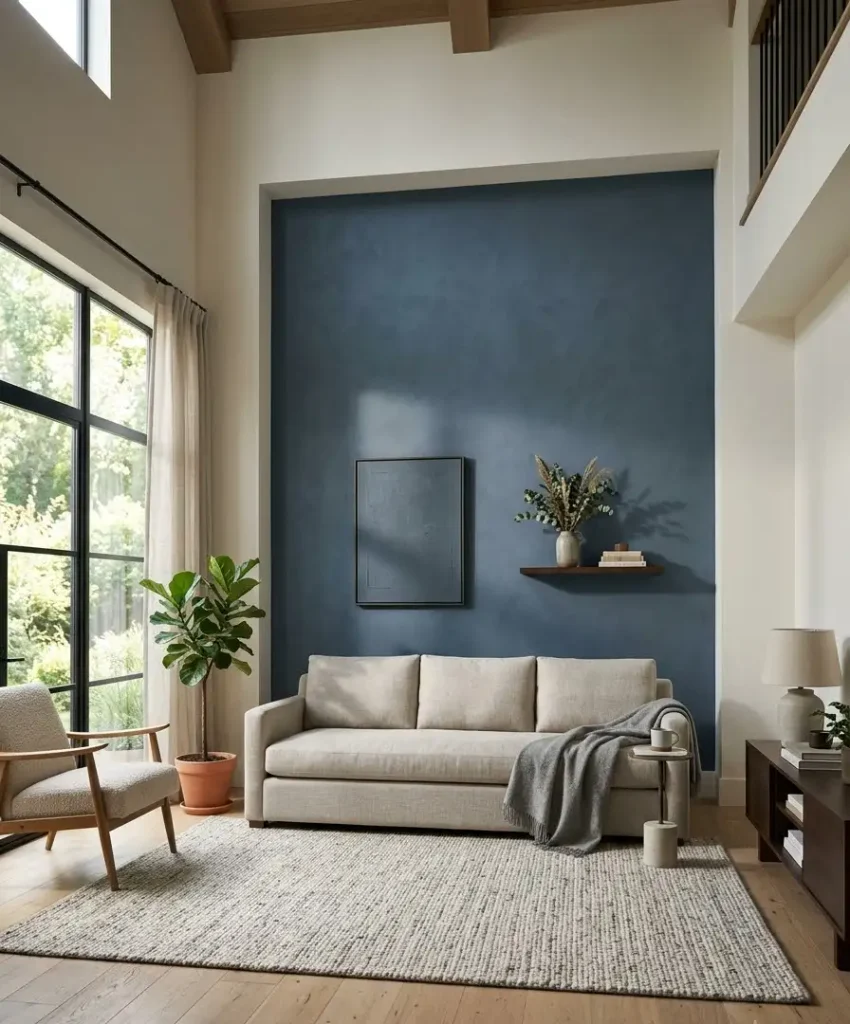
A single wall in a smoky blue, forest green, or terracotta gives the room a focal point. Designers interviewed by Apartment Therapy point to smoky blues and greens as go-to cozy colors, since they avoid the coldness that grays and stark whites can bring.
12. Use color in small doses
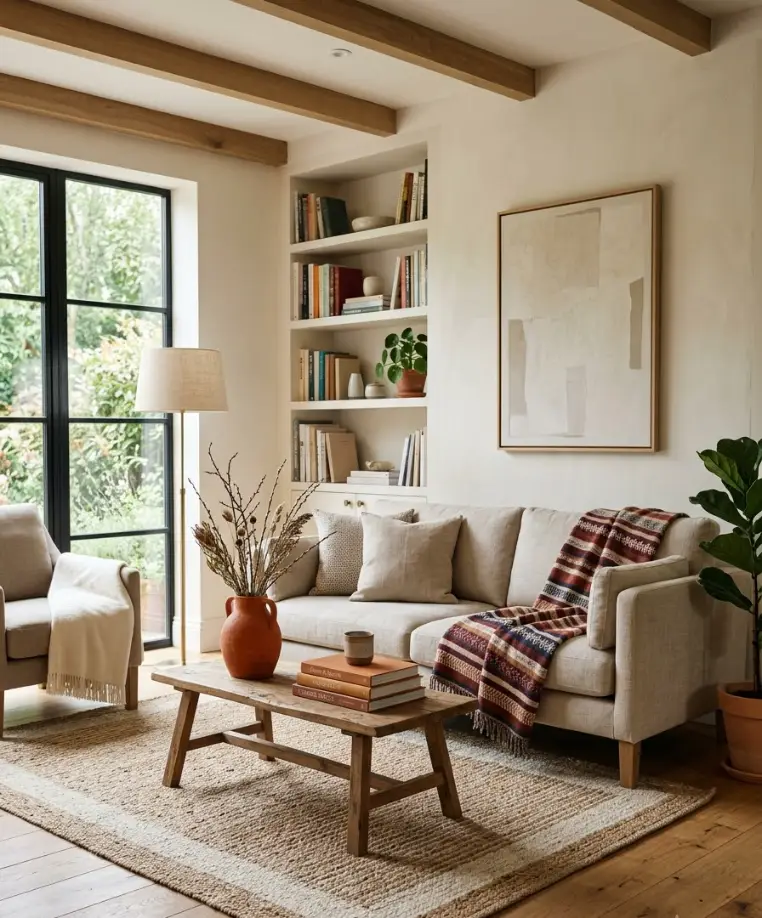
If painting isn’t an option, a colorful vase, a stack of books with warm-toned spines, or a patterned throw blanket does the same job on a much smaller scale.
I lean toward rust, mustard, and deep burgundy for these small doses. They photograph warm under almost any lighting, which matters if you’re the type who takes a picture of your living room every time you rearrange it. No judgment, I do this too.
Furniture placement matters more than the furniture itself
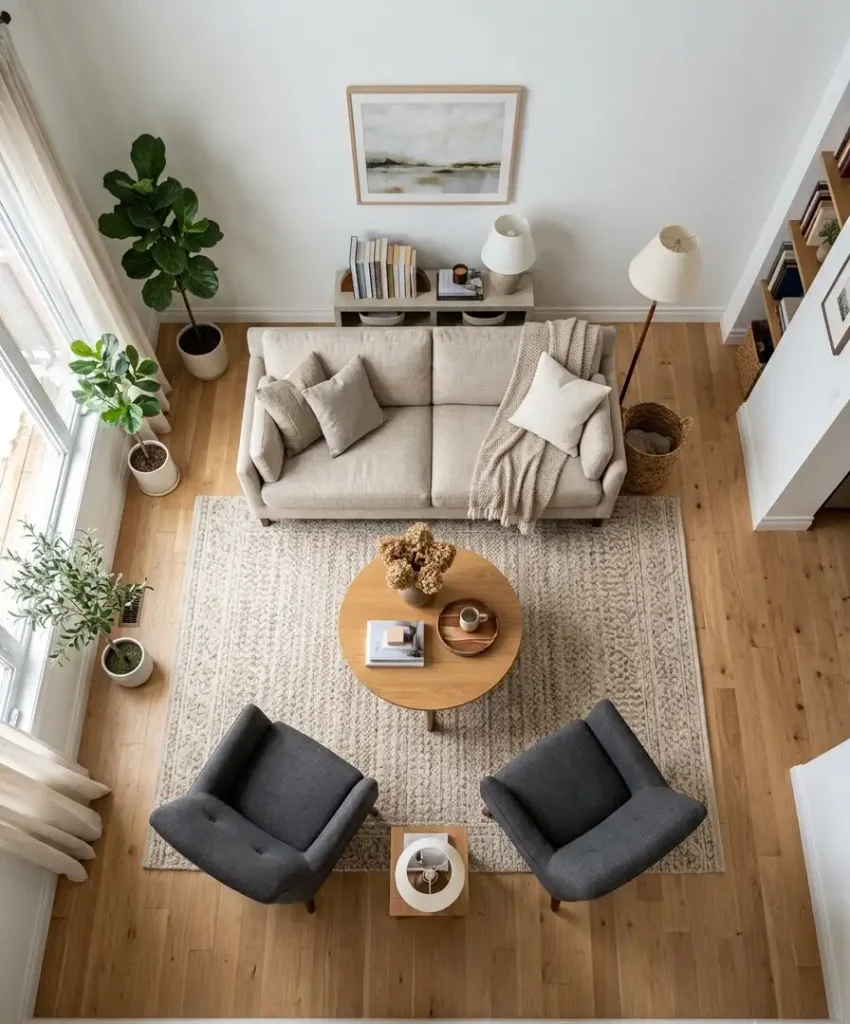
You’d be amazed how many living rooms fail simply because the furniture is pushed against every wall.
That layout might maximize floor space, but it kills conversation and makes a small room feel even more like a hallway.
I made this exact mistake in my second apartment. Everything hugged the perimeter, which technically left a huge empty rectangle in the middle of the room.
It looked less like a living room and more like a waiting area for a room that hadn’t been designed yet. Moving two pieces of furniture in by about a foot fixed almost everything.
13. Float your furniture
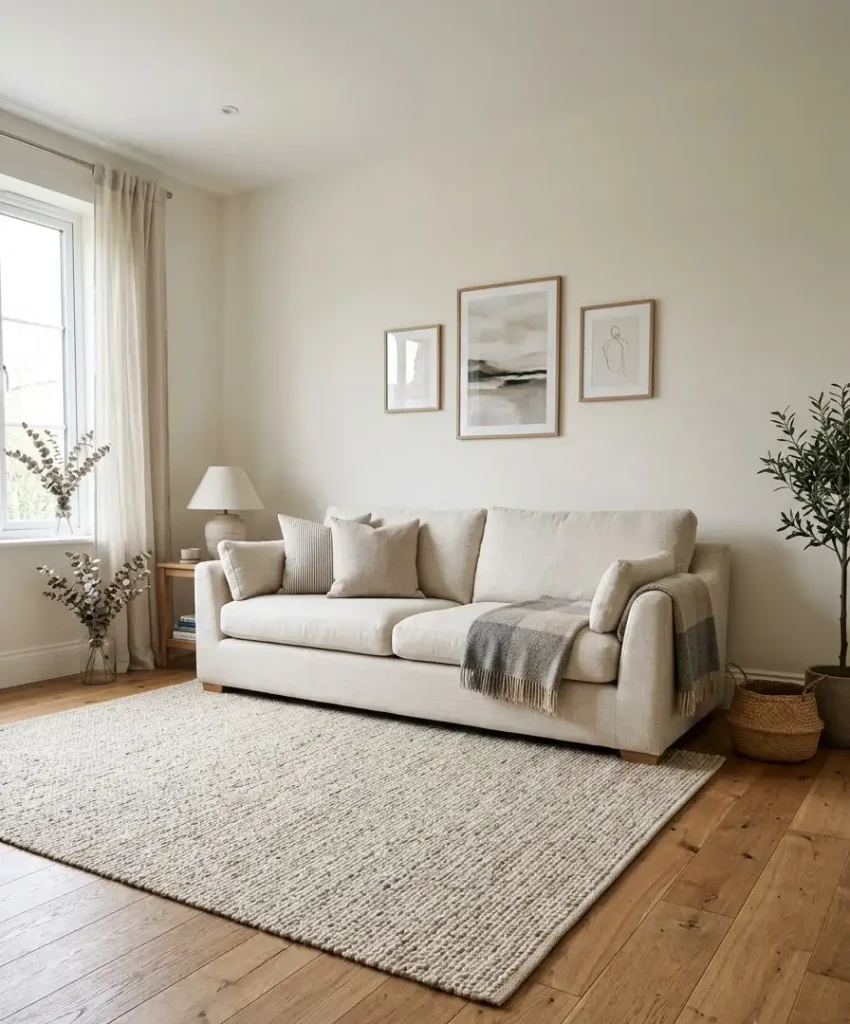
Pull your couch a few inches off the wall, even in a small apartment. It creates a sense of intention rather than a room that’s just storing furniture.
14. Create a real conversation zone
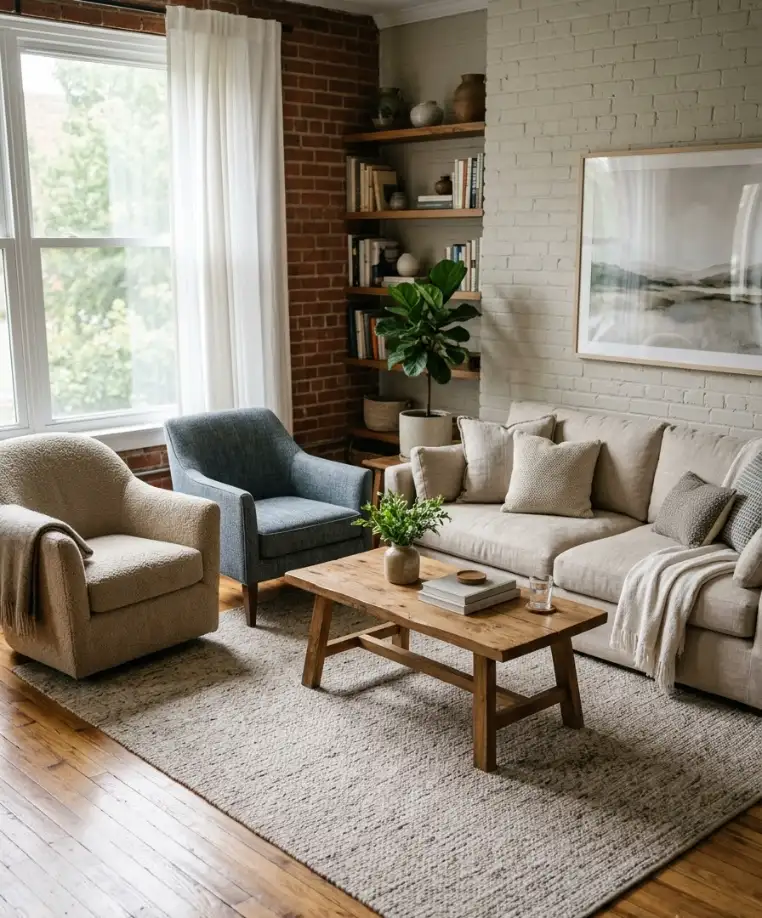
Angle chairs toward each other instead of lining everything up facing a TV. It’s a small change that makes the room feel like it’s built for people, not just for screen time.
I know the TV is usually the anchor point for most apartment layouts, and that’s fine.
But even a 15-degree angle on a side chair, instead of pointing it dead straight at the screen, makes the space feel like it was arranged by someone rather than just filled in.
15. Add a low coffee table or ottoman
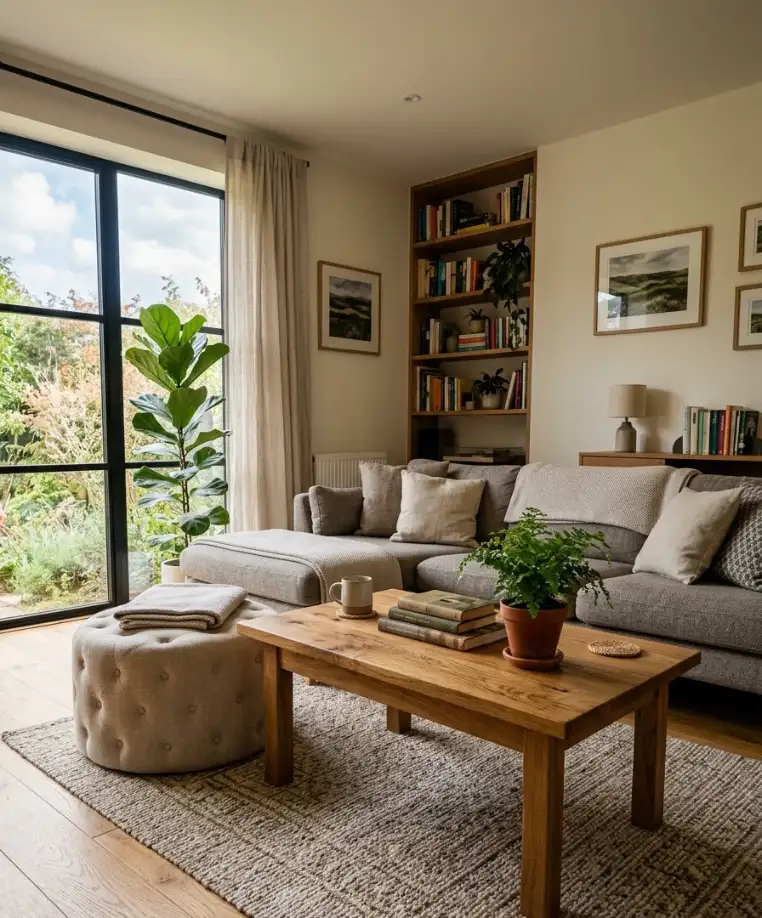
A coffee table anchors a seating group and gives the whole layout a center of gravity.
If space is tight, an upholstered ottoman does double duty as a footrest, extra seating, or a tray table.
16. Don’t overcrowd a small room
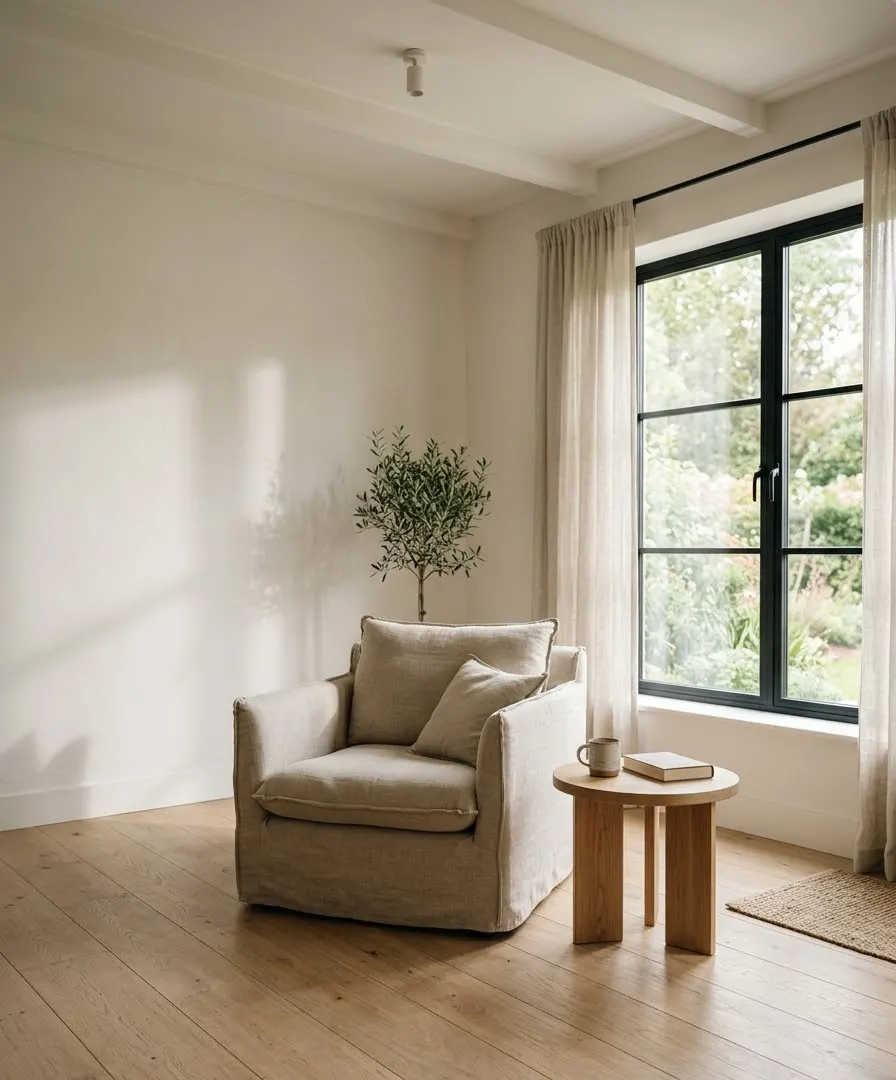
This one’s counterintuitive: sometimes cozy means less, not more. One oversized armchair with room to breathe beats three mismatched chairs crammed into a corner.
This is the point where I’ll push back a little on typical decor advice, since a lot of it treats “more layers” as the answer to everything. More rugs, more pillows, more art.
At some point you cross from cozy into cramped, and the room stops feeling relaxing and starts feeling like storage. If you can’t walk through a space comfortably, no amount of texture will fix that.
Small details that punch above their size
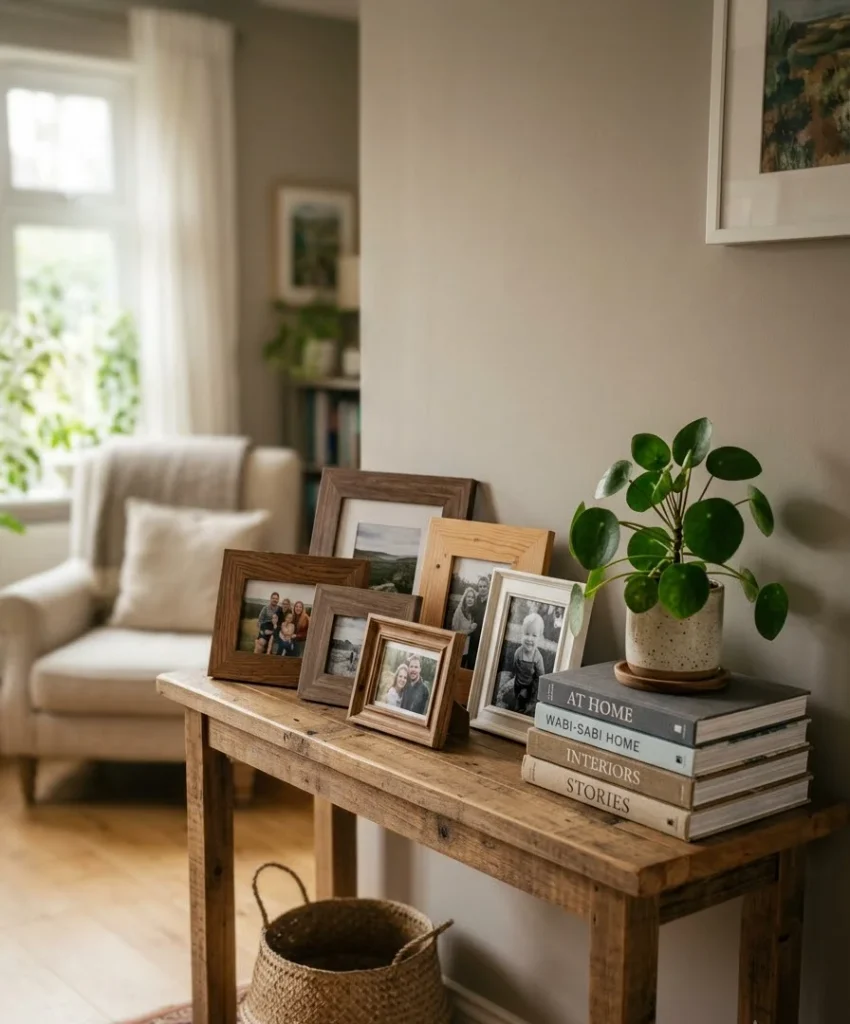
This is where I have opinions, and I’ll admit some of them are unpopular. A lot of “cozy decor” advice online treats every surface like it needs to be filled. In my experience, the opposite is true.
A few well-chosen objects beat a shelf crammed with knickknacks every single time.
- Personal photos in mismatched frames. A gallery wall of real memories does more for warmth than any stock art print ever will.
- One plant, well placed. You don’t need a jungle. A single pothos or snake plant near a window adds life without upkeep stress.
- A stack of books you’ve actually read. Not props. Real ones. It’s a small thing, but it makes a room feel lived in rather than staged.
17. Introduce greenery
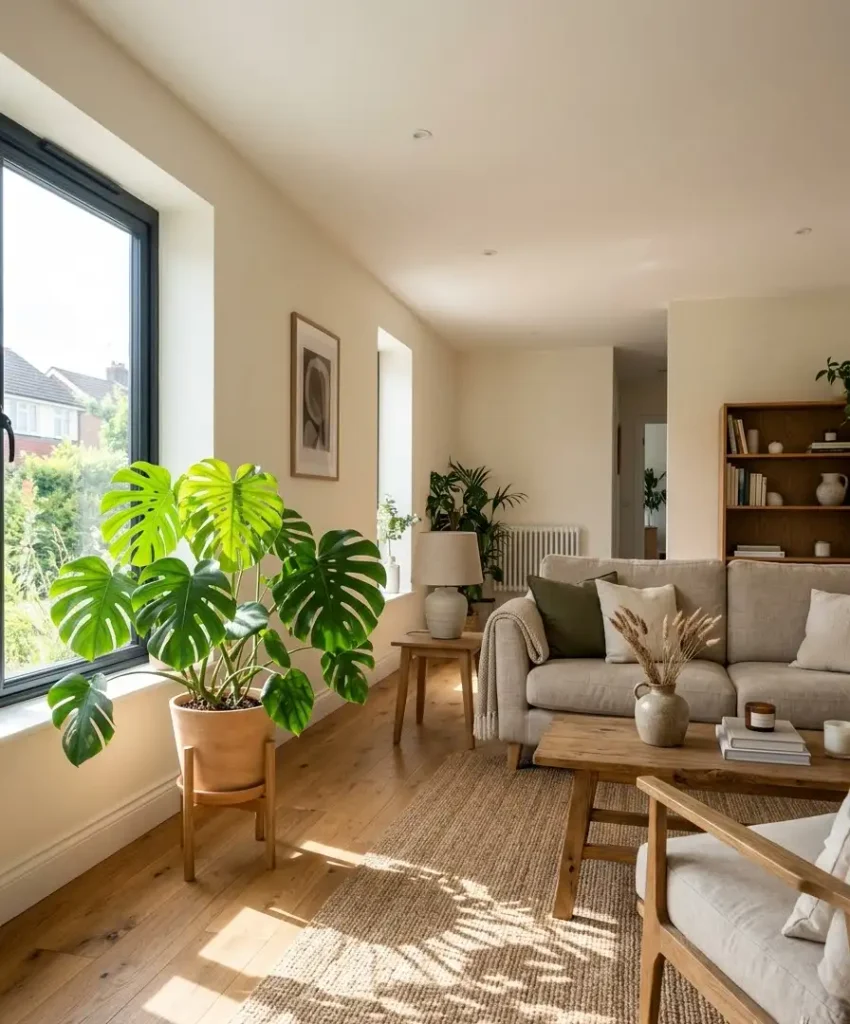
Plants do more than decorate. NASA’s Clean Air Study, often cited in home design circles, found that certain houseplants can help filter common indoor air pollutants, which is a nice bonus on top of the visual warmth they add.
18. Style your bookshelf like a person actually reads there
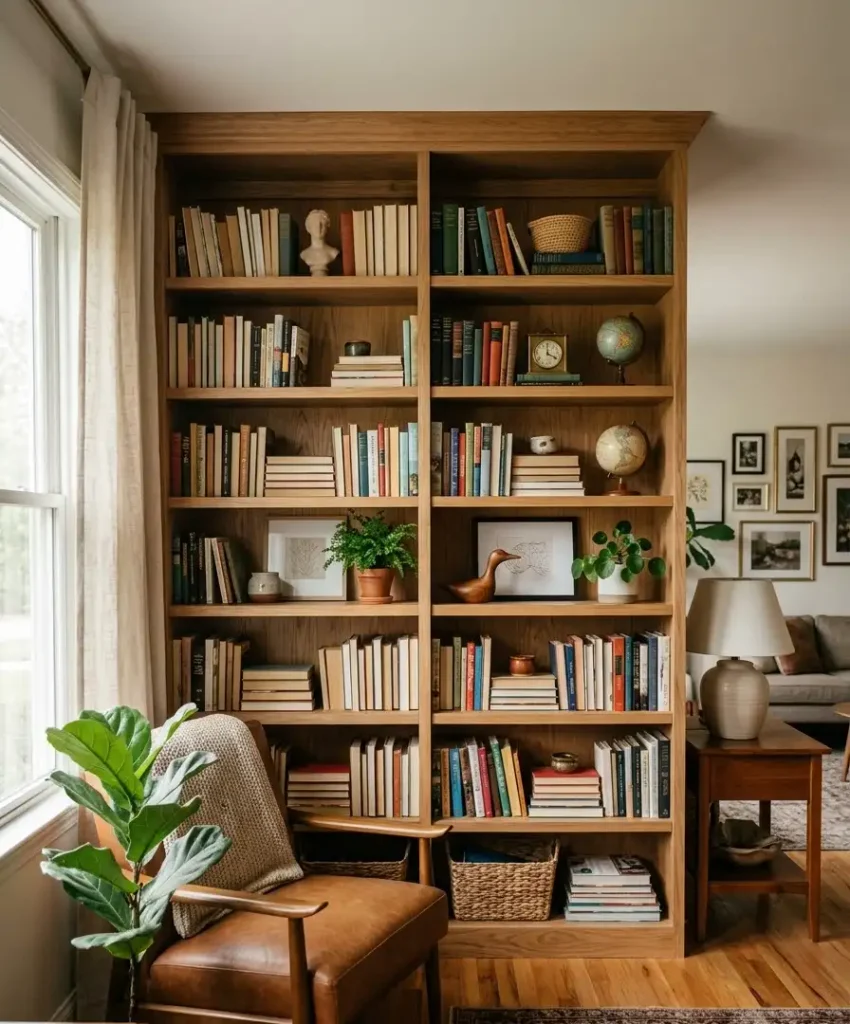
Mix book spines facing out with a few facing in, stack some horizontally, and tuck a small object between groupings. Perfectly aligned spines look like a furniture showroom, not a home.
19. Add a scent
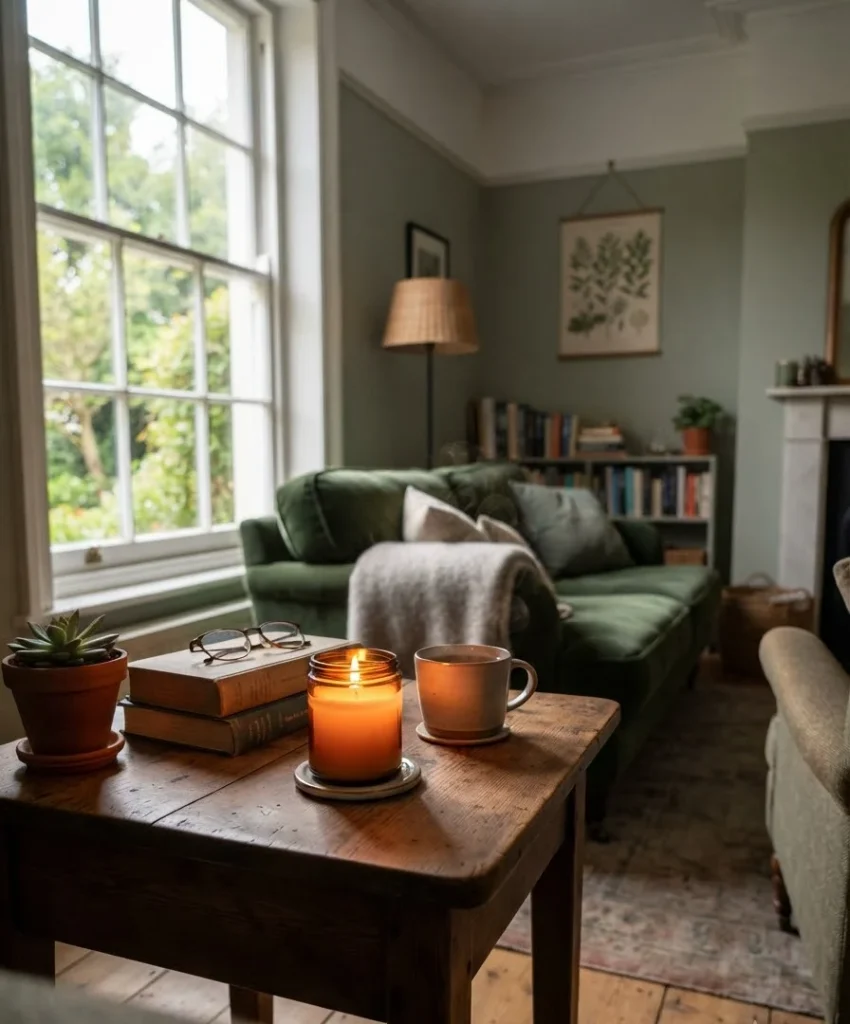
Cozy isn’t only visual. A candle in cedar, vanilla, or something spiced ties the whole sensory experience together.
This is the kind of detail people notice without knowing why they feel comfortable.
I keep one scent for fall and winter and swap to something lighter, like a fresh linen or citrus note, once spring hits.
It’s a small ritual, but it does something to how the room registers in your brain.
Smell is tied closely to memory, so a consistent scent basically trains your brain to associate that space with relaxing the second you walk in.
20. Use trays to corral clutter
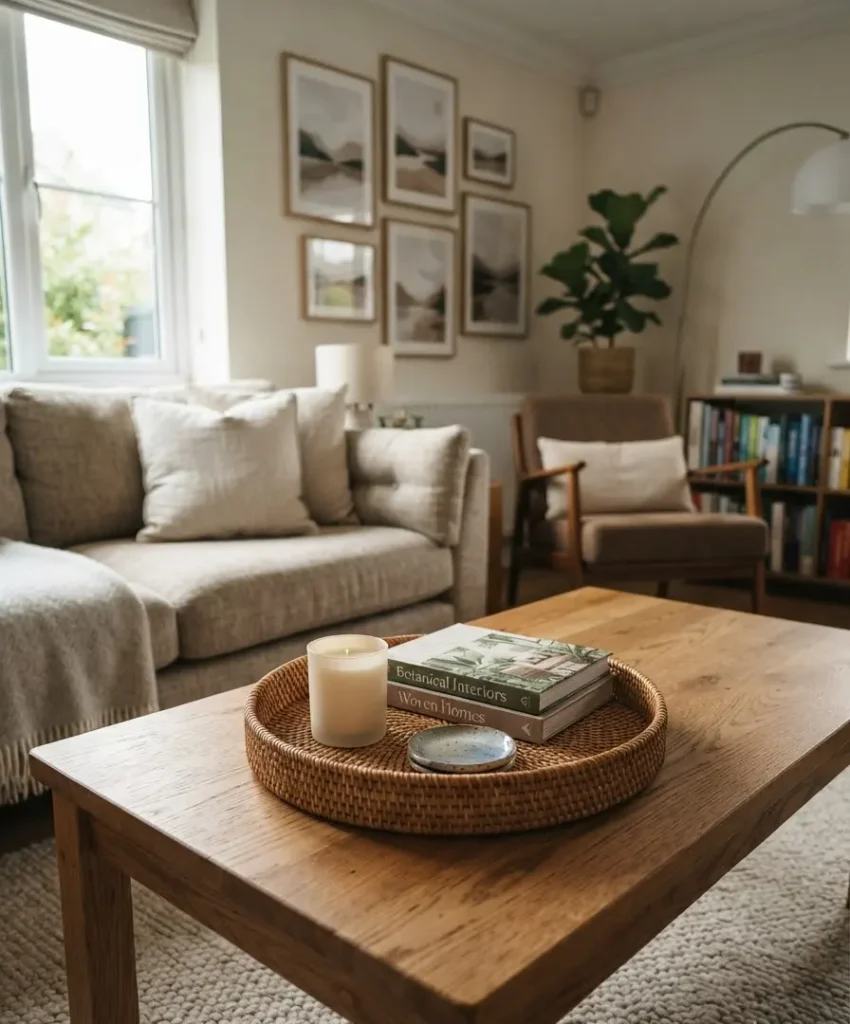
A simple wooden or woven tray on a coffee table keeps remotes, coasters, and mail from turning into visual noise, while still keeping everything within reach.
Random aside: I once spent two hours rearranging a single bookshelf because I couldn’t figure out why it looked “off,” only to realize I’d grouped all my tallest books together instead of mixing heights. Small thing. Drove me a little insane at the time.
Window and wall treatments for apartments
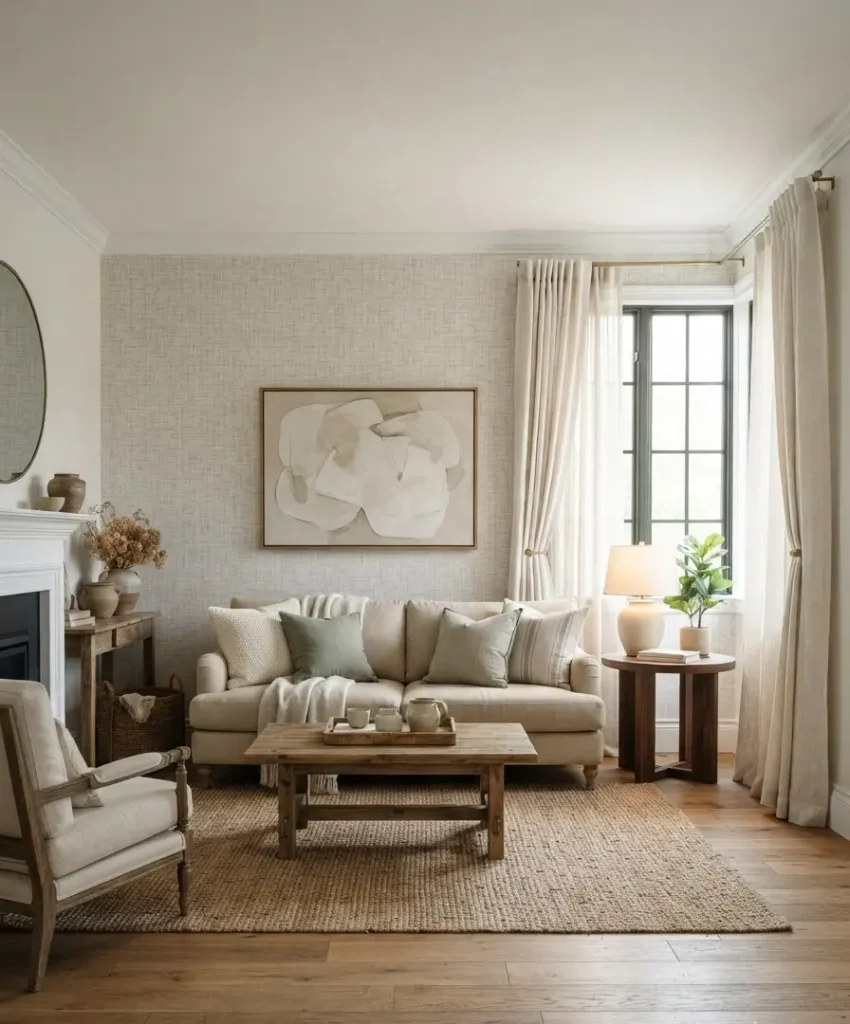
Renters get a bad deal when it comes to decor advice, since half of it assumes you can paint or drill wherever you want. These next few work even under strict lease terms.
21. Use removable wallpaper for an accent
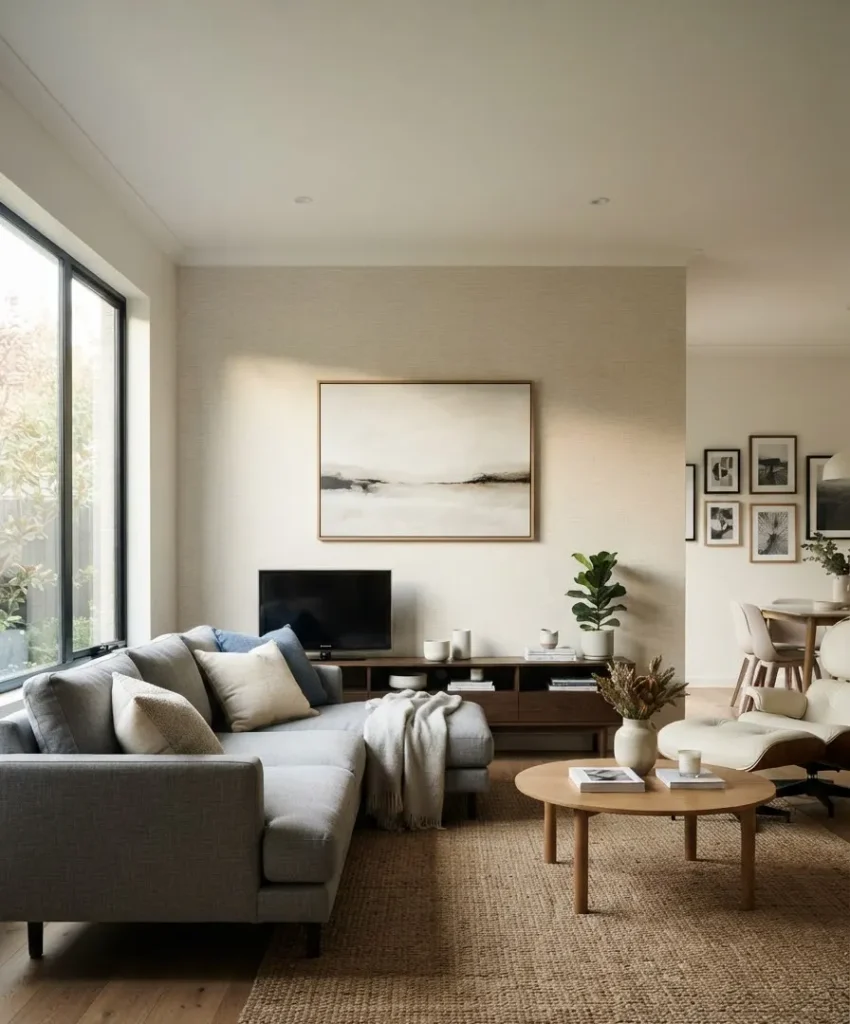
Peel and stick wallpaper has come a long way. A textured or patterned wall behind your couch adds depth without touching the security deposit.
22. Layer window treatments
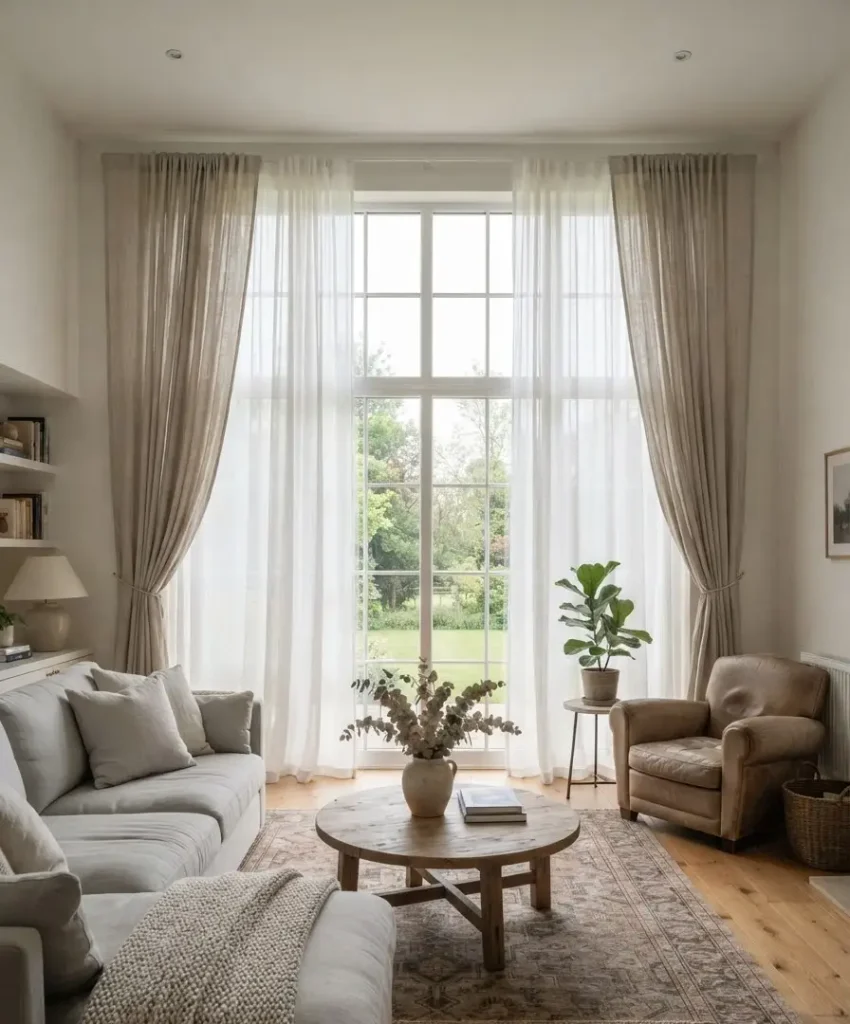
Sheer curtains paired with a heavier blackout panel give you both softness during the day and coziness at night.
Command hooks or tension rods make this doable without a single nail hole.
23. Hang art at the right height
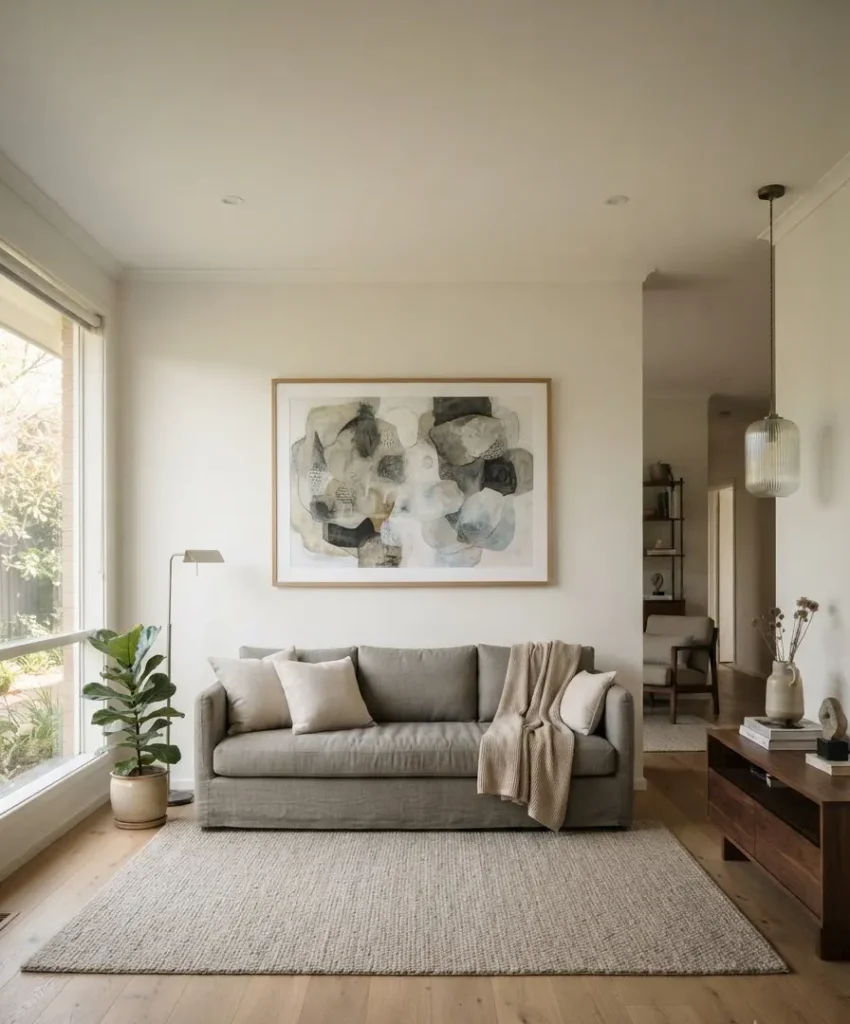
Art hung too high is one of the most common mistakes in small apartments. Center your piece at roughly eye level, around 57 inches from the floor to the middle of the frame, and the whole wall will look more intentional instantly.
Museums have used this 57-inch rule for decades because it’s roughly average adult eye level, and it works just as well over a couch as it does in a gallery.
If you’re hanging a piece above furniture, leave 6 to 10 inches between the top of the couch and the bottom of the frame.
Any more than that and the art starts to look disconnected, like it’s floating on its own.
24. Create a cozy corner, not just a cozy room
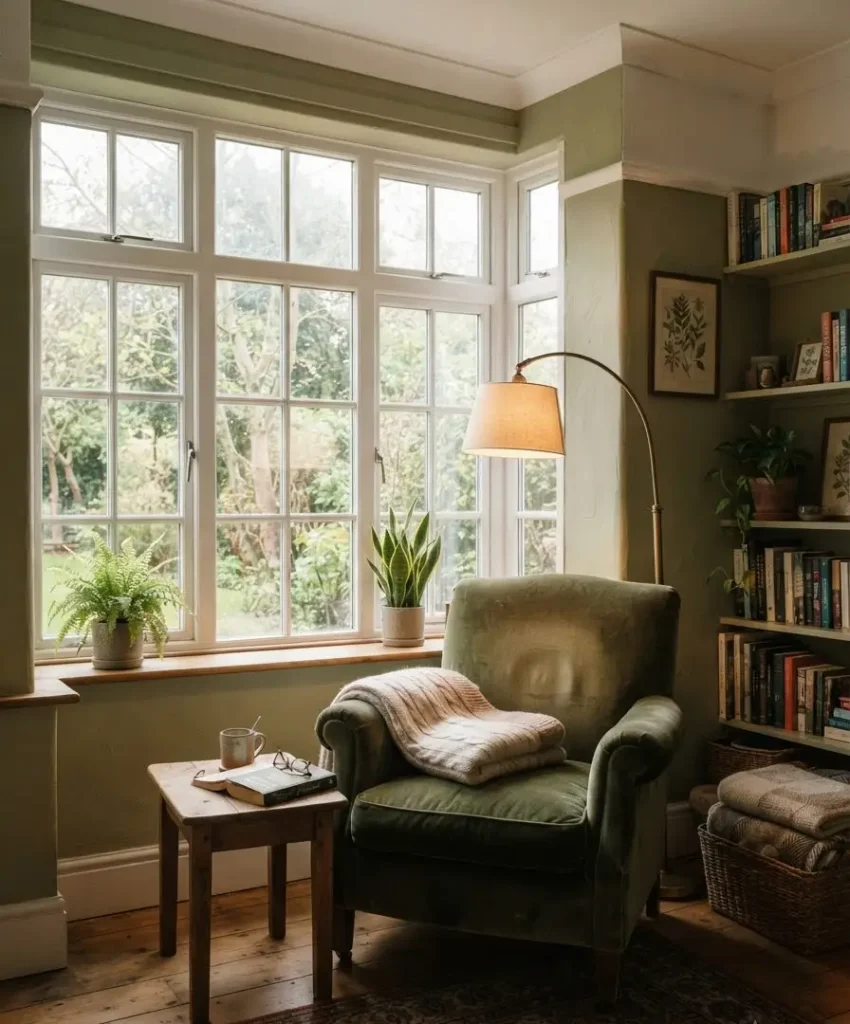
You don’t need to redesign the entire space at once. Pick one corner, a reading nook by a window or a spot next to a lamp, and make that area as comfortable as possible first. Momentum tends to follow.
What I’d skip if I were starting from scratch
If you’re working with a tight budget or a small space, not every idea on this list deserves equal priority.
Here’s where I’d actually put my money and time first, based on what made the biggest difference in my own apartments.
- Lighting first, always. It’s the cheapest change with the most noticeable payoff, and it affects every other choice you make after it. A gorgeous rug under bad lighting still looks flat.
- One statement textile over five small accents. A single great throw blanket or rug beats five mismatched decorative objects that don’t really talk to each other.
- Skip trend colors you don’t actually like. I painted a wall a trending sage green once because every design account was using it. I never loved it, and repainted within a year. Pick colors that feel like you, not colors that feel like the algorithm.
A quick note on budget, since this comes up a lot. You genuinely don’t need to spend more than the cost of a nice dinner out to make a noticeable difference.
A pack of warm bulbs, one throw blanket, and a couple of secondhand frames can transform a room for well under fifty dollars.
Save the bigger purchases, like a new sofa or a designer rug, for once you know what direction you actually want the room to go.
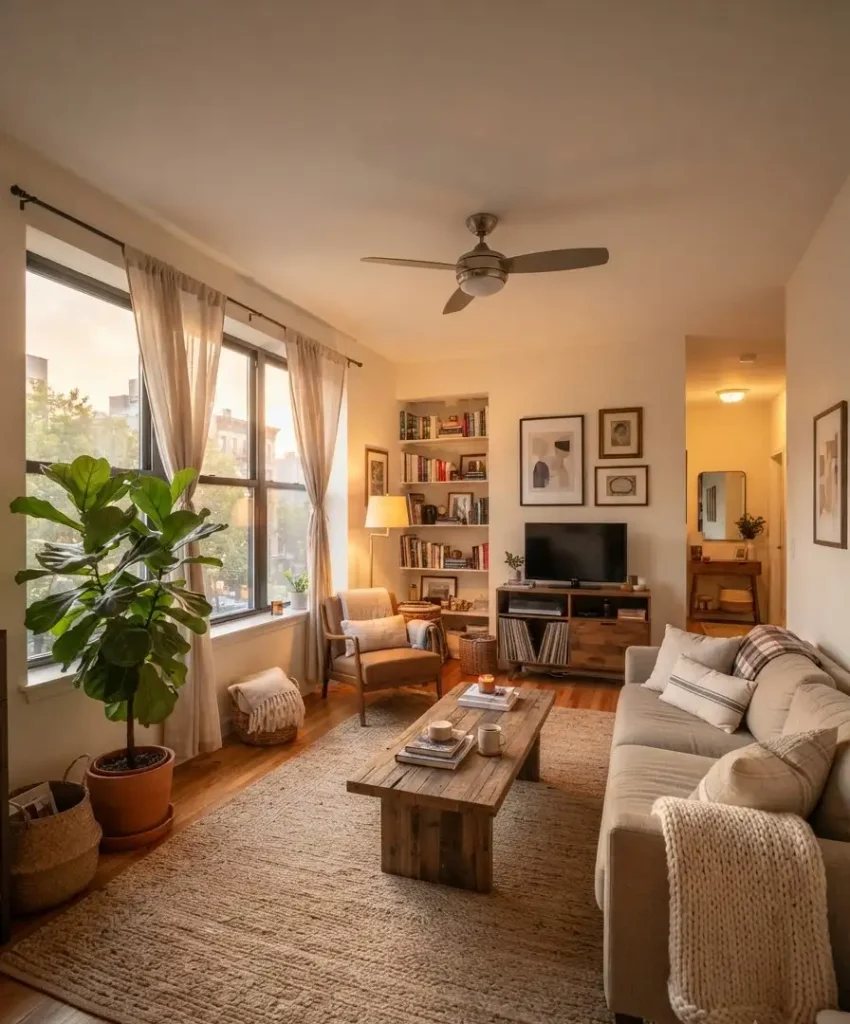
If you want more layout inspiration before you commit to anything, sites like Homes & Gardens and Decorilla both round up real designer projects worth scrolling through for ideas you can adapt to a smaller footprint.
Quick reference: cozy elements at a glance
| Element | Budget-friendly option | Bigger upgrade |
|---|---|---|
| Lighting | Warm-bulb lamp | Dimmer-controlled sconces |
| Texture | Throw blanket + pillows | Layered wool rugs |
| Color | Colored vase or books | Accent wall paint |
| Layout | Float the couch | New modular seating |
A few frequently asked questions
Do I need to paint to make my living room feel cozy? No. Paint helps, but lighting, texture, and layout changes can transform a rented space just as much, and none of them need landlord approval.
What’s the fastest way to make a small apartment living room feel warmer? Swap your bulbs to a warmer color temperature and add one textured throw blanket. Both take under 20 minutes and the difference is immediate.
Are dark colors a bad idea in a small living room? Not necessarily. A single dark accent wall paired with good lighting can actually make a small room feel intentional rather than cramped.
The mistake is using dark tones everywhere with no light to balance them out.
How long does it usually take to make a living room feel cozy? Honestly, less time than most people think. The lighting and textile changes on this list can be done in a single weekend.
The layout and art changes are worth spreading out over a few weeks so you can actually live with each decision before committing further.
Final thought
A cozy living room isn’t something you buy in one trip to a home goods store. It’s built in layers, over a few weekends, with choices that fit how you actually live in the space.
Start small, live with each change for a few days before adding the next one, and trust your own reaction over anyone else’s opinion, mine included.
If a rug feels right under your feet, it’s right, regardless of what the current trend cycle says.
Which of these 24 ideas are you trying first, the lighting swap or the accent wall? Save this list for your next apartment refresh and let me know how it turns out.