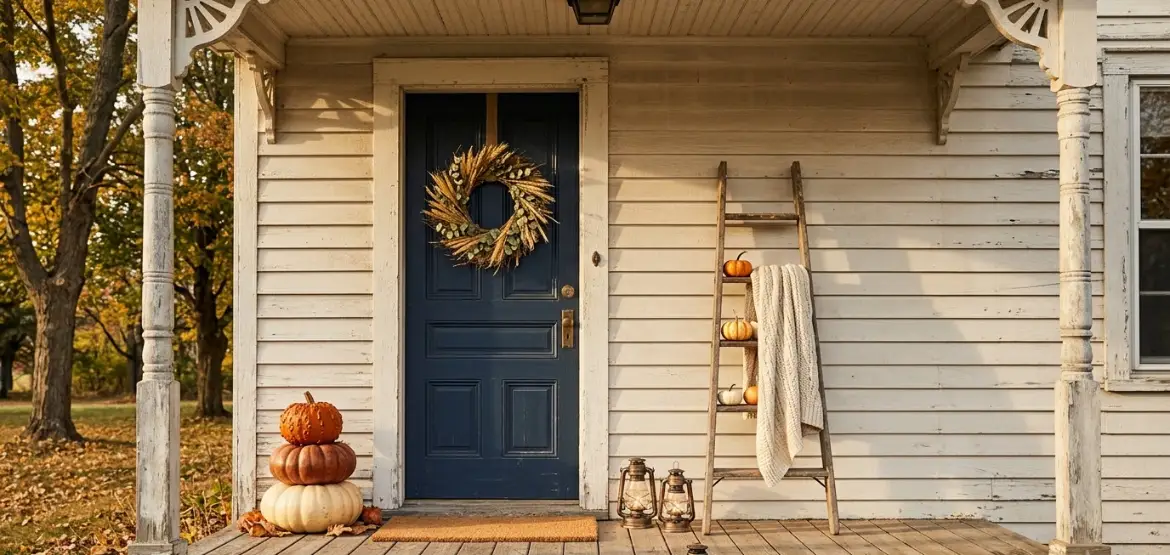
Your porch is 4 feet wide, your landlord hates nails, and Pinterest keeps showing you farmhouse entries with 14 pumpkins and a hand-built wagon. I get it.
I’ve spent more than one November staring at a doormat-sized patch of concrete and wondering how anyone fits a “harvest vignette” on it.
Good news: a tiny space can look better than a big one, because every piece you add gets noticed.
A small porch forces you to edit, and editing is most of what good decorating is.
This guide covers layouts, color palettes, lighting, renter-safe tricks, and a few mistakes I’ve made so you don’t have to.
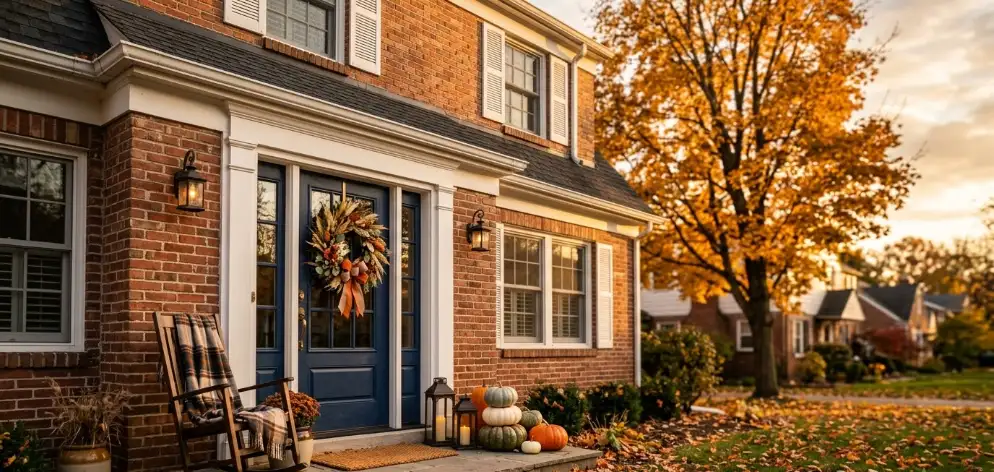
Start with what you actually have
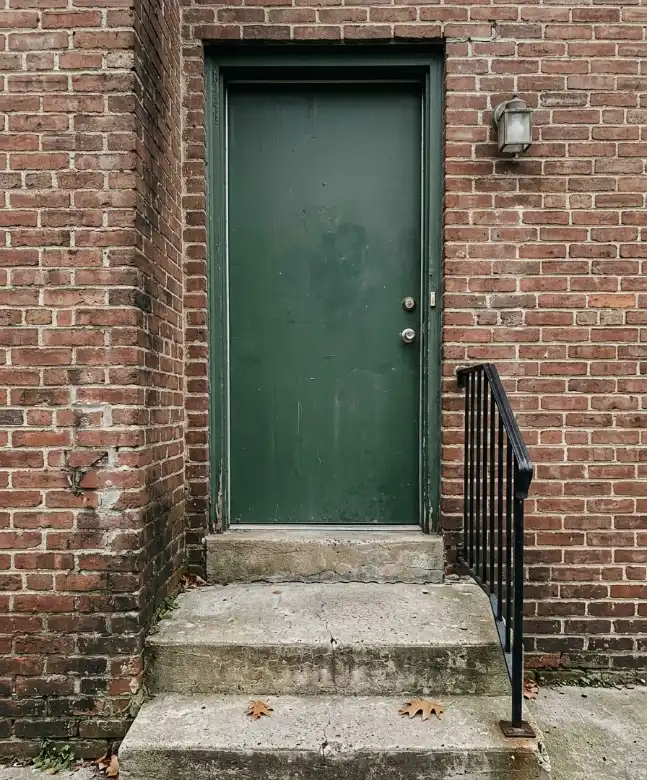
Before you buy a single gourd, spend 5 minutes looking at your entry like a stranger would.
What do you see first? For most small porches, it’s the door, the mat, and whatever sits within 2 feet of either.
Measure the footprint
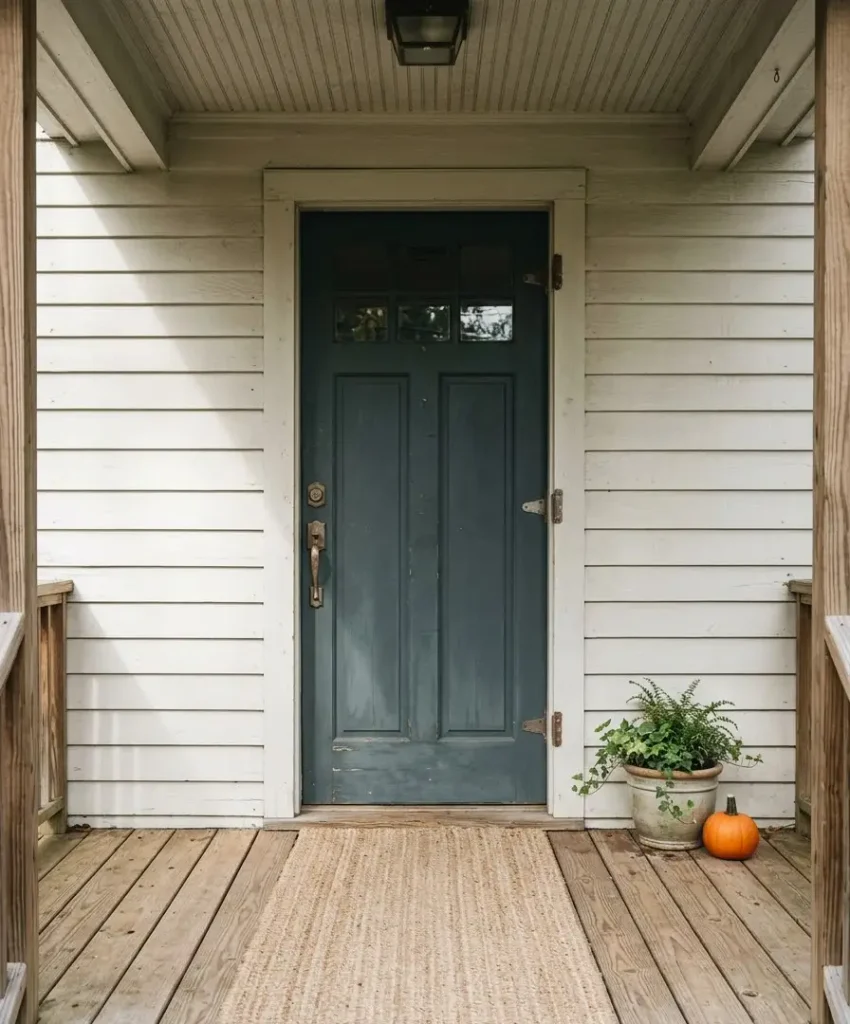
Grab a tape measure and write down three numbers: the width of your landing, the depth, and the height from floor to the top of your door frame.
I keep these in my phone notes because I always forget them in the store, then buy a planter that blocks the door swing. (Yes, I did that. Yes, my neighbor watched.)
Also check which way the door opens. If it swings out, nothing can live in that arc.
Leave at least 30 inches of clear walking space, and more if anyone in your home uses a stroller or mobility aid.
Read your lease and HOA rules
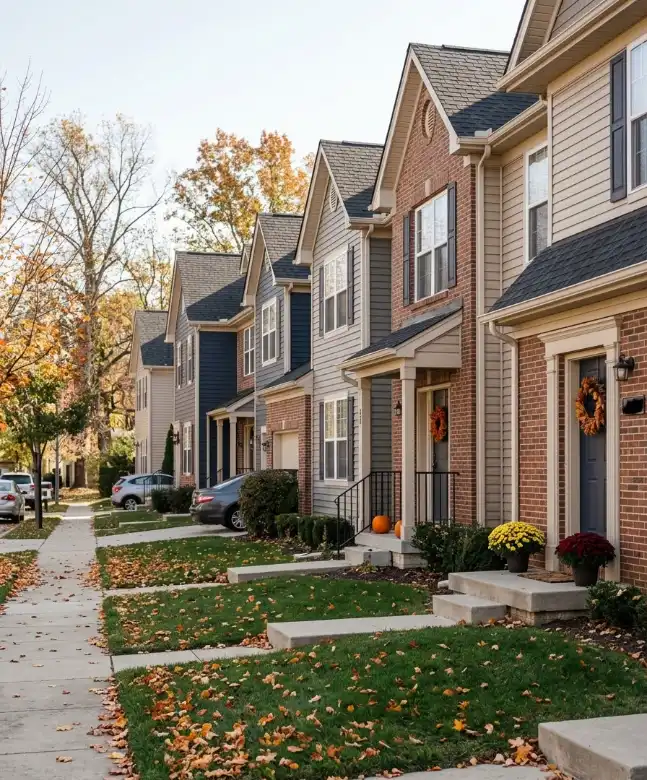
Apartment buildings and HOAs often limit what you can hang, plug in, or place in a shared hallway.
Some ban open flames outright, and some cap how long seasonal decor can stay up.
A quick email to your property manager takes 2 minutes and saves you a warning notice taped to your door.
Rule of thumb: if it needs a drill, a nail, or an open flame, ask first. Everything else in this article works without any of those, and I’ll flag the ones that need a check.
Pick a palette before you shop
Small spaces fall apart fast when you mix too many colors. I limit myself to 1 main color, 1 supporting color, and 1 neutral.
It sounds boring, but it photographs beautifully, and Pinterest loves a cohesive image.
Here’s a quick cheat sheet of palettes that work in tight spaces:
| Palette | Main colors | Best for | Vibe |
|---|---|---|---|
| Classic harvest | Burnt orange, deep red, cream | Brick or white doors | Warm and traditional |
| Muted neutral | White, tan, sage green | Gray or black doors | Calm and modern |
| Moody autumn | Burgundy, plum, black | Dark or navy doors | Dramatic and cozy |
| Natural wood | Brown, straw, rust | Wood or green doors | Rustic and relaxed |
IMO the muted neutral palette is the easiest to pull off. White and cream pumpkins against a dark door look expensive even when you bought them at a grocery store for 4 dollars each.
If you rent and can’t change your door color, build the palette around it. Look at your door, your walls, and your railing, then pick decor that sits next to those colors instead of fighting them.
Dress the door first
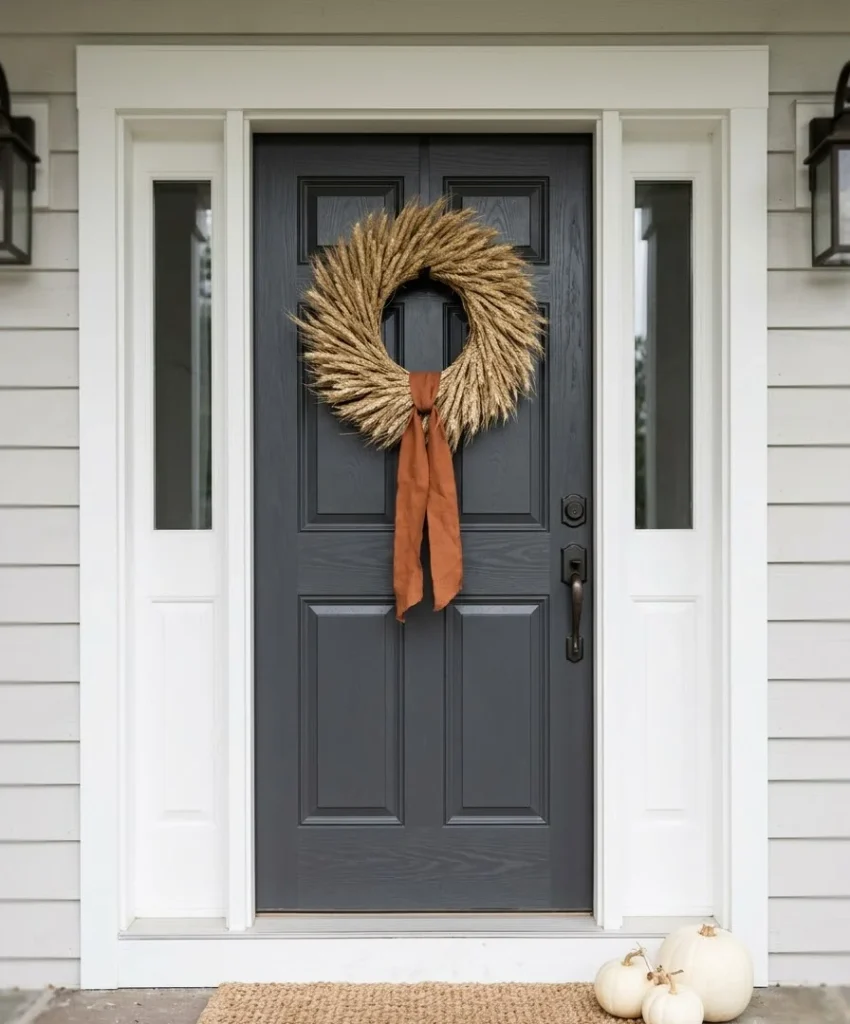
The door is your biggest vertical surface, and in a small space, it does most of the work. A single wreath can carry the whole look if you choose well.
Wreaths that fit narrow doors
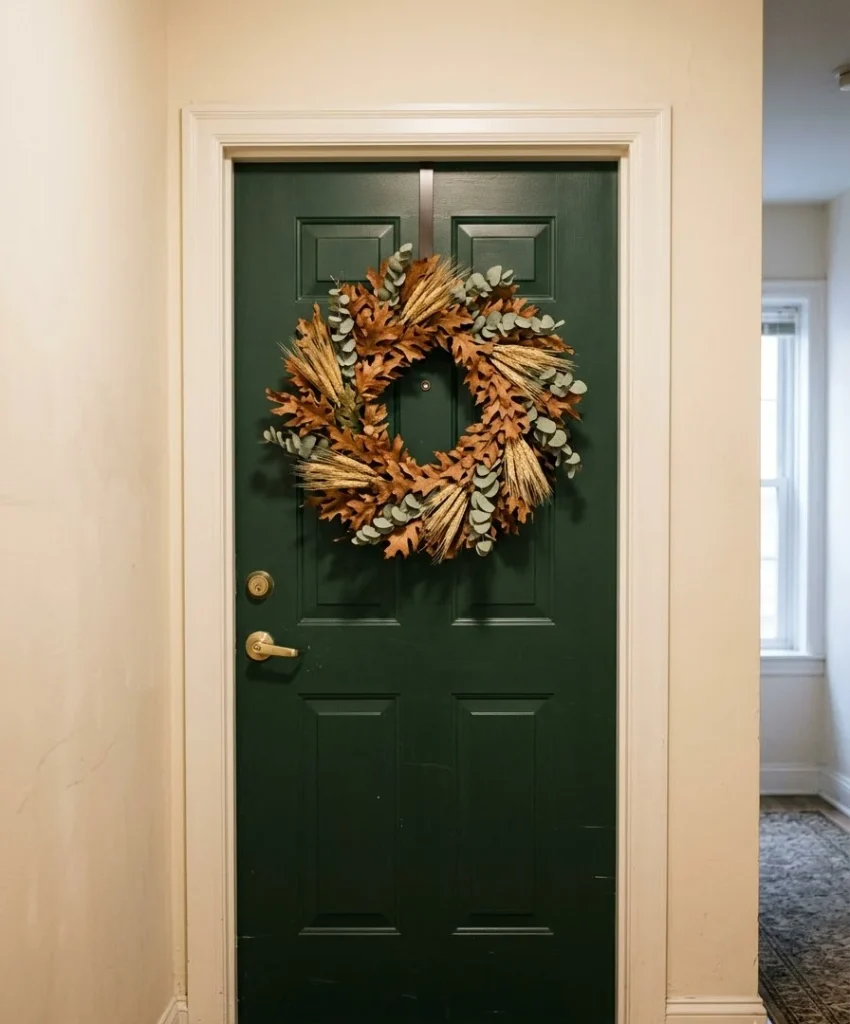
Pick a wreath about two-thirds the width of your door. Anything bigger swallows the frame, and anything smaller looks lost. For narrow apartment doors, an 18 to 20 inch wreath usually works best.
I like dried wheat, eucalyptus, and preserved oak leaves. They hold their shape through rain better than cheap silk florals, and they don’t shed all over your mat.
Wow, the difference a good wreath makes is wild. I swapped a bargain-bin wreath for a simple wheat one last year, and three neighbors asked where I bought it.
Hanging it without damaging the door
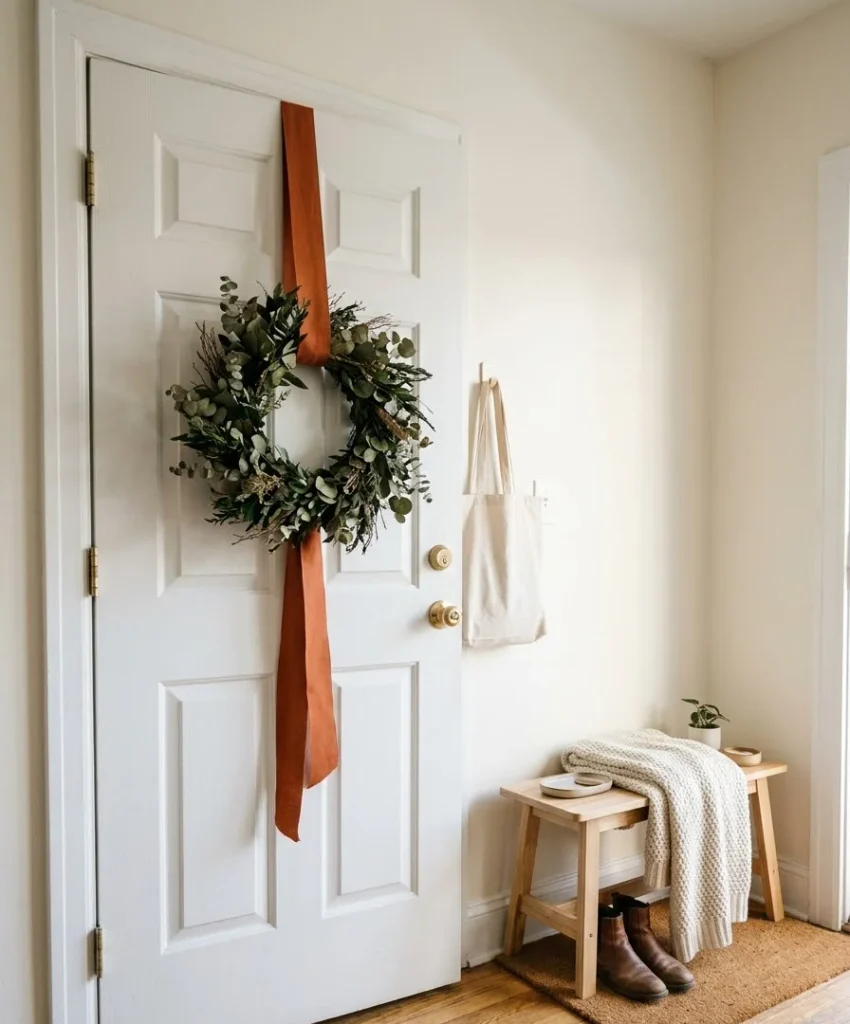
You have a few renter-safe options:
- Over-the-door hanger: The classic. Pick one with a felt or rubber pad so it won’t scratch.
- Removable adhesive hook: Check the weight rating and clean the door with rubbing alcohol first. I trust these for wreaths under 2 pounds.
- Magnetic hook: Only works on steel doors, but it holds firmly and leaves zero marks.
- Ribbon over the top edge: Loop a wide ribbon over the door and let the wreath hang from it. I love this one because the ribbon adds a second color for free.
Door hangers and garlands
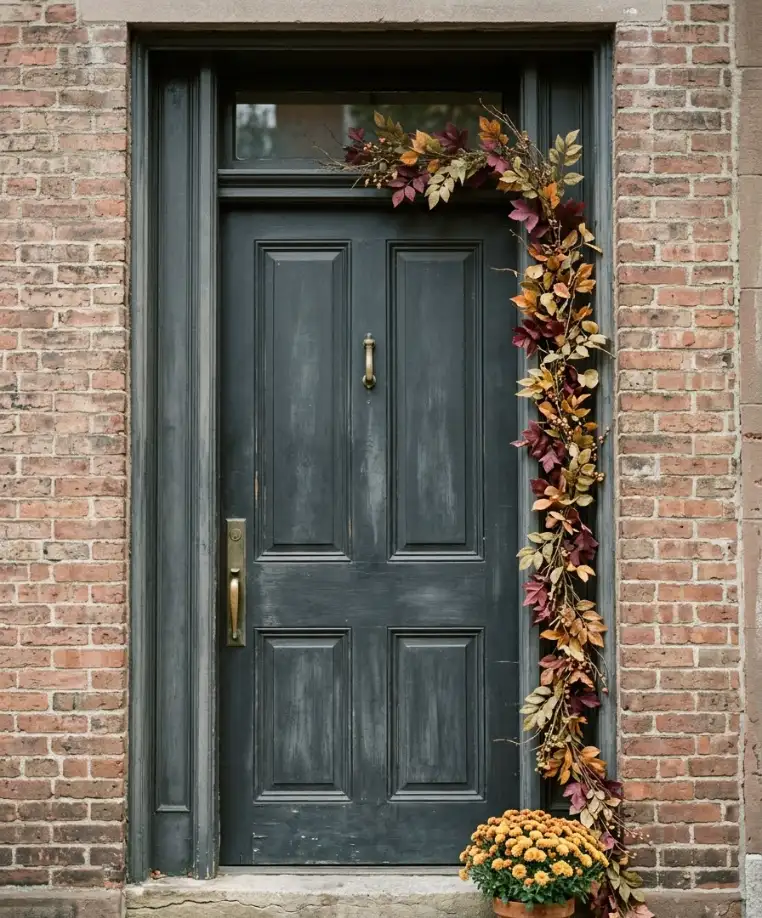
If a wreath feels too bulky, try a vertical door hanger or a slim garland framing the door. Narrow doors suit this better than people expect.
A thin strand of faux autumn leaves down one side draws the eye upward and makes the entry feel taller.
Layouts that work in 4 feet of space
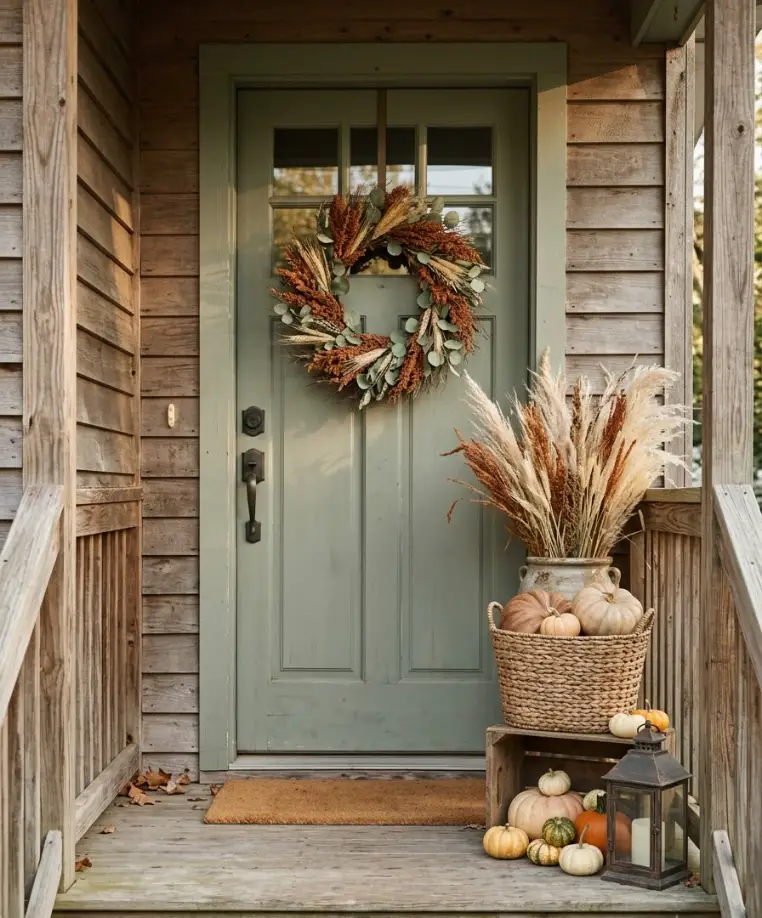
Small porches reward height and layering. Put everything on the floor and the whole thing reads as clutter.
Spread decor across three levels (floor, mid-height, and eye level) and the same items look intentional.
The one-corner approach
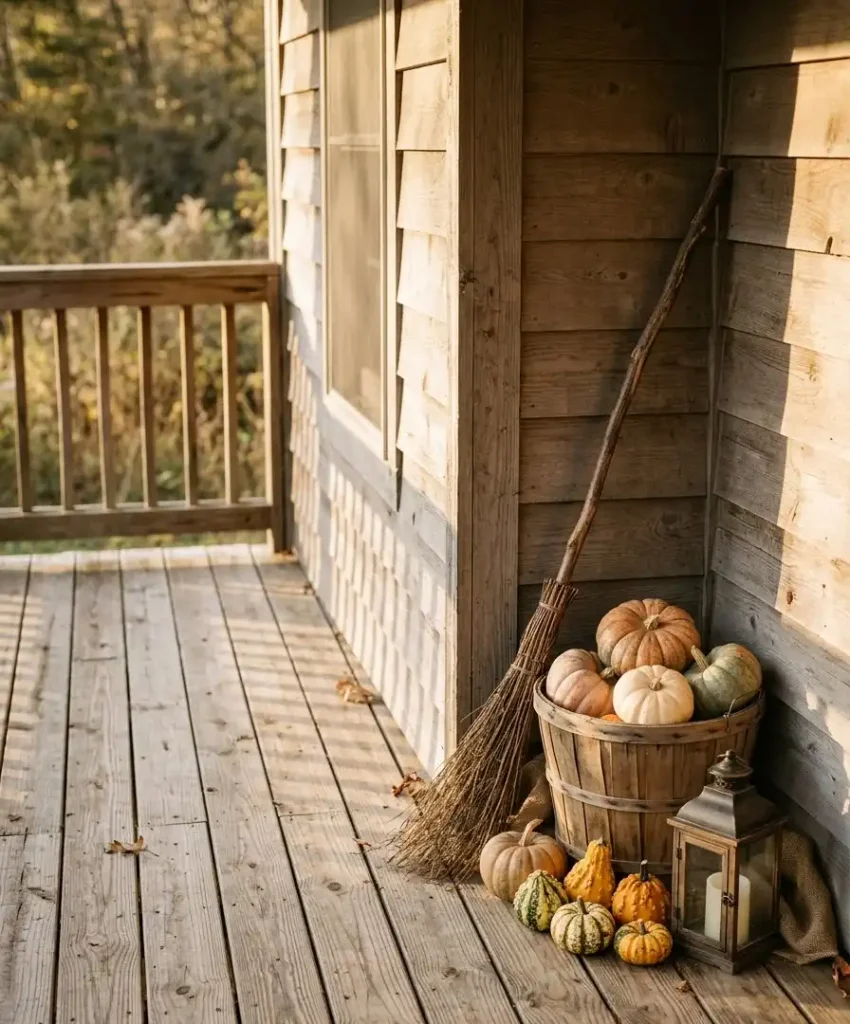
Choose one corner and put everything there. Skip the symmetrical setup on both sides of the door, because it halves your impact. A single, fuller cluster looks better than two thin ones.
My go-to formula for a corner: one tall item at the back (a broom, a tall planter, or a leaning ladder), a medium item in the middle (a basket or stack of
pumpkins), and a few small items at the front (gourds, a candle lantern, a mini pumpkin). It’s an old stylist trick, and it works in 3 square feet.
The doormat as your anchor
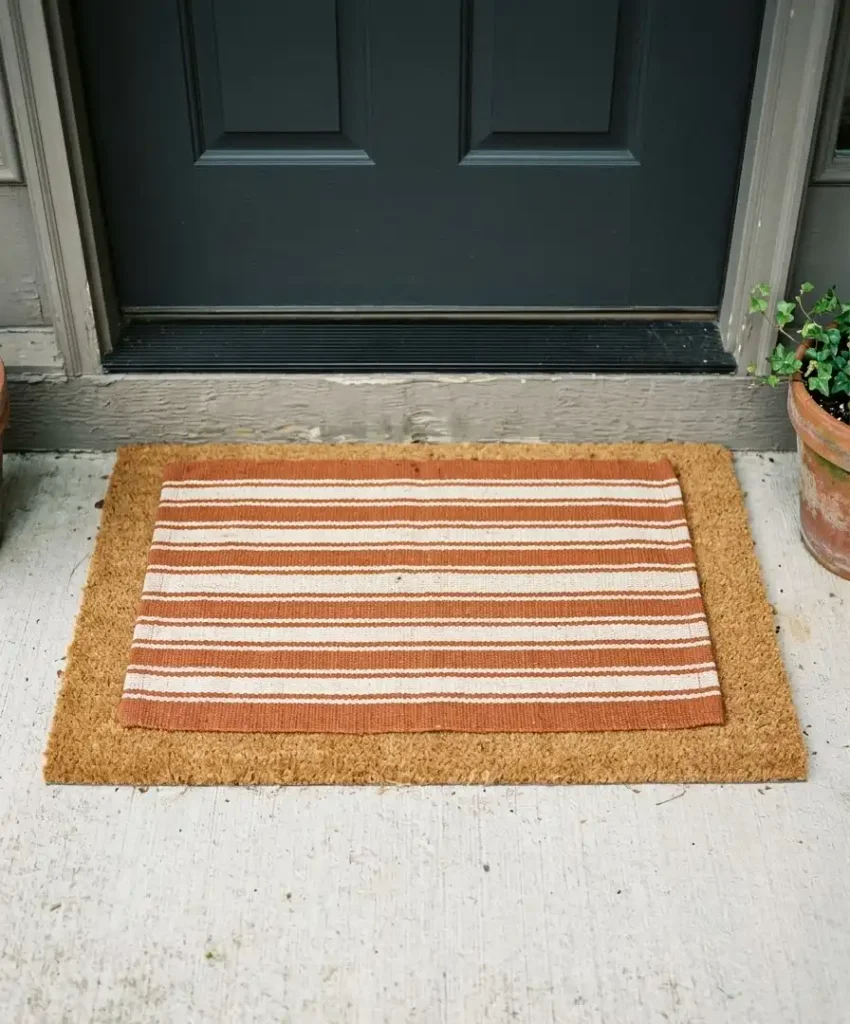
A good doormat does more than catch dirt. It sets the color story and gives the eye a landing spot. Look for a flat, low-profile mat so your door still opens without scraping.
You can layer a smaller seasonal mat over a plain one if your building supplies a standard mat. I do this every fall.
A $12 “gather” mat on top of a plain coir base looks custom, and it comes off in two seconds when the holiday ends.
Going vertical
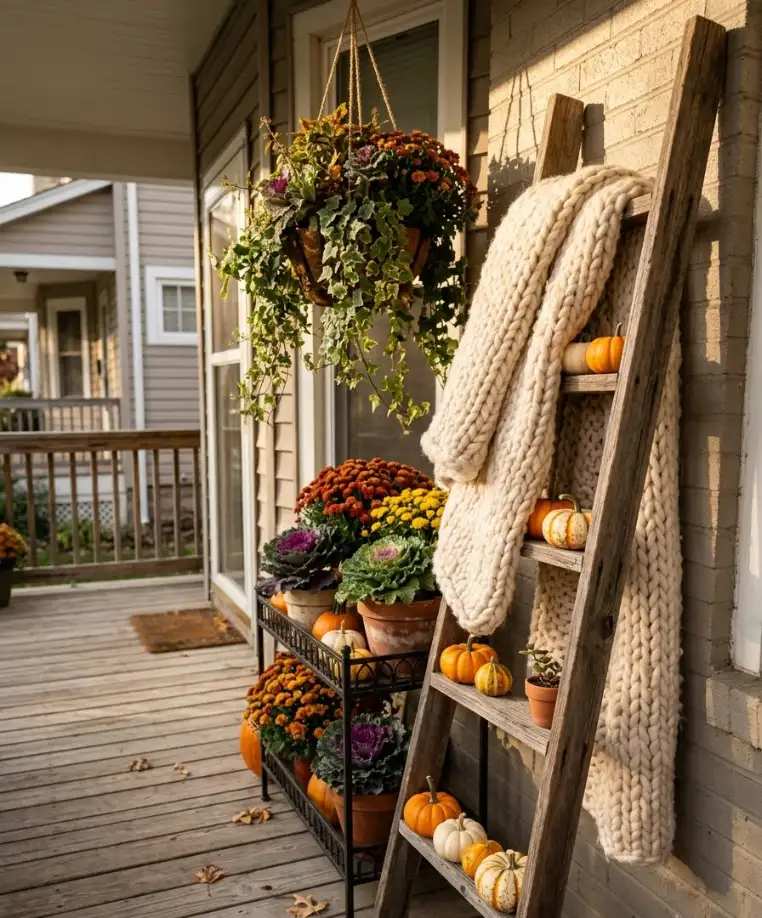
When floor space runs out, climb. A ladder shelf, a tiered plant stand, or a hanging basket gives you extra surface without eating into your walkway.
A leaning wooden ladder with a blanket draped over a rung and a few small pumpkins on the steps is one of the most pinned small-porch looks for a reason.
It takes up about 1 square foot of floor. Anchor it so it can’t fall if someone bumps it, and keep it away from the door swing.
Pumpkins, gourds, and corn on a budget
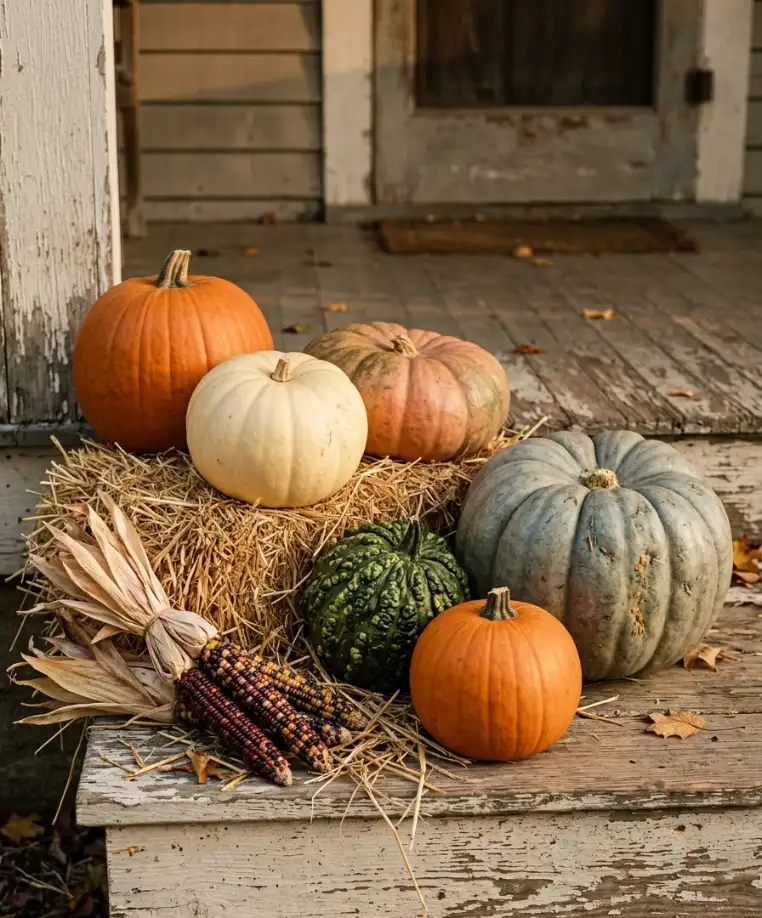
You don’t need 20 pumpkins. You need the right 5. I buy mine in late October, because prices drop and the selection is still decent.
Real versus faux
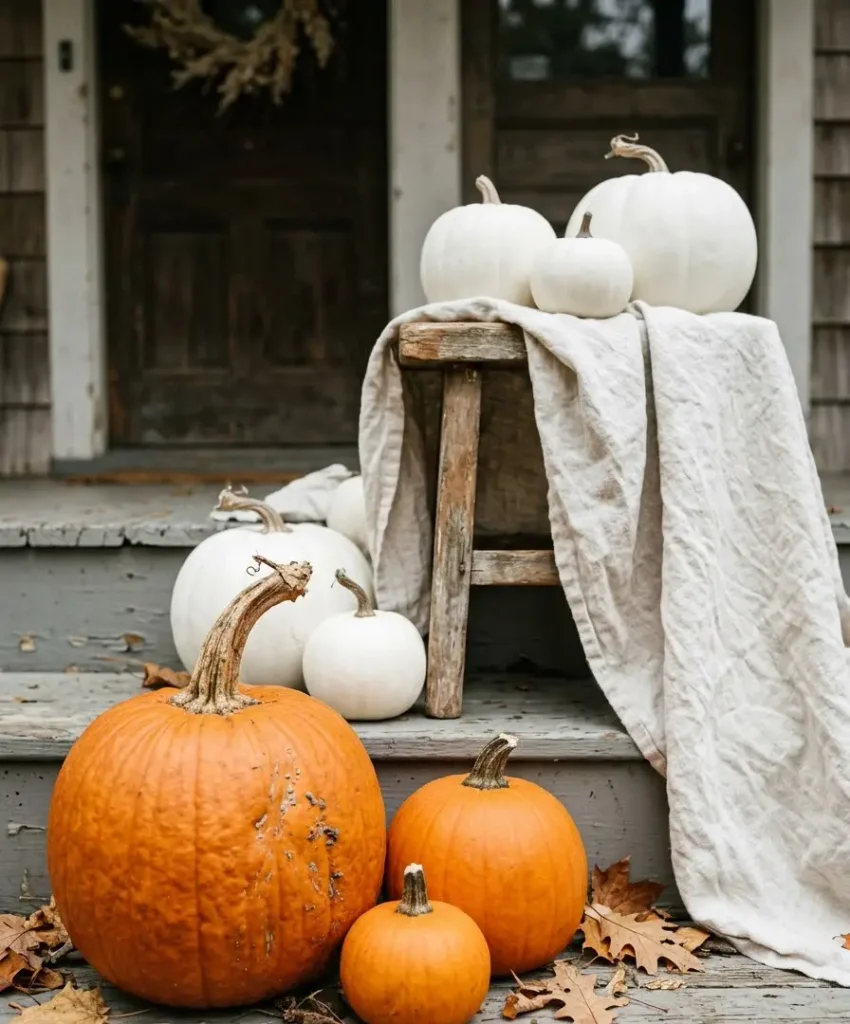
Real pumpkins look better up close and smell like fall. They also rot, attract squirrels, and turn soft within a few weeks, especially if the weather stays warm. Faux pumpkins last for years, don’t care about rain, and cost more upfront.
My honest take: mix both. Put real pumpkins at the front where they photograph well, and use faux ones in the back or up high where nobody inspects them.
I also keep a couple of white faux pumpkins in my storage bin that I’ve used for 4 seasons now.
Stacking and grouping
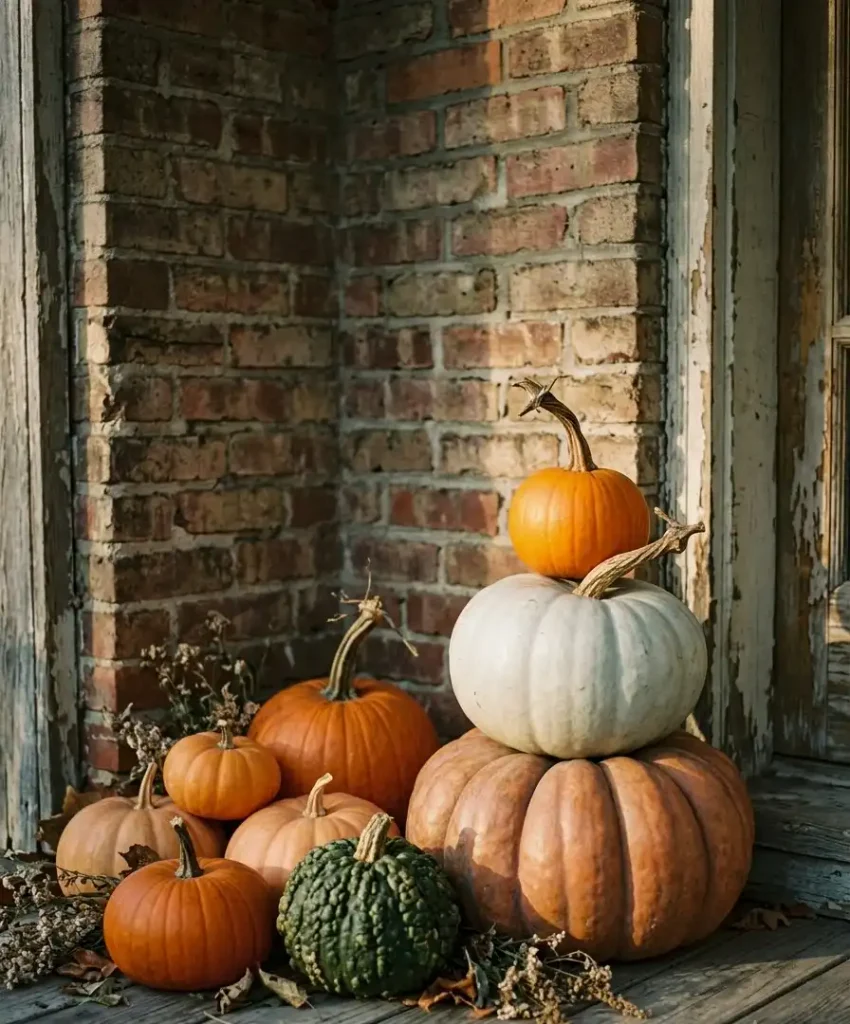
Stack pumpkins in different sizes with the biggest at the bottom. Odd numbers look more natural than even ones, so go for 3 or 5.
Turn the stems in slightly different directions so the pile looks collected, not manufactured.
Add texture next to them. A cluster of smooth pumpkins feels flat, but toss in one warty green gourd or a bundle of Indian corn and the whole group wakes up.
Cheap extras that look pricey
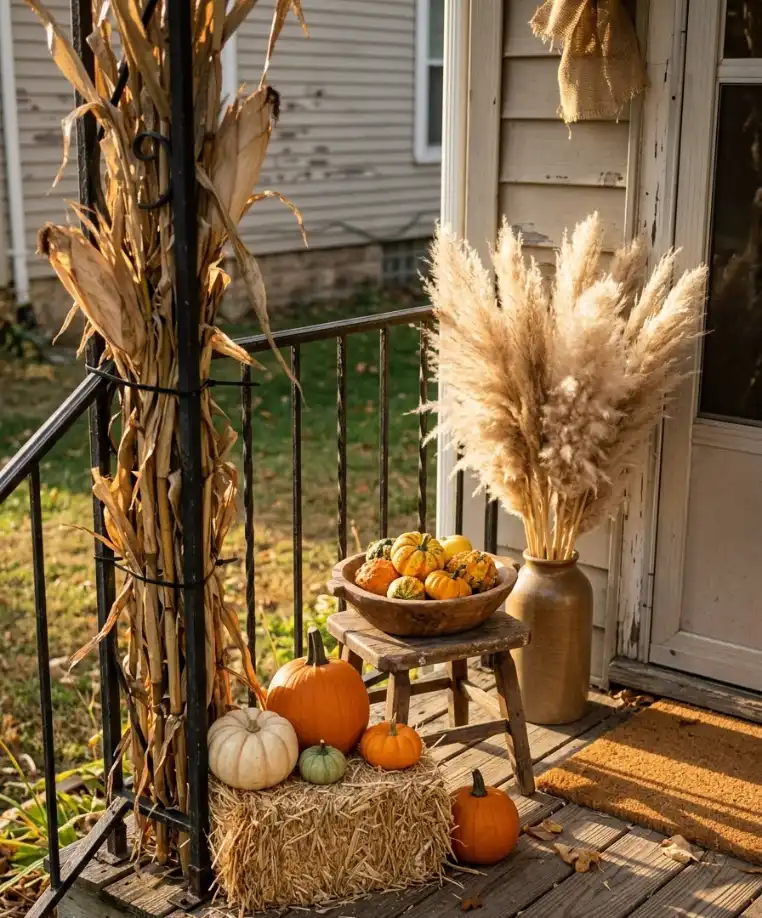
- Dried corn stalks: Zip-tie a small bundle to your railing or lean it by the door. Dollar stores often carry them.
- Mini gourds in a wooden bowl: Great on a small table or stool.
- Bundled wheat or pampas grass: Tuck into a tall vase or basket for height.
- Straw bales (mini): One small bale makes a rustic base for pumpkins and costs less than a latte.
Planters and mums for tight spaces
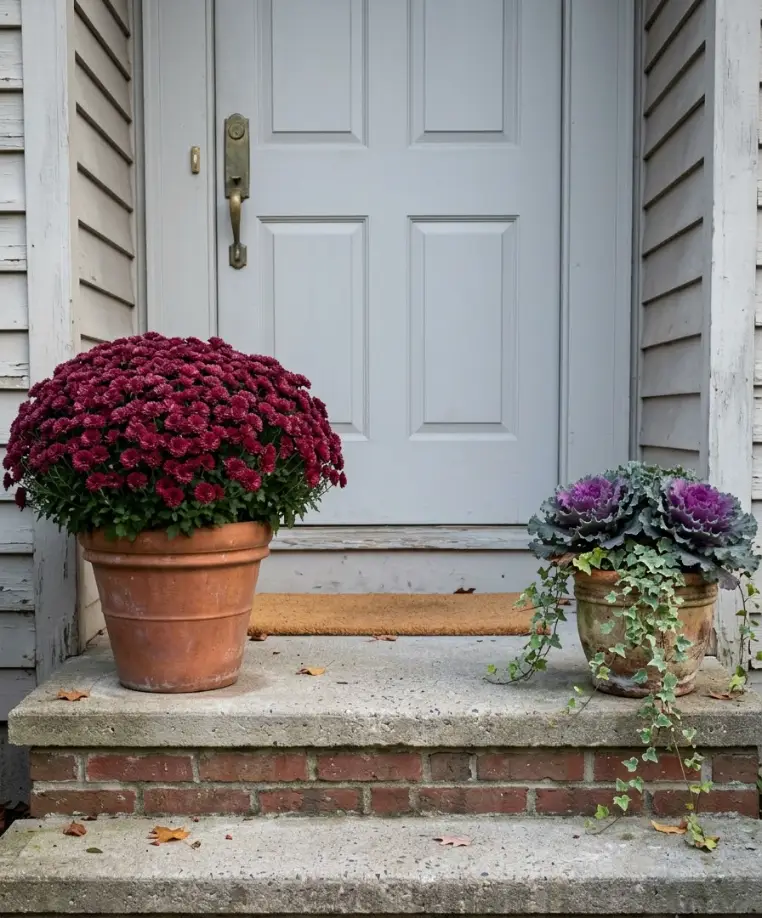
If you already own a planter, you’re halfway done. Swap out your summer plants and pop in something that thrives in the cold.
Chrysanthemums are the usual pick, and they earn it. Buy them with buds still closed so they bloom on your porch for weeks instead of dying in the car. Look for deep burgundy, rusty orange, or a creamy white that matches a neutral palette.
For shade or low light, try ornamental kale or cabbage, which handle chilly nights better than almost anything.
Pair one with trailing ivy for a softer edge. Check the plant tag for sun needs, because I killed two beautiful pots by ignoring that detail.
Tired of watering? Faux mums in a real pot look surprisingly good, and you can swap them out each year.
I’m a hypocrite about this: I preach real plants, then keep a fake pot by the stairs where the sun never reaches.
For deeper reading on fall planting and frost timing, the Old Farmer’s Almanac offers dates by region, which helps if your area gets early cold snaps.
Lighting without setting off the smoke alarm
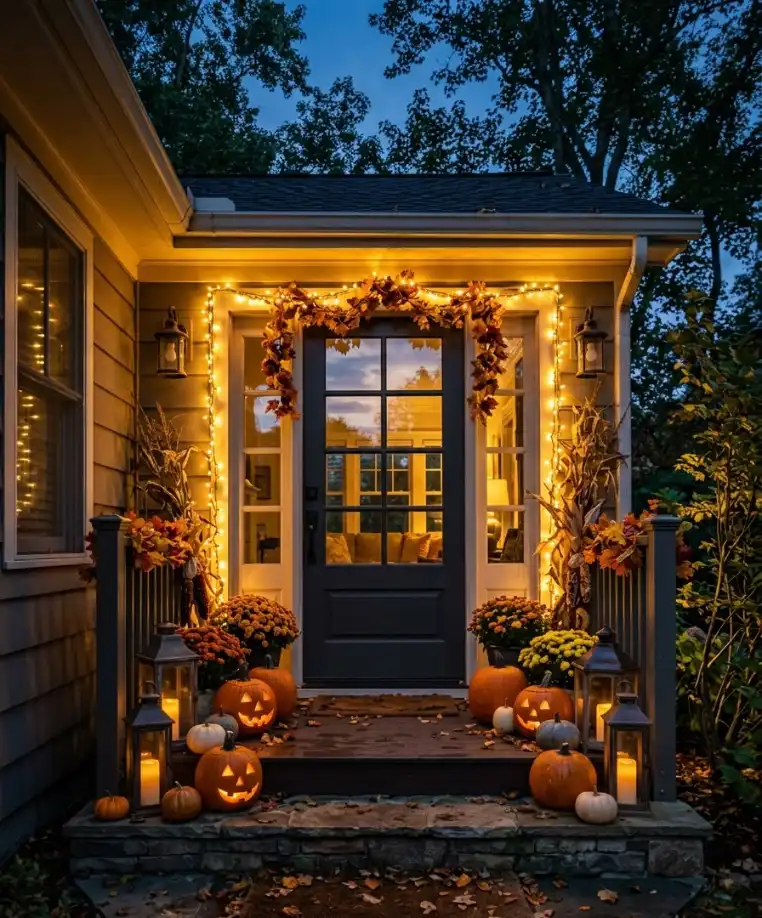
Soft light turns a plain porch into a place people want to photograph. It also makes your decor visible after 5 PM, which matters in November when it gets dark before dinner.
Battery-powered options
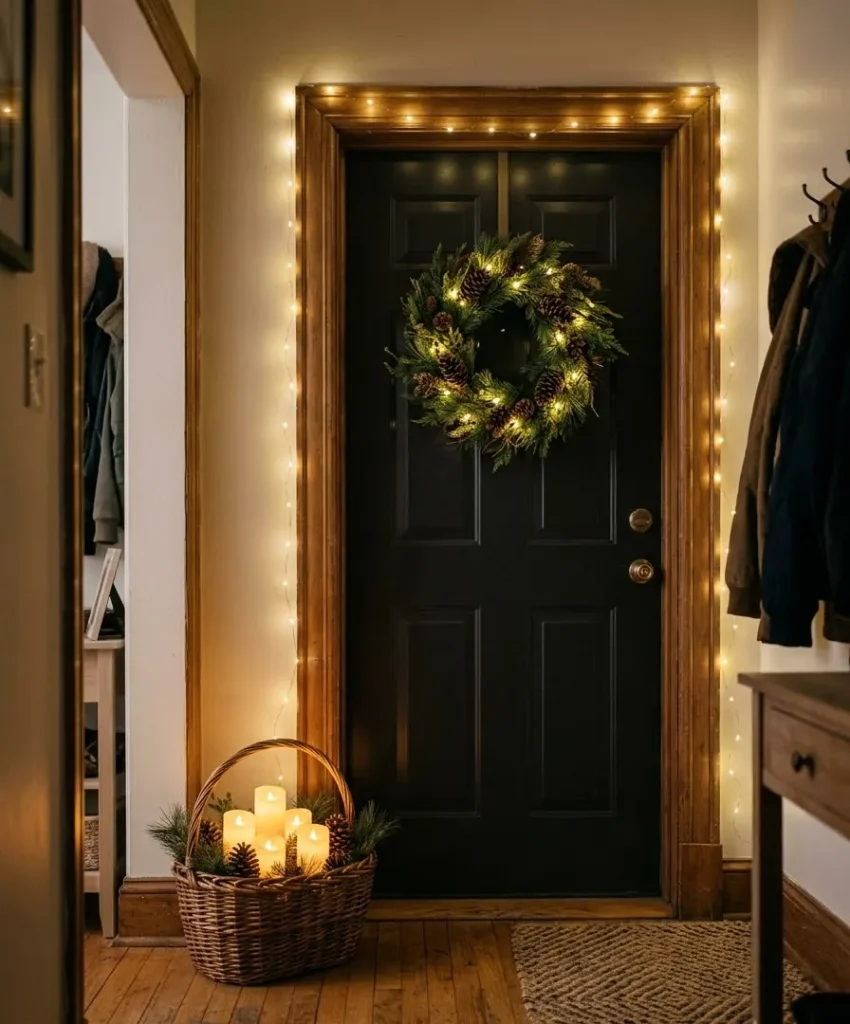
For apartments, I strongly prefer battery-powered LED candles and string lights.
They carry no fire risk, require no outlet, and many include a timer so they switch on every evening without you thinking about it.
Warm white bulbs look cozy, while cool white ones make everything feel like a parking garage. Check the color temperature on the box. I aim for around 2700K.
Lanterns and tabletop candles
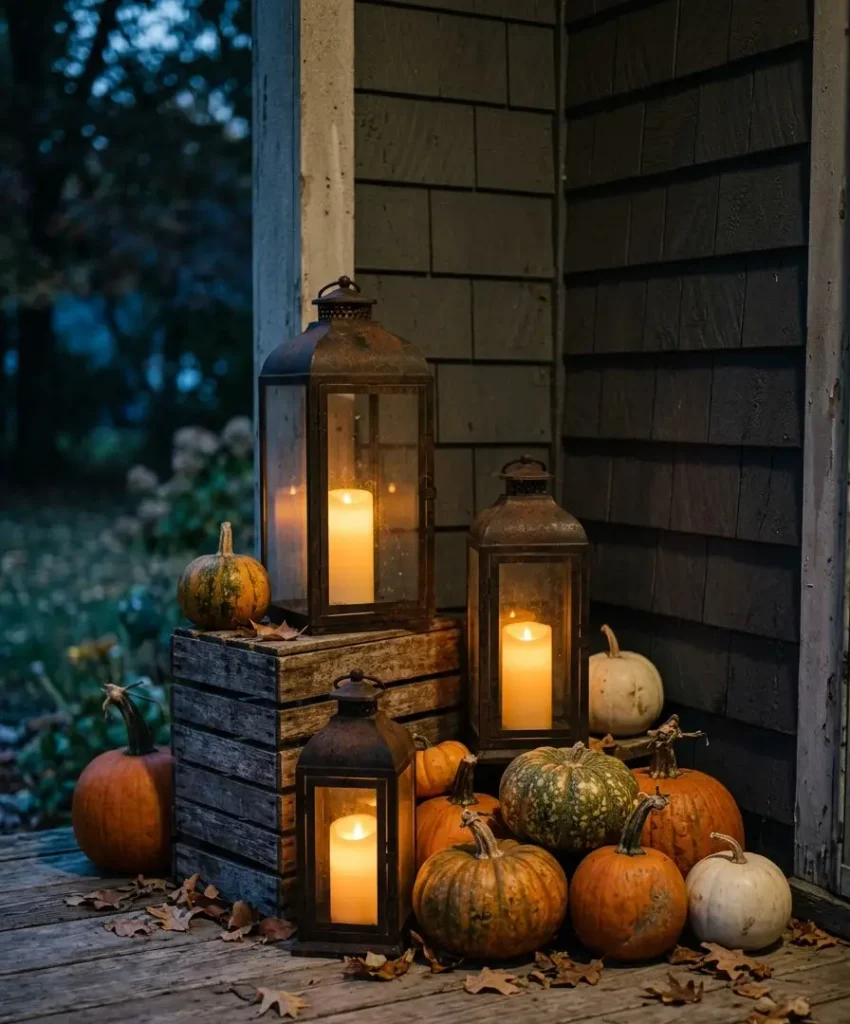
Metal or glass lanterns hold LED candles beautifully. Group 2 or 3 in different heights beside your pumpkin cluster. A set of flameless pillar candles in a basket also works well by the door.
Real flames and fire safety
If you want real candles, ask your landlord first, and never leave them burning unattended. Many buildings ban them in shared entries.
The National Fire Protection Association publishes holiday fire safety guidance, including candle tips, and I recommend reading it before you light anything near dried corn stalks, wheat, or leaves. Dry decor burns fast.
Honestly, I stopped using real candles outdoors years ago. A gust of wind blew one out within 5 minutes anyway.
A slightly random tangent about neighbors
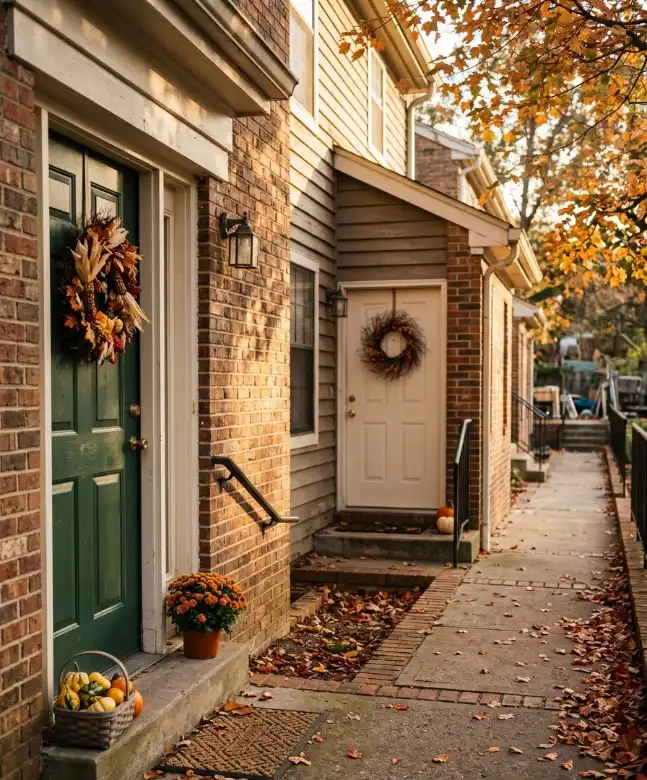
Okay, off-topic for a second. The best thing my small porch ever did was start conversations.
A woman two doors down stopped to ask about my gourd basket, and now we swap leftover pumpkins and trade recipes every November.
I didn’t plan that. I just wanted something cute by the door. But decorated entries invite small talk, and in an apartment building where half the people avoid eye contact in the elevator, that matters. Keep it in mind when you feel like skipping the effort.
Apartment hallways, balconies, and shared spaces
Not everyone has a porch. Plenty of us have a hallway door, a narrow balcony, or a set of shared stairs. These need a lighter touch.
The hallway door
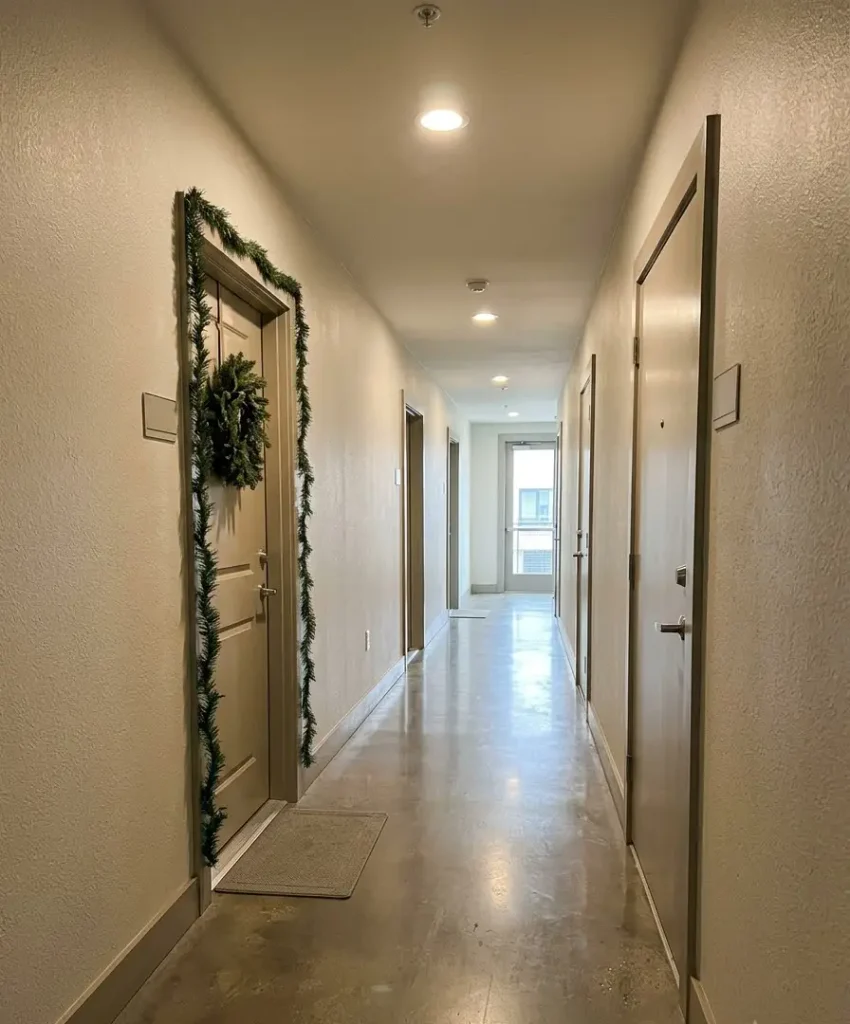
Many buildings restrict what you can place in corridors for fire code reasons. In that case, treat your door itself as the whole display.
A wreath, a door hanger, and a slim mat that stays flat against the wall can fit within most rules.
Some people hang a small garland on the door frame using removable hooks. Others tape a neat paper banner reading “gather” or “grateful” to the door. Ask your management first, and keep the walkway fully clear.
The balcony
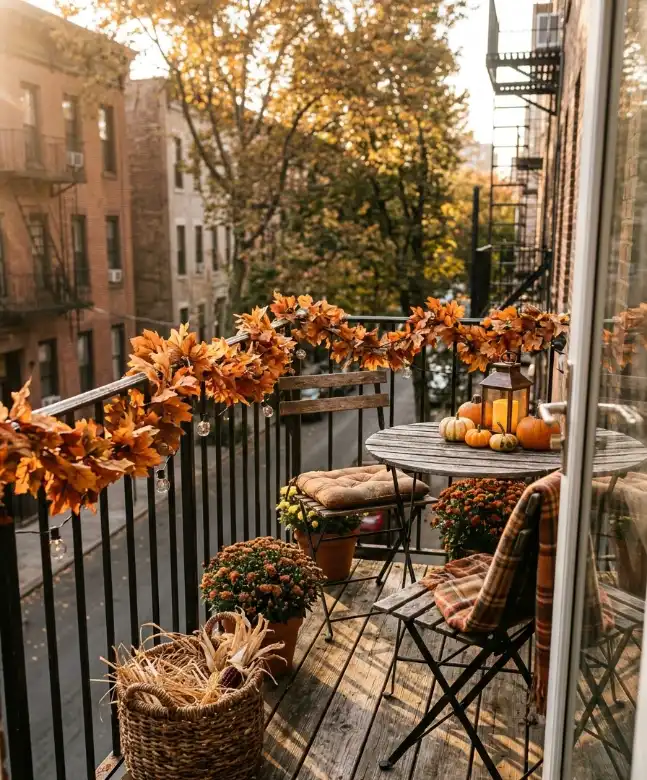
Balconies give you more freedom, though weight and wind limits apply. Skip anything light that can blow off and hit someone below.
I weigh down baskets with a few stones inside, then hide the stones under moss or straw.
Hang faux leaf garlands from the railing using zip ties or S-hooks. Place a small bistro table with a pumpkin centerpiece and a battery lantern, and you’ve got a spot that looks great from inside and outside.
Renter-safe hanging tricks
- Adhesive hooks and strips: Good for light items. Press firmly for 30 seconds and wait an hour before hanging anything.
- Tension rods: Perfect for hanging garlands or small baskets in a covered nook.
- Over-the-railing hooks: Great for wreaths, lanterns, and small baskets.
- Command-style clips for lights: They hold string lights along door frames without nails.
My personal favorite is the over-the-railing hook. I’ve used the same two for 5 years, and they’ve never damaged a thing.
Styling for Pinterest: how to make it photograph well
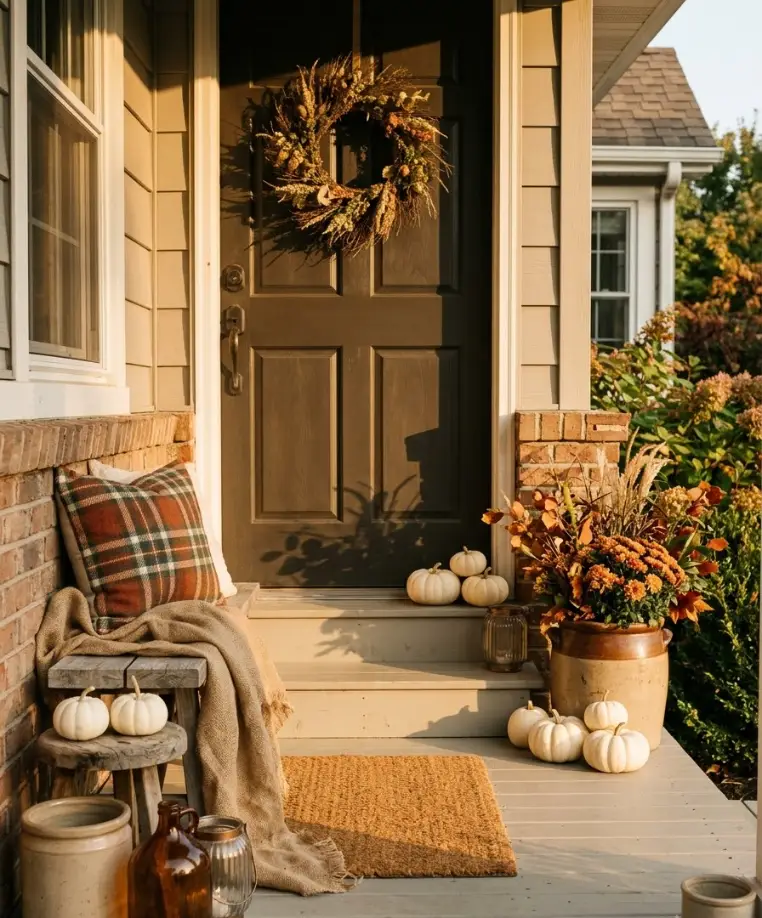
If you’re building a porch to pin, think about the photo, not just the real-life view. A picture flattens depth, so you need contrast, texture, and a clear focal point.
Shoot in the hour before sunset, when the light turns golden and soft. Stand slightly off-center, hold your phone at chest height, and make sure your door
or wreath sits in the upper third of the frame. Wipe your door and mat first, because photos expose every smudge.
Texture does the heavy lifting. Combine something rough (burlap, straw, wood), something smooth (a ceramic pumpkin, glass lantern), and something soft (a knit blanket, a plaid pillow on a bench). That mix reads as rich and layered even in a tiny space.
Use a single repeated element to tie everything together. I might repeat mini white pumpkins at the door, on the stool, and in the planter.
The repetition gives your eye a path, and it makes the whole porch feel designed.
One more tip from experience: crop out your neighbor’s recycling bin. I learned that the hard way after pinning a gorgeous shot with a blue bin dead center.
Easy DIY projects that fit small spaces
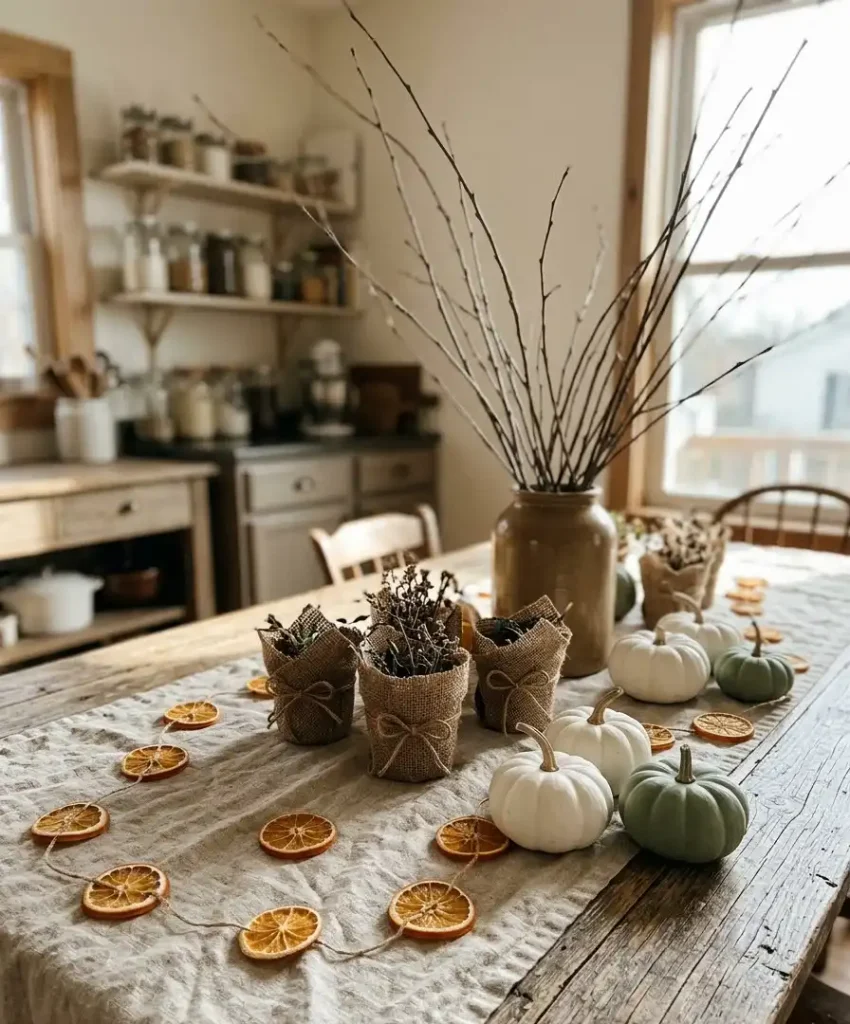
You don’t need power tools. Most of these take under an hour, and I’ve made all of them in my kitchen.
- Burlap-wrapped planters: Wrap a plain pot in burlap, tie with twine, and add a small tag. It takes 10 minutes, and I think it looks better than most store-bought “rustic” containers.
- Painted or chalked mini pumpkins: Matte white or sage green paint turns cheap pumpkins into designer pieces.
- Dried orange slice garland: Bake thin orange slices at 200°F for roughly 3 hours, then string them. They smell fantastic, though they last only a couple of weeks outdoors.
- Gratitude branch: Stand a few bare branches in a tall vase and tie on small tags with things you’re thankful for. Honestly, this one gets the most comments.
- Cinnamon bundle accents: Tie cinnamon sticks with ribbon and tuck them into a basket for a nice scent.
Number 3 lasts the shortest, and I’d skip it if your weather runs damp. Number 2 lasts the longest, and I’d do it first.
Mistakes I see (and have made) on small porches
Overcrowding tops the list. When every inch holds something, nothing stands out. Remove one item, step back, and see whether it improves. It usually does.
Another common slip is ignoring scale. Tiny items lined along a big step disappear, while one oversized pumpkin looks silly on a stool.
Match your decor size to the space, and go slightly bigger than you think.
People also forget about weather. Paper signs sag in rain, and lightweight items blow away. Seal anything paper with a clear spray, and weigh down baskets and planters.
Finally, watch the clutter around your decor. A pile of delivery boxes or a muddy pair of shoes undermines even the prettiest display.
I keep a small basket just inside the door for shoes during the holidays.
Taking it down and storing it
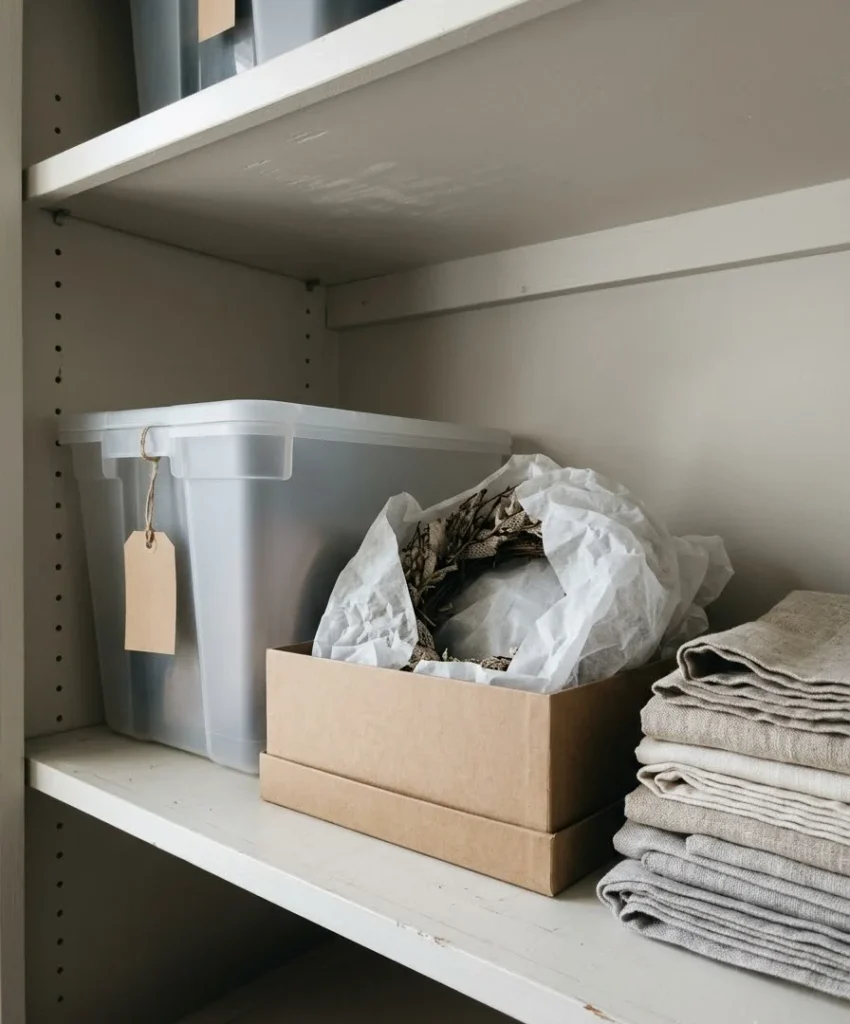
Thanksgiving ends, but your decor doesn’t have to. A simple switch from orange to neutral lets you keep wreaths, lanterns, and many accents up into December.
Pack faux pumpkins and wreaths in a lidded bin with a few tissue sheets. Toss dried decor that has gone brittle or buggy.
Compost real pumpkins instead of tossing them in the trash, unless your building bans it.
Label your bin by year. Future you will thank present you, and I’m not exaggerating. I wasted 20 minutes last August hunting for one mat.
Quick answers to common questions
How much should I spend on a small porch display?
You can build a polished look for roughly 30 to 60 dollars. Spend most of it on one good wreath, 3 or 4 pumpkins, and a battery lantern.
Reuse what you already own, like baskets, blankets, and planters, before buying new.
Can I decorate my apartment door if I’m not allowed to use nails?
Yes. Use an over-the-door hanger, a removable adhesive hook, or a magnetic hook for steel doors.
Check weight limits on the packaging and confirm your building’s rules on door decor before you hang anything.
What lasts longest outside through November weather?
Faux pumpkins, dried wheat, and preserved leaves handle rain and cold best. Real pumpkins last about 2 to 4 weeks in cool weather, though warm spells shorten that. Mums and ornamental kale also tolerate chilly nights well.
Final thoughts
A small porch can look warm, welcoming, and photo-ready with a clear palette, a few well-chosen pieces, and soft lighting.
Start with the door, build one strong corner, add texture, and stop before it feels crowded. Most of the work comes down to restraint, and your wallet will appreciate that too.
So what’s your first move this year: a new wreath, a pumpkin stack, or a gratitude branch by the door? Drop your plan in the comments, and pin your finished porch so the rest of us can steal ideas.