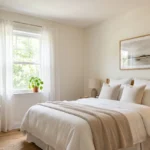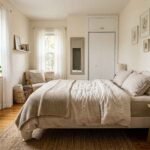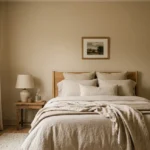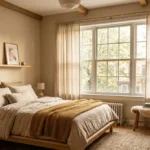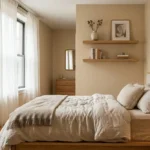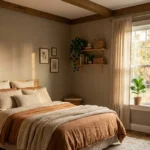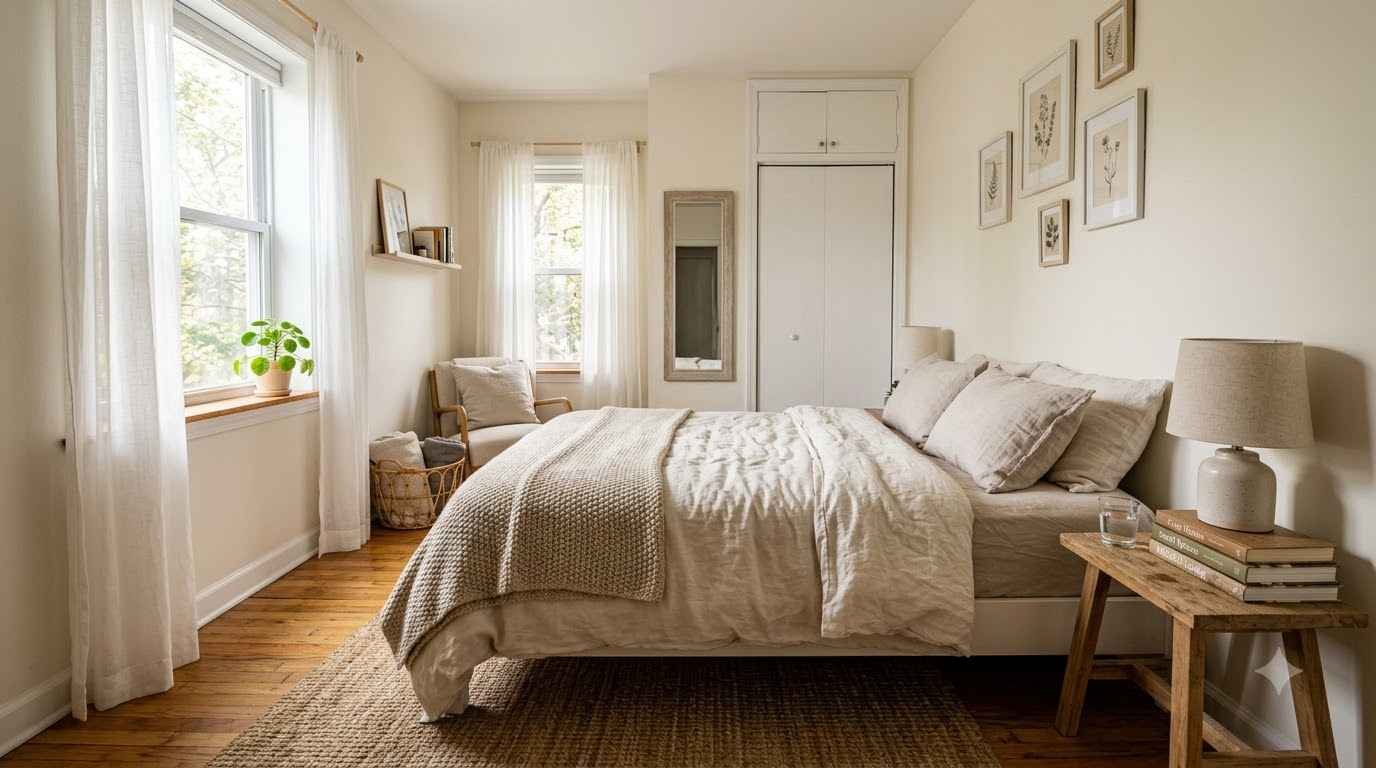
My first apartment bedroom measured 9 by 10 feet. I know because I measured it three times, hoping the tape measure was lying to me. It wasn’t.
For two years I fought that room. I bought a bed frame too big for it, then a dresser that blocked the closet door, then a floor lamp that turned into a shin magnet every single night.
Eventually I stopped fighting and started paying attention to what actually works in a tight space.
The 31 ideas below are the ones that survived that trial and error, and I still use half of them in my current place.
If your bedroom feels more like a hallway with a mattress in it, this list is for you. None of it requires knocking down a wall.
Color choices that make the walls step back
Paint is the cheapest tool you have, and it does more heavy lifting than people give it credit for.
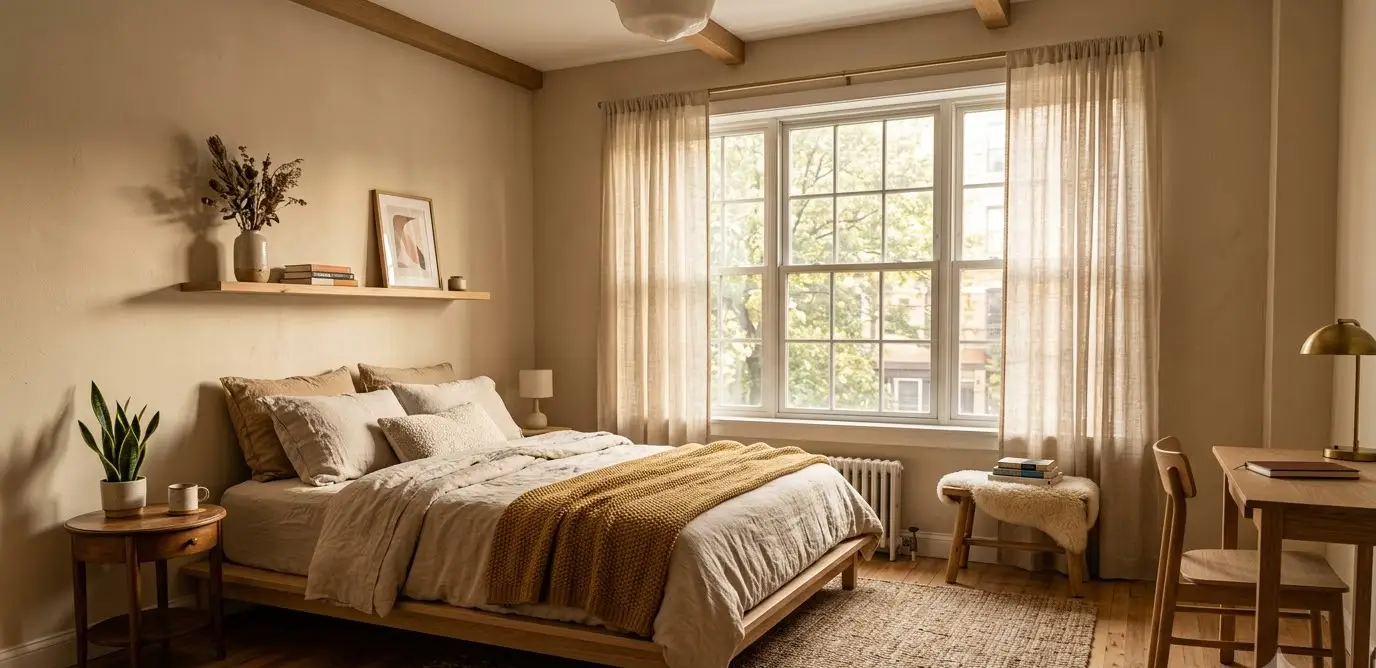
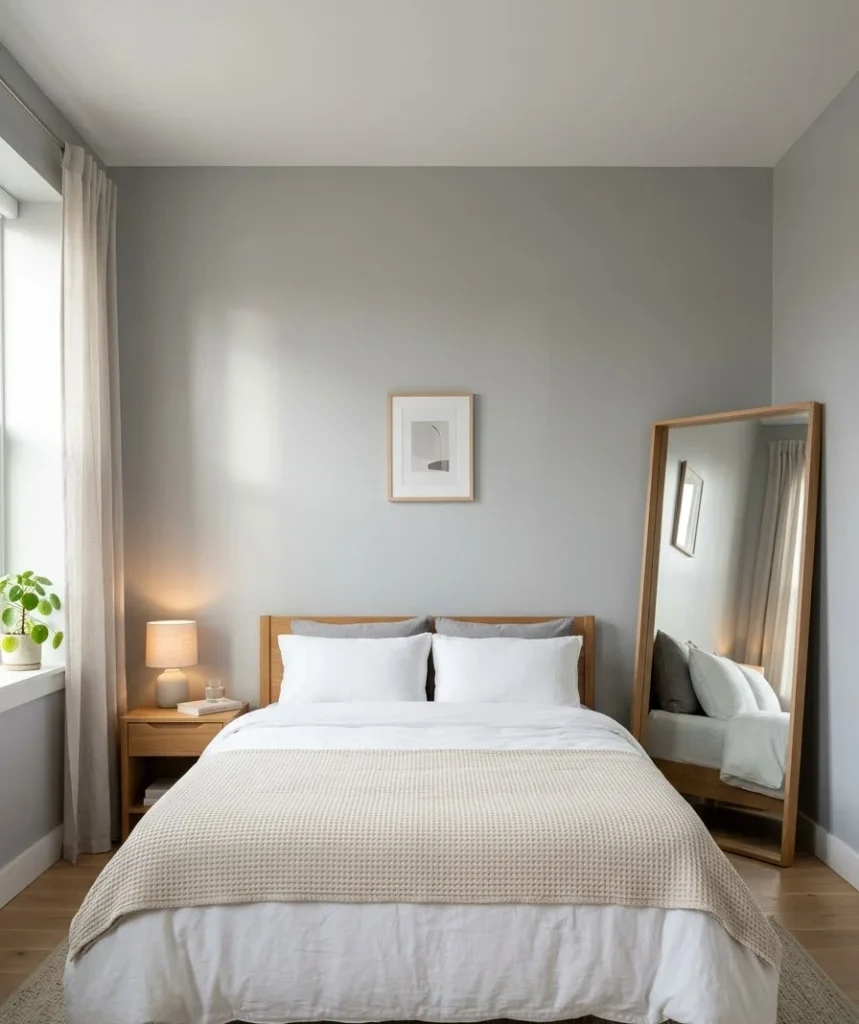
- Go soft, not stark white. Bright white can feel clinical in a small room, almost like a waiting room.
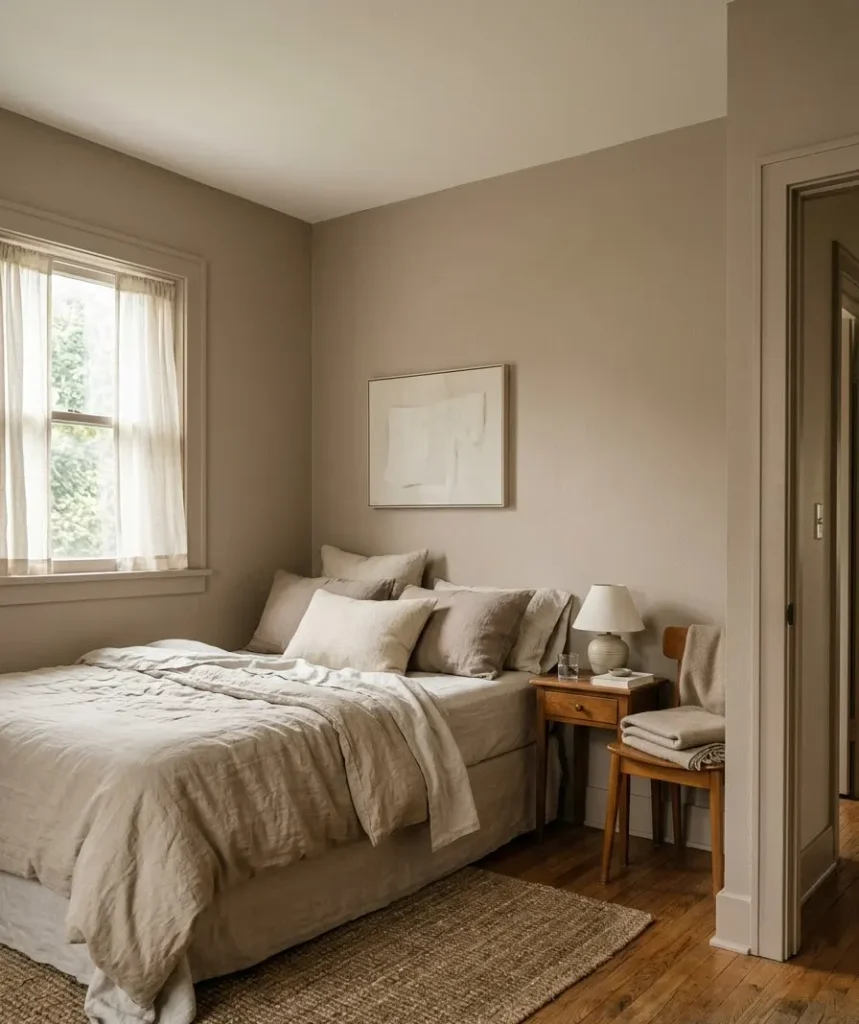
- A warm off-white or soft greige reads calmer and hides scuffs better. Sherwin-Williams has a solid guide to choosing bedroom paint colors if you want to compare undertones before you commit to a gallon.
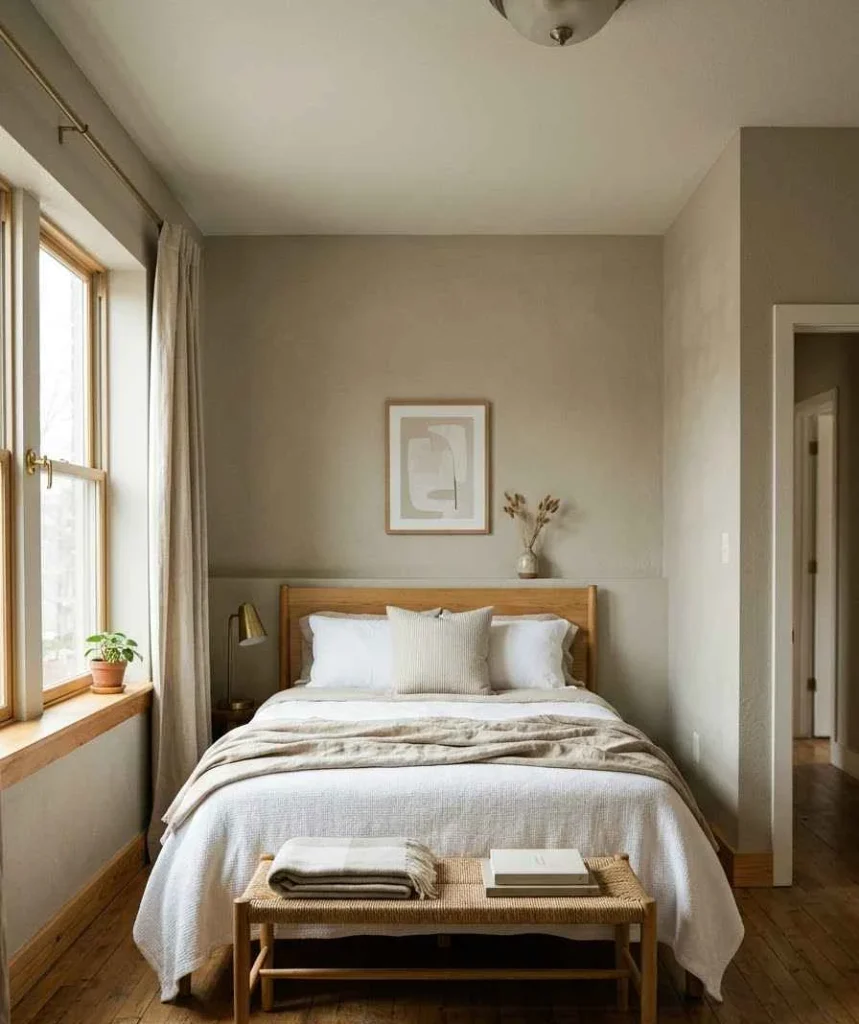
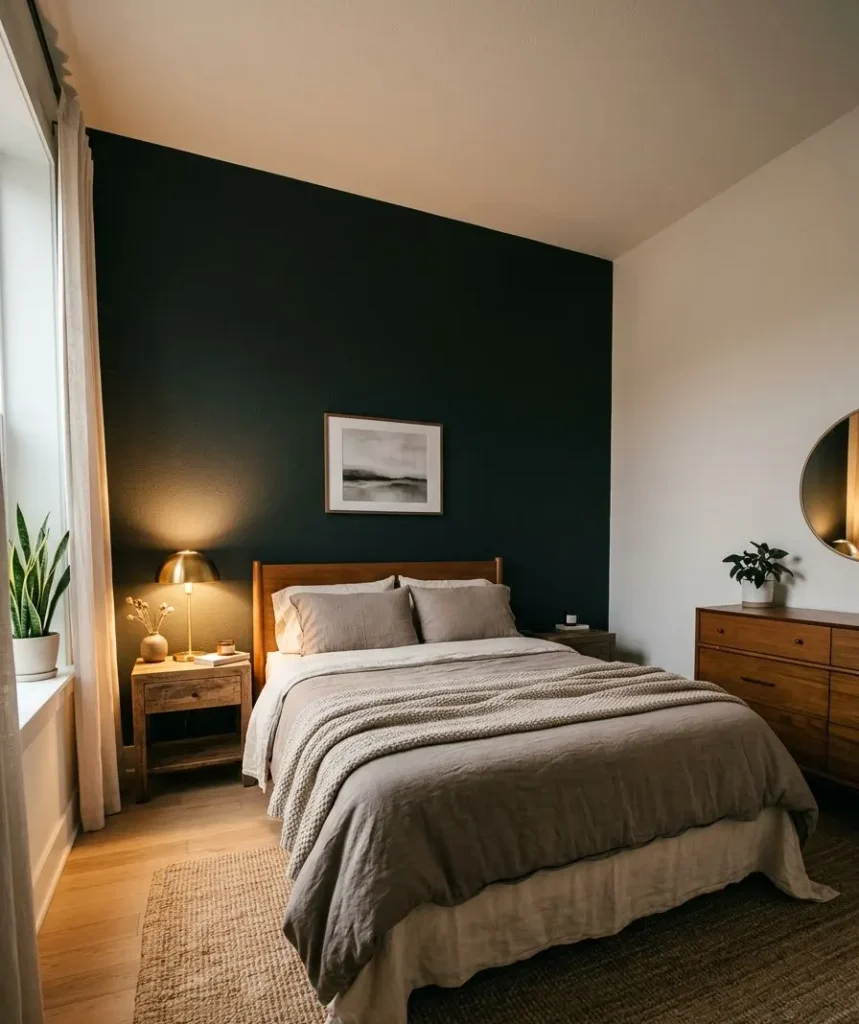
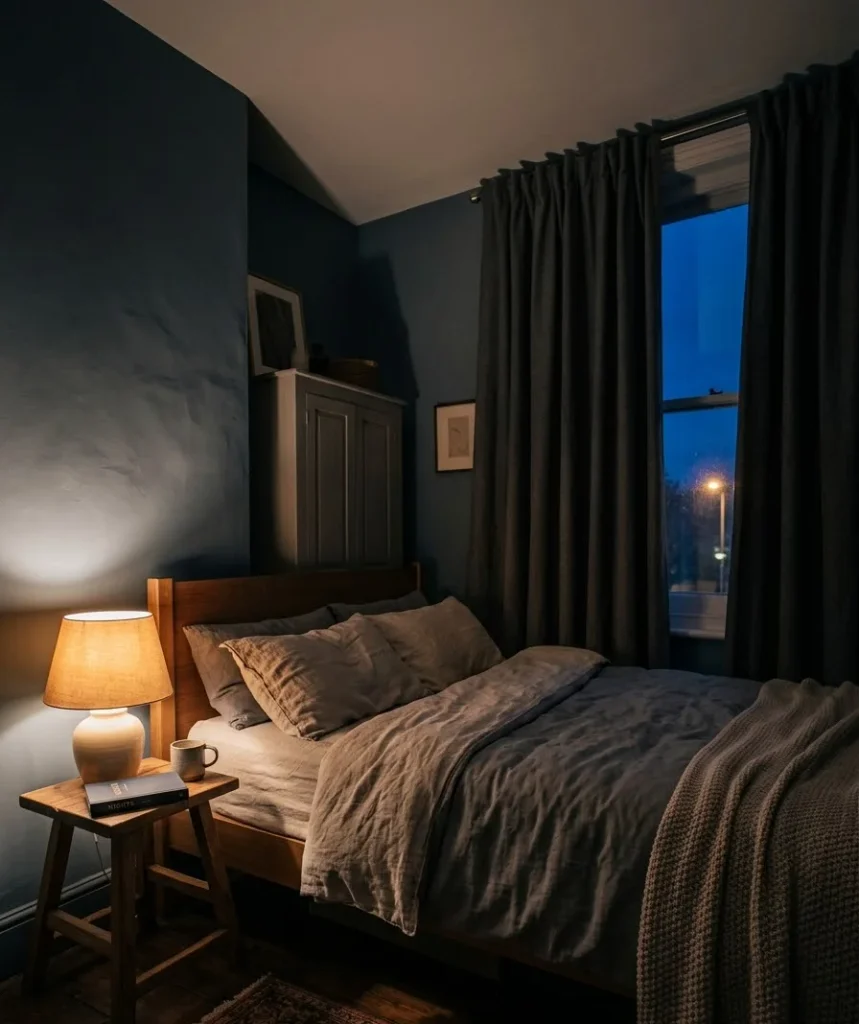
- Try one dark wall instead of four light ones. This sounds backward, but a deep, moody color on the wall behind your headboard can make the room feel intentional rather than small.
- It works because your eye stops trying to measure the space and just settles into it.
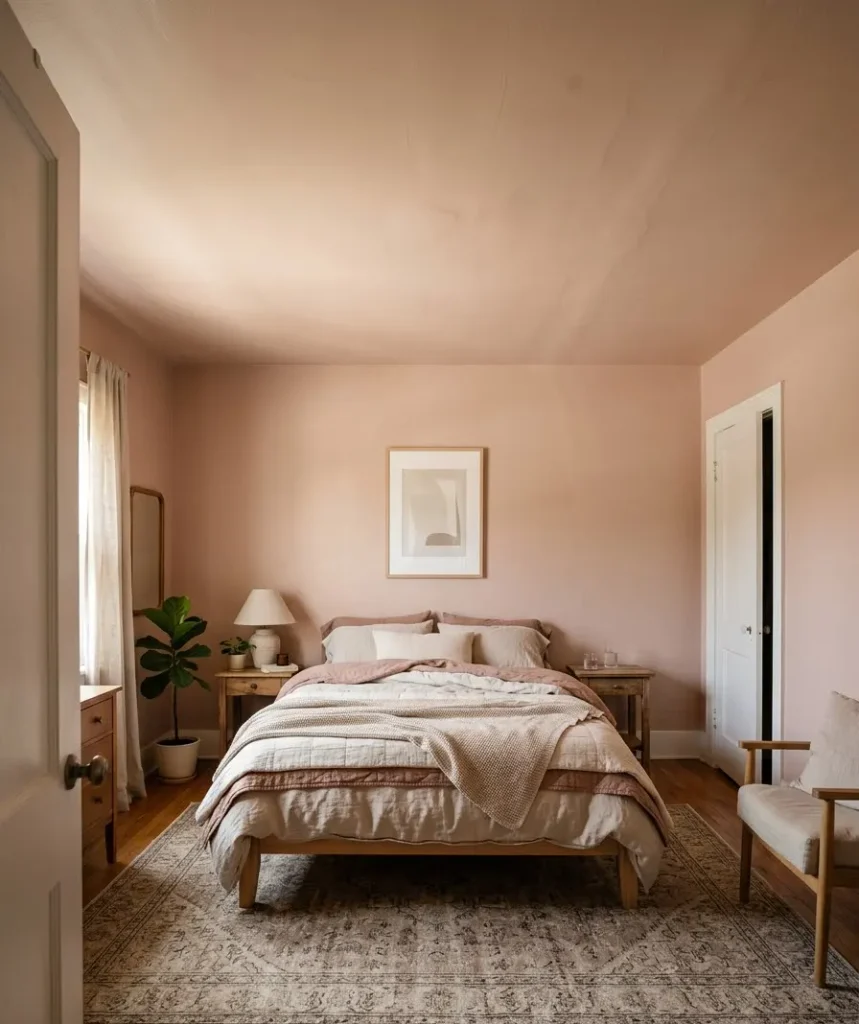
- Match your ceiling to your walls. A white ceiling above a colored wall draws a hard line that makes the room feel boxier. Painting the ceiling the same color, or a shade lighter, blurs that edge and pulls the eye upward.
- Skip high-contrast trim. Bright white trim against a colored wall chops the room into visual segments. Low-contrast trim, close in tone to the wall, keeps the lines quiet.
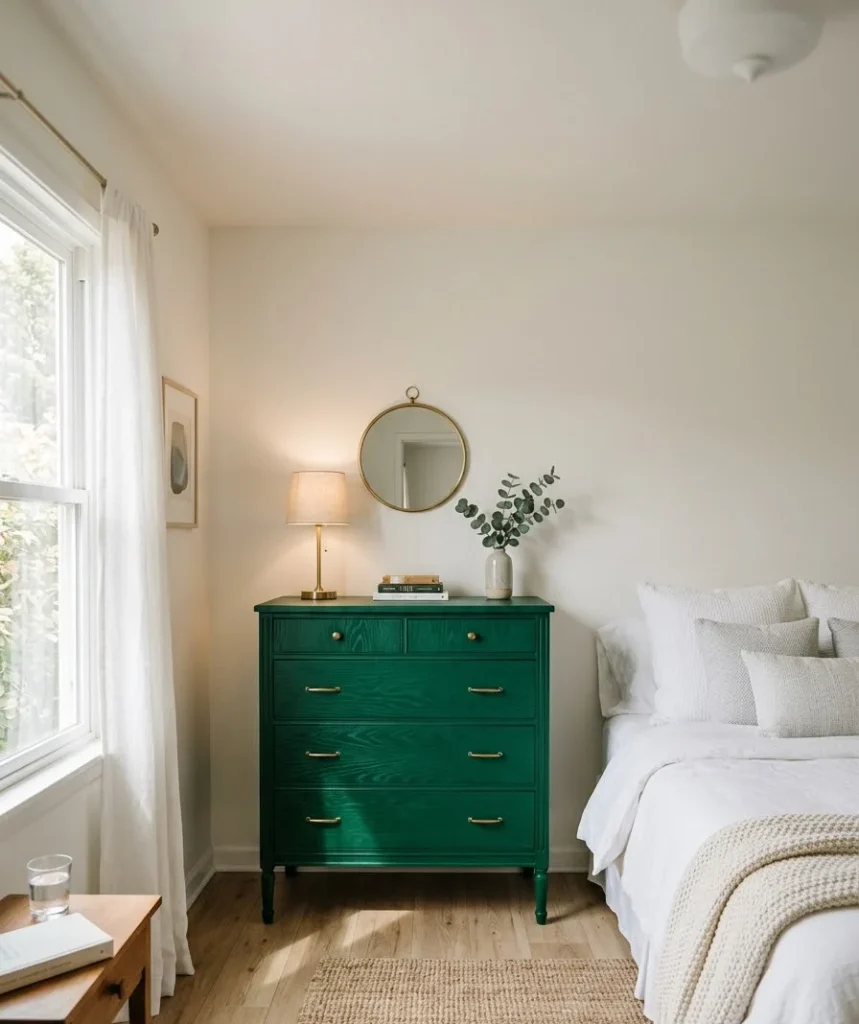
- Use color on furniture instead of walls if you’re renting. A secondhand nightstand in a rich color can carry the same mood as an accent wall, and you get to take it with you when you move.
- Pick a satin or eggshell finish over flat. Flat paint absorbs light and can make a small room feel duller than it needs to. Satin bounces a little light around without going full gloss.
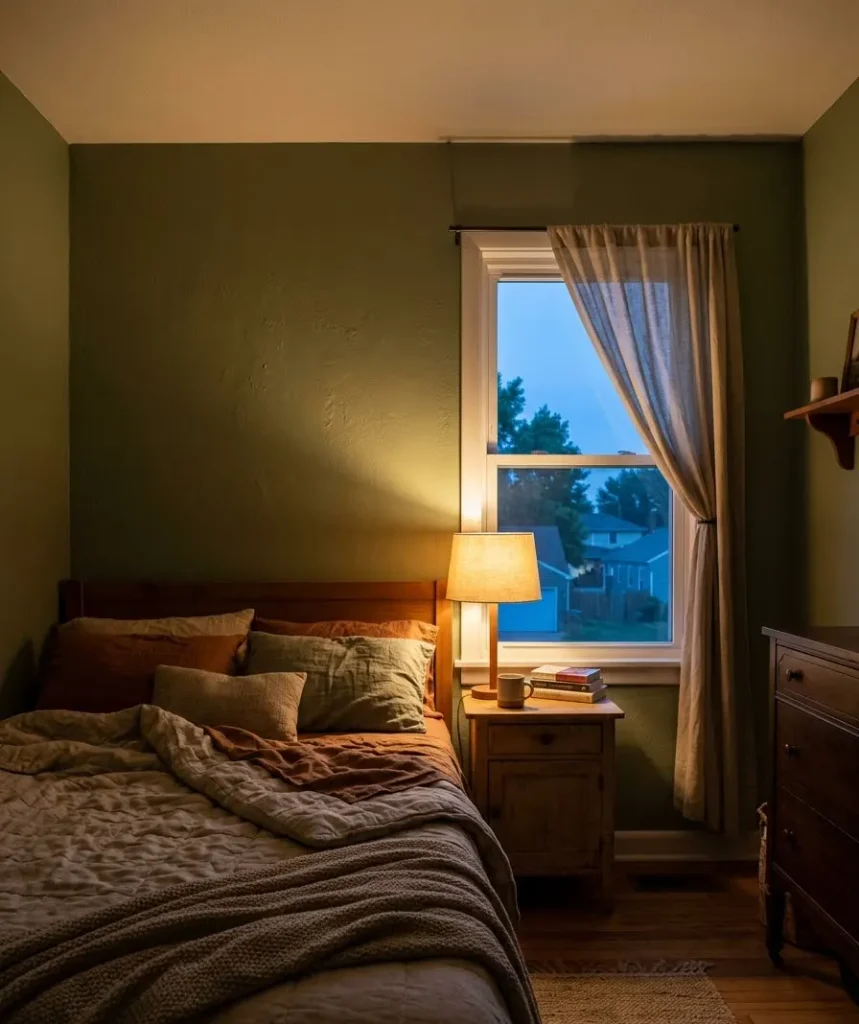
- Test the color at night, not just during the day. A shade that looks perfect at noon can turn muddy under a warm bulb at 9pm. I learned this the hard way with a sage green that turned swamp-colored after sunset.
Furniture and layout moves that buy you back floor space
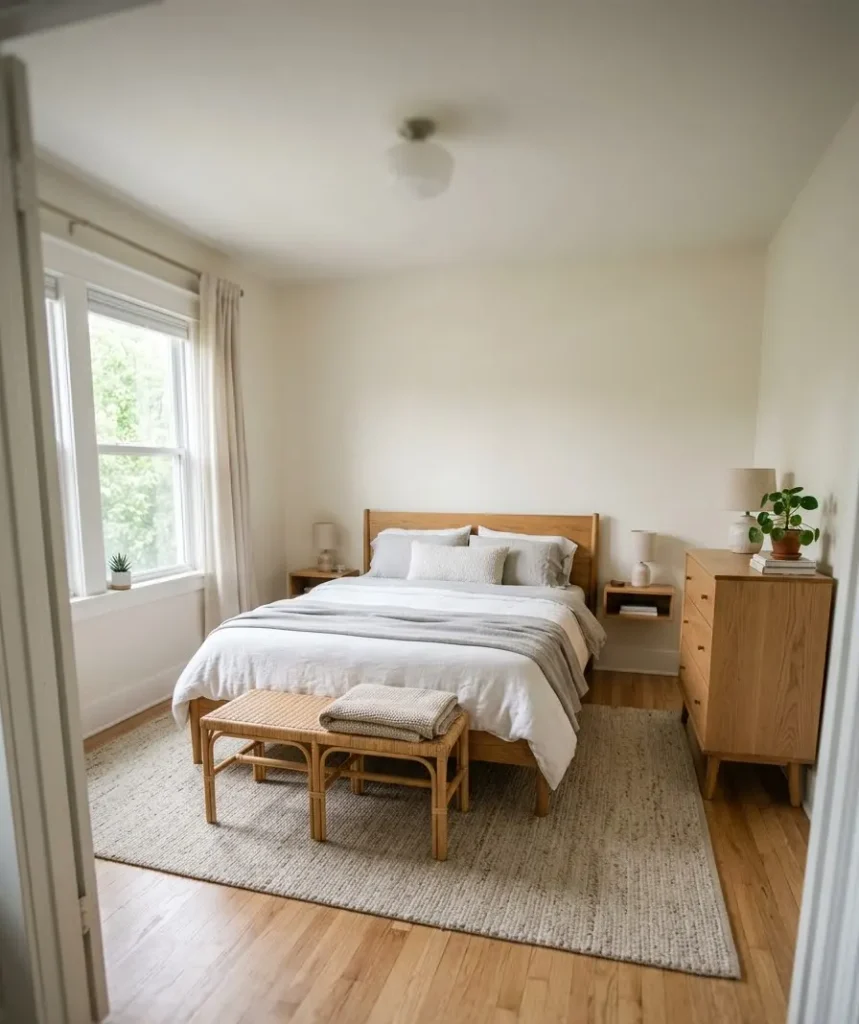
Small rooms live or die by furniture choices. Get this part wrong and no amount of decorating saves you.
- Float the bed away from the corner when you can. Corner placement seems logical, but it usually traps one side against two walls and makes the room feel like a nook. Centering the bed on the longest wall, even with a few inches of clearance, often reads as more spacious.
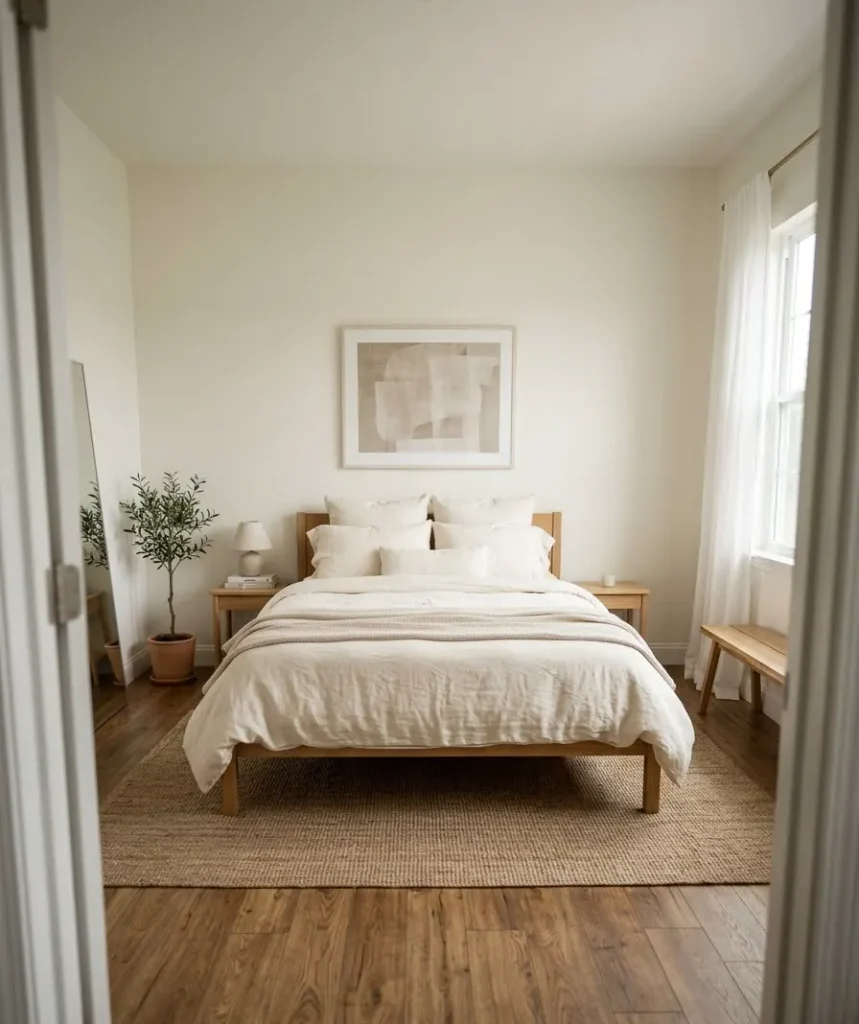
- Choose a bed with legs, not a solid base. A platform bed that touches the floor all the way around blocks sightlines and visually eats the room. A frame with visible legs lets light and floor show through underneath.
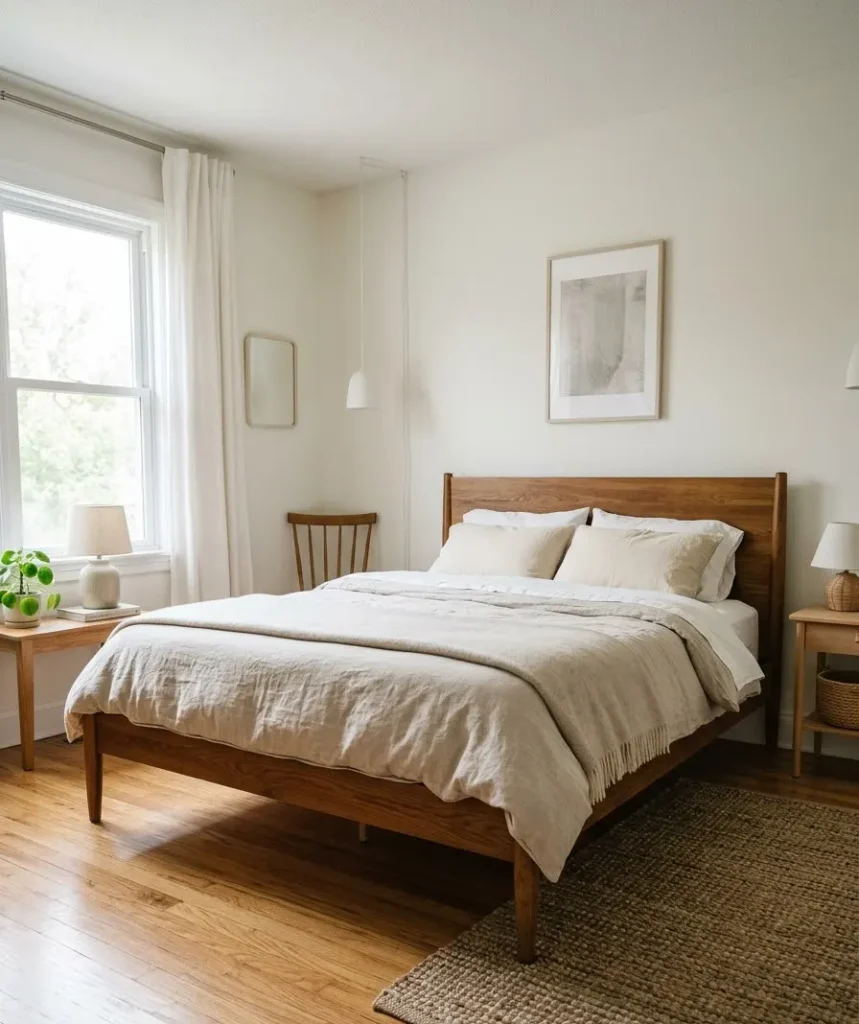
- Downsize from king to queen, or queen to full, if the math doesn’t work. IMO this is the hardest advice to accept, but a bed that leaves you 18 inches of walking room on each side beats a bigger bed you have to climb over furniture to reach.
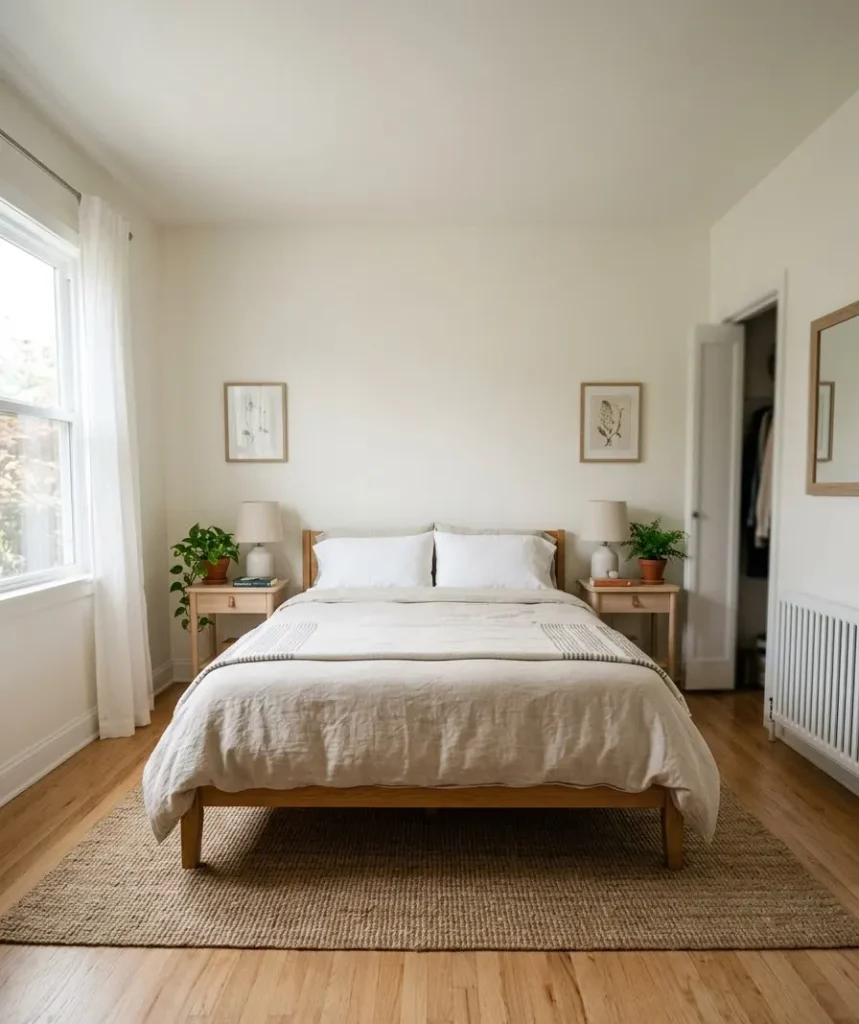
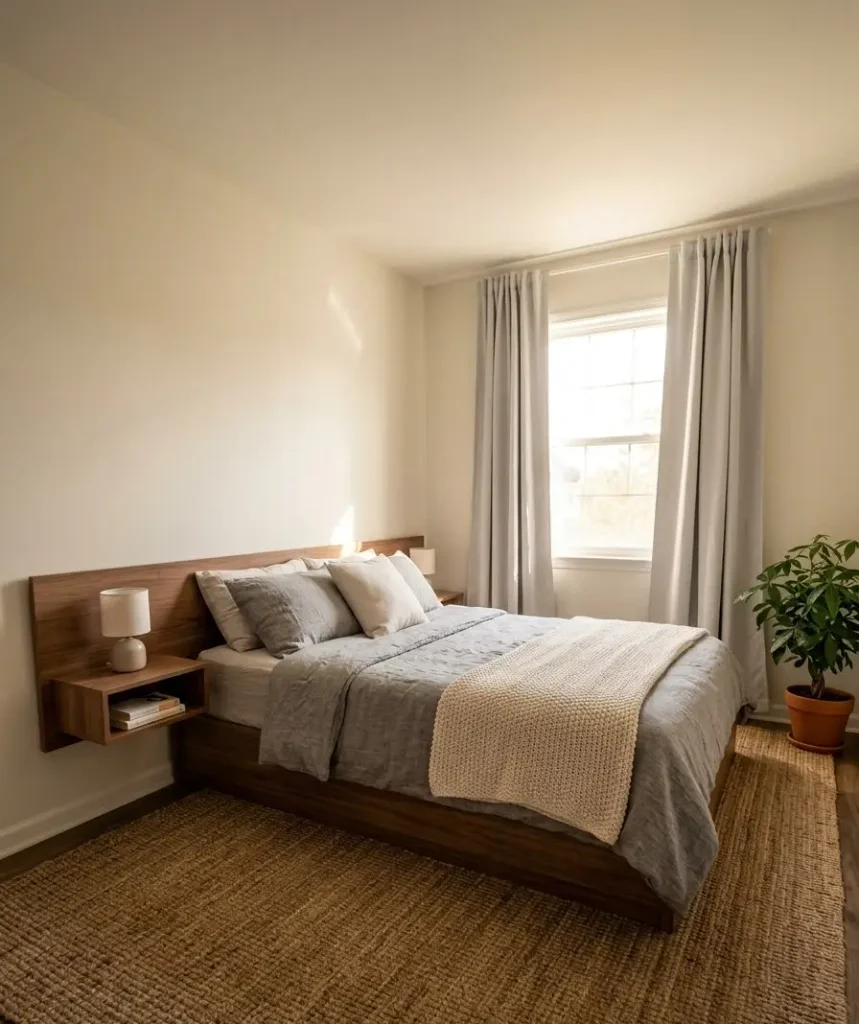
- Use a wall-mounted headboard shelf instead of nightstands. A single floating shelf can hold a lamp, a book, and a phone charger without eating floor square footage on both sides of the bed.
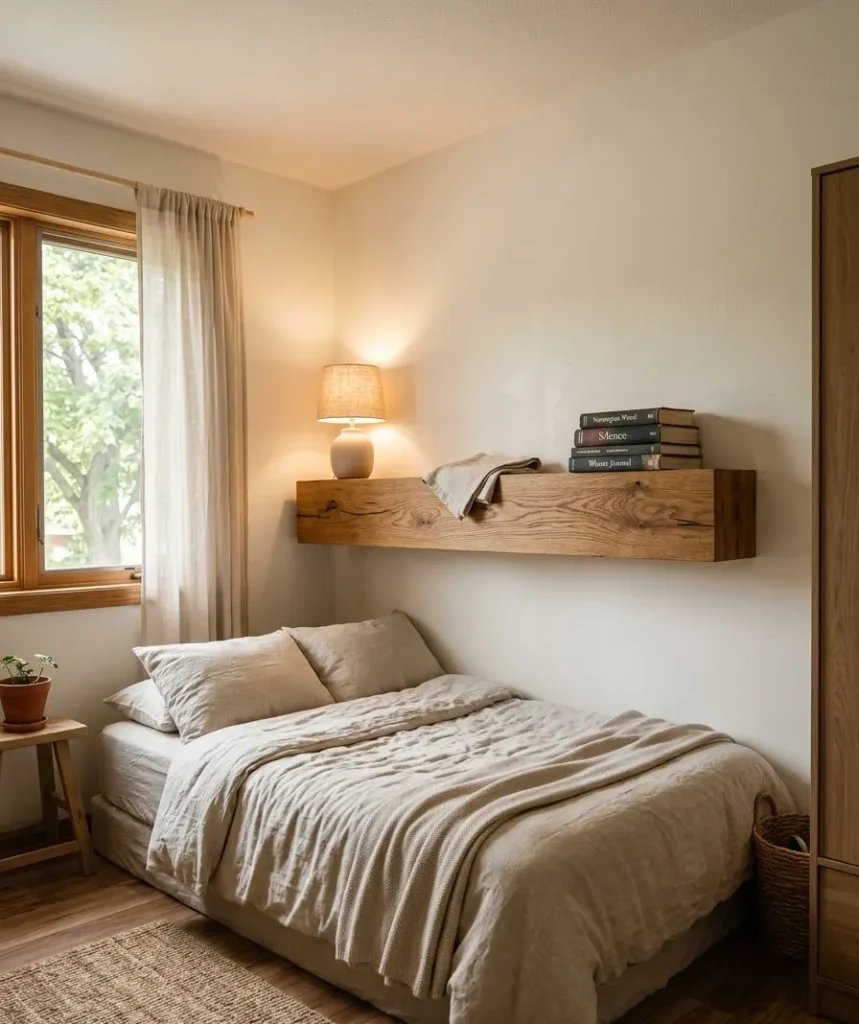
- Hang a mirror across from the window. This is the oldest trick in the book for a reason. It doubles the natural light in the room and gives the illusion of a second window.
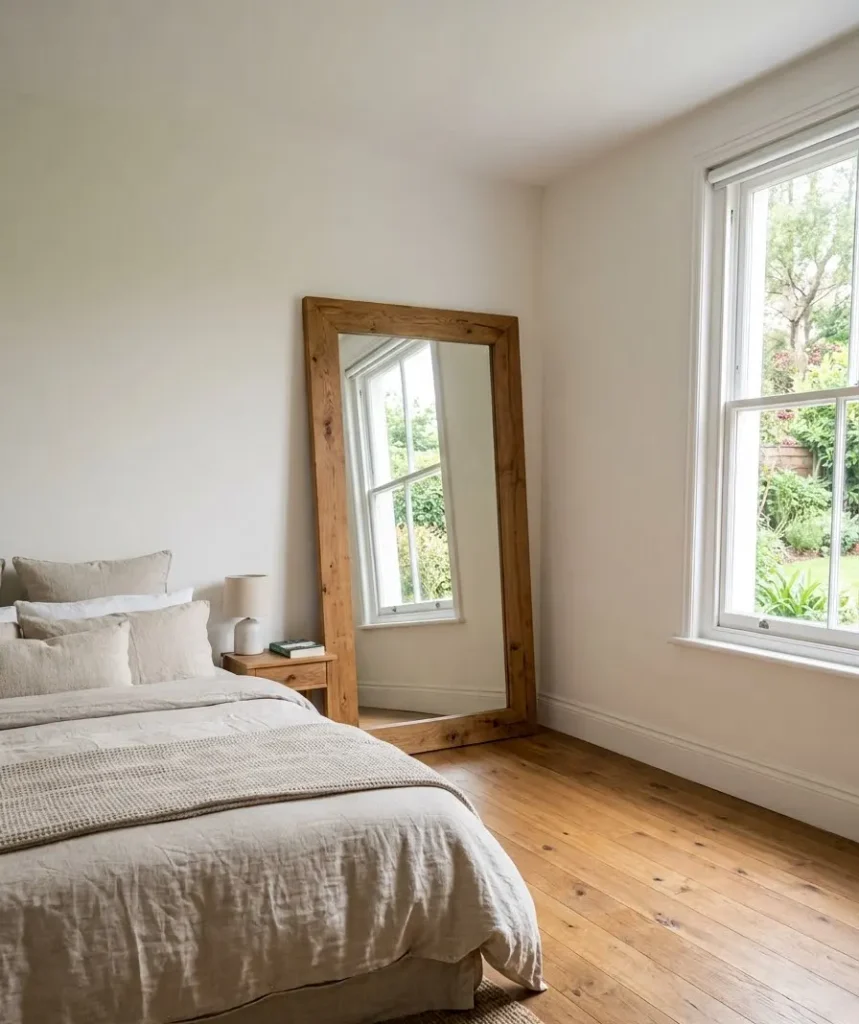
- Pick furniture on legs across the board, not just the bed. Dressers and chairs with visible legs let you see the floor continue underneath them, which tricks the brain into registering more open space than there actually is.
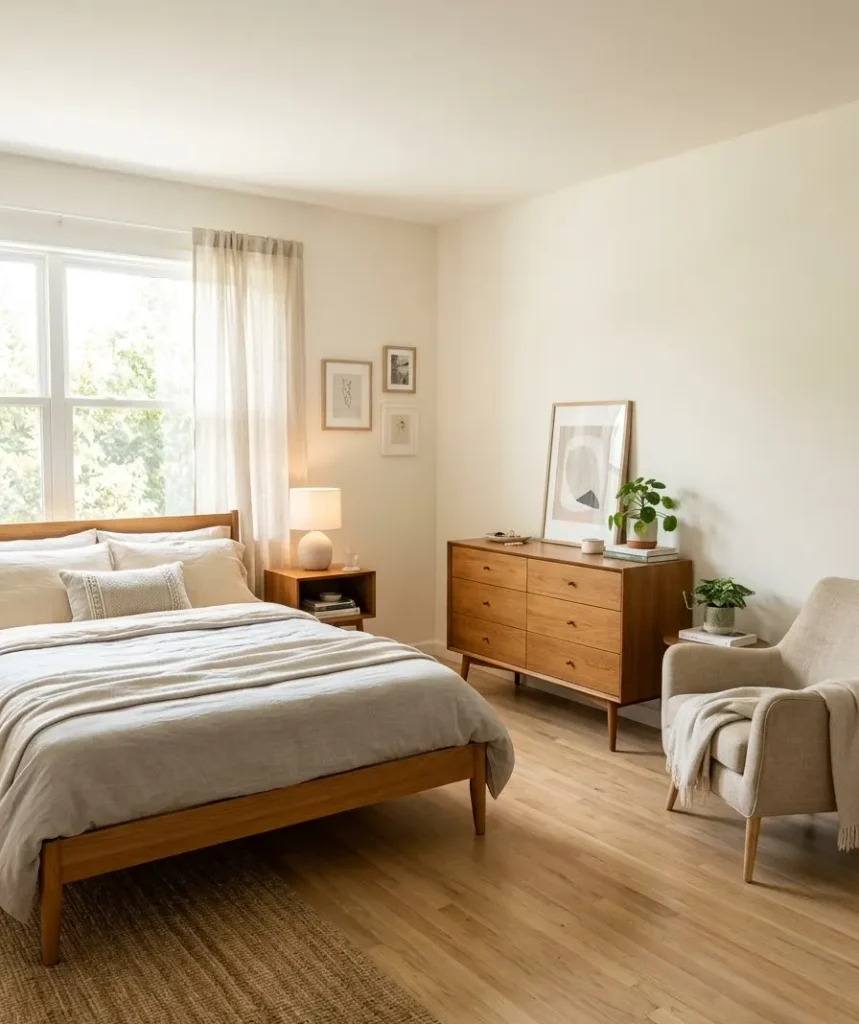
- Angle the bed only if the room is nearly square. In a long, narrow room, angling the bed usually backfires and eats even more usable floor. Save this move for rooms closer to a square footprint.
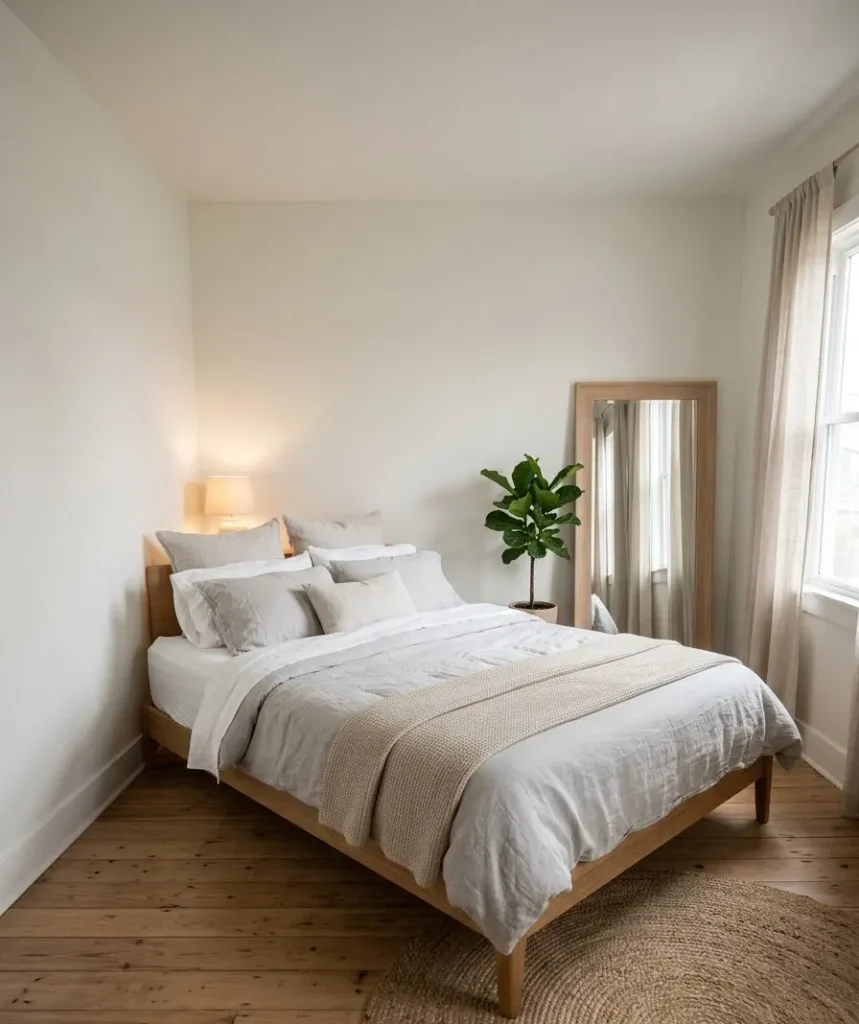
- Measure your walking path before you buy anything. I use 24 inches as my personal minimum for a comfortable path around a bed. Anything tighter and the room starts to feel like an obstacle course, no matter how nice the furniture looks.
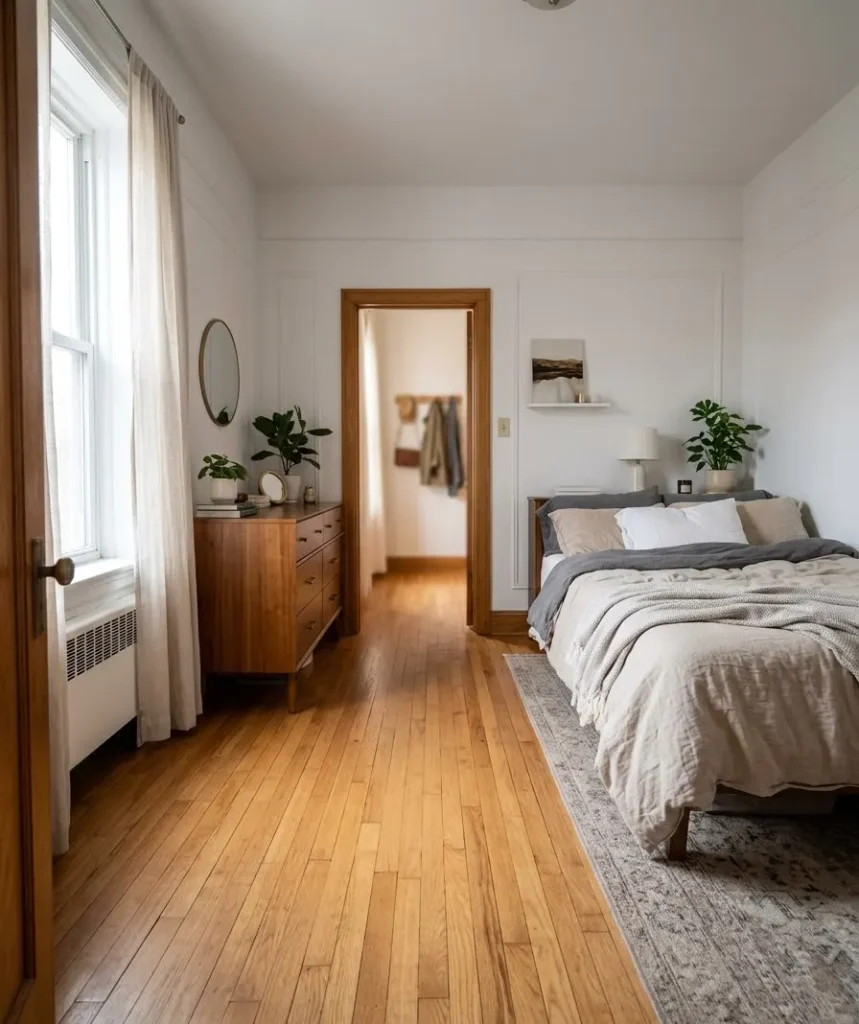
Storage tricks that don’t require a bigger closet
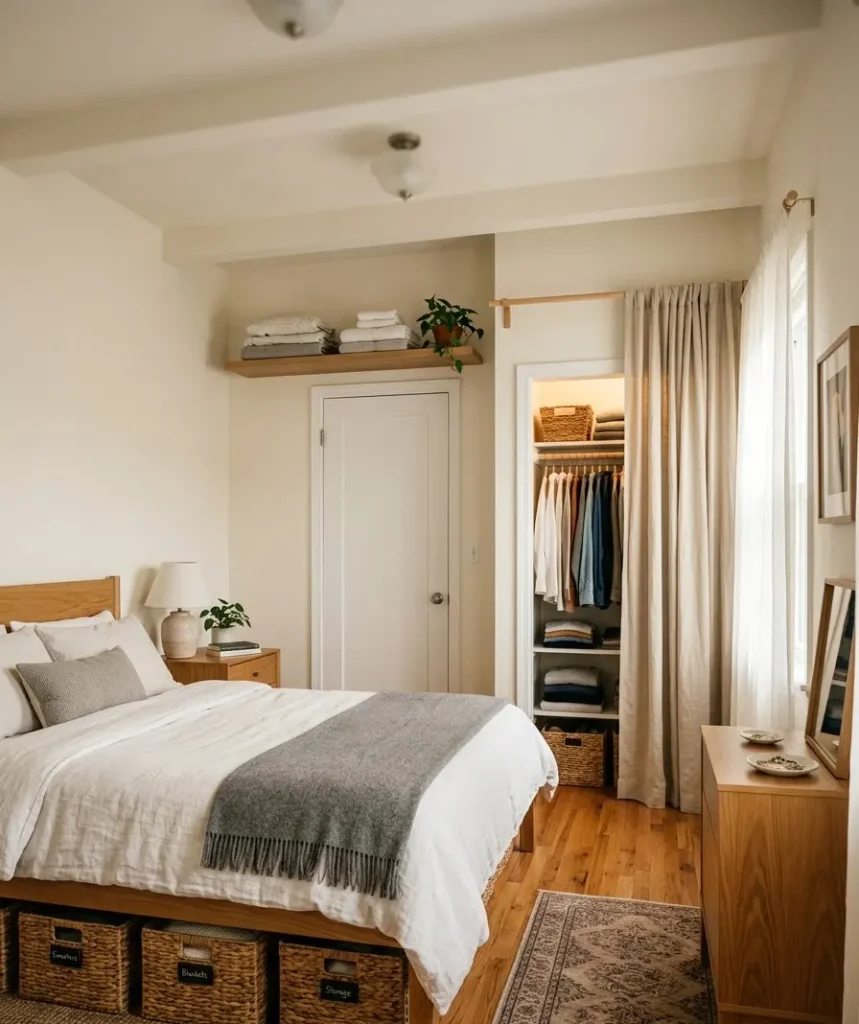
You do not need a walk-in closet to keep a small bedroom from looking like a laundry pile with a bed in the middle.
- Use the space under the bed. Rolling bins or a bed frame with built-in drawers can absorb off-season clothes, extra bedding, or shoes. IKEA’s small bedroom storage gallery has a few under-bed setups worth stealing.
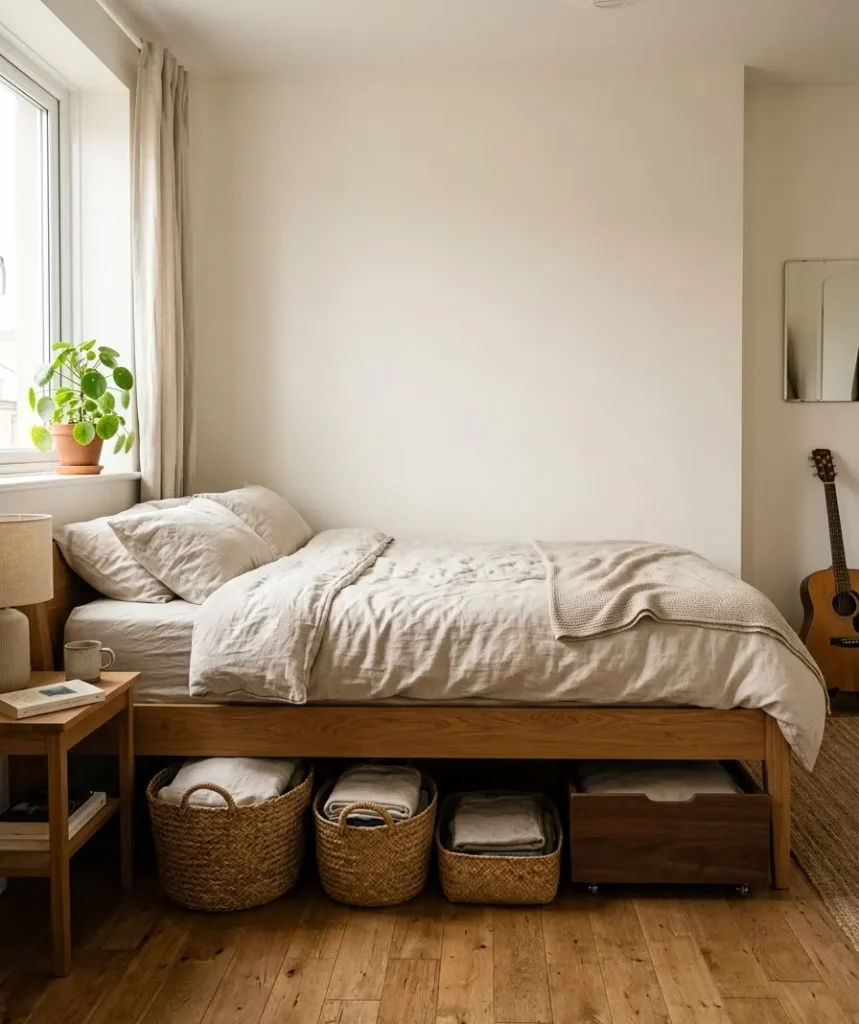
- Add a shelf above the door. That strip of wall above the doorframe usually sits empty. A single floating shelf there holds baskets, books, or folded blankets without touching your usable floor space.
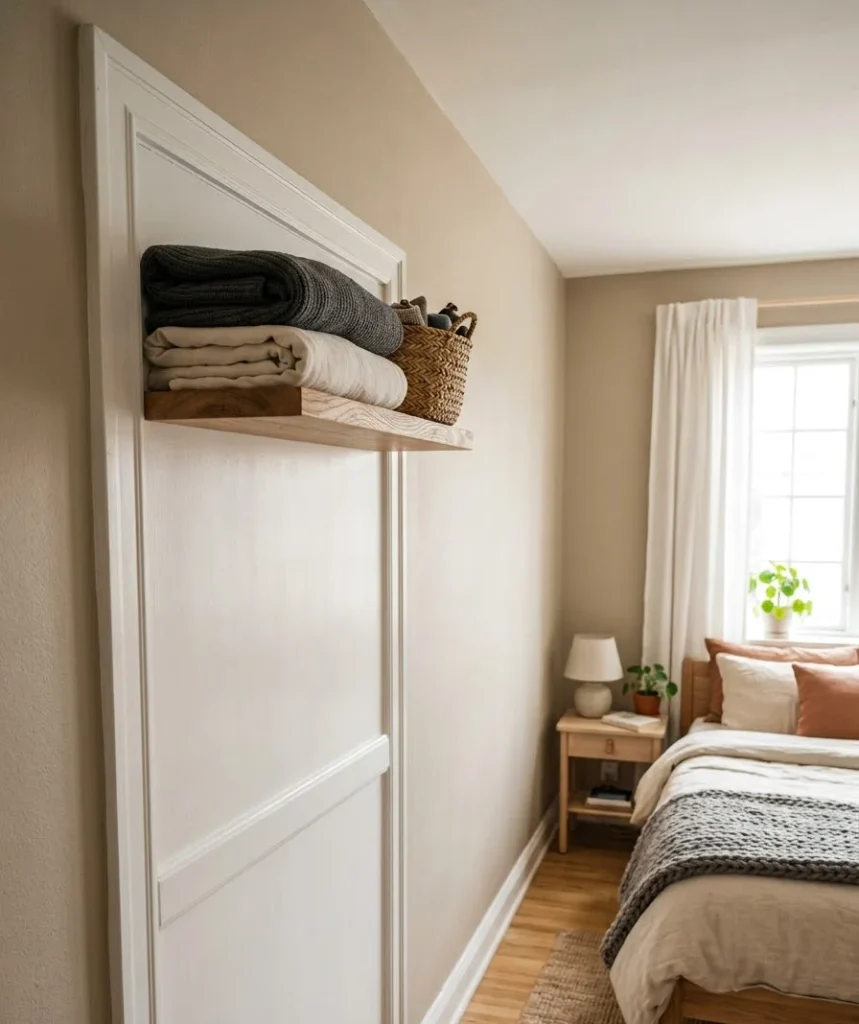
- Swap the closet doors for curtains. Hinged doors need clearance to swing open, and in a small room that clearance is prime real estate. A curtain on a tension rod takes up zero floor space and softens the room at the same time.
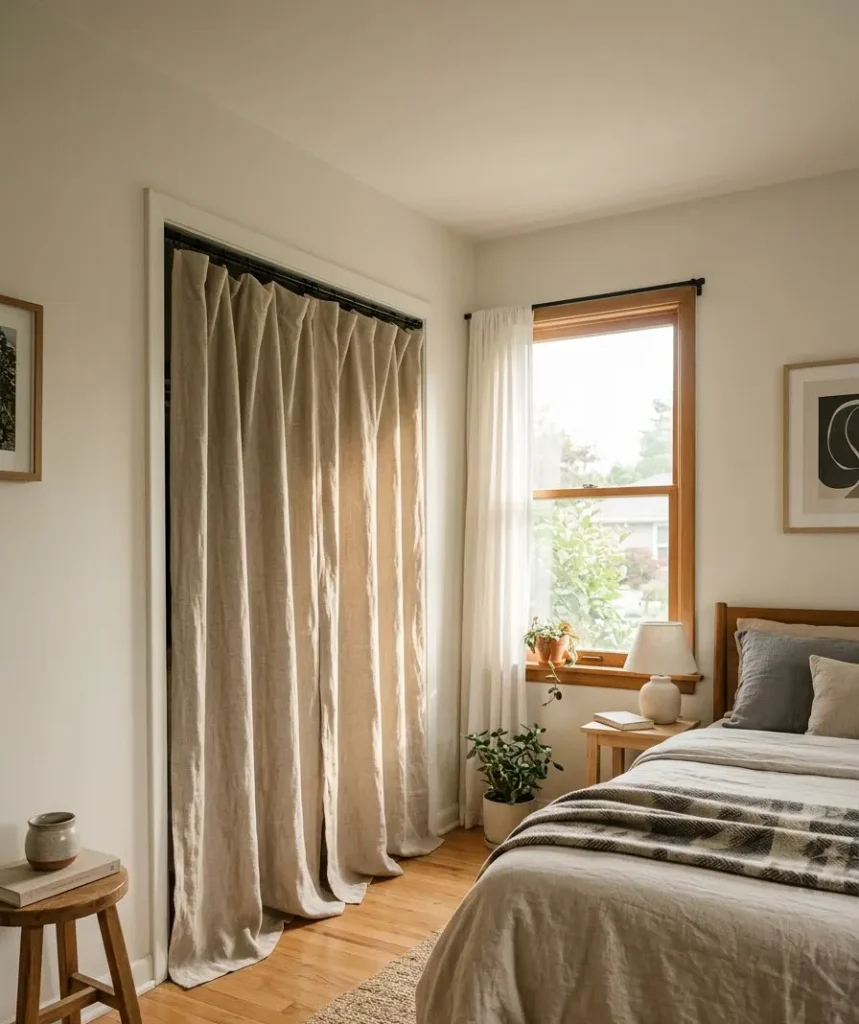
- Hang hooks on the back of the closet door. Bags, scarves, and robes pile up fast, and a row of hooks keeps them off chairs and floors without adding a single piece of furniture.
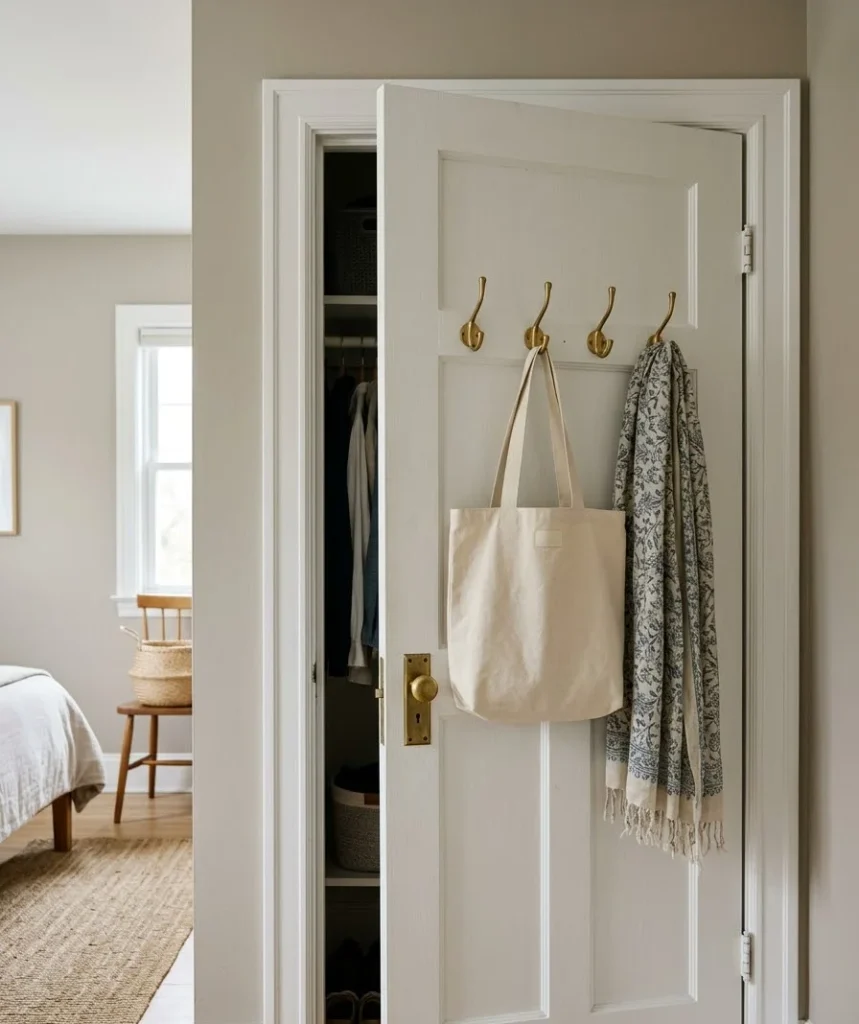
- Use a slim rolling cart as a nightstand. A narrow bar cart or kitchen cart holds a lamp and a book on top, with two more shelves underneath for whatever you’d normally shove in a drawer.
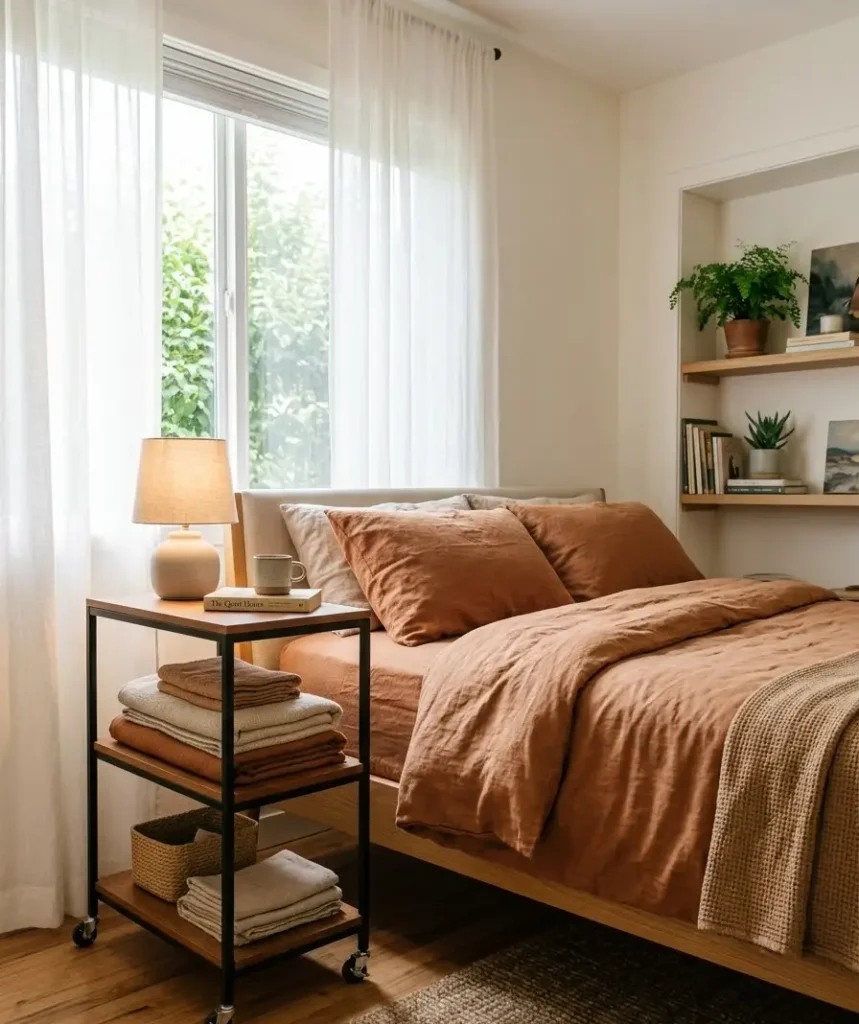
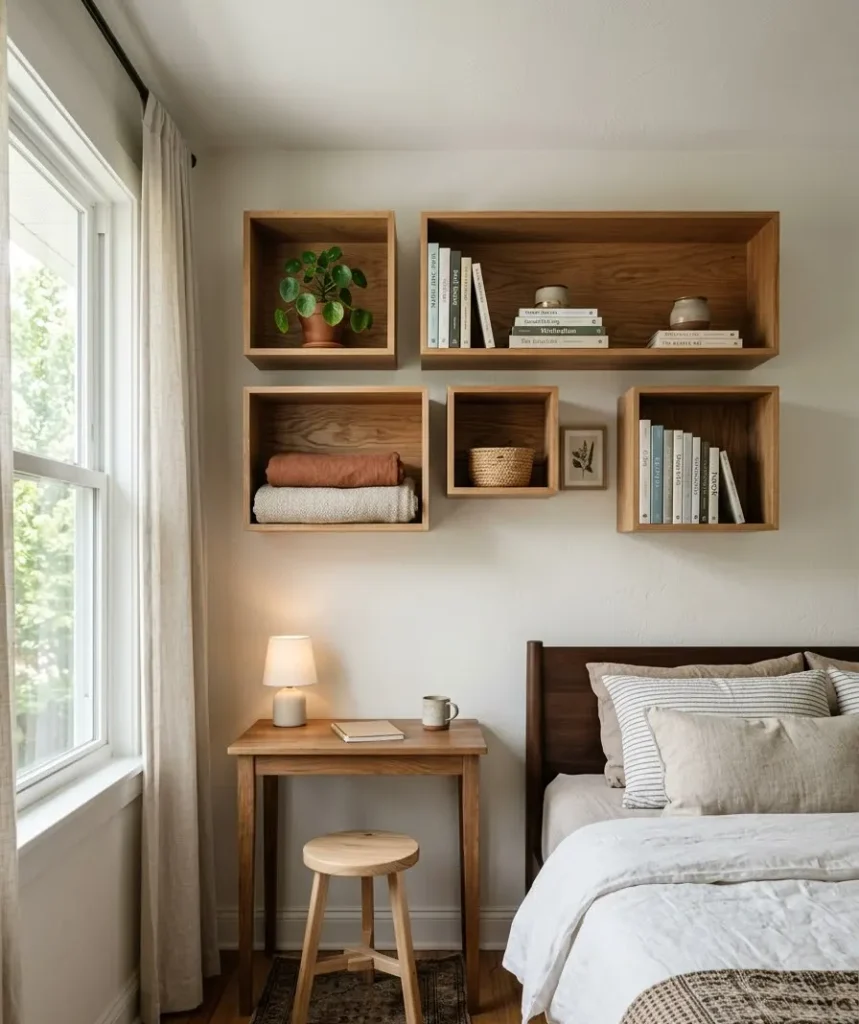
- Try wall cubbies instead of a bookcase. A deep bookcase juts into the room. Shallow wall-mounted cubbies hold the same books and knickknacks while staying a few inches off the wall instead of a foot or more.
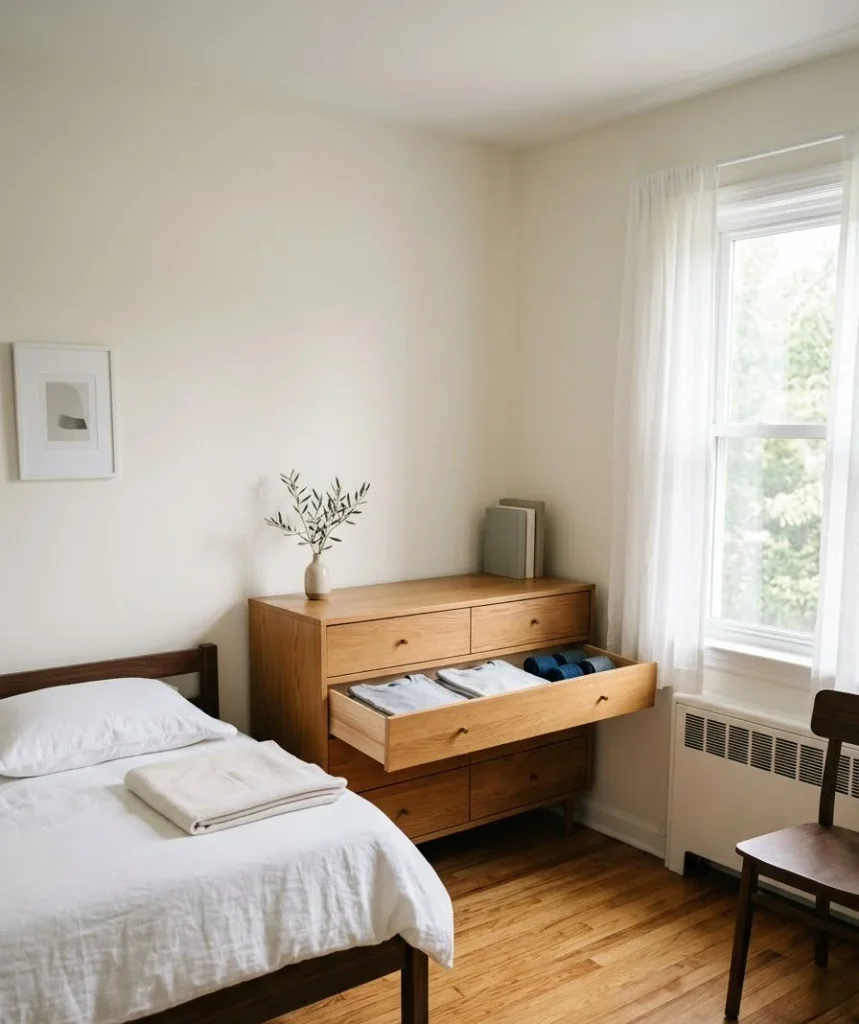
- Store out-of-season bedding somewhere else entirely. Not every storage solution has to live in the bedroom. Vacuum bags in a hall closet free up an entire dresser drawer, and that’s one drawer you’ll actually use for daily clothes.
Textiles and softness that make the room feel like a hug
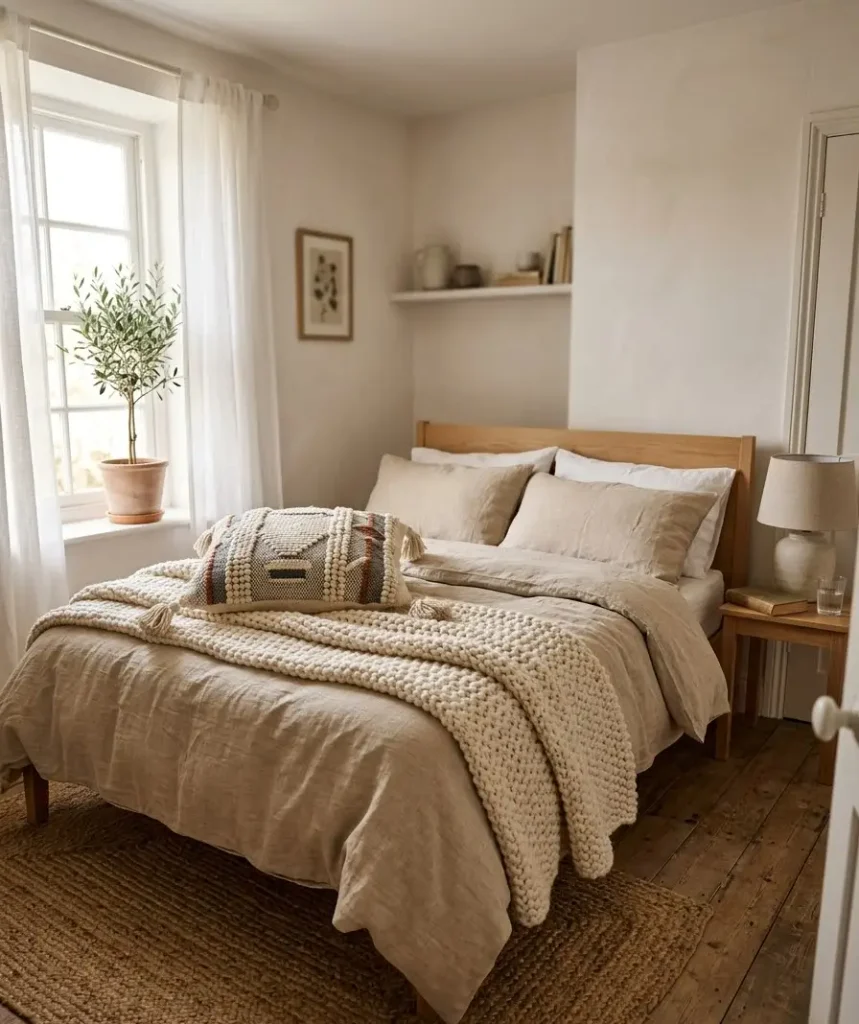
This is where “cozy” actually happens. You can nail every layout trick on this list and still end up with a room that feels sterile if the textiles are wrong.
- Layer at least three textures on the bed. A cotton sheet, a knit throw, and a linen duvet cover read as intentional and warm. One flat comforter alone tends to look a little unfinished, even in a nice color.
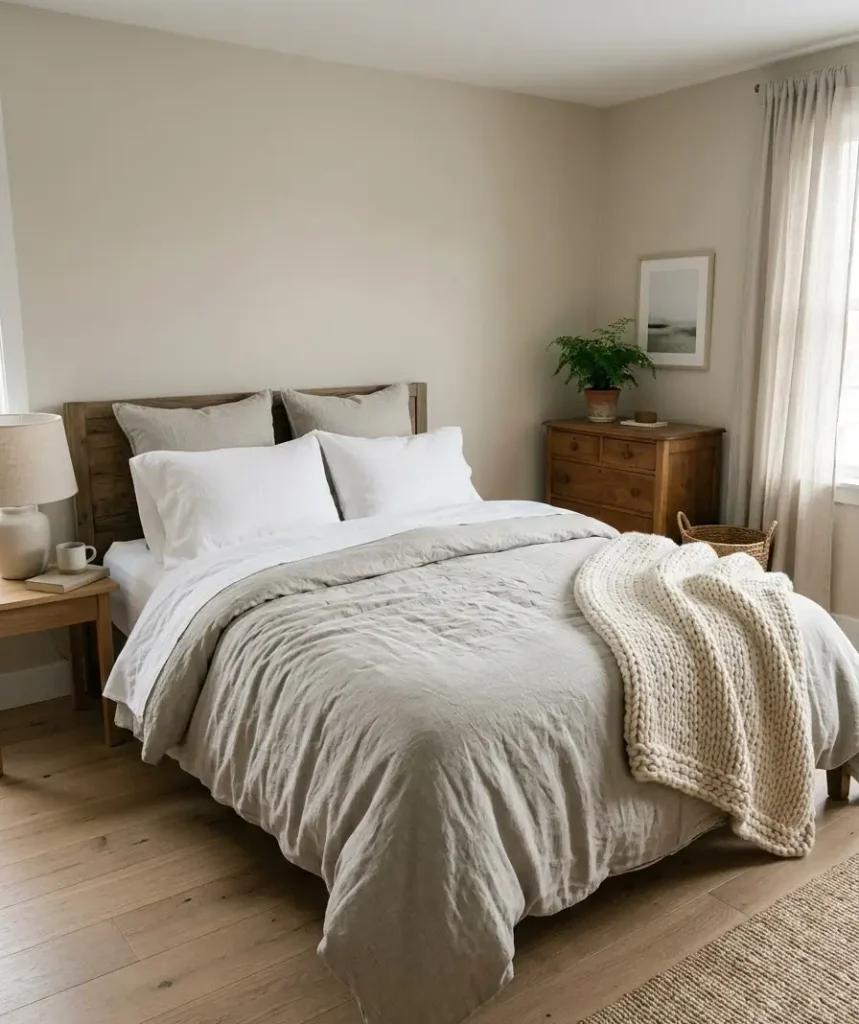
- Hang curtains higher and wider than the window frame. Mounting the rod close to the ceiling and letting the panels extend past the window edges tricks the eye into reading the window as larger, and the room along with it.
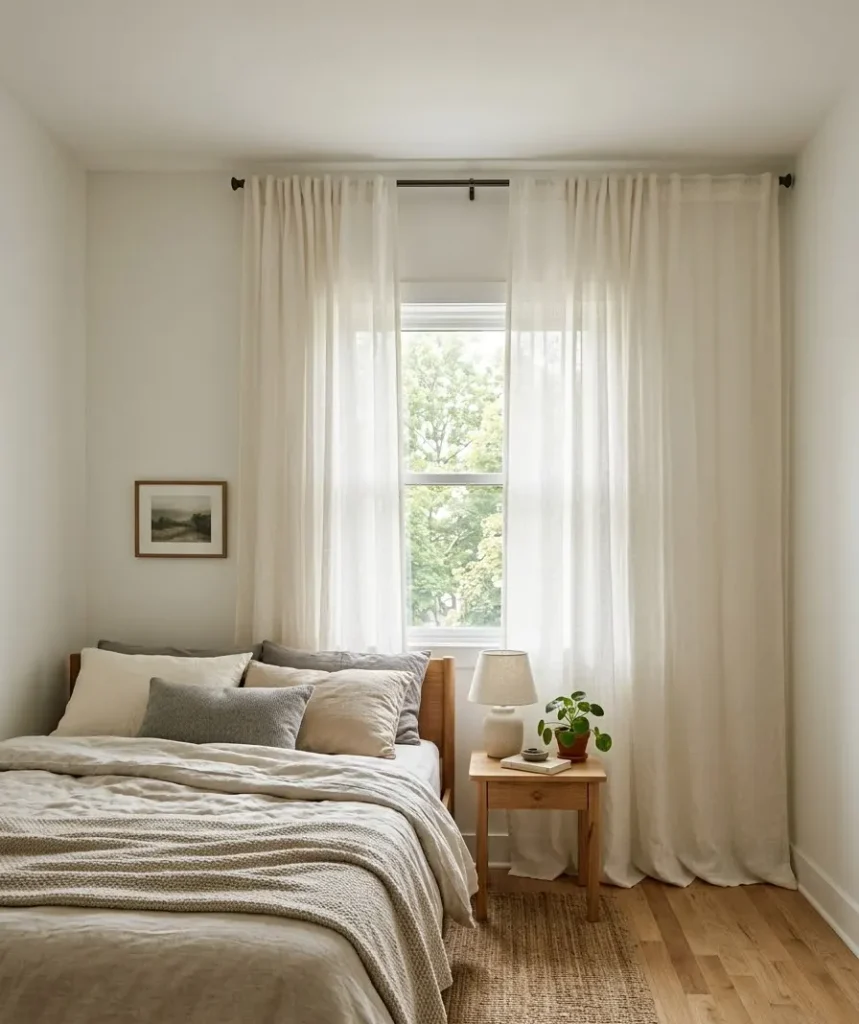
- Add a small rug even in a tight footprint. A rug that only peeks out on either side of the bed still grounds the room and softens the transition from a hard floor. Skip a rug entirely and the room can feel unfinished, no matter how good the paint looks.
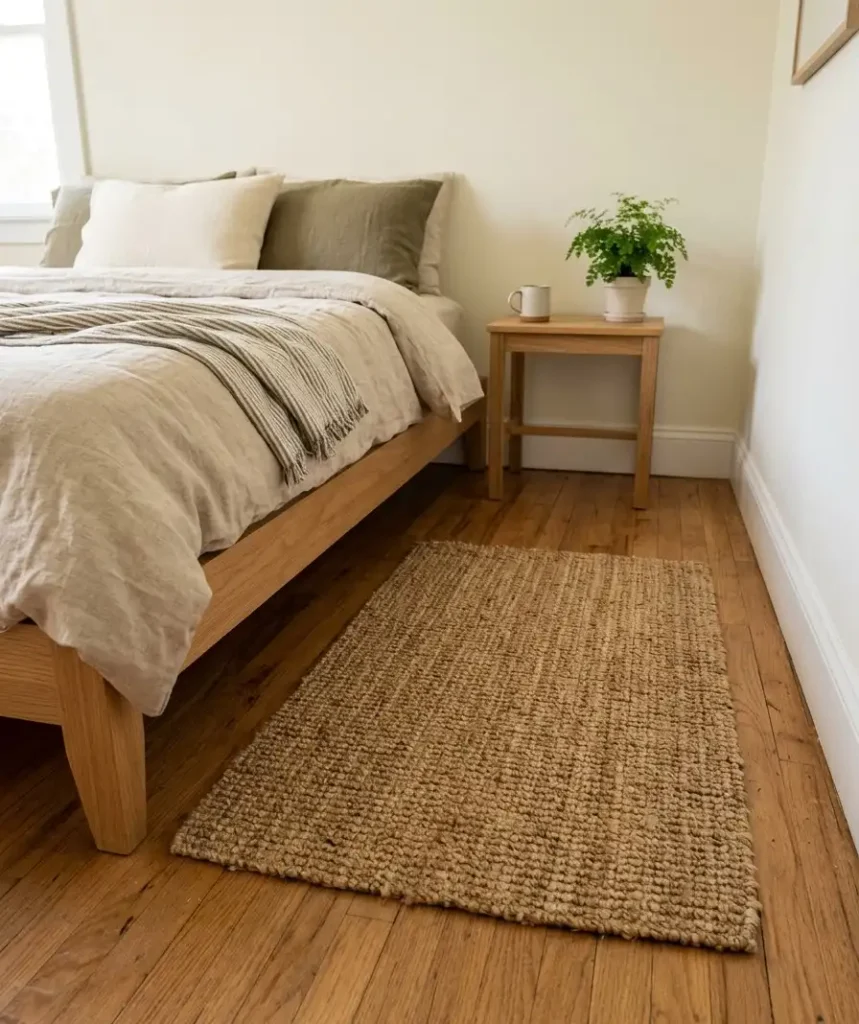
- Choose bedding in one tonal family. Matching several soft shades of the same color, rather than mixing loud patterns, keeps a small room from feeling busy. Busy patterns in a tight space compete for attention fast.
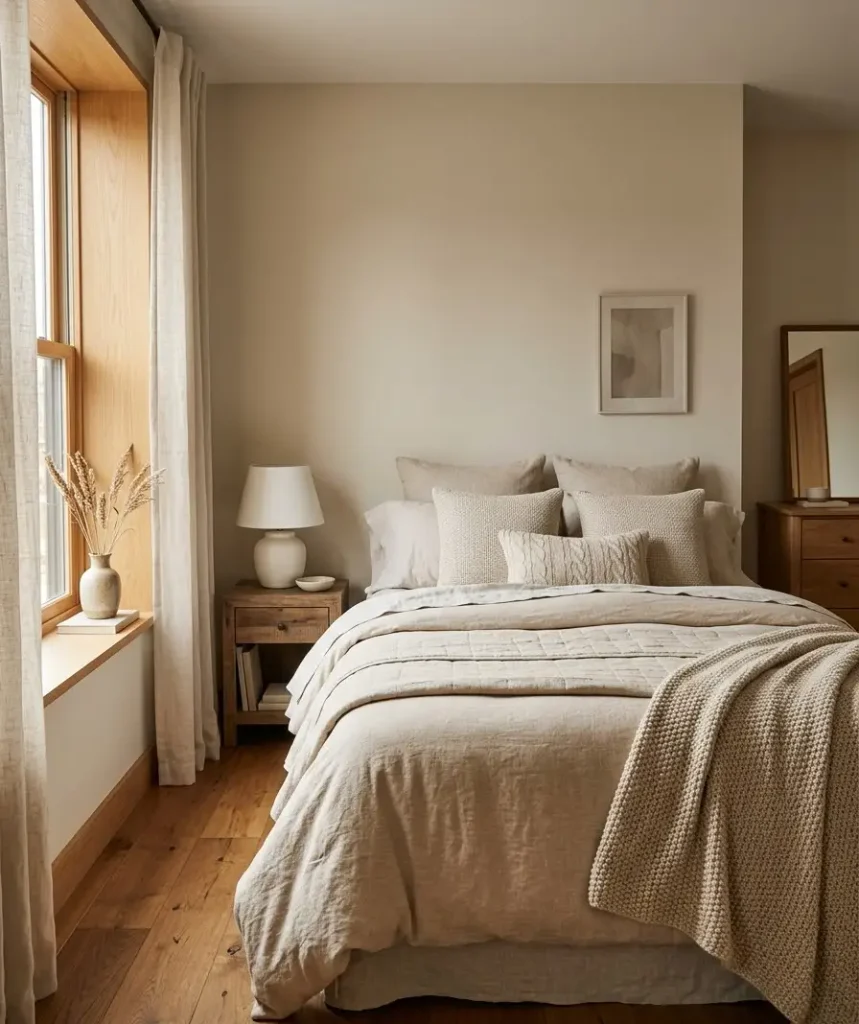
- Use blackout curtains if street light is an issue. Sleep quality actually depends on how dark your room gets at night. The Sleep Foundation’s guide to designing a bedroom for sleep backs this up, and honestly, once I switched to blackout panels I stopped waking up at 6am to a streetlight through thin cotton curtains. Wow, what a difference that made.
Finishing touches that add personality without adding clutter
Here’s a slightly random thought while we’re on the topic: I used to believe a small bedroom had to stay minimal to feel calm, and that’s
just not true. A room with zero personality can feel just as cold as one that’s overstuffed. The goal is curated, not empty.
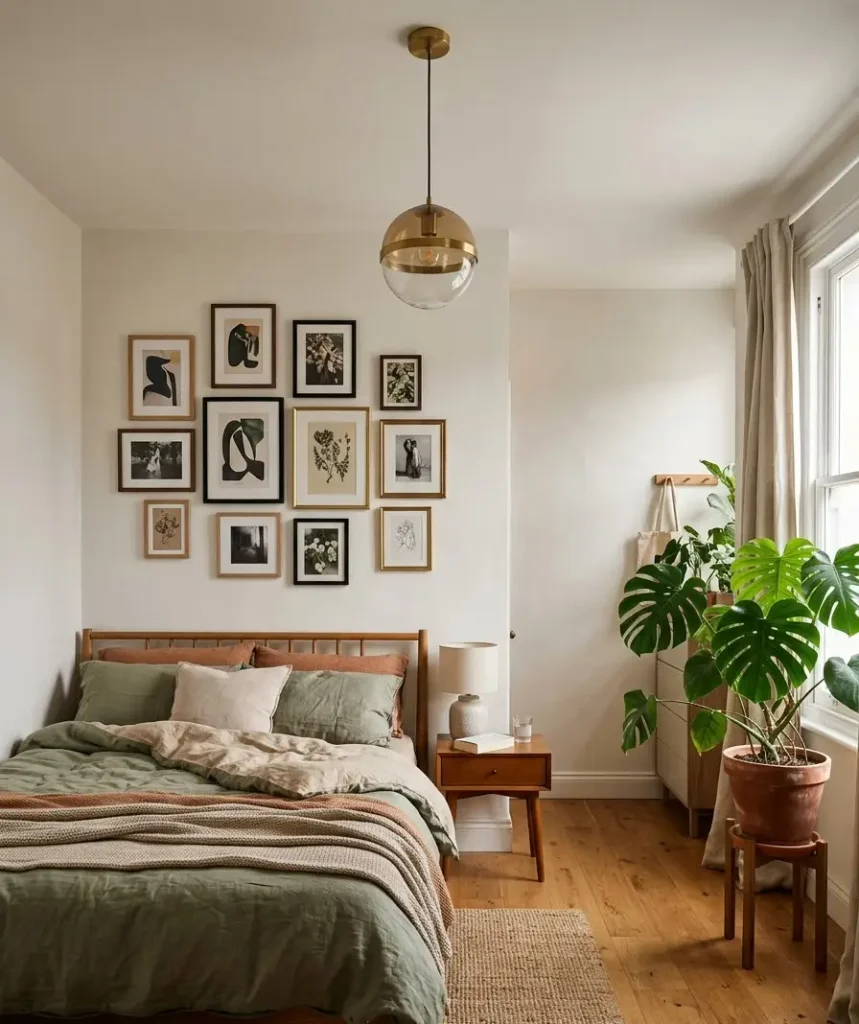
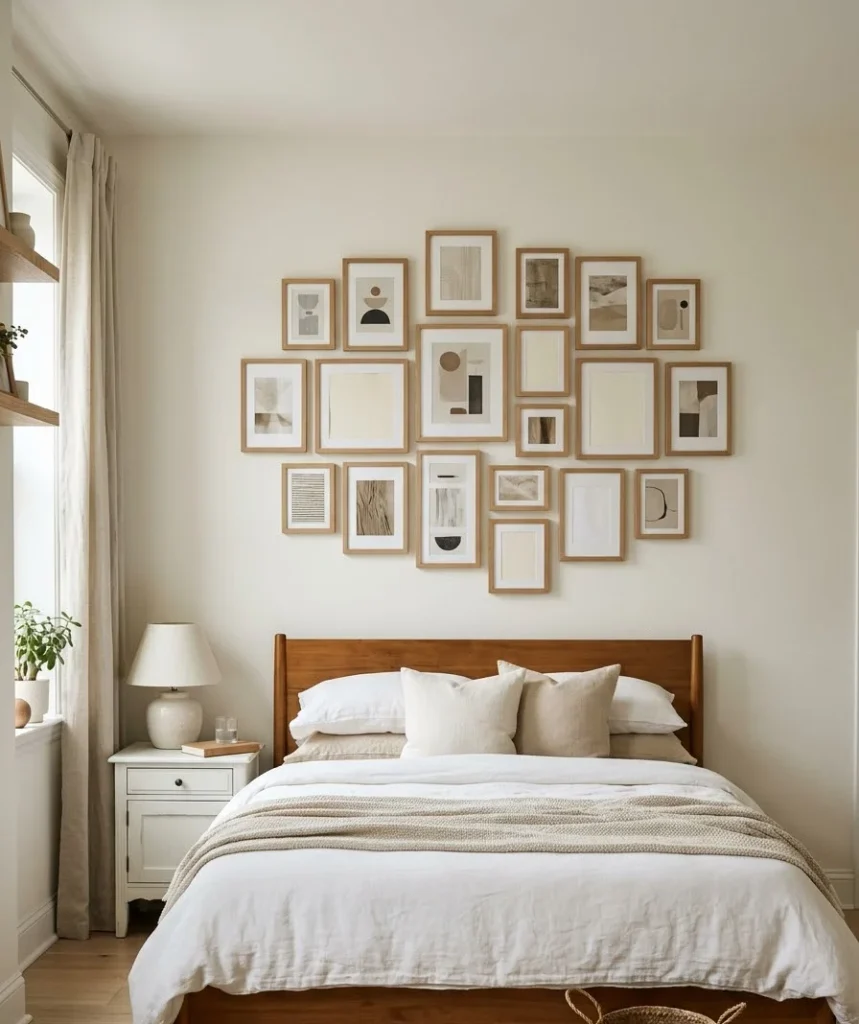
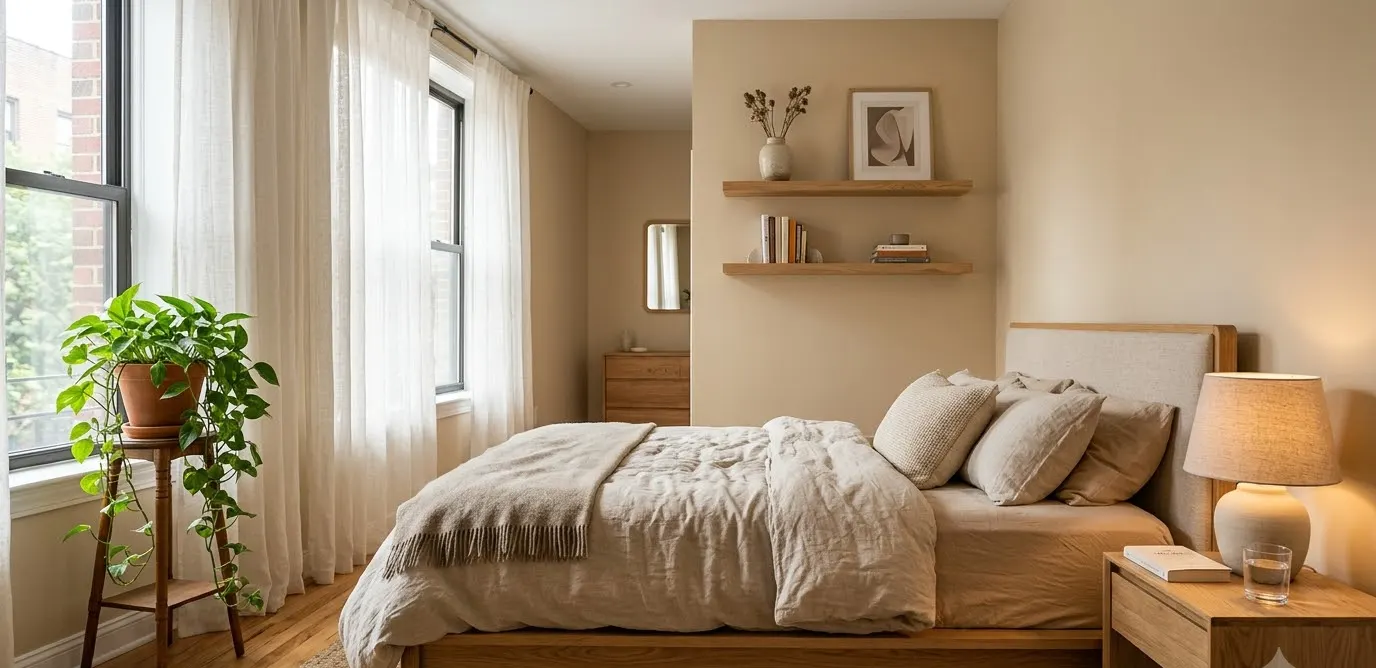
- Pick one gallery wall instead of scattered frames. A cluster of frames grouped tightly together reads as one design choice. The same frames spread across different walls reads as clutter, even if it’s the exact same art.
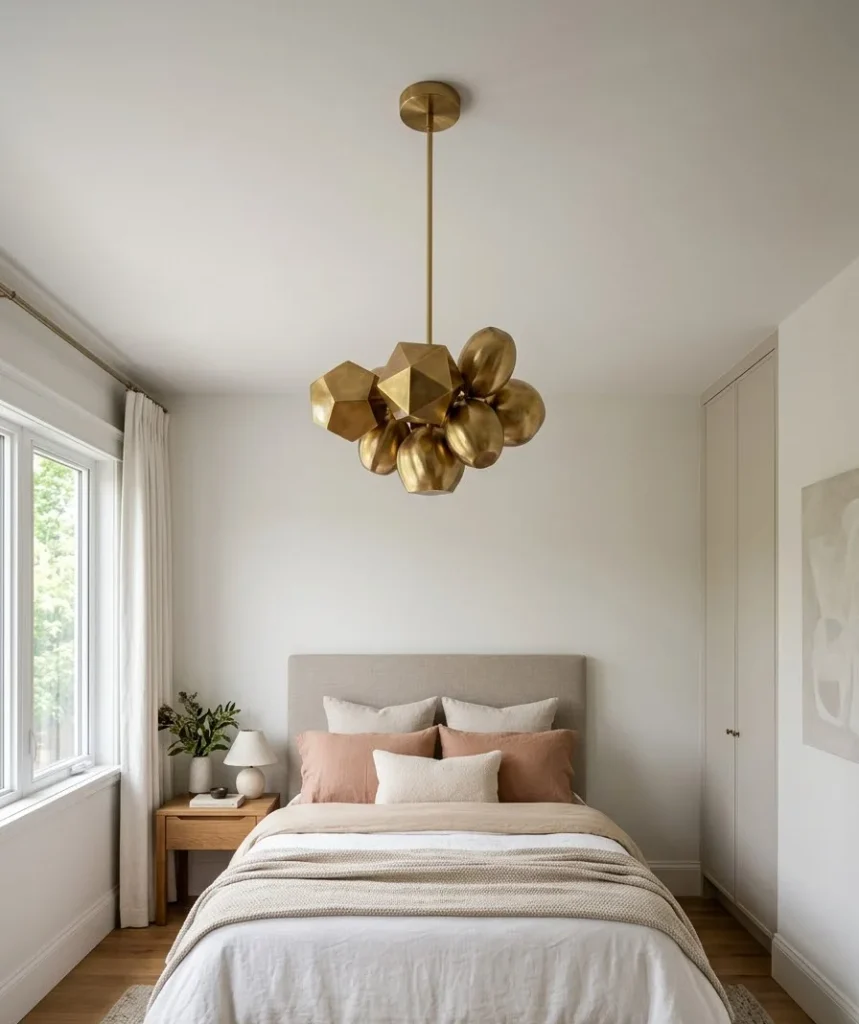
- Add a single statement light fixture. Swapping a builder-grade flush mount for a pendant or a small chandelier gives the room a focal point above eye level, which pulls attention away from how much floor space you don’t have.
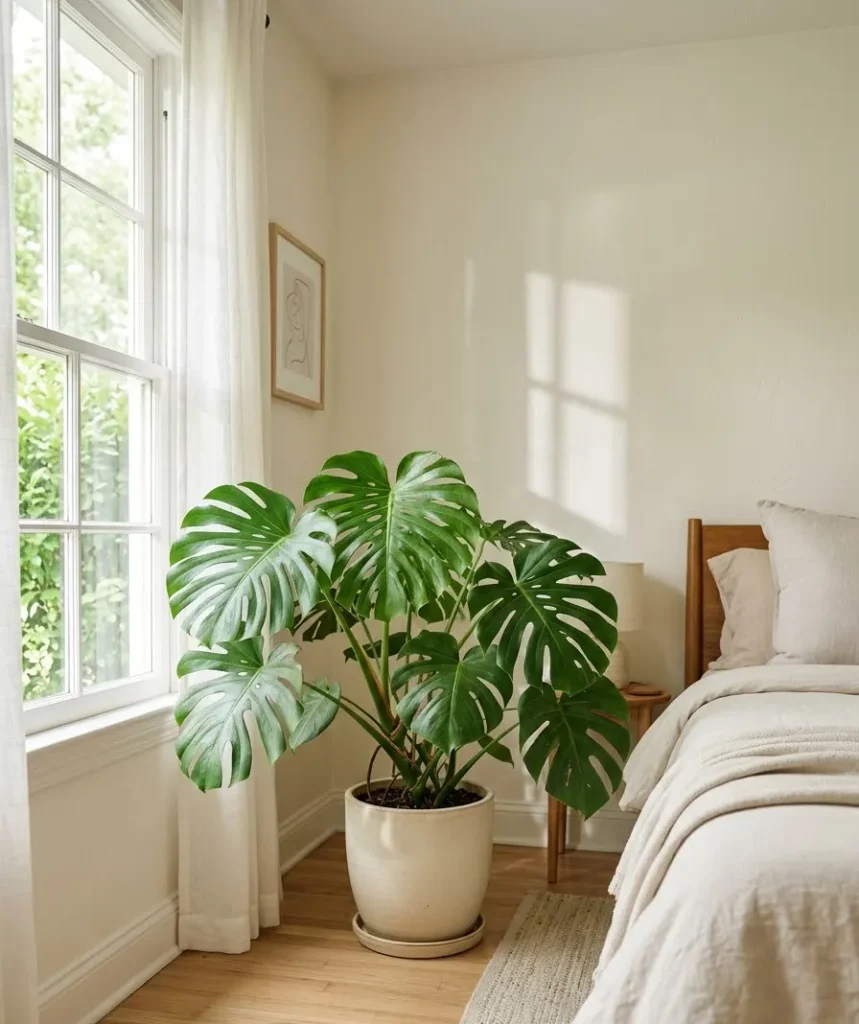
- Bring in one plant, real or good-quality faux. A plant in the corner softens hard lines and adds life to the room. IMO a slightly oversized plant in a small room actually works better than a tiny one, since it fills a dead corner instead of getting lost in it.
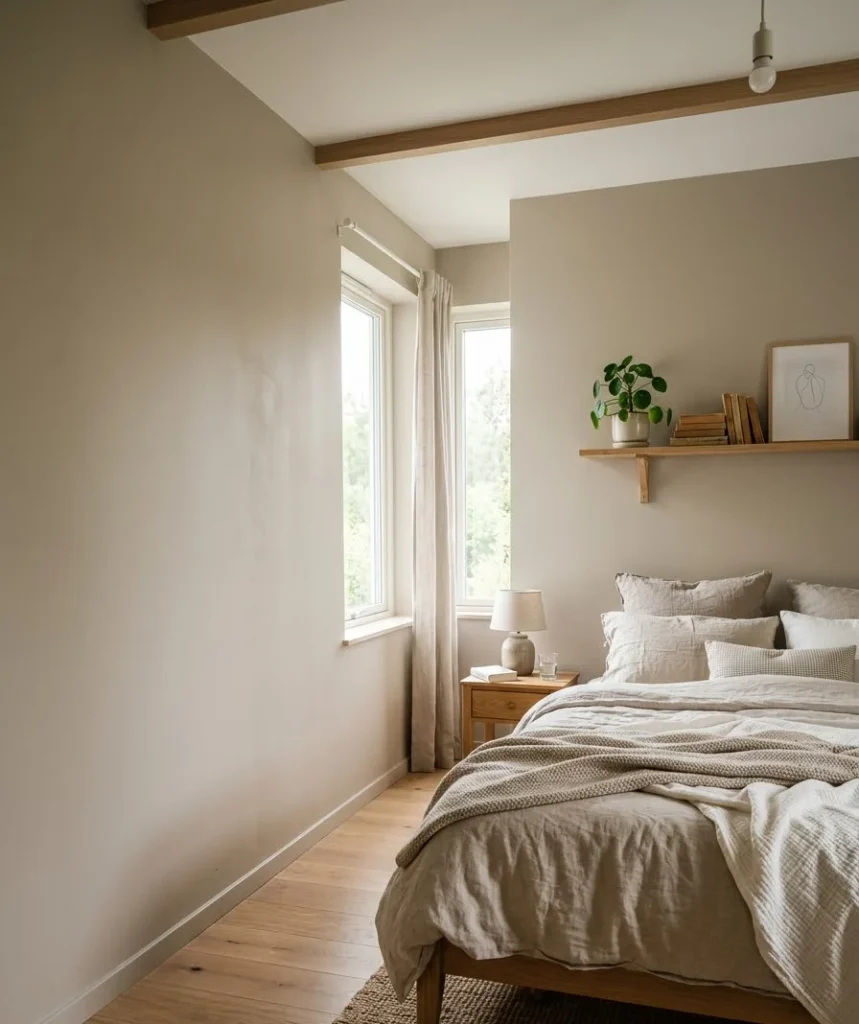
- Leave one wall bare on purpose. After 30 ideas about filling and layering, this one might sound like a contradiction, but every small room needs at least one spot where the eye can rest. Apartment Therapy’s IKEA hacks for small bedrooms shows a few rooms that use exactly this trick, and it works because restraint in one spot makes the rest of the room’s personality stand out more.
Quick reference: effort versus payoff
| Idea | Effort | Cost | Payoff |
|---|---|---|---|
| Paint one dark wall (#2) | Medium | Low | High |
| Mirror across from window (#12) | Low | Low | High |
| Under-bed storage (#16) | Low | Medium | Medium |
| Blackout curtains (#27) | Low | Medium | High |
Frequently asked questions
Does a small bedroom really need a rug? Not strictly, but a small rug does more visual work than most people expect.
It breaks up bare flooring and gives the room a finished feel, even a runner-sized piece tucked beside the bed makes a difference.
Is a dark accent wall a bad idea in a small room? It depends on light. A north-facing room with limited natural light can handle a dark wall better than you’d think, since the color grounds the space instead of making it gloomy.
A room already short on daylight all four walls might want to stay lighter overall.
What’s the single biggest mistake people make in small bedrooms? Buying furniture sized for the room they wish they had instead of the room they actually have.
A bed and dresser that fit generously, with real walking space around them, will always beat a slightly bigger set that traps you in a corner every morning.
A small bedroom is not a design failure you need to apologize for.
It’s a set of constraints, and constraints tend to produce better decisions than an unlimited budget and endless square footage ever do.
Pick three or four ideas from this list that fit your actual room, not the whole 31 at once, and give them a season before you judge the results.
Which one are you trying first, the paint or the storage?