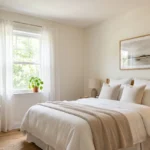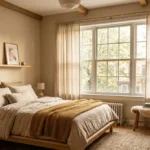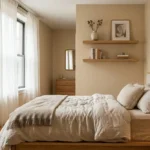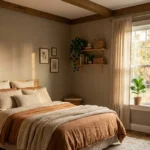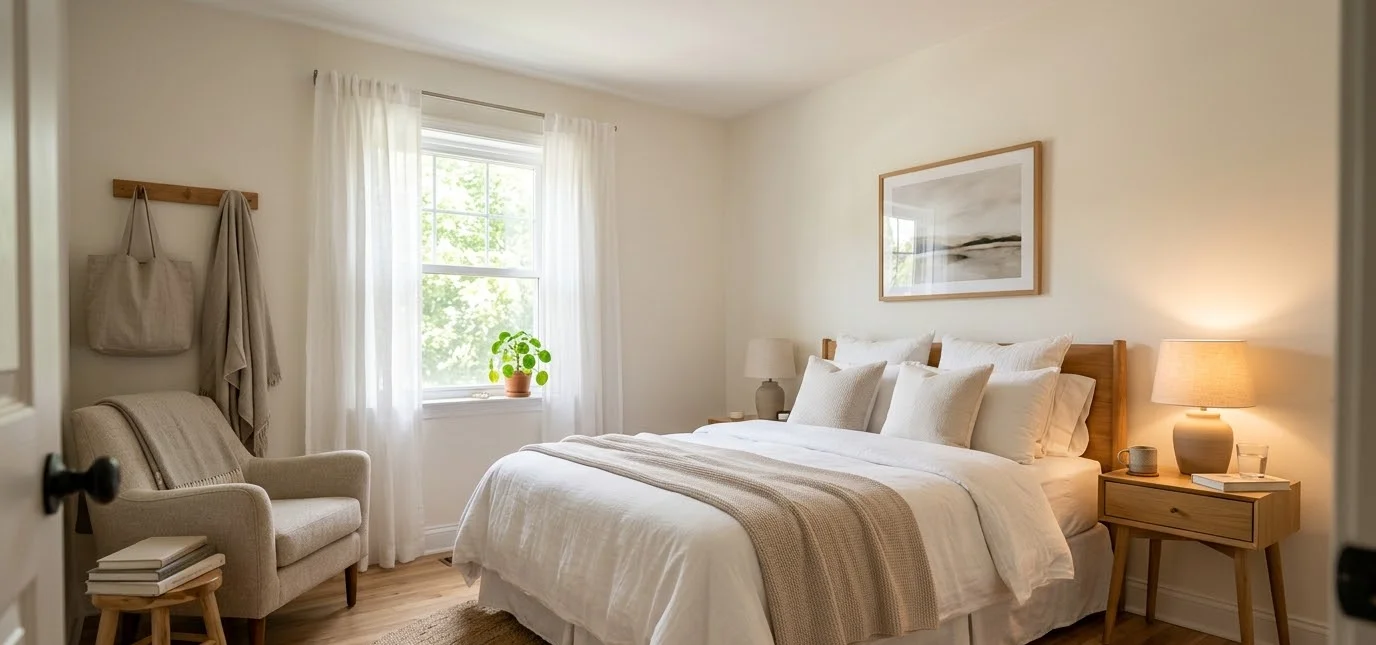
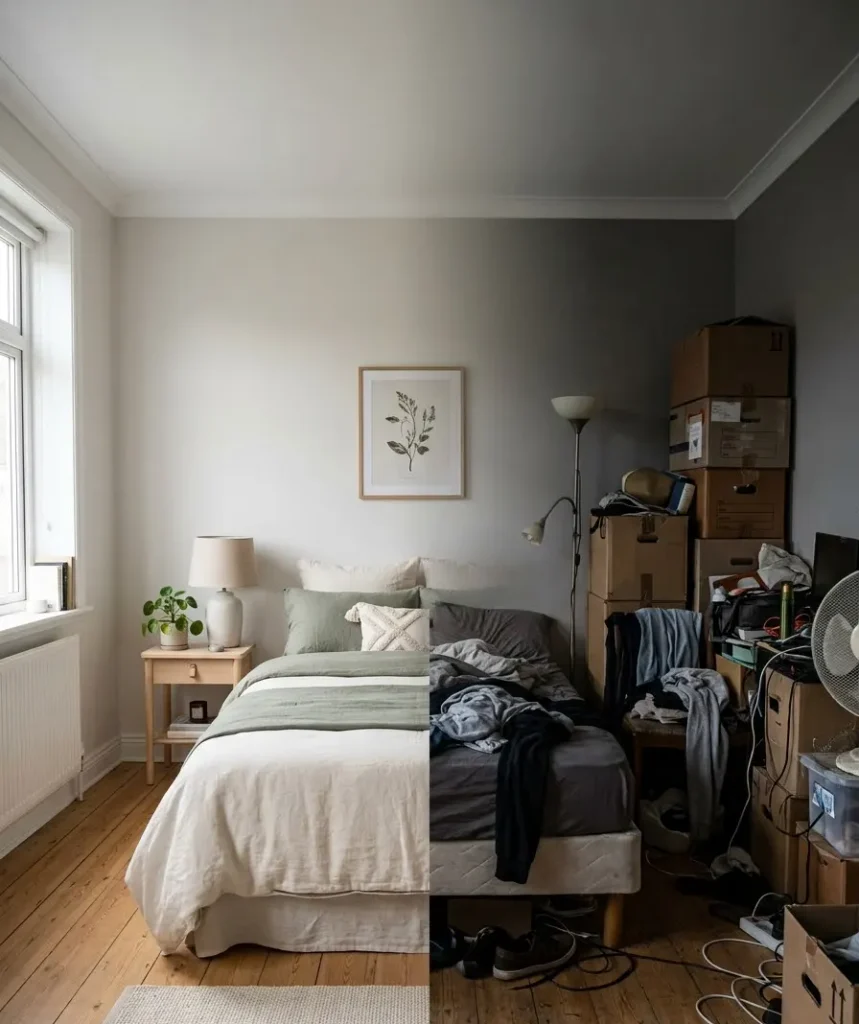
My guest room used to be 78 square feet of regret. A treadmill nobody used, three cardboard boxes labeled “misc,” and an air mattress leaning against the wall like it was embarrassed to be there.
Guests would ask where they’d be sleeping and I’d change the subject.
That room is gone now. Not literally, obviously, the walls didn’t move.
But I turned it into the kind of space where my sister-in-law texted me the next morning asking if she could just… stay another night.
That’s the goal here. You don’t need square footage. You need a plan, a little restraint, and a handful of choices that actually earn their spot in a tiny room.
Here’s everything I learned pulling that room back from the brink, plus what I’d tell a friend doing the same thing this weekend.
None of this required knocking down a wall or hiring a contractor. It required about two weekends, a modest budget, and a willingness to admit that the treadmill needed to go somewhere else.
If you’ve got a spare room that’s currently doubling as storage, an office, or “the place we put things we don’t know what to do with,” this is for you.
Small doesn’t mean unfinished. It just means every decision matters a little more than it would in a bigger space.
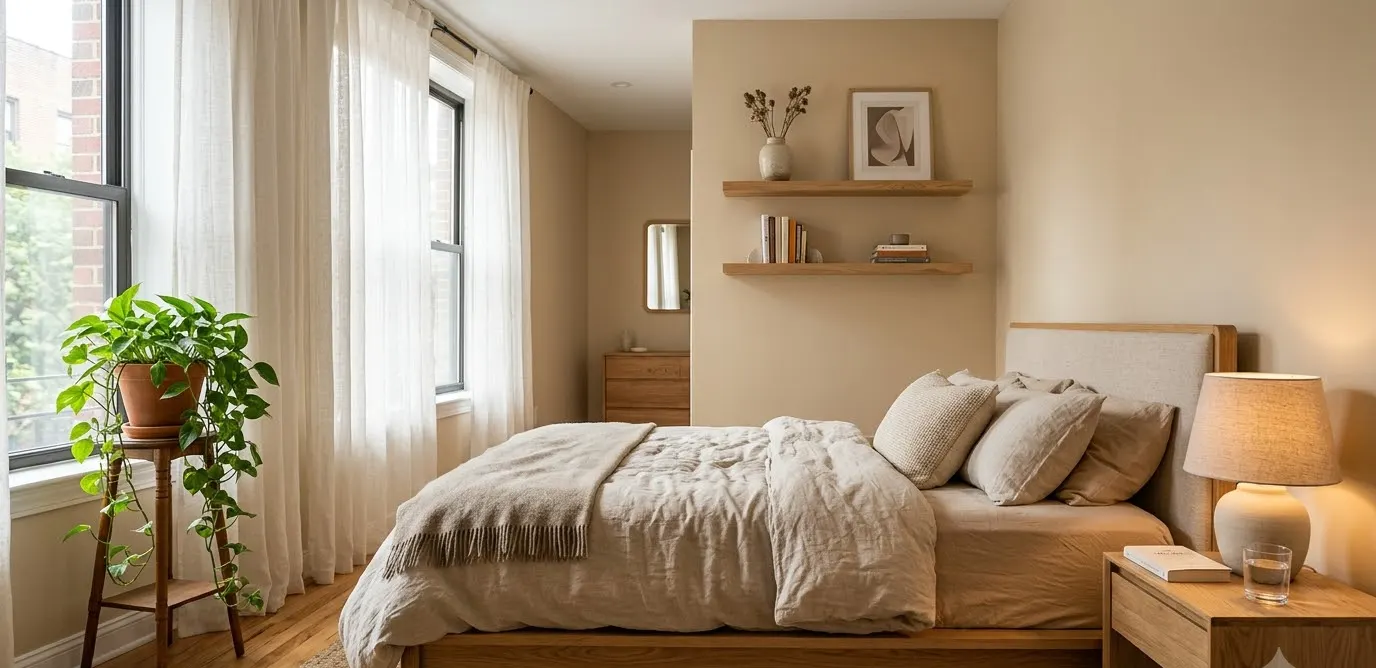
Why a small guest room deserves real attention
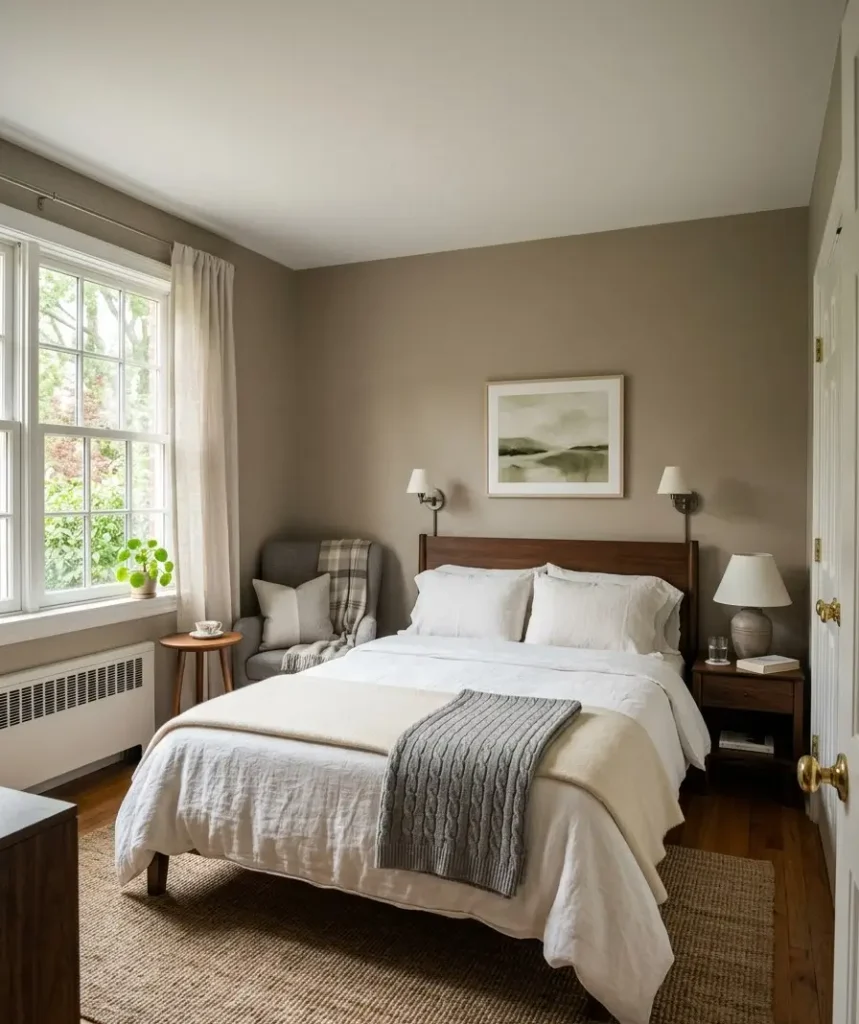
A guest bedroom is the one room in the house that has exactly one job: make someone feel taken care of for a night or two.
And yet it’s usually the room that gets the leftover furniture, the paint color nobody wanted in the living room, and the closet nobody else needed.
That’s backwards. Your guests notice everything. IMO, a small, thoughtfully arranged room beats a bigger room that feels like storage with a mattress in it, every single time.
I’ve stayed in guest rooms the size of a walk-in closet that felt more restful than some primary suites I’ve seen.
The difference was never square footage. It was intention.
Measure before you buy anything
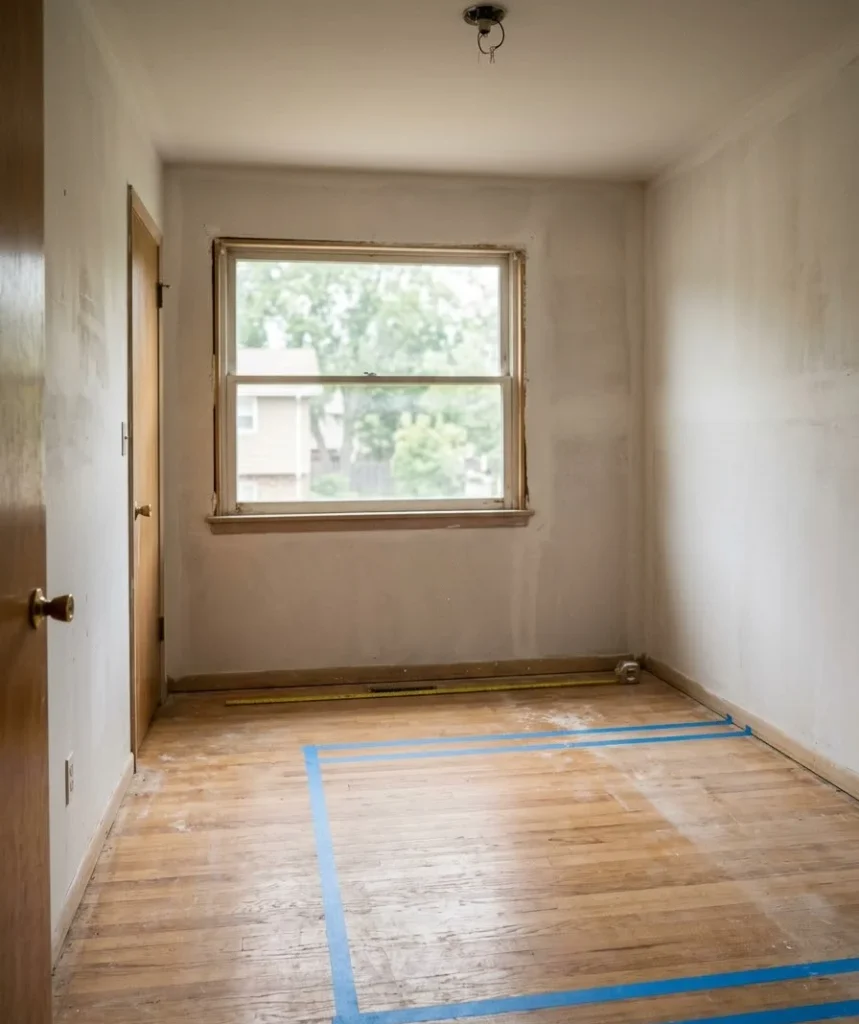
This is the step everyone skips, and it’s the one that saves you the most money and heartbreak. Grab a tape measure before you open a single browser tab.
Write down:
- Room dimensions, wall to wall, including where the door swing eats into the space
- Ceiling height, especially if you’re considering a canopy bed or tall headboard
- Window placement, since this affects where a dresser or reading chair can actually go
- Outlet locations, so your lamp isn’t stranded three feet from the nearest plug
I learned this one the hard way. I bought a beautiful queen bed frame for a room that, once I measured properly, only fit a full.
It sat in my garage for four months before I found someone to take it off my hands.
Measure twice. Buy once. Boring advice, but it’s boring for a reason.
Color and light: the two things that actually change how big a room feels
Furniture matters, sure. But color and light do more heavy lifting in a small room than anything else you’ll buy.
Paint tricks that visually stretch the walls
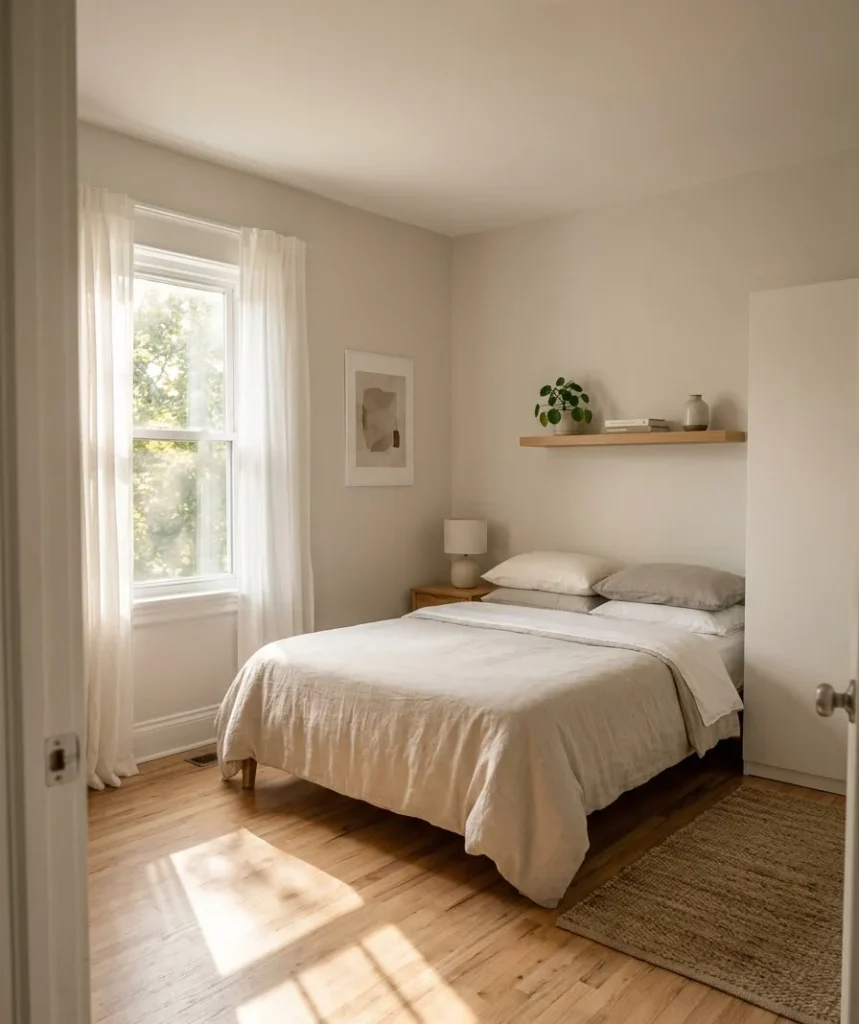
Dark, saturated colors can look stunning in photos, but in a genuinely small room with average ceiling height, they tend to close things in.
Design experts consistently point toward the lighter end of the palette here: off-whites, light neutrals, pales, and soft pastels tend to read as brighter and more open on the wall, according to Homes & Gardens.
A few colors that worked for me and for friends who’ve tackled this same problem:
- Soft warm white — forgiving, brightens the room without feeling clinical
- Pale sage or muted blue-green — calm without going flat or boring
- Light greige — splits the difference between gray and beige, works with almost any bedding
One trick I didn’t expect to love: painting the trim and baseboards the same shade as the walls.
It removes the visual “stop lines” that make a small room feel boxed in.
If you want your ceiling to feel taller, painting it a shade lighter than the walls helps trick the eye upward, a tip echoed by Home Depot’s design guidance on small bedrooms.
Lighting layers that matter more than you’d think
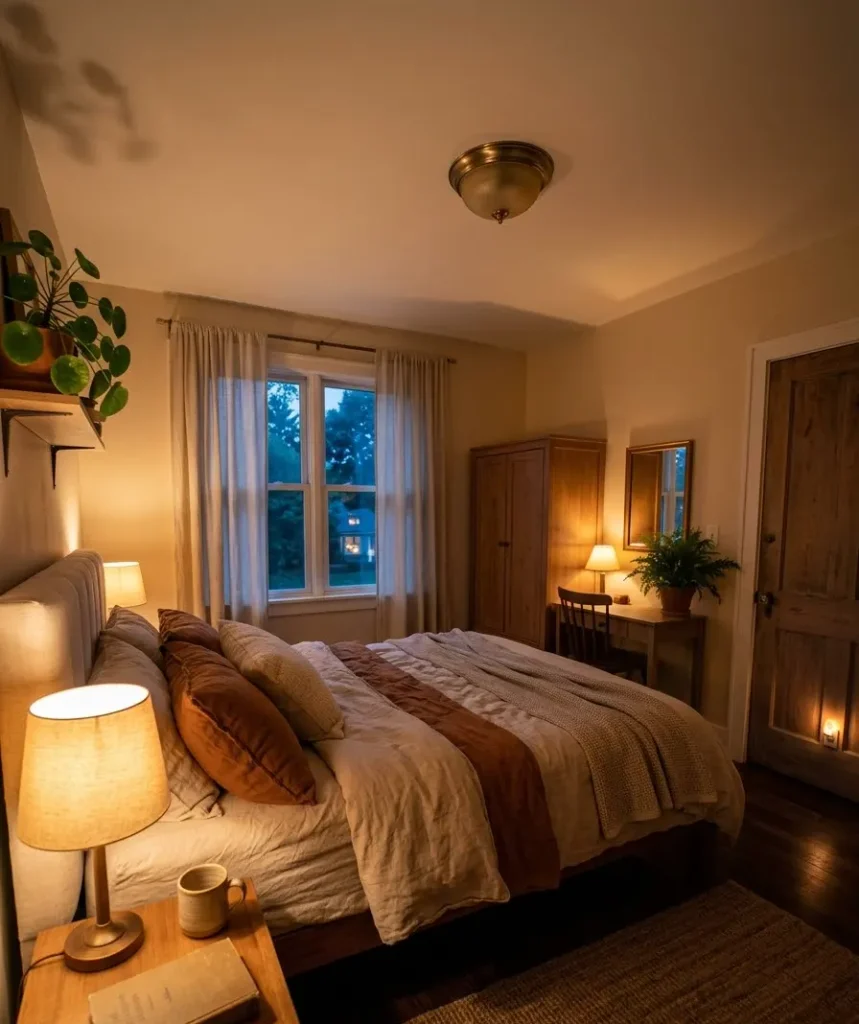
One overhead light is not a lighting plan. It’s a compromise. A small room actually benefits from layered lighting more than a big one does, because every fixture is doing double duty.
Here’s what I’d put in a small guest room, in order of priority:
- A dimmable overhead fixture or flush mount (skip anything that hangs low, guests will find it with their forehead)
- A bedside lamp with a warm bulb, not a cold blue-white one
- A small plug-in nightlight near the door, for that 2 a.m. bathroom trip
- Sheer curtains that let daylight in without exposing the room to the whole street
Ever notice how hotel rooms almost never rely on one light source? That’s not an accident. It’s the same trick, just shrunk down for your spare room.
Smart layout: where the furniture actually goes
Before you buy a single thing, figure out the walking path. This sounds obvious. It’s the step almost everyone skips anyway.
The bed placement rule I wish I’d known sooner
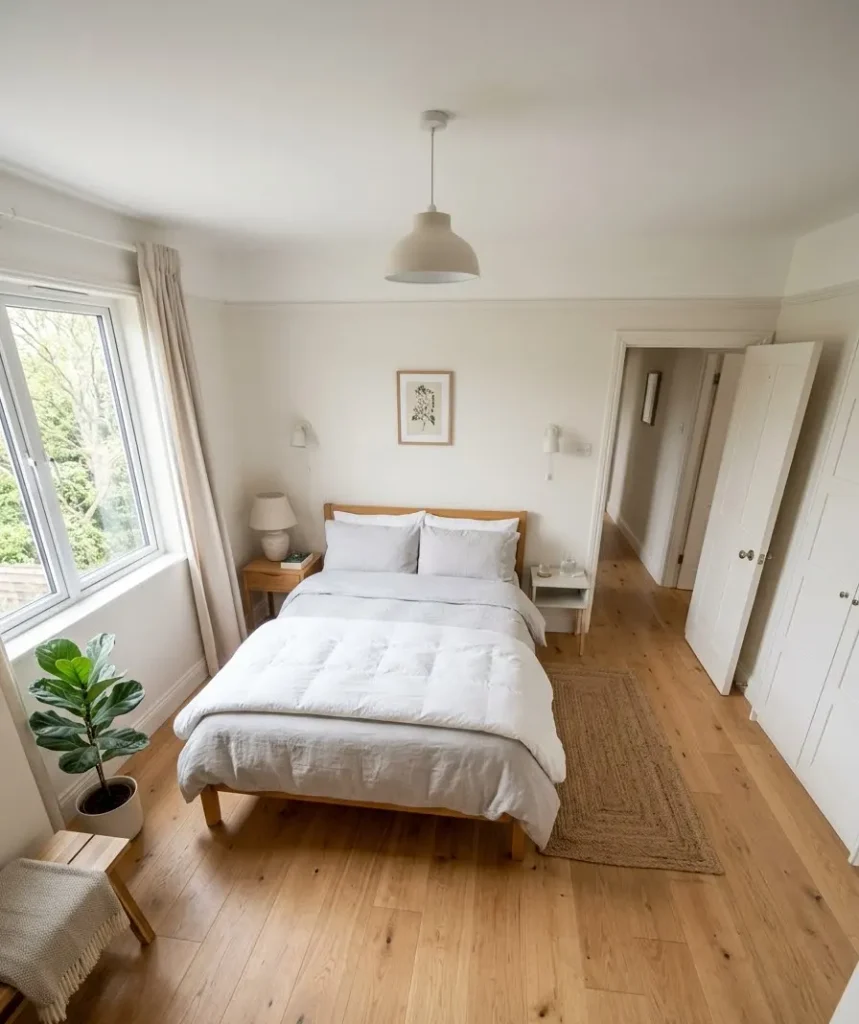
Push the bed’s headboard against the longest unbroken wall, not the wall across from the door.
I made this mistake in my first attempt at the room, and it meant guests had to squeeze past the foot of the bed just to reach the window.
Once I flipped it, the whole room opened up, and I hadn’t moved a single other piece of furniture.
A few placement rules that actually hold up in practice:
- Leave at least 24 inches of clearance on at least one side of the bed, ideally both
- Keep the door swing completely clear, nothing should block it even partially
- Position the bed so it isn’t the first thing someone sees through a hallway or open door, angle it if you have to
- If there’s a closet, make sure the door can open fully without hitting the bed frame
Traffic flow matters more than you’d think
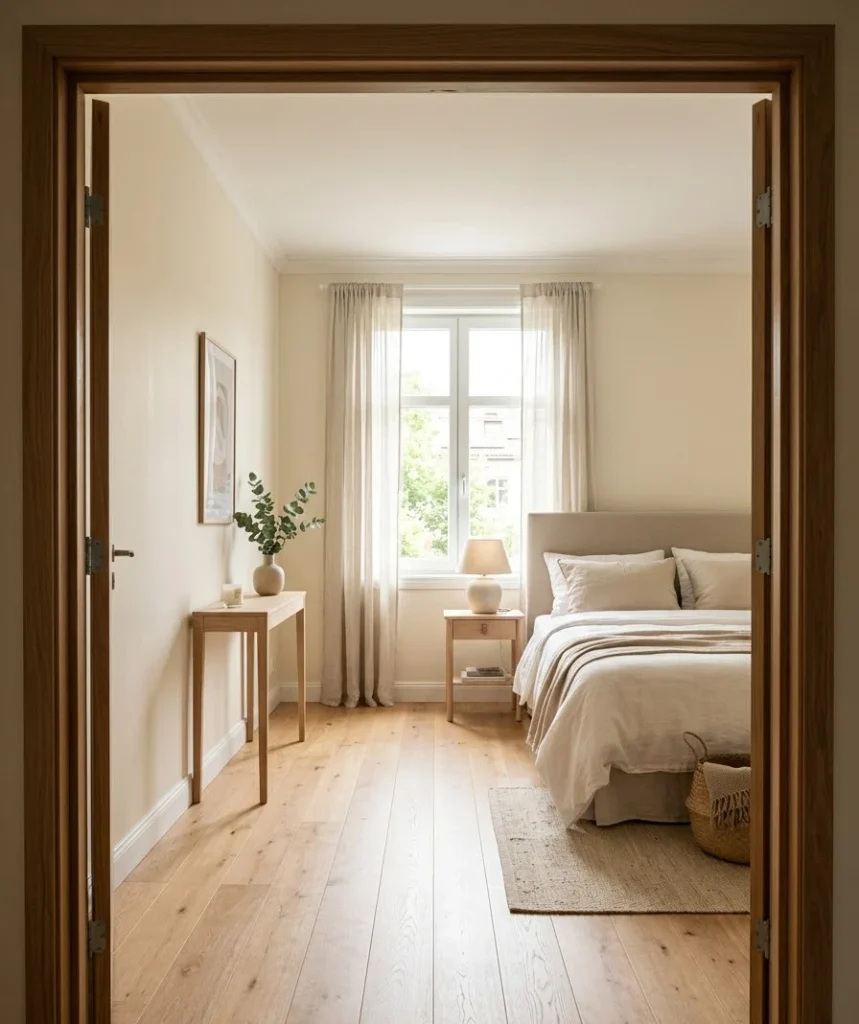
Ever walk into a room and immediately feel boxed in, even though it’s technically not that small?
That’s usually a traffic flow problem, not a size problem. People need a clear line from the door to the bed and from the bed to wherever they’d reach for a bag or their phone charger.
Sketch it out on paper first. I know that sounds old-fashioned, but a rough pencil sketch with your actual measurements saves
you from rearranging heavy furniture three times in one Saturday. Trust me on this one.
Furniture that actually earns its square footage
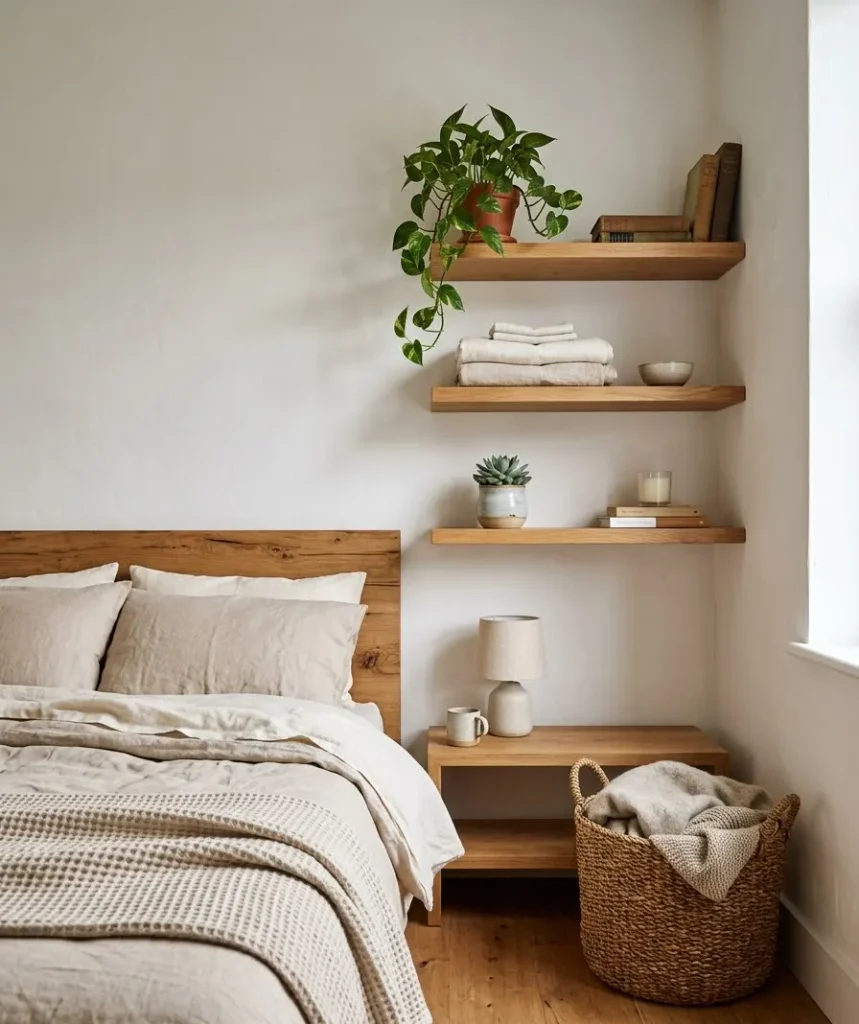
In a small guest room, every piece of furniture has to work for its spot. If it can’t multitask, it’s probably better off in a different room, or gone entirely.
| Furniture Piece | Small-Room Job | Watch Out For |
|---|---|---|
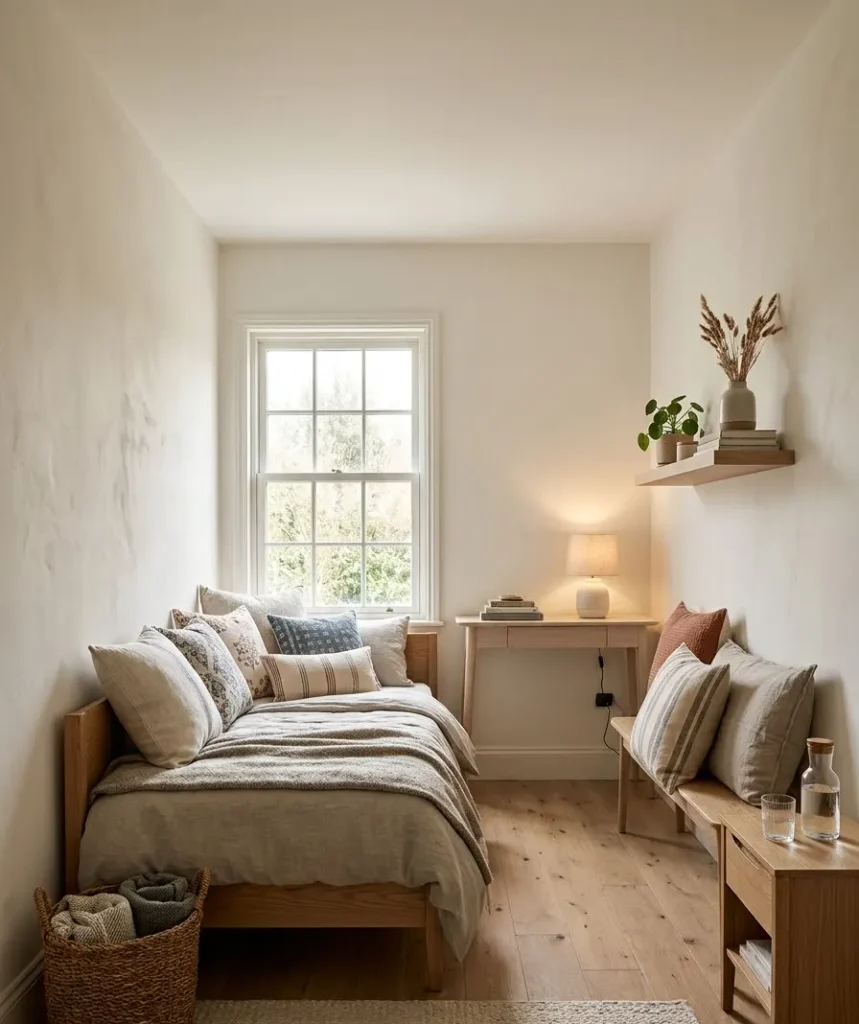
| Daybed or trundle | Sleeps one or two, doubles as seating | Can look like a dorm room if styled wrong |
| Nightstand with drawer | Storage plus surface for a lamp and water glass | Skip anything without storage, it’s wasted space |
| Slim console instead of a dresser | Luggage rack, catch-all, decor spot | Needs to be shallow, 12-14 inches deep max |
| Wall-mounted shelf | Books, plants, decor without eating floor space | Don’t overload it, two or three items look intentional |
A trundle bed changed my whole outlook on this room. During the day it reads as a regular daybed with a few throw pillows.
At night, when my parents visit together, that second mattress rolls out and suddenly I’ve got a room for two guests instead of one.
Skip the full-size dresser if you can. A guest staying two or three nights doesn’t need six drawers.
A luggage rack and a slim console with one or two drawers will cover almost every situation.
Storage hacks that don’t eat the floor
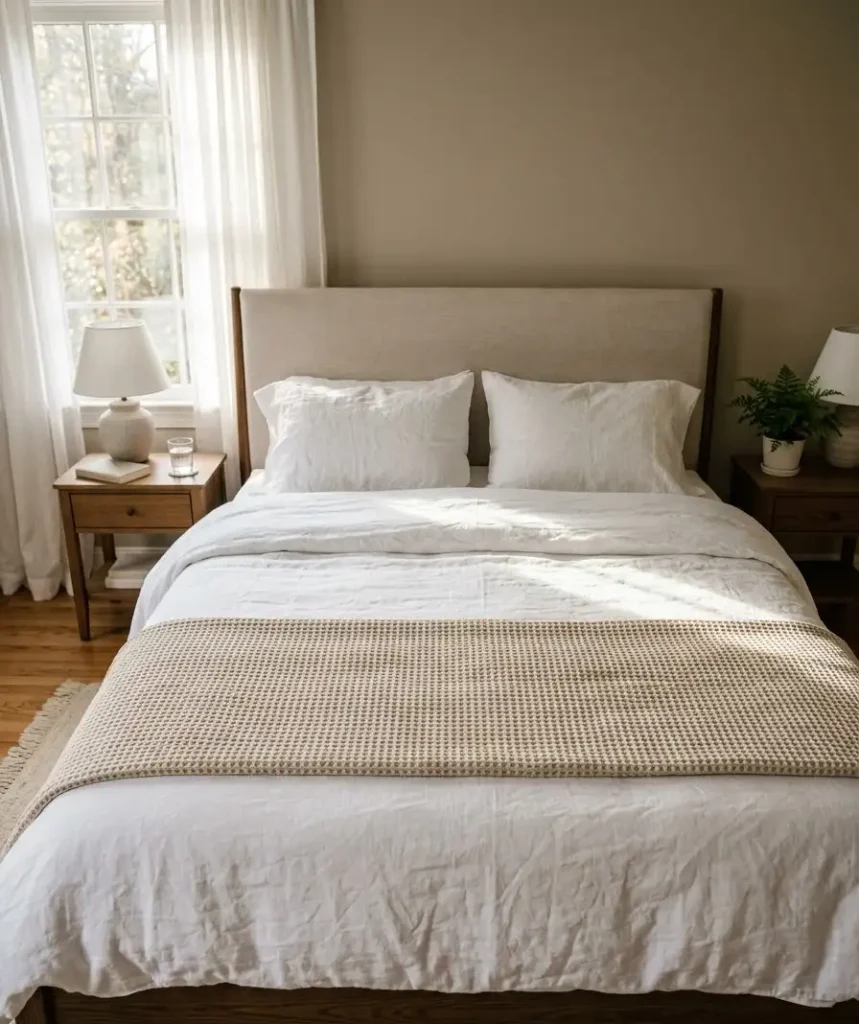
Small rooms fail when storage competes with walking space. The fix is going vertical, not wider.
- Floating shelves above the headboard for books, a small plant, a reading lamp
- Under-bed storage bins for extra blankets or pillows you only need occasionally
- Over-the-door organizers for slippers, an extra robe, or a spare charger
- A single well-placed hook by the door for a coat or bag, this alone stops the “where do I put my jacket” hover
I’ll admit this one is a little off-topic, but stick with me: I once tried to cram a full clothing rack into a guest room because I figured guests would want somewhere to hang things.
Nobody used it. Not once, in two years. What they did use, constantly, was a single hook and a small basket for phone chargers. Lesson learned: guests want simple, not elaborate.
Bedding and textiles that feel like a hotel stay
This is the part where people either go cheap or go overboard, and both are mistakes. You don’t need thousand-dollar sheets.
You need the right thread count, the right layers, and pillows that don’t feel like sleeping on a rock.
According to the Sleep Foundation, sheets under a 200 thread count tend to feel thinner and less soft, and most quality cotton sheets land somewhere in the 300 to 600 range for a good balance of softness and breathability.
What I’d actually put on a guest bed:
- Two sets of sheets, minimum, so you can swap between guests without a laundry emergency
- A lightweight duvet plus one extra folded blanket at the foot of the bed, temperature preferences vary wildly
- Two pillow firmness options, one soft, one firm, since you genuinely can’t predict what a guest prefers
- A neutral, washable throw for texture and warmth without committing to a whole color scheme
This is insane, but true: the single biggest upgrade I made to my guest room cost about $40. It was a decent duvet insert.
Not the sheets, not the frame, not the paint.
The duvet. My mother-in-law mentioned it, unprompted, the next morning.
Personal touches that make guests feel genuinely welcome
Function gets you 80% of the way there. The last 20% is warmth, and it’s cheap.
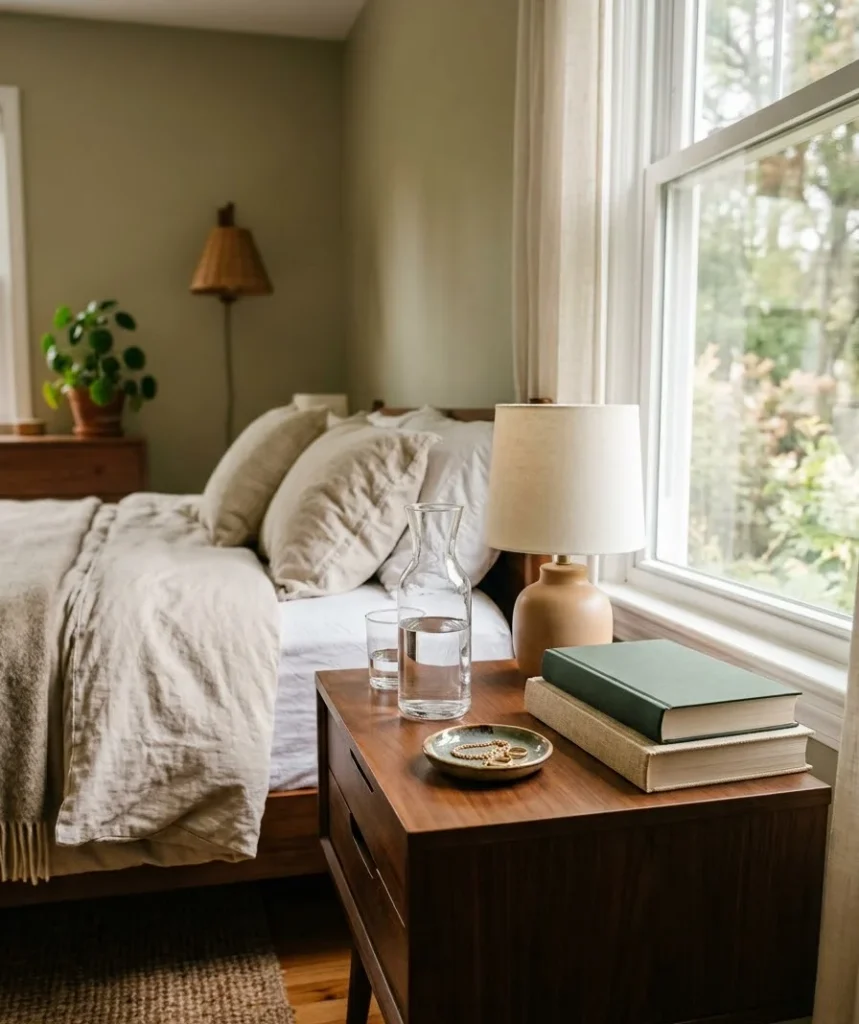
- A small dish for jewelry, keys, or glasses on the nightstand
- A carafe of water and a glass, refilled before they arrive
- One or two current magazines or a paperback nobody will miss if it doesn’t come back
- A folded note with the wifi password, because nobody wants to text and ask
None of this costs much. All of it says “I thought about you before you got here,” which, honestly, is the entire point of a guest room.
Decor and accents that add warmth without adding clutter
This is where a lot of small guest rooms go wrong in the opposite direction. People get so worried about clutter that the room ends up feeling sterile, like a hotel that’s about to be demolished.
A few accents that pull weight without piling up:
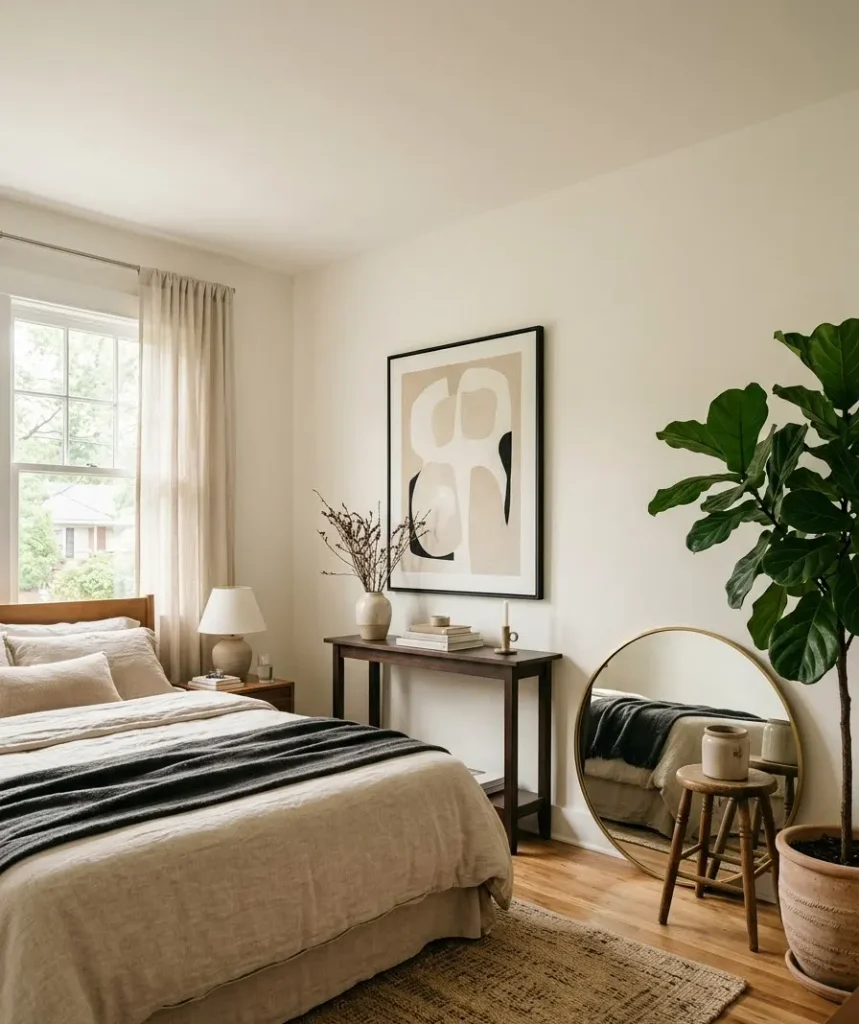
- One statement mirror, leaned against a wall or hung above the console, bounces light around the whole room
- A small area rug, even 4×6, softens the space and signals “someone planned this room” instead of “we found a bed for the corner”
- One or two plants, real or good fake ones, add life without taking up real storage
- A single piece of art with some scale to it, one large piece reads as more intentional than five tiny ones scattered around
I used to think a small room needed small decor. Wrong move. One larger piece of art on the main wall actually makes the room feel bigger than five postcard-sized frames crowded together ever did.
Scale matters more than quantity here.
A rough budget breakdown, by tier
Not everyone’s redoing this room with the same budget, and that’s fine. Here’s roughly how I’d split spending at three different levels.
Under $150: Paint (you likely already own a roller), a new duvet cover, a bedside lamp from a thrift store, and one hook by the door. This alone fixes 70% of what makes a guest room feel neglected.
$150 to $500: Add a proper mattress topper, two full sets of good sheets, a small area rug, and a mirror. This is the range where the room starts feeling deliberate instead of assembled from spare parts.
$500 and up: A trundle or daybed frame, a slim console table, blackout curtains paired with a sheer layer, and one real piece of art. This is the tier where guests start asking if they can just move in.
You genuinely don’t need to hit the top tier for the room to work. My own guest room lived happily in the middle tier for almost two years before I upgraded the bed frame.
Mistakes that quietly ruin a small guest bedroom
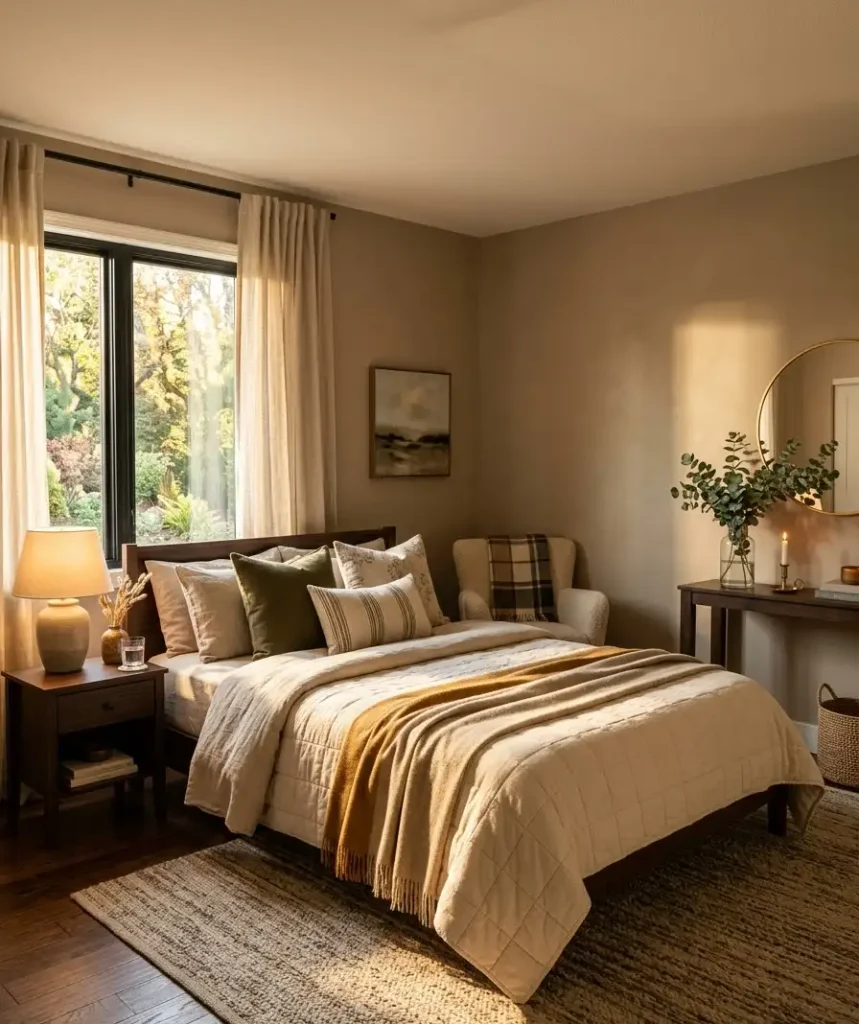
I’ve made most of these myself, so consider this the list I wish someone had handed me first.
- Overcrowding the walls with art. Two or three well-chosen pieces beat eight mismatched ones.
- Choosing a bed too big for the room. A queen crammed wall to wall isn’t cozy, it’s just cramped.
- Skipping curtains or blinds. Even a small window needs coverage, both for light control and privacy.
- Treating it as overflow storage. If it’s still doubling as an office or a gym, it’s not really a guest room yet.
- Forgetting a mirror. A single mirror does more for a small room’s light and depth than most people expect.
- Matching everything too perfectly. A room where the bedding, curtains, and rug all come from the same three-piece set can end up looking like a hotel showroom rather than someone’s actual home. Mix in one piece that doesn’t match on purpose.
- Ignoring the closet, if there is one. An empty closet with a single wire hanger swinging in it looks worse than no closet at all. Add three or four matching hangers and a shoe rack, even if you think nobody will use them.
A quick weekend makeover checklist
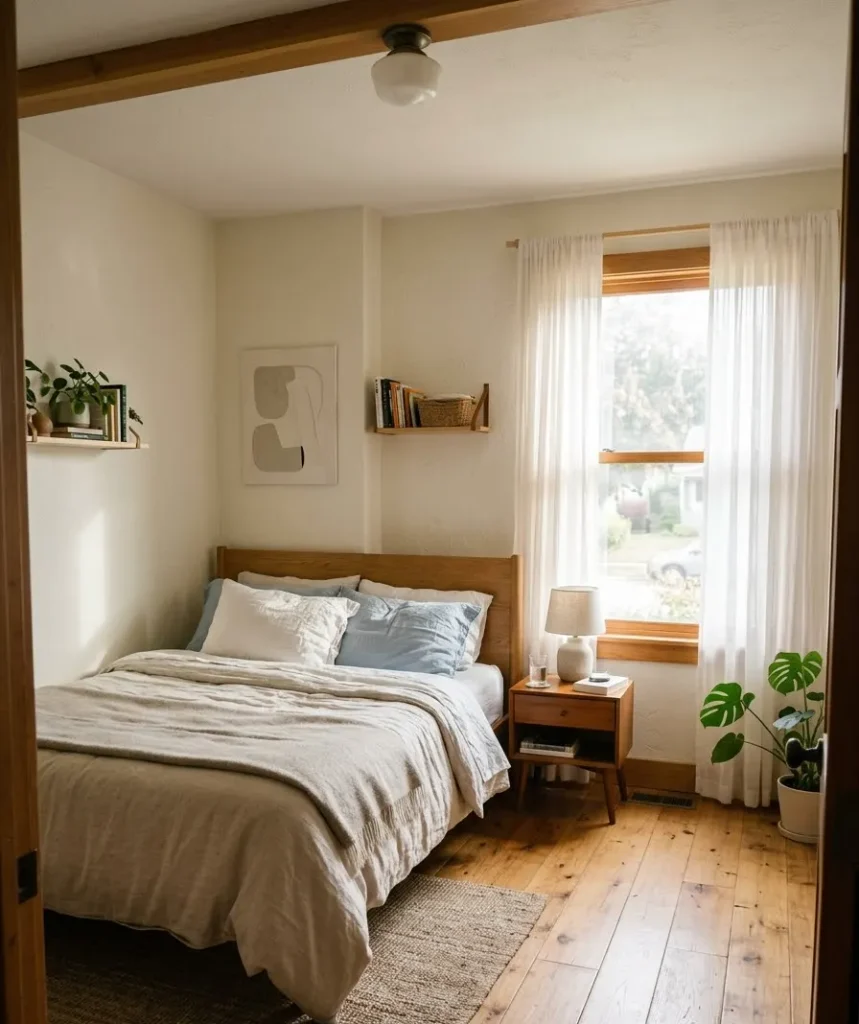
If you’ve only got a weekend and a modest budget, here’s the order I’d tackle things in:
- Clear the room completely, including anything you’ve been “meaning to deal with”
- Paint the walls a light, warm neutral
- Bring in a daybed or trundle if the current bed doesn’t fit the space well
- Add one bedside lamp and swap any overhead bulb for something warmer
- Layer in bedding, a throw, and one or two personal touches
- Step back and ask yourself honestly: would I want to sleep here?
Don’t try to do all six steps in one exhausting sprint.
Paint needs a day to dry properly anyway, and rushing the furniture placement usually means moving the same dresser three times before it lands somewhere that actually makes sense.
Seasonal touches that take five minutes
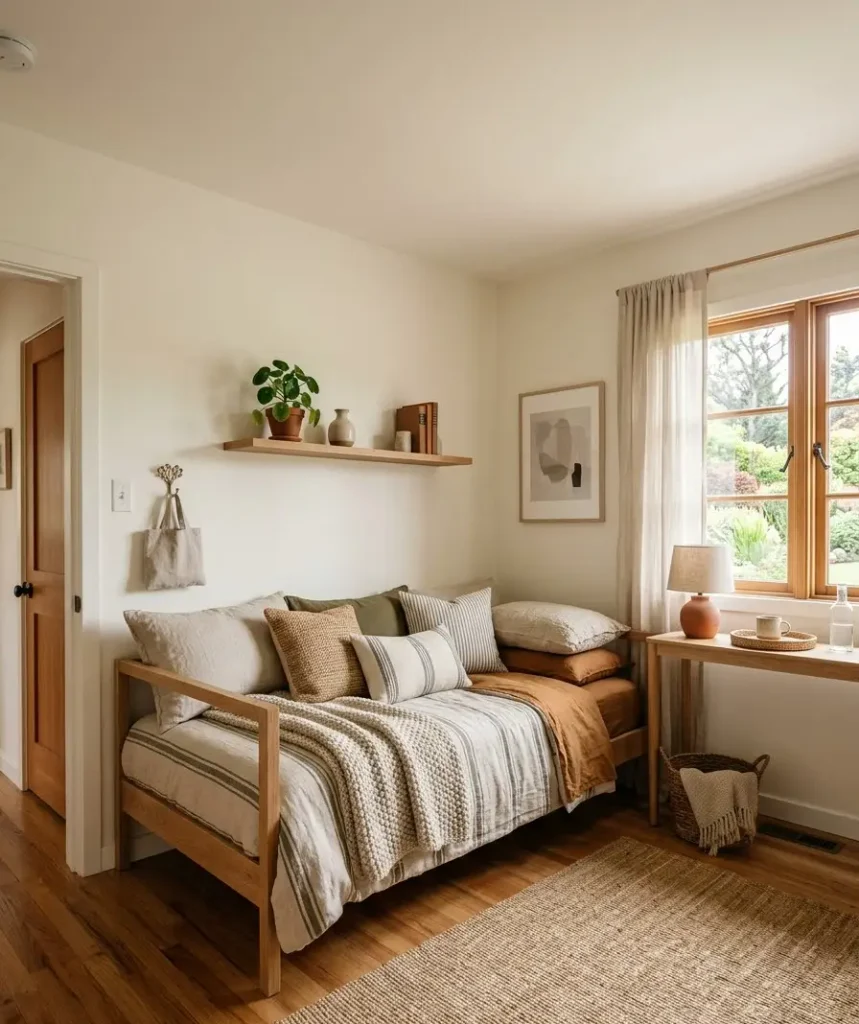
You don’t need to redecorate every season, but a few small swaps make returning guests feel like you actually thought about the timing of their visit.
- Winter: Swap in a heavier throw, add a small space heater if the room runs cold, and keep a spare pair of warm socks in the nightstand drawer
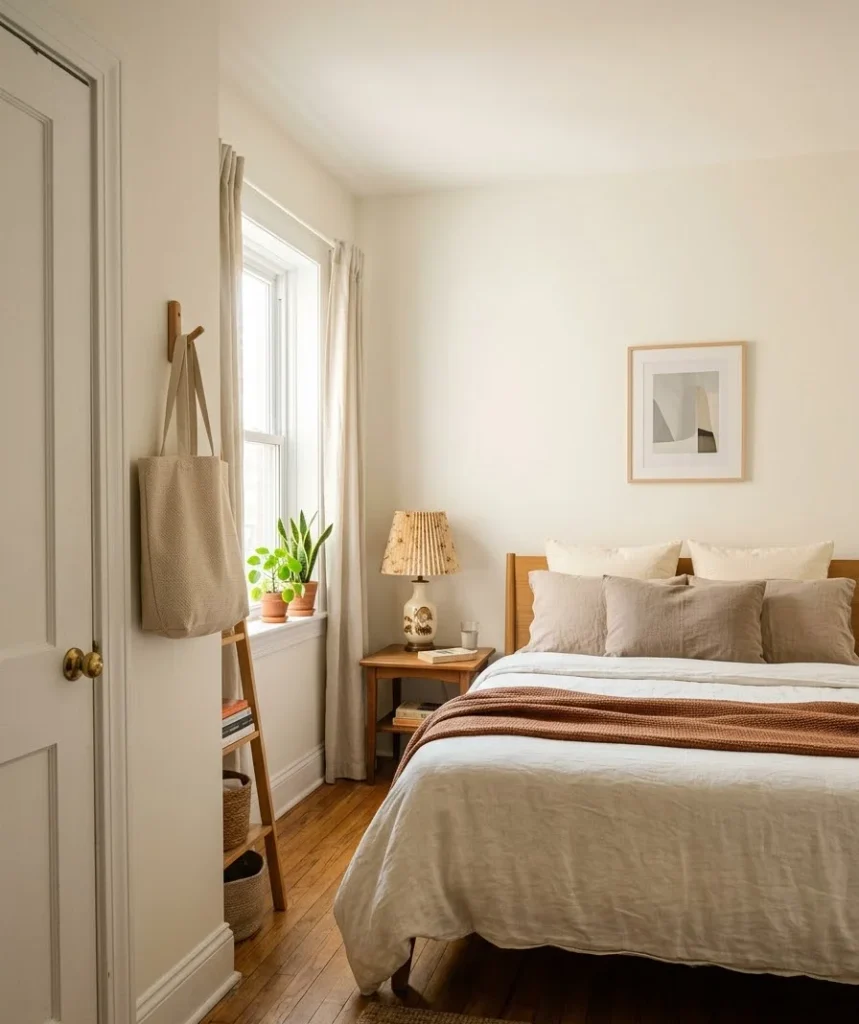
- Summer: Lighter sheets, a small fan if there’s no AC vent in the room, and blackout curtains if the room faces east and gets hit with early sun
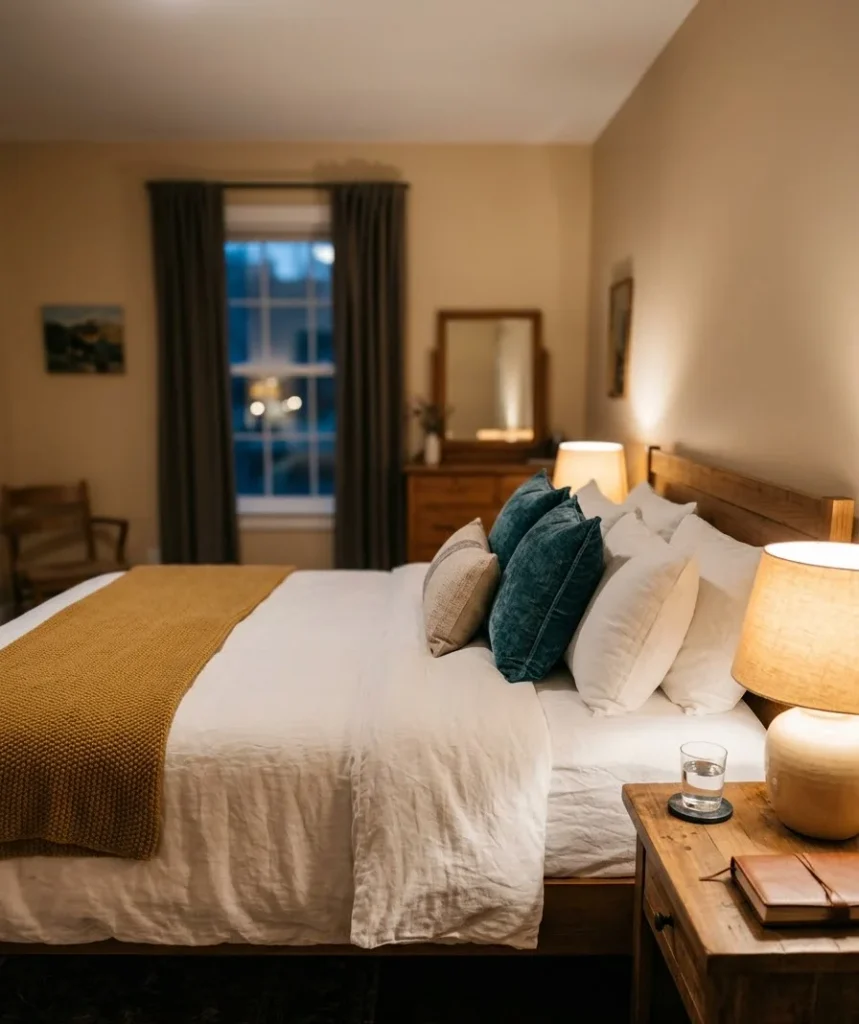
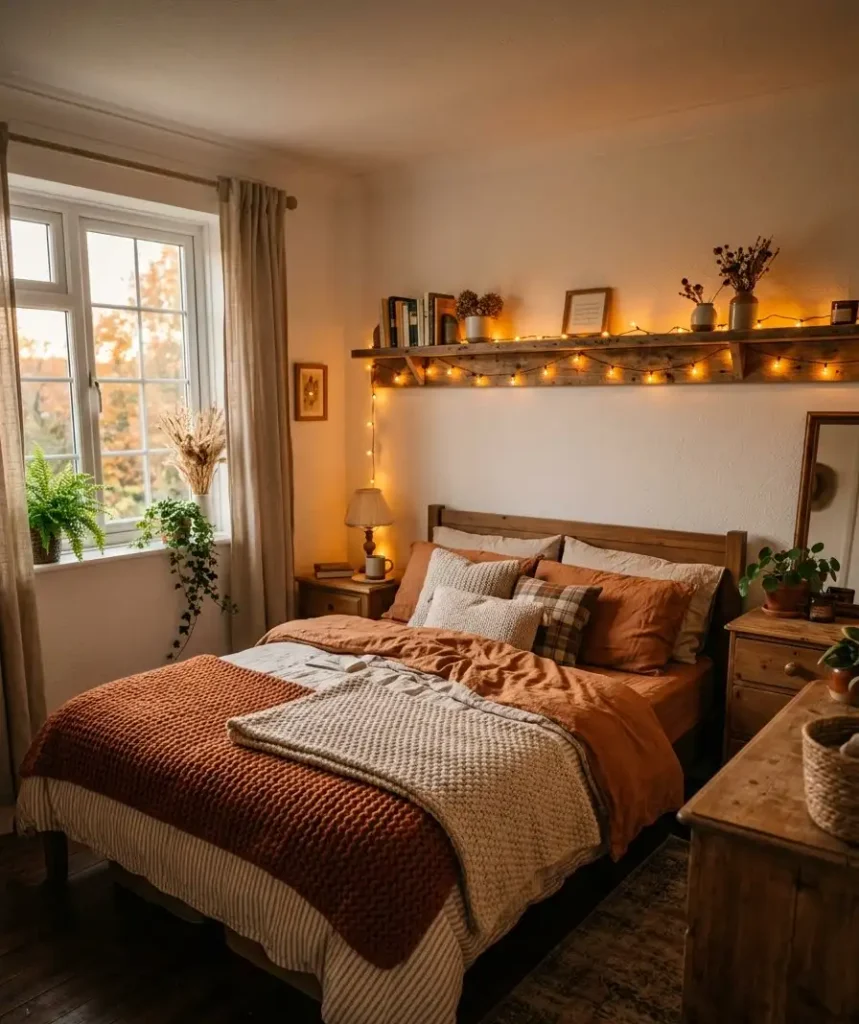
- Holiday visits: One string of warm white lights along a shelf does more than any themed decor ever will
None of this is required. It’s just the kind of detail that turns “nice room” into “they clearly thought about this,” which is worth more than people admit.
FAQs
What’s the best bed size for a small guest bedroom? A full or a daybed with a trundle usually fits better than a queen in anything under roughly 90 square feet.
A queen can work in a slightly larger room, but you’ll want at least two feet of clearance on each side for it to feel comfortable rather than wedged in.
Do I need a closet in a guest bedroom? Not necessarily. A luggage rack, a few hooks, and a small basket for essentials cover most short stays.
If there’s no closet, a slim wardrobe or an over-the-door organizer fills the gap without eating floor space.
What thread count should I buy for guest bedding? Somewhere in the 300 to 500 range for cotton sheets gives you the best mix of softness, breathability, and durability without paying a premium for numbers that mostly exist on the packaging.
Anything much higher tends to feel dense and heavy rather than luxurious, especially for guests who run warm at night.
How do I make a windowless guest room feel less cramped? Lean even harder on the lighting layers from earlier: warm bulbs,
a dimmer if you can manage it, and a mirror positioned to reflect whatever light source is brightest.
A light-colored ceiling helps too, since it’s often the largest single surface in a small, enclosed room.
Final thought
A small guest room isn’t a problem to apologize for.
It’s a design challenge with a genuinely satisfying answer, and you don’t need a big budget or a bigger house to solve it.
Pick the right bed, get the lighting layered, choose bedding people actually want to sleep in, and add two or three touches that say you planned for them.
So, what’s the first thing you’re changing in your guest room this weekend, the paint, the bed, or that one drawer full of things you’ve been meaning to sort out?