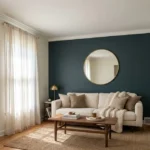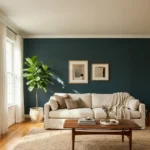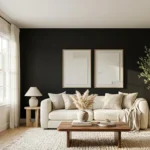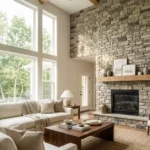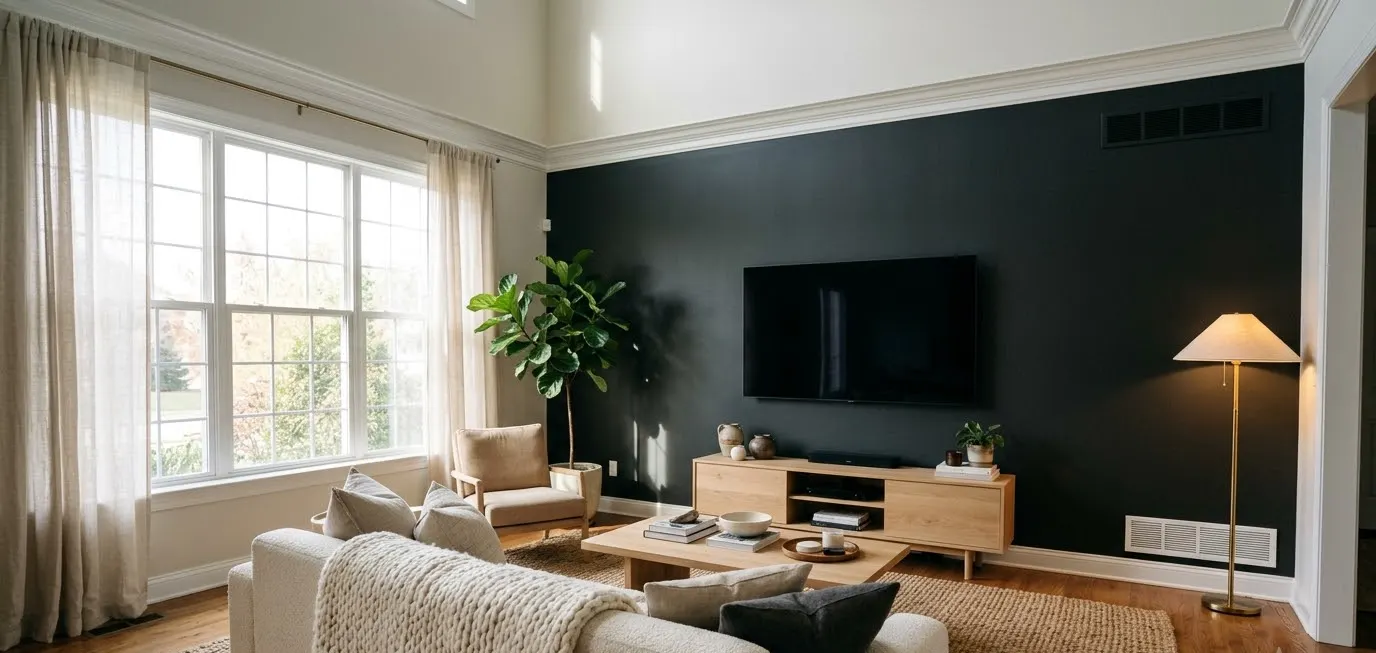
Your TV is a giant black rectangle, and it’s staring at you right now. You can fight it with a bright white wall, or you can stop pretending it’s invisible and let a dark accent wall swallow it whole.
I picked the second option four years ago. I rolled a deep charcoal onto the wall behind my television on a Saturday morning, and by Sunday evening the screen looked like it grew there.
My partner said “huh, that actually works.” High praise, from that person.
This guide collects 25 dark accent wall living room TV ideas that make the screen blend in perfectly, from paint colors to slat panels to sneaky built-ins.
Some are cheap. Some need a contractor and a strong coffee. All of them look great on a Pinterest board, and most of them look even better in person.
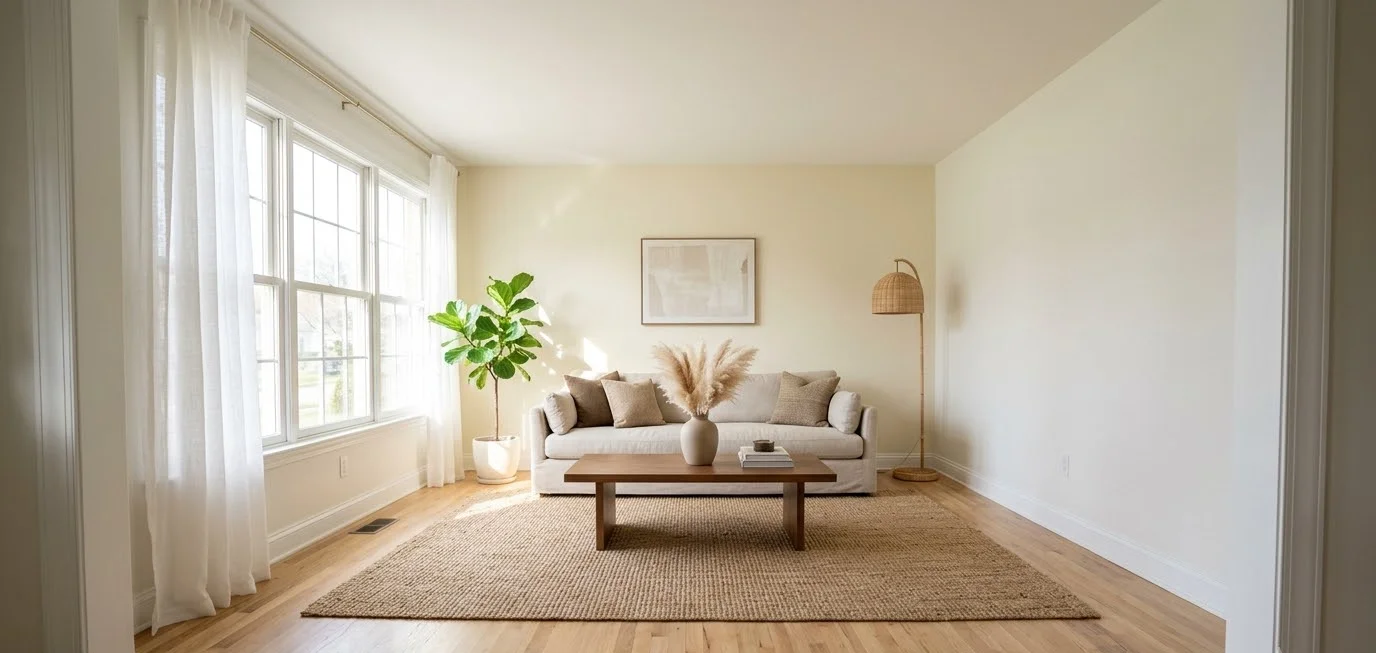
Light Accent Wall Living Room Guide Best Paint Colors Textures And Layouts
Discover More →Why a dark wall makes your TV disappear
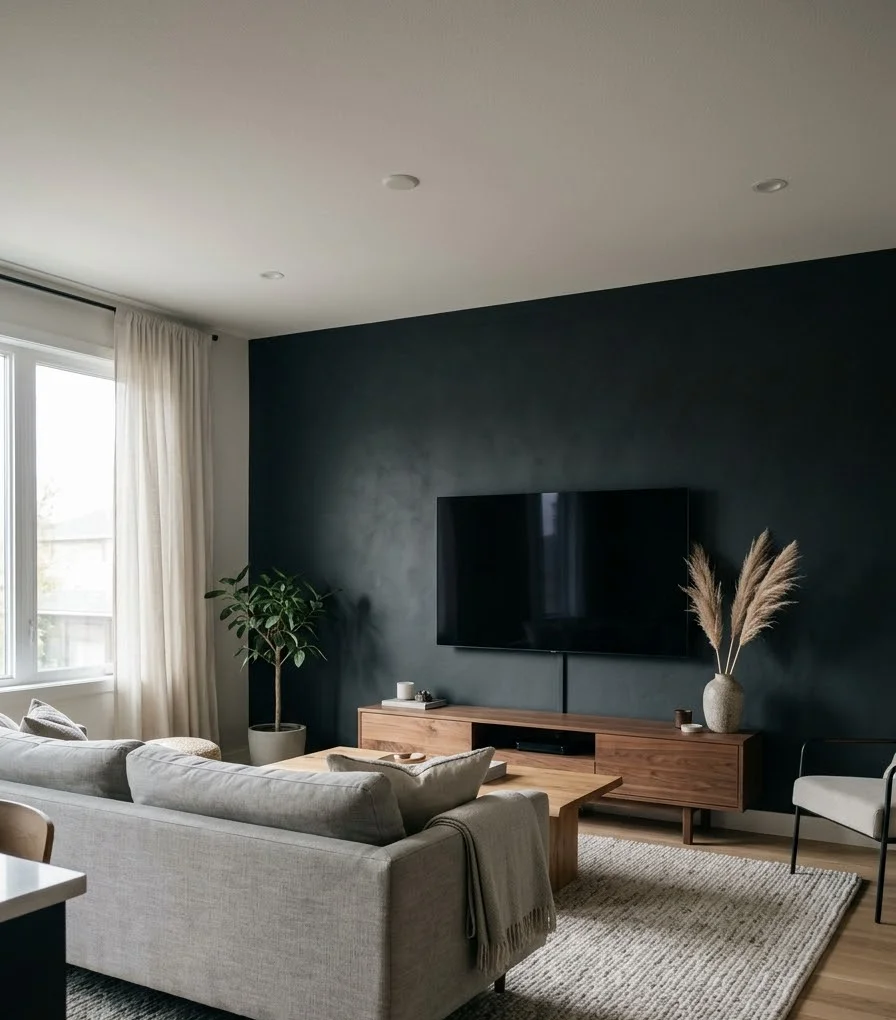
A switched-off TV reflects the room like a dark mirror. Against a white wall, that dark screen creates a hard, high-contrast rectangle that pulls your eye every time you walk in.
Put the same screen against a deep wall color and the contrast drops. The edges soften.
Your eye stops snagging on the frame and starts reading the whole wall as one big, moody surface.
Interior designers call this “tonal blending,” and I call it the cheapest trick in the book.
You don’t hide the TV. You just stop making it the loudest thing in the room.
Light matters here too. A matte dark finish absorbs glare, so you see fewer window reflections on the screen during daytime viewing.
That alone sold me, since my old setup turned into a mirror every afternoon around 3 p.m.
What a dark wall can’t do
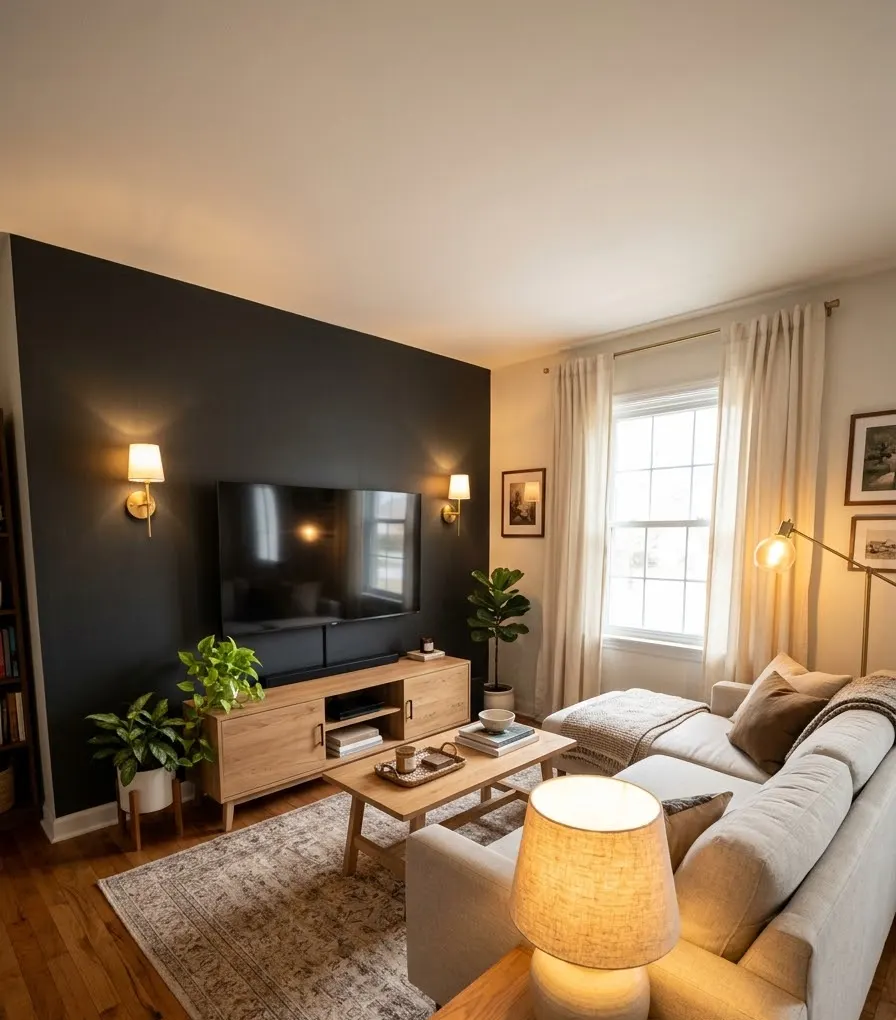
I won’t oversell this. A dark wall won’t fix bad furniture placement, and it won’t save a room with zero natural light unless you plan your lighting properly.
Ever painted a tiny, windowless room black and wondered why it felt like a cave? Yeah.
Me too, once, in a rental. Learn from my mistake and keep reading the lighting sections below.
Before you grab a brush
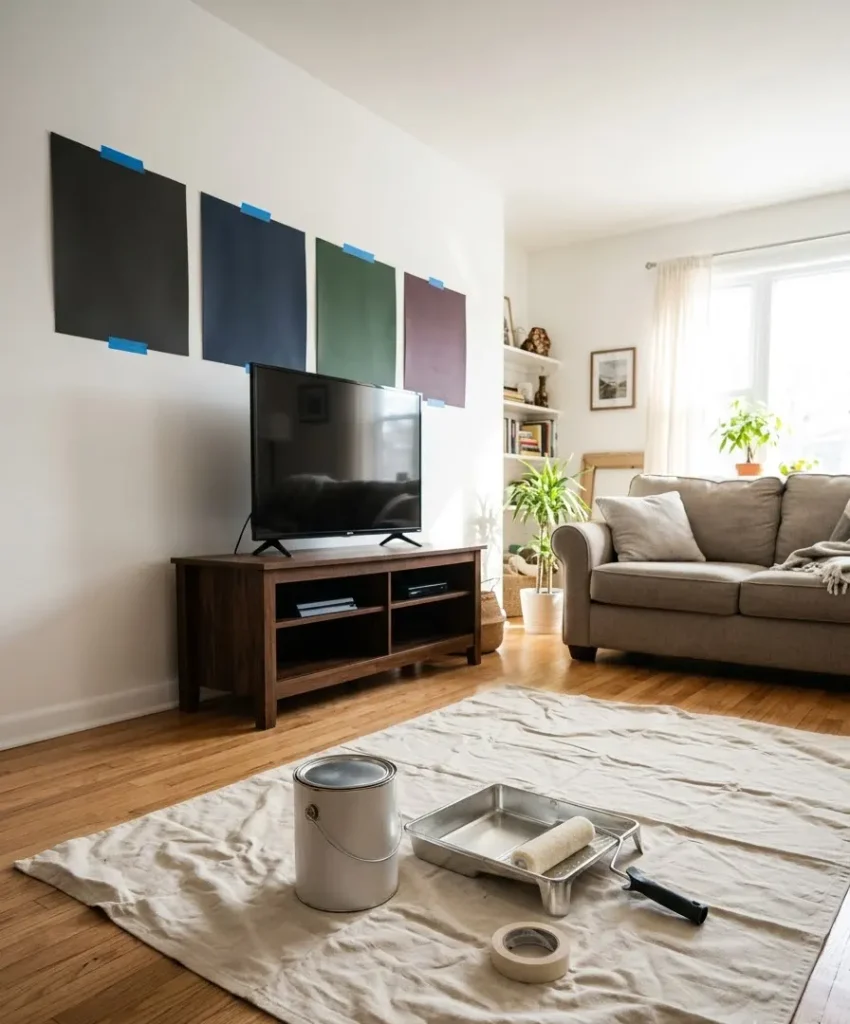
A few decisions save you from repainting twice.
Here are the rules I follow, and a couple of them come straight from my own mistakes.
- Pick a matte or flat finish. Gloss shows every roller mark and bounces light straight into your eyes. Eggshell works if you need washable walls.
- Test the color on the actual wall. I tape up 2-foot swatches and check them morning, noon and night. Paint chips lie.
- Buy the sample pot first. I wasted $60 on a “warm” gray that looked purple at night. Samples cost $8.
- Paint the wall behind the TV, not the whole room. My opinion: a single dark wall looks intentional, while four dark walls in a small room look like a mistake.
- Prime if you’re covering white. Two coats of primer plus two coats of color beats three coats of frustration.
Now for the fun part.
Here’s a quick cheat sheet on color families before the full list.
| Color family | Mood | Best room type |
|---|---|---|
| Charcoal and black | Moody, modern | Any size with decent daylight |
| Navy and ink blue | Calm, classic | Medium to large rooms |
| Forest and olive green | Cozy, organic | Rooms with wood furniture |
| Plum and aubergine | Dramatic, bold | Rooms with warm lighting |
For paint inspiration, I browse Farrow & Ball’s color library and Benjamin Moore’s color tools before I commit to anything.
Paint colors that swallow the screen
Paint is the fastest route to a TV wall that blends in. You need one weekend, a roller and some patience.
1. Classic charcoal gray
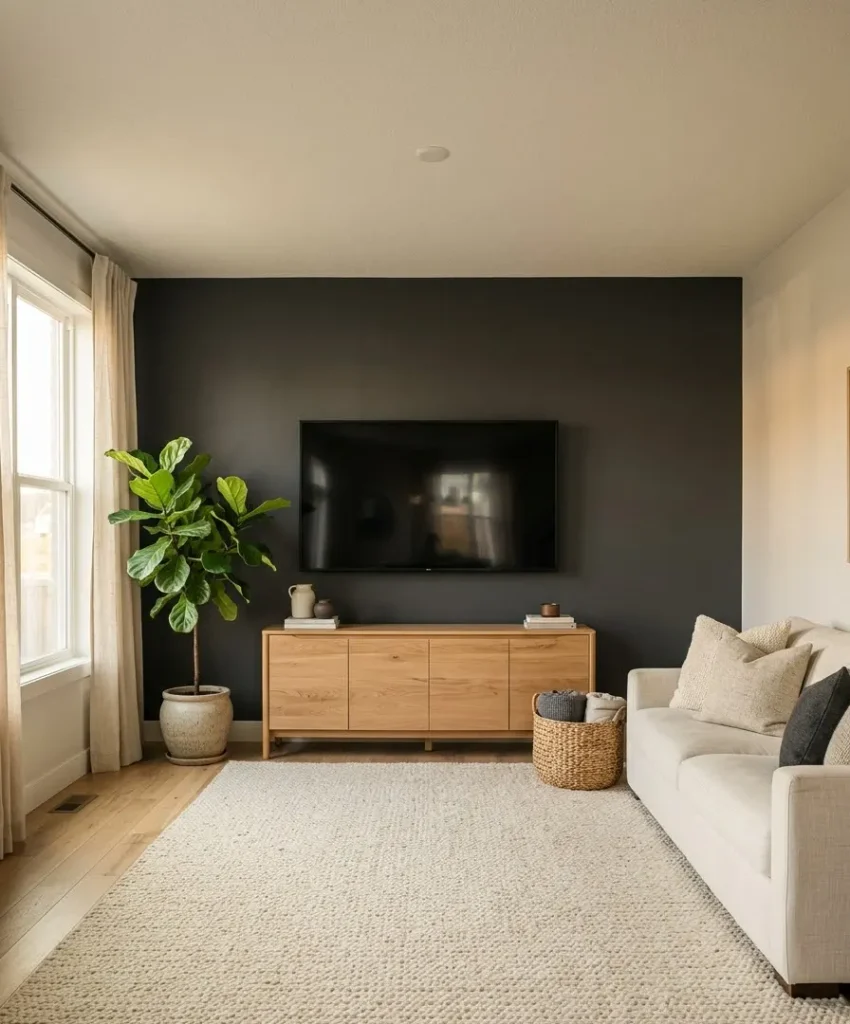
Charcoal is the safest dark color there is. It looks close to a powered-off TV screen, so the two merge almost perfectly.
Benjamin Moore’s Kendall Charcoal is a popular pick, and it reads warm enough to keep a living room friendly.
I used a similar tone and haven’t regretted it once.
Pair charcoal with light oak furniture and a cream rug. The contrast keeps the room from feeling heavy.
2. Soft black
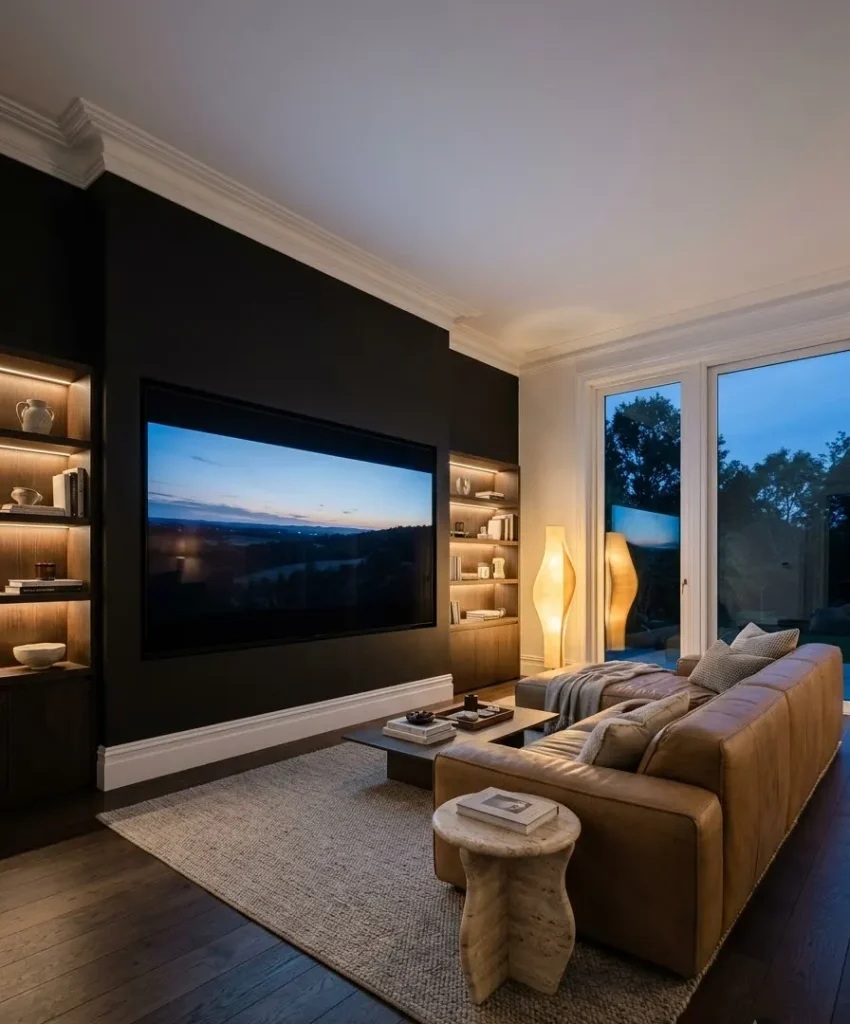
Pure black sounds scary, but a softened black works beautifully. Sherwin-Williams Tricorn Black and Farrow & Ball’s Railings both lean slightly warm, which stops the wall from looking flat.
IMO, soft black is the best option if you own a big TV. A 75-inch screen against black looks like a built-in cinema wall.
Add a white ceiling and white trim to keep the edges crisp. Otherwise the room starts to feel like a shoebox.
3. Deep navy
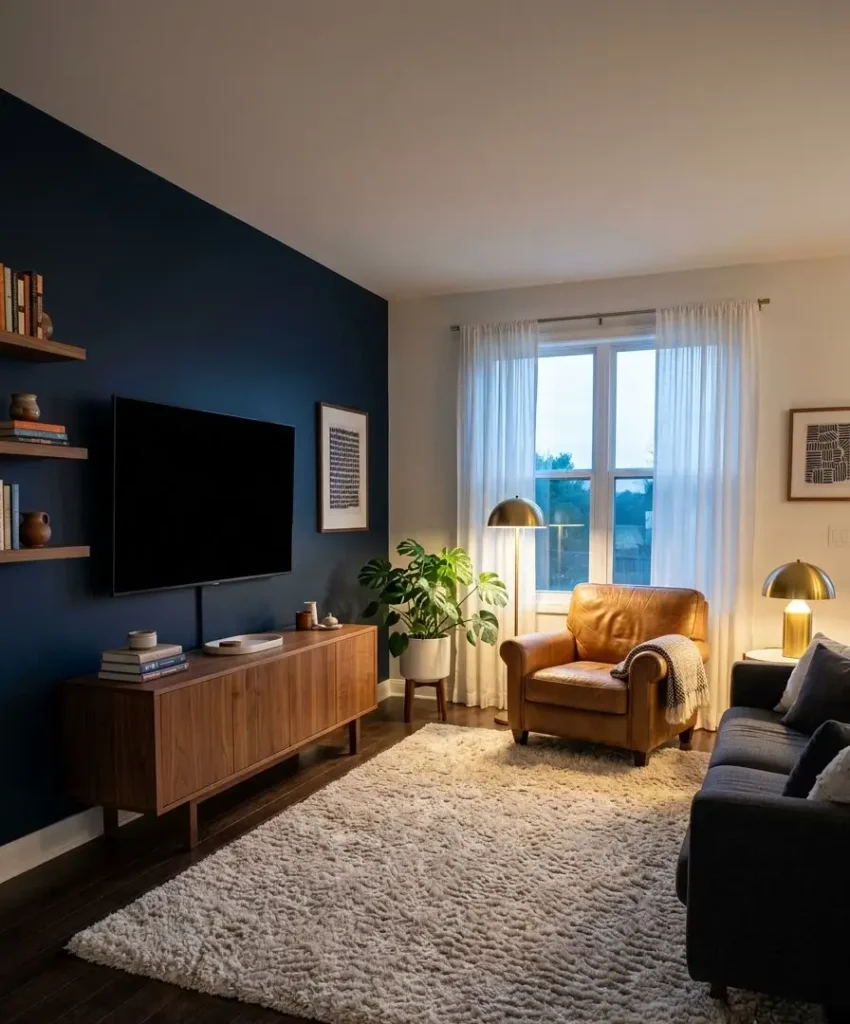
Navy gives you darkness with a little personality. Hale Navy from Benjamin Moore is the one I see on Pinterest boards constantly, and for good reason.
Under warm lamps, navy turns almost black. In daylight, it shows its blue side.
That shifting quality keeps the wall interesting without any extra decor.
Brass lamps and tan leather look stunning against it.
4. Forest green

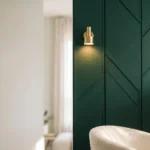
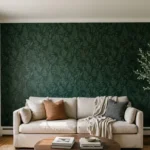
Dark green makes the room feel like a library in an old English house. The TV vanishes into the foliage, and nobody questions it.
Farrow & Ball’s Studio Green is a gorgeous example. It’s dark enough to hide a screen and rich enough to need almost no wall art.
Plants look fantastic here. A big fiddle-leaf fig in the corner doubles down on the look and makes your living room smell faintly less like pizza.
5. Inky teal
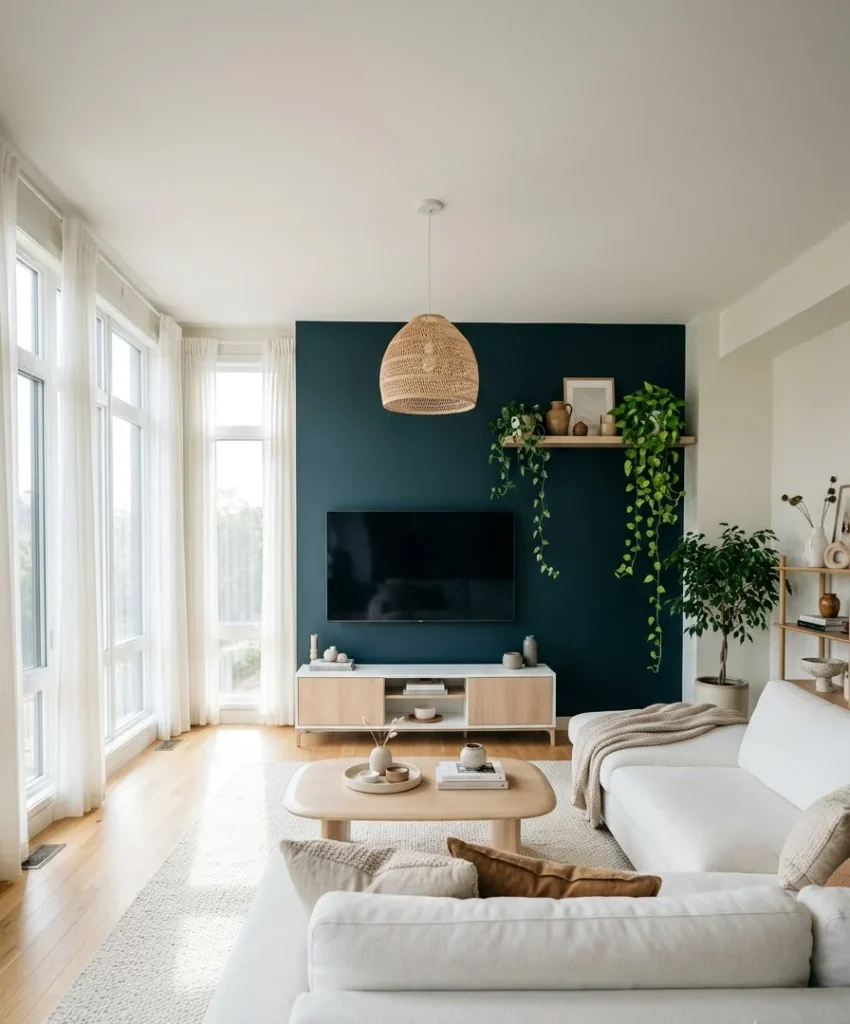
Teal sits between blue and green, and in a dark version it feels expensive. It suits modern rooms that need some color without shouting.
I like teal when a room has lots of white and wood. The wall then acts as a deep anchor for everything else.
Wow, does it photograph well. If you want your living room to look good in a Pinterest pin, teal rewards you.
6. Plum and aubergine
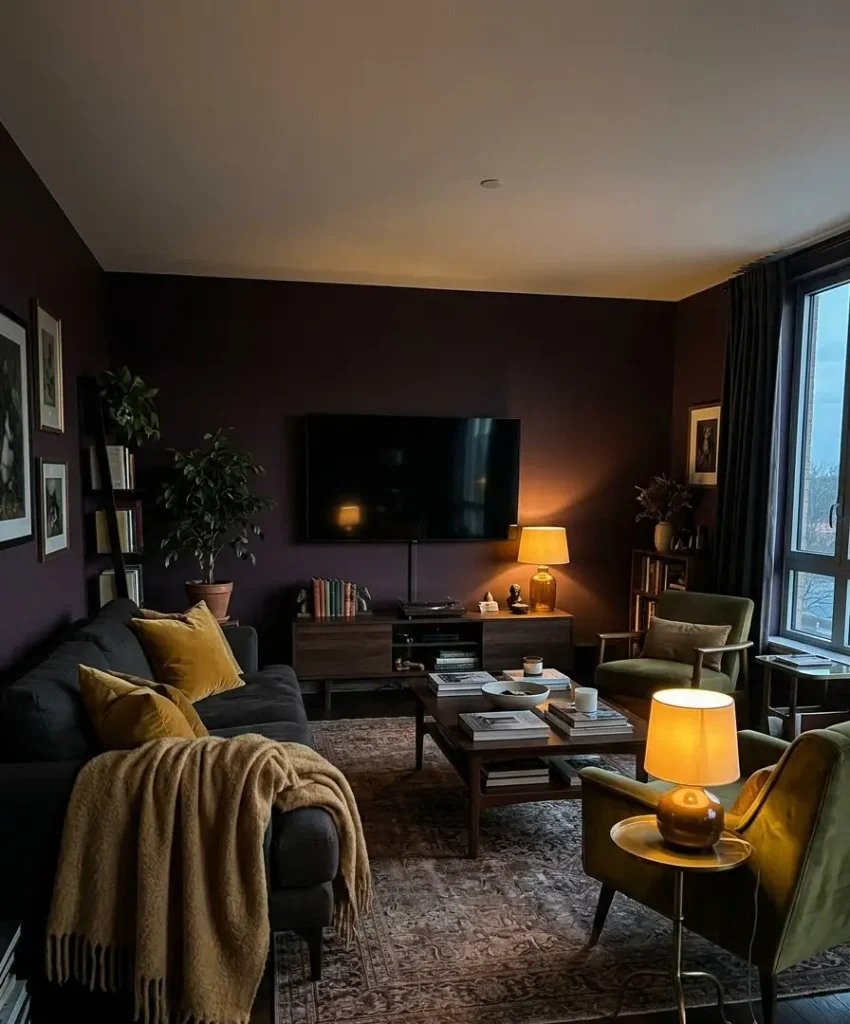
Plum is the brave choice. It reads almost black at night and a smoky purple during the day.
Skip the sparkly lavender cushions and go for mustard, camel or olive accents instead. Those colors keep the room sophisticated.
My sister painted her TV wall aubergine last year. Guests ask about the color before they even sit down.
Texture and material ideas
Paint is quick, but texture adds depth. A dark wall with texture hides a TV even better, since the surface gives your eye more to look at than the screen.
7. Dark wood slat panels
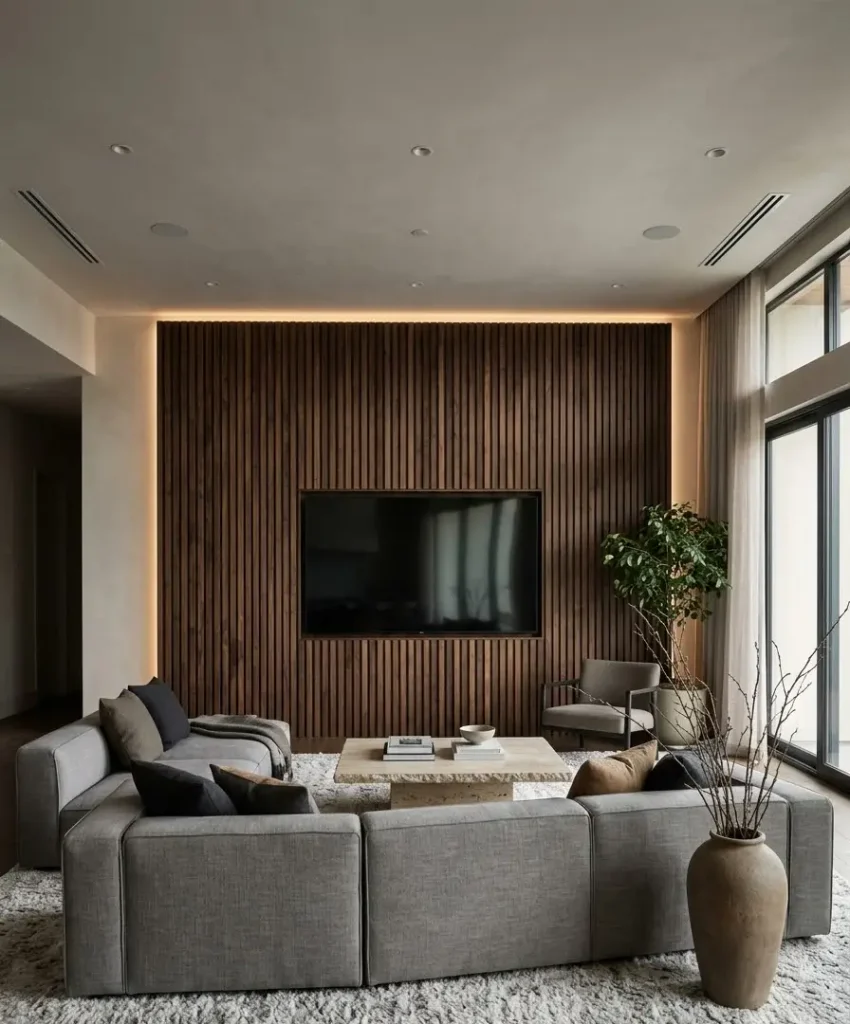
Vertical wood slats in walnut or charcoal stain have taken over Pinterest, and I understand why. The repeating lines break up the TV’s rectangular shape.
You can buy slat panels on felt backing that glue straight to the wall. That cut my cost by about half compared to custom carpentry.
Leave small gaps and hang the TV directly over the slats. It looks like a hotel lobby, in the good way.
8. Limewash in charcoal
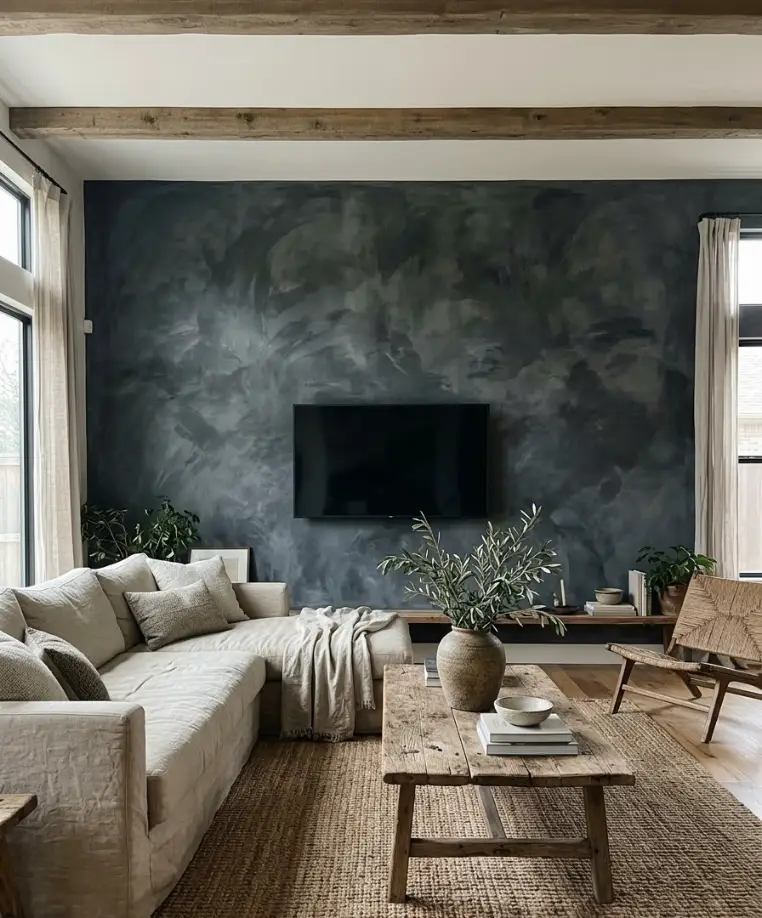
Limewash gives a cloudy, hand-painted look that no flat paint can match. The color varies across the wall, so the TV merges into the movement.
It takes practice to apply. I’d tell a beginner to try it on a small wall first, because mistakes show up as heavy streaks.
The finish stays chalky and matte, which makes it ideal for glare control.
9. Fluted panels
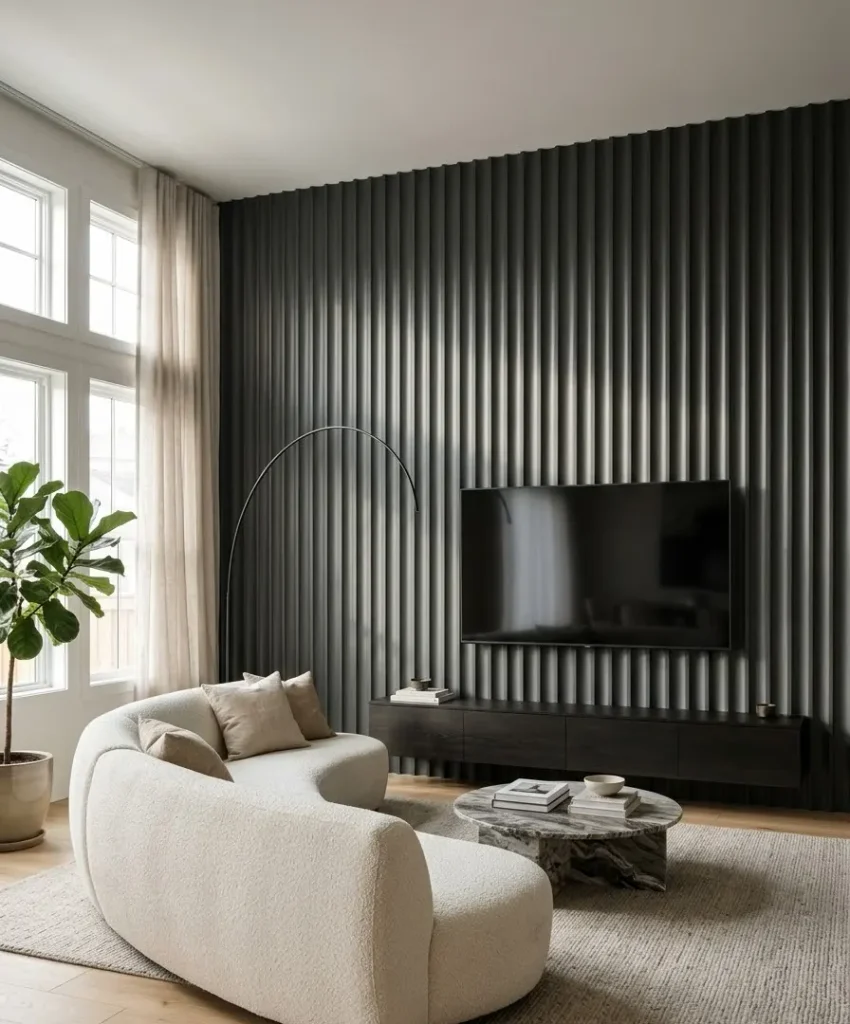
Fluted panels carry deep vertical grooves that catch light beautifully. Painted in one dark color, they turn a plain wall into sculpture.
MDF fluted sheets cost less than real wood and paint well. I’d choose them for a rental-friendly weekend project, since you can mount them with adhesive.
The vertical lines also make ceilings look taller. Small bonus.
10. Board and batten in a deep shade
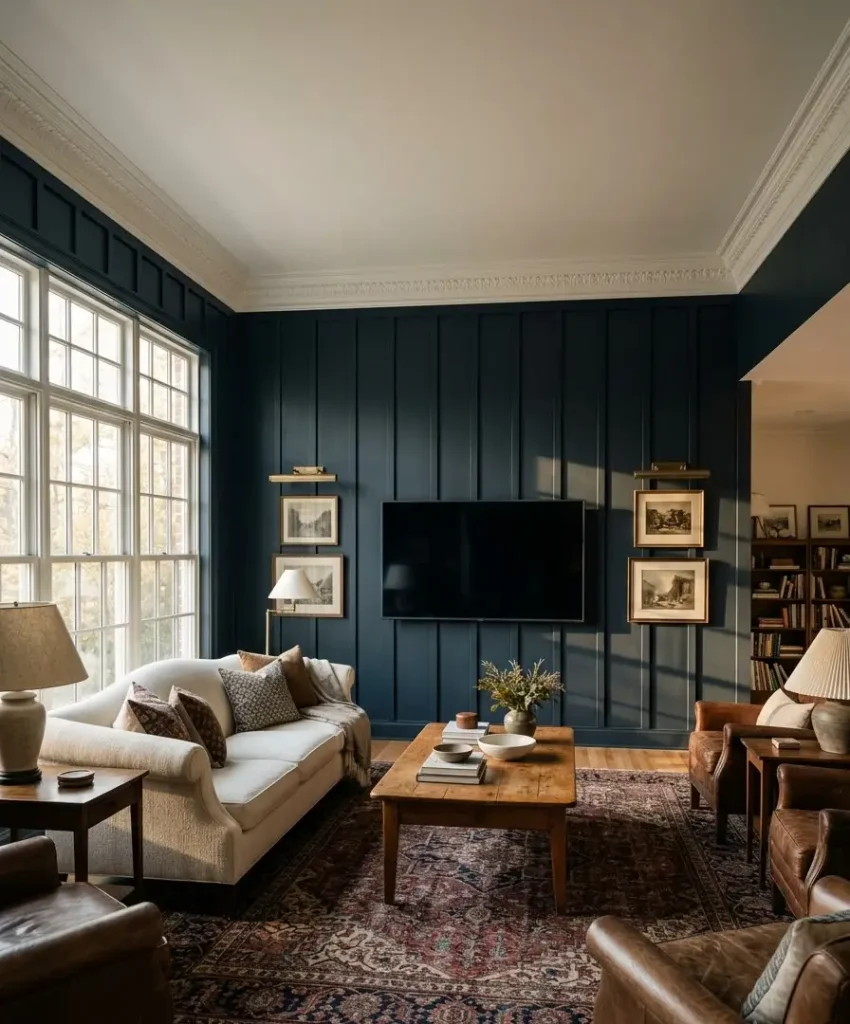
Board and batten usually shows up in white entryways. Paint it black or deep blue instead and you get a traditional wall with serious attitude.
The grid of wooden strips gives the TV a pattern to hide inside. It’s an affordable DIY too, using primed MDF strips and a nail gun.
Measure twice. I once cut four battens too short and had to explain the gap as “intentional.”
11. Painted brick
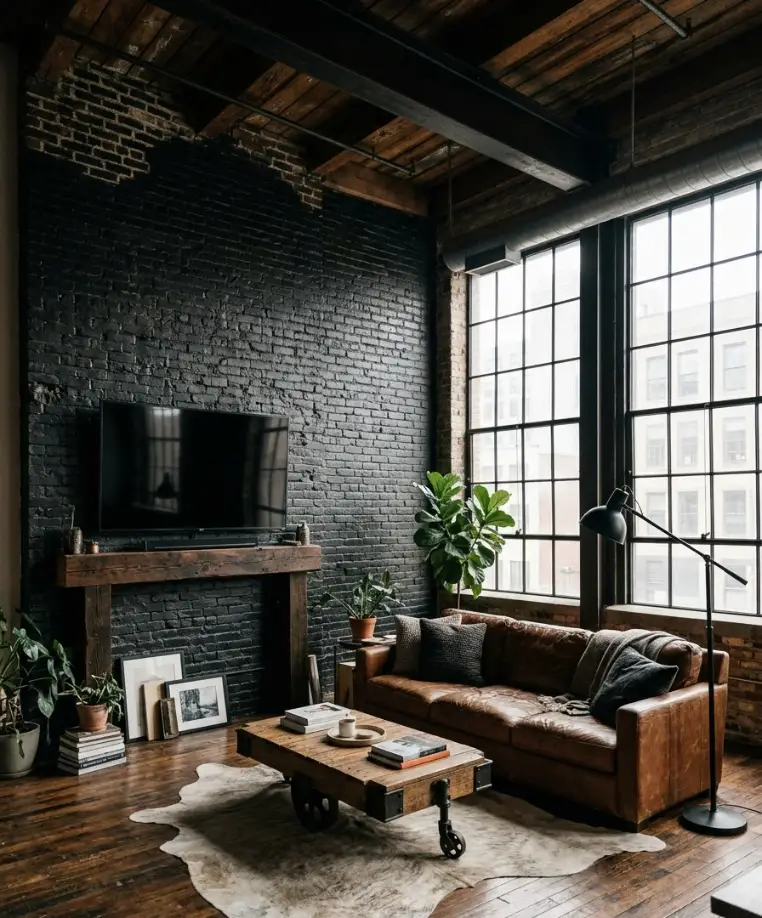
Brick already carries texture, so a dark coat of paint turns it moody and industrial. Black brick behind a TV looks like a loft apartment.
If you have a brick fireplace wall, this works wonders. Mount the TV above the mantel and let the dark brick swallow the edges.
Never paint brick if you might want the original color back. Paint doesn’t come off brick easily.
12. Dark grasscloth or textured wallpaper
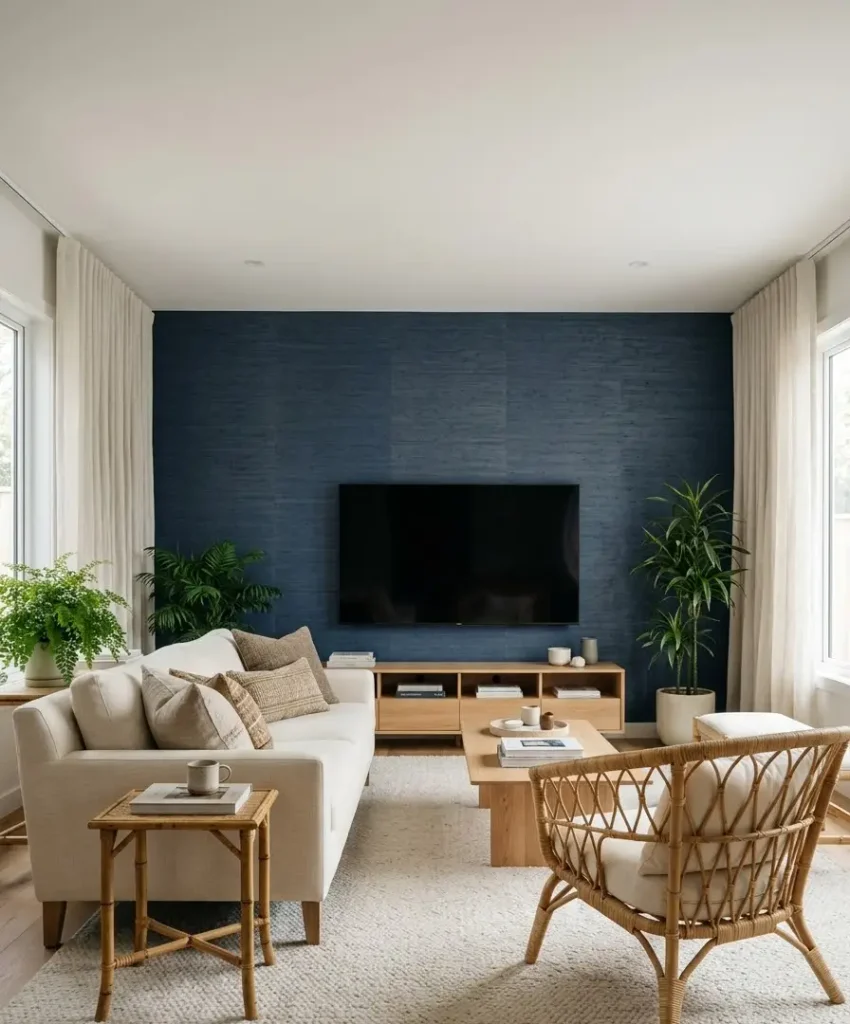
Dark grasscloth wallpaper feels soft and woven. It absorbs both light and sound, which helps if your TV room echoes.
Navy and black grasscloth look rich without any other decor. Hang it only behind the TV and keep the other walls plain.
The paper costs more than paint, but a single accent wall uses just a couple of rolls.
Built-ins and storage that hide the TV
Built-ins give the TV a home. When shelves and cabinetry share the same dark color as the wall, everything reads as one piece.
13. Floor-to-ceiling built-ins in one color
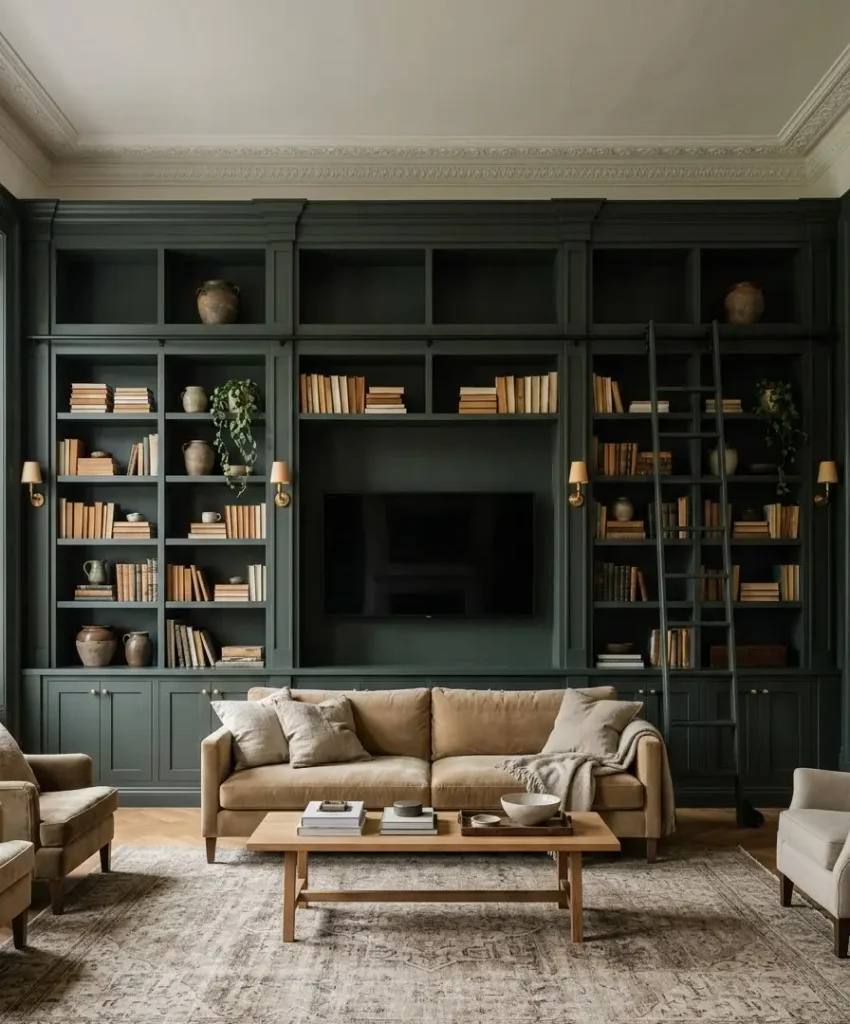
Paint the shelves, the cabinet doors and the back wall the same deep shade.
The TV nests inside, and the whole unit looks like furniture rather than electronics.
This idea needs a carpenter, or at least a very patient friend with a saw. Expect to spend more, though IKEA hacks bring the price down.
I’d say it’s the most impressive option on this list. It also takes the longest.
14. Floating shelves flanking the screen
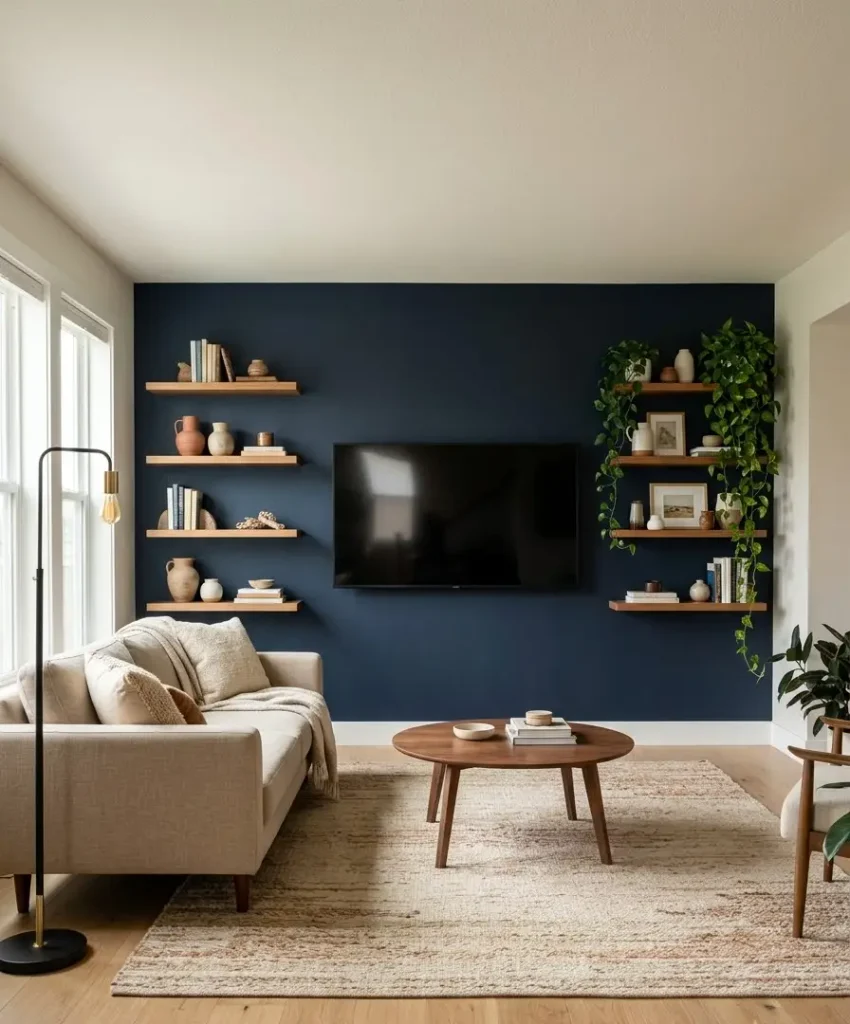
Mount two or three dark floating shelves on each side of the TV. Fill them with books, ceramics and a plant or two.
The objects pull your eye away from the screen. You notice the styled shelves first and the TV second.
FYI, keep the shelves slightly lower than the top of the TV so the arrangement doesn’t look crowded.
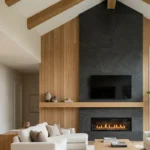
15. Fireplace media wall
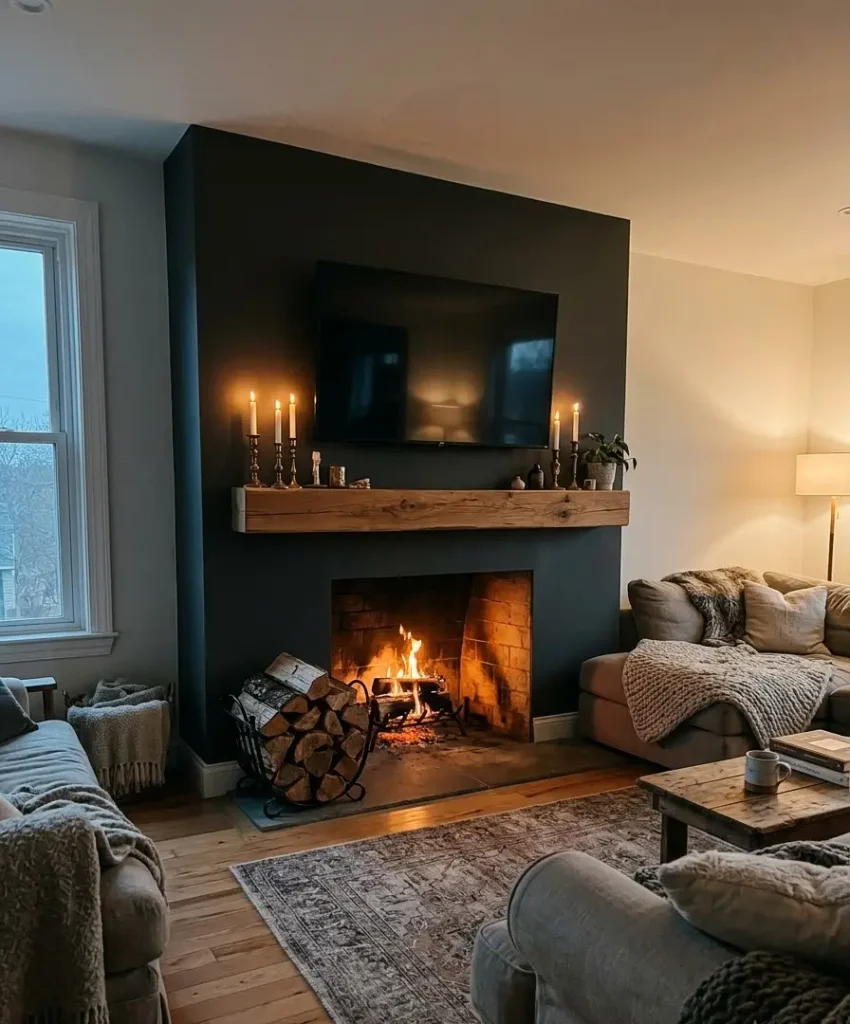
A dark fireplace surround with the TV above is a classic setup.
Paint the chimney breast in charcoal or black and mount the screen centered over the mantel.
Some people worry about heat. Check the manufacturer’s guidance and consider a mantel shelf that deflects warm air, or skip this if your fireplace burns real wood.
Electric fireplaces solve that problem. They also look great against a deep wall color.
16. Recessed TV niche
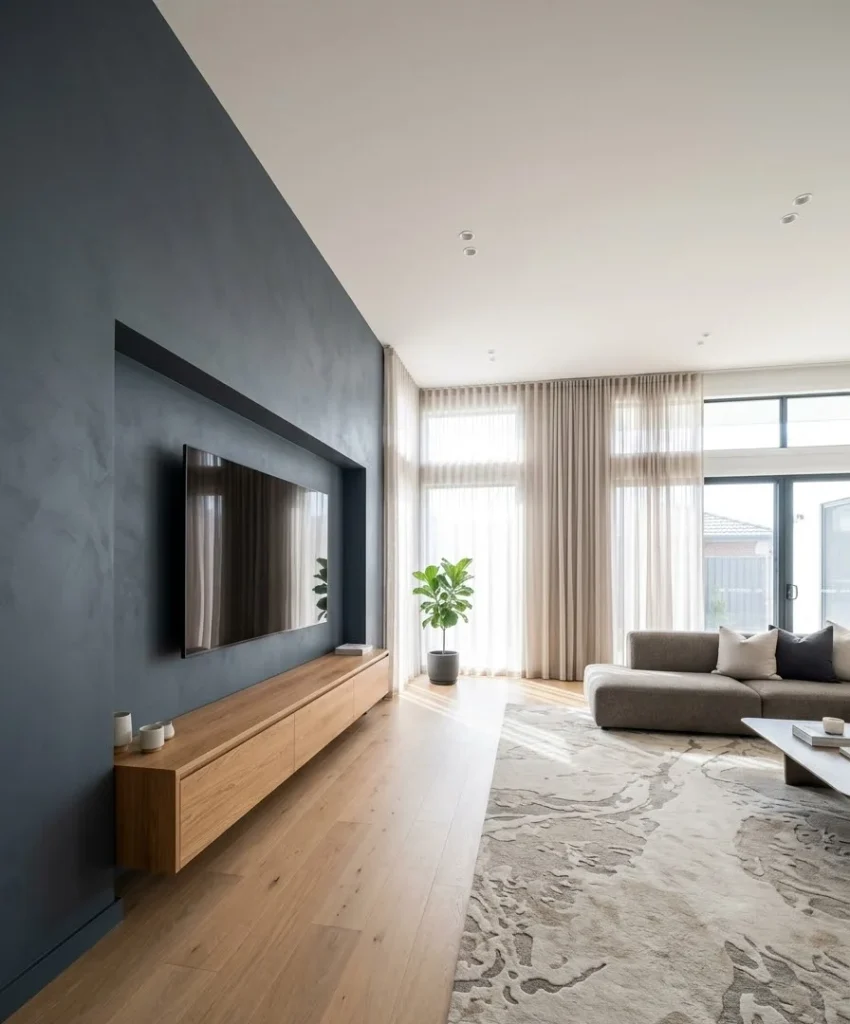
A recessed niche sets the TV into the wall so it sits flush. Paint the niche and the wall in the same dark color and the screen almost vanishes.
This idea works best in new builds or major remodels. You open the wall, run the cables inside, and the result looks incredibly clean.
My neighbor built one and refuses to stop talking about it. Fair enough.
17. Cabinet doors that close over the TV
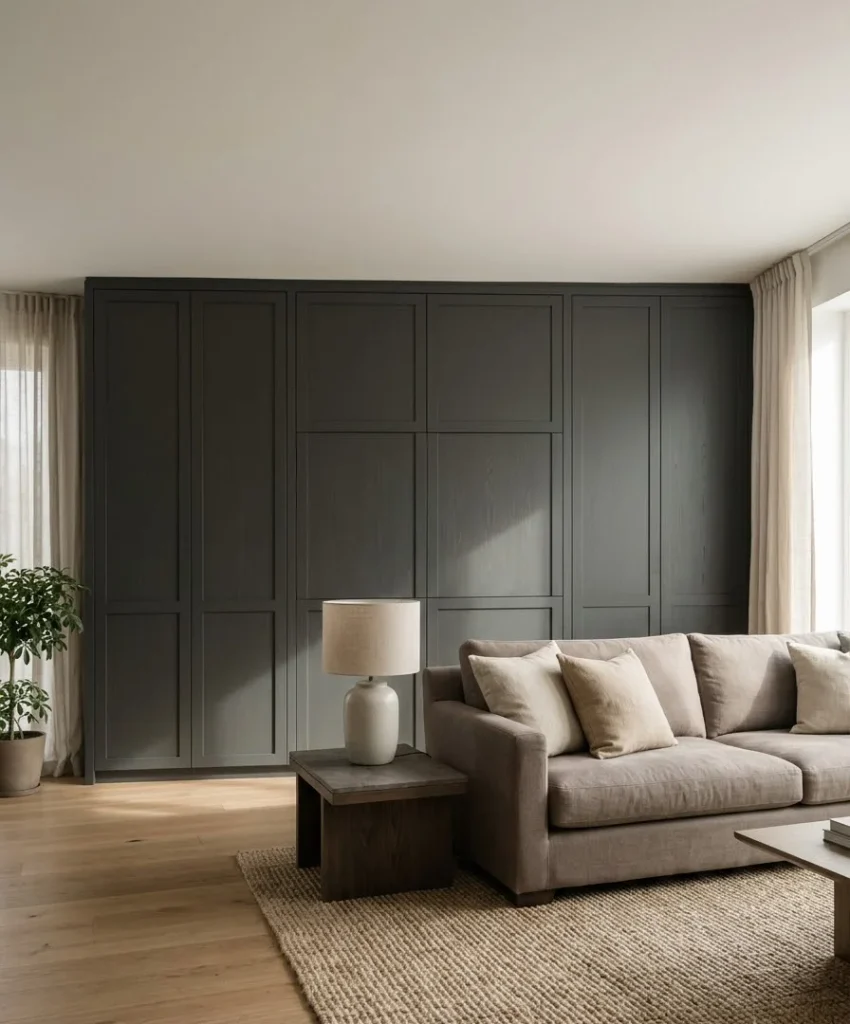
Some media cabinets use folding or sliding doors that cover the screen completely. Close them and you see a plain dark wall of paneling.
I love this one for people who hate the sight of a TV. It suits a living room that doubles as a space for guests or a home office.
You’ll need good ventilation behind the doors, so ask your cabinetmaker about it.
18. Sliding art panel
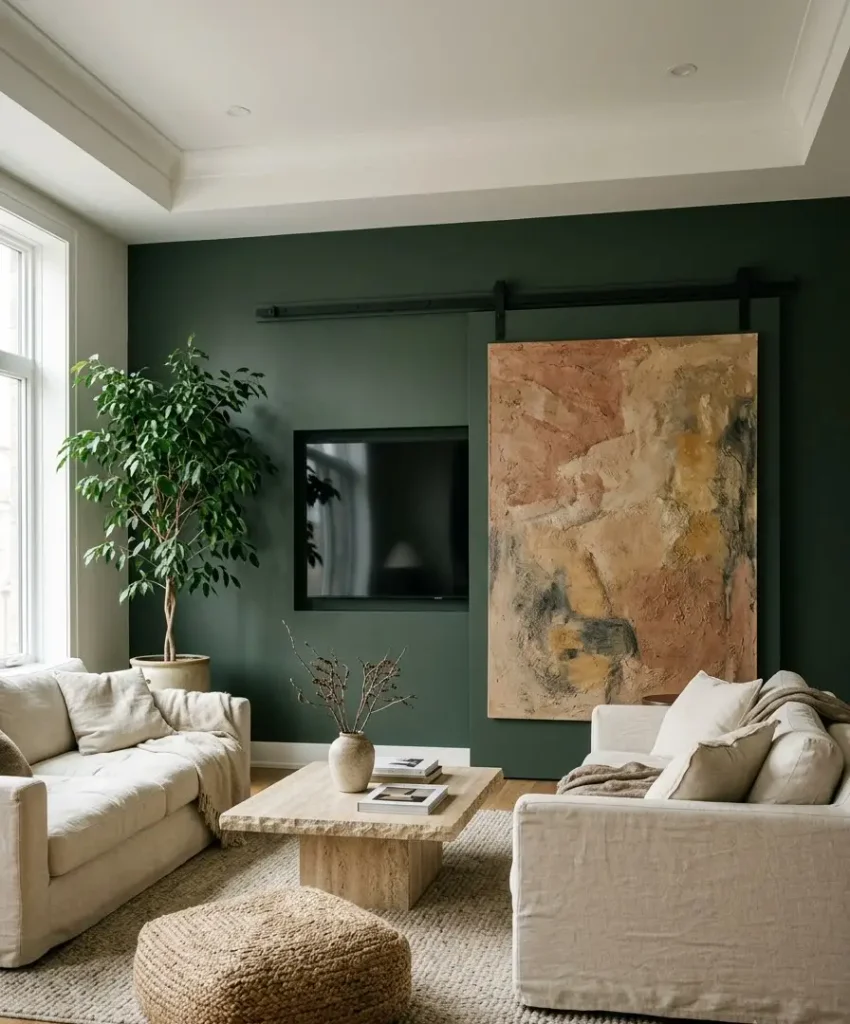
A sliding panel painted with art or covered in fabric glides over the TV when you finish watching.
It sounds fancy, but a simple track and a lightweight board do the job.
Choose a panel the same dark color as the wall for a clean look. Or pick a patterned one to turn the TV wall into a gallery.
Mind the weight. A heavy panel needs a solid rail.
Lighting and styling ideas
Light changes everything on a dark wall. Without it, dark paint looks flat during the evening, and with it the wall glows.
19. LED backlighting behind the TV
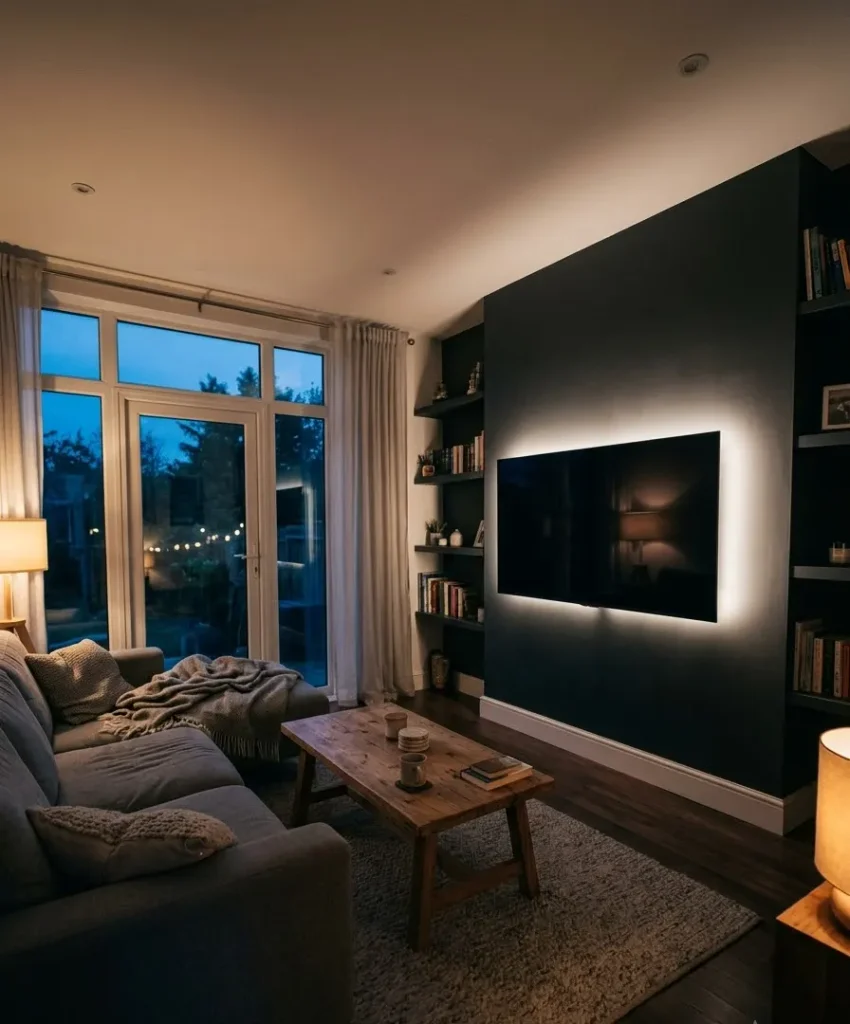
A soft LED strip behind the TV washes the wall in gentle light. It reduces eye strain and makes the screen look like it floats.
Pick a warm white around 2700K to 3000K. Cool blue strips make the room look like a gaming cafe.
I installed mine for $25 and it took 15 minutes. Best cheap upgrade I made all year.
20. Picture lights above the screen
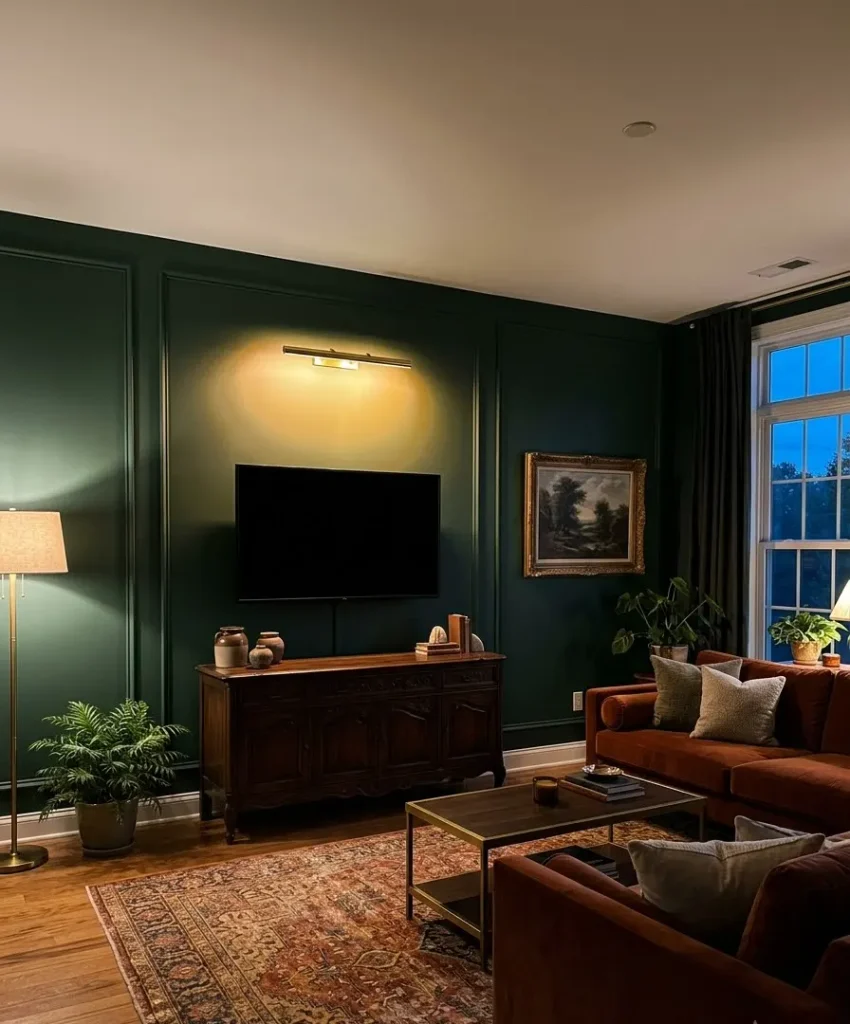
A slim brass picture light above the TV gives the wall a gallery feel.
Even when the screen is off, the light draws attention to the wall rather than the black rectangle.
Hardwired versions look best, but battery-powered ones work fine for renters. Position the light so it doesn’t glare on the screen.
21. An art-mode TV
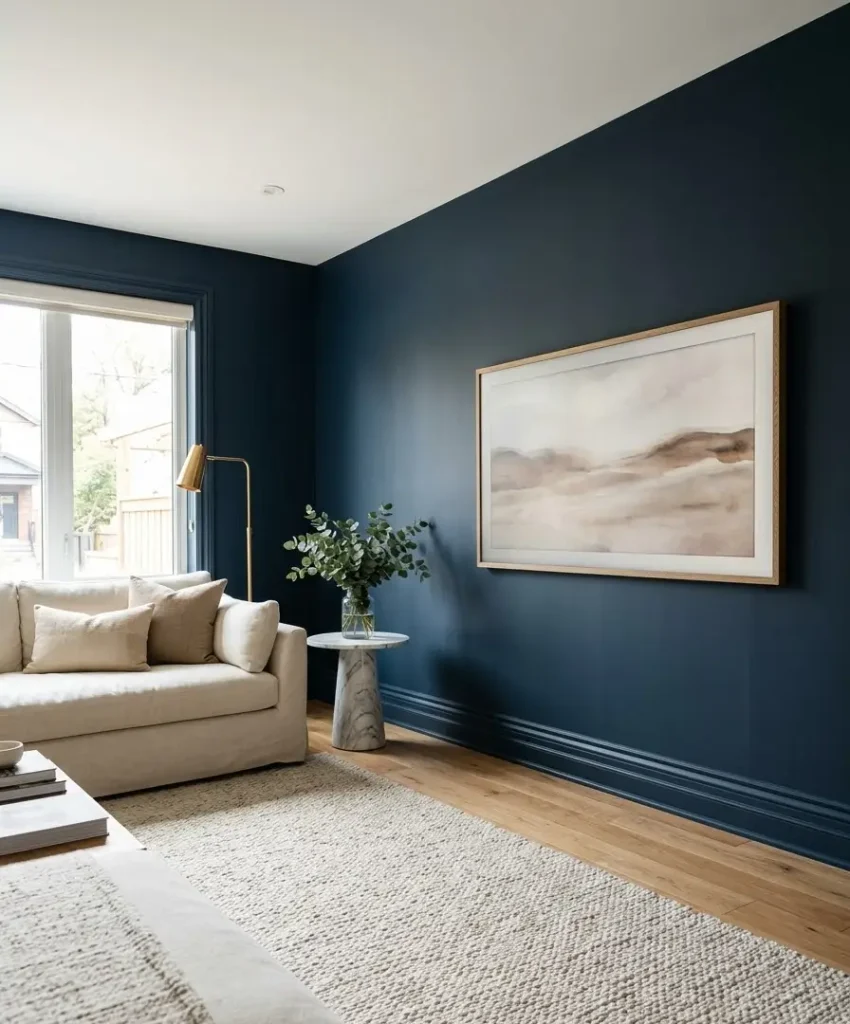
Samsung’s The Frame turns your TV into a piece of framed artwork when you aren’t watching.
Mount it on a dark wall and the display looks like a painting in a thin wooden frame.
It costs more than a standard TV, and I won’t pretend otherwise. If budget matters, a regular screen plus a dark wall gets you 80 percent of the effect.
Still, the art mode feature is hard to beat for a clean, stylish look.
22. Gallery wall around the screen
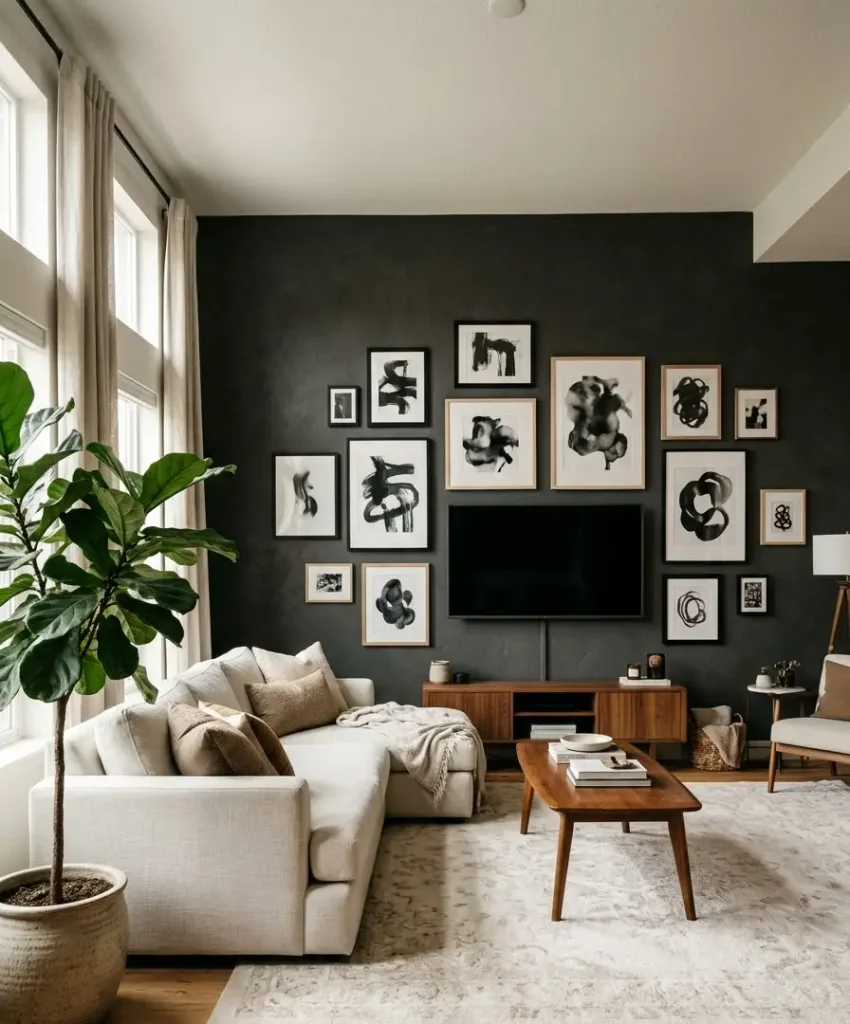
Surround the TV with framed prints in black or wood frames. The frames echo the TV’s edge and break up its outline.
Keep the art simple. Black-and-white photography looks stunning against dark green or navy.
Lay the frames on the floor first and photograph the layout. Then you can fix the arrangement before you drill any holes.
23. Light sofa and rug for contrast
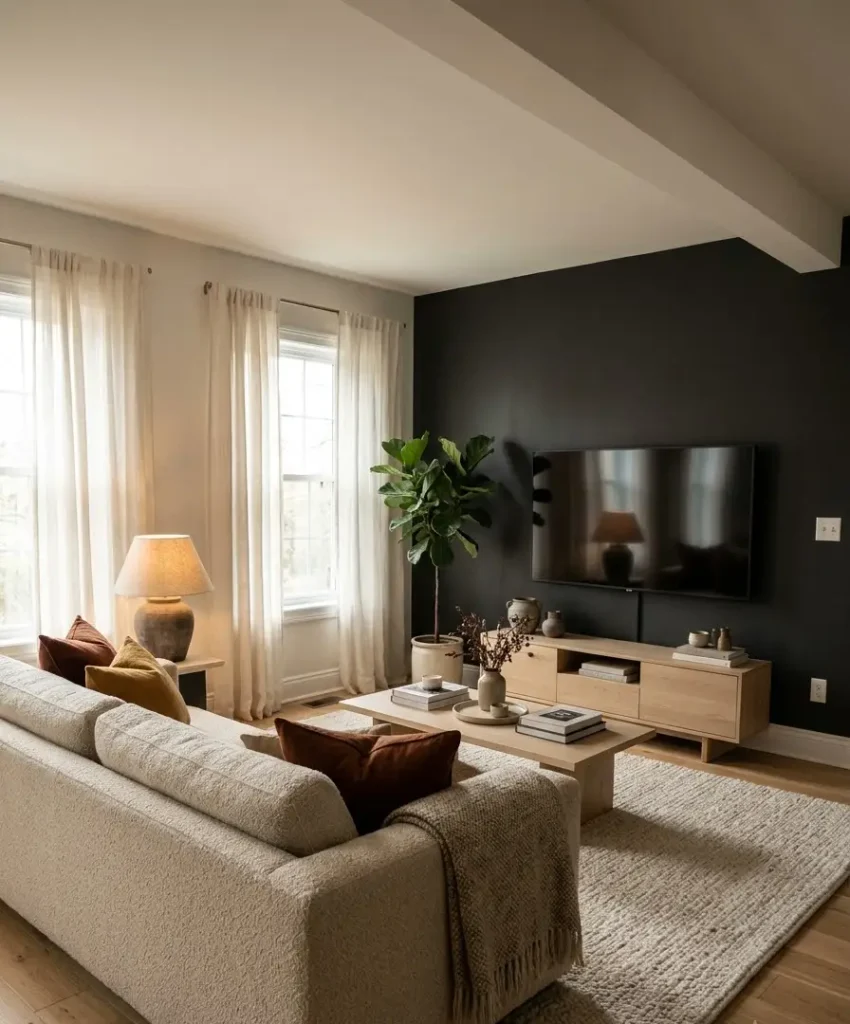
A dark wall needs a light counterpart. Put a cream or oatmeal sofa across from it and spread a pale rug underneath.
The contrast stops the room from feeling like a cave, and it balances the visual weight.
I learned this after my first dark room looked like a goth teenager’s bedroom.
Throw pillows in rust or mustard add warmth without extra effort.
24. Brass and warm metal accents
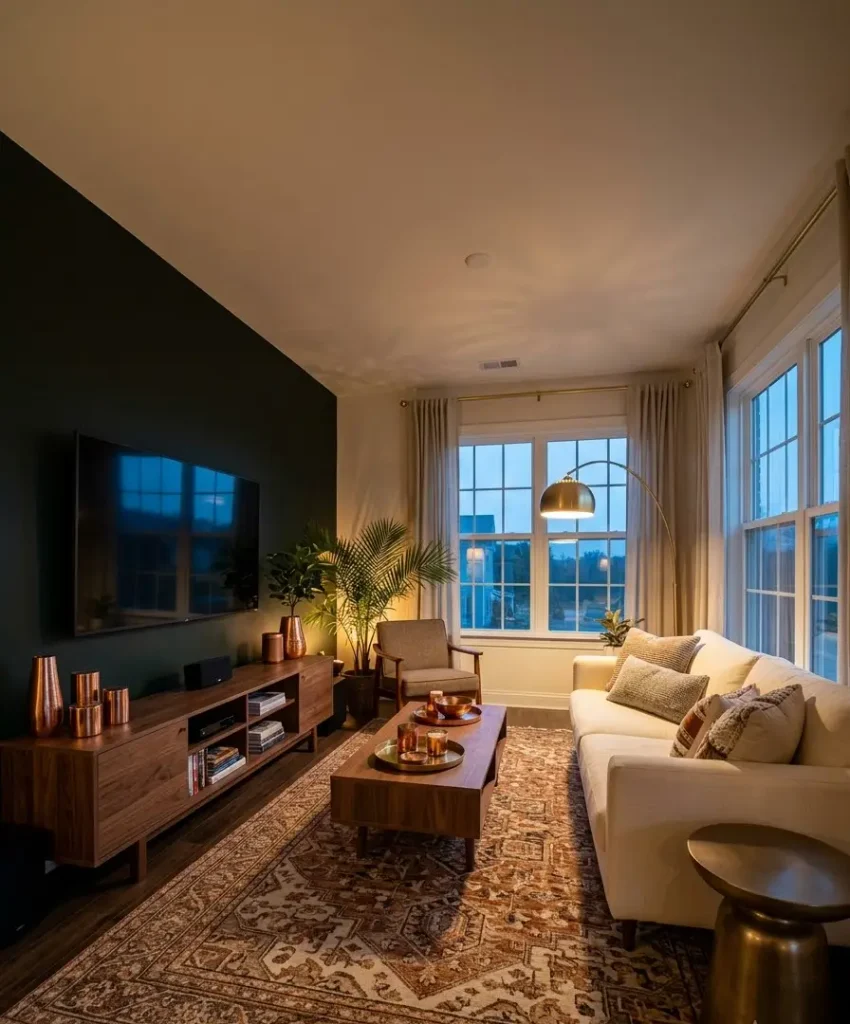
Brass, copper and bronze glow against dark walls. A brass floor lamp next to the TV wall adds shine that catches the eye in the best way.
Pick one or two metal finishes, not five. Too many finishes make the room look cluttered.
Brass picture frames, curtain rods and side tables all fit the theme.
25. Color-drenching the whole room
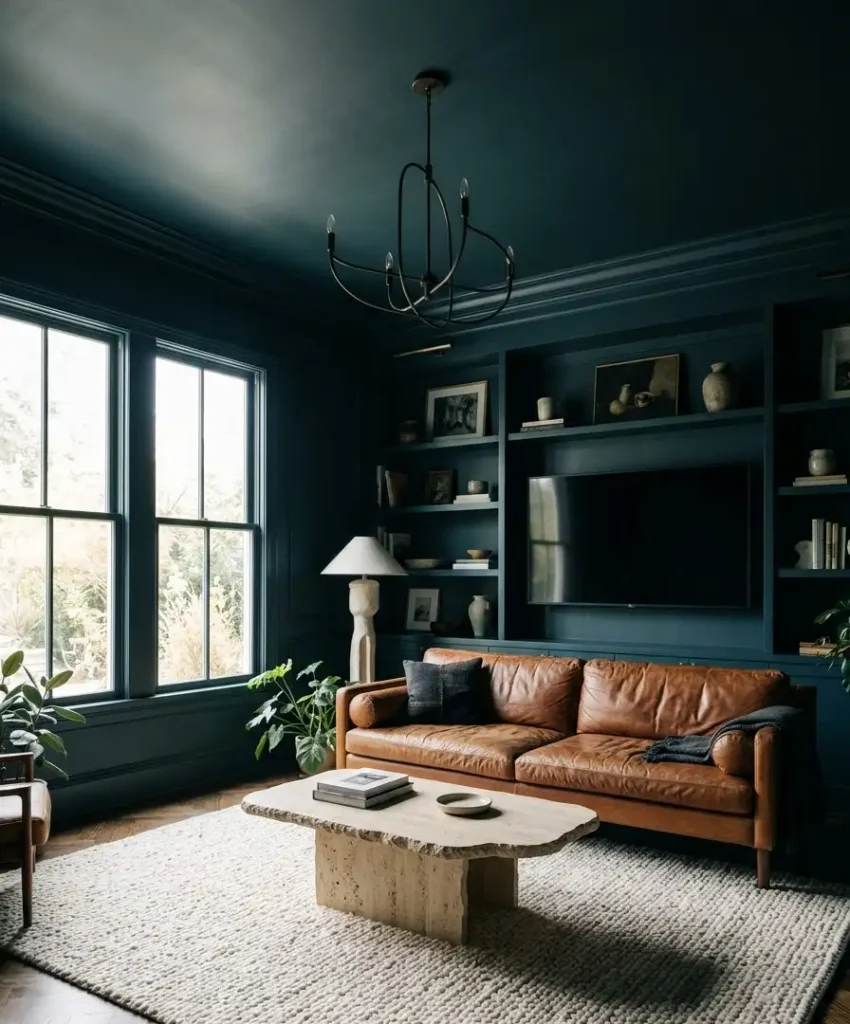
Color-drenching means painting the walls, trim and sometimes even the ceiling in the same dark shade.
The TV wall stops being an accent and becomes part of a cocoon.
It takes confidence. In a room with a lot of daylight, it looks glorious, like something from a design magazine.
I haven’t dared to drench my own living room yet. Ask me again next year.
A quick tangent about cable clutter
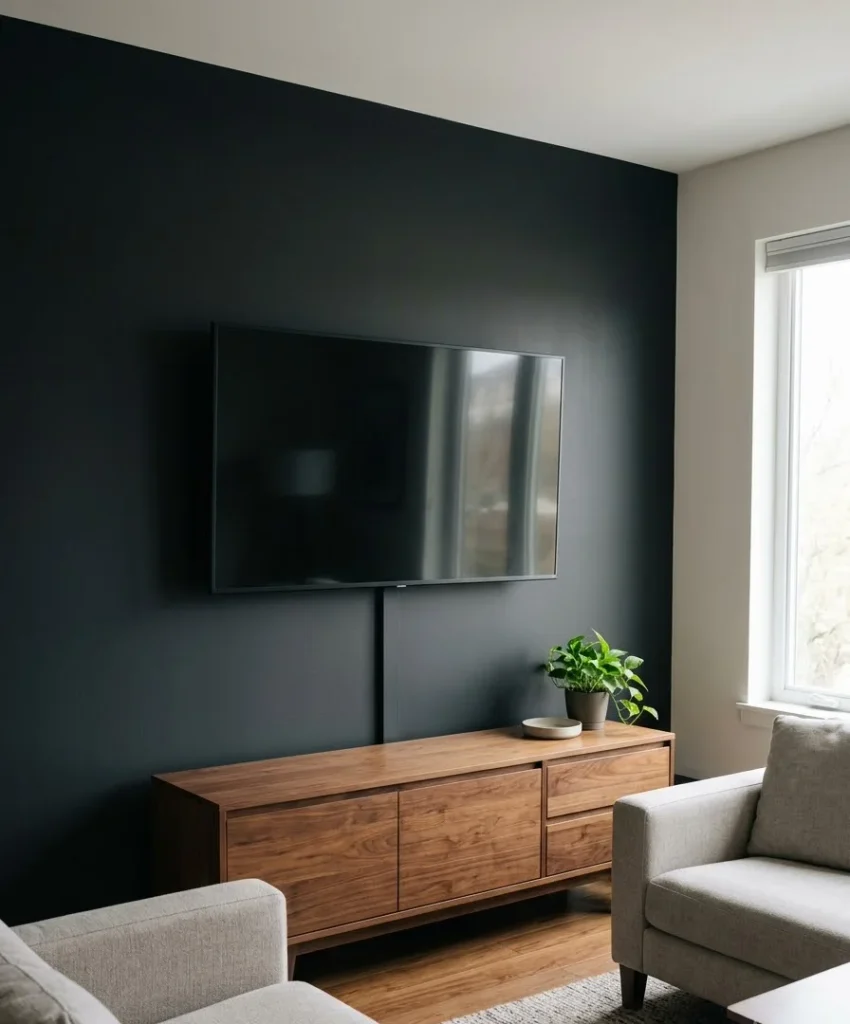
Slight detour, because I can’t stop thinking about it. Cables ruin more TV walls than any paint color ever could.
A dark wall with a dangling white HDMI cord looks like a crime scene.
Buy a cable cover painted to match the wall, or run the wires inside the wall with an in-wall power kit.
Hide the streaming box in a drawer or behind the screen. Your future self will thank you.
Common mistakes to skip
Some errors show up again and again on Pinterest tours and in the comment sections of my posts. Avoid these and your dark TV wall will look professional.
- Skipping lighting. A dark wall with one overhead bulb looks gloomy. Add lamps at different heights.
- Using high-gloss paint. The shine bounces light around and shows every flaw.
- Ignoring the ceiling. If the wall is dark and the ceiling is yellowed white, the contrast looks tired. Repaint the ceiling bright white.
- Hanging the TV too high. I did this. My neck hurt for a week. Place the center of the screen around eye level when you sit down.
FAQs about dark TV accent walls
Will a dark accent wall make my living room look smaller?
Not necessarily. A single dark wall can add depth by making that wall visually recede. The room feels cozier but not cramped, especially when you balance it with light furniture and good lighting.
What is the best paint finish for a wall behind a TV?
Matte or flat finishes work best because they absorb glare. Eggshell is a decent compromise if you need to wipe the wall often, but avoid anything glossier.
Can I do a dark TV wall in a rental?
Yes. Use removable peel-and-stick wallpaper or slat panels with adhesive backing. Some landlords also allow paint if you agree to repaint before you move out, so ask first.
Final thoughts
A dark accent wall won’t make your TV disappear like magic, but it comes impressively close.
Pick a color, add some texture and light it well, and the screen stops shouting at everyone who walks in.
If you only try one idea from this list, I’d start with charcoal paint and a $25 LED strip. It costs almost nothing and changes the room overnight.