Open Pinterest, type “stone accent wall,” and try to save fewer than 40 pins. I failed that test last winter. My board jumped from 12 pins to 87 before my coffee went cold.
Stone walls hook people for a good reason. They add texture, weight, and a little drama to a living room that otherwise looks like every other beige box on the block.
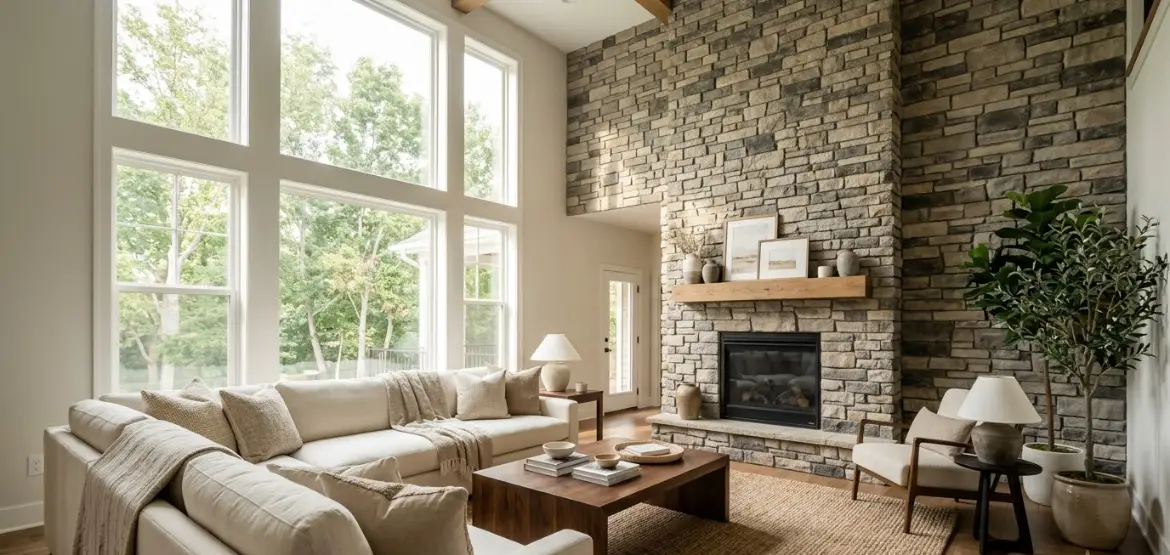
I installed a stacked stone wall in my own living room in 2021, and I’ve helped friends and family plan their makeovers ever since.
I’ve made some expensive mistakes along the way, so you don’t have to.
This guide covers the stone accent wall living room ideas I’d pin again, the costs that surprise people, and the small decisions that separate a magazine-worthy wall from a lumpy gray regret.
Why a stone accent wall works in a living room
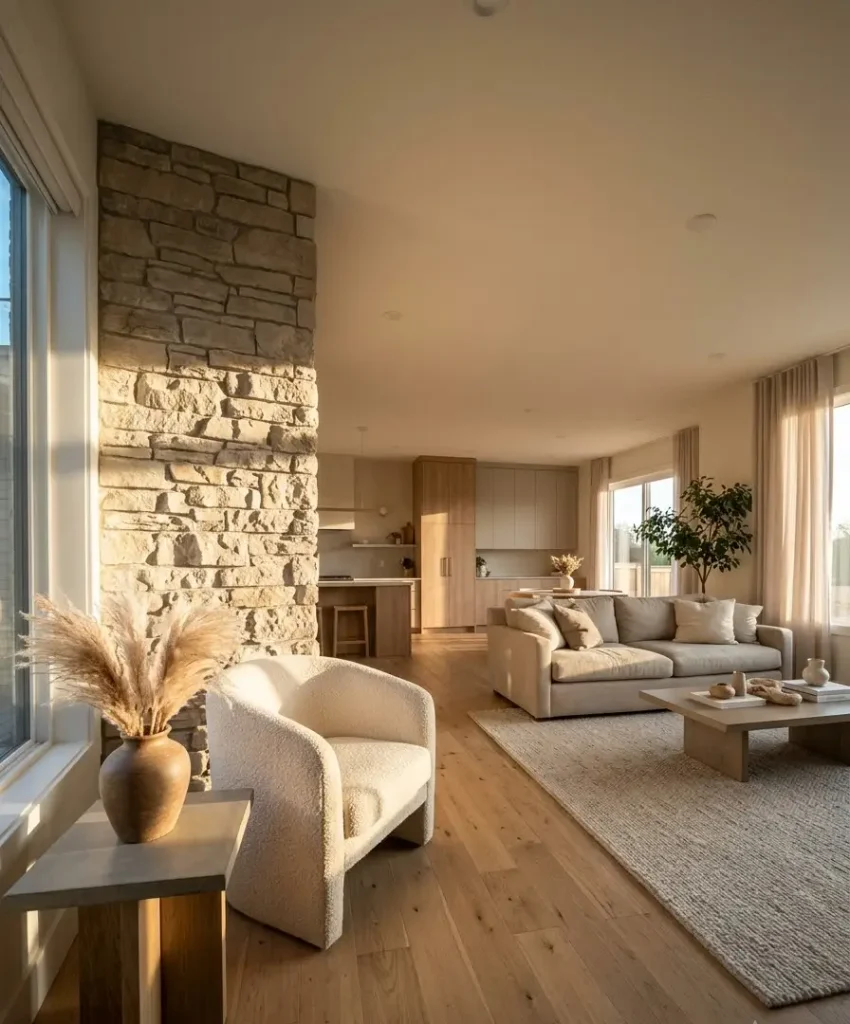
A flat painted wall gives your eye nothing to chew on. Stone gives it everything: shadow, grain, color variation, and rough edges that catch light differently at 9 a.m. and 9 p.m.
That shifting light is the secret. A stone accent wall changes personality throughout the day, and a white drywall wall never does that.
Ever wondered why photos of stone rooms look so rich on a phone screen?
Texture reads beautifully in a vertical photo, which is exactly why Pinterest loves it.
Stone also anchors a room. Most living rooms have a weak focal point, usually a TV floating in the middle of nowhere.
A stone wall gives the room a spine, and the furniture finally has something to face.
There’s a practical side too. Stone hides scuffs, shrugs off most kid and pet chaos, and doesn’t need repainting every few years. I like a surface that forgives me.
Pick your stone first
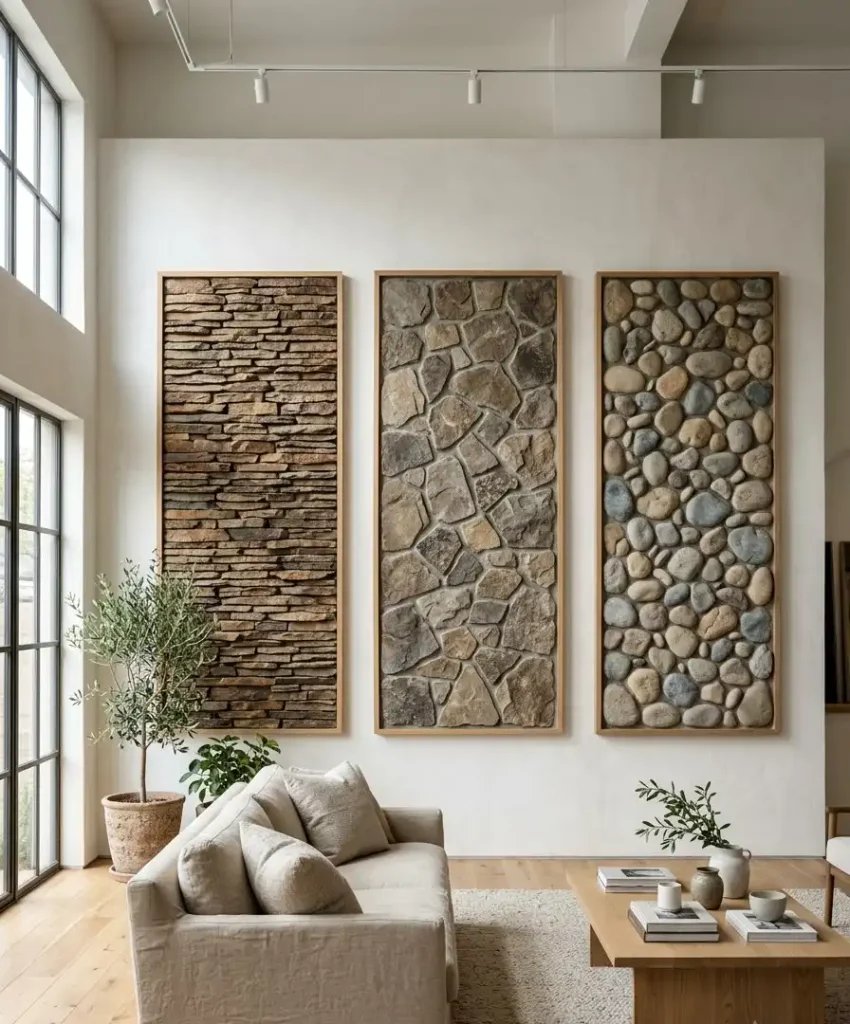
People choose a wall location before they choose a material, and that order causes headaches.
The stone decides the weight, the budget, and the installation method, so start there.
Natural stone
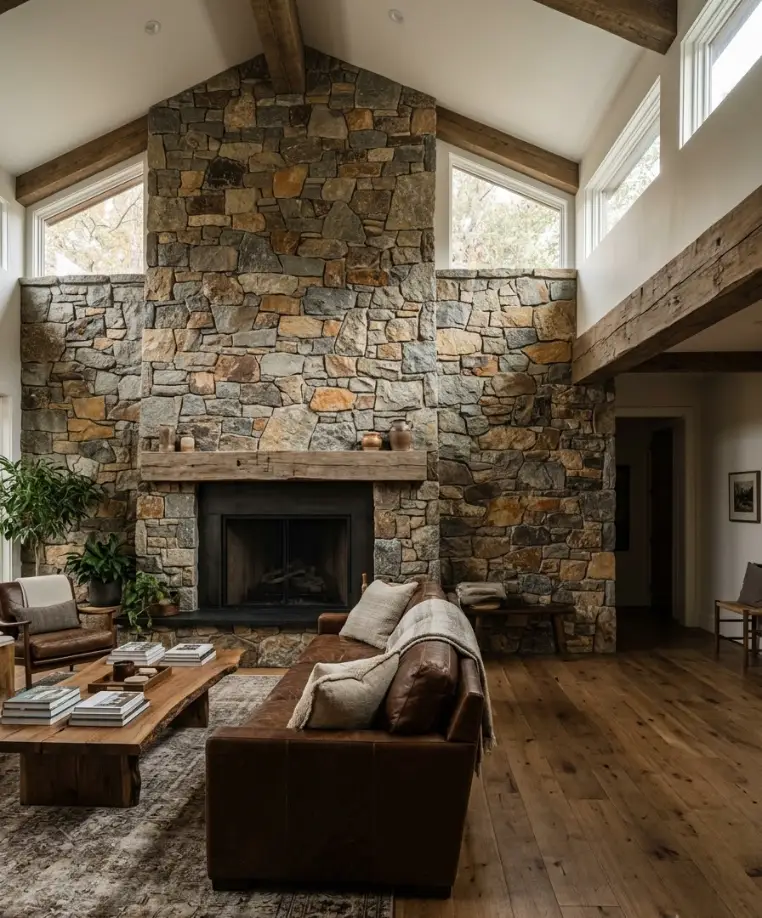
Real stone (granite, limestone, slate, sandstone, quartzite) has the best depth and the most honest variation. No two pieces match, and that’s the whole appeal.
It also weighs a lot. Heavy natural stone often needs extra wall support, a ledge at the base, or a professional crew.
The Natural Stone Institute publishes solid guidance on stone types and installation standards, and I’d read it before ordering a single pallet.
My take: if you want the wall to last 50 years and you have the budget, real stone wins.
If you rent or plan to move in three years, it probably doesn’t make sense.
Manufactured stone veneer
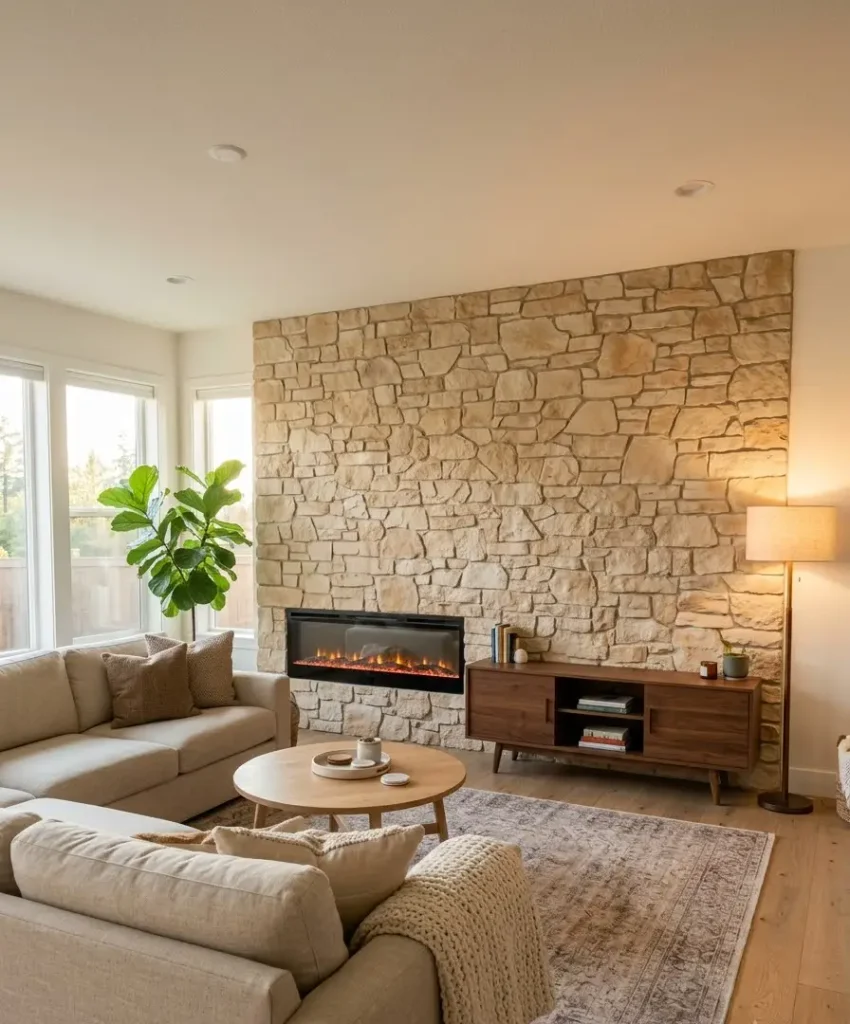
Manufactured veneer is cast from concrete and pigment in molds taken from real stone.
It weighs far less, costs less, and installs on most interior walls with mortar and a decent trowel.
I used veneer in my own living room. Up close, you can tell it’s veneer if you look hard. From the sofa, my guests still ask where I found the “real stone.”
The quality gap between cheap and good veneer is huge. Order samples, hold them next to your flooring, and look at them in the actual room at night.
Stone-look panels
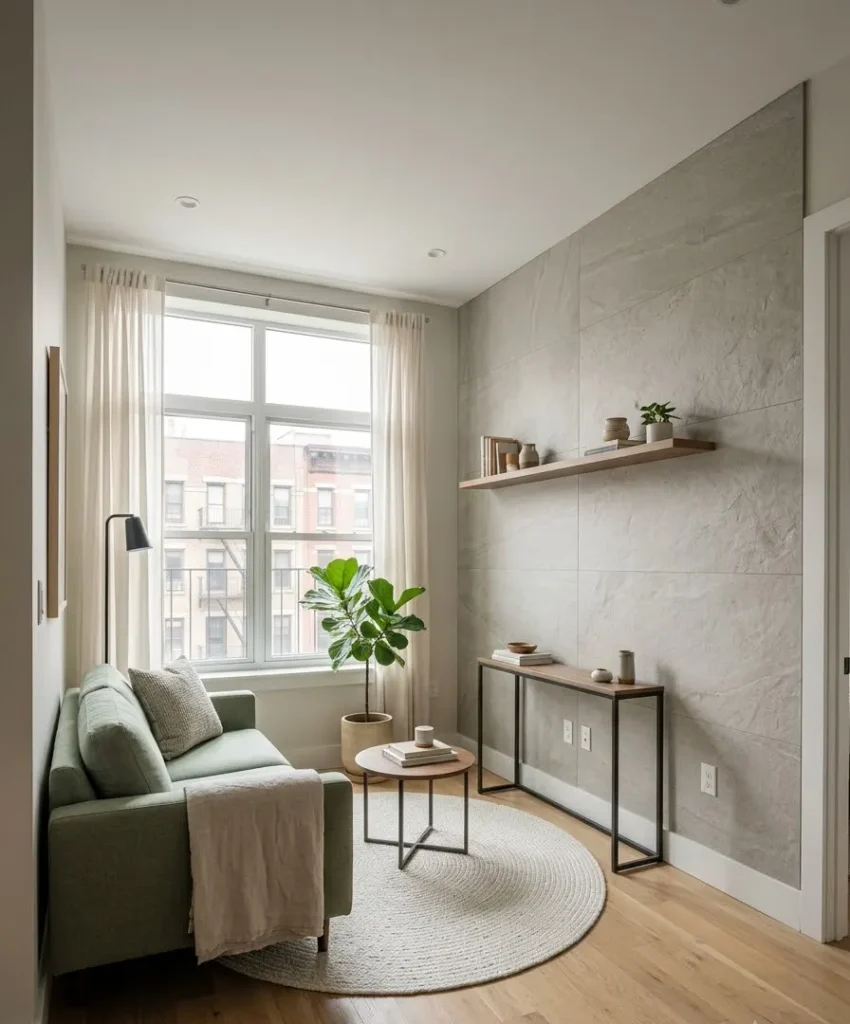
Lightweight panels (polyurethane or thin composite) peel the cost and labor way down.
You can often glue them up in a weekend, and some versions suit renters who can restore the wall later.
I’m cautious here. Photos online make them look incredible, but the seams show in side light, and the texture can look repetitive on a large wall.
For a small feature section, I think they work. For a full wall beside a window, I’d spend more.
| Stone type | Look | Rough installed cost per sq ft | Best for |
|---|---|---|---|
| Natural stone | Deep, one-of-a-kind | $15 to $40+ | Forever homes |
| Manufactured veneer | Close to real, uniform | $10 to $25 | Most budgets |
| Stone-look panels | Convincing from a distance | $8 to $20 | Small walls, quick updates |
| Thin brick or tile | Cleaner, flatter | $10 to $22 | Modern rooms |
FYI, these numbers are rough US estimates. Labor rates swing a lot by region, so get at least three local quotes before you fall in love with a number.
10 stone accent wall living room ideas worth pinning
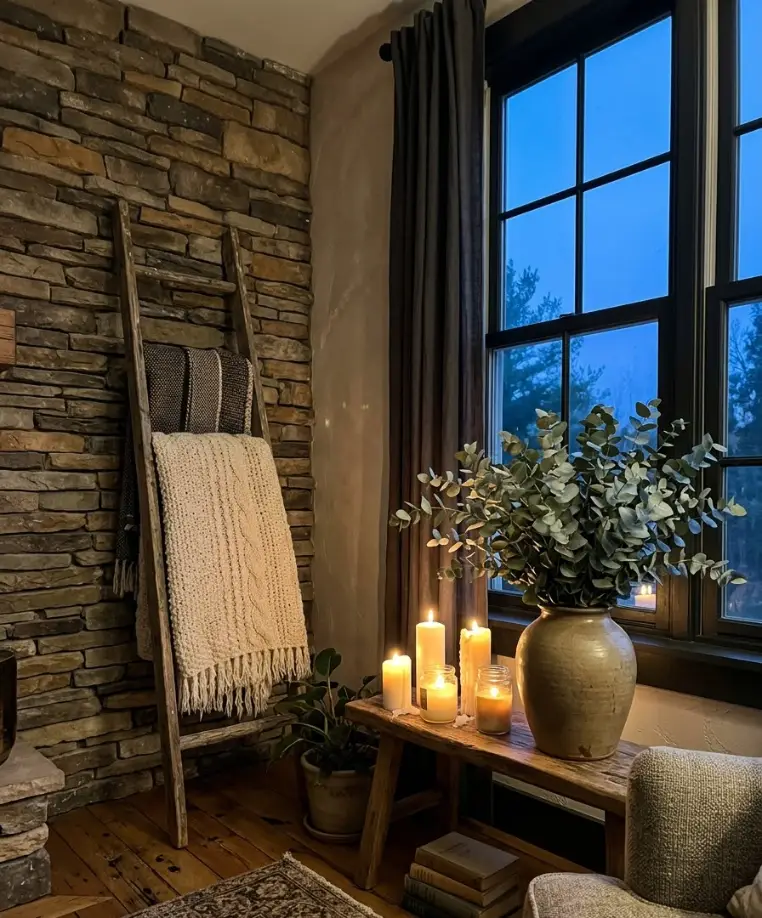
These are the ideas I come back to again and again, whether I’m helping a friend or scrolling at midnight when I should sleep.
1. Floor-to-ceiling stacked stone behind the TV
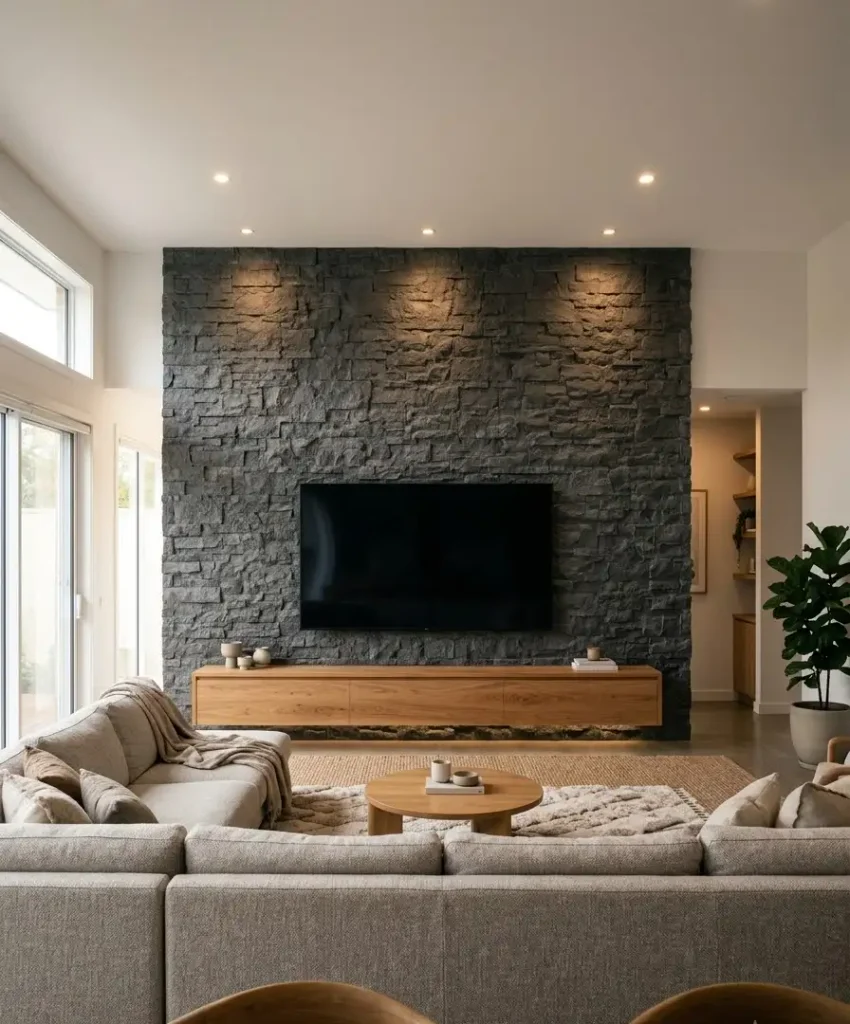
This is the classic, and it earns its reputation. A full-height stacked stone wall turns the TV area into an actual focal point and makes the ceiling look taller.
Keep the TV mount flush and hide the cables inside the wall before the stone goes on.
I forgot to run a conduit on my first project, and I regret it to this day. Chiseling cable channels into finished stone is miserable.
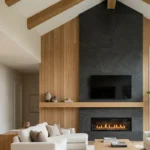
2. Stone fireplace wall with floating shelves
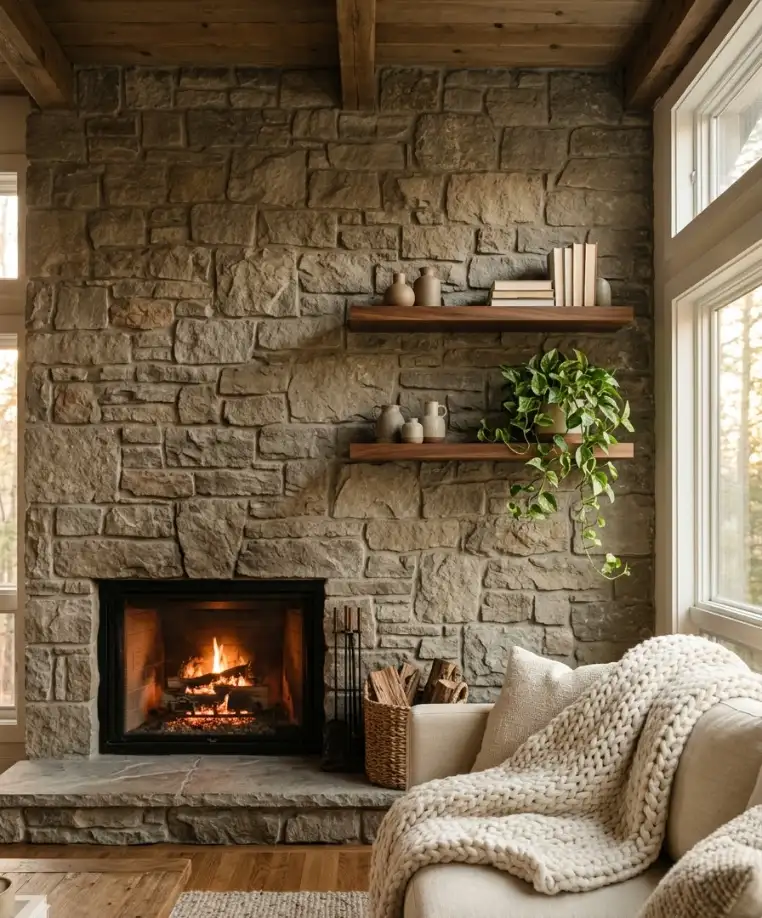
Wrap the stone from the firebox up to the ceiling, then add two or three floating wood shelves across it.
The wood warms up the cool stone, and the shelves give you a place for books and a few plants.
Check clearance rules for anything that sits near a firebox. The National Fire Protection Association covers fireplace and combustible-material safety, and I always confirm local code before mounting shelves or a TV above a fire.
3. Ledgestone in warm gray
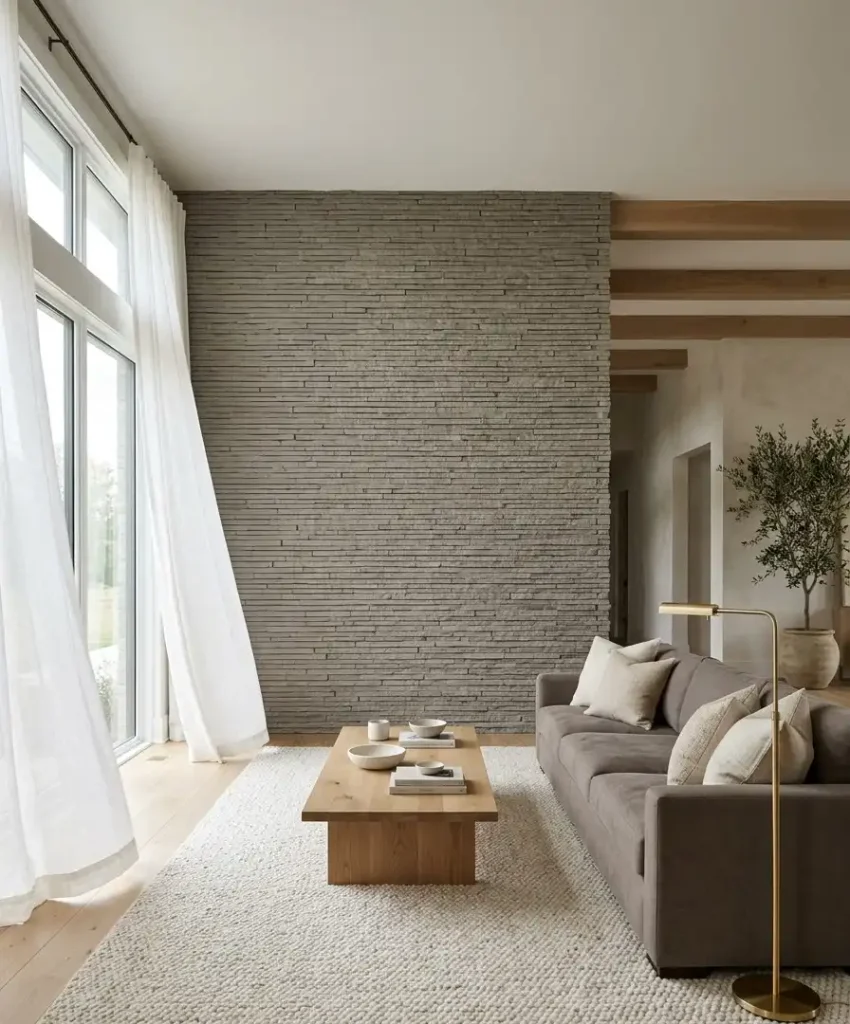
Ledgestone has long, narrow, horizontal strips that stack in tight layers. It looks clean without looking cold, and it pairs well with almost any sofa color.
Warm gray is my pick for first-timers. It hides dust, plays nicely with both white and wood tones, and rarely dates itself.
Wow, how many rooms does it rescue? More than I can count.
4. Whitewashed stone for small rooms
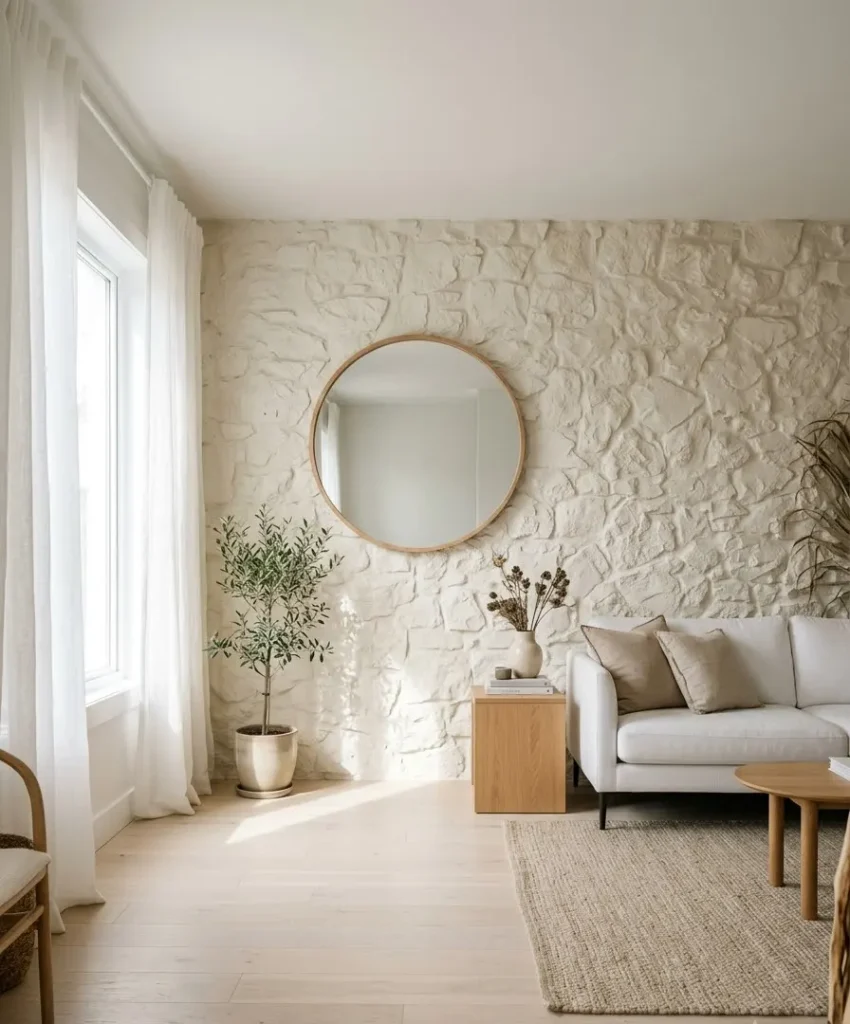
A small living room can handle stone if the stone stays pale. Whitewashed or cream-colored stone adds texture and bounces light around instead of swallowing it.
Try it on one wall only, ideally the one opposite a window. The light reaches the texture, and the room feels bigger instead of squished.
5. Dark slate for a moody, cozy room
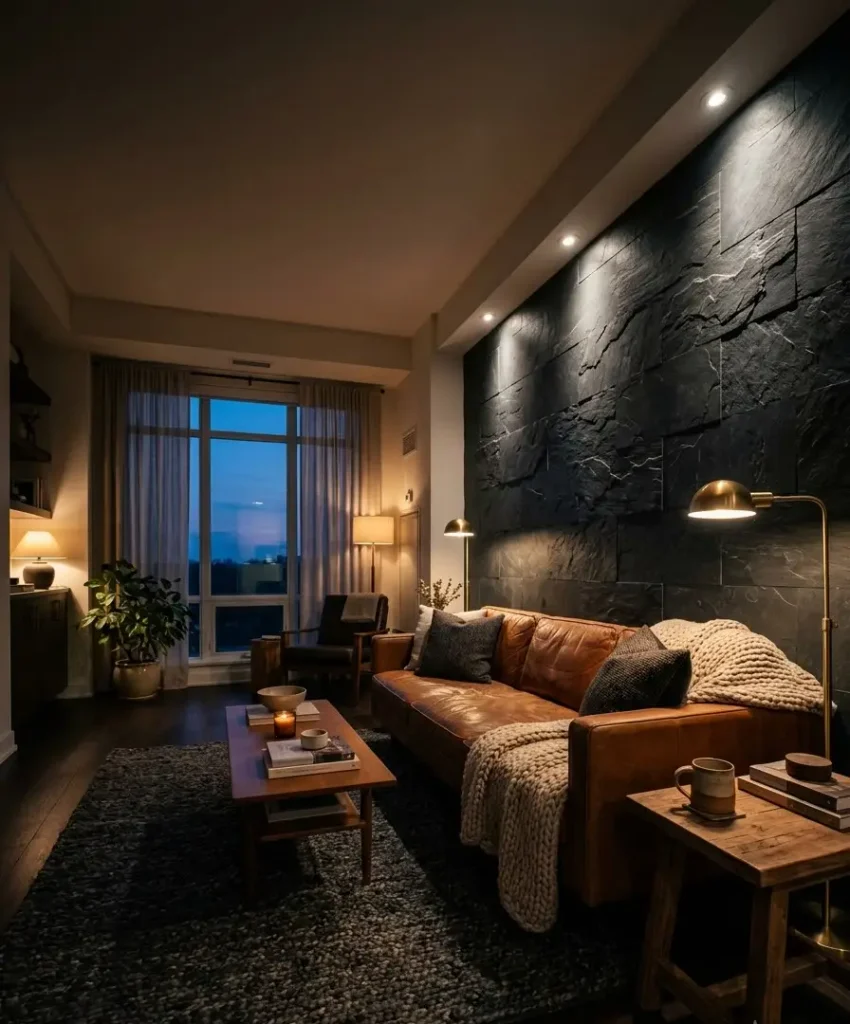
Charcoal slate looks great with warm lamps, a leather sofa, and a dark rug. It’s the “whiskey and a good book” wall.
I’d only go dark if the room gets decent natural light or you’re committed to layered lighting.
A dark stone wall in a dim room feels like a cave. Some people love caves. Test it first.
6. River rock partial wall
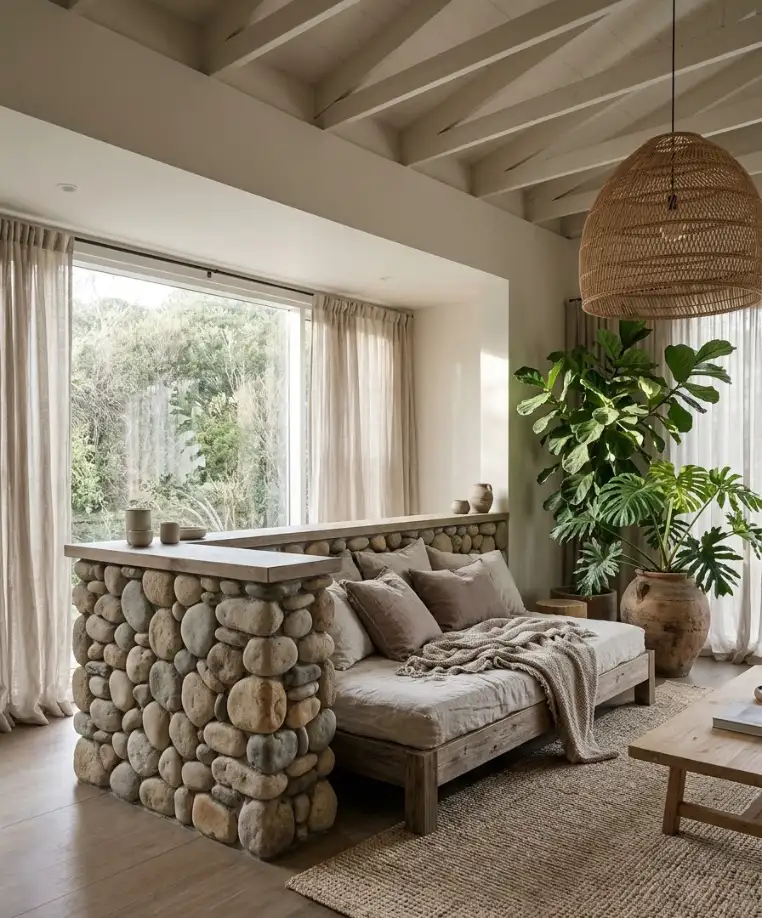
Smooth, rounded river rock gives a spa-like, organic feel. A partial wall, stopping at waist or shoulder height behind a console or a daybed, keeps it casual.
This one photographs beautifully. The rounded shapes catch light in soft highlights, and pinners tend to save it faster than flat stacked stone.
7. Stone wall with built-in niches
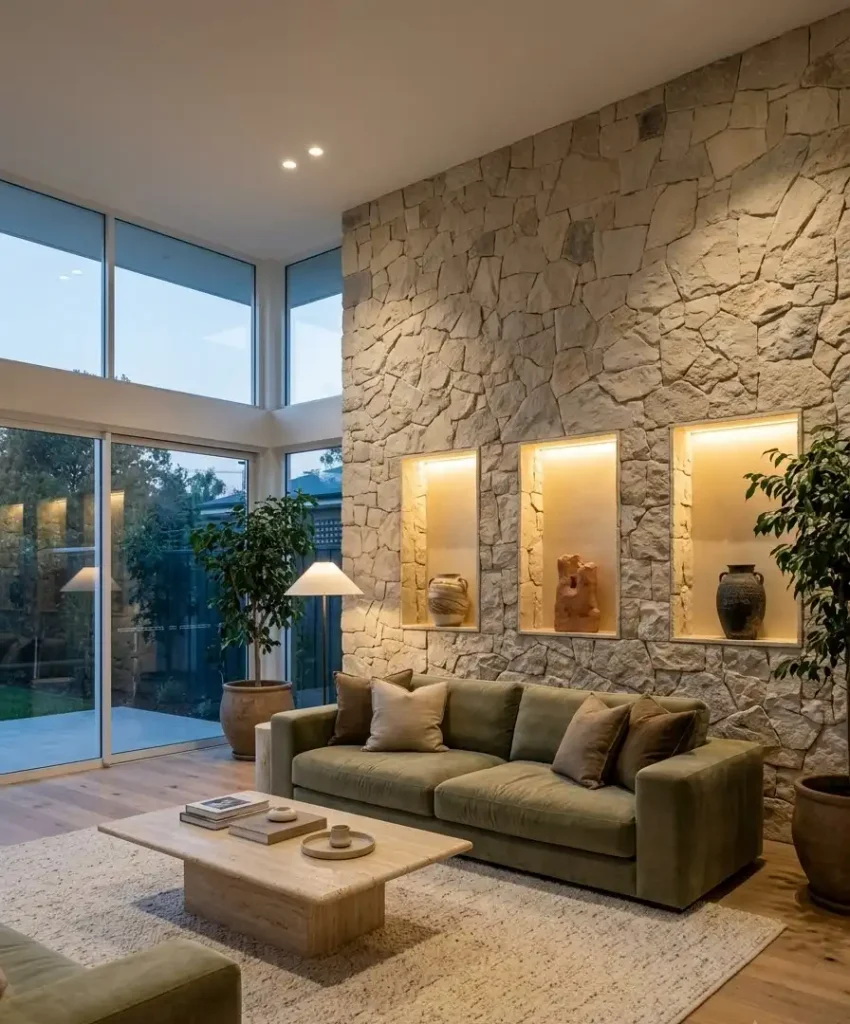
Carve or frame two or three recessed niches into the wall and light them from inside.
You get display space for art or ceramics, and the stone becomes a gallery backdrop.
Plan this before construction starts. Adding niches after the stone goes up costs far more than building them in from day one.
8. Stone and wood pairing
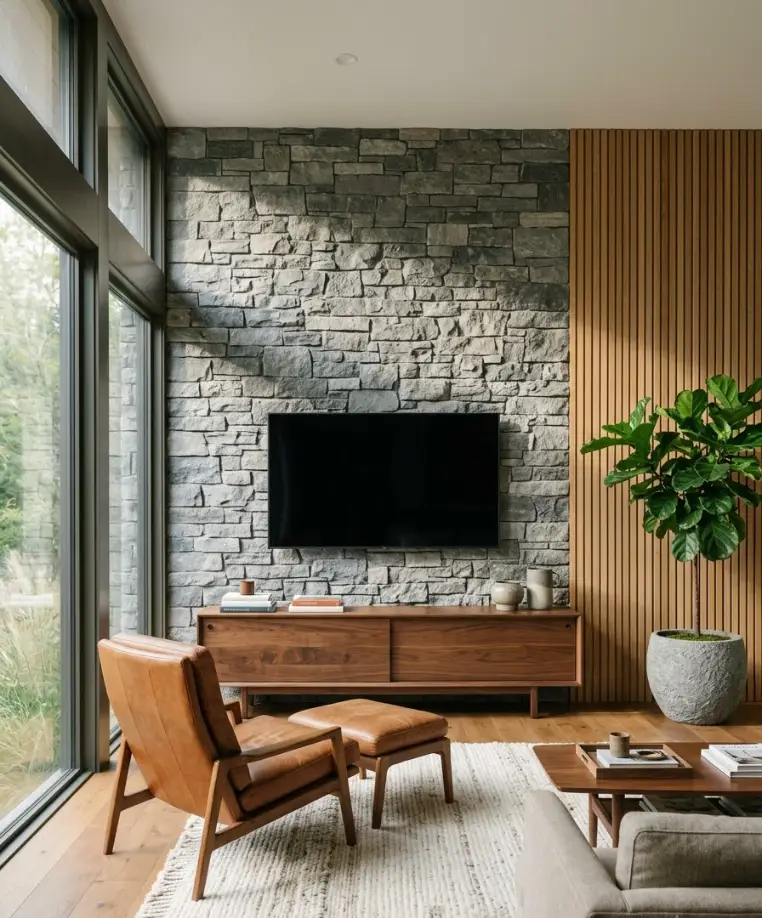
Stone and wood fit together almost every time. Think a walnut media console against a gray stone wall, or a slatted oak panel next to a stacked stone section.
My personal rule: match the undertone, not the exact shade. Warm stone with warm wood looks calm. Cool stone with orange-y wood looks like an argument.
9. Stone behind the sofa
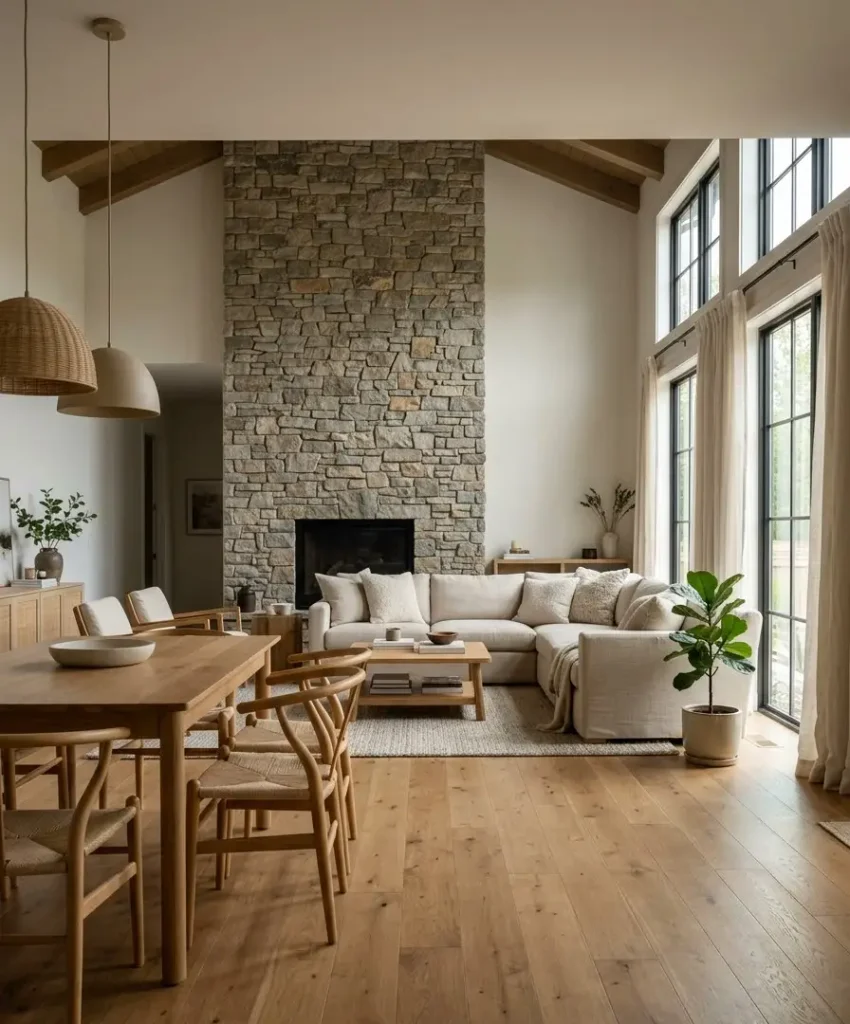
Most people put stone behind the TV. I love it behind the sofa instead, especially in an open-plan room where the sofa back faces the dining area.
It defines the seating zone without a wall, and you never stare at a black rectangle when the TV is off. Pretty smart, right?
10. Slim stone panel accent
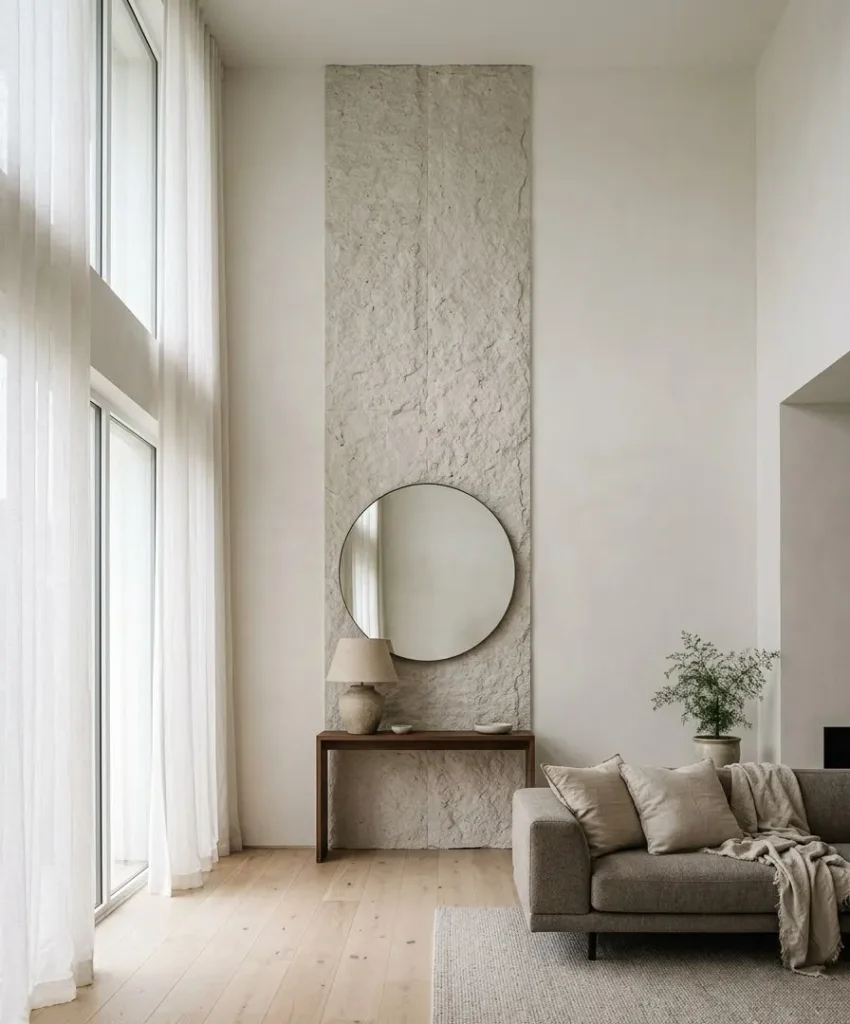
A single narrow vertical stone strip, maybe 3 to 4 feet wide, can frame a doorway, a mirror, or an art piece. It costs a fraction of a full wall.
This approach suits modern or minimalist rooms, and it works well with lightweight panels. I think it’s the best budget move on the list.
Colors, lighting, and furniture that make stone look expensive
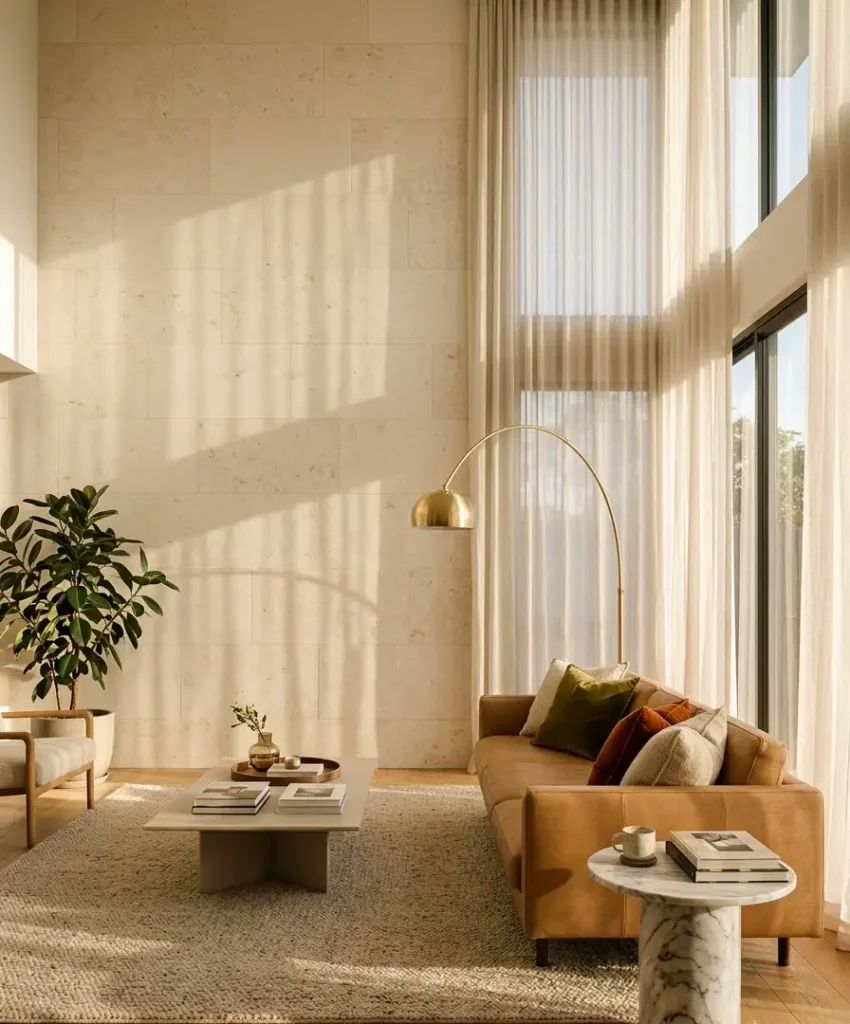
Stone rarely looks bad on its own. It looks bad when the rest of the room ignores it.
Start with the undertone
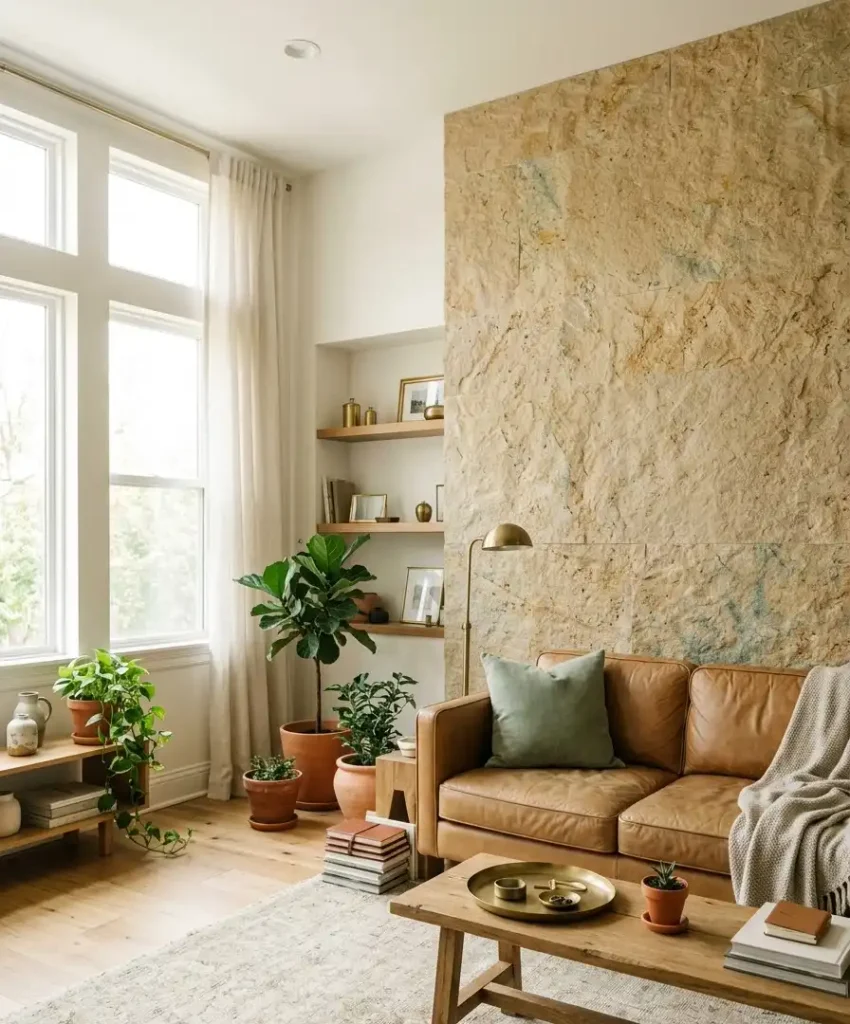
Hold your paint chips and fabric swatches against the stone sample. Gray stone can lean blue, green, or beige, and the wrong paint next to it will make the whole wall look muddy.
Here’s my quick cheat sheet:
- Warm stone (tan, cream, gold-gray): pair with warm whites, camel, terracotta, and brass.
- Cool stone (blue-gray, slate, charcoal): pair with crisp white, navy, black metal, and soft greens.
- Mixed stone: pull one color out of the stone and repeat it in a pillow or throw.
- My opinion: skip pure bright white walls next to warm stone. They make the stone look dirty.
Light it like you mean it
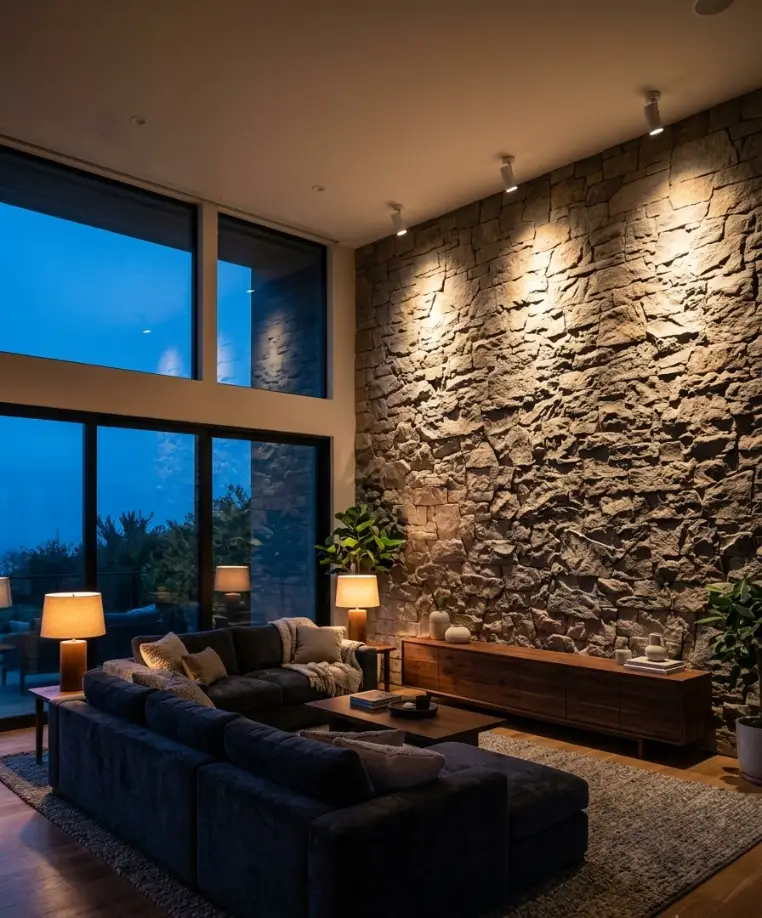
A stone wall without good lighting looks flat, and that wastes the whole point.
Wall washers or small adjustable spotlights angled across the surface create shadows that bring out every ridge.
Put the light 6 to 12 inches from the wall and aim it downward or upward along the face.
Cheap overhead can lights straight in front of the stone flatten it. I tried that once, and the wall looked like a photocopy.
A quick tangent about my neighbor’s garage
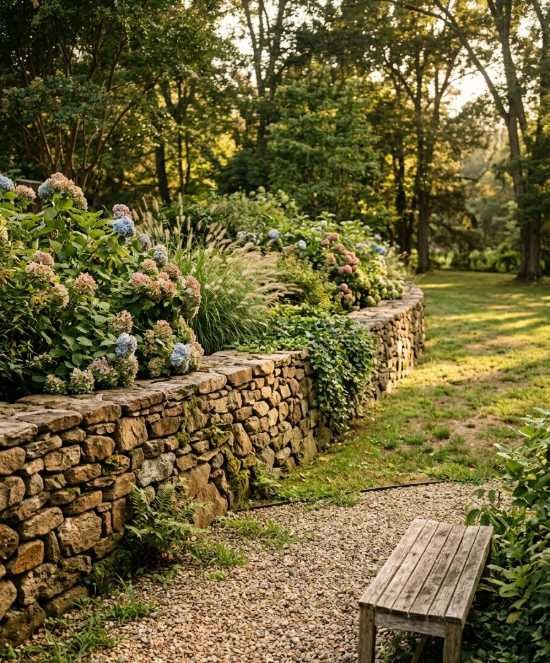
My neighbor spent two years building a stone garden wall by hand, one rock at a time, and he refused all help.
Every weekend I’d watch him haul rocks and mutter about “the right fit.” That wall is gorgeous now, and it taught me something about stone: it rewards patience, and it punishes rushing.
Back to your living room.
Furniture and texture
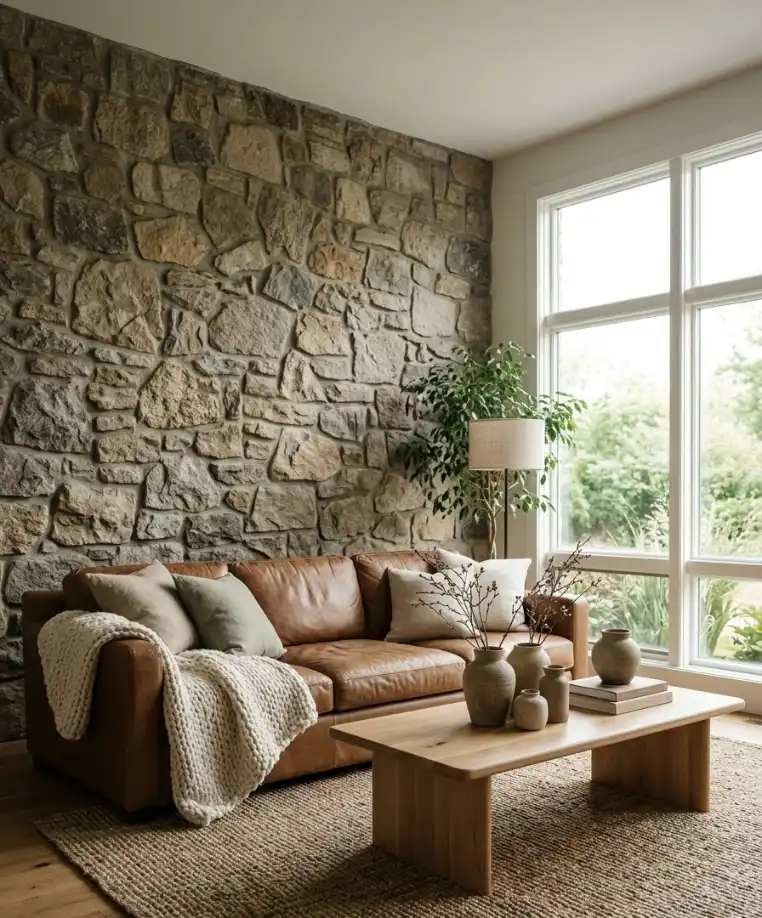
Stone brings a lot of texture, so keep the rest of the room a bit calmer. Smooth leather, soft linen, and simple lines give the stone room to breathe.
Add a chunky wool throw, a jute rug, or a few ceramic pieces to soften the hardness. Too much shiny glass and chrome next to stone feels cold.
What a stone accent wall really costs
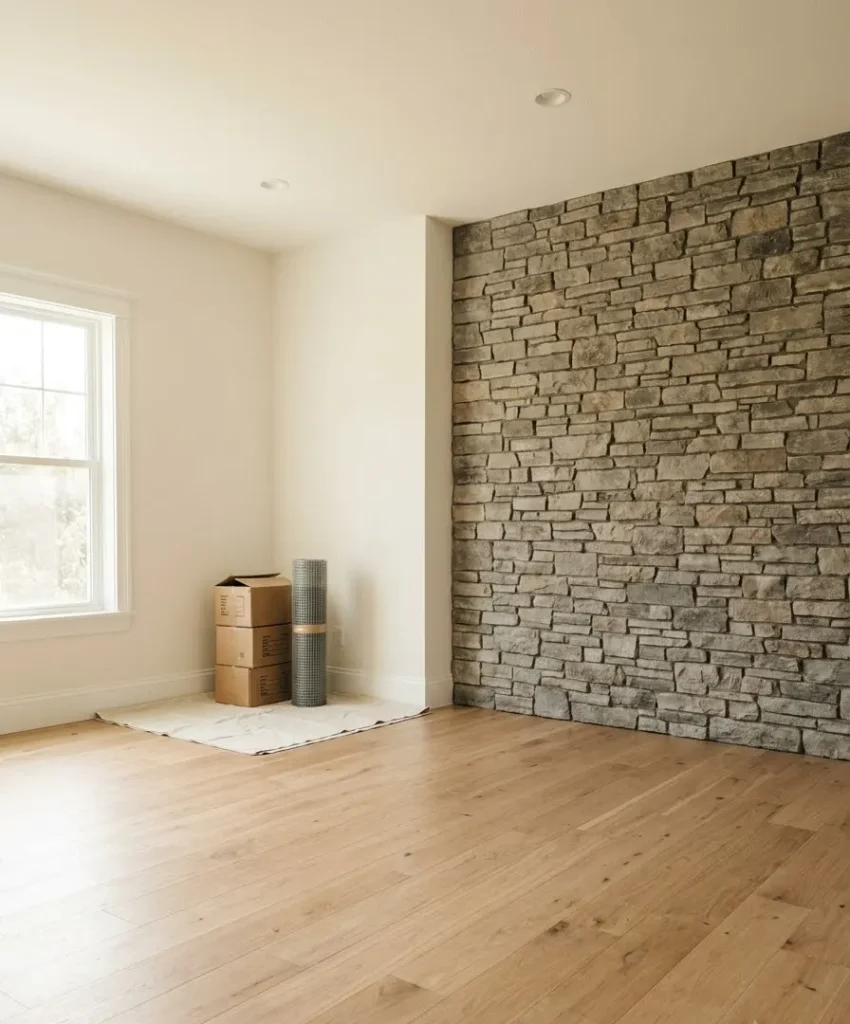
The stone is only part of the bill. Mortar, lath or backing, sealer, trim pieces, corner stones, and labor can double the material cost.
Here’s what I include when I budget a wall:
- Stone or veneer (order 10 to 15 percent extra for cuts and waste)
- Mortar, scratch coat, and wall prep
- Corner pieces, which cost more than flat pieces
- Sealer, if the stone needs it
- Lighting and any electrical work
- Labor, if you hire a mason or installer
For an average 10 by 8 foot wall (80 square feet), a veneer installation might run around $800 to $2,000 in materials and labor, depending on the product and your region.
Natural stone on the same wall can climb well past $3,000. Prices shift, so treat these as ballparks and check with local installers.
Houzz publishes cost guides and lets you filter local stone professionals by reviews and project photos. I use it to sanity-check quotes before I commit.
DIY or hire a pro?
I get this question constantly, and my answer changes based on the stone.
When DIY makes sense
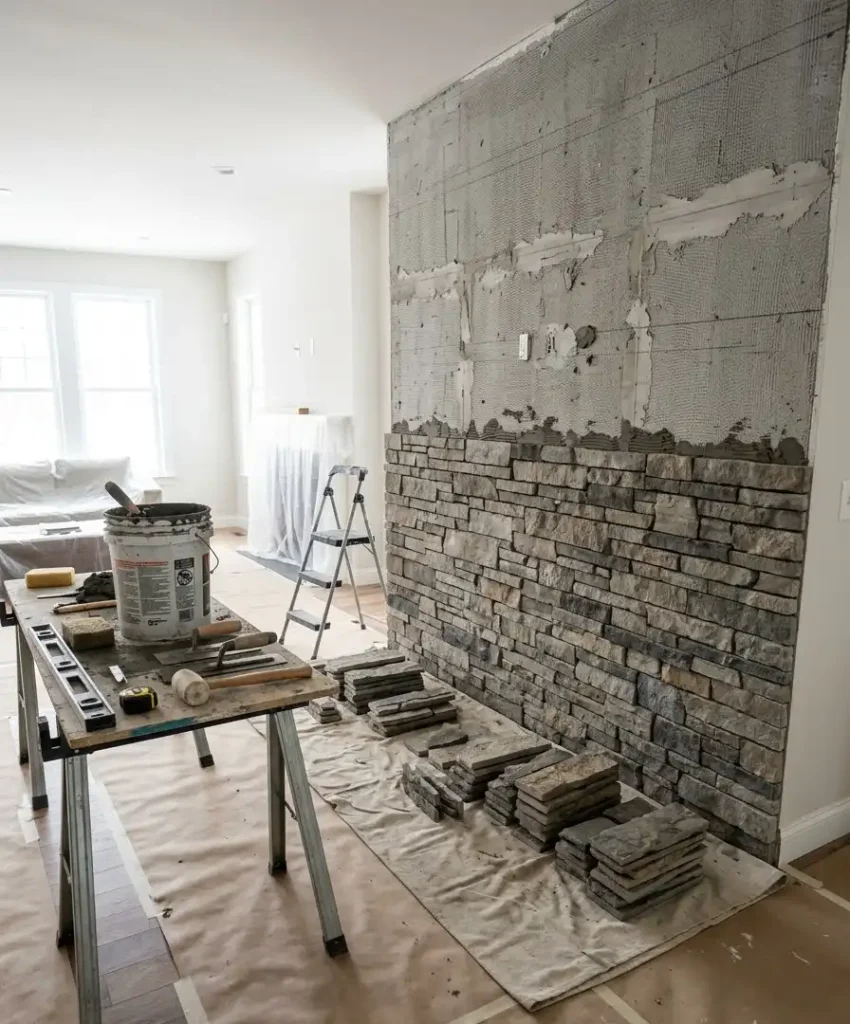
Lightweight veneer on a flat, stable interior wall is a reasonable weekend project if you’re patient and handy.
You need a level, a trowel, a wet saw or angle grinder, and a lot of dry-fitting on the floor first.
I did my wall with a friend over three days. It looked easy in the video, and the video lied.
Cutting corner pieces and keeping the grout lines consistent took way longer than I expected.
When to hire
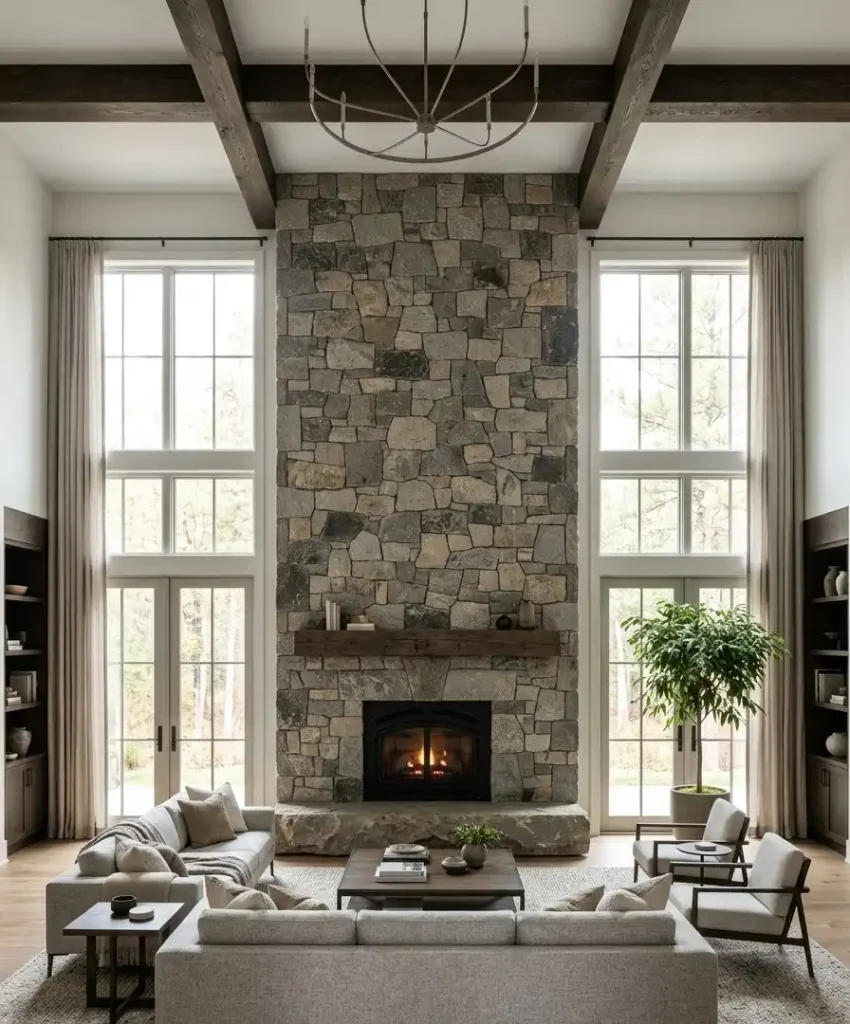
Hire a pro for natural stone, for walls above 100 square feet, for anything near a fireplace, and for any wall that carries heavy loads.
Mistakes in mortar bonding or structural support cost more to fix than the original job.
Also hire help if you’ve never worked with a wet saw. Stone dust gets everywhere, and fingers don’t grow back.
Mistakes I made (so you can skip them)
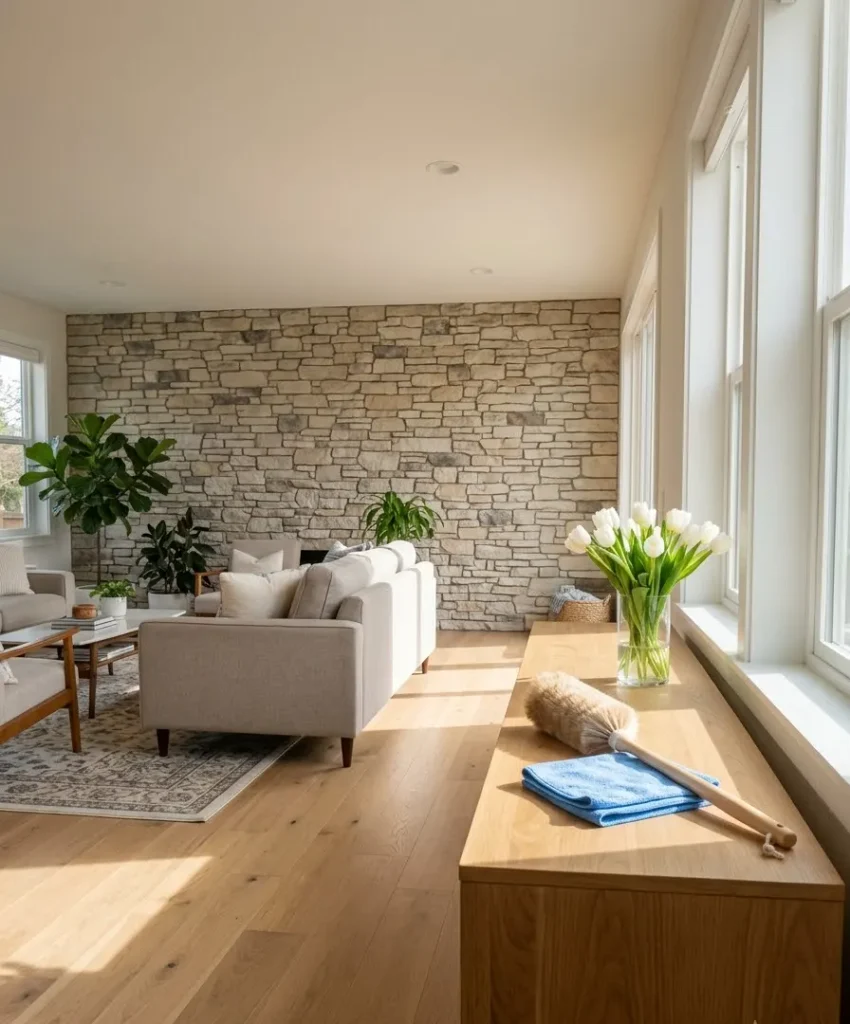
I’ve learned most of this the hard way. Here’s the honest list:
- Picking stone from a tiny sample. A 4-inch piece lies about how a whole wall will look. Buy a box, or at least see a finished installation in person.
- Ignoring the floor. My first sample clashed with my wood flooring in a way I couldn’t un-see. Always test stone next to your flooring.
- Forgetting outlets and cables. Plan electrical before the stone goes up, not after.
- Choosing busy stone for a busy room. IMO, if you already have patterned wallpaper, bold art, and a loud rug, a heavily textured stone wall just adds noise.
- Skipping the sealer. I thought a living room wall didn’t need it. Dust and hand oils proved me wrong near the fireplace.
- Covering too much wall. One full accent wall usually beats stone on every surface. Restraint looks more expensive.
TBH, mistake number 1 hurt the most. A giant wall of the wrong shade is hard to love.
Care and cleaning
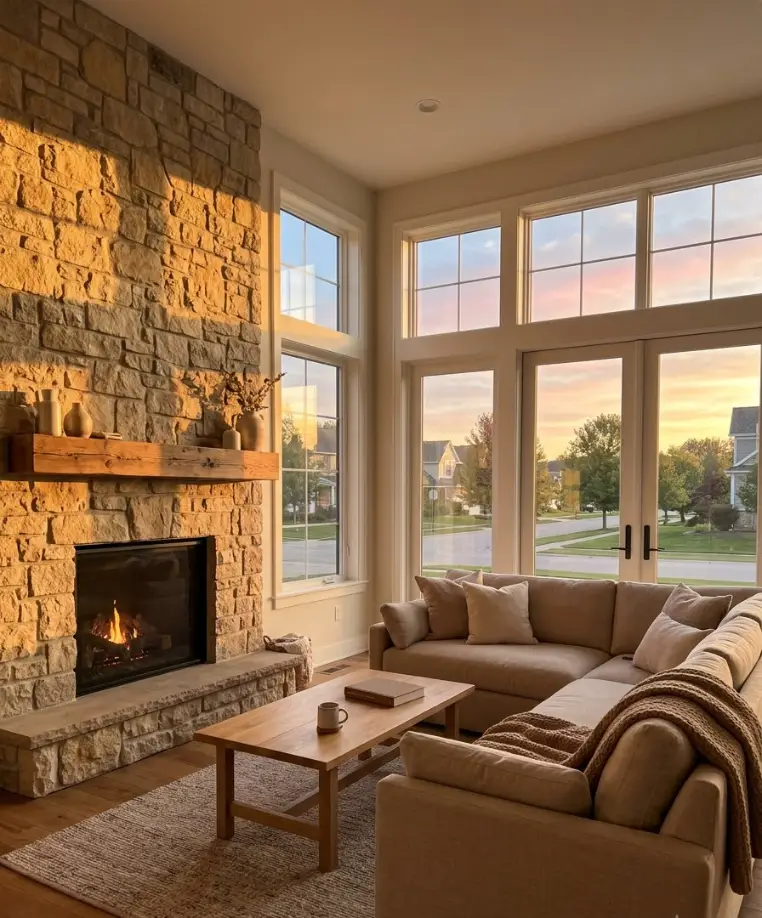
Most stone walls need less care than you’d expect. A soft brush or vacuum with a brush attachment handles dust, and a damp cloth takes care of most marks.
Rough textures trap dust and cobwebs, especially near vents and in corners. I run a soft brush over mine once a month, and it takes five minutes.
Avoid harsh acidic cleaners on natural stone like limestone, because they can etch the surface.
Check the manufacturer’s care guide, and test any cleaner in a hidden spot first.
If your stone is porous, a penetrating sealer helps keep oils and moisture out, and you should reapply it as the maker recommends.
Styling your wall for Pinterest
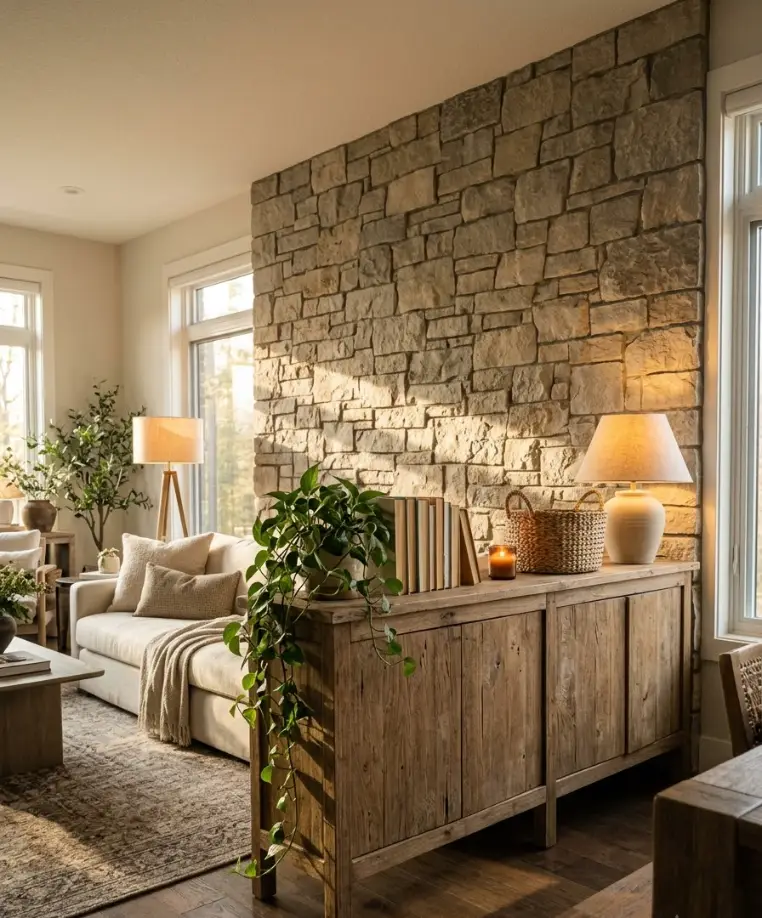
Pinterest rewards vertical, well-lit, uncluttered photos. If you plan to share your finished wall (and you’ll want to), a few small choices help.
Shoot in daylight with the lamps on. Stand back far enough to show the wall, the furniture, and one styled detail such as a plant or a stack of books.
Keep the remote controls and charger cords out of the frame, because every extra object pulls attention from the stone.
You can browse Pinterest for stone wall boards and notice which photos attract the most saves.
In my experience, the winners show good light, a calm color palette, and one strong texture contrast.
FAQ
Can I put a stone accent wall in a small living room?
Yes. Choose a pale or neutral stone with a fine texture, and use stone on just one wall.
Light stone reflects light and adds depth instead of closing the space in.
Is manufactured stone as durable as natural stone?
Good manufactured veneer lasts for decades indoors and resists chipping and fading.
Natural stone usually lasts longer and ages better, but it costs more and weighs more.
For most living rooms, quality veneer is a smart middle ground.
Does a stone wall make a room feel colder?
It can if you pair it with cool colors and harsh lighting. Warm lamps, wood tones, and soft textiles keep the room cozy. Choosing a warm-toned stone also helps.
Final thoughts
A stone accent wall can turn a forgettable living room into the one people photograph.
Pick your stone first, test it in your real light, plan the lighting and the wiring early, and keep the rest of the room calm.
I still catch myself staring at my own wall on quiet evenings, which feels slightly ridiculous for a person who just stares at rocks. But hey, it works.
So which style are you pinning first: warm ledgestone, moody slate, or a soft whitewashed wall?
Drop your pick in the comments, and tell me what’s stopping you from building it.