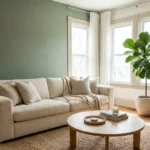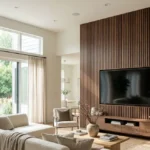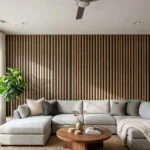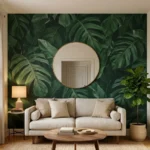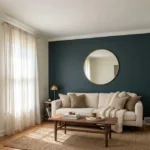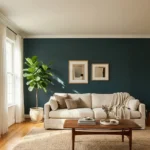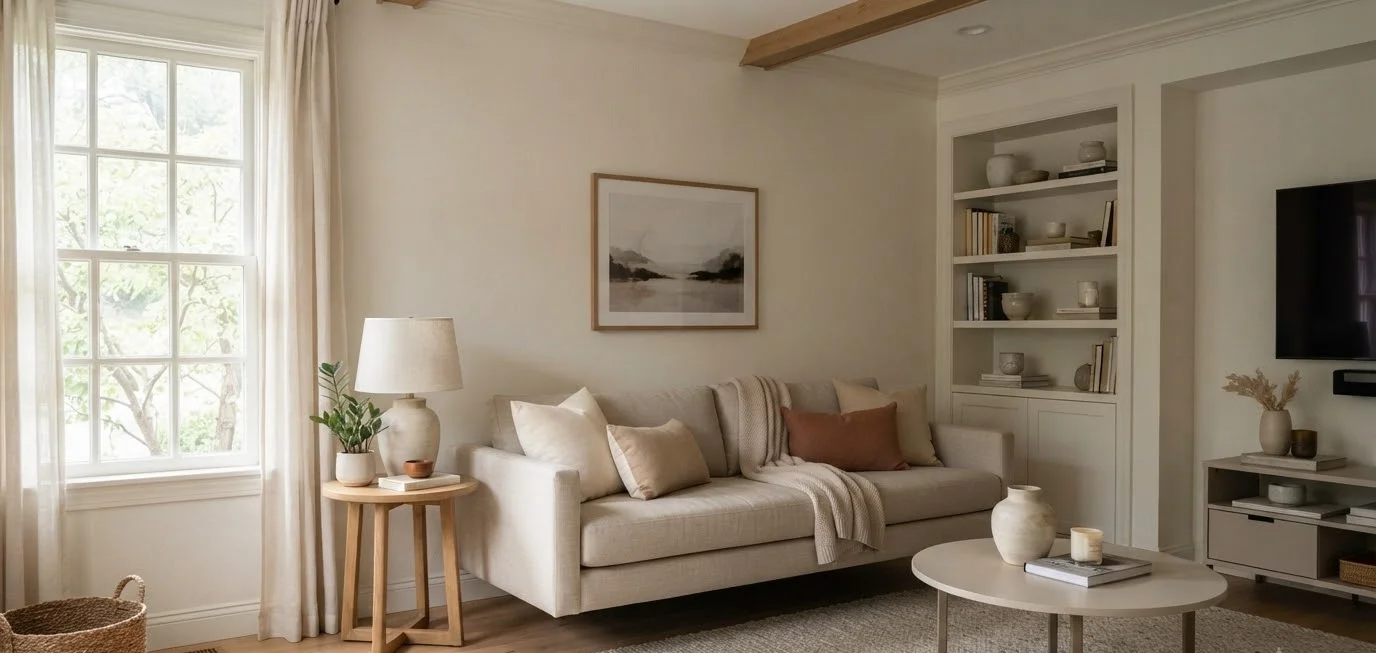
Small living room. Big feelings about it, right? You want it to look pulled together, feel warm enough to sink into on a Sunday, and somehow not resemble a furniture showroom crammed into a shoebox.
I’ve redone three small living rooms over the past few years (renter budget every time, so don’t expect designer price tags here).
What I learned: small doesn’t mean sacrificing style. It means being smarter about every square foot.
Here are 30 ideas that actually work, not just look nice in a photo.
IMO, half the “small space hacks” floating around Pinterest are recycled advice that ignores how people actually live. Not these.
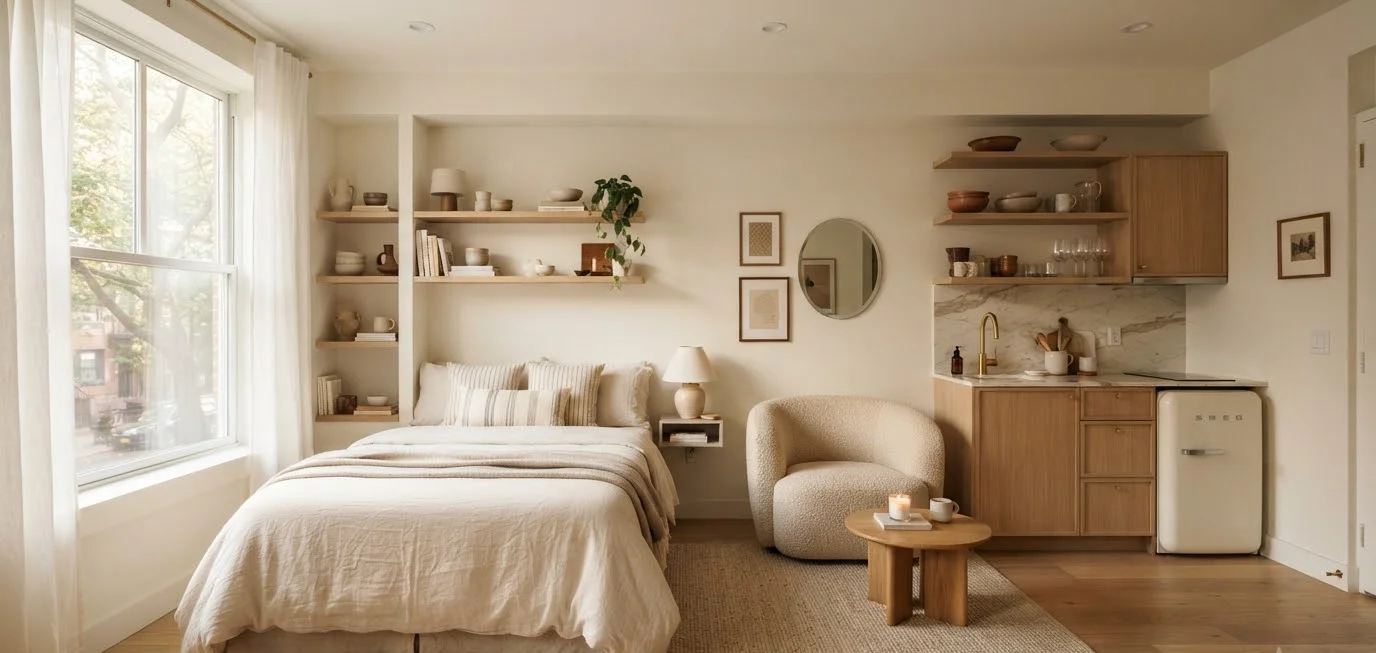
Rethink your furniture layout first
Before you buy a single throw pillow, fix your layout. This is where most small living rooms go wrong.
- Float your sofa away from the wall. Sounds backwards, I know. But pulling furniture even six inches off the wall creates a sense of depth that pushing everything flush against the perimeter kills instantly.
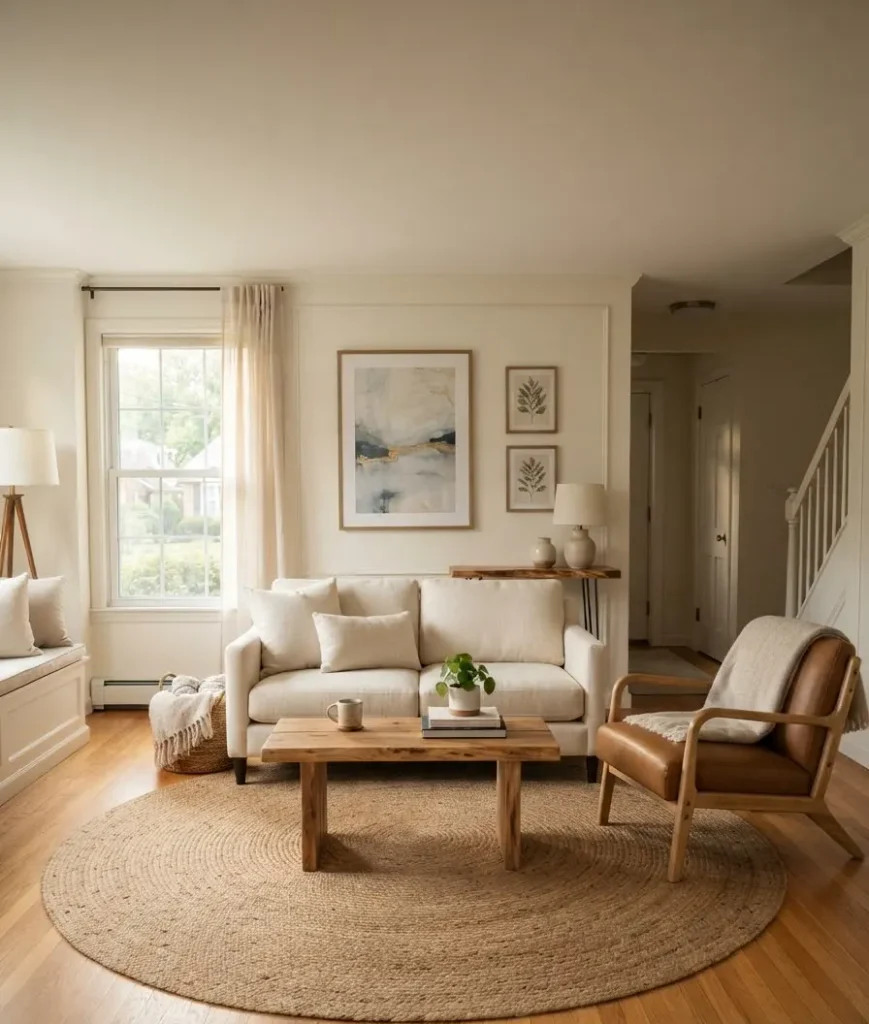
- Choose a loveseat over a full sofa. A three-seat sofa in a 10×12 room eats the whole space. A loveseat plus one accent chair gives you the same seating capacity with way more breathing room.
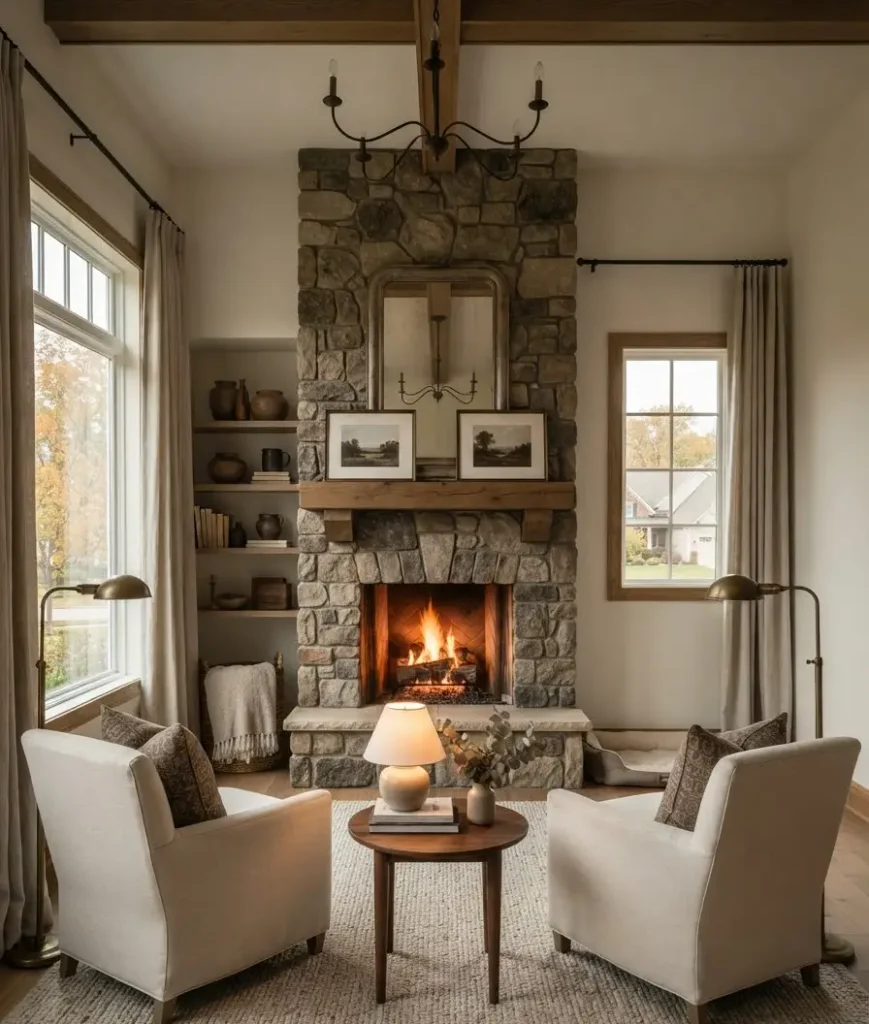
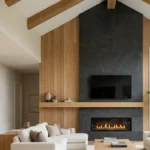
- Anchor the room with one focal point. Pick a fireplace, a TV, or a striking piece of art, then arrange everything else around it. Rooms without a clear focal point feel scattered no matter how nice the individual pieces are.
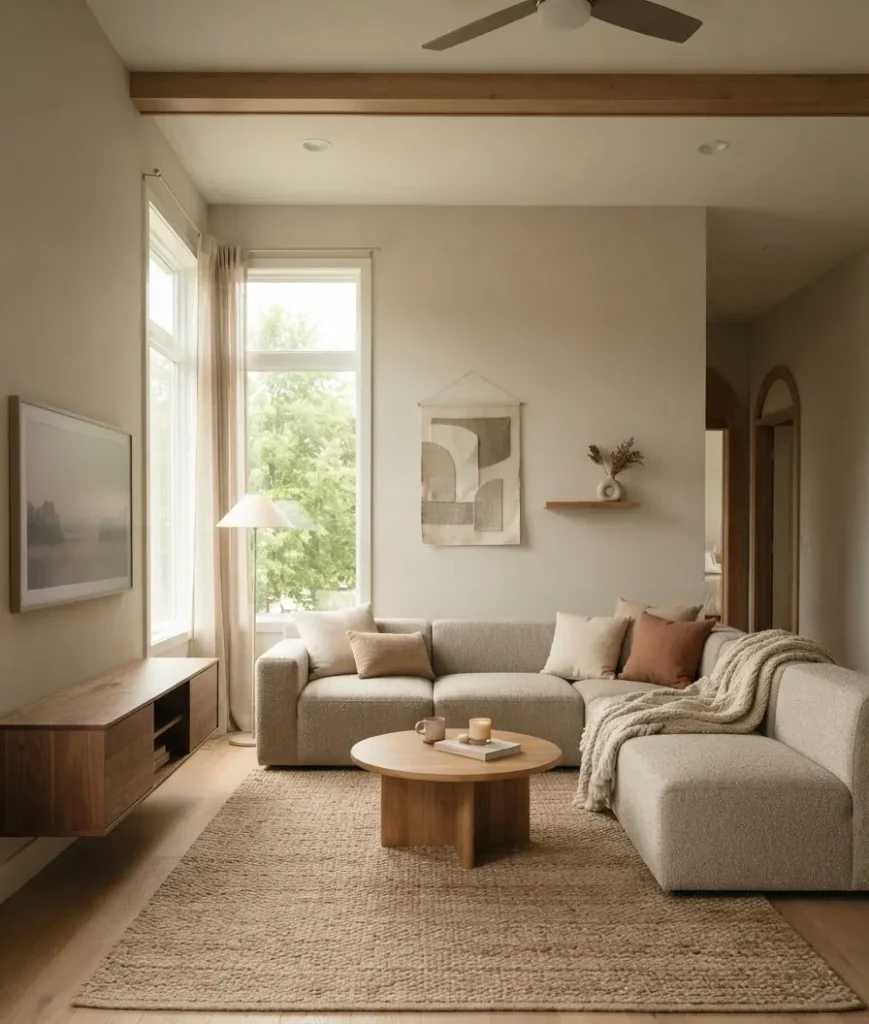
- Go modular if you entertain often. Modular sectionals let you reconfigure seating for movie night versus a gathering of six friends. One of the clearer breakdowns of this comes from Castlery’s guide to styling small living rooms, which walks through how modular pieces adapt to different layouts.
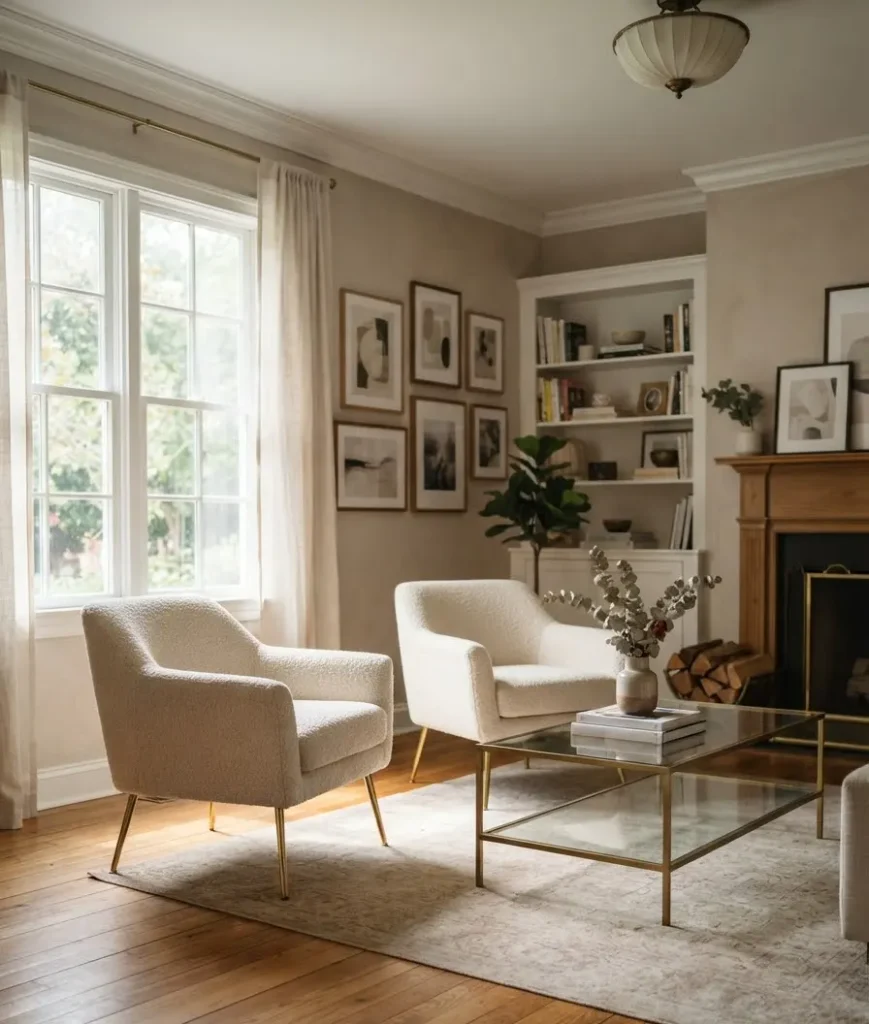
- Use furniture with exposed, slim legs. Chunky, boxy furniture blocks sightlines and makes floors disappear. Slim-legged pieces let light travel underneath, and that visual gap tricks the eye into reading the room as larger.
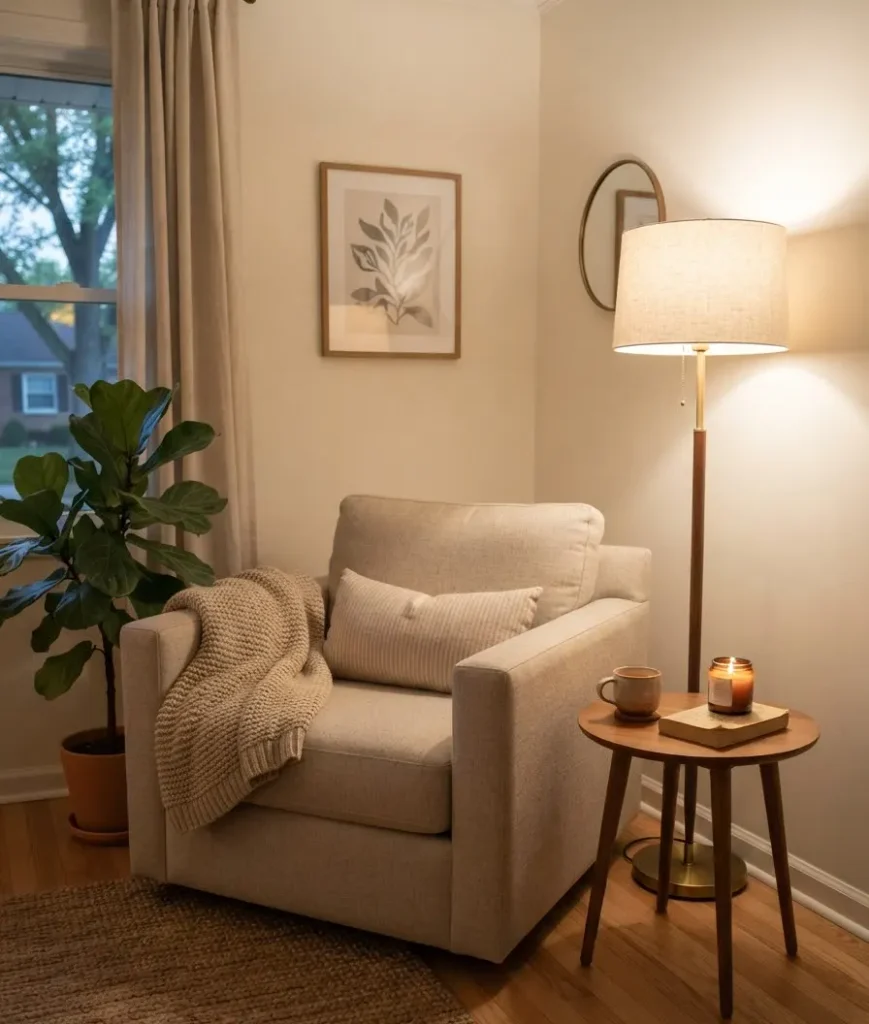
- Nestle a chair into a corner instead of centering it. Corners get wasted constantly. A single armchair angled into one, paired with a small side table, fills dead space without crowding the walkway.
Play with color and light strategically
Color does more heavy lifting in a small room than almost anything else. Get it wrong and the walls feel like they’re closing in.
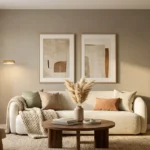
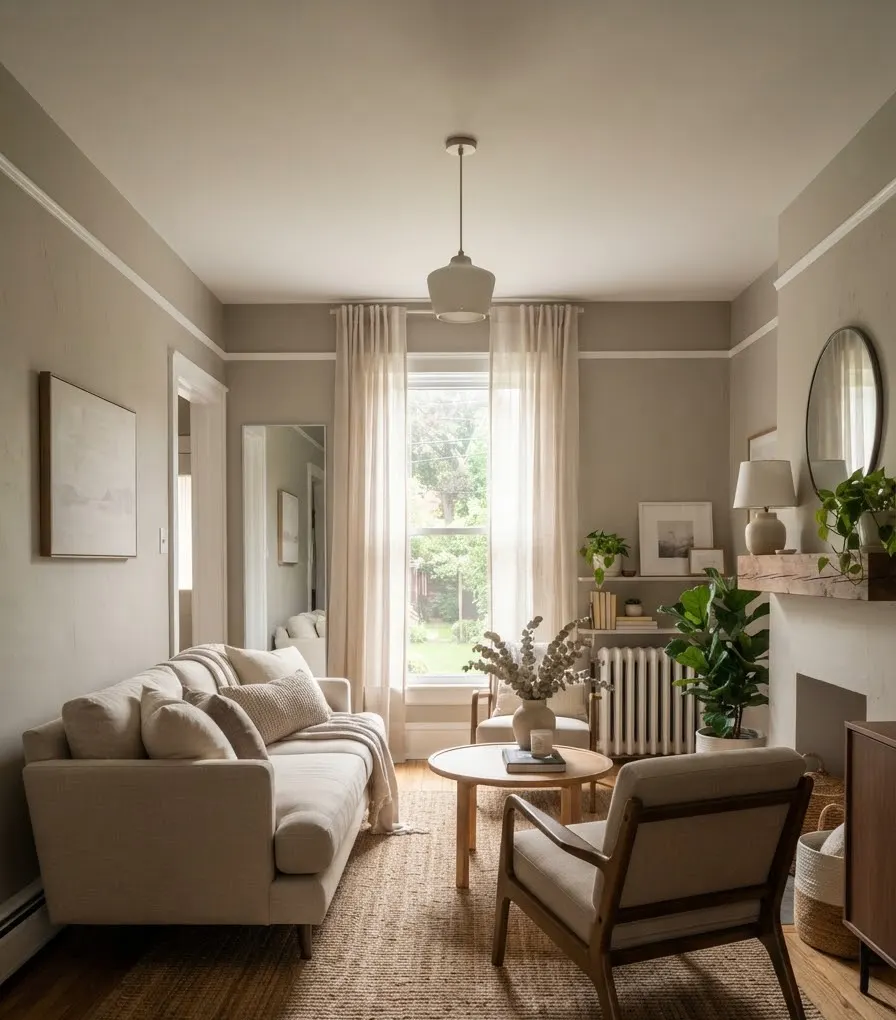
- Stick to warm neutrals on the walls. Soft whites, warm beige, and light greige reflect natural light instead of absorbing it. Cool grays can feel sterile in small rooms with limited windows.
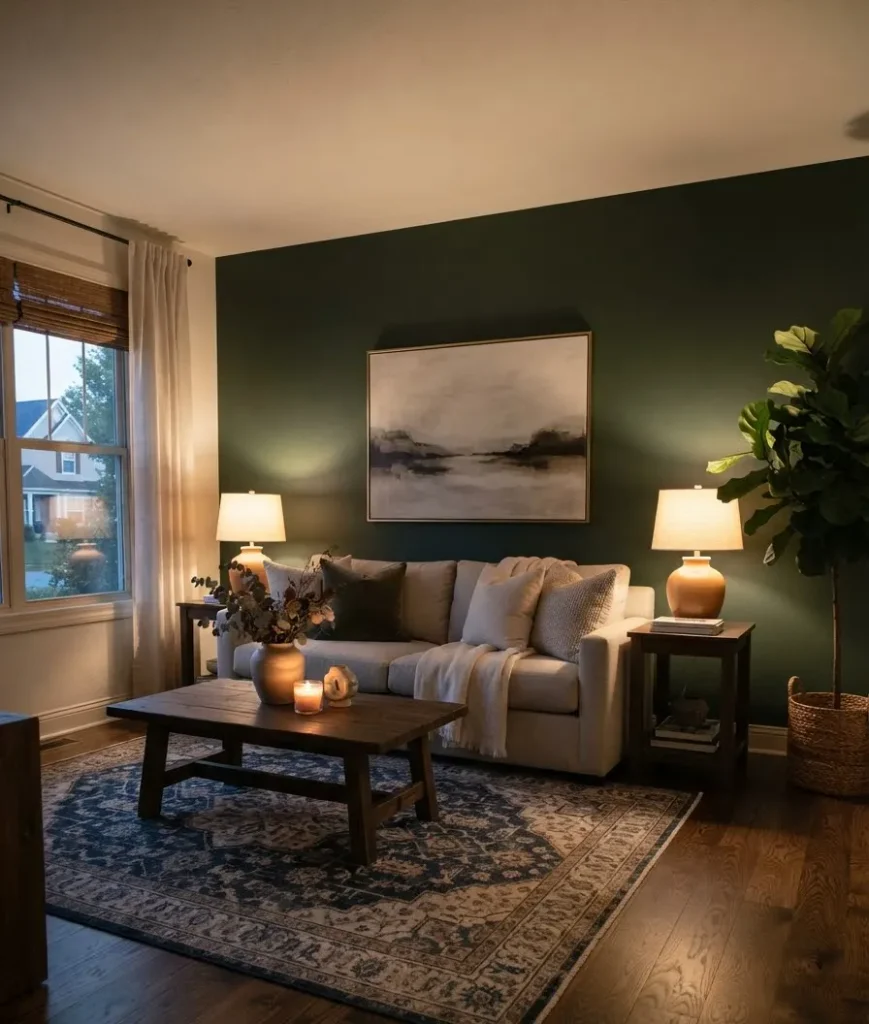
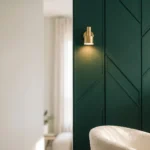
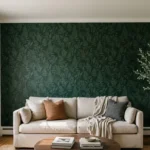
- Add a single deep, cozy accent wall. One wall in a rich color like forest green or terracotta adds drama without darkening the whole room. This works because your eye has somewhere to land besides “everything is beige.”
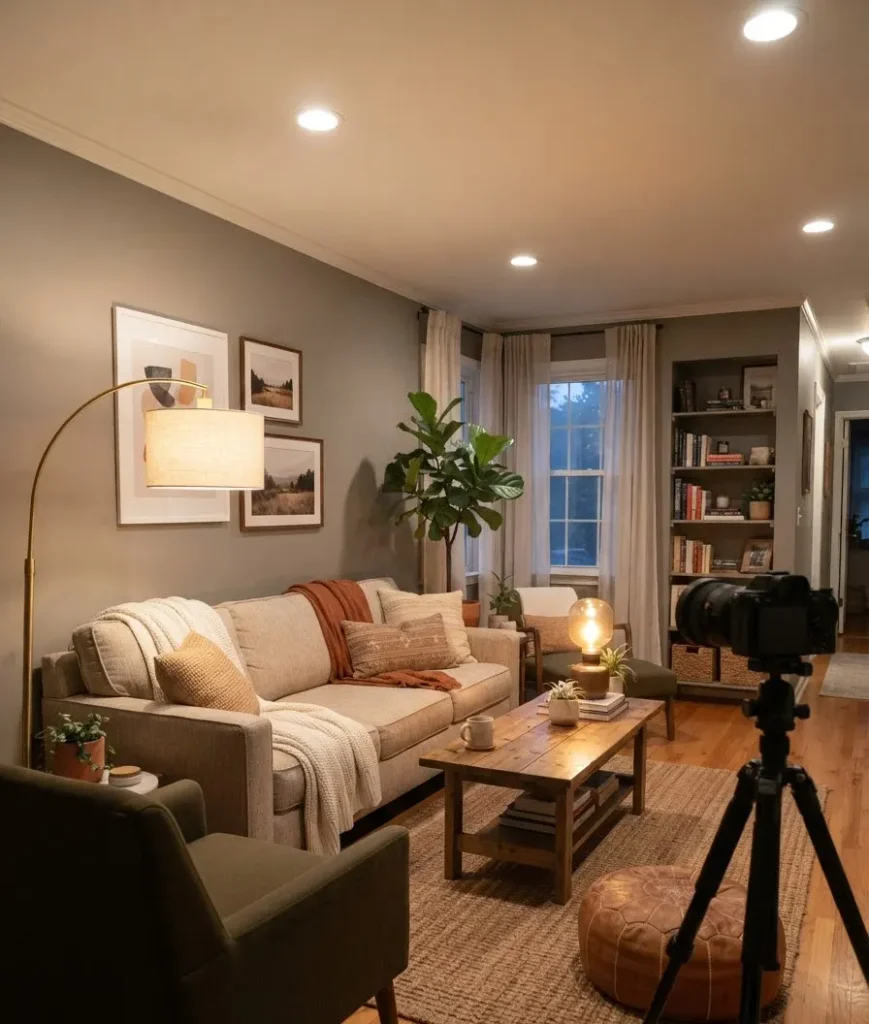
- Layer three light sources minimum. Overhead, task, and ambient lighting together create depth that one overhead fixture never will. A single ceiling light flattens a room and makes shadows harsh.
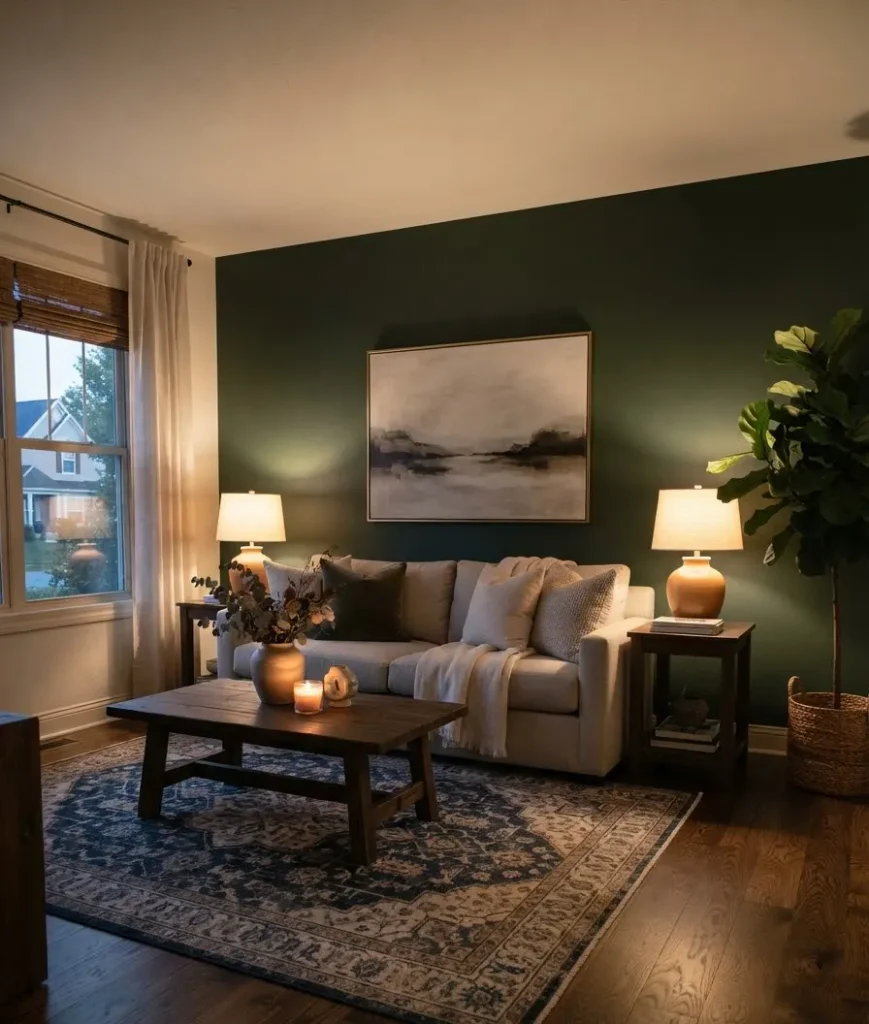
- Use dimmer switches on your lamps. Cheap fix, huge payoff. Dim lighting at night makes a small room feel intimate rather than cramped, and honestly, this one change made my old apartment feel like an entirely different space.
- Hang mirrors opposite your main window. Mirrors bounce natural light around and double the sense of openness. Skip the tiny decorative mirror and go bigger than feels comfortable. It works better than you’d expect.
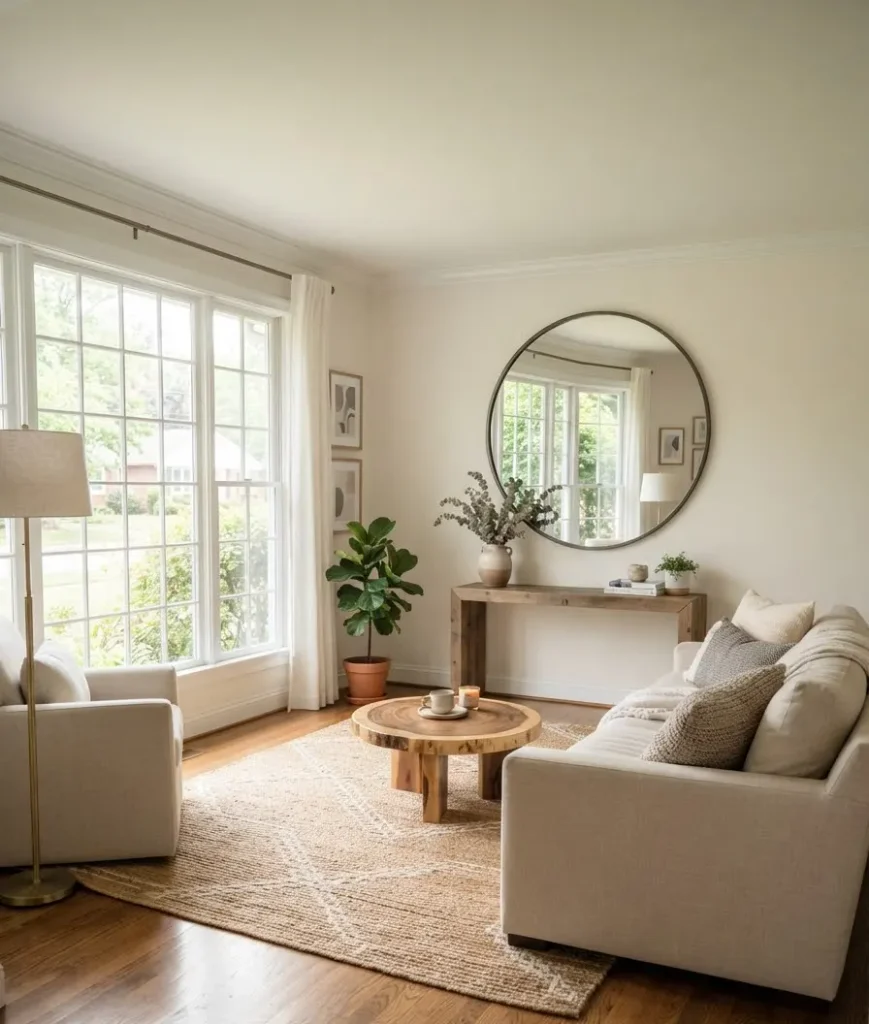
- Paint trim and ceiling the same white as the walls. Breaking up a room with contrasting trim creates visual stop points. Keep it continuous and the eye reads the whole space as one uninterrupted volume.
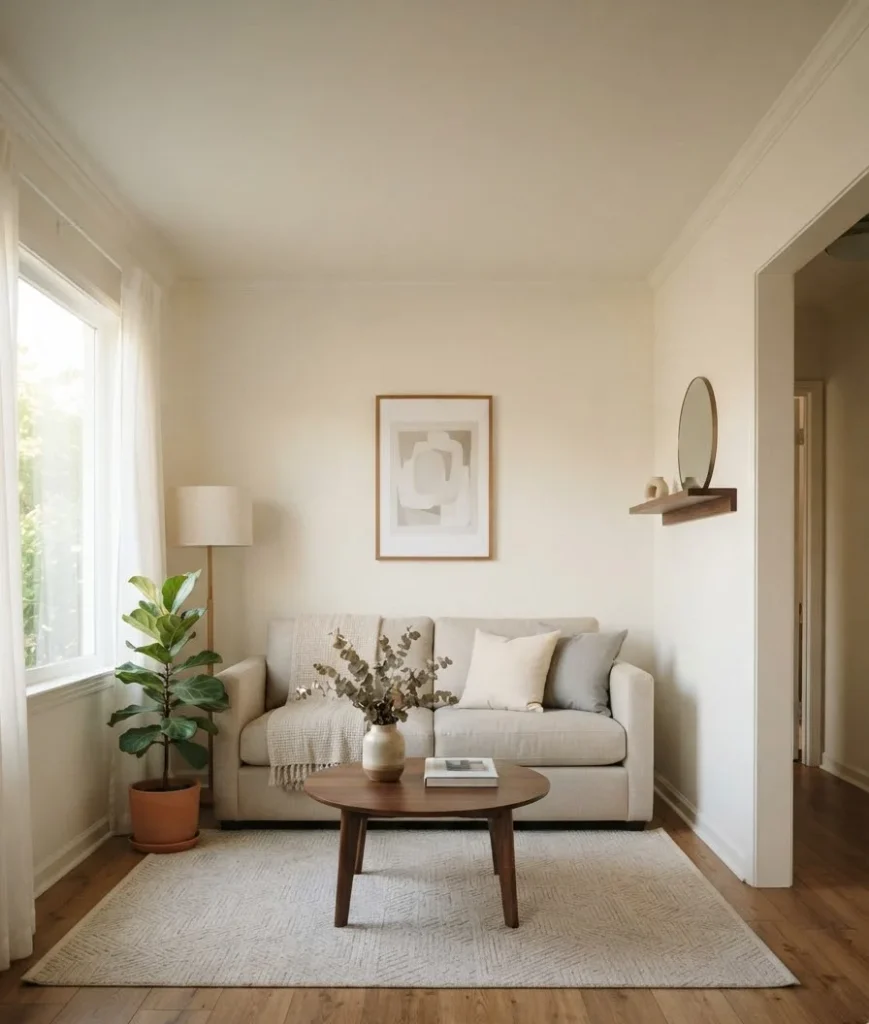
Layer textures for that cozy factor
Here’s the thing nobody tells you about small rooms: warmth comes from texture, not square footage.
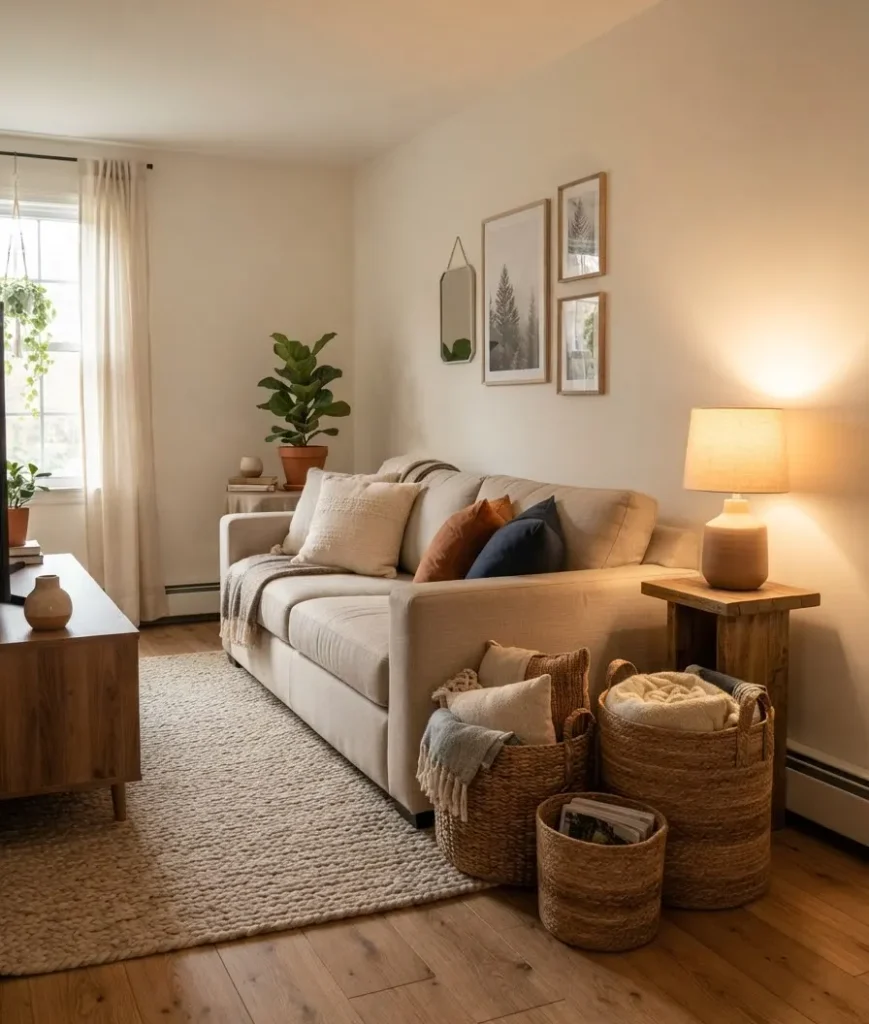
- Add a chunky knit throw in a neutral tone. Draped over the sofa arm, it signals comfort instantly. This is the cheapest cozy upgrade you can make, full stop.
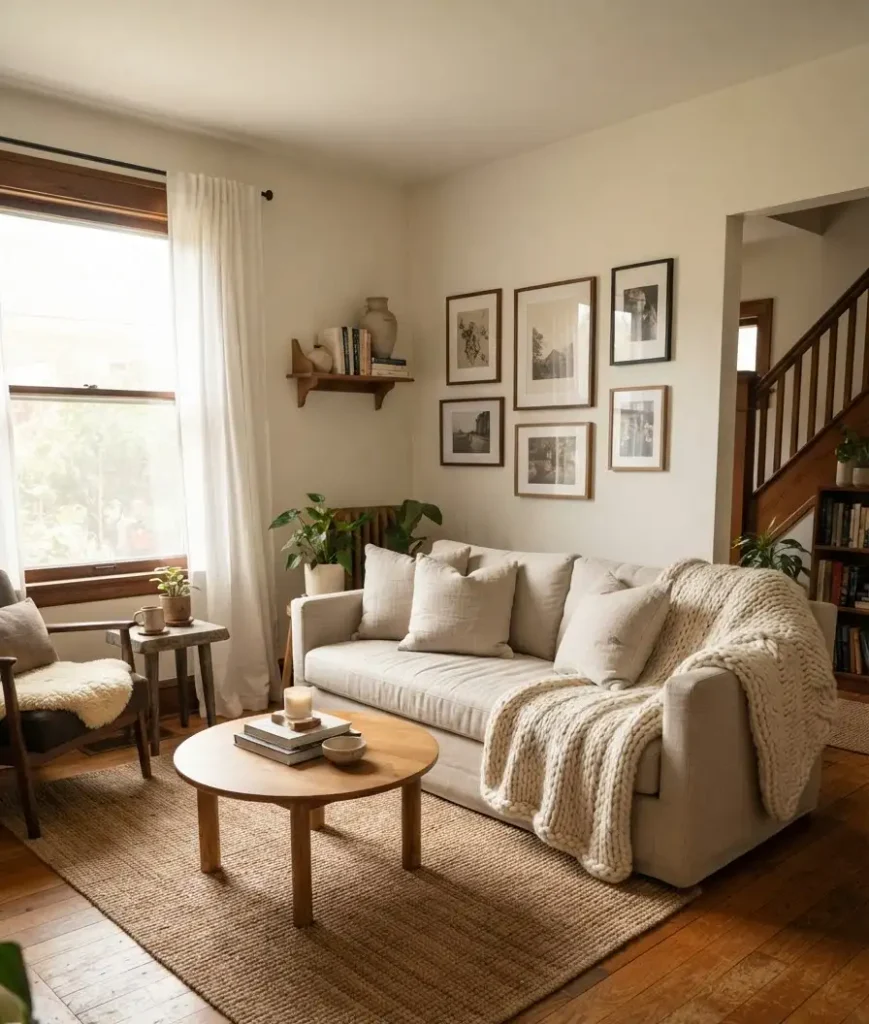
- Mix at least two rug textures. A jute rug layered under a smaller wool or shag rug adds dimension underfoot. Flat, single-texture rugs read as an afterthought.
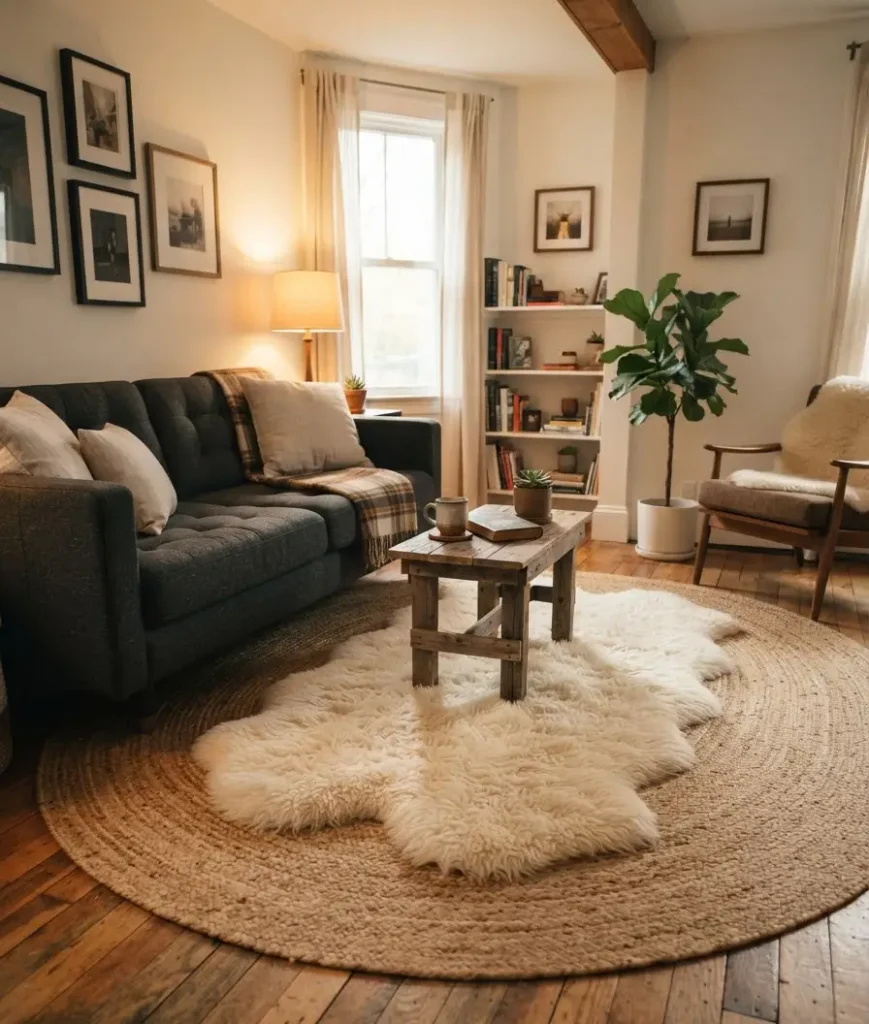
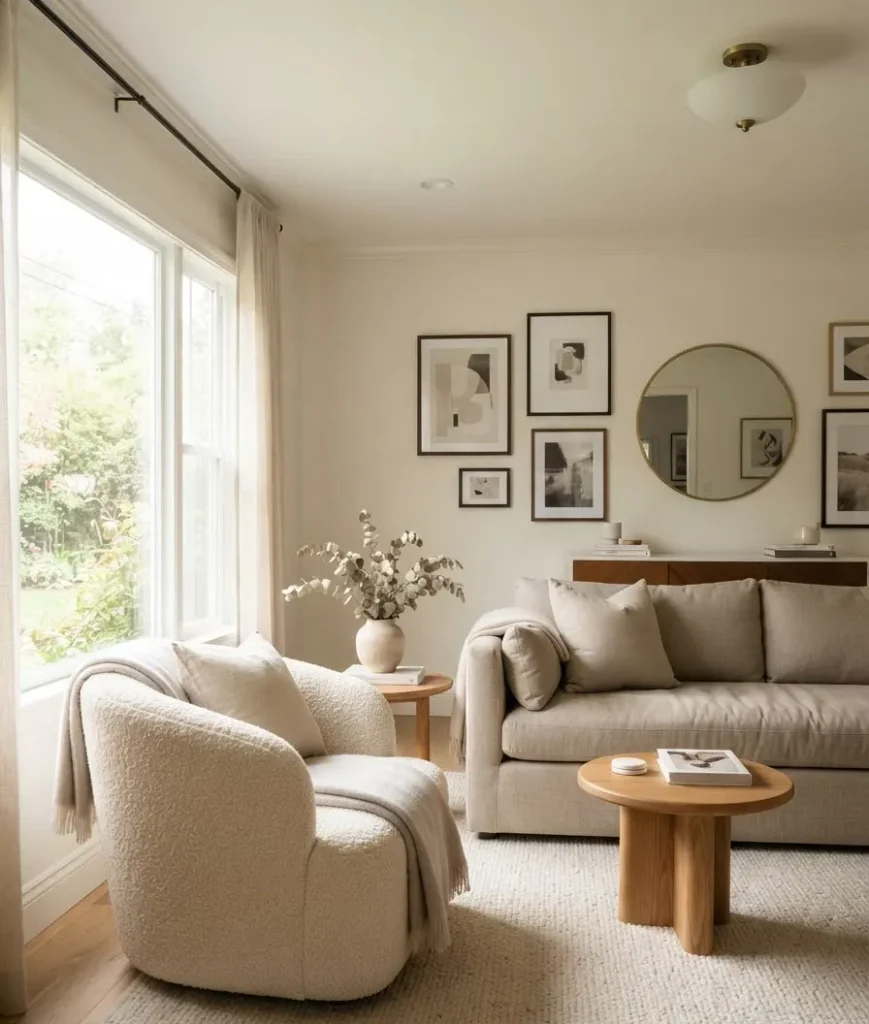
- Bring in linen or boucle upholstery. These fabrics catch light differently than flat cotton or synthetic blends, giving furniture a softer, lived-in feel.
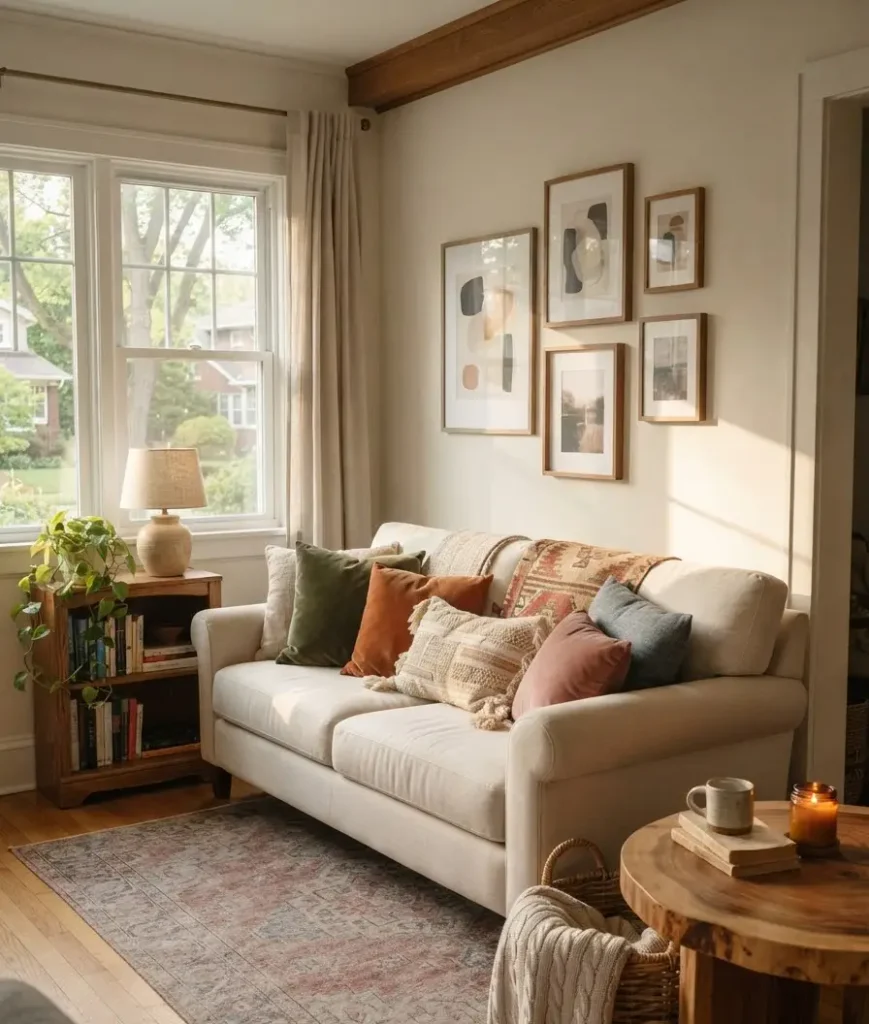
- Use a mix of pillow fabrics, not matching sets. Velvet next to linen next to a subtle woven pattern feels curated. Matching pillow sets from a single package look, well, like a package.
- Add a faux fur or sheepskin accent on a chair. One well-placed piece does more for cozy atmosphere than five decorative objects combined.
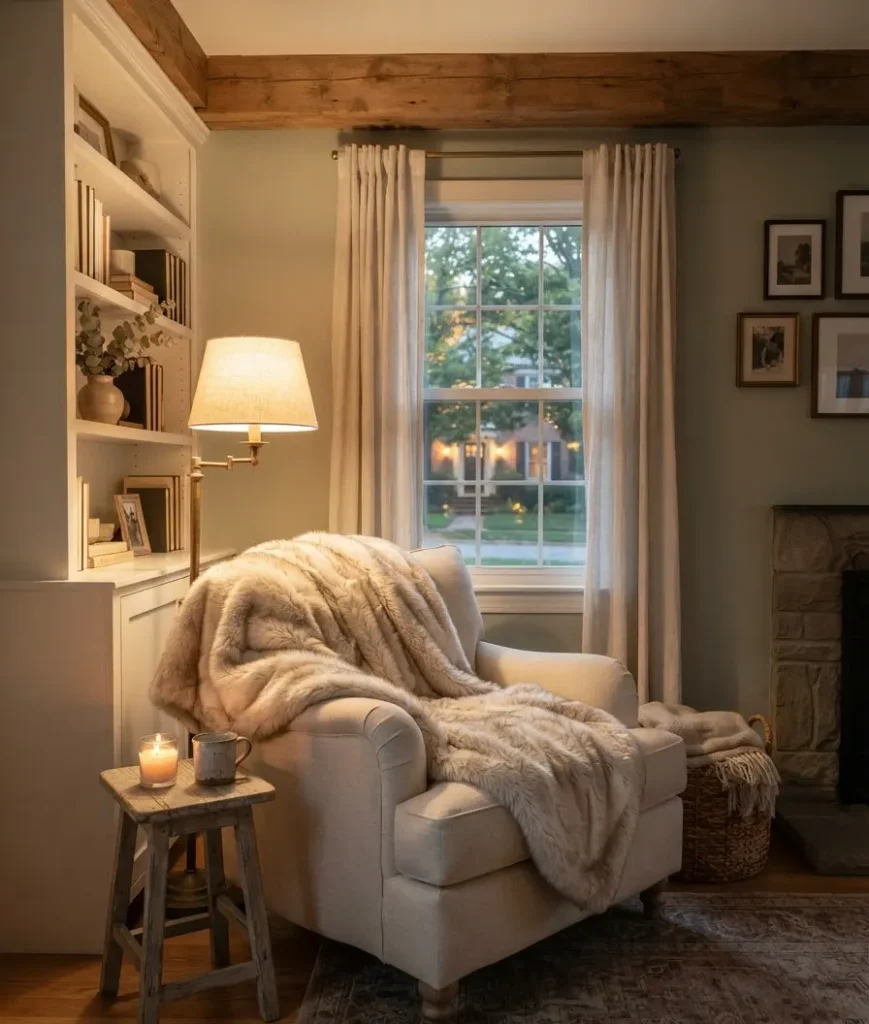
- Choose curtains that pool slightly at the floor. Floor-length drapes with a little extra length soften hard window lines and add a sense of height, which small rooms desperately need.
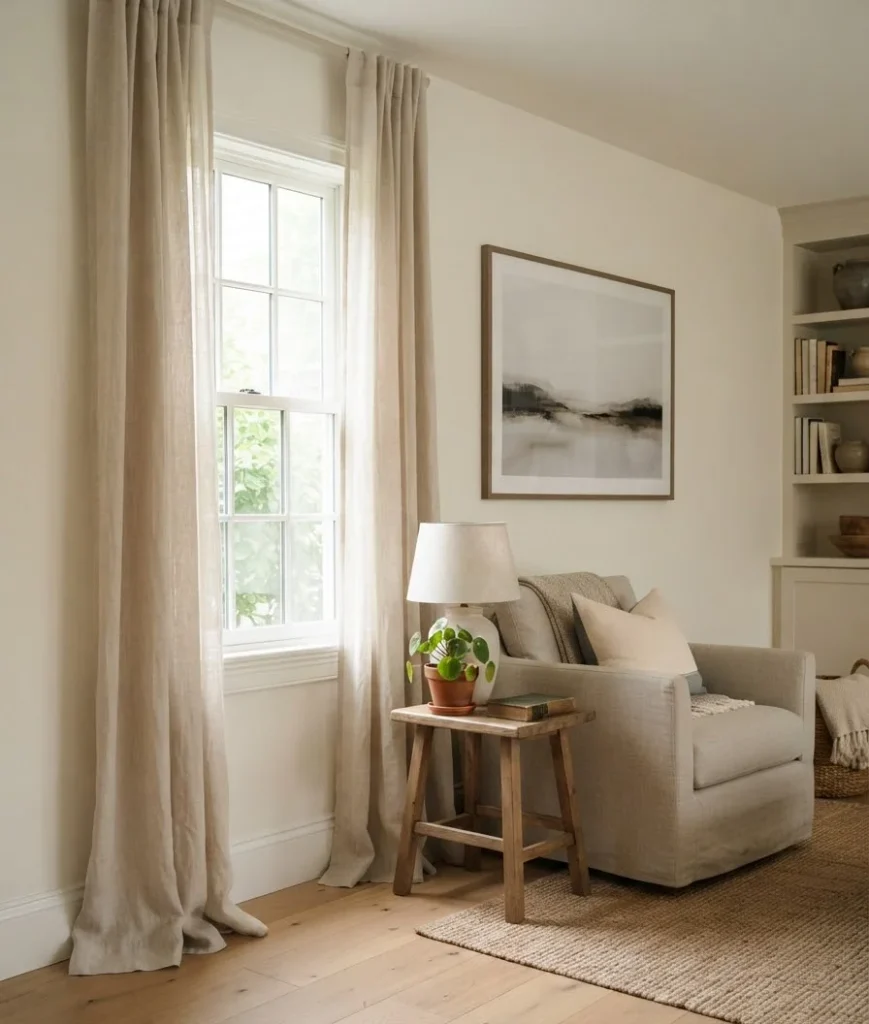
Maximize storage without looking cluttered
A cluttered small room reads as chaotic. A storage-smart one reads as elegant.
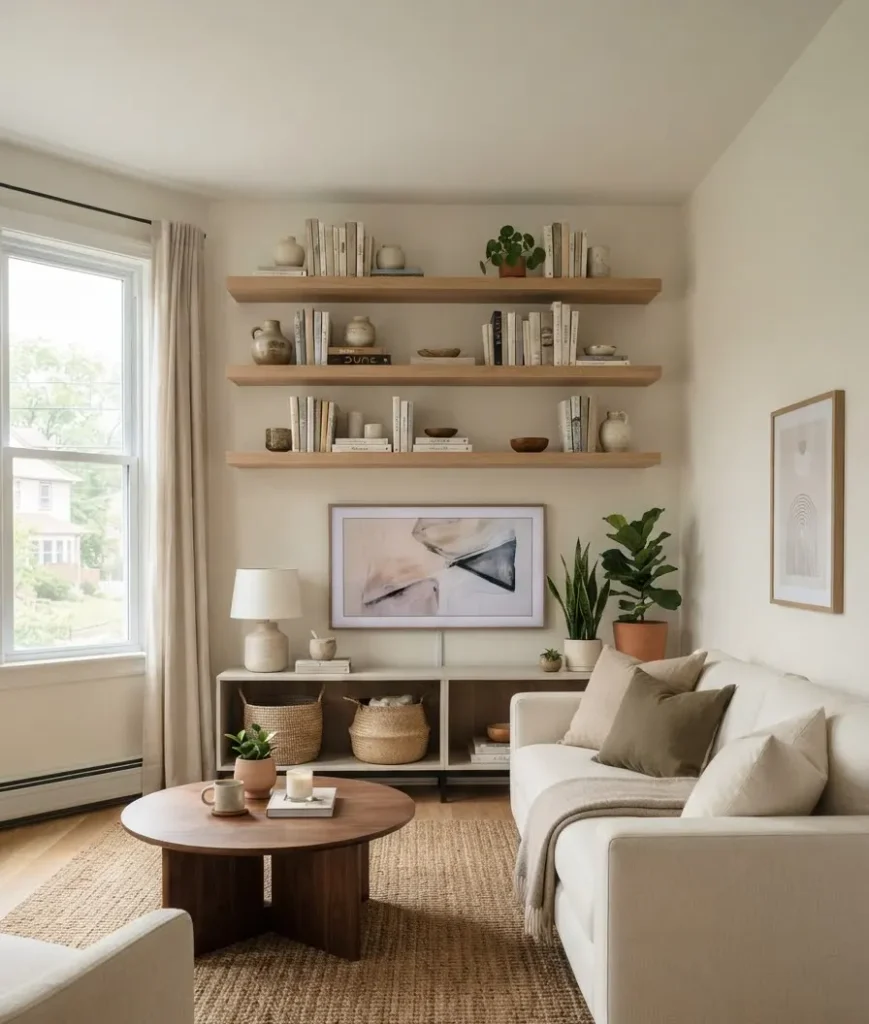
- Install floating shelves instead of a bulky bookcase. Vertical wall space is free real estate in a small room. Shelves draw the eye upward and add storage without eating floor space, a point Havenly’s designer roundup makes well when discussing floor-to-ceiling storage tricks.
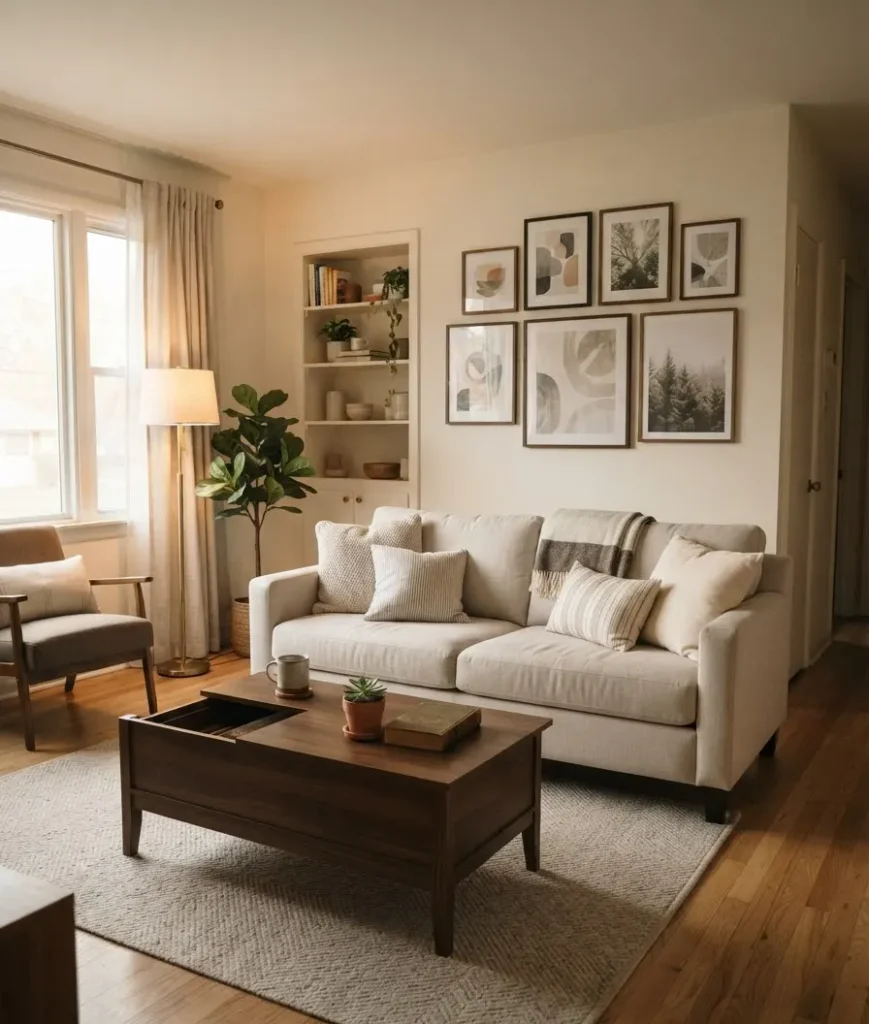
- Use a coffee table with hidden storage. Lift-top or drawer-style coffee tables hide remote controls, coasters, and the clutter that piles up on any surface within arm’s reach of the sofa.
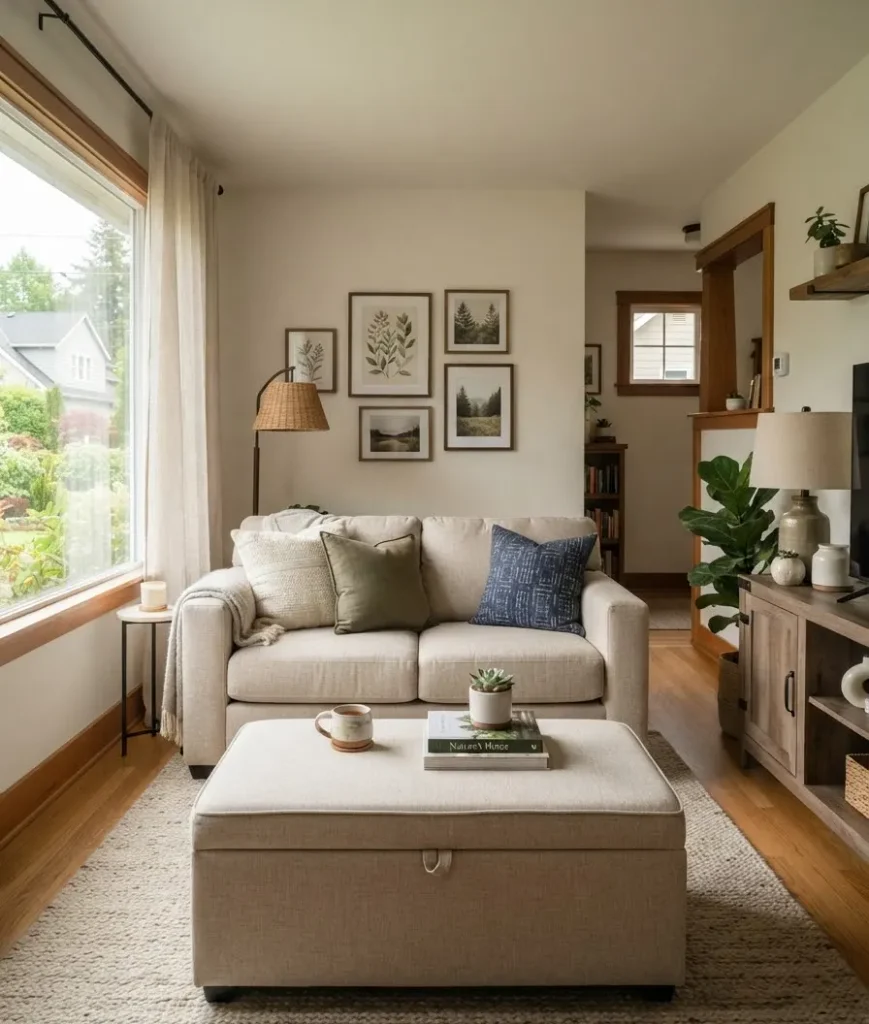
- Try an ottoman that doubles as storage and extra seating. When guests show up unannounced (why do they always show up unannounced?), an ottoman gives you a seat, a footrest, and hidden storage all in one piece.
- Go vertical with a tall, narrow bookshelf. Height reads as more usable space than width in a small room. A slim shelf that reaches the ceiling outperforms a short, wide one every time.
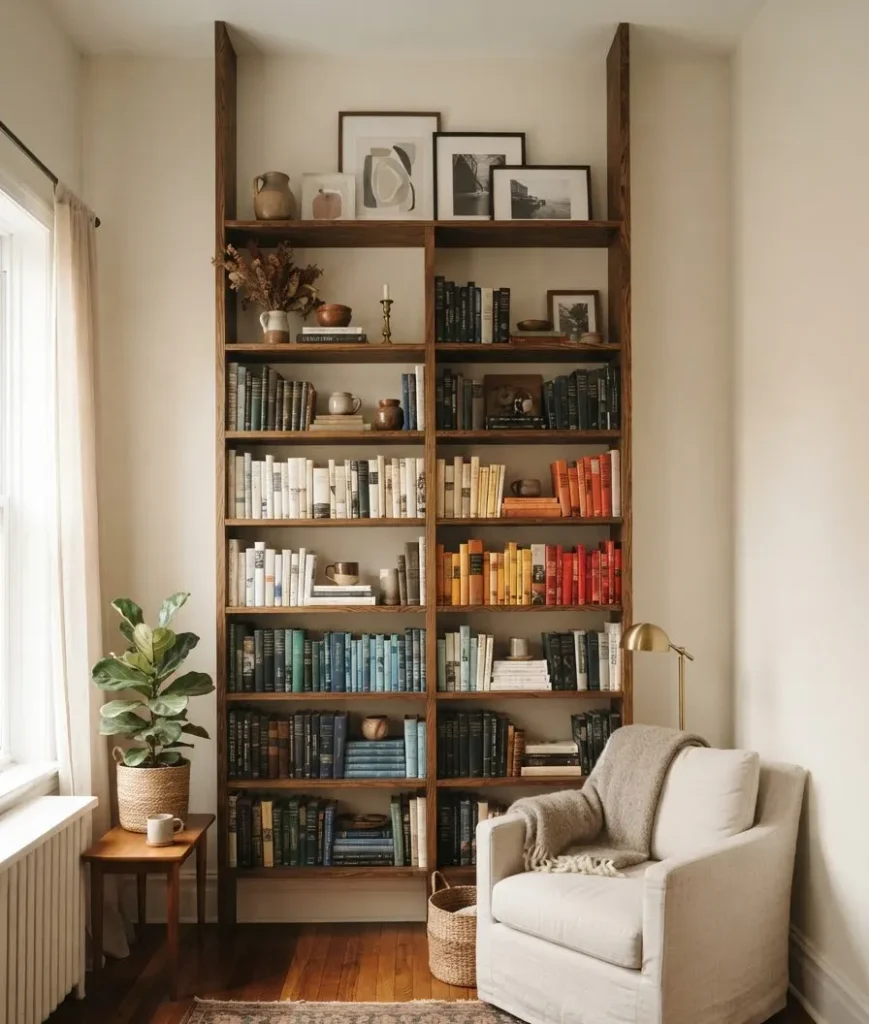
- Use baskets as visible, intentional storage. Woven baskets tucked beside the sofa for blankets look styled rather than hidden. They’re functional and they photograph beautifully, which matters if this room ever ends up on your feed.
Décor and finishing touches that pull it together
This is the fun part. Small details make a small room feel finished instead of unfinished.
- Hang art at eye level, not centered on the wall. Centering art on a wall often puts it too high in rooms with lower ceilings. Eye level (roughly 57 inches to the center) keeps the room feeling proportional.
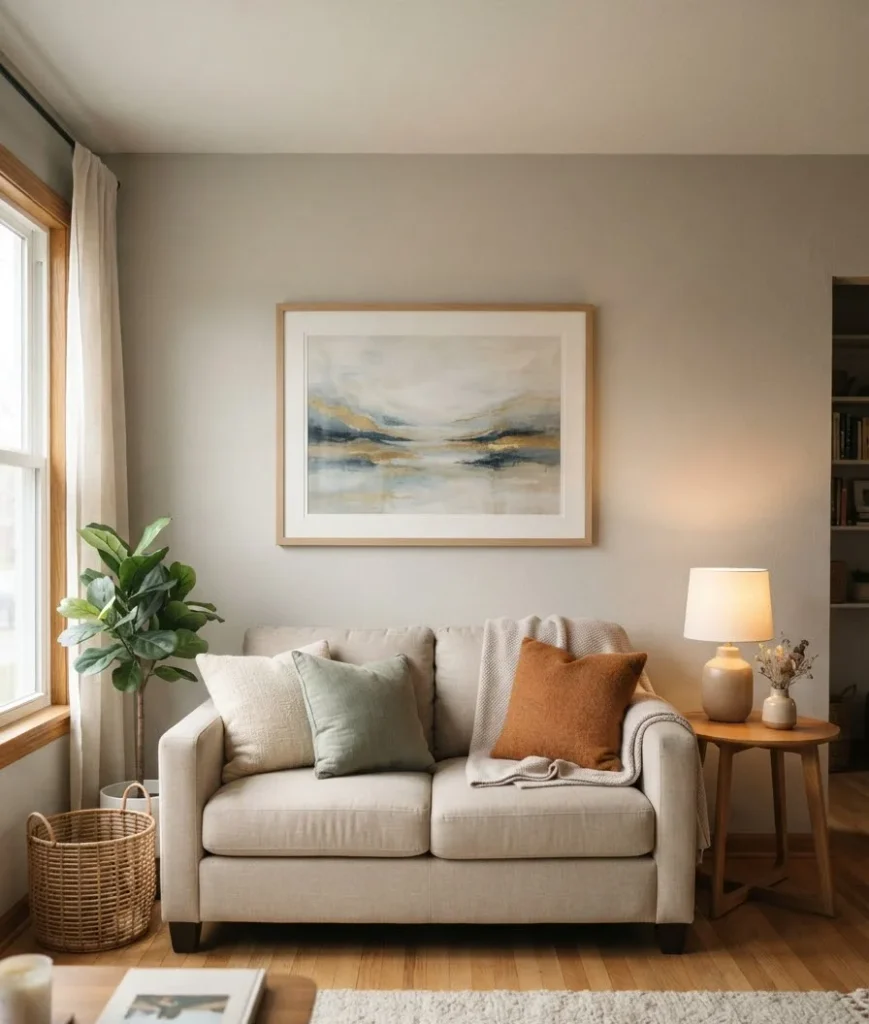
- Add one oversized piece of art rather than several small ones. A gallery wall can overwhelm a tight space. One large statement piece does more with less visual noise, and it’s honestly less work to hang, too.
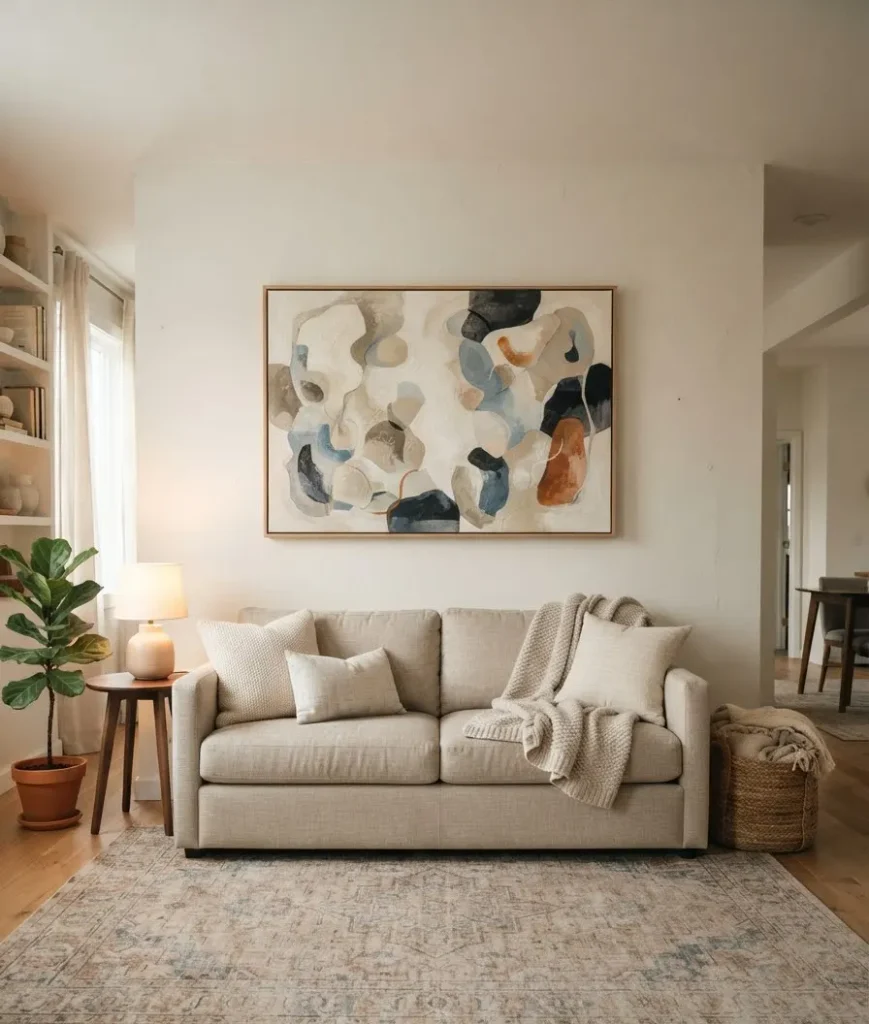
- Bring in live greenery, even just one plant. A single fiddle leaf fig or snake plant in the corner adds life and softens hard furniture lines. Fake plants work in a pinch, but real ones change the air quality of the room, literally.
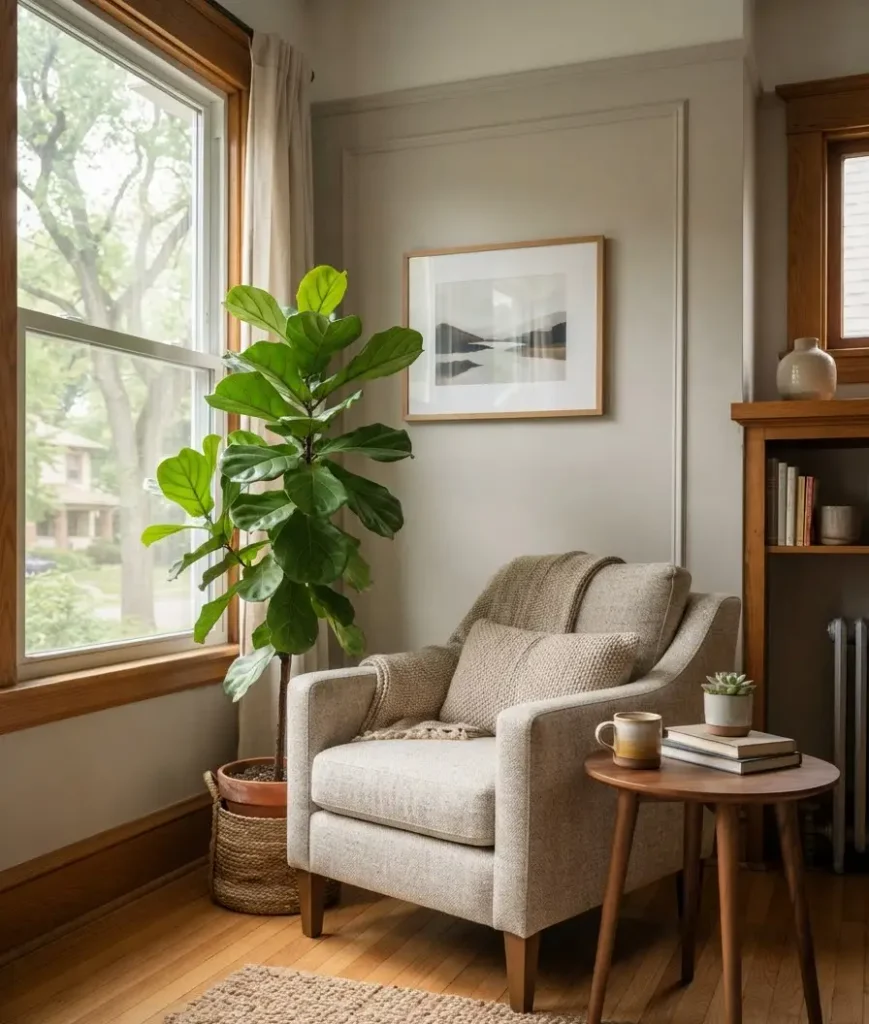
- Use candles or a diffuser for scent layering. Cozy isn’t only visual. A warm, subtle scent (think amber or cedar, not “birthday cake”) makes a small room feel like a retreat the second you walk in.
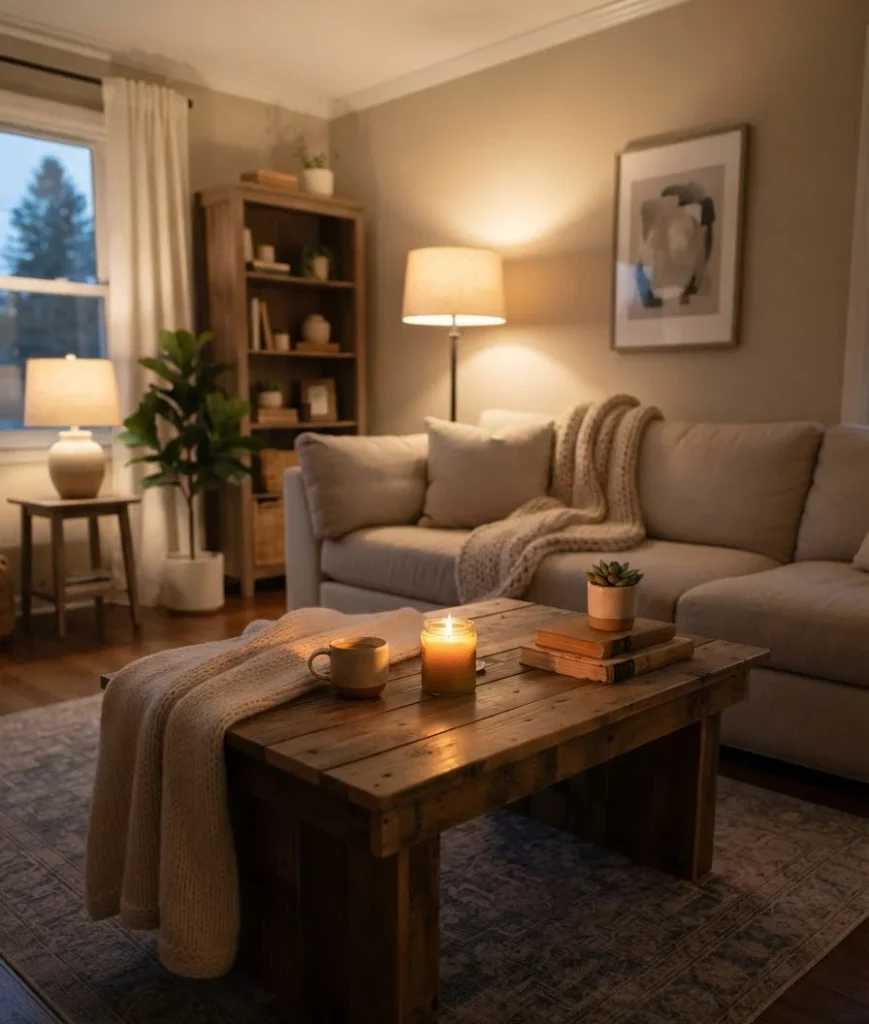
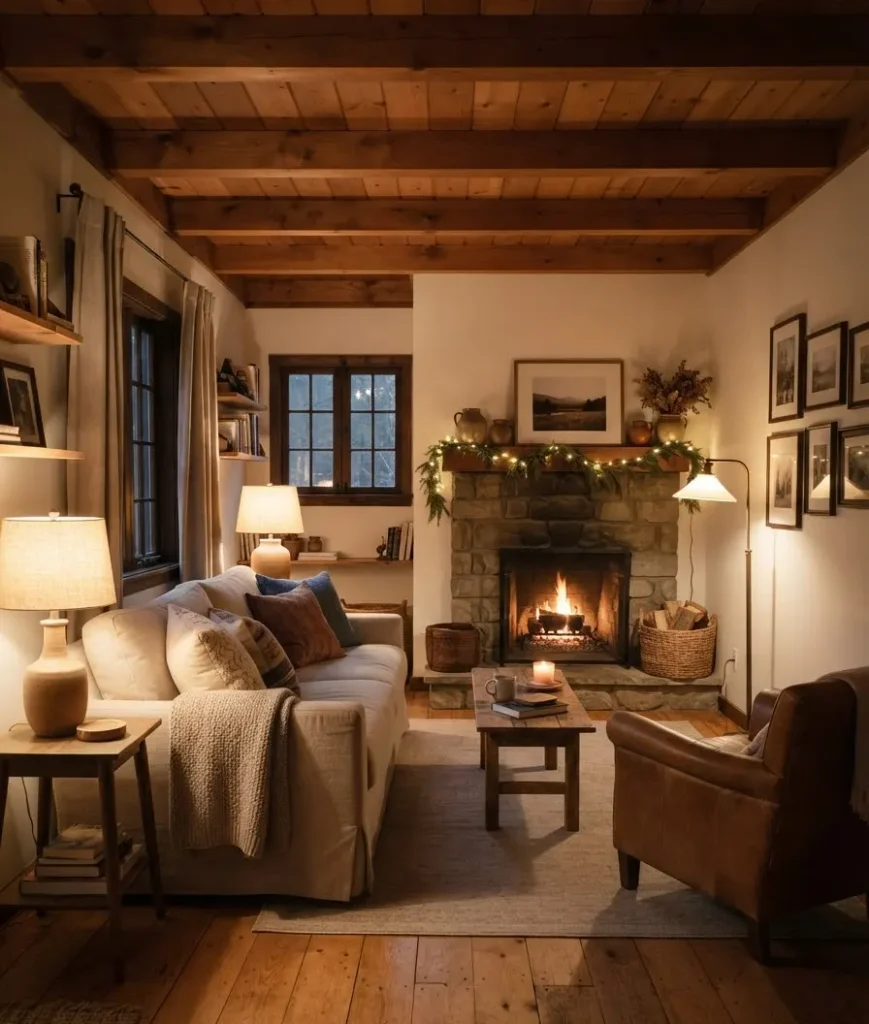
- Swap harsh overhead bulbs for warm-toned ones. Anything above 3000K starts looking clinical fast. Stick to soft warm white for a cabin-like glow.
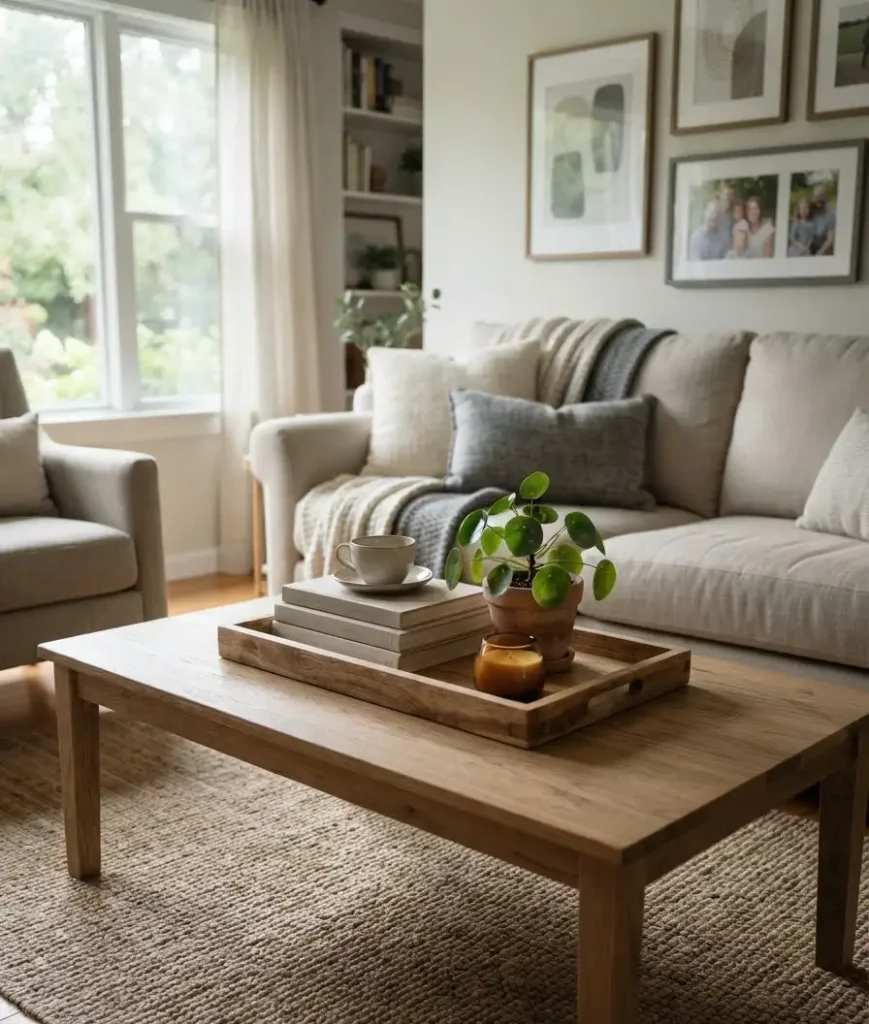
- Style your coffee table with odd numbers of objects. A tray, a stack of books, and one small plant. Odd groupings feel more natural than even, symmetrical arrangements, and this is a trick stylists use constantly.
- Leave some negative space, on purpose. This is the one people skip. Every surface doesn’t need to be filled. A little breathing room between objects is what makes a small space feel elegant instead of stuffed.
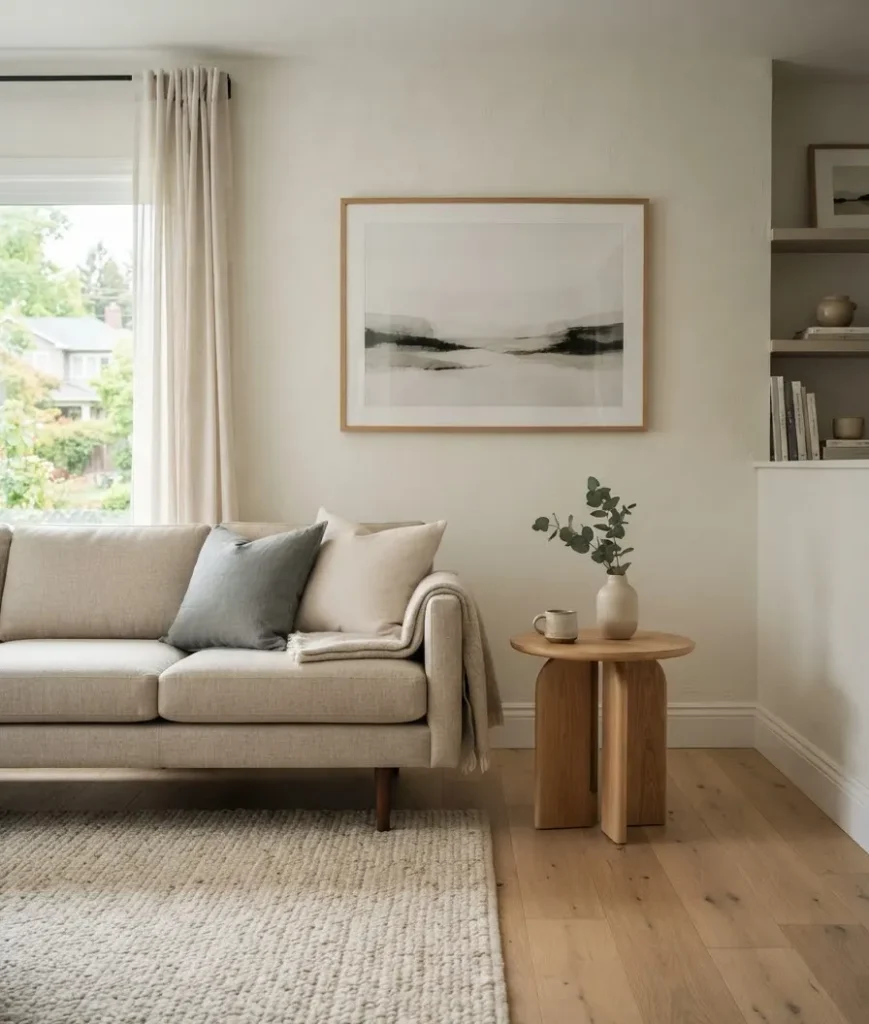
Quick reference: small living room priorities
| Priority | Why it matters | Fastest fix |
|---|---|---|
| Layout | Sets flow and sightlines | Float sofa off the wall |
| Color | Controls perceived size | Warm neutral walls |
| Texture | Creates cozy atmosphere | Add a chunky throw |
| Storage | Prevents visual clutter | Hidden-storage ottoman |
Quick aside, completely unrelated to décor: I once spent an entire Saturday rearranging furniture instead of doing my taxes.
No regrets. Sometimes the room needs you more than the IRS does.
A word on budget versus impact
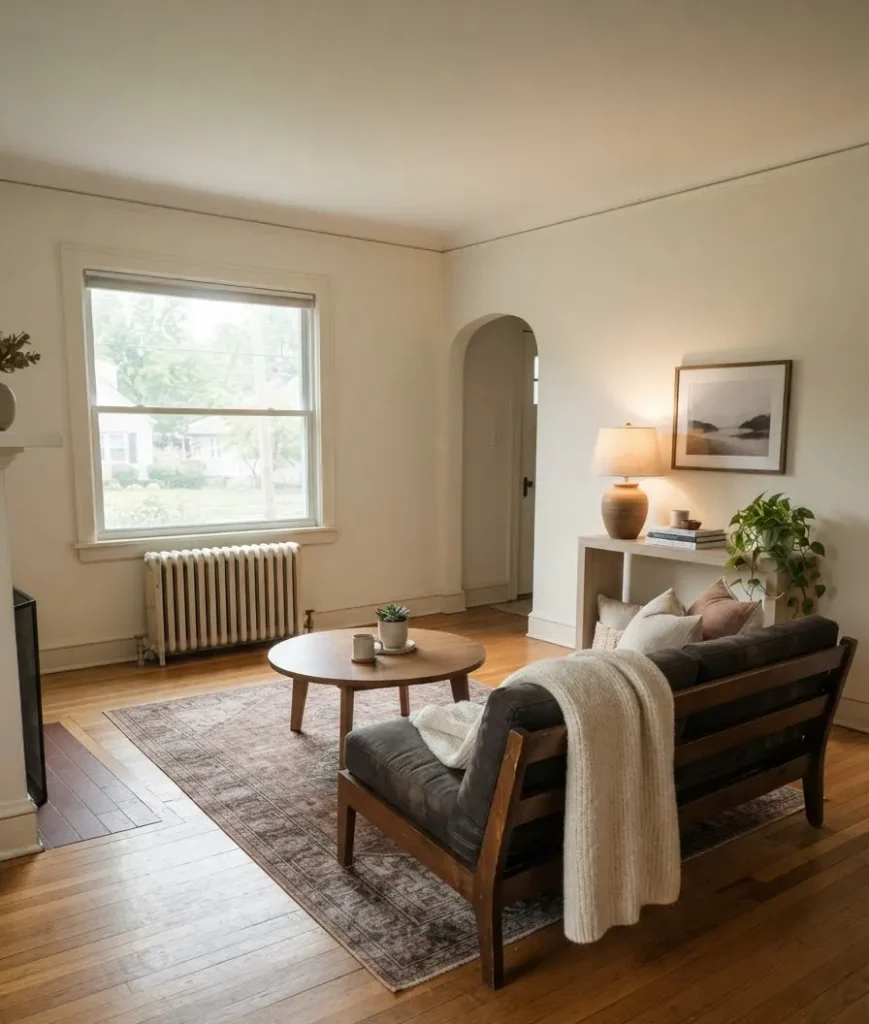
Not every idea on this list costs the same, and honestly, you don’t need to do all 30 at once.
If money’s tight, prioritize lighting and textiles first. They cost the least and change the mood of a room the fastest.
Furniture swaps take more planning and more budget. Save those for when you’ve lived in the space a while and know exactly what bothers you about the current layout.
FAQs
Does painting a small living room dark actually shrink it?
Not always.
A deep color on one accent wall, paired with good lighting, often adds coziness rather than closing the room in. The mistake is using dark tones on every wall with no contrast or light source to balance it.
What’s the single best change for a small, cozy living room on a tight budget?
Textiles. A new throw, a couple of mismatched pillows, and warmer bulbs cost under 100 dollars combined and shift the entire mood of the room within an afternoon.
Should I skip a rug in a really small living room?
No, actually the opposite. A too-small rug is the real problem, not a rug itself. Size it to fit under the front legs of your furniture at minimum, and the room will feel more grounded, not smaller.
Final thought
Small living rooms get a bad reputation they honestly don’t deserve. With the right layout, warm color choices, and a few well-placed cozy details, a compact space can feel more inviting than a room three times its size.
Which of these are you trying first, the layout fixes or the texture layering?
Drop a comment or save this for your next redecorating weekend. Your future cozy corner is waiting.