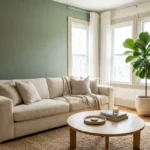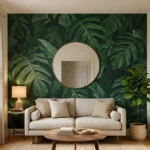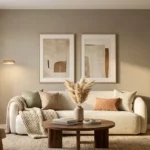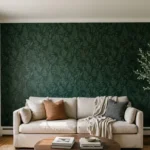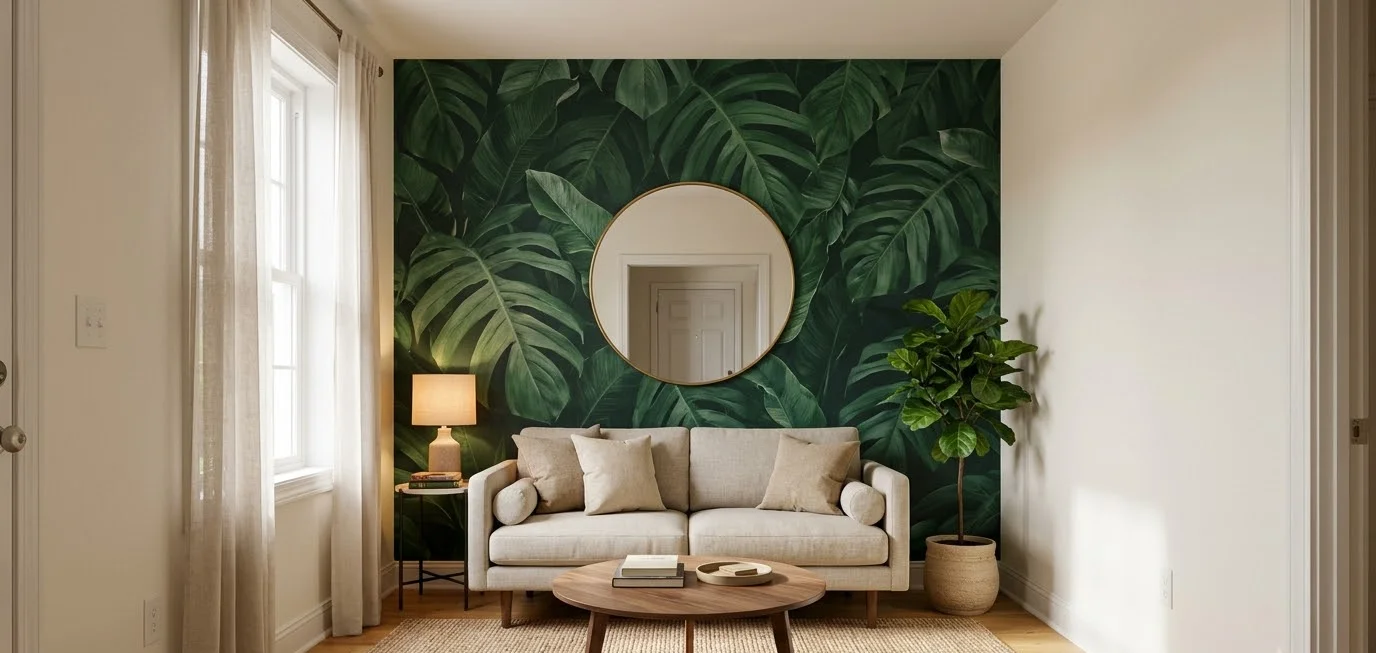
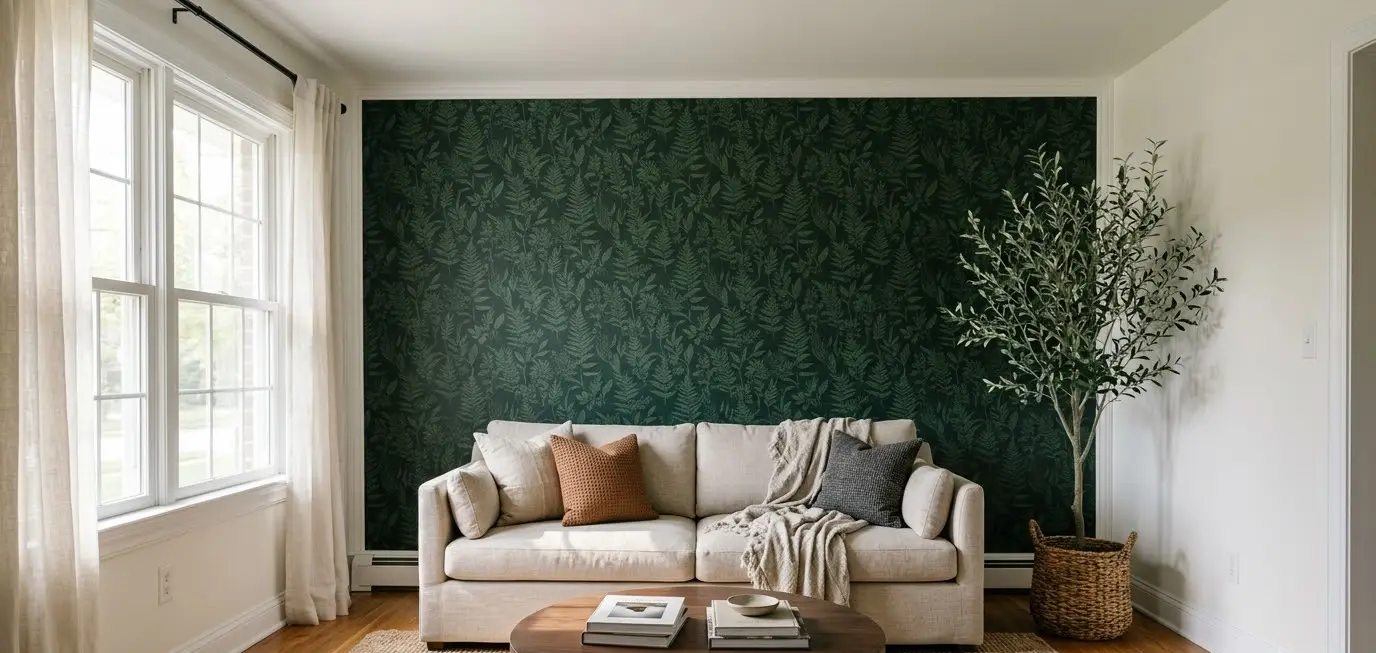
My first apartment living room was 9 by 11 feet. The sofa touched the radiator, the coffee table touched the sofa, and I told everyone it was “cozy.” Then I papered one wall in a deep green botanical print,
and the whole room finally looked like someone had made a decision on purpose.
If you’re staring at a small living room and wondering whether wallpaper will swallow it whole, I get it.
I spent about 6 weeks scrolling Pinterest before I touched a roll. Here’s everything I learned, including the mistakes that cost me a Saturday and a very sad strip of crooked stripes.
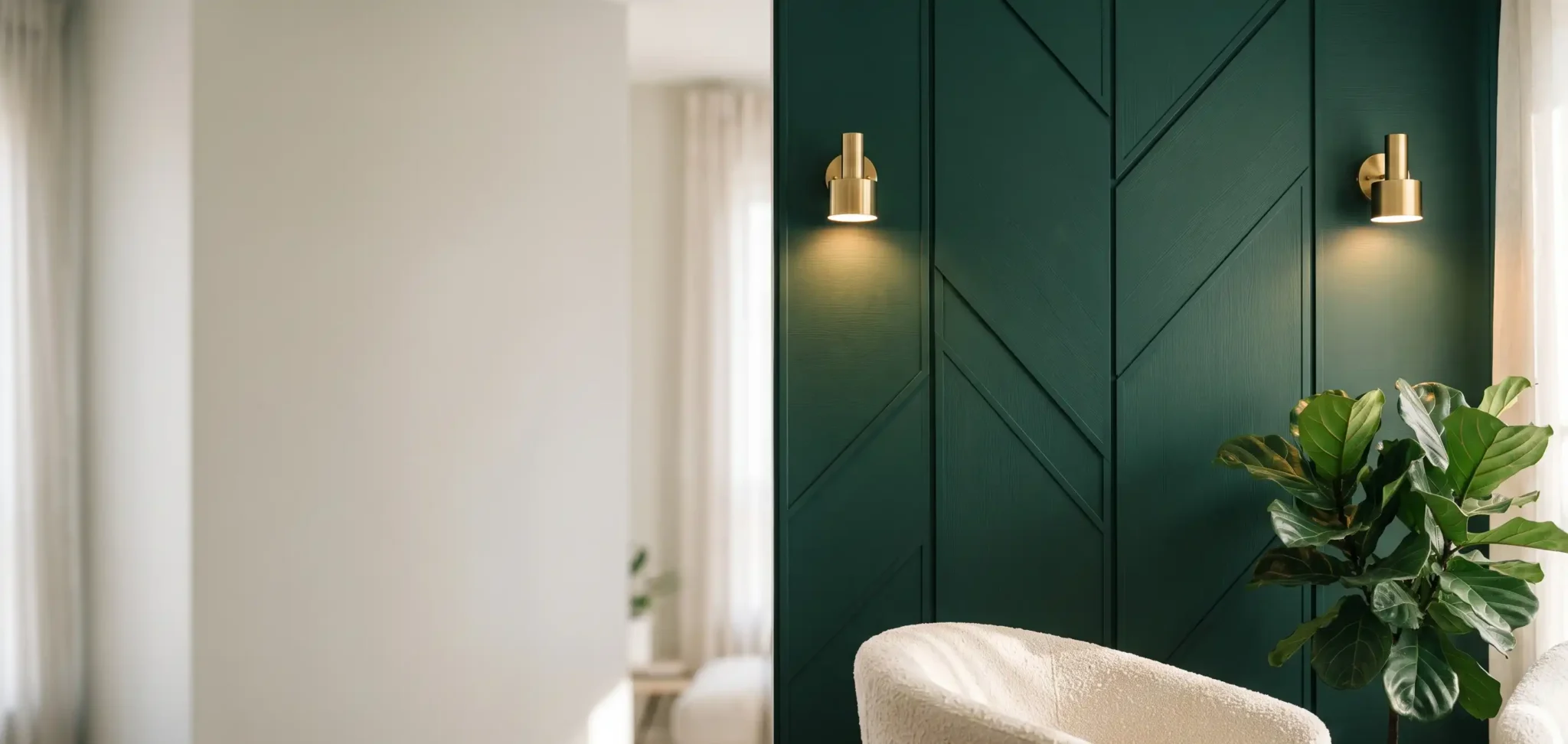
Why an accent wall works so well in a small living room
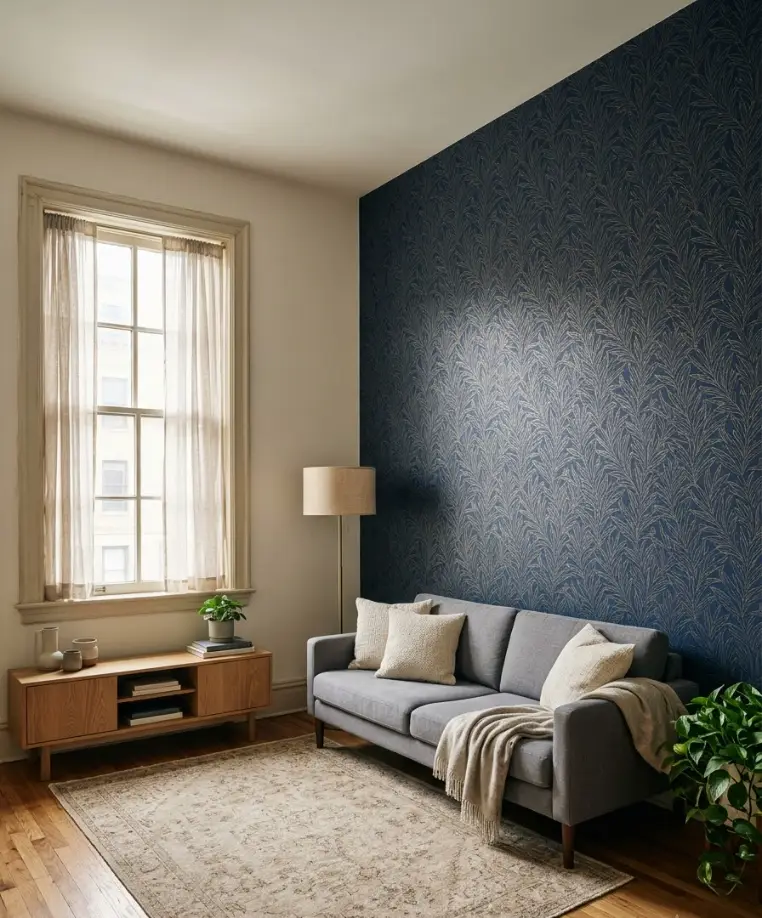
Paint one wall bold and the room stays calm. Paper that same wall and it gets texture, pattern and a bit of attitude that paint can’t fake.
Small rooms have a problem: every surface is close to you. A busy pattern on all four walls would feel like sitting inside a gift bag.
One papered wall gives your eye a place to land, and the other three walls rest quietly around it.
There’s also a practical angle. A single accent wall in a small room usually needs 1 or 2 rolls, sometimes 3.
That means you can afford the good stuff, the print you saw on Pinterest and saved 40 times, without selling a kidney.
I’m convinced the real magic is depth. A wall with a pattern, a shadow, or a rich color reads as farther away than a flat white one.
Your living room doesn’t gain square footage, but it does feel like it has a back wall worth looking at.
Pick the right wall first
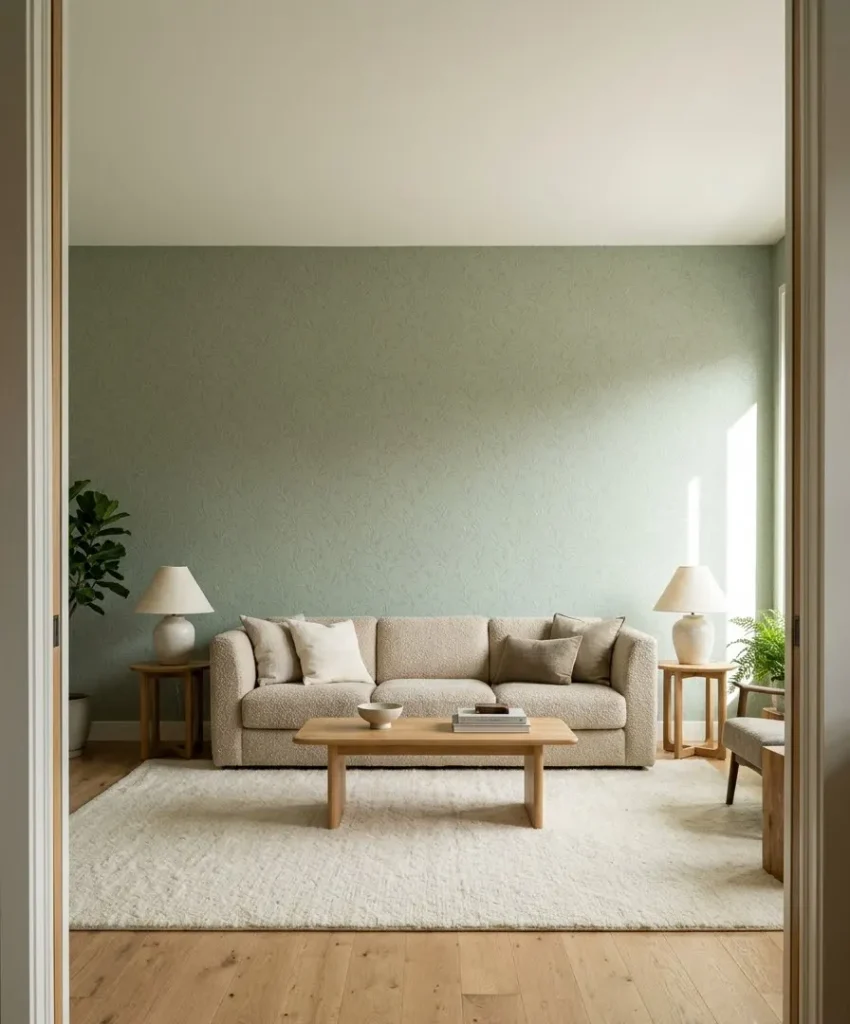
This decision matters more than the wallpaper itself. A gorgeous print on the wrong wall looks like a mistake you paid for.
The wall your eye hits first
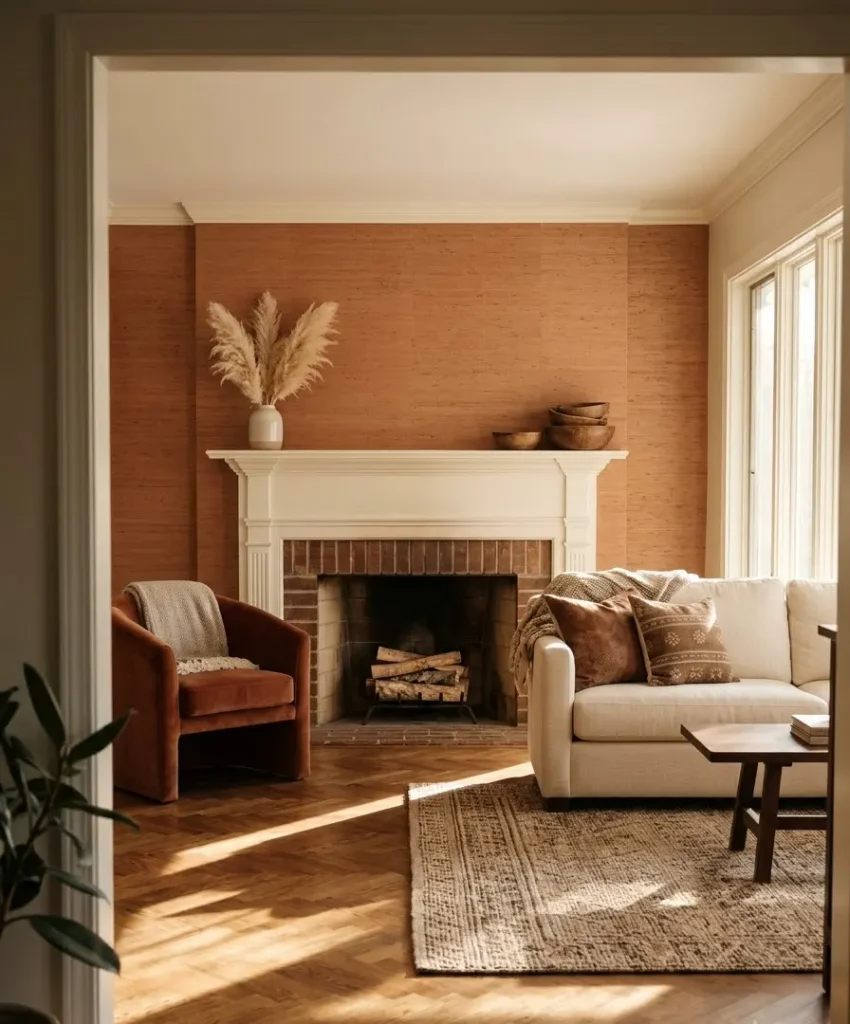
Stand in your doorway and look straight ahead. Whatever wall your eyes land on is usually the winner.
In most living rooms that’s the wall behind the sofa, the wall with the fireplace, or the wall opposite the entrance.
I picked the wall behind my sofa because it was the longest and had no windows.
That gave me a clean, uninterrupted stretch of pattern, and the sofa sat in front of it like a frame.
Walls to skip
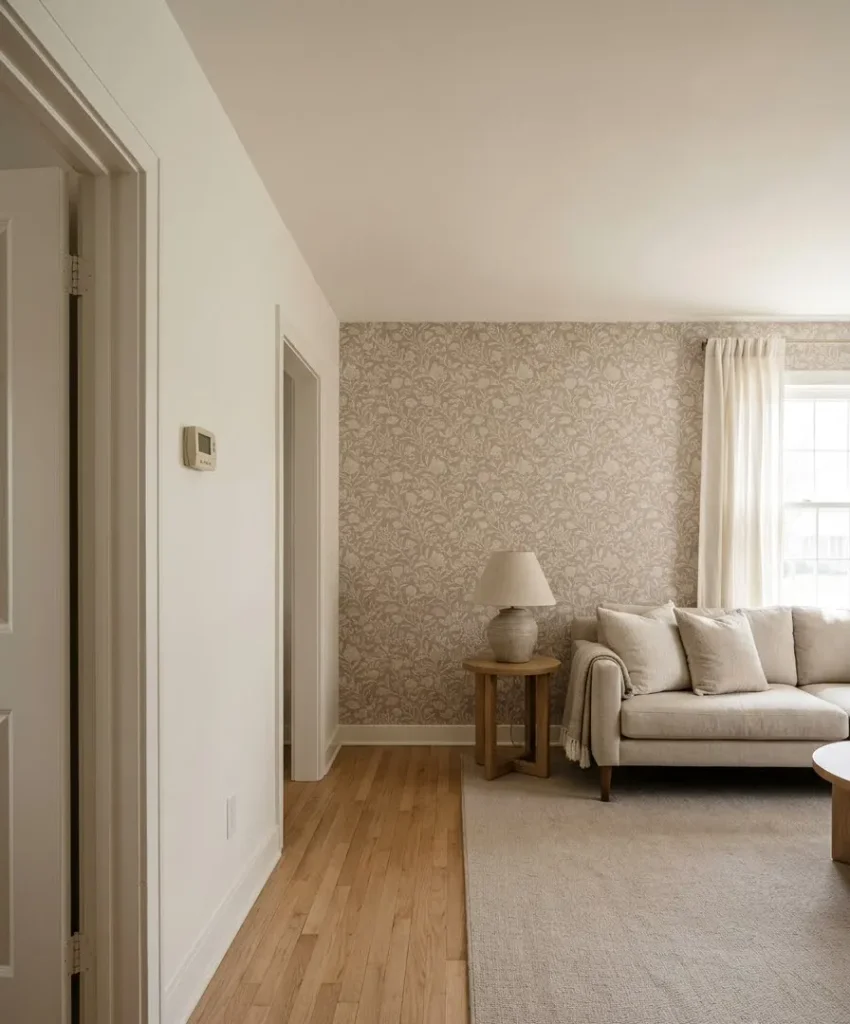
Skip any wall chopped up by three doors, two vents and a thermostat.
Wallpaper hates interruptions, and you’ll spend half your budget matching patterns around awkward cutouts.
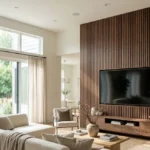
Also skip the wall your TV dominates unless you plan to mount the TV and treat the whole thing as one composed picture.
A black rectangle in the middle of a busy print gets loud fast. IMO, a quiet textured paper behind a TV beats a bold floral every time.
Scale and pattern: the part everybody argues about
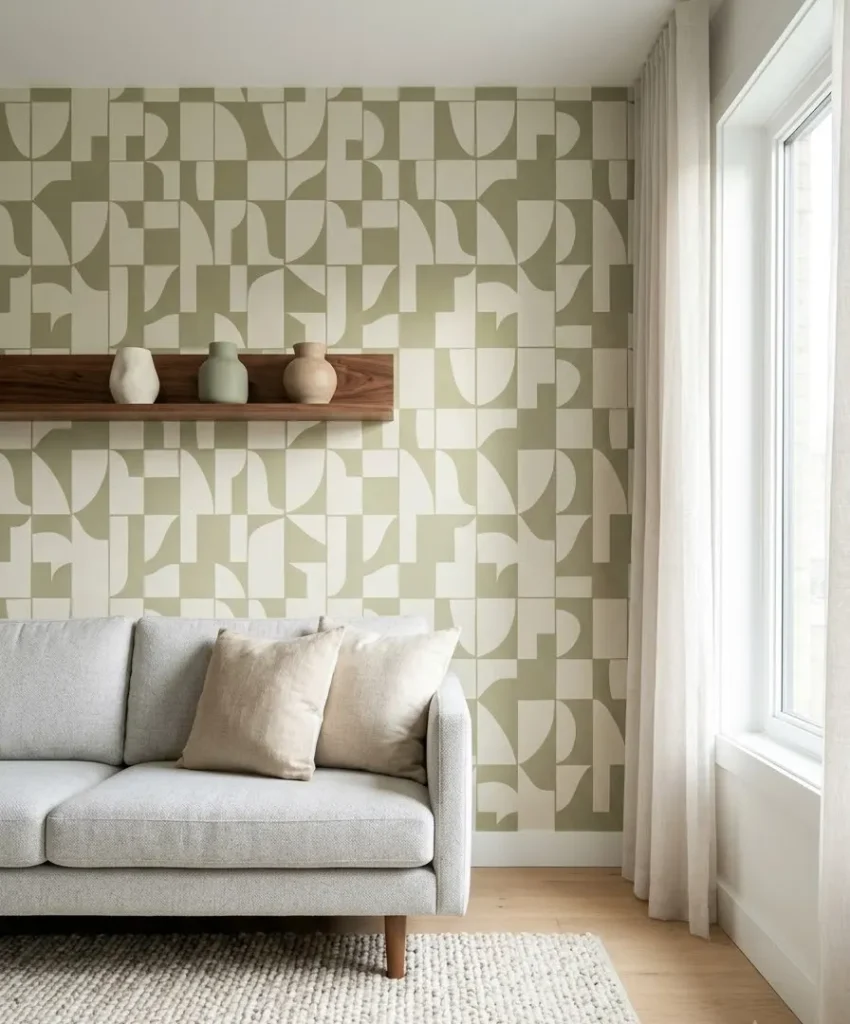
You’ve probably heard that small rooms need small patterns. I used to believe that too, until I tested it with samples taped to my wall for a week.
Small repeats
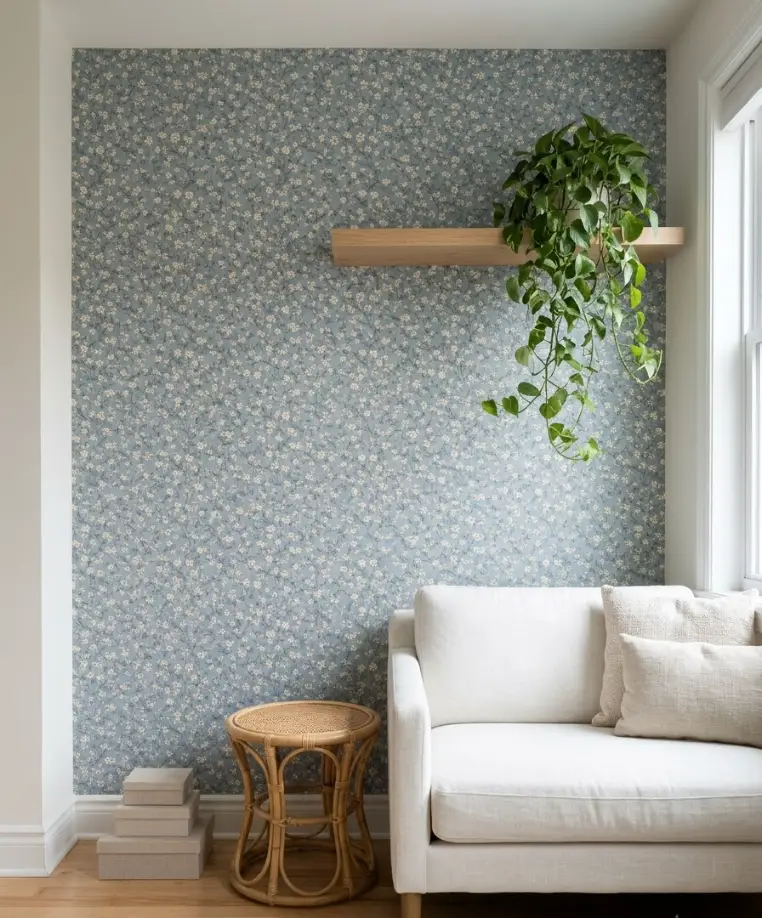
Tiny prints like ditsy florals, small geometrics and fine pinstripes blur from a distance and read almost like a texture.
They work well in a narrow room and rarely overpower furniture. If you’re nervous, start here.
Large-scale prints
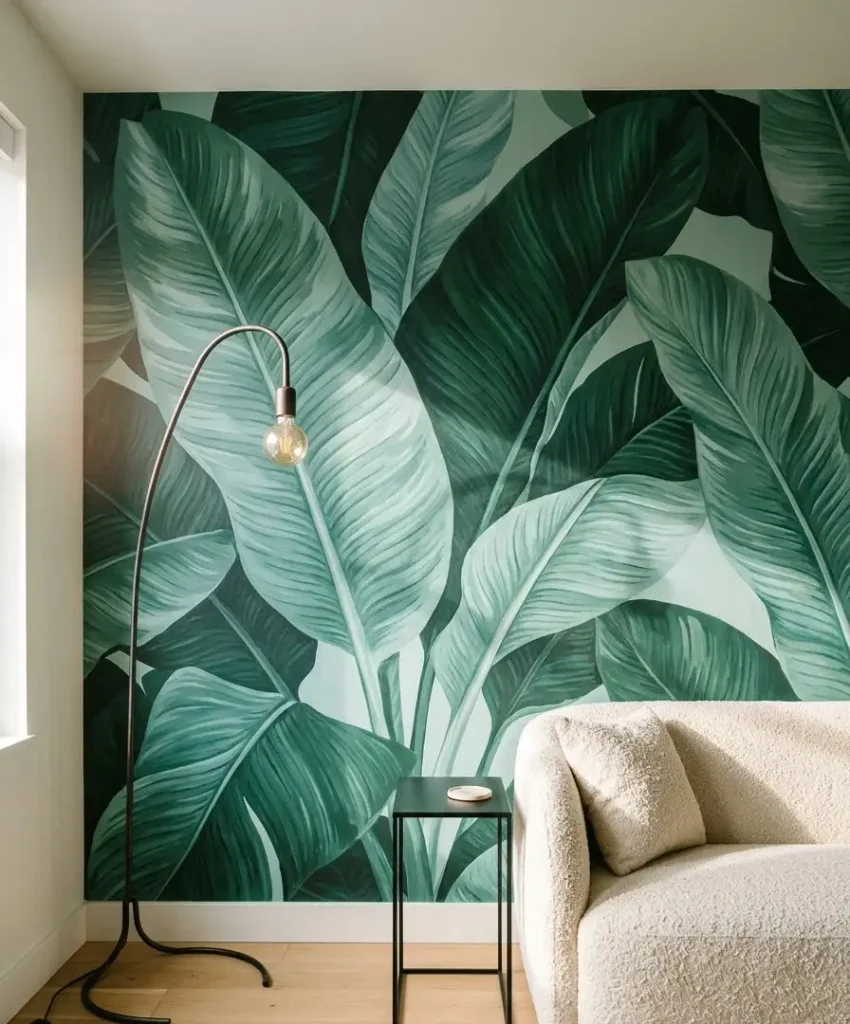
A big, oversized pattern like giant leaves, wide botanicals or a mural-style landscape can make a small room look deliberate and a little dramatic.
You see fewer repeats, so the eye reads the wall as one big picture instead of a grid of tiny pieces.
I used a large leaf print in my second apartment, and visitors always asked if the room was bigger than it looked.
The catch: large patterns need breathing room. Keep furniture lean and avoid stacking frames over a big print, or the wall starts fighting itself.
Stripes
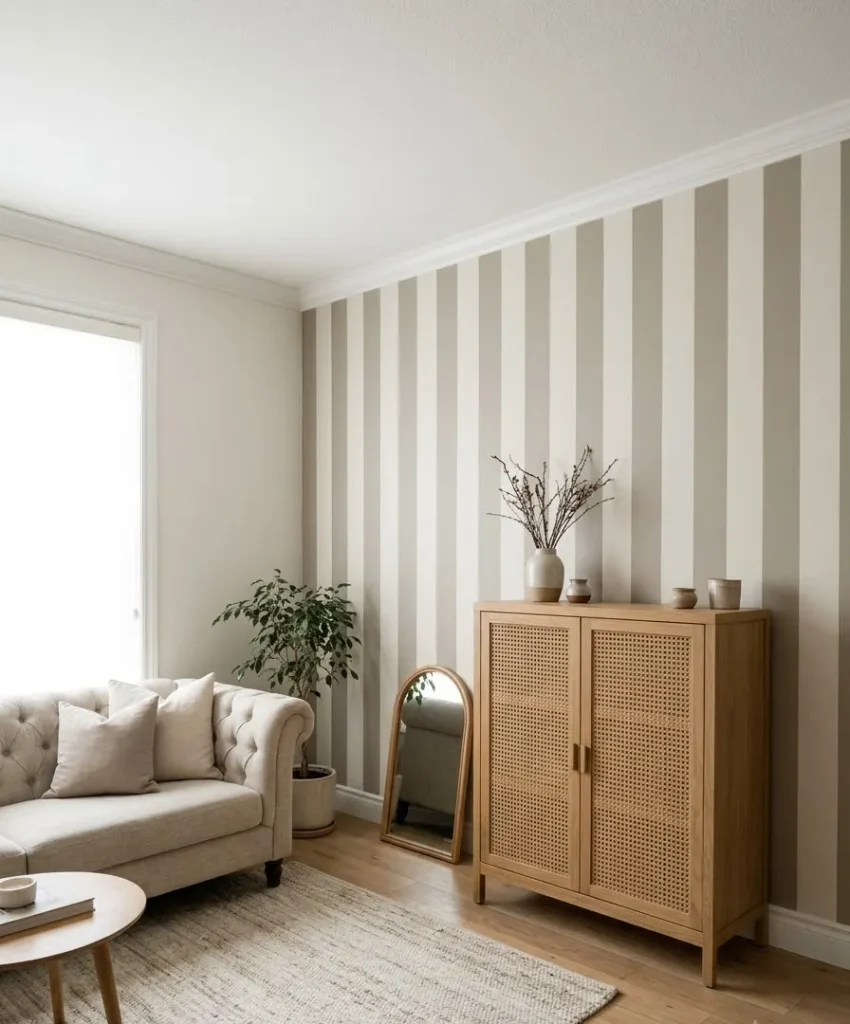
Vertical stripes pull the ceiling up. Horizontal stripes stretch the width of a narrow room.
Wide, low-contrast stripes feel calm, and thin, high-contrast ones feel energetic, almost like a deck chair. Pick the mood you want before you pick the stripe.
Color choices that work in tight spaces
Here’s a quick reference I wish I’d had at the start. It covers the four color families I see working most often in small living rooms.
| Color family | Mood | Best for | Watch out for |
|---|---|---|---|
| Soft neutrals (greige, oatmeal) | Calm, airy | North-facing rooms | Can look flat without texture |
| Deep greens and navy | Moody, cozy | Rooms with warm lighting | Needs bright lamps at night |
| Warm terracotta and clay | Earthy, welcoming | Rooms with wood furniture | Clashes with cool gray sofas |
| Pale blue and sage | Fresh, soft | Small, low-light rooms | Can feel sleepy if overused |
Dark colors in small rooms get a bad reputation. Honestly, I think a dark wall with good lighting looks richer than a light wall in a dim room.
The edges of the room vanish, and you stop noticing how tight everything is.
Light is the real boss here. Before you commit, tape a large sample to the wall and check it at 8am, noon and 9pm.
Colors change dramatically, and the “perfect” sage at noon can turn mud brown under your evening lamp.
Peel and stick or traditional paste
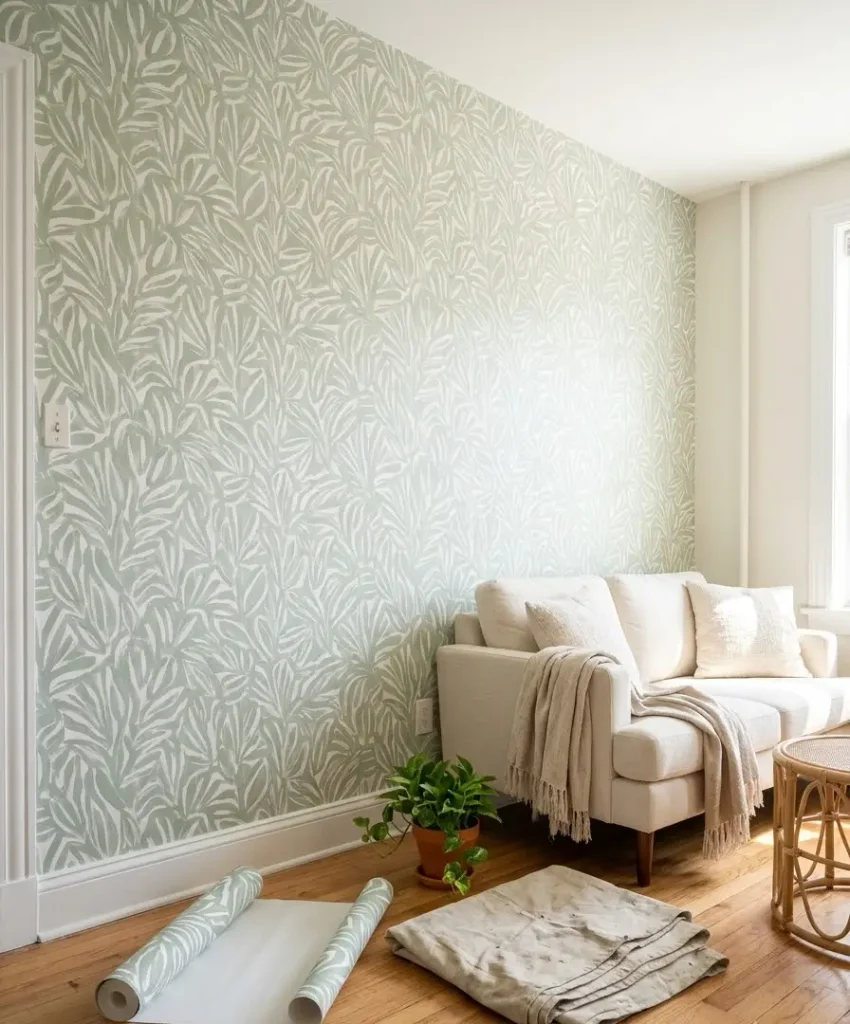
I’ve used both, and I’ll tell you where I landed.
Peel and stick
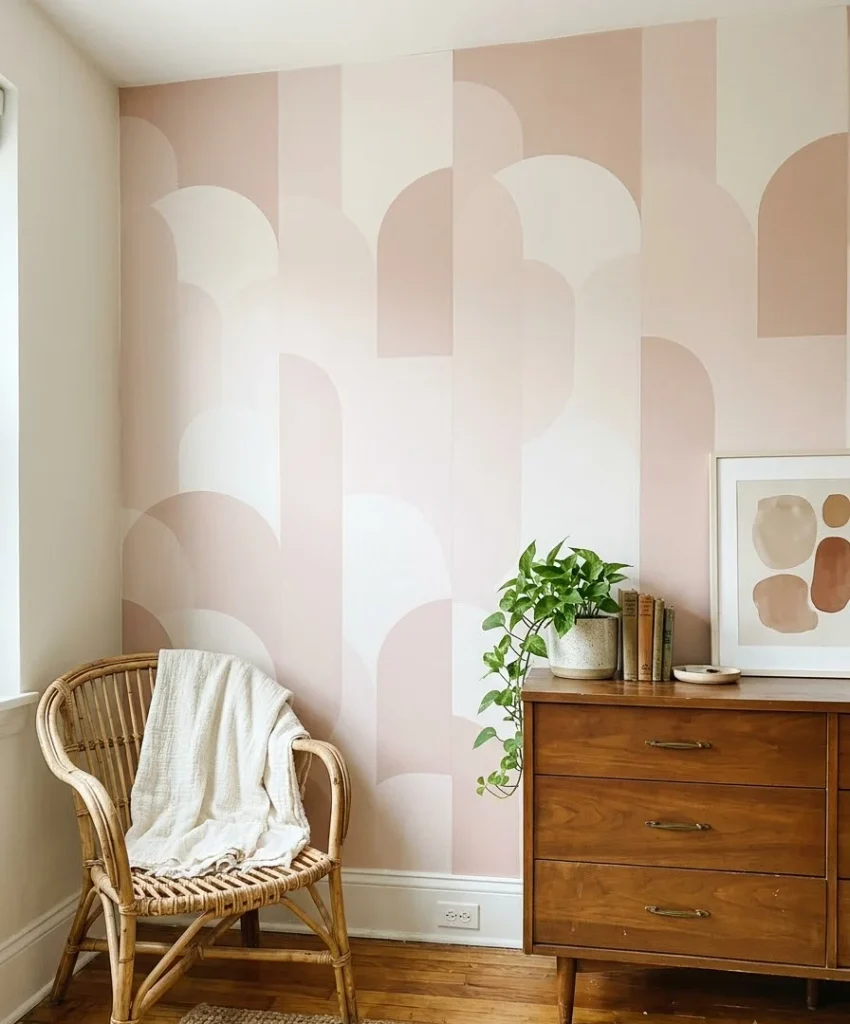
This works well for renters and for anyone who gets bored easily. It goes up in an afternoon, comes off without wrecking the wall (mostly), and costs less per roll in many cases.
The downside is that cheaper brands can show seams, and textured walls make the adhesive give up after a few months.
My first peel and stick attempt peeled itself off in the corner after about 3 weeks of summer humidity.
Wow, that was a fun discovery at 2am. Now I always wipe the wall clean, let it dry fully, and press the edges down with a smoothing tool for longer than seems necessary.
Traditional paste-the-wall paper
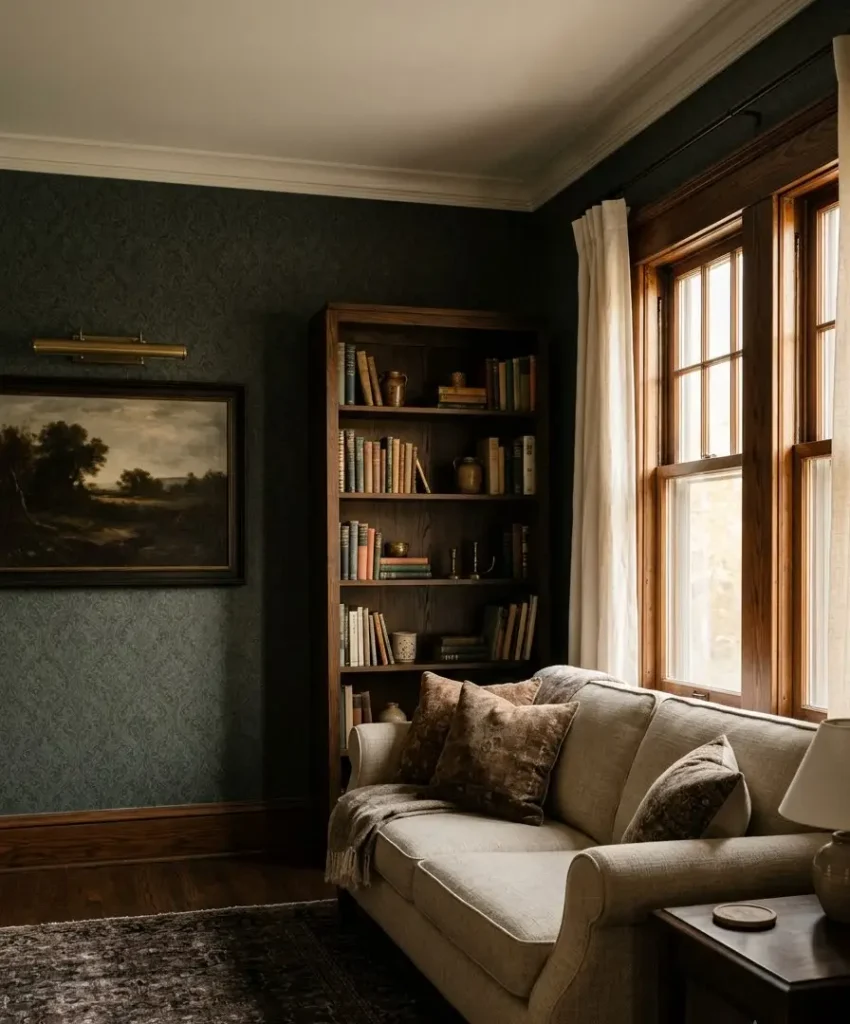
This costs more upfront and takes more patience, but the finish looks like it belongs in the house.
Seams disappear, patterns line up cleanly, and the paper lasts for years. If you own your place and plan to stay, this is the better long-term pick.
You can read more about how wallpaper has been made and used over the centuries on Wikipedia’s wallpaper page if you like a little design history with your coffee.
10 small space accent wall ideas that look great on Pinterest
These are the ideas I save most often, and the ones I’ve actually tried or seen done well in real homes. Pins love a strong focal point, so I’ve included the visual angle for each.
1. The wall behind the sofa
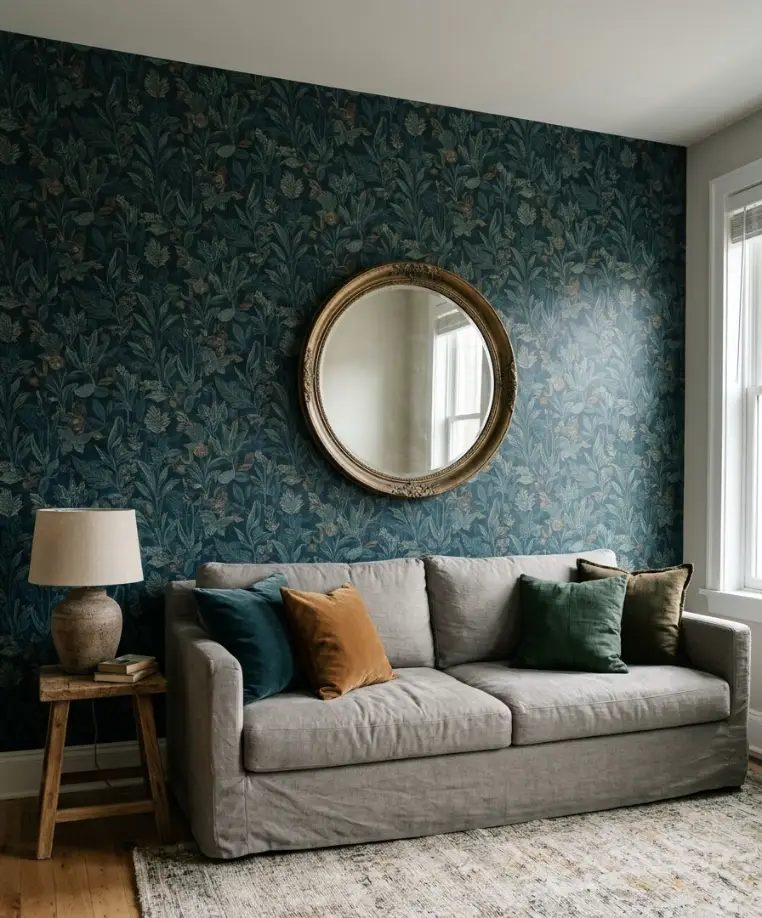
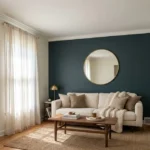
The classic. Paper the whole wall, hang one large mirror or a pair of simple frames, and keep the sofa color calm. In a small room, this single move does 80 percent of the work.
2. The window wall
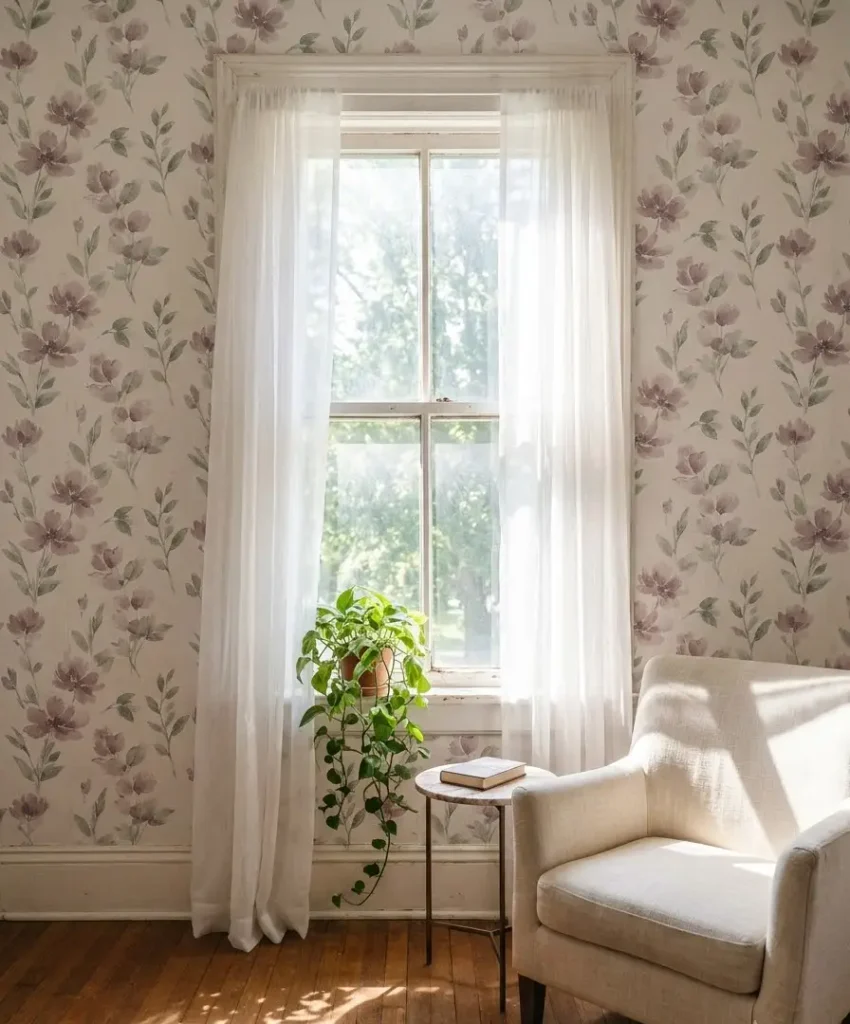
Papering the wall that holds your window sounds odd, yet it works. Daylight hits the pattern all day and the print seems to move as the sun shifts.
I’m a big fan of this in rooms with only one window, because it turns the dim wall into a feature.
3. A narrow alcove or recess
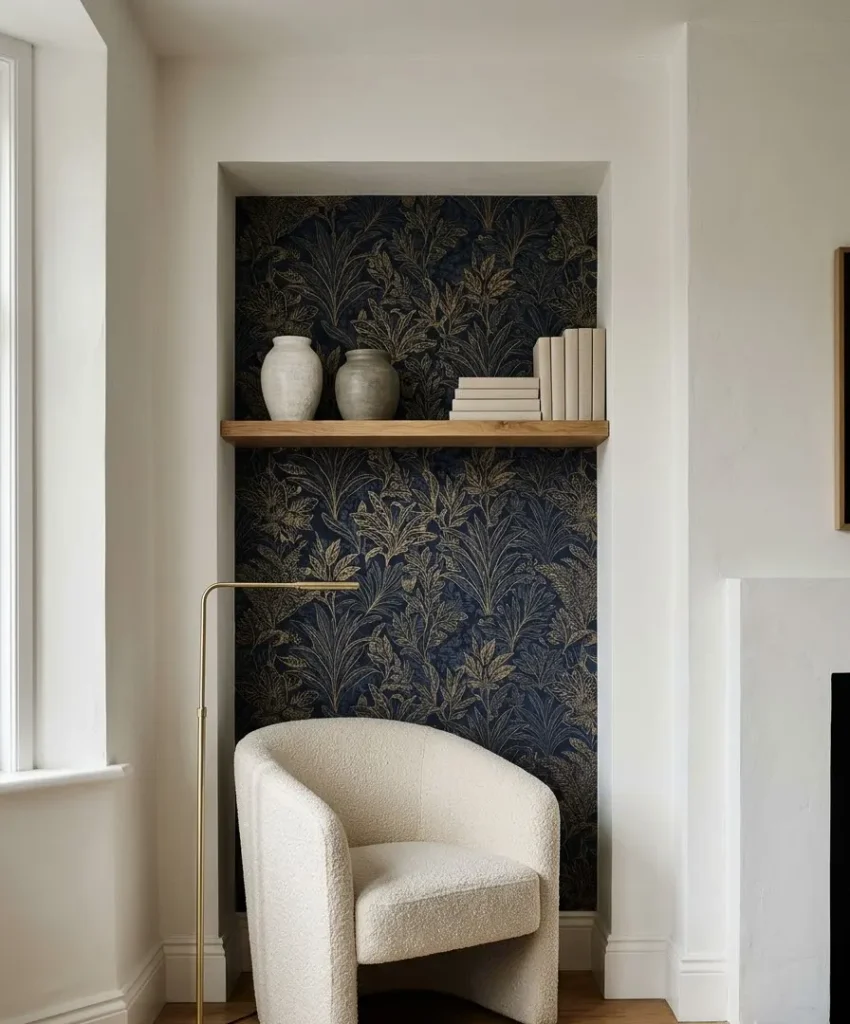
Alcoves beside a chimney breast are perfect for a bold print. You get a punch of color without covering a huge area, and the pattern feels tucked in and intentional.
Add a floating shelf or a slim lamp and you have a Pinterest-worthy corner.
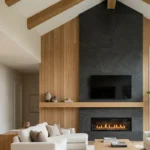
4. The fireplace wall
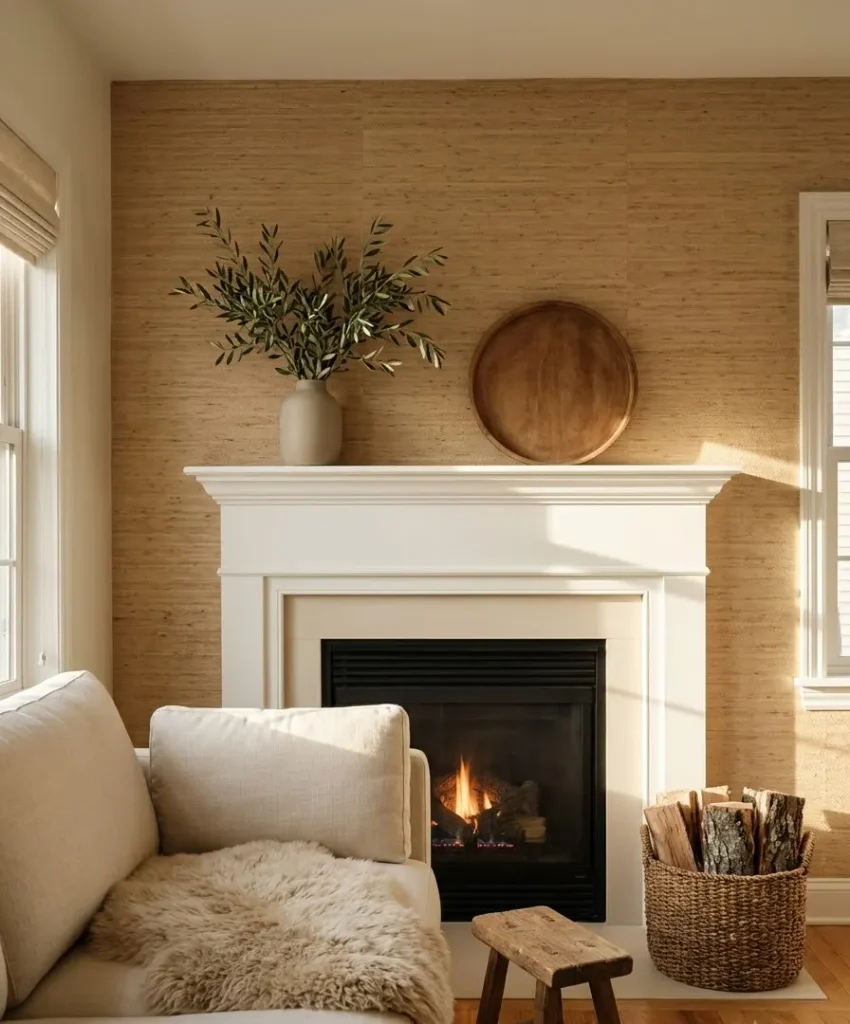
If your fireplace is the heart of the room, a textured paper like grasscloth or a soft botanical frames it nicely.
Keep the mantel styling simple so the wallpaper gets room to breathe.
5. Half wall with a paper top
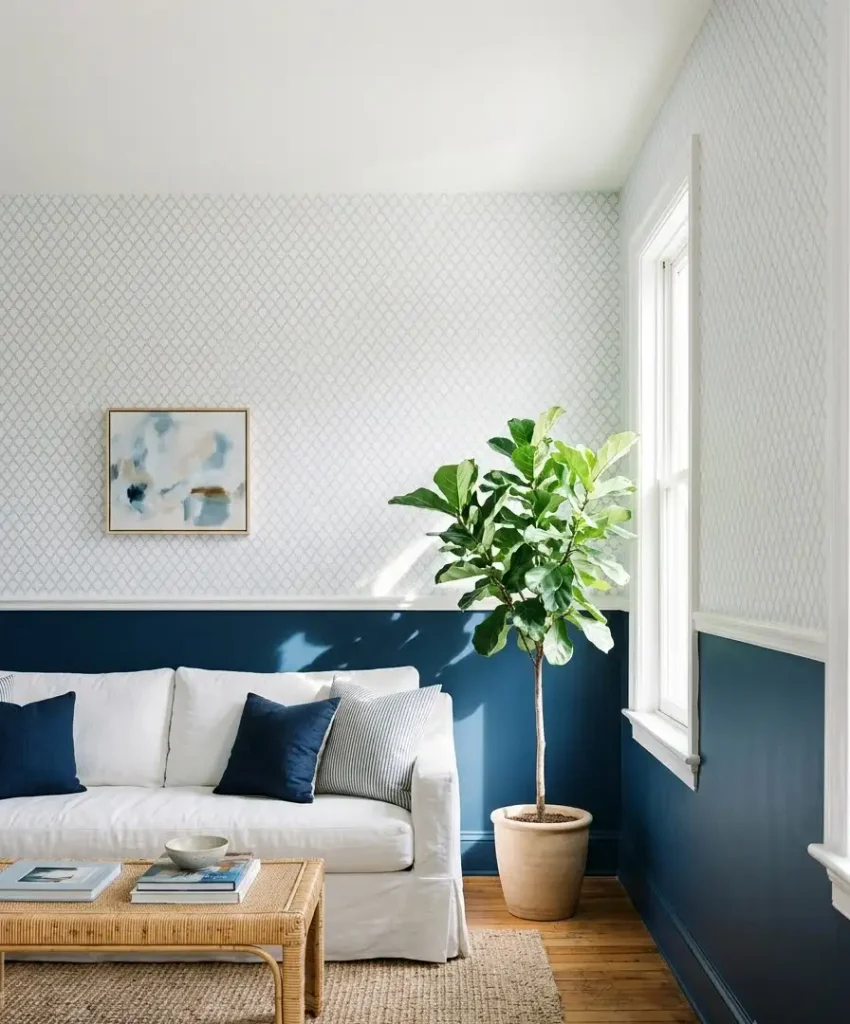
Paint the lower half of the wall a deep color and hang the wallpaper above a thin chair rail.
The split makes a small room look taller and more structured, almost like a tailored suit for your wall.
I love this idea for narrow rooms, though I’ll admit the measuring takes real patience.
6. Wallpaper behind open shelving
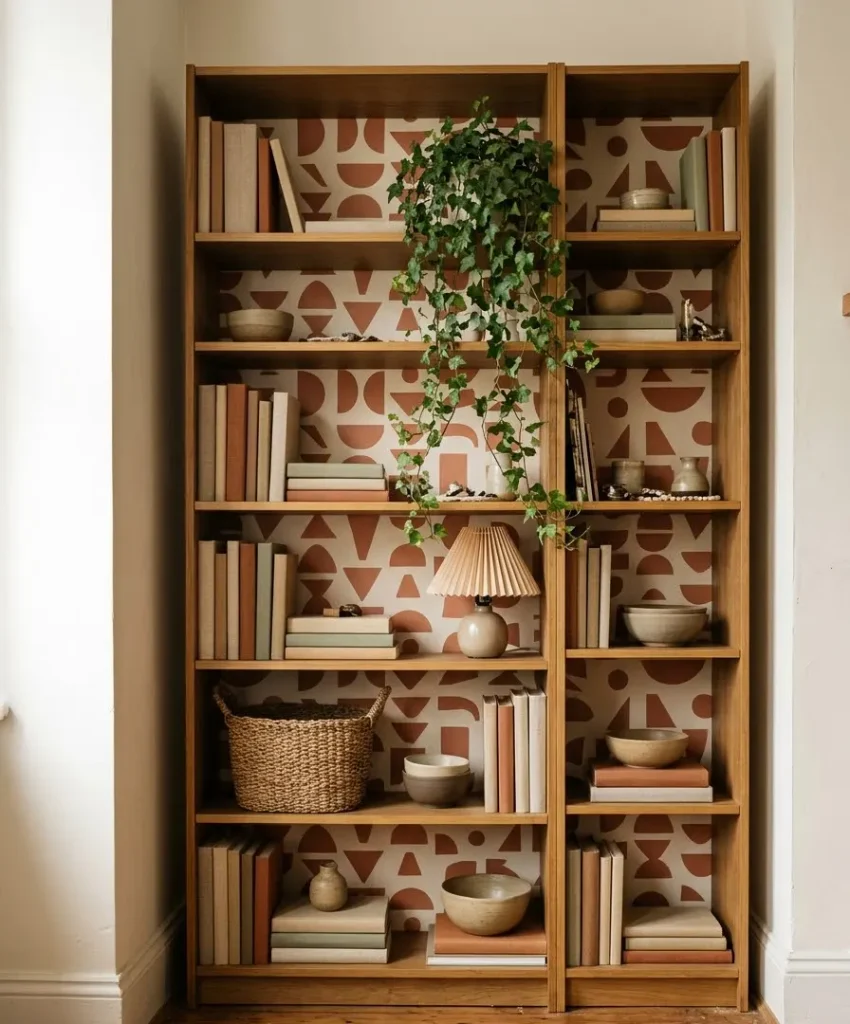
Line the back of a bookcase or open shelf unit with a fun print. It adds depth and color without taking up wall space, and your books and plants pop against it.
IMO, this is the best budget move on the list since you often need less than one roll.
7. Behind a mounted TV
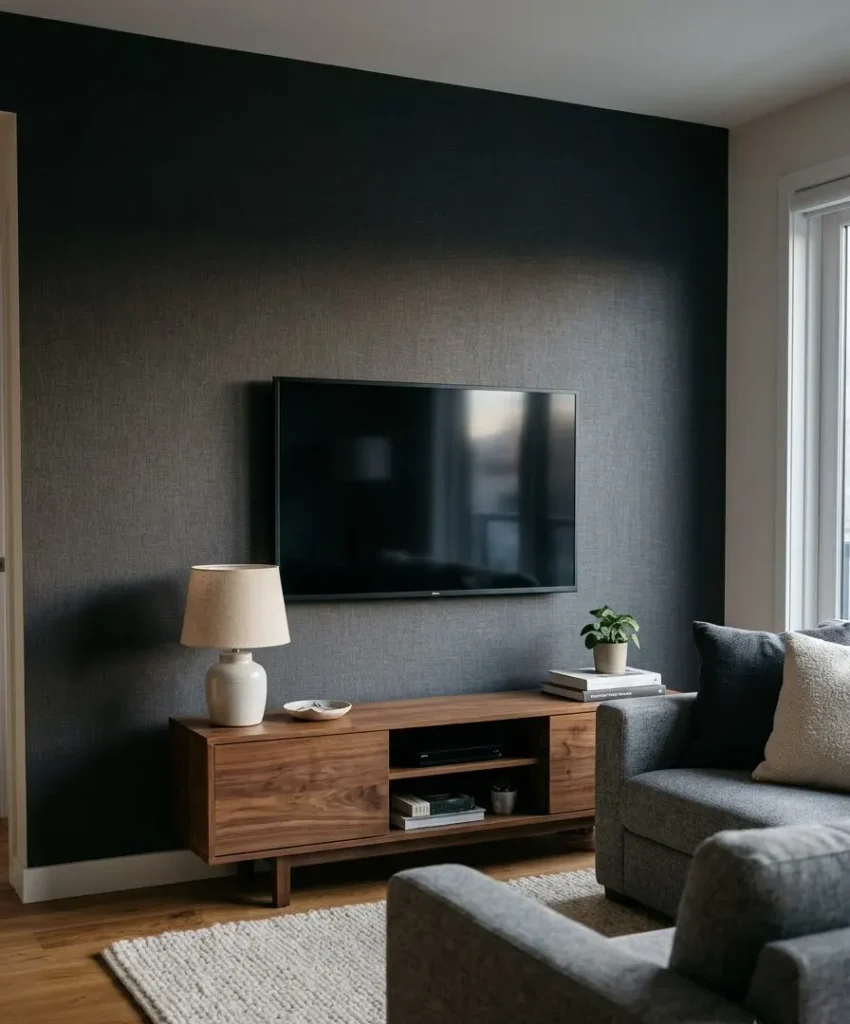
Pick a muted texture or a small, tone-on-tone pattern here. A dark charcoal linen look or a soft geometric hides the TV rectangle when it’s off and keeps the wall from feeling busy when it’s on.
8. A mural-style scene
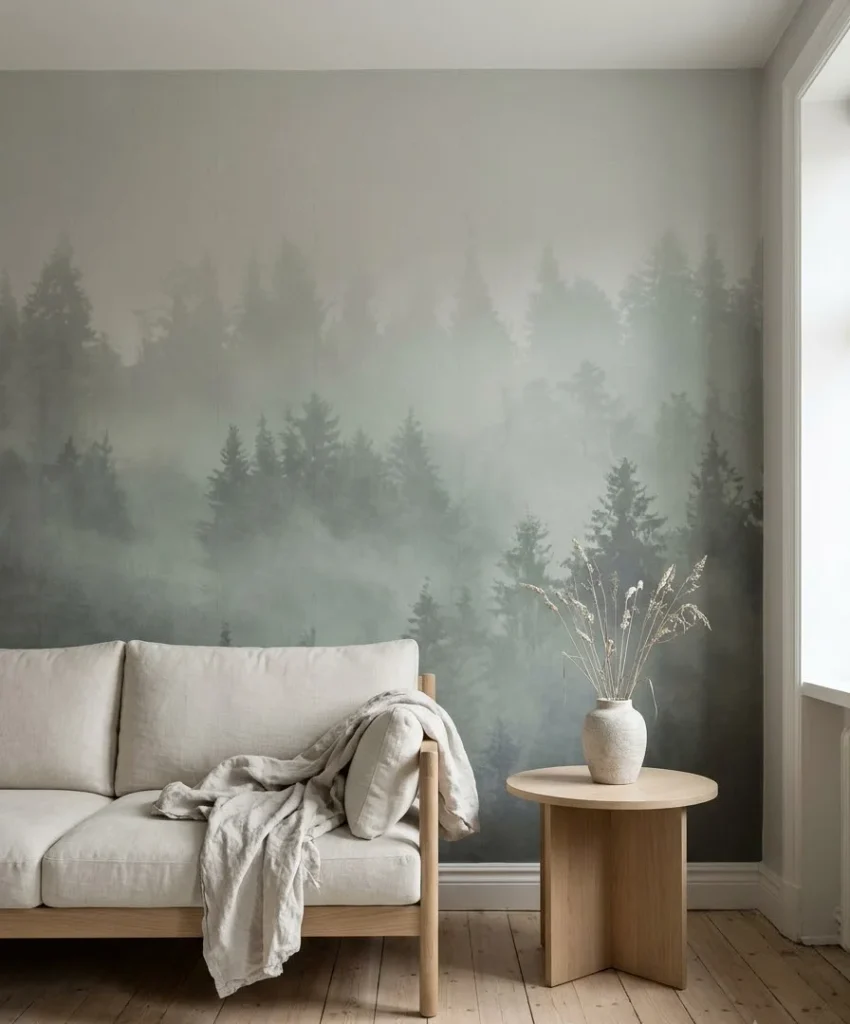
Landscape murals, misty mountains and watercolor florals can make a small room feel like it has a window to somewhere else.
I’ve seen a tiny living room in a city flat that used a forest mural, and the effect was honestly stunning. Keep the rest of the room quiet or the mural will compete for attention.
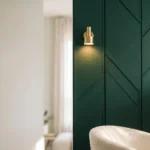
9. Geometric and arch patterns
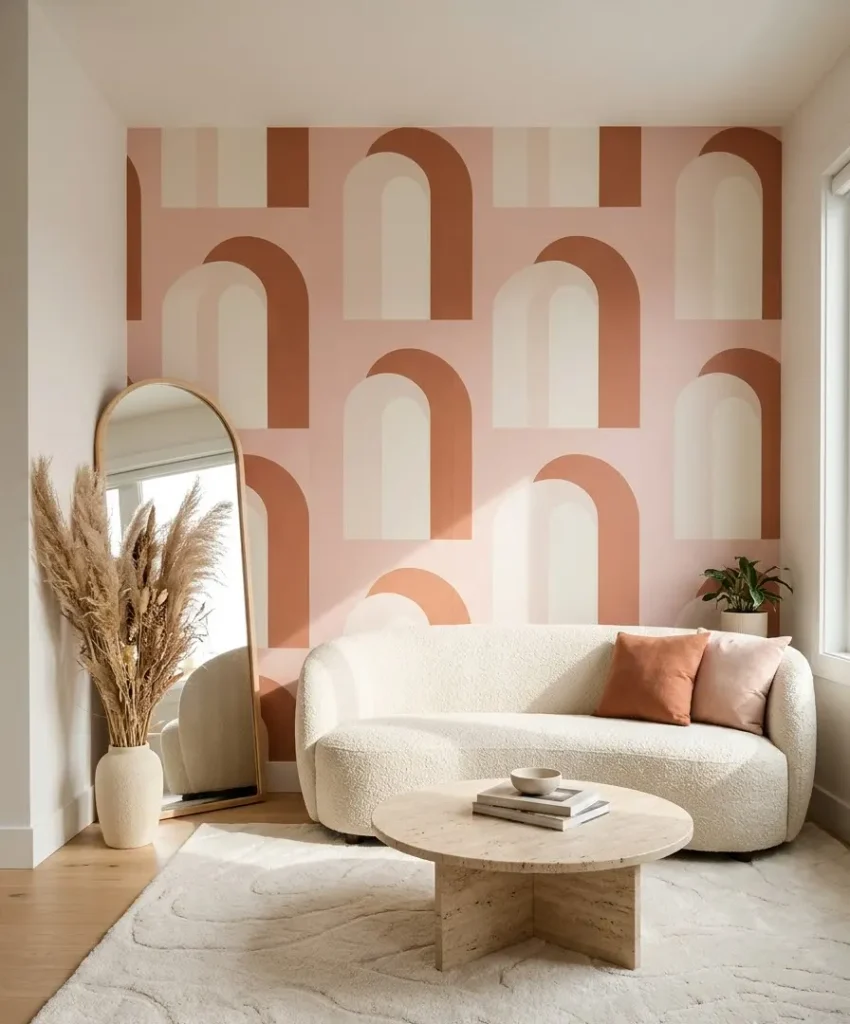
Arches, hexagons and soft lines are everywhere on Pinterest right now for good reason.
They feel modern without being cold, and they add movement to a flat wall. Stick with two or three colors max so the pattern stays tidy.
10. The ceiling-height surprise
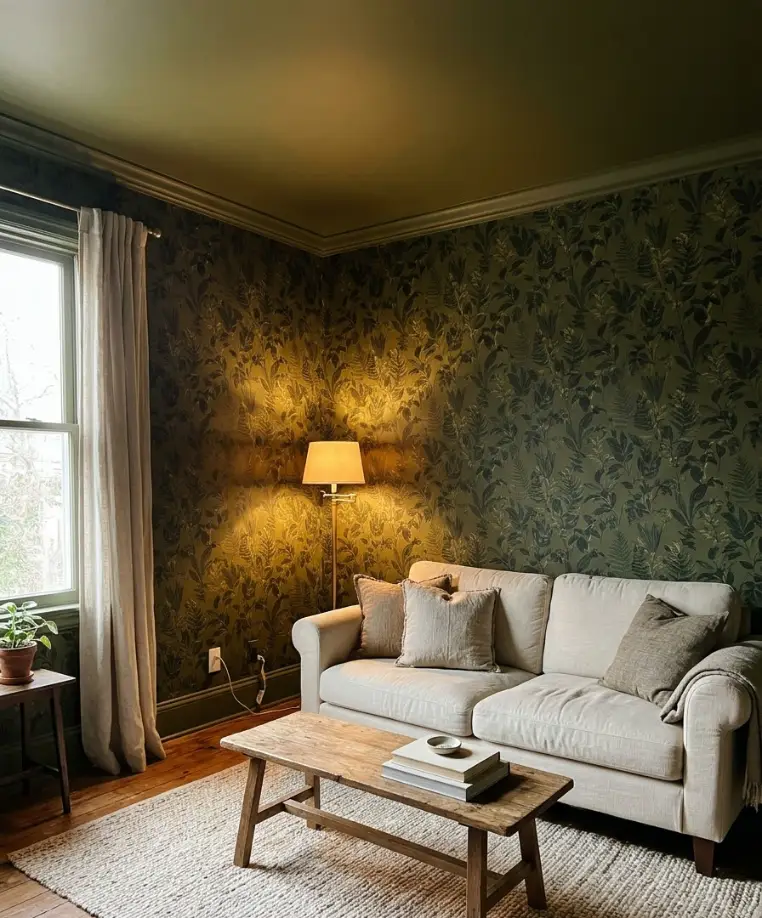
Run the paper all the way up to the ceiling line and consider painting the ceiling a matching color.
The corners blur, the room feels taller, and the whole space wraps around you in a pleasant way. It’s a bold move, but small rooms often reward bold moves.
A quick personal detour about samples
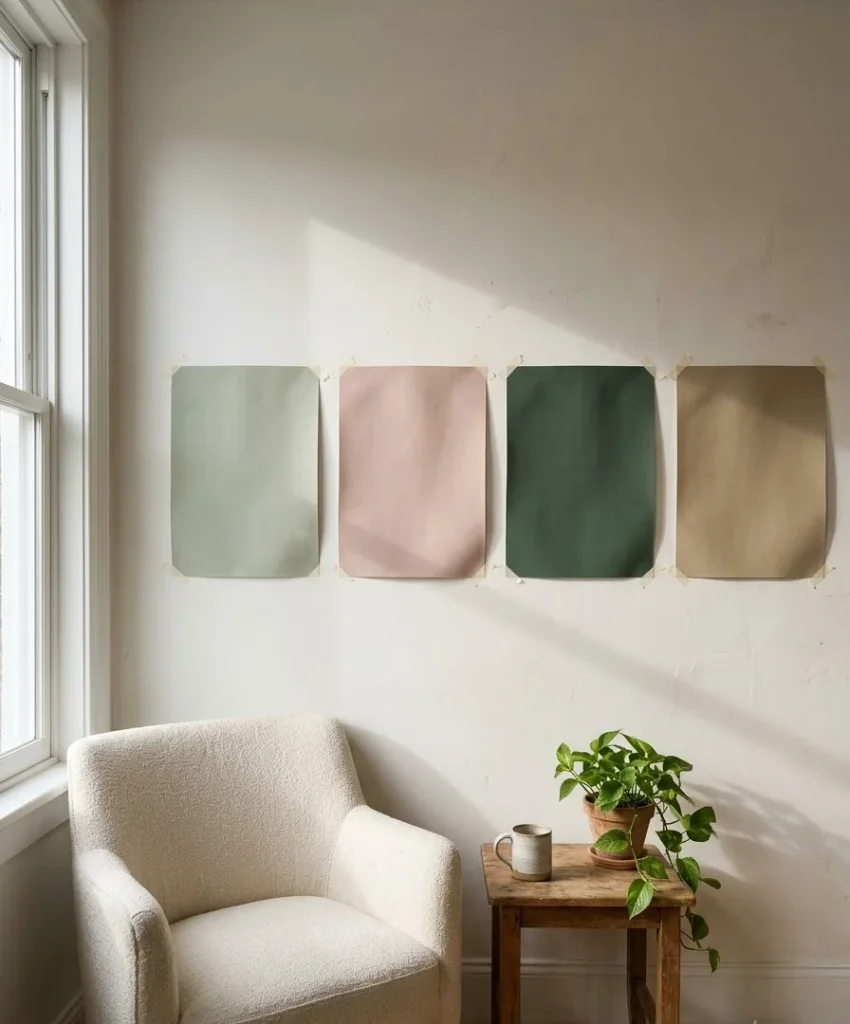
Slightly off topic, but I have to say it: order samples, and order more than you think you need.
I once bought a roll based on a 2-inch swatch on a website, and when the full wall went up, the color read as a dusty pink instead of the warm beige I imagined.
My partner looked at it, looked at me, and said nothing, which was somehow worse than criticism.
Now I order 3 or 4 samples, tape them up for a week, and live with them.
If I still like the print after seven days of passing it in my bathrobe, it’s a keeper. Samples cost a few dollars, and a wrong roll costs a few hundred.
Styling the rest of the room around your wallpaper
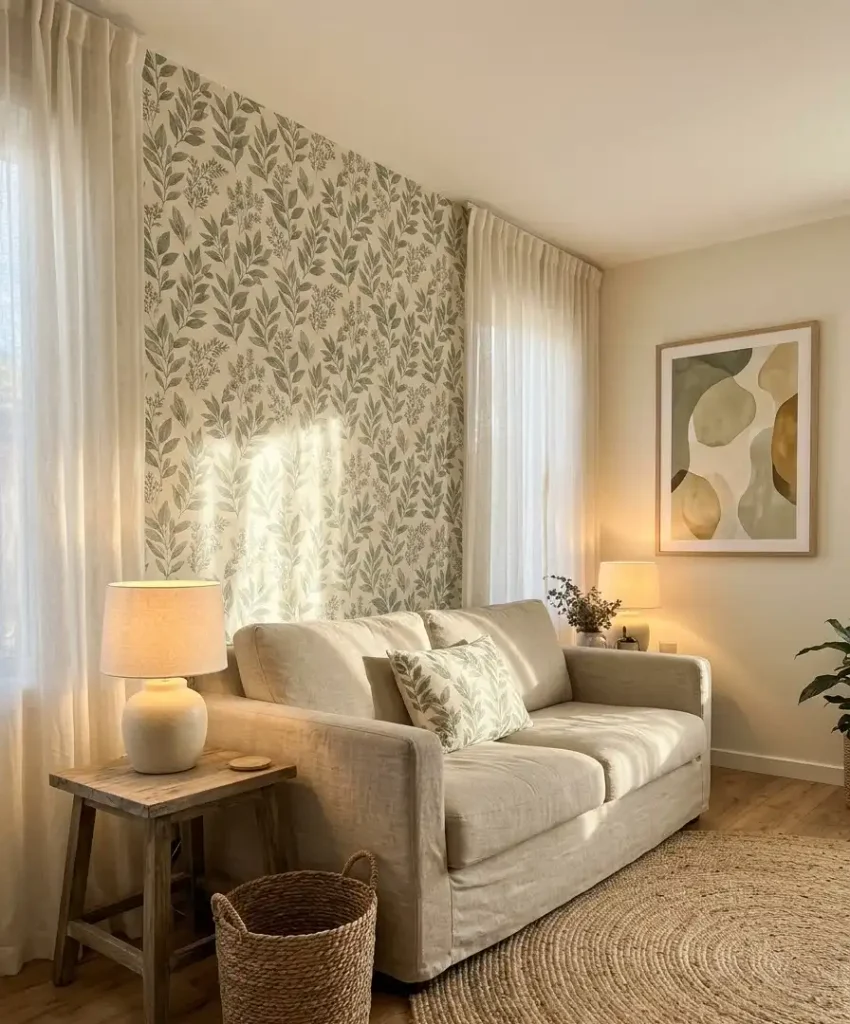
The wallpaper does the talking, so the furniture should act like a good friend at a party and let it finish its stories.
Here’s what has worked for me, plus a couple of opinions I’ll defend:
- Keep the sofa a solid color. A patterned sofa in front of patterned wallpaper turns the room into a headache. Stick with linen, boucle or a soft velvet.
- Pull one color from the paper. Grab a shade from the print and repeat it in a cushion, a throw, or a vase. This ties the whole room together without trying too hard.
- Use mirrors sparingly. One large mirror on the papered wall doubles the pattern, which looks gorgeous. Three small mirrors look like a hotel lobby from 2008.
- Go light on frames. I think a single oversized piece of art looks better than a gallery wall on top of wallpaper. The paper already is the art.
- Pick lamps over overhead lights. Warm lamps at different heights make the wallpaper glow in the evening. Harsh ceiling light flattens it.
Texture helps too. Think woven baskets, a jute rug, wooden side tables. They give the eye a break from the pattern and stop the room from feeling too styled.
How to make your accent wall photograph well
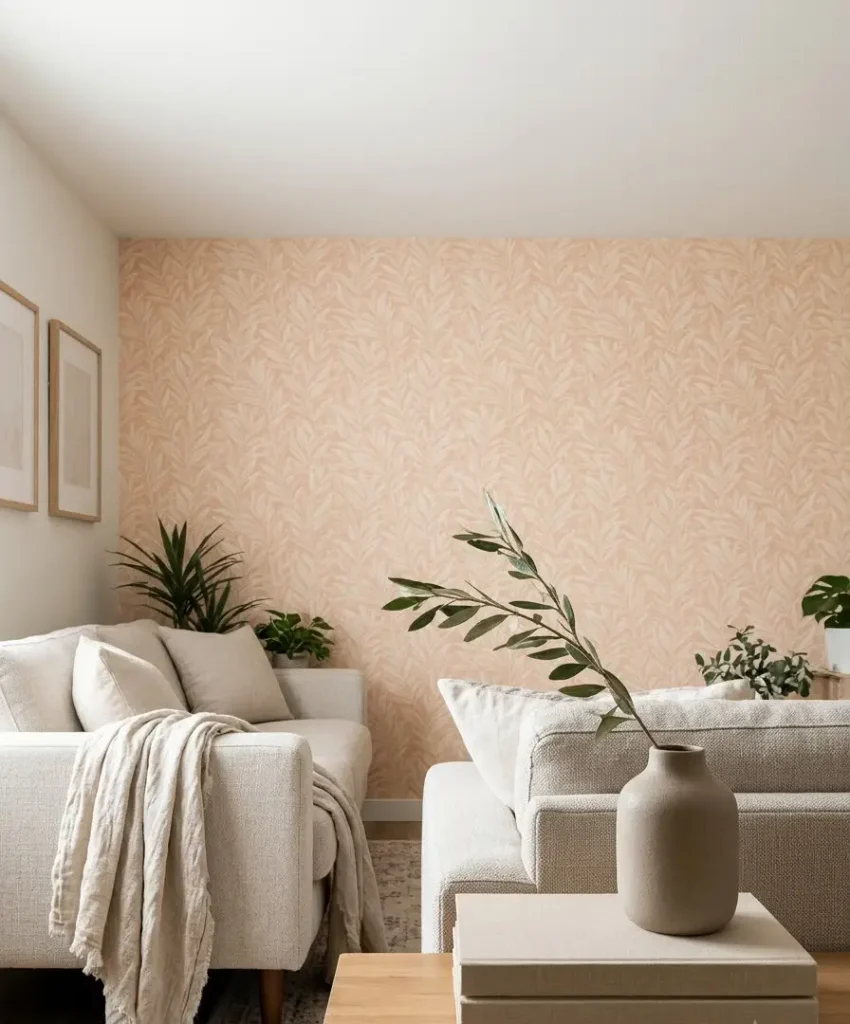
Since a lot of you are here from Pinterest, let’s talk pictures. A great accent wall can look dull on camera if you ignore a few basics.
Shoot in daylight whenever you can. Open the curtains, switch off the overhead light, and stand in a corner so the camera sees the full wall.
Vertical photos perform best on Pinterest, so hold your phone upright and leave a little space above the wall for text overlays if you plan to pin your own photos.
Style the foreground with a few simple pieces: a plant, a stack of books, a throw draped over the arm of the sofa. Odd numbers of objects look more natural than even ones.
And please, straighten the frames. I’ve deleted more photos than I’d like to admit because of a picture hanging 3 degrees off.
For more visual inspiration, browse Pinterest’s home decor section and search “small living room wallpaper.
” Save pins into one board so you can spot patterns in what you actually like, which is usually different from what you think you like.
Mistakes I made so you don’t have to
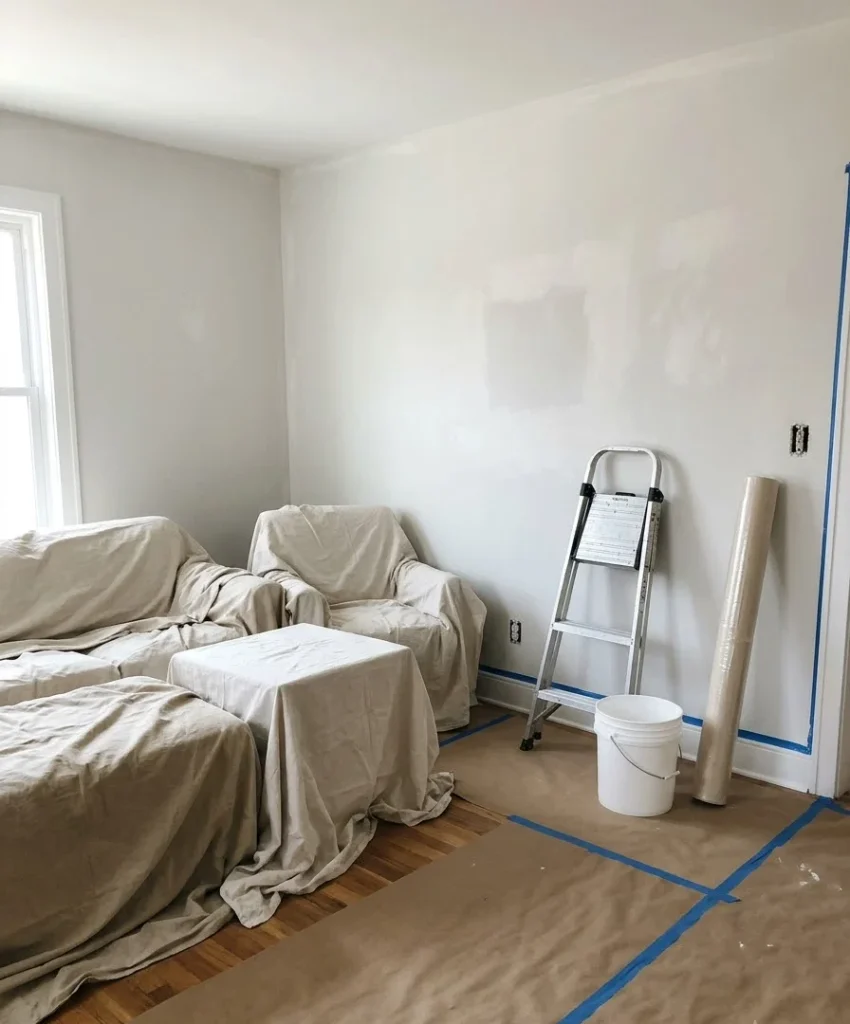
I’ve collected a small museum of errors over the years. Here are the big ones.
Skipping wall prep. Wallpaper shows every bump, crack and lump of old paint.
Fill holes, sand rough spots, and wipe the wall clean. A flawless print on a lumpy wall looks like a bad toupee.
Ignoring the pattern repeat. Some prints need extra length so the pattern lines up from strip to strip.
Check the repeat measurement on the product page before you calculate how many rolls you need. I once ran 1 roll short and discovered the pattern was discontinued. Fun times.
Choosing a pattern that fights the furniture. If your room already has a bold rug and printed curtains, the wallpaper should calm down. Decide which element leads, and let the others support it.
Forgetting about the light switches. Turn the power off at the breaker, remove the cover plates, and paper right up to the outlet box.
Then trim neatly. Papering over a live switch plate is a bad idea for several reasons, and most of them involve sparks.
Measuring and budgeting without losing your mind
Measure the width and height of your wall in feet or meters. Multiply them to get the area.
Most standard rolls cover around 56 square feet in the US, though coverage varies by brand and repeat, so always check the product details. Add roughly 10 to 15 percent for waste and pattern matching.
A typical accent wall in a small living room, say 10 feet wide by 8 feet tall, usually needs 2 to 3 rolls.
Budget wallpaper can start around $30 to $50 a roll, while designer papers can run into the hundreds.
If your budget feels tight, spend the money on one standout paper and keep everything else simple.
For paint color matching and professional guidance on wall prep, the folks at Sherwin-Williams and Benjamin Moore have helpful resources on primers and coordinating shades. I always lean on a good primer, especially over dark paint.
A simple installation plan
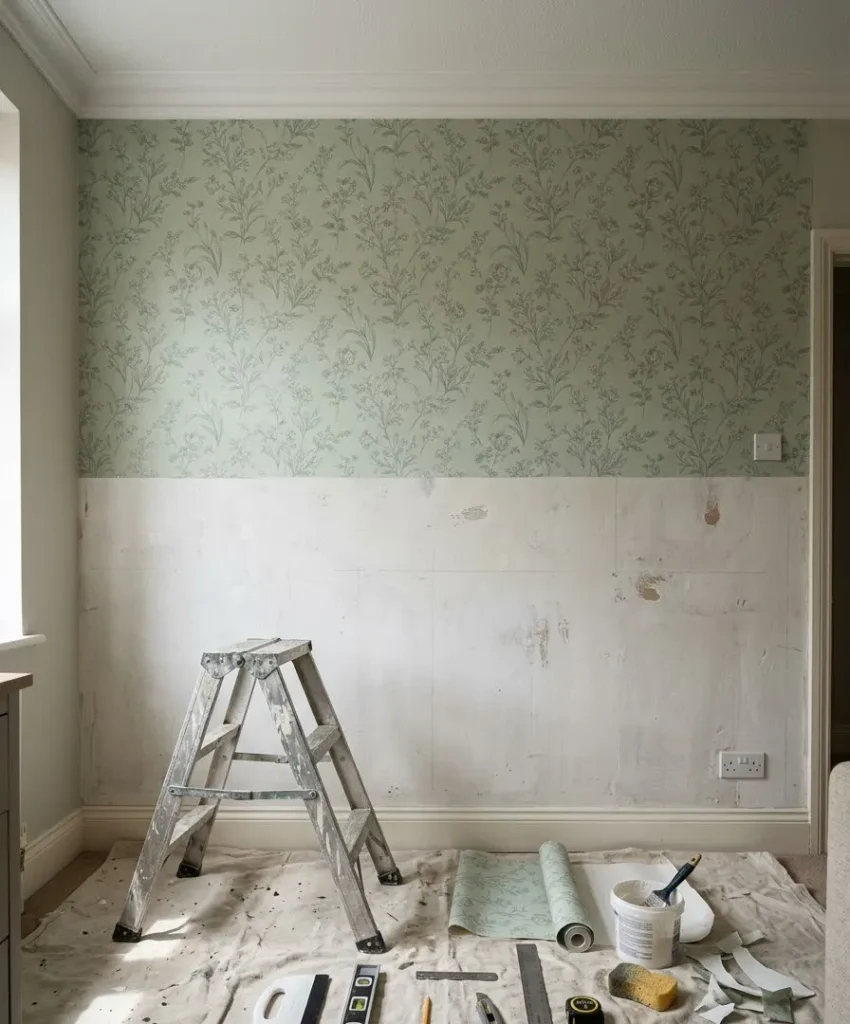
You don’t need to be a pro. I’m not, and my last accent wall looked excellent.
Here’s the order I follow:
- Clear the wall. Move furniture, take down frames, and remove switch covers.
- Clean and fill. Wipe dust off, patch holes, sand smooth, and let everything dry fully.
- Prime if needed. Dark walls or glossy paint need a coat of primer so the paper sticks and the color doesn’t show through.
- Mark a straight line. Use a level and pencil to draw a vertical guide near the starting edge. Walls are rarely perfectly straight, so trust the level instead of the corner.
- Hang the first strip. Start at the top, align with your line, and smooth downward with a plastic smoother, pushing air bubbles out toward the edges.
- Match and repeat. Line up the pattern on each new strip, overlap or butt the seams as the instructions say, and keep smoothing.
- Trim the edges. Use a sharp blade and a straight edge, and change blades often. A dull blade tears paper and tempers.
Give yourself a full afternoon, and don’t schedule anything important for that evening. You’ll want to sit and admire the wall for a while.
Frequently asked questions
Will wallpaper make my small living room feel smaller?
Not if you pick the right wall and keep the rest of the room calm. A single accent wall adds depth,
and darker or patterned walls can seem to recede. Avoid papering all four walls in a busy print, since that does close a small room in.
Can I use dark wallpaper in a small room?
Yes, and plenty of people do it well. Pair dark wallpaper with warm lighting, light-colored furniture,
and a few reflective surfaces like a mirror or glass table. The room will feel moody and snug instead of cramped.
Is peel and stick wallpaper good enough for a living room?
It works well for renters and short-term projects, especially on smooth, well-primed walls.
Textured walls and humid rooms can cause peeling, so test a small piece first and press the seams firmly during installation.
Final thoughts
An accent wall with wallpaper is the cheapest way I know to make a small living room feel designed instead of just furnished.
Pick one wall, choose a pattern at a scale that suits your space, and keep the rest of the room quiet enough to let it shine.
My little 9 by 11 room never grew, but it started to feel like a place I wanted to be. That’s the whole point, really.