My living room used to look like a furniture showroom. Everything matched. Everything was beige. And somehow it still felt cold, like nobody actually lived there.
Sound familiar? If you’ve pinned fifty “cozy living room” boards and your actual room still feels flat, the problem probably isn’t your furniture.
It’s that you’re missing layers. Texture, lighting, and rugs are the three things that turn a “fine” room into one you don’t want to leave, and none of them require a full renovation or a design degree.
I’ve spent the last two years slowly rebuilding my own living room piece by piece (mostly on a Target and Facebook Marketplace budget,
let’s be honest), and I’ve picked up a few things that actually move the needle. Let’s get into what works.
Why layering actually makes a room feel cozy
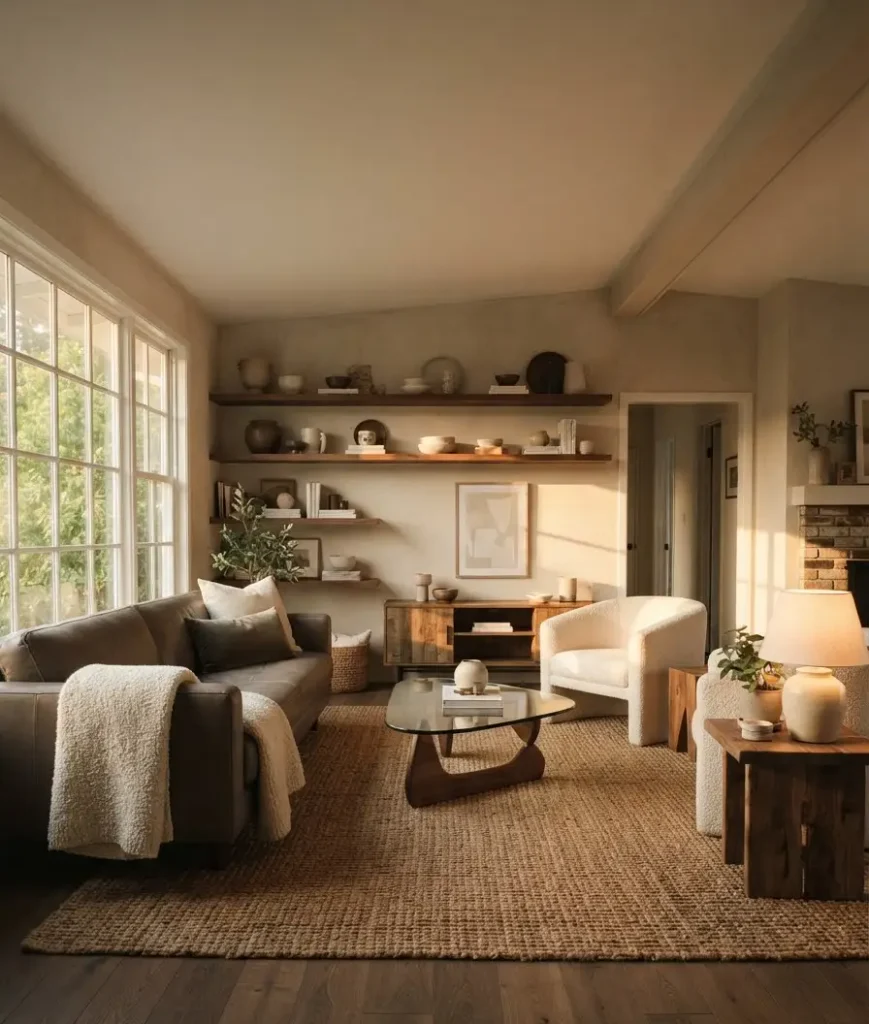
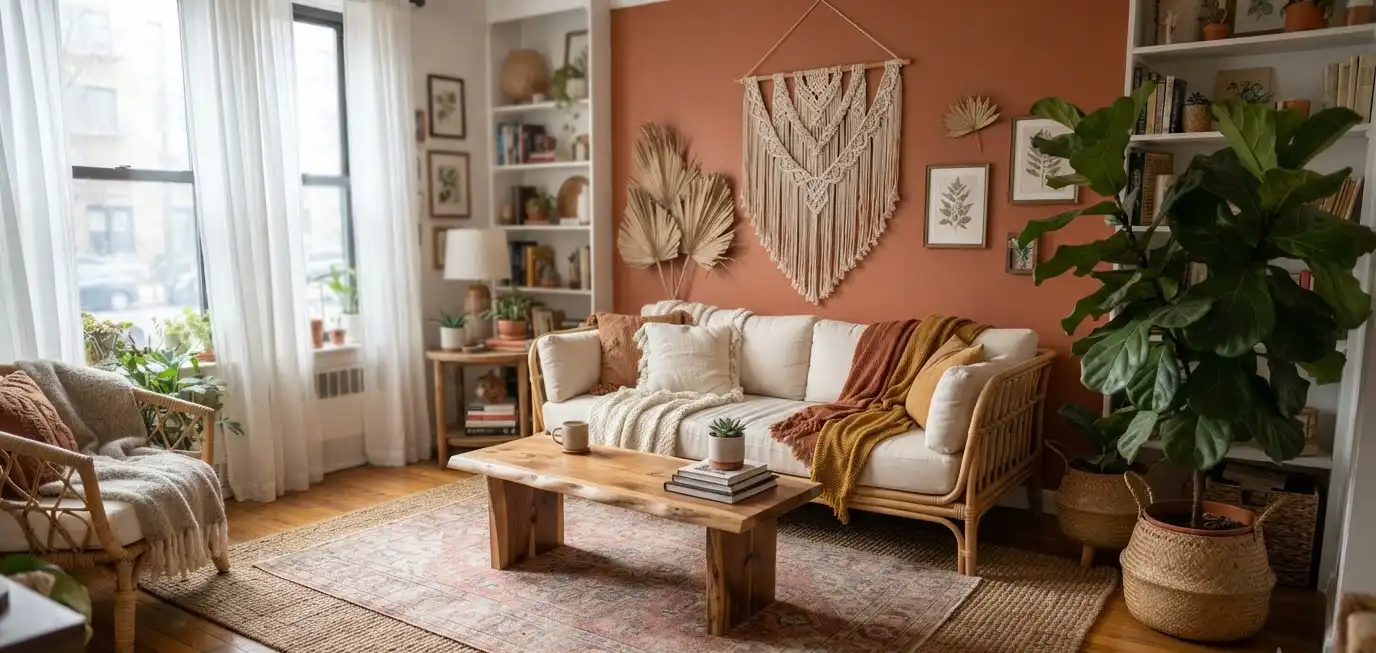
Here’s the thing nobody tells you when you’re starting out: a cozy room isn’t about buying more stuff. It’s about contrast.
Smooth against rough. Warm light against shadow. A plush rug against hard flooring.
Your eye needs somewhere to land, and then somewhere else to land after that.
A room with one texture, one light source, and one flat rug gives your brain nothing to explore, so it reads as sterile even when every individual piece is expensive.
Interior designers talk about this constantly, and for good reason. Layering textures, according to interior firm Kanika Design, builds depth into a room over years rather than through one quick refresh, and the effect only gets richer as light moves through the space during the day.
That’s the whole secret. You’re not decorating a room once. You’re building something that keeps giving your eye new details to notice.
Start with a calm base before you add anything else
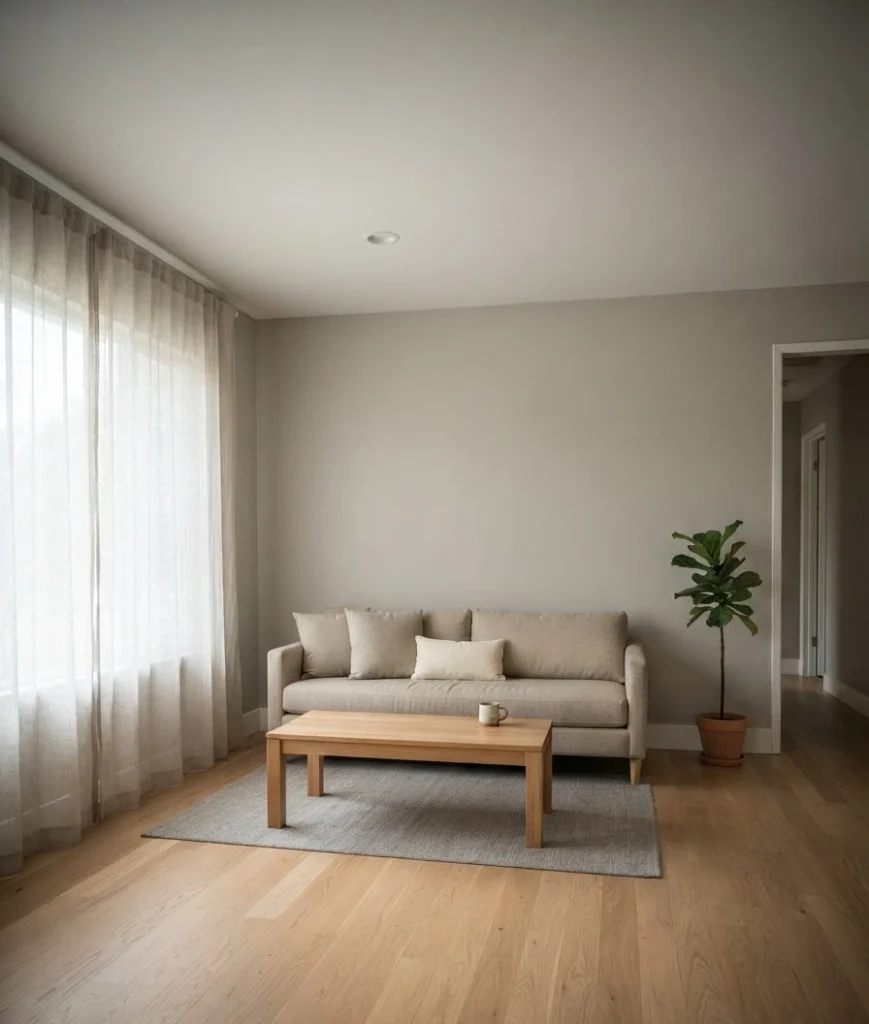
Before you touch a single throw pillow, get your foundation right.
Your walls, your sofa, your flooring: these are the biggest, most expensive-to-change elements, so keep them neutral and quiet.
I learned this the hard way. My first attempt at a “cozy” living room involved a patterned rug, a striped throw,
a floral pillow, and a plaid blanket, all at once. It looked like a thrift store exploded.
IMO, the mistake almost everyone makes early on is trying to layer pattern before they’ve settled on a neutral base.
A few ground rules that saved my sanity:
- Pick one dominant neutral for your walls and largest furniture piece (think linen, oatmeal, warm white, or soft greige).
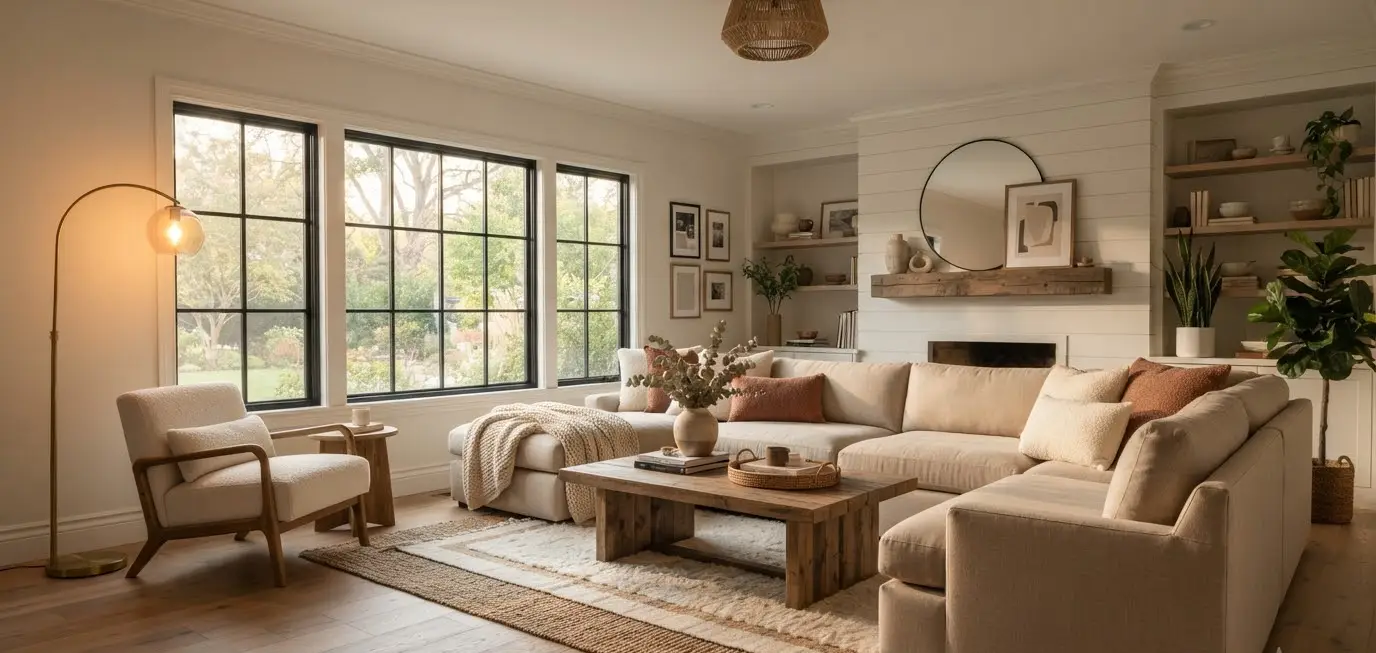
- Limit yourself to 2 to 3 core textures in the base layer, like a bouclé sofa, a wood coffee table, and a linen curtain.
- Leave visual breathing room. A few smooth, plain surfaces stop the whole room from feeling busy.
Once that foundation is set, everything you add on top has something to play off of.
This is basically the same principle behind capsule wardrobes, actually, now that I think about it.
Neutral base, a few statement pieces, done. Anyway, back to the living room.
Textures: the fastest way to add warmth without adding clutter
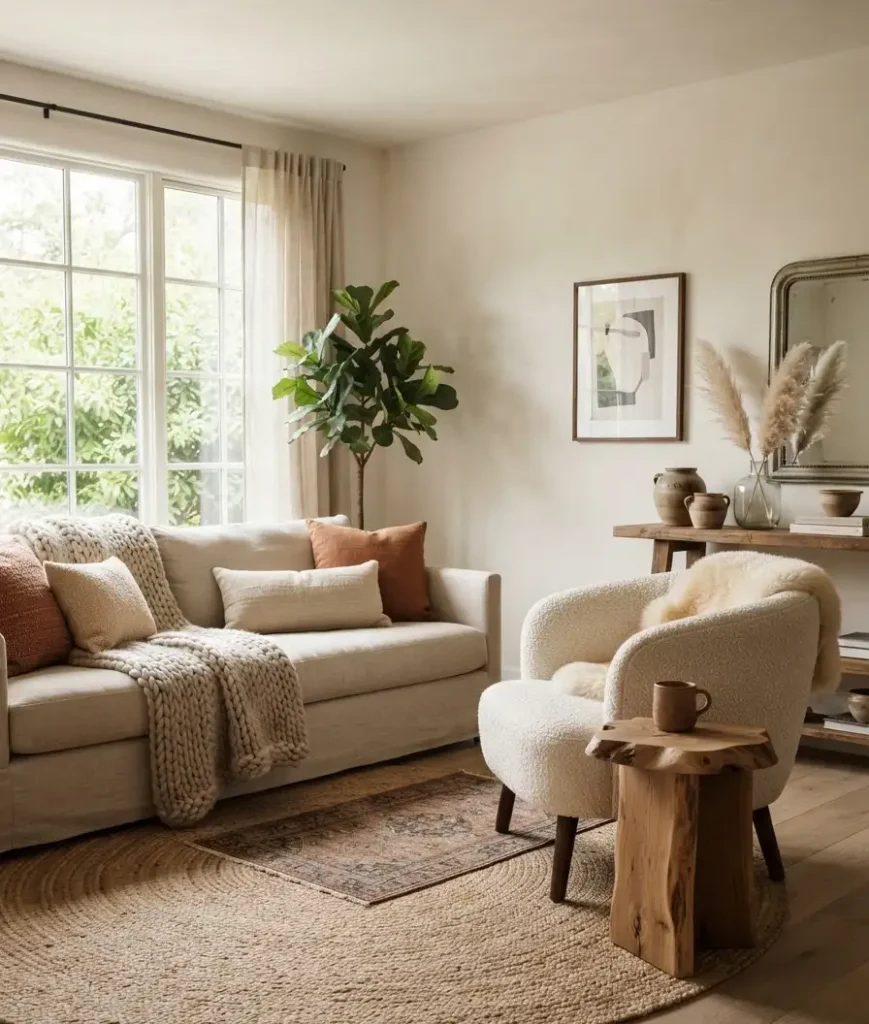
This is where the fun starts. Texture is doing more emotional work in your living room than color ever will, and it costs a lot less than you’d think.
Mix, don’t match
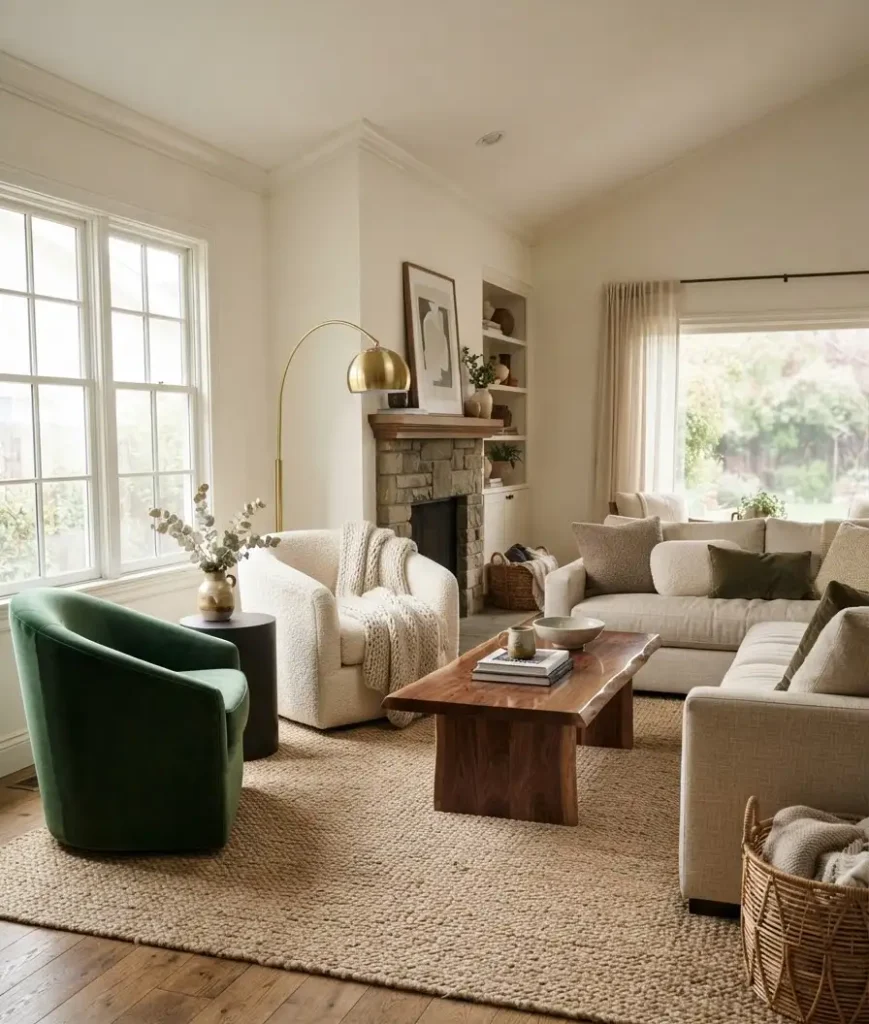
The goal isn’t finding five things in the exact same fabric. It’s finding things that feel different in your hand.
A smooth velvet cushion next to a chunky knit throw creates tension your eye actually enjoys.
Try pairing these combinations:
- Bouclé or wool armchair with a linen or cotton sofa
- A jute or sisal rug underneath a soft wool or shag rug
- Matte ceramic vases alongside a polished brass lamp base
- A rough, reclaimed wood coffee table with smooth, glossy accessories on top
One design blog put it well: balance is the whole game when it comes to mixing materials, and combining two or three textures like linen, wool, and wood is usually enough to make a space feel intentional rather than overwhelming.
You don’t need ten different fabrics fighting for attention. You need three or four good ones having a conversation.
My honest take on throw pillows
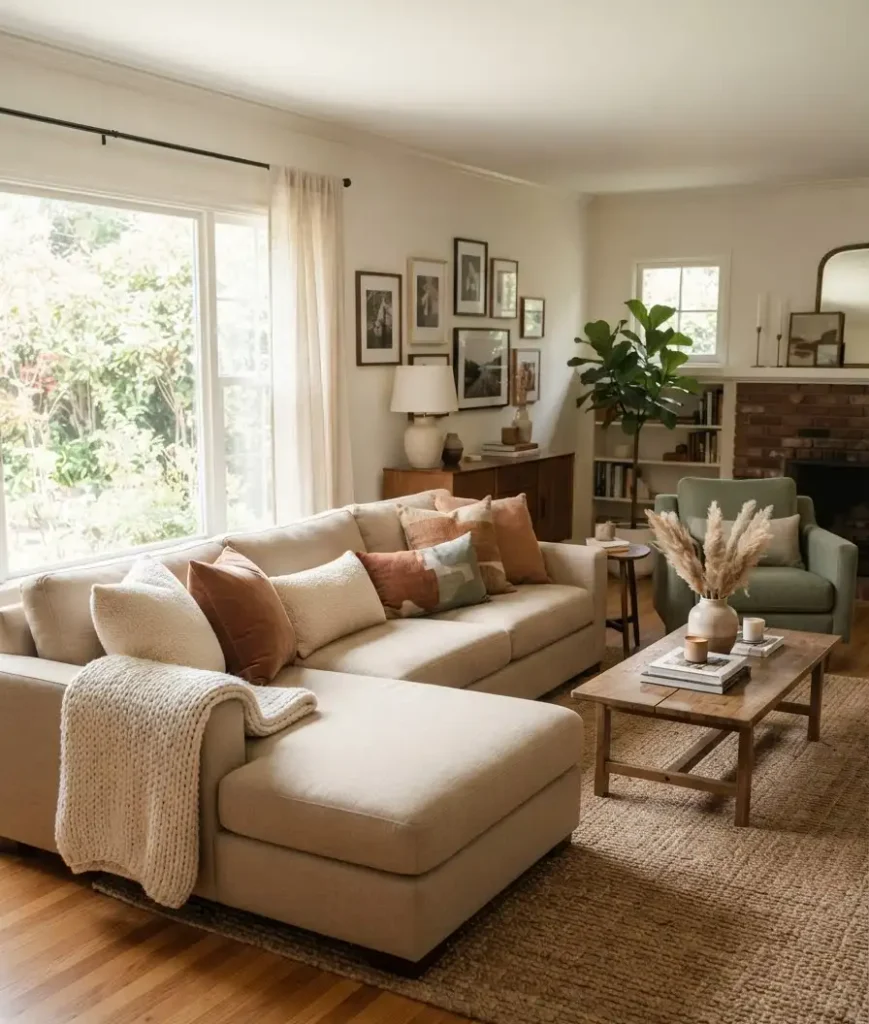
I’ll be blunt: most people buy way too many throw pillows and none of the right ones. Five identical pillows in the same fabric isn’t texture, it’s just repetition with extra steps.
What actually works is picking three to five pillows in genuinely different materials: one velvet, one bouclé, one linen, maybe a woven or textured one for good measure.
Different sizes help too. A 20-inch square next to an 18-inch square next to a lumbar pillow reads as curated instead of matchy.
Lighting: the layer most people completely skip
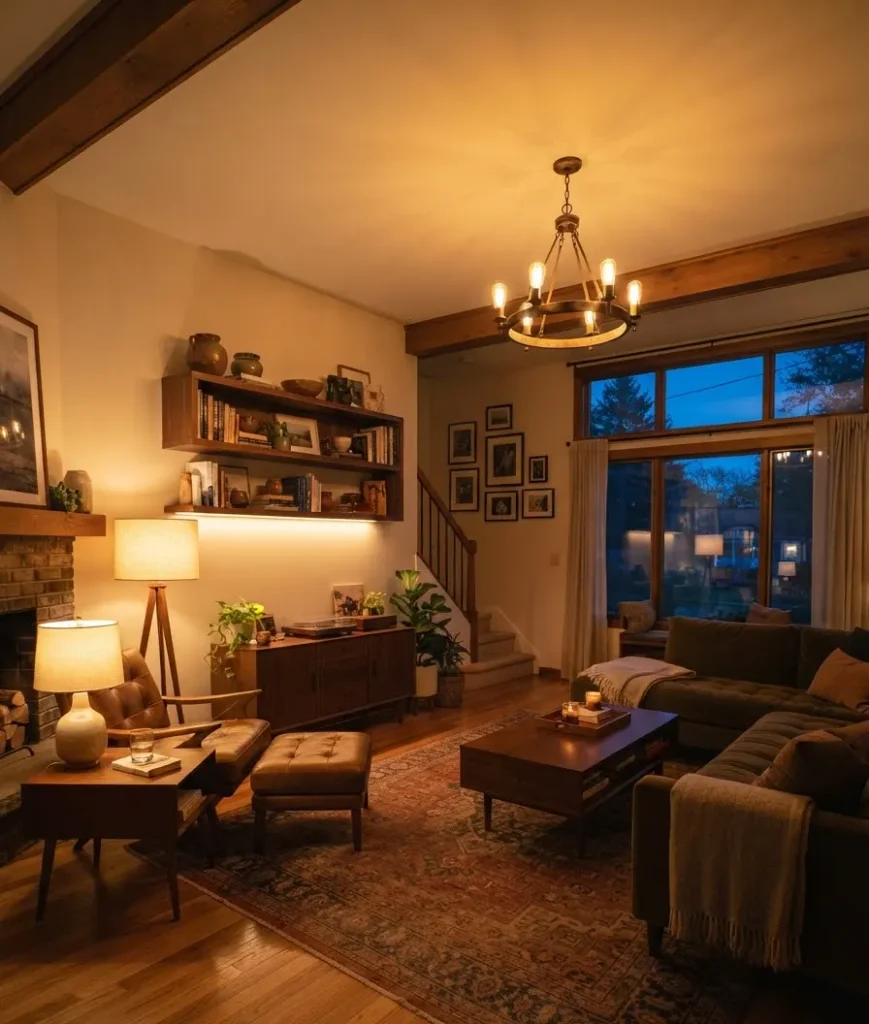
Here’s a hot take: your living room probably has one overhead light and that’s the entire reason it feels like a waiting room after dark. A single ceiling fixture flattens everything.
No shadow, no depth, no mood. Just flat, even, slightly depressing light.
Designers break lighting into three functional layers, and honestly, once you understand them you’ll never look at your lamp collection the same way again.
The three layers you actually need
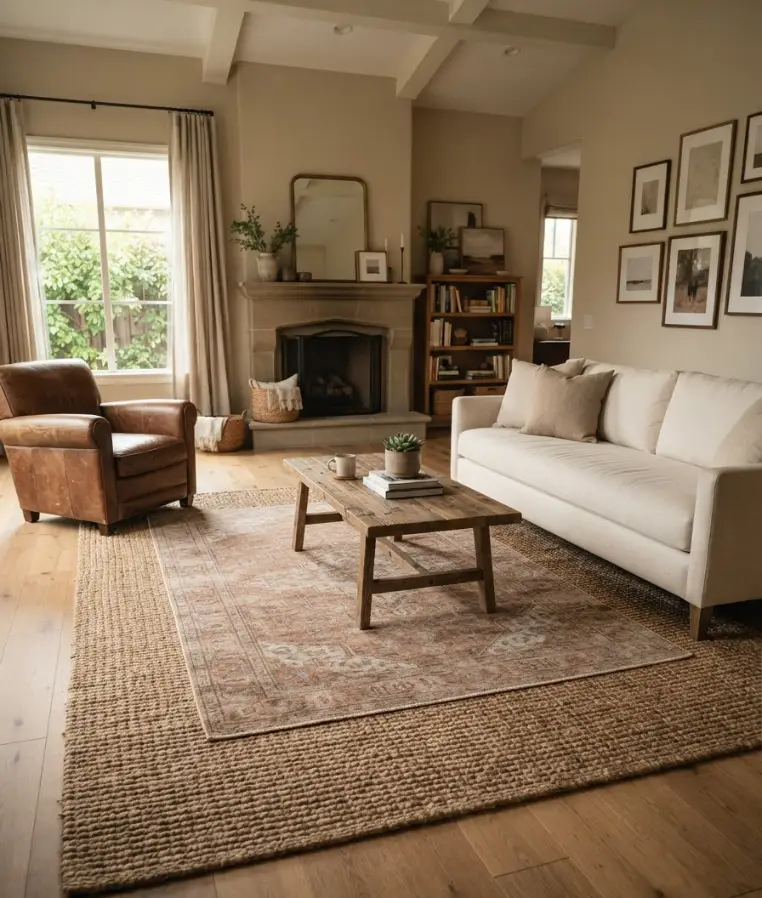
Ambient lighting is your base layer, the general glow that lets you move around safely. Think ceiling fixtures, recessed lights, or a central pendant.
Task lighting is directional and specific, like a floor lamp beside your reading chair. One lighting studio notes that a floor lamp positioned beside a sofa or armchair does double duty, both lighting the activity and breaking up the room visually by drawing the eye down and outward instead of up at a flat ceiling.
Accent lighting is the finishing touch: a picture light over artwork, an uplight behind a plant, an LED strip tucked under a shelf.
This is the layer that actually creates depth and shadow, which is the whole point.
Here’s a quick breakdown to keep the three layers straight:
| Lighting layer | What it does | Common fixtures |
|---|---|---|
| Ambient | Fills the whole room evenly | Ceiling fixture, recessed lights |
| Task | Lights a specific activity | Floor lamp, table lamp |
| Accent | Adds depth and drama | Picture lights, LED strips, sconces |
A small tip that made a bigger difference than I expected: keep your bulb temperatures consistent.
Mixing a warm 2700K lamp next to a cooler 4000K one creates a weird visual clash, even if you can’t immediately explain why the room feels off.
Stick to warm white (2700K to 3000K) across the whole room for that golden-hour glow people are always chasing on Pinterest.
Wow, I genuinely didn’t realize how much of a difference matching bulb temperatures made until I fixed mine.
My living room went from “slightly office-adjacent” to actually relaxing in one afternoon, and all I did was buy the right bulbs.
Rugs: the layering trick that’s everywhere right now
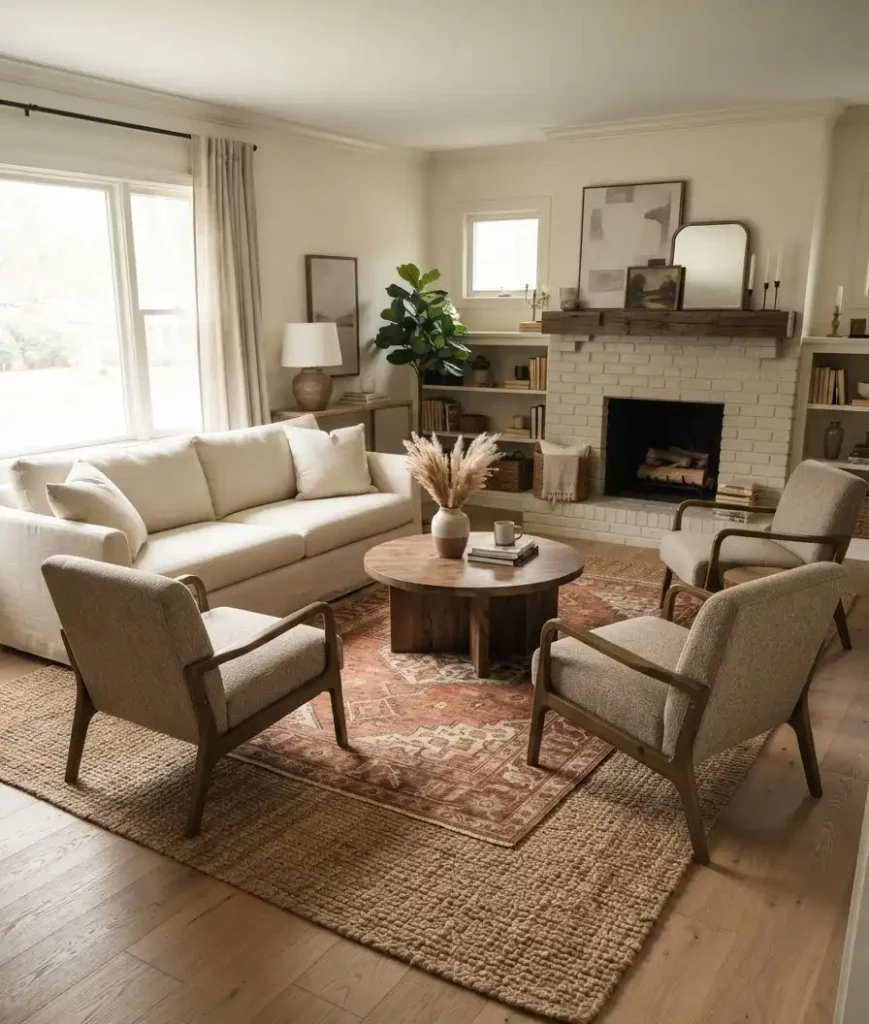
Rug layering isn’t new, but it’s having a real moment, and for good reason. Stacking a smaller, patterned rug on top of a larger, neutral one gives your floor the same depth your walls and lighting already have.
Getting the proportions right
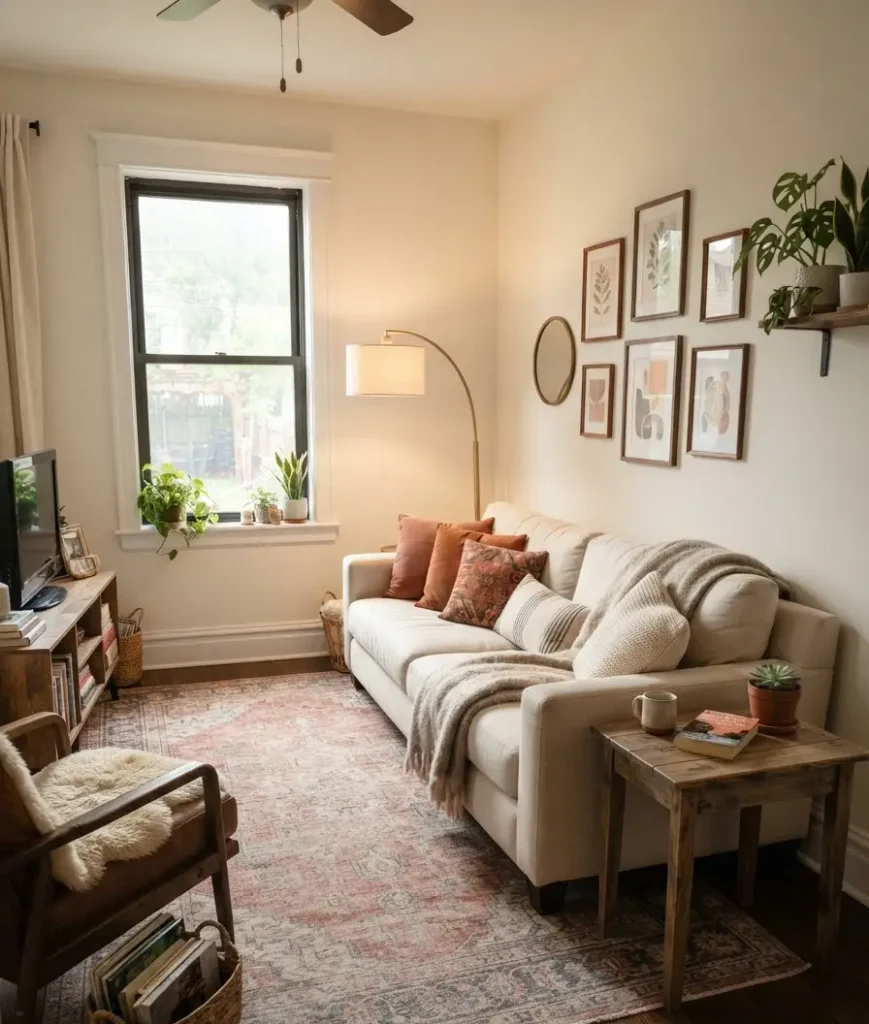
The math here matters more than the styling. Rug retailer Ruggable recommends starting with a large neutral base rug sized to anchor your seating arrangement, then layering a smaller rug on top that covers roughly 60 to 70 percent of the base so the border stays visible on all sides. Get this ratio wrong and the whole look reads as accidental instead of intentional.
A few practical pointers:
- Base rug: should be big enough that all your furniture legs (or at least the front legs) sit on it. Common sizes are 8×10 or 9×12.
- Top rug: roughly two-thirds the size of the base, centered or slightly offset toward your seating area.
- Color pairing: neutral base, patterned or colorful top rug tends to be the safest combo if you’re new to this. Two bold patterns together can tip into chaos fast.
I tried this in my own space with a jute rug underneath and a small vintage-style wool rug on top, and honestly,
it’s one of the cheapest upgrades I’ve made that got the most compliments.
Guests actually ask about the rug now, which never happened when I had one plain rectangle covering the whole floor.
Budget-friendly ways to layer without overspending
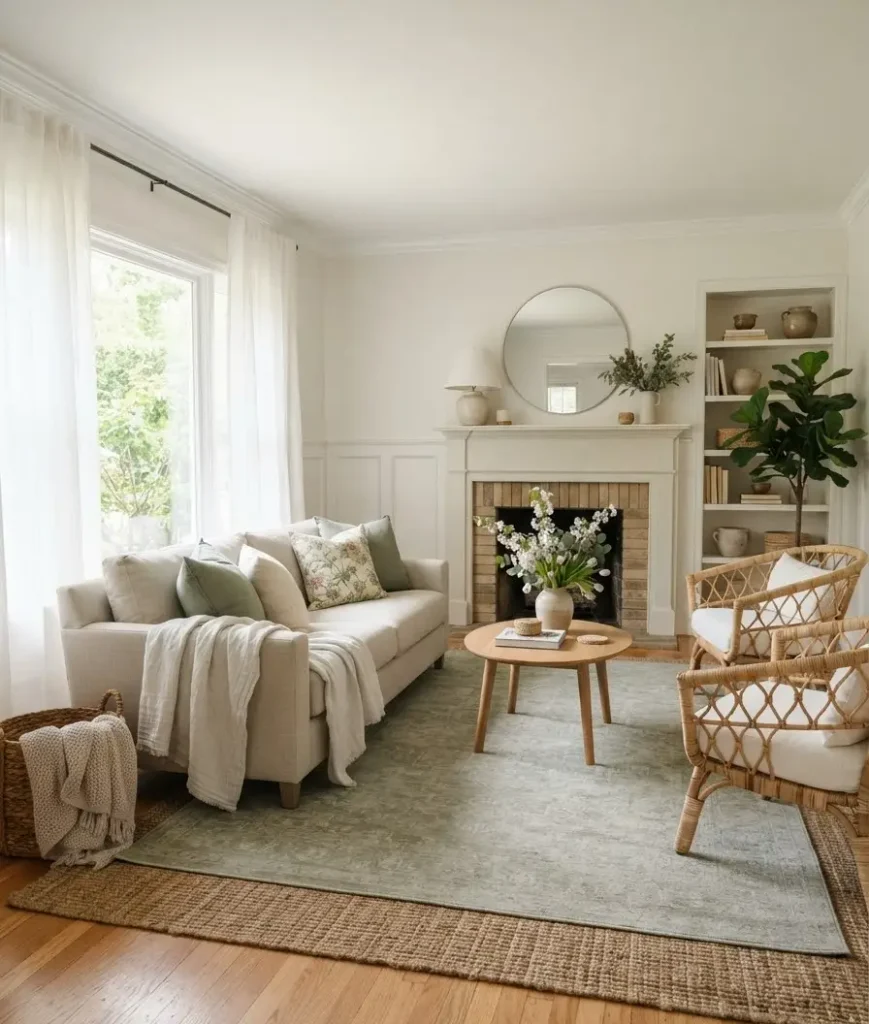
You don’t need a full shopping spree to pull this off, and honestly, some of the best layered rooms I’ve seen on Pinterest were built slowly over months, not bought in one weekend trip.
A few things I’ve done that cost almost nothing:
- Rotate what you already own. Move a throw blanket from the bedroom to the sofa. Swap pillow covers instead of buying whole new pillows.
- Shop secondhand for rugs. Vintage and thrifted rugs are perfect for the top layer of a rug stack, since a little wear and imperfection actually reads as intentional in a layered setup.
- Add one lamp at a time. You don’t need to buy your ambient, task, and accent lighting all in the same month. Start with a floor lamp near your favorite chair and build from there.
- DIY the accent layer. A strand of warm LED string lights tucked behind a bookshelf does a surprising amount of work for under 20 dollars.
I’ve genuinely built most of my current setup from a mix of clearance sales, hand-me-downs, and one splurge item (my rug, if you’re wondering). The trick isn’t spending more, it’s being patient enough to add layers gradually instead of trying to finish the room in a single afternoon.
Seasonal layering: keeping the look fresh
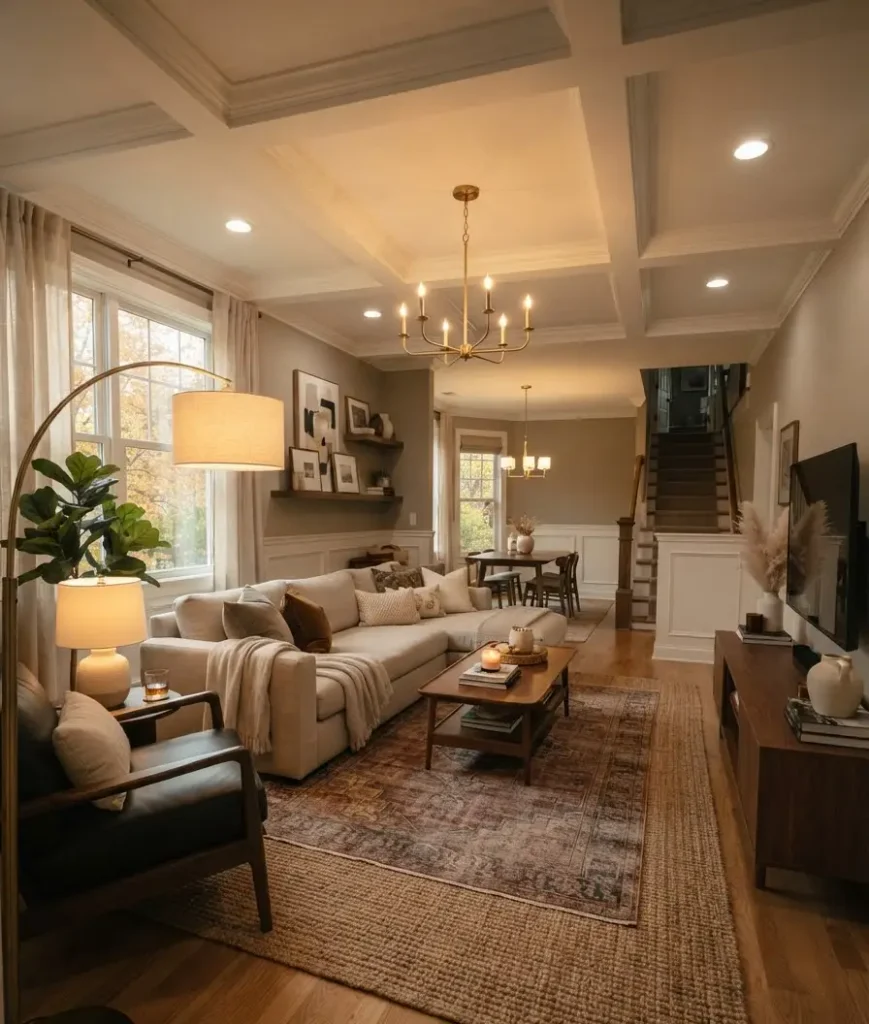
One thing I love about a layered room is how easy it is to refresh without redoing anything major. Swap a chunky knit throw for a lighter linen one come spring.
Trade a heavier wool top rug for something in a lighter weave once the weather turns warm.
This is also where Pinterest boards genuinely come in handy, IMO.
Save a few seasonal palettes you like, whether that’s warm rust and cream for fall or soft sage and white for spring, and just rotate your
smaller layers (pillows, throws, the top rug) to match. Your base layer, the neutral sofa and walls, never has to change at all.
That’s the whole appeal of building a strong foundation first: everything on top becomes easy, low-cost styling instead of a full renovation twice a year.
Putting all three layers together
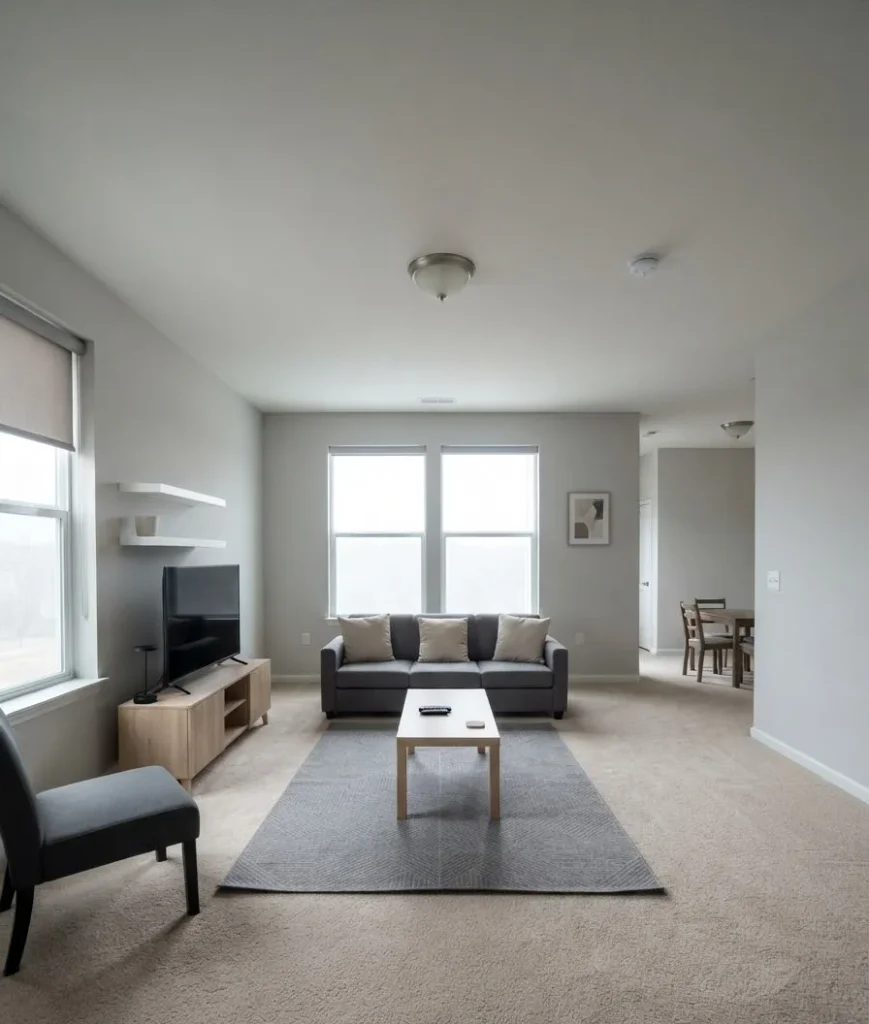
None of these elements work in isolation, and that’s honestly the whole point of this article.
A gorgeous layered rug under bad overhead lighting still looks flat. Perfect ambient lighting over a totally flat, single-texture room still feels sterile.
Start with your base (neutral walls, simple sofa). Add texture through pillows, throws, and a couple of statement furniture pieces.
Layer your rugs so the floor has the same depth as everything above it. Then finish with lighting that actually lets all of that texture catch shadow and shine at different times of day.
Do all four and you’ll notice something odd: the room starts looking finished even when it technically isn’t.
You could have unpainted trim and a half-empty bookshelf and the room will still read as intentional, because your eye is busy enjoying the layers instead of noticing what’s missing.
Common mistakes I made so you don’t have to
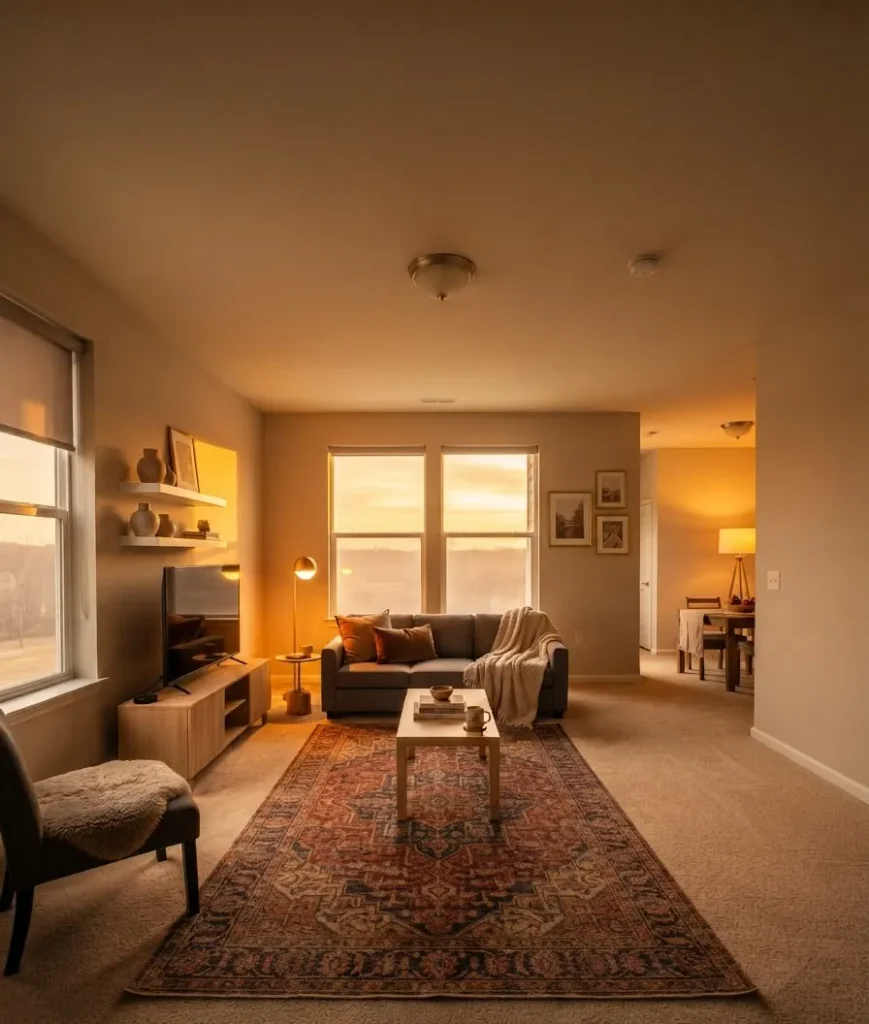
I’ll save you some trial and error here, because I made basically every one of these mistakes myself.
- Buying pattern before buying neutral. I went pattern-first and had to return half of it.
- Relying on one ceiling light. This is the single biggest reason living rooms feel “meh” at night.
- Skipping the rug pad. Not glamorous, but it stops your layered rugs from sliding around and bunching at the edges. This one’s not optional if you have hardwood floors.
- Matching everything too closely. A room where every fabric is the exact same beige linen isn’t cozy, it’s just monochrome. This is insane how often I see it in “minimalist cozy” inspiration photos that somehow still feel cold.
- Ignoring bulb temperature. Covered this above, but it deserves a second mention because it’s such an easy fix.
Frequently asked questions
How many textures should I use in one living room? Two to three dominant textures plus a few smaller accents tends to be the sweet spot.
Much more than that and the room starts feeling cluttered instead of layered.
Do I really need three types of lighting in a small living room? Yes, though the fixtures can be modest. Even a small apartment benefits from one
Ambient source, one task lamp near your seating, and a small accent light like an LED strip or a plug-in sconce.
Can I layer rugs on top of carpet? You can. Just use a rug pad underneath the base layer so it stays put, and keep the top rug relatively lightweight so it doesn’t shift around on a soft surface.
Final thought
A cozy living room isn’t about spending more. It’s about layering what you already have with a bit more intention: a mix of textures your hand
Actually wants to touch, light that changes with the mood of the evening, and a rug setup with some real depth to it.
Start with one layer this weekend. Swap a single throw pillow, add one warm lamp, or try stacking
A small vintage rug over your current one. Then tell me: which layer made the biggest difference in your space?