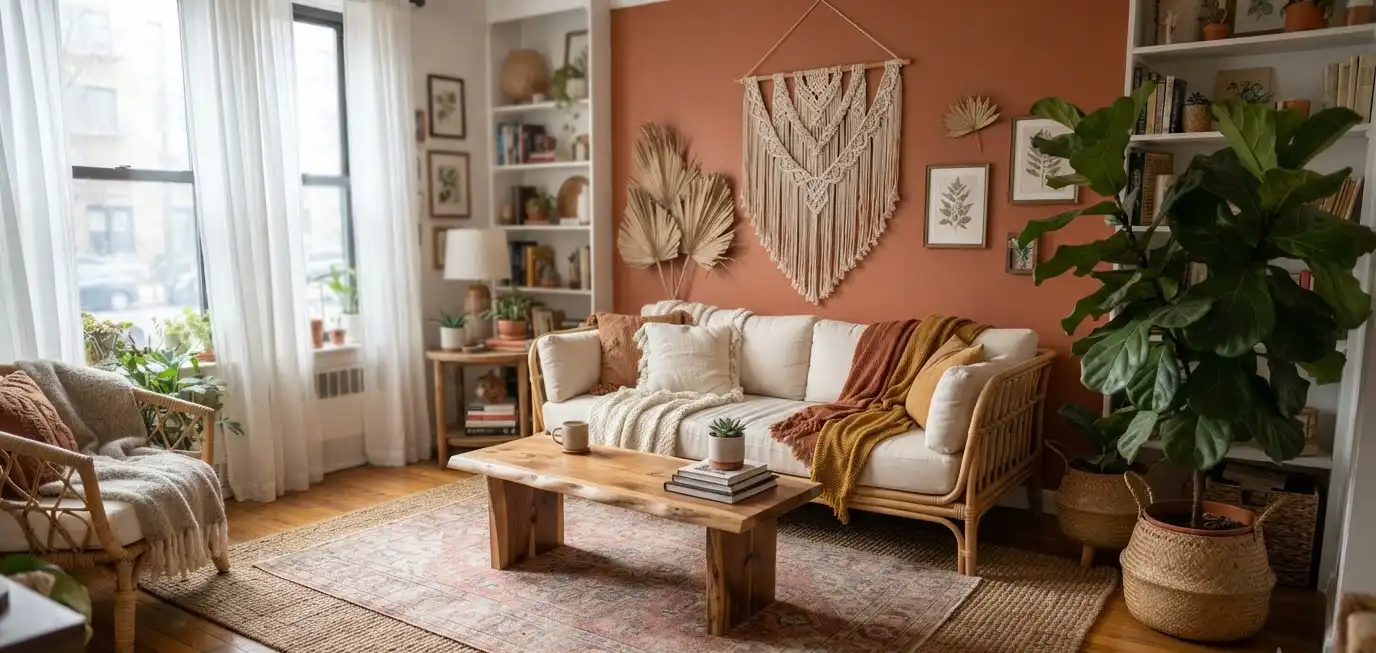
You don’t need a sprawling loft to pull off boho. Some of the coziest, most lived-in living rooms I’ve seen belong to people working with 300 square feet or less.
Small spaces actually force better decisions. When every piece has to earn its spot, the room ends up feeling curated instead of cluttered.
I’ve spent years pinning, testing, and rearranging furniture in a living room that’s barely big enough for a couch and a coffee table. So this isn’t theory.
It’s what actually worked, what looked great on Pinterest but flopped in real life, and what I’d tell a friend moving into a studio apartment tomorrow.
Boho style gets a bad reputation for being messy. Piles of blankets, mismatched everything, plants crawling up every wall.
Done wrong, that’s exactly what happens, especially in a small room where clutter reads as chaos instead of charm.
Done right, boho in a tight space feels warm, layered, and intentional. That’s the difference we’re chasing here.
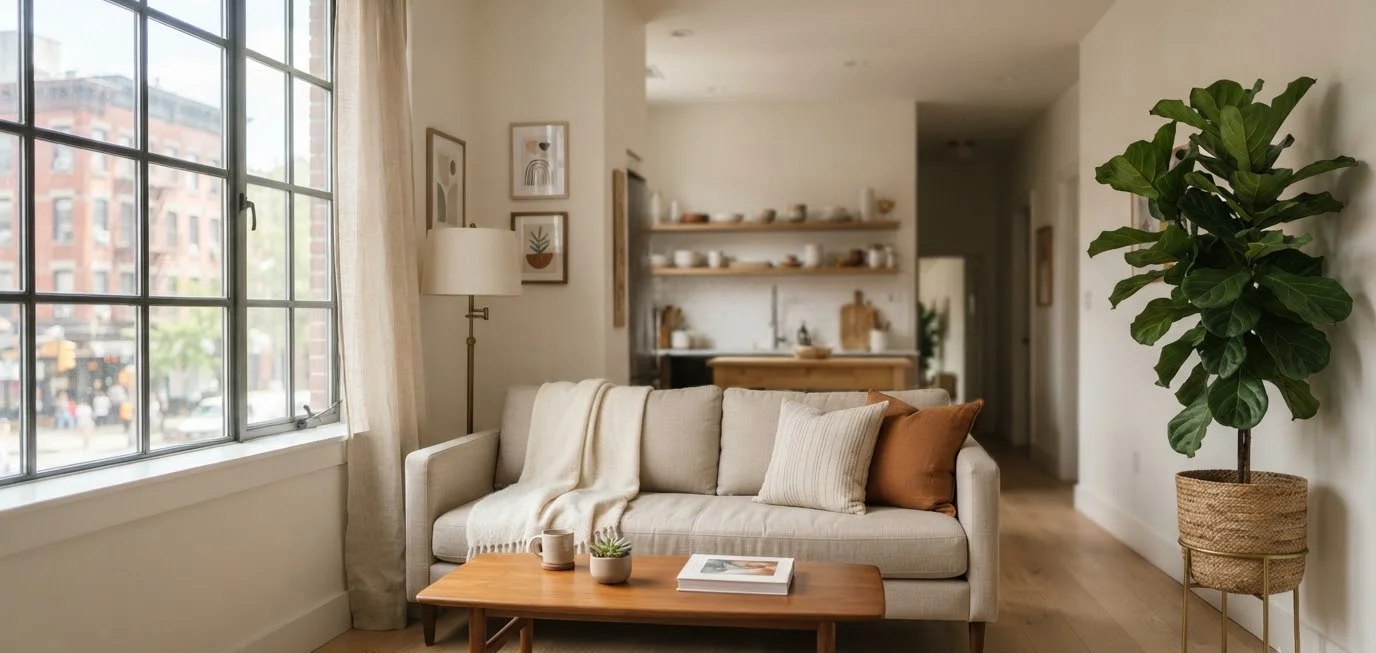
Why boho works so well in small living rooms
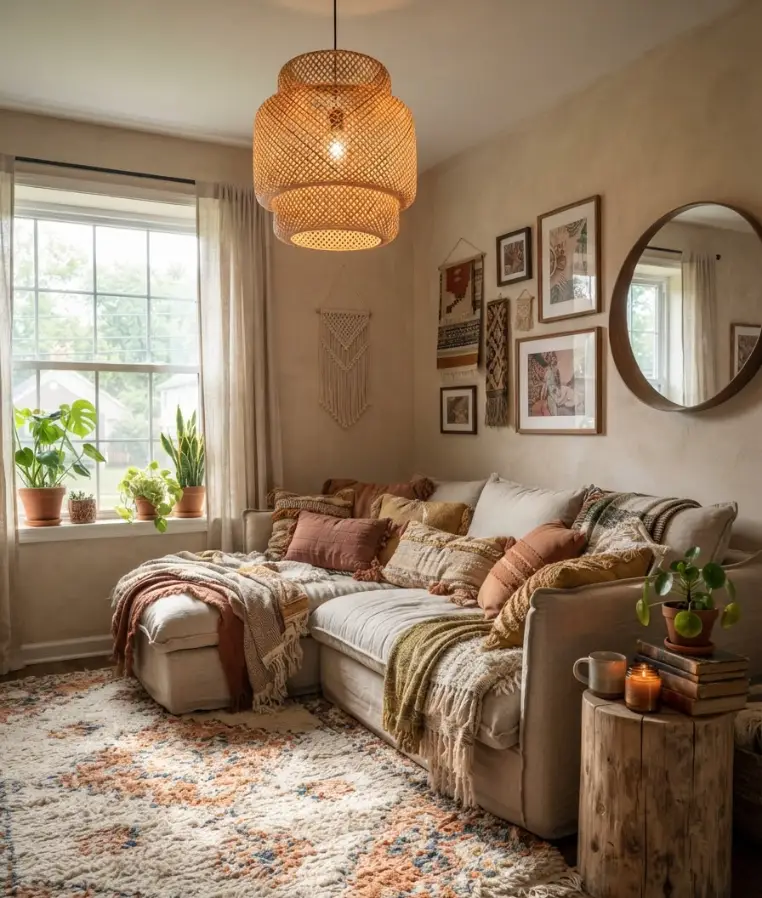
Boho design leans on texture, warmth, and personality rather than square footage.
A big open-concept living room can feel cold with too much empty space. A small boho room never has that problem.
Layered textiles, natural materials, and warm lighting fill visual space without adding physical clutter.
You get coziness through feel, not through cramming in furniture. That’s the whole trick.
I’d also argue boho forgives imperfection better than most styles. A slightly crooked gallery wall or a rug that doesn’t perfectly match your throw pillows reads as “collected over time” in boho, not “mistake.
” Minimalist spaces don’t offer that same grace.
Start with a neutral base, then layer in warmth
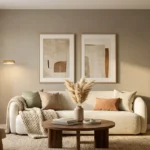
Every small boho room I’ve built starts the same way: a neutral foundation. Think warm whites, sandy beiges, soft terracotta, or a muted clay tone on the walls.
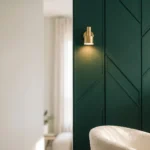
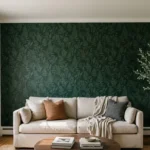
Dark, saturated colors can work in boho, but they shrink small rooms visually. If your living room is already tight on space, a heavy navy or deep forest green wall might look stunning in photos and claustrophobic in person. I learned that one the hard way after painting an accent wall a rich rust color that made my 10 by 12 room feel like a shoebox.
Once your base is set, layer in warmth through:
- Woven textures like jute, rattan, and macrame
- Warm wood tones in furniture legs and frames
- Soft, worn-in fabrics like linen and cotton
- Earthy accent colors in small doses (terracotta, mustard, sage)
This layering approach means your eye moves around the room instead of stopping flat on one plain surface. That movement is what makes a small space feel designed rather than empty.
The neutral-plus-texture formula
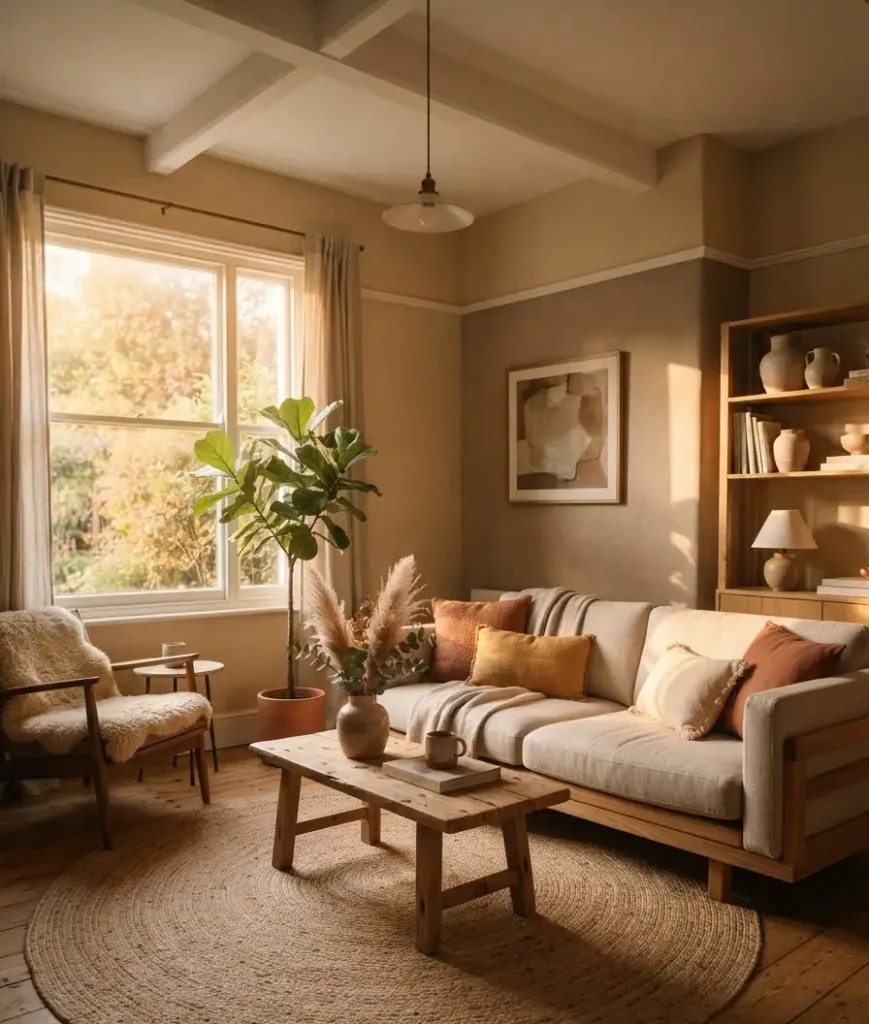
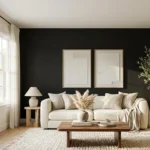
If you remember nothing else, remember this: neutral walls, neutral large furniture, then let smaller pieces (pillows, throws, art, plants) carry the boho personality.
It’s a formula that scales up or down depending on how bold you want to go, and it keeps a small room from feeling visually overwhelming.
Furniture choices that don’t eat your square footage
Furniture is where small boho living rooms live or die. IMO this is the section people skip and then wonder why their “cozy” room feels cramped instead.
A few rules I stick to:
- Choose a low-profile sofa. Boho sofas often sit lower to the ground, which visually opens up ceiling height. A low sofa with rounded arms and a slouchy silhouette reads as relaxed, not bulky.
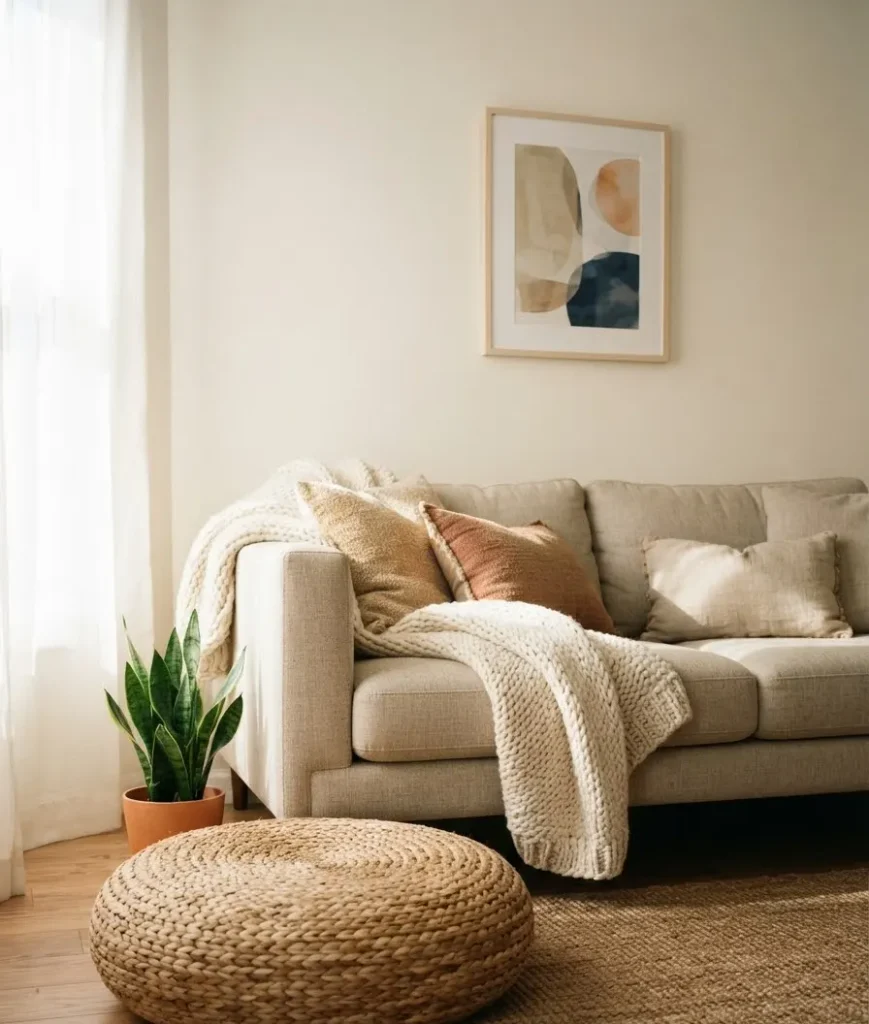
- Pick furniture with visible legs. Furniture that floats slightly off the floor (instead of skirted pieces that touch the ground) makes a room feel lighter and more open.
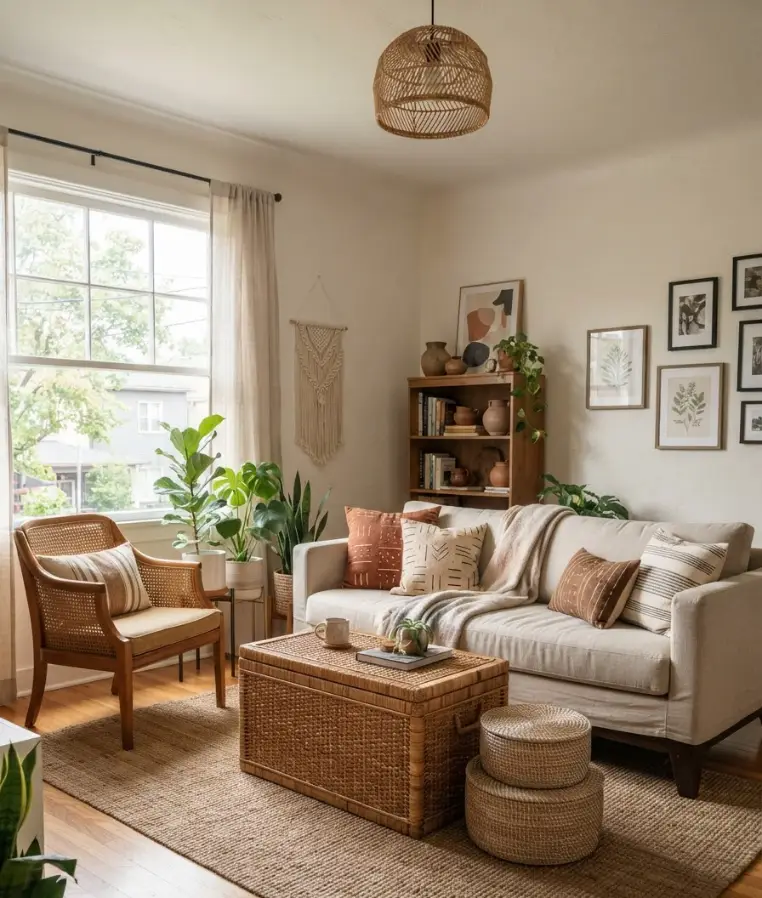
- Go multi-functional wherever possible. A rattan trunk that works as a coffee table and storage. A pouf that doubles as extra seating or a footrest. Small rooms reward furniture that pulls double duty.
- Skip the matching set. Boho thrives on mismatched, collected-over-time furniture. A vintage cane chair next to a modern linen sofa looks intentional, not chaotic, as long as the color palette ties them together.
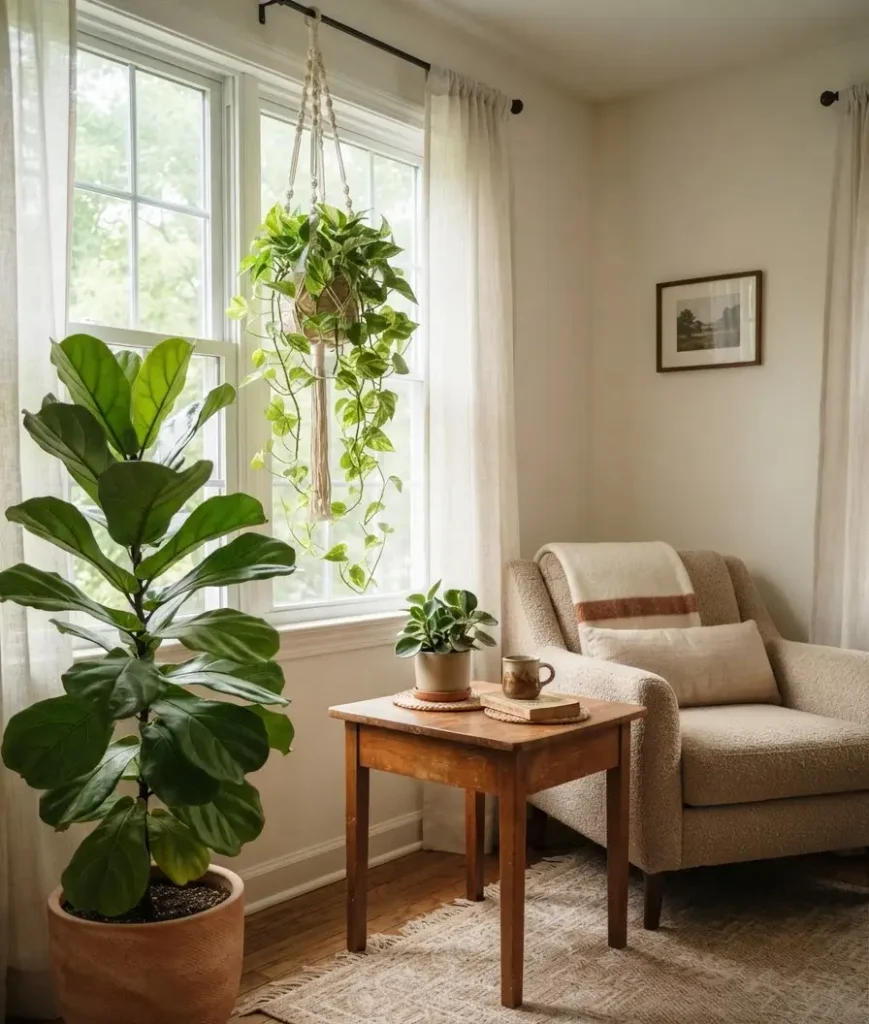
I made the mistake early on of buying a matching three-piece living room set because it felt “safe.” It looked like a furniture showroom, not a home. Once I swapped one piece for a secondhand rattan chair, the whole room clicked.
Layering rugs and textiles for instant coziness
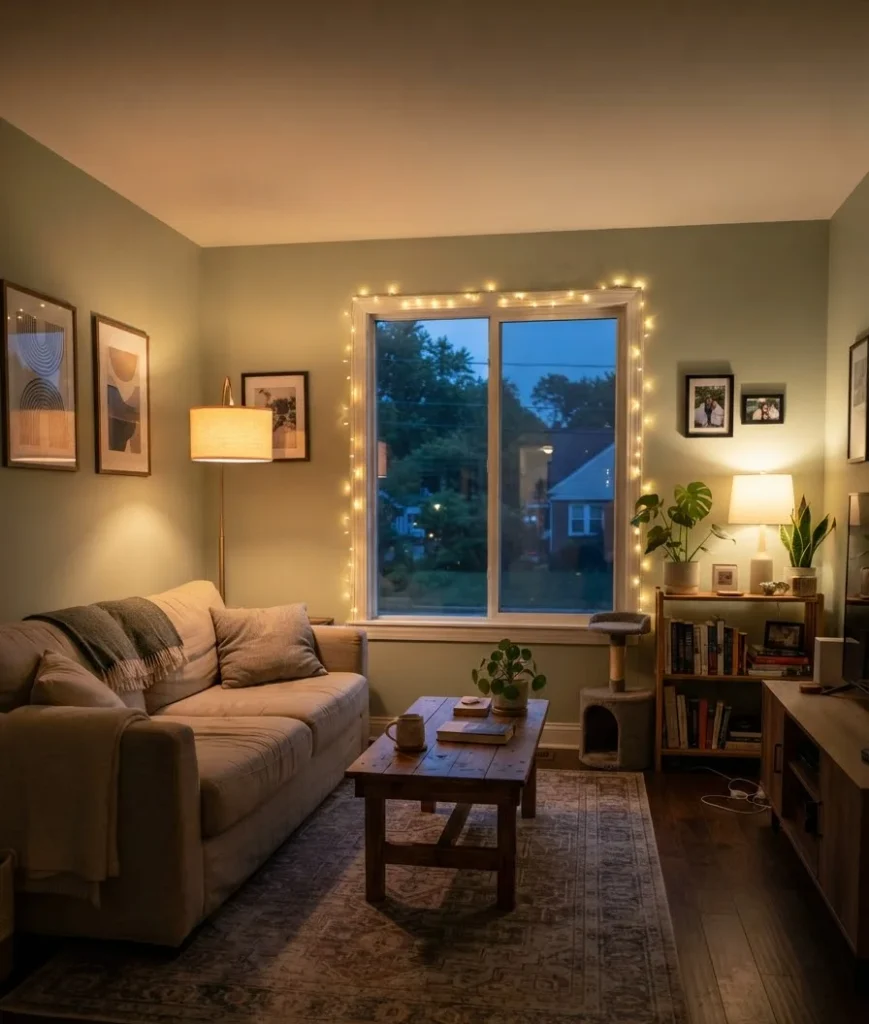
Rugs do more heavy lifting in a small boho room than almost any other element. A single well-chosen rug can anchor the whole space.
For tight rooms, I’m a big fan of the layered rug trick: a jute or sisal base rug topped with a smaller, patterned vintage-style rug. It adds visual depth without taking up more floor space than a single large rug would.
Textiles matter just as much:
- Throw blankets draped over the arm of a sofa or chair (chunky knits work beautifully here)
- Floor cushions for extra flexible seating that stacks away when you need the space
- Curtains in a soft, textured linen to add height and softness around windows
Here’s a quick breakdown of textile choices and where they work best:
| Textile | Best placement | Why it works |
|---|---|---|
| Jute or sisal rug | Under the coffee table | Adds warmth without visual heaviness |
| Chunky knit throw | Draped on sofa arm | Instant cozy factor, low cost |
| Macrame wall hanging | Above the sofa | Fills wall space without floor footprint |
| Floor cushions | Corner or reading nook | Flexible extra seating |
Ever wonder why boho rooms in magazines look so inviting even when they’re small? It’s almost always the textile layering. Furniture sets the bones. Textiles give the room its soul.
Smart storage that still looks intentional
Small living rooms need storage that doesn’t scream “storage.” Woven baskets are the MVP here.
A couple of large seagrass baskets tucked beside the sofa can hold blankets, magazines, or that pile of mail you keep meaning to sort.
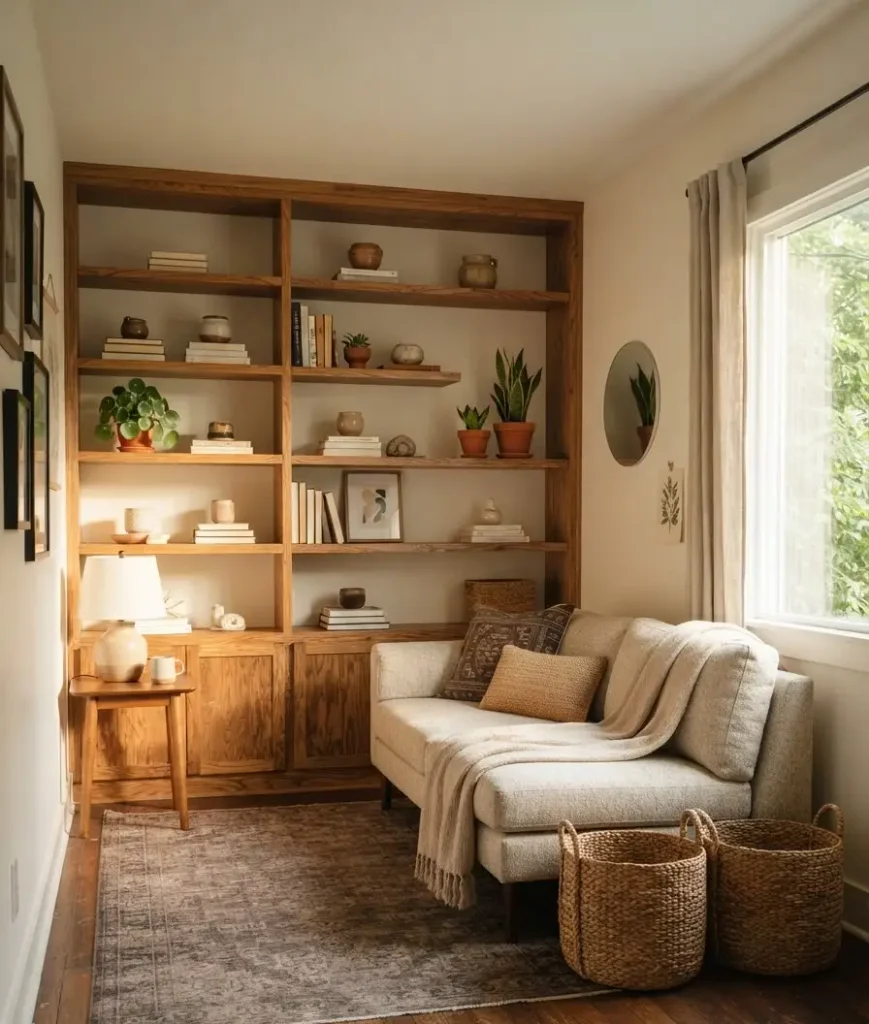
Open shelving is another strong option, especially if you lean into it as a display feature rather than hiding it away.
Stack a few books, add a small plant, and let one shelf breathe empty. Fully packed shelves in a small room start to look busy fast.
A few other storage moves worth considering:
- Ottomans with hidden storage compartments
- Wall-mounted shelves instead of floor cabinets
- Nesting tables that tuck away when not in use
- Under-sofa storage bins for out-of-season items
None of these require sacrificing style for function, which honestly feels like the whole point of good small-space design.
Plants, but make it intentional (not a jungle)
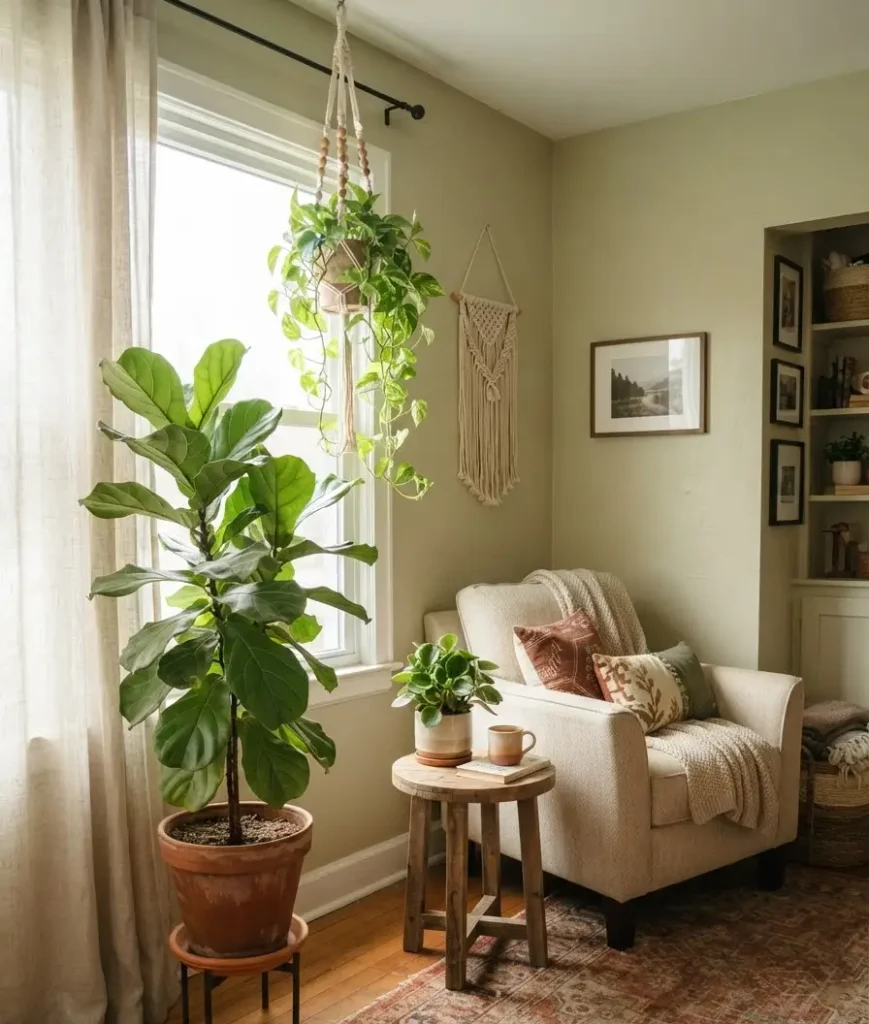
Boho and plants go together like coffee and mornings, but small rooms need a more curated approach than the sprawling plant walls you see in bigger spaces.
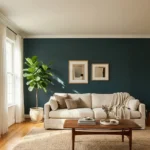
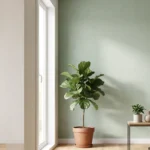
I keep it to three plant “moments” max in a small room: one taller floor plant (a fiddle leaf fig or snake plant works well), one trailing plant on a shelf or hanging planter (pothos is nearly impossible to kill), and one small tabletop plant for texture.
That’s it. Any more and the room starts competing with itself.
If you’re not confident with plant care, a few realistic dried options, like pampas grass or dried eucalyptus, give you that organic texture without the maintenance.
This is where I’ll admit something slightly off-topic: I killed three separate pothos plants before I figured out I was overwatering them, not underwatering them.
Small win for anyone else out there drowning their houseplants with love.
Lighting that makes the whole room feel warmer
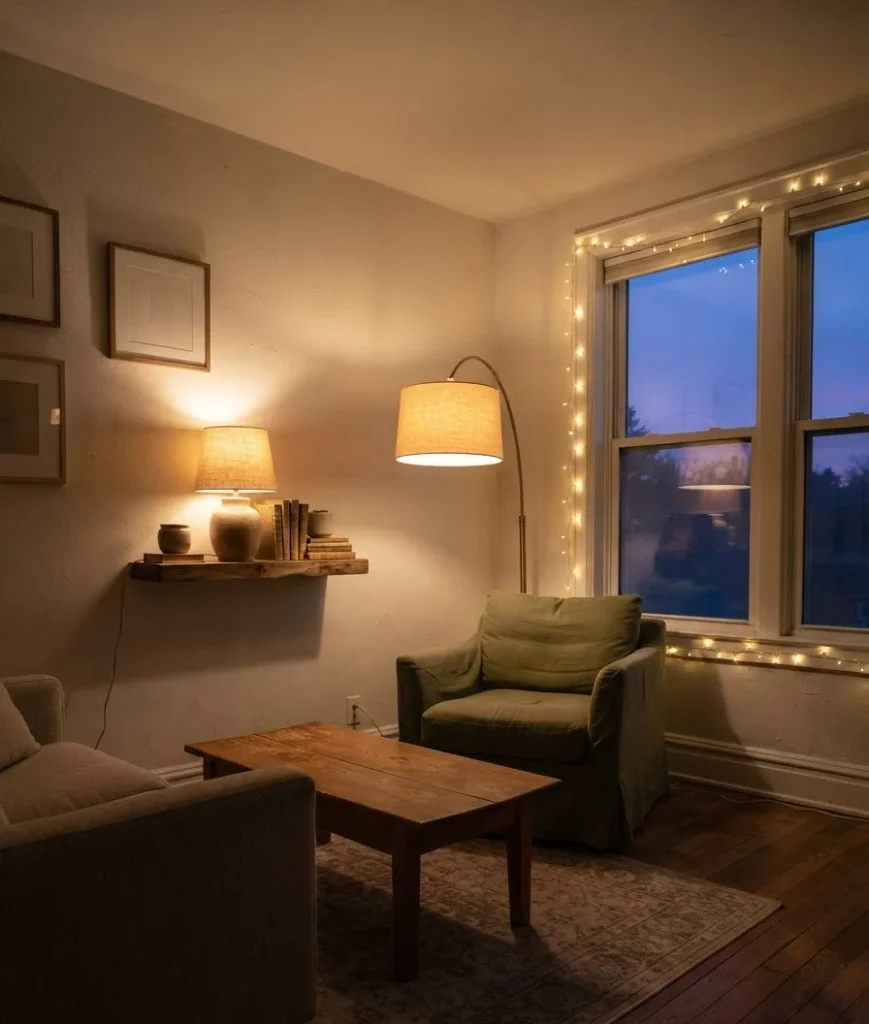
Overhead lighting is the enemy of cozy. A single bright ceiling light flattens a room and kills the boho mood instantly. Instead, layer your lighting the same way you layer textiles.
Try combining:
- A floor lamp with a warm-toned bulb (2700K or lower)
- A table lamp on a side table or shelf
- String lights or fairy lights along a shelf edge or window frame
- Candles for evening ambiance
This layered approach means you can adjust the mood depending on the time of day, which matters a lot in a small room where the same space handles everything from morning coffee to evening wind-down.
For anyone wanting a deeper dive into warm-toned lighting temperature choices, The Spruce has a solid breakdown of Kelvin ratings and how they affect mood that’s worth a quick read before buying bulbs.
Wall decor that adds personality without visual weight
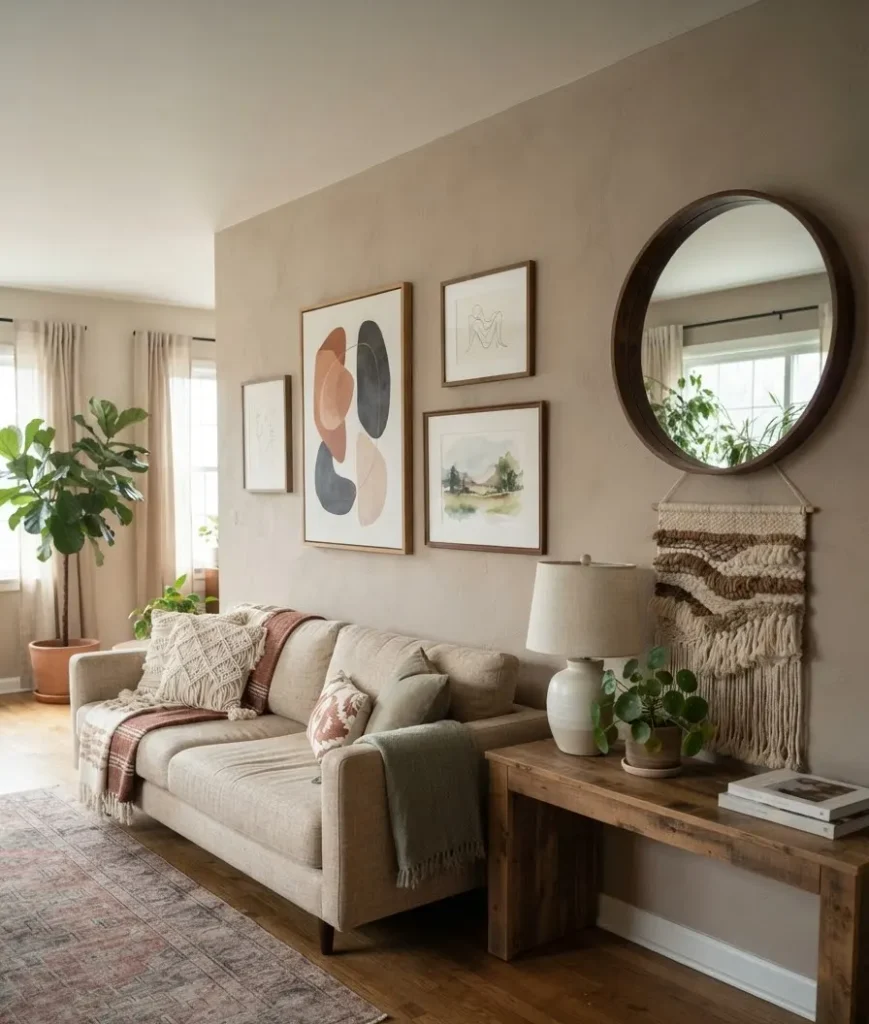
Gallery walls work beautifully in boho spaces, but in a small room, they need restraint.
I stick to one focal wall rather than decorating every surface. Usually that’s the wall behind the sofa.
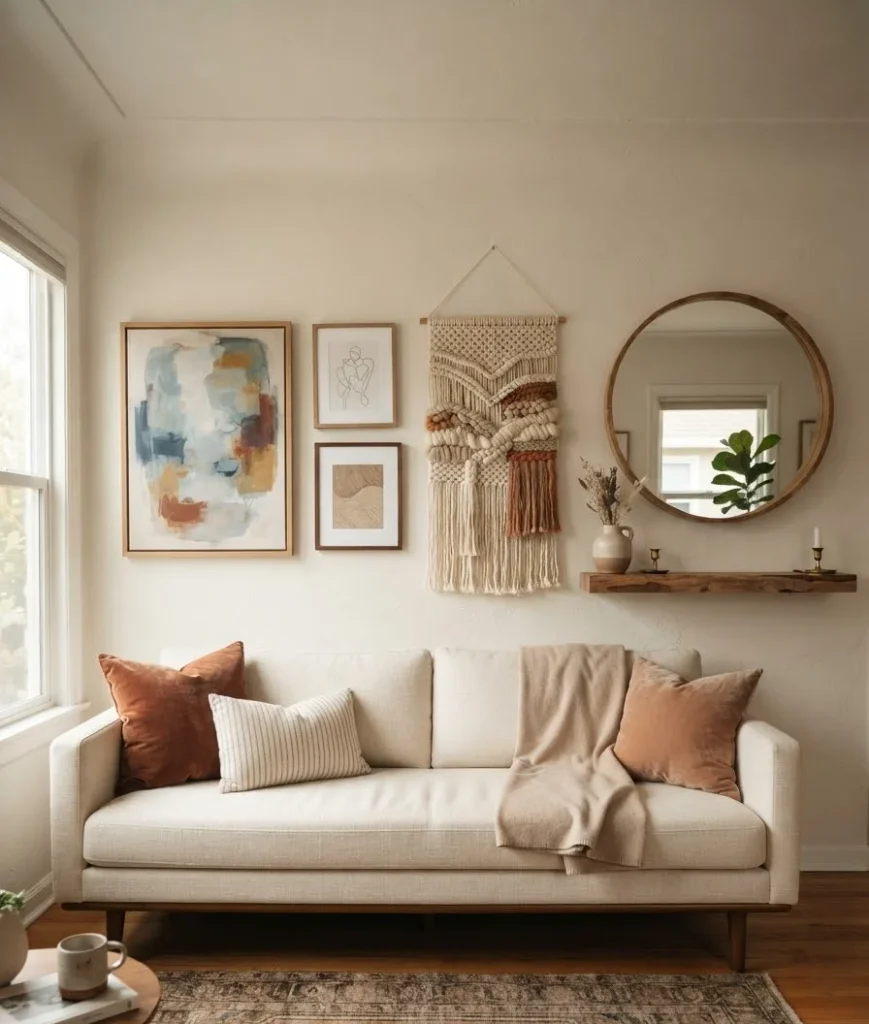
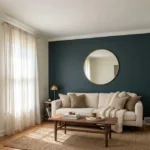
A mix of framed art, a woven wall hanging, and maybe a small mirror creates depth without making the room feel busy.
Mirrors deserve a special mention here.
A well-placed mirror can make a small living room feel noticeably bigger by bouncing natural light around and creating the illusion of depth.
Wow, does a mirror change a room. I underestimated this for years until I added one leaning against the wall opposite my window, and the whole space suddenly felt 20 percent bigger without moving a single piece of furniture.
For color palette inspiration that leans into warm, earthy boho tones, Apartment Therapy’s guide to boho color schemes is genuinely useful if you’re stuck deciding between terracotta and rust.
Arranging furniture to maximize flow
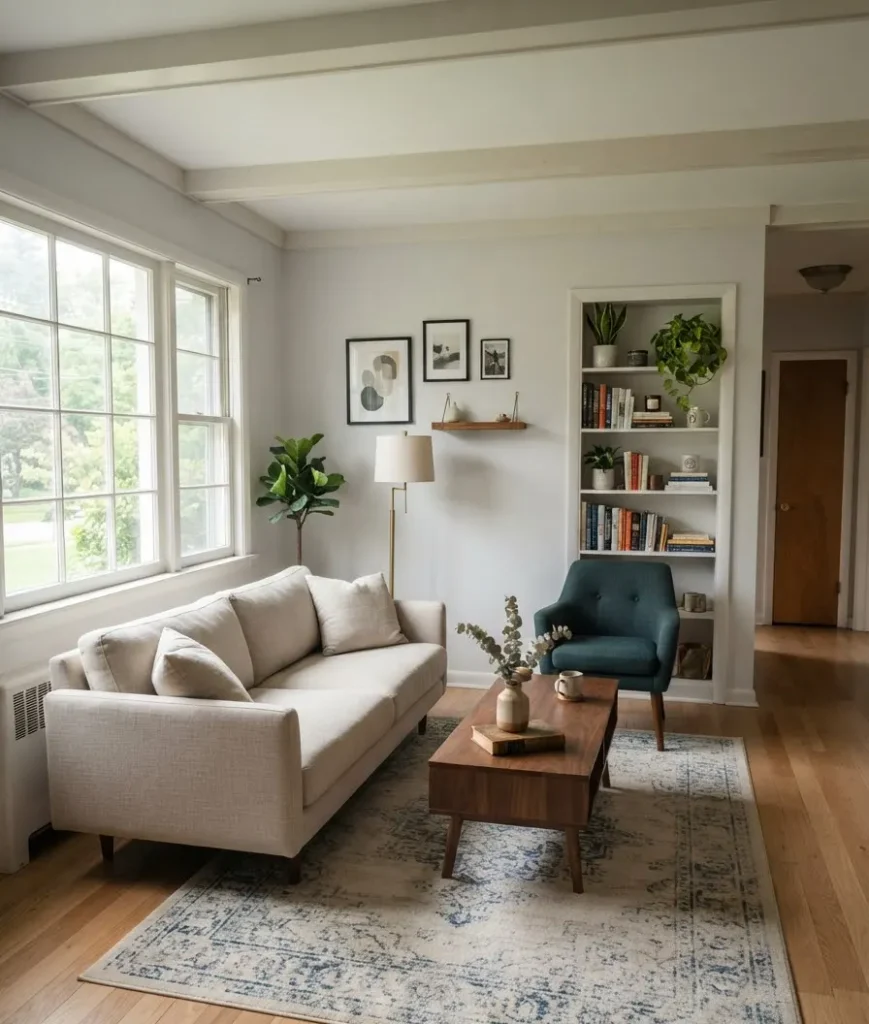
Even the coziest furniture and textiles fall flat if the layout blocks natural movement through the room.
In small living rooms, I always prioritize walkways first, decor second.
A few layout principles that consistently work:
- Float furniture away from walls when possible, even by a few inches, to create breathing room
- Angle a chair or sofa slightly instead of squaring everything off
- Keep the coffee table scaled to the sofa, not the room (a too-large table is a common small-space mistake)
- Leave at least 24 to 30 inches of walking space between major furniture pieces
This isn’t just about aesthetics. A room that’s hard to move through never feels relaxing, no matter how good the pillows look.
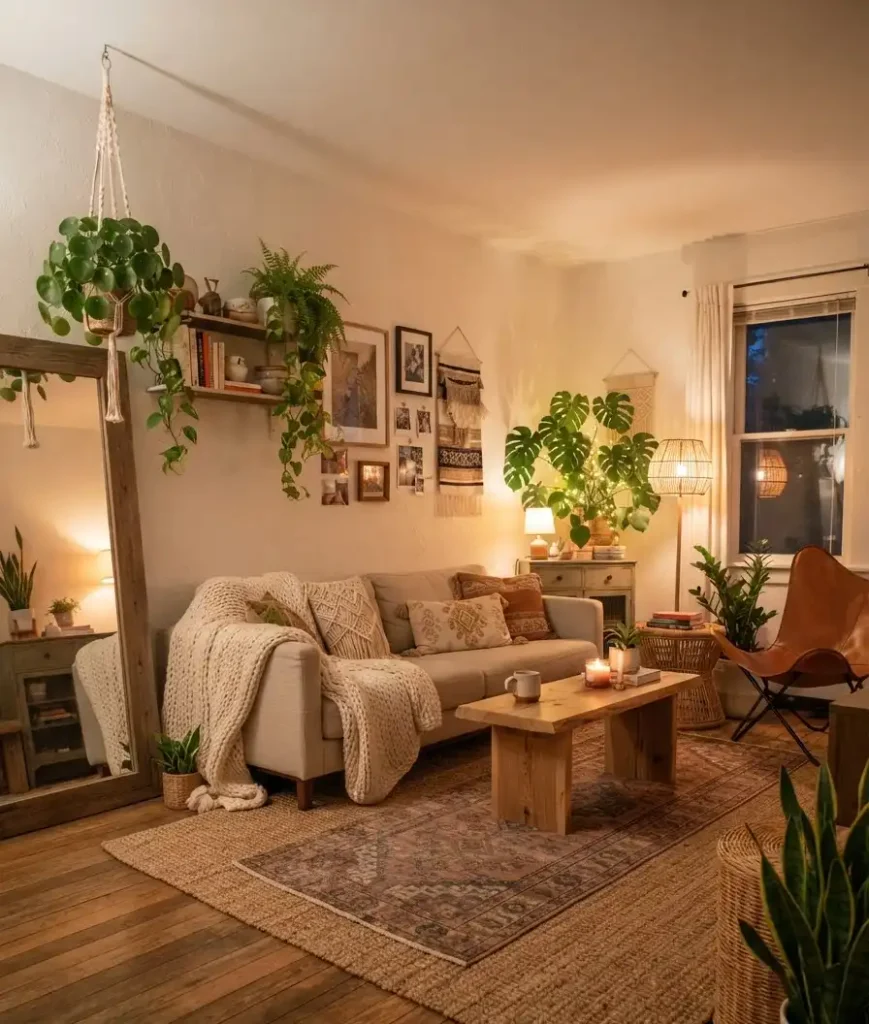
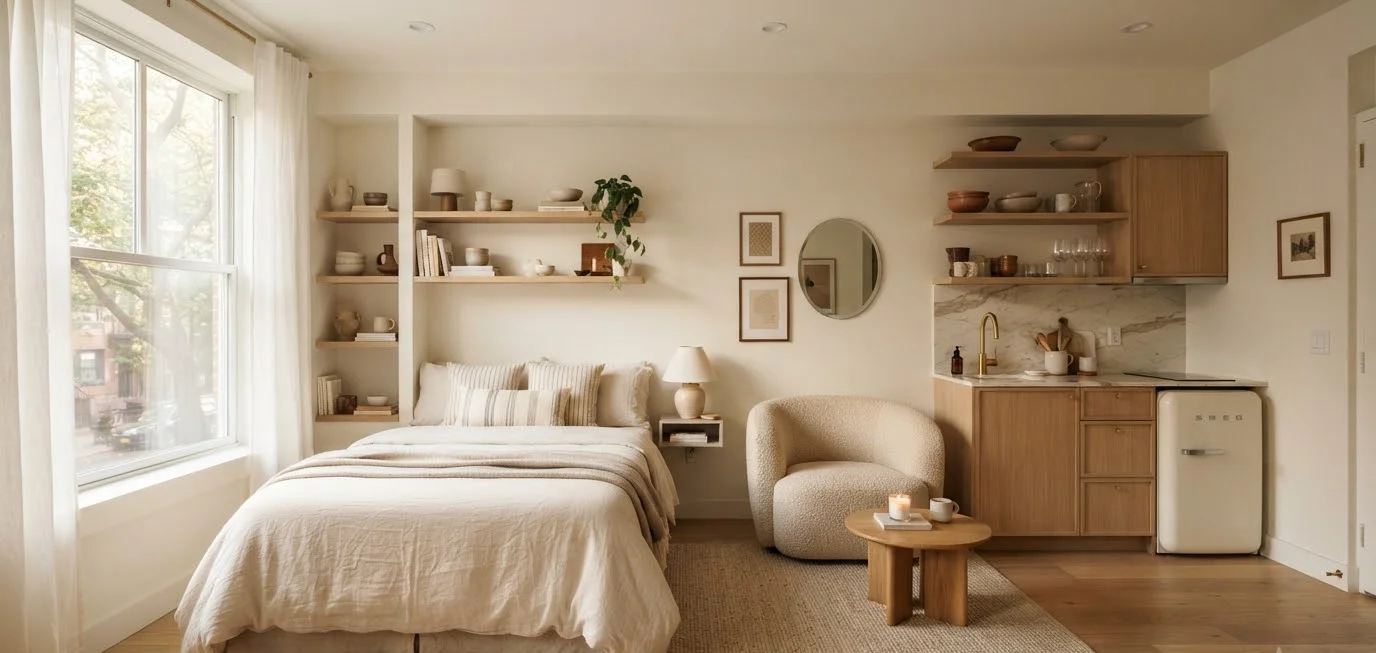
Quick FAQ
Does boho style work in a rental apartment?
Yes, and it’s actually one of the best styles for renters. Textiles, rugs, plants, and wall hangings do most of the visual work, so you’re not painting walls or making permanent changes.
Removable adhesive hooks handle most of the wall decor needs.
What’s the biggest mistake people make with small boho rooms?
Overcrowding.
Boho style has a “more is more” reputation, but in a small room, that quickly turns cozy into cluttered. Pick a handful of standout pieces instead of filling every surface.
Can I mix boho with a more modern style?
Definitely. Boho-modern (sometimes called “boho minimalist”) is a popular middle ground.
Keep the furniture lines cleaner and modern, then layer in boho textures through rugs, textiles, and plants.
Final thought
A small boho living room isn’t about fitting more stuff into less space. It’s about choosing pieces that carry weight, texture, and warmth so the room feels full without feeling crowded.
Start with your base, layer in texture, keep the plants intentional, and let the lighting do the rest.
What’s the one boho element you’re most excited to try in your own space? A layered rug, a gallery wall, or maybe finally committing to that rattan chair you’ve been eyeing?
3 thoughts on “Small Space Cozy Boho Living Room Ideas to Maximize Comfort”