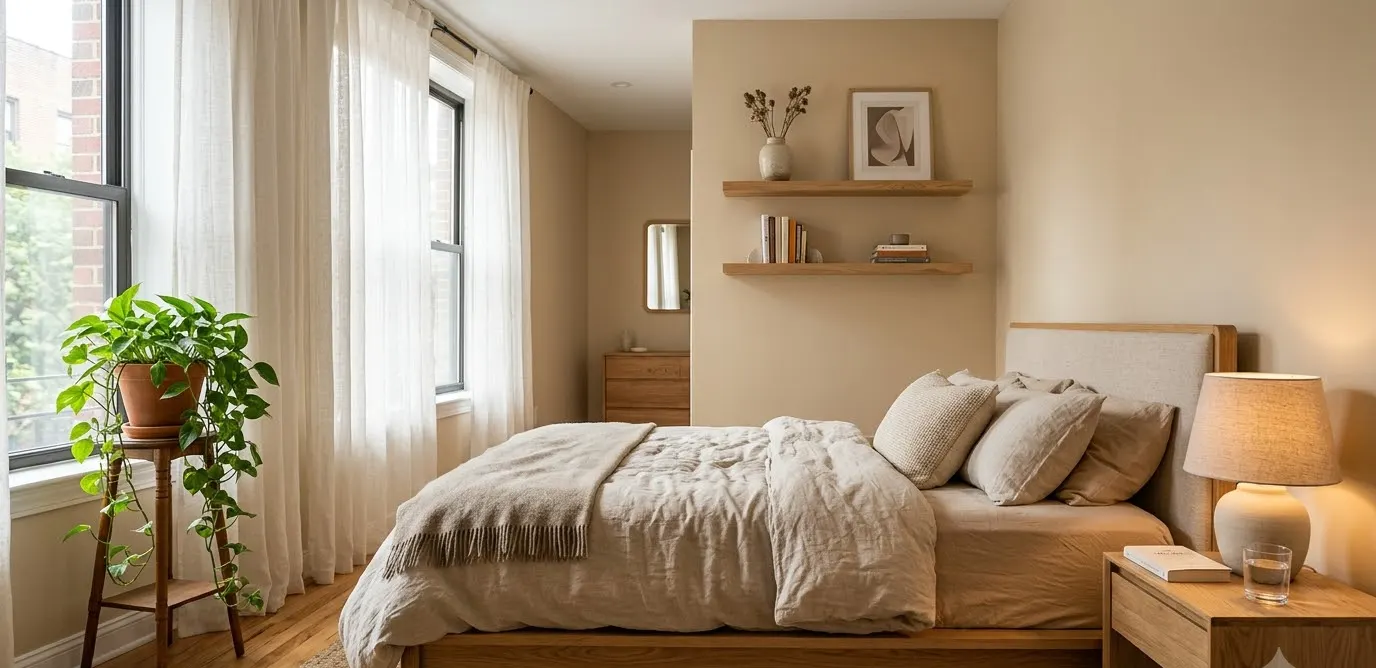
I lived in a 320 square foot studio in my twenties. The bedroom “area” was basically a bed shoved against a wall with about 14 inches of walking room on one side.
So when people ask me for small bedroom advice, I’m not pulling this from a Pinterest board I scrolled once.
I lived it, hated parts of it, and eventually figured out what actually works.
Here’s the thing about tiny bedrooms: most of the advice out there tells you to “declutter” and “add a mirror” like that solves everything. It doesn’t.
A tiny room feels small because of specific, fixable problems, not some mysterious curse.
Once you know what those problems are, fixing them gets a lot easier.
This guide walks through what genuinely moved the needle in my own space, plus what I’ve picked up helping friends redo their apartments.
No filler, no generic “just declutter” advice. Just the stuff that works.
Why tiny bedrooms feel cramped in the first place
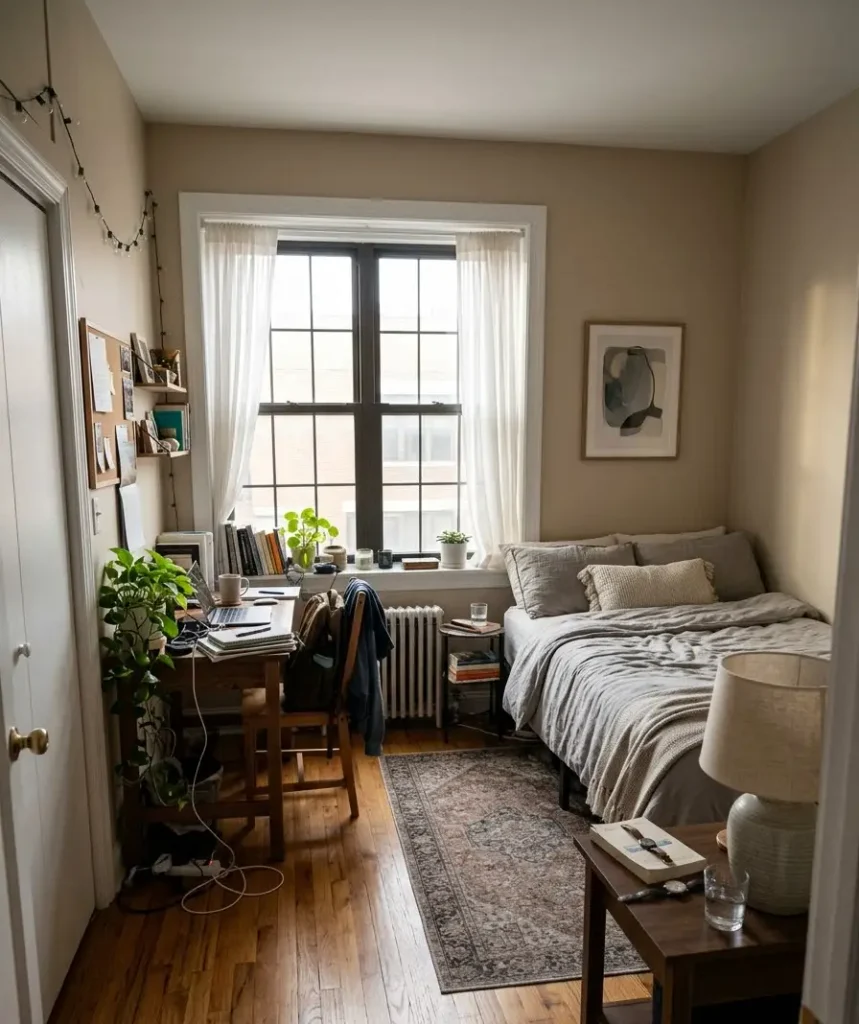
Before you buy a single throw pillow, it helps to understand why your room feels small.
Square footage matters less than you’d think. A 100 square foot room with good bones can feel roomier than a 150 square foot room stuffed with the wrong furniture.
Three things usually cause that cramped, boxed-in feeling:
- Too much visual weight at eye level. Tall dressers, bulky headboards, and stacked storage bins all crowd the sightline right where your eyes naturally land.
- Poor light layering. One overhead fixture casts flat, harsh light that makes corners disappear into shadow.
- Clutter that has no assigned home. Loose cords, random clothes, books stacked on the floor. It’s not the amount of stuff, it’s the lack of a system for it.
I want to be honest here. My first instinct was to buy more storage bins. That made things worse.
More containers just meant more surfaces catching my eye, which made the room feel busier, not calmer.
Clutter isn’t really about mess
This one surprised me. Clutter isn’t about having a lot of things. It’s about how many decisions your brain has to make when it looks around the room.
A shelf with 20 books lined up neatly registers as calm.
A nightstand with three random objects, a charger cord, and a half-empty water glass registers as chaos, even though there’s technically less “stuff.”
So the goal isn’t minimalism for its own sake. It’s giving everything a spot so your eyes have somewhere to rest.
Color and light: the fastest way to trick the eye
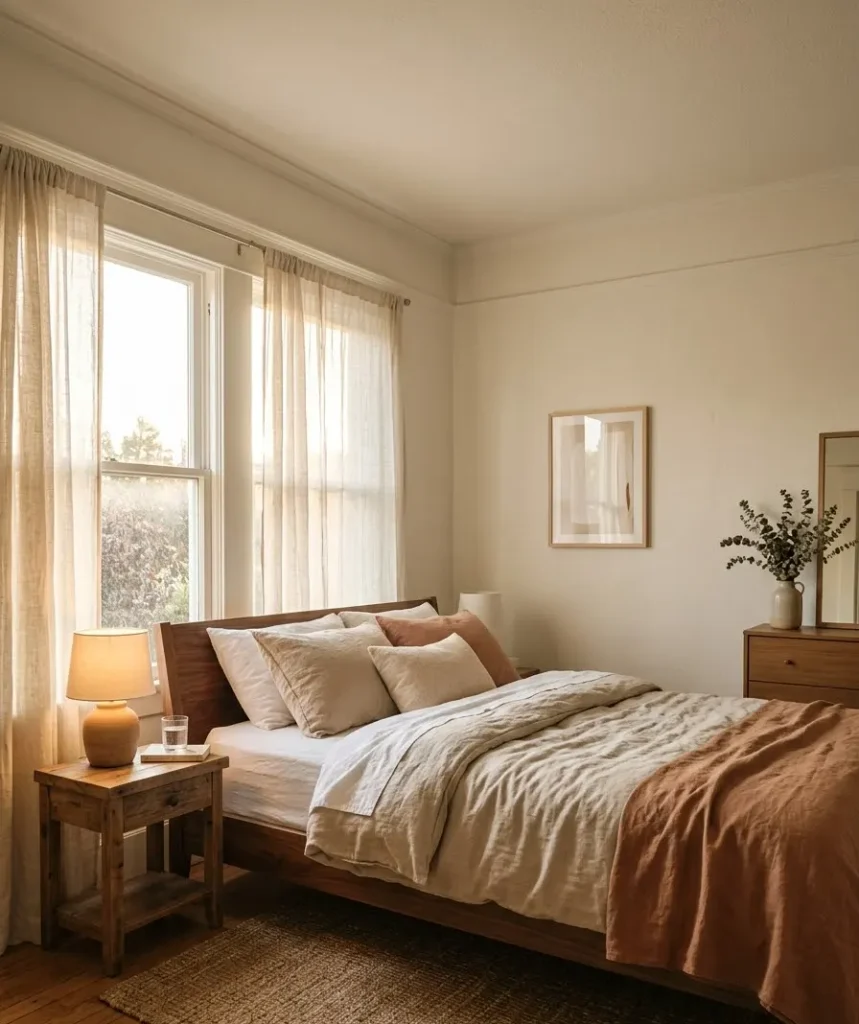
If I had to pick one category that made the biggest difference in my studio, it’s this one.
Paint and lighting cost way less than furniture, and the payoff is immediate.
Paint colors that actually expand a room
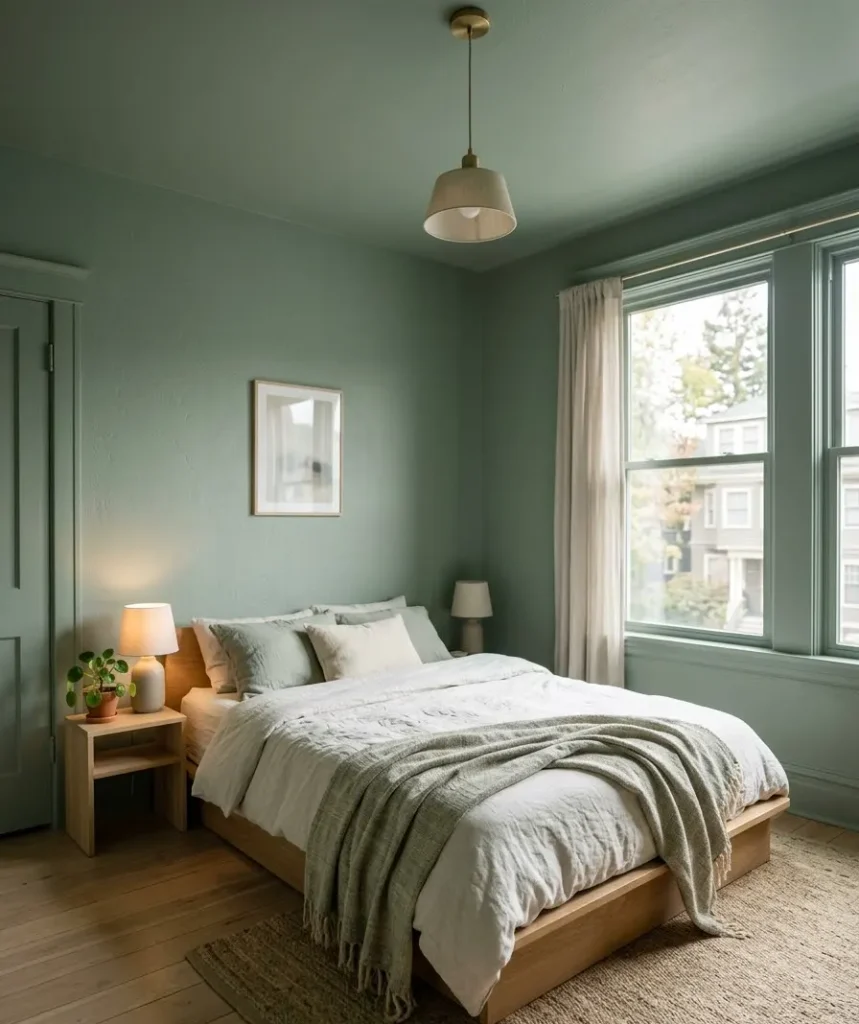
Everyone tells you to paint small rooms white. IMO that’s only half right.
White works, but the wrong white (a cold, stark white) can feel clinical and actually flatten the room instead of opening it up.
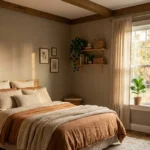
What worked better for me: soft, warm neutrals with a hint of color. Think oatmeal, warm greige, or a dusty sage.
These colors reflect light without feeling sterile, and they photograph beautifully if you’re the type who posts your room on Pinterest.
A few reliable options if you’re repainting:
- Warm white or off-white for maximum light bounce.
- Soft sage or dusty blue if you want a cozier, moodier feel without darkening the room too much.
- Terracotta or clay tones on one accent wall only, paired with lighter walls elsewhere.
One more tip: paint your trim and ceiling the same color as your walls, or very close to it.
When the trim contrasts sharply, it draws a hard line that makes the room’s boundaries obvious.
Blur that line and the eye reads the space as continuous, which reads as bigger.
Lighting layers that make a tiny bedroom glow
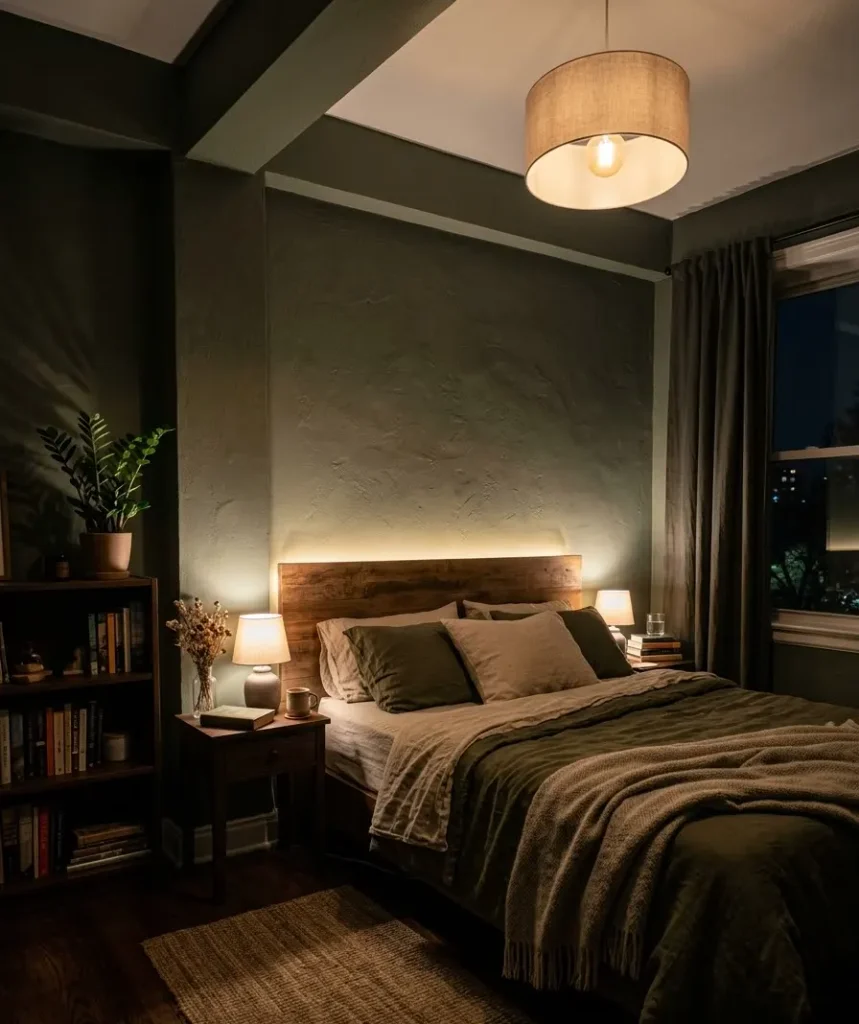
Overhead lighting alone is the single most common mistake I see in small bedrooms.
One bulb in the middle of the ceiling creates one pool of light and a lot of shadow everywhere else. Shadowed corners look smaller than they are.
Layer your light instead:
| Light type | Where it goes | Why it matters |
|---|---|---|
| Ambient | Ceiling fixture or plug-in pendant | Sets overall brightness |
| Task | Bedside lamp or wall sconce | Handles reading without harsh overhead glare |
| Accent | LED strip behind headboard or under a shelf | Adds depth and a soft glow to corners |
| Natural | Sheer curtains, not blackout, during the day | Keeps daylight bouncing through the room |
Adding a warm LED strip behind my headboard was genuinely one of the best $15 decisions I’ve made for that apartment.
It made the wall behind the bed feel like it had depth instead of just stopping flat. Small thing, big difference.
Furniture that works twice as hard
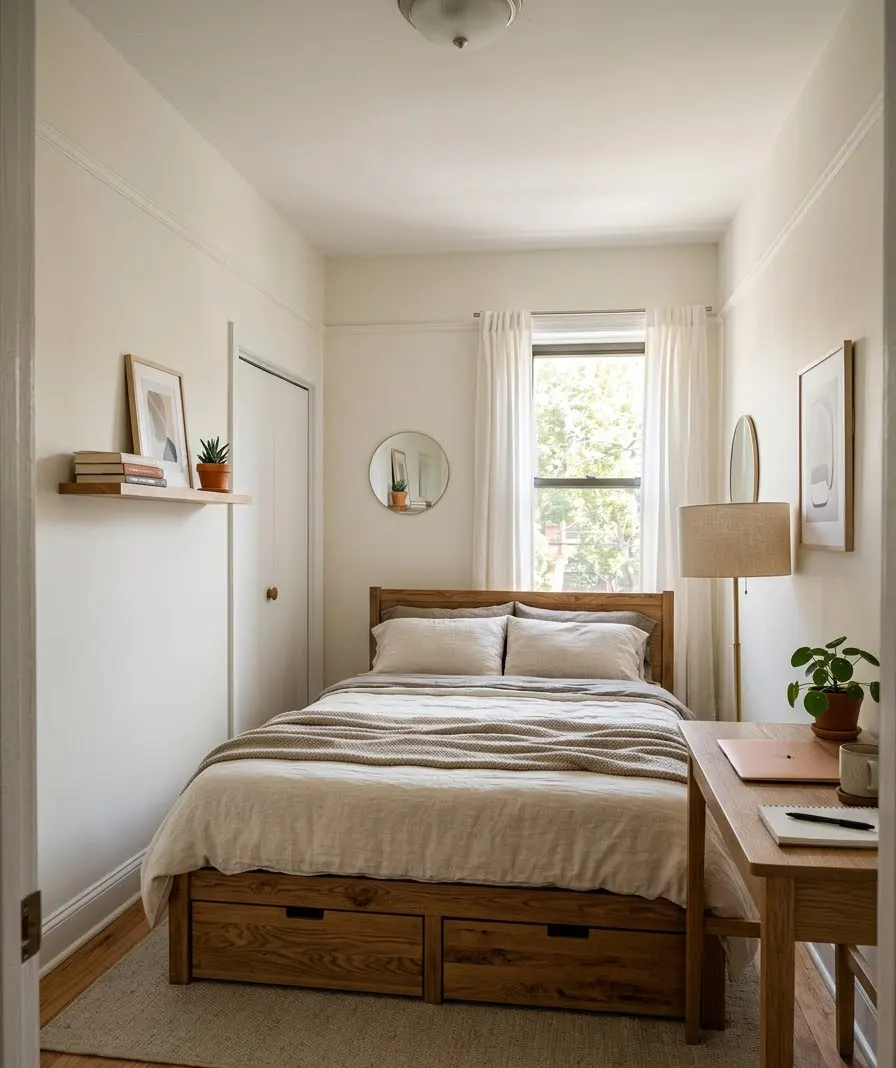
Multi-functional furniture gets thrown around as advice constantly, but here’s what nobody explains well: not all multi-functional furniture is actually good.
Some of it just looks clever in a showroom and falls apart after six months of real use.
From personal experience, here’s what’s actually worth the money:
- A bed with built-in drawers. I regret not buying one sooner. Under-bed storage bins work too, but drawers stay organized way longer because you’re not digging through a bin every time you need socks.
- A slim console table that doubles as a desk. Skip the bulky L-shaped desk. A 12-inch deep console against a wall handles a laptop just fine for most tasks.
- Wall-mounted nightstands or floating shelves instead of traditional nightstands. They free up floor space, and floor space you can see is floor space that reads as “bigger” to your brain.
- An ottoman with hidden storage. Doubles as extra seating when friends visit and hides blankets the rest of the time.
I’ll be honest, I tried a fold-down Murphy desk once and hated it.
The mechanism was clunky, it scuffed my wall within a month, and I stopped using it because folding it down felt like a chore.
Sometimes the “clever” solution isn’t the right one for your actual habits.
Know yourself before you commit to a gadget-y piece of furniture.
Bed frame choices for tiny bedrooms
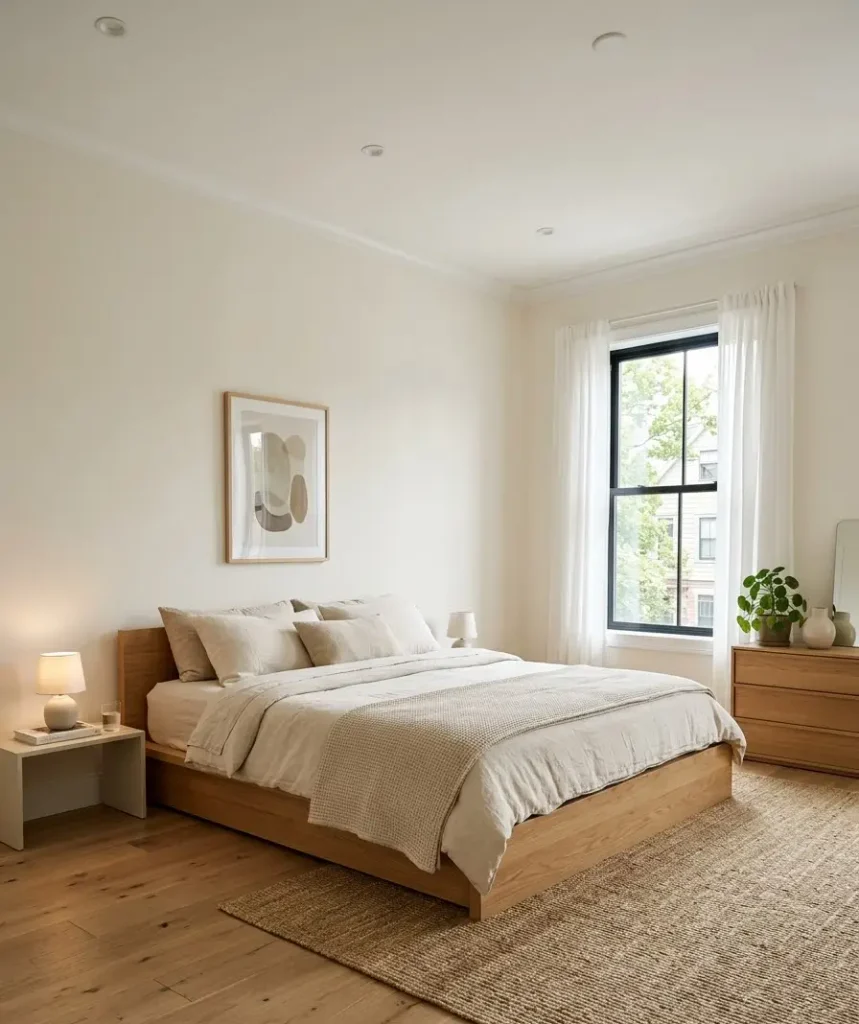
Your bed eats up more square footage than anything else in the room, so this decision matters more than people give it credit for.
Low-profile frames, ones that sit closer to the ground, tend to make ceilings feel higher by comparison.
A tall, bulky frame with a high headboard does the opposite. It’s a strange bit of visual math, but it works almost every time I’ve seen it applied.
If your budget allows, look for a frame in a light wood tone or one that matches your wall color closely.
A dark, heavy frame against a light wall creates contrast that draws attention to how much space the bed is actually taking up.
Smart storage that doesn’t scream “small space”
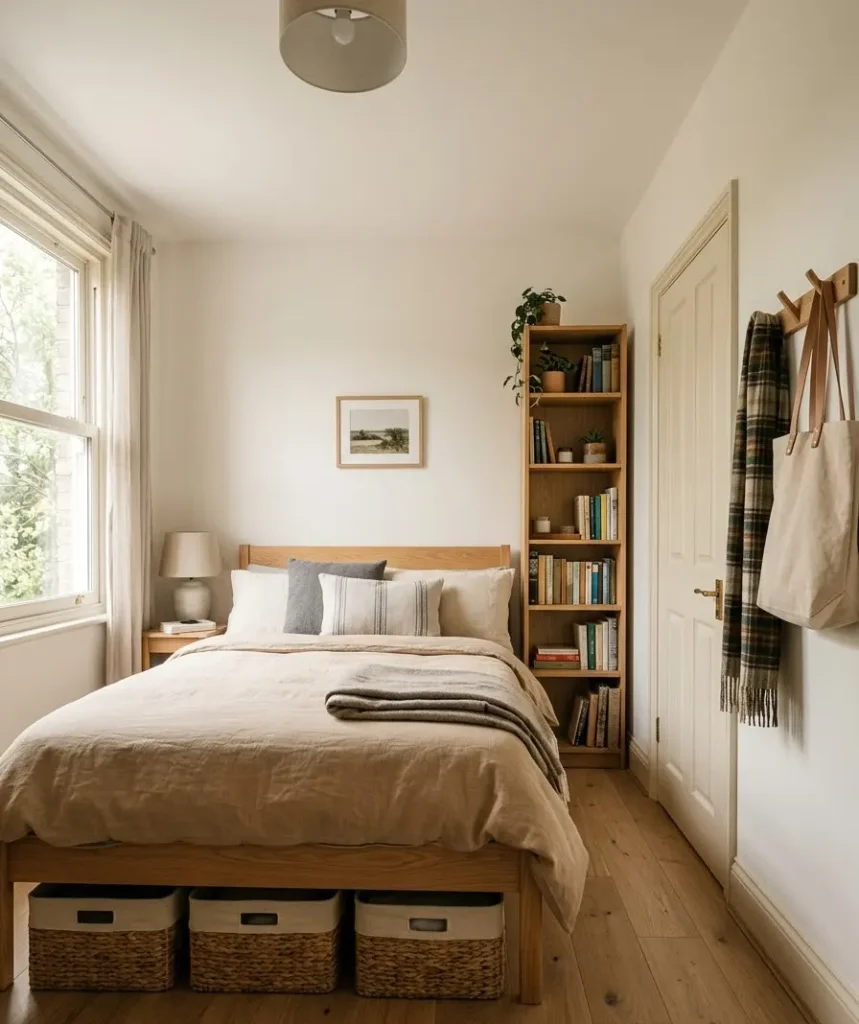
Storage is where most tiny bedroom makeovers go wrong.
People buy stackable bins, cube organizers, and over-the-door racks, and the room ends up looking like a storage unit rather than a bedroom.
Under-bed storage done right
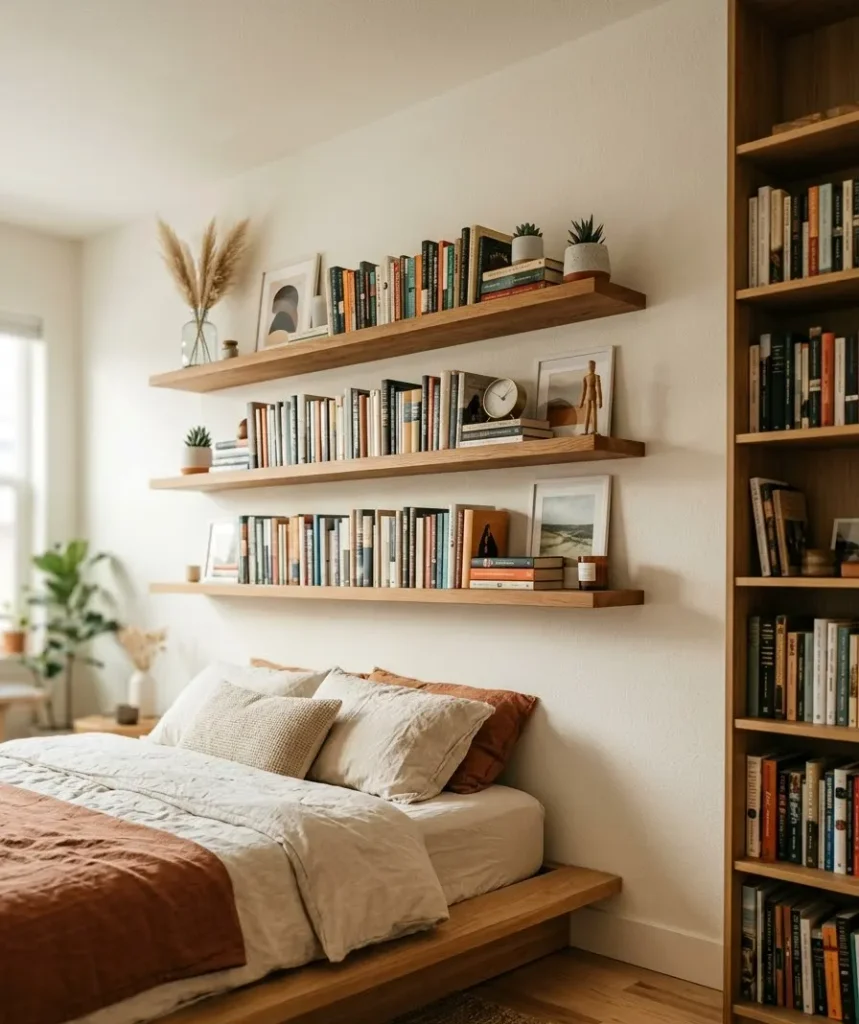
Under-bed bins work, but only if they’re uniform. Mismatched boxes and bags under a bed frame look messy even when they’re technically “hidden.
” Buy a matching set, ideally in a color close to your flooring, so if you catch a glimpse under the bed, it blends rather than jumps out.
Vertical storage and wall shelves
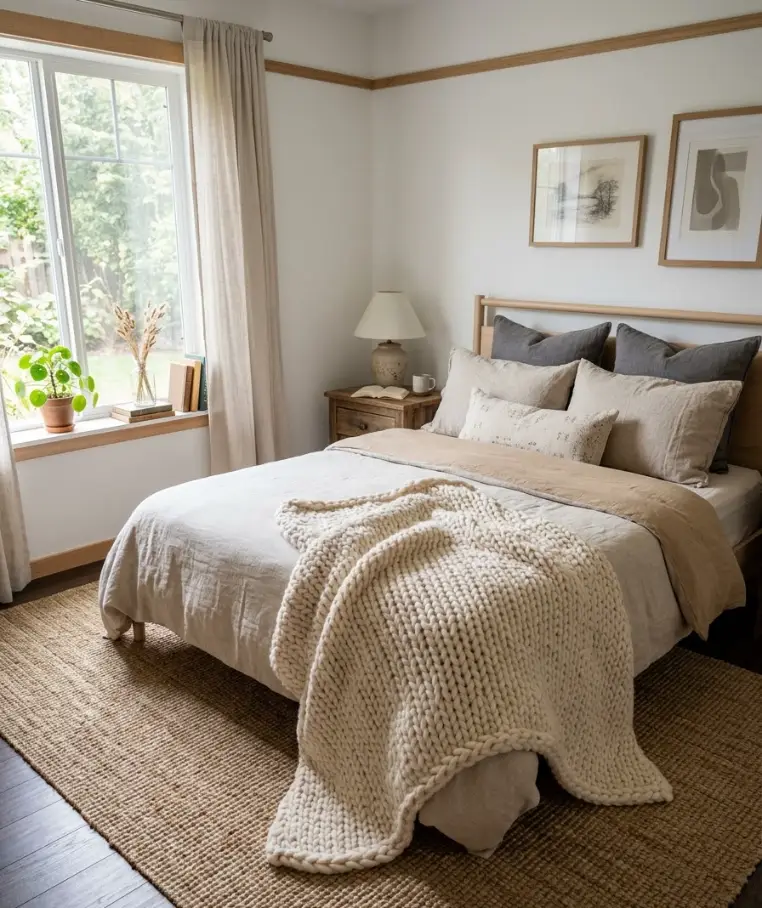
This is the one change I wish I’d made on day one. Going vertical instead of horizontal changes everything.
- Install floating shelves above the headboard for books and small decor.
- Use a tall, narrow bookshelf (think 12 to 14 inches wide) rather than a short, wide dresser.
- Hang hooks near the door for bags, jackets, or scarves instead of letting them pile on a chair.
Every inch of floor space you free up by moving storage vertically is an inch your brain registers as “open.
” Real Simple has a solid rundown of vertical storage tricks if you want more specific product picks for awkward apartment layouts.
Textiles and layering for coziness without clutter
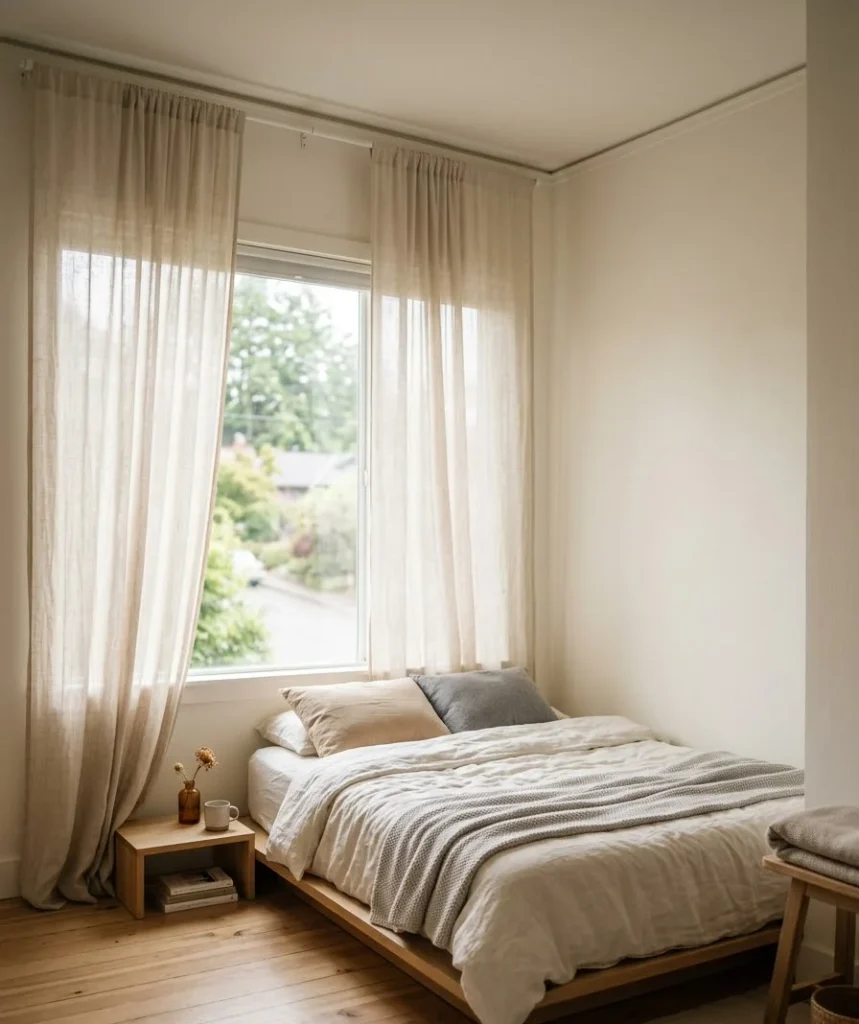
Cozy and cluttered are not the same thing, though a lot of small bedroom decor blurs that line. The goal is texture and warmth without adding visual noise.
A few layering rules that held up in my own space:
- Stick to two or three colors max across your bedding, curtains, and rug. More than that and the room starts to feel busy no matter how small the individual items are.
- Choose one statement texture, like a chunky knit throw or a woven pouf, rather than five small textured accessories scattered around.
- Rugs should extend slightly under the bed rather than floating in the middle of the floor. A rug that only covers the open floor space actually chops the room into visual sections, which makes it feel smaller.
Window treatments that don’t box in the room
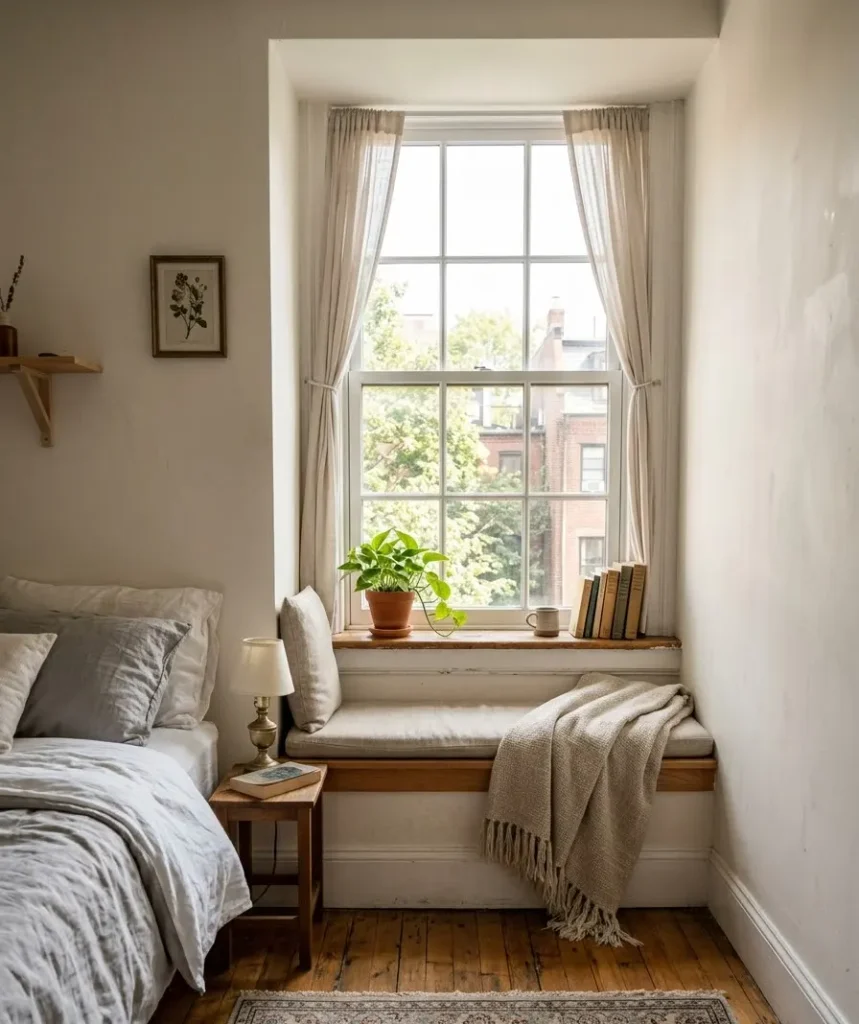
Curtains are one of those details people either ignore completely or get badly wrong in a small bedroom.
I did both at different points, so let me save you the trial and error.
The biggest mistake is hanging curtains right at the window frame. It’s the default move, and it’s also the one that makes ceilings look lower and windows look smaller than they are.
Instead, mount the curtain rod as close to the ceiling as you can, even if that means it sits a foot or more above the actual window frame.
The curtain fabric then draws the eye upward, and the window itself appears taller by association.
Fabric choice matters just as much as placement:
- Sheer or lightweight linen lets daylight filter through during the day, which keeps the room from feeling closed off.
- Avoid heavy blackout curtains unless you genuinely need them for sleep quality, and if you do, pair them with a sheer layer underneath so you’re not stuck with a dark, heavy look 24/7.
- Match the curtain color to your wall rather than picking something bold and contrasting. Continuity between wall and curtain keeps sightlines uninterrupted.
If your window looks out onto a brick wall or a parking lot (my old view, unfortunately), a sheer curtain still helps diffuse whatever light does come through, so you’re not sacrificing style for privacy.
A quick note on window seats and nooks
If you’re lucky enough to have a window deep enough for a small bench or floor cushion setup, use it.
A window nook adds a secondary “zone” to the room without taking up floor space that would otherwise sit empty.
I added a slim cushion to my windowsill using velcro strips to keep it in place, and it instantly gave the room a second purpose beyond just sleeping.
Closet and wardrobe fixes for tiny bedrooms
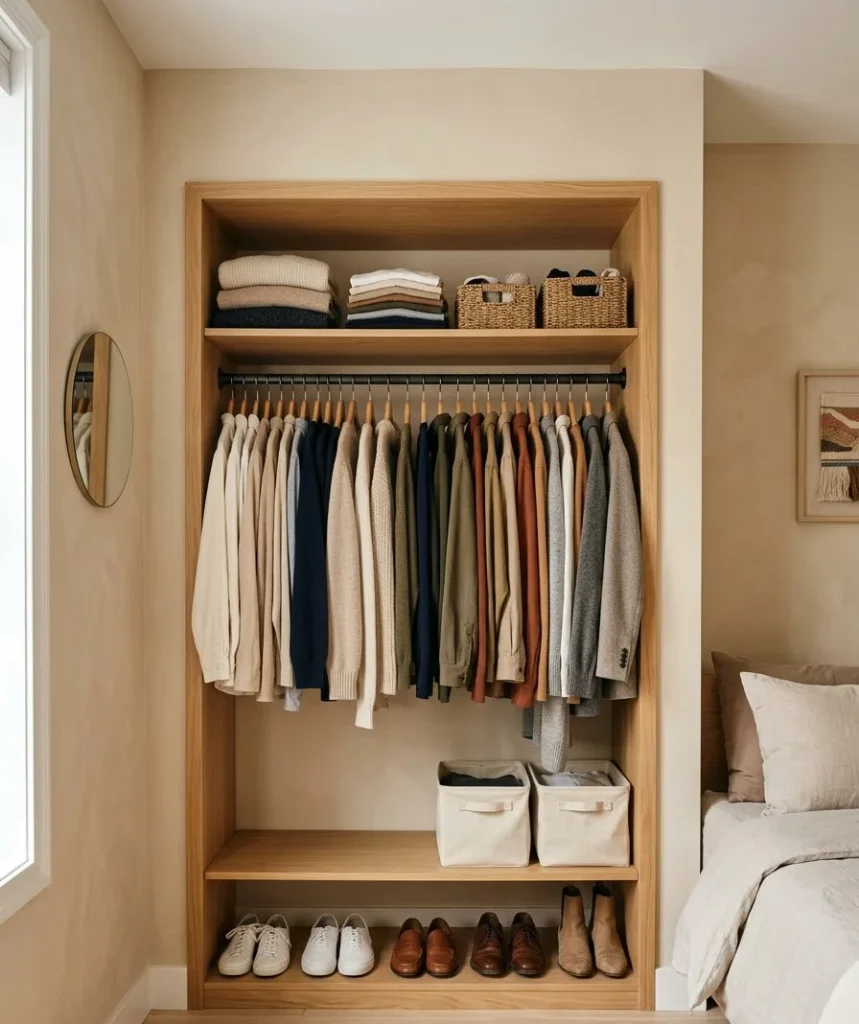
Closets in older apartments and studios are usually an afterthought, and mine was no exception.
It was maybe 2 feet wide, which meant clothes storage had to get creative fast.
A few things that genuinely helped:
- Slimline velvet hangers instead of bulky plastic ones. This sounds like a gimmick, but I fit almost 40% more clothes in the same space just by switching hanger types.
- A slim rolling rack just outside the closet for frequently worn items, so I wasn’t opening and rifling through the closet daily.
- Vacuum storage bags for seasonal clothing, tucked under the bed alongside the other storage bins.
- Double hanging rods where the closet height allowed it, splitting the space into an upper and lower section for shirts and folded items.
If you don’t have a closet at all, which happens more often than people admit in tiny apartments, a slim wardrobe against the shortest wall works better than you’d think. Look for one with a light finish that matches your wall color so it visually recedes rather than becoming the focal point of the room.
Mirror placement and reflective tricks
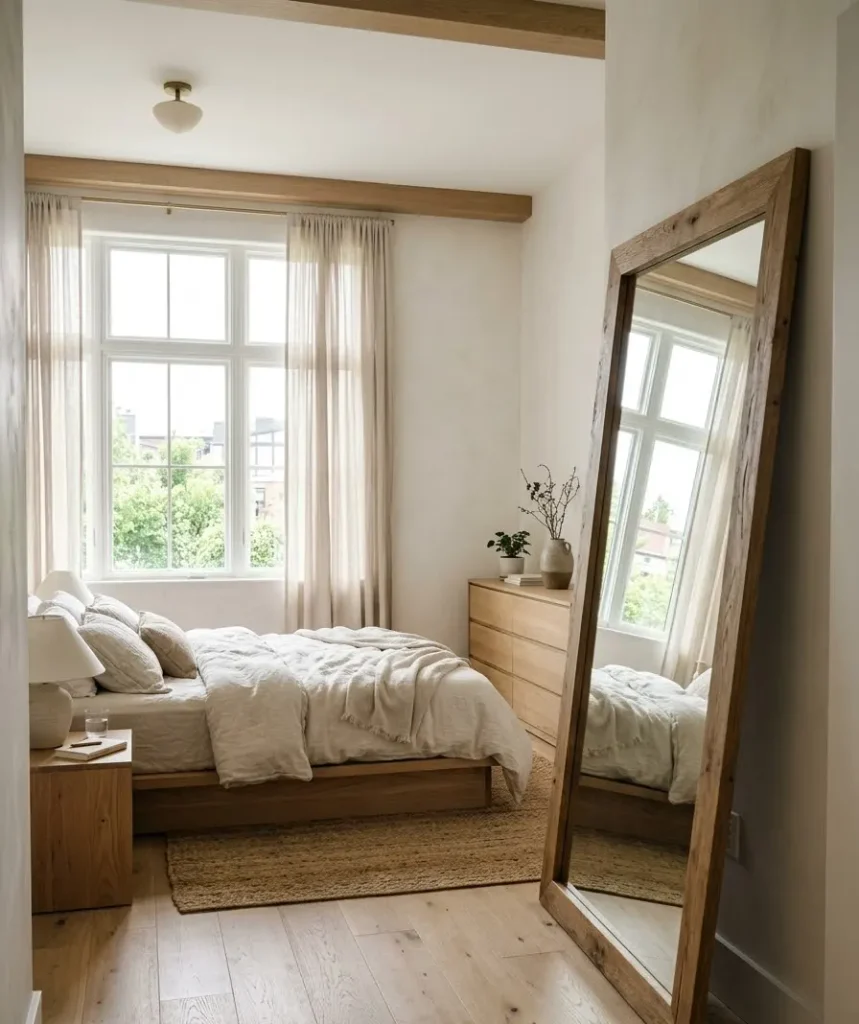
Everyone says “add a mirror” like it’s a magic trick, and honestly, it kind of is, but only if you place it right.
The best spot is directly across from your window, so it bounces natural light back into the room during the day.
A mirror facing a blank wall does almost nothing for the space. A mirror facing your bed can also feel a little unsettling for some people (design experts at
Apartment Therapy have written about this specifically), so if that’s you, angle it toward a wall or window instead.
A full-length leaning mirror does double duty. It’s functional for getting dressed, and its vertical shape draws the eye upward, which makes ceilings read taller.
Decor rules for a Pinterest-worthy tiny bedroom
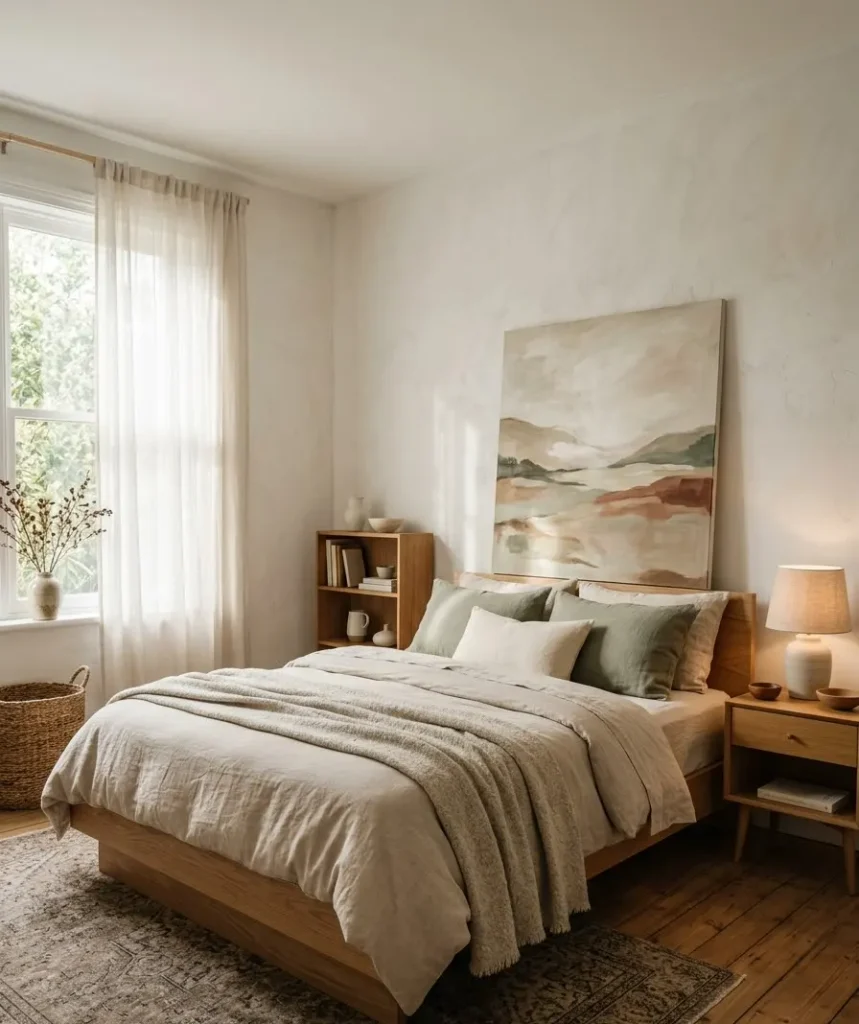
This is the fun part. Once the bones of the room are sorted, the styling is where your personality actually gets to show up.
My honest opinions on what makes small bedroom decor look intentional rather than crammed:
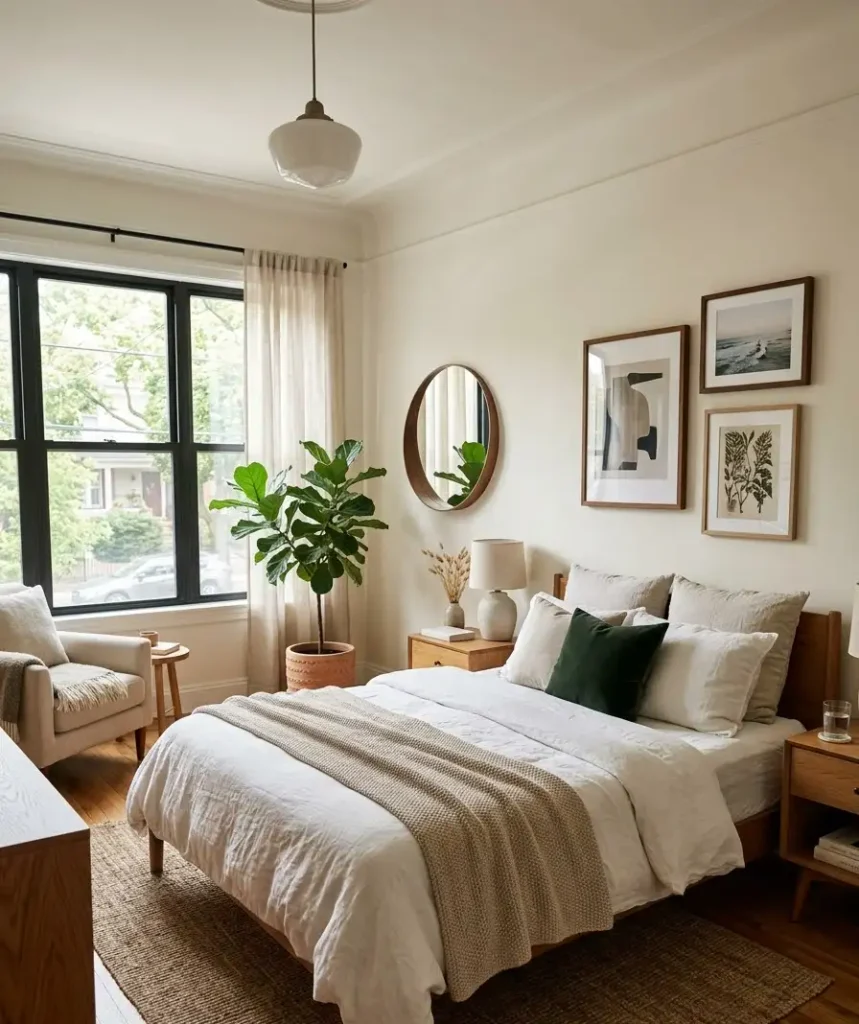
- Curate, don’t collect. A gallery wall of 12 mismatched frames overwhelms a small wall. Three well-chosen prints in matching frames look ten times more polished.
- Plants help more than people expect. One medium plant in a corner does more for warmth than five tiny succulents scattered on surfaces. I learned this the hard way after killing four succulents and finally committing to one pothos that thrives on neglect.
- Skip the matching furniture set. A bedroom where every piece came from the same collection can look like a hotel room. Mixing wood tones slightly, as long as they’re in the same warm or cool family, feels more collected and lived-in.
Random thought while I’m at it: I’ve noticed apartment decor accounts on Pinterest almost never show you what’s just out of frame, like the litter box shoved behind the door or the extension cord taped down along the baseboard.
Real tiny apartments have those things. Don’t let a perfectly staged photo make you feel like your real, lived-in space is failing somehow.
Mistakes I made in my own tiny bedroom
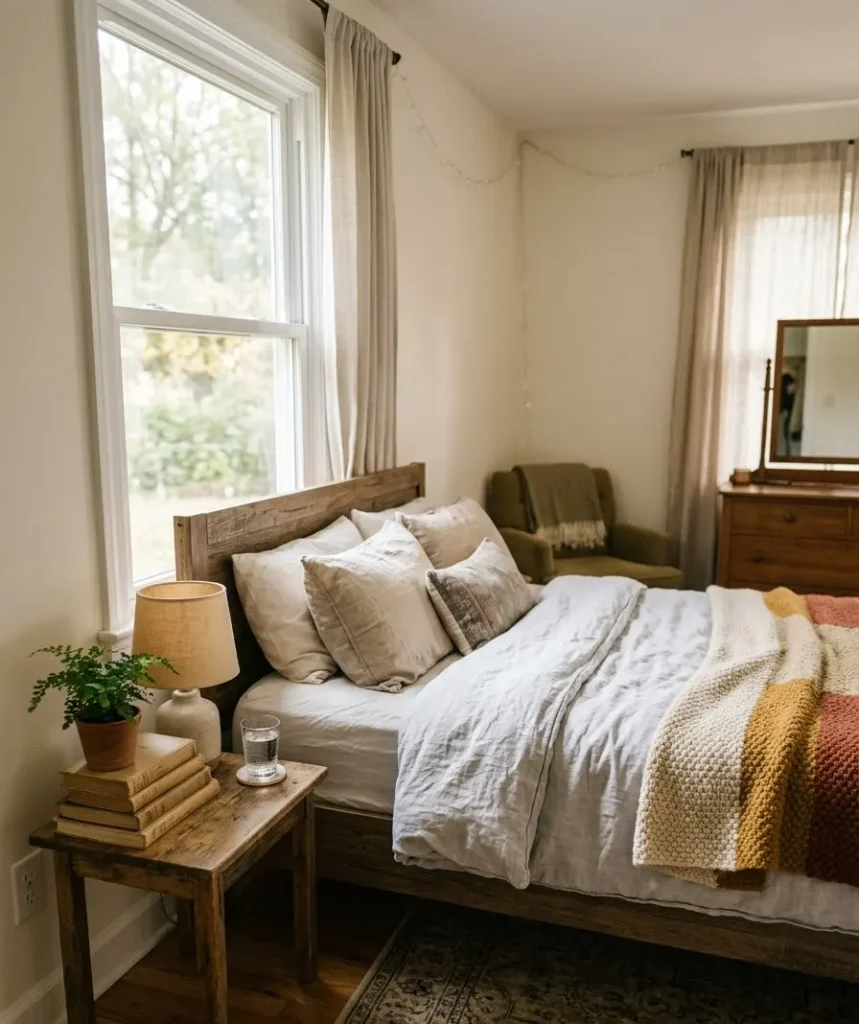
Since I’ve been pretty confident about what works, let me balance that out with what didn’t.
I bought a huge, tufted headboard because it looked luxurious online. In my actual room, it swallowed nearly a third of the wall and made the ceiling feel lower immediately.
I returned it within two weeks and replaced it with a simple wood frame with no attached headboard at all, just leaning art above the bed instead. Massive improvement.
I also went through a phase of buying every “space saving” gadget I saw ads for: a hanging shoe organizer, a bed tray, a fold-out laundry hamper.
Half of it sat unused and became its own clutter.
Wow, looking back, I spent way more money chasing gadgets than I did on the two or three changes that actually mattered, like the paint and the lighting.
Quick reference checklist
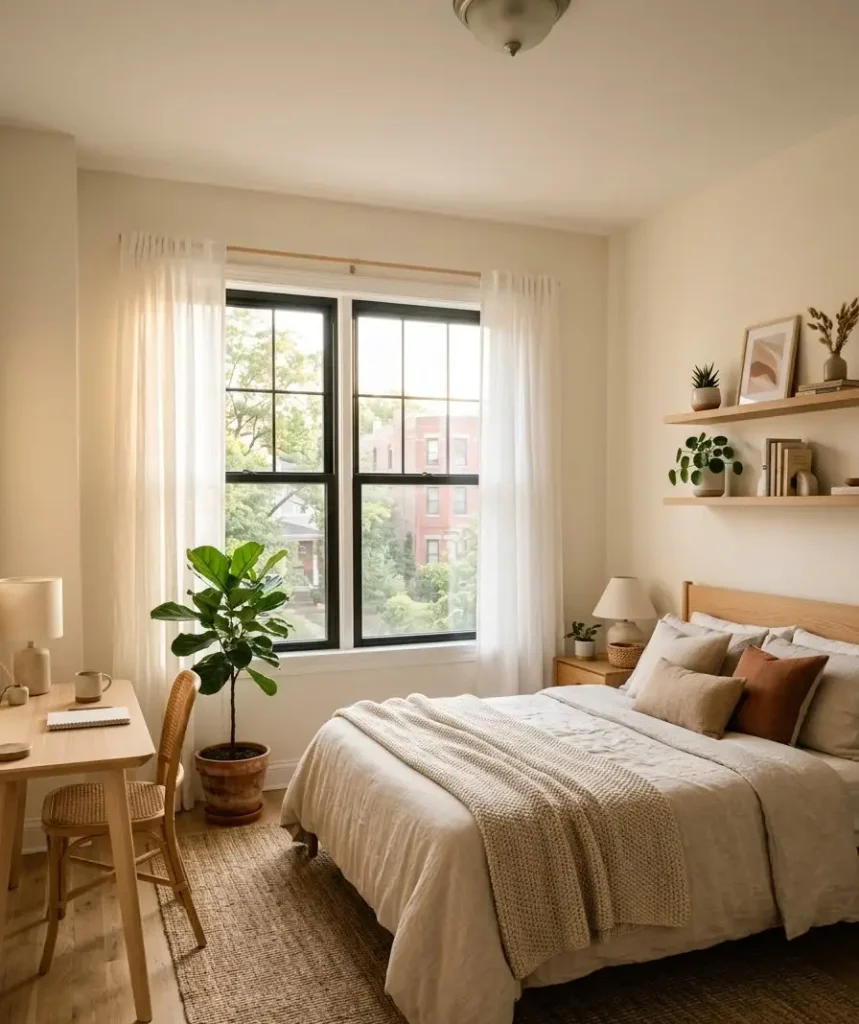
Here’s a simple table to keep handy if you’re planning your own small bedroom refresh.
| Category | Do this | Skip this |
|---|---|---|
| Color | Warm neutrals, matching trim | Cold stark white or dark accent walls on every surface |
| Lighting | Layer ambient, task, and accent light | Relying on one overhead fixture |
| Furniture | Low-profile, multi-functional pieces | Bulky matching sets |
| Storage | Vertical shelving, uniform bins | Mismatched boxes and stacked bins |
FAQ
Does painting a small bedroom dark ever work? Yes, occasionally. A dark, moody bedroom can feel cozy and intentional rather than cramped, but it usually needs strong natural light during the day and layered lamp lighting at night to avoid feeling like a cave.
It’s a bolder move, so test a small swatch first.
What’s the single best budget upgrade for a tiny bedroom? Lighting, hands down. A warm-toned bedside lamp and an LED strip behind the
headboard cost under $40 combined and make more visual difference than most furniture purchases.
Should I avoid rugs in a small bedroom to save space? No, a rug actually helps if it’s sized right. A rug that extends under part of the bed unifies
The floor space, while a tiny rug floating in the open area chops the room into smaller-looking sections.
Making the room feel like yours, not a showroom
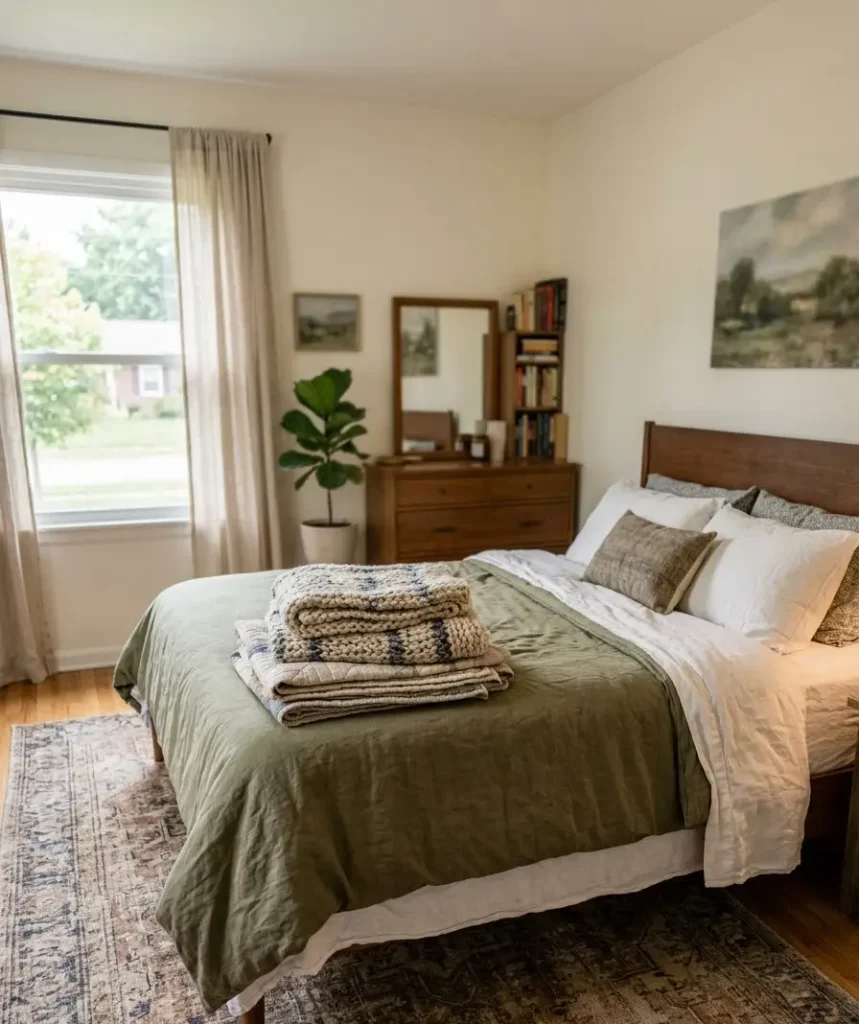
One thing I’d add, since I see this trip people up constantly on Pinterest boards: chasing a perfectly curated aesthetic can backfire in a small space.
When every single object in the room is chosen purely for how it photographs, the space can end up feeling stiff, like a hotel room nobody actually lives in.
Leave room for the imperfect stuff. A stack of books you’re actually reading on the nightstand.
A slightly mismatched blanket your grandmother gave you. These details don’t clutter a well-organized room, they give it personality.
The goal isn’t a magazine spread, it’s a bedroom you want to walk into at the end of a long day.
I’d also gently push back on the idea that you need to finish your whole bedroom in one weekend.
My own space took close to eight months to get right, mostly because I was renting and testing things slowly instead of committing to expensive changes all at once.
Paint first, live with it for a week or two, then adjust lighting, then furniture.
Rushing a small space redesign usually means buying things you’ll regret and re-buying later anyway.
Final thought
A tiny bedroom doesn’t have to feel like a compromise. Mine went from “storage closet with a bed in it” to a room I actually looked forward to coming home to, and none of it required knocking down walls or spending a fortune.
It came down to light, color, and a few honest decisions about what furniture actually earned its space.
So, what’s the first thing you’re changing in your room this weekend? Save this guide, pin your favorite idea, and tag me if you end up trying the LED strip trick. I want to see it.




1 thought on “Small Cozy Bedroom Ideas For Tiny Apartments That Actually Feel Bigger”