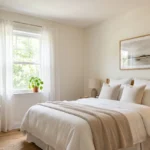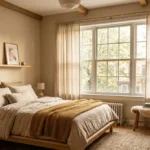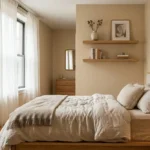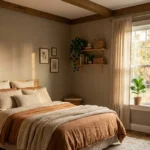
My first apartment bedroom was 9 feet by 10 feet. I know because I measured it three times, hoping the tape measure was lying to me. It wasn’t.
For two years I fought that room. I bought a bed that was too big, hung curtains too short, and painted one wall a color I can only describe as “sad hospital blue.” It never once felt cozy.
It felt like a storage unit I happened to sleep in.
Then I started over. Not with more money, just with better decisions. And the room that once made me anxious became the place I actually wanted to end my day in.
If you’re staring at your own tiny bedroom wondering how anyone makes these spaces feel warm instead of cramped, here’s everything I learned the hard way, so you don’t have to.
Start with what’s actually making your room feel small
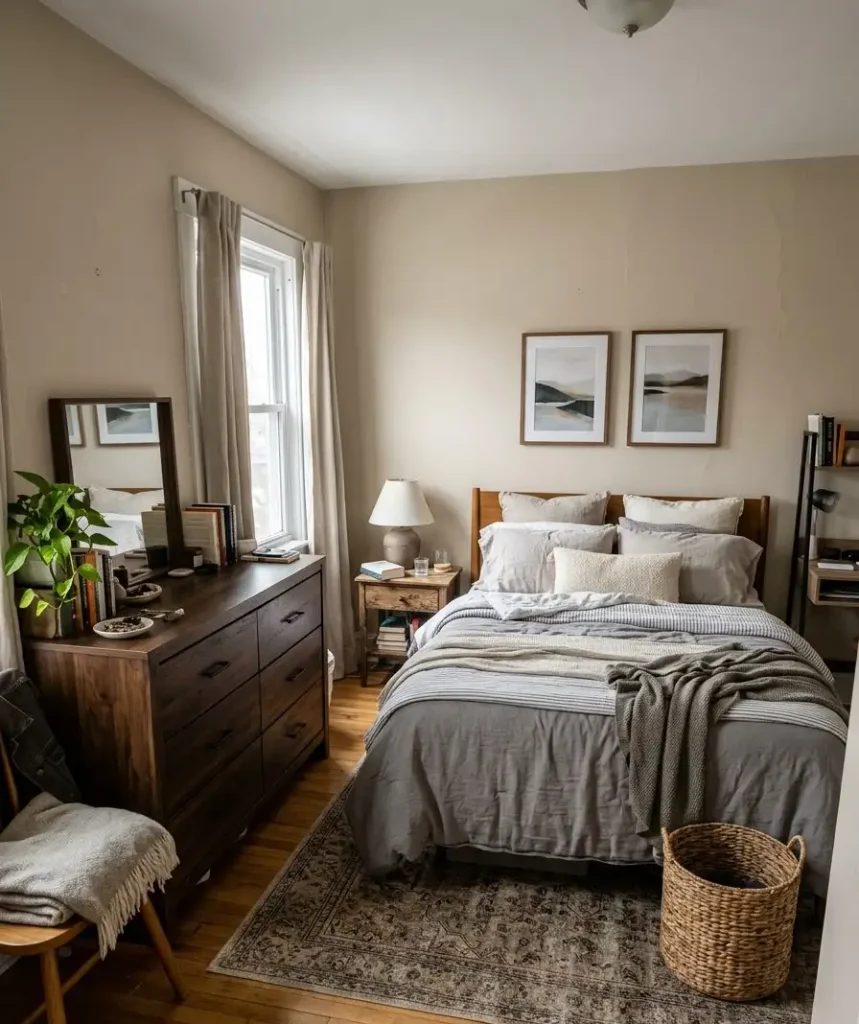
Before you buy a single throw pillow, figure out what’s working against you.
Small square footage isn’t usually the real enemy. Bad decisions inside that footage are.
Walk into your room and ask yourself a few honest questions:
- Is the furniture too big for the space, or just placed wrong?
- Does the lighting come from one harsh overhead bulb?
- Is there visual clutter pulling your eye in ten directions at once?
- Are the colors cold, flat, or just plain boring?
I used to think my room was small. Turns out my room was fine. My oversized dresser was the problem, and once it left, the whole space breathed differently.
Pick a color palette that works with the room, not against it
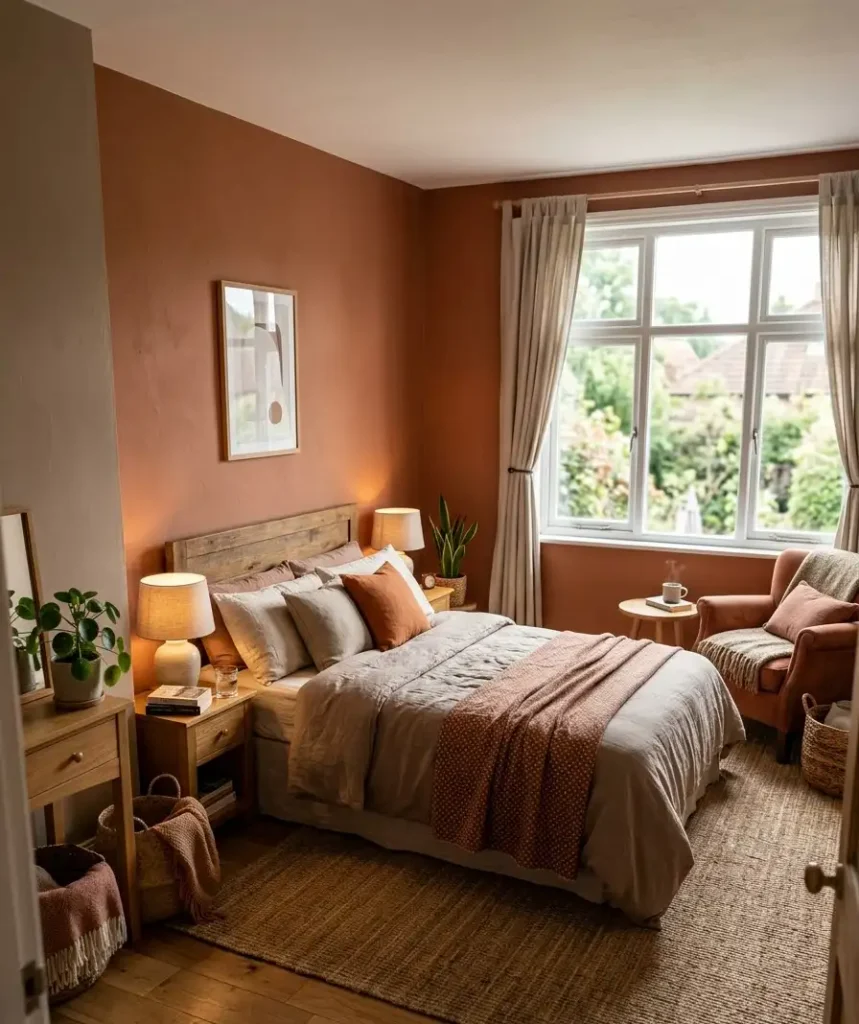
Color is probably the single biggest lever you can pull, and it costs less than almost anything else on this list.
A gallon of paint runs you maybe 40 to 60 dollars. Compare that to a new bed frame.
Warm neutrals beat stark white almost every time
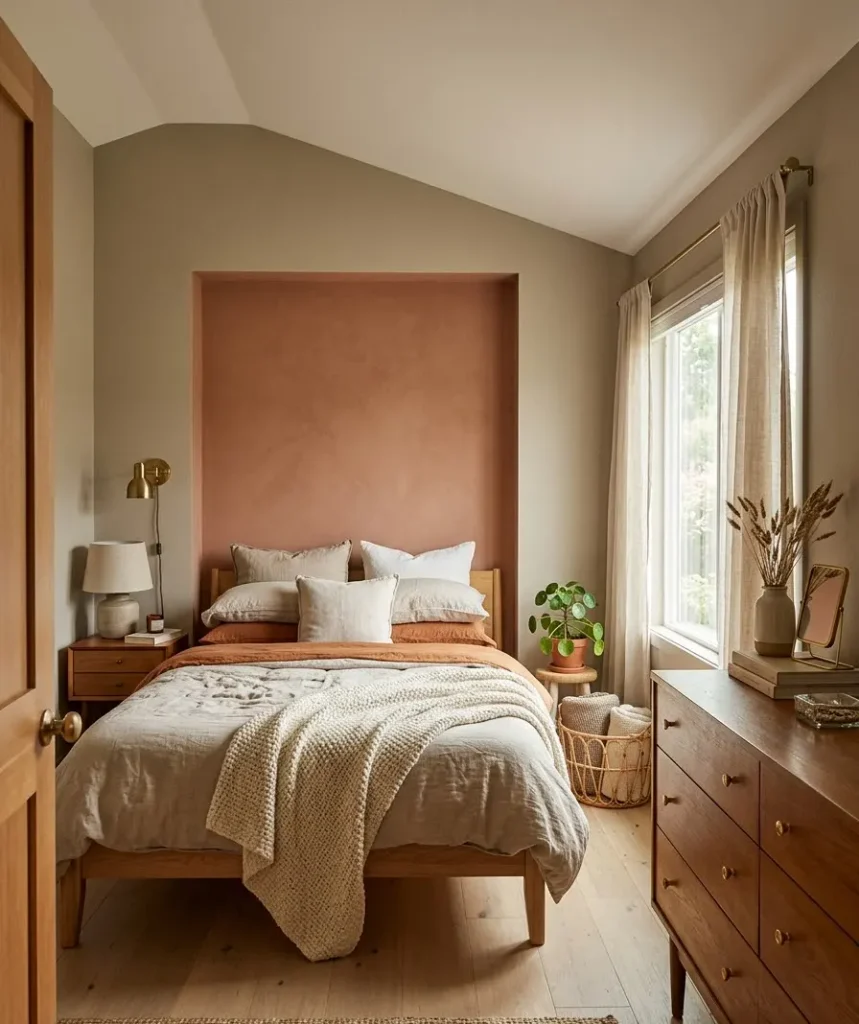
Everyone tells you to paint small rooms white to “open them up.” IMO that advice is outdated. Stark white can actually read as cold and clinical, especially under weak lighting.
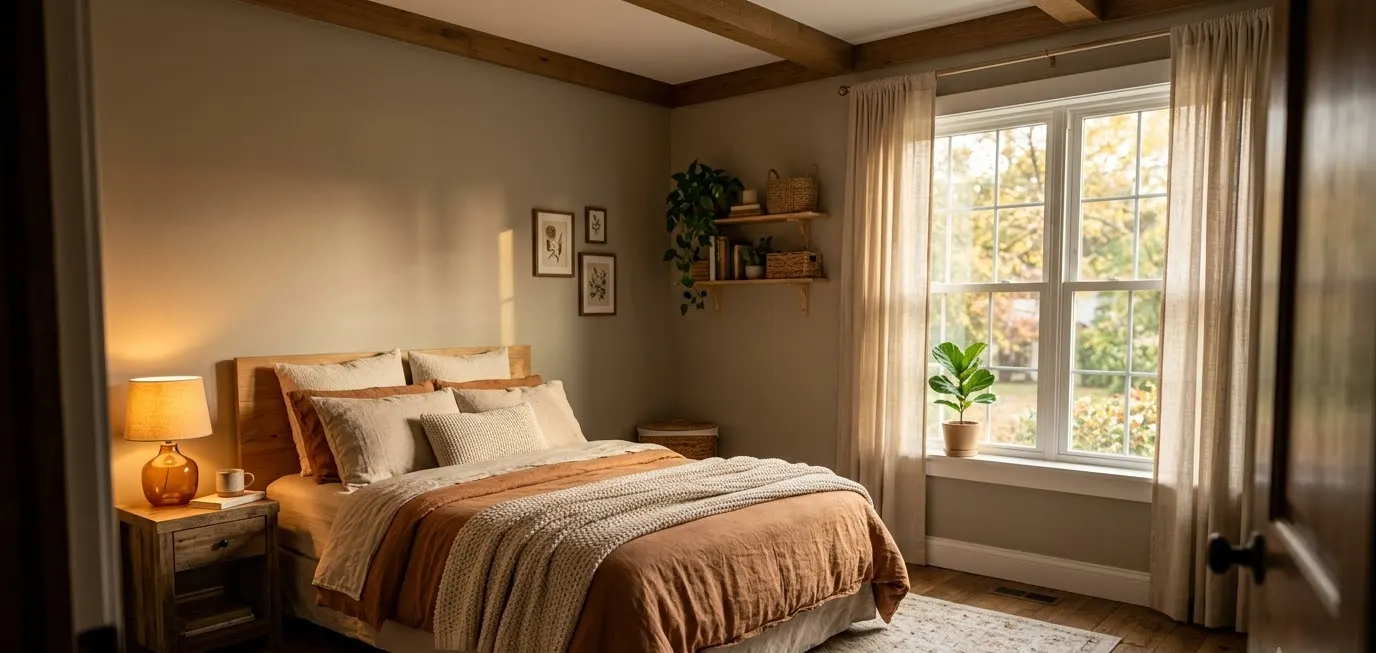
Warm neutrals like soft taupe, warm greige, or a muted terracotta create depth without shrinking the room.
According to color research from Better Homes & Gardens, warm undertones tend to make small spaces feel intentional rather than cramped, because they absorb light softly instead of bouncing it around harshly.
My honest opinion? Skip the trendy “greige” everyone’s obsessed with right now and try a warm clay tone on just one wall.
It adds personality without overwhelming a small footprint.
Cool tones aren’t off the table, they just need warmth somewhere
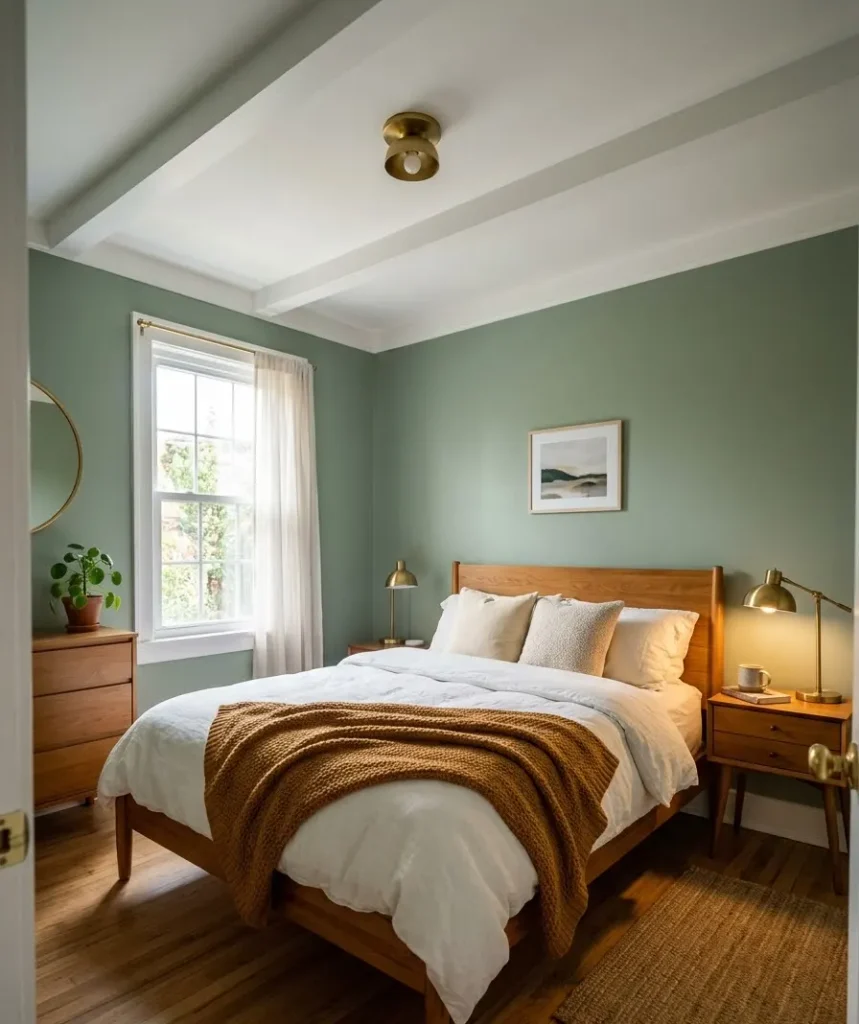
If you love blues and greens, don’t abandon them. Just balance a cool wall color with warm wood tones, brass hardware, or amber lighting.
A cool room with zero warm accents feels sterile fast.
Lighting is doing more heavy lifting than you realize
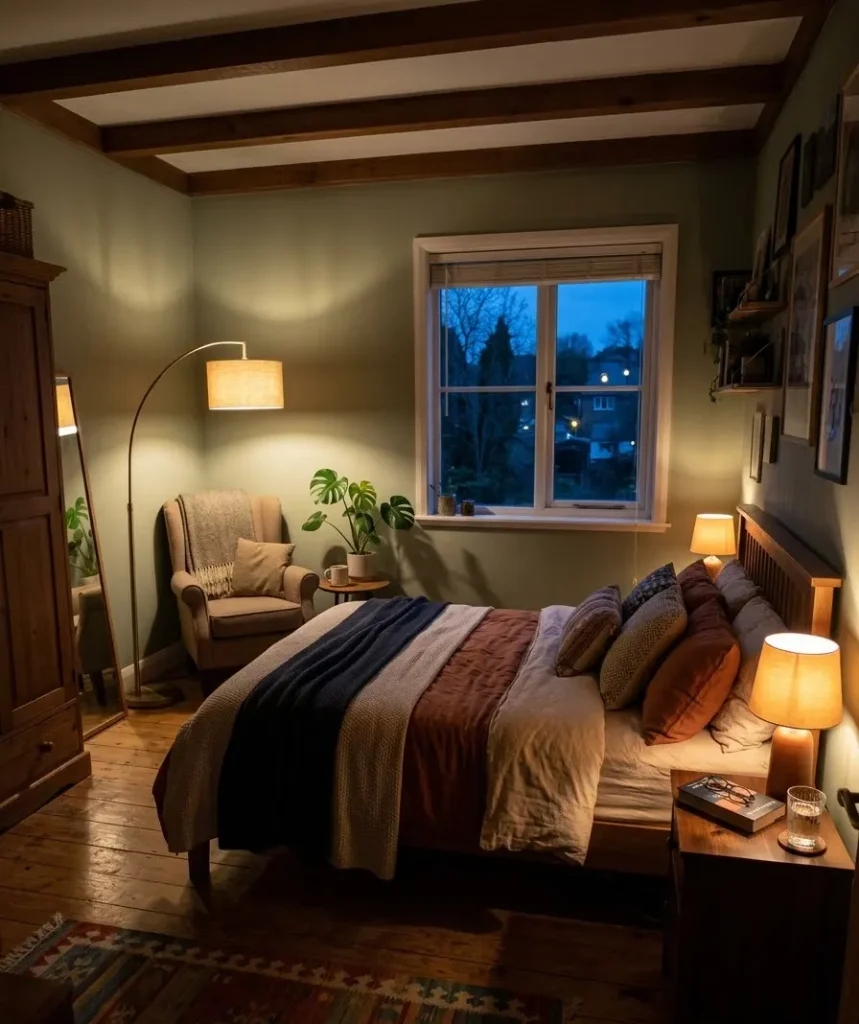
Here’s a question worth sitting with: when was the last time you actually liked the overhead light in your bedroom? For most people, the honest answer is never.
Ceiling fixtures throw flat, even light across the whole room, and flat even light is the enemy of cozy.
Cozy spaces have shadow. They have warmth pooling in certain spots and dimness in others.
Layer your light sources like a pro
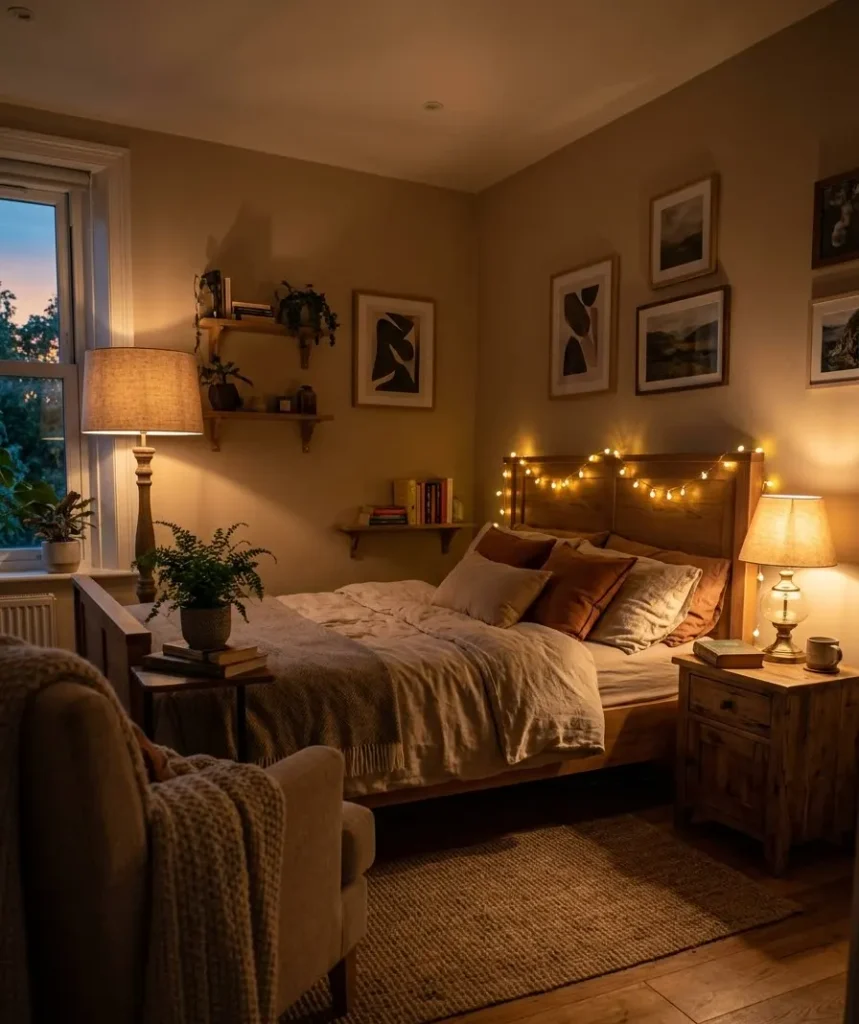
Designers call this “layered lighting,” and it’s not complicated once you understand the idea. You want at least three light sources at different heights doing different jobs.
- A warm bedside lamp for reading and winding down
- A floor lamp or wall sconce for ambient glow
- String lights or a small plug-in fixture for texture and mood
Swap any harsh white bulbs for warm-toned ones, ideally in the 2700K range.
The Sleep Foundation has pointed out that warmer, dimmer light in the evening supports better sleep quality, which is a nice bonus on top of just looking better.
I switched three lamps to warm bulbs last winter and honestly, wow, the difference felt bigger than any furniture change I’d made that year.
Furniture placement: the mistake almost everyone makes
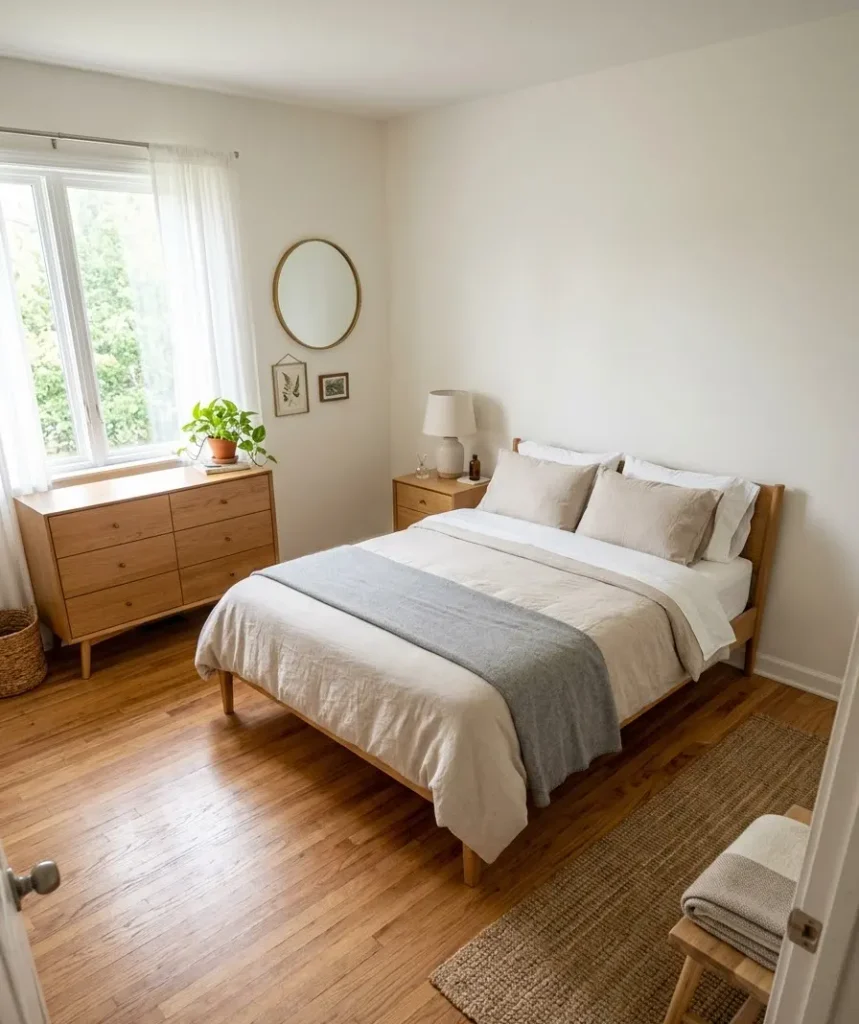
Small bedrooms don’t need small furniture. They need the right furniture in the right spot. This one took me way too long to figure out.
My biggest early mistake was pushing my bed into a corner because I thought it would “save space.” It didn’t.
It made the room feel like a hallway with a mattress in it, and getting in and out of bed became this weird sideways shuffle every single night.
Float your bed away from the corner if you can, even by a few inches. Give it breathing room on at least one side.
A narrow nightstand or even a small stool works fine if a full nightstand won’t fit.
Here’s what actually helps in a tight layout:
- Choose furniture with legs instead of solid bases, since visible floor space underneath tricks the eye into seeing more room
- Pick one statement piece instead of five small ones
- Mount your TV or mirror instead of using a stand
- Use the back of your door for hooks instead of a coat rack
Textiles make or break the cozy factor
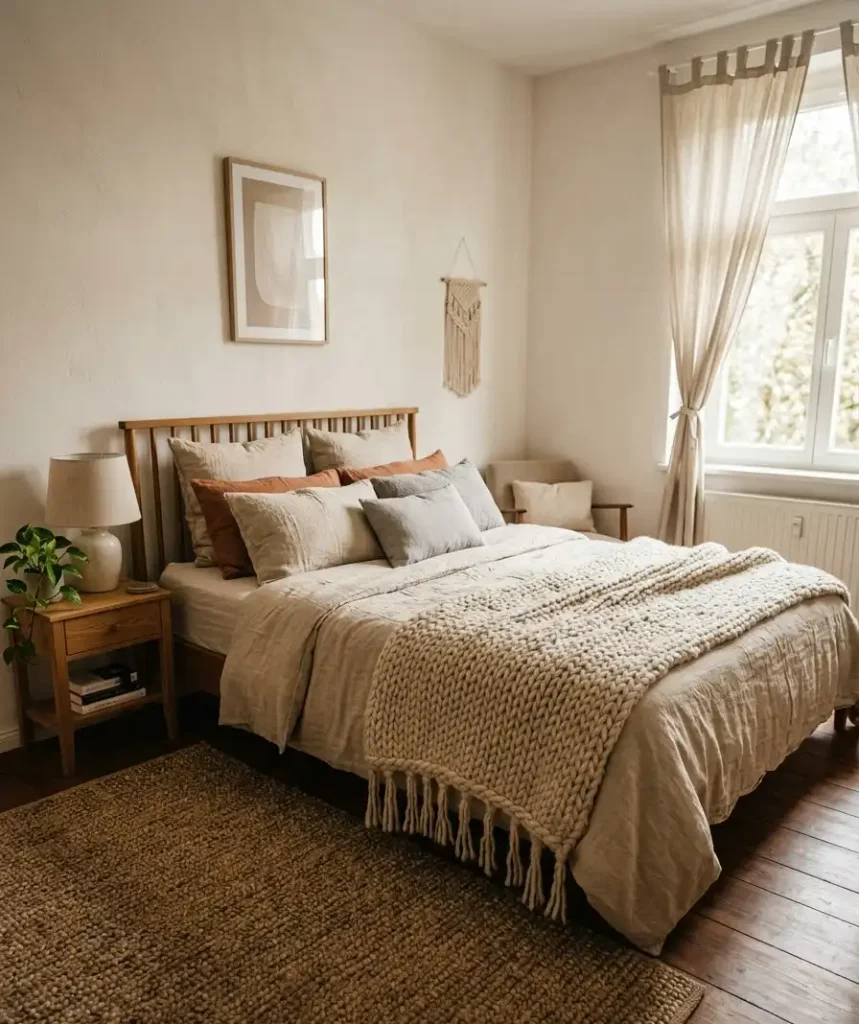
You can have perfect furniture placement and still end up with a room that feels sterile if the textiles are wrong. Fabric is where cozy actually lives.
Layer your bedding like you mean it
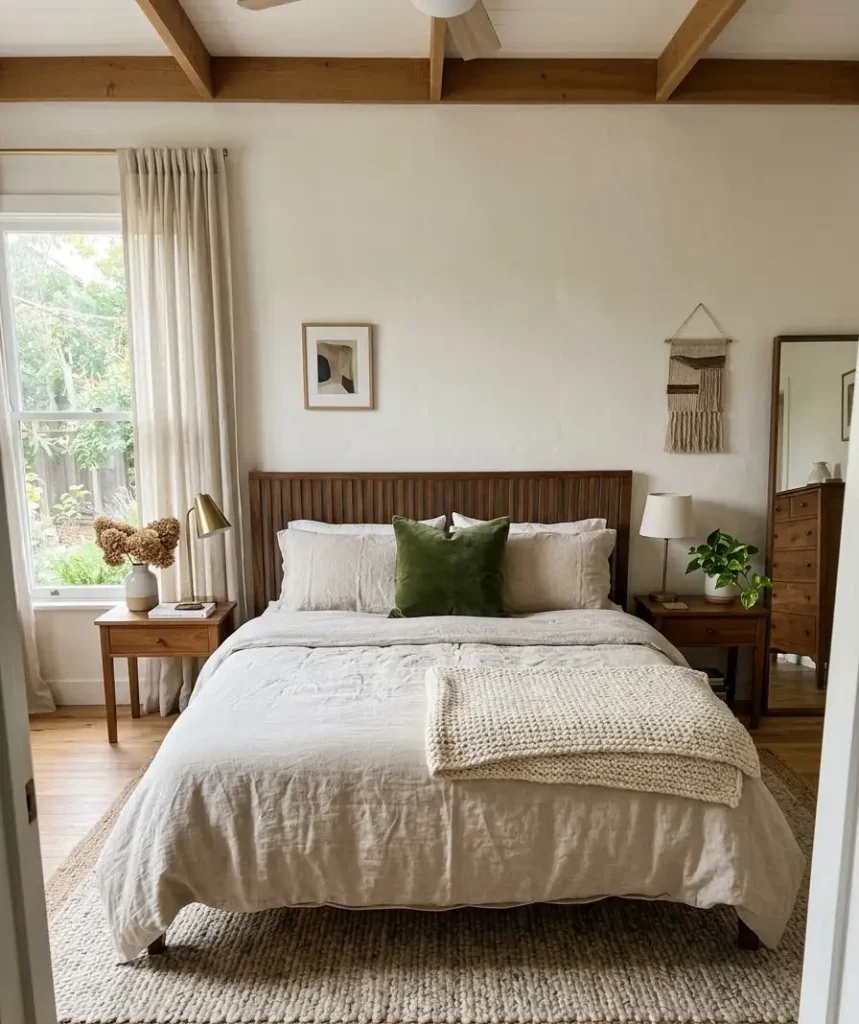
A flat top sheet and a single blanket won’t cut it. Layer a duvet, a woven throw, and two or three pillows in varying textures.
Chunky knit, smooth linen, maybe one velvet accent pillow if you’re feeling fancy.
Texture tricks the eye and the hand into feeling warmth even before you climb in. It’s a small thing that makes an enormous difference, and it’s genuinely one of the cheapest upgrades on this whole list.
Rugs anchor a small room instead of shrinking it
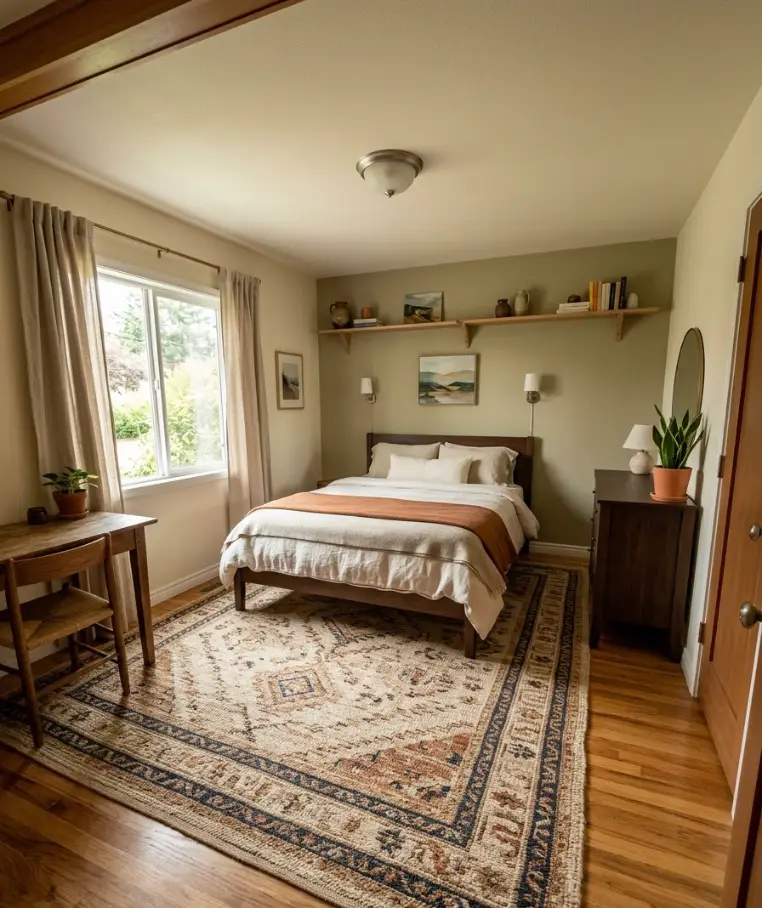
A lot of people skip rugs in small bedrooms, assuming they’ll make the floor feel more crowded. In my experience it’s the opposite.
A rug that extends slightly under the bed anchors the whole layout and adds a layer of softness underfoot.
Go for a rug that’s too big rather than too small. A tiny rug floating in the middle of the floor looks like an afterthought.
Storage solutions that don’t kill the vibe
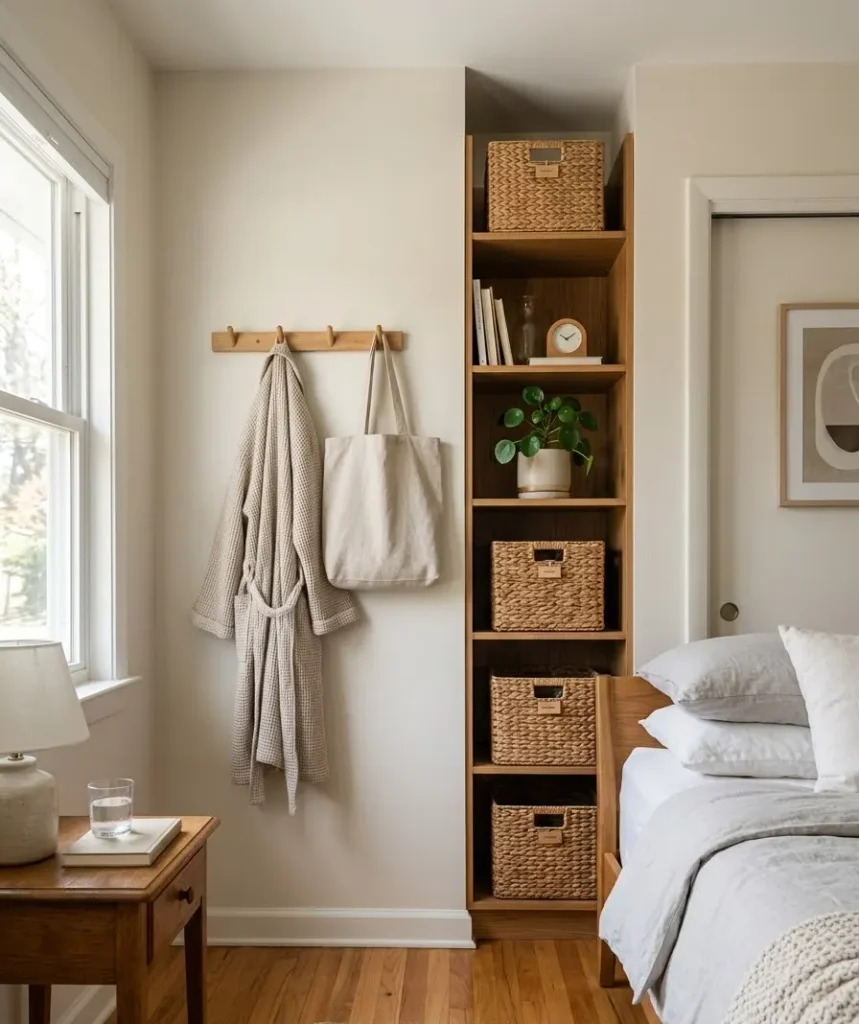
Clutter is cozy’s worst enemy. A room can have gorgeous lighting and perfect color and still feel chaotic if clothes are piled on a chair and cables are snaking across the floor.
- Under-bed storage bins for out-of-season clothes
- A slim vertical shelf instead of a wide dresser
- Baskets for everyday items so nothing sits out
- Wall-mounted hooks for bags, robes, and jewelry
I’ll admit this section is where I still struggle. My closet system is basically a Jenga tower of good intentions. But even imperfect storage beats no system at all, and honestly, half the battle is just picking a spot for things and sticking to it.
Quick comparison: lighting options for small bedrooms
| Light source | Best for | Cost range | My take |
|---|---|---|---|
| Warm bedside lamp | Reading, winding down | $20-$60 | Non-negotiable, get two |
| Floor or wall sconce | Ambient evening glow | $30-$90 | Worth it if floor space allows |
| String lights | Texture and mood | $10-$25 | Cheap win, don’t overdo it |
| Smart bulb (warm dimmable) | Flexible mood control | $15-$35 each | Great if you’re renting |
Wall decor and personal touches
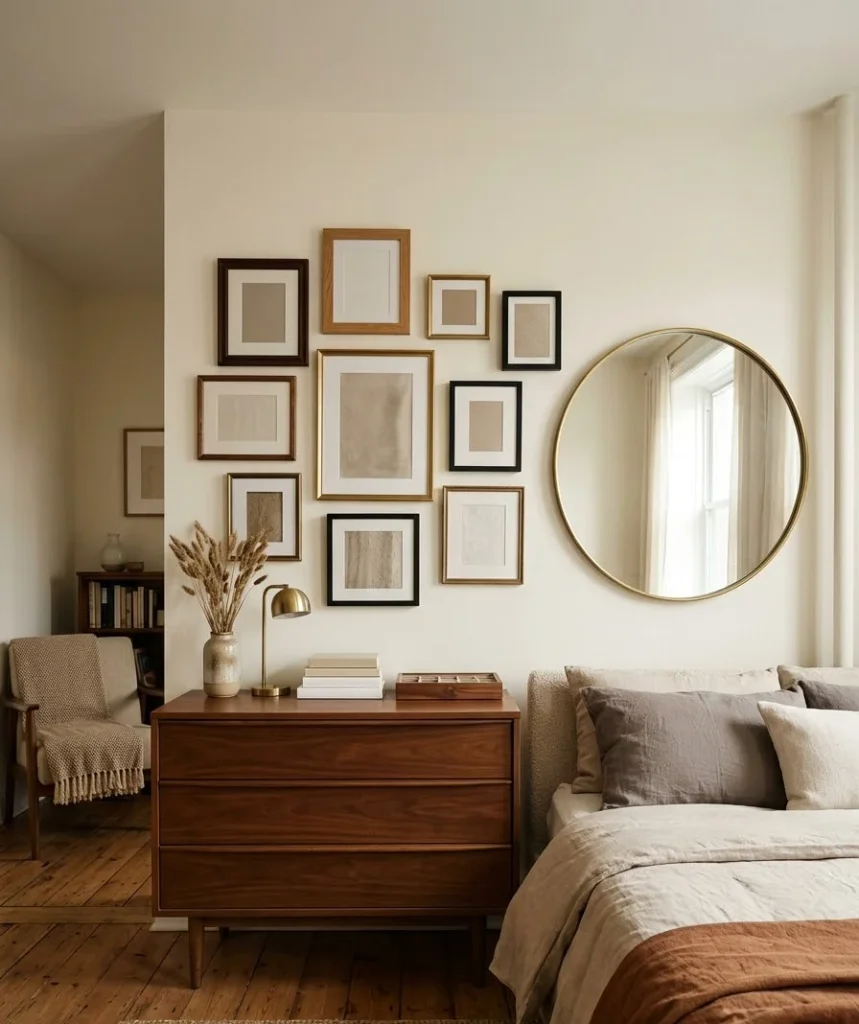
Empty walls make a room feel unfinished, but overloaded walls make a small room feel busy fast. Aim for a middle ground.
Group a few frames instead of scattering single pieces around the room.
A gallery wall of photos, prints, or even Pinterest-worthy quotes creates one strong visual point instead of ten scattered distractions.
Quick side thought, completely unrelated but stay with me: I once spent an entire .
Sunday afternoon rearranging picture frames on my floor before hanging a single one, and my partner walked in, looked at the chaos, and just said “this is insane.
” He wasn’t wrong. But that afternoon of arranging is also how I found a layout I still love two years later, so sometimes the messy process is worth it.
Mirrors deserve a special mention here. A well-placed mirror across from a window bounces natural light around and genuinely makes a small room read larger, not just brighter.
Scent and sound, the underrated cozy factors
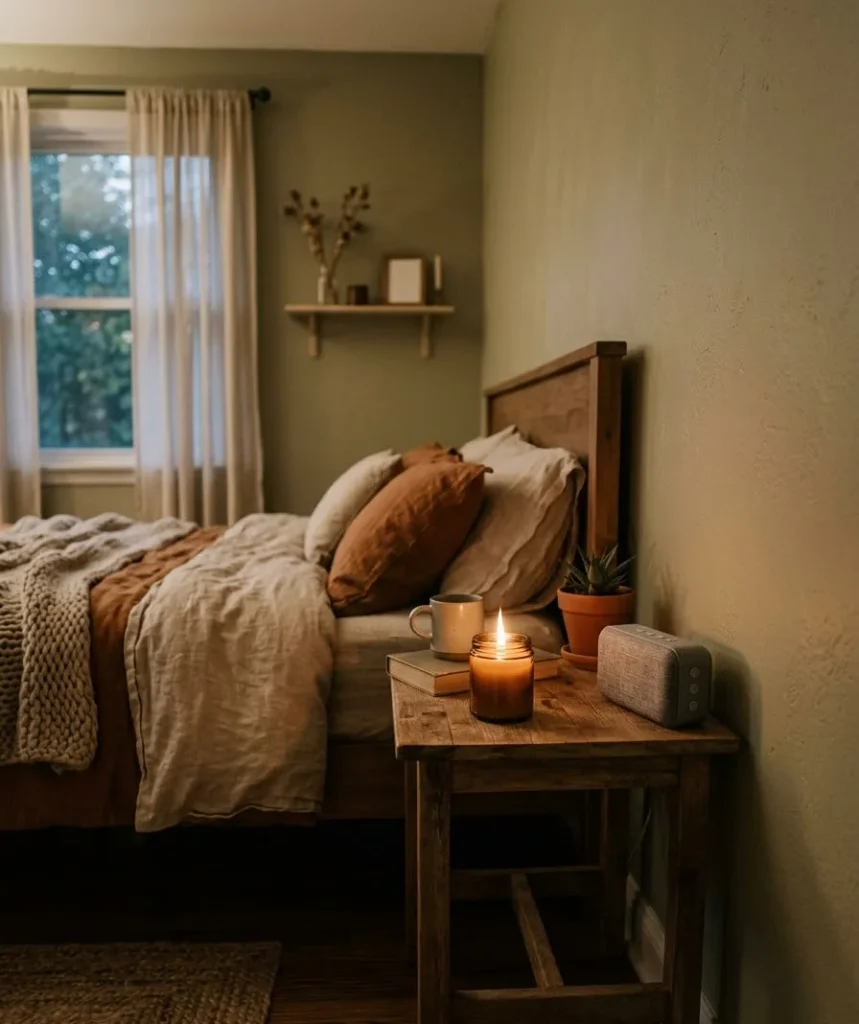
Nobody talks about this enough, but a room’s smell shapes how it feels almost as much as how it looks.
A cheap candle or a small diffuser with warm notes like vanilla, sandalwood, or amber adds a layer of comfort you can’t photograph but you’ll absolutely notice.
Sound matters too. A small fan for white noise, or a speaker playing something low and ambient before bed, signals to your brain that this room is a place to slow down, not a place to scroll on your phone until 1am.
Common mistakes to avoid
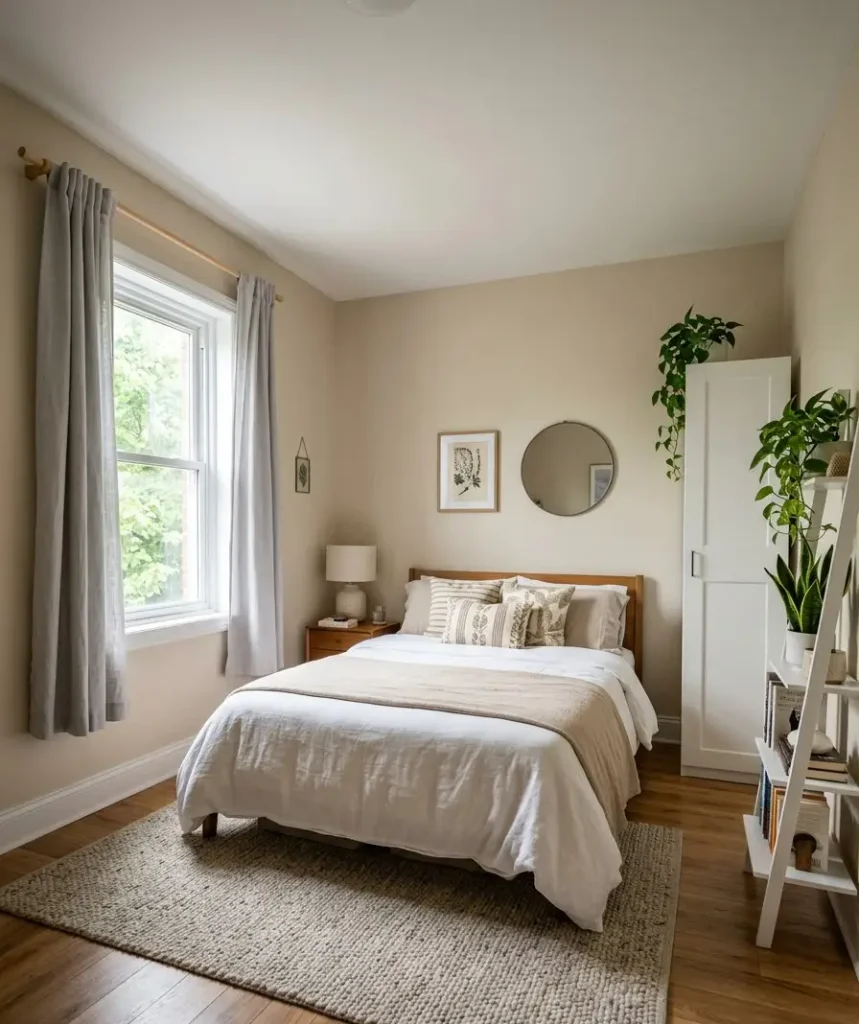
- Overcrowding the room with furniture you don’t actually use daily
- Choosing curtains that are too short, which chops the ceiling visually
- Sticking with one harsh overhead light and calling it done
- Ignoring vertical space, since walls and ceilings offer storage most people never use
- Matching everything too perfectly, which can feel more like a showroom than a home
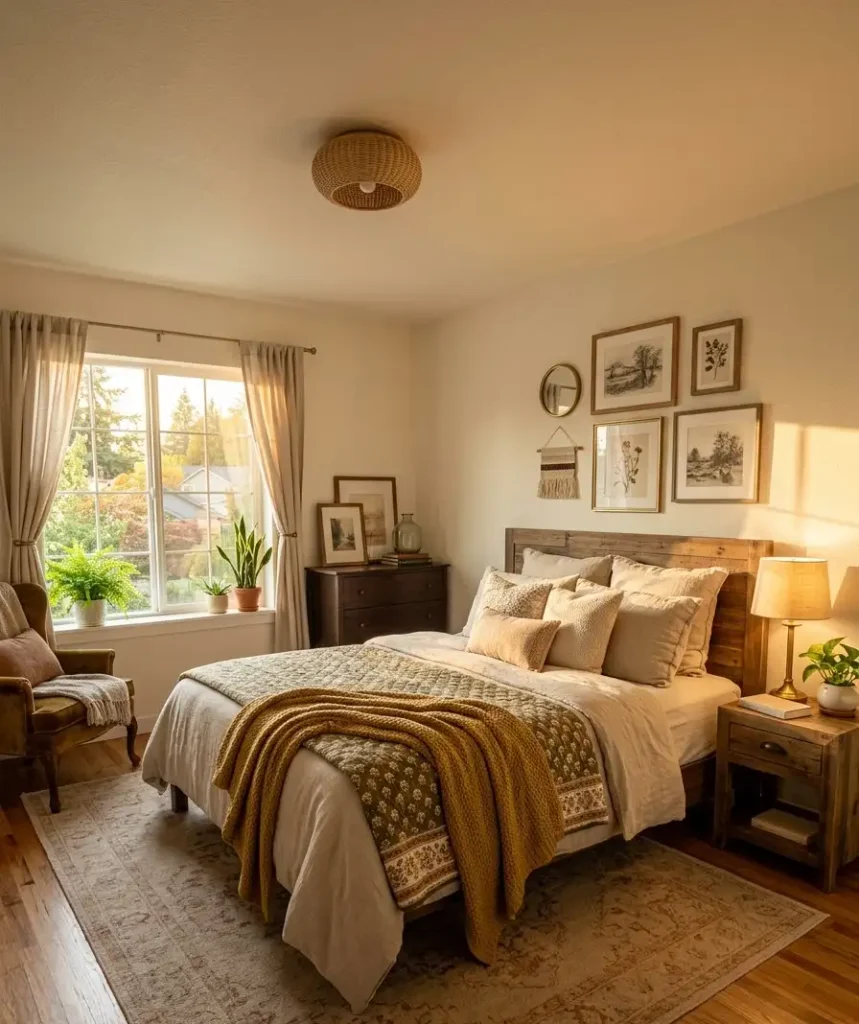
For more layout-specific inspiration, Apartment Therapy has a solid library of real small-space bedroom tours worth browsing before you commit to a plan.
FAQs
Does painting a small bedroom dark actually make it feel smaller? Not necessarily.
A deep, warm color on all four walls can create a cocoon effect that reads as cozy rather than cramped, especially when paired with good lighting.
It’s the lighting and clutter that shrink a room, not the depth of the paint color.
What’s the cheapest way to make a small bedroom feel cozier fast? Swap your bulbs for warm-toned ones and add one extra layer to your bed, like a throw blanket or an extra pillow. Both changes cost under 30 dollars combined and make an immediate difference.
Should I avoid rugs in a small bedroom? No, skip that advice. A properly sized rug that extends slightly under the bed frame anchors the room and adds warmth underfoot, rather than making the space feel smaller.
Your small bedroom doesn’t need more square footage to feel like a retreat.
It needs better light, softer textures, and a little bit of restraint on the clutter.
Start with one change this weekend, maybe the bulbs or the bedding, and see how much of a difference it makes before you touch anything else.
What’s the one thing in your bedroom you’ve been meaning to fix for months but keep putting off? Pin this guide, save it for later, and finally tackle it this weekend.