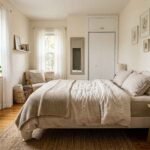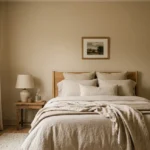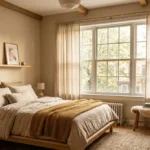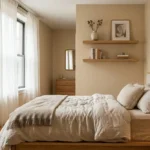
My first apartment bedroom measured 9 feet by 10 feet. I measured it three times because I refused to believe it.
A queen bed, a dresser, and a door that opened directly into the closet. That room taught me more about design than any “big reveal” home show ever could.
Small bedrooms get a bad reputation. People treat them like a problem to solve instead of a shape to work with.
IMO that’s backwards. A small room, done right, feels more intentional than a huge one.
Every piece earns its spot. Nothing just sits there taking up space because you had room to spare.
This isn’t a list of generic tips copied from a hundred other sites.
It’s what actually worked in my own tiny bedroom, plus a few things I learned the hard way (looking at you, oversized headboard I had to return). Let’s get into it.
Why small bedrooms feel bigger when you stop fighting them
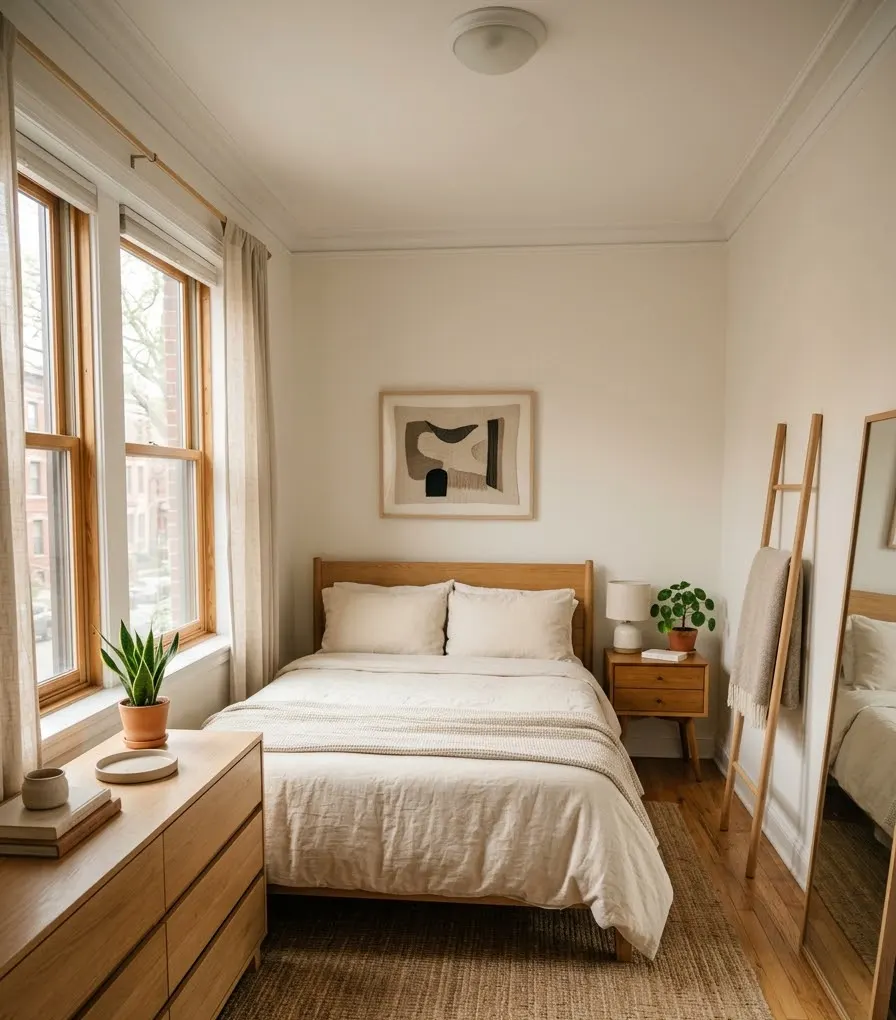
Here’s the thing nobody tells you when you move into a small space: the room isn’t your enemy. Your furniture choices are.
I spent my first month in that 9×10 room buying pieces that would’ve looked great in a house twice the size.
A six-drawer dresser. A bed frame with a footboard. A nightstand the size of a small filing cabinet.
The room felt like a furniture showroom that had been shrunk in the wash.
Once I swapped that stuff for pieces actually scaled to the room, everything changed. The space didn’t get bigger. It just stopped fighting itself.
Ever notice how hotel rooms, even small ones, feel calm instead of cramped? That’s not luck.
Hotels design for the square footage they have, not the square footage they wish they had. Your bedroom deserves the same honesty.
The goal isn’t to make a small room look big. It’s to make it feel good to be in.
Those are different projects, and chasing the wrong one wastes a lot of money.
Start with color that actually works for tiny walls
Paint gets more credit and less credit than it deserves, depending on who you ask.
Too many articles tell you “just paint it white” like that’s the only trick in the book.
It’s not, and honestly, an all-white room can feel a little clinical if you’re not careful.
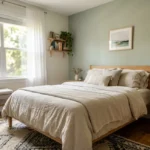
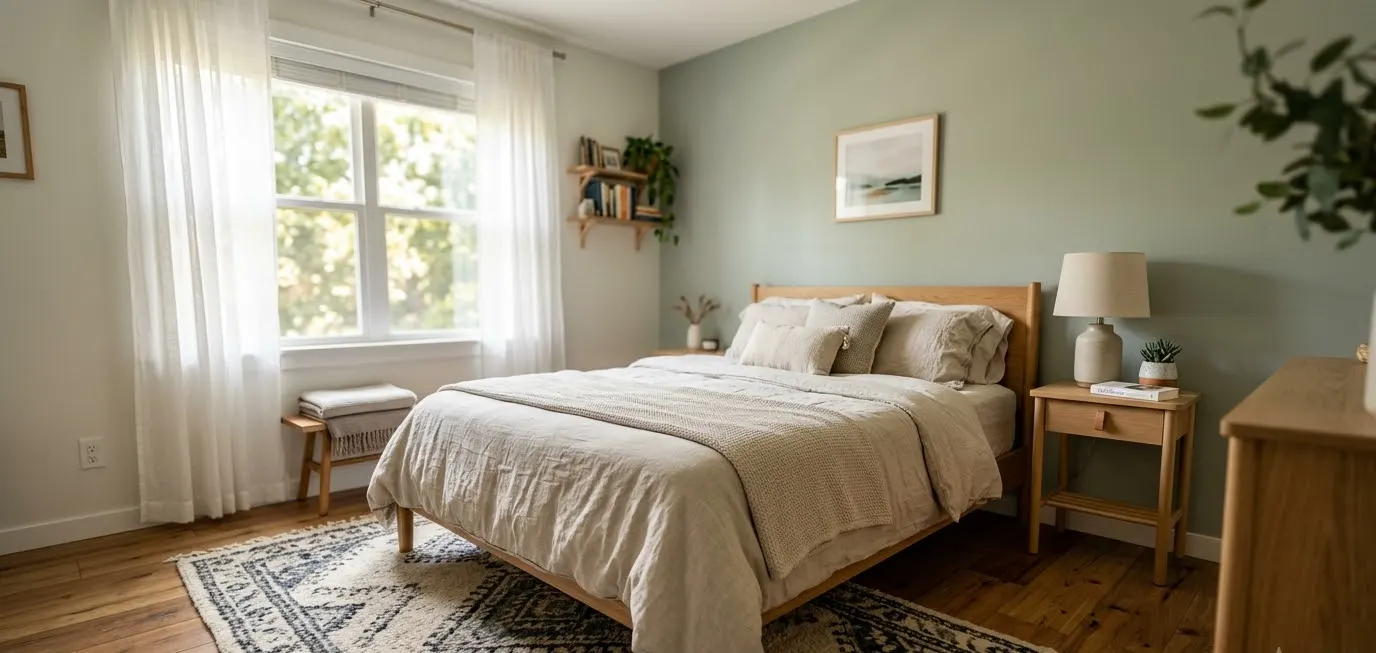
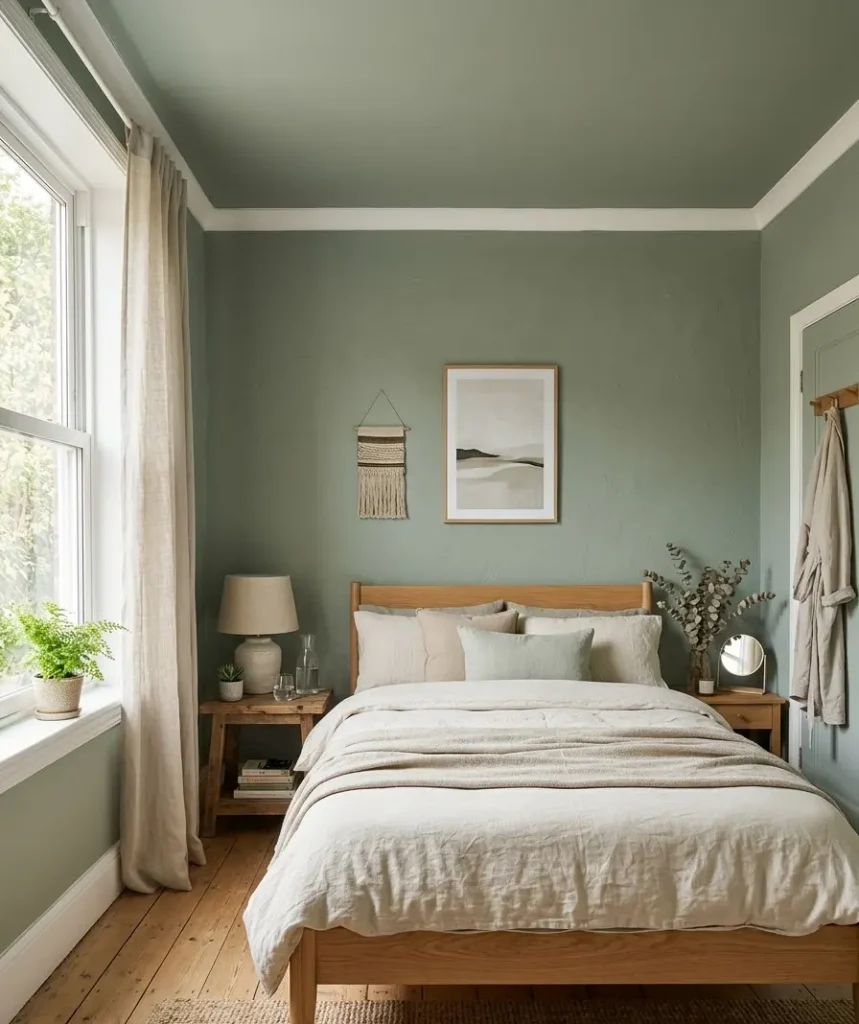
I went with a soft sage green in my old bedroom. My landlord side-eyed me a little at move-out inspection, but the room felt like a plant nursery crossed with a nap. In a good way.
A few color approaches that hold up in small rooms:
- Muted, dusty tones (sage, dusty blue, warm taupe) read as calm rather than flat
- A single accent wall behind the headboard adds depth without shrinking the room visually
- Matching wall and ceiling color stretches the eye upward, which tricks the brain into reading more height
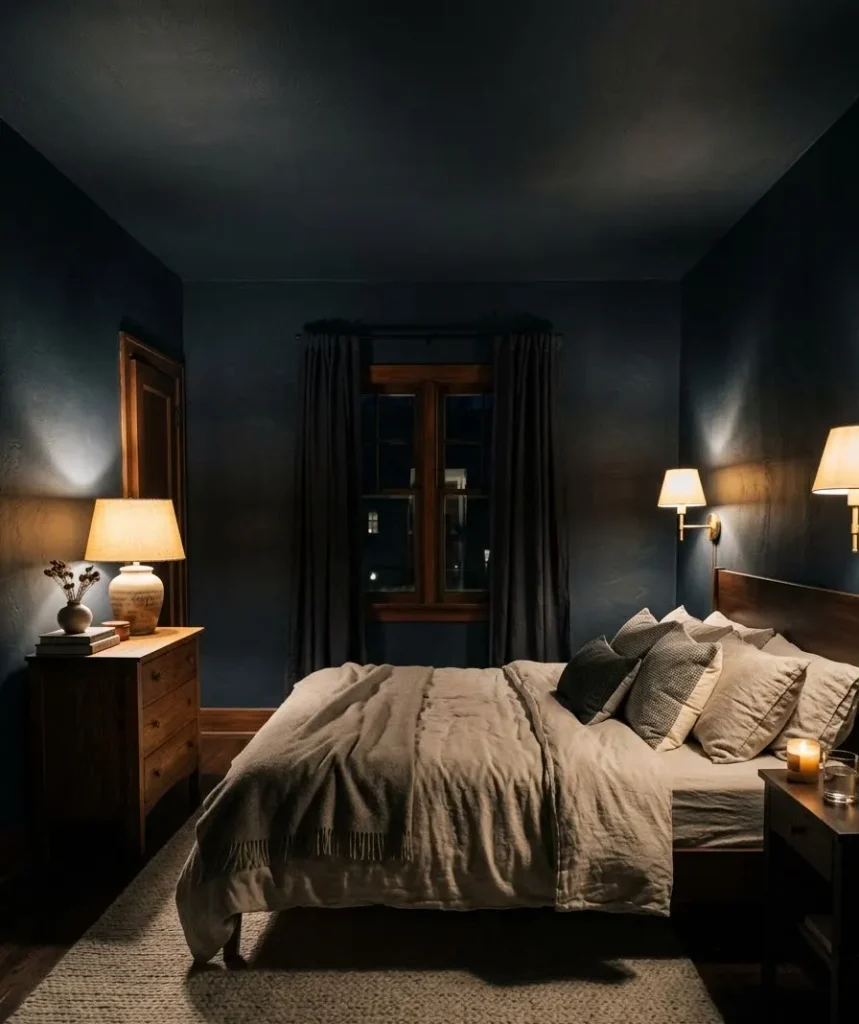
- Darker, saturated colors on all four walls can actually make a small room feel cozier, not smaller, when paired with good lighting
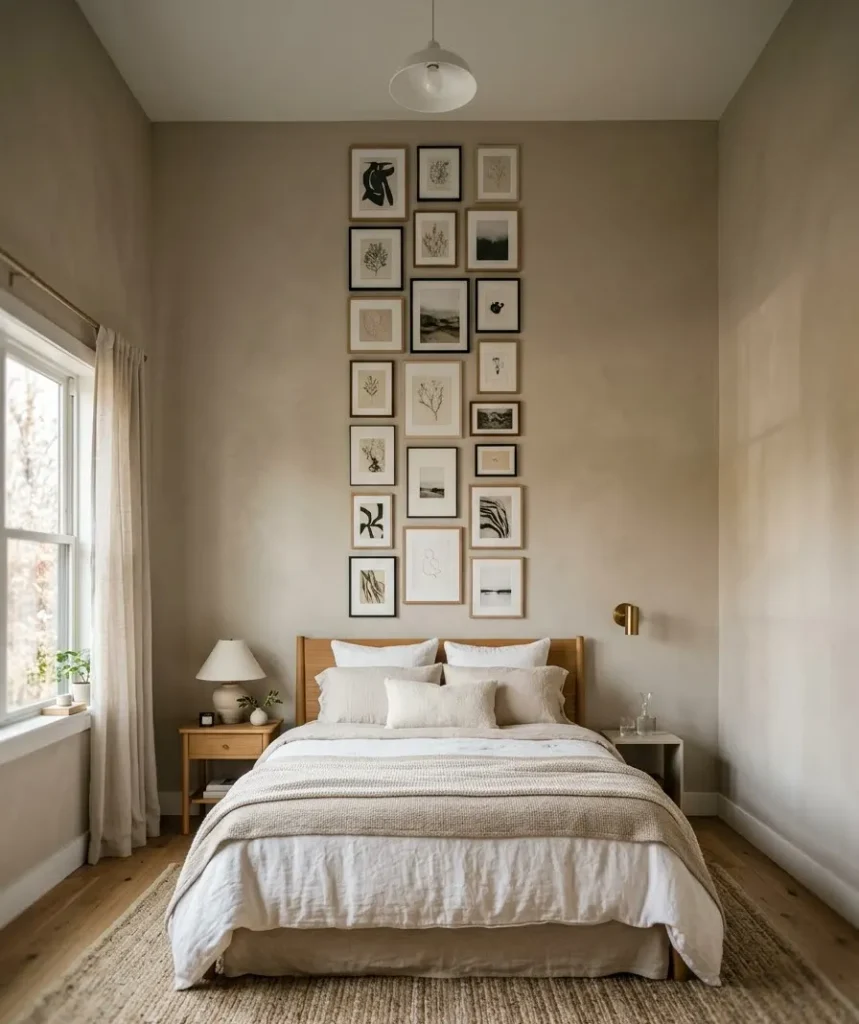
That last one surprises people every time. We’re trained to think dark equals small.
But a dark, enveloping bedroom at night, lit well, feels like a cocoon instead of a closet.
Homes & Gardens’ guide to small bedroom paint colors covers this idea in more depth if you want to go further down that rabbit hole.
A quick note on trim and ceilings
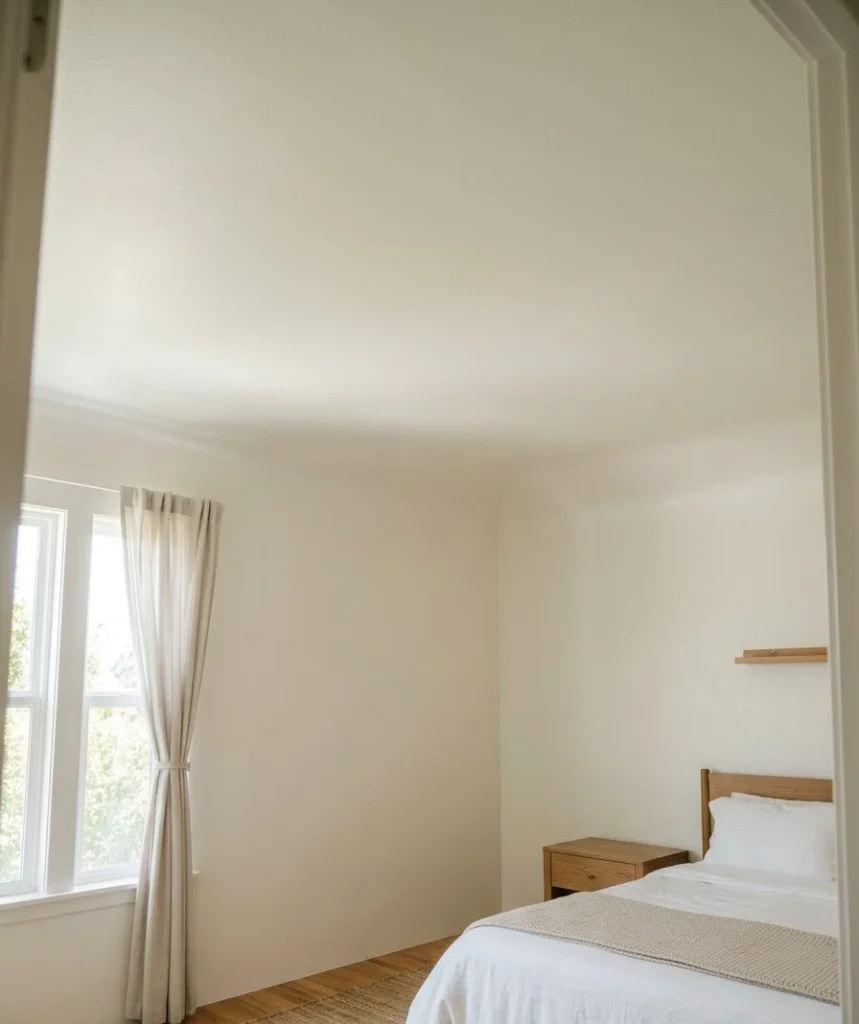
Don’t skip the ceiling. A ceiling painted the same color as your walls, or even a shade lighter, removes that hard visual line where wall meets ceiling.
Fewer hard lines, calmer room. Simple as that.
Furniture that pulls double duty
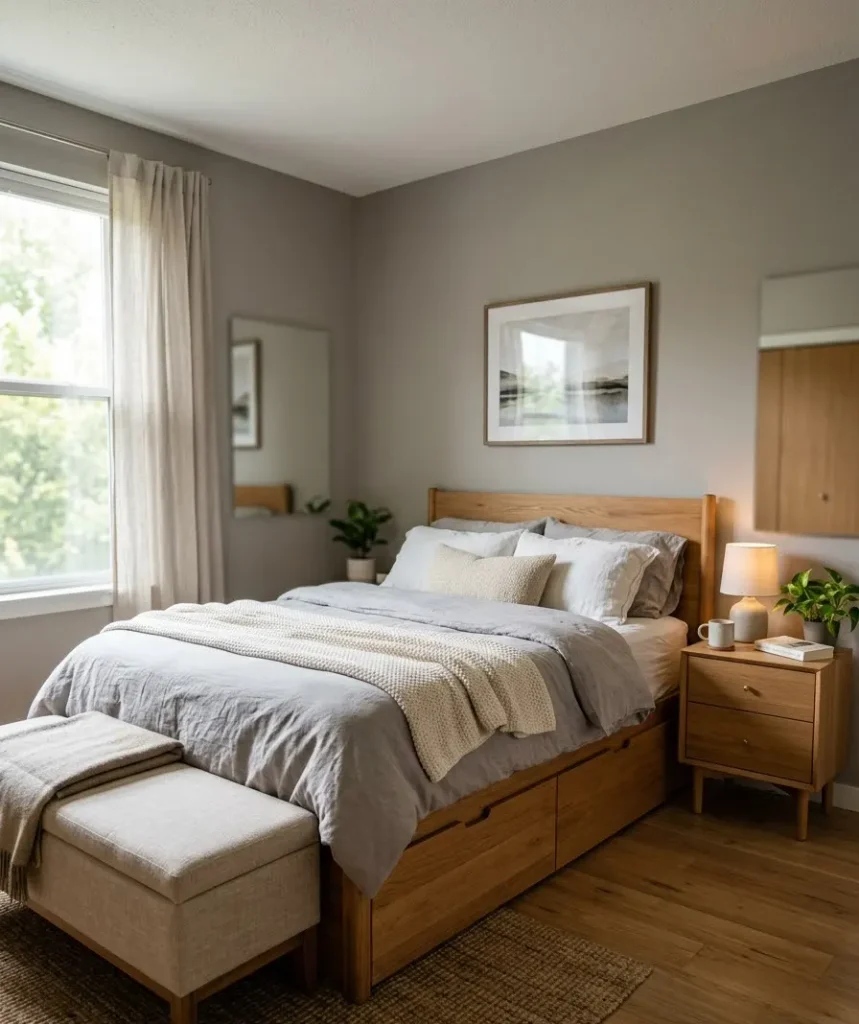
Small rooms punish single-purpose furniture. A chair that’s just a chair is a luxury you might not have room for. A chair that’s also a laptop stand, a clothes catch-all, and a reading nook? Now we’re talking.
Here’s what earned a permanent spot in my room, and why:
- A storage bed frame with drawers underneath, holding off-season clothes and extra linens
- A nightstand with a drawer, not an open shelf, so clutter has somewhere to disappear
- A slim bench at the foot of the bed that doubles as a seat and a landing pad for tomorrow’s outfit
- Wall-mounted shelves instead of a bookcase, because floor space in a small room is basically gold
I’ll be honest about one failed experiment: I tried a Murphy bed once.
On paper, brilliant idea. In practice, the mounting hardware ate into closet space I needed more than the extra floor space it freed up during the day.
Not every “smart” solution fits every room. Trust your actual life over the Pinterest board.
Storage tricks that don’t scream “storage”
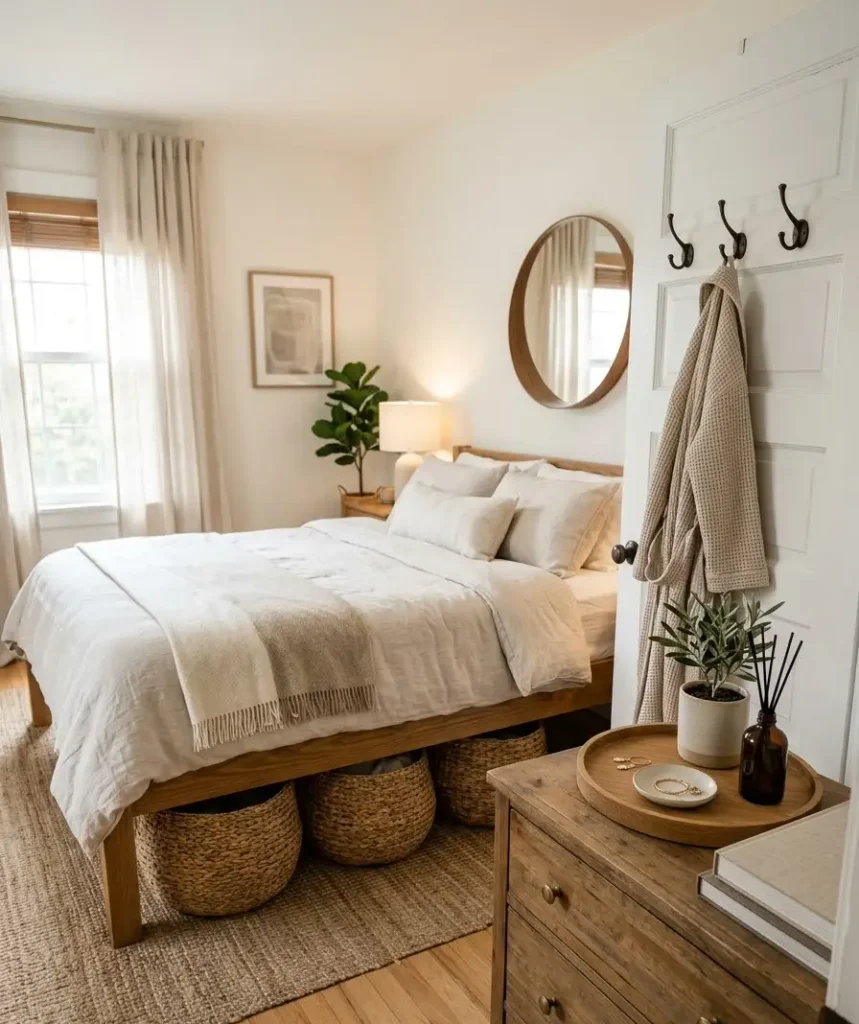
Nobody wants their bedroom to look like a storage unit with a mattress in it.
The trick is hiding function inside things that look intentional rather than utilitarian.
A few things that quietly hold clutter without looking like clutter-holders:
- Woven baskets under the bed instead of plastic bins
- A tray on the dresser that corrals jewelry, keys, and the stuff that normally ends up scattered
- Hooks on the back of the door for bags, robes, or tomorrow’s jacket
- A slim rolling cart tucked beside the dresser for extra folded items
Apartment Therapy’s roundup of small bedroom storage ideas has some genuinely clever real-apartment examples, not just staged photos. Worth a look if storage is your biggest headache right now.
And here’s a small thing that made a bigger difference than I expected: pushing the bed into a corner instead of centering it on the wall. It freed up an entire side of the room for a narrow dresser I didn’t think I had space for. Sometimes the fix isn’t buying less stuff. It’s rearranging what you already have.
Layer your lighting like you mean it
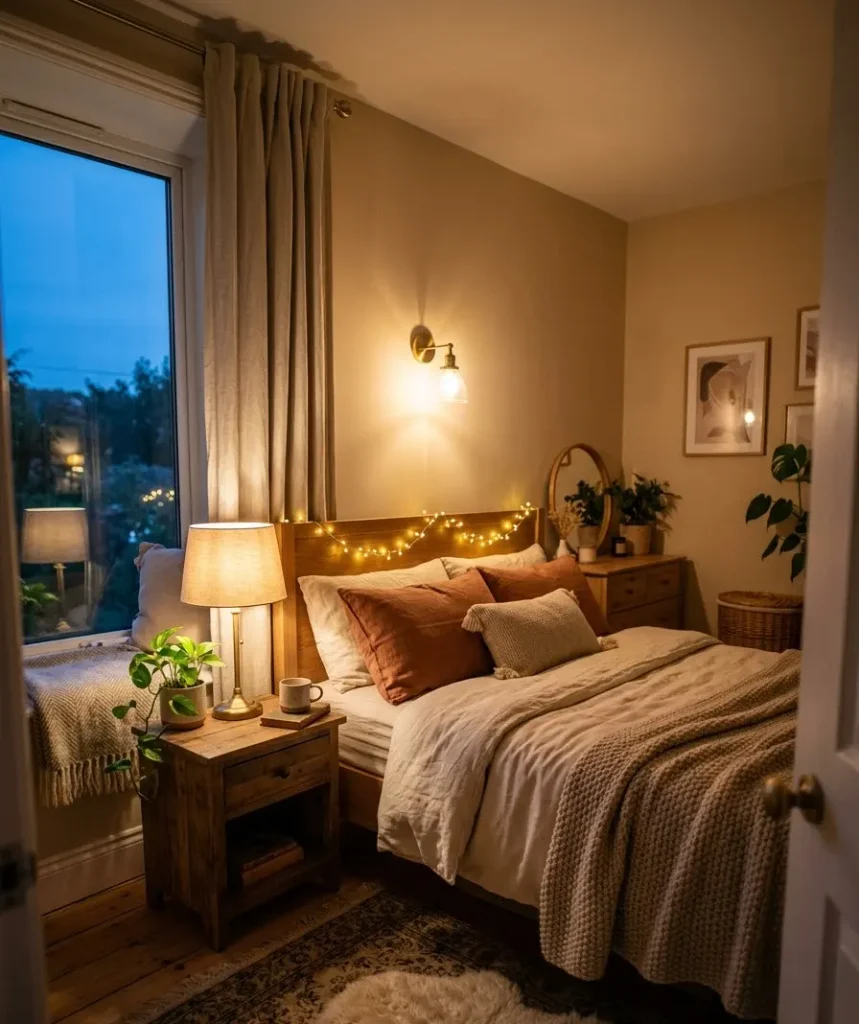
A single overhead light is the fastest way to make any bedroom, small or huge, feel like a waiting room.
Layered lighting is the single biggest upgrade I made, and it cost less than the paint did.
Here’s a simple breakdown of what each type of light actually does in a small bedroom:
| Light type | Best use | Ideal warmth |
|---|---|---|
| Overhead / ceiling | General brightness, cleaning, getting dressed | 3000K, dimmable if possible |
| Bedside lamps | Reading, winding down at night | 2700K, warm and soft |
| Accent (string lights, wall sconce) | Mood, evening ambiance | 2200K to 2700K |
| Closet or corner light | Fills dark corners, expands perceived space | 3000K |
Wow, the difference a warm bulb makes is honestly kind of ridiculous once you notice it.
Swap a harsh 5000K bulb for something in the 2700K range and the whole room softens instantly.
Wayfair’s guide to cozy lighting breaks down the layering concept well if you want more specifics on fixture types.
Quick aside, completely unrelated: I also learned that scented candles and dimmer switches are a dangerous combination for productivity.
I’ve lost entire evenings to “just resting my eyes” under warm lamp light. Worth the tradeoff, honestly.
Don’t skip the dark corners
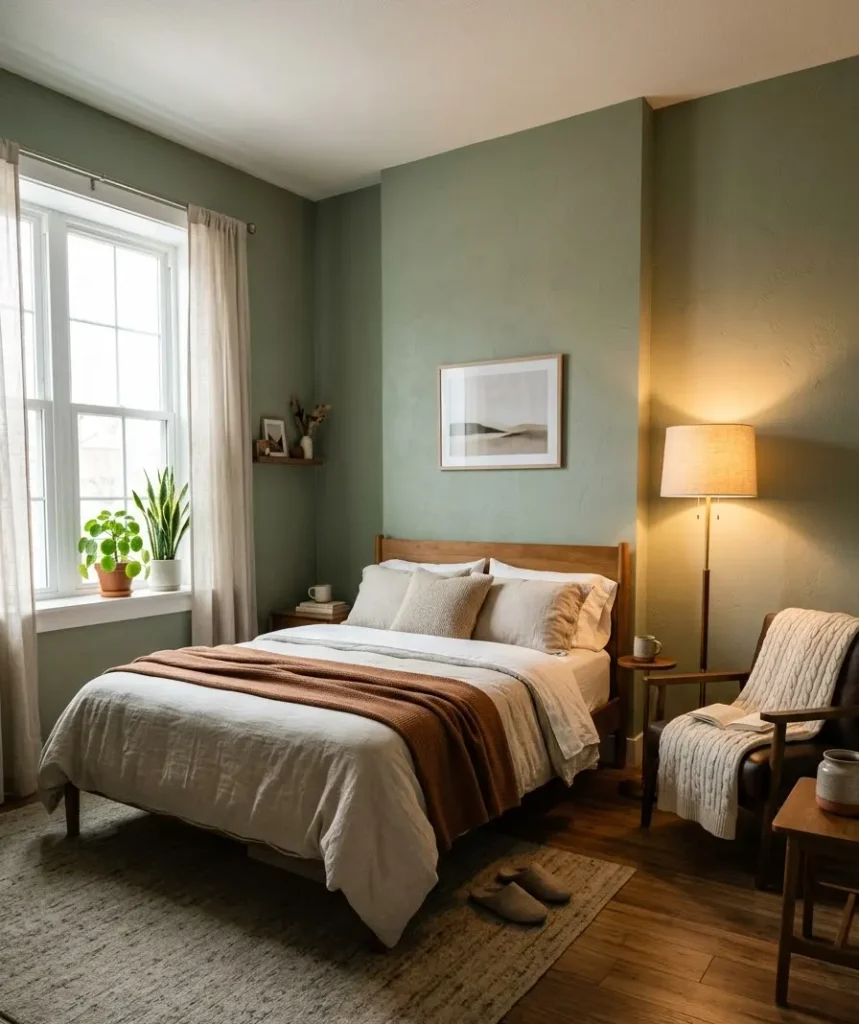
Small rooms tend to have at least one awkward dark corner.
Instead of ignoring it, drop a small floor lamp or plug-in sconce there. A lit corner reads as intentional.
A dark corner reads as unfinished, even if it’s perfectly fine.
Textiles and texture: the cheat code for coziness
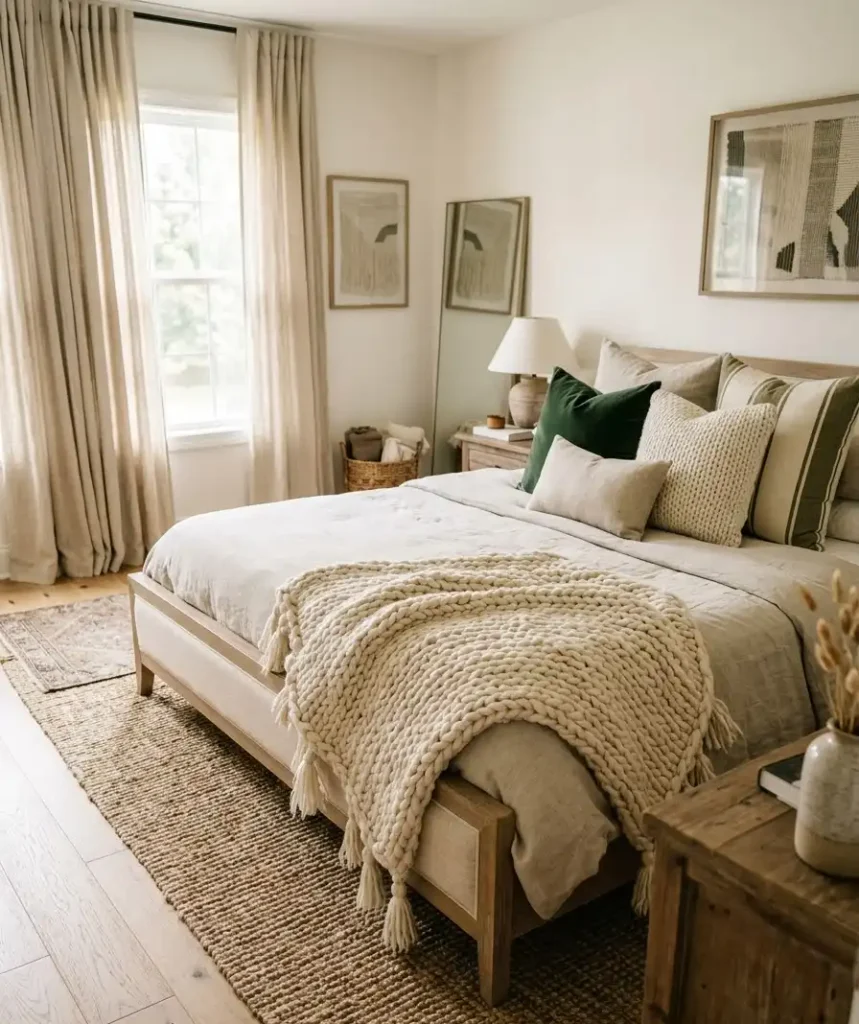
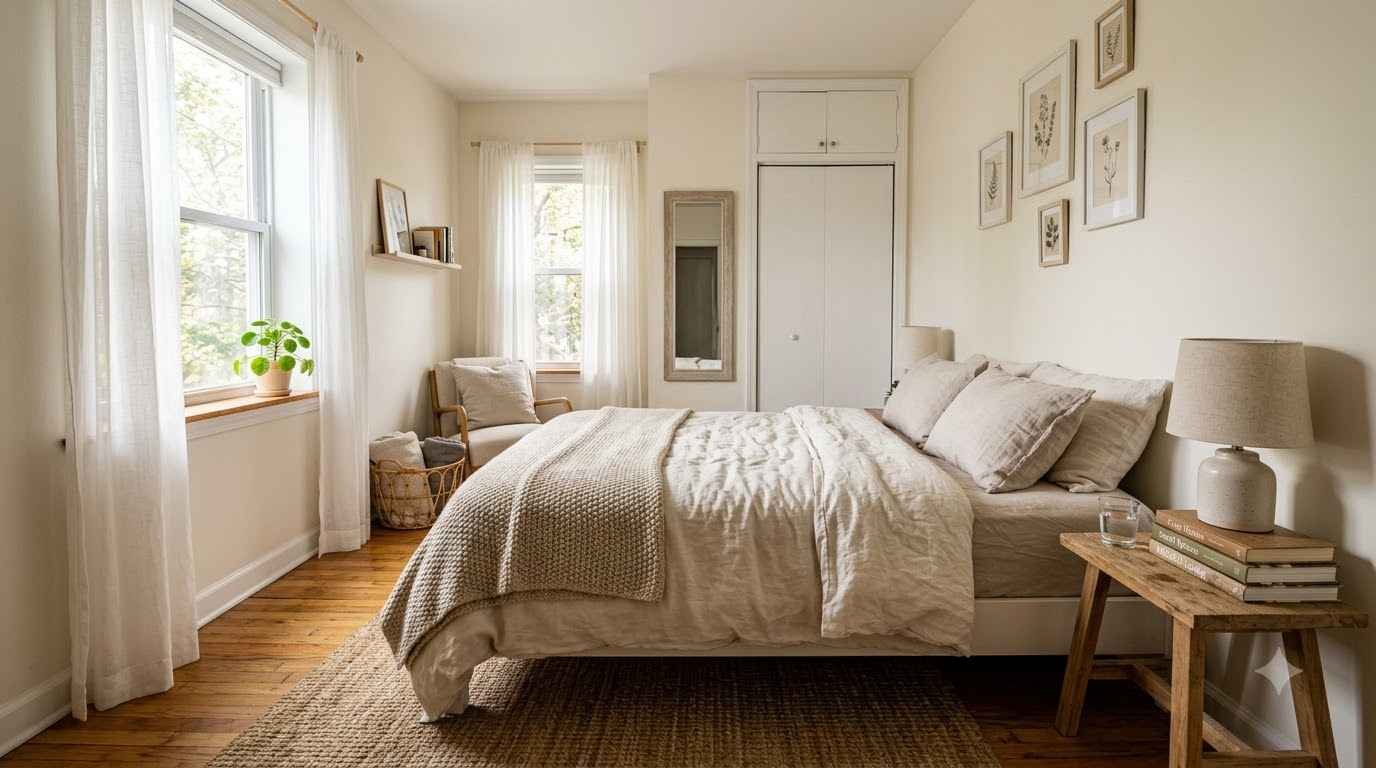
Color and furniture get all the attention, but texture is doing quiet, heavy lifting in every cozy room you’ve ever admired.
Smooth surfaces alone feel sterile. Mixing textures is what makes a room feel lived-in and warm.
Things that add texture without adding clutter:
- A chunky knit throw at the foot of the bed
- A jute or wool rug, even a small one, layered partly under the bed
- Linen curtains instead of stiff synthetic panels
- A mix of pillow fabrics: one velvet, one cotton, one something with a bit of texture
I used to think rugs were pointless in a small room since most of the floor is covered by furniture anyway.
I was wrong. Even a rug that only shows on two sides of the bed changes how the whole room feels underfoot, and visually it grounds the space instead of letting the floor read as an afterthought.
Mirrors, walls, and other space-stretching tricks
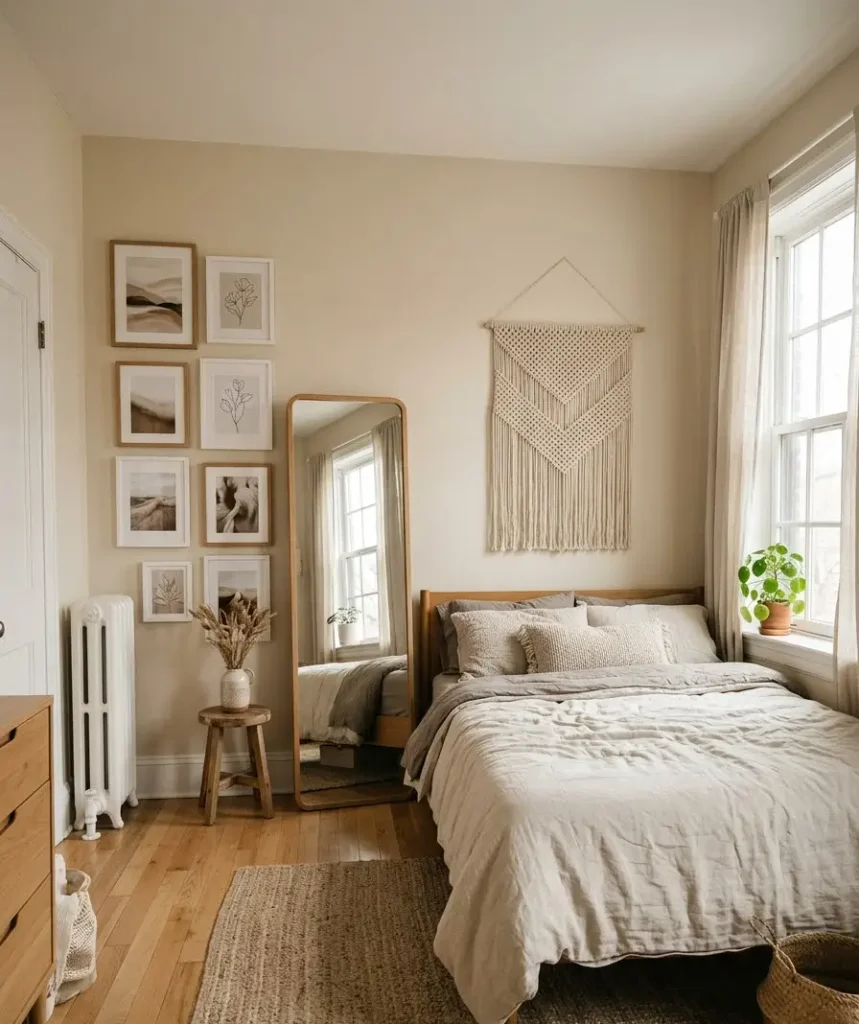
Mirrors get recommended so often they’ve become a cliché, but clichés earn that status by actually working.
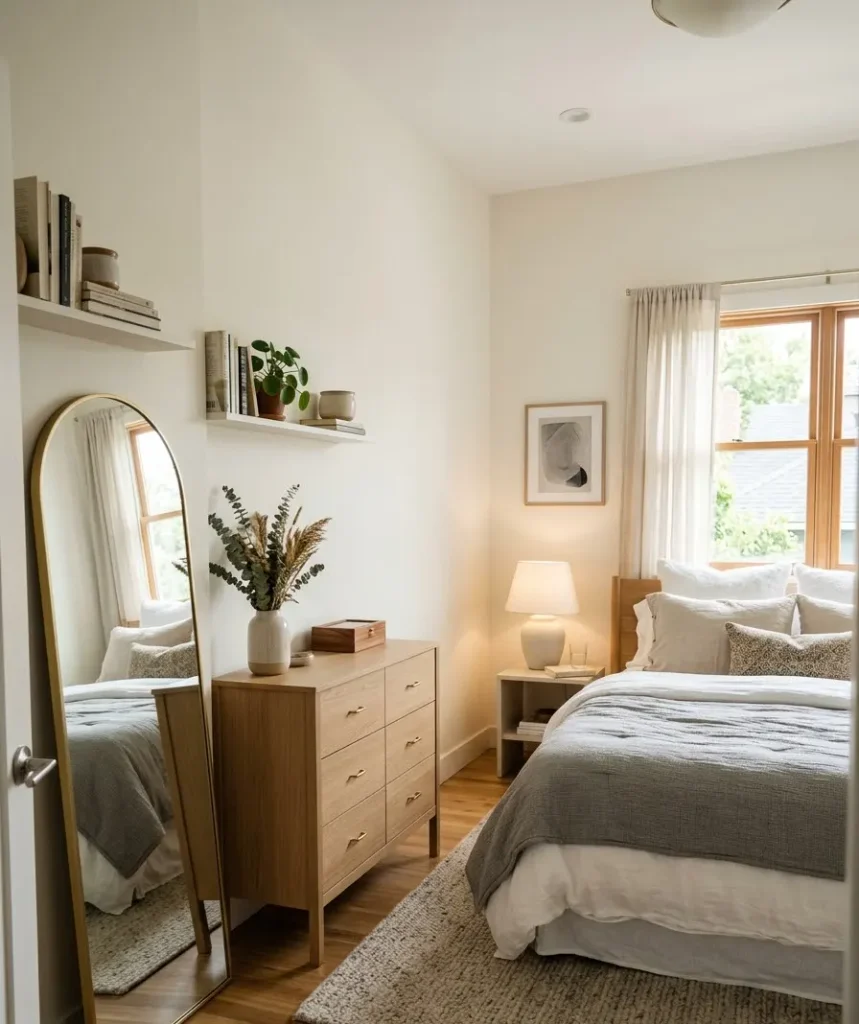
A mirror placed opposite a window bounces natural light across the room and doubles the sense of depth.
A few placement ideas worth trying:
- Lean a full-length mirror against the wall instead of mounting it flush, for a more relaxed, styled look
- Hang a mirror where it reflects your best feature, whether that’s a window, a piece of art, or a nice headboard
- Skip heavy, ornate frames; a slim frame keeps the piece from becoming its own bulky object in a small room
Gallery walls also deserve a mention here. Going vertical with art, rather than spreading a few pieces horizontally, draws the eye upward and makes the ceiling feel taller than it is.
It’s a small trick, but it works every time I’ve tried it.
Personal touches that make it feel like yours
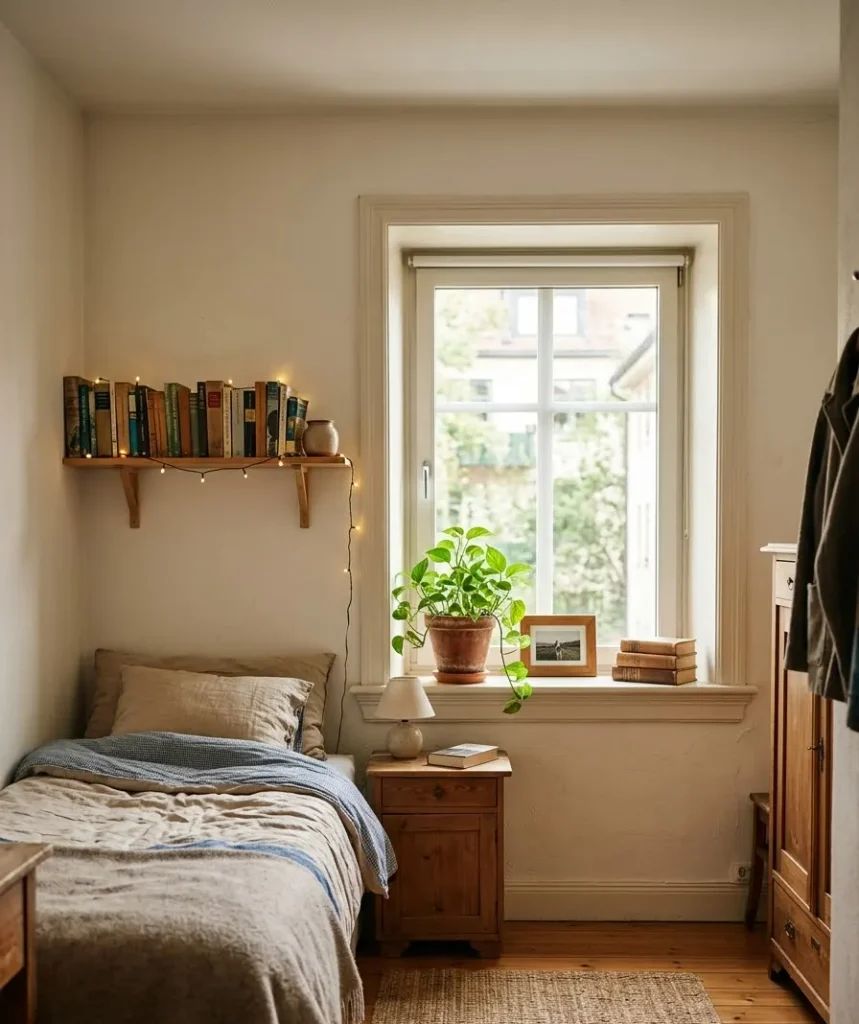
This is the part most SEO articles skip because it’s harder to bullet-point.
A technically well-designed bedroom can still feel like a hotel room if nothing in it says anything about you.
My room had a shelf of paperback books I’d actually read, not decorative ones bought by the yard.
A small framed photo from a trip that went sideways in the best way. A single plant that I somehow kept alive against all odds.
None of that cost much. All of it made the room feel like mine instead of a catalog page.
Ask yourself what you’d miss if it disappeared tomorrow. That’s usually the stuff worth displaying.
Common mistakes I made (so you don’t have to)
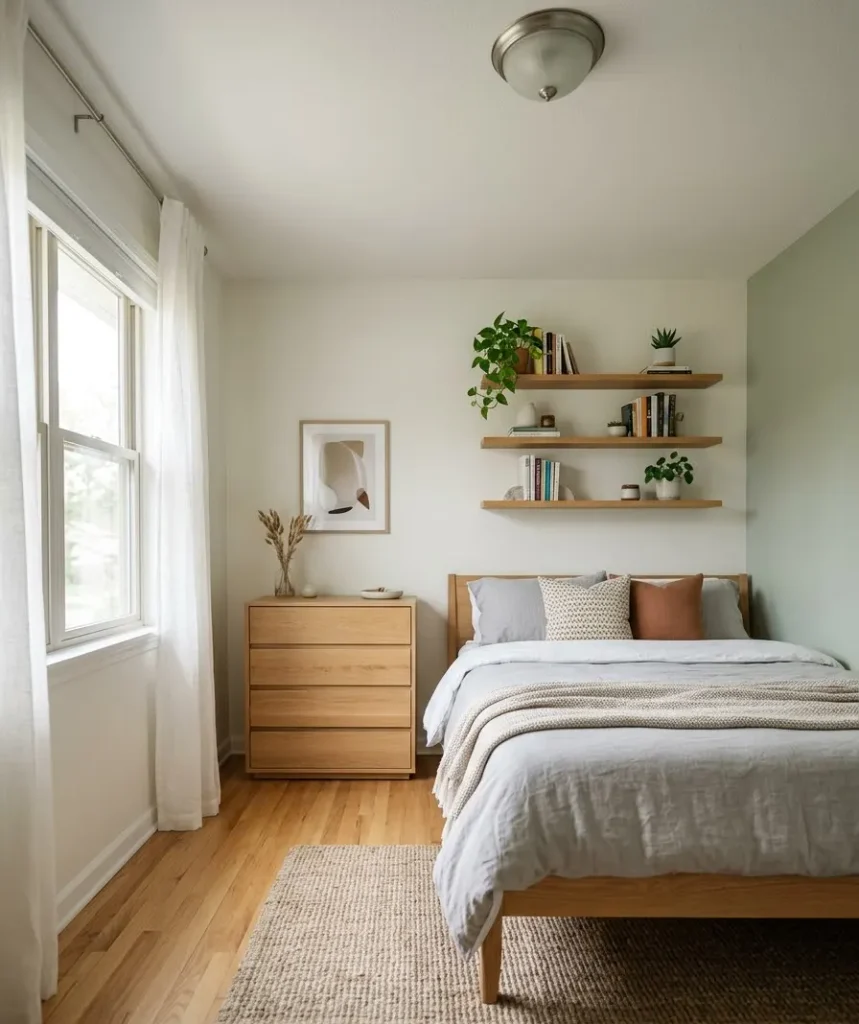
A few things I’d tell my past self, if I could:
- Buying furniture before measuring the doorway. That oversized headboard I mentioned earlier? Never made it past the hallway.
- Going too matchy-matchy. A bedroom set bought as one unit tends to look flat. Mixing eras and finishes, a vintage lamp next to modern bedding, adds character.
- Ignoring vertical space. Wall shelves and hooks free up floor space in a way that horizontal furniture never will.
- Choosing style over comfort for the bed itself. A gorgeous bed frame means nothing if the mattress underneath is an afterthought. This is where I’d rather spend more, not less.
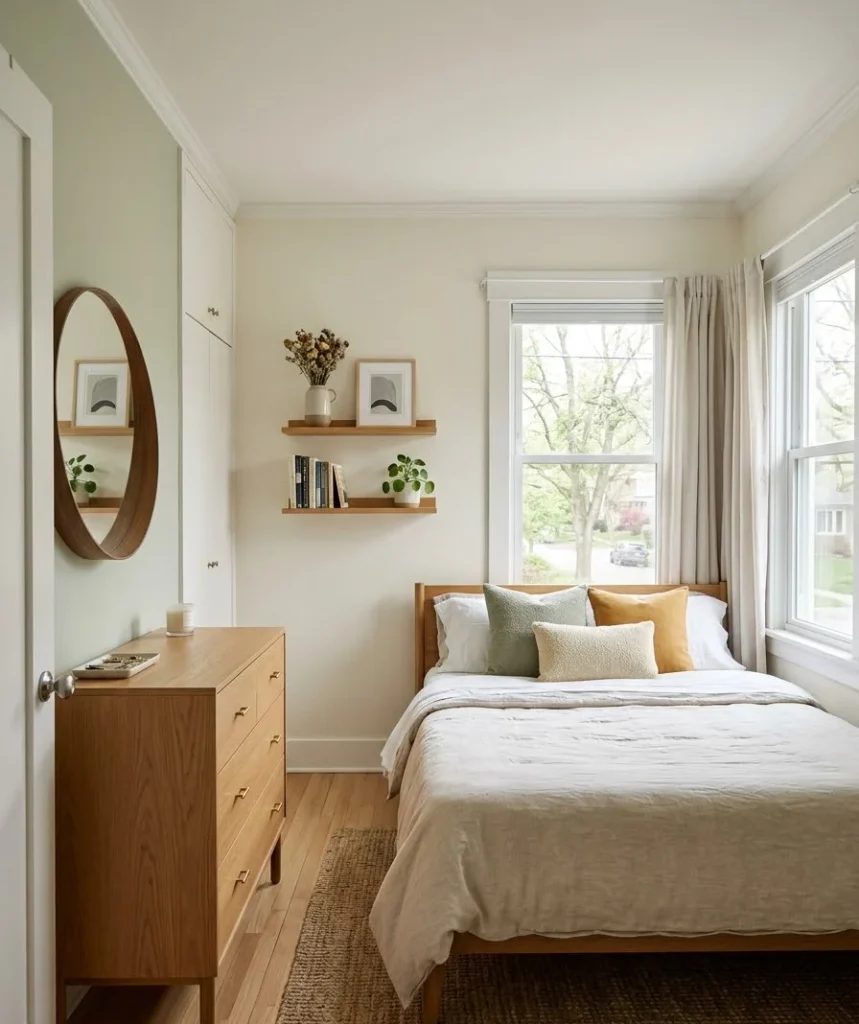
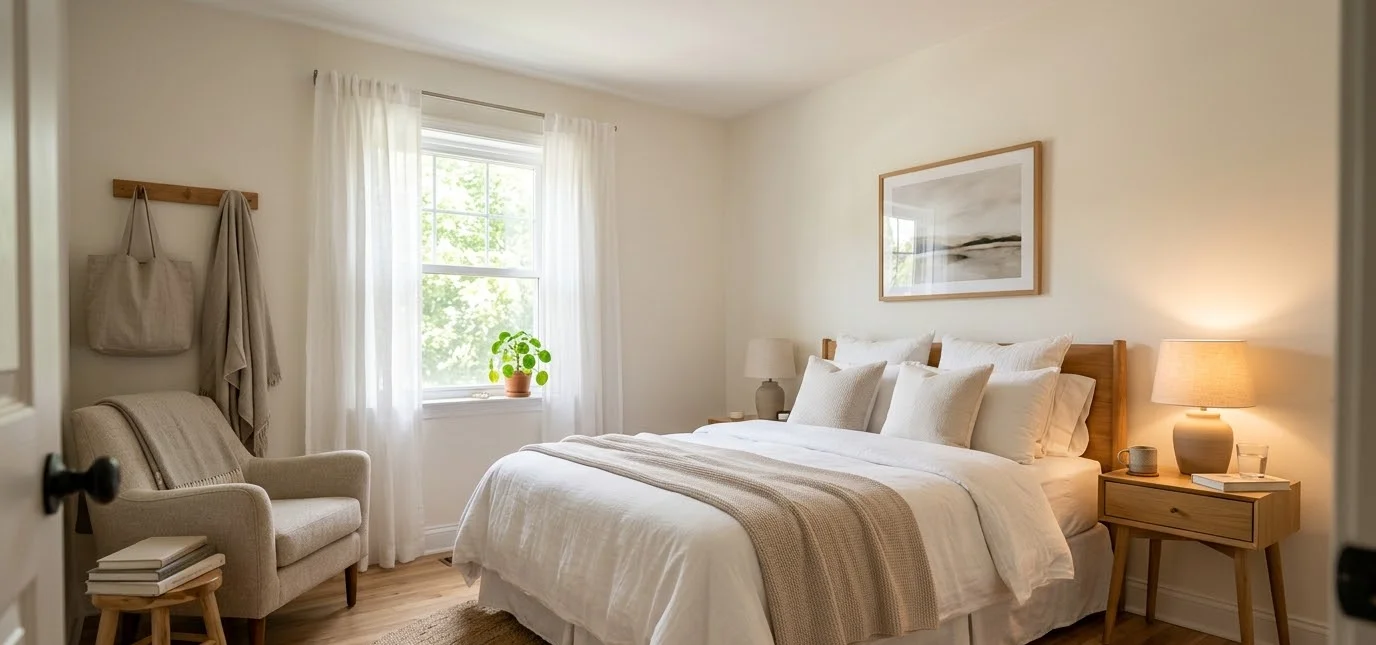
Small Guest Bedroom Ideas Cozy Simple Ways To Make A Tiny Room Feel Like A Retreat
Click Here →Quick FAQ
What’s the biggest mistake people make in a small bedroom? Buying furniture sized for a bigger room.
A dresser or bed frame that’s a few inches too large throws off the whole layout, and it’s usually the first thing that needs to go.
Do dark paint colors really work in small bedrooms? Yes, more often than people expect. Dark, saturated walls paired with warm, layered lighting
can make a small room feel enveloping rather than cramped. It’s the lighting that makes or breaks the effect.
How much should I spend on lighting versus furniture? If the budget is tight, prioritize lighting first.
A well-lit small room in modest furniture looks better than a poorly lit room full of expensive pieces. It’s the cheapest upgrade with the biggest visible payoff.
Final thought
A small bedroom isn’t a smaller version of the room you wish you had.
It’s its own thing, with its own rules, and once you stop measuring it against some imaginary bigger space, it gets a lot easier to love.
So, what’s the one thing in your current bedroom you’d swap out first if you could? Start there. That’s usually where the real transformation begins.