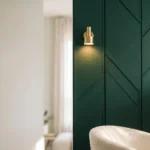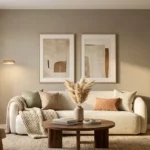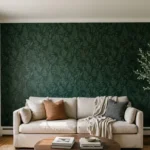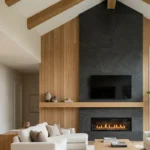
A vaulted ceiling gives you a gift and a problem at the same time. The height feels incredible, but the room can float, with furniture scattered at the bottom and a lot of empty air above it.
The fix is the fireplace wall. Treat it as the anchor, give it an accent treatment that climbs toward the peak, and suddenly the whole room makes sense.
I’ve spent years scrolling, saving and (yes) rearranging my own living room more times than my family appreciates.
This guide pulls together everything I’ve learned about vaulted accent wall living room fireplace ideas, plus a few mistakes I made so you can skip them.
Why the fireplace wall runs the show in a vaulted room
Flat ceilings let you get away with a lot. Vaulted ones don’t, because your eye travels upward the second you walk in.
If that tall wall stays blank, your eye has nowhere to land. An accent wall gives it a destination, and the fireplace gives the destination a reason to exist.
Think of it like a stage. The fireplace is the lead actor, the accent wall is the set, and the sofa and chairs are the audience. When all three agree, the room feels finished.
Ever notice how the most-saved living room photos on Pinterest nearly always show the fireplace wall straight on?
That’s no accident. It’s the strongest composition in the house.
What “anchor” really means
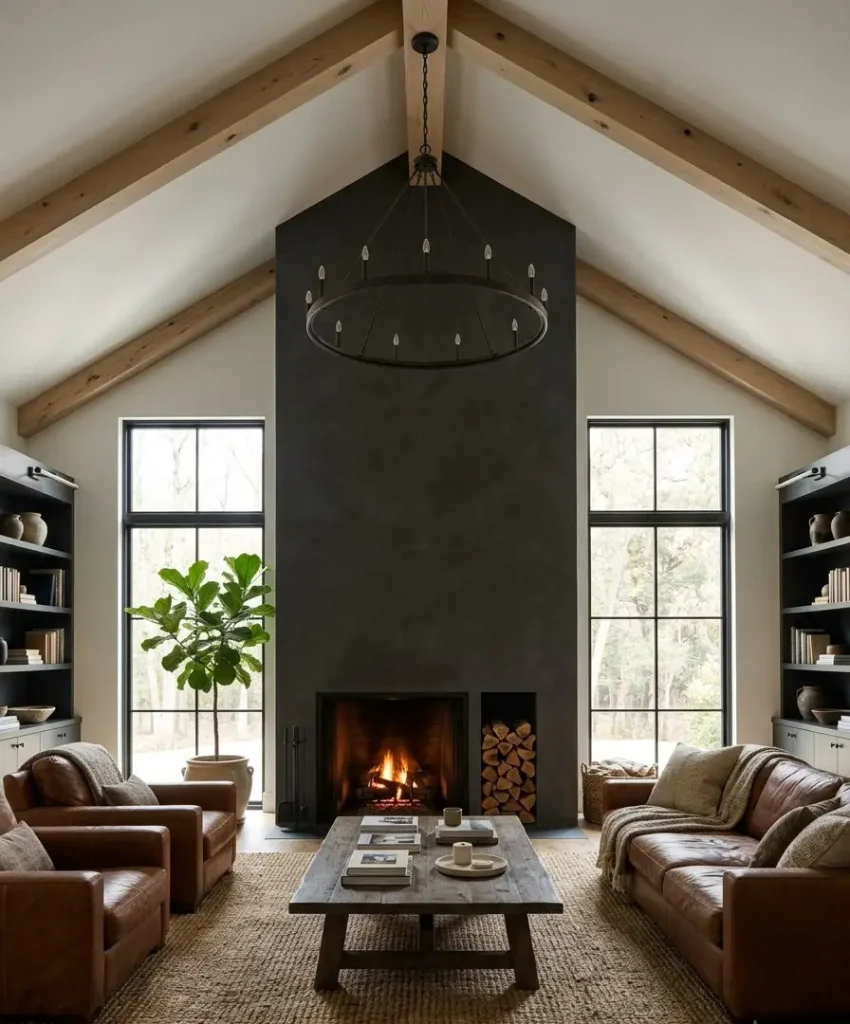
An anchor holds visual weight low and center. In a vaulted room, that means your fireplace wall needs enough mass and contrast to balance all that vertical space.
You get there with three levers: material, color and scale. Pull one and the wall looks fine. Pull all three and it looks designed.
Know your ceiling before you pick a wall
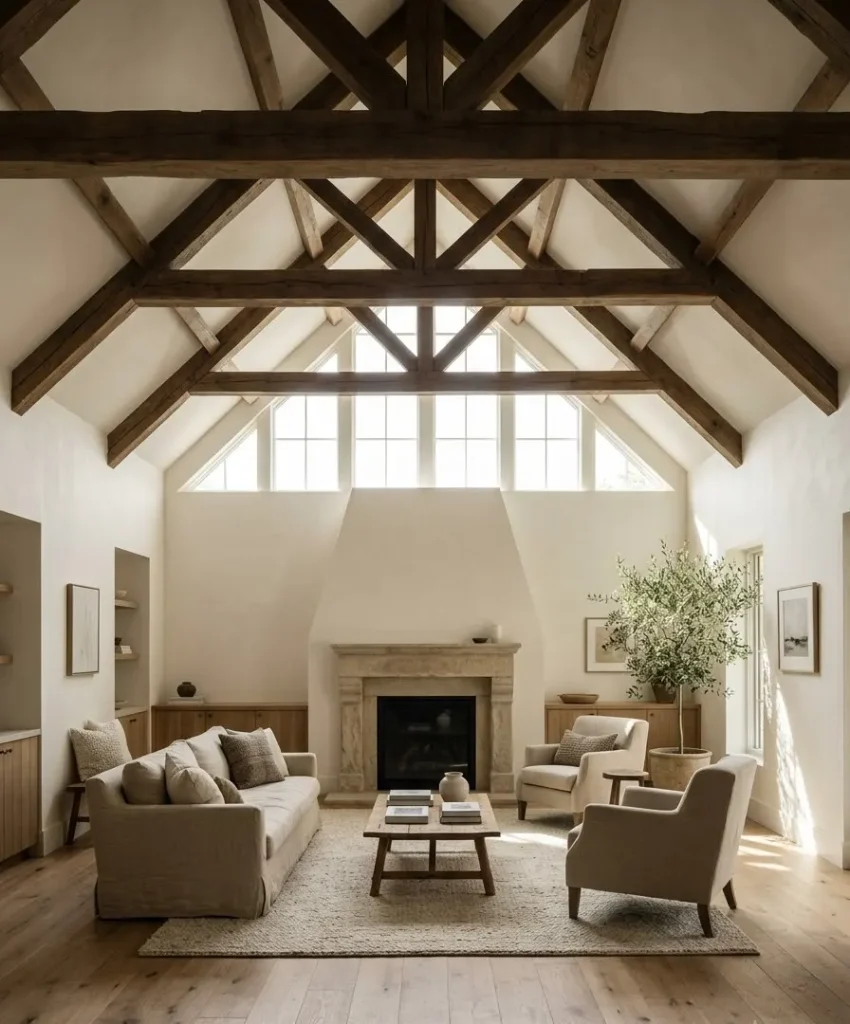
People use “vaulted” and “cathedral” interchangeably, but the shape of your ceiling changes which accent wall works.
A true cathedral ceiling has two sloped sides that meet at a center peak, mirroring the roofline.
A simple vaulted ceiling can slope on one side only, or arch, or break into a shape like a barrel.
A scissor vault crosses beams inside the room and creates a sharper, more dramatic angle.
Stand in the room and look at the fireplace wall. Does the top of that wall run flat, or does it climb into a triangle?
A triangular gable wall gives you the most drama and the most surface to play with.
Here’s a quick cheat sheet I use when I help friends choose.
| Wall treatment | Look | Cost range | Best for |
|---|---|---|---|
| Stacked stone | Rugged, textured | Higher | Cabins, mountain homes |
| Limewash plaster | Soft, cloudy, matte | Low to medium | Modern organic rooms |
| Shiplap or wood | Warm, classic | Low to medium | Farmhouse, coastal |
| Large format tile | Sleek, clean | Medium to high | Contemporary spaces |
Prices shift by region and labor rates, so treat that column as a rough guide only.
The best accent wall materials for a tall fireplace
Let me walk through the options I see work again and again. I’ll tell you where I stand on each, because a list without opinions is just a catalog.
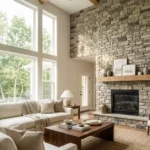
Stacked stone to the peak
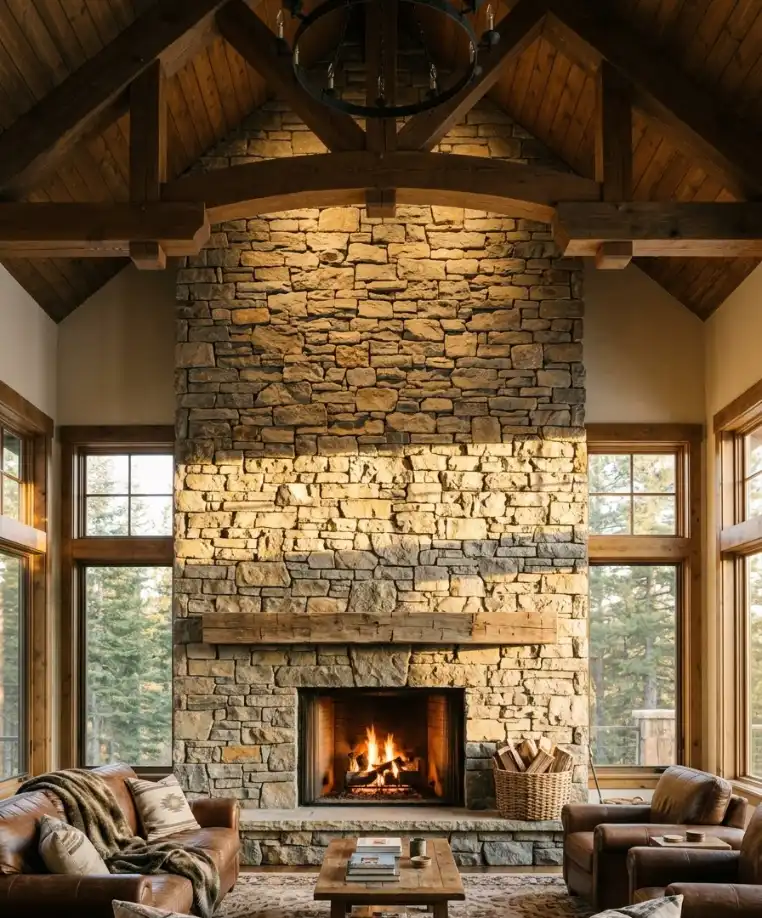
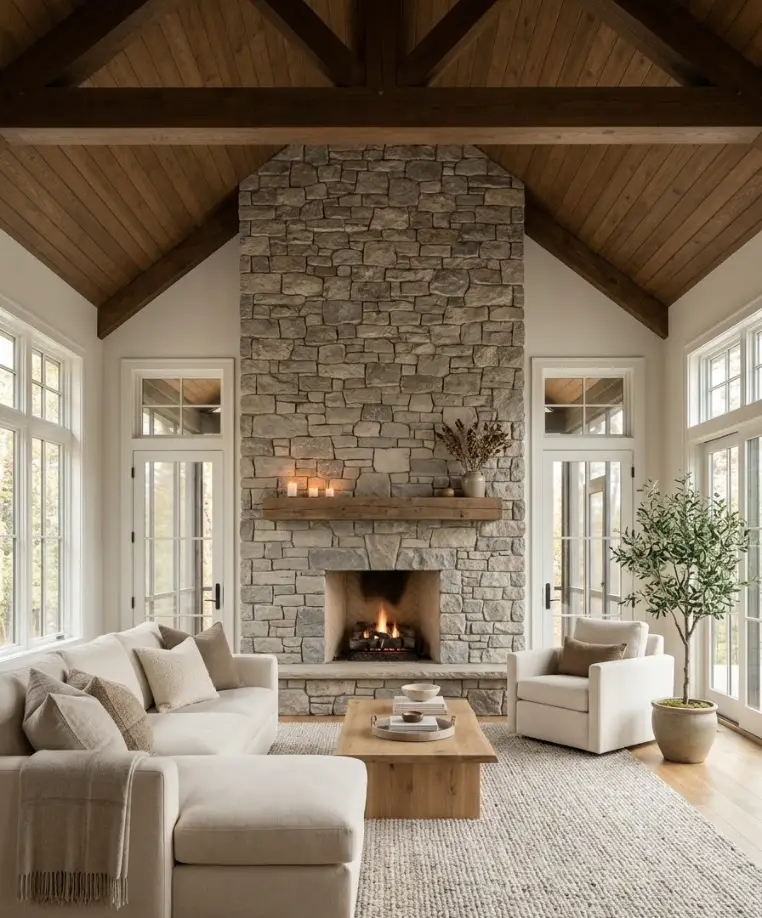
This is the showstopper. Real or manufactured stone running floor to ceiling on a gable wall looks like a lodge in the Rockies.
I love it for tall rooms because the rough texture catches light at different angles all day. The wall changes personality from morning to evening.
The catch? It’s heavy and busy. Go with a tighter, flatter ledgestone profile if your room has a lot of other pattern going on.
Limewash and plaster
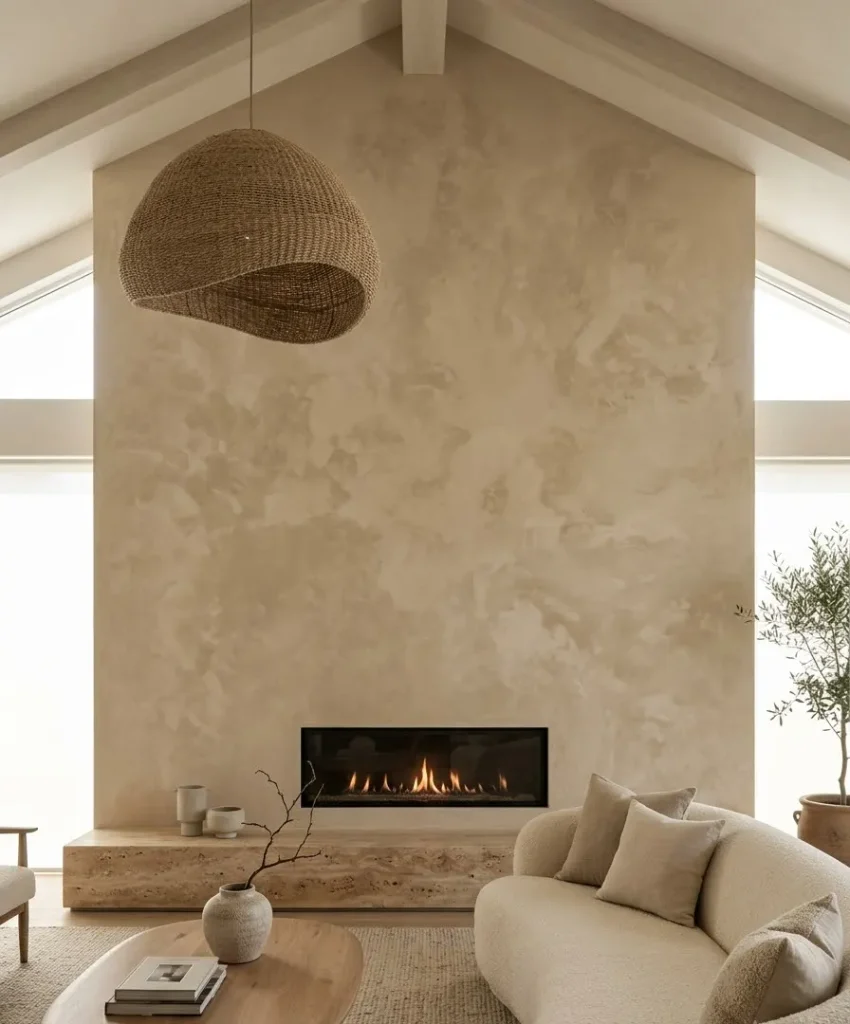
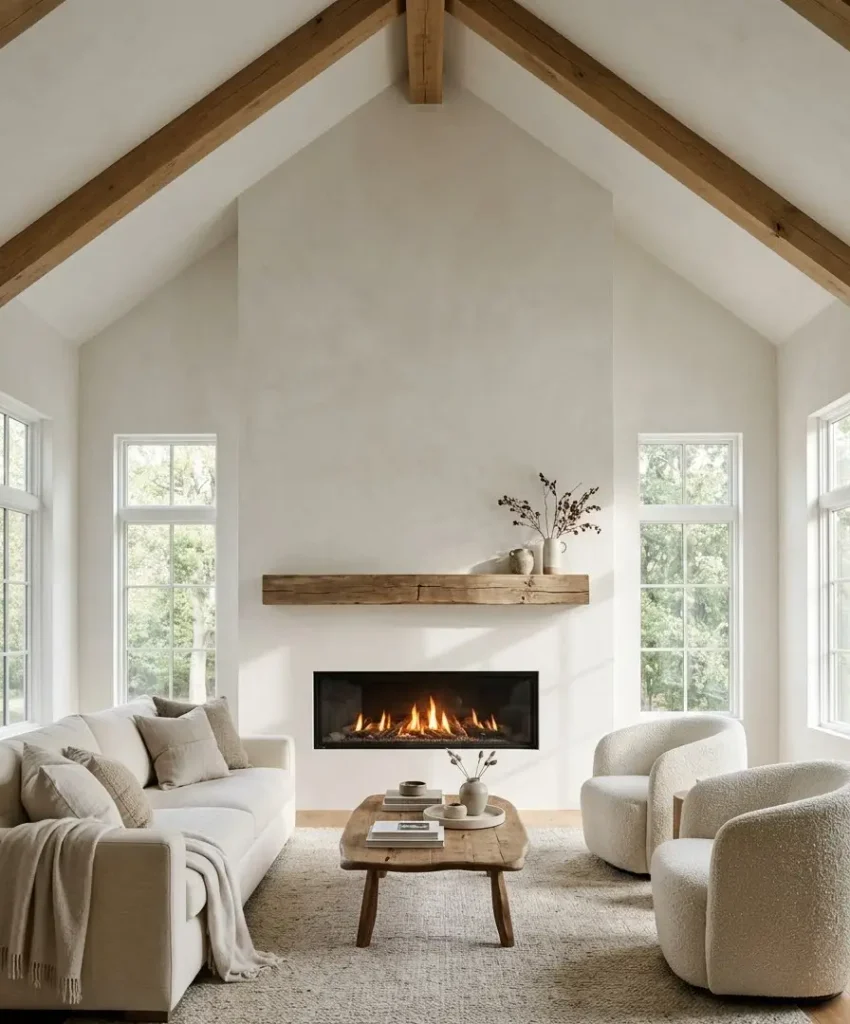
This is my current obsession. Limewash gives you that soft, cloudy, almost aged-Italian-villa finish, and it looks gorgeous in the light a tall window throws.
Real limewash is a mineral-based paint, and it cures differently than standard wall paint.
If you want to compare finishes, Sherwin-Williams and Benjamin Moore both publish color tools you can use to preview tones before you commit.
I tried a faux technique once in a rental. It looked like a sponge accident. Lesson learned: buy the real product and watch a few tutorials first.
Shiplap, tongue and groove, and board and batten
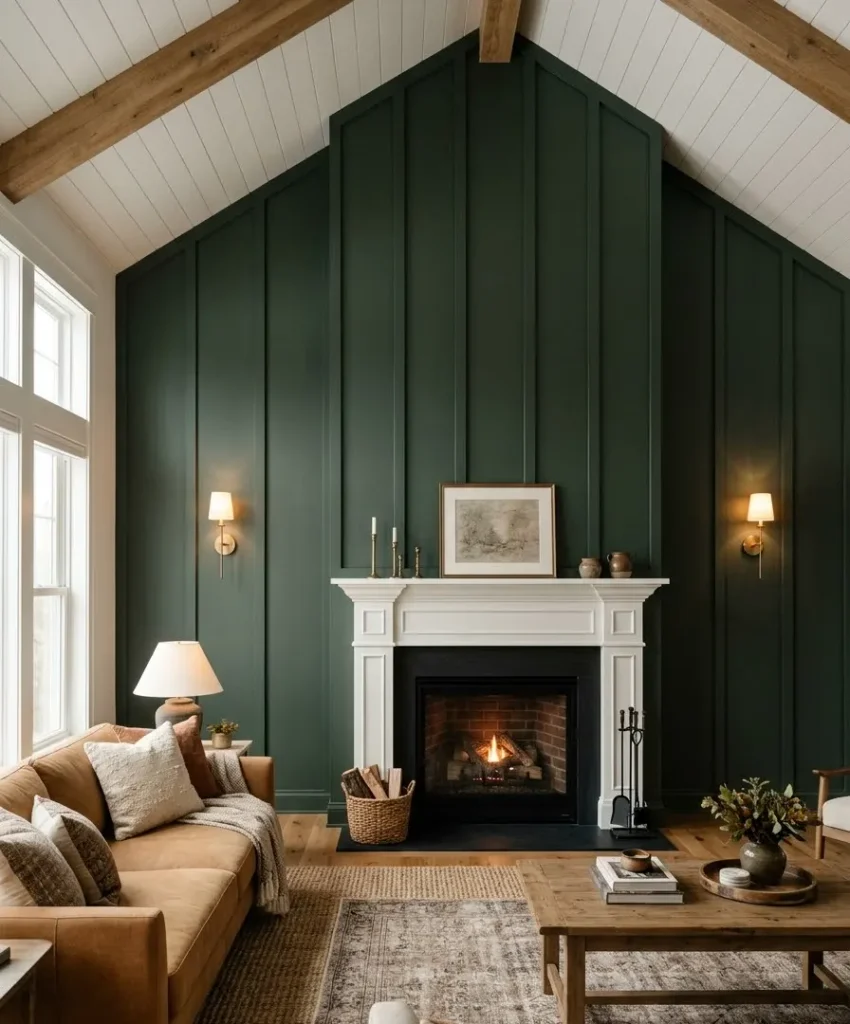
Wood paneling runs up a vaulted wall beautifully, because the lines themselves draw your eye toward the peak.
Vertical boards make the ceiling feel even taller. Horizontal shiplap widens the wall and calms a very steep ceiling.
Pick based on whether you want to stretch the room or settle it.
My honest take: painted white shiplap is everywhere on Pinterest right now, and I think it’s starting to feel like a default.
Painting the boards a deep green or charcoal feels fresher to me.
Vertical wood slats
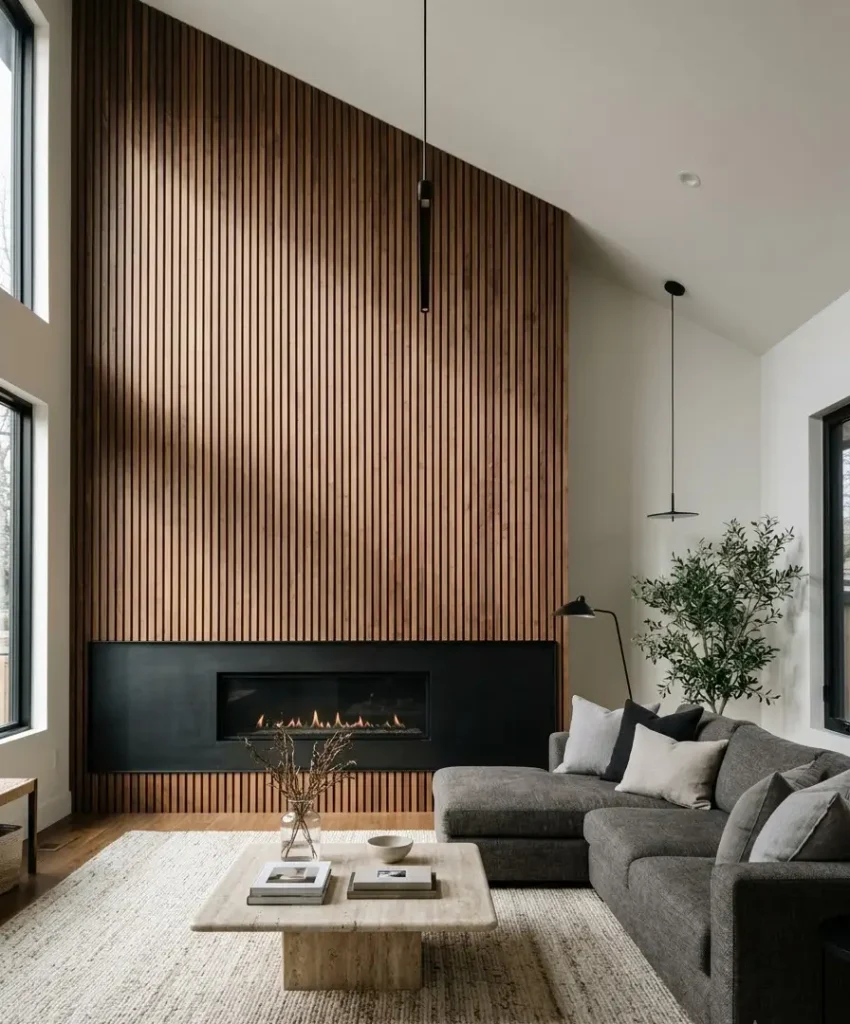
Slatted wood panels have exploded in popularity. They look modern, they add warmth, and they play with shadow in a way flat paint can’t.
They also hide a lot of flaws in old drywall. If your wall has years of patching behind it, slats cover the sins.
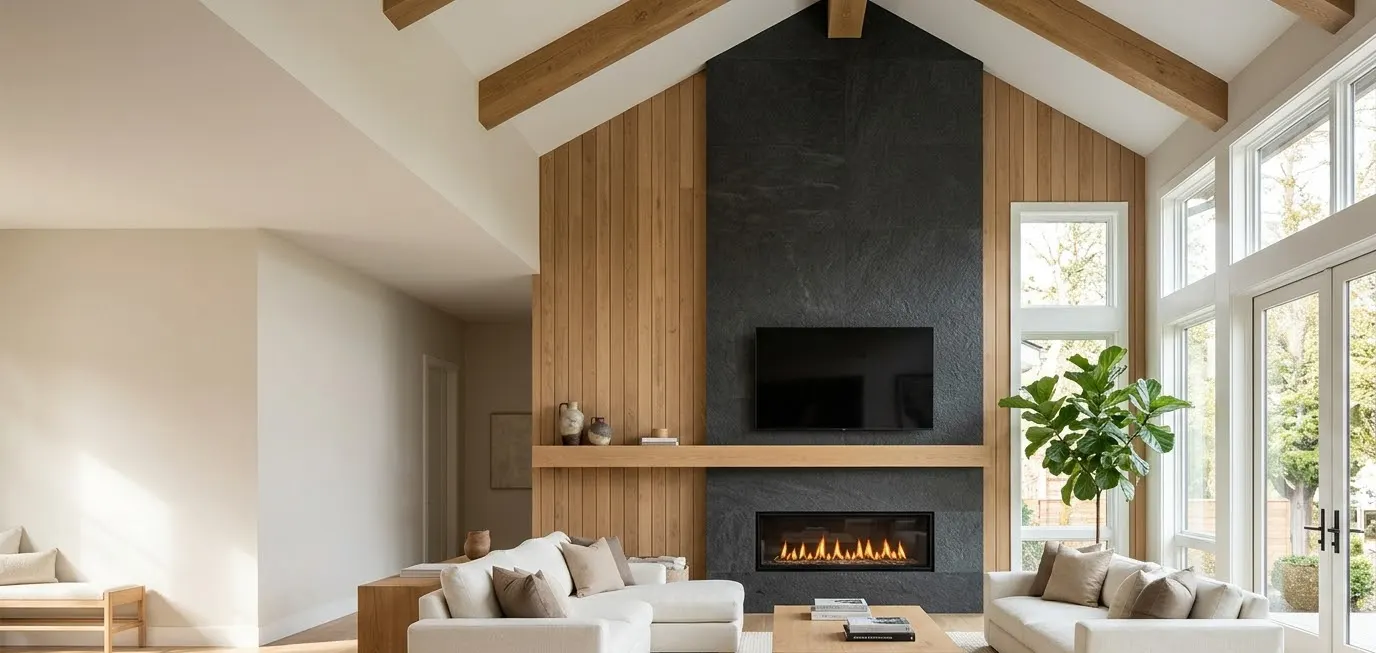
IMO, a walnut or white oak slat wall behind a sleek linear fireplace is about as good as living rooms get.
Brick, whitewashed or exposed
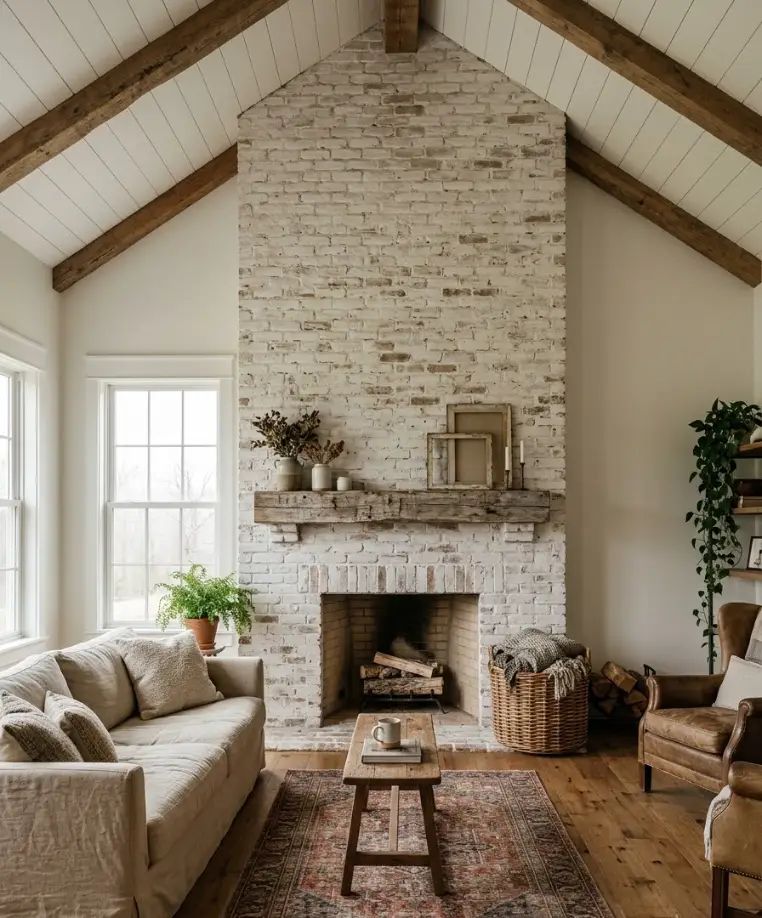
Existing brick chimney breast? Good news. You already own half an accent wall.
Whitewash it for a softer look, or German schmear it for that mortar-washed, old-world finish. Leave it raw if the color already works with your room.
Large format tile and slab
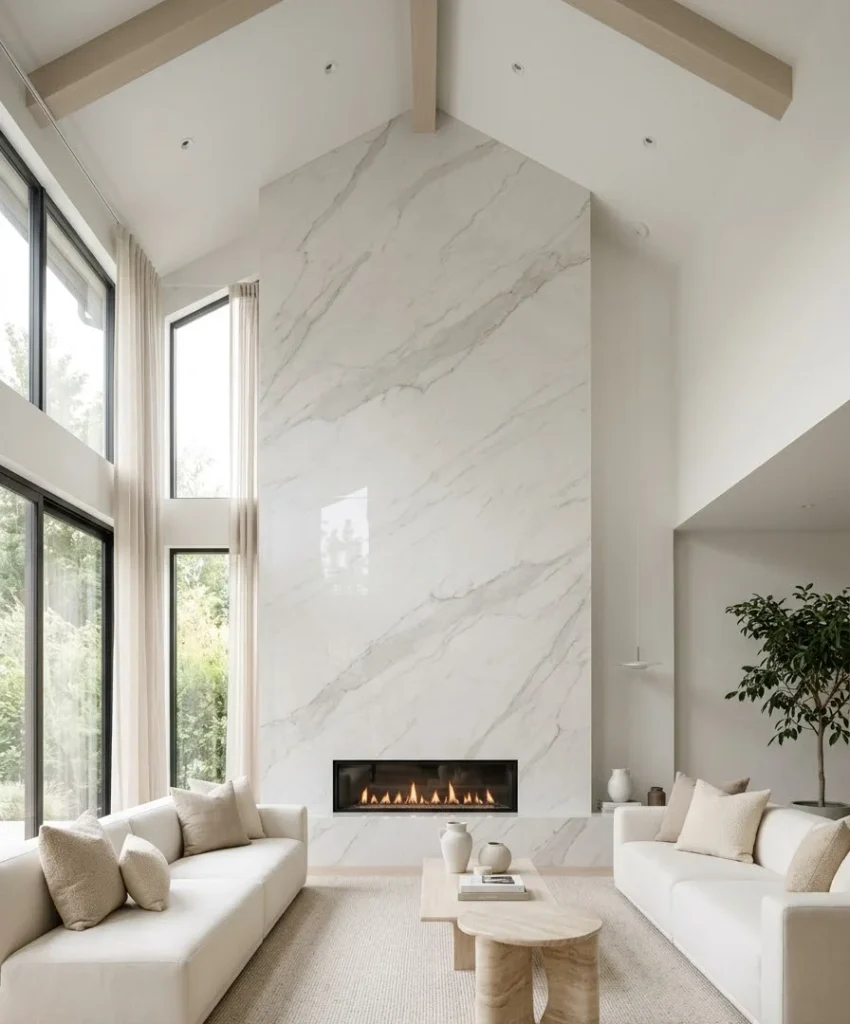
For a clean modern look, porcelain slabs in marble or concrete patterns run floor to ceiling without grout lines interrupting the view.
This option costs more and needs a skilled installer, especially on a wall that tall. Get at least two quotes, and ask to see finished jobs in person.
Choosing the right height and proportion
Here’s where tall rooms trip people up. A fireplace surround that looks perfect in a standard 8-foot room can look tiny under a 16-foot peak.
You have two basic choices. Cover the whole wall to the ceiling, or build a defined panel that stops partway up.
Full height treatment
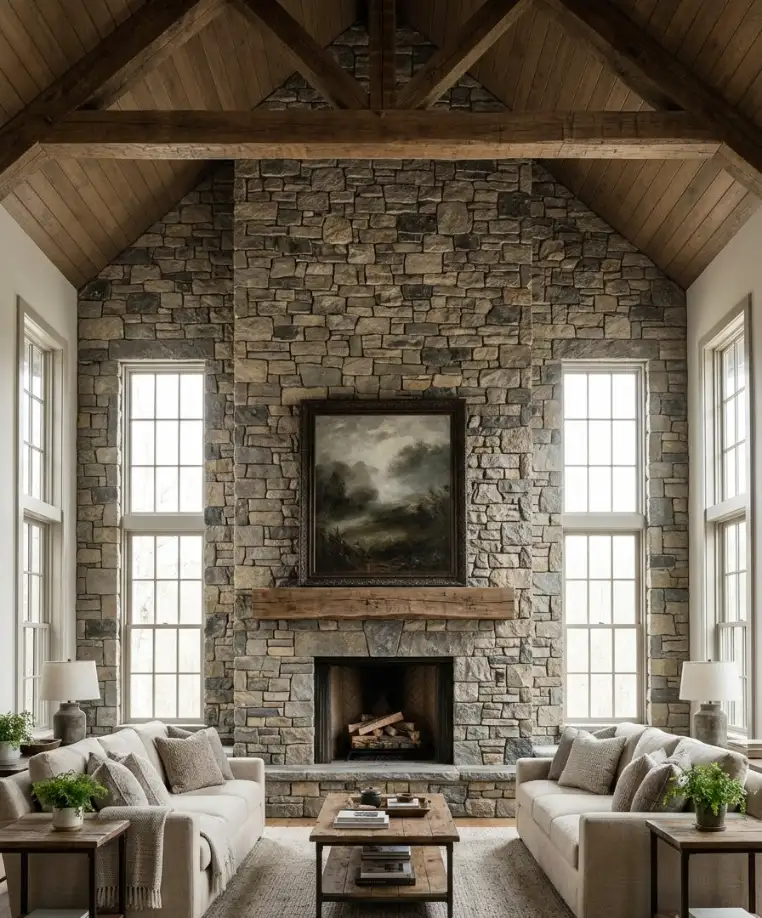
Running the material all the way up creates one dramatic, unified plane. It works best when the fireplace sits dead center on a gable wall.
It also makes your fireplace feel intentional rather than accidental. The tall wall reads as architecture instead of empty drywall.
Partial height with a built-in frame
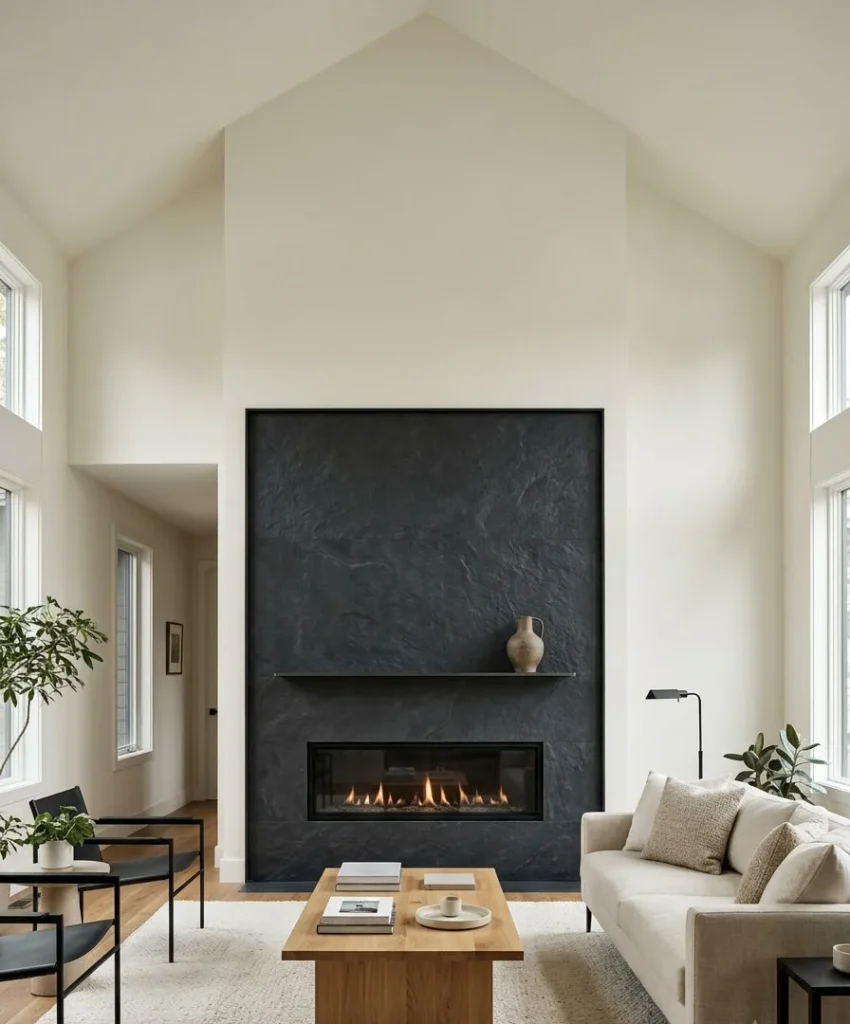
If a full-height wall feels like too much, build a framed panel that reaches roughly two-thirds of the way up.
Use trim, a change in material, or a painted color block to define the edge.
I did this in my own place with a thin black steel border. The wall above the frame stayed plain, and the contrast kept things from feeling heavy.
A good rule I follow: the fireplace composition should take up at least half the visible width of the wall. Anything smaller floats.
Color moves that make a tall wall feel grounded
Dark colors pull a high ceiling down and make the space cozier. Light colors let the ceiling soar.
Neither is wrong. They just serve different goals, and you should decide which one you want before you open a single paint can.
Go dark for coziness
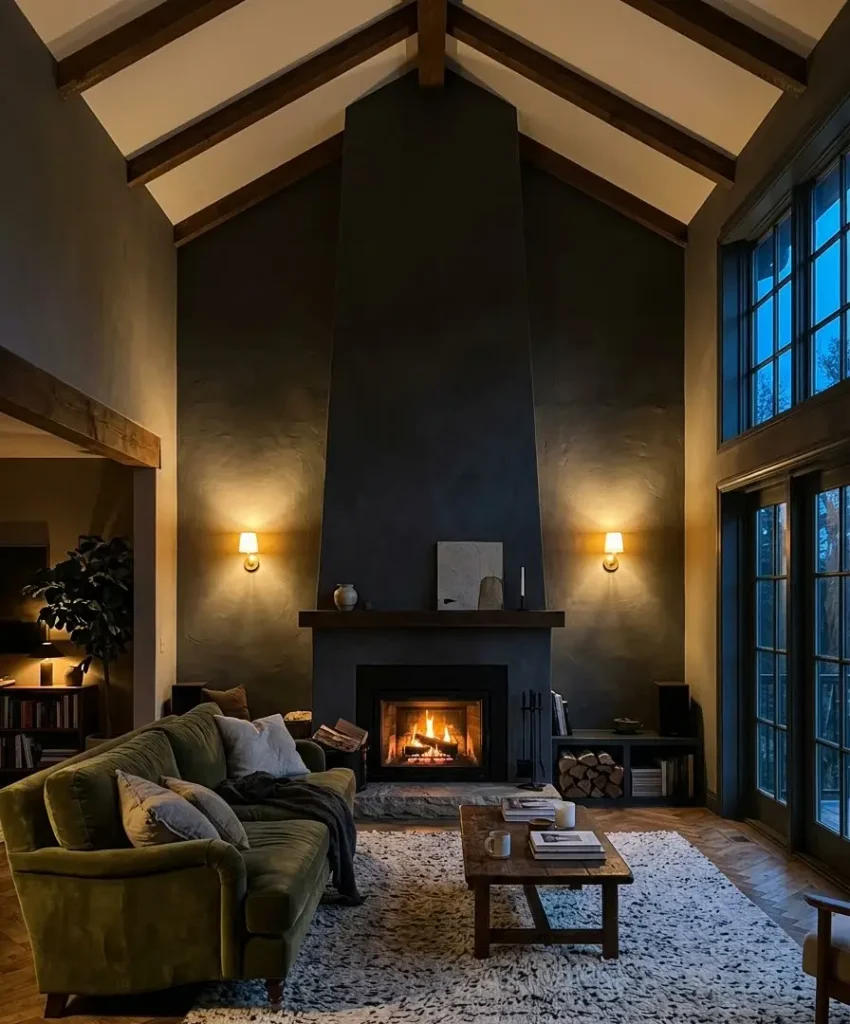
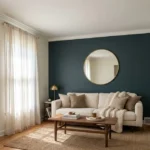
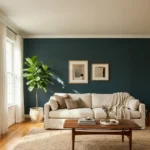
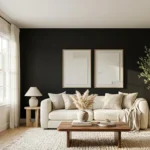
Deep charcoal, forest green, navy or even a rich brown on the fireplace wall gives you a moody, intimate living room. The fire glows against it like candlelight.
Pinterest loves this look right now, and for good reason. Dark walls photograph beautifully, with the mantel decor popping against them.
Go light for height
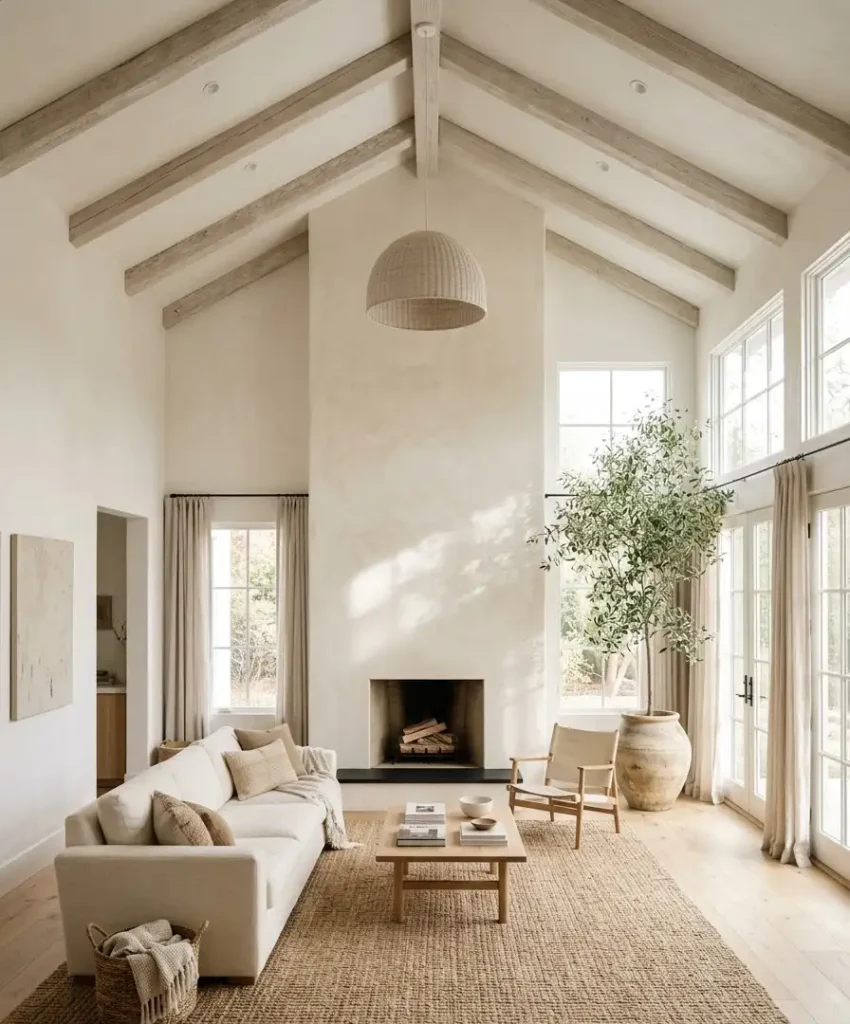
Warm whites, soft greige and pale plaster tones keep the room airy and let the architecture speak. They work well in homes with lots of windows.
I’d add texture if you go this route. A flat white wall in a huge room looks like a missing pin on a Pinterest board.
Pick a color from something you already own
My trick for undecided friends is to pull a shade from a rug, a piece of art or even a throw pillow.
That ties the wall to the rest of the room without a design degree.
Mantels and shelves that suit a tall wall
A mantel in a vaulted room needs more presence than a thin shelf. Chunky is good here.
A thick reclaimed beam or a hefty floating slab holds its own under tall walls. Thin shelves vanish.
Styling the mantel for the camera and for real life
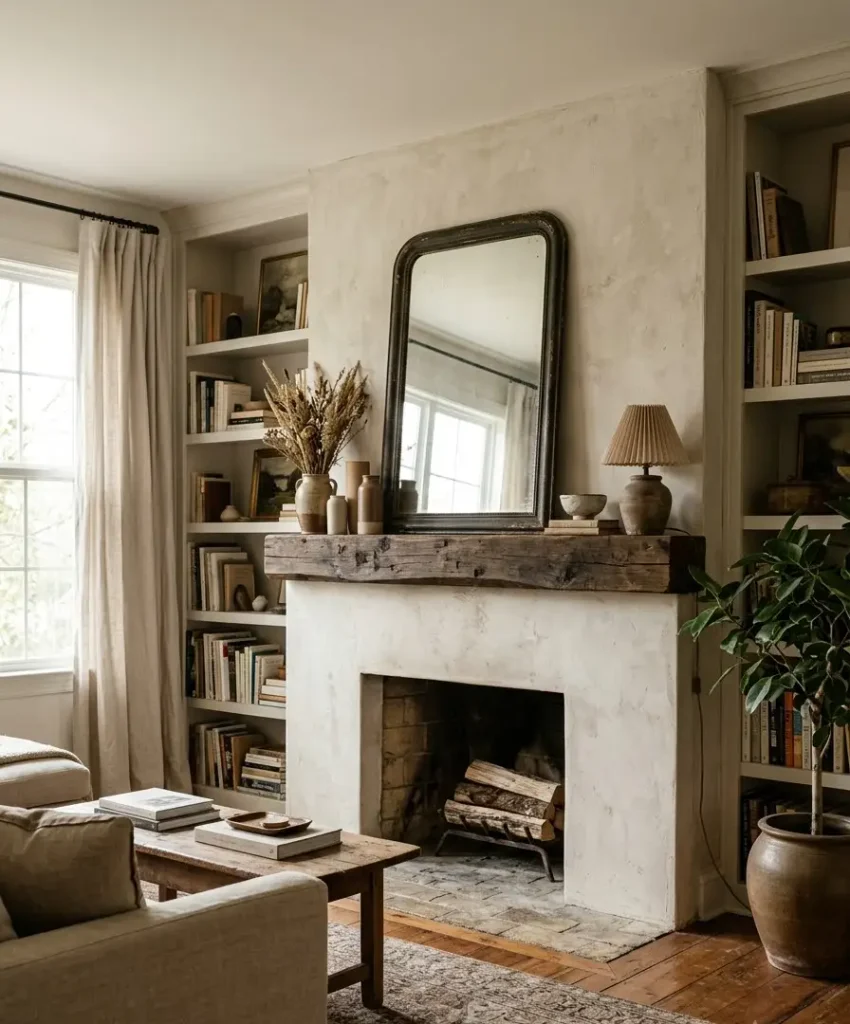
Pinterest users save images with layers, so build your mantel in layers:
- A large piece of art or a mirror leaning at the back to add height
- Two or three objects in different sizes grouped off-center
- Something organic, like branches, dried grasses or a plant
- A candle or small lamp for evening glow
- One personal object that makes the display yours (mine is a chipped ceramic bowl from a flea market in Lisbon)
I’ll be straight with you: the chipped bowl is my favorite thing on the whole mantel.
Perfectly curated displays look like a catalog, and I’d rather my house look lived in.
Art above the mantel
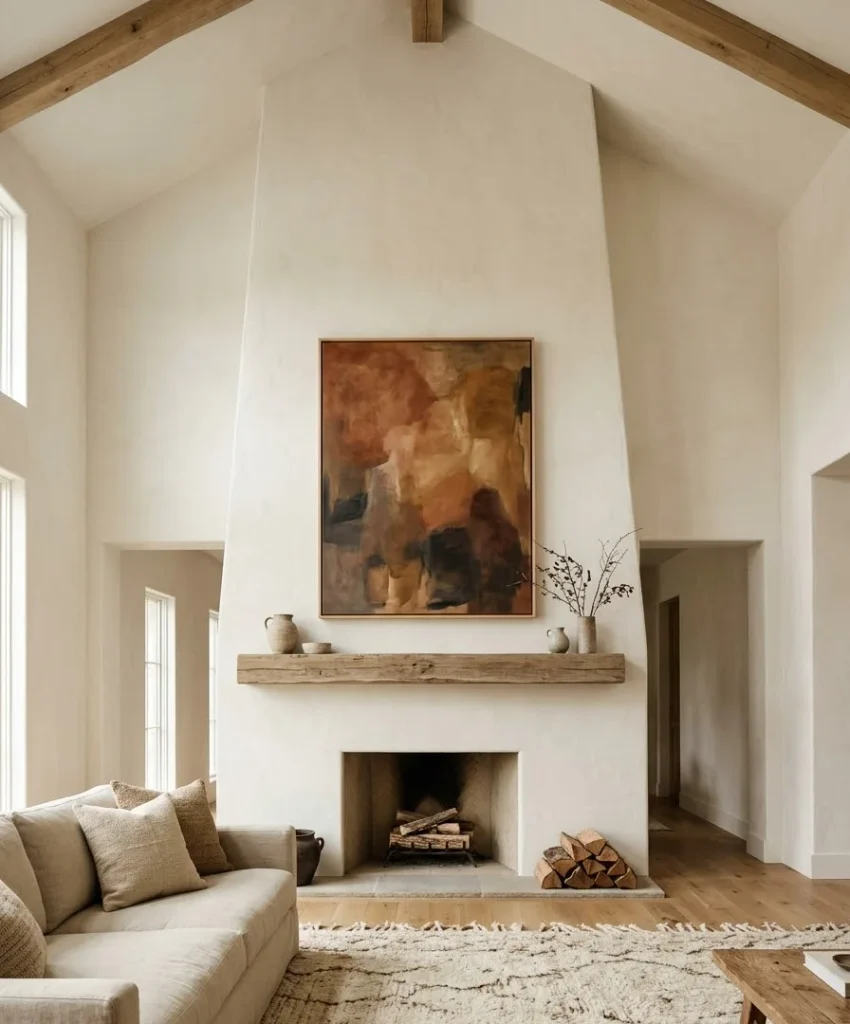
Hang art higher than you think. In a tall room, the usual advice of centering at eye level looks stranded.
Aim for the bottom of the frame about 4 to 8 inches above the mantel, and go oversized.
One big piece beats a cluster of small ones every time on a wall this size.
The TV question
I know, I know. Everybody asks.
Mounting a TV above the fireplace is the most debated topic in living room design. Heat can damage electronics, and the viewing angle often hurts your neck. Check your TV manufacturer’s guidance and your fireplace specs before you drill.
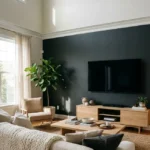
My personal opinion? Skip it if you can. A vaulted fireplace wall deserves to be a focal point on its own, and a black rectangle competes with it.
If you must have a TV, try one of these options:
- Mount it on a different wall
- Use a frame-style TV that displays art when it’s off
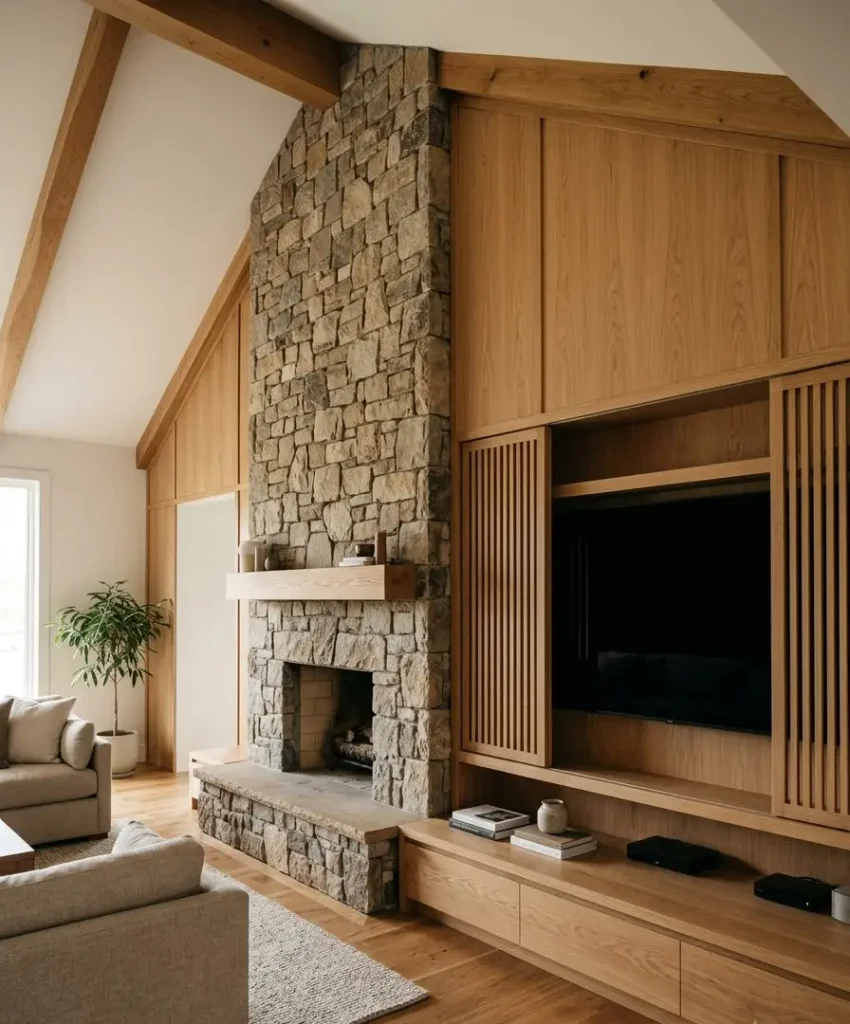
- Build a recessed niche so the screen sits flat and low
- Hide it behind sliding wood panels
Wow, the sliding panel idea changed my mind about built-ins completely. The wall looks like a gallery until movie night.
A quick tangent about cozy lighting
Okay, small detour. I once spent three weeks arguing with my partner about whether recessed cans or lamps make a room feel warmer.
We still disagree, but I do know overhead lighting alone makes a living room feel like a dentist’s office.
Back to the wall.
Lighting that makes the accent wall glow
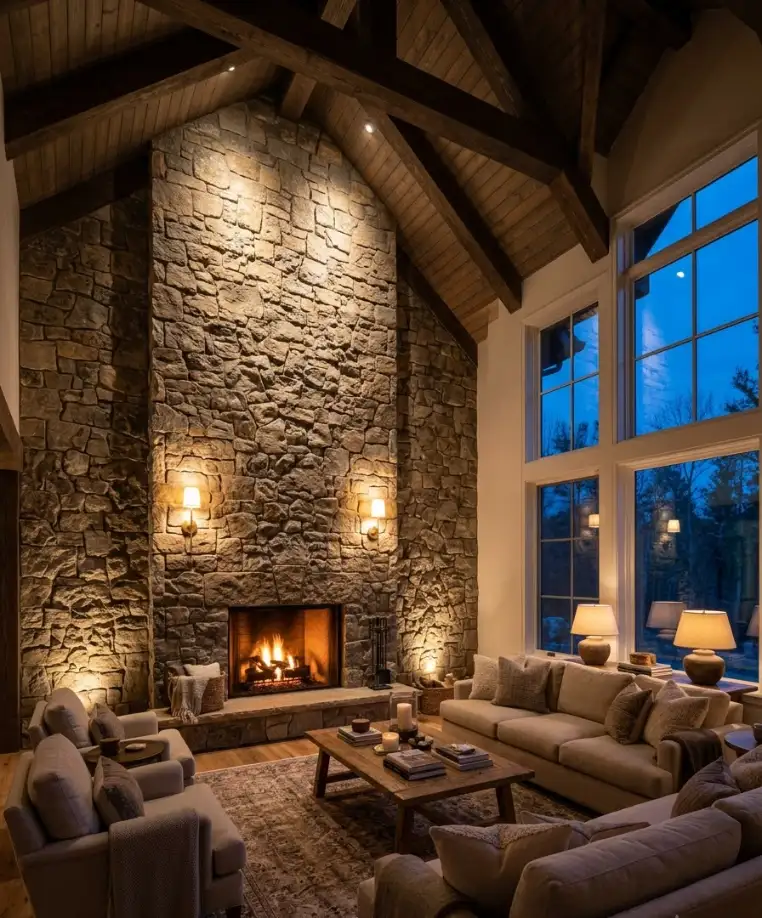
Tall walls swallow light, so you need to plan for it before the drywall goes up.
Wall washers and picture lights
Wall washers aim light across the surface and bring out texture in stone or plaster.
Picture lights spotlight art on the mantel. Both give you drama without glare.
For a vaulted ceiling, you may need a pro to install fixtures at the peak. Don’t climb a ladder that’s too short for the job. I did once, and I don’t recommend it.
Sconces on either side
Wall sconces flanking the fireplace add symmetry and a warm glow at human height. They also frame the wall so it reads as a finished composition.
Dimmers everywhere
Install dimmers on every circuit in the room. A fire and a dimmed light make the wall look stunning at 9 p.m.
Arranging furniture around a tall fireplace
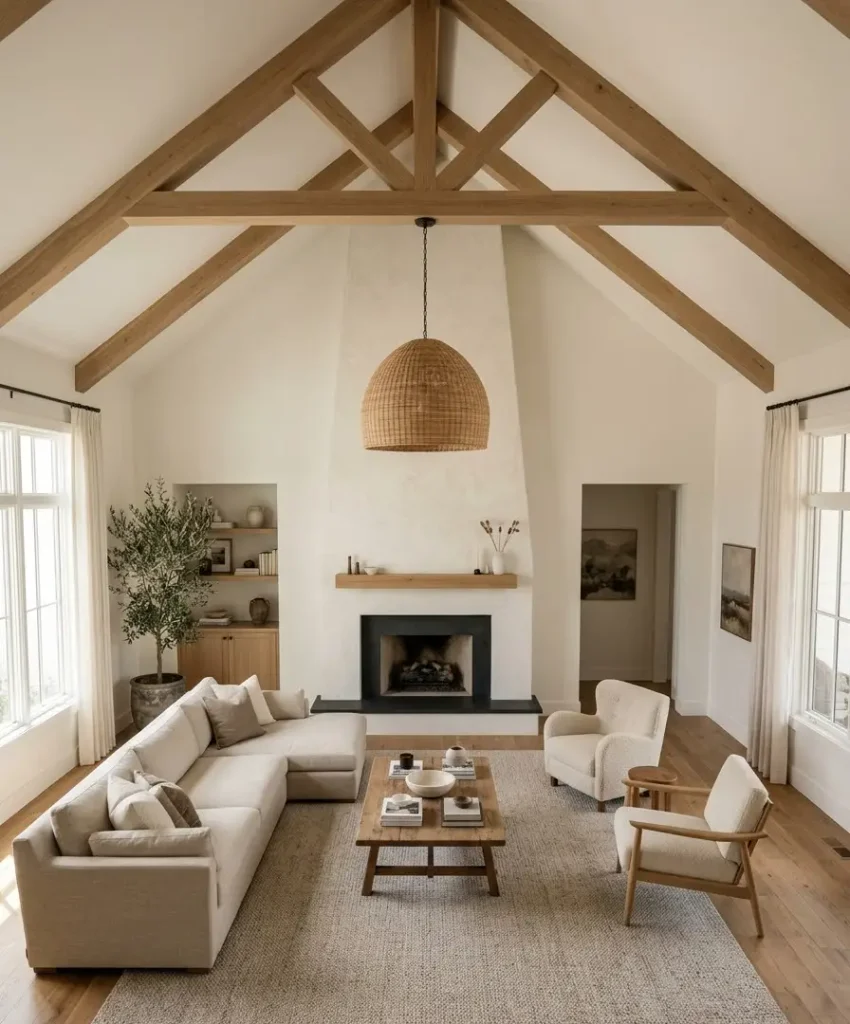
A great accent wall dies if the furniture ignores it. Float your seating toward the fireplace and let it face that wall.
Scale matters
Small sofas look lost in a room with a vaulted ceiling. Go bigger: a deep sectional, or two substantial sofas facing each other, with a pair of chairs across the fire.
Large rugs ground the whole arrangement. All the front legs of your seating should sit on the rug, at minimum.
Leave breathing room
Pull furniture about 8 to 10 feet away from the fireplace if your layout allows it. That gives you a clear view of the entire wall and keeps heat from overwhelming anyone.
The hanging fixture trick
A statement chandelier or oversized pendant hung over the seating area connects the high ceiling to the lower furniture. It links the vertical space with the floor plan.
I love a woven rattan pendant here. It adds texture and keeps the lighting from looking stiff.
Safety and code basics you shouldn’t skip
I love a pretty wall, but I love not burning my house down more. This section matters, and it supports everything else in the article.
Anything near a firebox needs to meet clearance rules. Wood paneling, mantels and even some paints must sit a minimum distance from the opening, and the number depends on your specific unit.
Your manufacturer’s installation manual tells you exactly what’s allowed.
For general fire safety guidance, the National Fire Protection Association publishes consumer resources on heating equipment.
The Hearth, Patio and Barbecue Association also offers information on choosing and maintaining hearth products.
A few reminders I follow myself:
- Use noncombustible materials like stone, tile or brick in the area immediately around the firebox
- Check local building codes before you start work
- Hire a licensed installer for gas lines and chimney work
- Have the chimney inspected and swept every year if you burn wood
I’m not a code official, so confirm everything with a licensed contractor in your area. That’s the honest answer, and it’ll save you money and stress.
Electric and gas fireplaces give you more freedom
Electric fireplaces run cooler on the surface, so you have more flexibility with materials above the unit.
Always check the manufacturer’s specs, though, since some models still vent heat upward.
Budget breakdown: where to spend, where to save
Real talk: vaulted walls cost more than standard ones because of extra labor and scaffolding.
Here’s how I’d split money if I had a middle-of-the-road budget.
- Spend on installation. A sloppy stone job looks sloppy forever.
- Spend on the fireplace itself, since it’s the focal point.
- Save on decor, because you can swap accessories every season.
- Save on paint-based treatments like limewash if you DIY, though I’d still hire someone for the high parts.
Wood slat and shiplap sit on the lower end for materials. Natural stone and large slabs sit on the higher end. Get quotes before you fall in love with anything.
Common mistakes I see (and a few I made)
I’ve watched friends make these errors, and I’ve made two of them myself.
Going too small
A tiny fireplace under a soaring ceiling looks like a postage stamp. Size up, or add height with a surround or a tall chimney breast.
Matching everything
A wall of stone, a stone hearth, a stone mantel and stone floors turn into one big beige blob. Mix materials and keep one dominant.
Forgetting the room around it
An accent wall should look like it belongs to the same house. Repeat a color, a texture or a metal finish elsewhere in the room, even in small ways.
Hanging art too low
I did this. My first piece hung at average eye level and looked like it was trying to hide. Moving it up 10 inches fixed everything.
Ignoring the sightline from the entry
Walk through your front door and see what greets you. If the fireplace wall is the first thing you see, make it count.
Pinterest friendly ideas to save for later
Since you’re probably building a board right now, here are a few specific combinations that photograph well and work in real homes. I picked each one because I’ve seen it succeed.
Cozy cabin
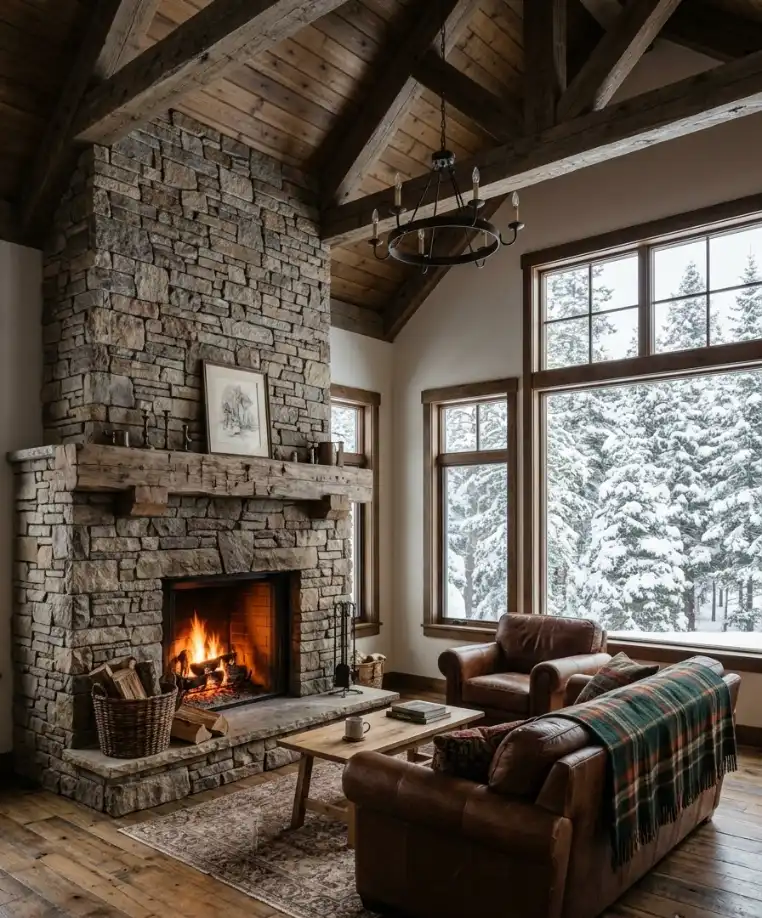
Stacked stone to the peak, a chunky reclaimed beam mantel, and leather seating. Add a wool throw and a basket of logs.
Modern organic
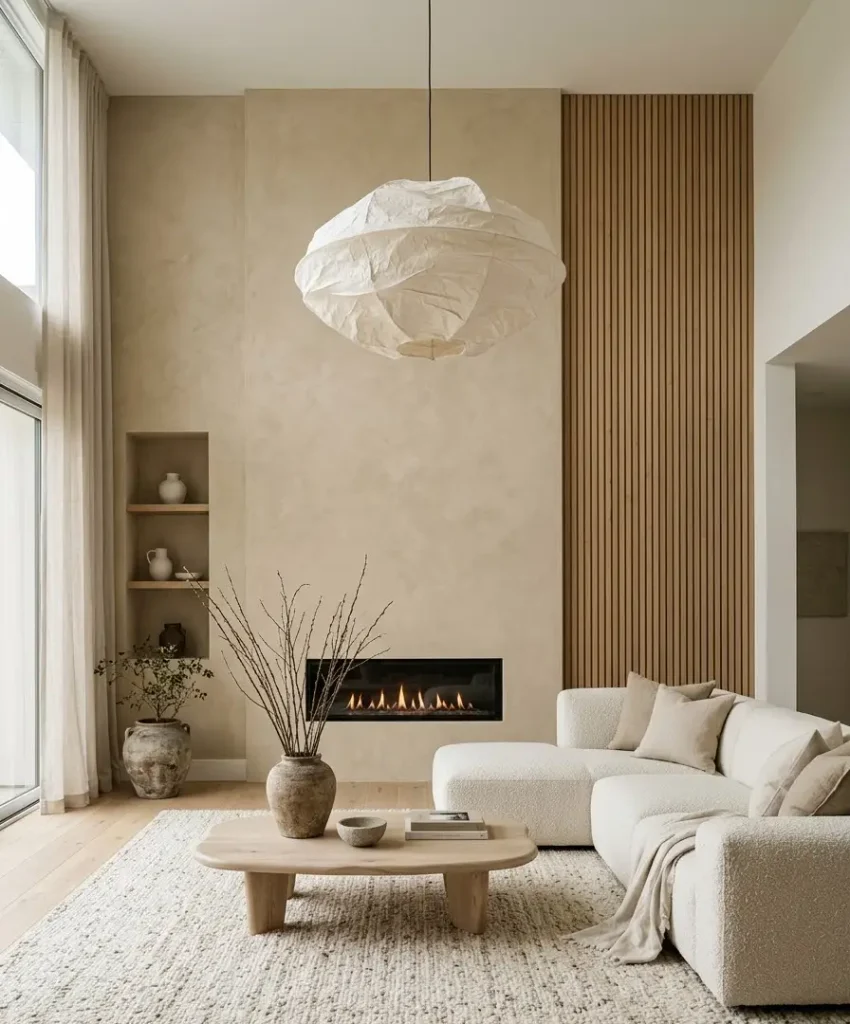
Limewash in warm sand, a sleek linear fireplace, slatted oak on the side walls and a sculptural pendant. Keep the palette quiet.
Coastal calm
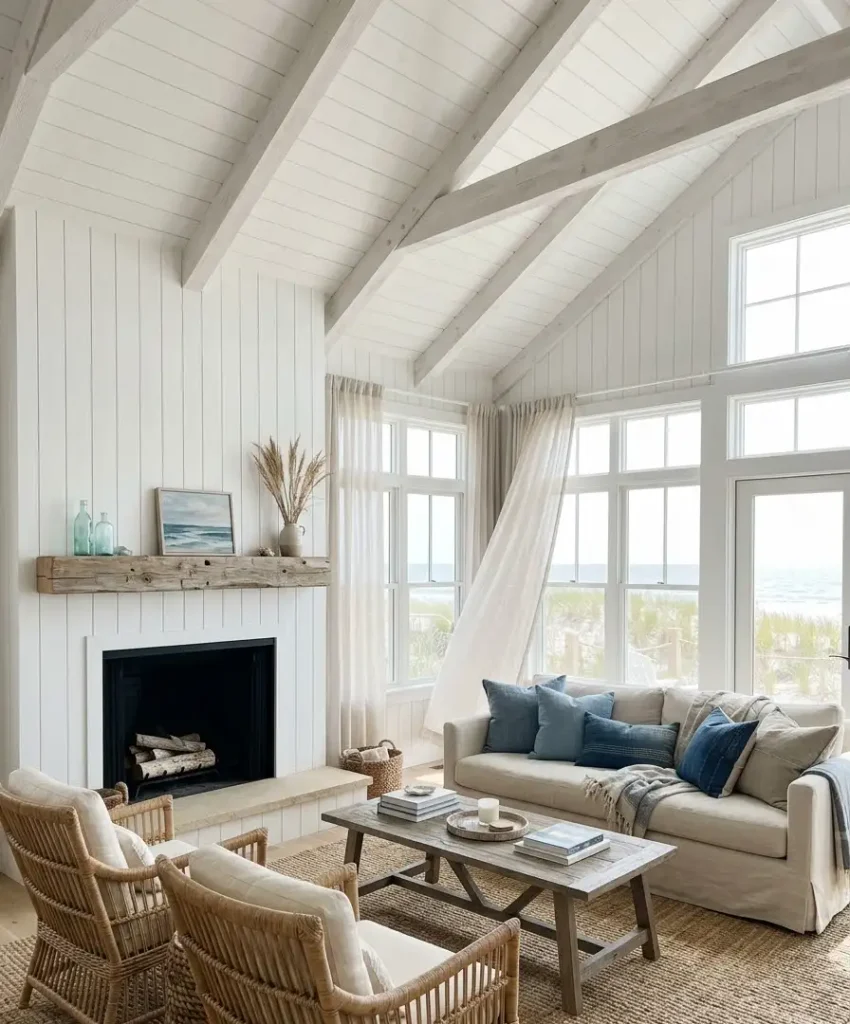
White painted tongue and groove, a driftwood mantel, soft blue accents and woven textures. It feels breezy without looking like a beach store.
Moody and dramatic
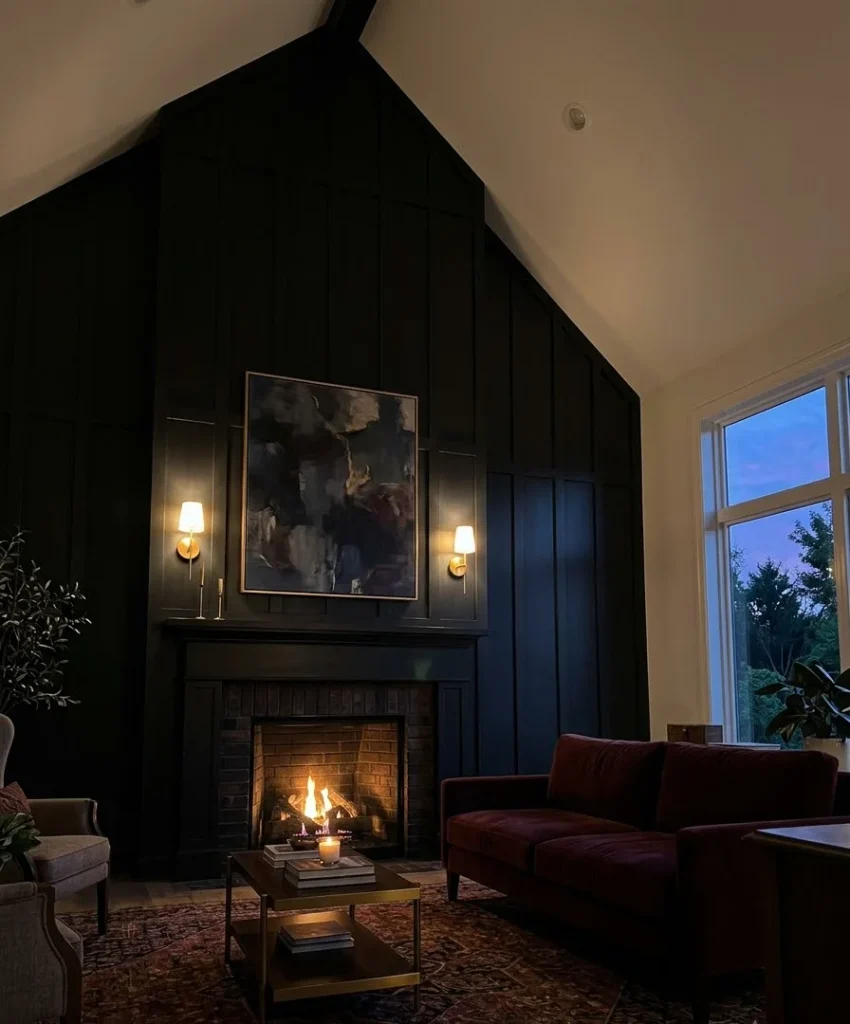
Charcoal paint or black board and batten, brass sconces and big abstract art. It’s gorgeous at night.
Farmhouse refresh
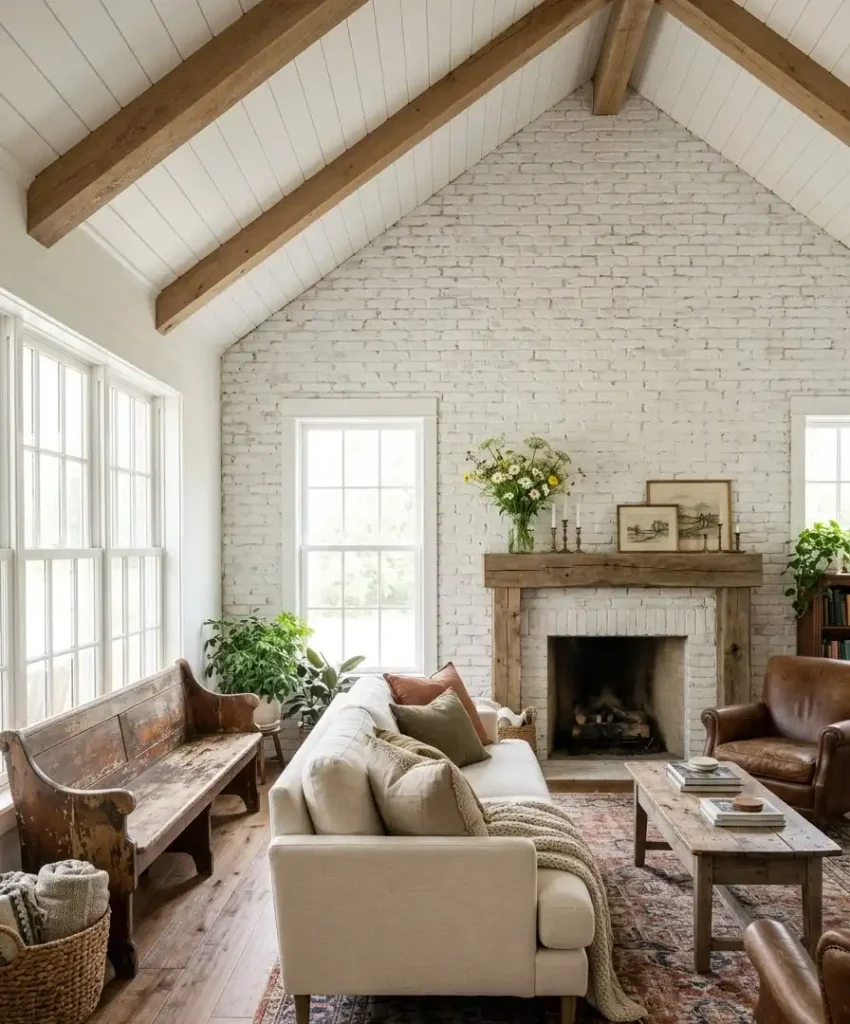
Whitewashed brick running up the wall, a shiplap ceiling and a mix of vintage and new pieces. This look has staying power if you avoid the overly cute signs.
Which one speaks to you? I’m a moody-drama person at heart, though my husband keeps pushing for cabin.
Photographing your finished wall
If you plan to share your room on Pinterest, a few small steps improve your pins a lot.
Shoot in daylight and turn off overhead lights that cast yellow tones. Stand in the center of the room and shoot straight on to keep the lines clean.
Use a vertical orientation, since Pinterest favors tall images, and a vaulted wall suits that format perfectly.
Clear the clutter, fluff the pillows, and light a few candles or a small fire. Then take about 50 photos and pick the best three.
Frequently asked questions
Can I put an accent wall on only part of a vaulted fireplace wall?
Yes. A defined panel, painted block or material change that stops partway up
works well, and it often looks more intentional than covering everything. Use a trim line or contrasting border to mark the edge clearly.
What color works best on a tall fireplace wall?
It depends on the mood you want. Dark tones like charcoal or deep green make the room cozy, and light plaster tones keep it open.
Test large paint samples on the wall and watch them at different times of day before you commit.
Is it safe to use wood near a fireplace?
Wood must stay outside the clearance distances your fireplace manufacturer and local code require.
Many people use noncombustible materials like stone or tile directly around the firebox and put wood higher up. Always check your installation manual and ask a licensed professional.
Final thoughts
A vaulted ceiling asks for a strong fireplace wall, and the rewards are real. Pick a material with texture, choose a color that matches your mood, scale everything bigger than you think, and light it well.
Take your time. The best rooms come together slowly, with a few swaps and a chipped bowl or two along the way.
So here’s my question for you: if you could choose just one material for your fireplace wall tomorrow, would you go rugged stone, soft limewash or warm wood?