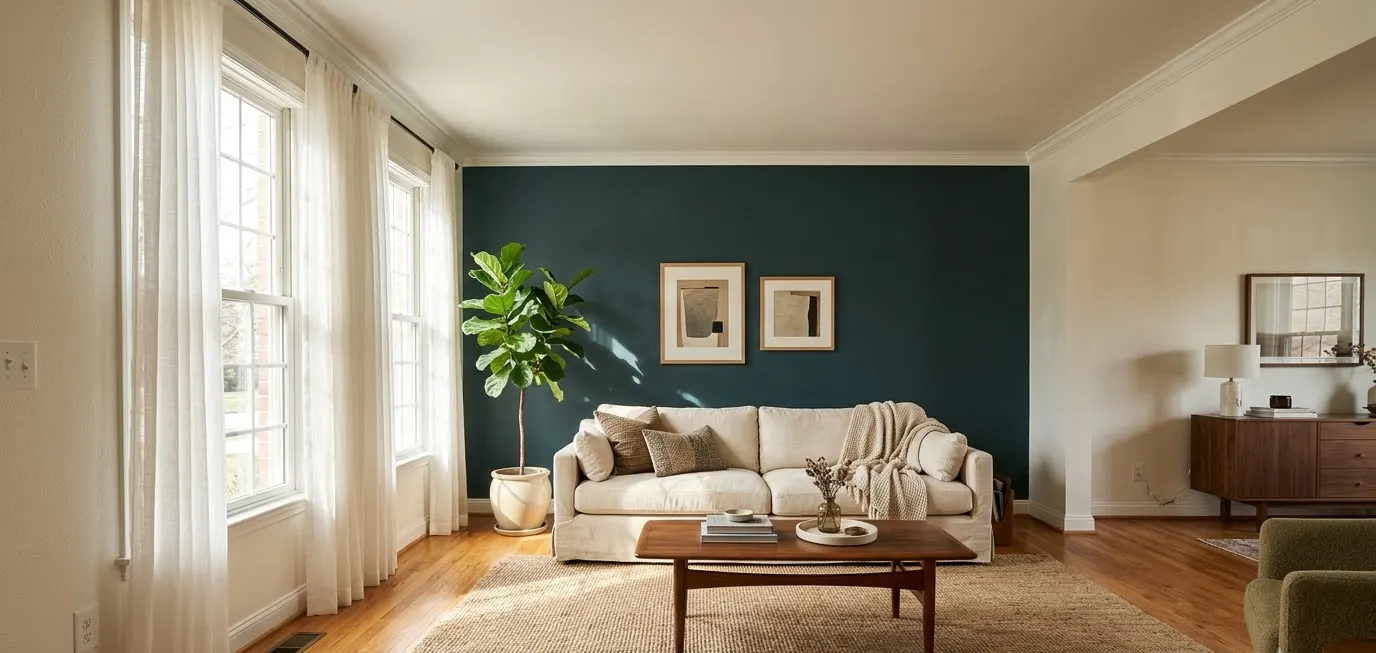
I painted my first dark teal wall at 11 p.m. on a Sunday, which tells you everything about my planning skills. By Monday morning my beige living room looked like it had grown a spine.
If you’re scrolling Pinterest and saving every moody blue-green room you see, this guide is for you.
I’ll cover shades, finishes, furniture, lighting, and the mistakes that cost me a weekend and two extra gallons of paint.
Why a dark teal accent wall works so well
Dark teal sits between blue and green, and that split personality is the whole appeal. It reads calm like blue and fresh like green, but it carries far more weight than either.
A deep color also makes a wall recede. Your eye reads the darker surface as farther away, so a teal wall often makes a room feel deeper instead of smaller.
I didn’t believe this until I stood in my own living room and watched the far wall seem to step back.
The mood it creates
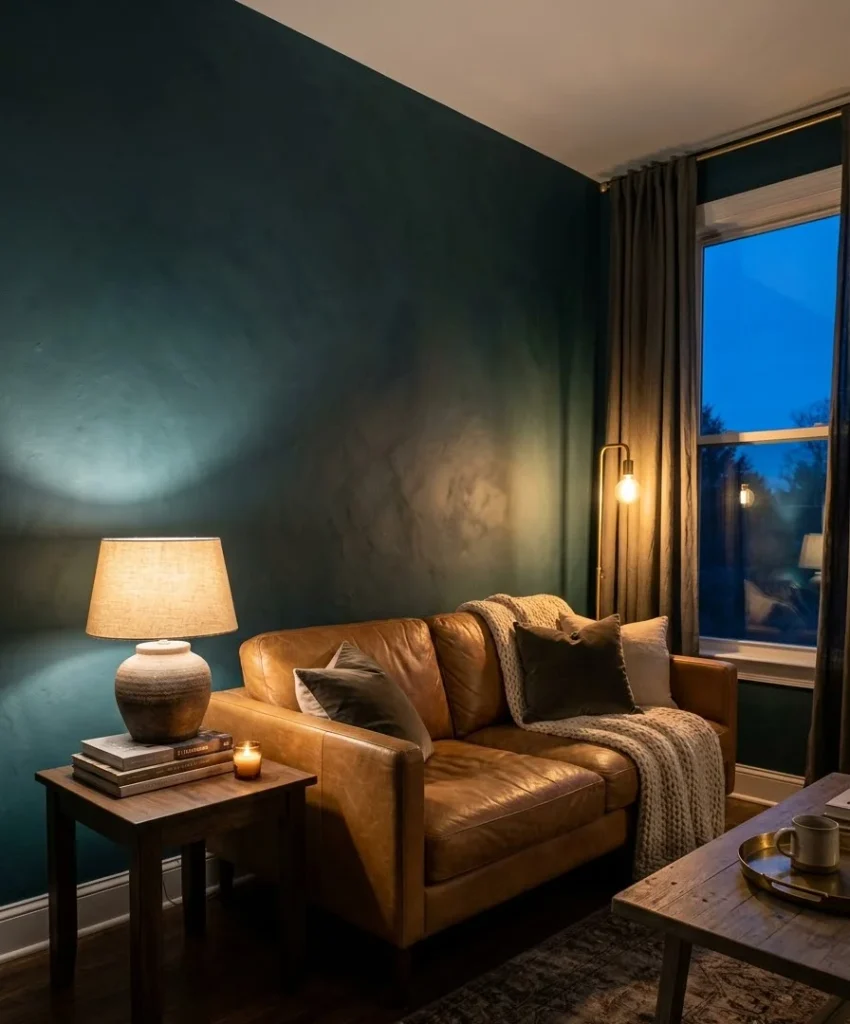
Dark teal feels cozy without feeling sleepy. It gives you the wrapped-in-a-blanket effect of navy, minus the corporate-lobby flavor that navy sometimes carries.
Evening is where it really earns its keep. Under lamplight, the wall turns almost velvety, and your sofa suddenly looks like it belongs in a boutique hotel.
Why an accent wall and not four walls
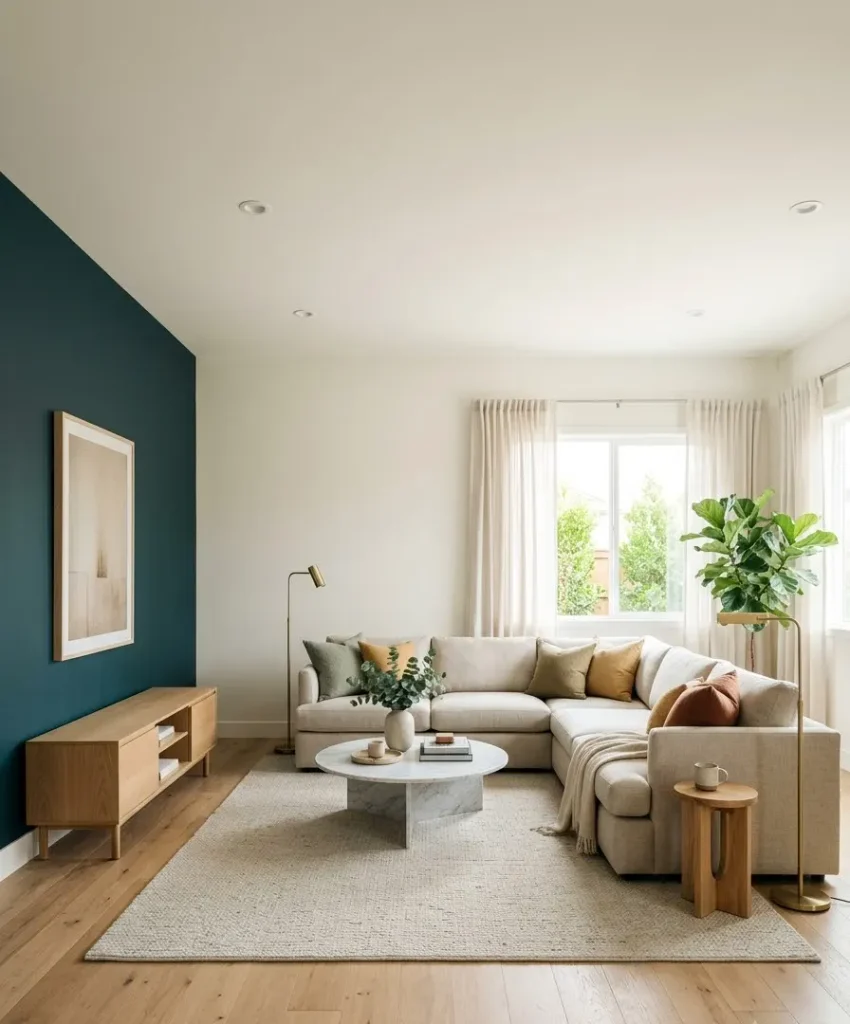
Four teal walls can swallow a room, especially one with a single window. One teal wall gives you drama and still leaves you plenty of breathing space.
Ever noticed how the best Pinterest living rooms usually have one bold wall and three calm ones? That balance does a lot of quiet work.
Choosing your dark teal shade
“Dark teal” covers a huge range. Some versions lean green and feel earthy, while others lean blue and feel crisp. Your light, your flooring, and your furniture should decide which way you go.
Here’s a quick comparison of shades I’ve seen work in real homes. Always check the brand’s website for current color details and test a sample before you commit.
| Shade (brand) | Leans | Best for |
|---|---|---|
| Oceanside SW 6496 (Sherwin-Williams) | Blue-green, deep | Rooms with plenty of daylight |
| Underseas SW 7620 (Sherwin-Williams) | Muted, grayish teal | Subtle, calm spaces |
| Inchyra Blue (Farrow & Ball) | Gray-blue-green | Traditional or period homes |
| Green Smoke (Farrow & Ball) | Green-leaning, smoky | Earthy and boho rooms |
You can browse full palettes at Sherwin-Williams and Farrow & Ball. I’d also spend ten minutes on Benjamin Moore before you decide, because their color tools let you compare deep shades side by side.
Warm light versus cool light
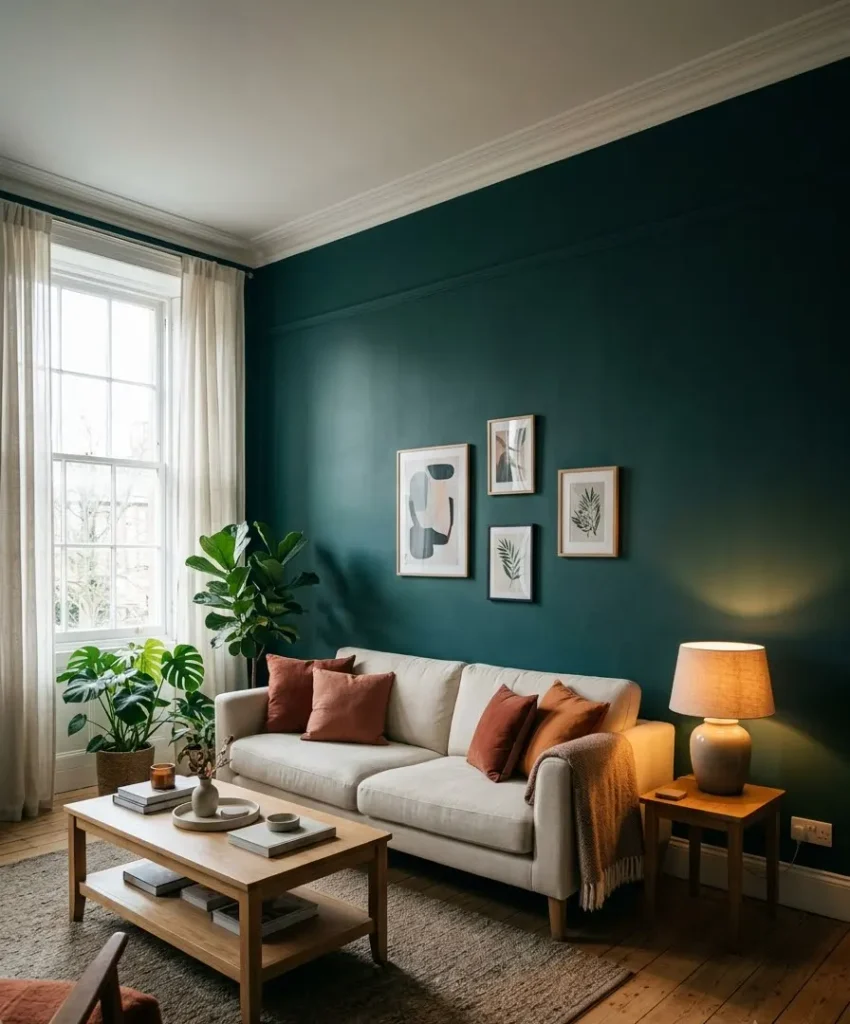
North-facing rooms get cool, bluish daylight, and teal turns darker and colder there. South-facing rooms get warm light, and the same teal looks softer and greener.
My living room faces north. I picked a teal with a slight green lean to fight the chill, and I’m glad I did.
A bluer shade would have felt like sitting inside an aquarium at the wrong end of winter.
Undertones decide everything
Hold your paint chip next to something white. If the teal suddenly looks gray, it has a gray undertone. If it looks green, it leans green, and if it looks navy, you’ve got a blue lean.
Undertones matter because your sofa, rug, and wood floors all have their own. When two undertones fight, the room feels off, and you won’t know why.
Picking the right wall
Not every wall deserves the teal treatment. Choose the wall your eye lands on first when you walk in.
The wall behind your sofa
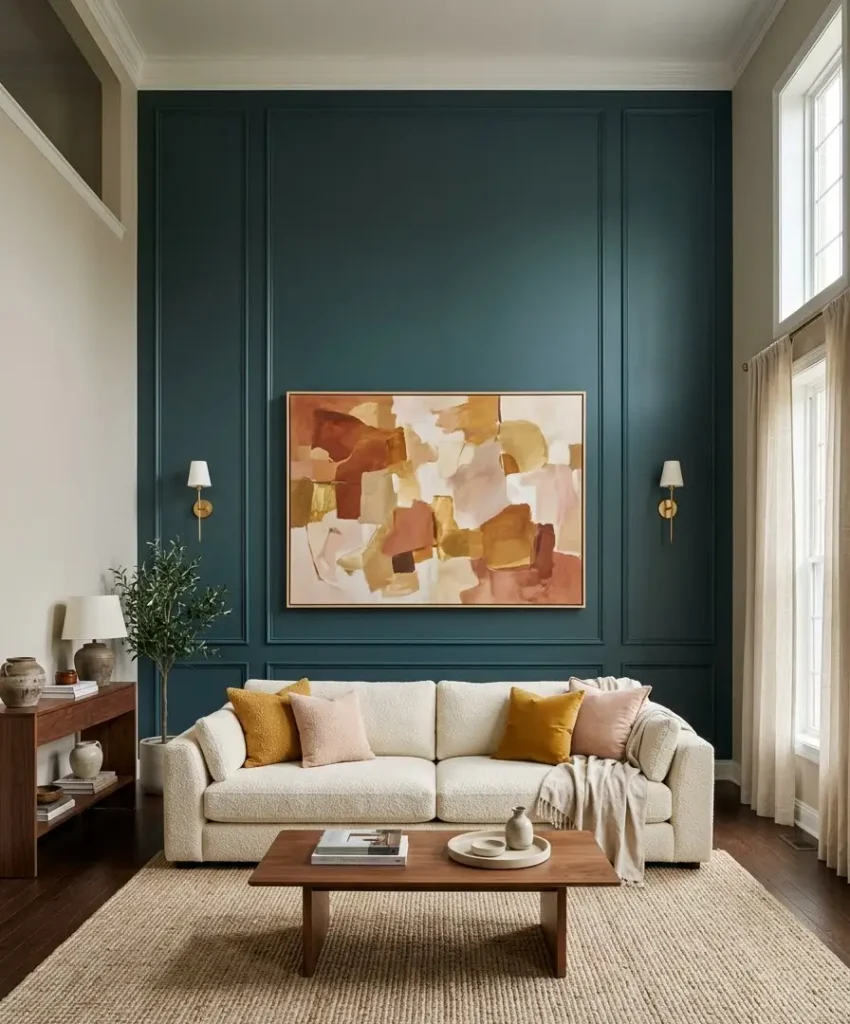
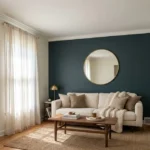
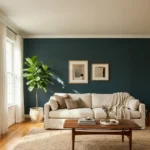
This is the classic move, and IMO it’s the safest one. The sofa sits against a calm backdrop, your art hangs on it, and the wall frames your seating area.
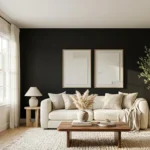
If you have a large sofa in a light color, the contrast looks fantastic. A cream or oatmeal sofa against dark teal looks like a magazine spread.
The fireplace wall
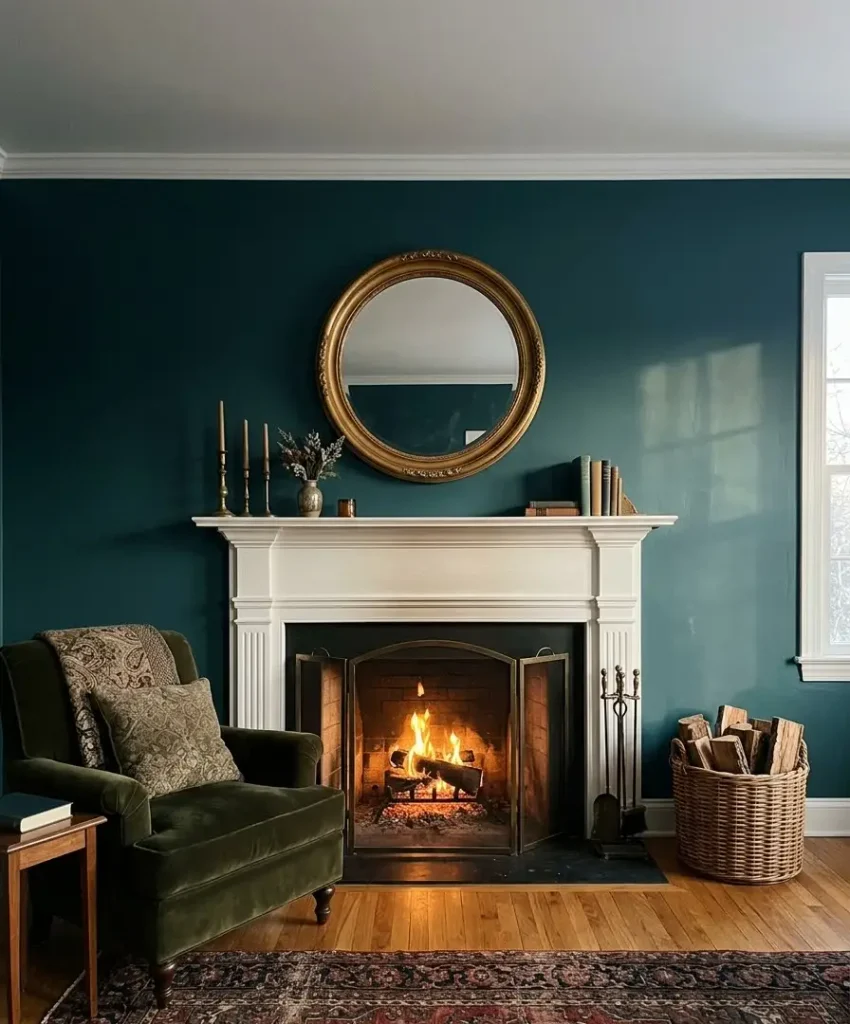
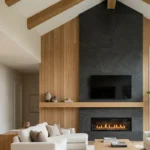
A fireplace gives the room a natural focal point, and dark teal makes it stronger. White mantels pop against it, and brass accessories glow.
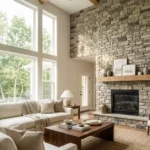
Dark brick or stone fireplaces need more care. Teal against dark brick can feel heavy, so test a sample before you pick up the roller.
The wall with the TV
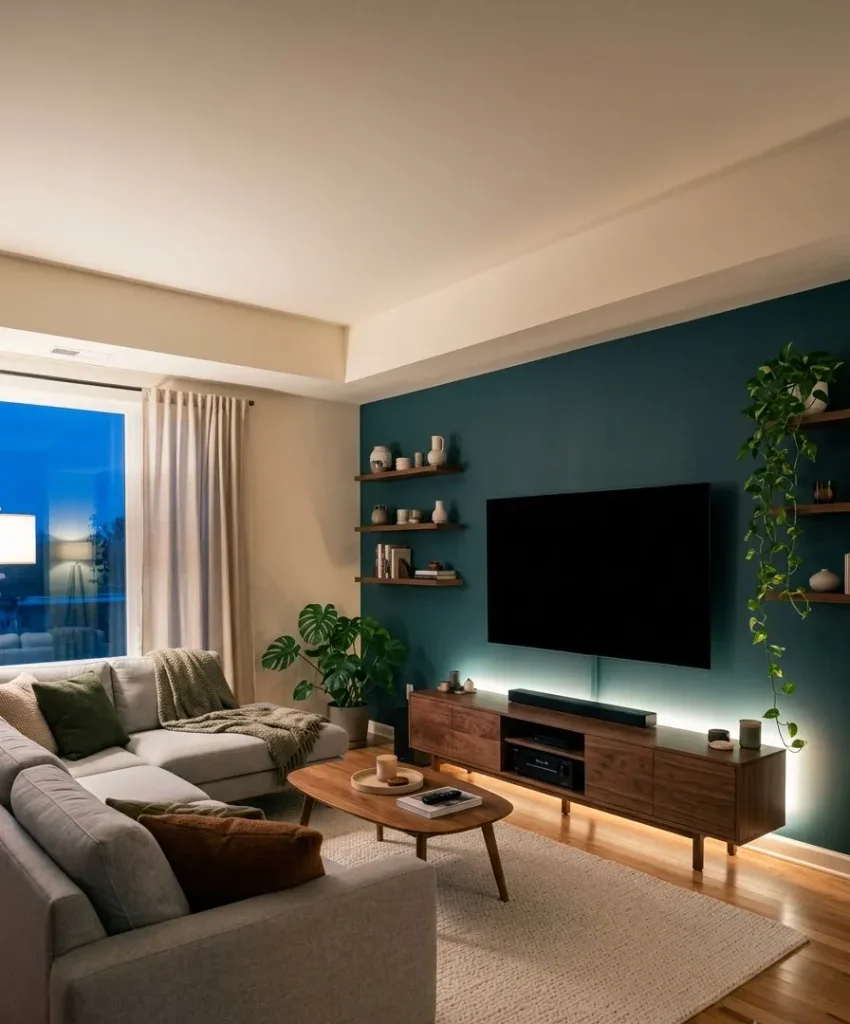
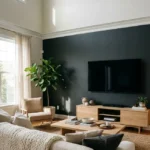
Dark walls hide a dark TV screen surprisingly well. The black rectangle stops shouting for attention because the wall around it is nearly as deep.
I painted this wall in a friend’s apartment, and her TV basically disappeared into the color. She still thanks me every time we watch a movie.
Walls to skip
Avoid the wall with the most windows. Dark paint beside bright glass creates harsh contrast, and you’ll squint more than you’d like.
Skip a wall broken up by lots of doors and vents too. The teal needs a clean stretch to look intentional.
Finish and texture: paint, paneling, wallpaper
The finish changes how teal behaves. A flat matte finish looks rich and hides wall flaws, while a glossy finish shows every bump and roller mark.
Matte, eggshell, and satin
I use matte or flat for the main wall. It soaks up light and makes the color feel velvety. Eggshell gives a little sheen and wipes clean more easily, which matters if you have kids or a dog who loves to lean on walls.
Satin on a large accent wall can look too shiny, and I’d skip it. Save it for trim.
Board and batten and paneling
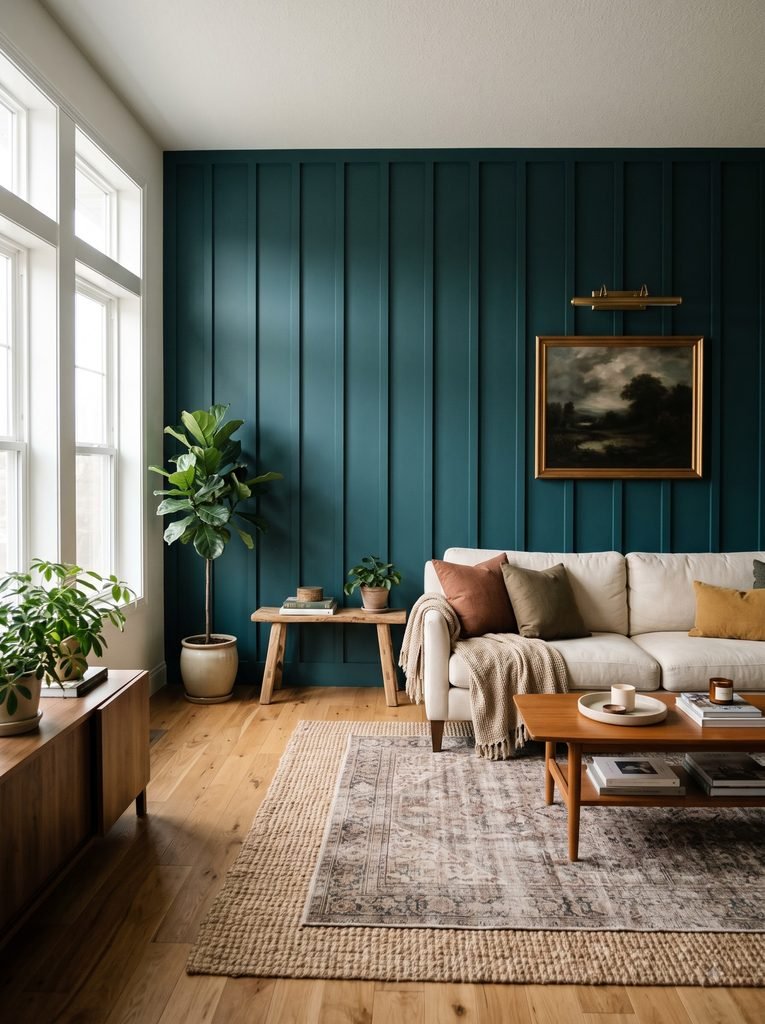
Dark teal paint over board and batten is one of the most saved looks on Pinterest, and I understand why.
The shadows between the boards add depth, and the whole wall looks custom-built.
You can install it yourself over a weekend with MDF strips and a nail gun. I did a rough version in my hallway first to practice, and my measuring was,
let’s say, enthusiastic rather than accurate. Wow, did that caulk save me.
Teal wallpaper
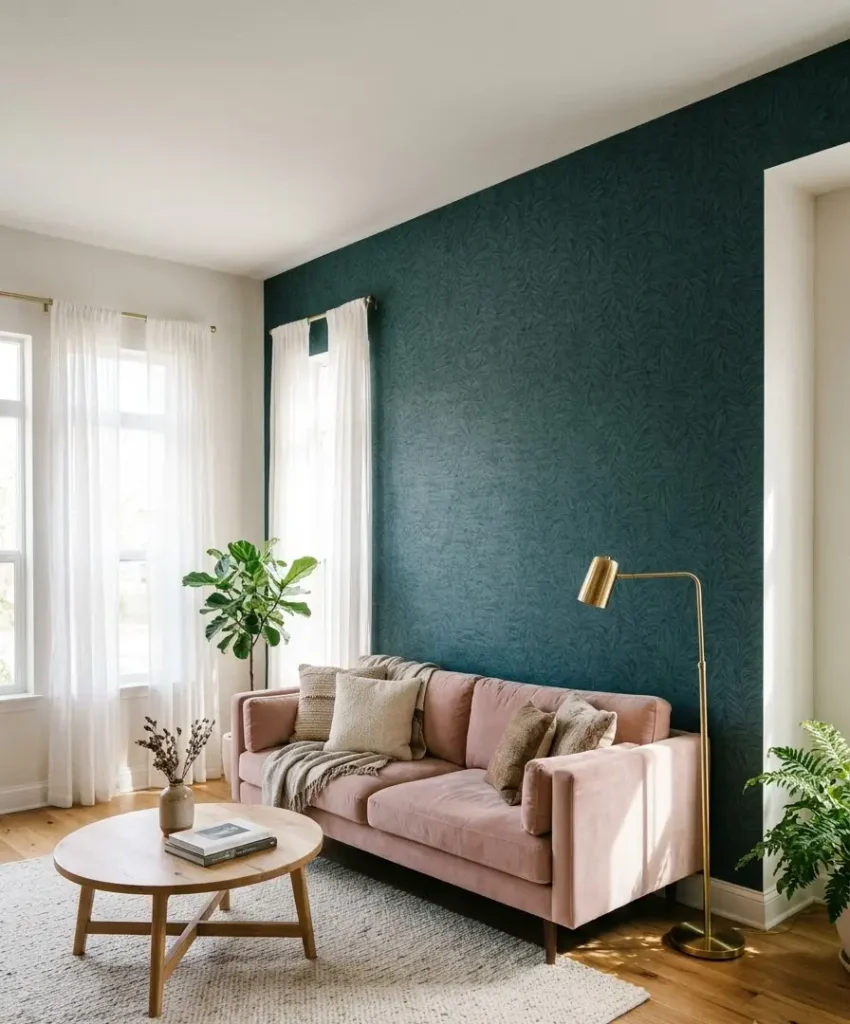
If paint feels too flat, try a teal wallpaper with a subtle pattern. Botanical prints, grasscloth, and soft geometrics all work well.
Peel-and-stick options suit renters. Test a small piece first, because some teals shift color under certain bulbs.
Furniture that looks great against dark teal
Dark walls need contrast in the furniture, or the room turns into a cave. Pick pieces in lighter tones or warm materials.
Sofa colors that work
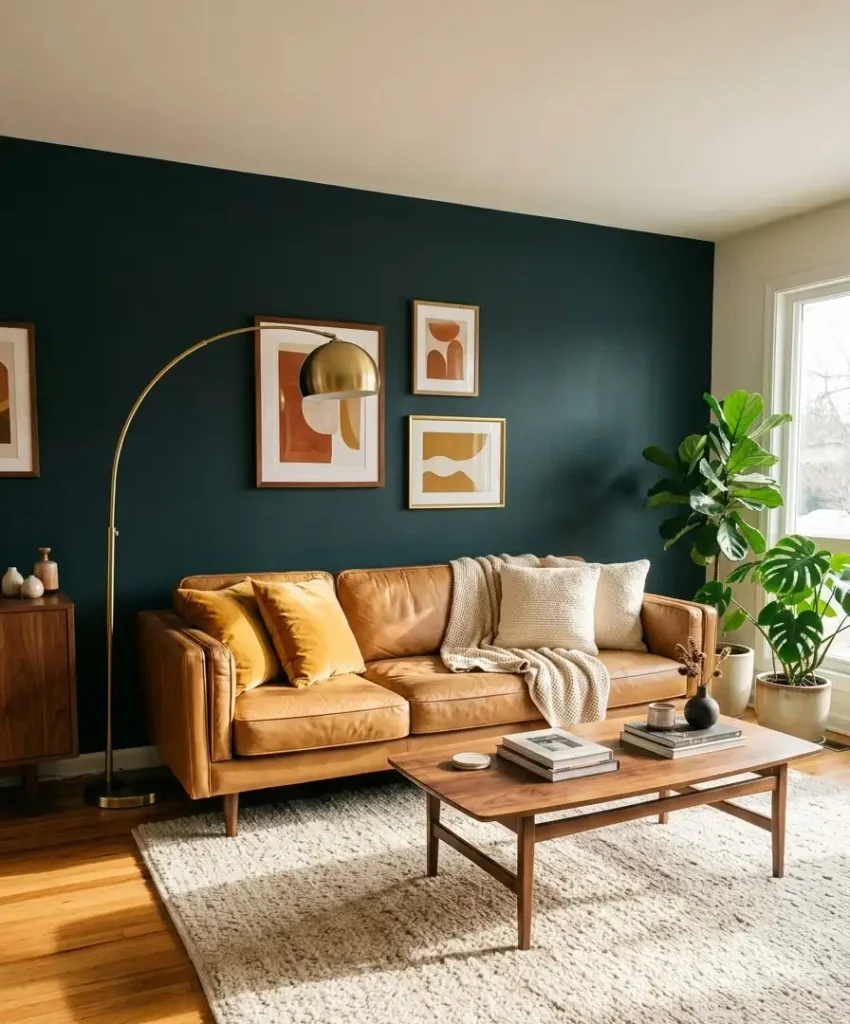
These are the combinations I’d bet on:
- Cream or ivory: bright, clean, and a little glamorous.
- Camel or tan leather: warm and a bit retro. This is my personal favorite, and I own one.
- Mustard or ochre velvet: bold and playful, though it needs confidence.
- Blush pink: surprisingly soft against deep teal. I didn’t expect to like it, and I do.
- Light gray: safe, but IMO a little bland unless you add texture.
Two of those picks come straight from my own living room and from a friend’s remodel, so take them as opinions and not rules.
Wood tones
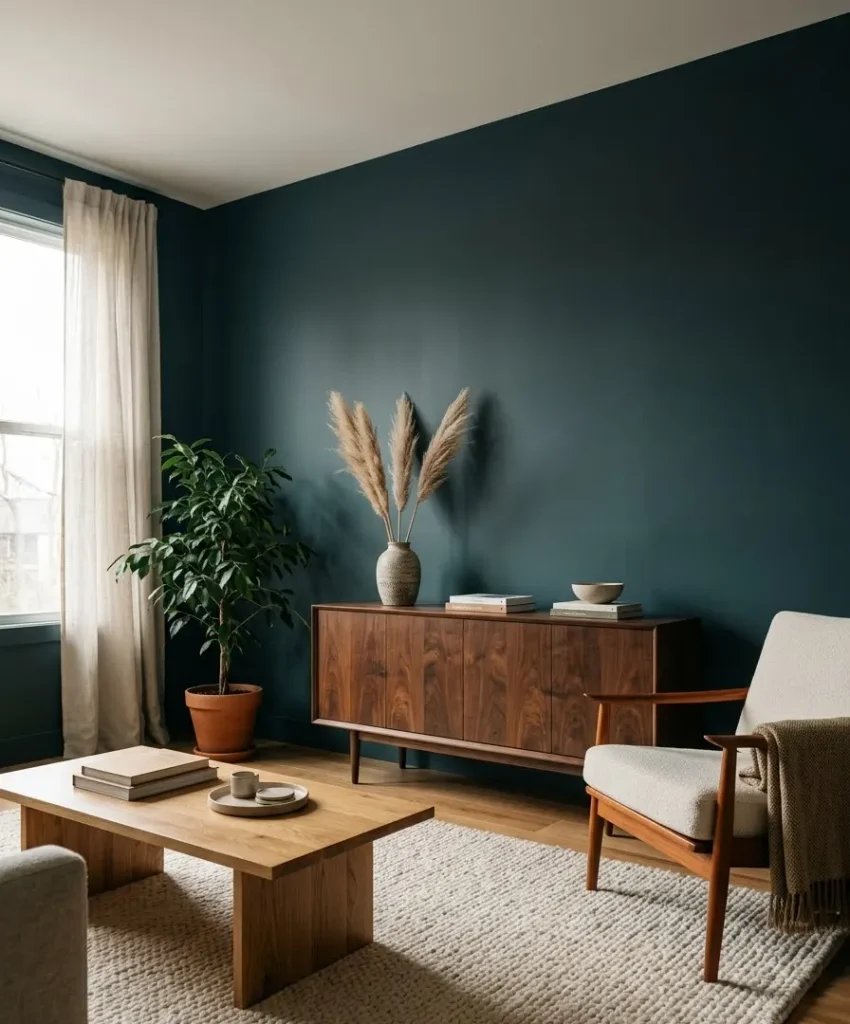
Warm wood makes dark teal feel grounded. Walnut, oak, and teak all look lovely, and the grain gives the wall something to play off.
Cold gray wood tends to clash. It can make the whole room feel flat, so I’d steer clear.
Metals
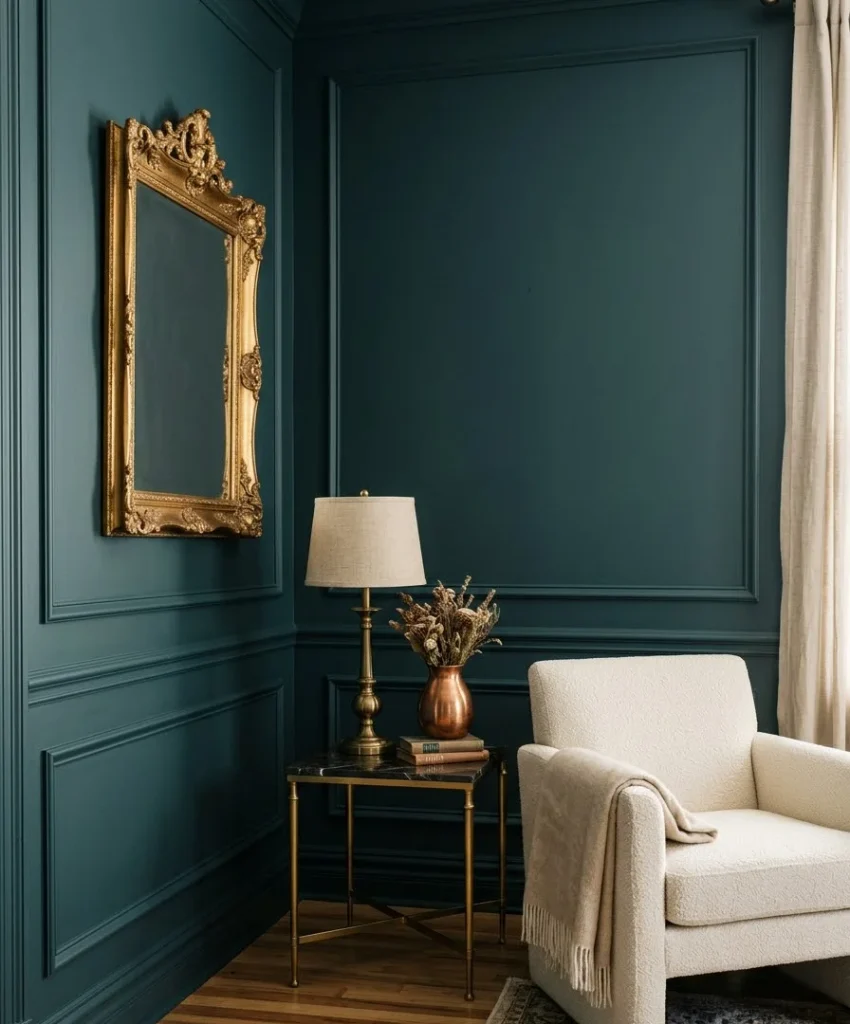
Brass and gold bring warmth, and they look rich against teal. Copper works too, especially on lamps and picture frames.
Chrome and black metal give a more modern feel. Mixing two metals is fine as long as you repeat each one at least twice around the room.
Colors that pair well with dark teal
Teal plays nicely with a wide cast of colors. Here are the combinations I keep returning to.
Warm neutrals
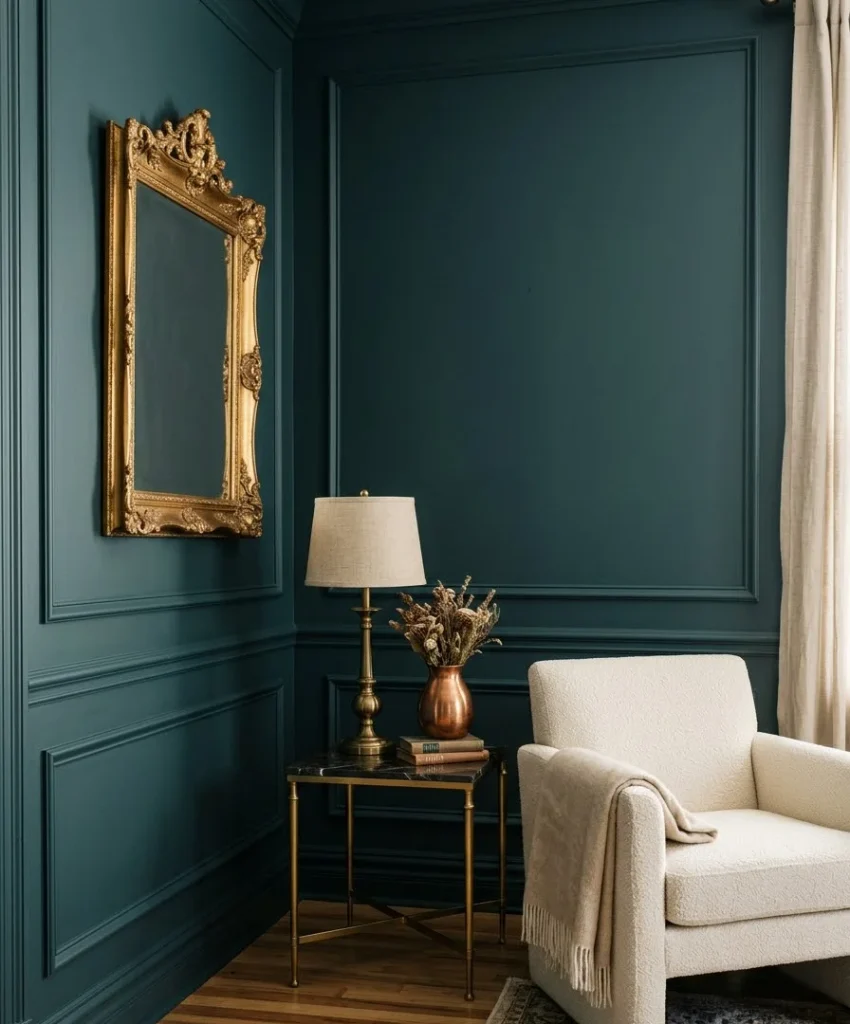
Cream, beige, oatmeal, and soft white all calm the intensity of teal. They give your eyes somewhere to rest.
I paint the other three walls a warm off-white. Cold bright white makes the teal look dull next to it, so I always check the undertone on the white too.
Rust, terracotta, and burnt orange
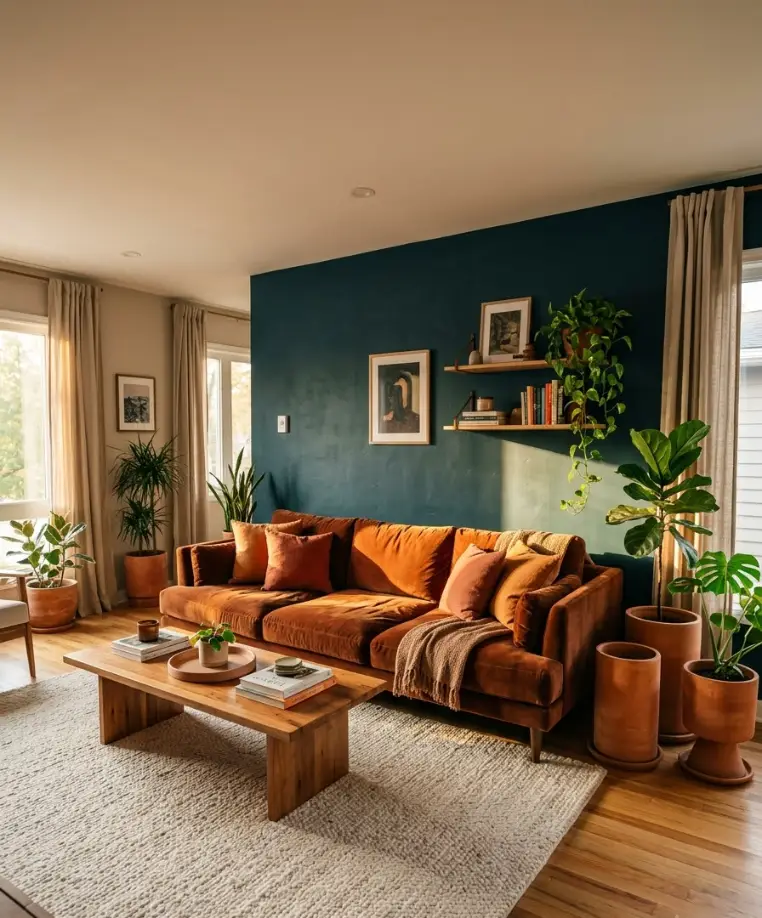
These sit nearly opposite teal on the color wheel, so they create real energy. A terracotta pillow or a rust throw against the wall can steal the show.
Use them in small doses. Two or three accents are plenty.
Pink and blush
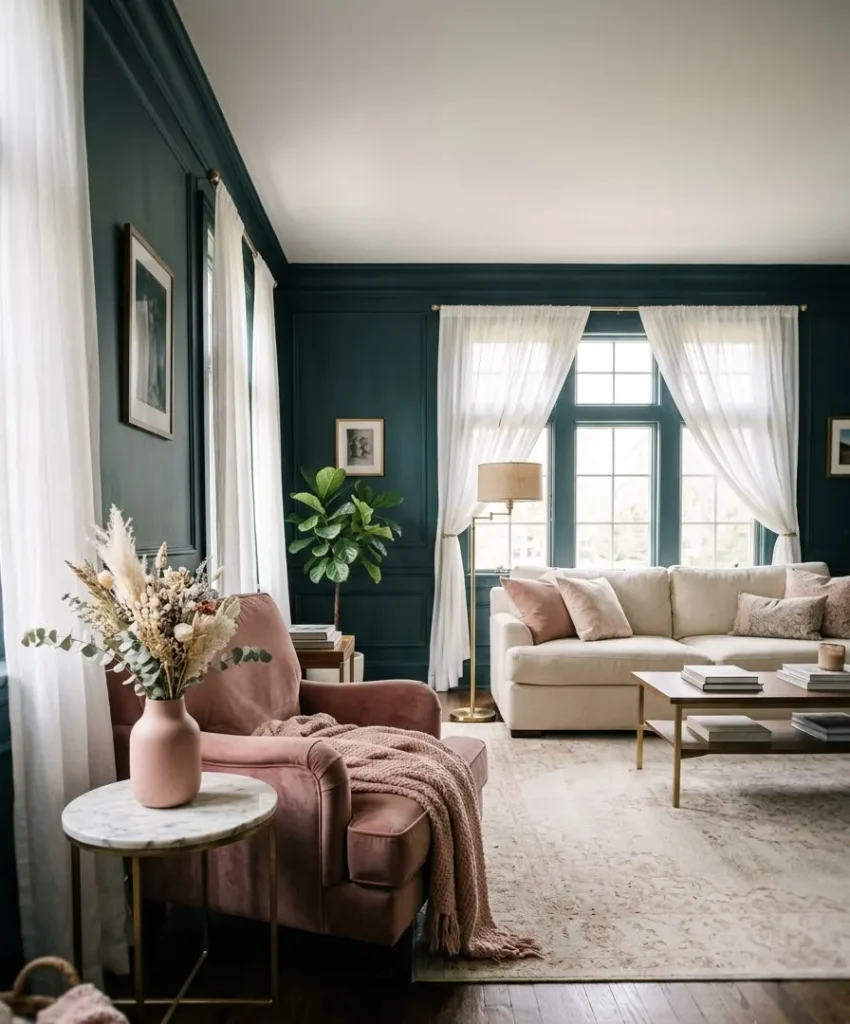
Pink and teal look like they came from the same garden. A soft blush armchair or a dusty rose vase brings out the freshness of the wall.
If you want a less obvious palette, go for a muted pink. Hot pink would turn the room into a candy shop.
Gold and mustard
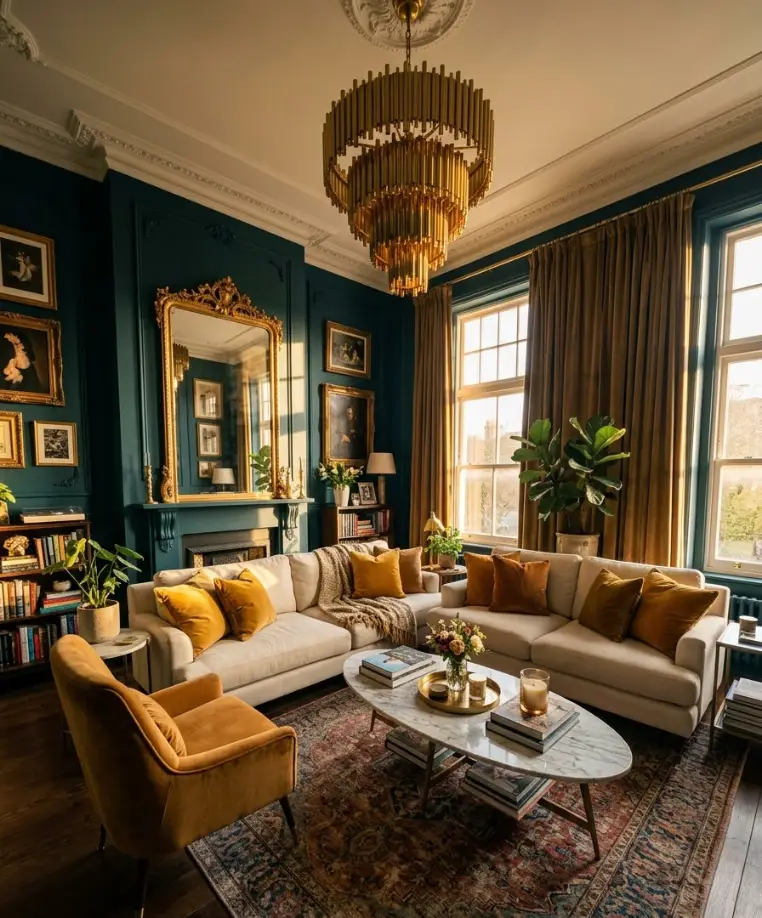
This pairing looks luxurious. Think mustard velvet pillows, brass lamps, and gilded mirror frames.
It also photographs beautifully, which matters if your living room ends up on someone’s mood board. I know mine did.
Lighting: the part everyone forgets
Dark paint punishes bad lighting. One overhead bulb will flatten the wall and make it look like a hole.
Layer your light
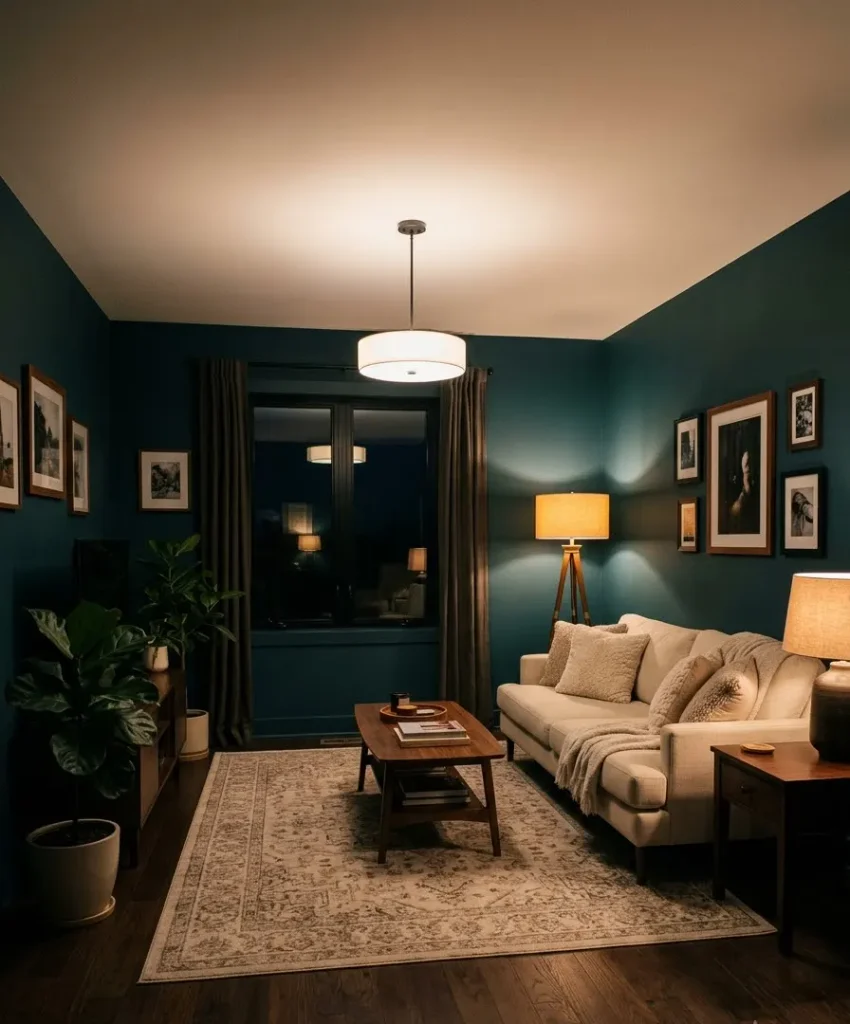
You need at least three light sources in the room: an overhead fixture, a floor lamp, and a table lamp. Warm bulbs, around 2700K, bring out the green side of teal and make it glow.
Cool white bulbs turn the wall gray and sad. I learned this after swapping one bulb and watching the whole room change personality.
Wall sconces and picture lights
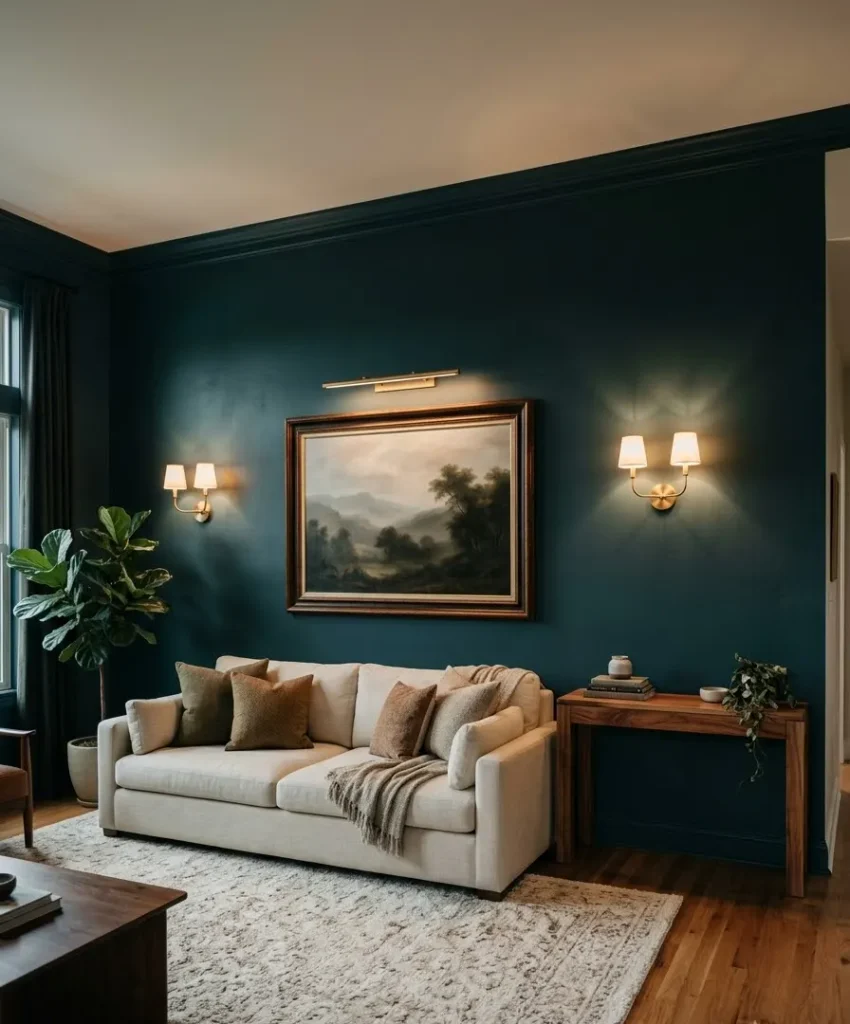
A sconce on a dark teal wall looks fantastic, because the light pools against the color. Picture lights over art give the wall a gallery feel.
If you rent, plug-in sconces avoid hardwiring. They cost little and look surprisingly high end.
Mirrors
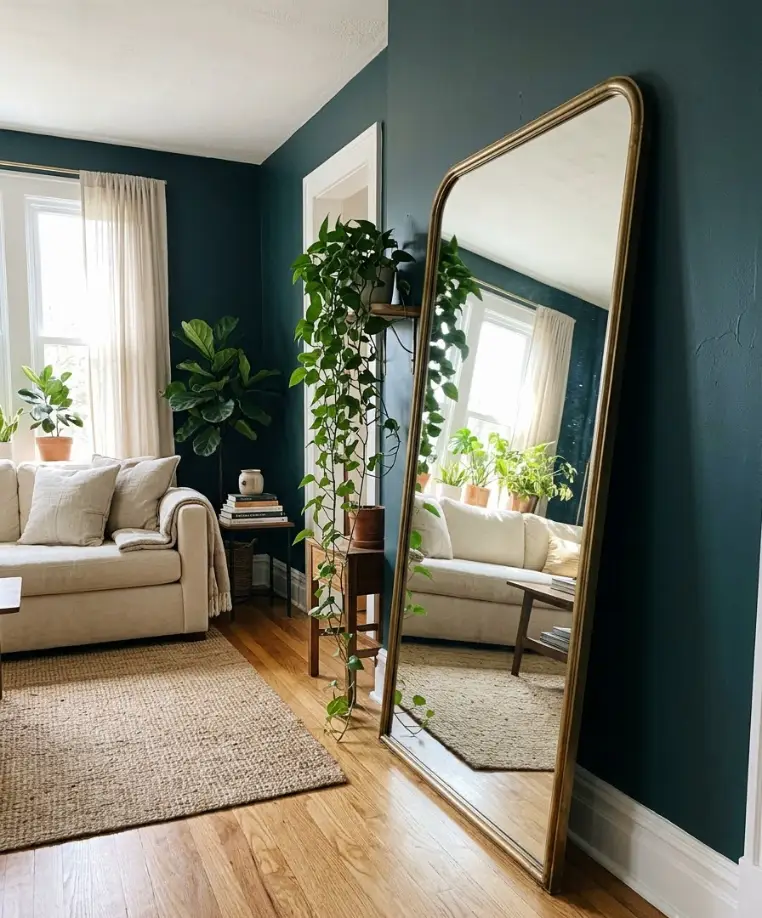
A big mirror opposite a window bounces daylight back into the room. It also doubles the teal, which gives the space more depth.
Pick a frame in brass or black. A mirror also works well leaned against the wall, which gives a relaxed look.
Style ideas for different living rooms
Dark teal adapts to almost any design style. Here’s how I’d handle the main ones.
Modern and minimalist
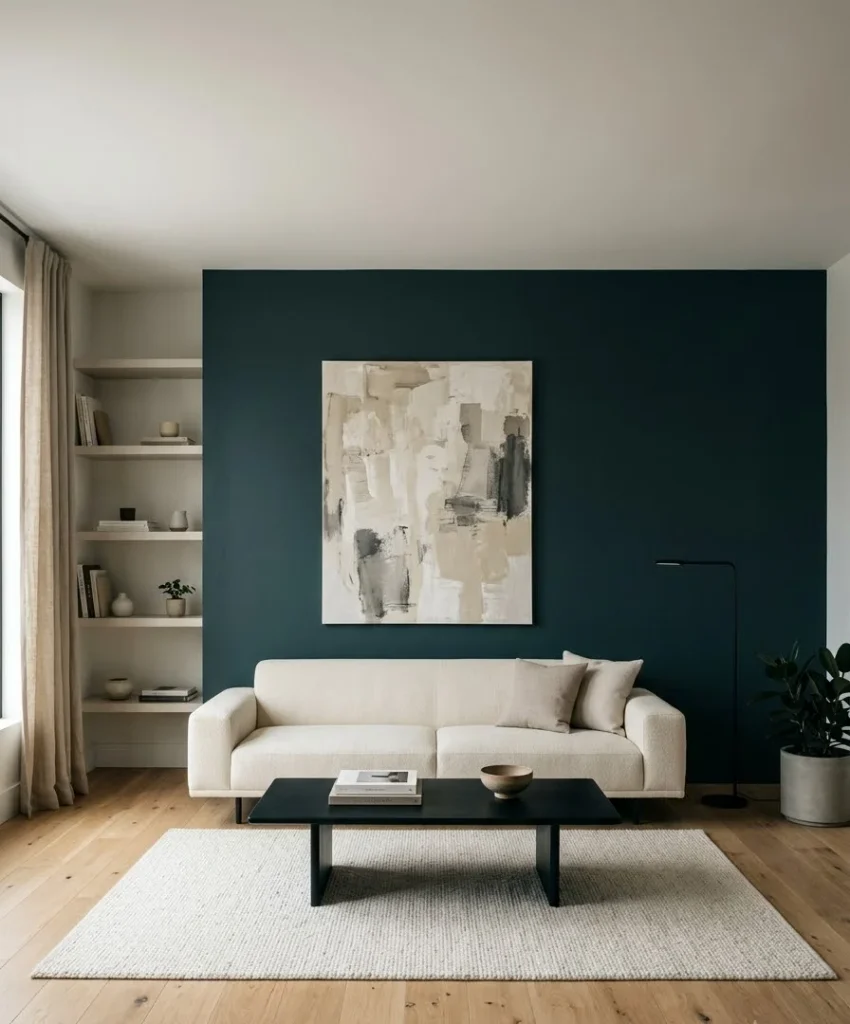
Keep furniture low and clean. A cream sofa, a black coffee table, and one big piece of abstract art look sharp against the wall.
Less clutter makes the teal the star. Resist the urge to fill every shelf.
Boho and eclectic
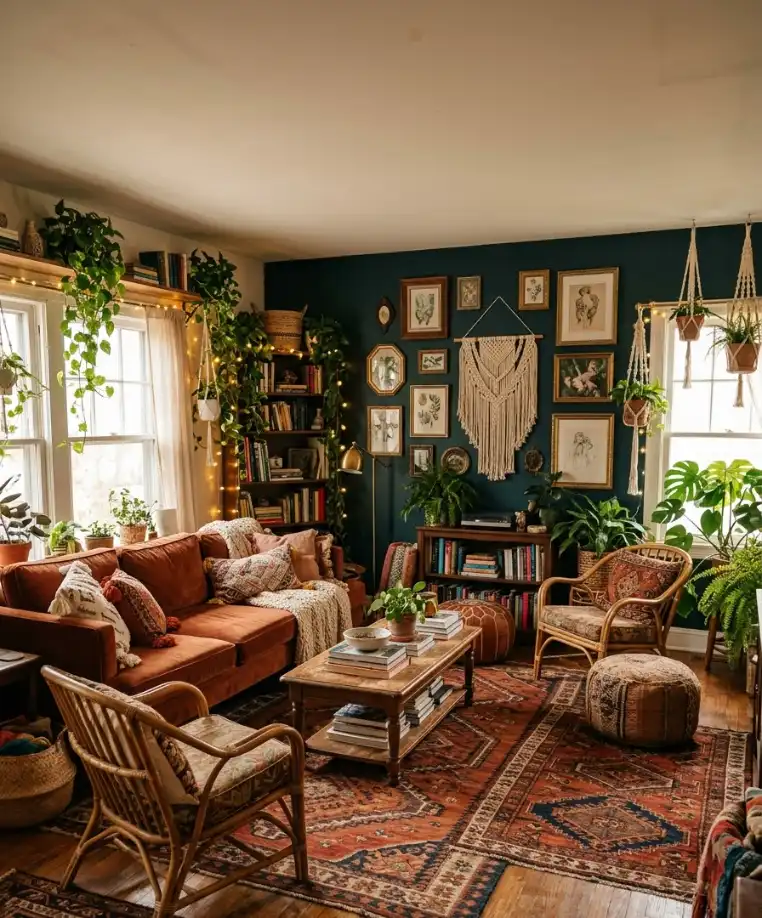
Layer rugs, plants, rattan, and mixed art frames. Teal looks great behind a jungle of trailing pothos and macrame.
This style forgives almost everything. If it feels like too much, you’re probably doing it right.
Mid-century modern
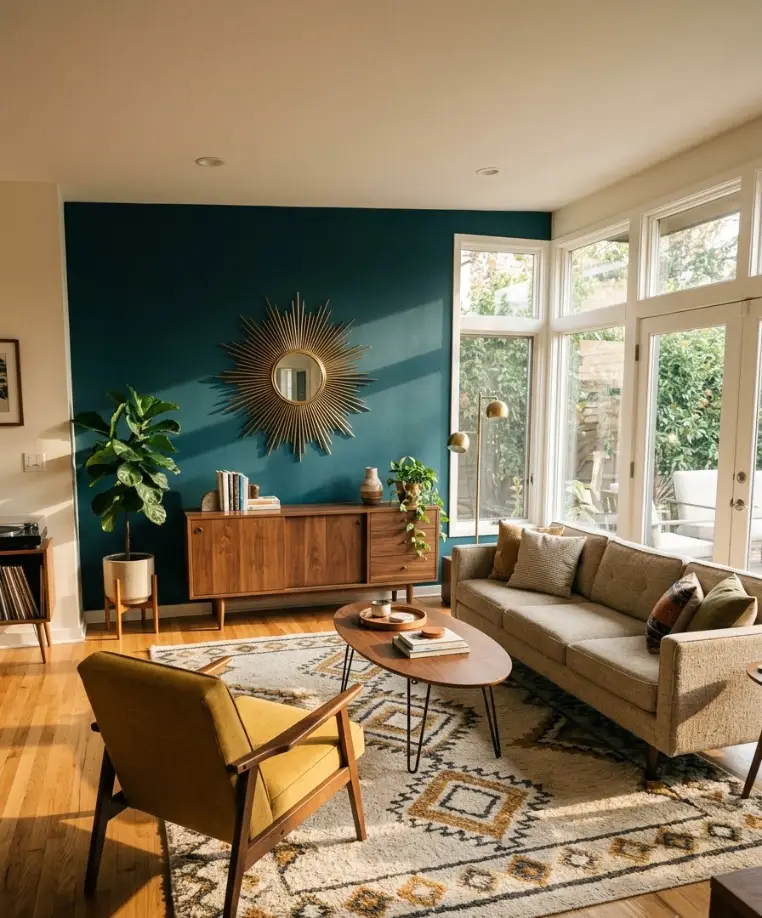
Walnut sideboards, tapered legs, and mustard accent chairs look at home against deep teal. The color feels period-correct, since teal was big in the 1950s and 60s.
A sunburst clock or starburst mirror on the wall finishes the look. I couldn’t resist one, and I don’t regret it.
Traditional and classic
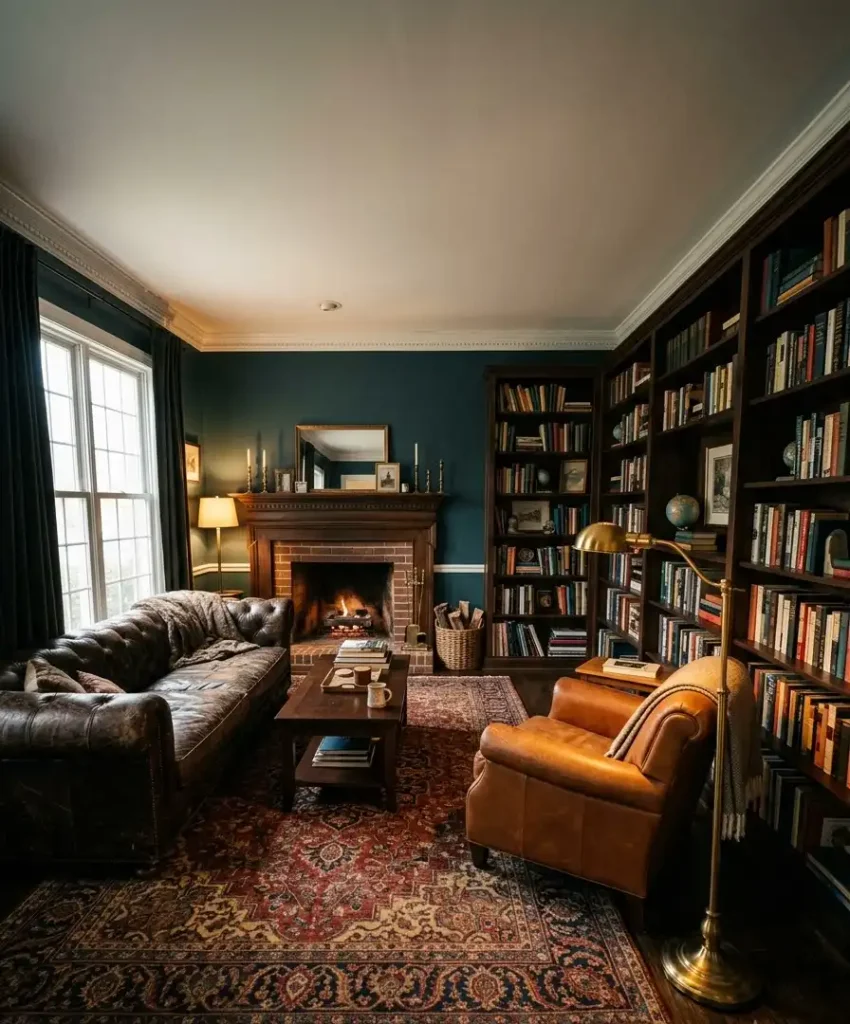
Dark teal with white crown molding and a patterned rug gives a rich, library-like feel. Add dark wood bookshelves and you’ll feel like reading a novel by the fire.
Farrow & Ball’s deeper blue-greens suit this style especially well.
Scandinavian and cozy
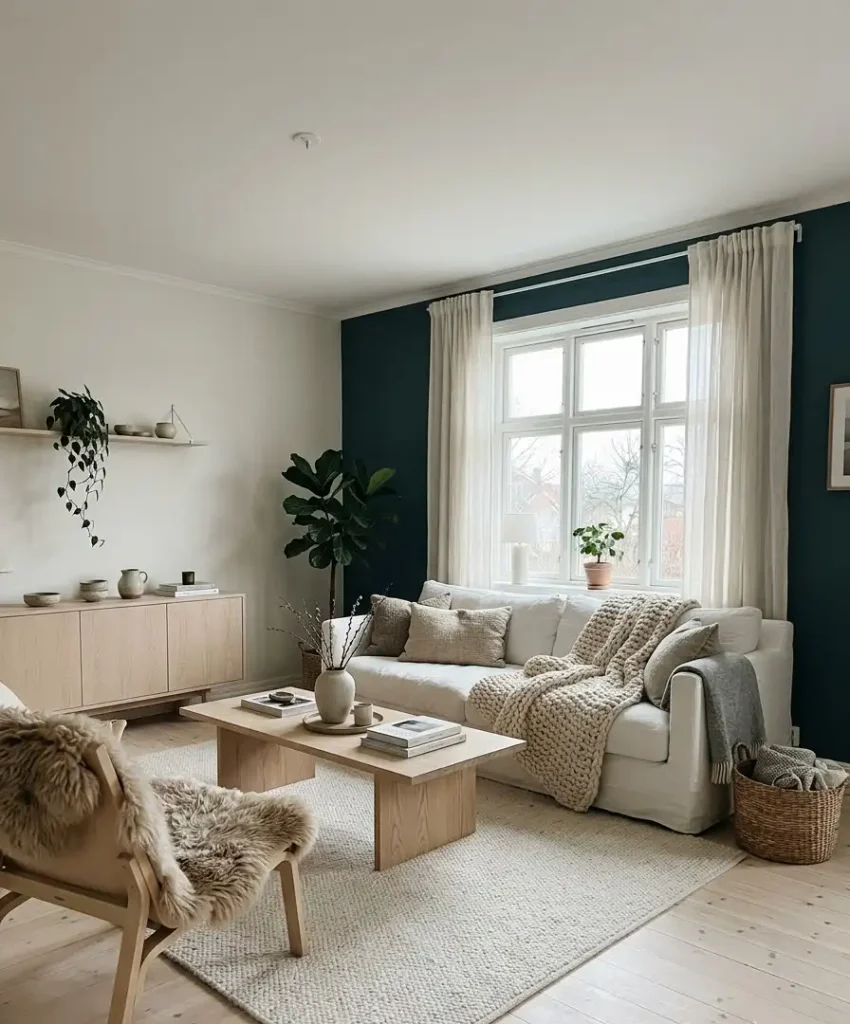
Pair teal with light wood, white linen, and chunky knit blankets. The wall brings depth to a style that can otherwise look too pale.
Keep decor sparse and let natural textures do the talking.
Dark teal in small living rooms
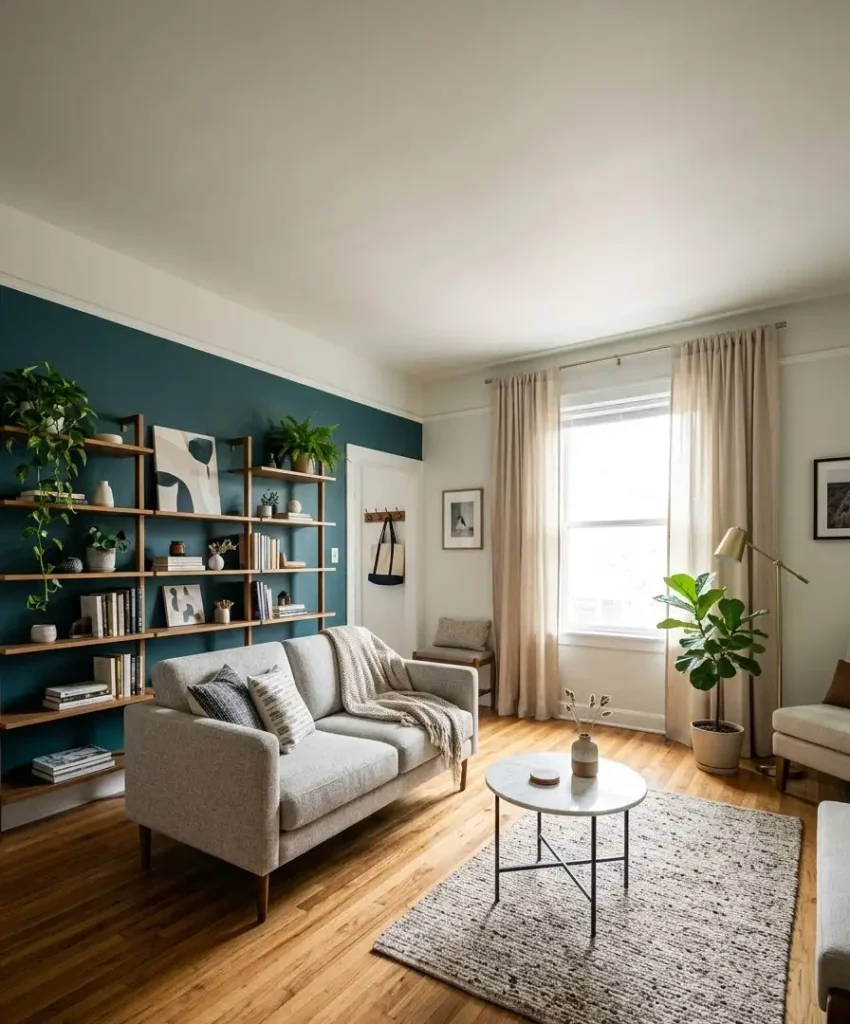
Small rooms and dark paint get a bad reputation, but I’ve seen it work. The trick is to commit to the color and add light.
Make a small room feel intentional
A dark wall in a small room feels like a choice, while a pale gray one feels like a default. Painting the ceiling a light tone keeps the room from closing in.
Hang curtains high and wide to stretch the window. This draws the eye up and out.
Furniture scale
Choose slim-legged sofas and open shelving so you can see the floor beneath. A visible floor makes any room look bigger.
Skip the oversized sectional. It will eat the room and fight the wall for attention.
A quick, slightly off-topic aside
I swear this connects to teal in a roundabout way. My neighbor once painted her front door the exact shade of an old Nokia phone cover, and I thought she was out of her mind.
Six months later, I had the same color on my wall. Funny how a tiny dose of boldness somewhere else gives you permission to try your own.
Styling the wall: art, shelves, and Pinterest-ready details
A teal wall without decoration looks unfinished. A few good pieces turn it into a scene.
Art that suits teal
Gold-framed pieces glow against the wall. Black and white photography also pops, and oversized abstract canvases in warm tones feel modern.
Hang art at eye level, about 57 inches from the floor to the center. Most people hang pieces too high, and I did it twice before I measured properly.
Gallery walls
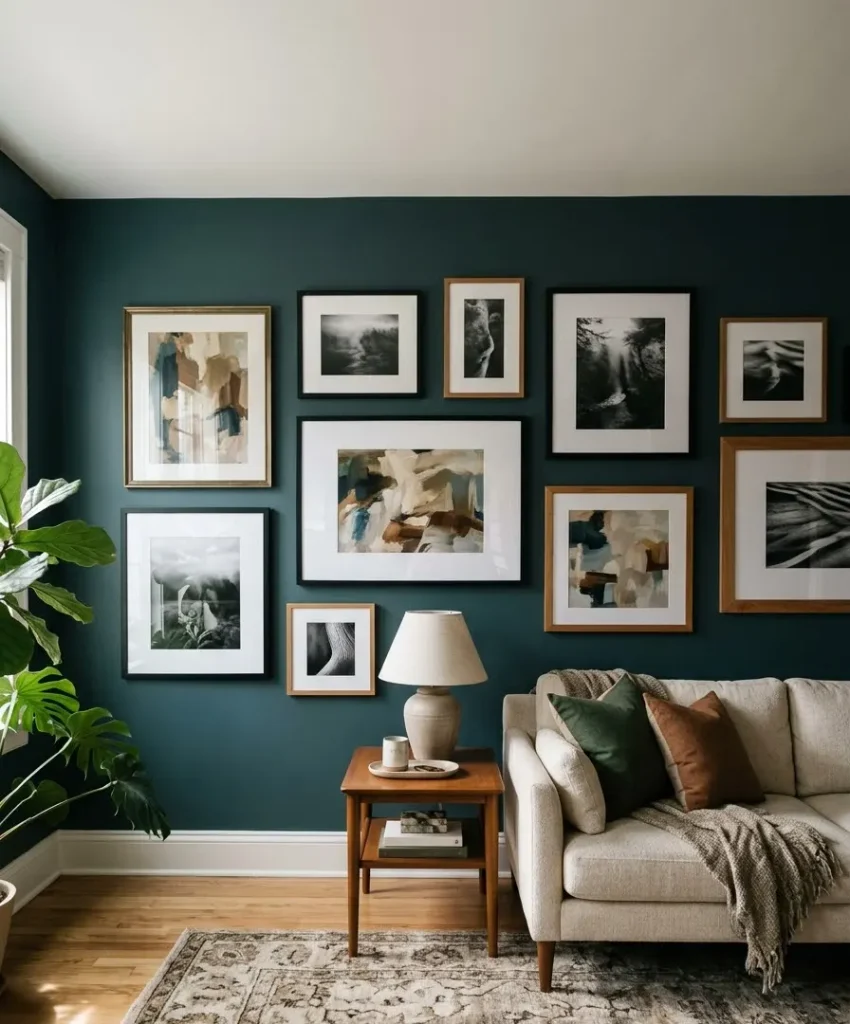
Mixed frames in brass, black, and natural wood make a lively gallery. Lay your arrangement out on the floor first, then trace each frame onto paper and tape the templates to the wall.
This saves a hundred little nail holes. My wall still has four old ones I can’t explain.
Floating shelves and plants
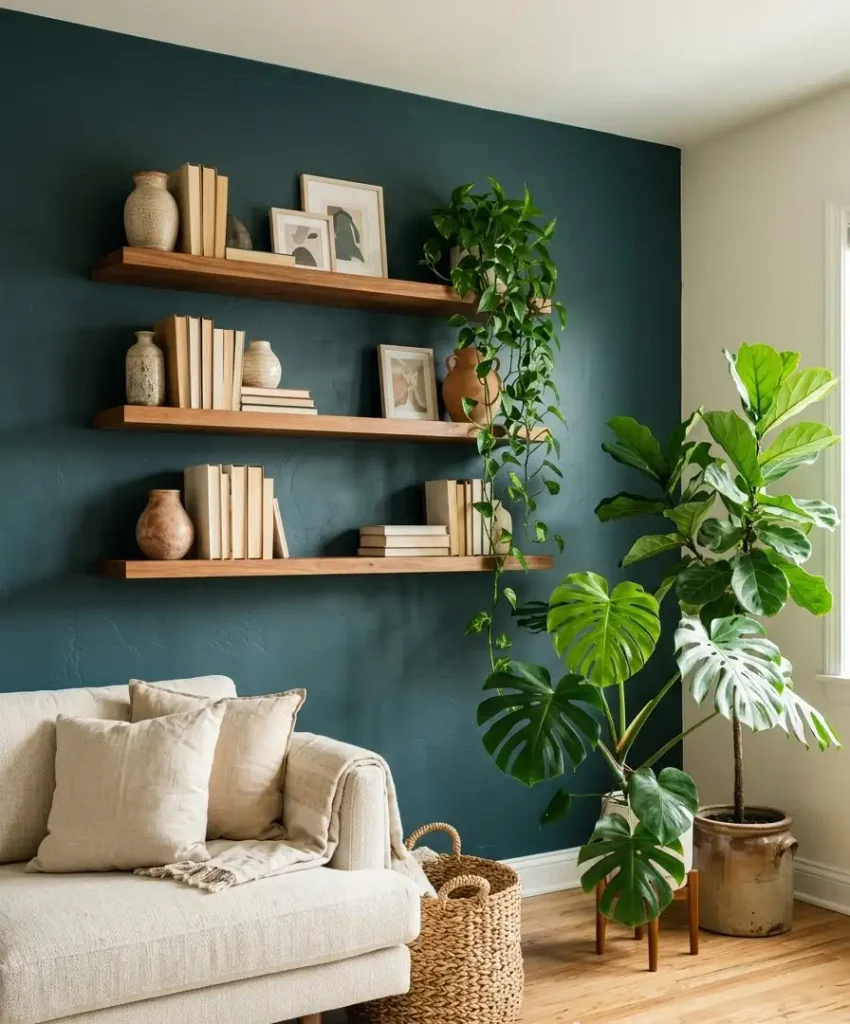
Warm wood shelves look striking against teal. Style them with books, a few ceramics, and one trailing plant.
Green foliage looks natural against the wall because teal sits so close to green on the color wheel. A fiddle leaf fig, a monstera, or a simple eucalyptus branch all work.
Textiles
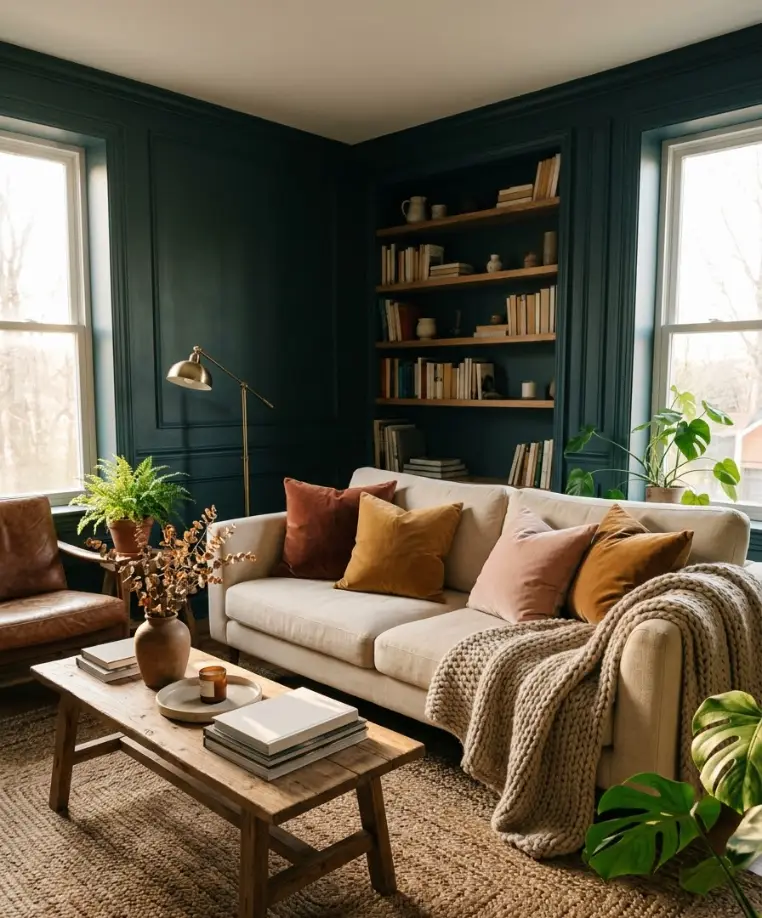
Velvet pillows in mustard, rust, or blush add richness. A chunky knit throw adds texture that the smooth wall can’t provide.
I keep a woven jute rug under the coffee table. It adds a warm, earthy layer that stops the room from feeling too polished.
Mistakes I made so you don’t have to
I’ve painted teal walls in three different homes, and I’ve gotten each one wrong in some way.
Here’s my short list of regrets.
- Skipping the sample. I trusted the paint chip, and the real wall looked 30 percent darker. Always paint a large swatch and live with it for a few days.
- Using one coat of primer. Dark colors need good coverage, and tinted primer helps. My first coat looked streaky for a reason.
- Forgetting the trim. Old yellowed trim looks dingy against teal. I repainted mine in a crisp warm white and the whole wall looked better.
- Ignoring the ceiling. A stark white ceiling can look harsh against a dark wall. A soft off-white feels gentler.
Honestly, the sample mistake hurt the most. It cost me a full Saturday and about $60 in wasted paint.
Painting tips for a smooth finish
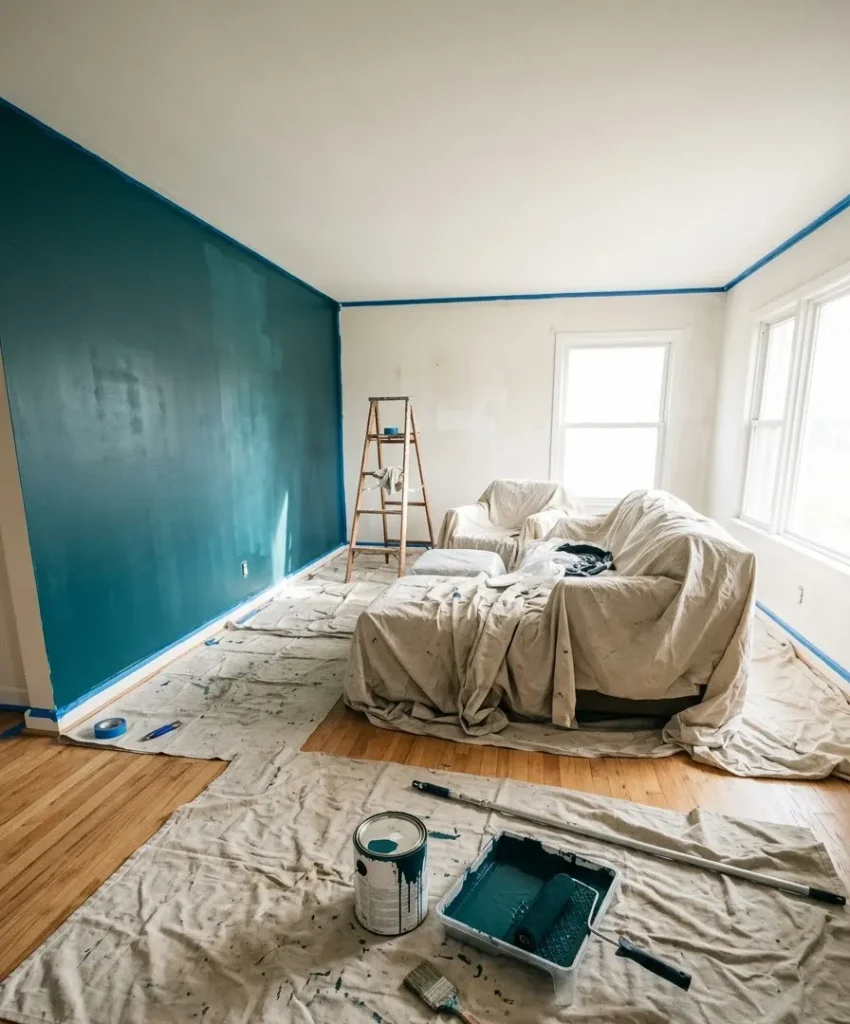
Dark paint shows every flaw, so prep matters. Fill holes, sand the wall, and wipe off dust before you start.
Tools and technique
Use painter’s tape on the edges and remove it while the paint is still slightly wet. This gives you a crisp line without peeling.
A good roller makes a huge difference. Cheap rollers leave fuzz, and fuzz shows up everywhere on dark walls.
How many coats
Plan for two coats, and sometimes three. Let each coat dry fully, because rushing creates patches that catch the light.
For reliable how-to advice and design inspiration, Houzz has thousands of real-room photos, and Pinterest is great for building a mood board before you buy any paint.
Frequently asked questions
Will a dark teal accent wall make my living room look smaller?
Not necessarily. Dark colors make a wall recede, so many rooms feel deeper. Add warm lighting and light furniture, and a small room can feel cozy and expansive at once.
What color couch goes best with a dark teal wall?
Cream, camel leather, and blush pink all look great. If you want drama, try mustard velvet. Gray works, but you’ll need pillows and throws to add warmth.
Is dark teal a good choice for a north-facing room?
Yes, but pick a shade with a green or warm lean. Blue-heavy teals can turn cold and gray in cool north light. Test a large sample at different times of day before you commit.
Final thoughts
Dark teal gives a living room color, depth, and a calm sort of confidence. It works with wood, brass, velvet, and plants, and it looks as good at 8 a.m. as it does at midnight.
Start with a sample, think hard about your lighting, and pick one wall. The rest of the room will follow.
So which wall in your living room is begging for a deep teal makeover, and what’s stopping you from grabbing a sample pot this weekend?
1 thought on “Dark Teal Accent Wall Living Room Ideas for a Stylish and Cozy Home”