Flat grey paint on all four walls is the beige of the 2020s. It’s fine. It’s also forgettable, and your living room deserves better than “fine.”
I’ve spent the last few years repainting, panelling and generally annoying my neighbours with weekend drilling, and texture is the one change I’d recommend to everyone.
A single textured accent wall gives you shadows, depth and something for your eyes to land on.
Here are 12 ways to do it in grey, from budget-friendly paint tricks to full stone installs.
Why texture works so well on grey
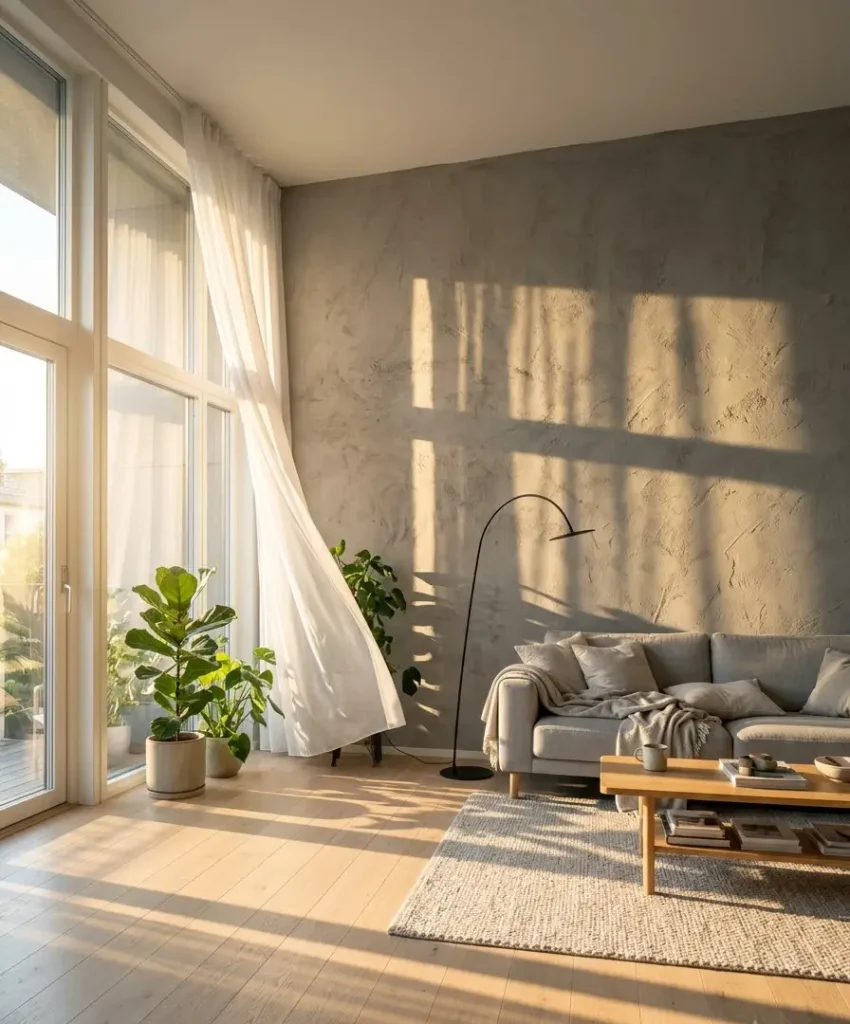
Grey has no strong personality of its own. That’s its strength and its weakness. Put it on a smooth wall and the room goes flat, especially under cool LED bulbs.
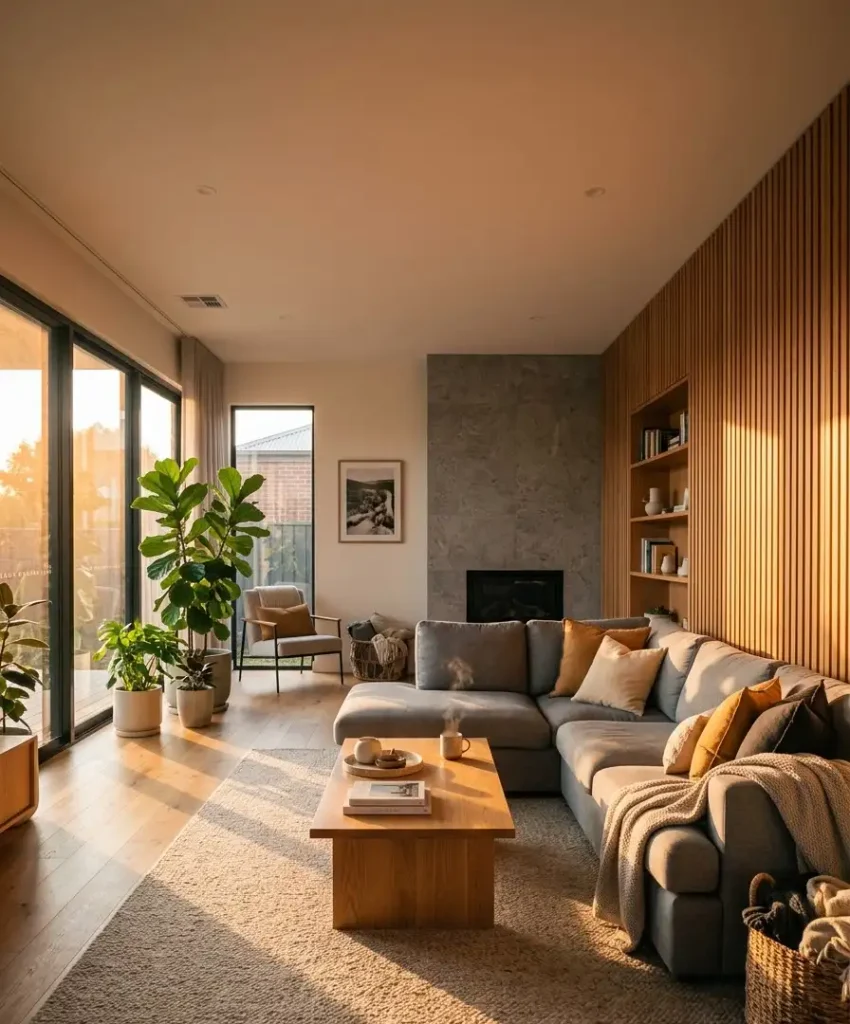
Add texture and the same grey suddenly shifts through the day. Morning light rakes across wood slats and creates stripes of shadow.
Evening lamplight pools in the grooves of stone. Ever notice how Pinterest photos of grey rooms always look richer than yours? Texture is usually the reason.
Pick your wall first
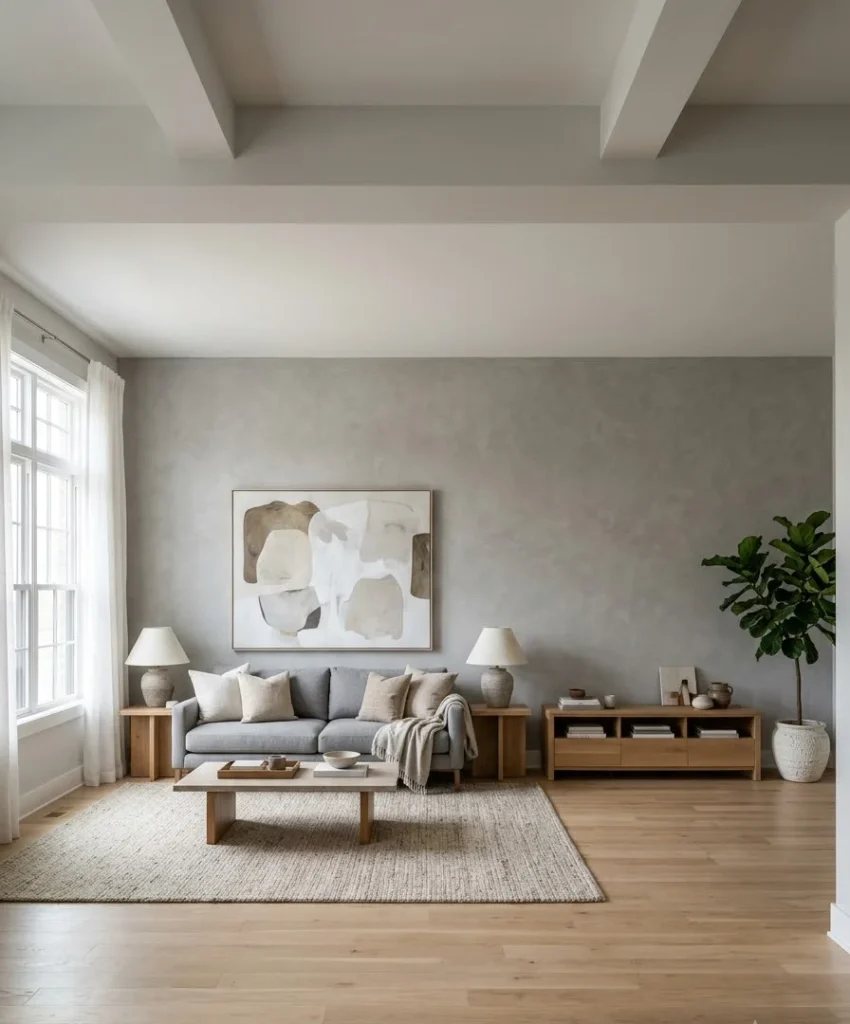
Choose the wall your eyes hit when you walk in, which is usually the one behind the sofa or the TV.
Skip walls with three doors and a radiator, because you’ll fight them the whole way.
A wall with a window on one side also works, since the side light makes any texture look more dramatic.
Before you fall for any idea below, check three things:
- Wall size. Under 10 feet wide, keep patterns simple.
- Light direction. Raking side light loves deep texture. Flat front light needs bolder profiles.
- Furniture colour. A grey sofa against a grey wall needs contrast somewhere, either in tone or in material.
Wood slat accent wall ideas
Slats have taken over Pinterest, and I get why. They look expensive, they hide a multitude of sins, and you can install them over a weekend with a mitre saw and a lot of patience.
FYI, buy 10 percent more than you measure. I learned that the hard way after a cut went wrong at 11 pm.
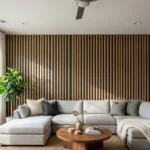
1. Natural oak slats against a charcoal wall
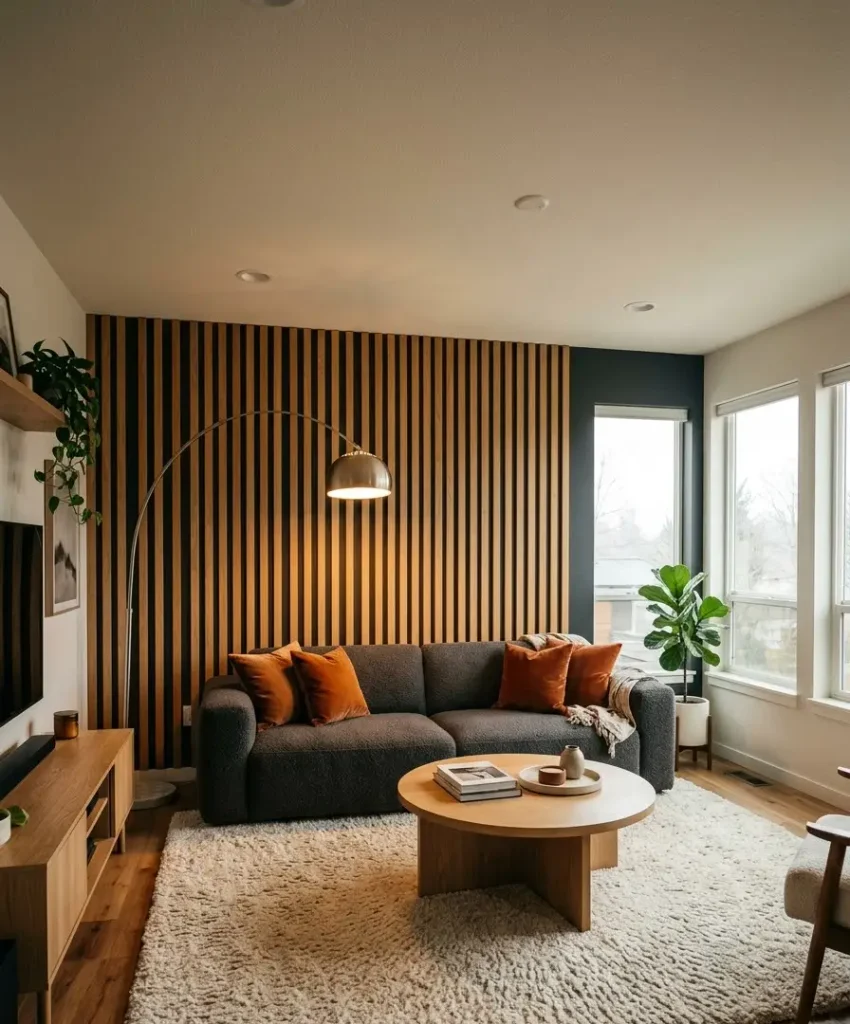
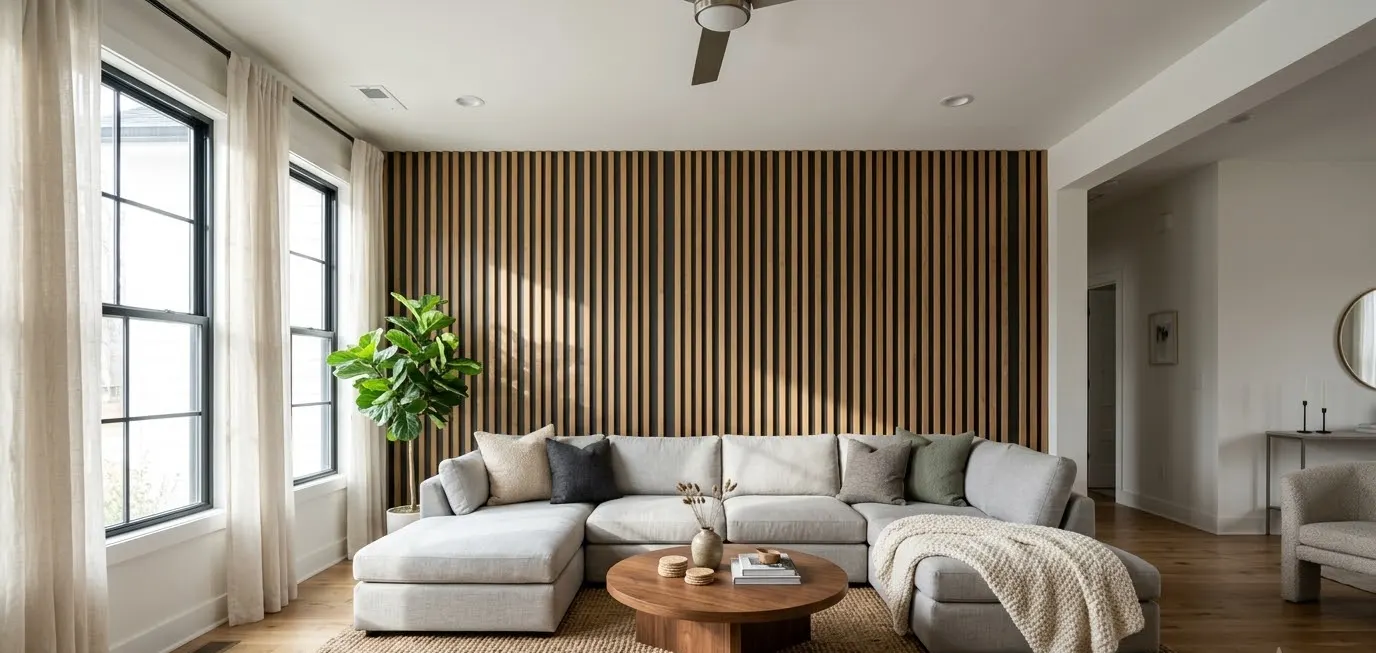
Paint the wall behind the slats a deep charcoal first. Then mount oak slats about half an inch apart, and the dark gaps make the wood glow.
This is the combination I see saved most often, and IMO it deserves the hype.
The warm wood stops the charcoal from feeling like a cave. I used this in my own living room and the whole space felt about 5 degrees warmer,
which is a strange thing to say about a grey room. Budget roughly $300 to $700 for a typical sofa wall, depending on the wood.
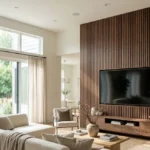
2. Black-framed walnut slats with a hidden light strip
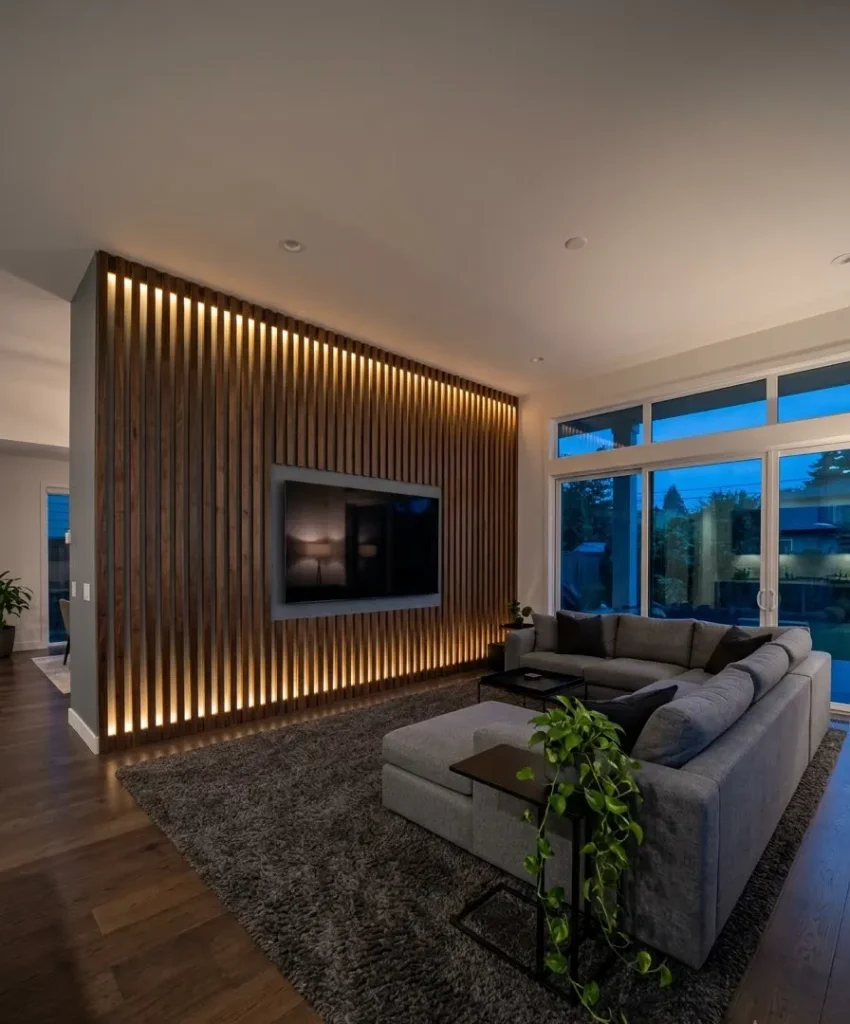
Walnut is darker and moodier, so pair it with a medium grey like a mid-tone slate.
Tuck a warm LED strip behind the slats or along the top edge. The light spills through the gaps and washes the wall in a soft glow.
Wow, this one looks good after dark. It also makes a TV wall feel intentional instead of a black rectangle on grey.
The catch is wiring, so plan your power source before you glue anything.
3. Felt-backed acoustic slats
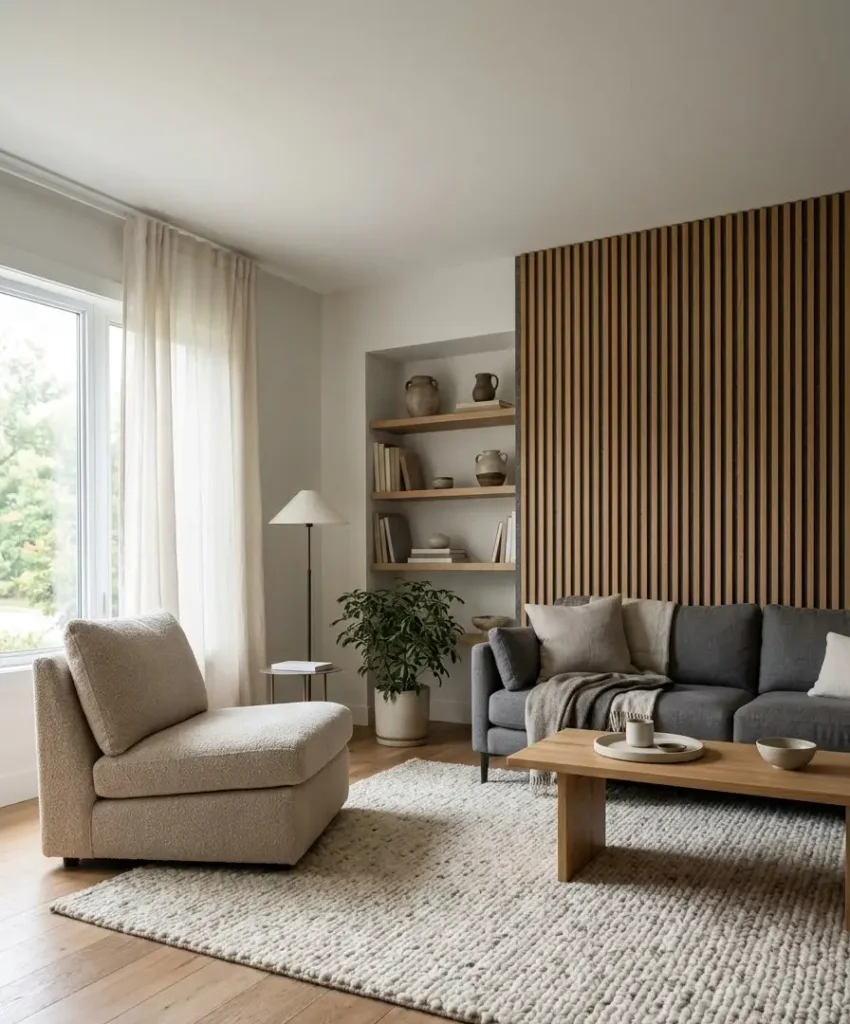
These panels come as wood strips glued onto a grey felt backing. You get the slatted look and real sound absorption. If your living room echoes like a gym, this is the practical pick.
I tested a set in a flat with hard floors and no rugs. Conversations sounded noticeably less like a bathroom.
The felt comes in light grey, charcoal and near-black, so matching your palette takes about two minutes.
Stone accent wall ideas
Stone is the heavyweight option. It costs more and it weighs more, but nothing else gives you that cold, layered, almost cave-like texture.
The Family Handyman guide to stone veneer is a decent place to see how the install actually goes before you commit.
4. Stacked ledgerstone in cool grey
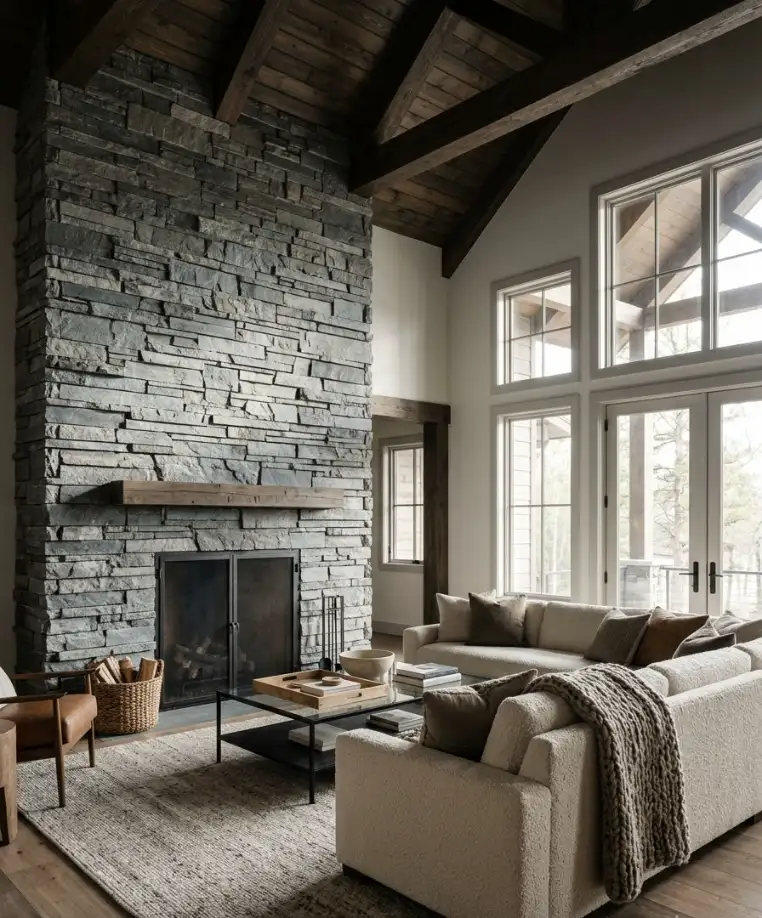
Ledgerstone comes in narrow, horizontal strips that stack tightly. The grey versions run from pale silver to almost slate,
and the rough edges catch light beautifully. Run it floor to ceiling for the full effect.
My honest opinion: real stone beats faux in photos taken up close, and faux wins everywhere else.
Real veneer needs a solid wall and a patient installer. Plan on $15 to $30 per square foot installed, which adds up fast on a tall wall.
5. Lightweight faux stone panels
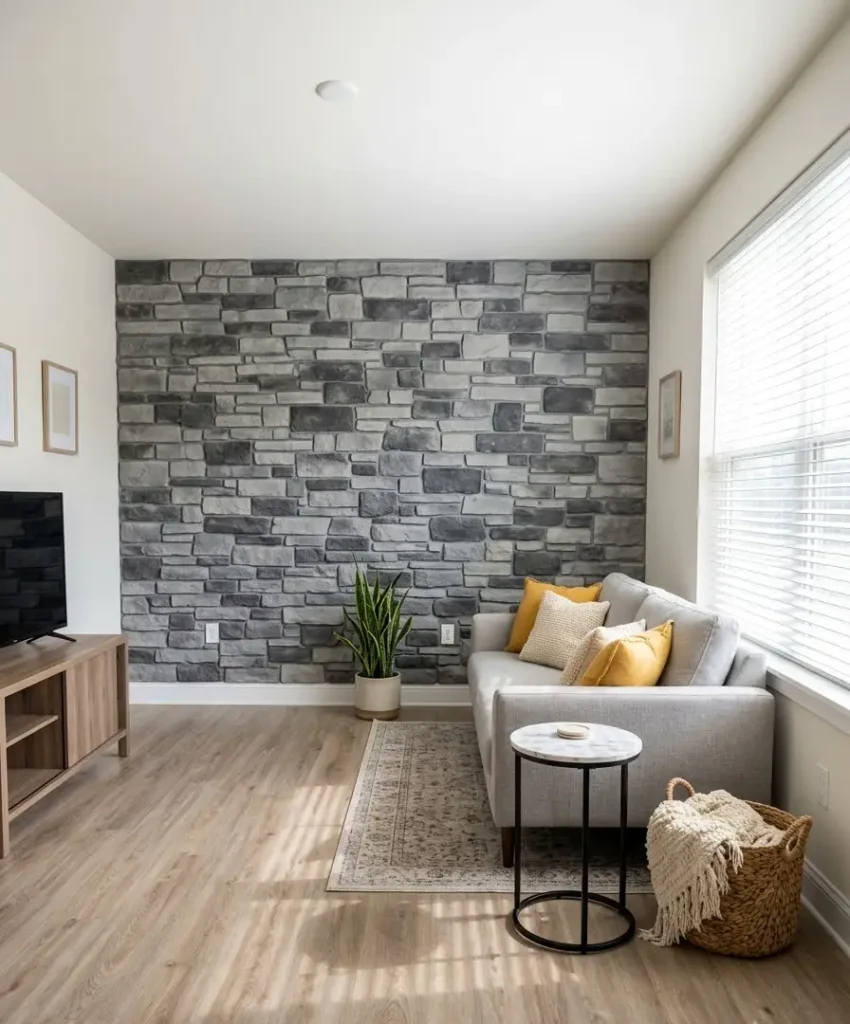
These polyurethane panels weigh almost nothing and cut with a regular saw.
You can glue them to drywall without reinforcing anything. They also look surprisingly good once you paint the seams.
I’ll admit I rolled my eyes at them for years. Then I installed a set in a rental that I couldn’t permanently change, and nobody guessed.
Look for panels with irregular colouring, because uniform ones scream plastic.
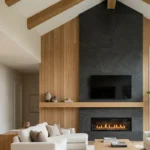
6. Stone fireplace surround with slats beside it
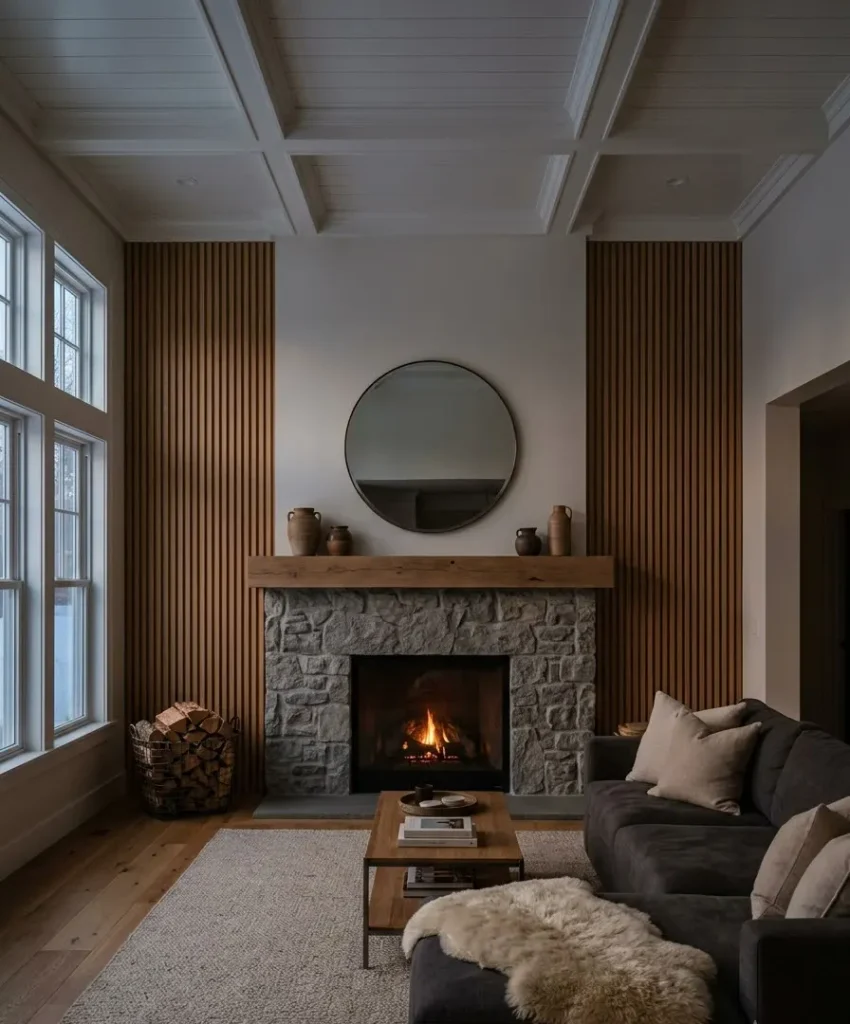
Combine two textures and you get a wall that works hard. Put grey stone around the fireplace and add narrow wood slats on both sides.
The stone anchors the fire, and the slats stretch the wall upward.
Mixing materials sounds risky, but the trick is keeping one dominant. Let the stone take roughly two thirds of the visual weight.
Keep the slats in a single wood tone so the wall doesn’t look like a sample board.
Paneling accent wall ideas
Paneling is the budget hero here. A few sheets of MDF, a tin of paint and a free weekend can transform a room.
The Houzz wall paneling gallery is full of real-life examples if you want to scroll for an hour (I did).
7. Picture-frame molding in greige
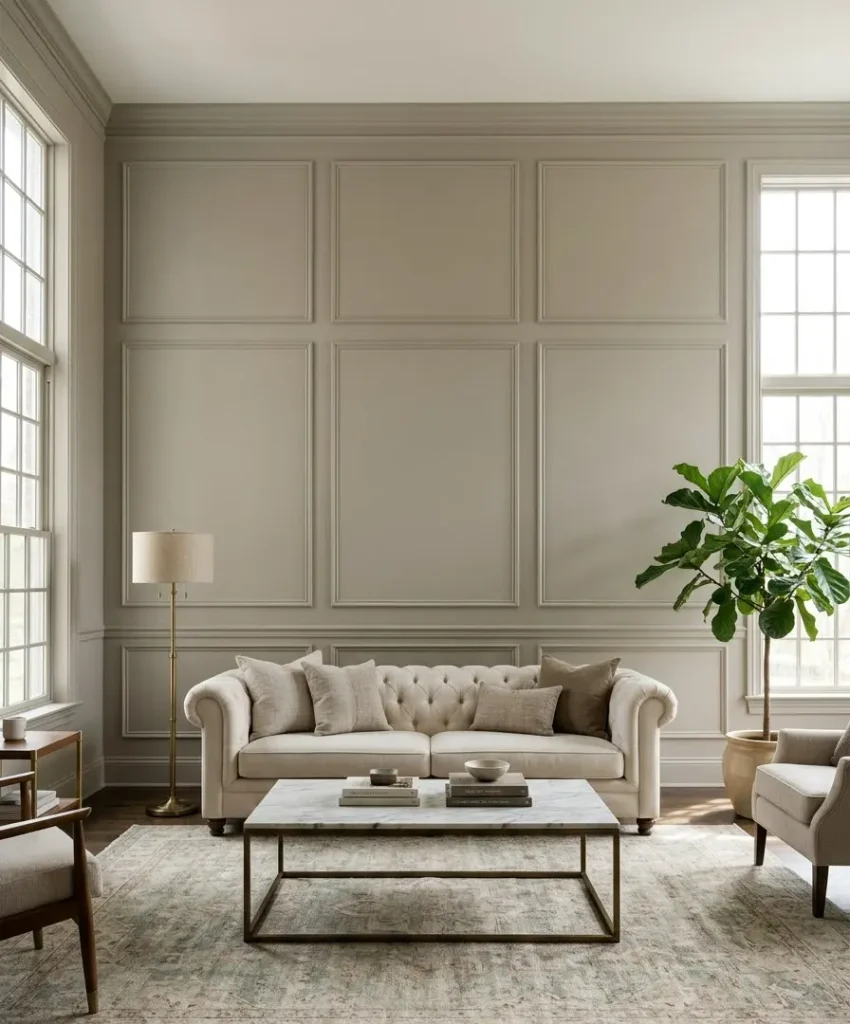
Draw rectangles on the wall with thin trim, then paint everything one colour.
Greige sits between grey and beige and hides dust better than stark grey. The shadows along the trim edges do all the work.
This style works best in traditional or transitional rooms. In a very modern room it can look fussy,
so skip it there. Keep the rectangles evenly spaced, and use a laser level, because your eyes will forgive nothing.
8. Board and batten in dark grey
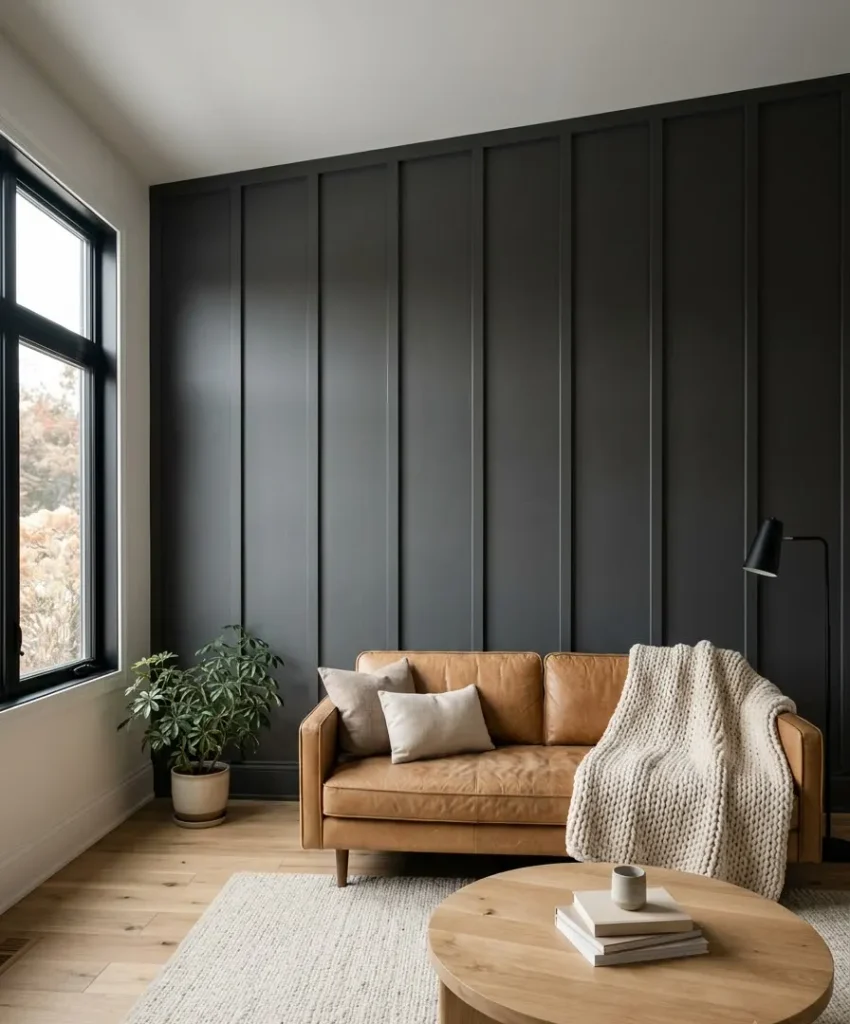
Vertical boards with narrow strips over the joints make a clean, structured look.
Paint it a deep grey like graphite and it turns dramatic. It also draws the eye upward, which helps if your ceilings run low.
Here’s my wild opinion: board and batten looks better matte than satin. Satin shows every roller mark and every wobbly caulk line.
Matte forgives my sloppy edges, and I have plenty of those.
9. Fluted panels in soft grey
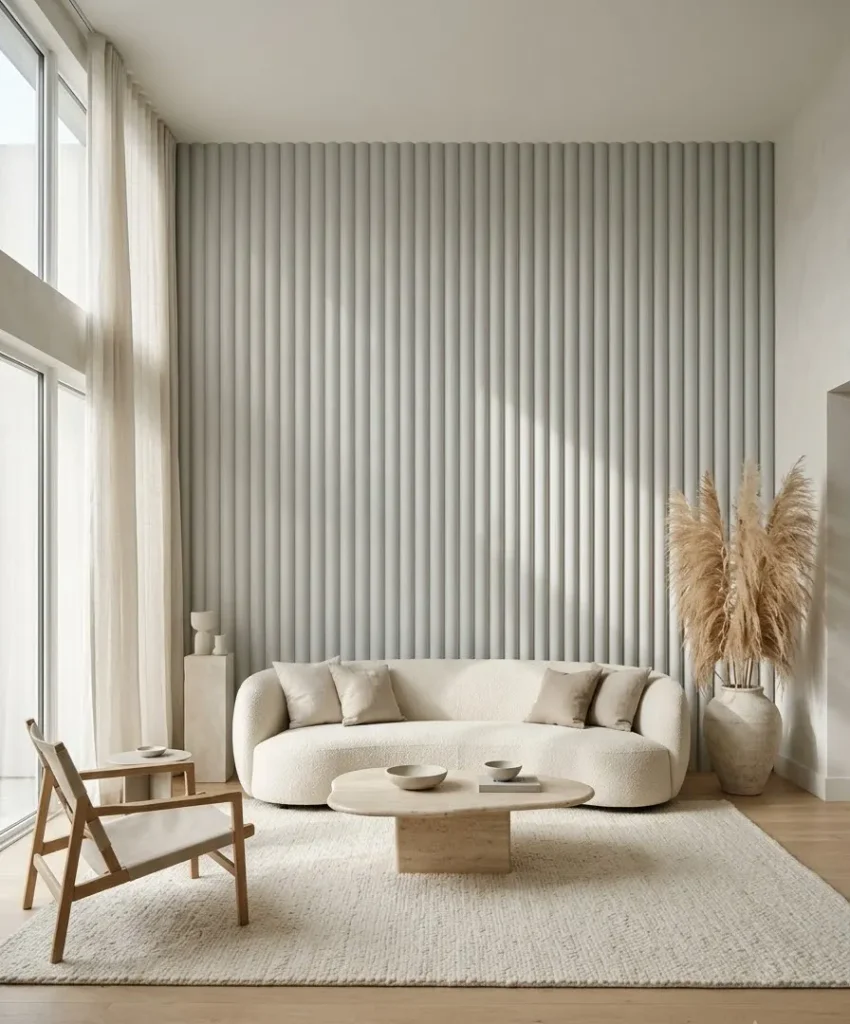
Fluted panels have rounded vertical ridges, a bit like a column stretched across a wall. In pale grey they feel calm and sculptural. In charcoal they feel almost theatrical.
You can buy them pre-made in MDF, wood or flexible strips that bend around curves. The flexible ones are fiddly, though. I’d go with rigid MDF unless your wall actually curves.
10. Horizontal shiplap in stormy grey
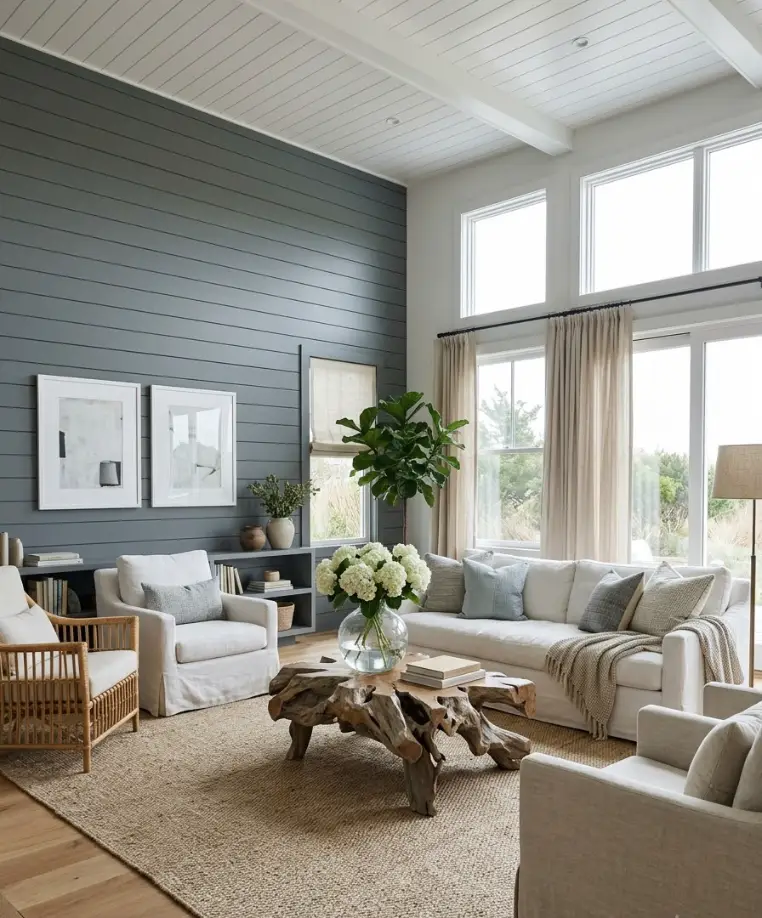
Shiplap runs sideways, which makes a room look wider. Pick a stormy mid-grey and the boards feel
coastal without screaming “beach house.” Leave tiny gaps between boards if you want shadow lines.
Skip the whitewashed farmhouse look unless that’s your thing. A deeper grey makes shiplap feel current and calm.
And yes, I know it’s been “over” three times already. It keeps coming back because it works.
Paint and plaster finishes
Texture doesn’t always need lumber. Some of my favourite grey walls started in a paint tin.
11. Limewash in layered grey
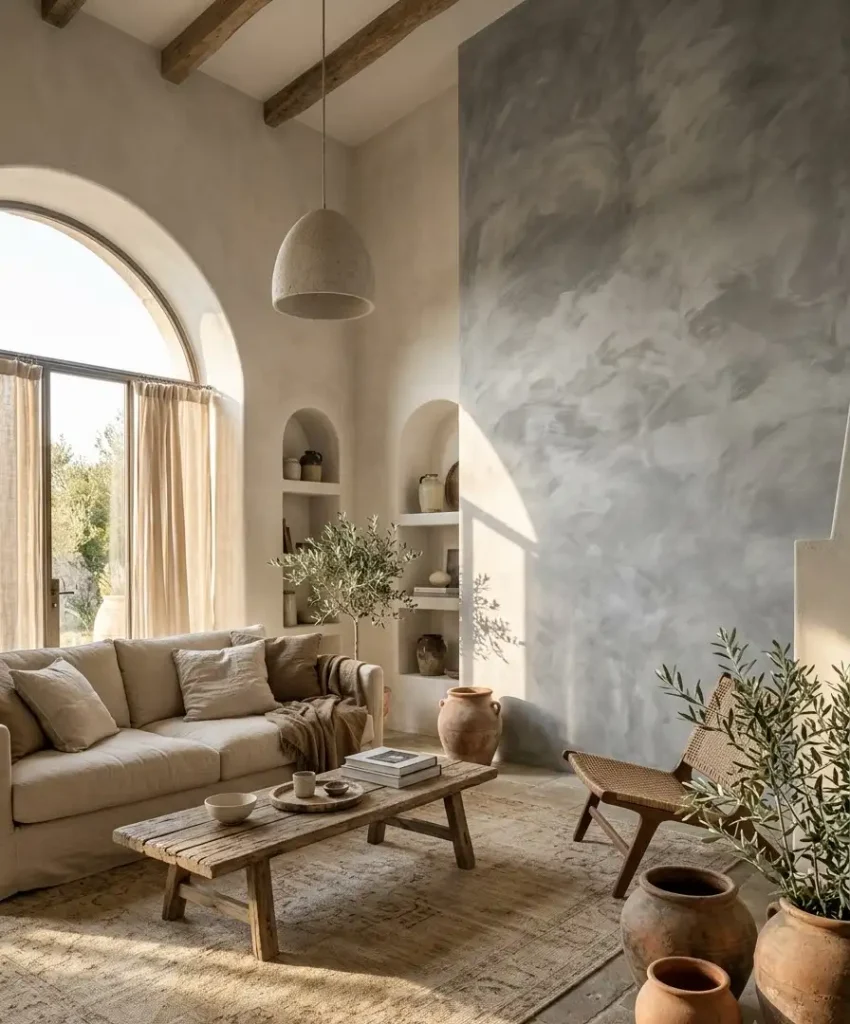
Limewash goes on in loose, cloudy strokes and dries to a soft, chalky finish. Every wall ends up slightly different, which is exactly the point.
The Benjamin Moore colour library lists plenty of greys that suit this approach.
Limewash dries lighter than it looks wet, so test a patch and wait a full day. I panicked on day one and nearly repainted. By day two it looked like a Mediterranean villa and I felt silly.
12. Microcement or concrete-look plaster
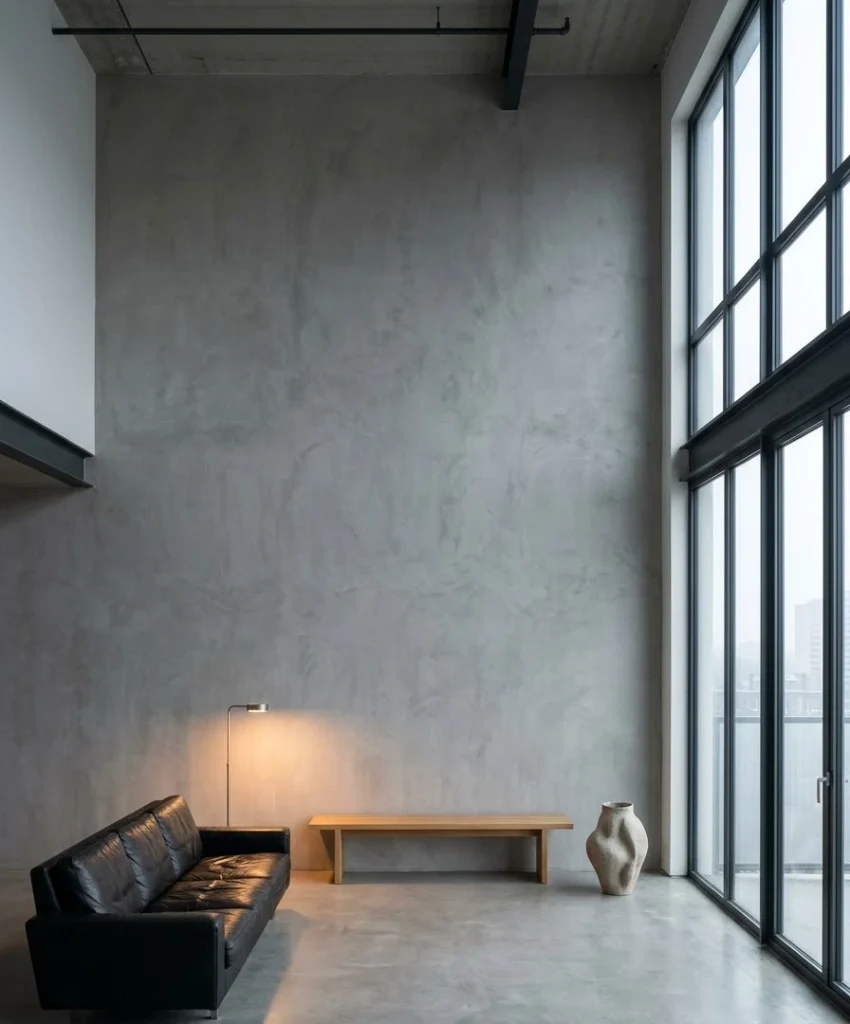
Microcement gives you a seamless, almost poured-concrete surface in any shade of grey. It looks industrial but feels quiet and restrained. It suits minimalist rooms best.
Honestly, this is a job for a professional. The product is unforgiving and the finish depends heavily on technique.
If you want the look on a budget, a textured concrete-effect paint kit gets you about 70 percent of the way there.
Quick comparison table
Here’s a short table to help you choose.
| Material | Typical cost per sq ft | DIY difficulty | Best for |
|---|---|---|---|
| Wood slats | $8 to $20 | Medium | Warmth and sound |
| Stone veneer | $15 to $30 | Hard | Drama and fireplaces |
| MDF paneling | $3 to $10 | Easy | Tight budgets |
Matching your texture to your lighting
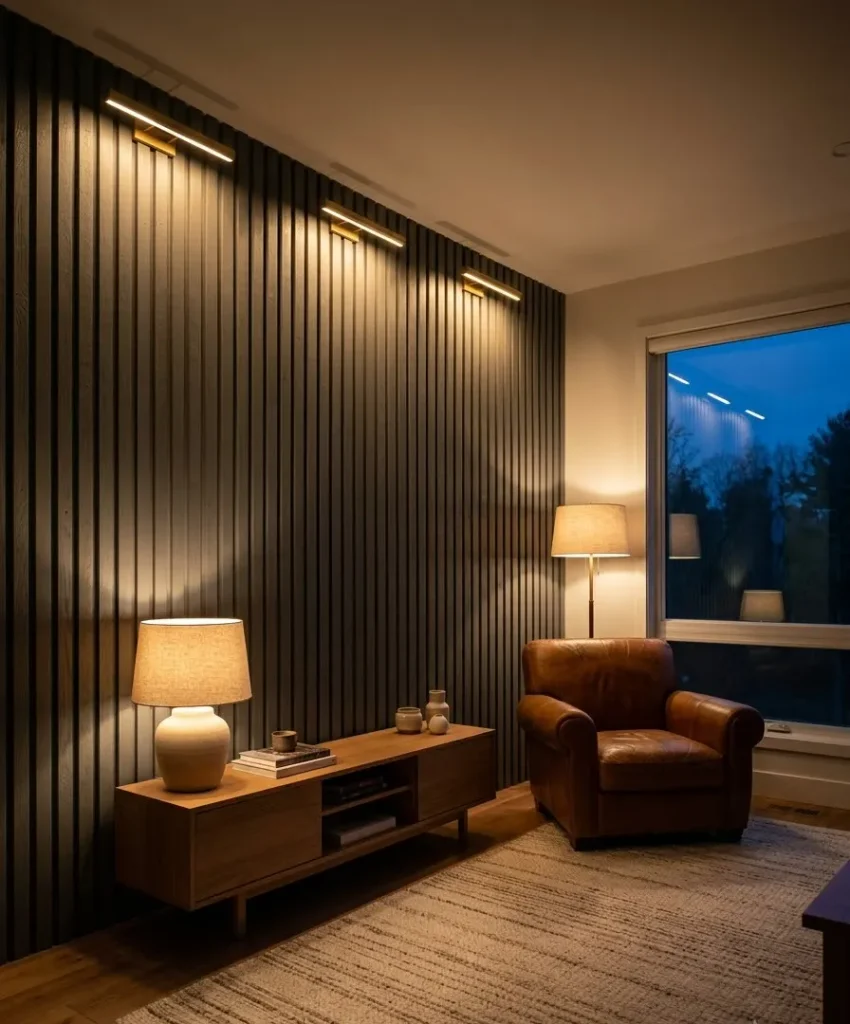
A random aside before I forget: I once spent three hours choosing a lamp for a
wall and then realised I’d bought the wrong bulb temperature. It’s the same lesson every time. Light changes everything.
Warm bulbs around 2700K make wood and stone glow. Cool bulbs above 4000K turn grey walls icy and clinical,
and no amount of texture fixes that. If you’re building a Pinterest-worthy wall, pick your bulbs before you pick your finish.
Wall washers and picture lights also matter. Aim a narrow beam across the surface from above, and the texture pops. Aim it straight on and you flatten everything you just built.
Furniture and decor that suit a textured grey wall
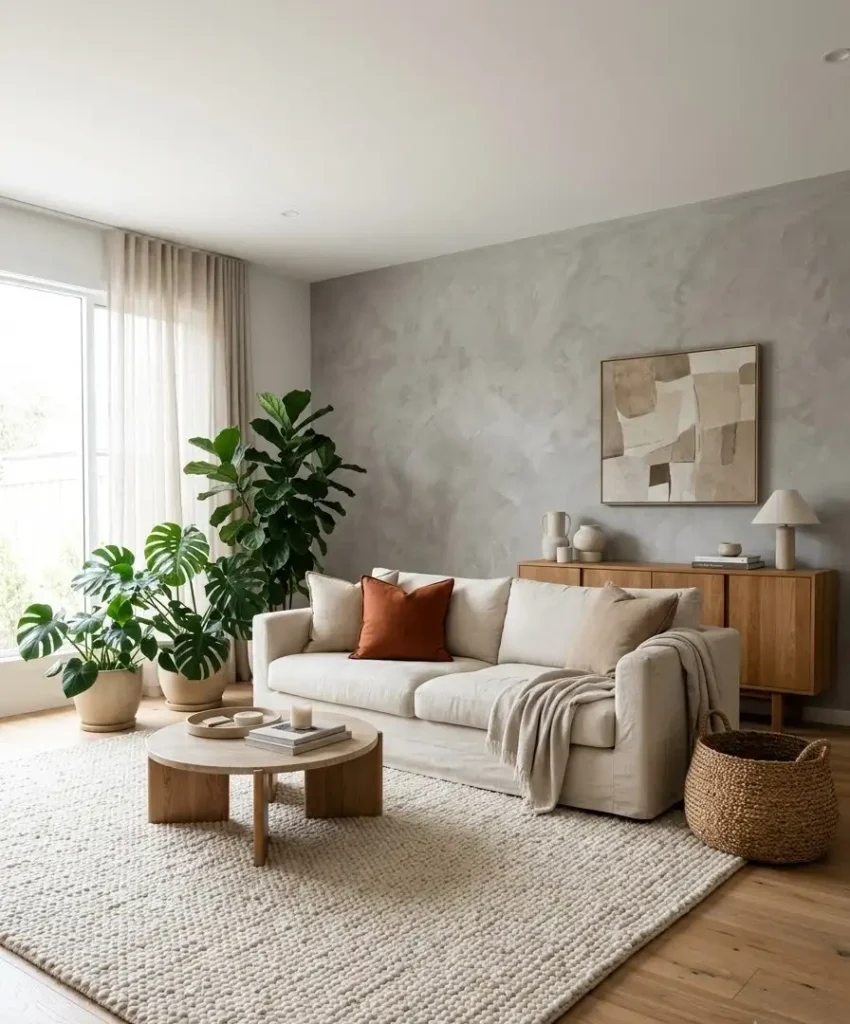
Textured walls already do plenty, so keep the room around them calmer.
Here’s what I’d choose:
- Warm wood furniture. It balances cool grey and works with slats or stone.
- Linen or boucle upholstery. Soft fabric contrasts nicely with hard walls.
- One bold colour. A rust cushion or a deep green plant gives your eye a rest.
- A big rug. Mine is the only reason my slat wall doesn’t make the room feel like a sauna.
I think layering texture on texture works only if the colours stay quiet. Four loud patterns plus a stone wall gives you a headache. Choose two or three textures and stop there.
Common mistakes I’ve made (so you don’t have to)
I’ve botched enough walls to write a short book. These are the repeat offenders:
- Skipping the stud finder and hanging slats on bare drywall.
- Choosing a grey from a tiny swatch and finding it purple at night.
- Cutting every slat at once before checking the first one fit.
- Forgetting that outlets need extending, which costs a surprising amount of swearing.
Take your time with the layout. Dry-fit a few pieces on the floor first and stand back. Fixing a crooked row after the glue sets is miserable.
FAQ
Does grey work with a textured accent wall in a small living room?
Yes, if you keep the contrast low. A mid-grey limewash or pale fluted panel adds depth without closing in the space. Dark grey in a small room can feel cosy, but only with good lighting.
Can I install wood slats over existing paint or wallpaper?
You can glue or nail slats over painted walls if the surface is clean and solid. Peel off loose wallpaper first,
since slats will fail if the paper lets go. Always fix into studs or use proper wall adhesive.
What’s the cheapest way to get a textured grey wall?
MDF paneling or limewash paint costs the least. A picture-frame molding wall can come in under $150 for a standard sofa wall, plus paint. Paint-on texture kits cost even less but take practice.
Final thought
A textured grey accent wall can turn a forgettable living room into the one people photograph.
Wood slats bring warmth, stone brings weight, and paneling brings structure on a small budget. Pick one idea, test a sample, and trust your eye.