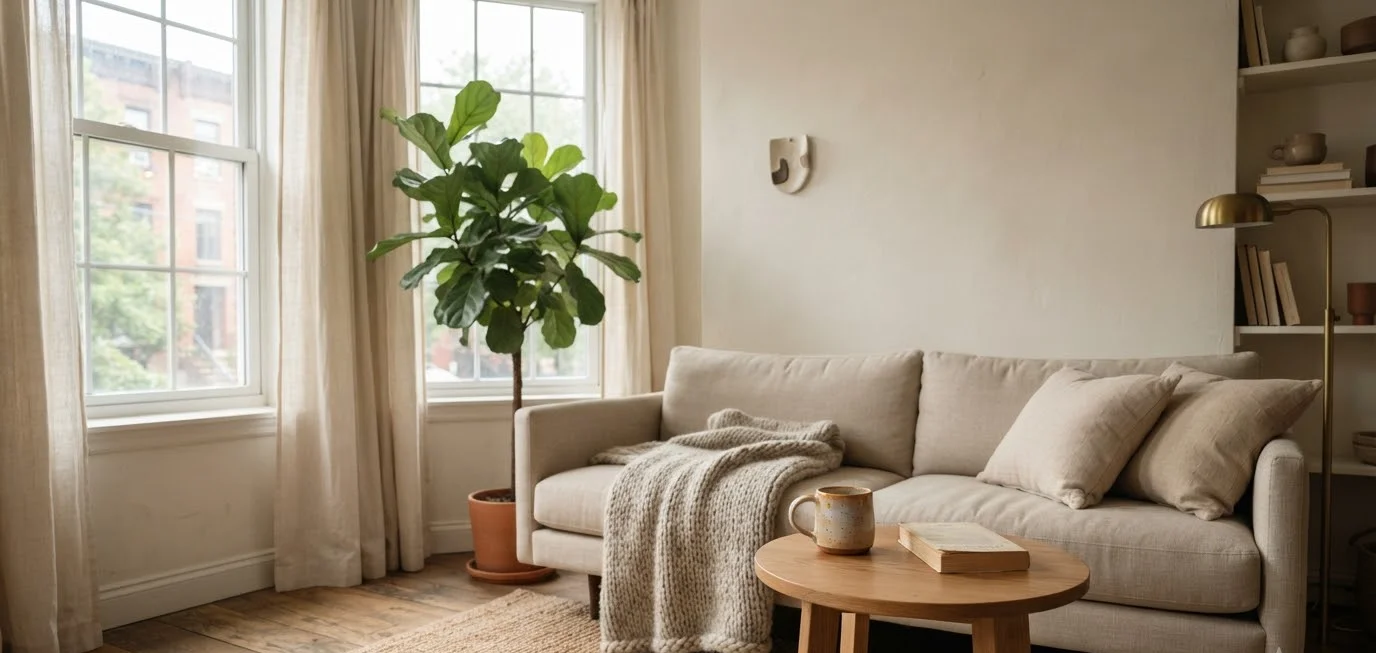
My first apartment was 420 square feet. One window, one closet, and a landlord who thought “exposed brick” meant “we never painted this wall.
” I had $200 and a Pinterest board full of ideas I couldn’t afford. So I learned the hard way what actually makes a small space feel calm and warm instead of cramped and sad.
That’s what this guide is about.
Not the glossy magazine version of minimalism where everything costs $400 and nobody actually lives there. The real version.
The one where you own three throw pillows, not fifteen, and your apartment still feels like a hug.
If you’re pinning “cozy minimalist decor” boards at 1am and wondering how people make small rentals look this good, stick around.
These 15 tips cost less than one impulse buy at a home goods store, and most of them you can do this weekend.
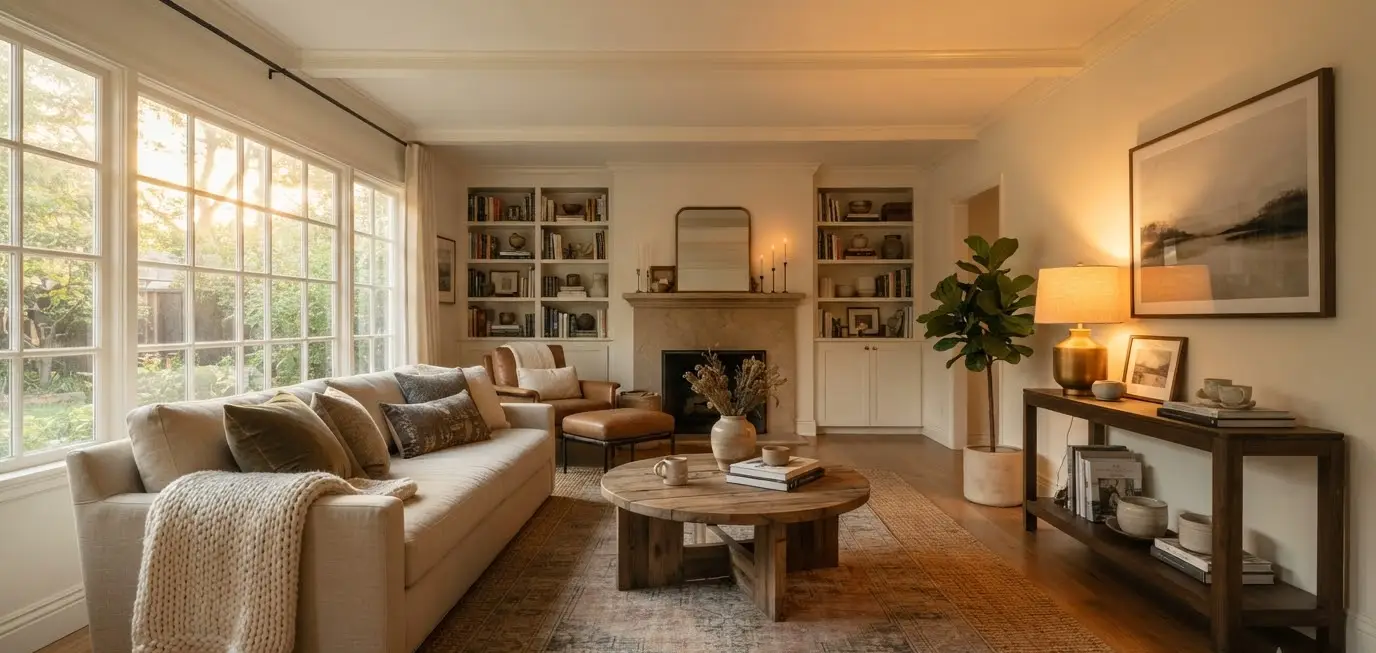
What “cozy minimalist” actually means
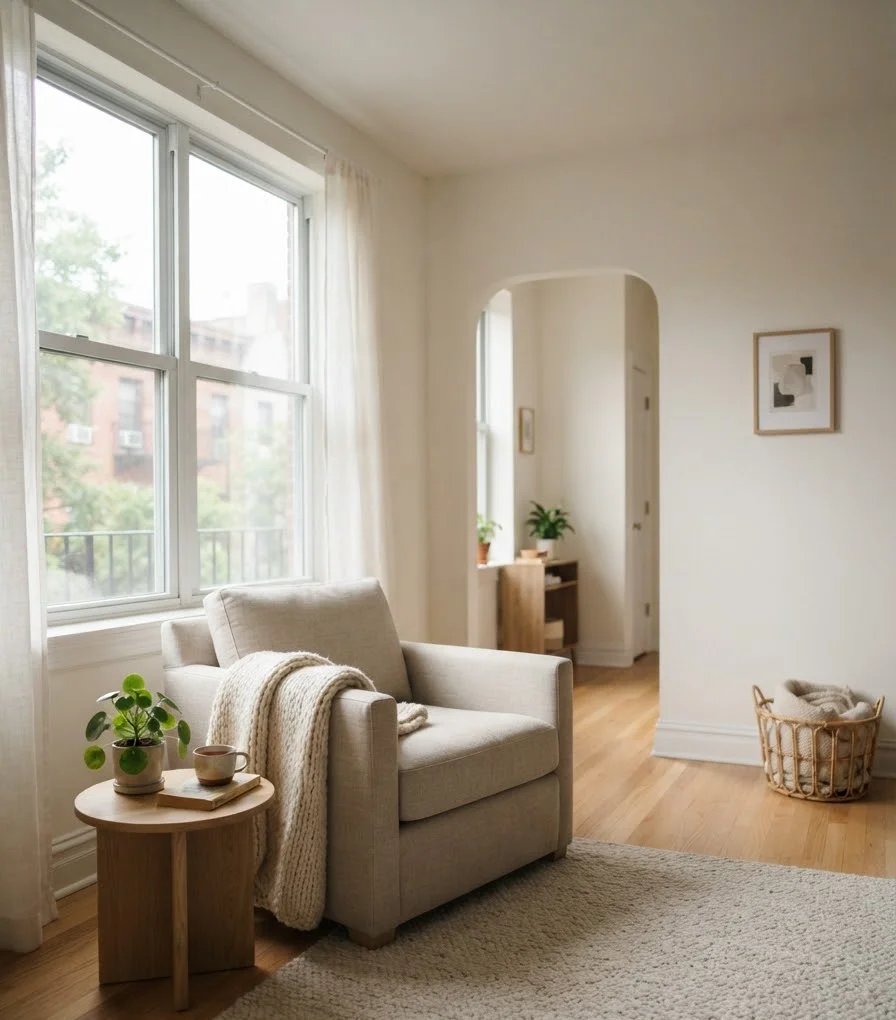
People hear “minimalist” and picture a white room with one chair and a single sad plant. That’s not cozy. That’s a waiting room.
Cozy minimalism is different. It’s about owning fewer things, but making sure every single thing you keep earns its spot.
Texture matters. Warmth matters. A minimalist room can absolutely have a chunky knit throw and soft lighting. The goal isn’t emptiness. It’s intention.
I think that distinction trips up more people than anything else. You’re not stripping your home down to nothing.
You’re clearing out the noise so the good stuff can actually breathe.
1. Start with a real declutter, not a rearrange
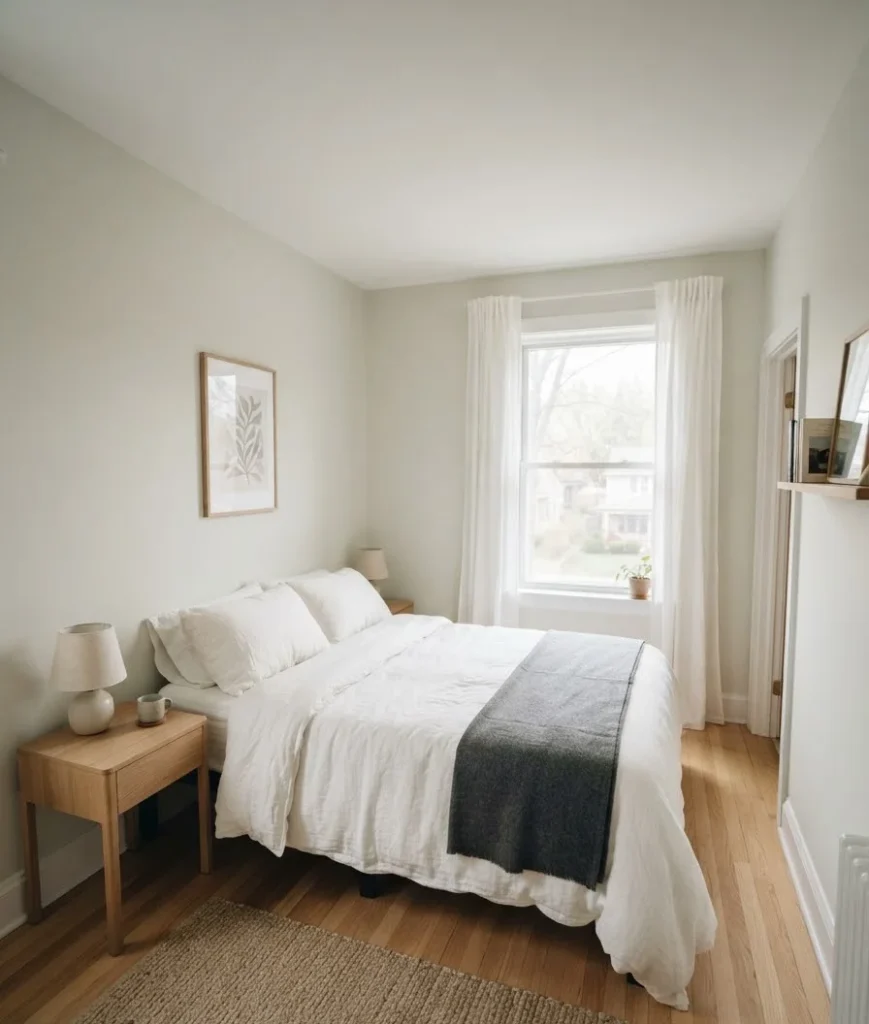
Before you buy a single new item, take everything out of your space and only put back what you love or actually use.
I did this in my living room last year and found four picture frames I’d forgotten I owned, sitting in a drawer, doing absolutely nothing for anyone.
A cluttered small room reads as smaller than it is.
Empty surfaces create visual breathing room, and that alone can make a tiny apartment feel bigger without moving a single wall.
2. Pick a tight, calm color palette
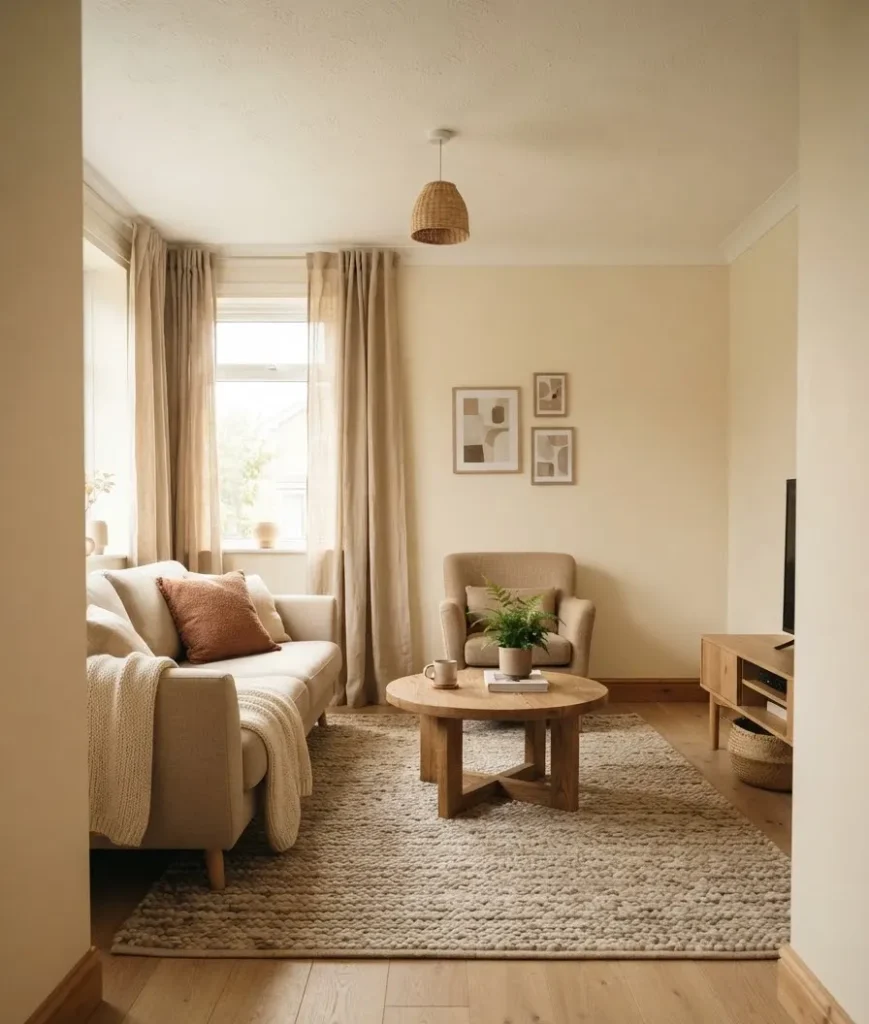
Small spaces get chaotic fast when every wall, throw, and knick-knack is a different color.
Stick to two or three main tones. Warm neutrals like cream, sand, and soft terracotta read as cozy without feeling heavy.
You don’t need to repaint. A cheap set of removable curtains, a couple of throw pillows in the right shade, and a rug that ties it together will do most of the work.
The Spruce has a solid color palette guide for small rooms if you want more direction on pairing warm neutrals.
3. Multi-functional furniture is non-negotiable
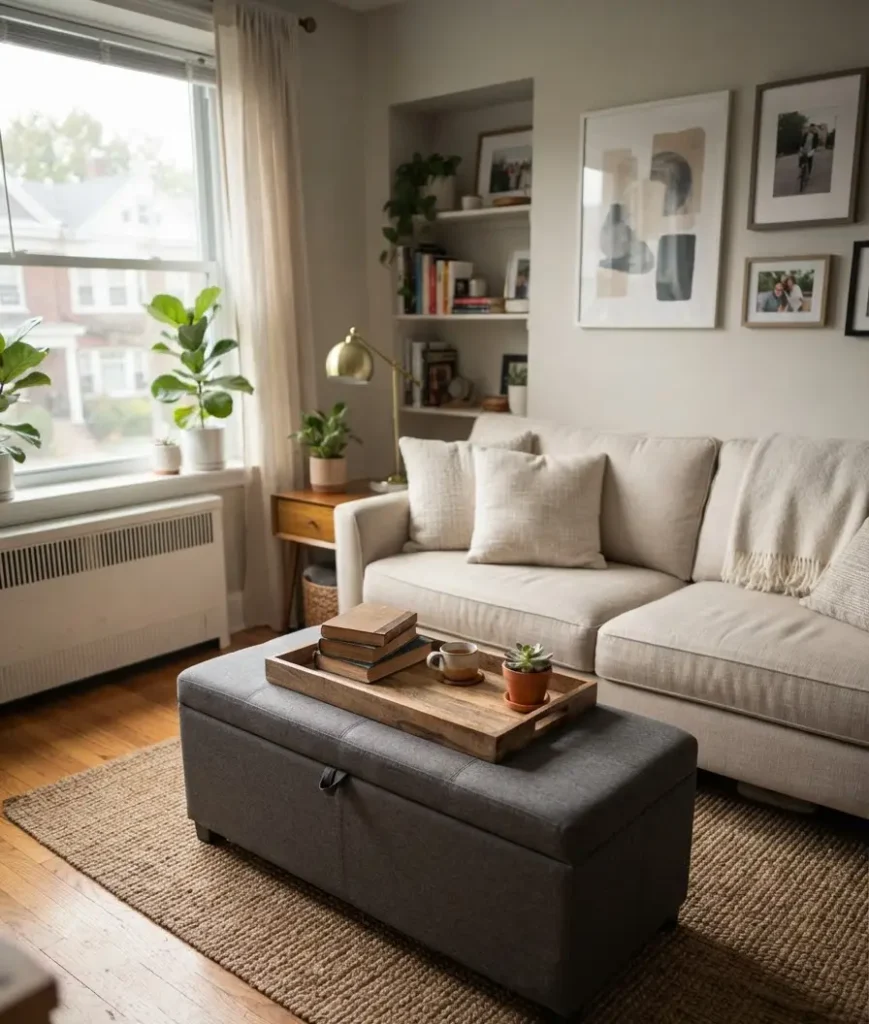
This is the one tip I wish someone had drilled into me sooner. A coffee table with storage underneath.
An ottoman that opens up. A daybed that works as a couch by day and a guest bed by night.
Every piece of furniture in a small space should do at least two jobs.
If it only does one thing, ask yourself honestly whether you have room for it.
Here’s a quick way to think about it:
| Furniture Piece | Single Job | Double Job Upgrade |
|---|---|---|
| Coffee table | Holds drinks | Storage ottoman with tray top |
| Bed frame | Sleeping | Frame with built-in drawers |
| Console table | Decor display | Slim table with shelving underneath |
| Dining chairs | Seating | Stackable chairs that store vertically |
4. Use vertical space like it owes you money
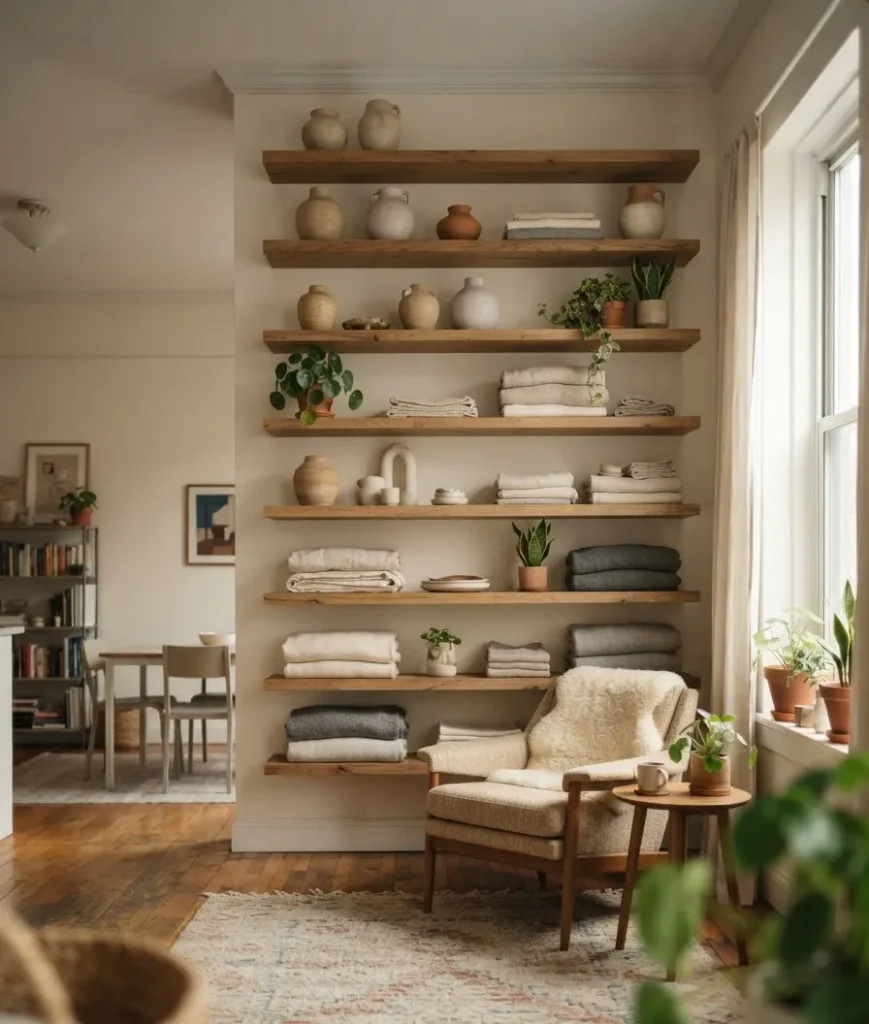
Floor space is limited in a small apartment, but your walls go all the way up, and most people completely ignore that.
Floating shelves, tall bookcases, and wall-mounted hooks all add storage and display room without eating up square footage.
IMO this is the single most underused trick in small-space design.
Ever wonder why some tiny studios feel airy while others feel like a storage unit? It usually comes down to how much they’re using the vertical plane.
5. Let natural light do the heavy lifting
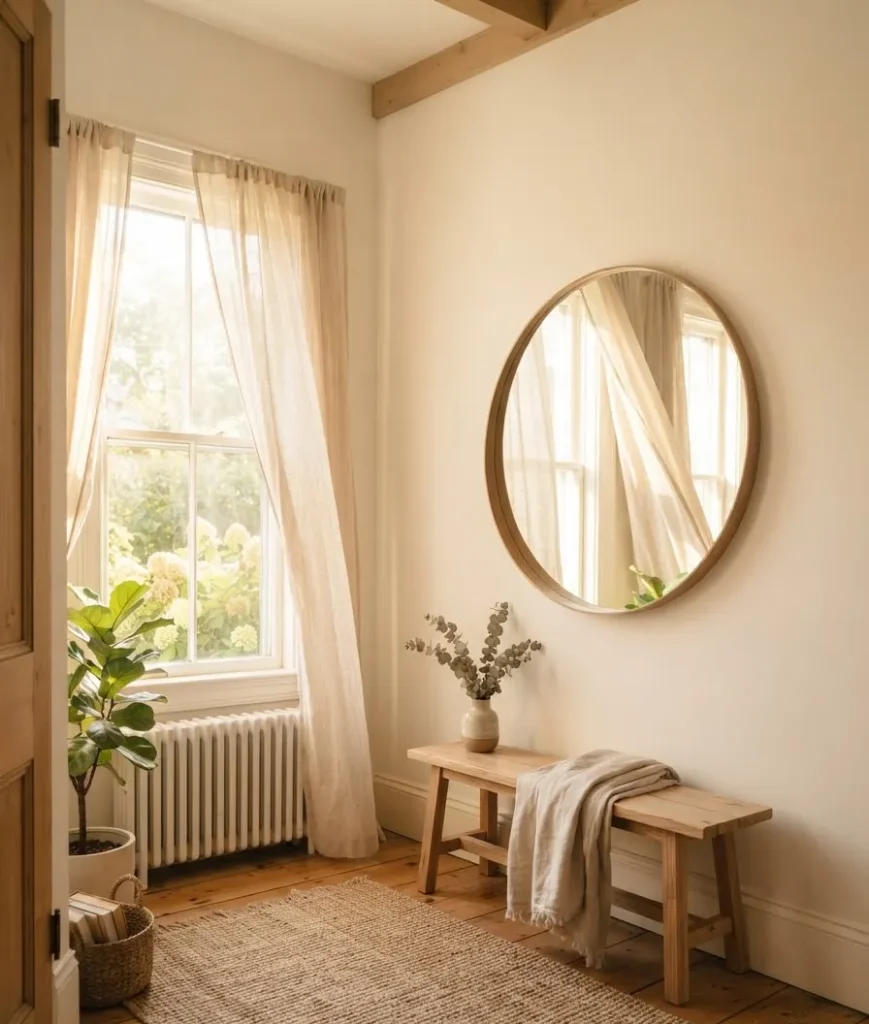
Skip the heavy drapes. Sheer or linen curtains let light pour in, and light is one of the cheapest ways to make a small room feel open.
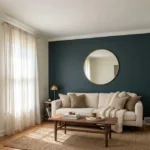
If your budget allows one splurge, make it a mirror placed across from your main window.
Mirrors bounce light around a room and create the illusion of depth.
A $30 mirror from a thrift store did more for my apartment than any painting ever has.
6. Build a neutral base, then layer texture
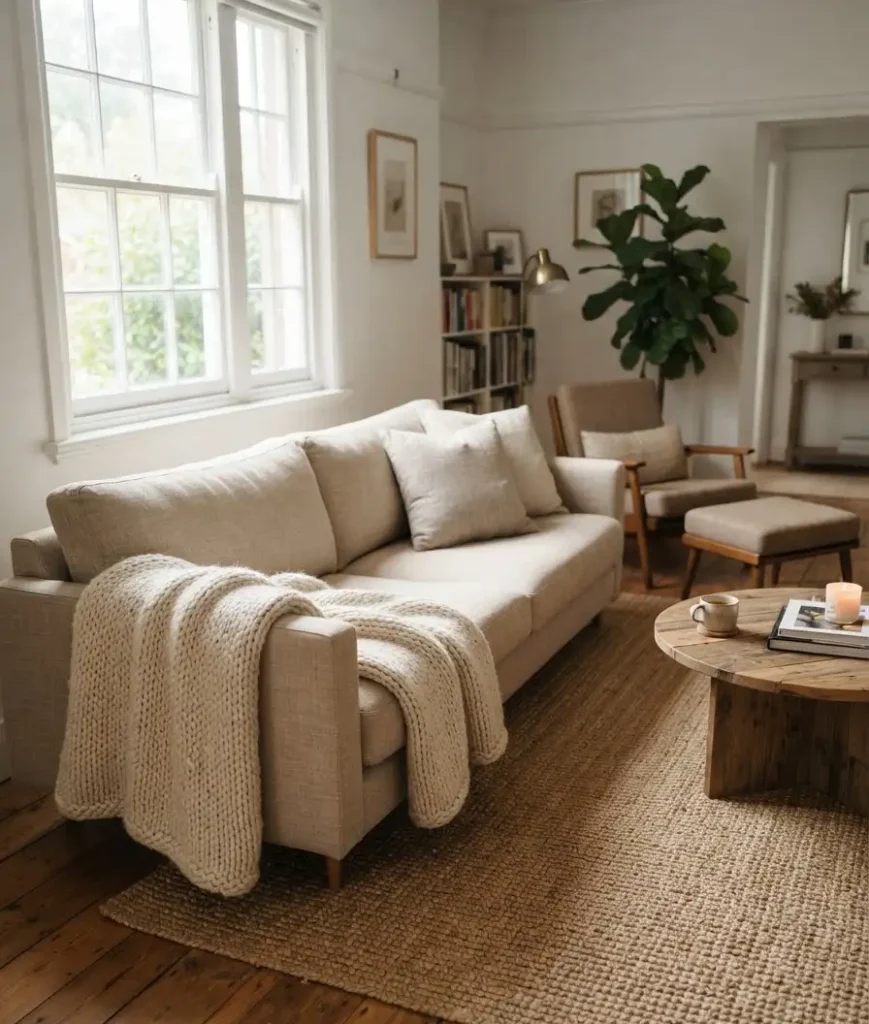
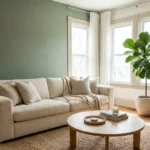
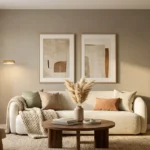
This is where cozy minimalism actually gets fun. A plain beige couch sounds boring on paper.
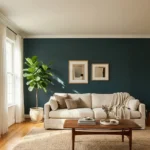
Add a chunky knit throw, a couple of linen pillows, and a jute rug underneath, and suddenly it feels intentional and warm.
Texture is doing the emotional work that color usually does in a maximalist room.
Skip it, and even a well-arranged minimalist space can feel cold and unfinished.
A few budget texture sources worth trying:
- Thrifted wool blankets (usually $5 to $15)
- Rattan or wicker baskets for storage and visual warmth
- A woven jute or sisal rug, which is far cheaper than wool
- Linen pillow covers, which you can swap out seasonally
7. Ditch the matching furniture set
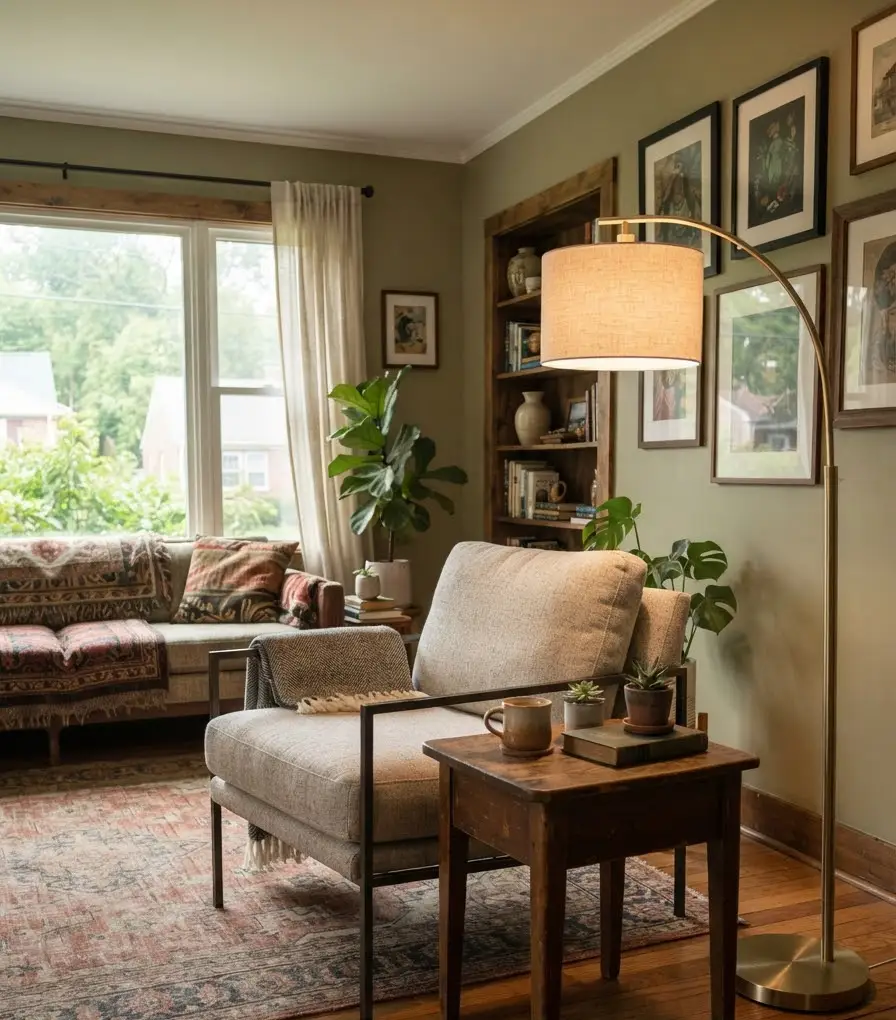
Matching bedroom sets and living room sets are convenient, but they also look like a showroom, not a home.
Mixing a vintage side table with a modern lamp reads as collected and personal, which is exactly the vibe cozy minimalism is going for.
Honestly, some of my favorite pieces came from curb finds and estate sales.
A little mismatch, done thoughtfully, looks far more expensive than it actually was.
8. Choose fewer, better decor pieces
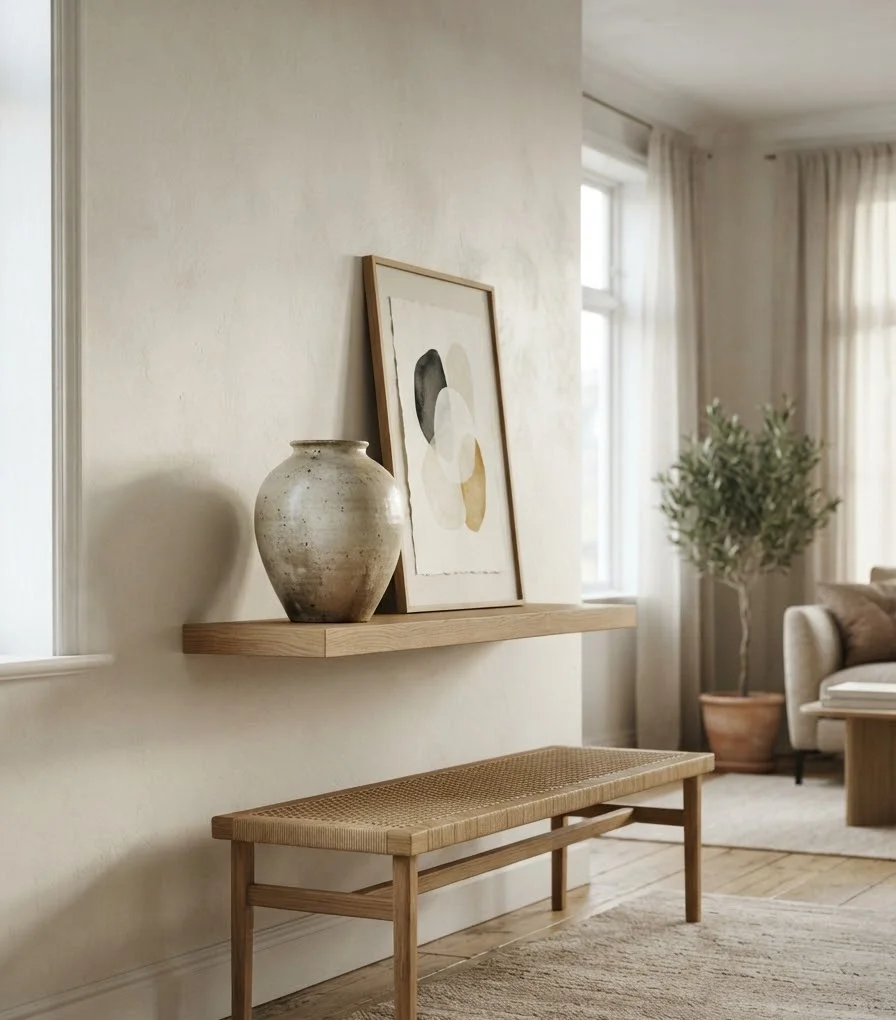
This one stings a little if you love browsing home decor stores.
But five small trinkets scattered around a shelf usually look cluttered, while one well-placed vase or piece of art looks curated.
Before buying anything new, ask yourself: would I still want this in a year? If the answer is a shrug, skip it.
How to edit down what you already own
- Group similar items together and pick your favorite from each group
- Rotate seasonal decor instead of displaying everything at once
- Store the rest in a bin, don’t donate immediately, live without it for a month first
9. Warm lighting beats overhead lighting every time
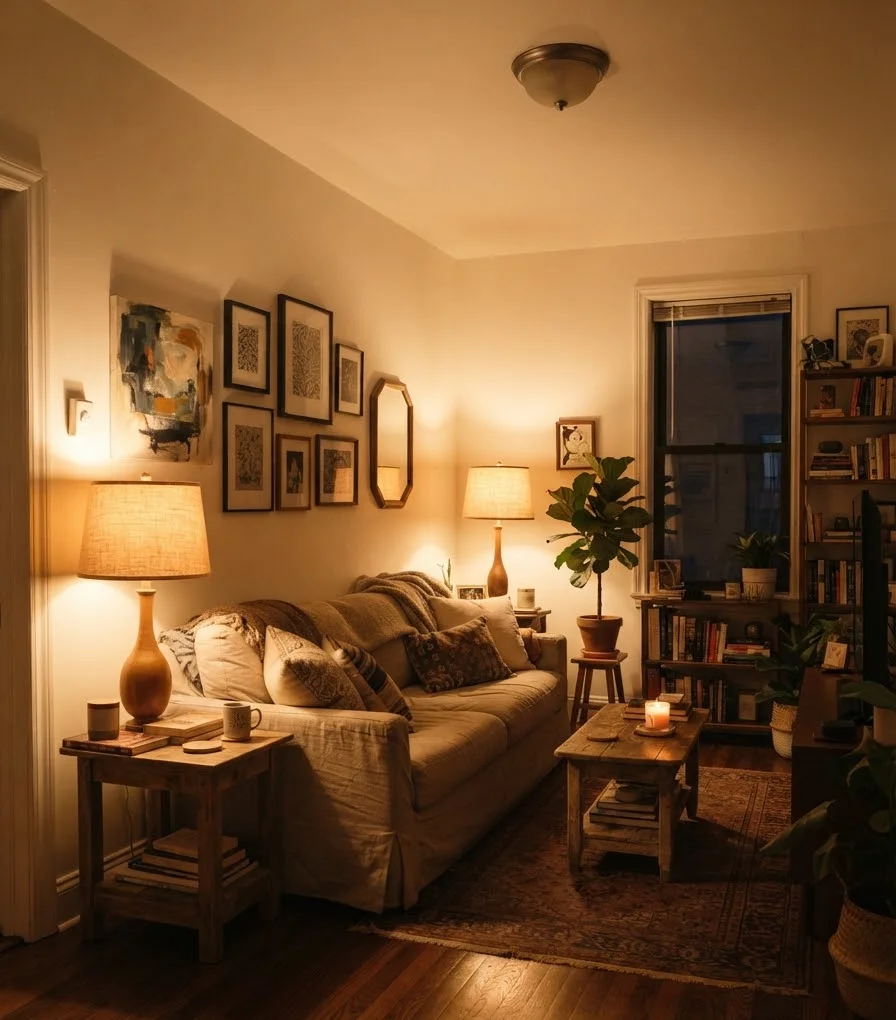
Harsh overhead lighting makes any room feel like an office. Swap in a couple of warm-toned lamps, and the whole mood of the space changes instantly.
This is genuinely one of the cheapest upgrades on this entire list.
A $15 lamp with a warm bulb changes a room more than a $200 piece of art does.
Wow, that sounds dramatic, but I’ve tested this in three different apartments and it holds up every time.
10. Use rugs to define zones without walls
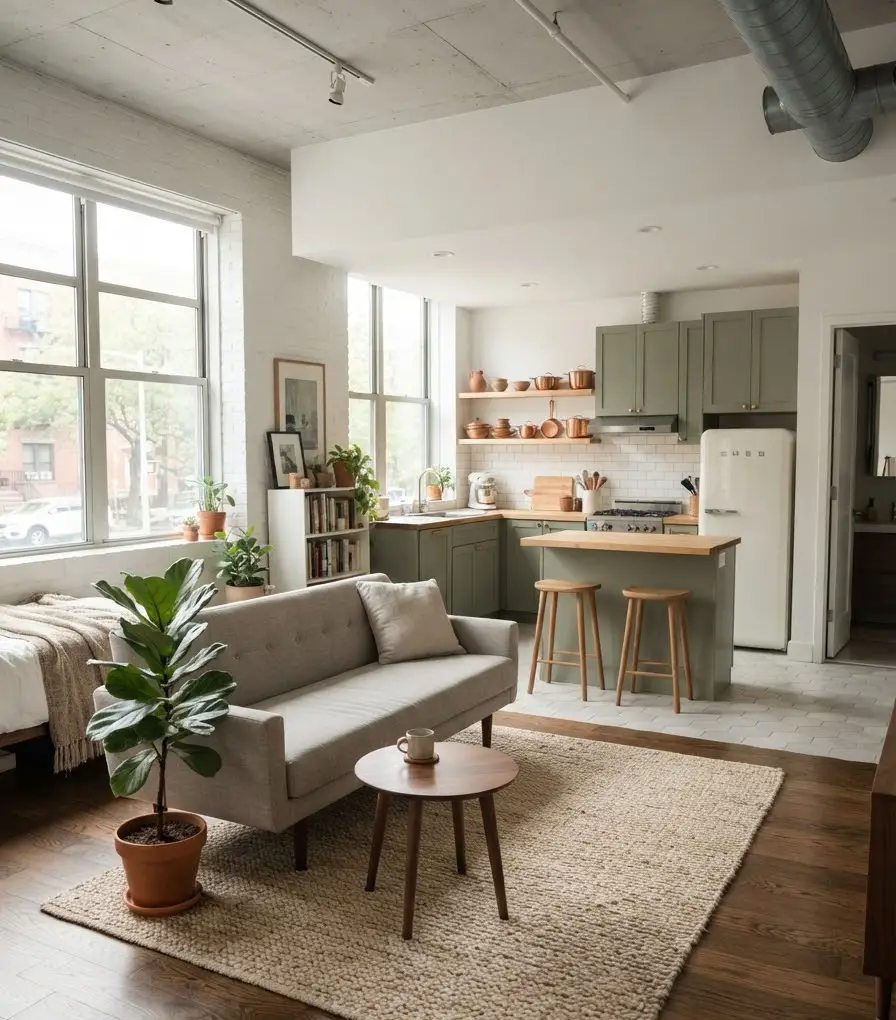
Studio apartments especially benefit from this trick.
A rug under your seating area visually separates it from your kitchen or workspace, even though there’s no actual wall dividing the two.
Layering a smaller patterned rug over a larger neutral one also adds texture without adding clutter.
It’s a favorite move among small-space designers, and Apartment Therapy has covered plenty of real reader apartments using zone-defining rugs if you want visual proof it works in tiny layouts.
11. Bring in one statement natural element
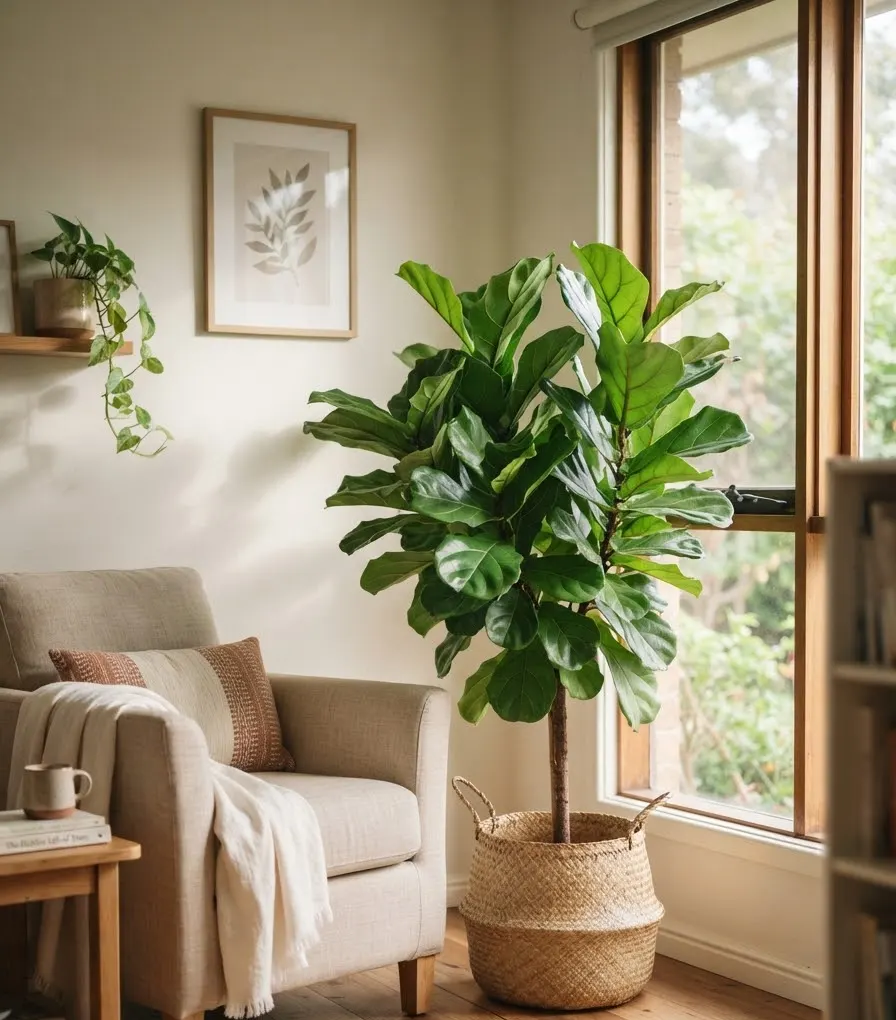
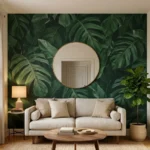
A single large plant, a piece of driftwood, or a woven wall hanging adds warmth in a way that manufactured decor just can’t replicate.
Nature has texture and imperfection built in, which is exactly what keeps a minimalist room from feeling sterile.
You don’t need a plant collection.
One healthy, slightly oversized plant does more for a room than five small dying succulents crammed onto a windowsill (we’ve all been there).
12. Keep countertops and surfaces mostly clear
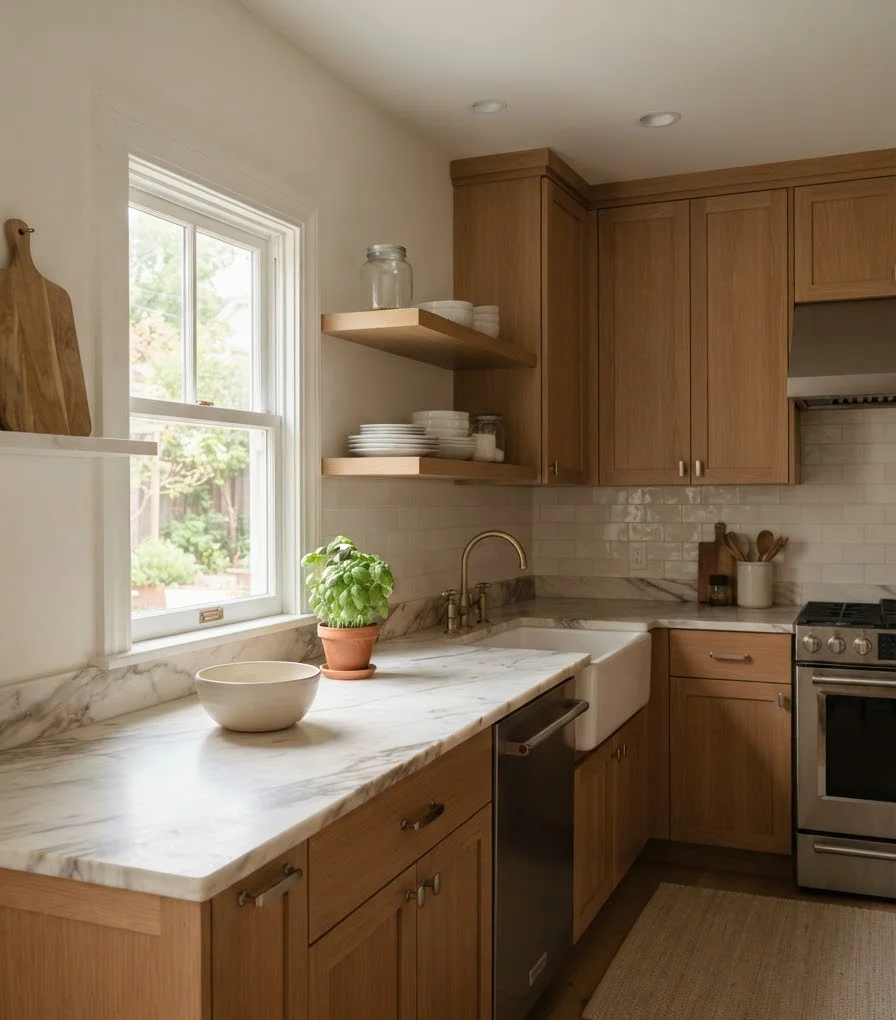
This is a habit, not a purchase, so it’s free. Clear counters and surfaces make a small kitchen or bathroom feel dramatically bigger.
Store the coffee maker in a cabinet when it’s not in use. Keep one or two items out, max, and put the rest away.
A clear surface reads as calm. A cluttered one reads as chaos, even if the actual mess is small.
13. Use a limited, repeatable frame style for wall art
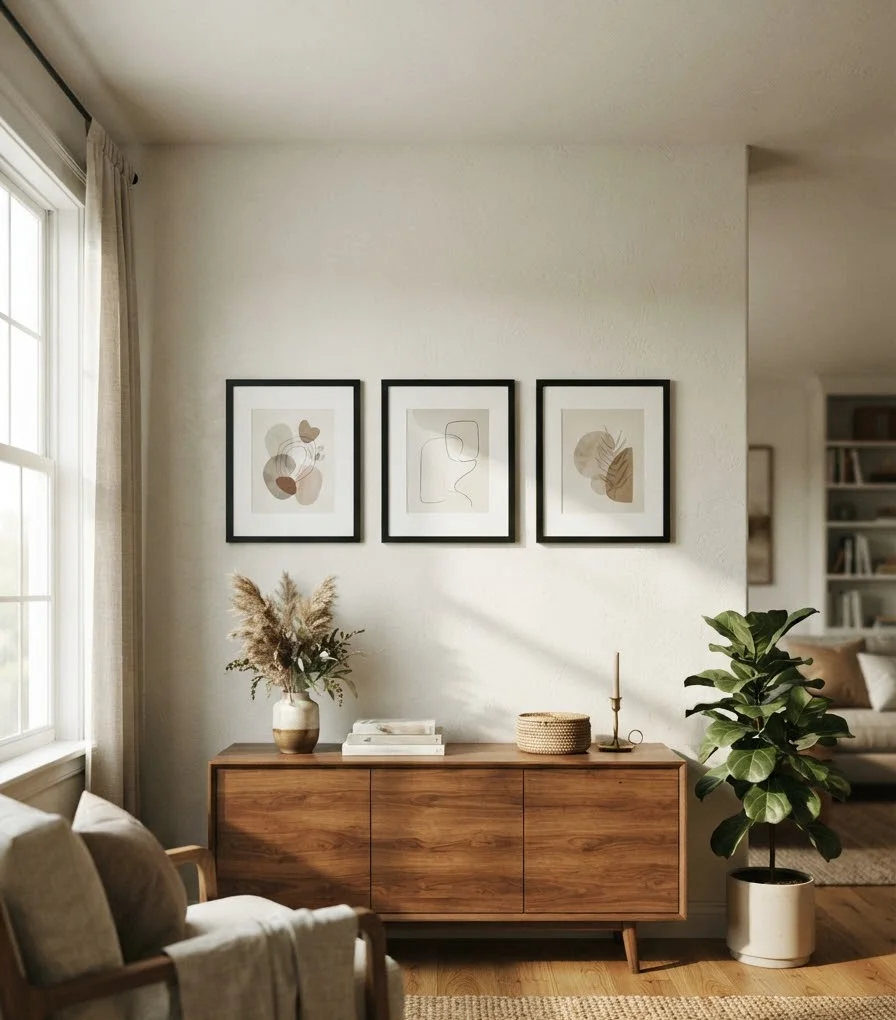
Instead of a mismatched gallery wall with ten different frame styles, pick one or two frame finishes and stick with them.
It instantly looks more put-together, even with cheap frames from a discount store.
A row of three matching black frames with a mix of photos and prints looks far more intentional than ten random frames in different woods and colors.
14. Let go of the “everything must match” mindset
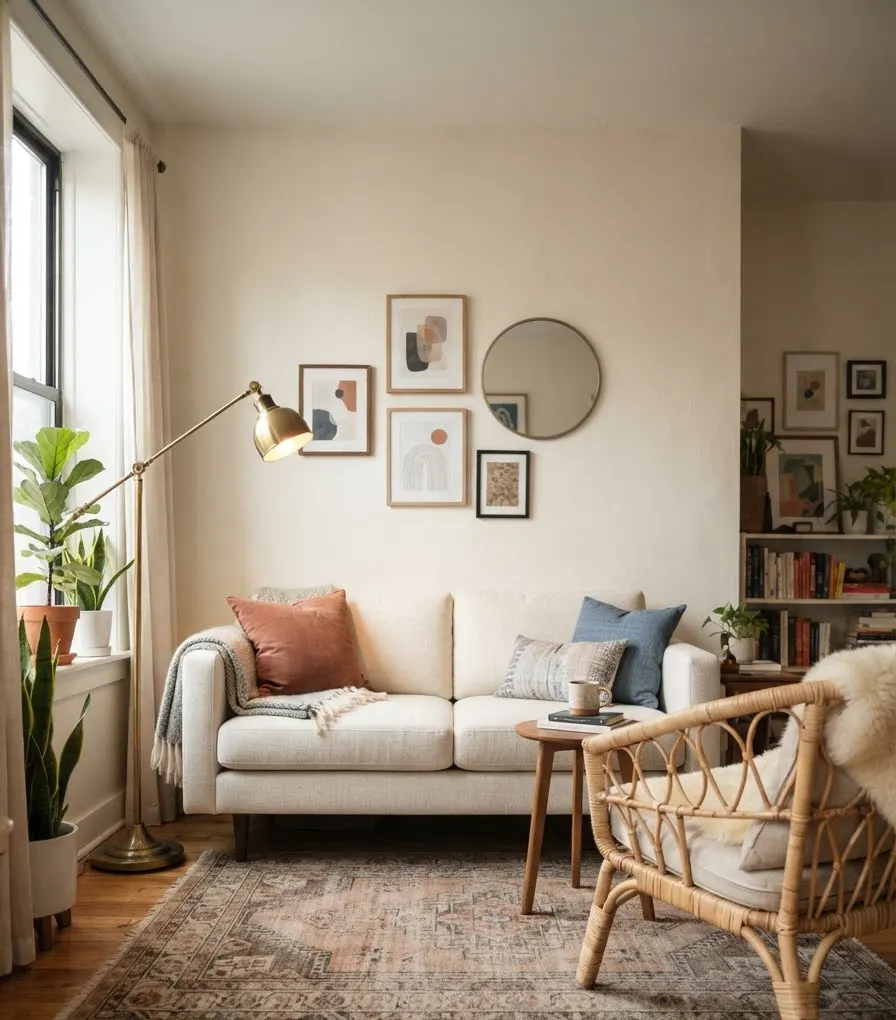
This might be the most freeing tip on the list. Cozy minimalism isn’t about matching, it’s about coherence.
A vintage brass lamp next to a modern linen couch works fine as long as your overall palette stays consistent.
I used to think I needed a whole matching set to make a room look finished.
Turns out that’s just not true, and honestly, letting go of that rule made decorating a lot more fun.
15. Edit seasonally, not constantly
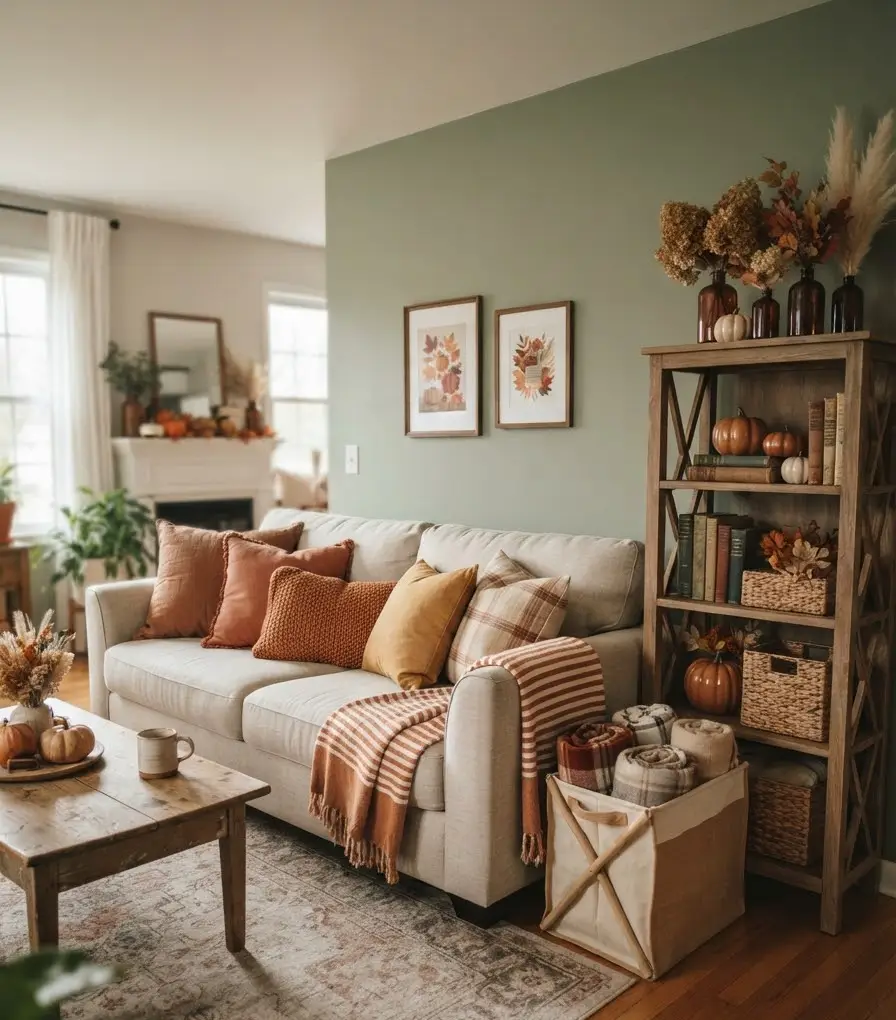
Small spaces don’t have room for permanent seasonal decorations layered on top of your everyday setup.
Instead, swap a few key pieces, like pillow covers or a throw blanket, twice a year, and store the rest.
This keeps your space feeling fresh without turning it into a storage problem.
Real Simple has a decent breakdown of seasonal decor swaps that work in small apartments if you want a few more specific swap ideas.
A quick reality check before you start
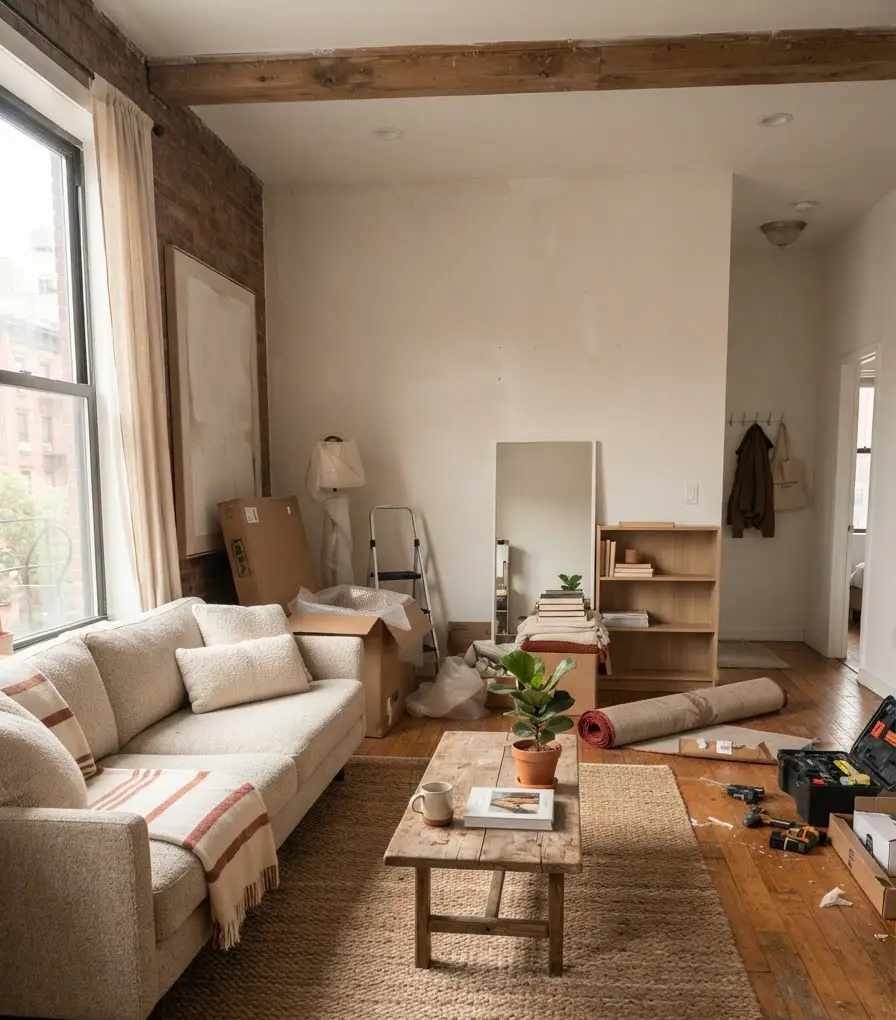
None of these tips require a full renovation or a big budget.
Most of what I’ve described above cost me under $150 total across two different apartments, spread out over several months.
That’s the part nobody mentions when they show off a finished, styled room. It happened slowly, one small swap at a time, not in one big weekend haul.
Small tangent here: I used to feel weirdly guilty about not decorating my whole apartment at once, like I was failing some invisible deadline.
Turns out most people who post finished rooms have been quietly adjusting them for a year or more. So don’t rush it.
Frequently asked questions
Is cozy minimalism the same as Scandinavian design?
Not exactly, though they overlap. Scandinavian design leans heavily on light woods and very specific color palettes.
Cozy minimalism is more flexible. It borrows the “less but better” philosophy without locking you into one specific aesthetic.
How do I start decorating with a very tight budget?
Start with what you already own. Declutter first, rearrange second, and only buy new pieces once you know exactly what’s missing. Thrift stores, marketplace apps, and estate sales are your best friends for textured pieces like rugs, baskets, and lamps.
Will a small space actually feel bigger with minimalist decor?
Yes, usually. Clear surfaces, a tight color palette, and good lighting all trick the eye into reading a room as more open. It’s not magic, it’s just less visual clutter for your brain to process at once.
Final thought
Small spaces get a bad reputation, like they’re something to apologize for. They’re not. A small room done with intention often feels warmer and more personal than a huge house filled with stuff nobody chose carefully.
Pick two or three tips from this list, not all fifteen at once, and see how your space feels after a week. What’s the first thing you’re changing this weekend? I’d genuinely love to know.
1 thought on “Cozy Minimalist Home Decor on a Budget: 15 Smart Tips for Small Spaces”