I bought my first Chesterfield on a rainy Saturday, and it nearly didn’t fit through my front door. The delivery guys swore at it. I fell in love with it anyway.
That sofa sat in my living room for two years before I figured out how to make it feel boho instead of “old English gentleman’s study.” If you’re staring at a tufted sofa and wondering how to soften all those buttons and rolled arms into something warm, you’re in the right place. I’ve made the mistakes already, so you don’t have to.
This guide covers what to buy, how to layer, which colors photograph well, and what to skip. Grab a coffee and a Pinterest board, because you’ll want both.
Why a Chesterfield and boho decor actually work together
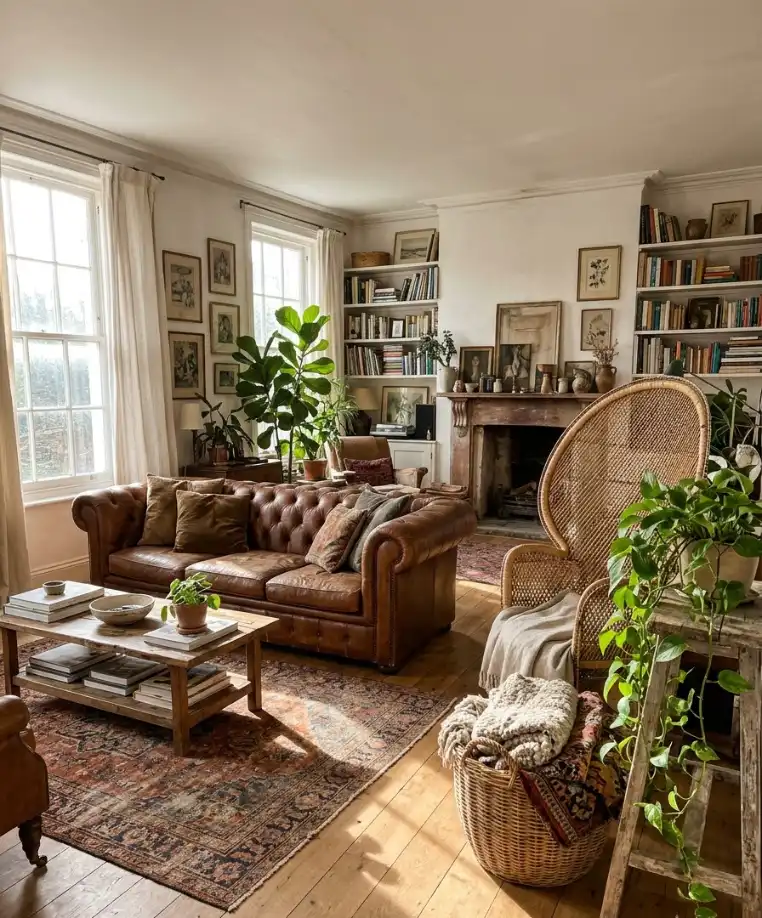
On paper, these two styles look like a mismatch. The Chesterfield comes from formal British drawing rooms, with deep button tufting, rolled arms that sit at the same height as the back, and a very upright posture.
Boho decor is loose, collected, and a little messy on purpose.
But the contrast does the work. A structured sofa gives a boho room a backbone.
Without it, all those baskets, rugs, plants, and tassels tend to drift into a pile of “stuff.” The Chesterfield anchors the space, and the relaxed layers around it keep the room from feeling stuffy.
I think of it like a tailored blazer with a faded band tee. Each piece looks better because of the other one.
If you want a little background on where the style began, the Chesterfield sofa entry on Wikipedia gives a quick history, including the story that it takes its name from an English lord.
Does that mean any Chesterfield works? Not quite, and the next section covers what to look for.
Choosing the right Chesterfield for a boho living room
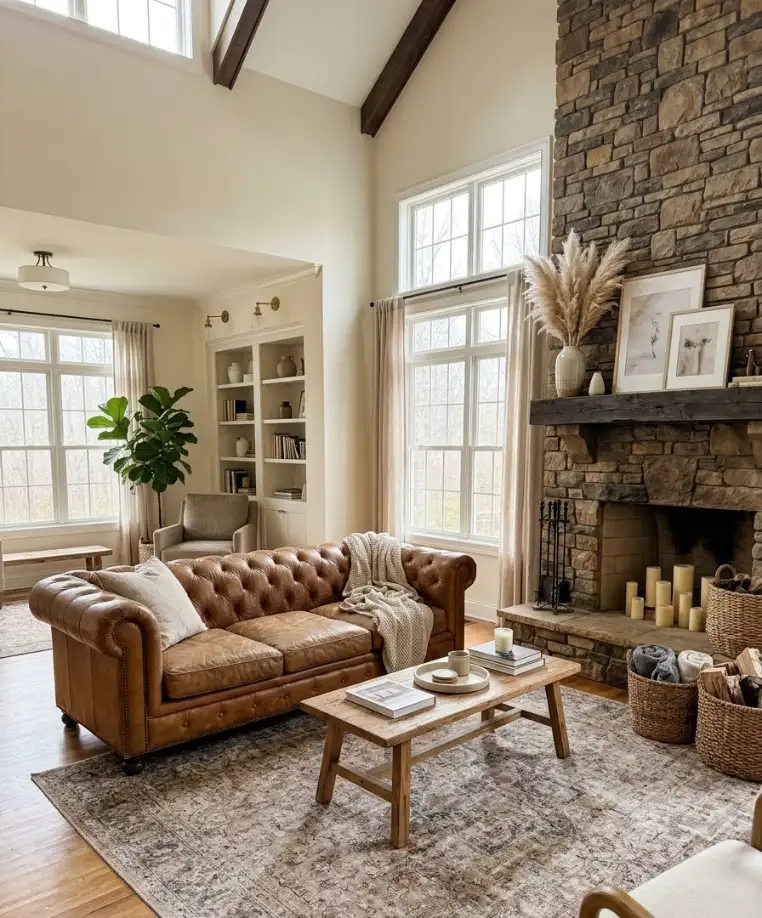
The sofa itself sets the whole mood, so spend most of your thinking time here. Color, fabric, and size all change how boho the final room feels.
Leather, velvet, or linen?
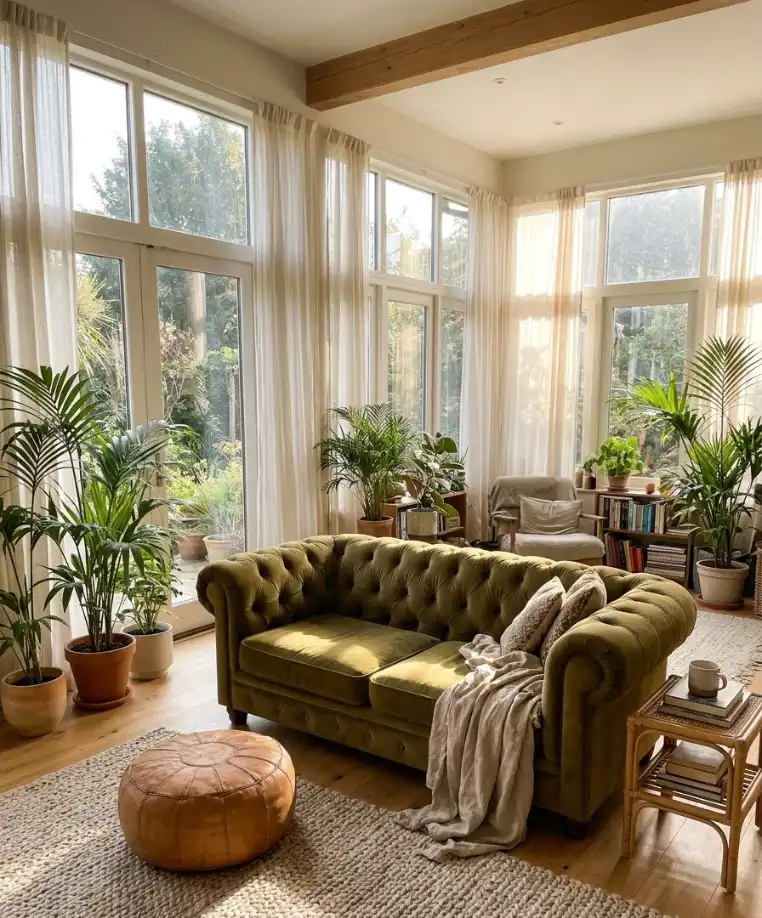
Each material pulls the room in a different direction, and I’ve lived with two of the three.
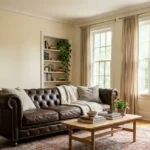
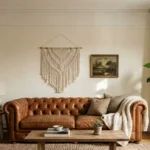
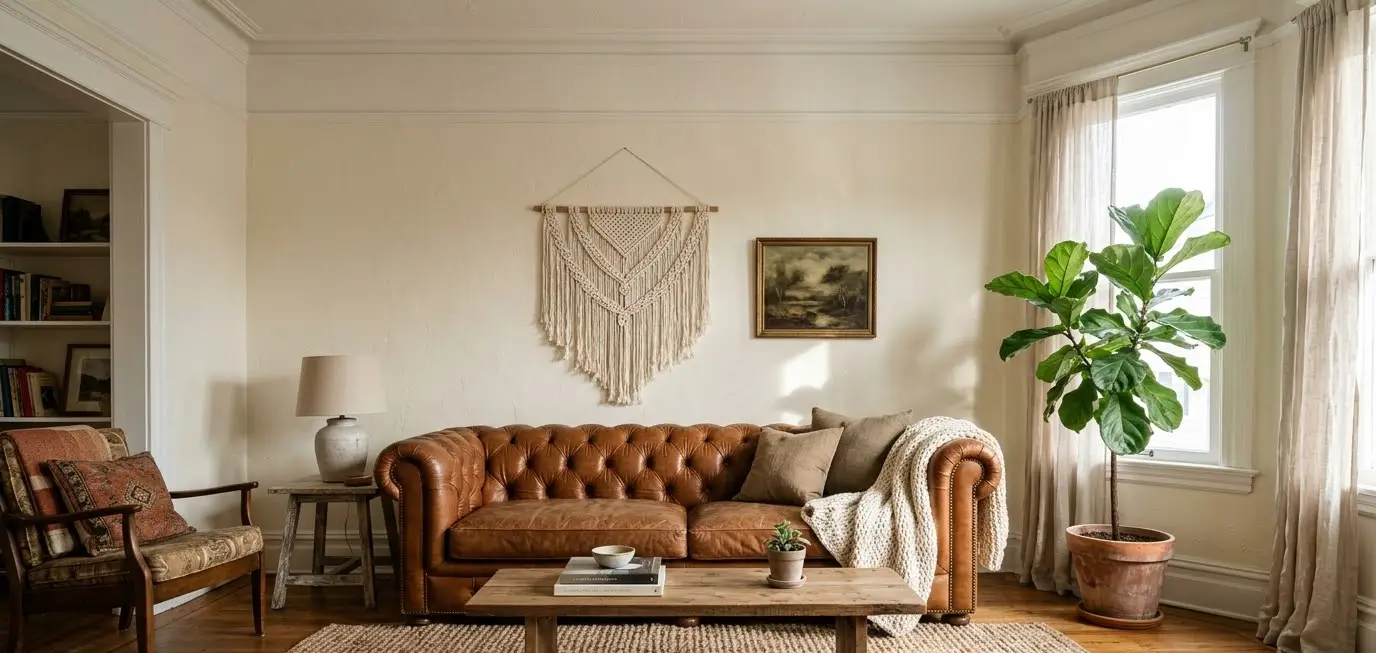
Leather gives you the classic look, and it ages beautifully. A cognac or tan Chesterfield looks right at home with rattan, jute, and mudcloth.
My leather sofa picked up scratches from my cat in the first month, and honestly, I like them now. They look like a story.
Velvet is the cozy option. It catches light, it feels soft, and it photographs like a dream. The catch is that pet hair clings to it like it pays rent.
Linen or linen-blend fabric leans the most relaxed. It gives you a laid-back, almost coastal-boho feel, though it wrinkles and stains faster than the other two.
Color choices that work
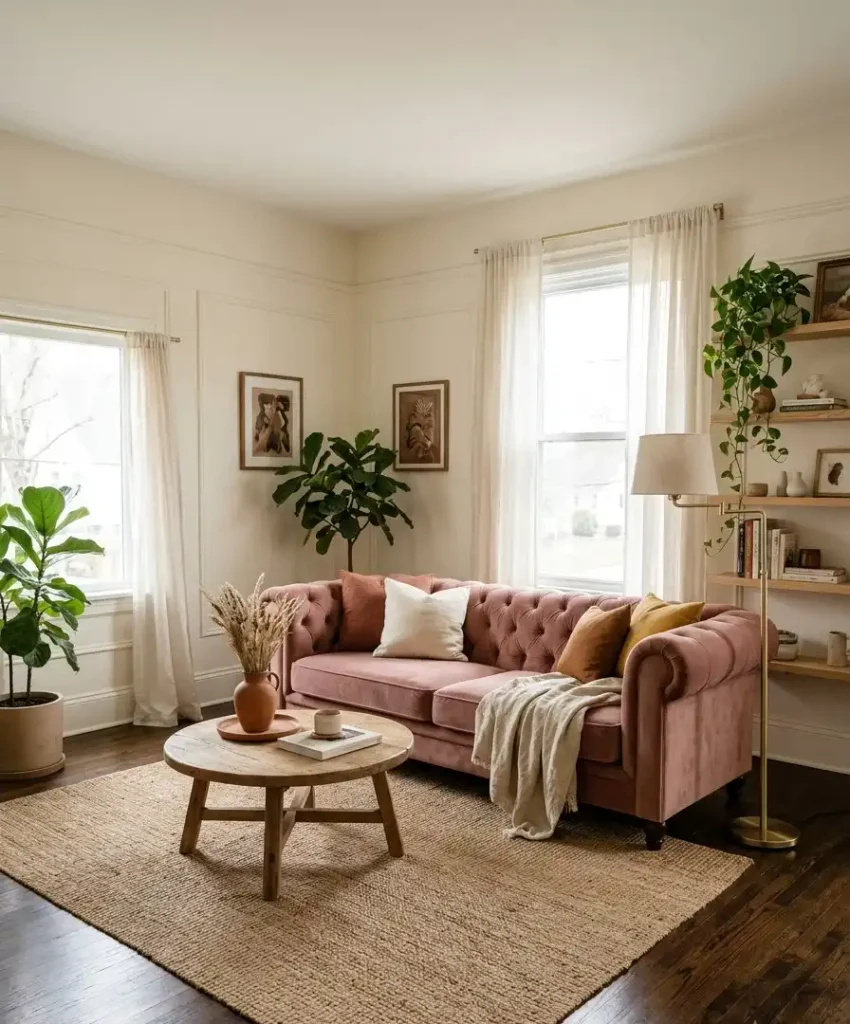
Boho rooms love earthy colors, and a Chesterfield in one of them makes layering simple. Here’s what I’d pick, in order of how often I see it work:
- Cognac or caramel leather. It goes with almost everything, and it’s my personal favorite.
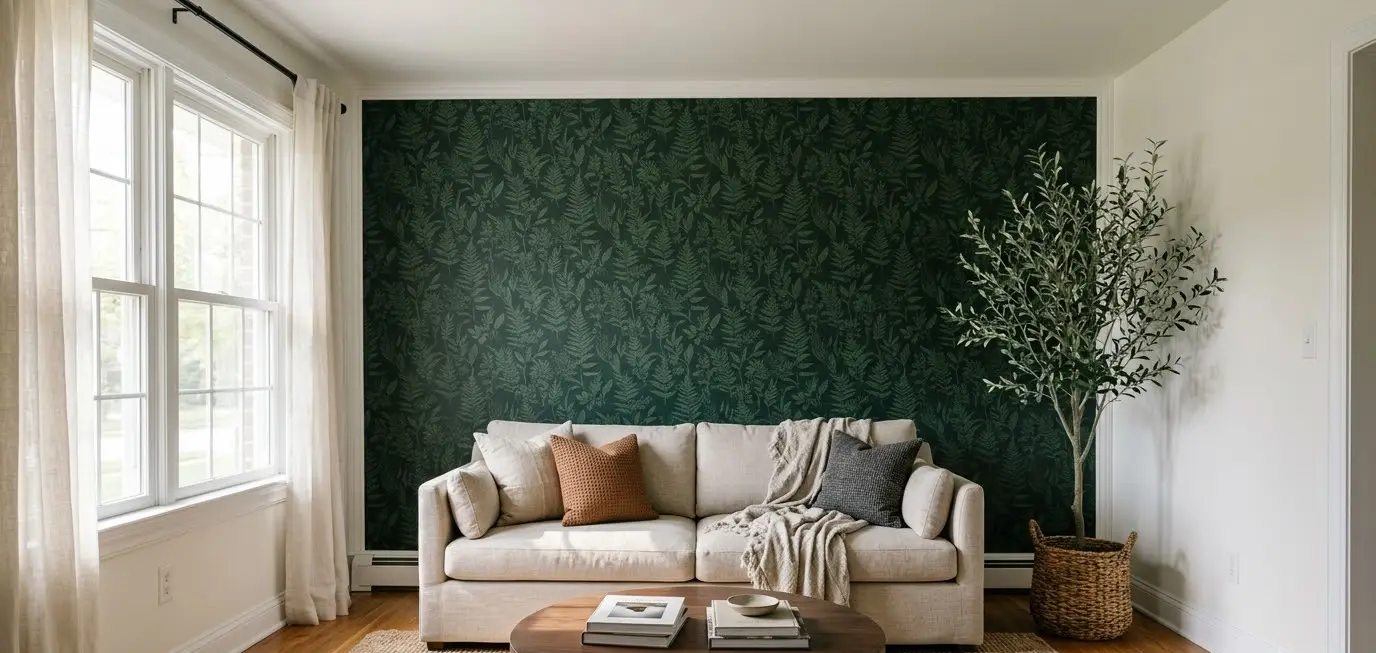
- Olive or forest green velvet. It looks rich against warm wood and creamy walls.
- Terracotta or burnt orange. Bold, but it fits the desert-boho look perfectly.
- Cream or oatmeal. It makes a calm base for colorful pillows.
- Dusty rose. IMO this is the most underrated choice. It looks soft and a bit unexpected.
I’d skip bright white unless you have no kids, no pets, and no coffee habit. I have all three, so my cream experiment lasted about six weeks.
Size and proportions
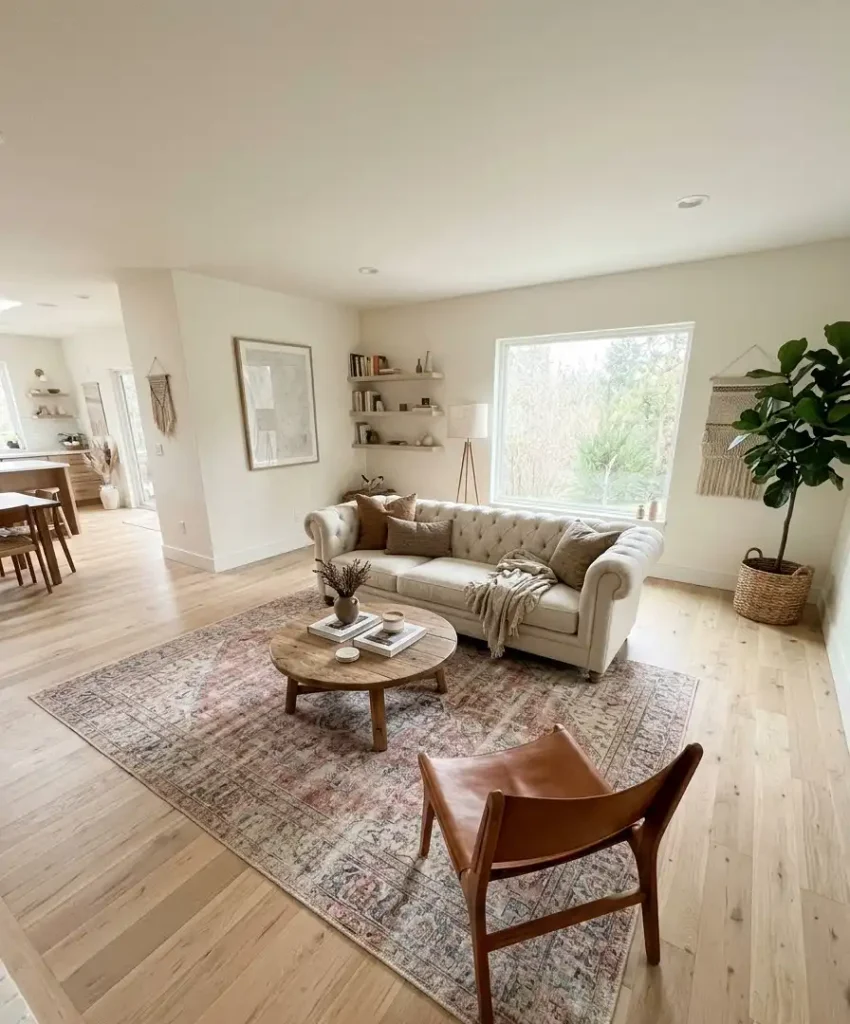
A standard three-seater Chesterfield runs around 80 to 90 inches wide, which swallows a small room. Measure your space before you fall for a photo. Leave at least 30 to 36 inches of walking space around the sofa if you can.
If your room is tight, look for a loveseat or a two-seater version. Many retailers make them now, and the tufting looks just as good in a smaller size.
Quick comparison
Here’s a short table to help you compare the three main materials:
| Material | Boho feel | Upkeep | Best for |
|---|---|---|---|
| Leather | Earthy, aged | Low | Pets, busy homes |
| Velvet | Cozy, glam | Medium | Photo-ready rooms |
| Linen blend | Light, airy | High | Calm, low-traffic spaces |
| Cotton canvas | Casual, relaxed | Medium | Budget-friendly looks |
Start with the rug, because it sets the tone
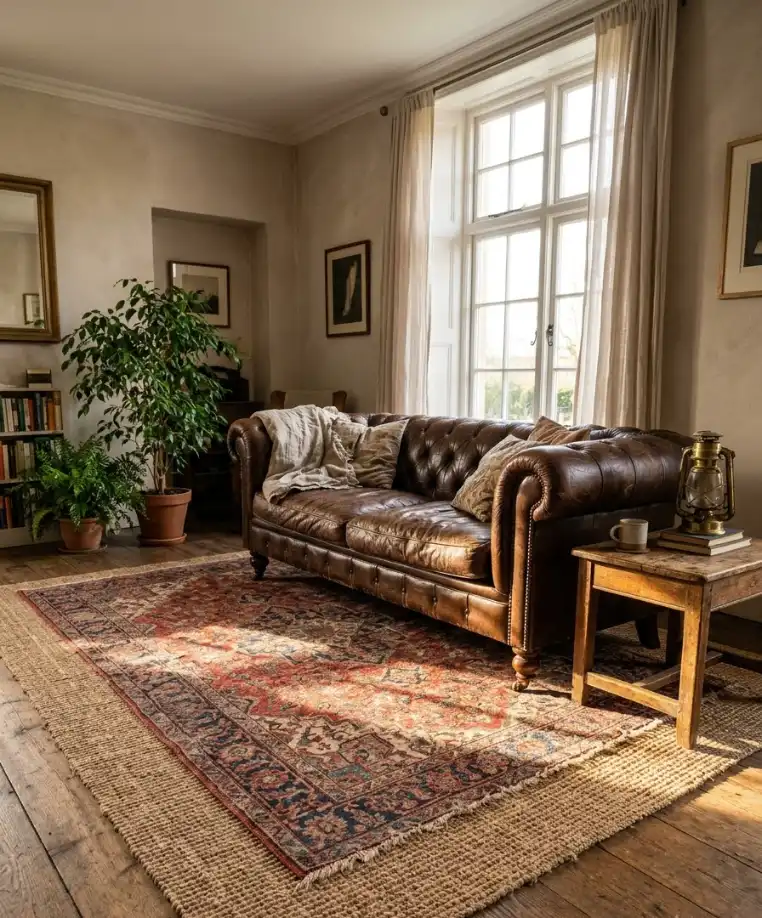
Most people buy the sofa and then hunt for a rug. I do it the other way around now, because the rug decides the whole color story.
A large, textured rug ties a tufted sofa to the rest of the room. Look for a vintage-style Persian or Turkish pattern in faded reds and blues, a kilim with geometric lines, or a chunky jute rug for a natural look.
All three pair well with a Chesterfield because the pattern and texture soften those structured lines.
Size matters more than most people expect. A rug that’s too small makes the sofa look like it’s floating on a postage stamp. Aim for a rug large enough that at least the front legs of the sofa sit on it, and ideally all four.
I layer rugs too. A flat-weave jute rug goes down first, and a smaller vintage rug sits on top at a slight angle.
It adds depth and hides the spot where my dog drags his bowl around. Does it look a little chaotic? Yes, and that’s the point.
Pick a color palette before you buy anything else
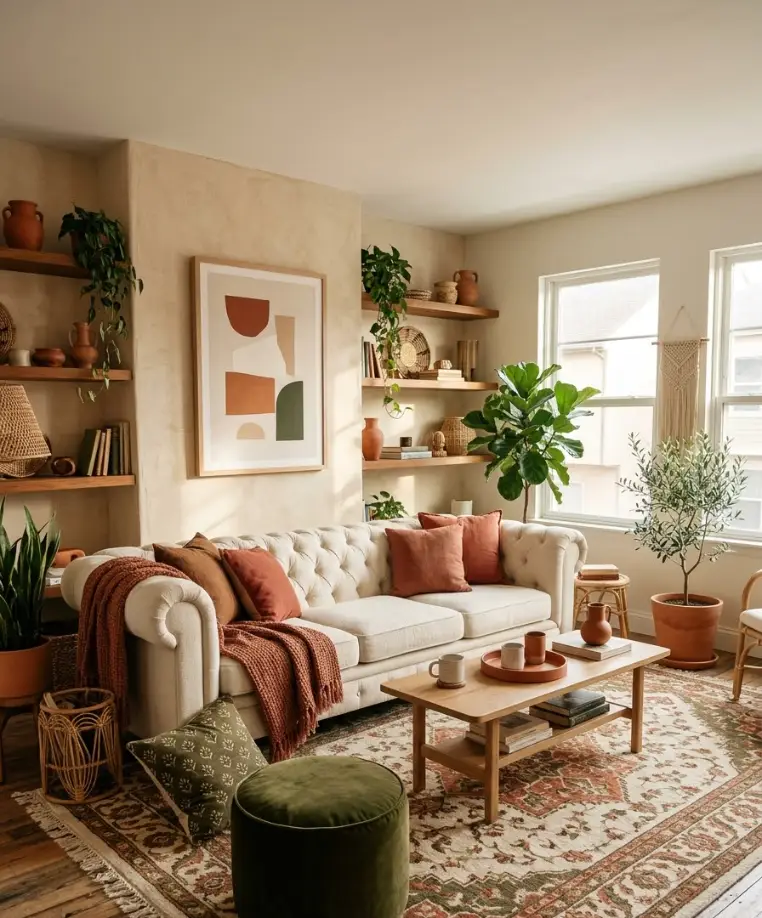
Pinterest boards that look gorgeous almost always stick to a tight palette. The boho look feels collected, but it works best when a few colors repeat across the room.
Warm earth tones
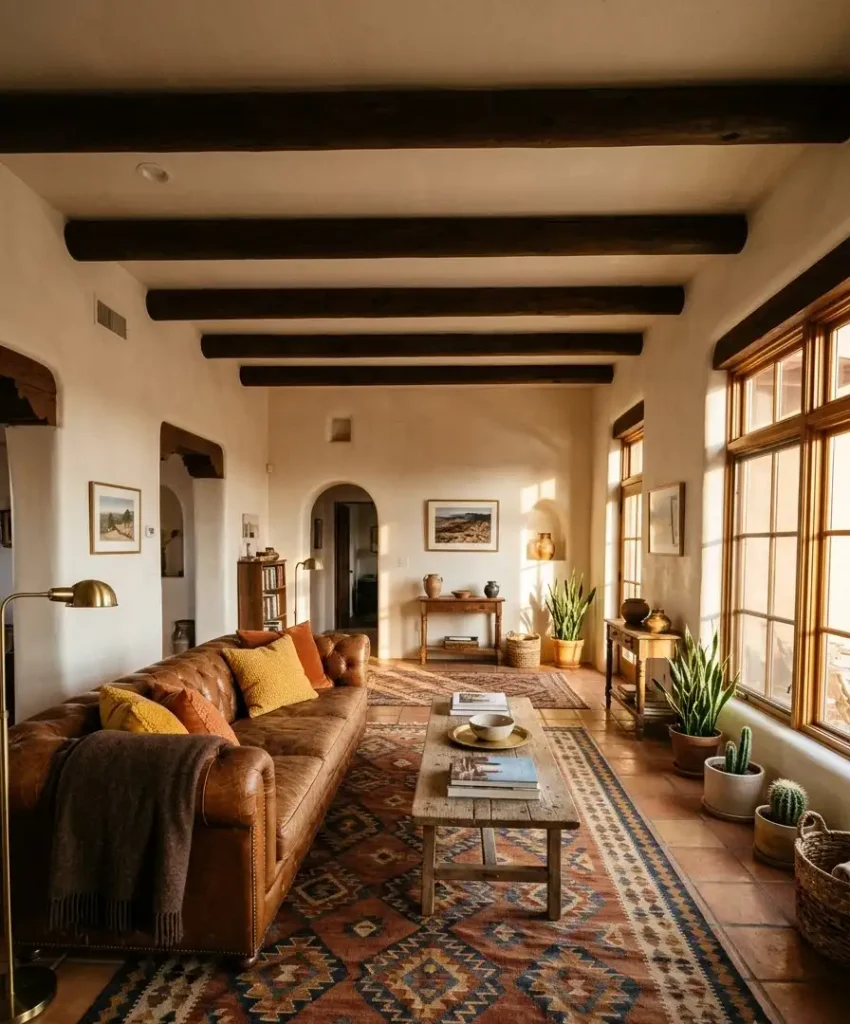
Think terracotta, mustard, rust, cream, and chocolate brown. This palette suits a cognac leather Chesterfield perfectly. Add wooden furniture and brass accents, and the room glows in the evening.
Moody jewel tones
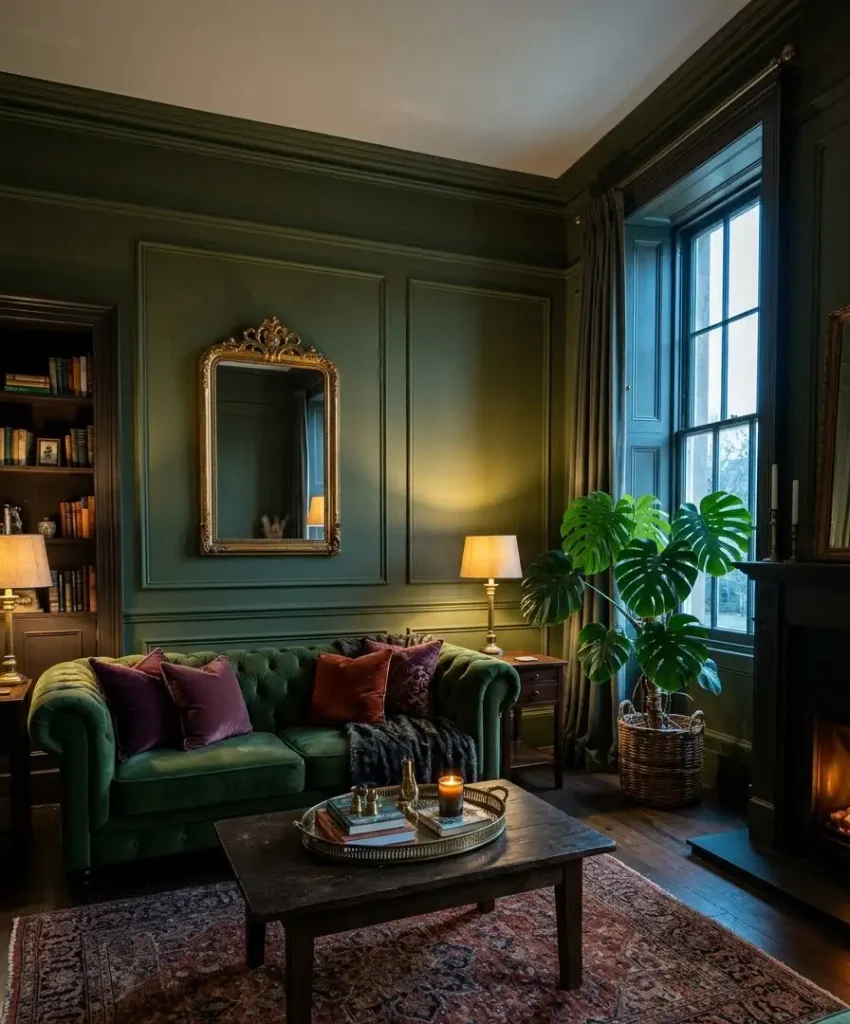
A deep green or navy Chesterfield works well with plum, burnt orange, and gold.
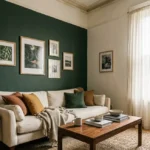
This version feels a bit more dramatic, and it looks lovely with dark walls. I painted one wall a deep olive green once, and the sofa suddenly looked like it belonged in a boutique hotel.
Soft neutrals
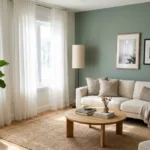
Cream, sand, oatmeal, and pale sage make a gentle, airy room. Pair a light Chesterfield with natural fibers and lots of green plants.
This palette works well in small rooms because it keeps things bright.
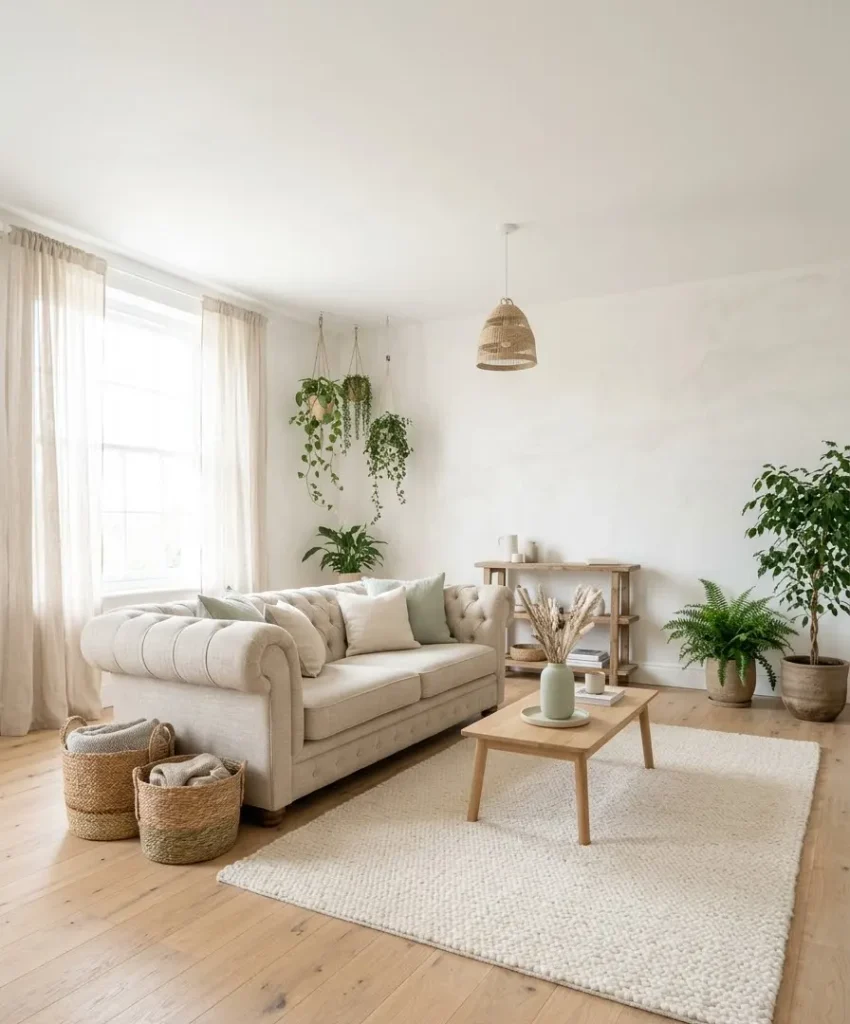
Whichever direction you pick, choose one main color, one supporting color, and one accent. When I broke that rule, my living room looked like a craft fair.
Layer pillows and throws like you mean it
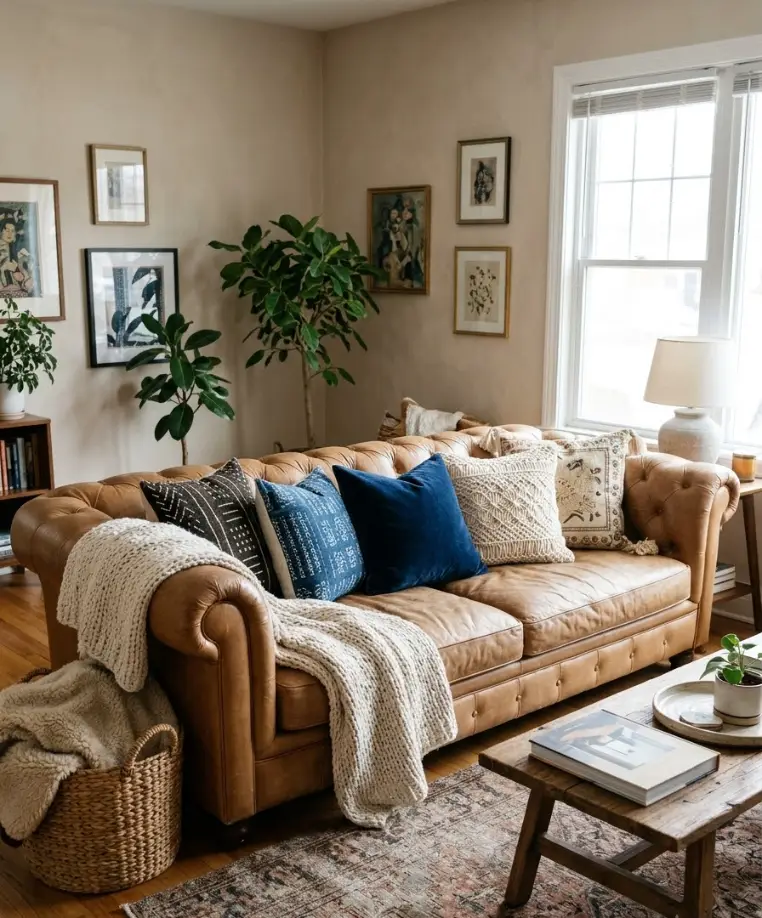
Pillows are where the boho personality really shows up. A Chesterfield’s flat, straight back gives you a perfect canvas for them.
I usually put five on a three-seater, and I vary the size. Two large squares go at the back, two medium ones in front, and one lumbar pillow in the center. Mix patterns that share at least one color. A striped pillow, a block-print pillow, and a solid velvet one usually get along fine.
Here are the textures I reach for most:
- Mudcloth or block-print cotton for a global, handmade feel.
- Faux fur or shearling for winter warmth.
- Macrame or woven pillows for texture against smooth leather.
- Embroidered or tasseled covers. I’ll admit I’m a sucker for tassels, and my partner thinks I have too many.
- Vintage kilim covers. You can find them at flea markets for very little, and they look far pricier than they are.
Add a chunky knit or woven throw over one arm. Fold it loosely, not neatly.
A perfectly folded blanket looks like a showroom, while a casually draped one looks like someone actually lives there.
Bring in plants (and yes, they matter that much)
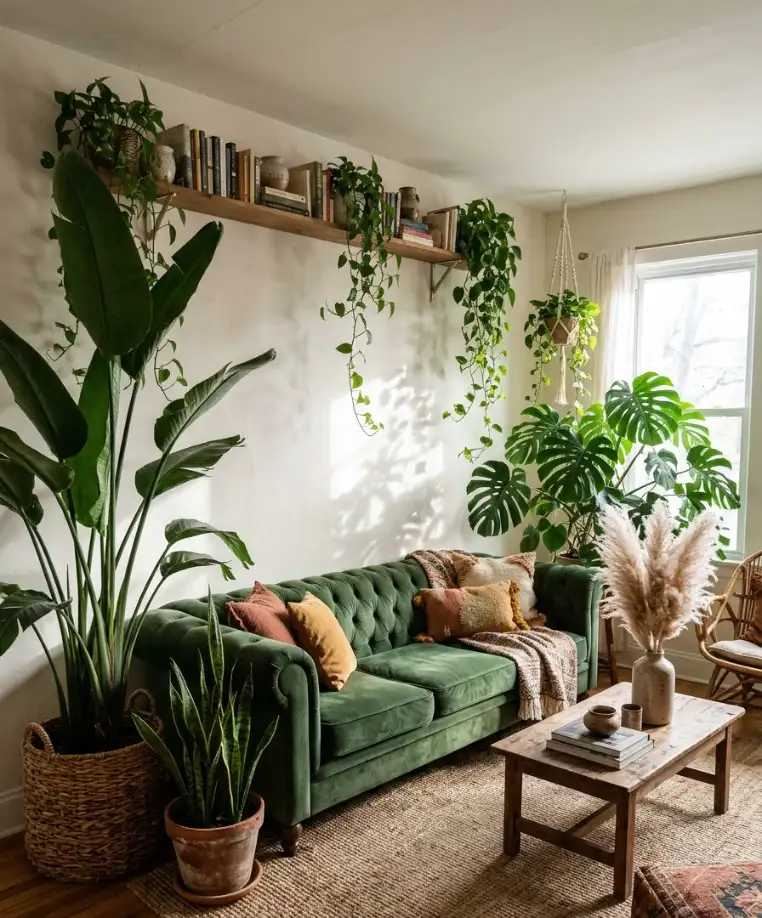
A boho room without plants feels unfinished. Greenery softens the hard geometry of a tufted sofa and adds life to every photo.
Tall plants work best behind or beside the sofa. A fiddle leaf fig, a bird of paradise, or a big monstera fills empty corners and gives the room height.
Trailing plants like pothos or string of pearls look lovely on a shelf or hanging from the ceiling.
Wow, plants also change how a room smells and sounds. A few big leaves soak up echo, and the room feels calmer.
I noticed this the first time I filled a bare corner with a rubber plant.
If you kill every plant you touch (I did, for years), start with a snake plant or a ZZ plant.
They survive almost anything. Dried pampas grass and preserved eucalyptus give the same look with zero watering, and they show up on Pinterest constantly for good reason.
Group your pots in odd numbers and mix heights. Put some in woven baskets and some in terracotta. The mix of materials looks collected, not matched.
A quick tangent about thrift shopping
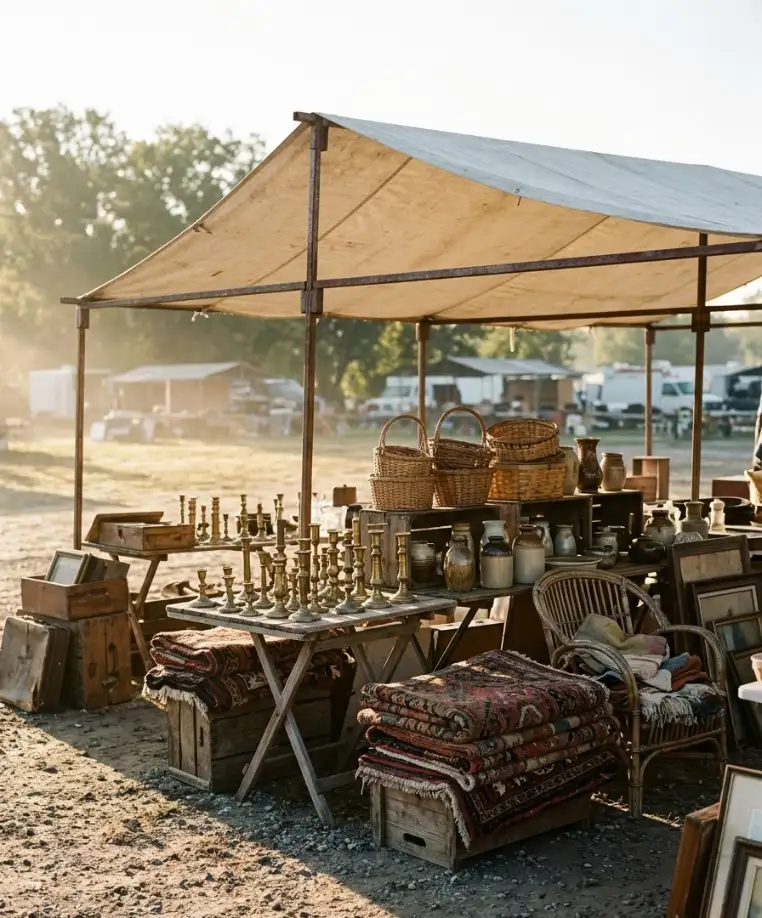
Okay, this has nothing to do with sofas, but bear with me. I spent last weekend at a flea market arguing with a man about the price of a brass candlestick. I lost, and I paid too much, and I’d do it again.
The point is that boho decor rewards slow shopping. Almost everything in my living room came from a flea market, a thrift store, or a friend’s garage.
The pieces have history, and they cost less than anything new. Next time you walk past a second-hand shop, go in.
Mix furniture and materials around the sofa
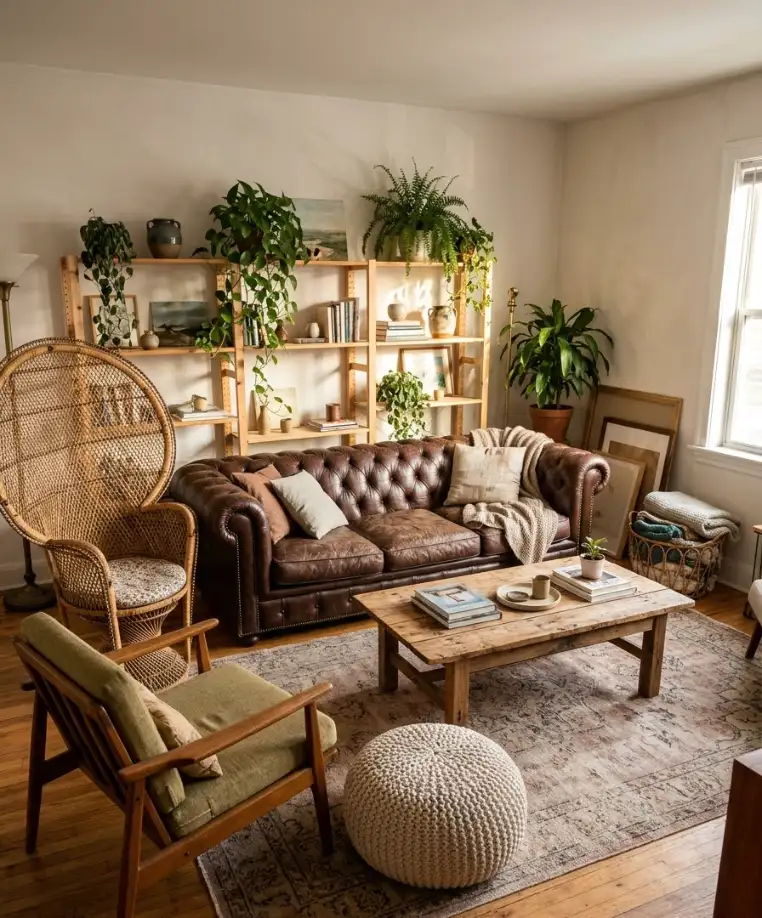
A Chesterfield looks best when the furniture around it feels relaxed and a little mismatched. Matching sets work against the boho look.
Coffee tables
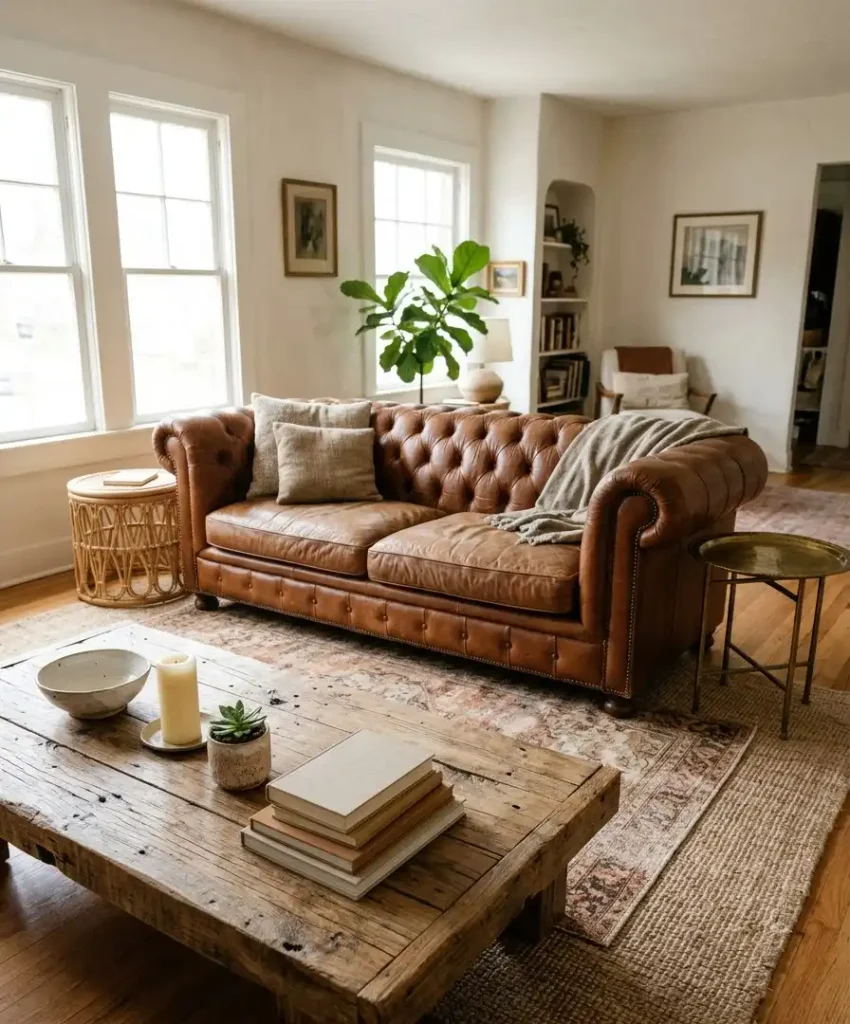
A low, rustic wood table works beautifully. I love a chunky reclaimed wood piece, because the rough texture plays against the smooth tufted leather.
A round rattan table or a brass tray table looks lovely too.
Keep the surface casual. A stack of books, a candle, a small plant, and maybe a bowl of something. Leave some empty space so it can breathe.
Side chairs and poufs
Skip the matching armchair. A rattan peacock chair, a leather sling chair, or a mid-century wooden chair gives the room more personality. Add a leather or kilim pouf for extra seating, and you have a spot for guests, feet, or a tray of snacks.
Shelves and storage
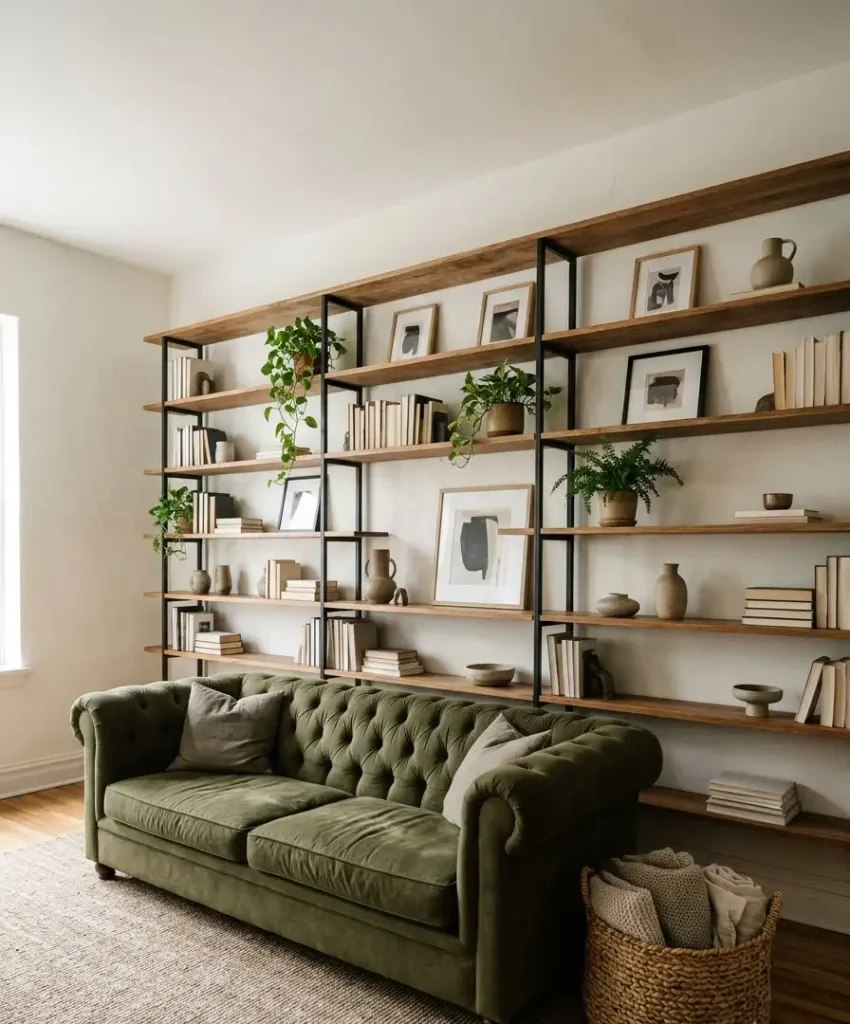
Open shelving in warm wood or black metal keeps the room light. I mix books, small plants, framed prints, and a few ceramic pieces.
A woven basket on the floor hides blankets and keeps the clutter off the sofa.
Lighting that makes the room glow
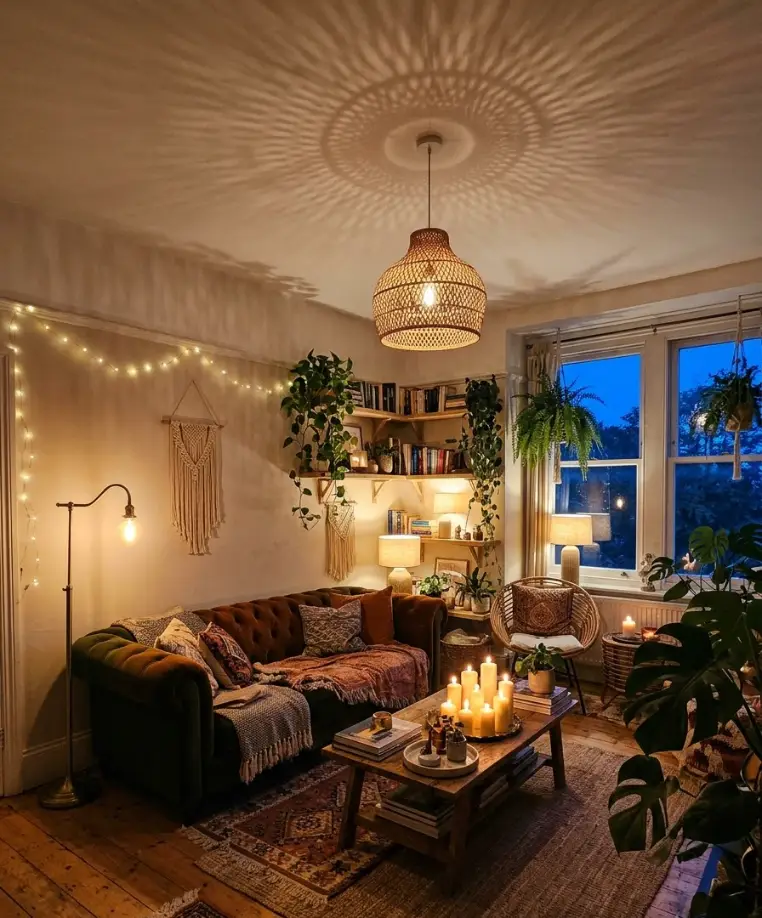
Lighting changes everything about how a boho room feels at night. Overhead lights flatten the space, so I rarely turn mine on.
Use several low light sources instead. A rattan or woven pendant lamp adds texture and casts pretty shadows on the ceiling.
A brass floor lamp next to the sofa gives you reading light. Table lamps with linen shades add a soft glow on shelves.
String lights and candles do a lot of work too. A cluster of pillar candles on the coffee table makes the whole room look like a magazine spread, and it costs almost nothing.
Just keep them away from your throw blanket (I learned that one the smoky way).
Warm bulbs matter here. Look for a color temperature around 2700K, which gives that golden, cozy tone.
Cool white bulbs make a boho room feel like a dentist’s office, and nobody wants that.
Wall art and gallery wall ideas
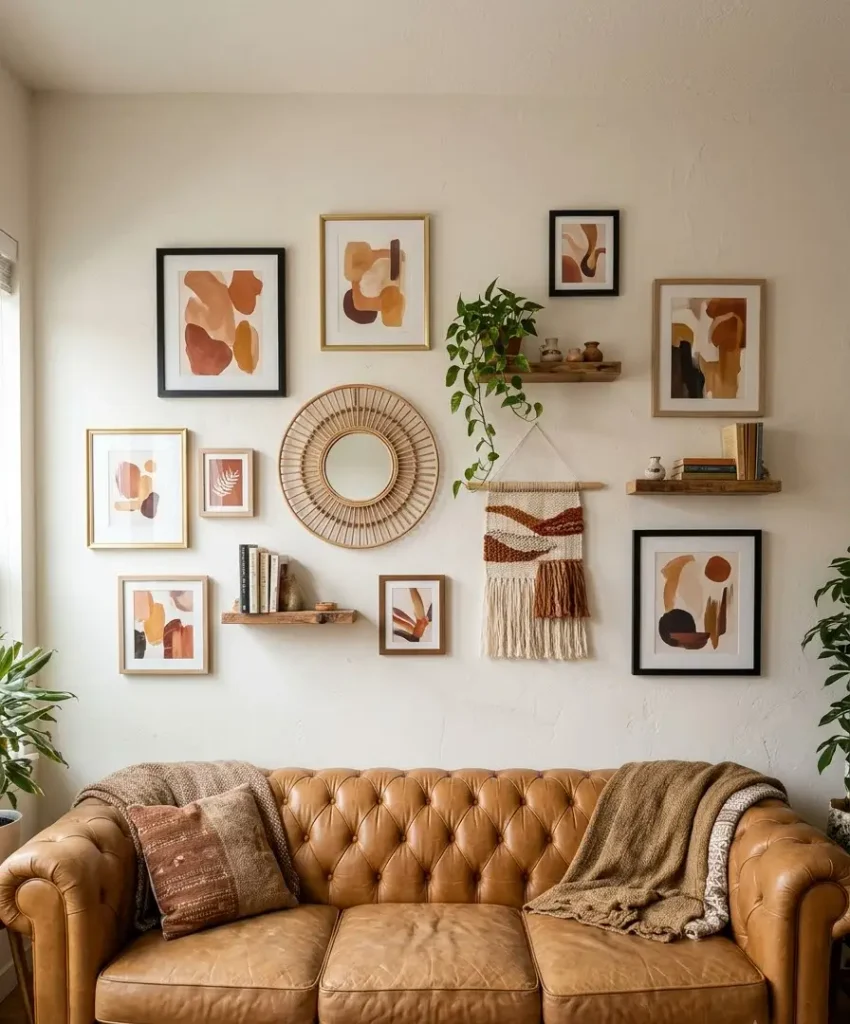
The wall behind your Chesterfield is prime real estate, and it shows up in nearly every photo of the room. Treat it well.
A gallery wall suits this style perfectly. Mix framed prints, woven wall hangings, a mirror, and a few small shelves. Use different frame styles, like black, gold, and natural wood, and let the spacing stay a little uneven.
A large piece of art above the sofa also works. A big abstract painting in warm tones looks stunning, as does a huge macrame hanging. An oversized round mirror with a rattan or brass frame bounces light around and makes the room feel bigger.
When you hang art, keep the bottom edge roughly 6 to 10 inches above the sofa back. Hang it too high, and the art floats away from the furniture. I lost an entire weekend to that mistake and a lot of wall patches.
Boho Chesterfield ideas for small living rooms
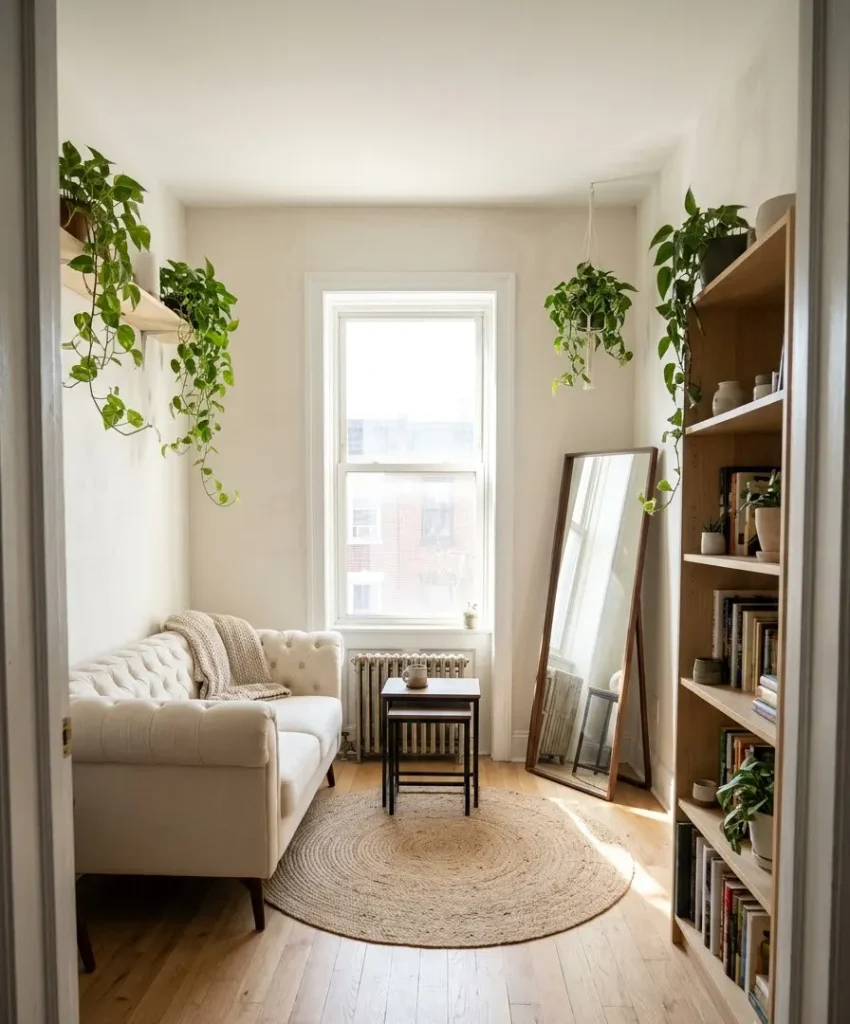
A small room doesn’t rule out a Chesterfield. It just changes your choices.
Pick a loveseat or a compact two-seater, and choose a lighter color so the room feels open.
Cream, soft sage, and pale tan all keep things bright. A sofa with slim legs, rather than a skirted base, lets you see the floor underneath, which makes the room feel larger.
Go vertical with your decor. Hang plants from the ceiling, use tall shelves, and put a long mirror on the wall.
Use a round rug to soften the corners, and keep the coffee table small, or skip it and use a pair of nesting tables.
Here’s what I’d do in a room under 150 square feet:
- Choose one big statement piece (the Chesterfield) and keep everything else small.
- Pick a tight palette of two or three colors.
- Use mirrors to bounce light.
- Keep the floor as clear as possible.
- Add texture through pillows and throws, not extra furniture.
My first apartment had a living room about the size of a parking space. I squeezed a two-seater in there, and it felt cozier than any big sectional I’ve owned since.
Mistakes I made so you can skip them
I’ve styled this sofa wrong in about six different ways. Here’s the honest list:
- I bought pillows before choosing a palette. I ended up with 11 pillows and no idea how they went together.
- I pushed the sofa against the wall. Pulling it a few inches away made the room look bigger, and I think it looks better in photos.
- I used too many patterns at once. Three is plenty. I tried seven, and my eyes hurt.
- I ignored scale. A tiny rug under a huge sofa looks sad.
- I skipped the lighting. My room looked flat until I added lamps.
- I chose style over comfort once. A very stiff, deeply tufted sofa gets uncomfortable fast, so sit on any sofa before you buy it.
FYI, the last one matters more than any styling trick. A beautiful sofa you can’t sit on for an hour is just an expensive sculpture.
Budget tips for the boho Chesterfield look
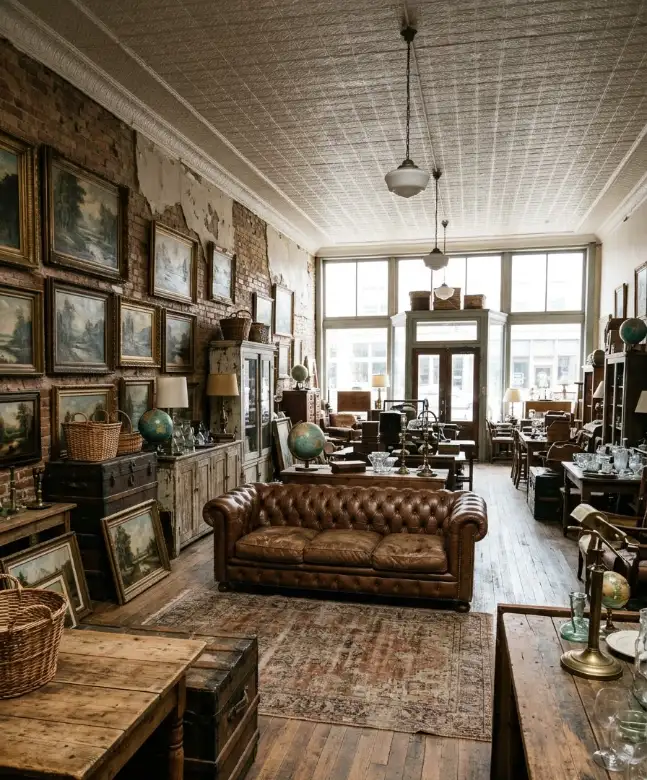
A new Chesterfield can cost thousands, but you have options. Used ones turn up constantly on local marketplaces, estate sales, and vintage shops. I’ve seen leather Chesterfields in decent shape for a fraction of retail, and a good cleaning and some leather conditioner bring them back to life.
If you buy new, look at mid-range brands before you pay for a designer label. Check the frame (solid hardwood lasts longest), the springs (eight-way hand-tied is the gold standard), and the stuffing.
For independent buying advice, Consumer Reports publishes furniture reviews that help you compare quality.
Save money on the rest of the room by shopping second-hand.
Rugs, baskets, lamps, and frames all show up cheap at thrift stores. DIY projects help too.
I made my own macrame hanging for under $15, and it looks better than the $80 one I almost bought.
For inspiration and professional tips, Apartment Therapy and Houzz both have huge libraries of real living rooms, and Architectural Digest covers the higher-end side of boho design.
Styling your Chesterfield for Pinterest-worthy photos
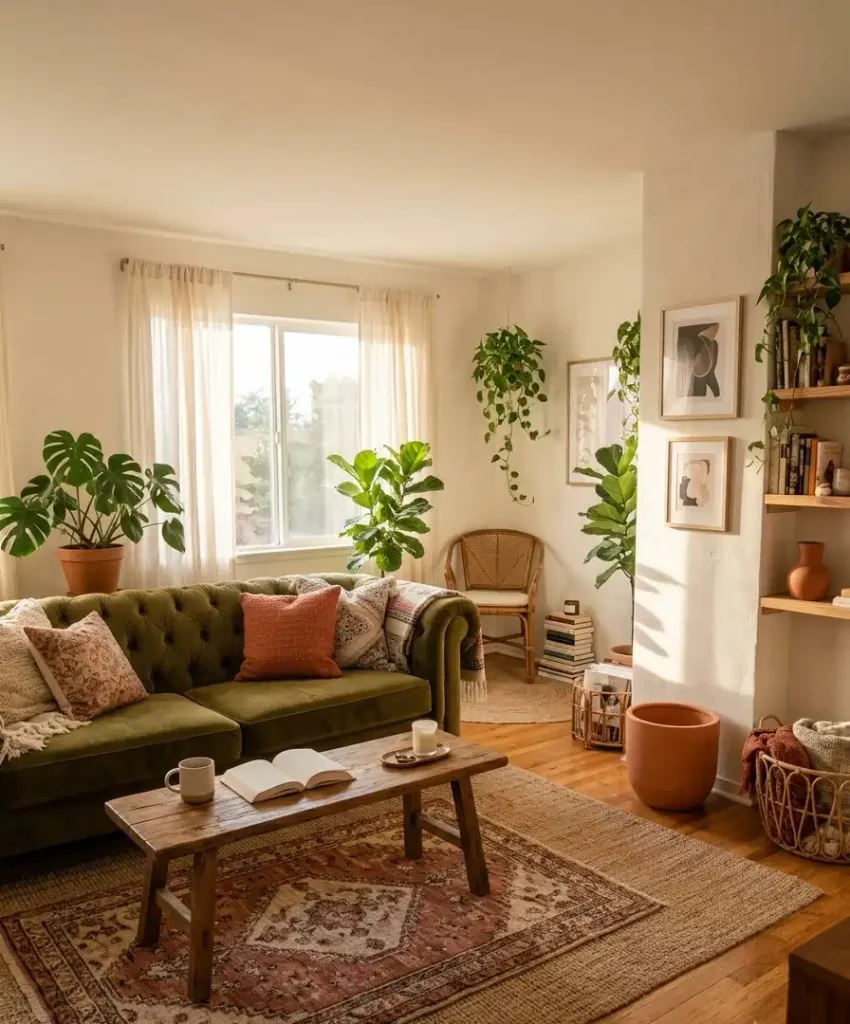
Since you’re probably saving ideas on Pinterest, let me share what makes a living room photograph well.
Pinterest favors vertical images with clear focal points and soft, natural light.
Shoot in the morning or late afternoon, when sunlight comes through the window at an angle.
Turn off harsh overhead lights. Clear the clutter, but leave a few lived-in details, like a half-read book or a mug on the coffee table.
Stand at a corner of the room and shoot slightly downward, so you capture the sofa, rug, and a bit of wall. Keep your lines straight, because a crooked photo makes even a gorgeous room look off.
A tiny styling trick: fluff the pillows and add one pop of color that repeats elsewhere in the frame.
If you plan to pin your own room, use a clear, keyword-rich description, like “boho living room with cognac leather Chesterfield and jute rug.
” It helps other people find your idea, and it helps your pin show up in search.
Frequently asked questions
Can a Chesterfield sofa really work in a boho living room?
Yes. The structured shape balances the loose, layered feel of boho decor. Choose a warm color or natural material, and add textured pillows, plants, and a vintage rug.
What color Chesterfield works best for boho style?
Cognac leather, olive green velvet, terracotta, and cream all work well. I’d pick cognac if you want the easiest option, because it goes with almost every boho palette.
How do I keep a velvet Chesterfield looking good with pets?
Brush it weekly with a soft brush or a rubber glove, and keep a washable throw on the favorite spot. Performance velvet resists stains and hair better than standard velvet, so look for that label if you shop new.
Final thoughts
A Chesterfield in a boho living room asks you to hold two ideas at once: structure and ease.
Start with the right sofa, anchor it with a big rug, stick to a small palette, and layer in texture, plants, and warm light. Then let the room grow slowly, one thrifted find at a time.
My own living room still changes every few months, and I think that’s the fun part. Mine started with one stubborn sofa that barely fit through the door, and now it’s the room where everyone ends up at parties.