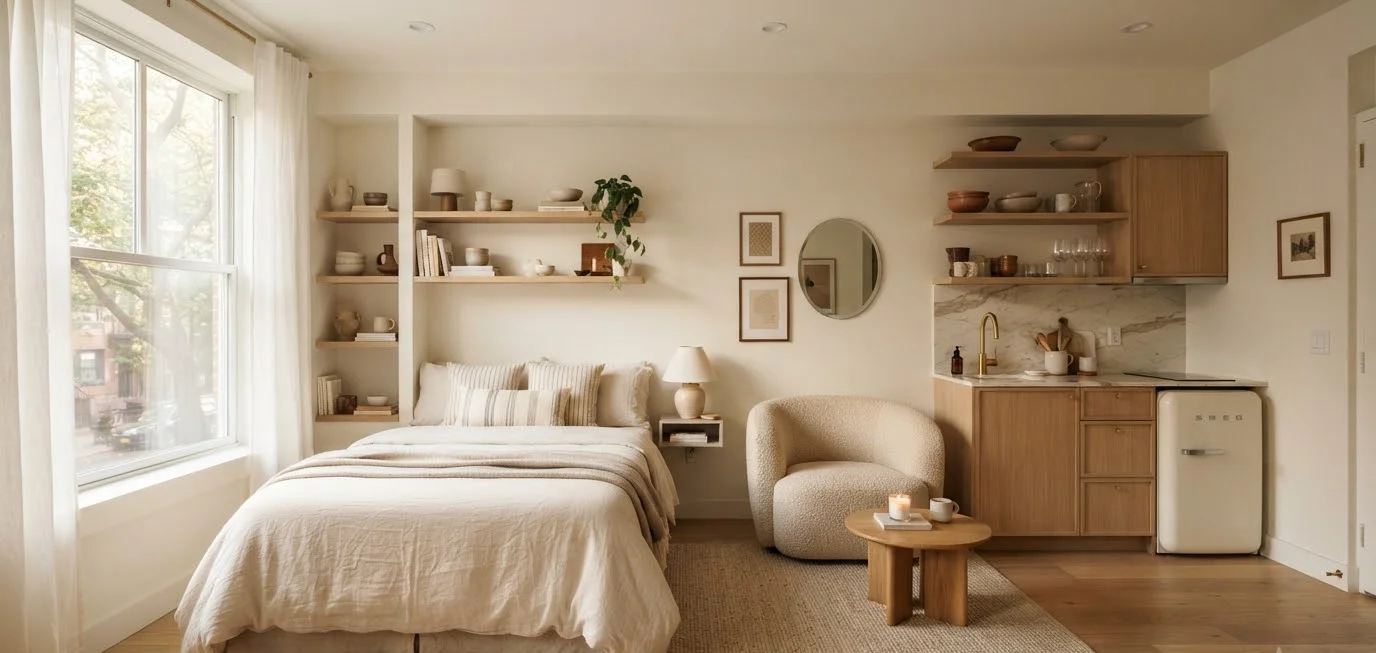
I lived in a 320-square-foot studio for two years. My bed touched my kitchen counter.
My “closet” was a rolling rack from Target wedged behind the couch. And somehow, I still hosted dinner for four people on a Tuesday night.
That’s the thing about one-room living. It forces you to get creative, and once you figure out the tricks, your tiny apartment can feel bigger than some two-bedrooms I’ve toured.
This guide walks through every zone in your studio, room by room, with the exact moves that worked for me (and a few I learned the hard way).Let’s get into it.
Start at the door: your entryway sets the tone
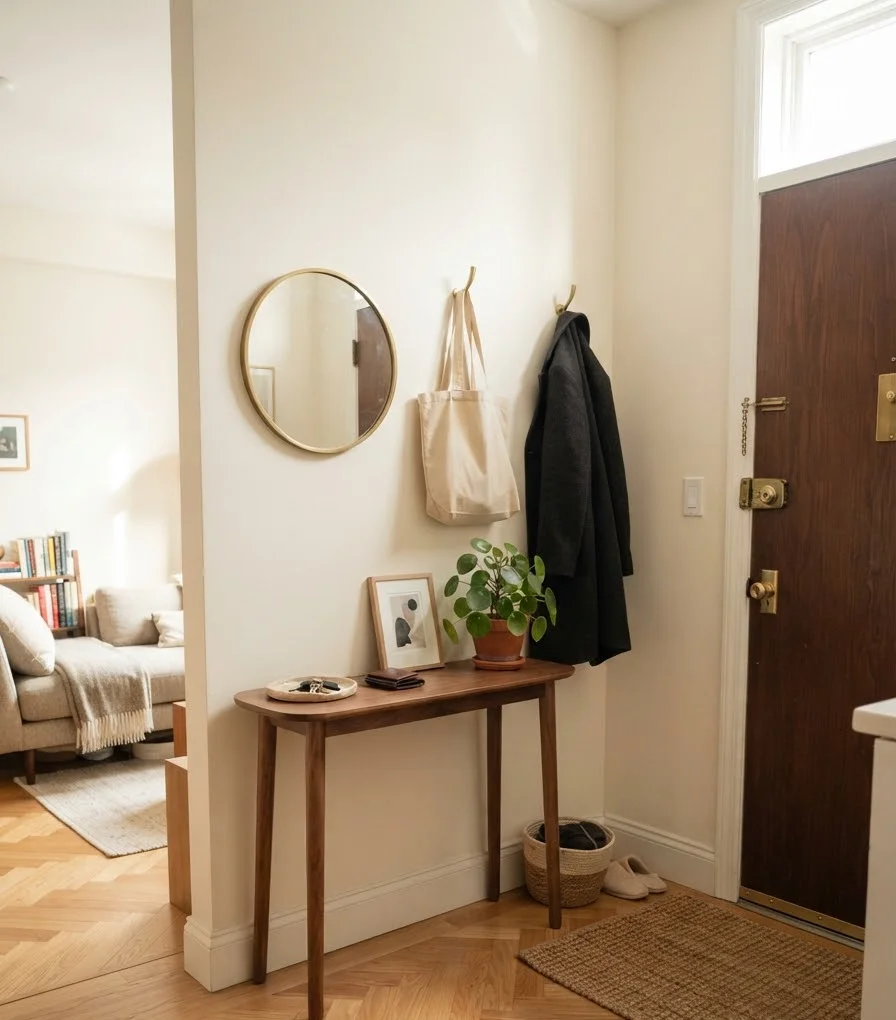
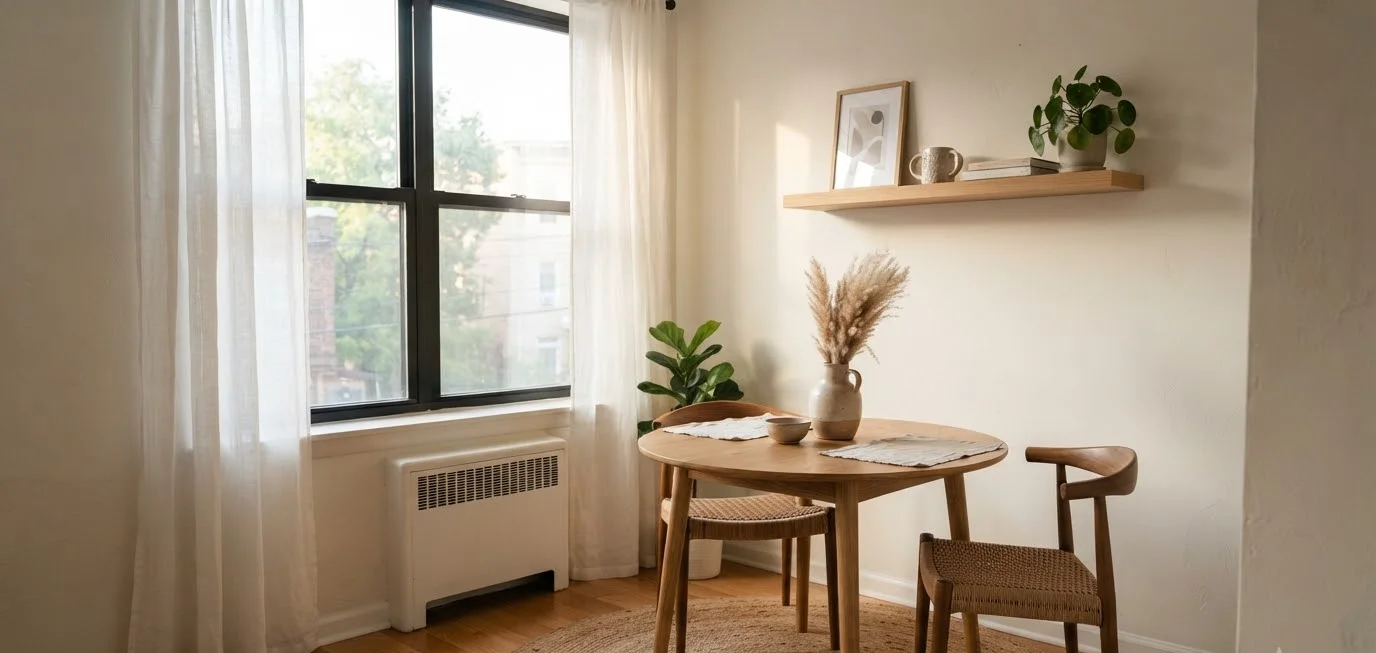
Most studio apartments don’t have a real entryway.
You just walk in and you’re already in the living room, or worse, three feet from your bed. That’s fine. You can still create one.
A slim console table against the wall by the door works wonders. Not a bulky one.
Look for something under 12 inches deep. Drop a small tray on top for keys and mail, and hang two or three hooks above it for coats and bags.
Here’s the honest truth: if you skip this step, your entryway items end up on your bed, your counter, or the floor.
I learned that after tripping over my own shoes for six months straight.
A slim console with hooks above it stops clutter before it spreads into the rest of your space.
The kitchen: work with 6 feet, not 60
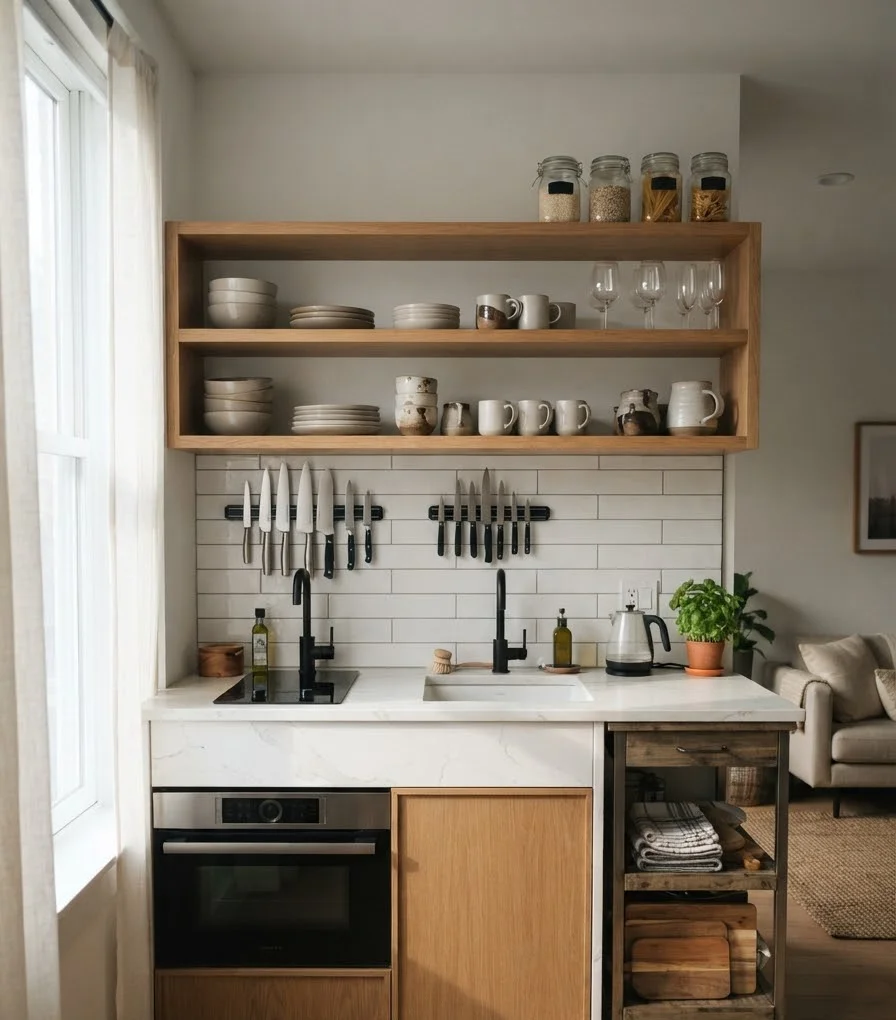
Studio kitchens are usually a single wall or a narrow galley. You’re not getting an island.
You’re not getting a walk-in pantry. So the goal shifts from “storage everywhere” to “storage that stacks.”
A few things that genuinely helped:
- Magnetic knife strips free up drawer space instantly. Mine holds six knives and takes up zero counter room.
- Over-the-sink cutting boards turn dead space into usable prep area. IKEA sells one that fits standard sink widths for under $20.
- Wall-mounted shelves above the stove hold spices and oils you use daily, keeping counters clear for actual cooking.
- A rolling cart (like the ones from The Container Store) acts as extra counter space when you need it and tucks away when you don’t.
I’ll admit something a little embarrassing here: for the first year, I owned zero cutting boards that fit my counter, and I just… cut vegetables on a plate.
It worked, technically. But once I added a fold-down cutting board that clips onto the counter edge, cooking stopped feeling like a math problem.
Do you really need six mixing bowls? Probably not. One nesting set does the job of four.
The bed: your biggest piece of furniture, working the hardest
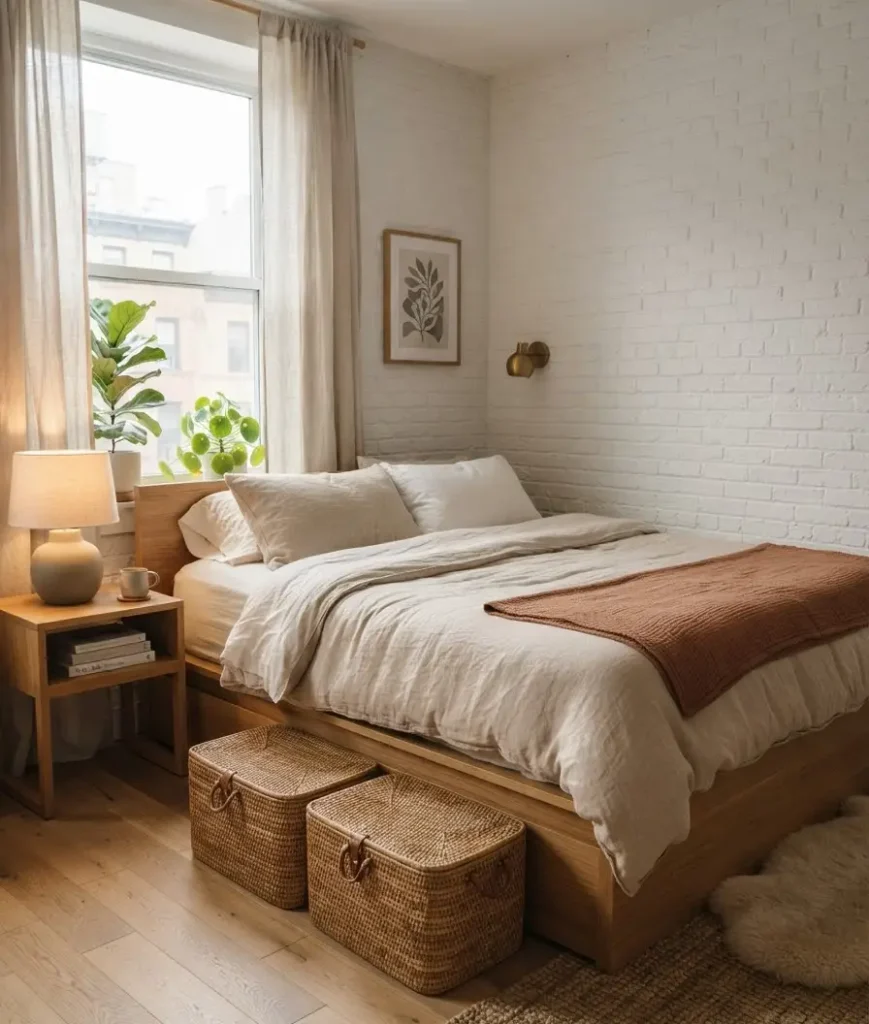
In a one-room apartment, the bed usually eats the most square footage. So it needs to pull double or triple duty.
A bed frame with built-in drawers underneath is the single best upgrade I made.
Mine holds off-season clothes, extra bedding, and my vacuum.
No under-bed bins sliding around, no dust bunnies staring back at me every time I dropped something.
If a storage bed isn’t in the budget, risers work almost as well. They lift your existing bed 4 to 6 inches, just enough to slide in flat storage bins. Cheap, simple, effective.
A daybed or a sofa bed changes the math entirely if your studio also needs to function as a living room during the day. IKEA’s Friheten and several options reviewed by Wirecutter fold from couch to bed in under a minute. It’s not a five-star mattress experience every night, but for guests or for a small space that needs to flex, it’s a genuinely smart trade-off.
Quick comparison: bed storage options
| Option | Storage gained | Best for |
|---|---|---|
| Bed with built-in drawers | High | Renters staying long-term |
| Bed risers + under-bed bins | Medium | Budget-conscious setups |
| Daybed / sofa bed | Low-Medium | Studios doubling as living rooms |
| Murphy bed | Very high | Studios wanting a full “disappearing” bed |
The living area: define it without walls
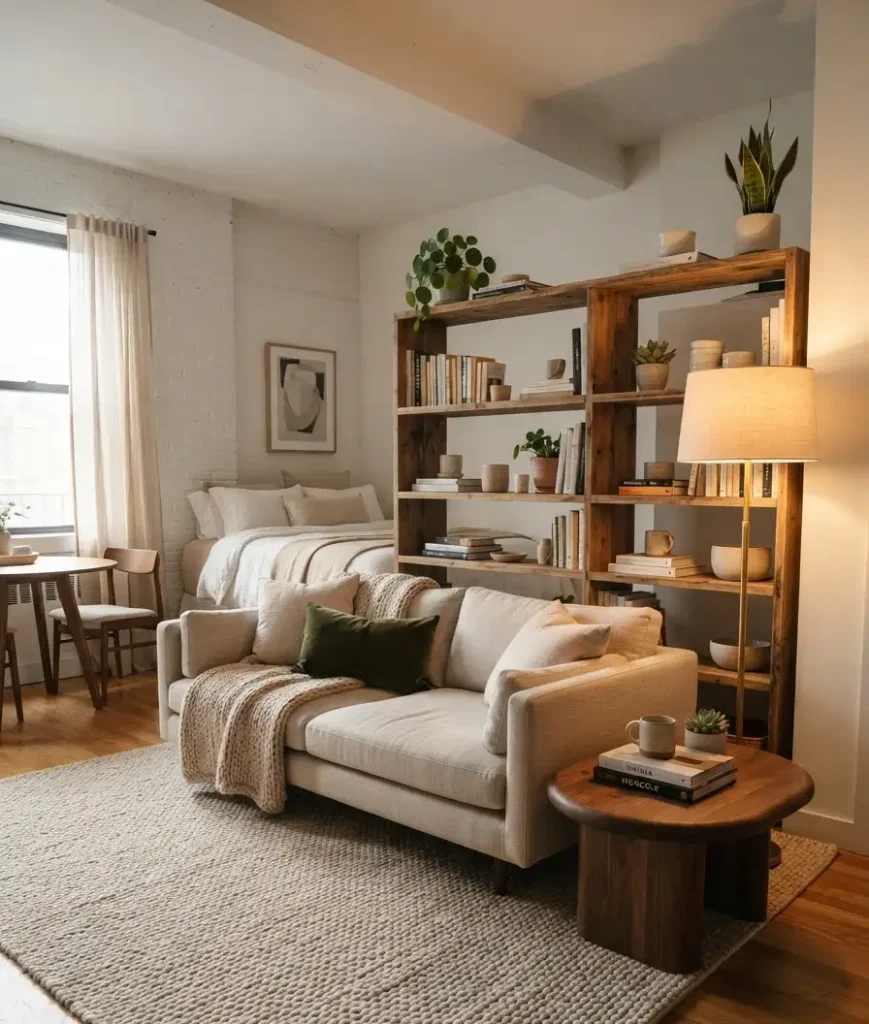
You don’t need a wall to create a living room. You need a visual break.
A rug is the easiest way to do this. Lay one down where your “living room” starts, and your brain automatically registers it as a separate zone, even though there’s no physical divider.
It’s a small trick, but it works better than you’d expect.
Open bookshelves, positioned perpendicular to a wall, do the same job while adding storage.
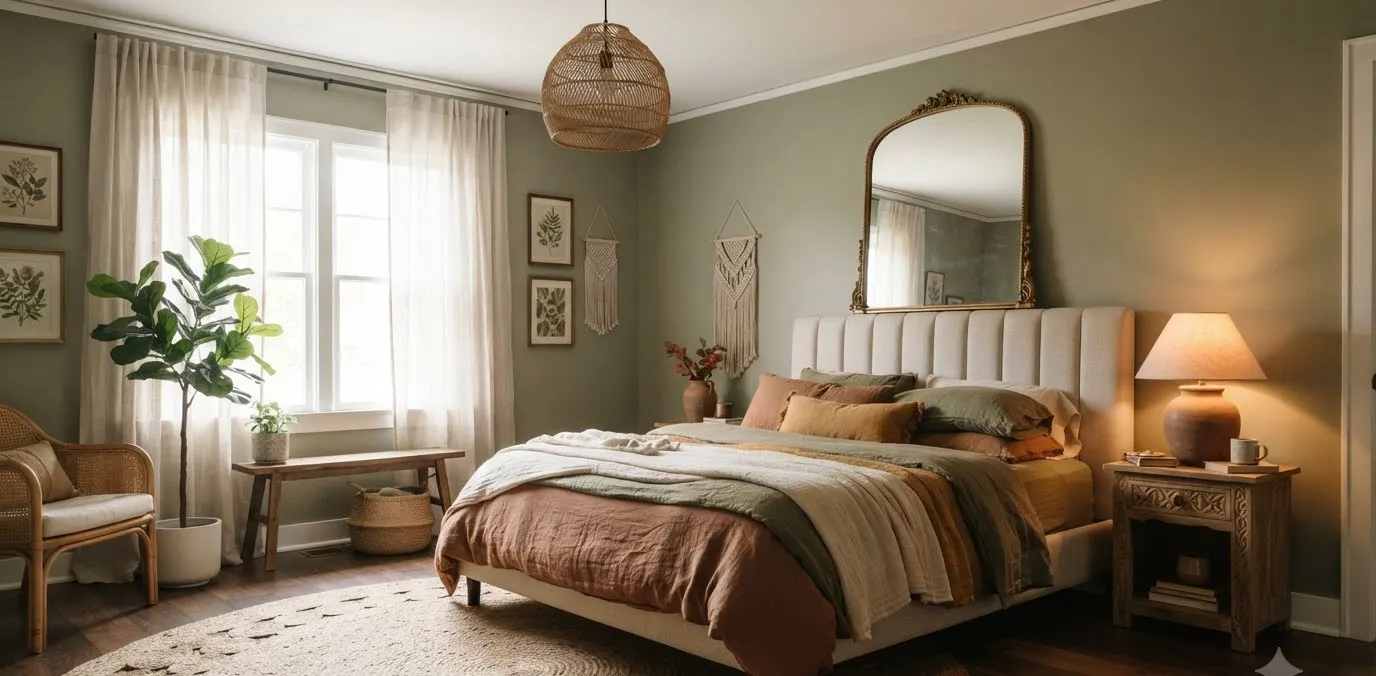
Anthropologie Home Decor Inspiration Easy Aesthetic Upgrades For Your Bedroom
Discover More →I used a Kallax shelf from IKEA to split my sleeping area from my “living room,” and it holds books, a small plant, and a bin of blankets.
Two jobs from one piece of furniture, and my studio finally stopped feeling like one big undefined blob.
Floor lamps also help define zones. A warm, low light near your reading chair signals “this is a different space” without adding a single extra square foot of furniture.
A quick aside, because I have to say it: I once spent an entire Saturday rearranging my living area three separate times chasing the “perfect” layout,
only to put everything back exactly where it started. Sometimes the first instinct is the right one. Don’t overthink it the way I did.
The bathroom: small but mighty potential
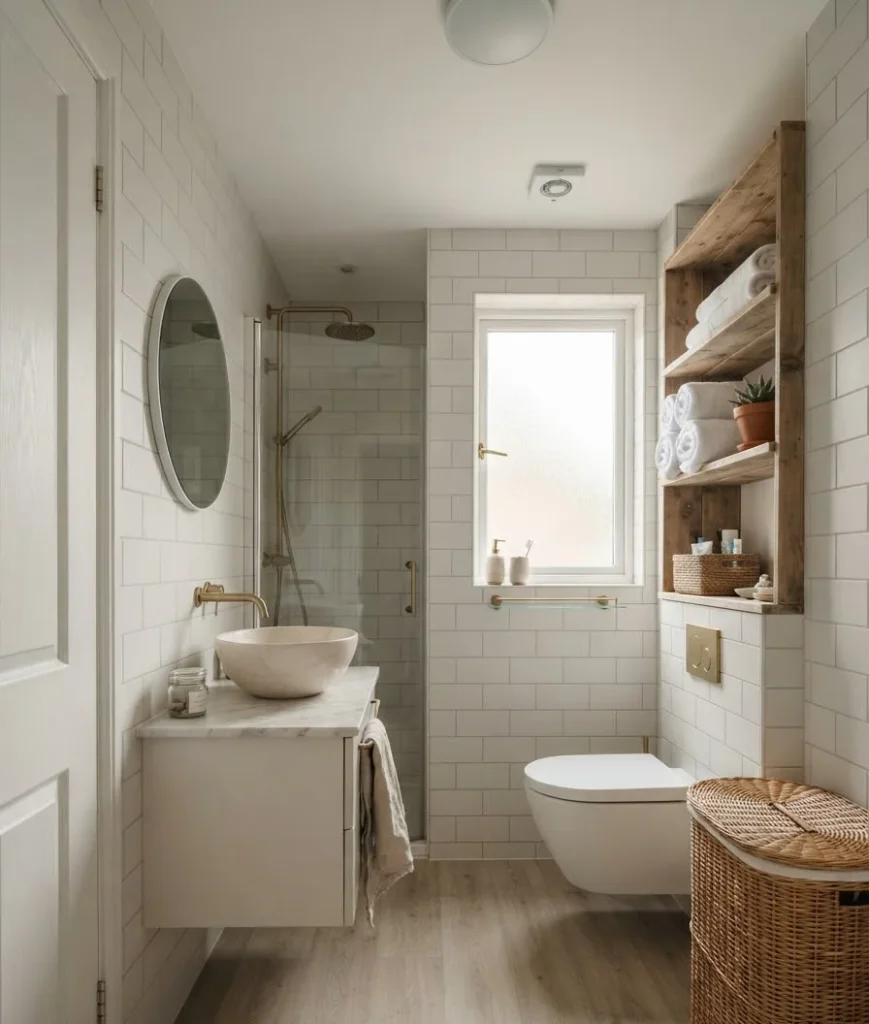
Studio bathrooms tend to get ignored in space-planning conversations, which is a mistake. There’s real storage potential hiding in there.
- Over-the-toilet shelving units add vertical storage in a spot most people leave empty.
- Tension rods installed under the sink create an extra shelf for cleaning supplies.
- Adhesive hooks on the back of the door hold towels, robes, or a hanging shower caddy.
- A shower curtain with built-in mesh pockets stores shampoo bottles without needing a caddy at all.
None of these require drilling, which matters if you’re renting and can’t leave marks on the walls.
Storage and closets: think in cubes, not corners
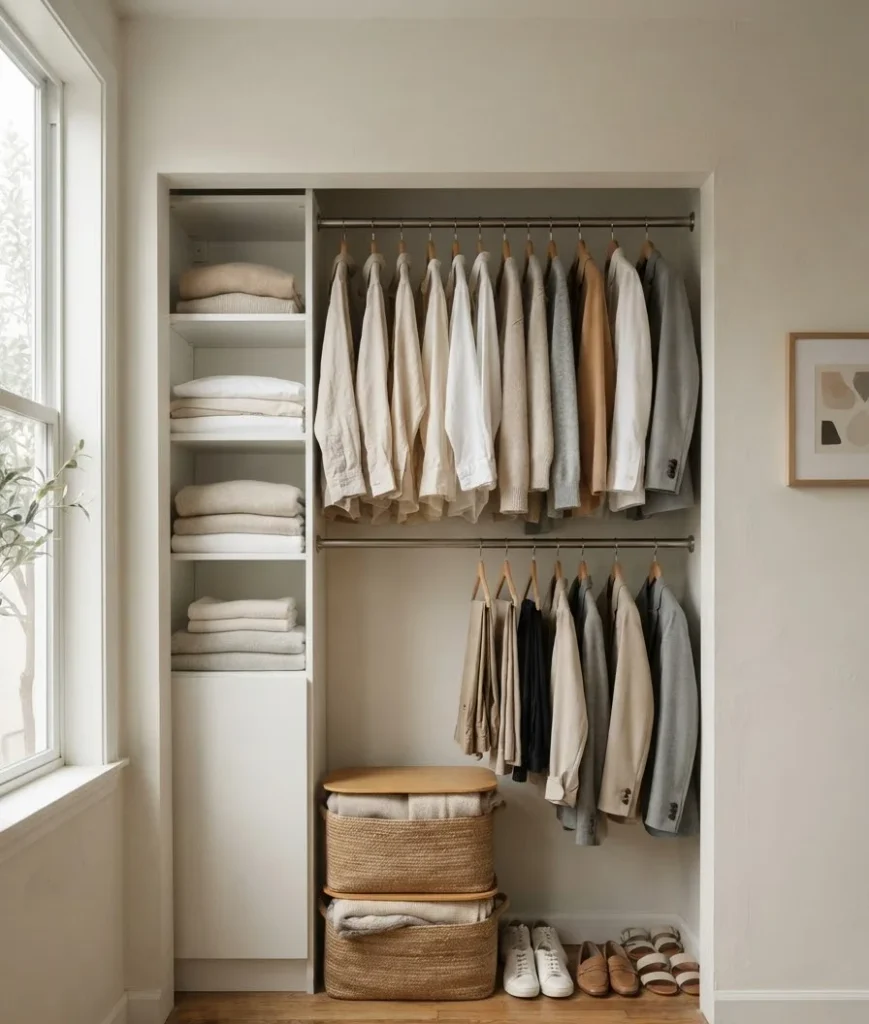
If your studio has a closet at all, treat it like prime real estate.
Skip the single hanging rod most closets come with, and add a second rod below it for shorter items like shirts and folded pants on hangers.
That alone can double your hanging capacity.
Stackable fabric bins on the closet floor hold shoes, off-season gear, or things you use once a month.
Label them. Future you will thank present you at 7am when you’re not digging through six identical boxes looking for your passport.
IMO, the biggest closet mistake people make is buying bins before measuring the space.
I did this once, bought bins two inches too tall, and spent a frustrating afternoon returning them. Measure first. Always.
If you don’t have a closet at all (some studios genuinely don’t), a wardrobe cabinet against a wall solves the problem.
IKEA’s PAX system and similar options from other retailers can be customized to fit awkward corners that built-in closets usually claim.
Vertical space: the wall you’re not using
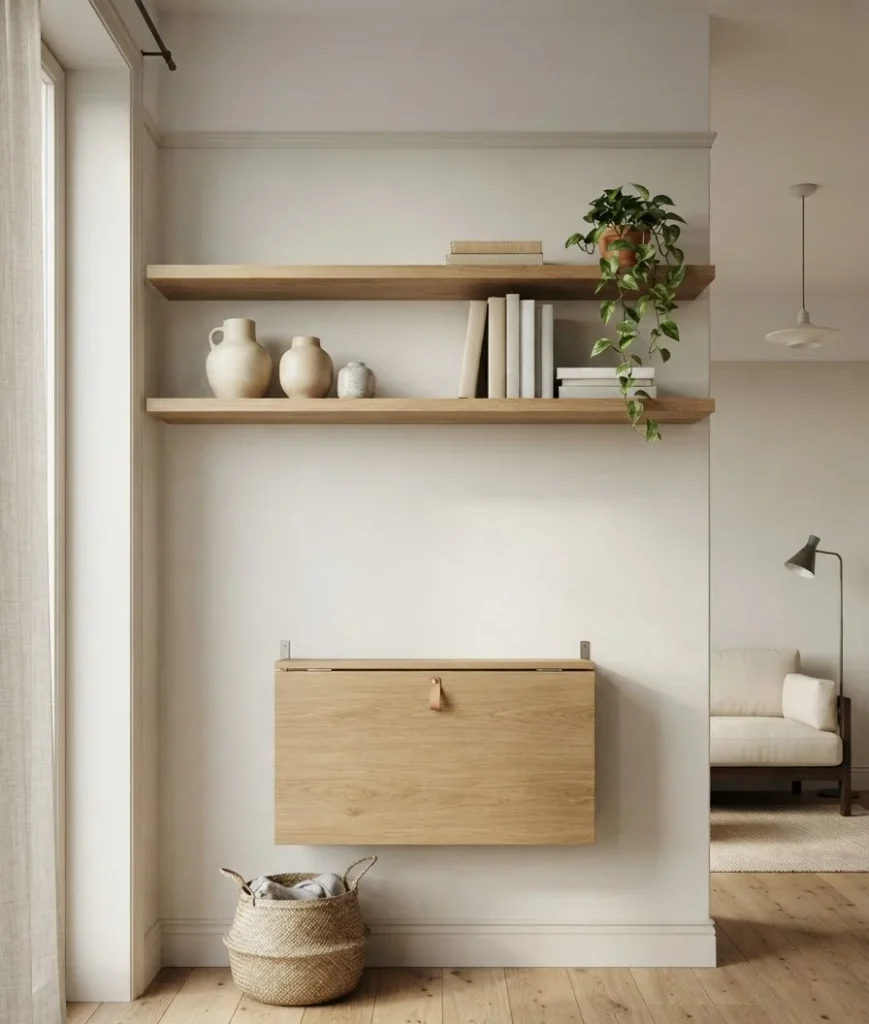
Here’s a question worth asking yourself: how much of your wall space actually has something on it below eye level, and how much sits empty above your head?
For most studio dwellers, the answer is “a lot of empty space up top.” That’s wasted square footage, and it’s free to claim.
- Floating shelves near the ceiling hold books, decor, or bins you rarely need.
- Pegboards mounted above a desk hold office supplies, art tools, or kitchen gadgets, depending on the zone.
- Wall-mounted folding desks give you a full workspace that disappears when you’re not using it. Perfect for anyone working from a studio apartment.
- Curtain rods hung a few inches above your window frame (not right at it) make ceilings look taller and rooms feel more open, a trick interior designers at Apartment Therapy mention constantly.
Wow, the difference a few floating shelves make is honestly a little ridiculous.
My studio gained what felt like an extra 40 square feet just by moving storage upward instead of outward.
Mirrors, light, and the psychology of “feeling” bigger
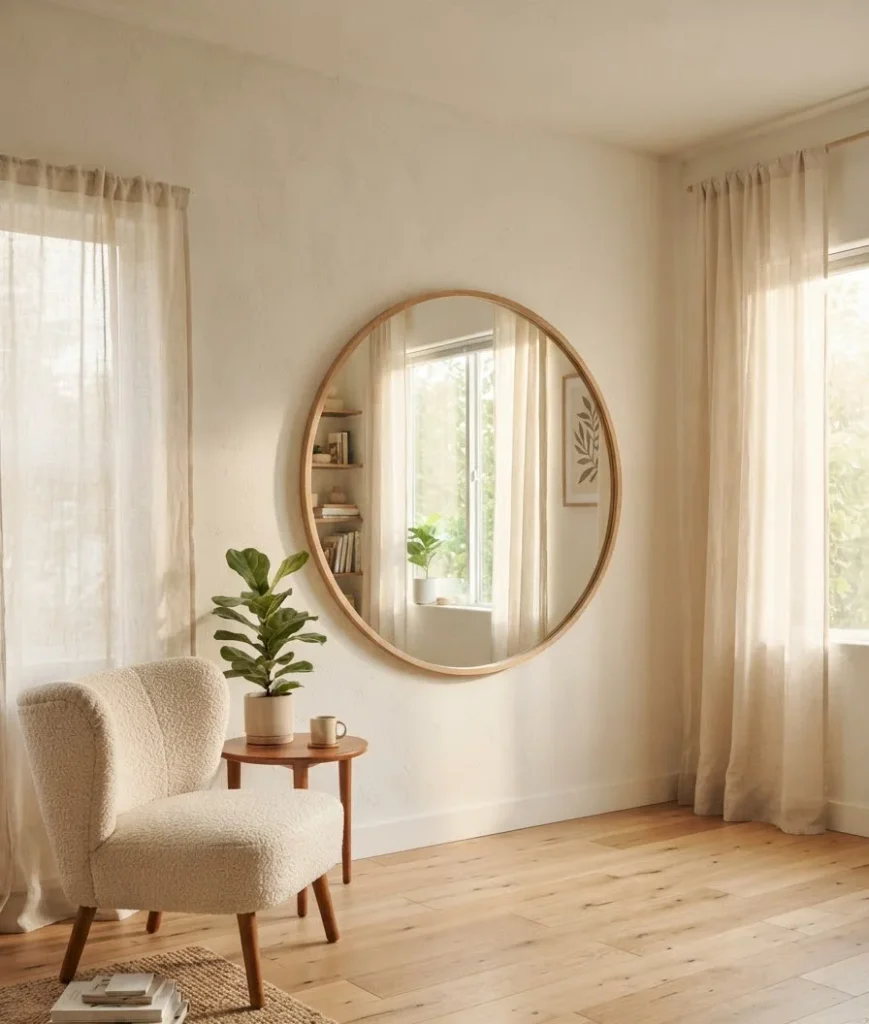
This isn’t purely about storage. Some tricks make a small space feel bigger even when the square footage stays exactly the same.
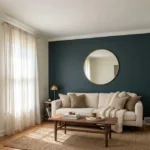
A large mirror opposite your main window bounces natural light around the whole room.
It’s a simple change, and it genuinely shifts how a space feels within a day of hanging it.
Light-colored walls do similar work, reflecting rather than absorbing whatever light you’ve got.
Furniture with visible legs, instead of pieces that sit flush on the floor, lets your eye travel underneath them.
That small gap tricks your brain into registering more open floor space than actually exists.
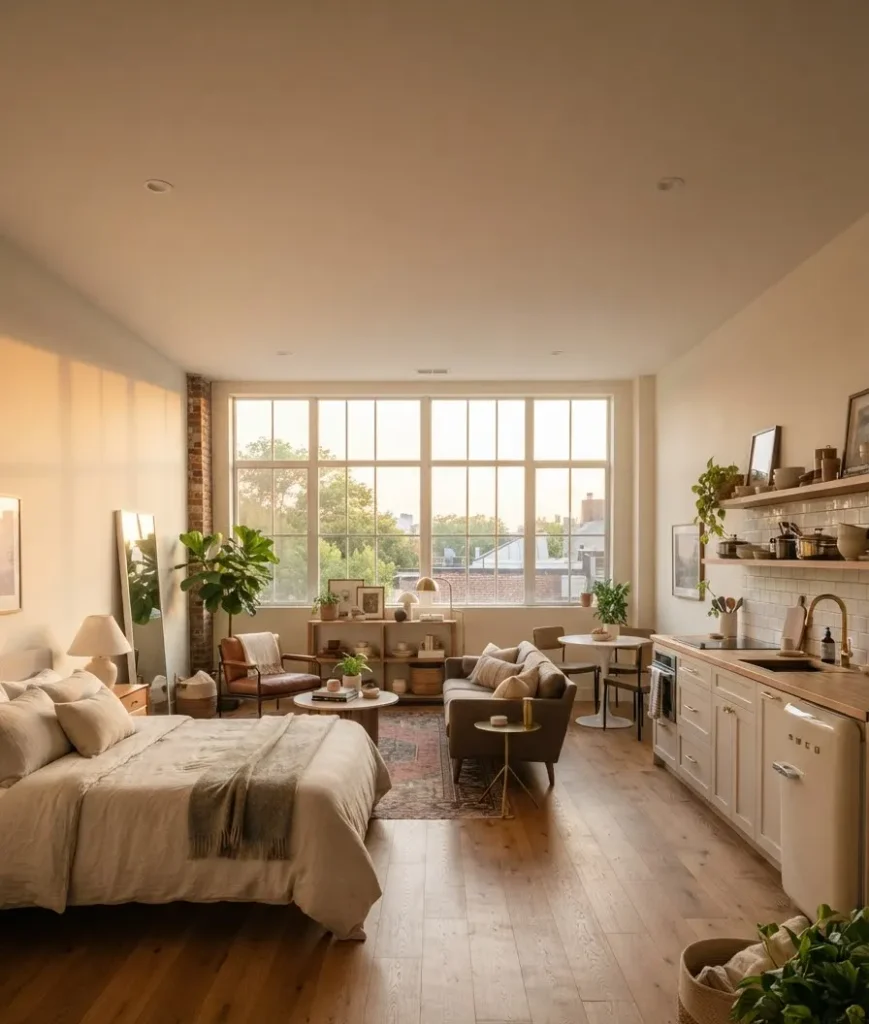
A short table of quick wins
| Change | Cost | Impact |
|---|---|---|
| Add a large mirror | Low | High (light, perceived space) |
| Install floating shelves | Low-Medium | High (vertical storage) |
| Get a storage bed frame | Medium-High | Very high (biggest space eater, solved) |
| Add a rug to zone the space | Low | Medium (visual separation) |
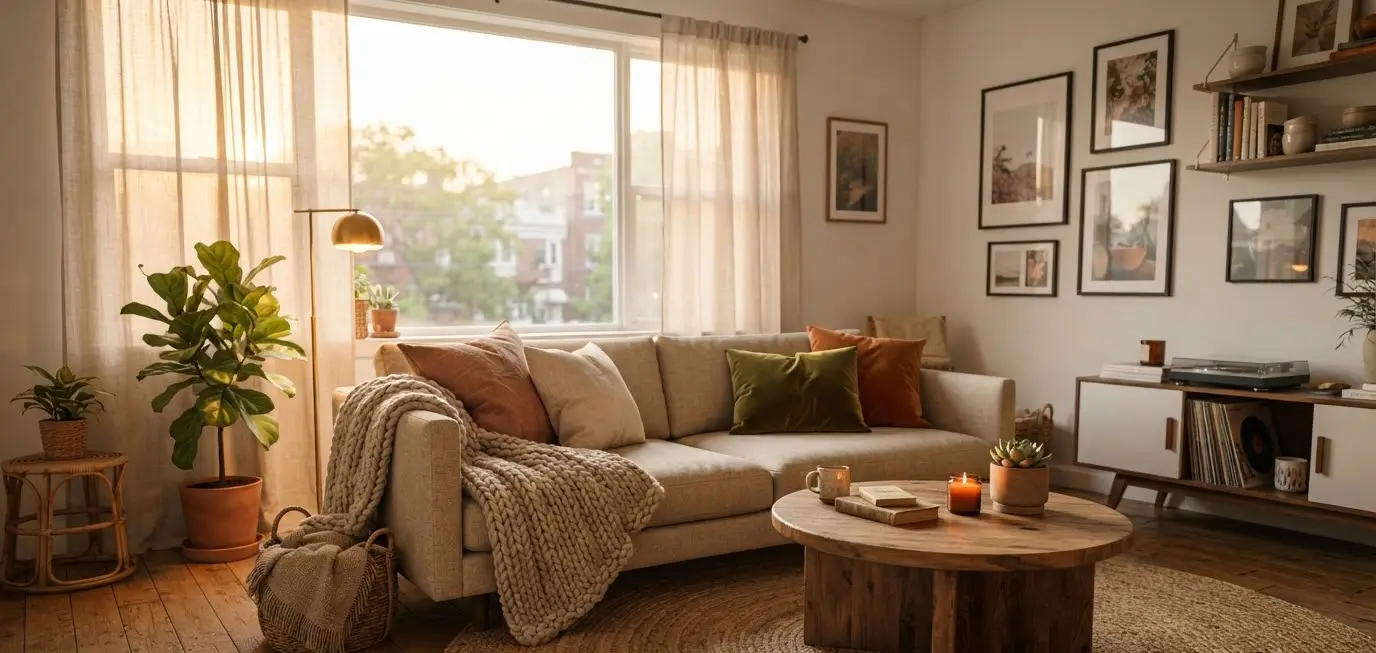
Frequently asked questions
Do room dividers actually work in a studio apartment? Yes, especially the lightweight kind like curtains, bookshelf dividers, or folding screens.
They create privacy and visual separation without needing permission from a landlord to install anything permanent.
What’s the single best investment for a small studio? A storage bed frame, hands down.
It solves the biggest space problem (the bed itself) while adding capacity you didn’t have before.
Can I make a studio apartment feel less cramped without spending much money? Yes.
A mirror, a rug, and rearranging furniture to keep walking paths clear will do more for the “feel” of your space than most purchases will.
Final thought
A one-room apartment isn’t a limitation, it’s a puzzle.
And once you start treating it that way, the small footprint stops feeling like a compromise and starts feeling like a design challenge you’re actually winning.
What’s the one change you’re making first: the bed, the closet, or that empty wall space you’ve been ignoring? I’d genuinely love to know which one you tackle.