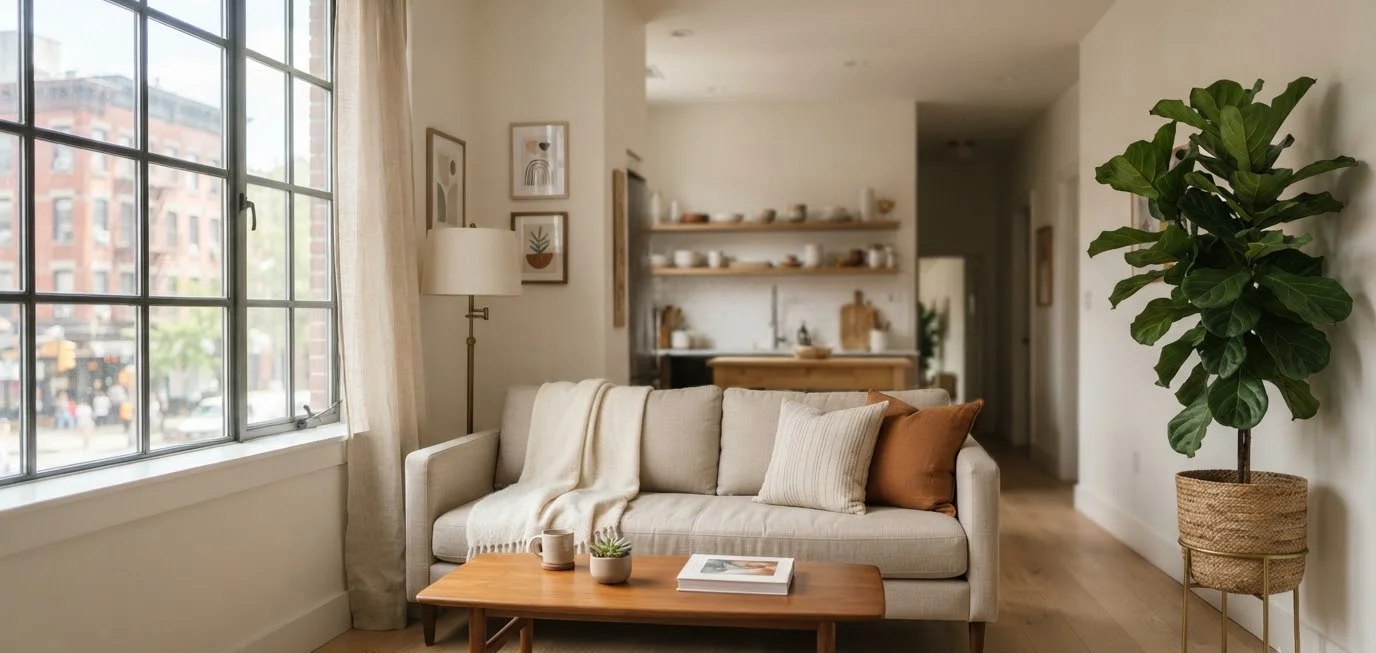
I lived in a 420-square-foot studio in my twenties. One room did the job of a bedroom, living room, office, and occasional gym.
I learned every trick in this list the hard way, usually while stubbing my toe on a coffee table I didn’t have room for in the first place.
Small doesn’t have to mean cramped. It just means every choice matters more.
So let’s get into the ideas that actually move the needle, not the generic “just declutter” advice you’ve read a hundred times already.
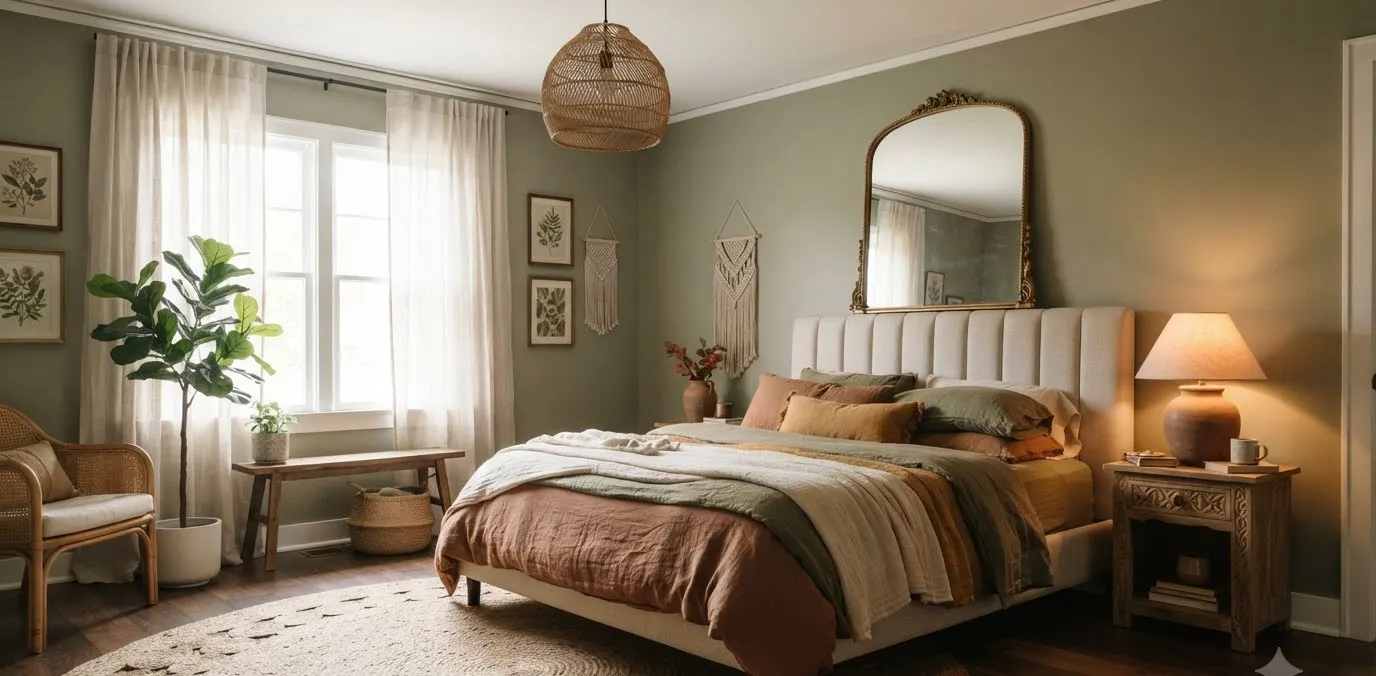
Anthropologie Home Decor Inspiration Easy Aesthetic Upgrades For Your Bedroom
Discover More →Storage tricks that free up real floor space
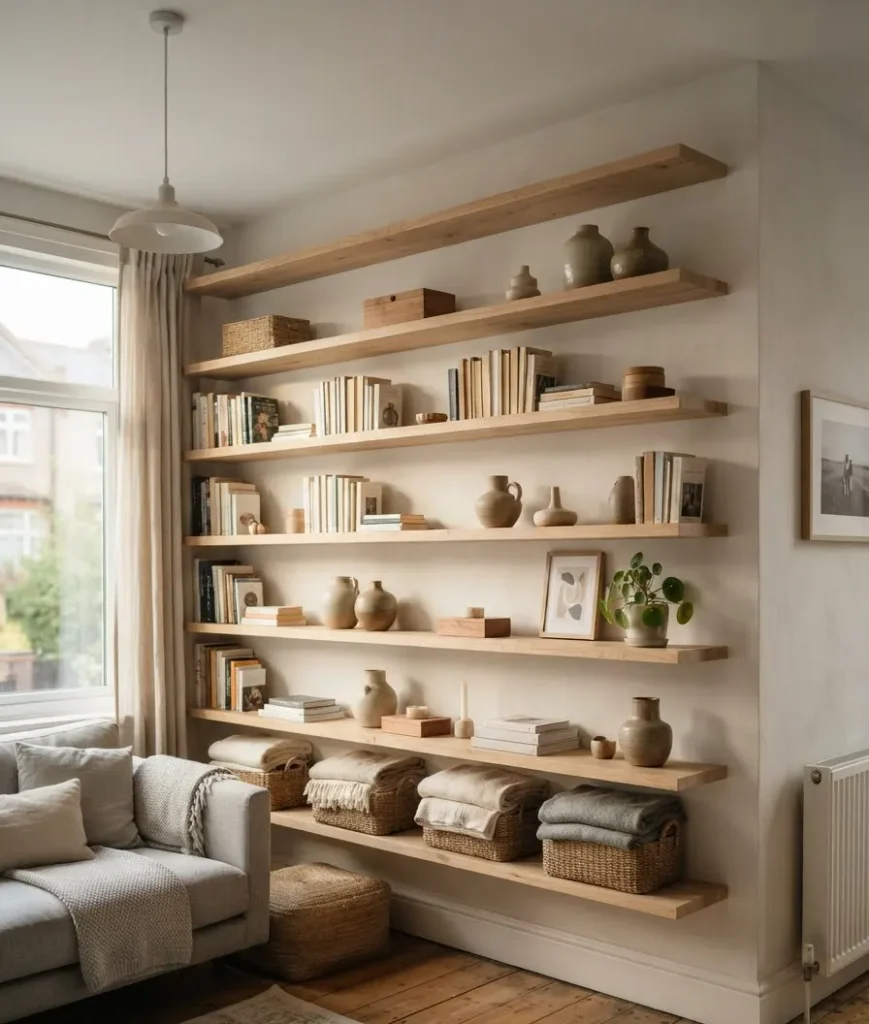
1. Go vertical with your shelving. Floor space is the scarce resource in a small apartment, but wall space almost never gets used up.
Install shelves from waist height up to the ceiling and suddenly you’ve got storage that costs zero square feet.
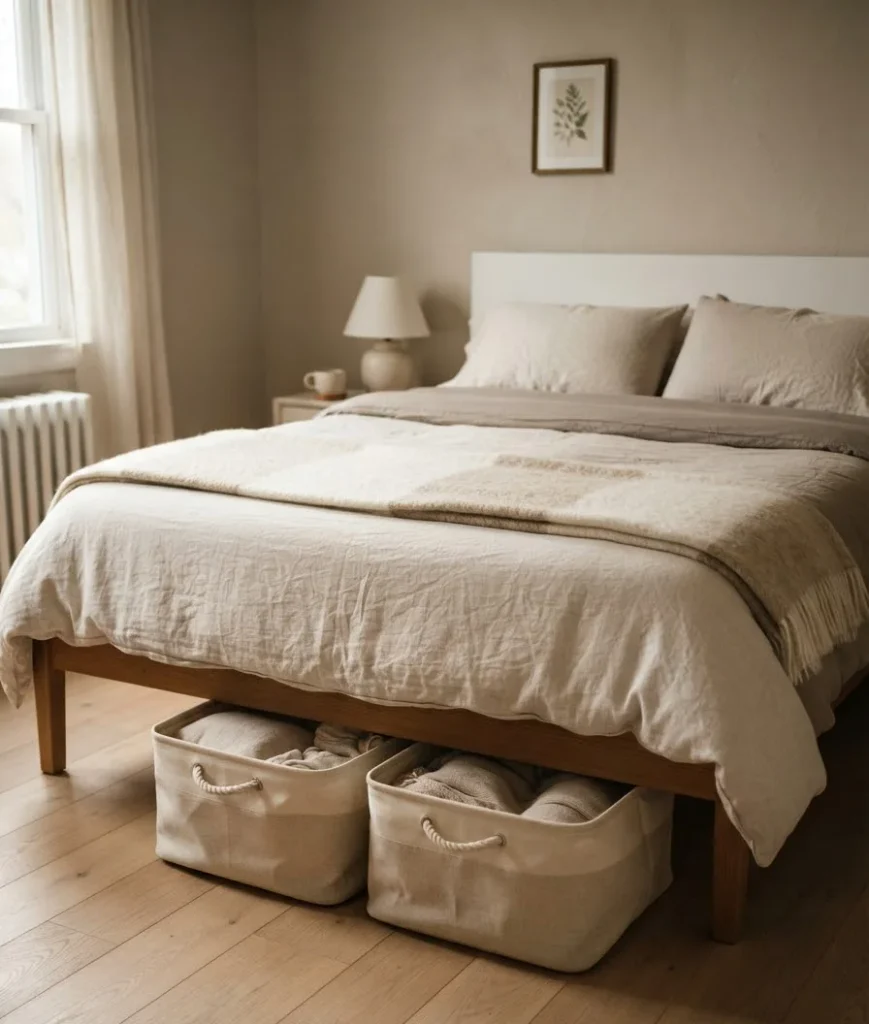
2. Use the space under your bed. Rolling bins, flat storage boxes, even a bed frame with built-in drawers turns dead space into a second closet.
I store off-season clothes under mine, and my actual closet finally has breathing room.
3. Hang a pegboard in the kitchen. Pots, pans, and utensils off the counter means more counter to actually cook on.
It looks intentional too, not like a garage sale.
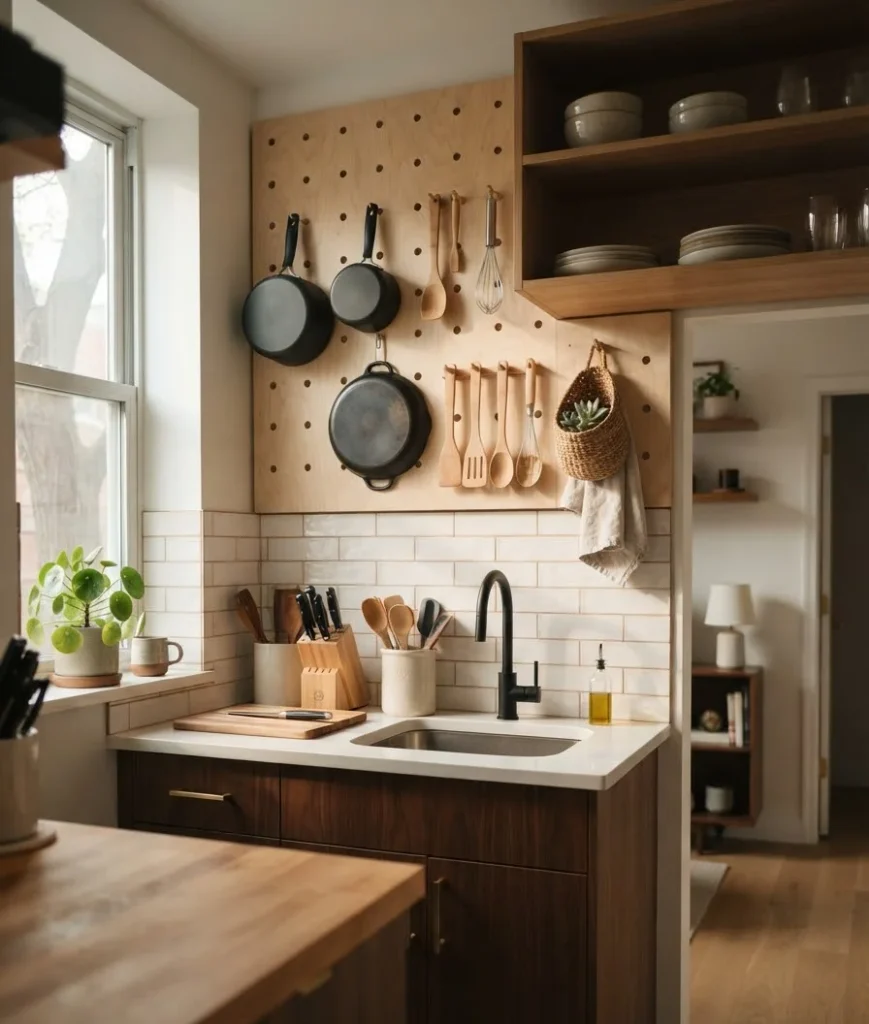
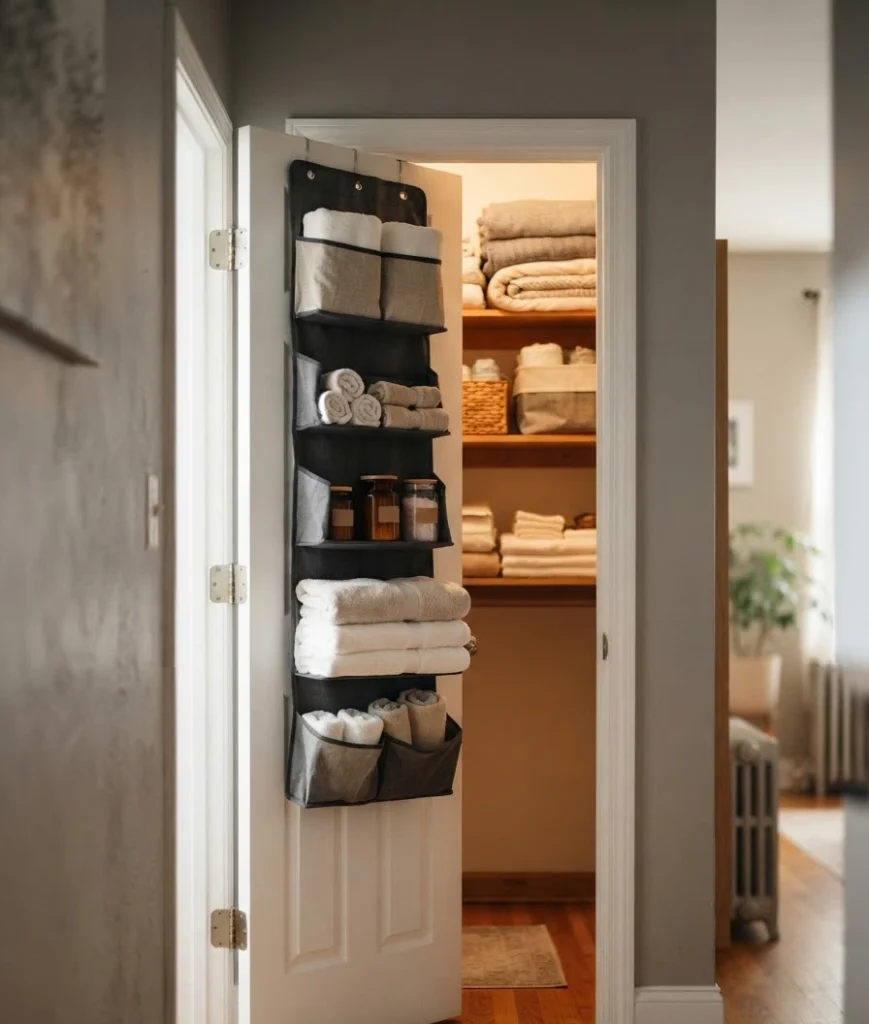
4. Try door-back organizers. The back of your pantry, closet, or bathroom door is prime real estate that most people ignore completely.
A simple over-door organizer can hold spices, shoes, or cleaning supplies.
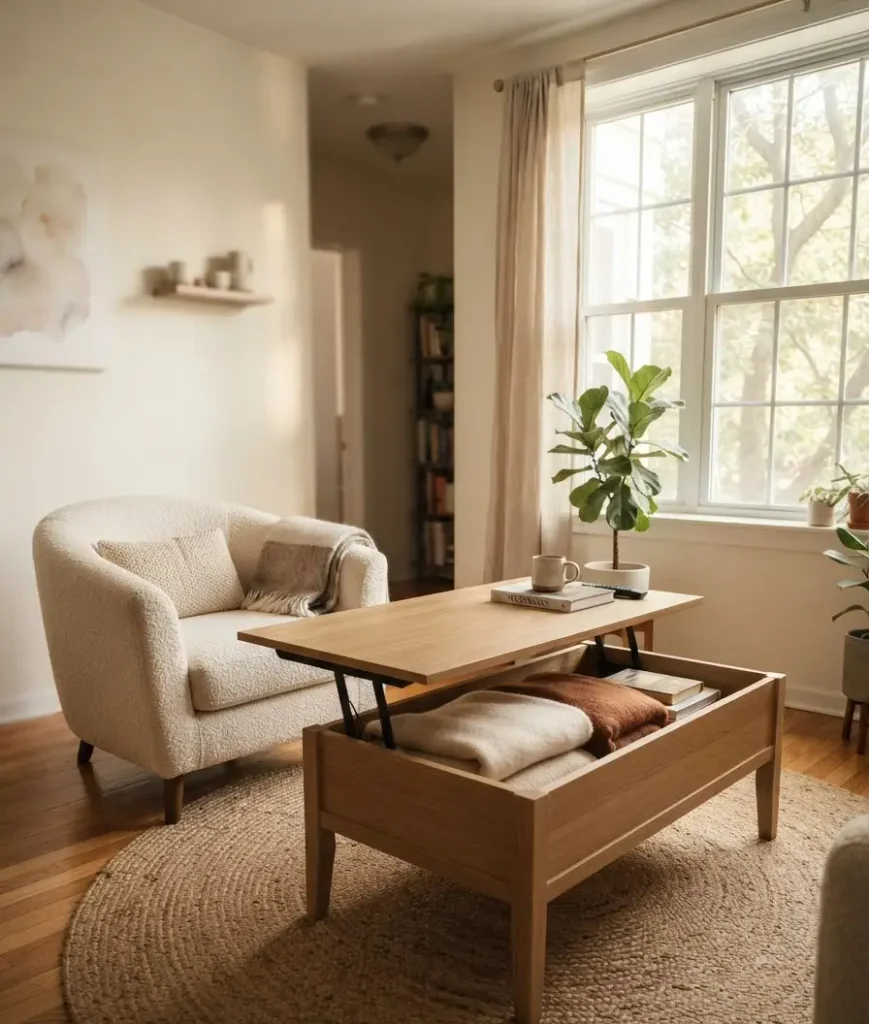
5. Swap your coffee table for one with storage. A lift-top or drawer-based coffee table hides blankets, remotes, and the junk that otherwise piles up on top.
Apartment Therapy’s storage roundup has some genuinely clever double-duty furniture picks worth stealing.
Color and light tricks that trick the eye
6. Paint your walls a light, cool shade. Soft grays and pale blues visually recede, which makes walls feel farther apart than they are.
According to Sherwin-Williams’ guide on making rooms look bigger, colors with a light reflective value above 65 do the heaviest lifting here.
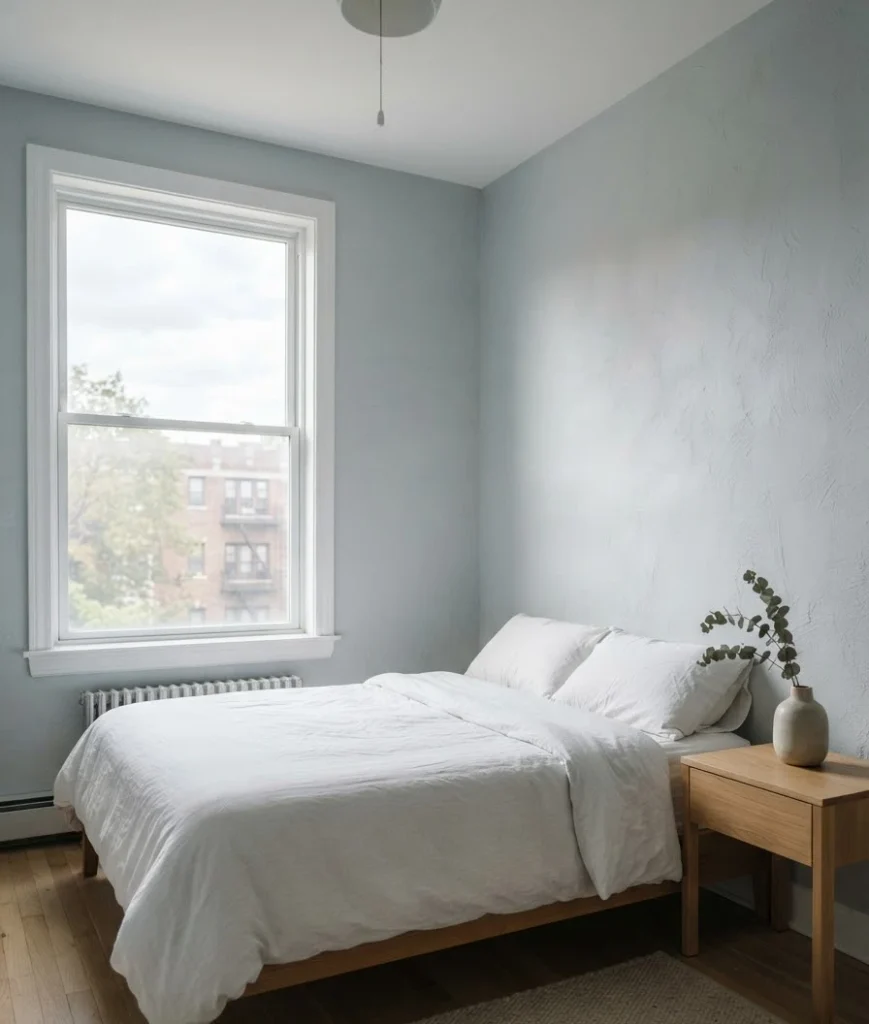
7. Keep your ceiling a shade lighter than your walls. This draws the eye upward and adds a sense of height you didn’t know you were missing.
It’s a five-minute paint decision with an outsized effect.
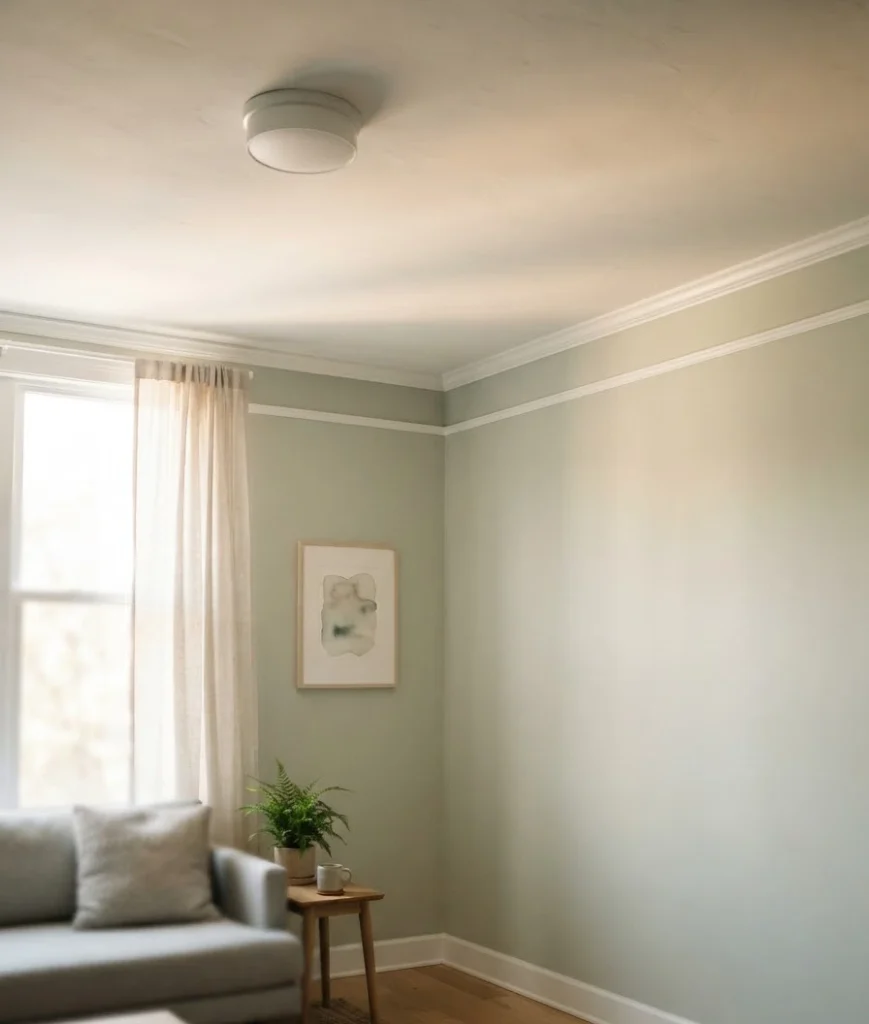
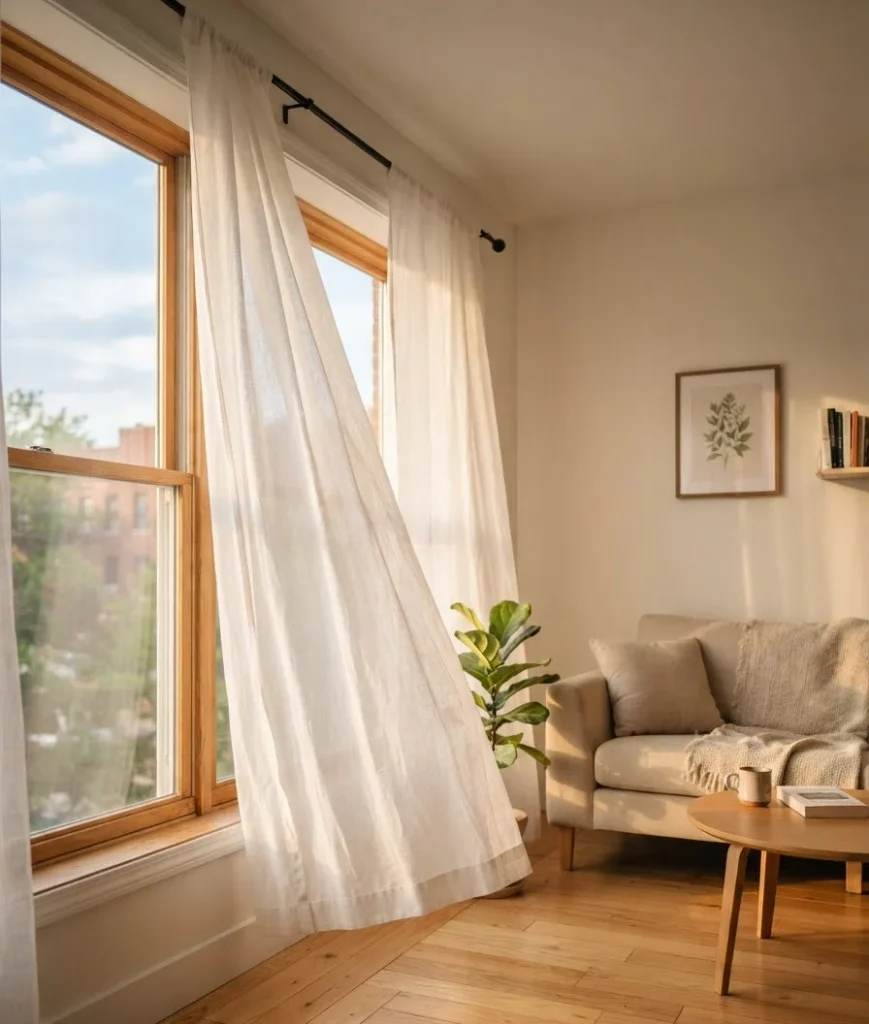
8. Maximize natural light. Skipheavy drapes. Sheer curtains or simple blinds let in more sun, and more sun reads as more space.
My apartment felt twice as big the day I ditched my thick blackout curtains for something lighter.
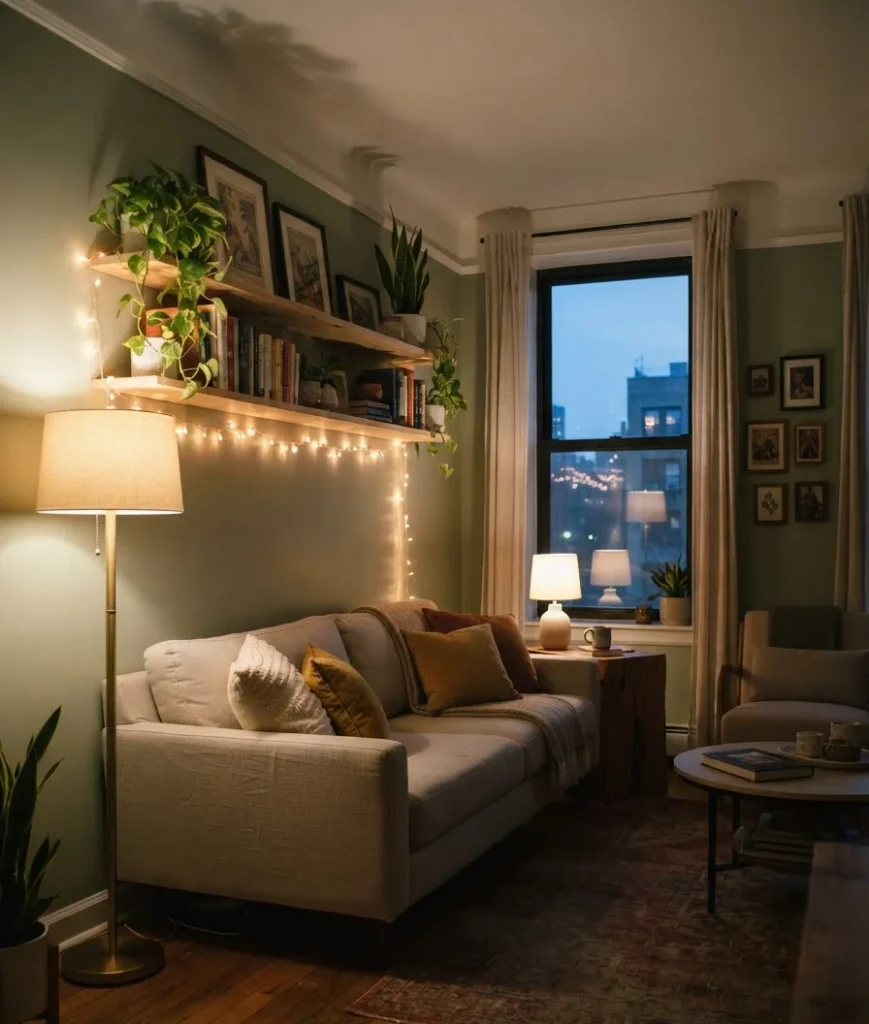
9. Layer your lighting. One overhead bulb creates flat, boxy light.
Add a floor lamp, a table lamp, and maybe a string of warm LEDs, and the room gains depth instead of looking like an interrogation room.
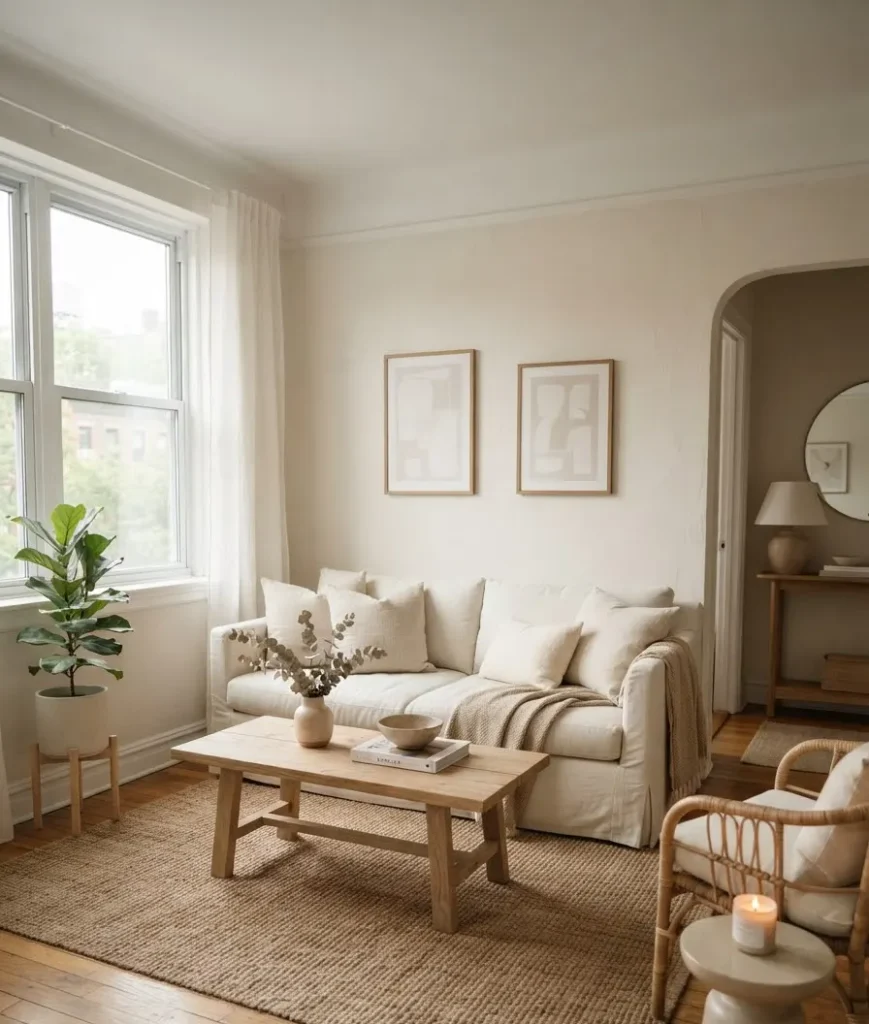
10. Use a monochromatic color palette. Sticking to one or two tones throughout a room removes visual breaks that make a space feel chopped up. It’s not the most exciting design move, but it works every single time.
Furniture that pulls double duty
11. Get a sofa bed that doesn’t look like a sofa bed. Modern designs skip the lumpy mattress-in-a-couch look entirely.
Guests can crash comfortably, and your living room doesn’t scream “I sleep here too.”
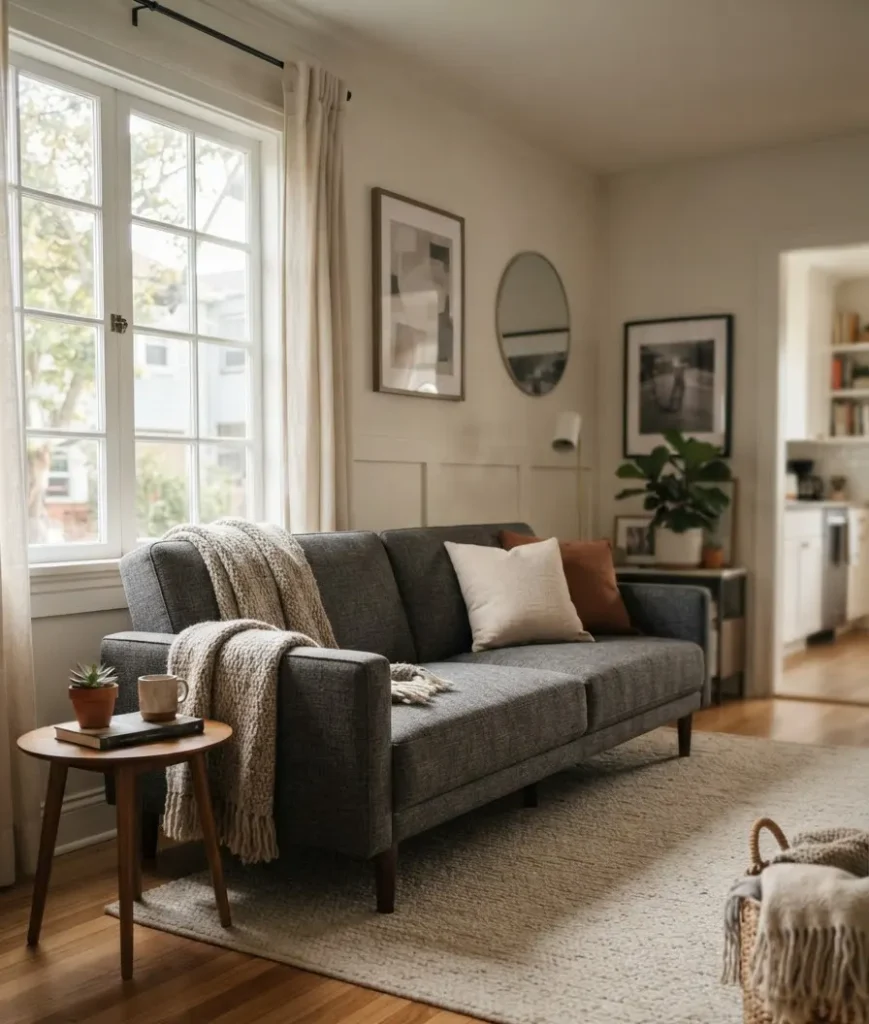
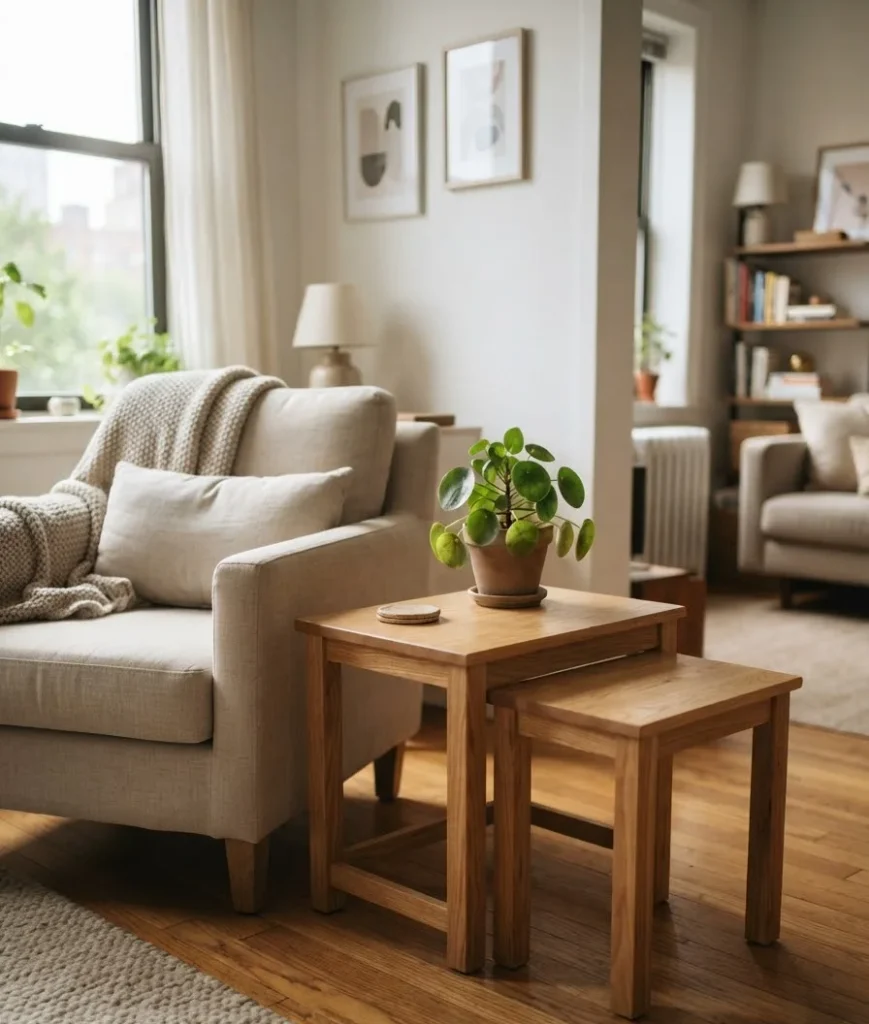
12. Choose a nesting table set instead of one big coffee table. Pull them apart when you need extra surface area, tuck them together when you don’t. Simple, flexible, and it takes up a fraction of the footprint.
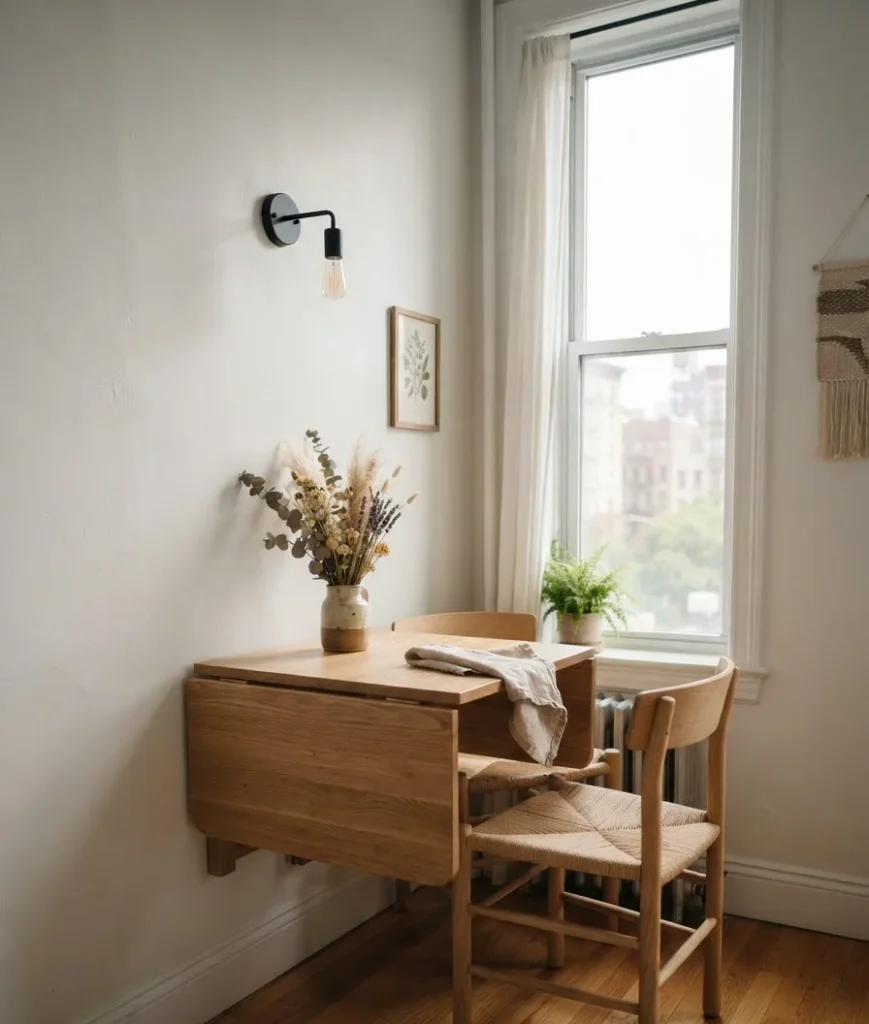
13. Pick a dining table that folds or extends. A drop-leaf table can seat two most days and expand for the rare dinner party.
I use mine folded down as a plant stand more often than I use it as a table, honestly.
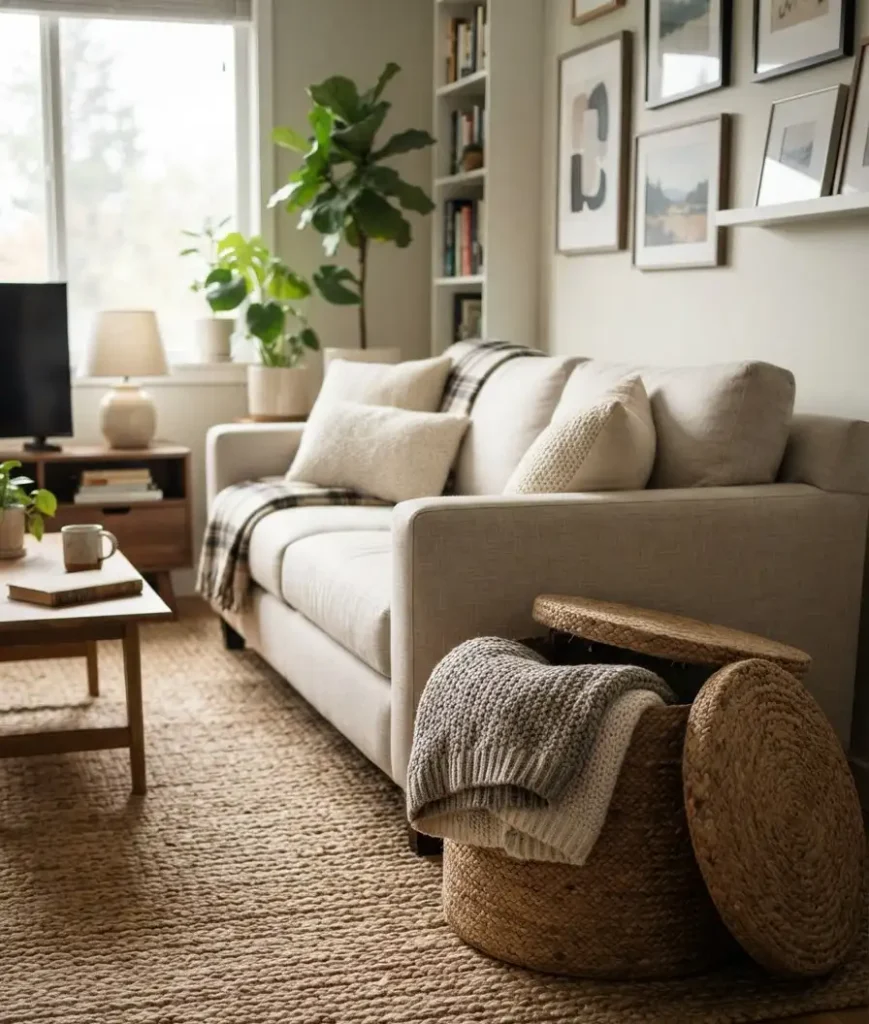
14. Use ottomans with hidden storage. Extra seating, a footrest, and a place to stash blankets, all in one object. Few pieces of furniture work this hard.
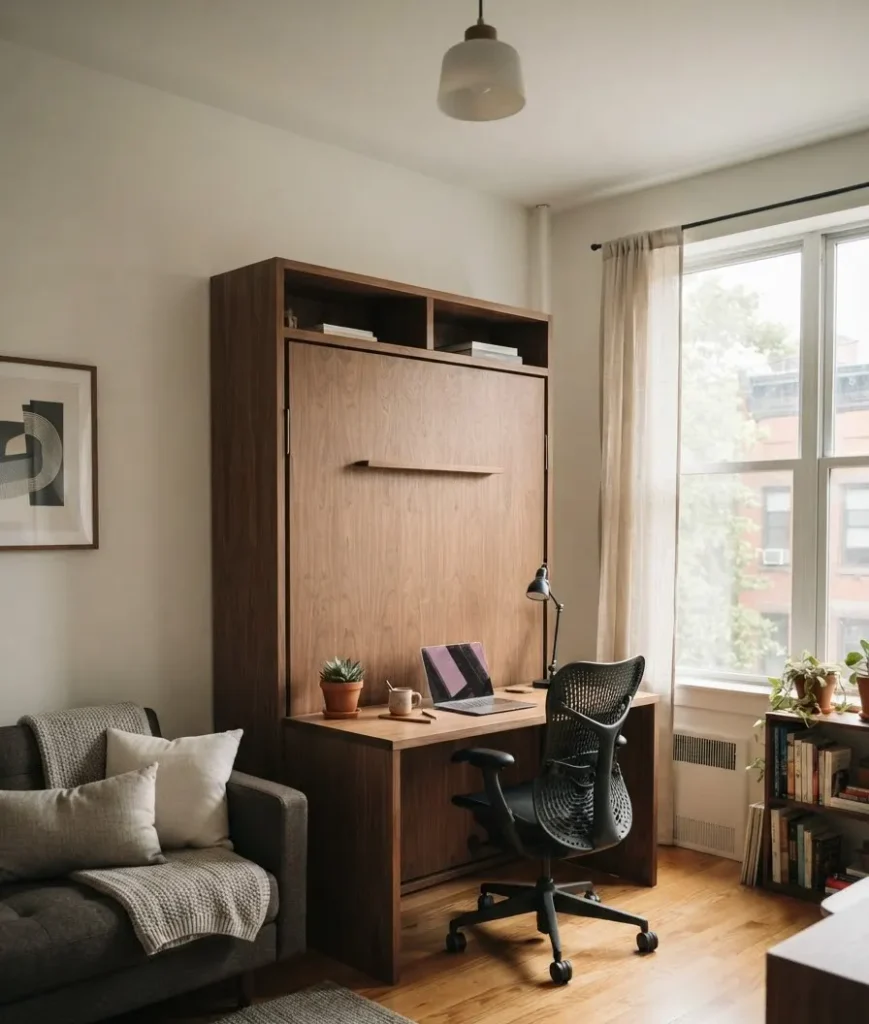
15. Try a Murphy bed if your bedroom is really the culprit. Folding the bed away during the day can turn a bedroom into a functional office or reading nook.
It’s a bigger investment, but for a truly tiny room, it changes everything.
Mirror and reflection tricks
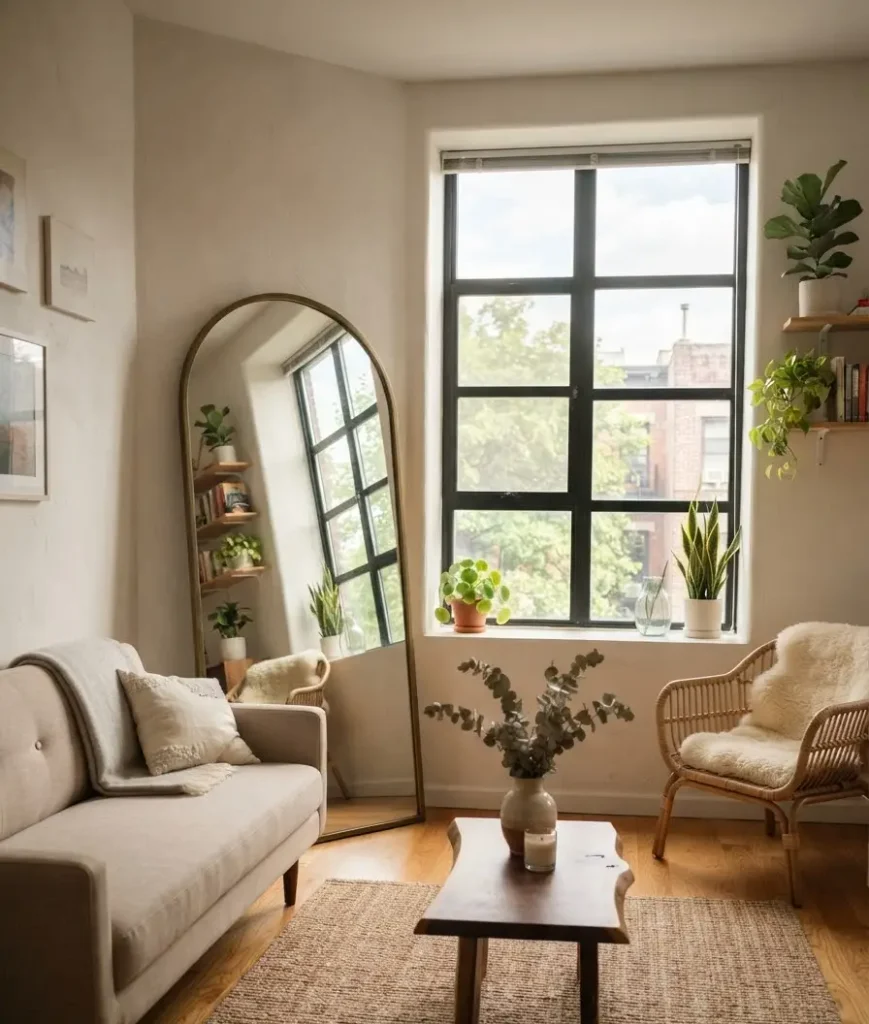
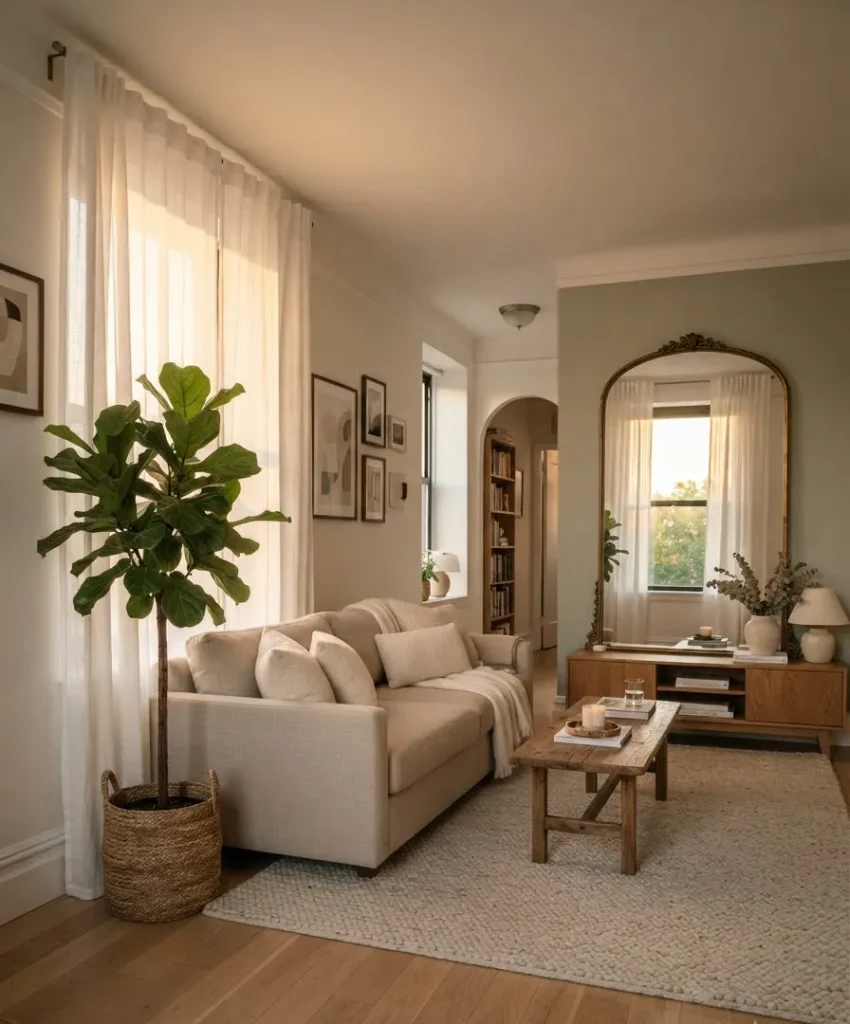
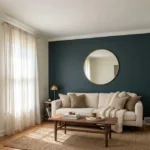
16. Hang a large mirror across from your main window. It bounces natural light around the room and doubles the sense of openness.
This is the single easiest upgrade on this whole list, and it’s the one people notice first.
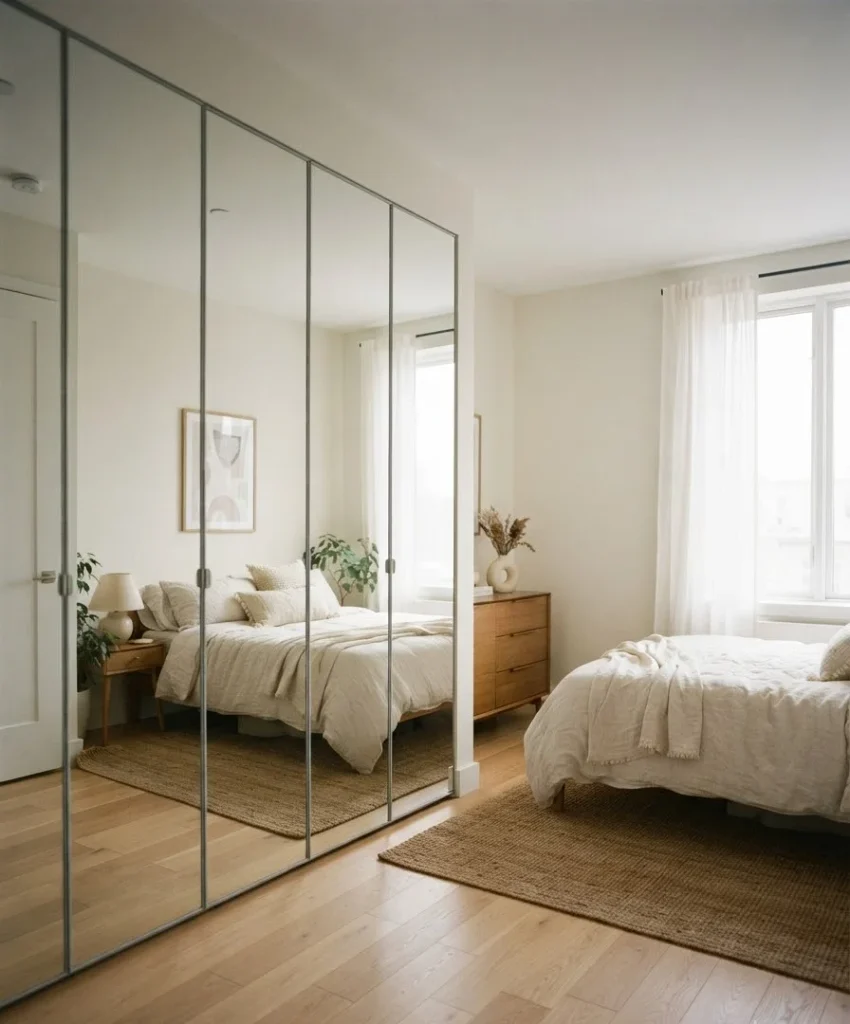
17. Use mirrored closet doors. Instead of a plain door, mirrored panels do double duty as both function and illusion.
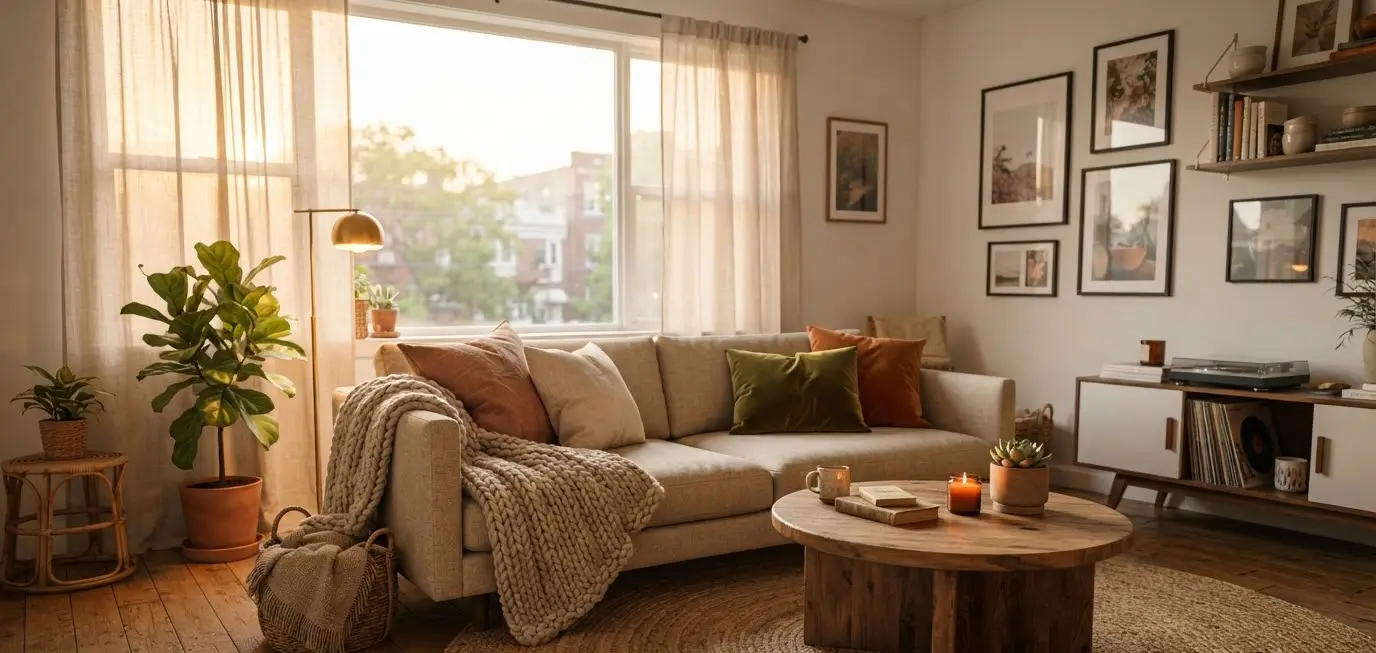
Ever wonder why hotel rooms feel bigger than they are? A lot of that is mirrored surfaces doing quiet work.
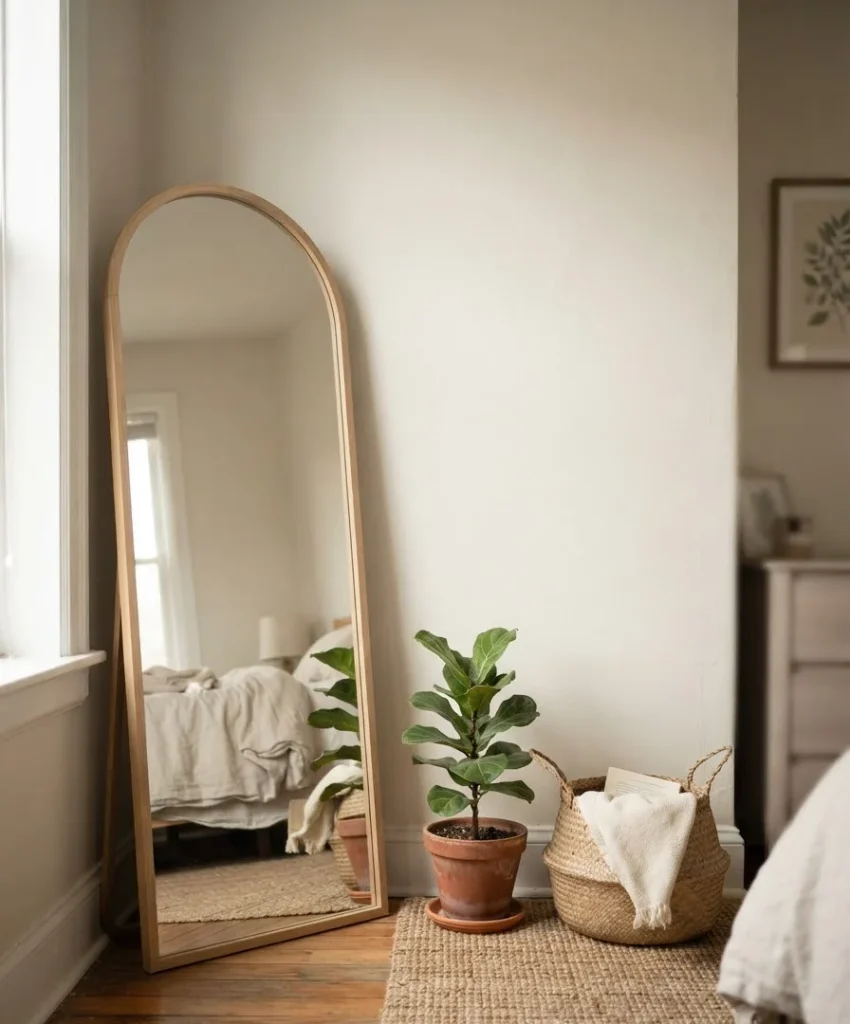
18. Lean a floor mirror in a corner. It fills an awkward dead corner while adding depth to the whole room.
Plus, it’s genuinely useful for checking your outfit before you leave.
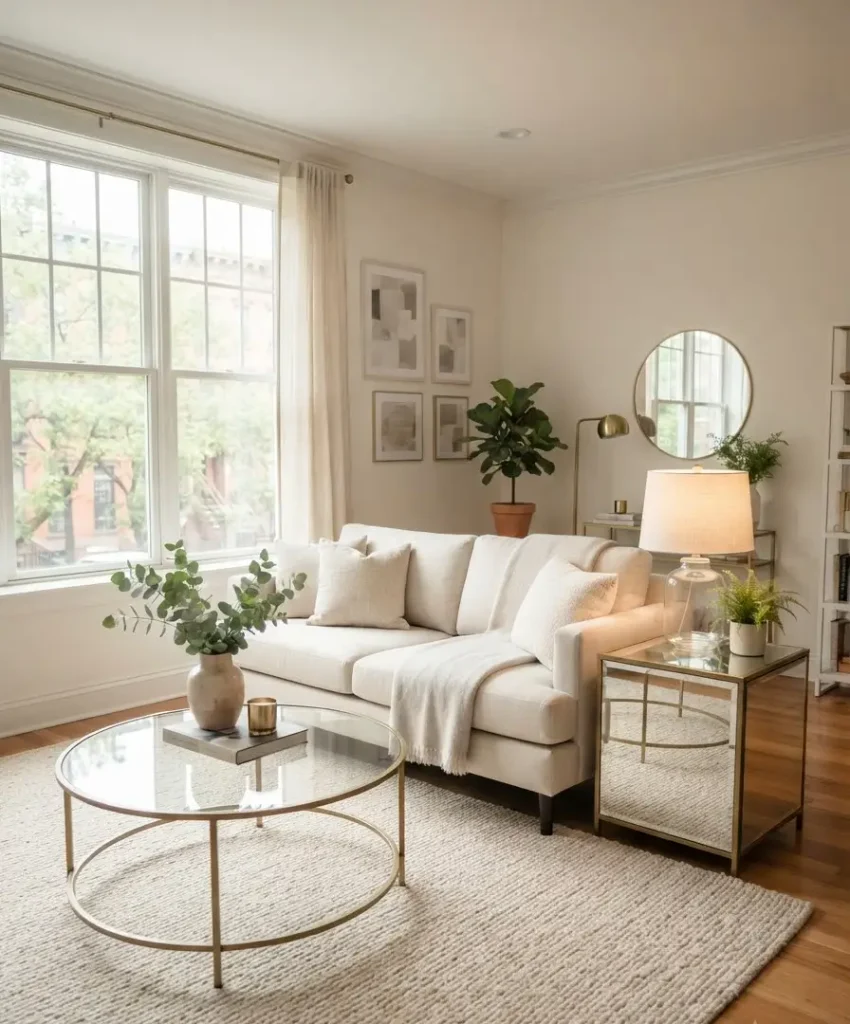
19. Add mirrored or glass furniture pieces. A glass coffee table or mirrored side table takes up visual space without taking up actual space.
Your eye reads right through it instead of stopping at it.
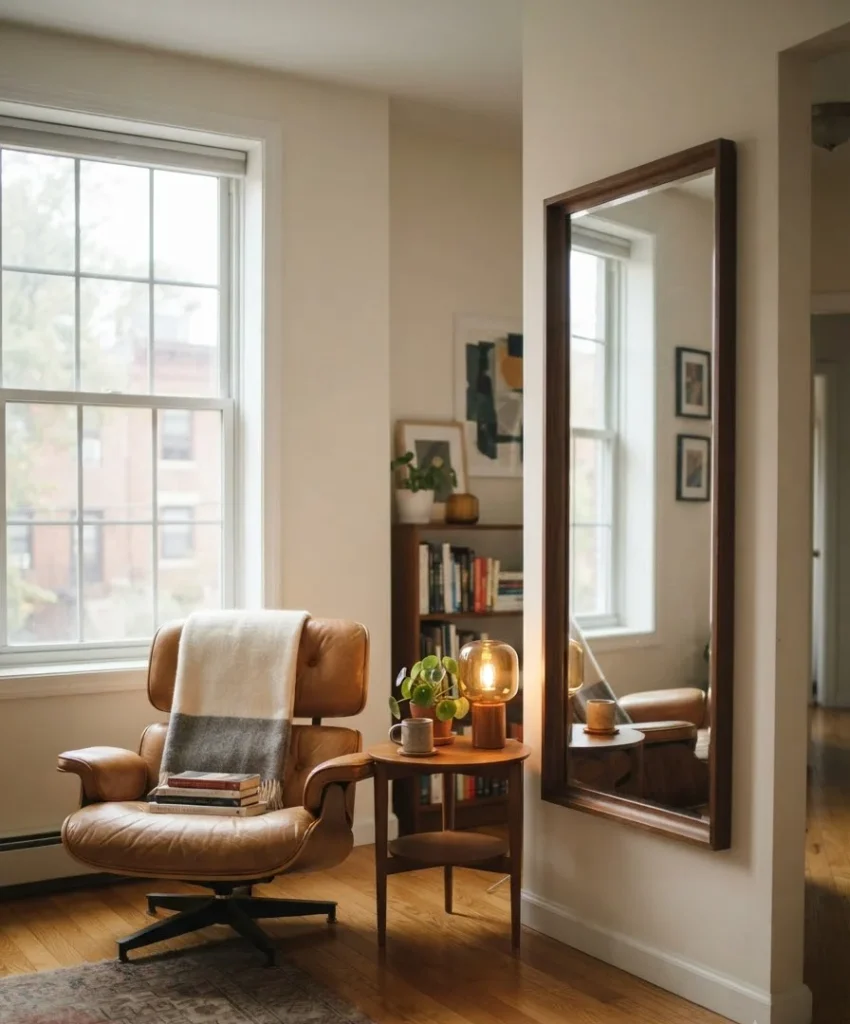
20. Place a mirror perpendicular to a window, not directly across. This spreads light sideways through the room instead of just bouncing it back out the same window.
A small adjustment, but it makes a real difference in darker apartments.
Making the most of vertical space
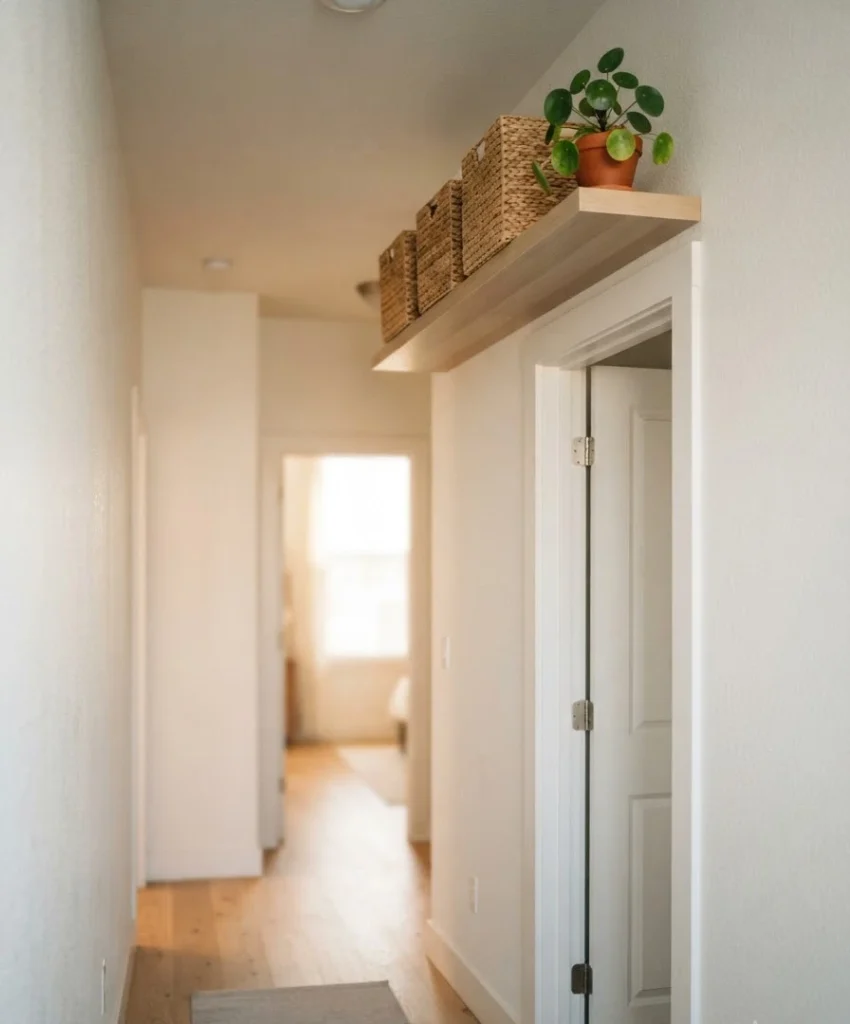
21. Install floating shelves above doorways. That strip of wall above every door frame usually sits empty.
Books, baskets, or decorative objects up there add storage without crowding your sightline.
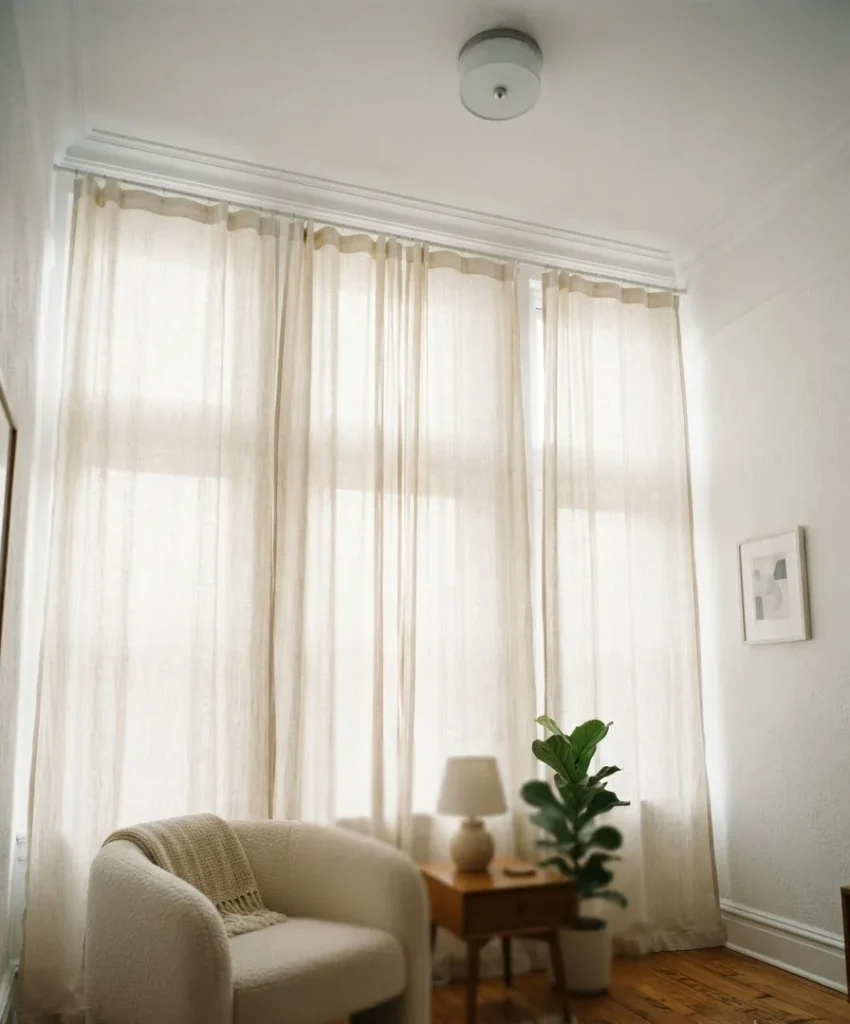
22. Hang curtains close to the ceiling, not just above the window frame. This makes windows look taller and the whole wall feel higher.
It’s a designer trick that costs nothing extra, just a different curtain rod placement.
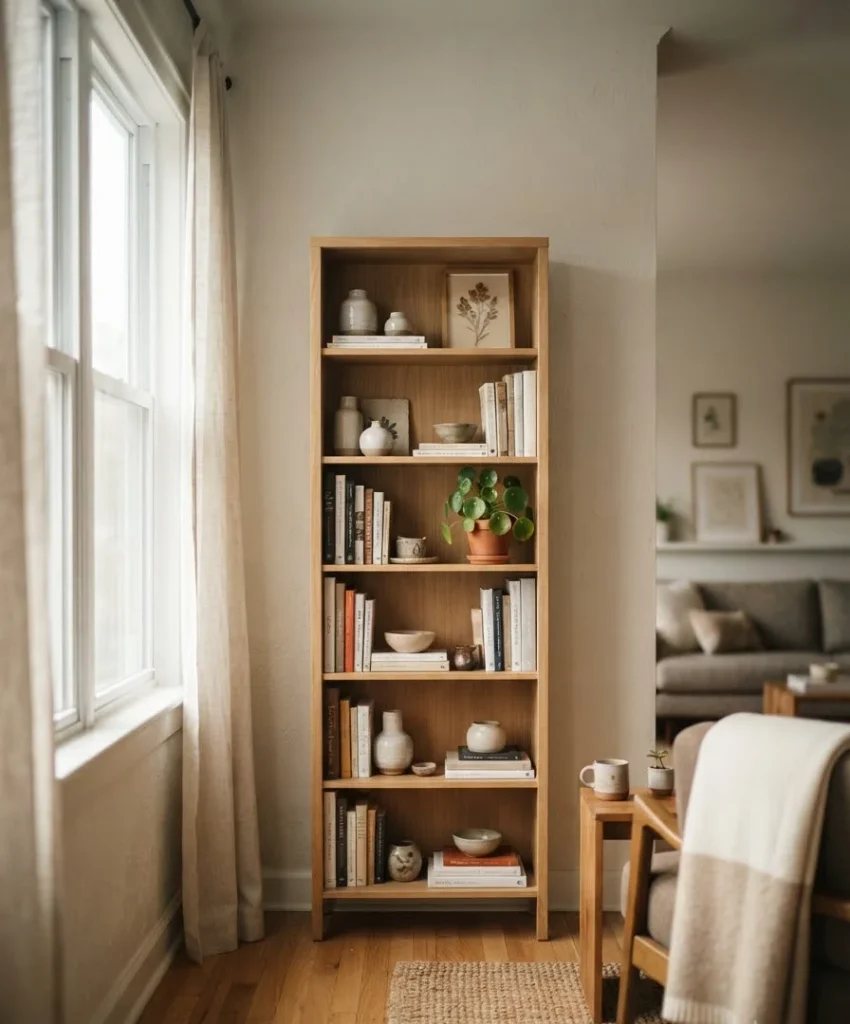
23. Use tall, narrow bookshelves instead of wide, short ones. They store just as much while leaving more floor visible around them.
A room with more visible floor always reads as bigger.
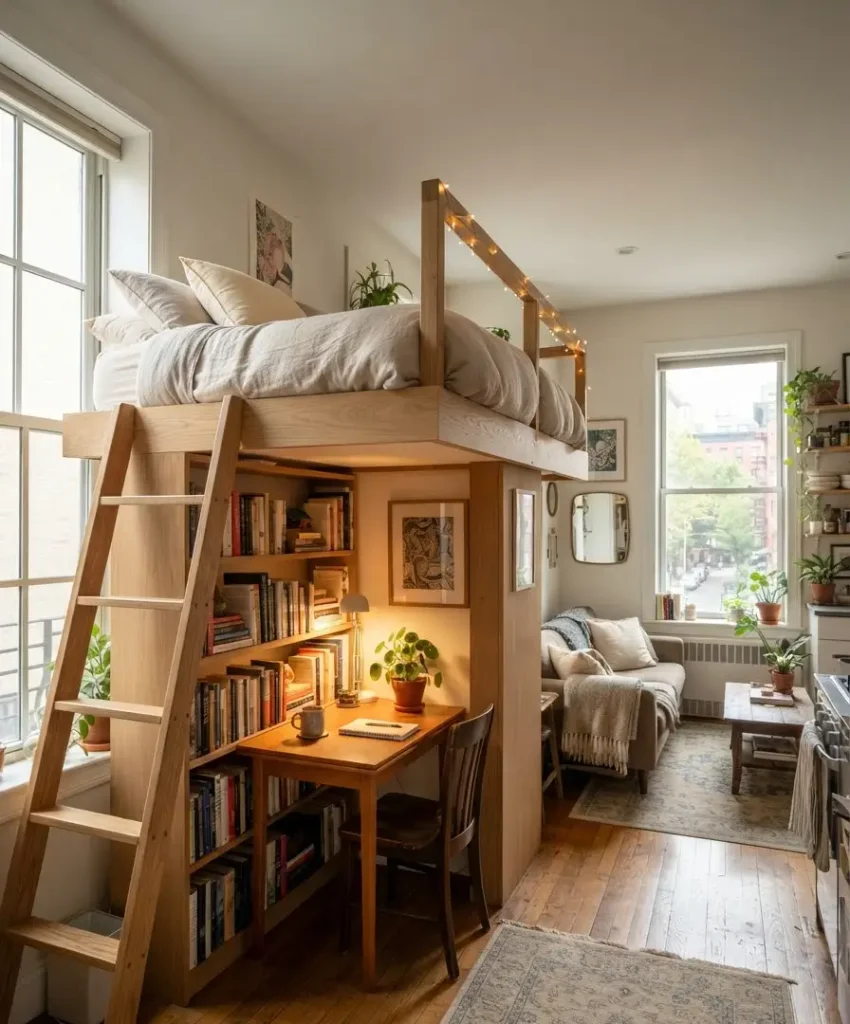
24. Add a loft or platform bed if your ceilings allow it. Reclaiming the space underneath for a desk or seating area effectively gives you two rooms in the footprint of one.
Not every apartment has the ceiling height for this, but if yours does, it’s worth serious consideration.
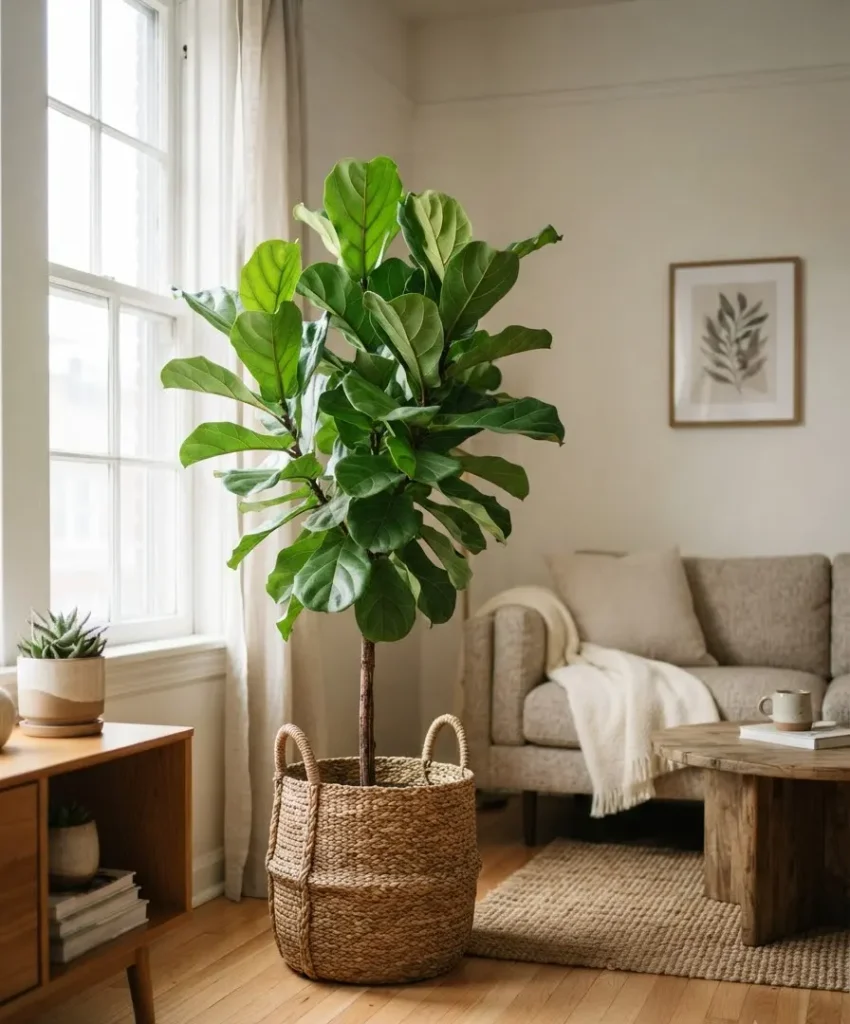
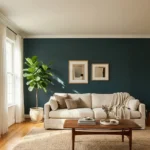
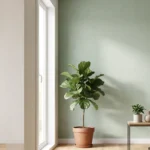
25. Draw the eye up with tall, leafy plants. A fiddle leaf fig or snake plant in a corner adds height and life without eating floor space.
IMO, plants do more for a small room’s mood than almost any other single item.
Smart layout and zoning
26. Float your furniture away from the walls. Pushing everything against the perimeter can actually make a room feel smaller because it creates one big empty void in the middle.
Pulling a sofa a few inches off the wall and adding a rug underneath creates defined zones instead.
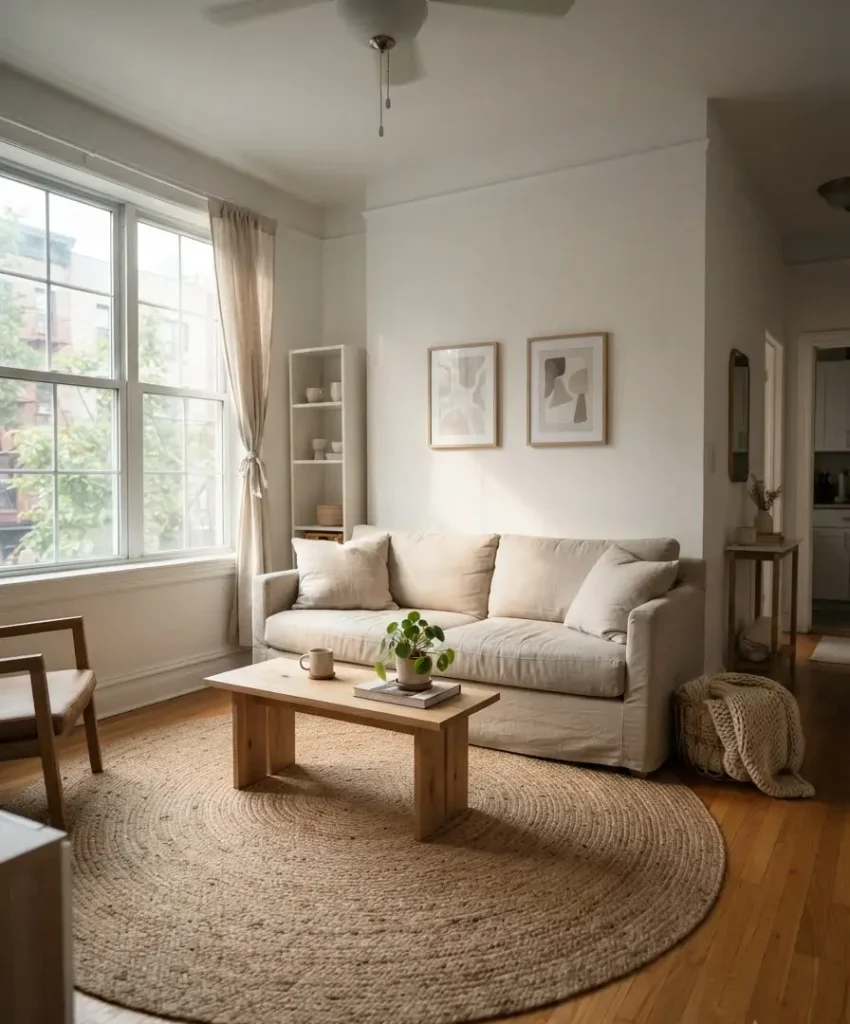
27. Use a rug to define separate “rooms” within one room. A studio apartment can have a distinct living area and sleeping area just through smart rug placement.
It’s an old trick, but it still works because it genuinely tricks the brain into seeing structure.
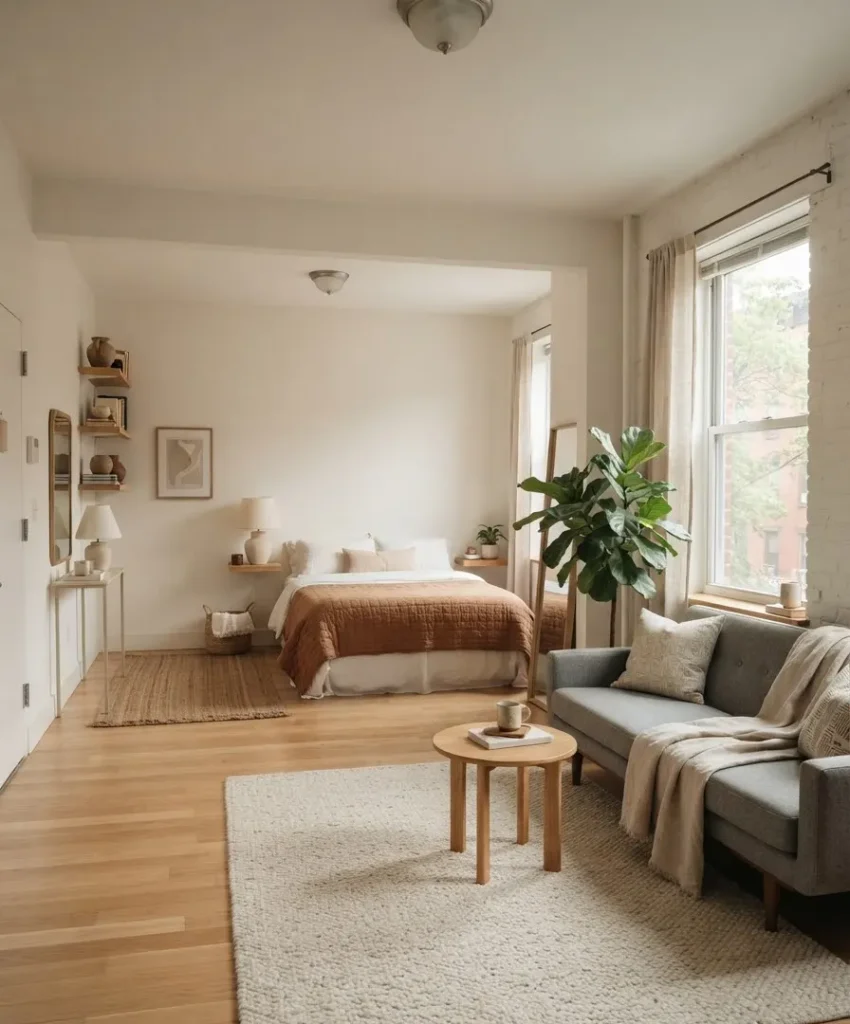
28. Keep walkways clear. A cluttered path between furniture makes a whole room feel tight, even if the furniture itself isn’t oversized.
Walk your own apartment like a guest would and notice where you have to turn sideways.
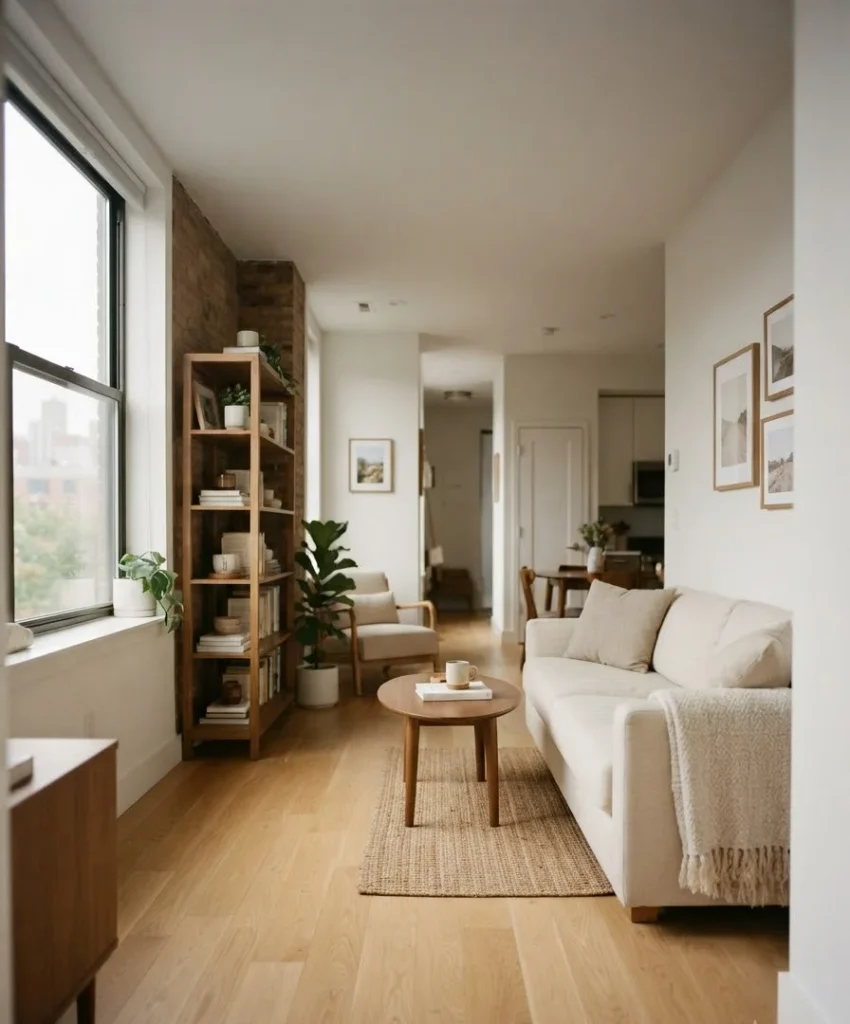
29. Choose furniture with visible legs. Sofas and chairs that sit flush to the floor block sightlines and make a room feel heavier.
Furniture on slim legs lets your eye travel underneath, and that visual continuity reads as more space.
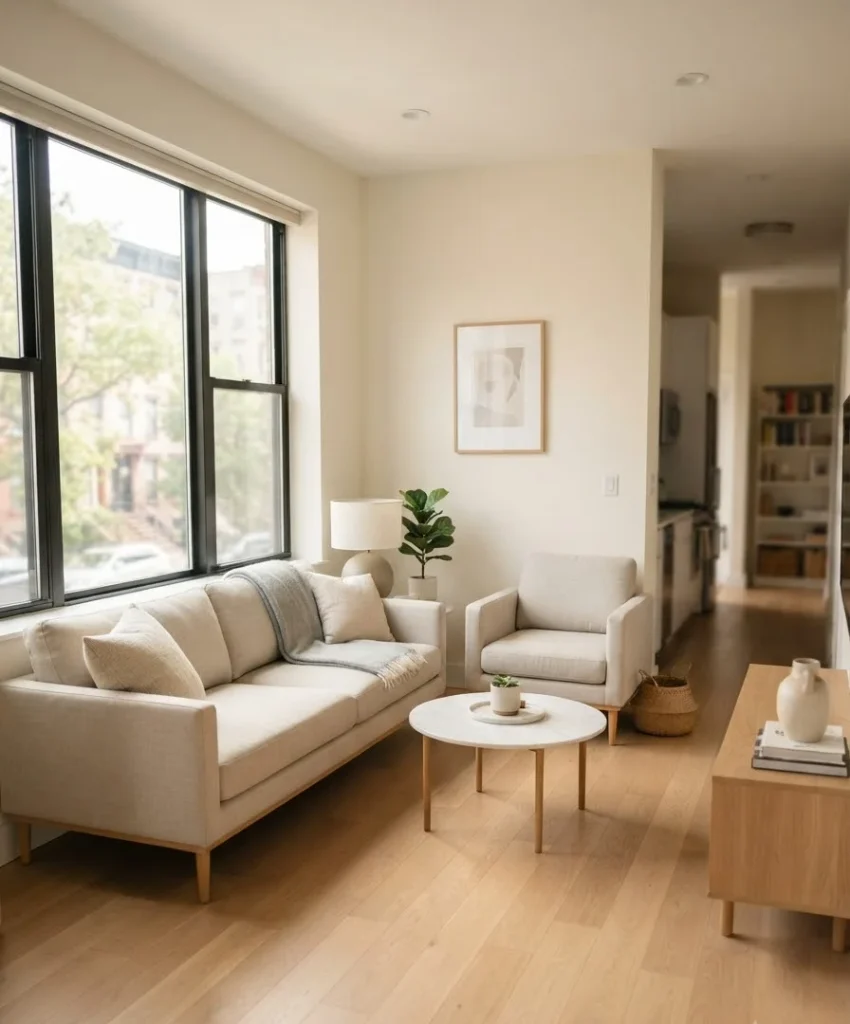
30. Scale your furniture to the room, not to what looks good in a showroom.
A giant sectional might be gorgeous in a furniture store, but it can swallow a small living room whole. Measure twice, buy once. I learned this one the expensive way.
Decor and styling that opens things up
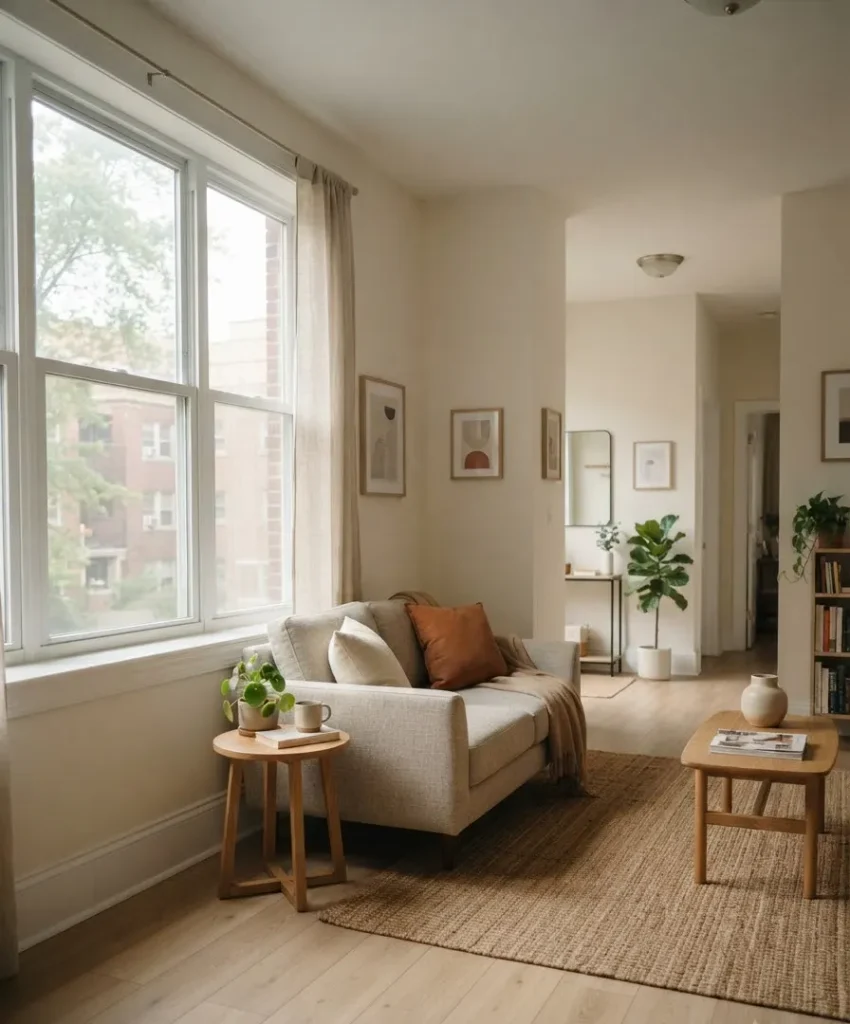
31. Stick to a limited color palette in your decor accents too. Too many competing colors create visual noise that shrinks a room psychologically.
Pick two or three accent colors and repeat them throughout.
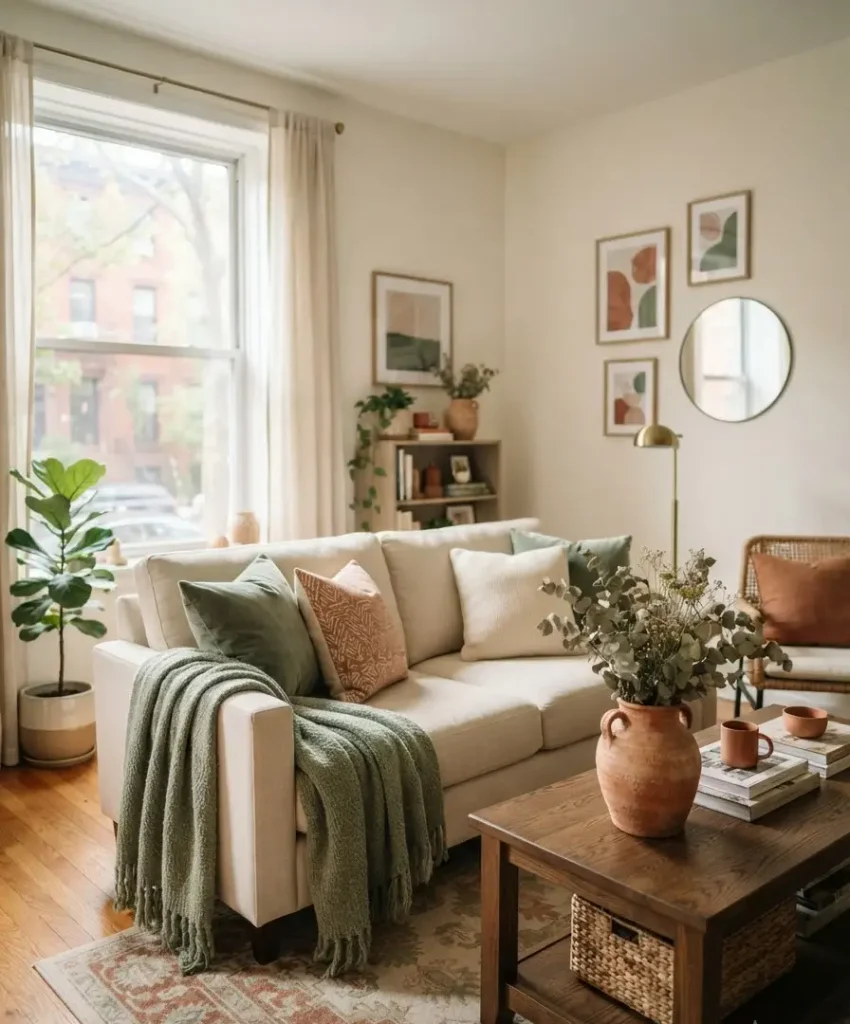
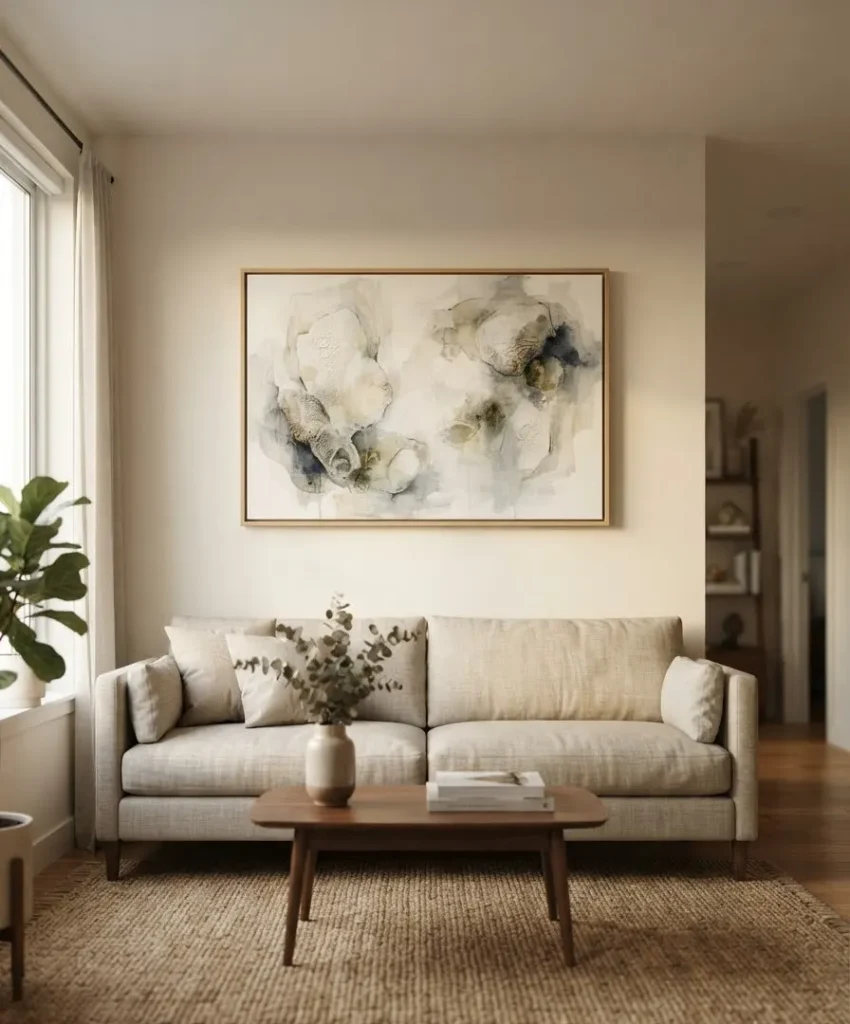
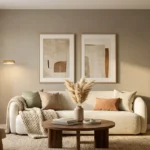
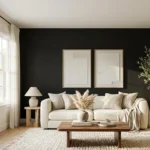
32. Use large-scale art instead of a cluster of small frames. One big piece creates a focal point; a gallery wall of tiny frames can feel busy in a small space.
This one surprised me when I tried it, honestly. A single large print did more for my living room than six smaller ones combined.
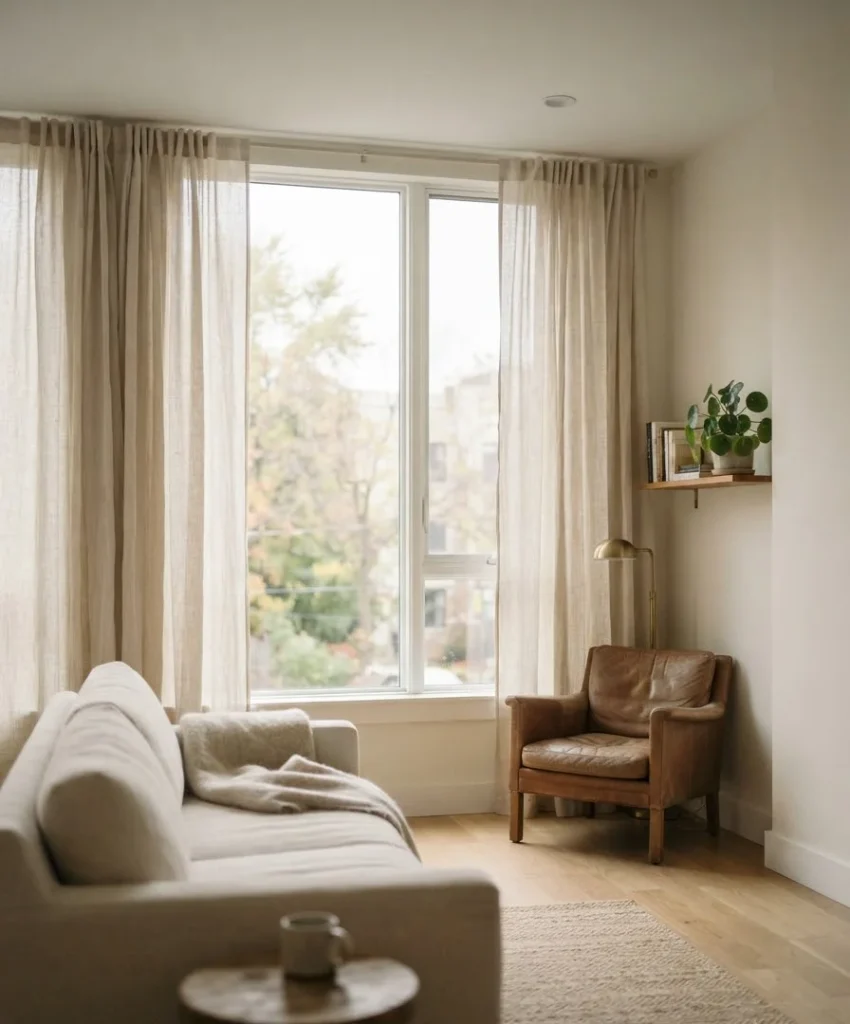
33. Keep window treatments simple and light-colored. Heavy patterns or dark fabric on windows chop up the light and visually shrink the wall.
Simple linen or cotton panels let the room breathe.
34. Edit your decor ruthlessly. Every surface doesn’t need something on it.
A small apartment with breathing room between objects looks more curated than one crammed with knickknacks, no matter how nice those knickknacks are.
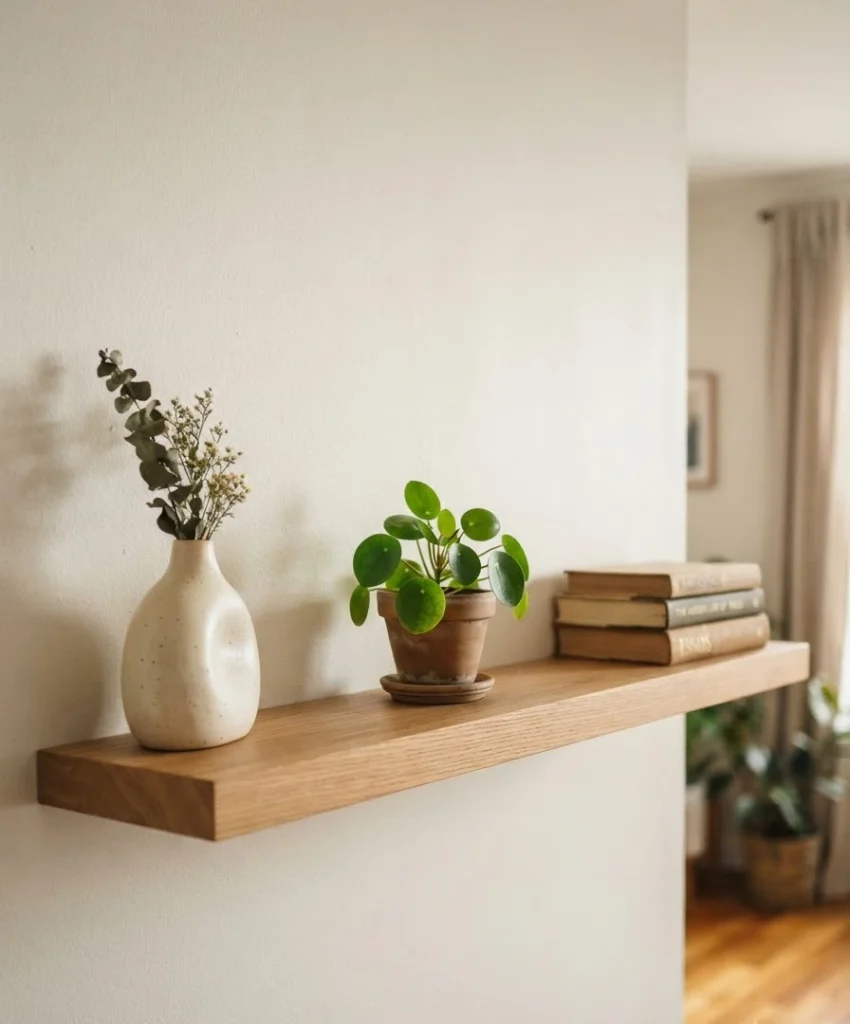
35. Repeat materials across the room. Using the same wood tone for your shelves, table, and picture frames creates visual cohesion instead of a mismatched jumble.
Consistency reads as intentional, and intentional always feels bigger than chaotic.
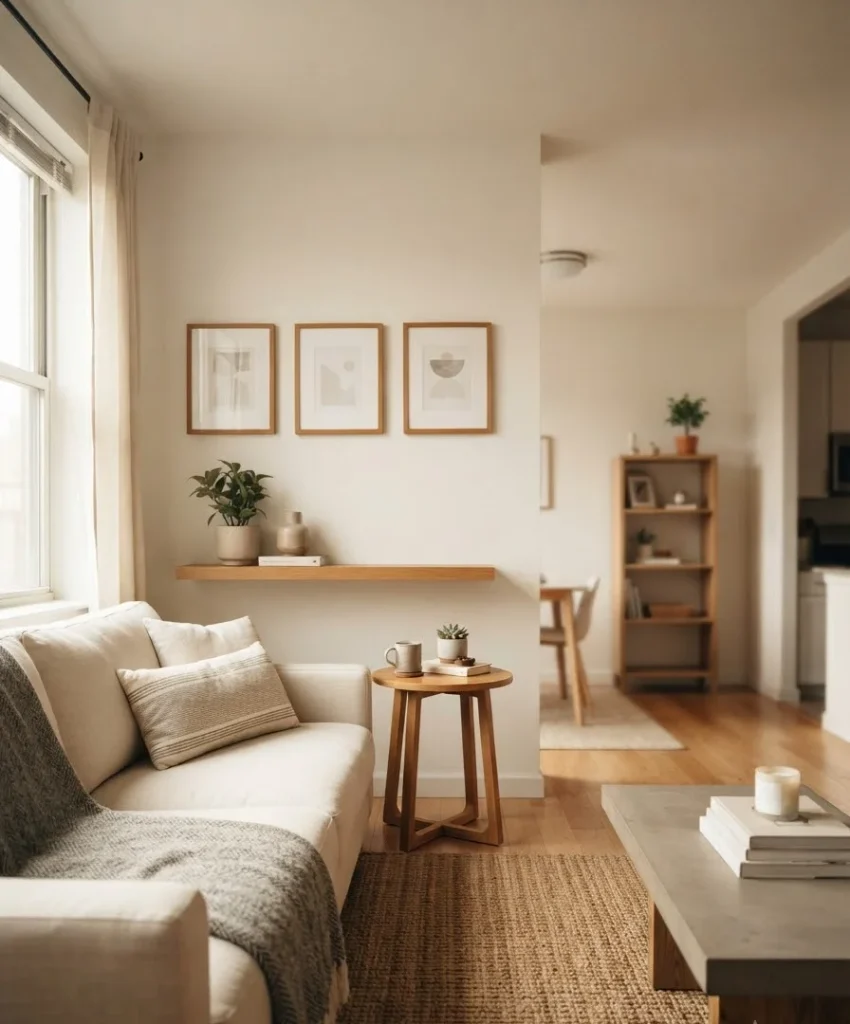
Random thought while writing this: I once spent an entire Saturday rearranging my studio apartment three separate times chasing the “perfect” layout, only to end up back where I started.
Sometimes the best move is picking a layout and living in it for a month before you judge it.
Quick reference: what actually moves the needle
| Change | Effort level | Approximate cost | Impact on perceived space |
|---|---|---|---|
| Large mirror across from window | Low | $30–150 | High |
| Light, cool wall paint | Medium | $100–300 | High |
| Furniture with visible legs | Low (if buying new) | Varies | Medium |
| Vertical shelving to ceiling | Medium | $50–200 | High |
Frequently asked questions
What’s the single fastest way to make a small apartment feel bigger? Hang a large mirror across from your biggest window.
It bounces light around the room instantly and costs less than most other changes on this list.
Does furniture color matter as much as wall color? Yes, more than people expect.
A room with light walls and a dark, bulky sofa can still feel closed in, so try to keep your biggest furniture pieces in lighter or more neutral tones too.
Is it worth investing in a Murphy bed for a studio apartment? If your bedroom area also needs to function as an office or living space during the day, it’s often worth it.
For apartments where the bed can stay put without blocking anything, the cost usually isn’t justified.
Small apartments reward patience more than money. Most of the ideas above cost a weekend and maybe a hardware store run, not a renovation budget.
Pick two or three that fit your space, try them, and see what actually changes how the room feels to live in.
What’s the one small-space trick you swear by that didn’t make this list? I’d genuinely like to know.
1 thought on “35 Small Apartment Room Ideas That Actually Make Space Feel Bigger”