Your apartment doesn’t need a bigger budget to look better. It needs a direction.
I moved into my first one-bedroom with a mattress on the floor and a single lamp from Target.
Two years and a lot of trial and error later, people ask me who “did” my apartment.
Nobody did it. I just picked a lane and stuck with it, and that’s really the whole secret behind every gorgeous rental you’ve ever pinned.
This guide breaks down three of the most searched, most saved, most screenshot-worthy apartment aesthetics: boho, minimalist, and cozy.
I’ll walk you through what actually makes each style work, what to buy first, what to skip, and how to pull it off even if your landlord treats paint like a war crime.
Why your apartment style actually matters
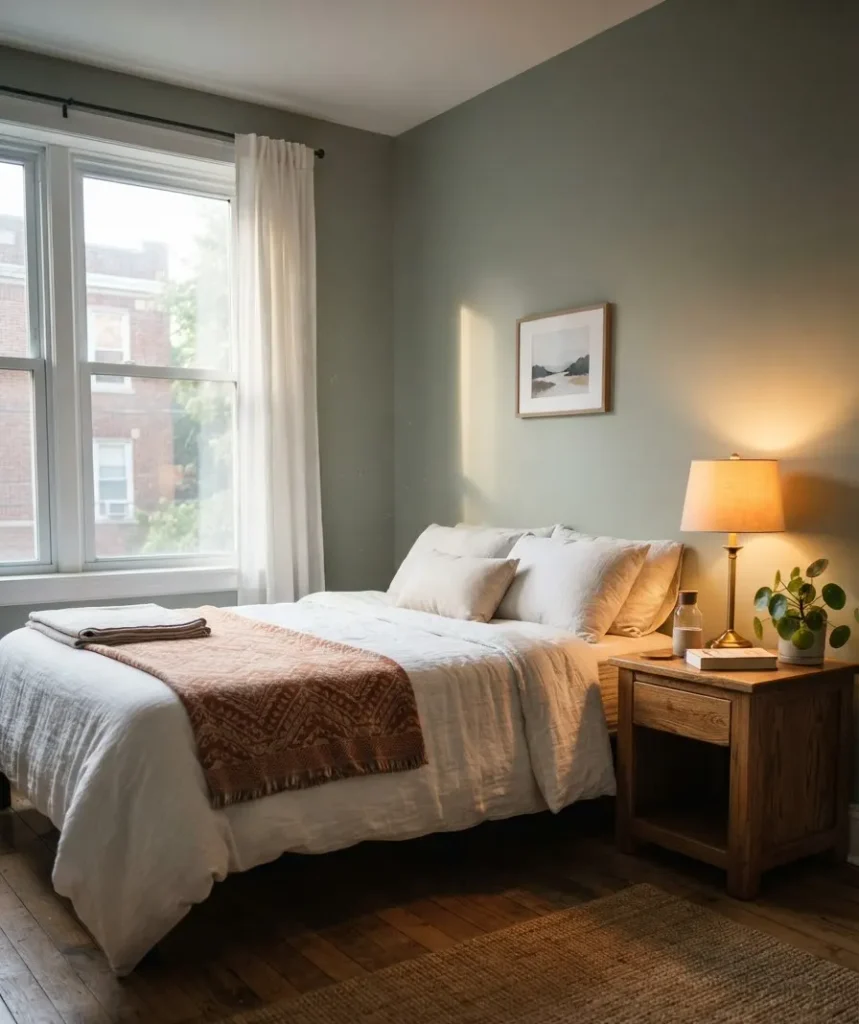
Here’s the thing nobody tells you when you’re twenty-two and broke: your space shapes your mood way more than you’d expect.
A cluttered, mismatched room can leave you low-key anxious without you knowing why. A room that actually reflects you feels like exhale.
That’s not just vibes talk, either. Color and texture choices genuinely affect how a room makes you feel, which is why interior designers treat palette as a foundation, not an afterthought.
Sherwin-Williams’ color psychology breakdown is a solid starting point if you want the science behind why terracotta feels like a hug and gray feels like a Monday.
So before you buy a single throw pillow, pick your style. Everything downstream gets easier once you have one.
Boho: for the collector who can’t commit to matching anything
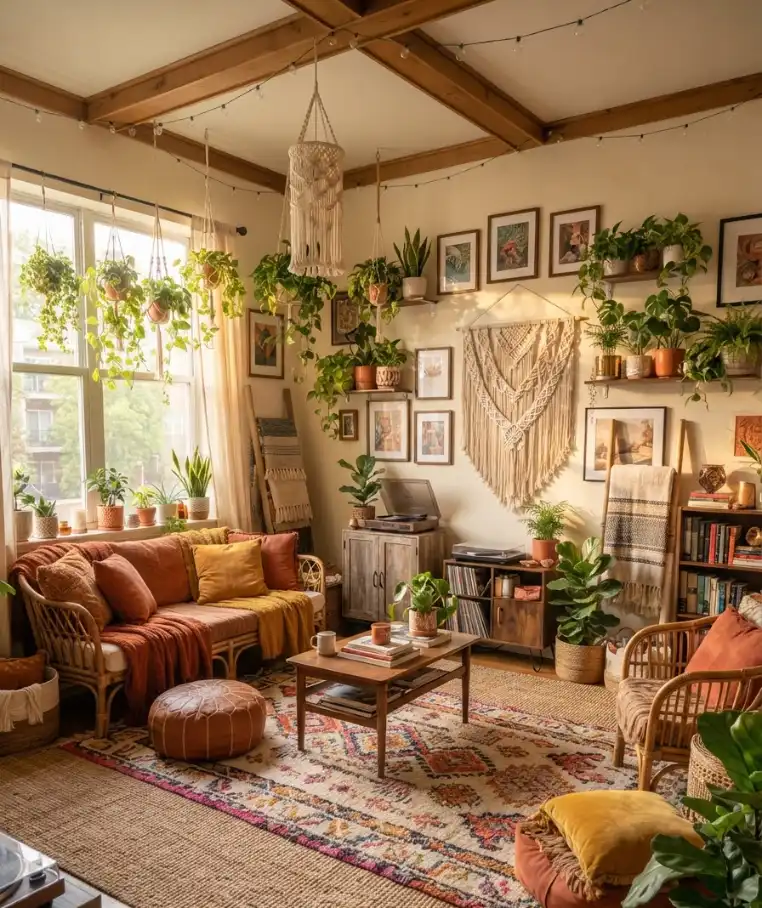
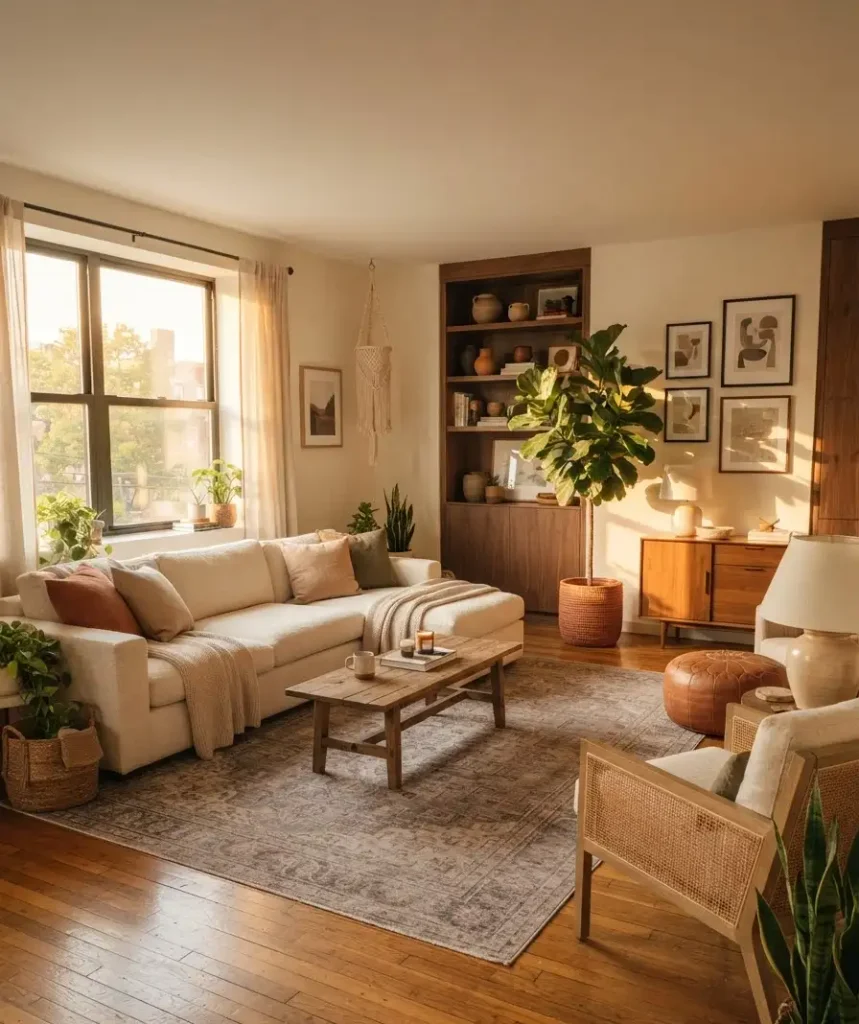
Boho is chaos with taste. It’s the aesthetic for people who bring home a rug from every trip, inherit weird lamps from grandmothers, and refuse to throw away a good vintage frame just because it doesn’t “go.”
I lived in a boho studio for a year and loved almost every minute of it. The one thing I’ll warn you about: boho gets messy fast if you don’t anchor it with a neutral base.
Layering only works when there’s something underneath to layer onto.
The building blocks of a boho room
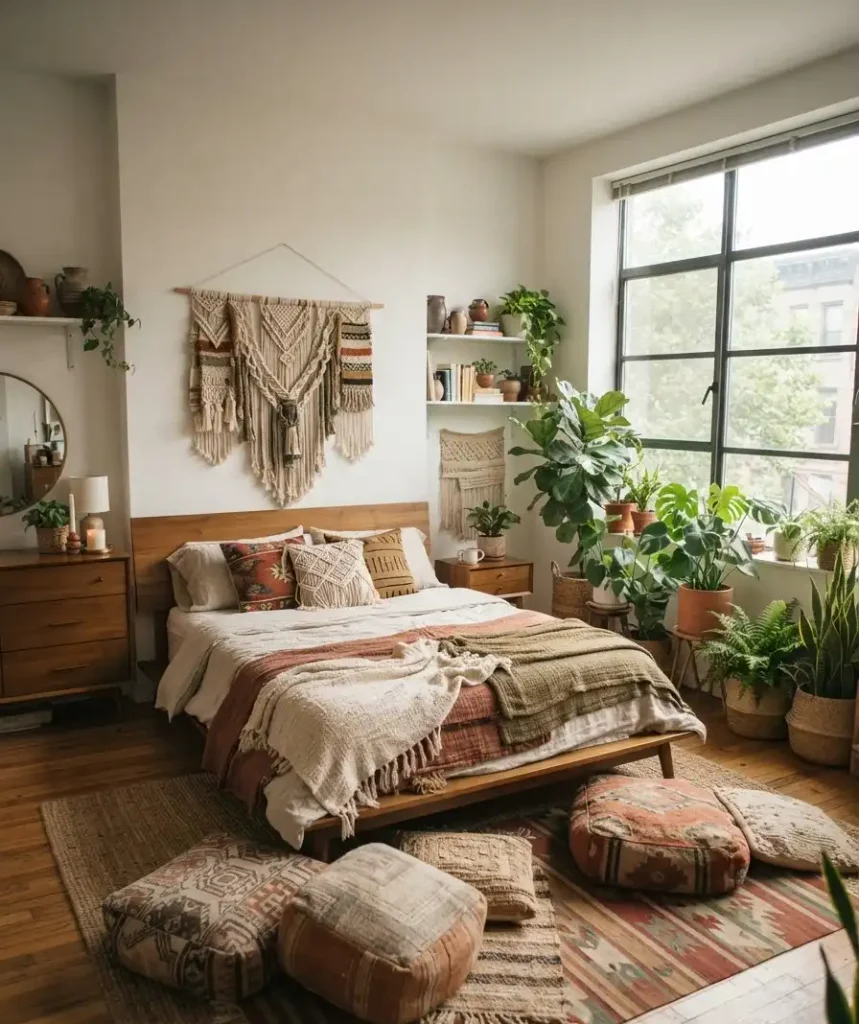
- Warm, earthy palette. Think rust, mustard, terracotta, and deep green, layered over a neutral wall or a plain white base.
- Textiles everywhere. Macrame wall hangings, woven poufs, chunky throws, and at least two rugs stacked on top of each other.
- Plants, and lots of them. Trailing pothos, a fiddle leaf fig if you’re brave, dried pampas grass if you’re not ready for real plant responsibility.
- Global, vintage-feeling pieces. Flea market finds, rattan furniture, ceramic vases with a little wobble to them.
According to a recent breakdown of the style from Decorilla’s guide to bohemian interior design, the goal isn’t restraint at all, it’s abundance done with intention.
That distinction matters. Boho isn’t lazy clutter. It’s curated clutter, which honestly takes more effort than people assume.
Boho on a renter’s budget
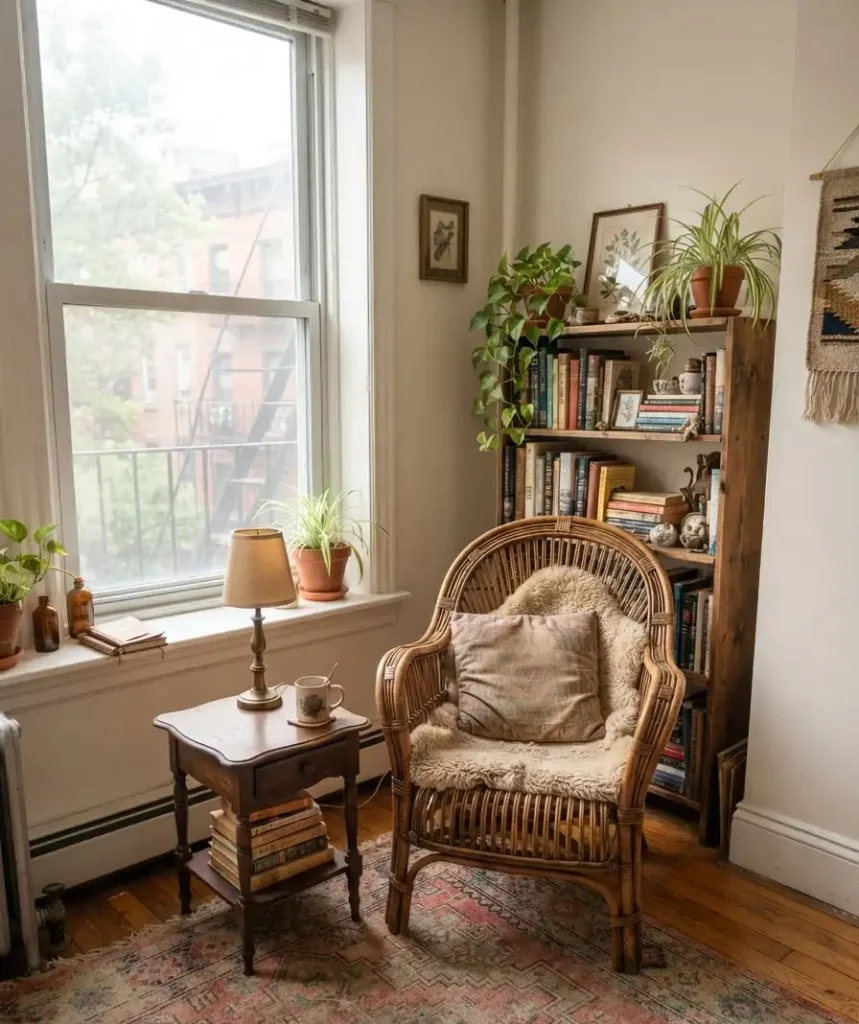
You don’t need a $400 rug to nail this look. Hit up estate sales, Facebook Marketplace, or your local thrift store on a Tuesday morning when the good stuff hasn’t been picked over yet.
IMO, the best boho pieces are the ones you found accidentally, not the ones you ordered off a “Get the Look” Pinterest board.
One small warning: skip the fake plants unless you’re genuinely plant-blind.
Silk ferns read cheap in a boho room in a way they don’t in a minimalist one, where less is happening around them to distract the eye.
Bohemian design also traces back further than most people assume.
The style borrows from nomadic and artistic traditions that valued travel, storytelling, and a refusal to follow rigid decorating rules, according to MasterClass’s guide to bohemian interior design.
That history is part of why boho rooms feel so personal. Every object is supposed to have a story attached to it, even if the story is just “found it at a garage sale for two dollars and couldn’t leave it behind.”
If you’re nervous about committing to full boho, start in one corner.
A reading nook with a floor cushion, a small woven basket, and one hanging plant is a low-risk way to test whether the style actually suits how you live, before you layer three rugs across your entire living room.
Minimalist: for the person who breathes easier with an empty counter
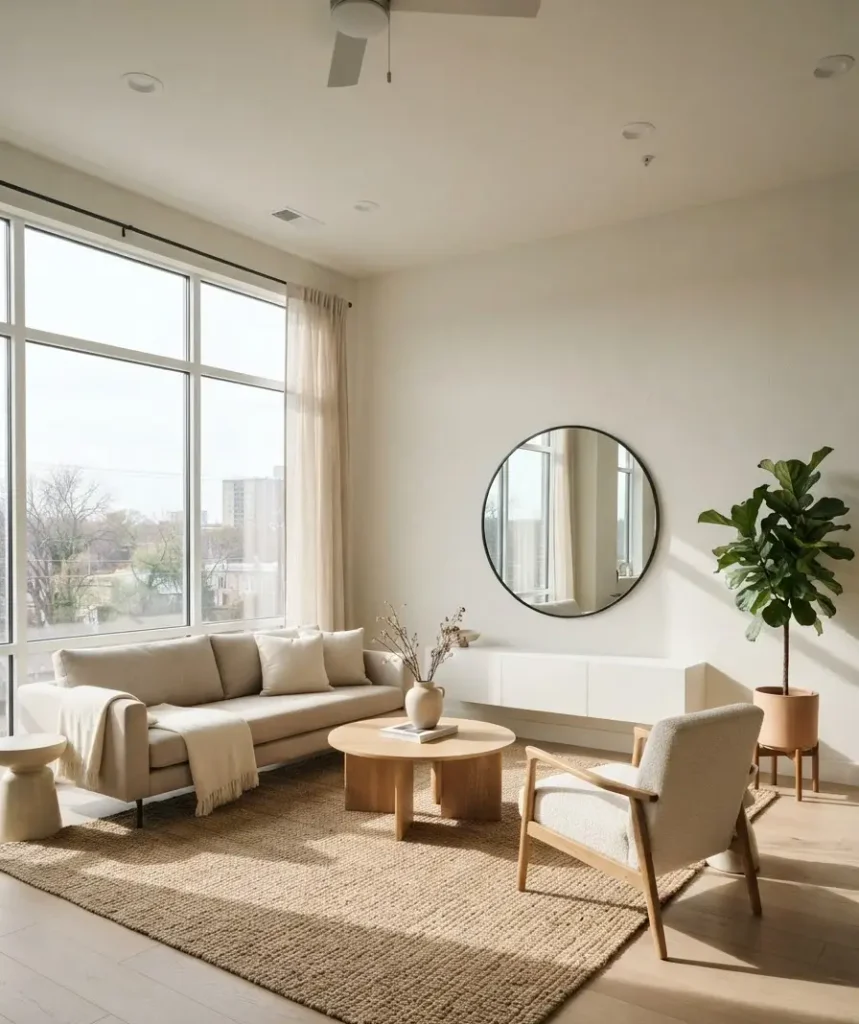
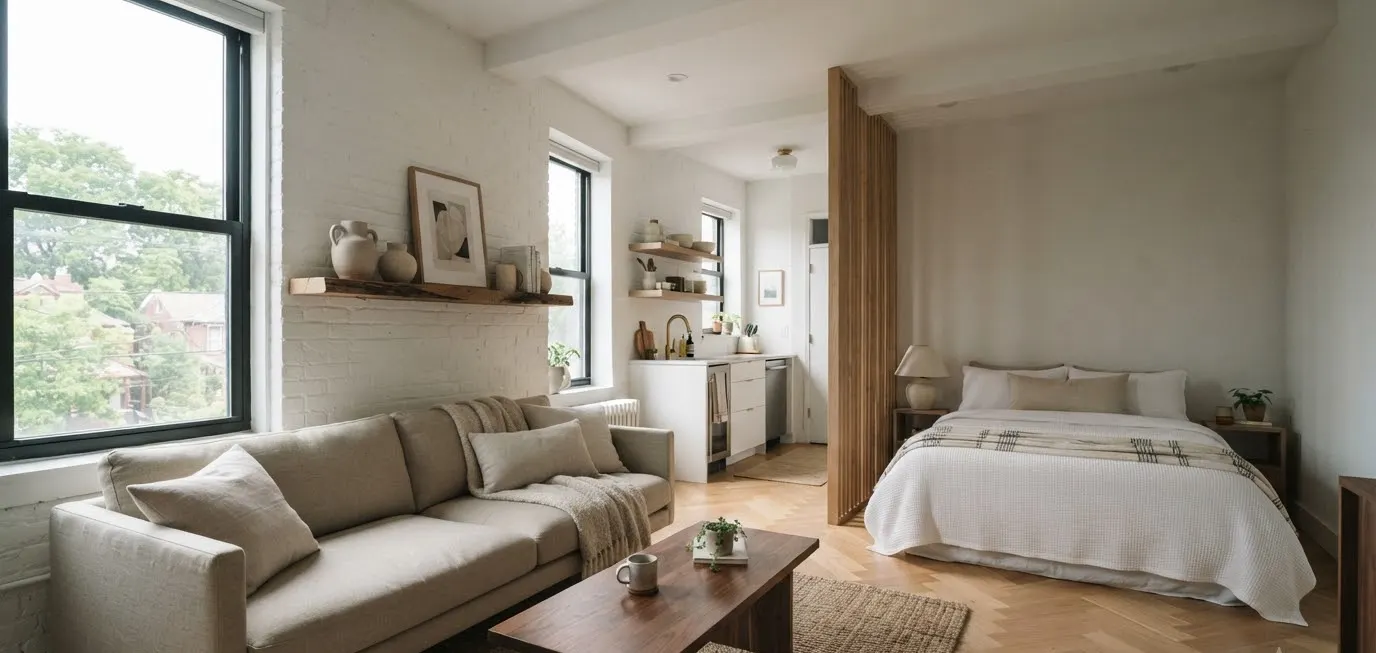
Minimalism gets a bad reputation as cold or sterile, and honestly, badly done minimalism is exactly that. Well done minimalism feels like relief.
I switched to a more minimal bedroom setup last year after realizing I owned four lamps and used none of them.
Editing down felt uncomfortable at first, almost like I was losing personality along with the clutter.
Then the room started to breathe, and so did I.
What separates good minimalism from an empty room
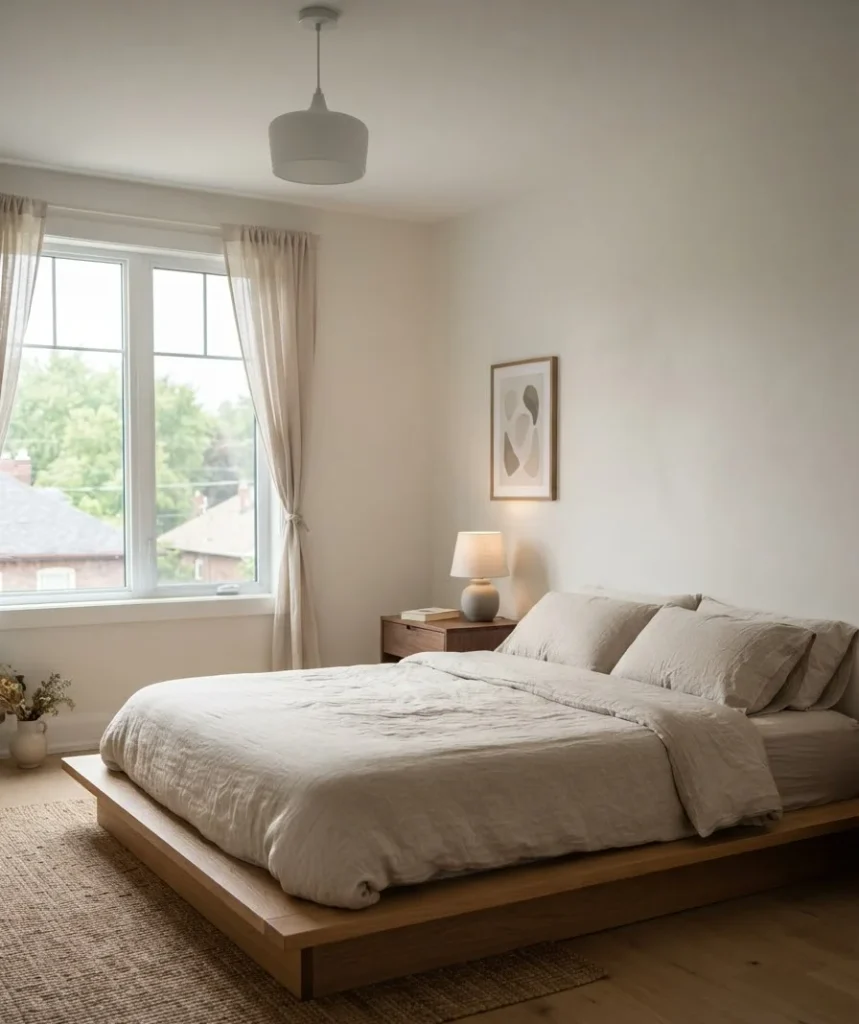
A lot of people confuse minimalism with “not much stuff.” That’s only half right.
Real minimalism is about intentional stuff, where every object earns its spot.
| Element | Minimalist approach | Common mistake |
|---|---|---|
| Color palette | 2-3 tones max, mostly neutral | Adding trendy accent colors “just because” |
| Furniture | Fewer, higher-quality pieces | Buying cheap and replacing often |
| Surfaces | Mostly clear, one or two objects | Decorative clutter on every flat space |
| Lighting | Soft, layered, purposeful | One harsh overhead bulb |
That table alone could save you a decorating headache.
Stick a lamp, one plant, and one book on your nightstand instead of six random objects, and the whole room instantly reads calmer.
Practical minimalist moves
- Choose one or two accent colors and repeat them across the room, don’t scatter five different shades.
- Buy furniture with clean lines and hidden storage, so clutter has somewhere to disappear.
- Keep walls mostly bare, then let one piece of art or a mirror do all the talking.
- Use woven or linen textures to keep the room from feeling clinical.
A lot of “guide to minimalist decor” content online treats the style as purely aesthetic, but functionality drives it just as much.
Multi-purpose furniture, like a bench that opens for storage or a nesting side table,
keeps a small apartment from feeling like a showroom nobody actually lives in.
Is minimalism boring? Only if you strip out warmth along with the clutter.
Keep texture. Keep at least one imperfect, personal object. That’s the difference between a Pinterest board and an actual home.
Cozy: for the person who wants to disappear into their couch
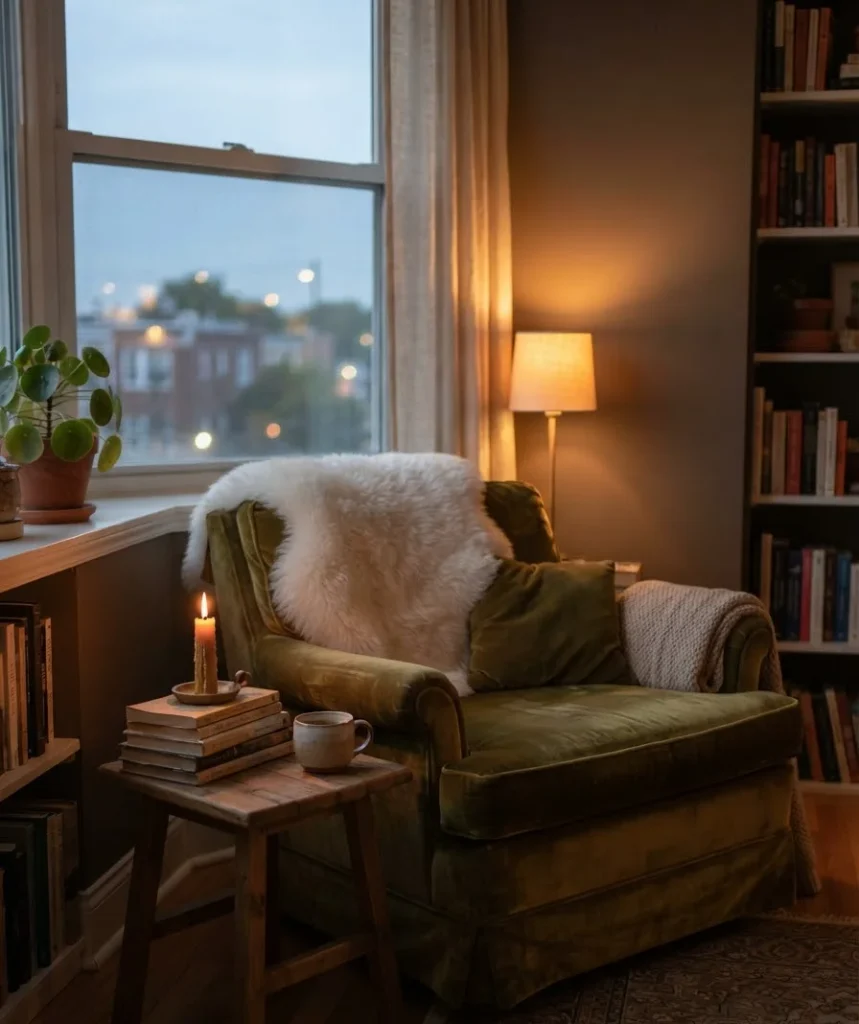
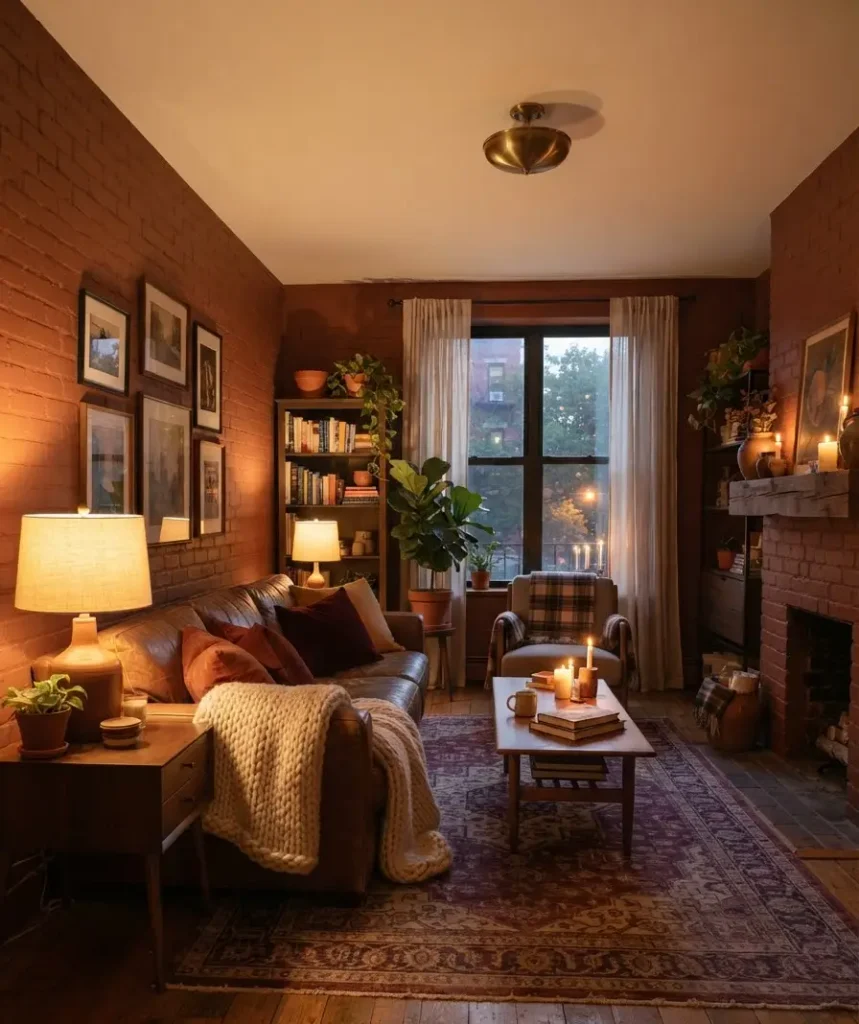
Cozy isn’t really a color scheme. It’s a feeling, and you know it the second you walk into a room that has it.
This is the aesthetic most people gravitate toward without realizing it has a name.
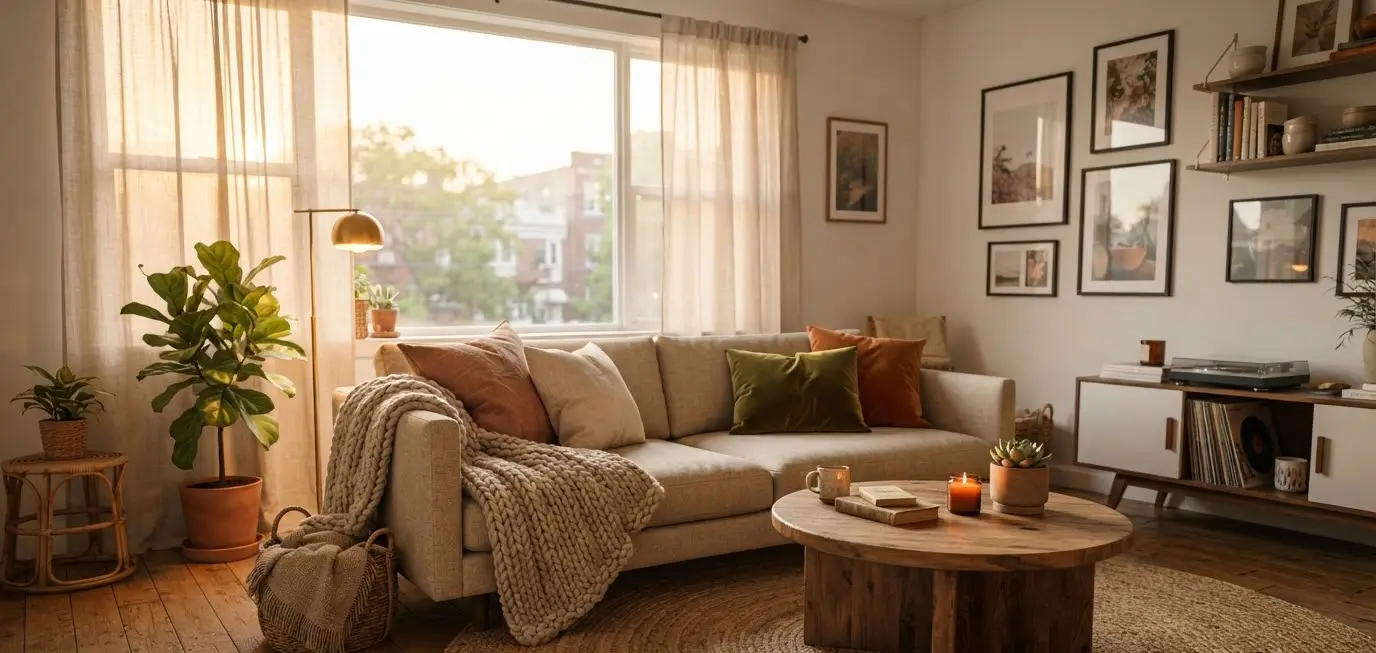
Soft lighting, warm textures, a candle burning somewhere, and furniture arranged so conversation feels natural instead of formal.
The cozy formula
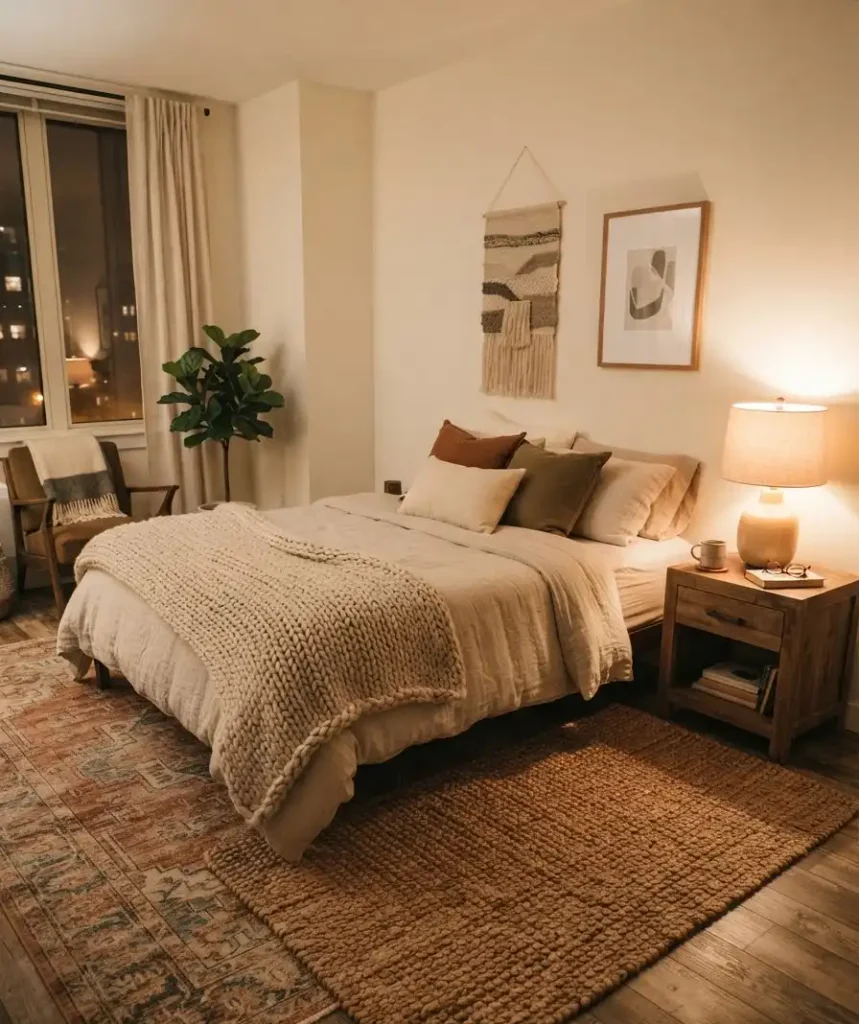
- Warm, low lighting. Skip overhead lights entirely if you can. Lamps, string lights, and candles do more emotional heavy lifting than any single piece of furniture.
- Layered textiles. Chunky knit throws, a sheepskin on the reading chair, pillows in mismatched-but-coordinated fabrics.
- Earthy, muted colors. Deep browns, warm terracotta, olive, burgundy. Cooler tones exist in cozy rooms too, but they’re always softened.
- Small, personal touches. Framed photos, a stack of well-loved books, a mug collection that’s honestly a little excessive.
Design experts point out that earth tones do most of the heavy lifting in cozy spaces because they pair naturally with wood, wool, and stone, the exact materials that already make a room feel grounded.
That tracks with what I’ve noticed decorating my own place: the second I swapped my white throw blanket for a chunky oatmeal-colored one, the whole couch corner suddenly looked like something out of a cabin, not a dorm room.
Small cozy upgrades that punch above their price
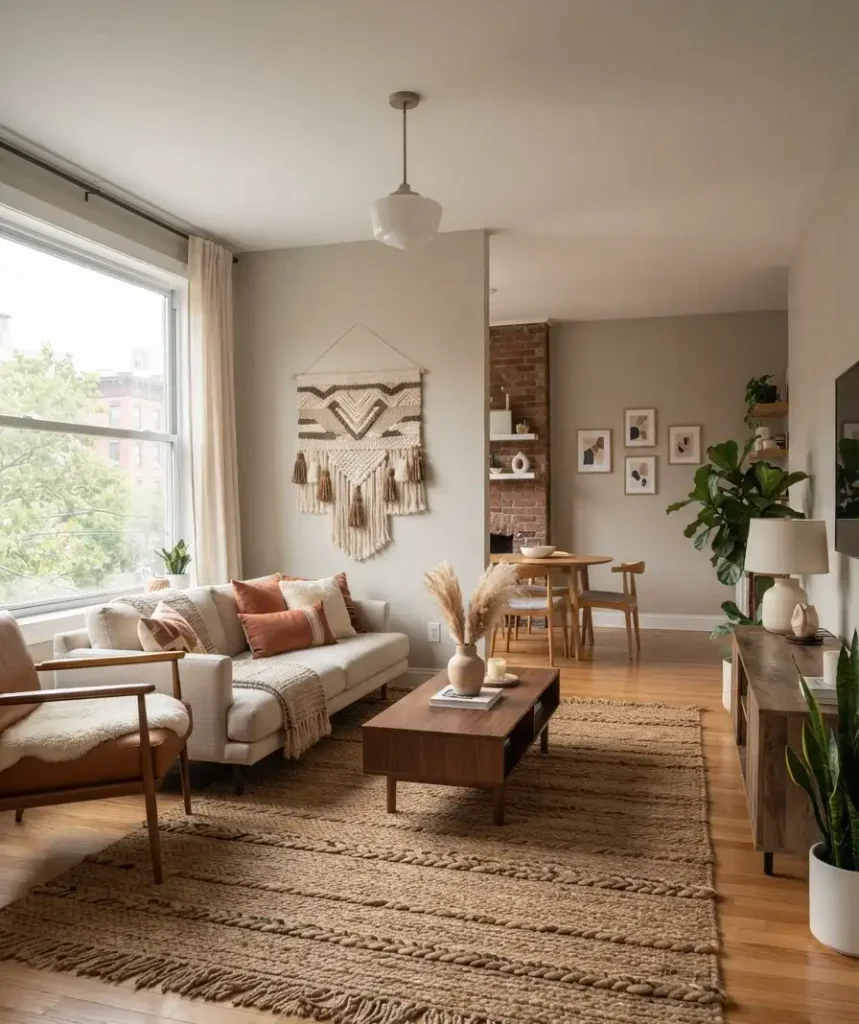
- A warm-toned bulb swap (2700K, trust me on this one) instantly changes a room’s temperature without touching the walls at all.
- Layer two rugs of different textures, even in a tiny space, to break up hard flooring.
- Add a weighted throw blanket to your reading nook. This has nothing to do with aesthetics and everything to do with how much better your Sunday afternoons get. Slightly off-topic, but genuinely, get one.
- Group candles in odd numbers (three works well) instead of scattering them randomly.
Mixing styles without your apartment looking confused
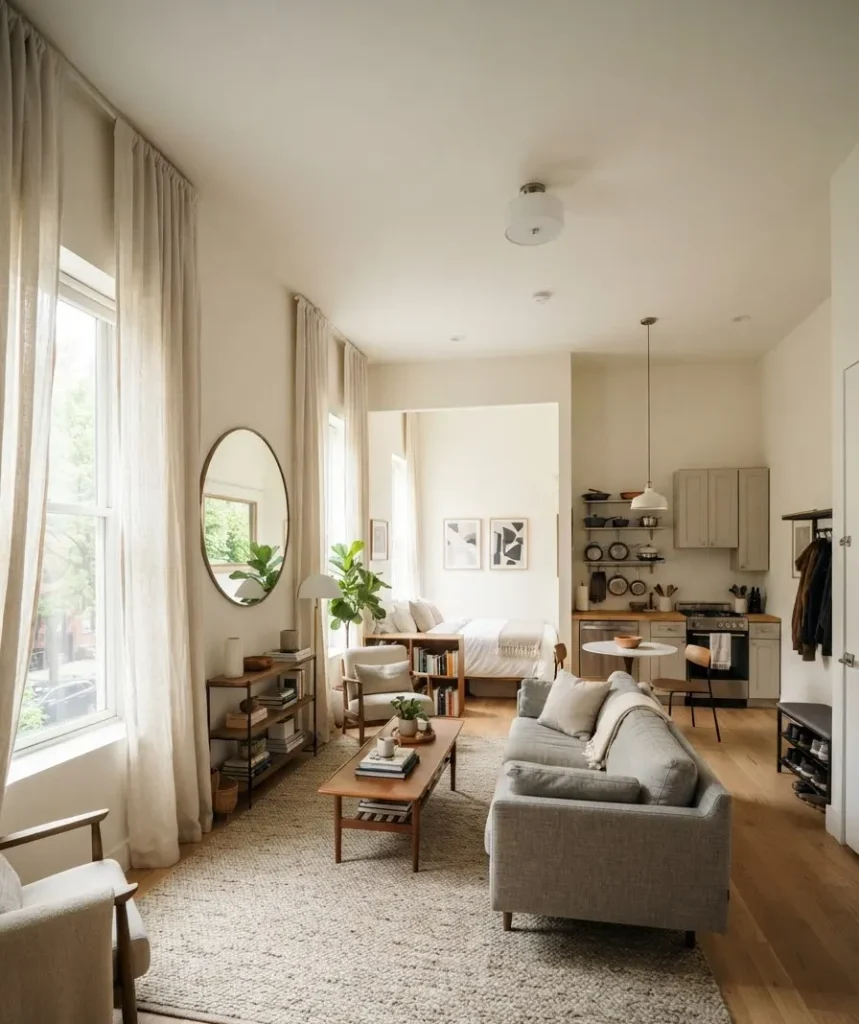
Nobody actually lives in a pure aesthetic. Most gorgeous apartments borrow from two, maybe all three of these styles.
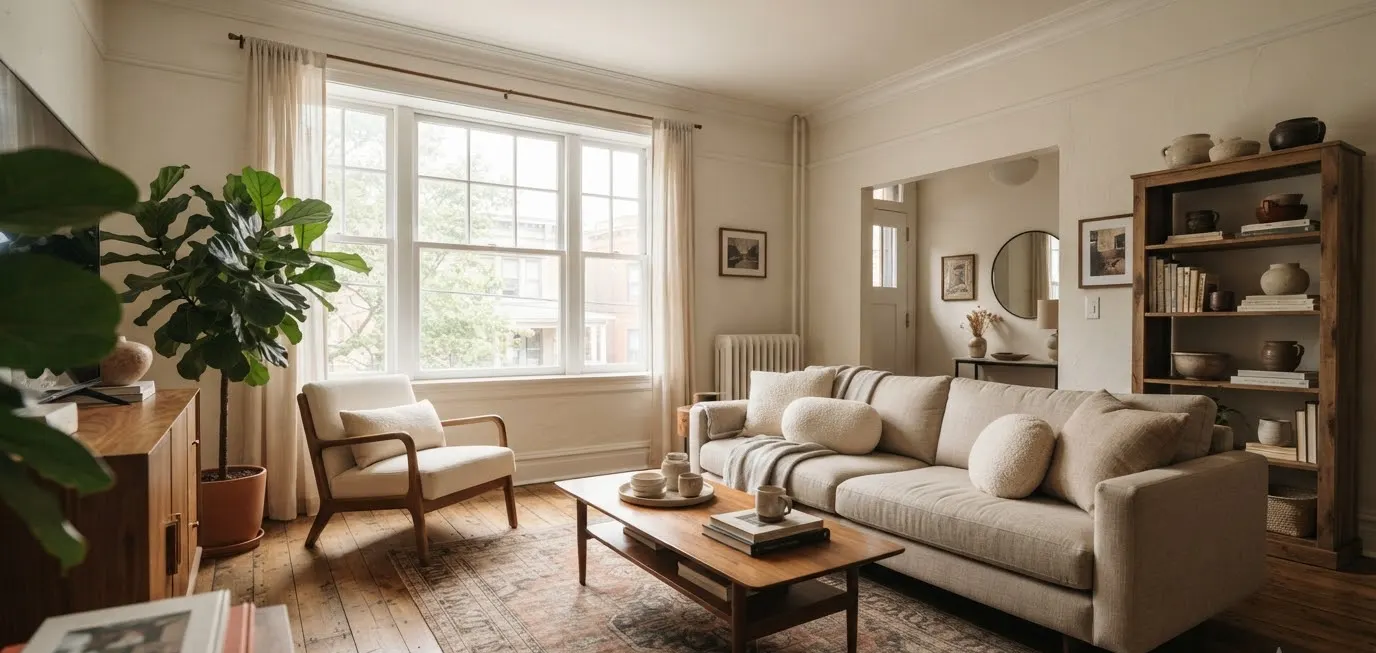
A minimalist bedroom with one boho rug. A cozy living room with clean-lined furniture instead of ornate pieces.
The trick to mixing without chaos: pick one style as your base (70% of the room) and let a second style show up in accents only (30%, maybe less).
Rugs, throw pillows, and wall art are the easiest entry points because they’re low commitment and easy to swap out.
Wow, I genuinely didn’t expect how much of a difference a single rug swap could make when I tested this in my own living room.
One boho jute rug under otherwise minimalist furniture, and suddenly the whole space had warmth it was missing before.
Small apartment tricks that work across every style
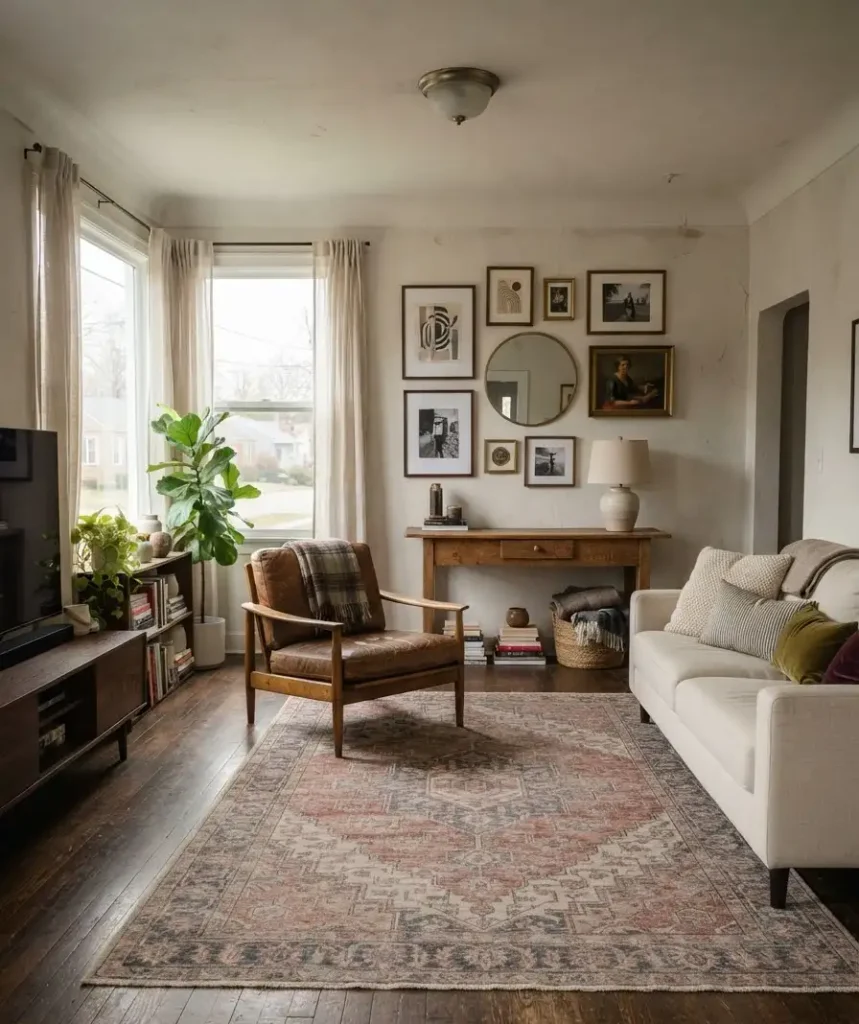
Regardless of which aesthetic you land on, small spaces come with their own rules.
Vertical lines trick the eye into seeing higher ceilings. Mirrors bounce light around a room that doesn’t get enough of it naturally.
And a properly sized rug (bigger than you think you need) keeps a room from feeling chopped up.
According to Apartment Therapy’s roundup of small-space decorating tips, sticking to a tight, limited color palette, around four colors max, helps a compact room feel intentional instead of cramped.
That advice holds up regardless of whether your four colors lean boho warm, minimalist neutral, or cozy earthy.
A few more small-space wins worth stealing:
- Hang curtains close to the ceiling line, not just above the window frame, to fake extra height.
- Choose furniture with visible legs instead of pieces that sit flush on the floor. It creates breathing room underneath.
- Use a large mirror on the wall opposite your main window to double your natural light.
Mistakes that make a room look staged instead of styled
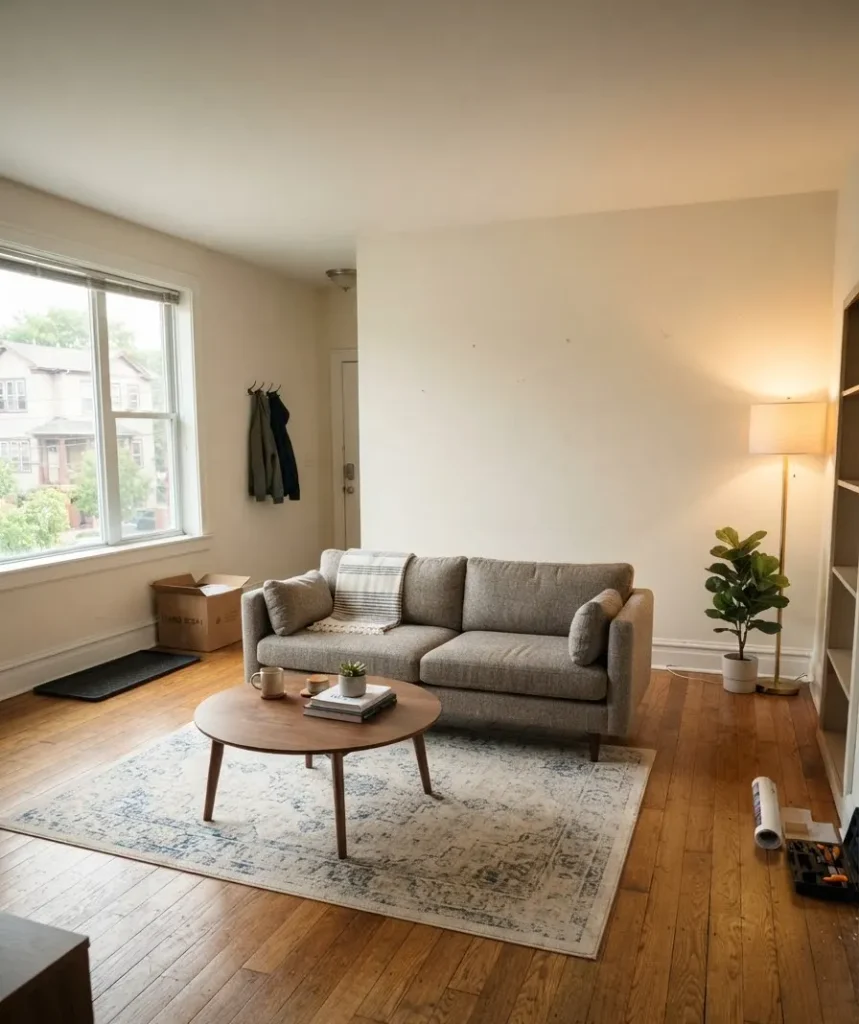
I’ve made every single one of these, so consider this a warning from experience rather than a lecture.
Buying the whole room from one store. Matching furniture sets look like a hotel lobby, not a home.
Mix at least one vintage or secondhand piece into every room, even a minimalist one. It breaks the showroom effect instantly.
Ignoring scale. A tiny coffee table in front of a giant sofa looks off even if you can’t immediately say why.
Same goes for art hung too high (a classic mistake) or a rug too small for the furniture sitting on it.
When in doubt, size up on the rug. A too-small rug is one of the fastest ways to make a room look accidentally unfinished.
Skipping the ceiling and floor. People obsess over walls and forget the other four surfaces of a room.
A patterned rug or a painted ceiling adds more personality per dollar than another throw pillow ever will.
Overdoing the “theme.” This one’s for my boho people specifically. If every single object screams “bohemian,” the room starts to feel like a costume instead of a home.
Let a few plain, quiet pieces exist in the mix so the standout items actually get to stand out.
A simple shopping order if you’re starting from scratch
Forgetting scent and sound. This sounds unrelated to visual decorating, but it isn’t.
A candle, a diffuser, or even a small speaker playing something low affects how “finished” a room feels the second you walk in. Visuals aren’t the whole story.
If your apartment is currently a blank box and you don’t know where to begin, follow this order.
It saves money and prevents the classic mistake of buying decor before you have furniture to decorate around.
- Big furniture first. Sofa, bed, dining table. These anchor everything else and are the hardest (and most expensive) pieces to swap later.
- Lighting second. Lamps and bulbs change a room’s entire mood for relatively little money. This is the highest-impact, lowest-cost step in the whole process.
- Rugs and textiles third. Once the big pieces are in place, layer texture through rugs, throws, and pillows.
- Wall décor last. Art, mirrors, and shelving should respond to what’s already in the room, not the other way around. Hanging art before your furniture is arranged is how you end up rearranging everything twice.
This order isn’t a hard rule, but it’s saved me from buying decor I later had to return because it clashed with furniture I hadn’t purchased yet. Learn from my Target receipts.
Frequently asked questions
Can I combine boho and minimalist styles in one apartment? Yes, and it works better than you’d think.
Keep your furniture and wall color minimalist, then bring in boho through texture: one patterned rug, a woven wall hanging, a handful of plants. The clean base keeps it from feeling cluttered.
What’s the cheapest style to pull off as a renter? Cozy, hands down. A few lamps, a warm-toned throw blanket, and a bulb swap will get you 80% of the way there without touching a single wall or spending on furniture.
Do I need to paint my walls to get these looks? Not at all. Renters pull off all three styles constantly with removable wallpaper, textiles, lighting, and furniture alone.
Paint helps, but it’s not required for any of these aesthetics to read clearly.
How long does it actually take to pull off one of these looks? Longer than a weekend, honestly, and that’s fine.
The best-looking apartments I’ve been in weren’t decorated in a single haul.
They were built room by room, over a few months, with pieces the person actually chose on purpose instead of grabbed in a panic before guests arrived.
Final thought
Pick the style that matches how you actually want to feel walking through your front door, not the one that gets the most likes on Pinterest this week.
Boho for the collectors, minimalist for the ones who crave calm, cozy for the ones who want to disappear into a blanket by 7pm on a Tuesday.
Which one sounds like you? Save this guide, pick your favorite section, and tell me in the comments which style you’re trying first 🙂