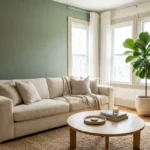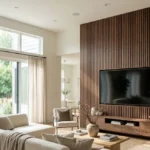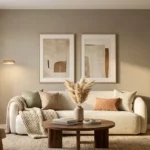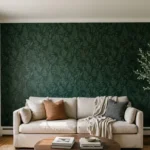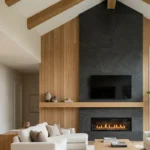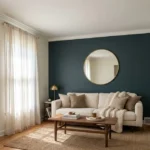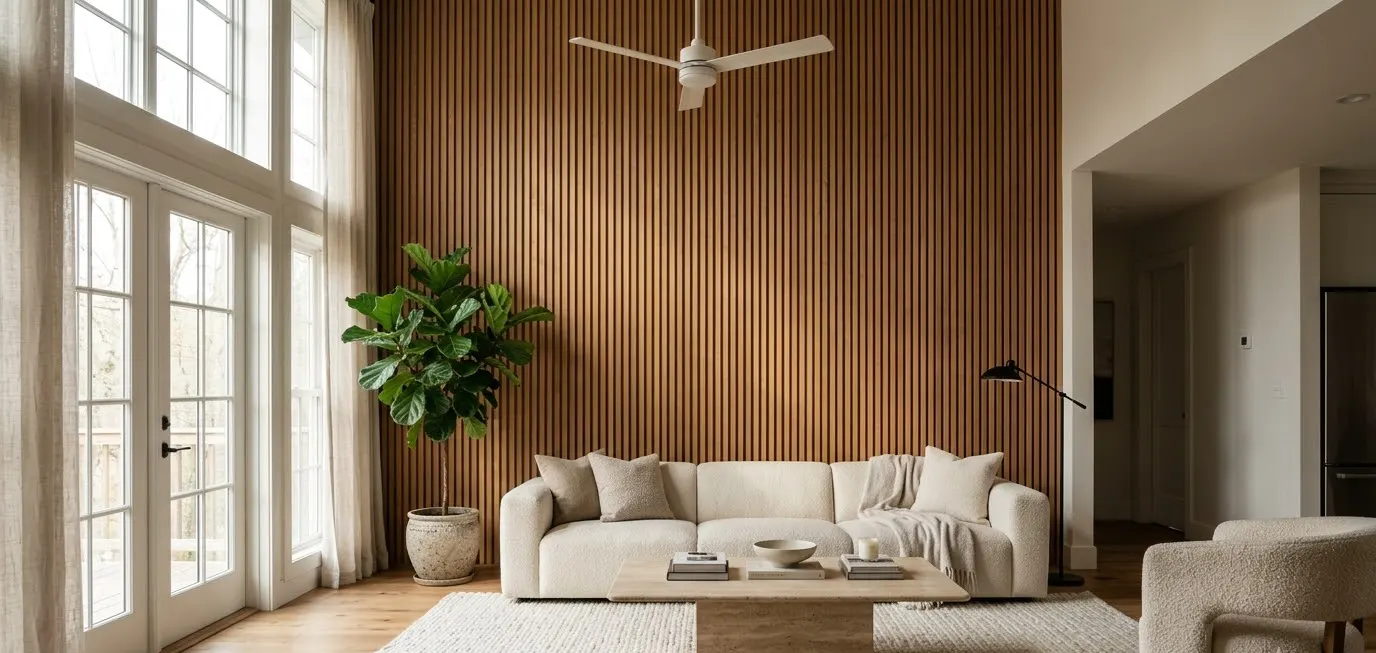
I painted my first accent wall in 2014. It was a deep teal, I picked it at 11 p.m., and I regretted it by Sunday. Paint isn’t the only way to make one wall the star of your living room, and a few of the cheaper options will fool every guest who walks in.
If you scroll Pinterest for big accent wall living room ideas, you’ve seen the glossy ones: floor-to-ceiling stone, sculpted plaster, wood slats glowing under a strip light.
Most of those cost more than my first car. Below are 30 modern materials that give you that same look for a fraction of the price, plus my honest take on each.
I’ve installed some of these myself, watched friends wreck a few, and pinned way too many to my boards.
Grab a coffee. You’ll want a notes app open.
Before you pick a material
Ever wondered why some accent walls look expensive and others look like a weekend project gone sideways?
Scale and light do most of the work. A big wall can handle bold texture, but only if the room gives it room to breathe.
Pick the wall your eye hits first when you walk in. That’s usually the sofa wall or the one behind the TV.
Skip the wall with three doors and a radiator, because you’ll fight it the whole way.
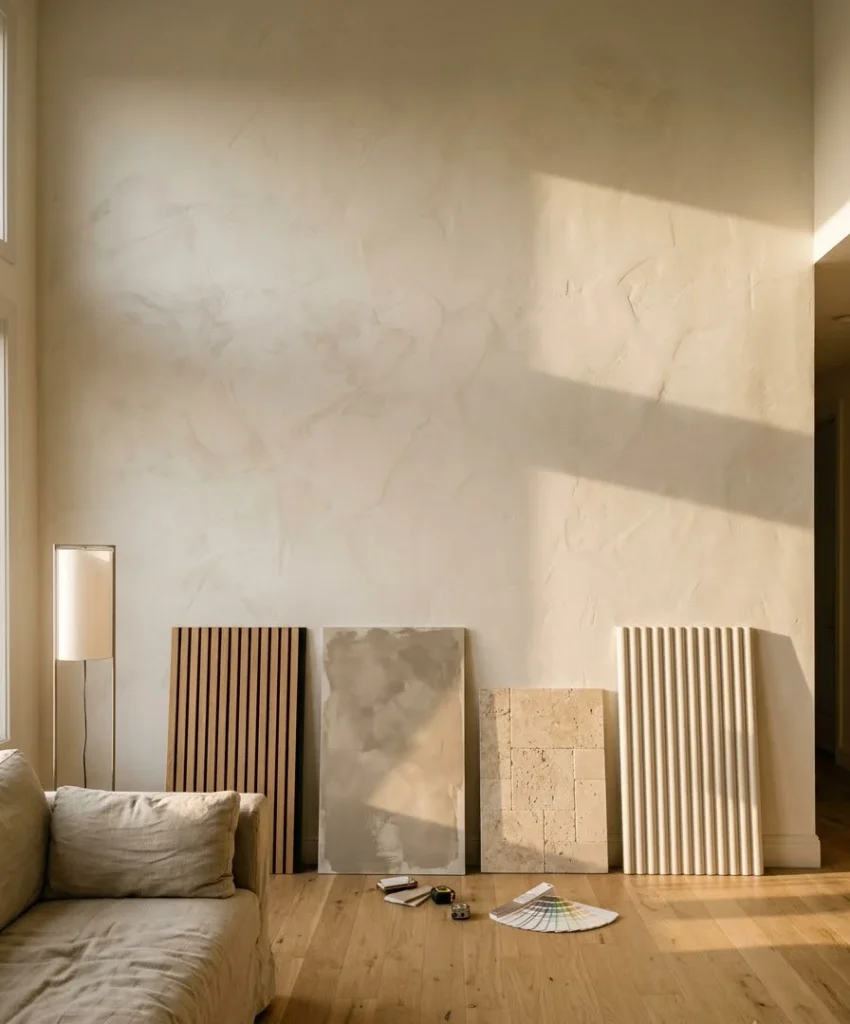
Then check your light. Raking light from a side window makes texture pop (and shows every flaw).
Flat overhead light hides depth. I test a sample board at 8 a.m. and again at 7 p.m. before I buy anything.
Here’s a quick cheat sheet for four of the most popular picks:
| Material | Rough cost per sq ft | DIY level | Best for |
|---|---|---|---|
| Wood slats (MDF) | $4 to $9 | Medium | Warm, modern rooms |
| Limewash paint | $1 to $3 | Easy | Soft, aged look |
| Peel and stick tile | $2 to $6 | Easy | Renters |
| Faux stone panels | $6 to $14 | Medium | Fireplace walls |
Prices swing by region and retailer, so treat these as ballparks. For current numbers, I check Home Depot and my local lumber yard, which often beats the big box on trim and sheet goods.
Wood and wood-look materials
Wood wins on Pinterest for a reason. It adds warmth, and it photographs beautifully.
1. Vertical wood slats
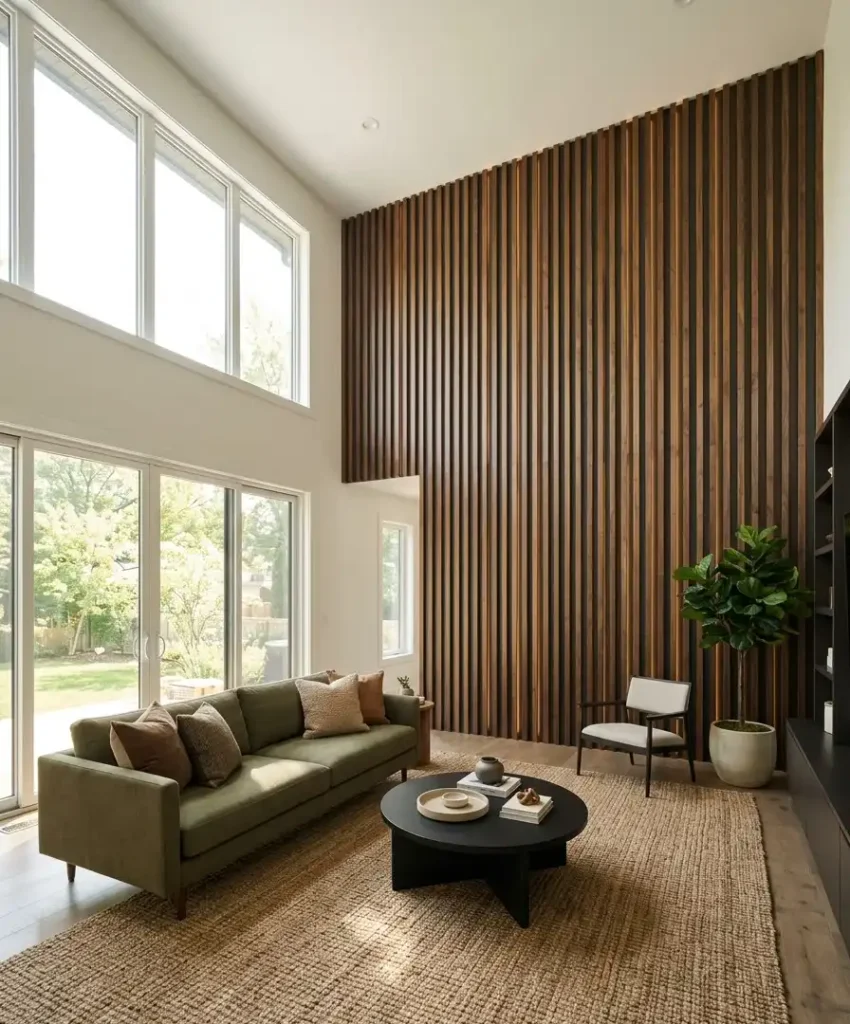
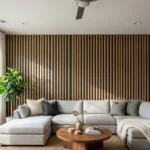
This is the look everyone saves. Thin strips of MDF or pine, spaced about half an inch apart, mounted over a dark backing.
Painted or stained in one tone, slats read like custom millwork. I built mine for around $300 on a 12-foot wall, and I’d do it again tomorrow.
2. Acoustic slat panels
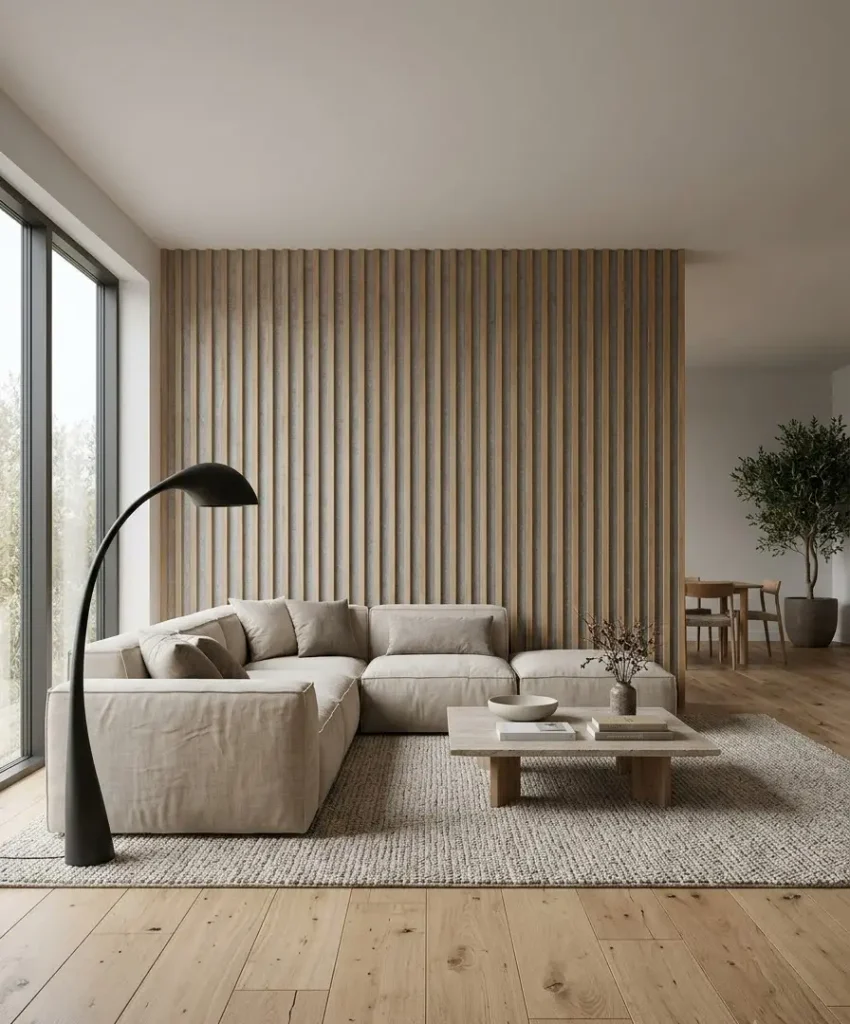
These come pre-assembled on a felt backing, so you skip the spacing math. They also soak up echo, which matters in big living rooms with hard floors. They cost more than raw slats, but the install takes an afternoon.
3. Shiplap, done modern
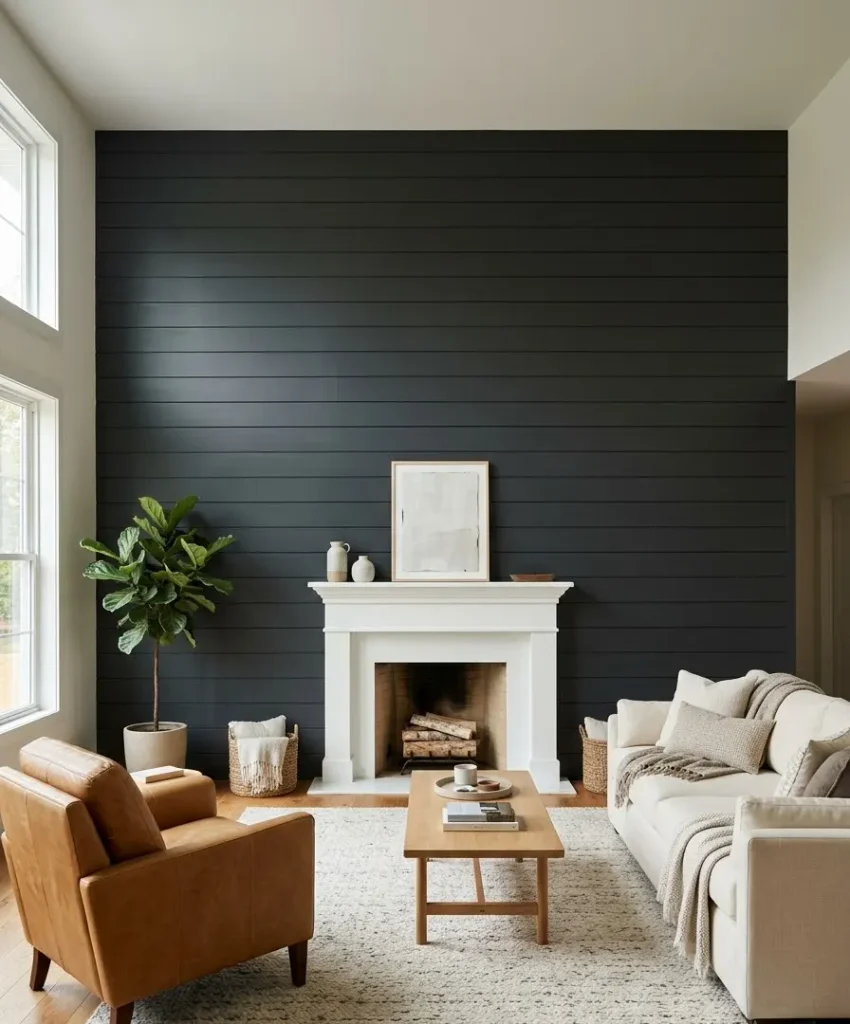
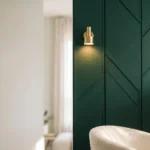
Forget the farmhouse version. Run the boards horizontally with a tight gap, paint everything charcoal or deep green, and shiplap looks sharp. One 4×8 sheet of MDF shiplap runs about $40 to $60.
4. Board and batten
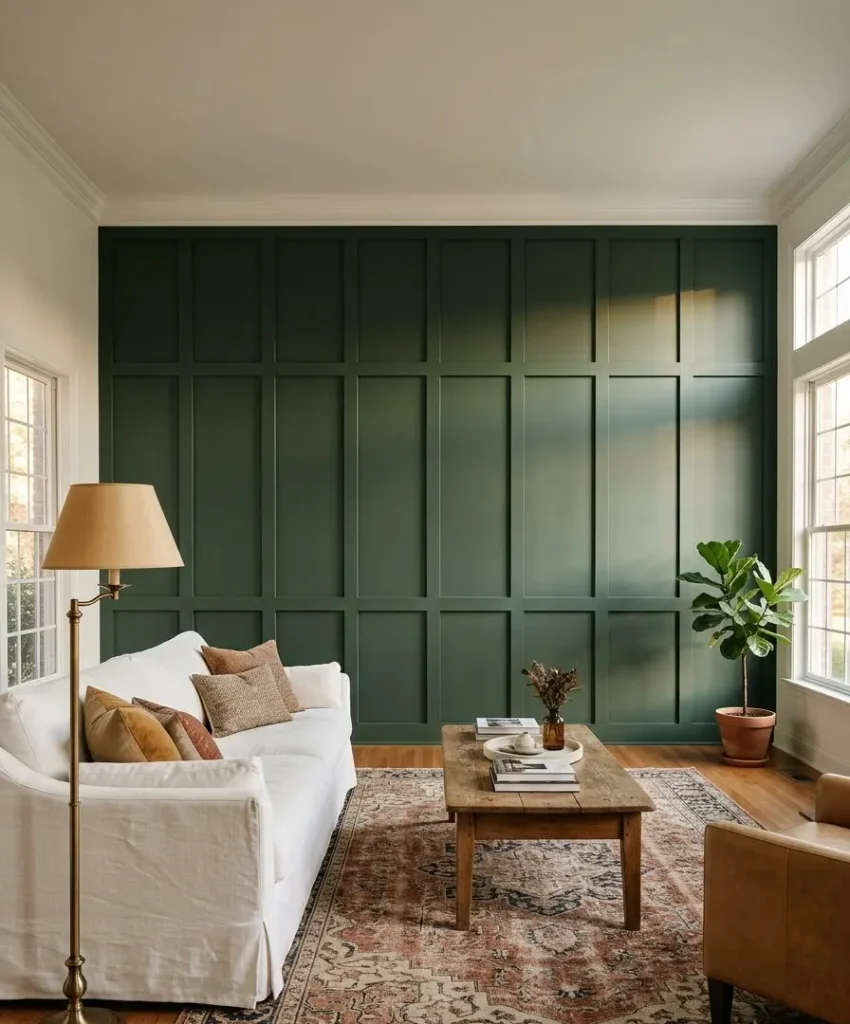
Thin vertical strips over a flat wall, painted all one color. It costs very little and looks like it belongs in a $2 million home.
FYI, the secret is caulk. Caulk every seam or the whole thing looks homemade.
5. Reclaimed pallet wood
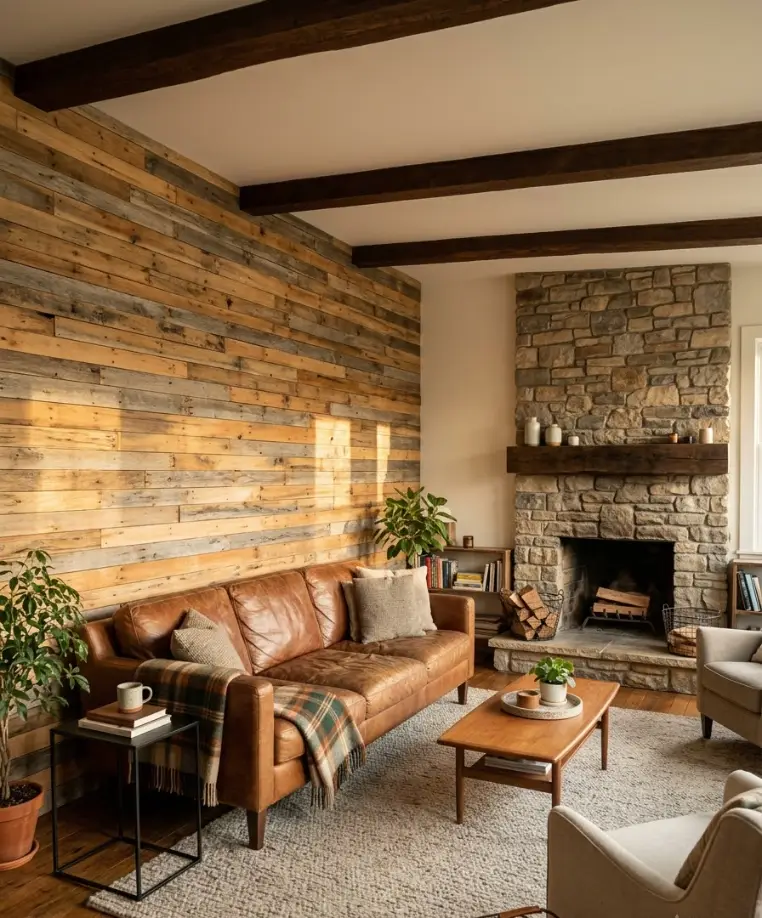
Free or close to it, if you find clean pallets stamped “HT” (heat treated). Sand them hard.
I’ll be honest, I think pallet walls look dated unless you mix wood tones carefully and keep the boards narrow.
6. Herringbone plywood
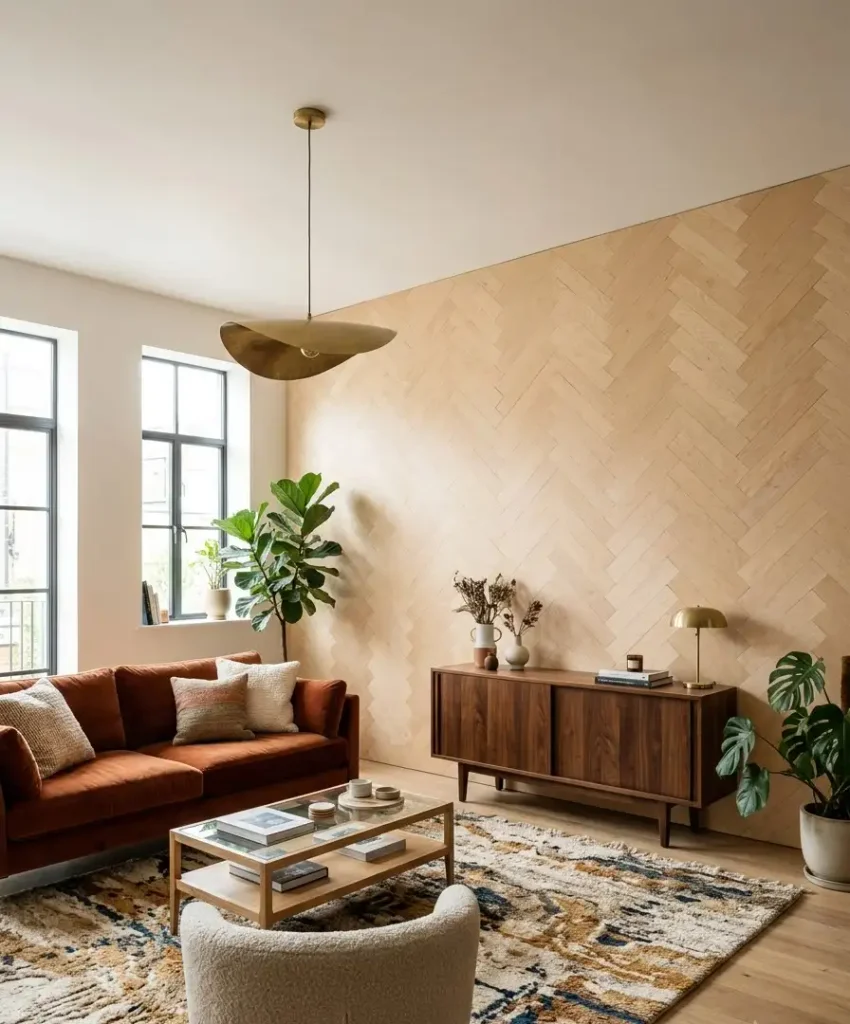
Cut birch plywood into planks and lay them in a herringbone pattern. A sheet runs about $50, and the pattern looks like a hotel lobby. It takes patience, a good saw, and a lot of cursing.
7. Walnut-look wood veneer sheets
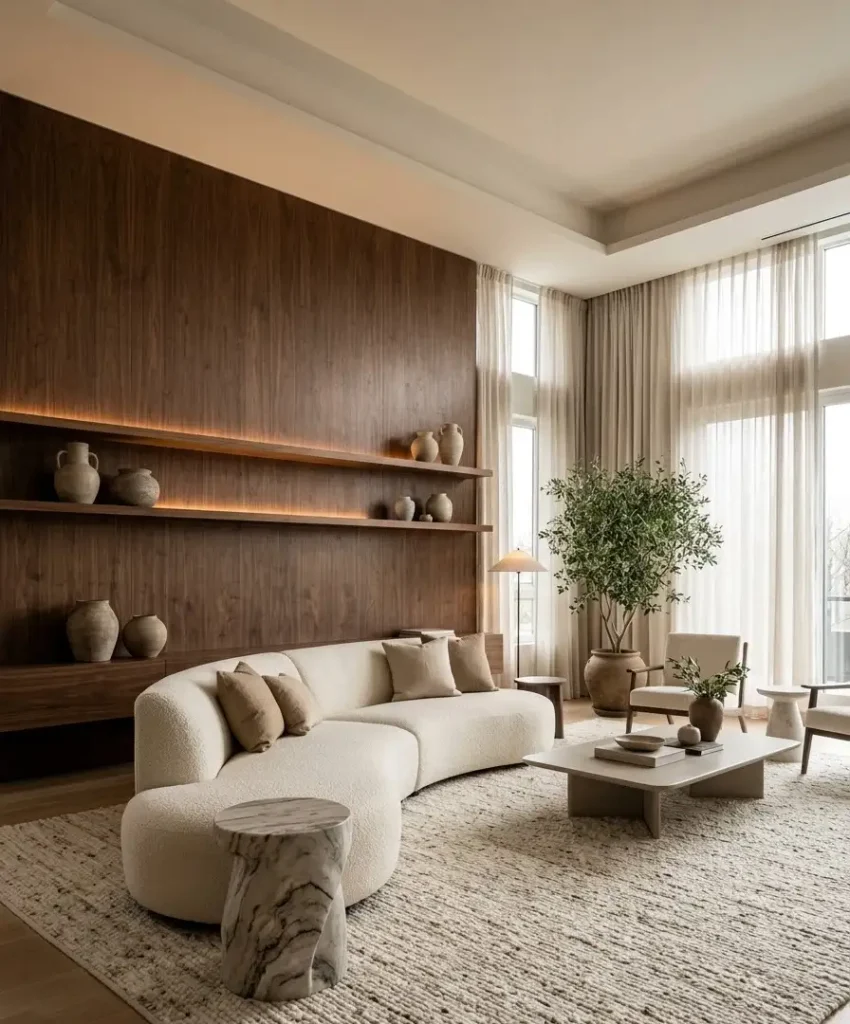
Real wood veneer on a flexible backing, sold in rolls or sheets. You cut it with a utility knife and glue it down. It brings walnut or oak grain to a wall for about a quarter of the price of solid boards.
Paint and plaster finishes
Paint is the cheapest move you have. These finishes make it look like more than paint.
8. Limewash
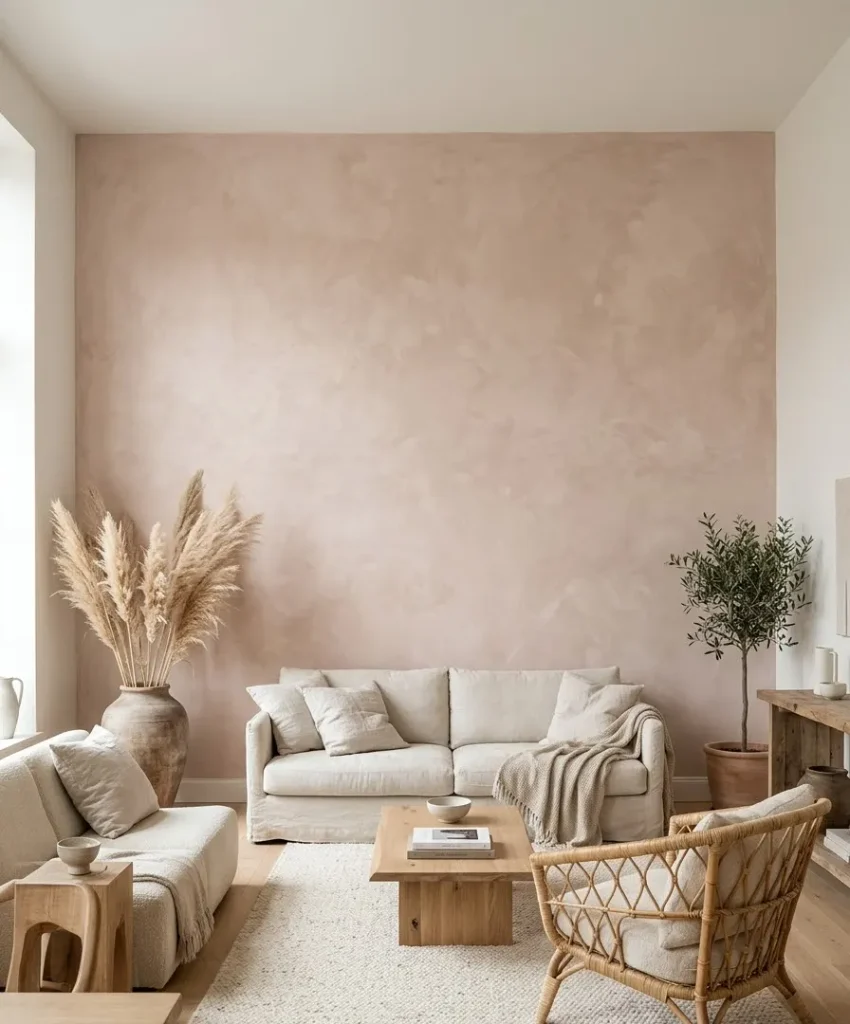
Limewash gives walls a soft, cloudy, hand-troweled look. It costs $1 to $3 per square foot and covers a big wall in a day.
Portola Paints makes a popular one, and Pinterest is packed with warm cream and clay-pink versions.
9. Color drenching
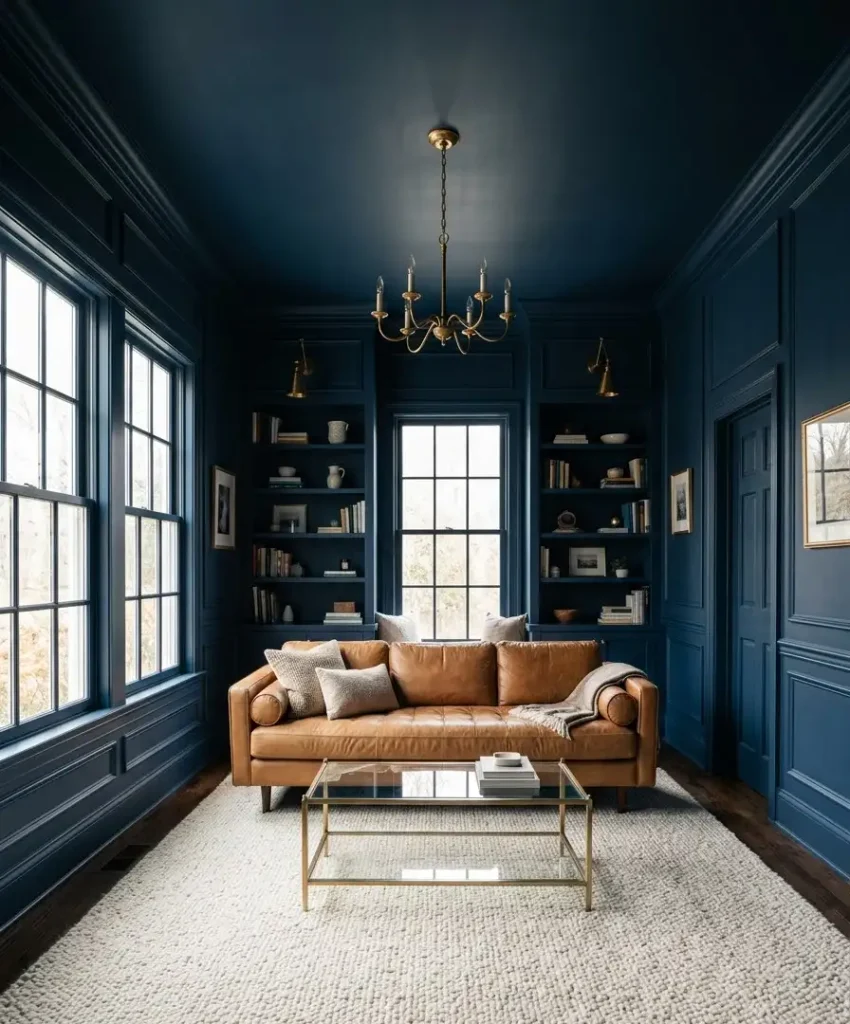
Paint the wall, the trim, and sometimes the ceiling in one color. It’s cheap, and it feels intentional and expensive.
Deep colors like Benjamin Moore’s darker neutrals look especially good in rooms with big windows.
10. Faux Venetian plaster
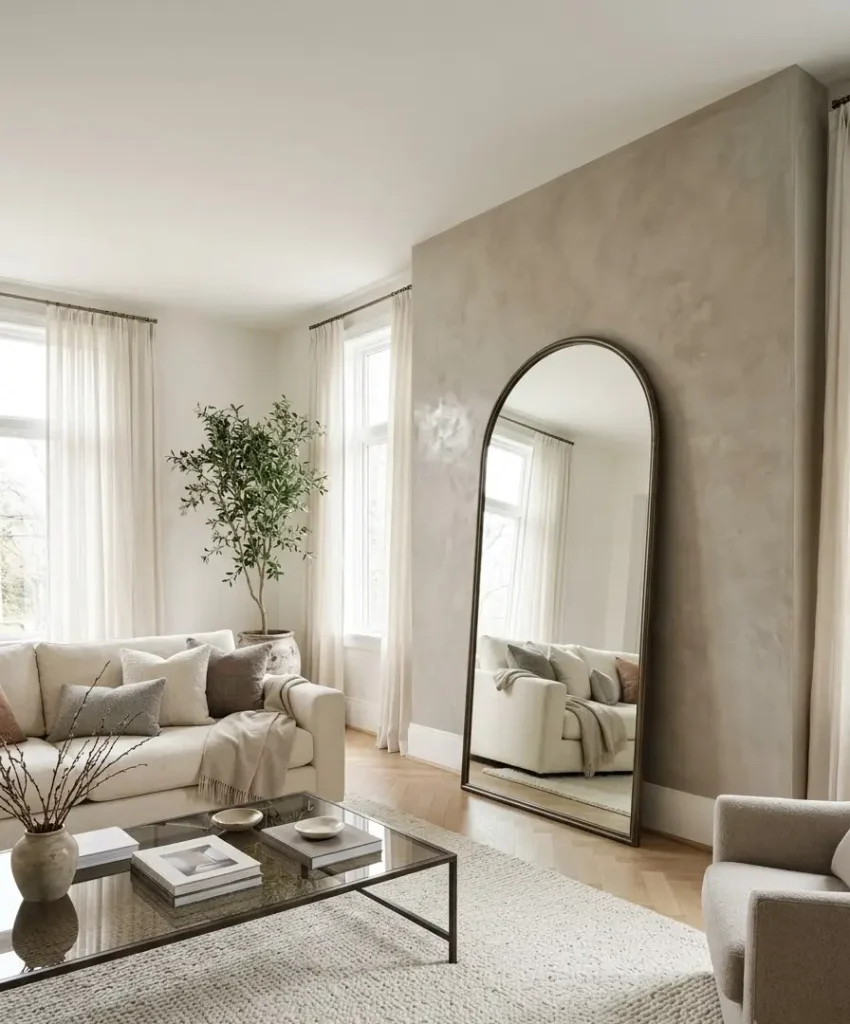
Real Venetian plaster costs a fortune because artisans trowel it by hand. A premixed plaster-effect paint gets you maybe 80 percent of the look.
I tried one over a weekend and it came out better than I expected (my wife expected disaster).
11. Roman clay
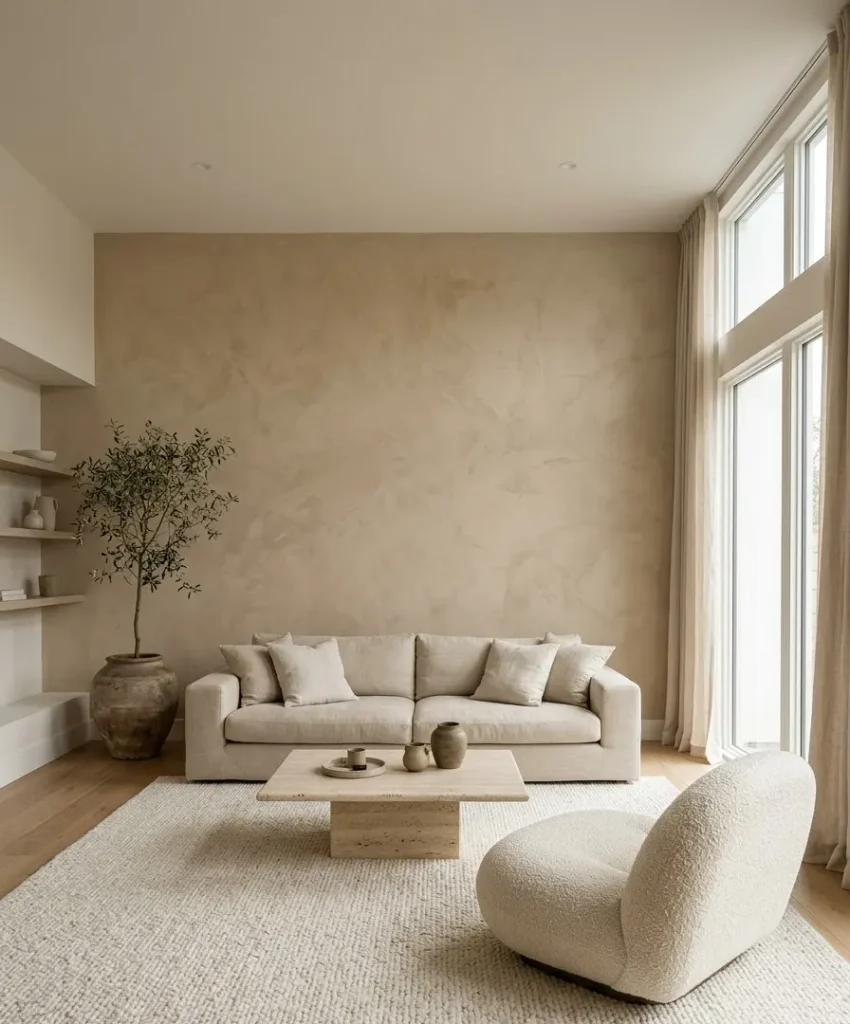
This is a mineral-based finish with a suede-soft, cloud-like surface. Brands sell DIY kits now.
Expect to pay more than limewash, but the wall looks like it came from a high-end design studio.
12. Geometric paint murals
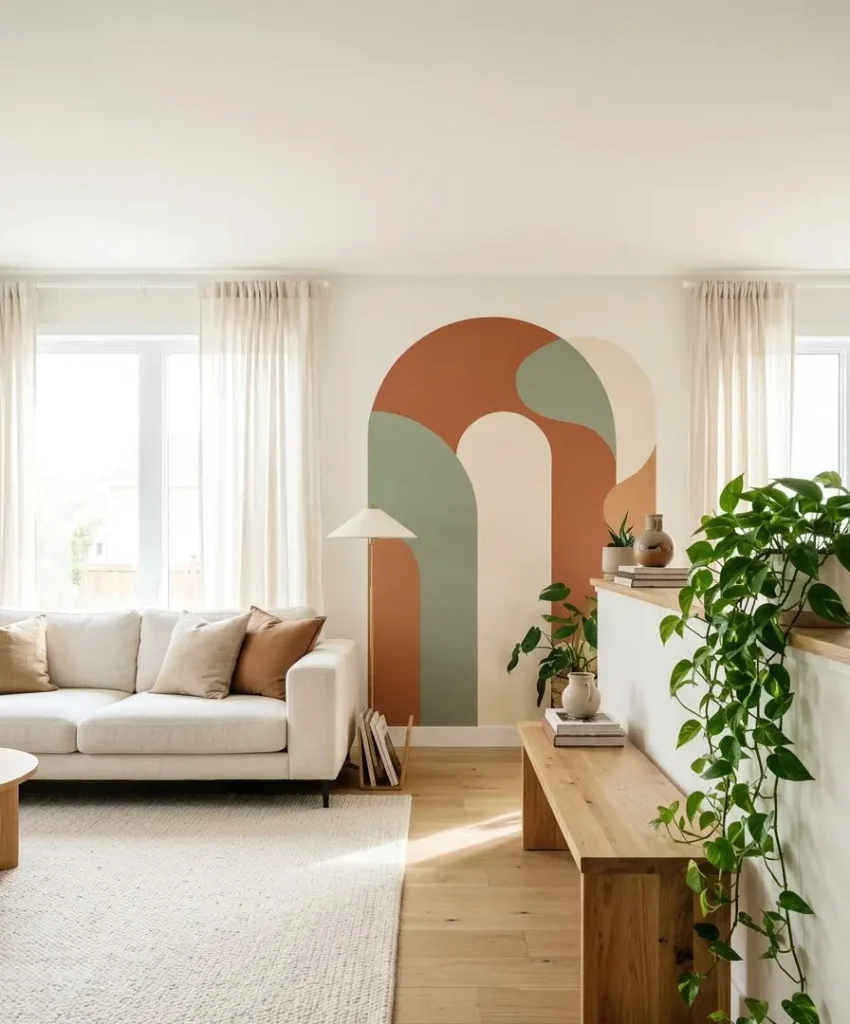
Painter’s tape, two or three paint colors, and a Saturday. Arches, half circles, and bold stripes look great in a big living room.
Measure twice, because a crooked arch looks like a mistake and not like art.
Stone, tile, and masonry looks
Real stone costs a ton. These stand-ins fool most eyes.
13. Faux stone panels
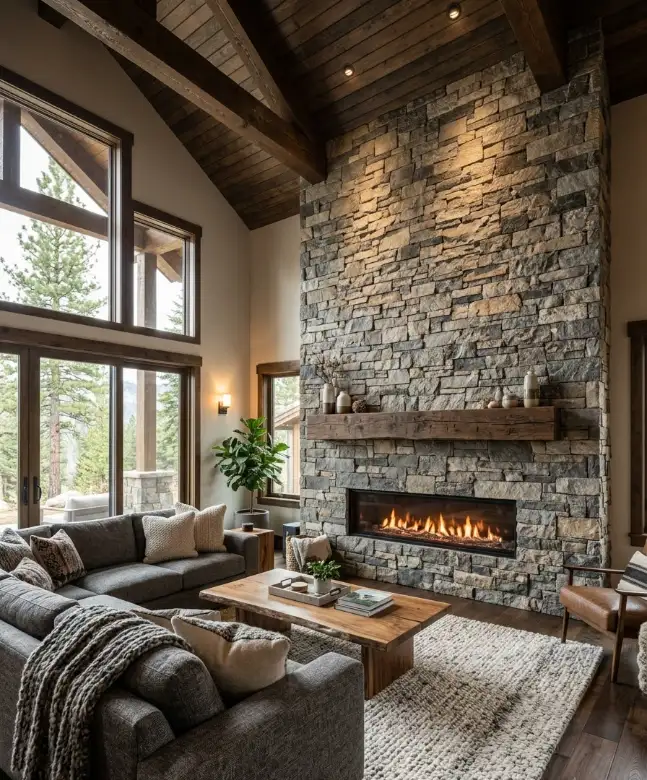
Lightweight polyurethane panels that snap together and glue on. They weigh almost nothing and look like stacked ledgerstone.
They make a great fireplace surround, and they cost a fraction of real stone. FYI, buy extra, because color varies between batches.
14. Peel and stick marble tile
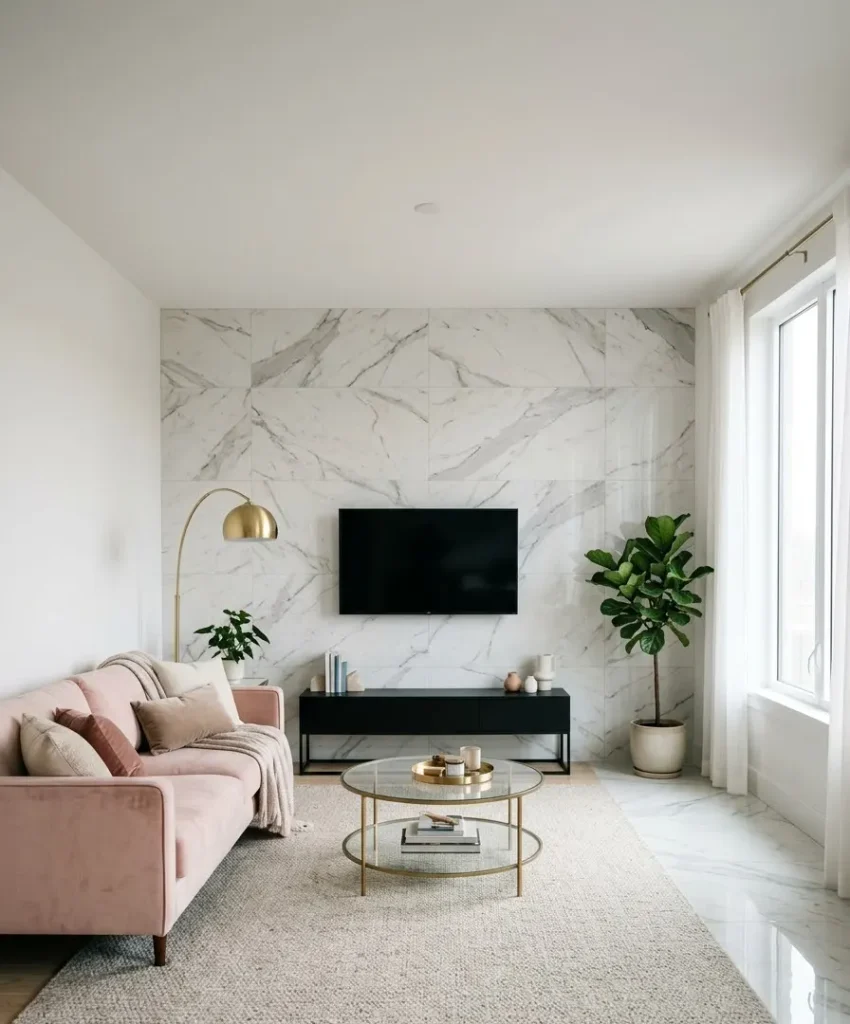
I know, I know. It sounds like a gimmick. But large-format marble-look peel and stick, laid with tight seams, looks surprisingly real from across the room, and renters love it.
15. Large-format porcelain slabs
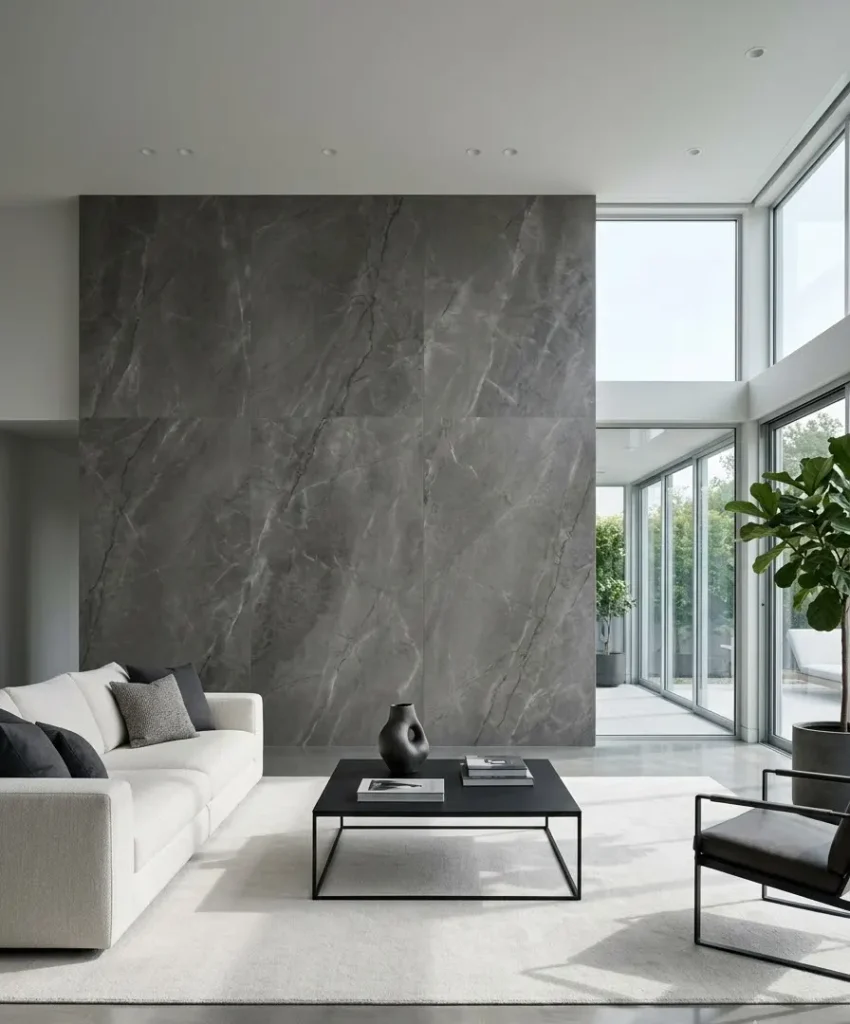
Big porcelain sheets with a marble or concrete pattern. They cost more than most items here, but a single accent wall needs only a few sheets.
The seams nearly vanish, which is what gives the wall that unbroken, luxe feel.
16. Concrete-look microcement
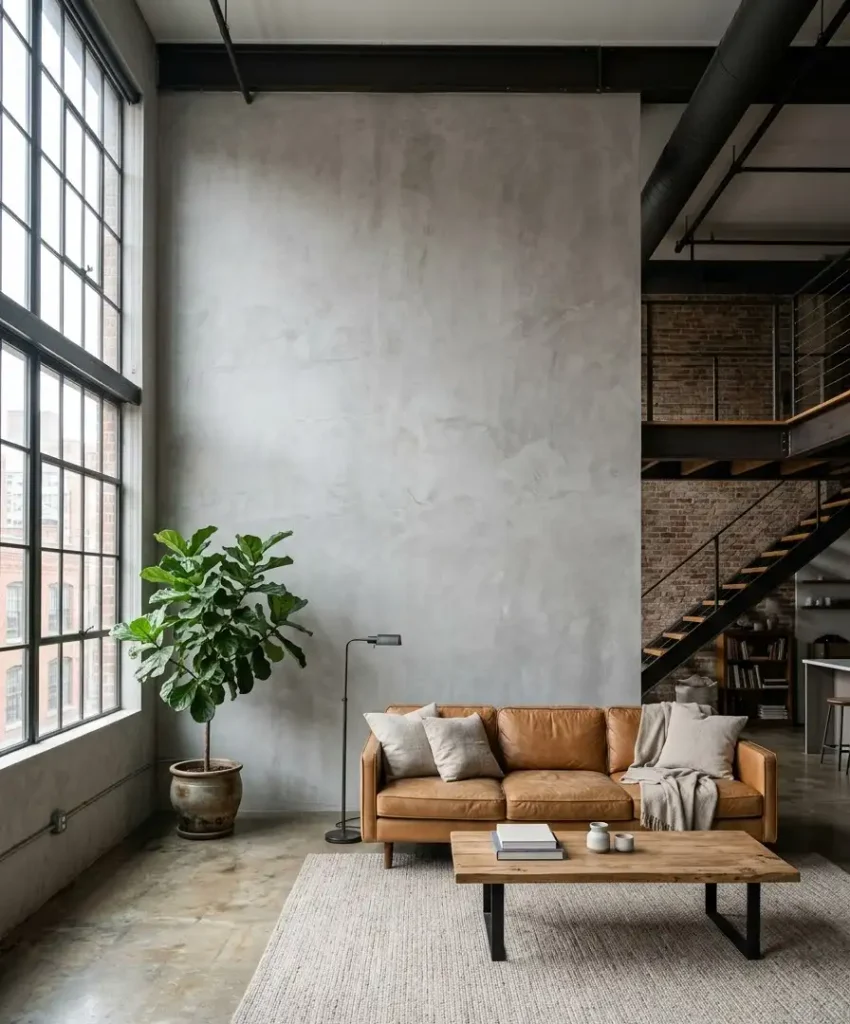
Microcement is a thin, troweled coat that mimics poured concrete. A DIY kit costs a few hundred dollars.
IMO this is the best way to get an industrial look without a contractor.
17. Zellige-style tile
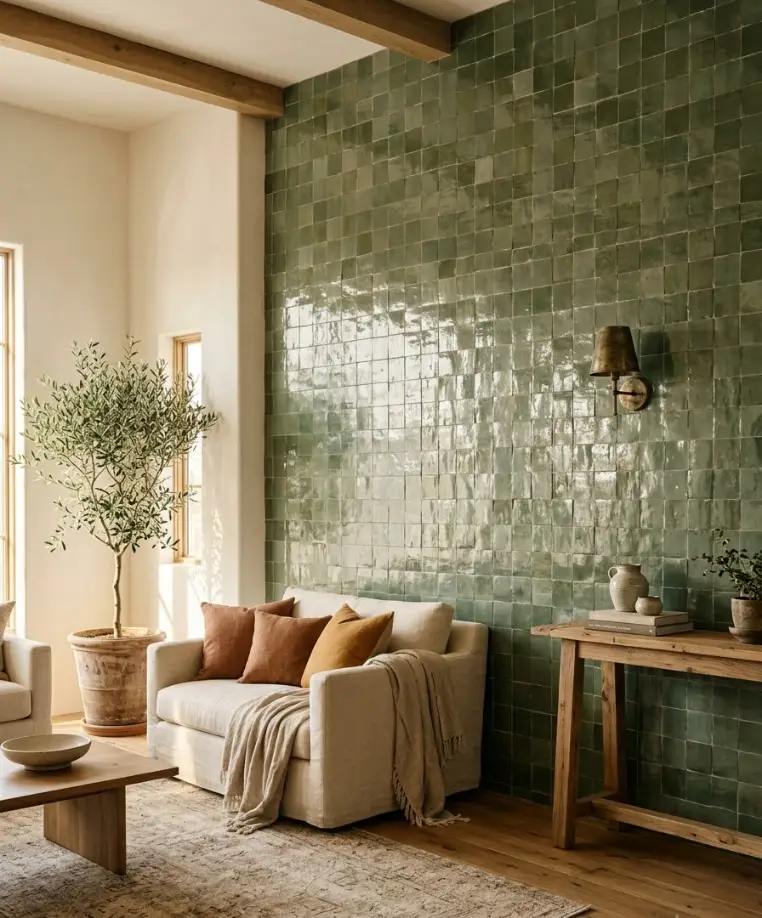
Handmade-looking Moroccan tiles with wobbly edges and uneven glaze. Real zellige is pricey.
Lookalike versions from big retailers cost about $8 to $12 per square foot and still catch light beautifully.
18. Brick veneer
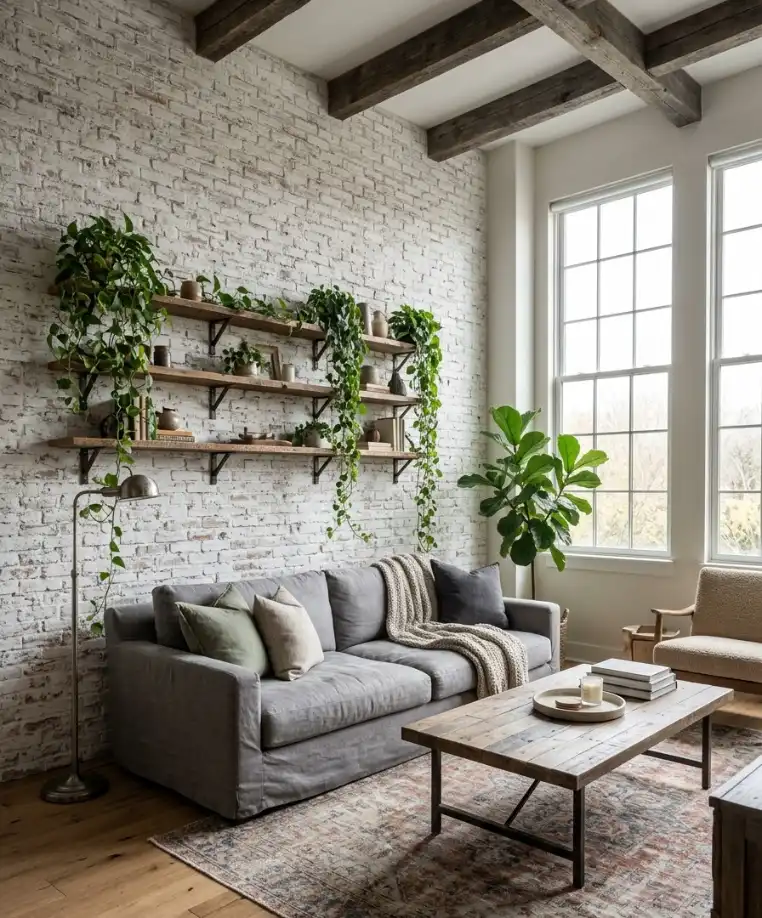
Thin brick slices you glue to the wall. White-washed or painted black, they look great. I’d skip the orange-red color unless your room already leans rustic.
19. Travertine-look panels
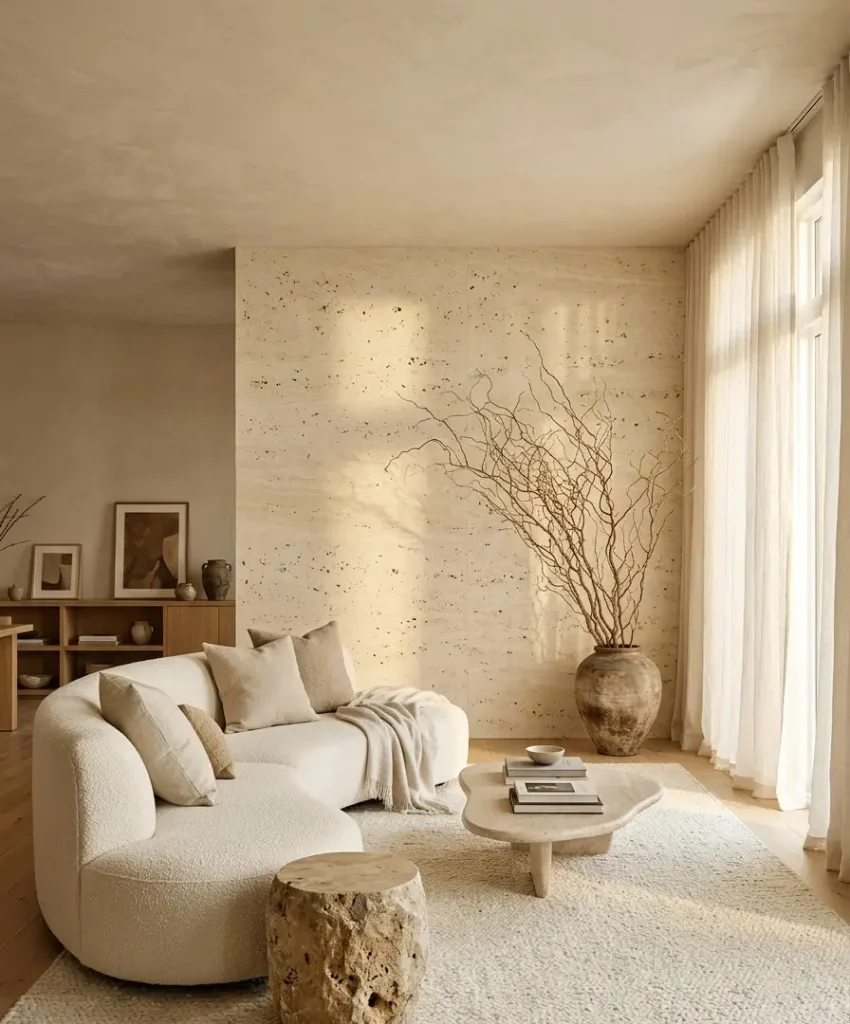
Warm, creamy, and very Pinterest right now. Faux travertine panels run cheaper than the real thing, and they pair well with curved furniture.
Texture and 3D wall surfaces
Texture is where an accent wall stops looking like a flat color and starts looking designed. Wow, the difference light makes on these is wild.
20. 3D wall panels
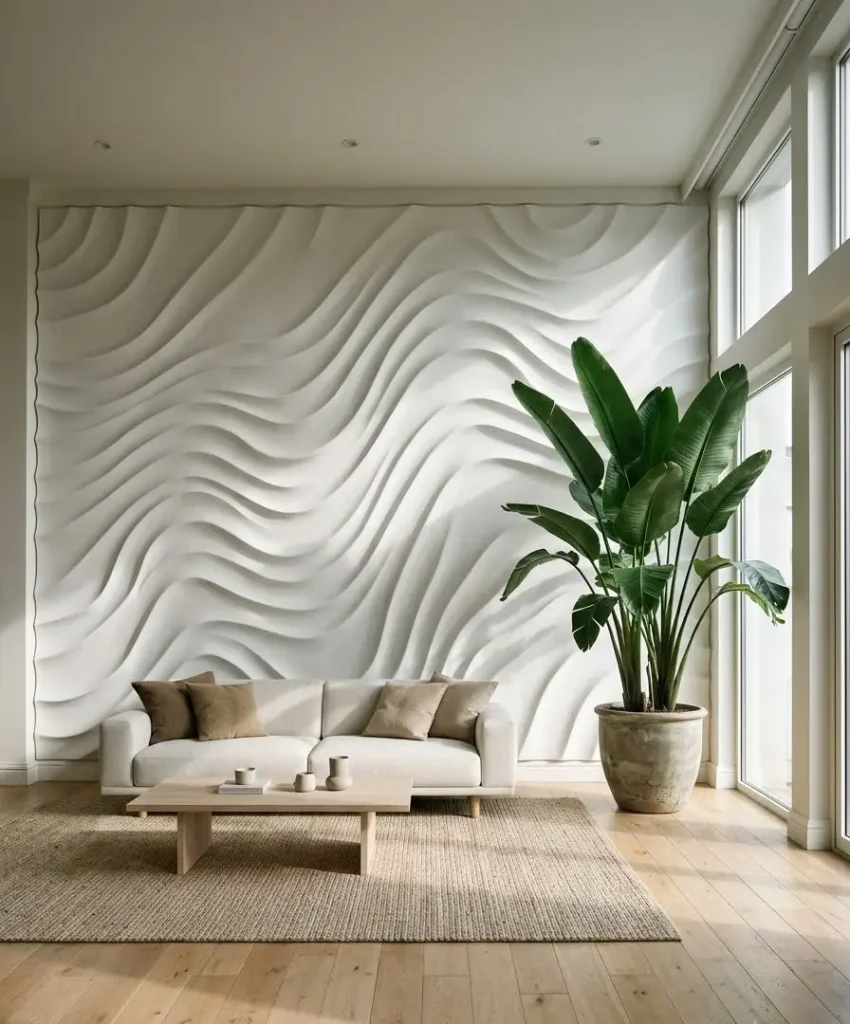
PVC or plant-fiber panels with wavy, fluted, or geometric ridges. They glue up in an afternoon and paint beautifully. Matte white ones with strong side lighting look like sculpture.
21. Fluted wall paneling
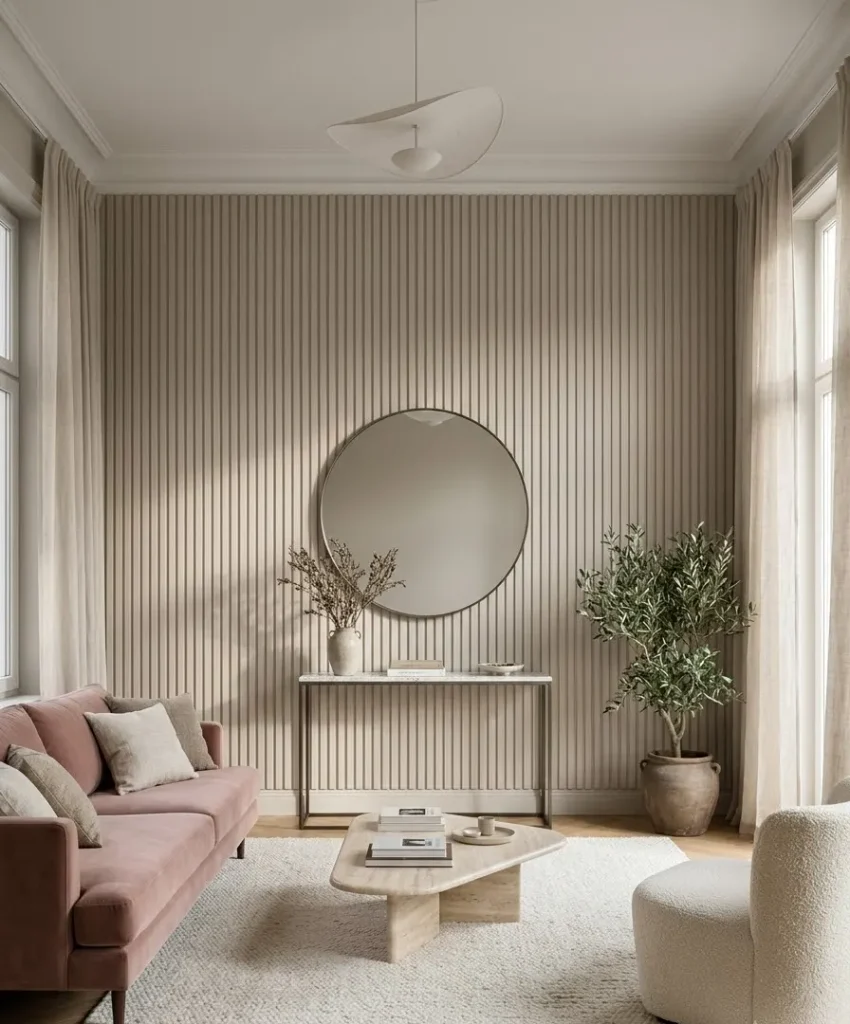
Rounded vertical grooves, like a classic column laid flat. You can buy flexible fluted sheets or build your own with half-round molding. I love how one coat of paint changes the whole mood.
22. Wallpaper with raised texture
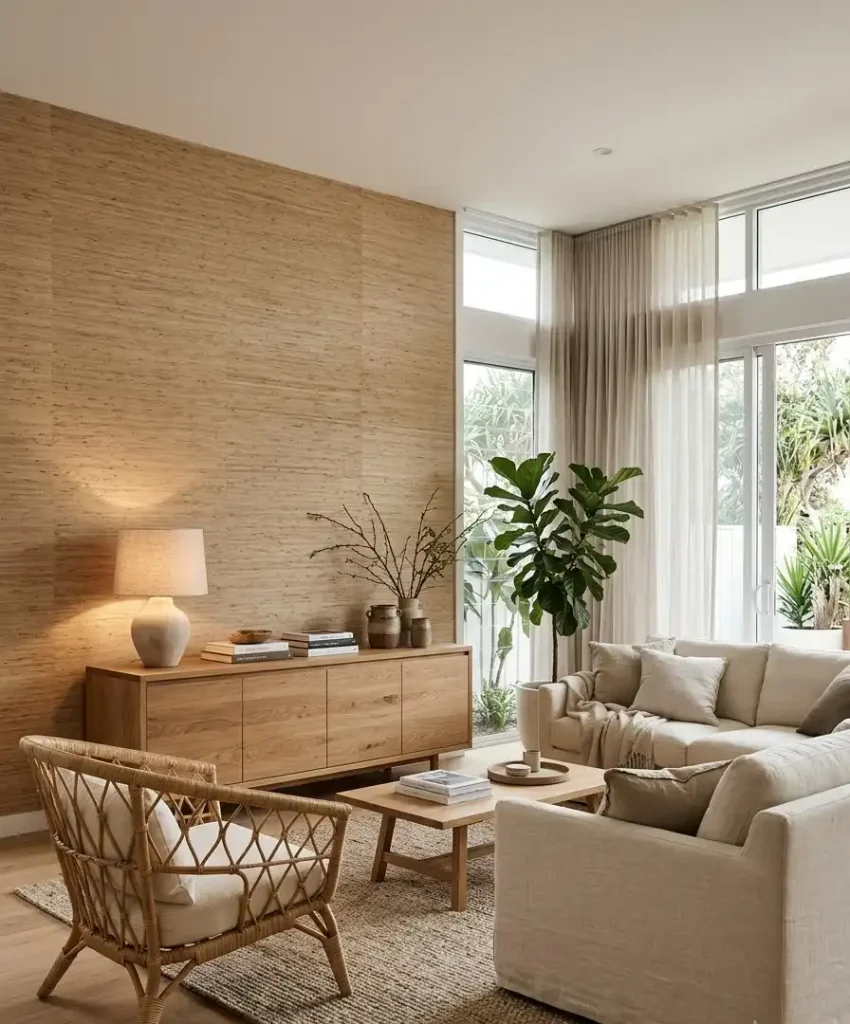
Grasscloth and textured vinyl look rich and hide wall flaws. Real grasscloth runs about $3 to $8 per square foot. A heads up: it stains if you so much as look at it with a wet sponge.
23. Wainscoting plus plaster
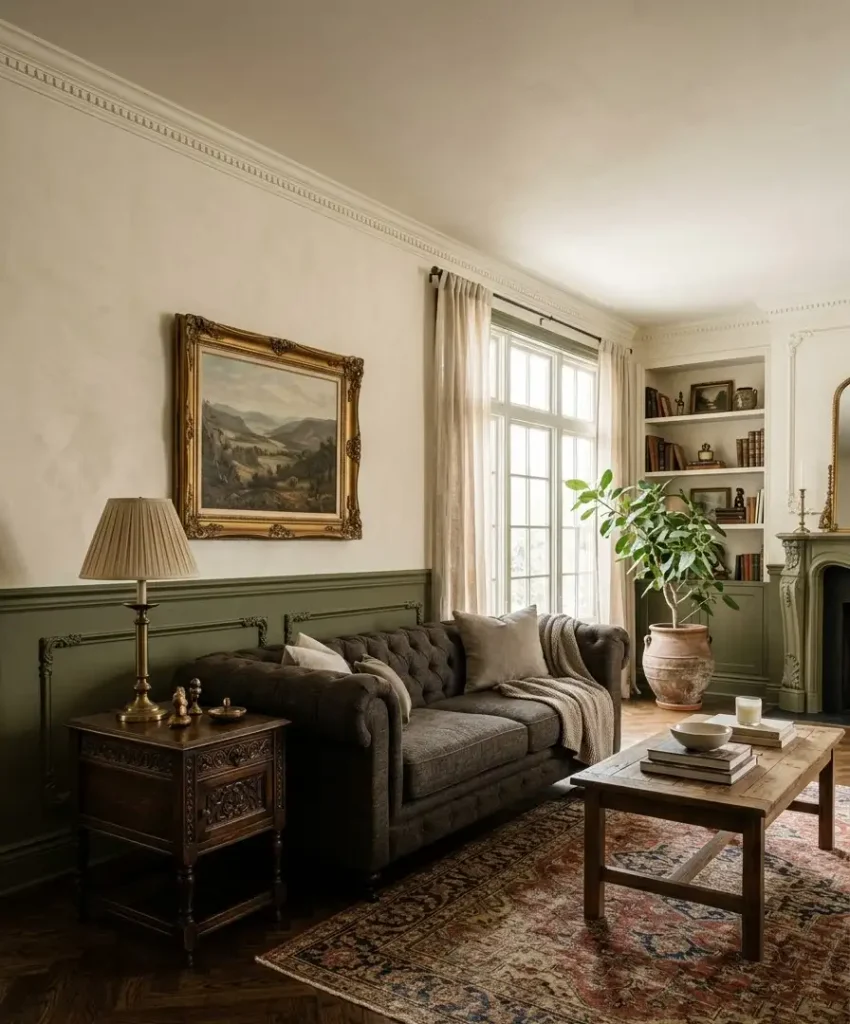
Mix a lower band of paneling with a smooth plaster upper half. It adds depth and a bit of old-world charm. Sorry to say, it also takes careful planning, so draw it first.
24. Cork wall tiles
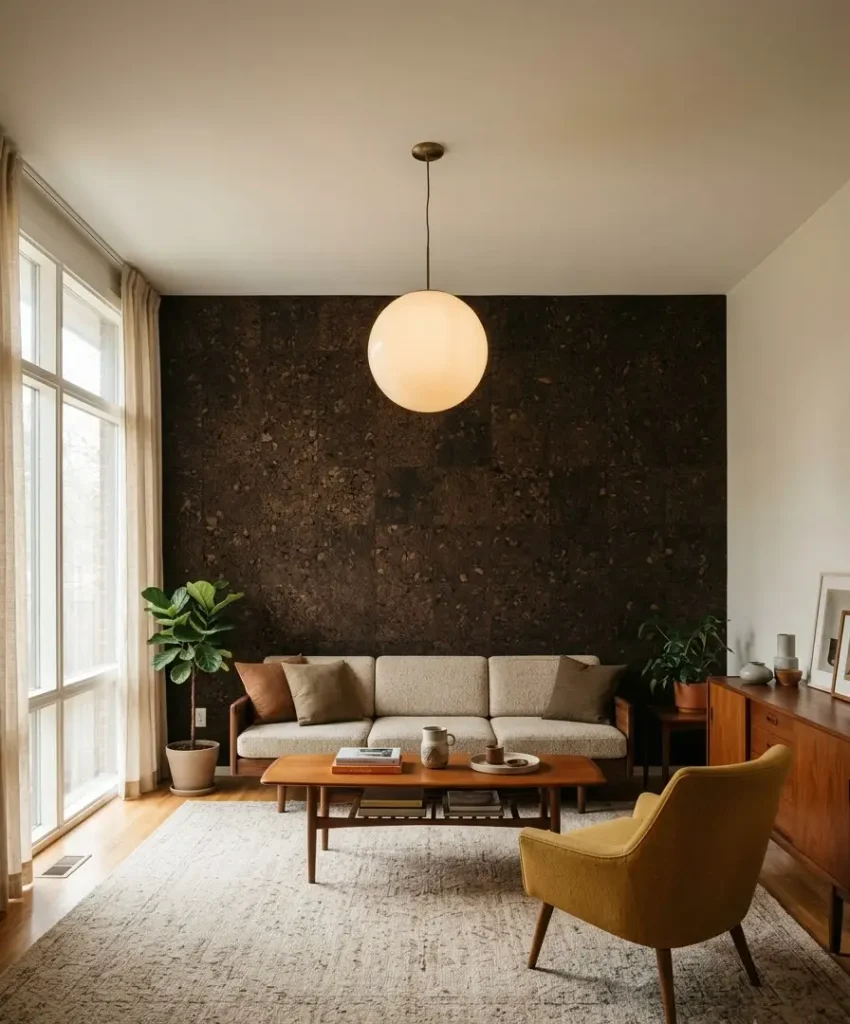
Cork has crept back into modern design. It’s warm, a little unexpected, and it dampens sound. A few designers I follow on Houzz use it behind sofas, and I think it looks great in a dark tone.
25. Felt or fabric-wrapped panels
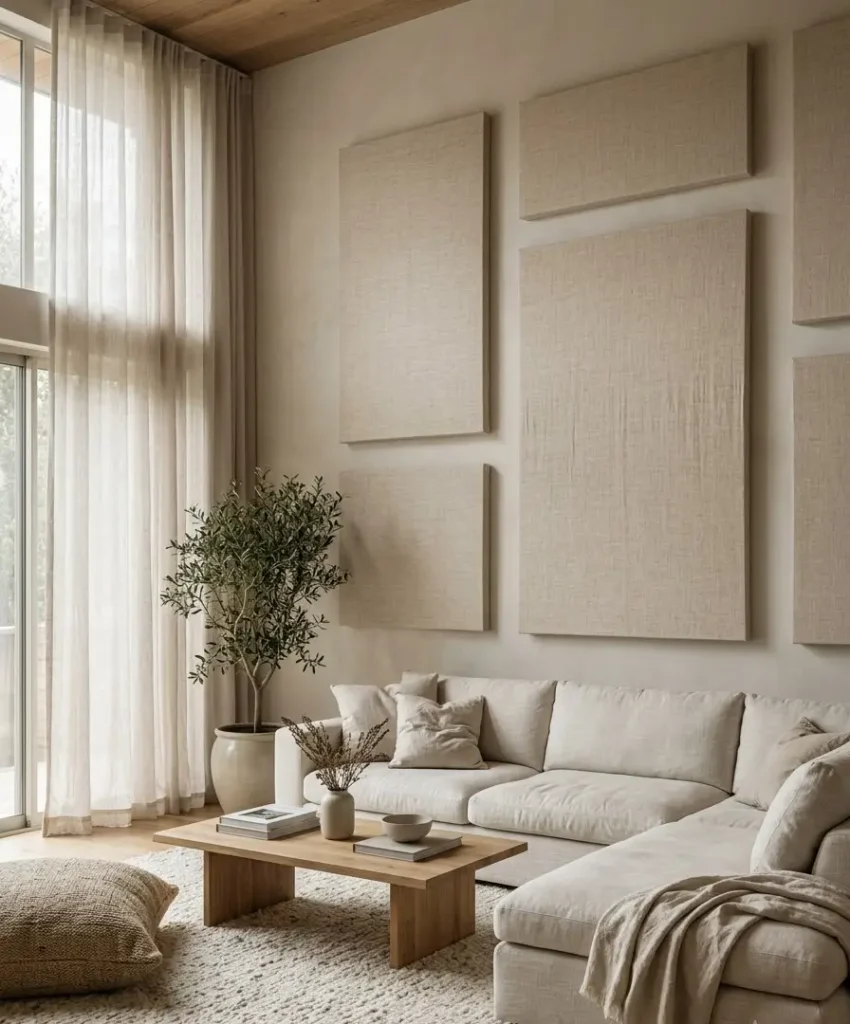
Stretch fabric over foam-backed panels and mount them like art. Linen looks calm, velvet looks bold. They cost more in time than in money.
Metal, glass, and unusual materials
These pick up the slack when wood and paint feel too expected.
26. Mirror panels or antiqued mirror
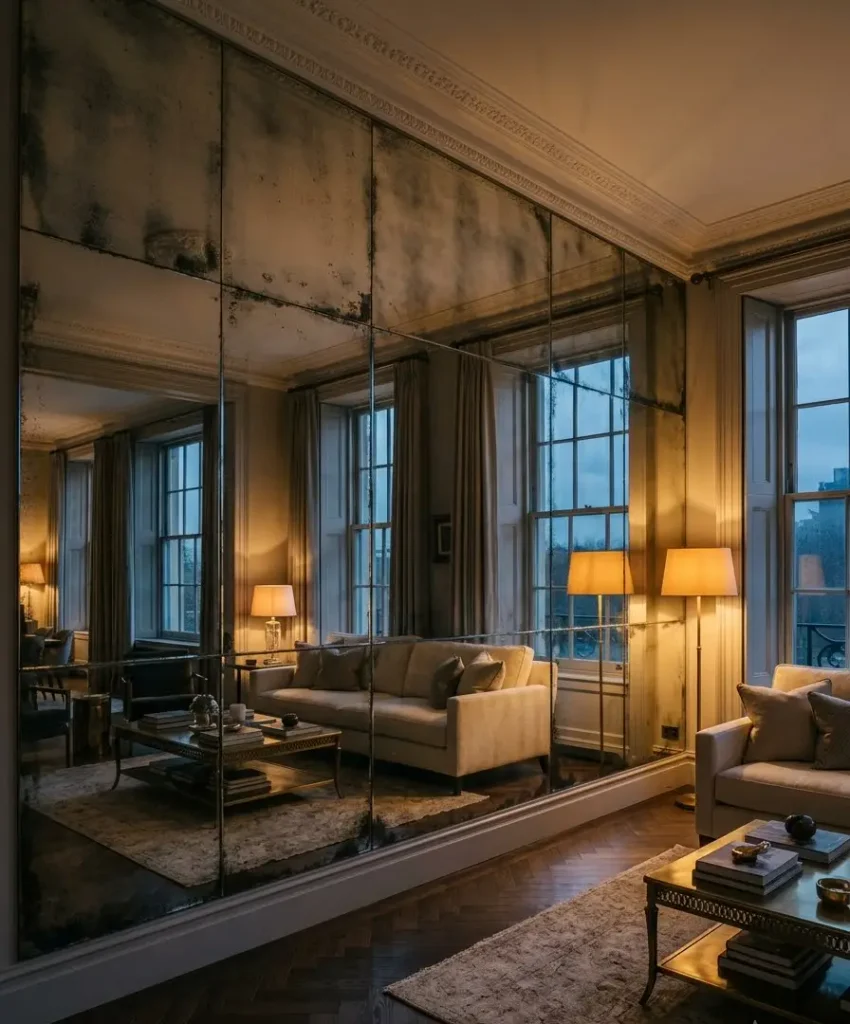
A big mirror wall makes a room feel twice its size. Antiqued glass adds that smoky, lived-in glow. I’d keep it to one section, because a full mirror wall can feel like a dance studio :/.
27. Metal sheet or corrugated panels
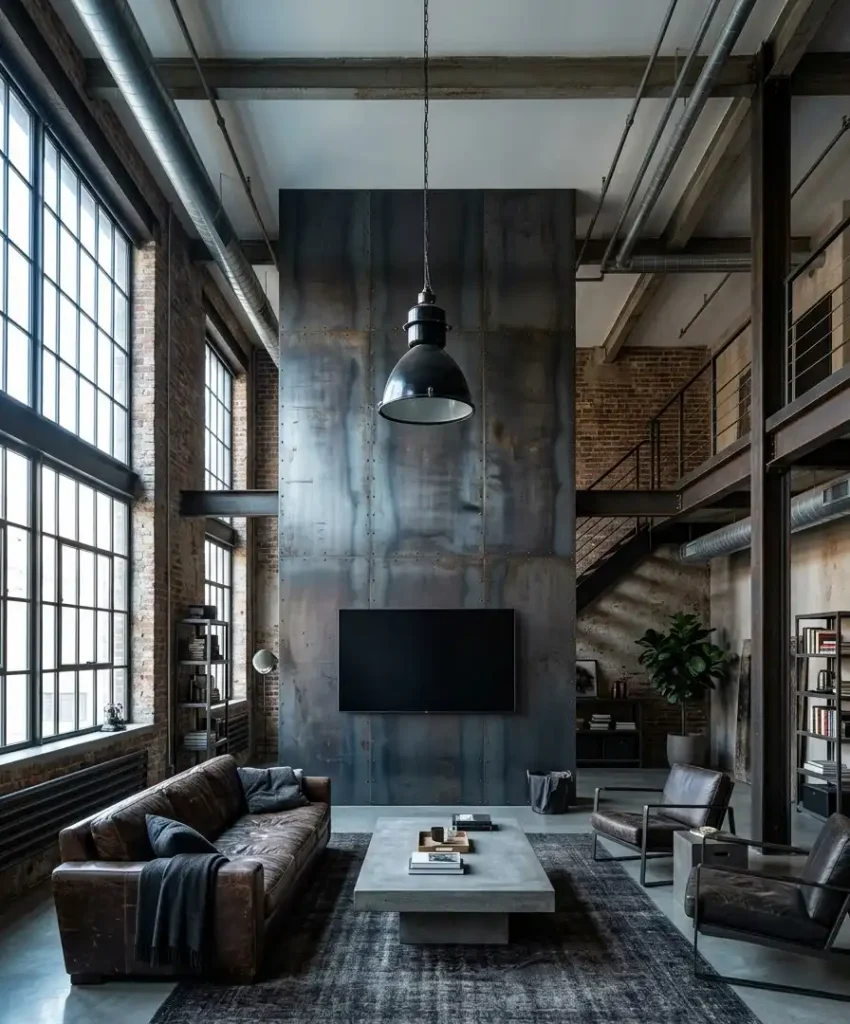
Brushed steel, blackened metal, or even clean corrugated sheets. They suit loft-style living rooms and hold up well behind a TV. Cut edges sharp, so wear gloves.
28. Tinted glass or mirror tiles
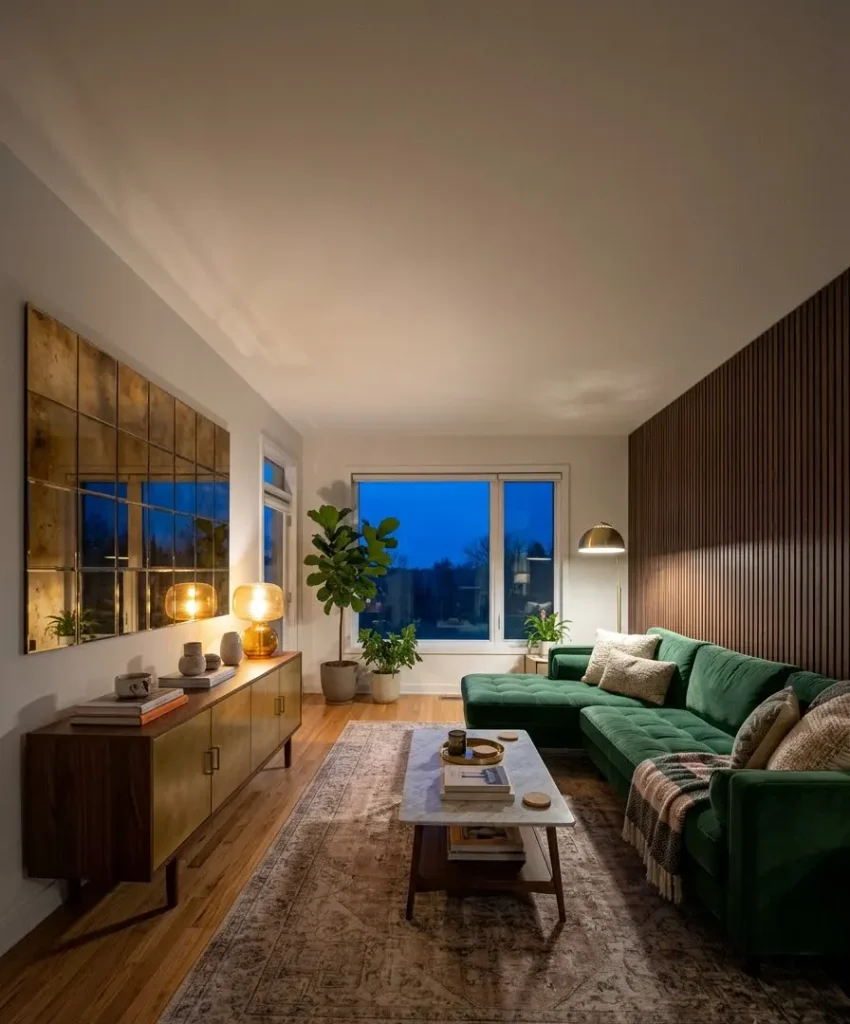
Smoked or bronze tiles reflect warm light and look high-end in the evening. Use them in small sections for impact without the glare.
29. Woven rattan or cane panels
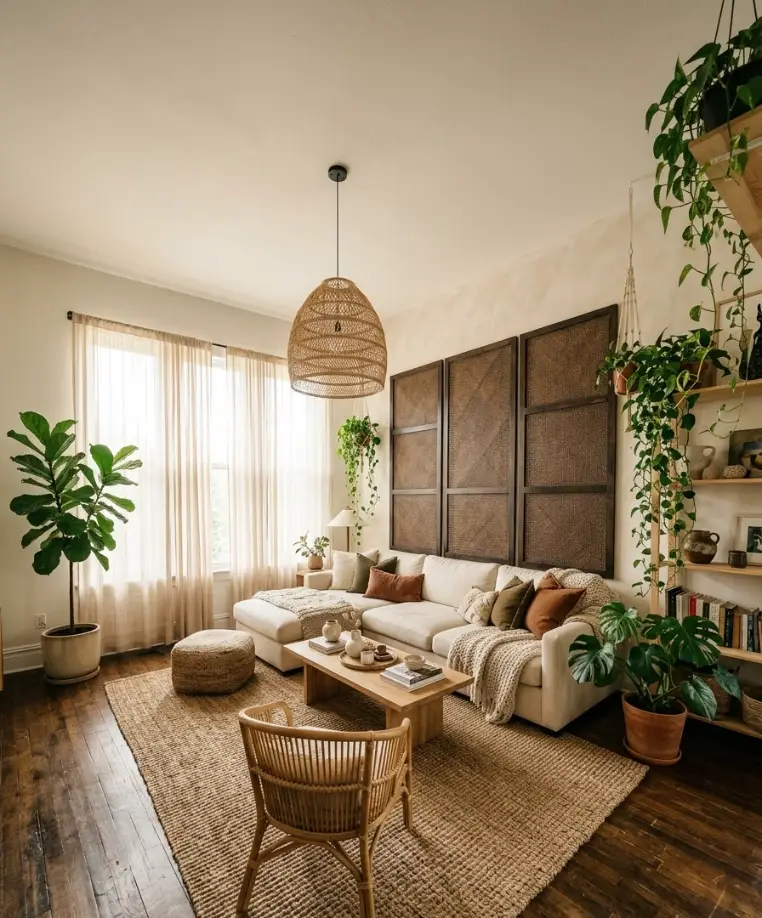
Cane webbing on a plywood frame looks great on a living room wall. It’s lightweight, cheap, and photographs well on Pinterest. Stain it dark for a modern look.
30. Oversized art plus a rail system
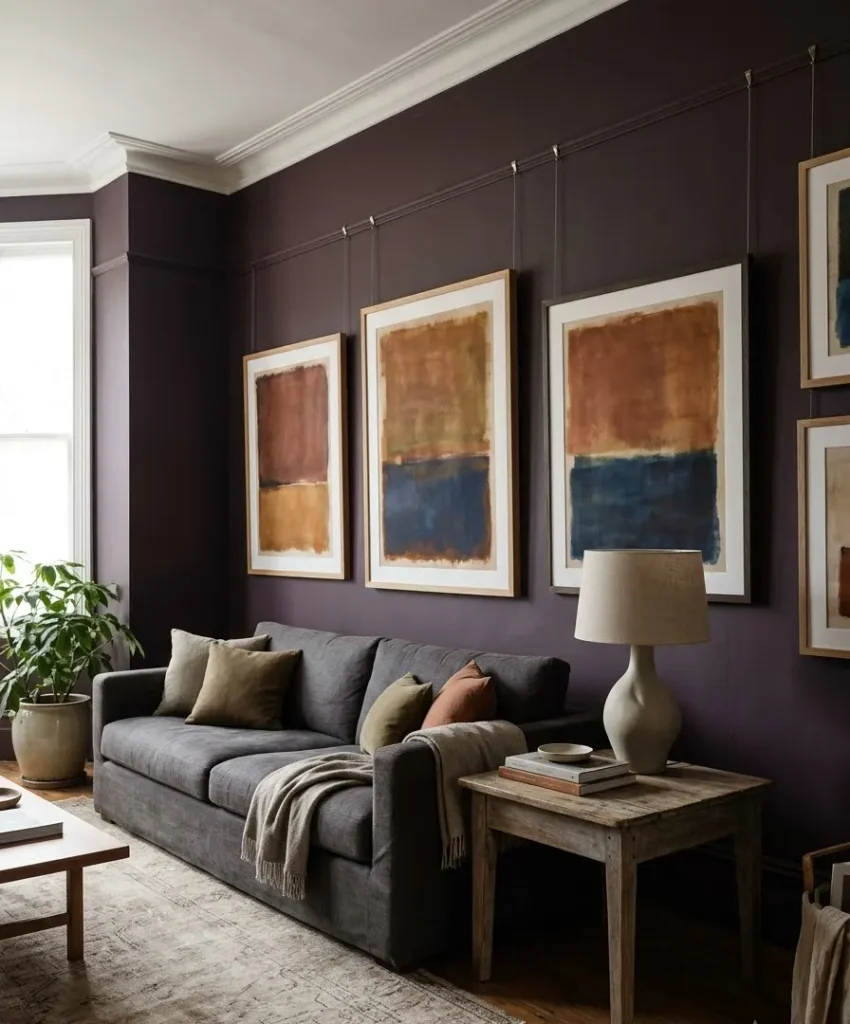
Sometimes the “material” is a gallery wall done right. Install a picture rail, line up oversized prints, and paint the wall a rich tone behind them. It costs little, and you can swap pieces whenever you get bored.
A quick tangent on lighting
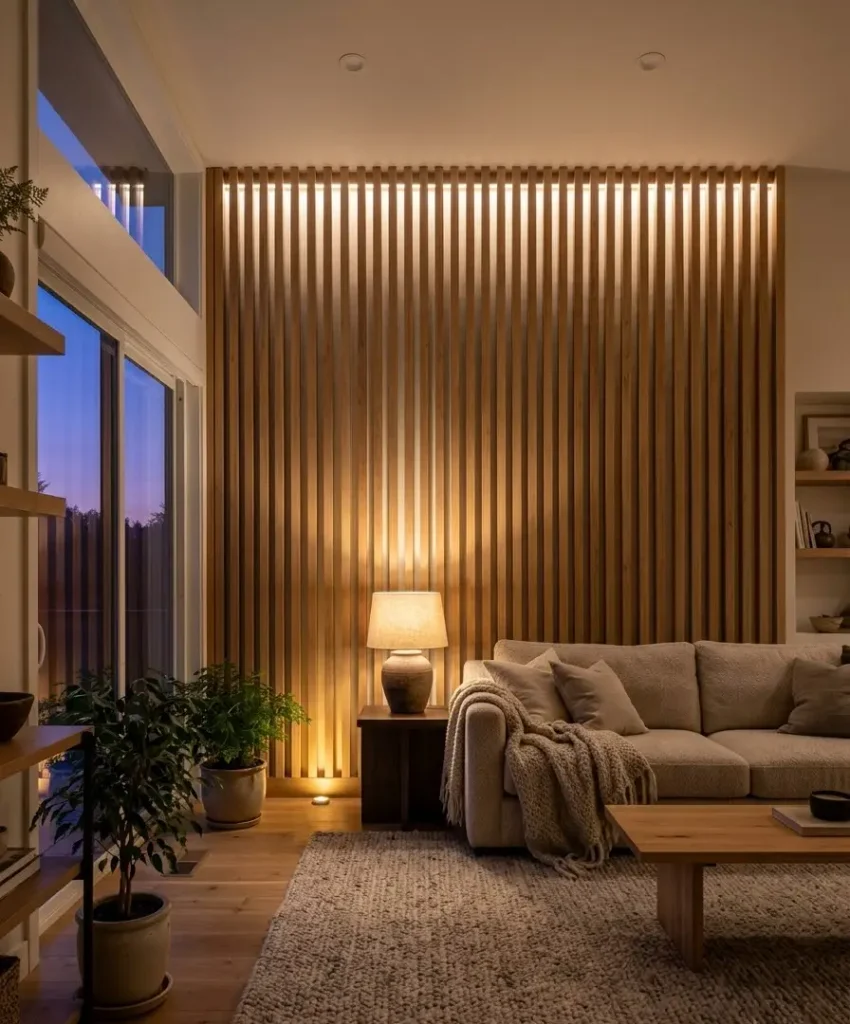
Totally off topic, but I once spent $40 on a plug-in wall washer and it did more for my accent wall than the $200 of materials behind it.
Lighting a wall from above or below makes every texture look deeper. Warm 2700K bulbs flatter wood and plaster, while cool bulbs make stone look flat and gray.
Cheap LED strips hidden behind a slat panel also give you that floating glow you see in expensive showrooms. Ten minutes, one outlet, done.
How to choose without regret
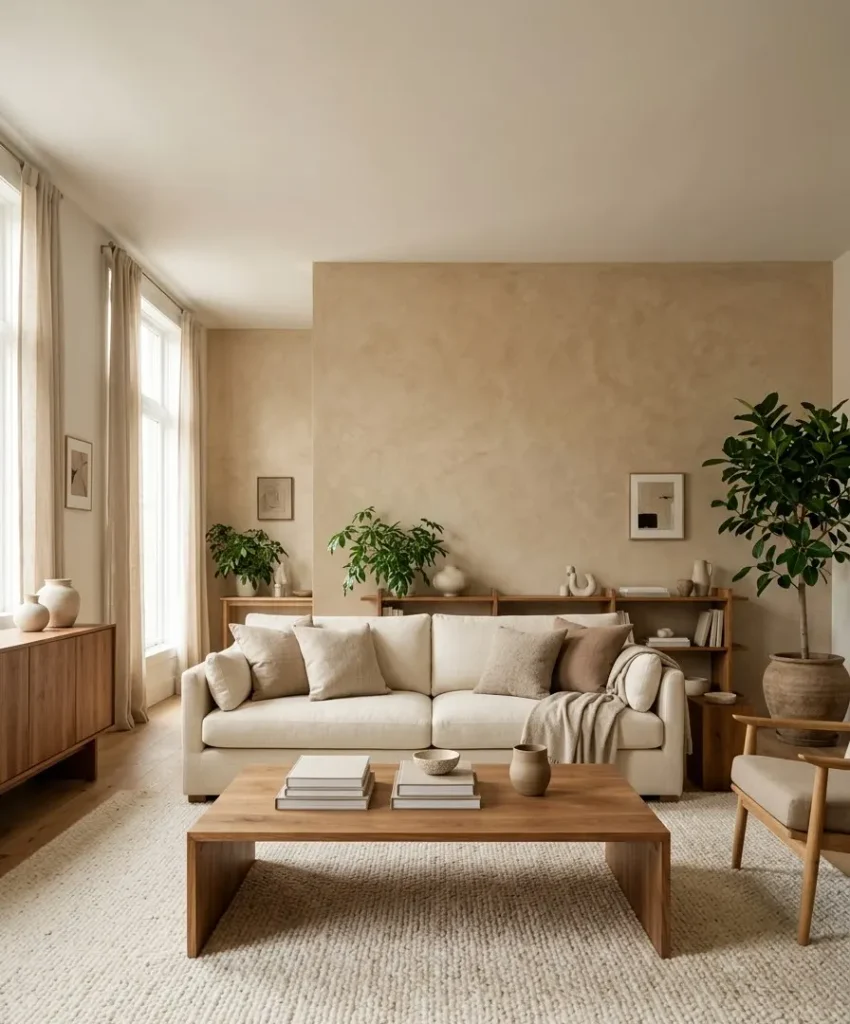
Every material above can look gorgeous or tacky. Your choices decide which.
Here are the questions I ask before I buy anything:
- Does it match the room’s existing tones? Warm wood beside a cool gray sofa fights itself. I learned that one the hard way.
- Can I live with it for 5 years? Trends move fast. I’ve tired of bold geometric paint within a year, but slats still feel fresh to me.
- Will it handle my life? Kids, dogs, and sticky fingers wreck grasscloth. Wood and plaster forgive more.
- Do I like it, or do I just like the photo? My honest opinion: pin freely, but build what you’d want to sit beside every evening.
For more planning help, Family Handyman has solid step-by-step guides for paneling and tile installs, and This Old House explains the mechanics of wall prep better than most. Spend a few evenings there before you pick up a saw.
Mistakes I see on almost every accent wall
Skipping wall prep is the big one. Patch holes, sand bumps, and prime, or the finish will show every flaw within a month.
The second mistake is going too small. A 10-inch strip of fancy tile on a 14-foot wall looks like a bathroom afterthought. Commit to the whole wall or don’t bother.
Third, people forget outlets and switches. Measure them, mark them, and buy extender boxes where panels sit thick.
I once forgot this on a slat wall and ended up with a socket buried an inch deep. Not fun.
FAQ
What is the cheapest material for a big accent wall in a living room?
Paint-based finishes win on price. Limewash, color drenching, and board and batten all cost under $3 per square foot in most cases, and you can finish any of them in a weekend.
Which accent wall material looks the most expensive?
Slat wood, large-format stone-look slabs, and microcement tend to read as high-end in photos and in person. Dark colors and clean lines help too.
Can renters use these ideas?
Yes. Peel and stick tile, removable wallpaper, fabric panels, and a gallery rail system all come off without damage. Test a small patch first, since some walls peel paint with the adhesive.
Final thought
An accent wall doesn’t need a big budget, just one clear decision and a weekend of effort. Pick the wall, pick one material from the 30 above, and commit. Which one are you pinning first?