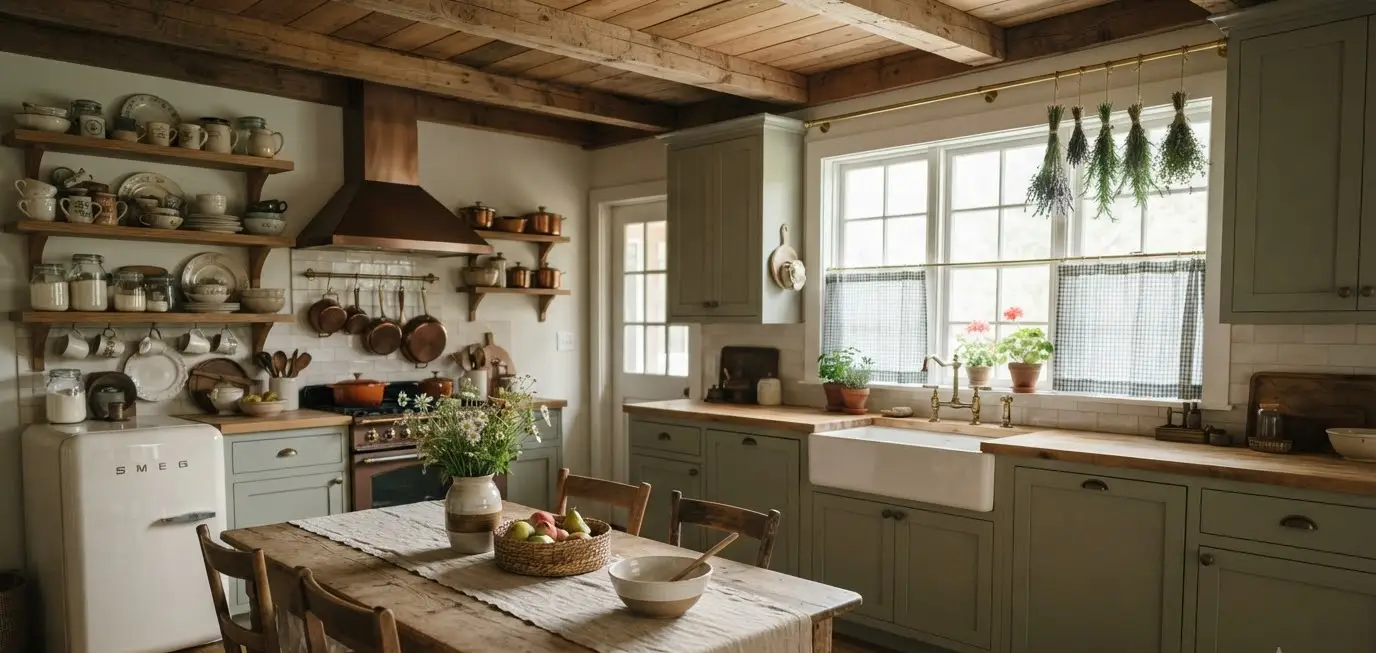
Picture a kitchen where the kettle whistles, dried lavender hangs from a beam, and your grandmother’s mismatched teacups sit proudly on open shelves instead of hiding in a cabinet.
That’s cottagecore. And once you fall for it, a plain white galley kitchen just won’t cut it anymore.
I redid my own kitchen three years ago, and I still catch myself standing in it with a coffee, just looking around.
It’s a little dramatic, sure. But there’s something about wood, linen, and greenery together that makes a room feel lived-in rather than staged for a magazine shoot.
If you’ve been saving cottagecore kitchen pins for months and haven’t pulled the trigger on any of it, this is your sign.
I get it, though. Renovation content online tends to jump straight to the finished result, all soft light and perfectly arranged ceramic bowls,
without ever mentioning the part where you’re standing in a half-painted kitchen at 11pm wondering why you started.
So this isn’t that kind of list. Here are 25 ideas, pulled from real kitchens (including mine, wobbly cabinet doors and all), broken down by what they actually cost,
how much work they take, and whether they’re worth doing first. Grab a tea, pull up your Pinterest board, and let’s figure out which ones fit your space.
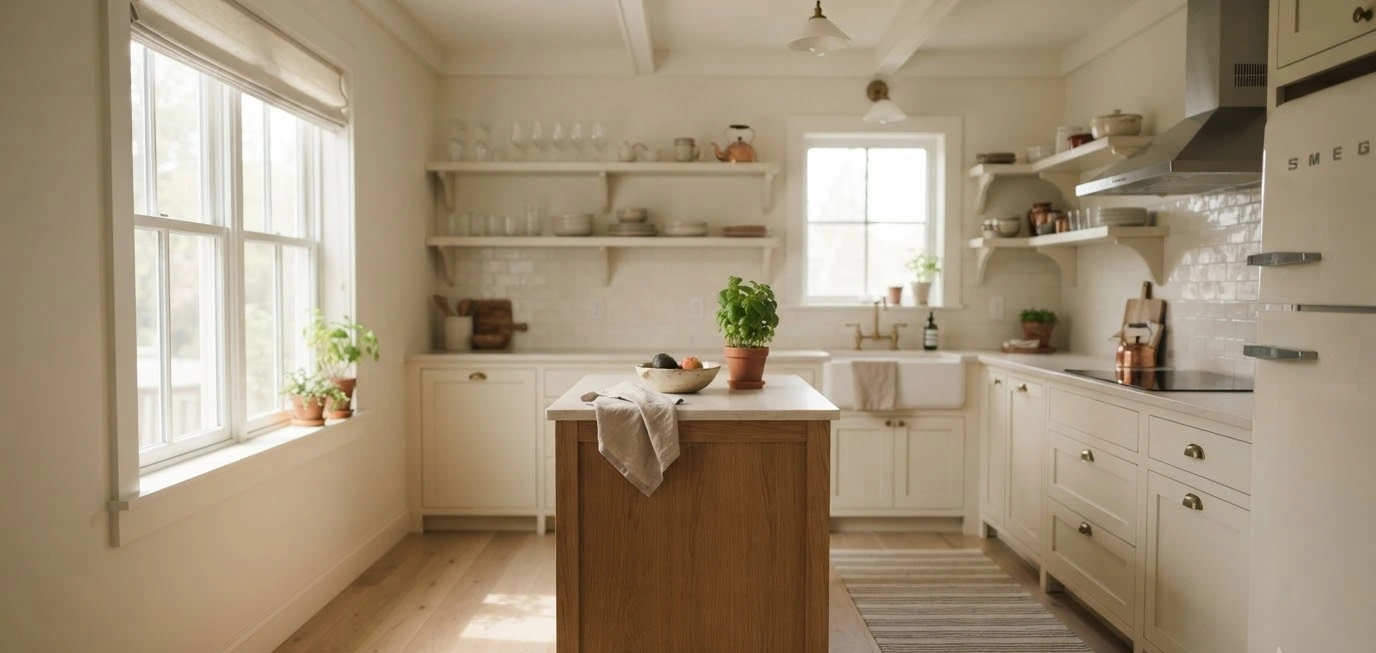
Small Kitchen Island Inspiration 18 Clever Layouts That Save Floor Space
Check It Out →Start with the walls and colors
Color sets the whole mood before you even add a single mason jar of dried herbs.
Get this part wrong and no amount of vintage decor will save the room. I learned this the hard way.
My first attempt at “cottagecore” was really just off-white walls with a few plants scattered around, and it looked like a rental apartment that gave up halfway through decorating.
The fix wasn’t more stuff. It was better color. Once the base palette was right, even cheap decor started looking intentional instead of random.
Go for muted, earthy paint tones. Sage green, buttery cream, dusty rose.
These colors read as calm instead of trendy, which matters because trends fade and repainting a kitchen is a weekend you’ll never get back.
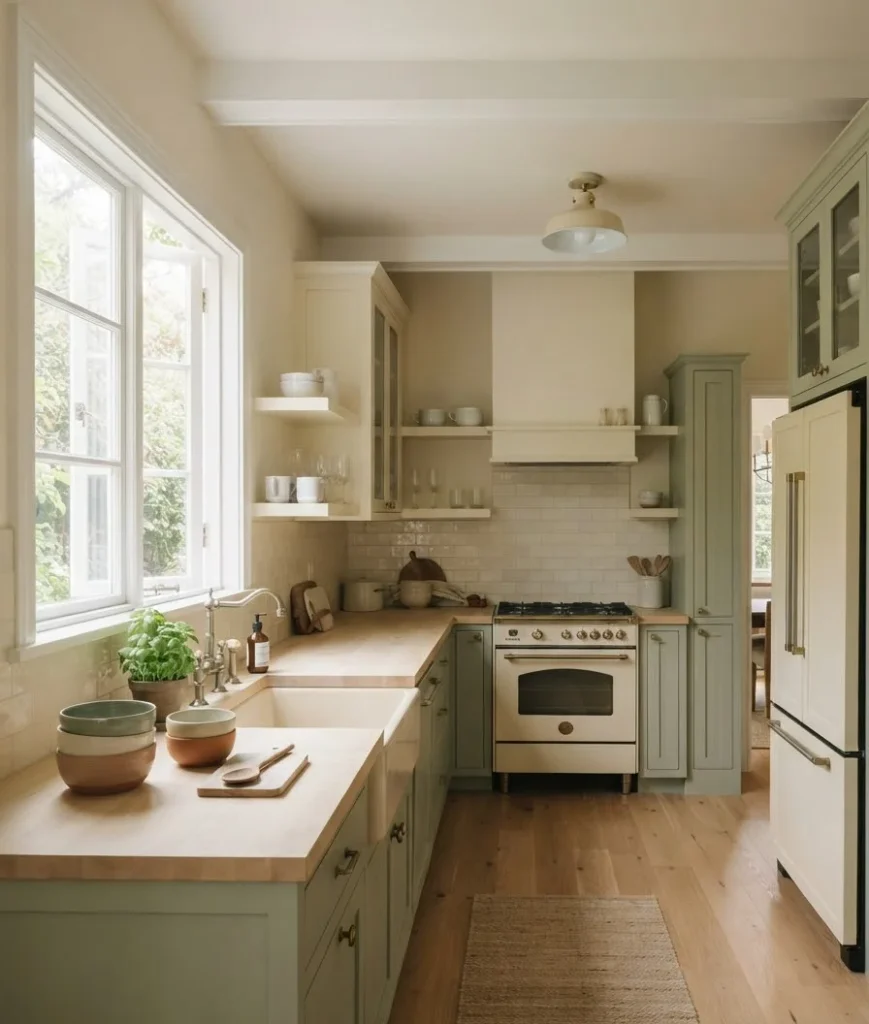
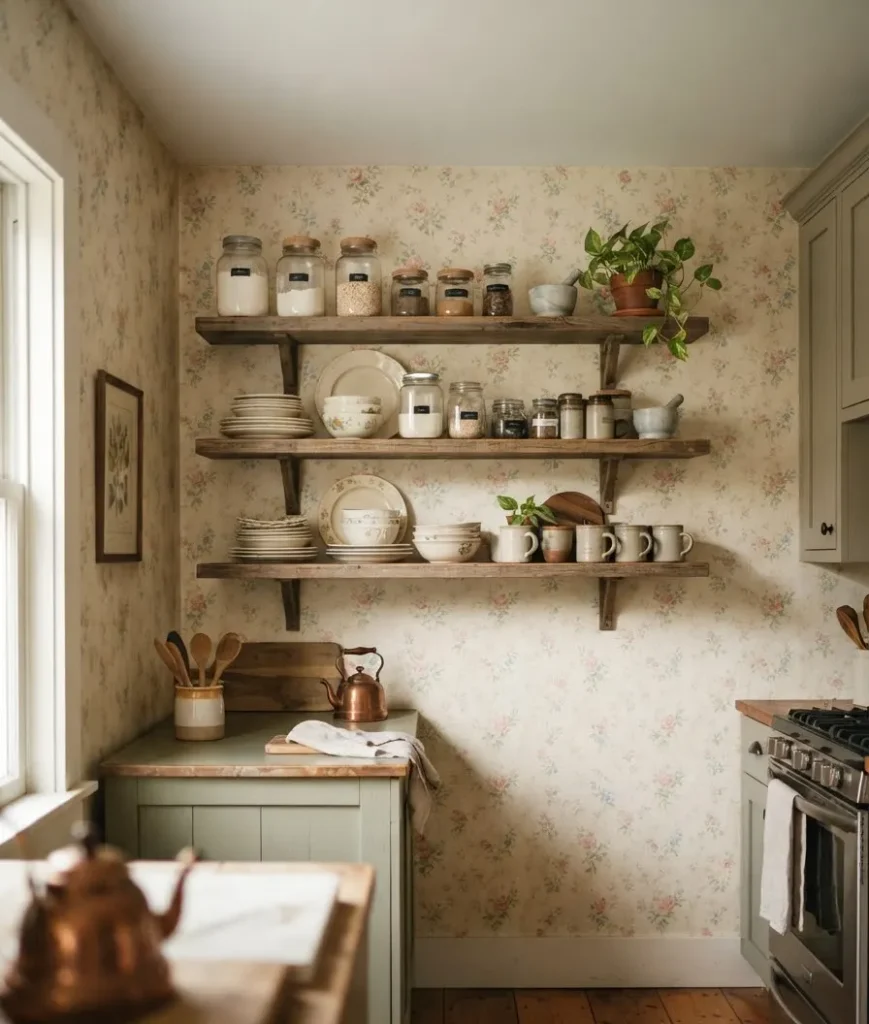
- Try a floral or gingham wallpaper on one wall. You don’t need to commit the whole room.
A single accent wall behind open shelves does the job without overwhelming the space, as Eleanor Rose Home points out when talking about how wallpaper sets the backdrop for the rest of the room.
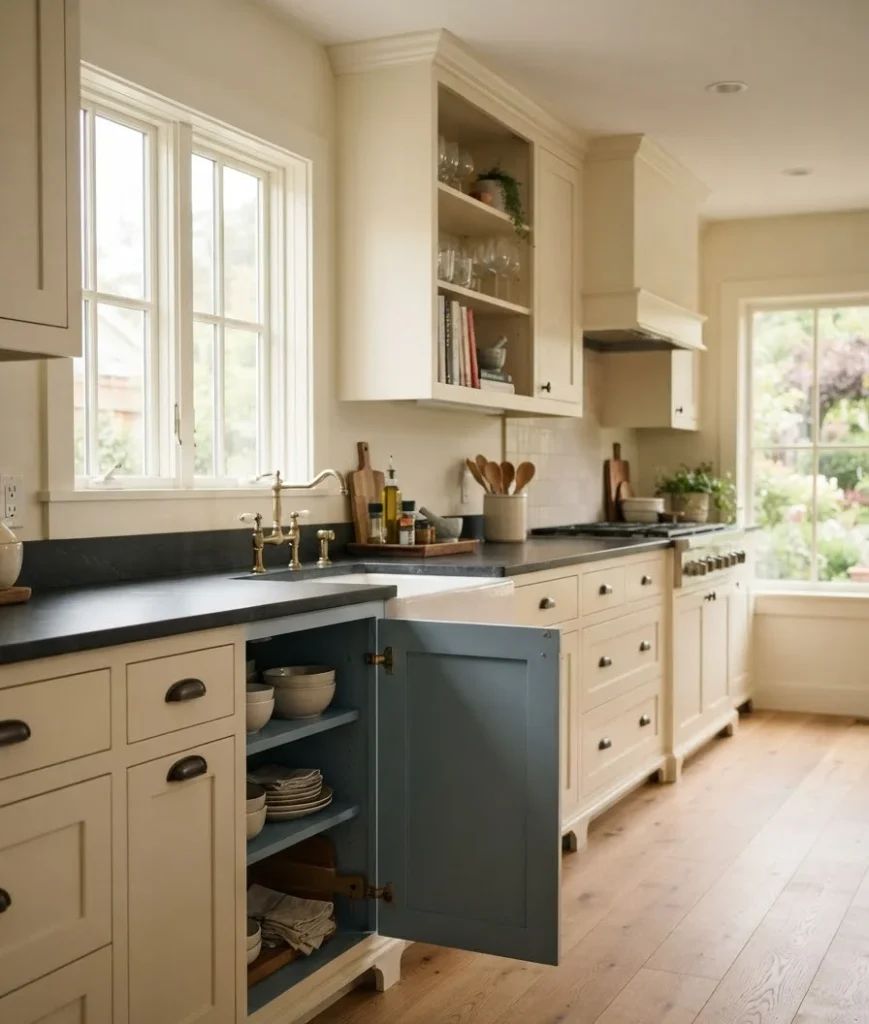
- Paint the inside of your cabinets a contrast color. Open the door and there’s a surprise, dusty blue, terracotta, whatever feels right. It’s a small move with an oddly big payoff.
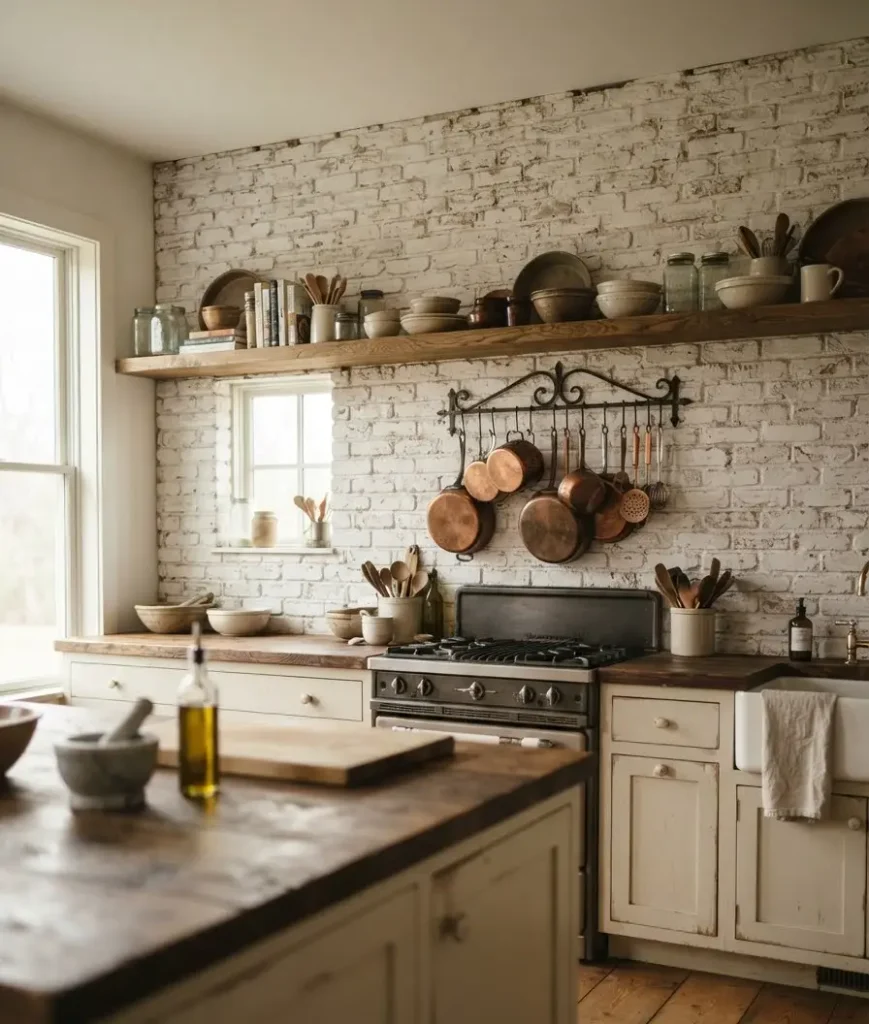
- Whitewash exposed brick if you have it. Raw brick can feel harsh under kitchen lighting.
A light whitewash softens it and keeps that farmhouse texture without the cold, industrial vibe.
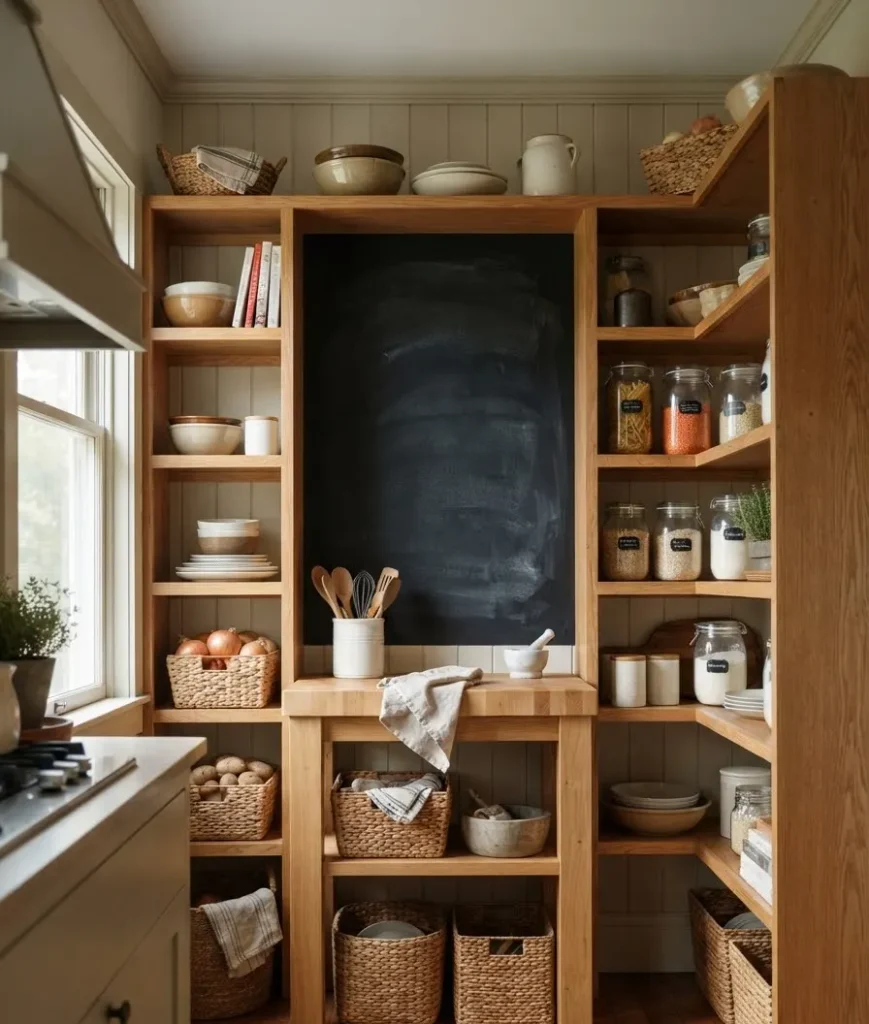
Use a chalkboard or slate paint patch near the pantry. Grocery lists, little doodles from the kids, a quote you like this week.
IMO it’s one of the most functional cottagecore touches on this list, not just decoration for decoration’s sake.
Rethink your cabinets and shelving
Here’s where most kitchens either nail the aesthetic or completely miss it.
Closed, matching cabinet runs read as generic, the kind of kitchen you’d find in any new-build subdivision. Cottagecore wants texture and a little visible history instead.
That doesn’t mean it has to be expensive. Some of the most convincing cottagecore kitchens I’ve seen belong to renters who couldn’t touch the actual cabinetry, so they worked entirely with what sits on top of and inside it.
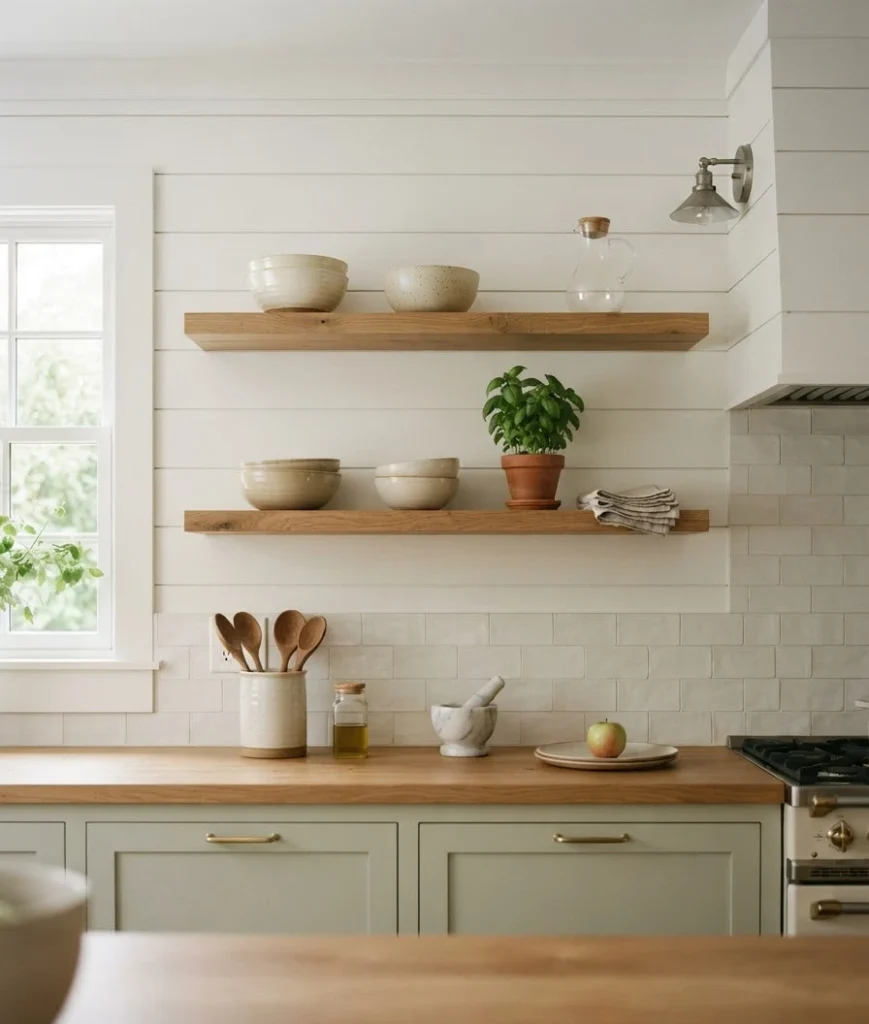
- Swap upper cabinets for open shelving. This is the single most repeated tip across every cottagecore kitchen roundup I’ve read, and for good reason.
It forces you to actually curate what’s on display instead of shoving clutter behind a door.
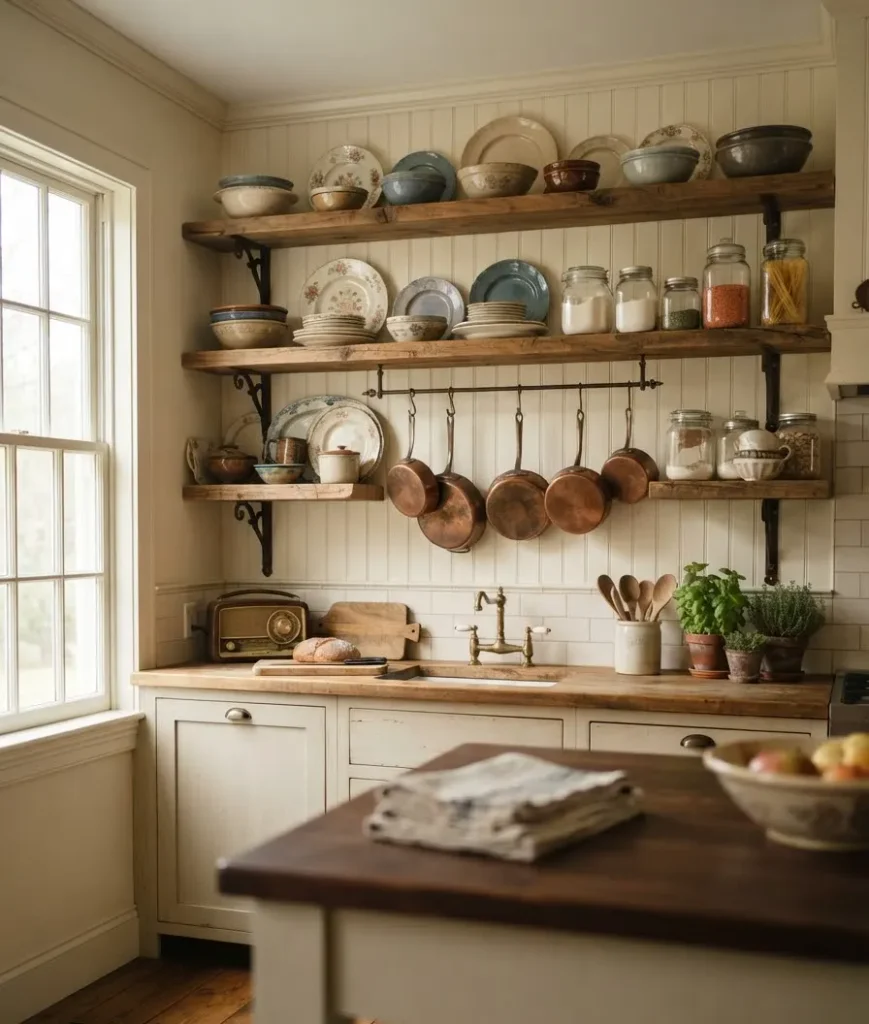
- Mix wood tones instead of matching everything. A reclaimed oak shelf next to a painted cabinet looks intentional, not mismatched, as long as your color palette stays consistent.
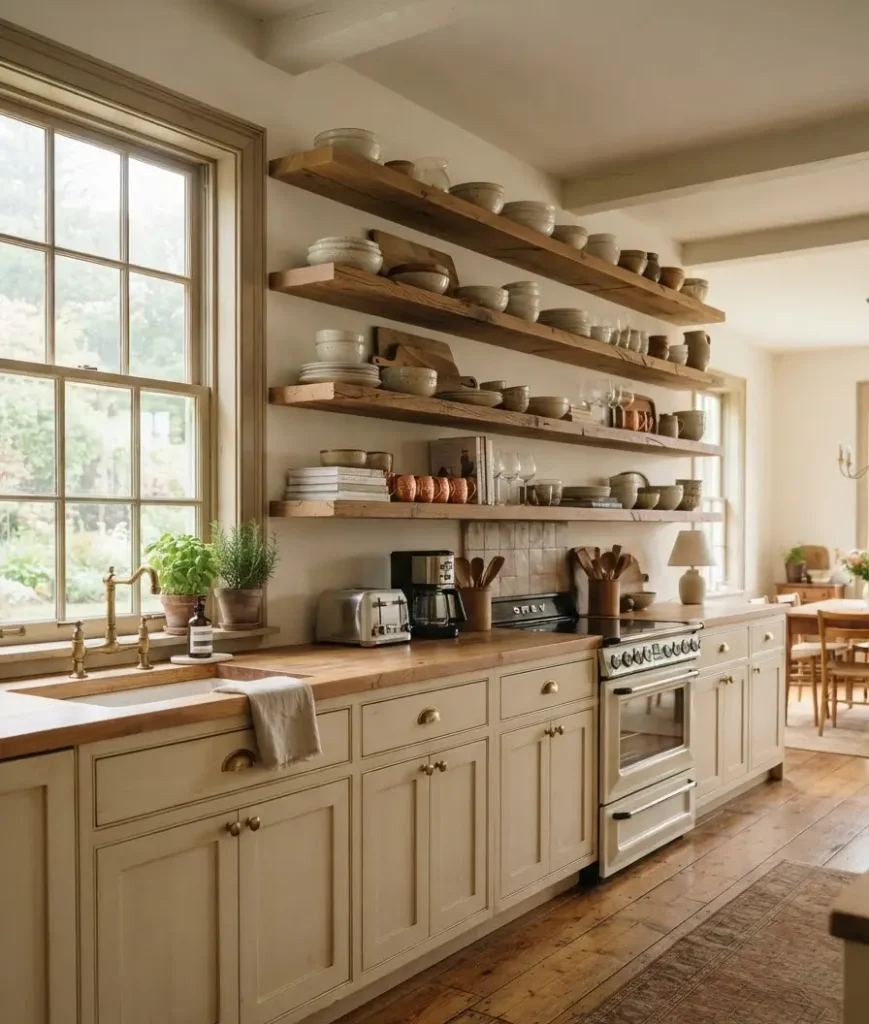
- Add a plate rack. Stacking your everyday dishes vertically turns them into wall art. Cheap to install, and honestly more useful than another spice rack.
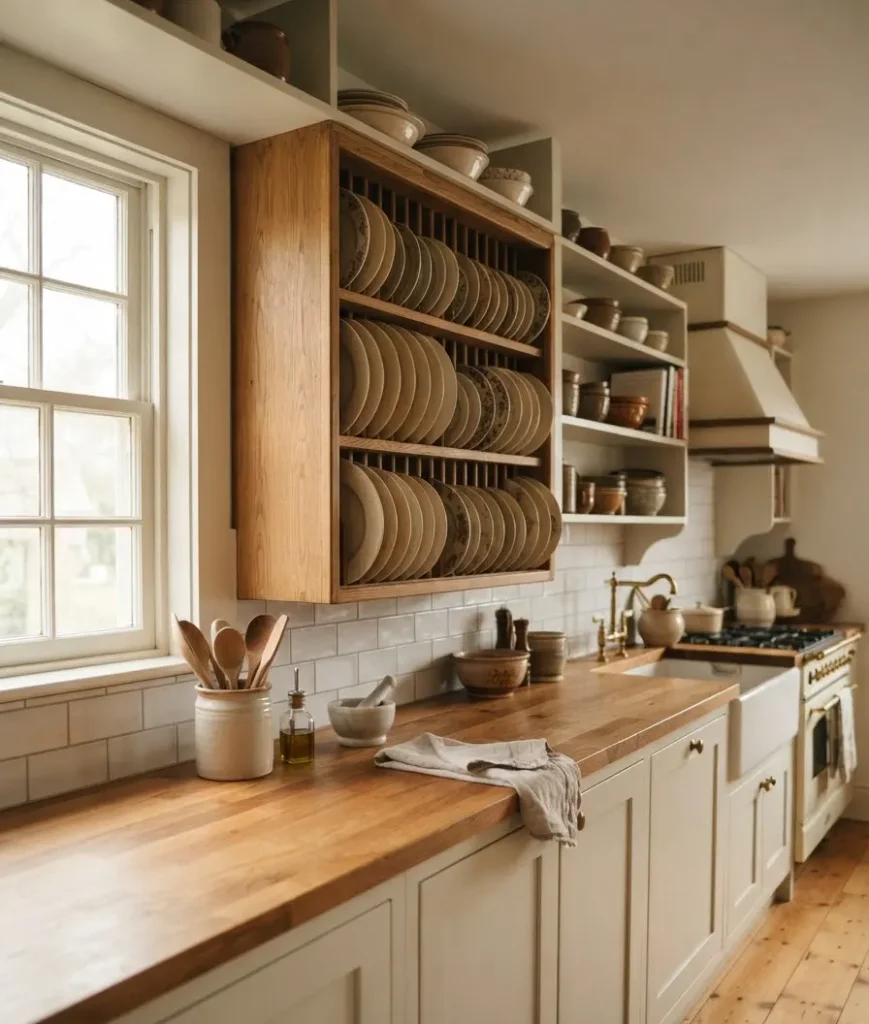
- Install a small hutch or freestanding cupboard. If your kitchen has an awkward empty corner, a vintage hutch fills it and gives you a spot for the “good” dishes you never actually use.
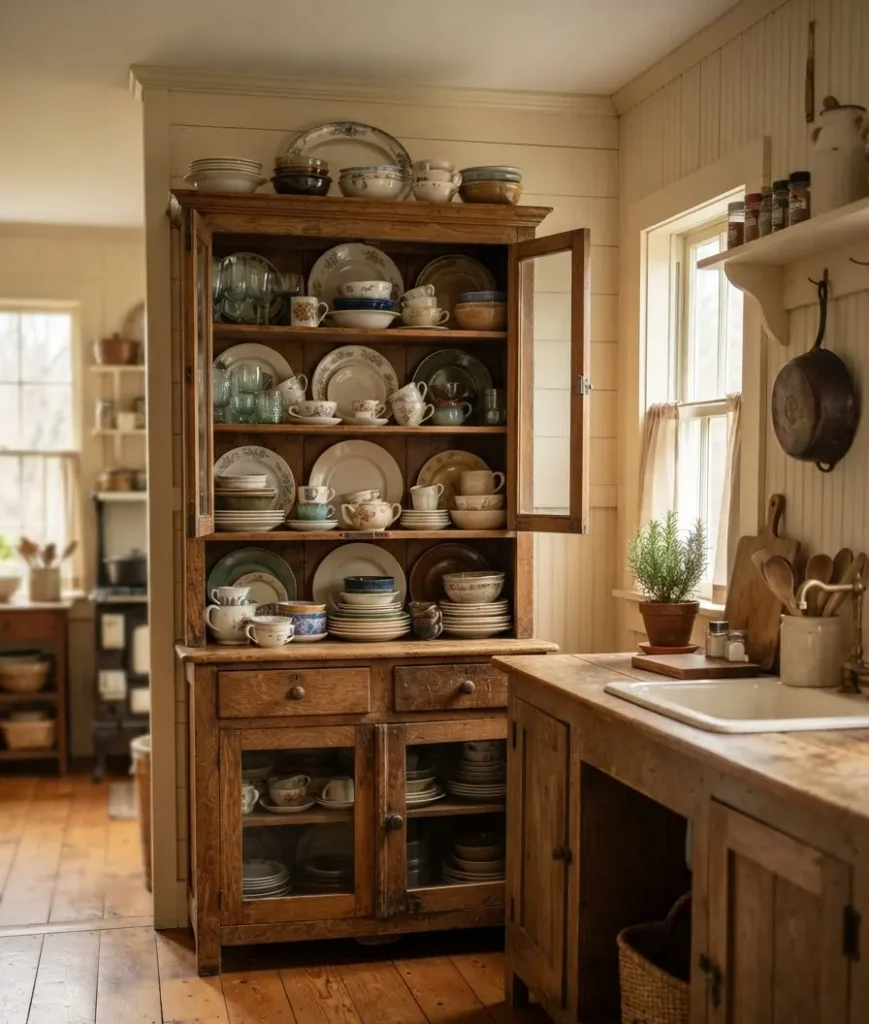
- Leave a few shelves intentionally sparse. Ever notice how cluttered shelves look chaotic instead of charming? Give your eye somewhere to rest. Three items and negative space beat ten crammed together every time.
A small aside about thrifting
Random thought, but if you haven’t been to an estate sale in your area lately, go. I found a set of ironstone pitchers for four dollars last spring that would’ve cost sixty online.
Half of building a good cottagecore kitchen is just showing up to the right places on the right Saturday. Anyway, back to the list.
Fixtures, sinks, and hardware
Small hardware changes cost less than you’d think and change how the whole room reads.
This is the category people skip because it sounds boring compared to picking wallpaper, but it’s genuinely where a lot of the “old cottage” feeling comes from.
Think about it this way: two kitchens with identical cabinets can look completely different depending on whether the hardware is brushed nickel or aged brass.
One reads like a hotel bathroom. The other reads like it’s been there for decades.
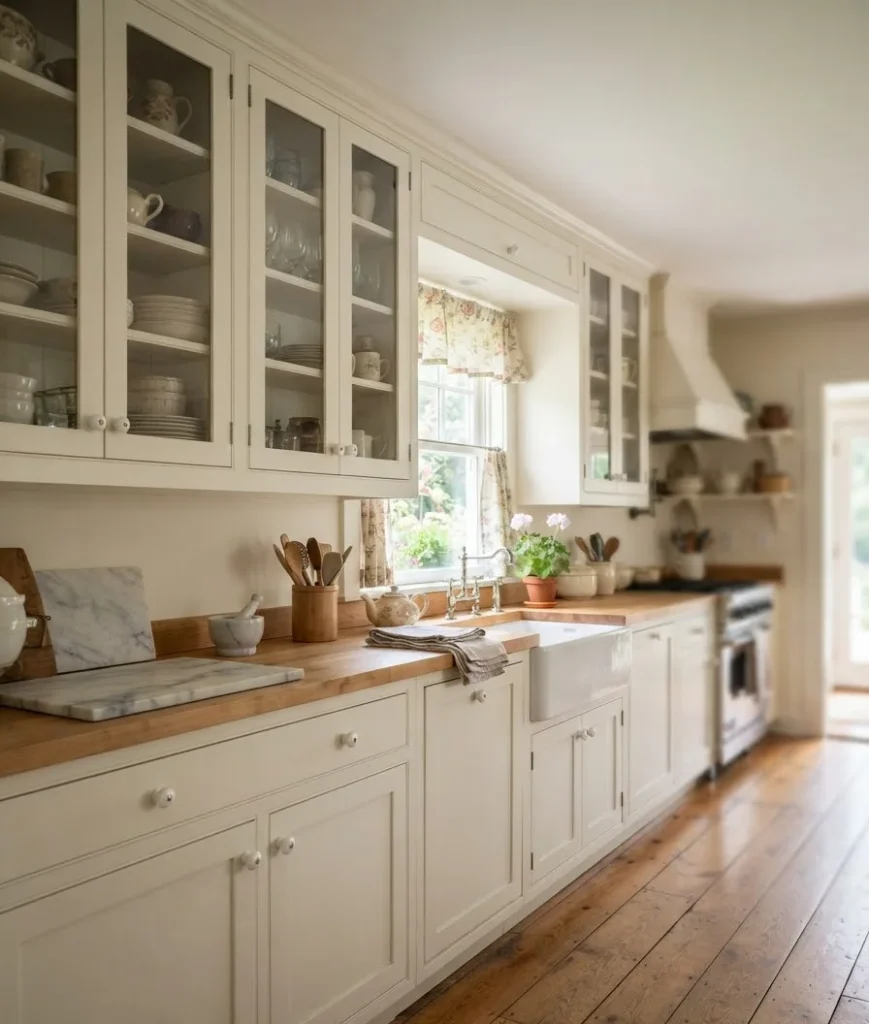
- Install a farmhouse sink. The apron-front style is basically the mascot of this aesthetic. The Painted Hinge notes that its deep basin handles big pots easily, which honestly matters more than the look if you cook a lot.
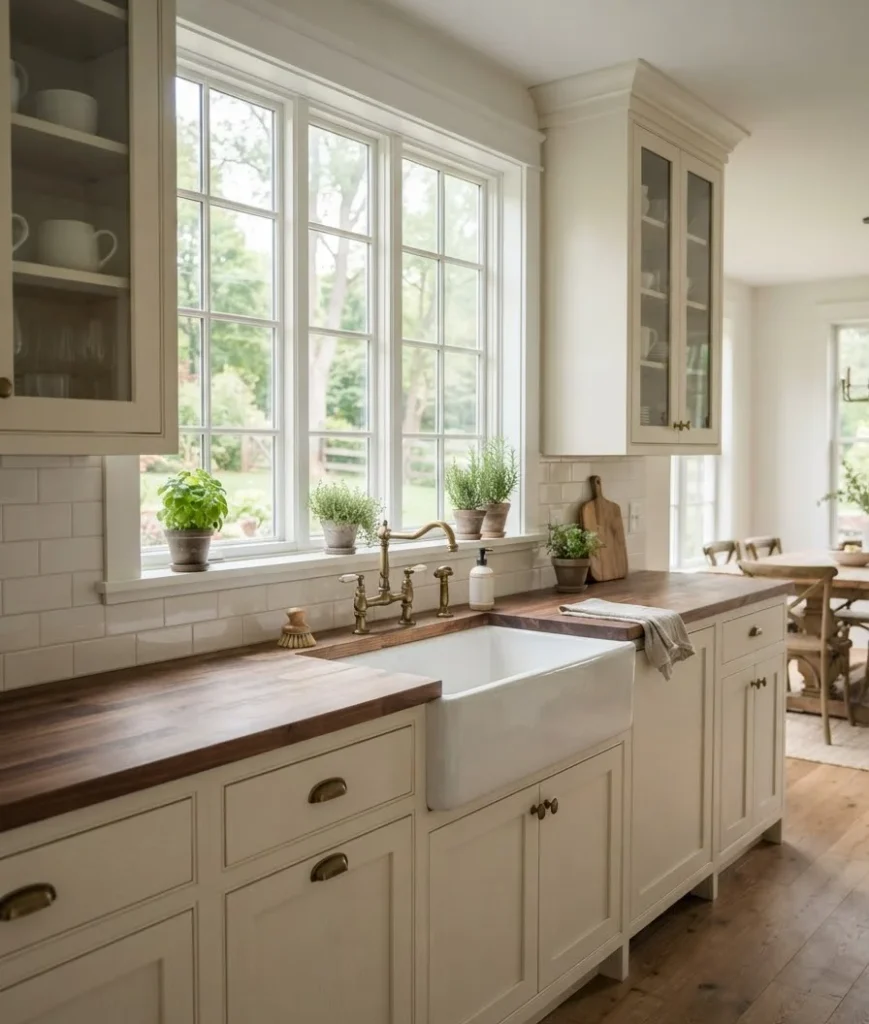
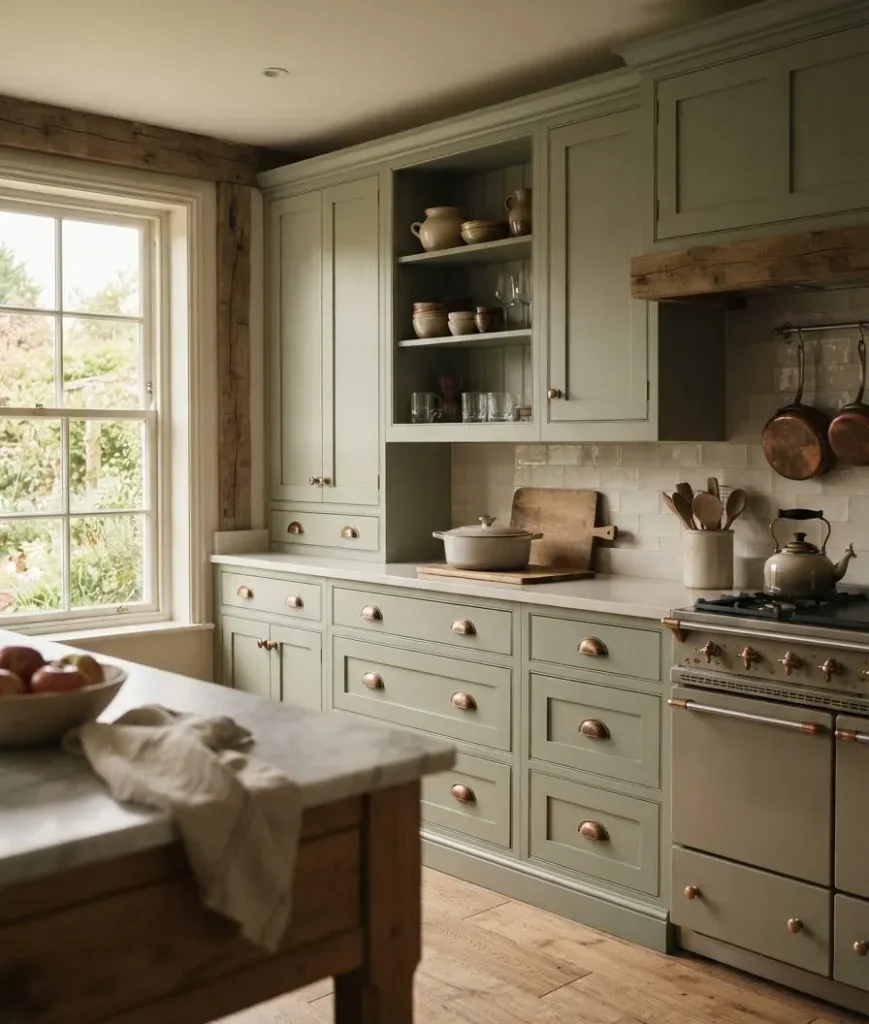
- Switch to brass or unlacquered copper hardware. Unlacquered pieces develop a natural patina over time, so the kitchen actually ages into the style rather than looking dated after five years.
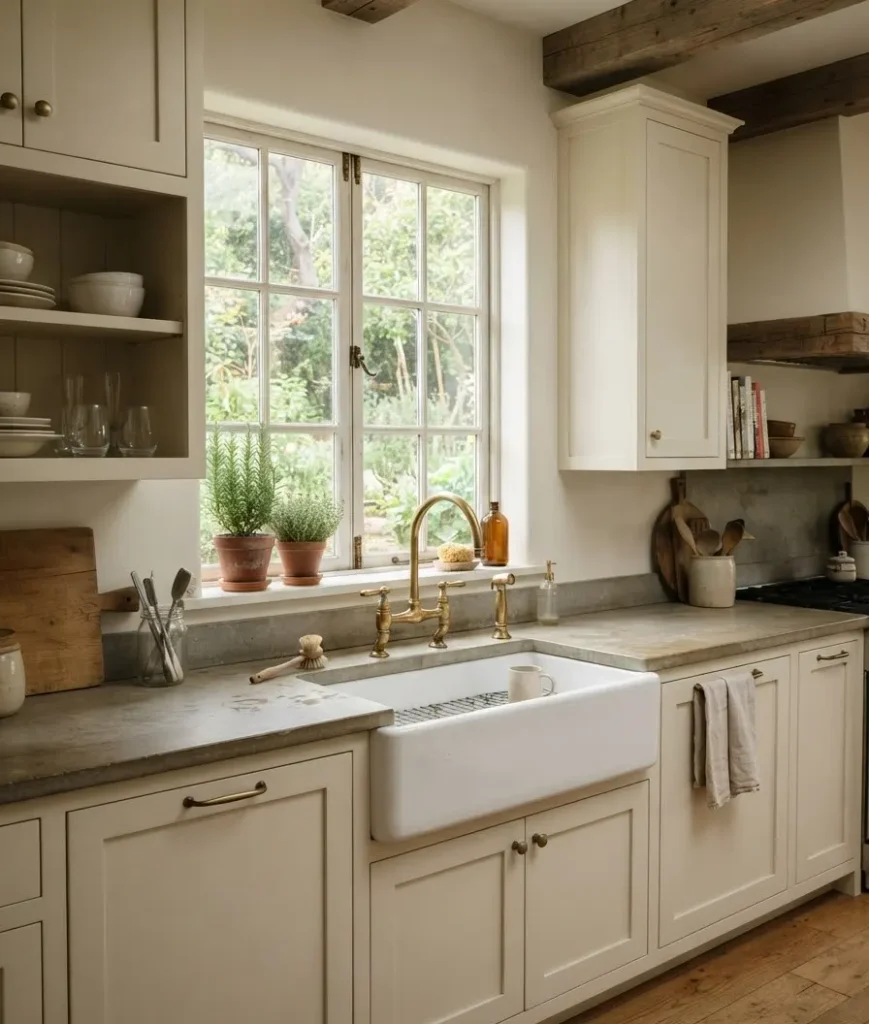
- Add a bridge faucet with a separate sprayer. It’s a small detail, but the exposed pipework has an old-world feel that a sleek pull-down faucet just doesn’t give you.
- Use glass or ceramic cabinet knobs. They cost almost nothing to swap and instantly soften the hardware compared to brushed steel.
Textiles and window treatments
This category gets skipped constantly, and it shouldn’t. Fabric is doing half the emotional work in a cozy kitchen.
Hard surfaces like tile and countertop set the structure, sure, but fabric is what makes a room feel warm instead of just well designed.
It’s also the cheapest category on this entire list, which is IMO reason enough to start here if you’re not ready to commit to bigger changes yet.
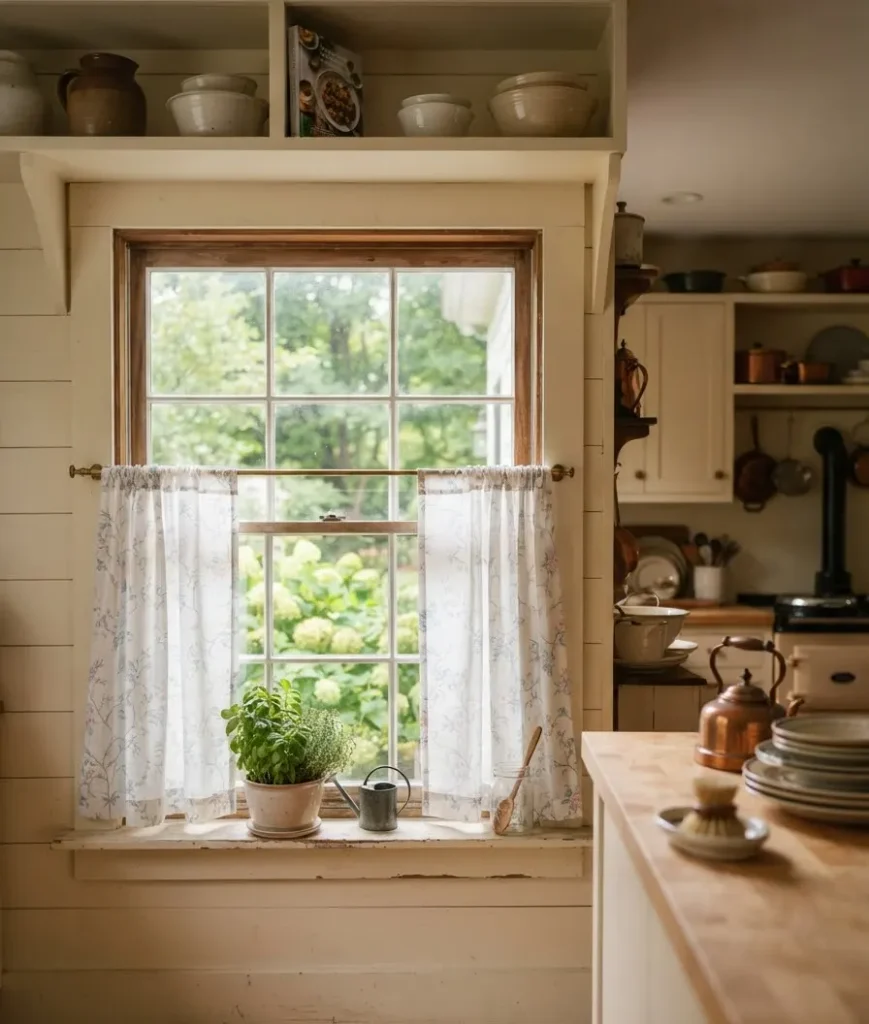
- Hang cafe curtains instead of full-length drapes. They cover just the bottom half of the window, which keeps the natural light coming in while still framing the view.
Lord Decor’s roundup of charming cottagecore kitchen ideas leans on this same look across several of their featured spaces.
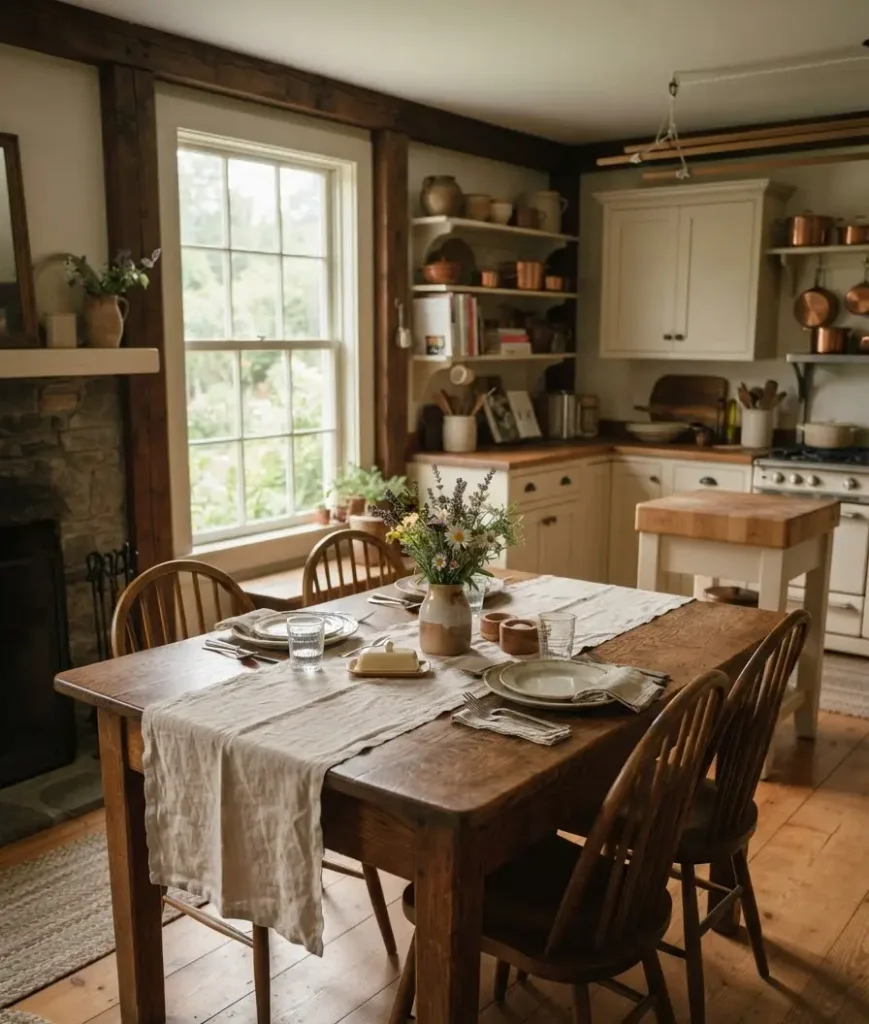
- Layer a linen table runner under everything. Linen wrinkles, and that’s the point. A perfectly pressed tablecloth looks stiff; a slightly rumpled linen runner looks like someone actually lives there.
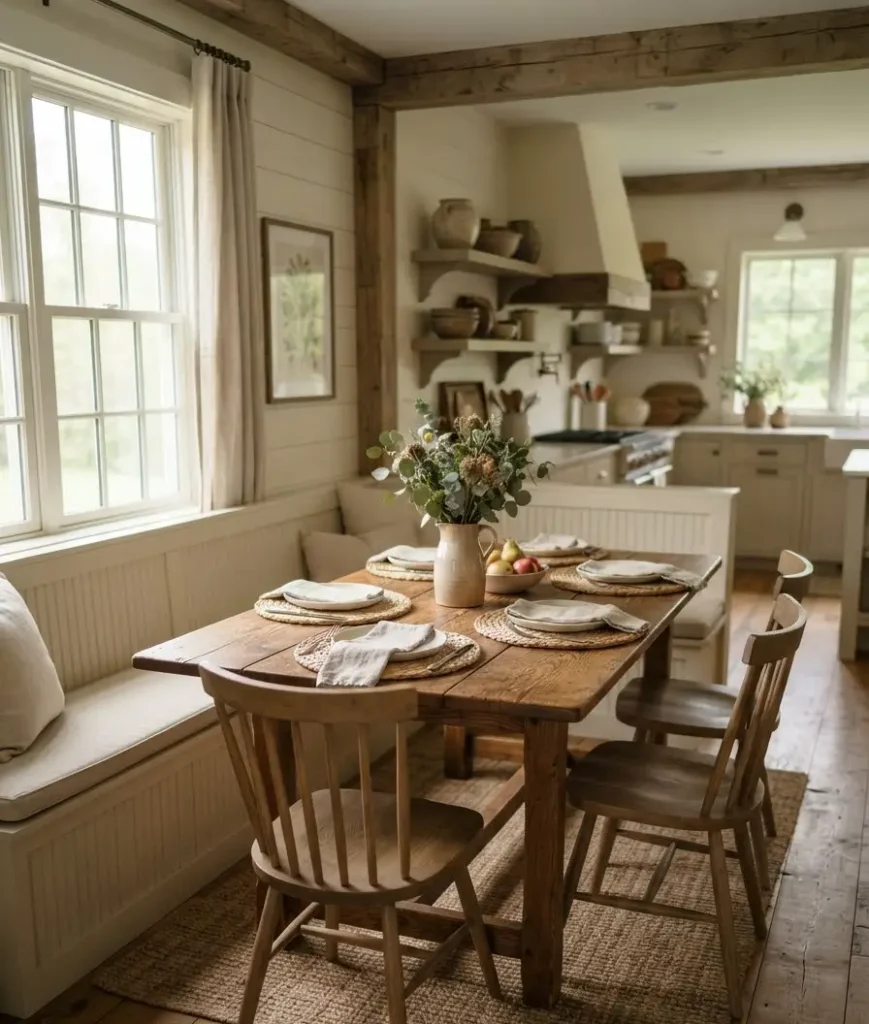
- Use woven placemats over a formal set. Rattan or seagrass placemats add texture without trying too hard.
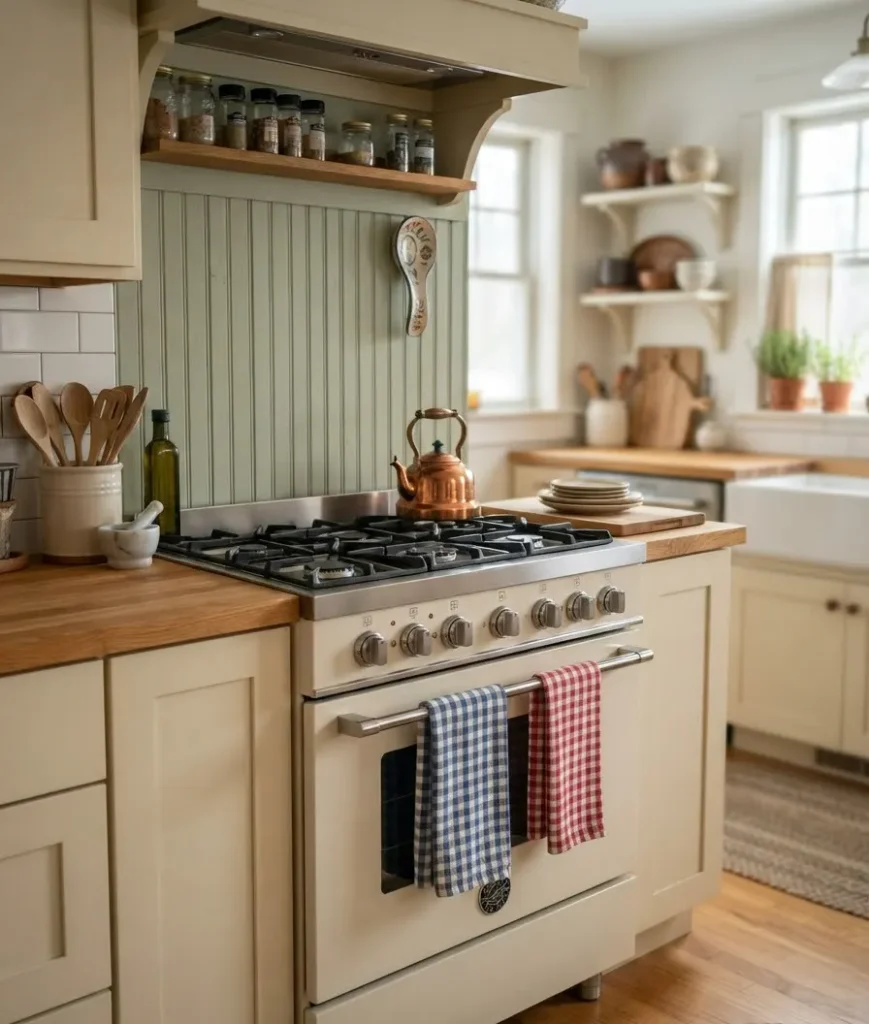
- Sew or buy gingham dish towels and hang them from the oven handle. It’s a tiny detail that photographs incredibly well, which matters if this kitchen is going on your Pinterest board in the first place.
Furniture and seating nooks
A cottagecore kitchen isn’t just for cooking. It’s for lingering, the kind of room where people end up sitting for an hour
after dinner because nobody wants to leave. That only happens if there’s somewhere comfortable to actually sit.
A lot of kitchen renovations forget this part entirely and pour the whole budget into countertops and appliances.
Worth remembering that the seating area is usually where the memories actually get made.
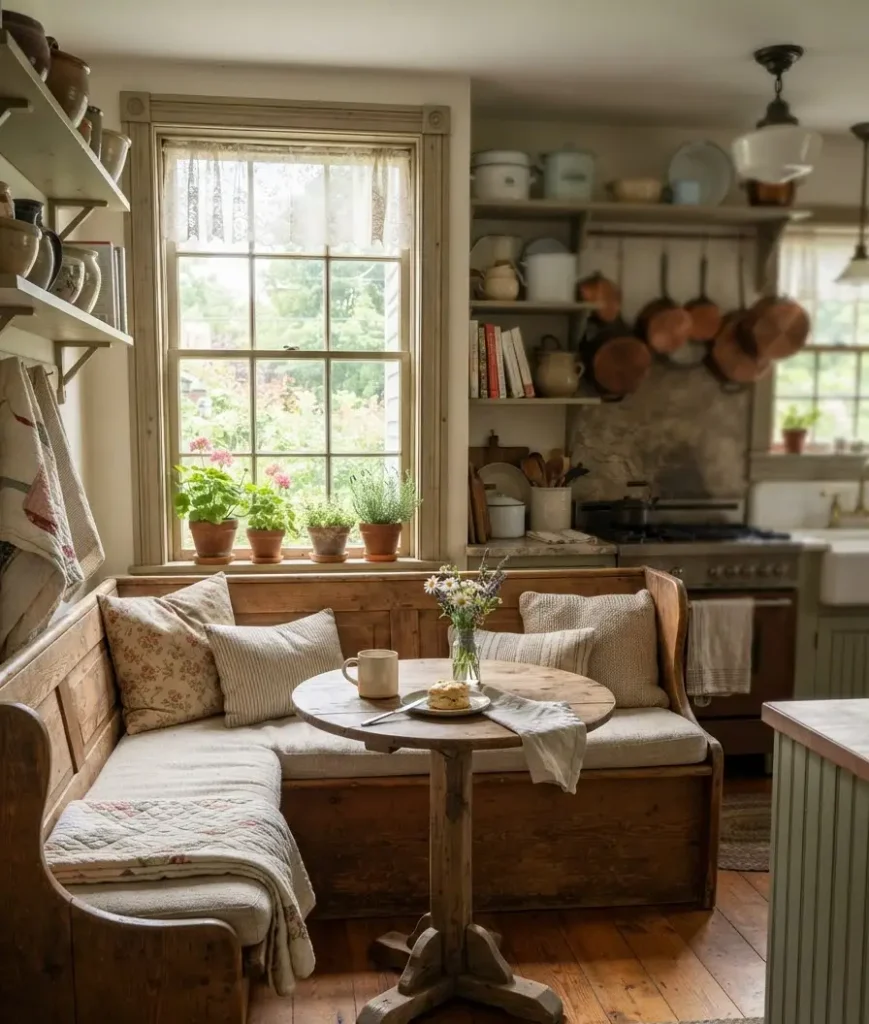
- Add a small breakfast nook with a bench. Built-in benches save floor space and give the room an instant gathering-spot feel, even in a tiny kitchen.
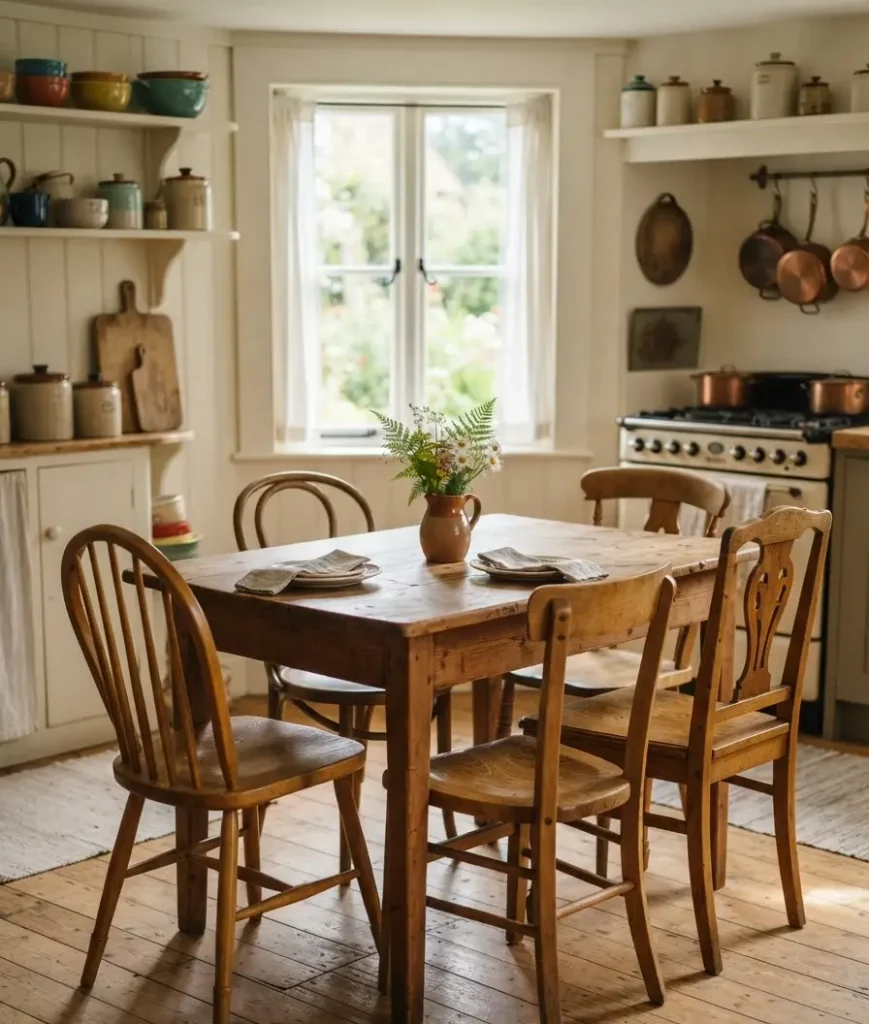
- Use mismatched wooden chairs around the table. Buying a matching dining set is the easy way out. Four different chairs, refinished in a similar wood tone, tell more of a story.
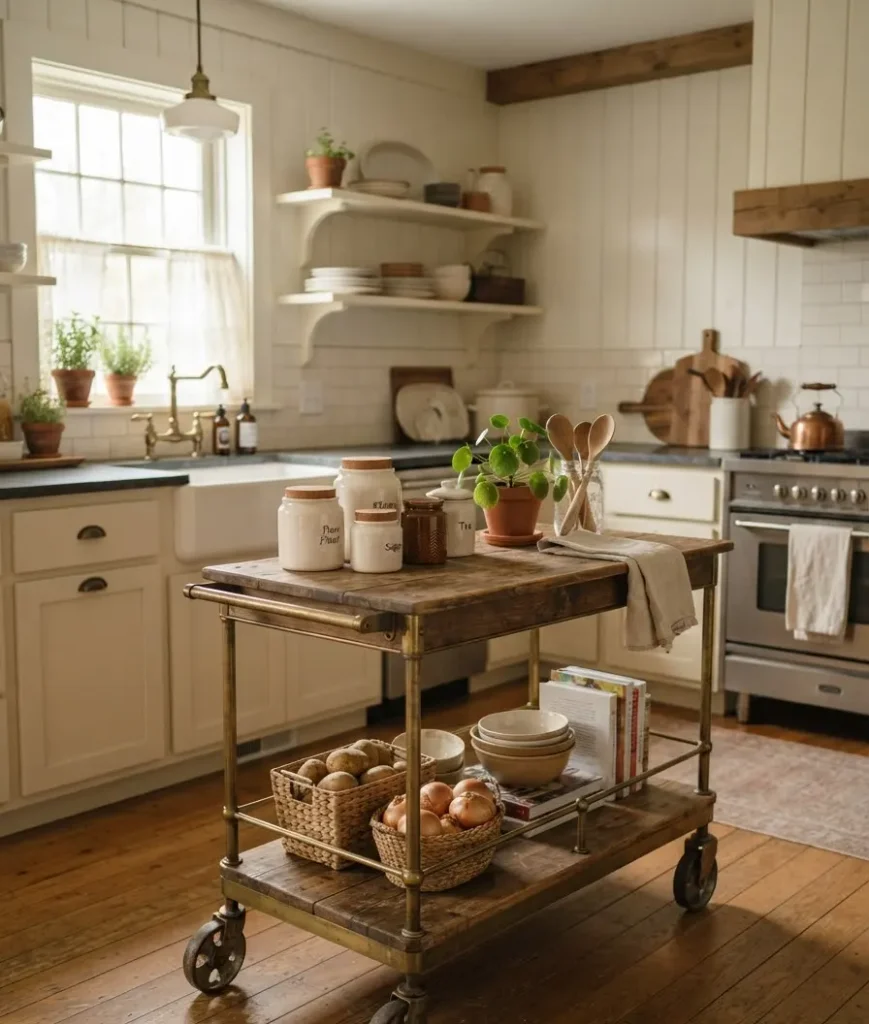
- Bring in a rolling bar cart as a mini pantry island. If you’re short on counter space, a vintage cart on wheels solves storage without a full renovation.
Decor, greenery, and the personal touches that make it real
Here’s the part that separates a kitchen that looks cottagecore from one that actually feels like it.
You can buy every item on this list from a store and still end up with a room that feels staged, because the whole point of this aesthetic is that it looks collected over time, not purchased in one trip.
That’s a hard thing to fake, but a few small habits get you close.
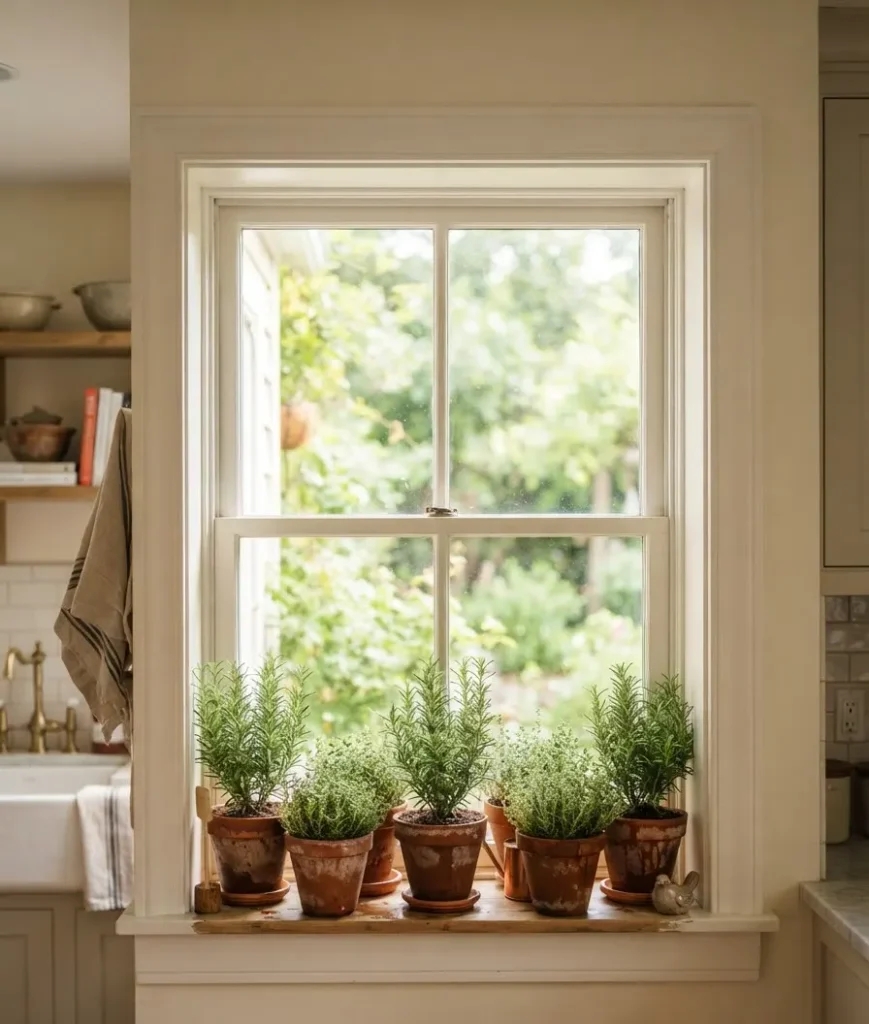
- Keep fresh or dried herbs on the windowsill. Rosemary and thyme in small terracotta pots do double duty as decor and dinner ingredients.
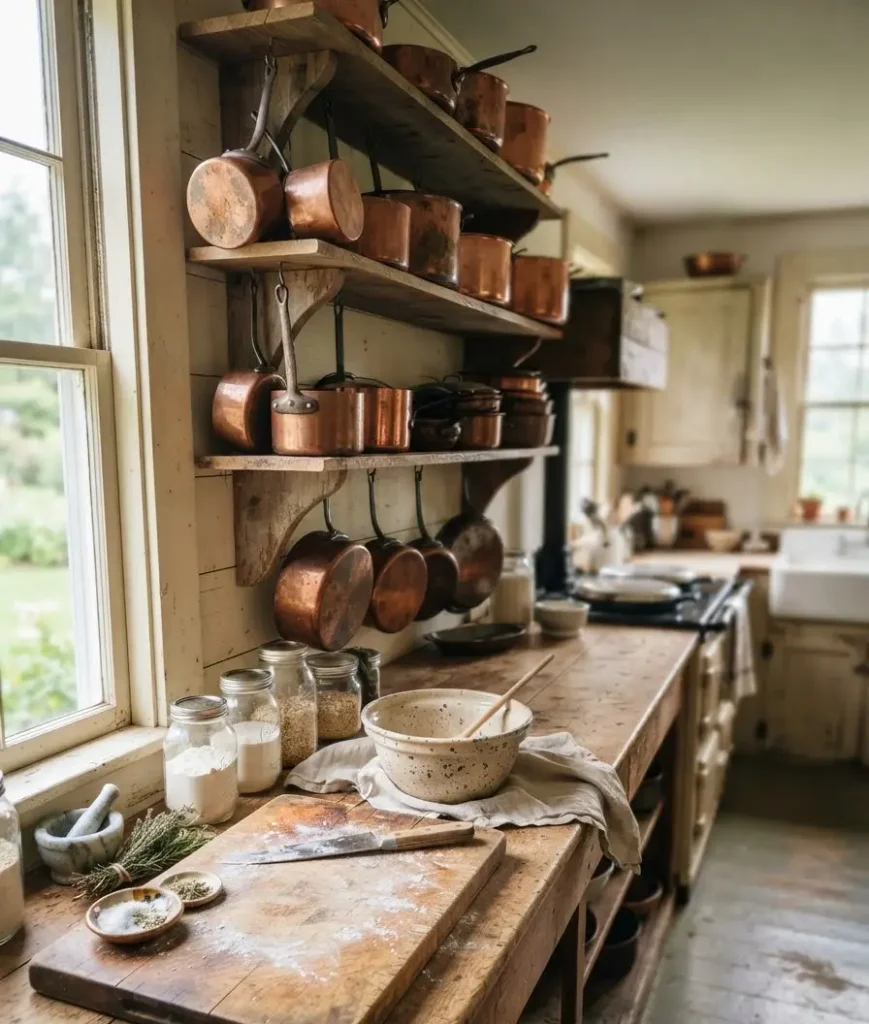
- Display your everyday cookware instead of hiding it. Copper pots, worn cutting boards, a favorite ceramic mixing bowl. The Everyday Farmhouse’s take on cottagecore kitchen decor makes the case that natural wood tones and well-used items do more for the space than anything bought new.
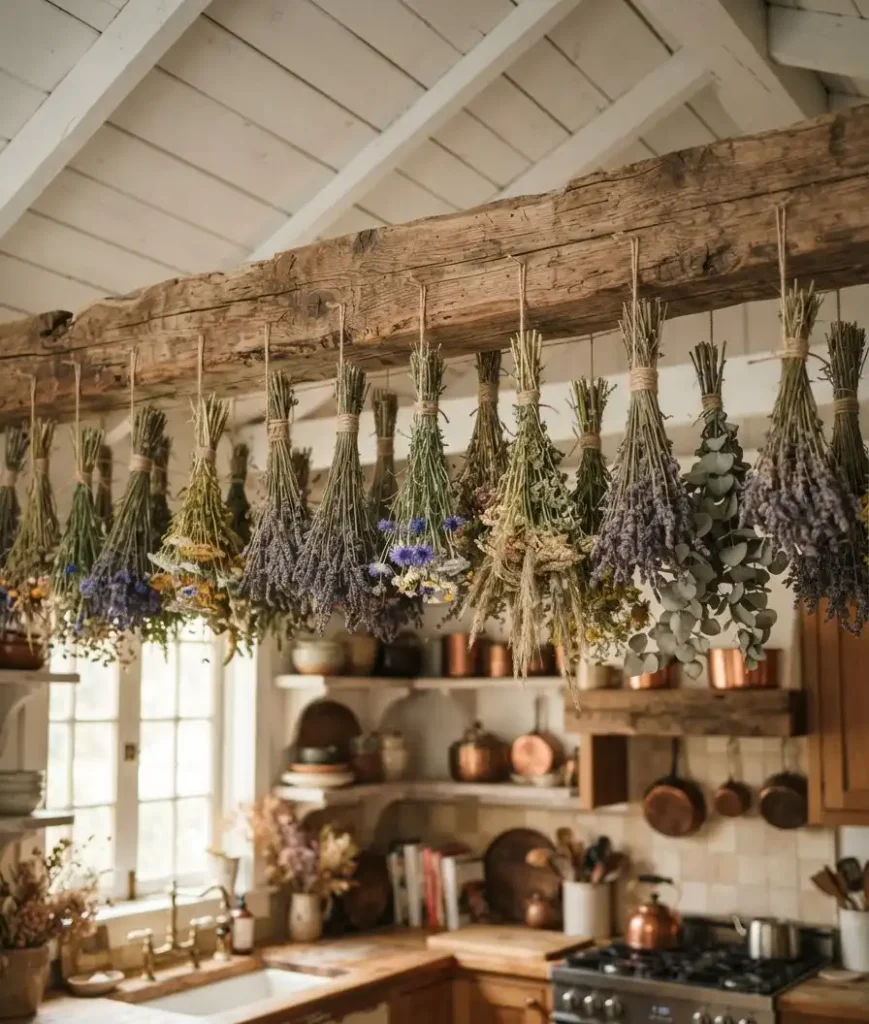
- Hang dried flowers upside down from a beam or rack. Cheap, low maintenance, and they get better looking as they dry out, which is more than I can say for most decor trends.
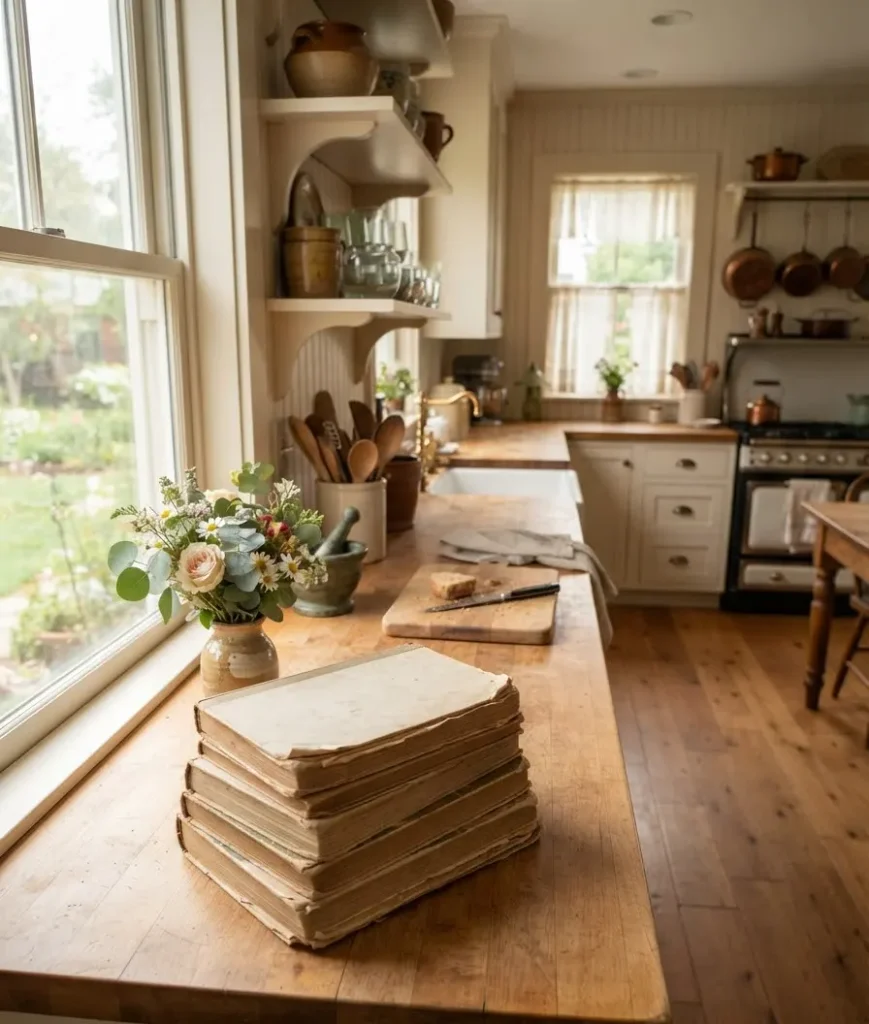
- Leave a stack of cookbooks out, actually used ones. Not the coffee-table kind you never open. The splattered, dog-eared ones. That’s the whole cottagecore philosophy in a nutshell: things get to look lived-in.
Quick idea cheat sheet
| Idea | Best for | Effort level |
|---|---|---|
| Open shelving swap | Small kitchens needing visual interest | Medium (a weekend project) |
| Farmhouse sink | Anyone who cooks or bakes often | High (plumbing involved) |
| Cafe curtains | Renters or anyone on a budget | Low (a few hours) |
| Dried herb display | Instant cozy factor with almost no cost | Low (under an hour) |
I keep this kind of list pinned to my fridge, not gonna lie. It’s genuinely handy when you’re deciding what to tackle first on a random free
Saturday, and it saves you from that trap where you buy decor before you’ve actually settled the bigger stuff like sink style or cabinet color.
A quick note on budgeting for this style: cottagecore rewards patience more than most design trends. Thrifted and vintage pieces are half the appeal, and those don’t show up on a schedule.
Give yourself permission to leave a shelf empty for a few months until the right ceramic pitcher turns up at a flea market. That gap is part of the process, not a failure to finish on time.
Where to start if you’re overwhelmed
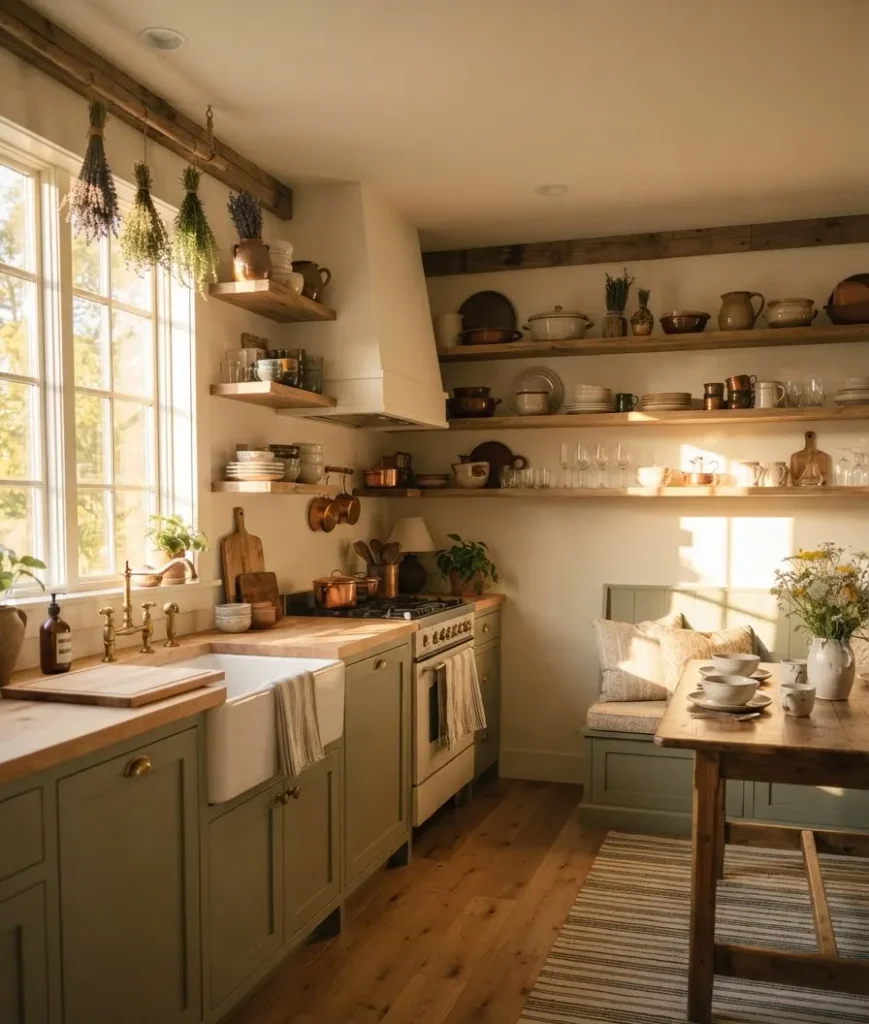
Twenty-five ideas is a lot. You don’t need all of them, and honestly, trying to cram every single one into one kitchen would look more like a theme park than a home.
If your budget is tight, start with textiles and open shelving.
Both are reversible if you rent, and both cost under a hundred dollars combined.
Curtains go up in an afternoon, and taking down a set of cabinet doors is honestly just a screwdriver and some patience.
If you’re doing a full renovation, the farmhouse sink and cabinet colors are worth locking in first, since everything else gets built around them. Hardware, textiles, and decor are easy to swap out later if your taste shifts.
A sink and a paint color are not things you want to redo twice in five years, trust me on that one.
And if you’re somewhere in between, mid-renovation with a bit of budget left over, greenery and decor are the fastest way to see progress.
Nothing kills renovation momentum faster than weeks of dust with no visible payoff, so give yourself a small win.
Put the dried flowers up. Set the cookbooks out. Let the room start to feel like yours even before the big stuff is finished.
This is the part where I’ll admit something slightly embarrassing: I repainted my kitchen cabinets twice before landing on the right sage green.
The first attempt looked more “hospital waiting room” than “countryside cottage.” Wow, was that a rough couple of weeks of just staring at it, annoyed.
Test your paint on a real wall sample before committing to a full can.
Kitchen Island Inspiration With Seating 17 Breakfast Bar And Dining Layouts
Click Here →Frequently asked questions
Do I need a farmhouse or older-style house for cottagecore to work? No. Plenty of people pull this off in apartments and newer builds.
The wood tones, textiles, and color palette carry the aesthetic more than the bones of the house do.
What’s the cheapest way to start a cottagecore kitchen? Swap your hardware, add cafe curtains, and put a few dried herb bunches or fresh greenery on the counter.
All three together usually cost under fifty dollars and change the whole feel of the room.
Will this style go out of fashion soon? Cottagecore leans on classic, natural materials rather than a specific trend cycle, so it tends to age better than glossier design fads.
That said, nothing lasts forever in interior design, so lean into pieces you’d want regardless of what’s popular.
Final thought
A cottagecore kitchen isn’t about buying every mason jar and gingham towel you can find online.
It’s about picking the handful of ideas here that actually fit how you cook, gather, and live day to day,
then letting the room fill in slowly with things that mean something to you.Mine still isn’t finished, three years in.
There’s a corner near the hutch I’ve been meaning to fill since last winter, and I’ve decided I’m fine with that.
A kitchen that looks completely done on day one usually stops feeling special by week two.
The slow version, the one where you’re still hunting for the right pitcher or the right shade of green, tends to be the one you actually love living in.
So which of these 25 are you starting with first, the sink, the shelving, or just a jar of dried lavender on the counter this weekend? Save this one, and go pick your starting point.