I painted my first rust wall at 11 p.m. on a Tuesday, mostly out of spite. My living room looked like a beige waiting room, and I’d scrolled past the same cozy terracotta photos on Pinterest for three weeks. So I grabbed a roller and committed.
By morning, the room felt like a different house. It felt warmer, calmer, and about 20 degrees cozier in the evenings. Did I get the shade right on the first try? Not even close, but I’ll walk you through what I learned so you can skip my mistakes.
This guide covers shades, finishes, color pairings, furniture, lighting, and the small details that make a rust accent wall look like a decision instead of an accident. Grab a coffee and settle in.
Why rust works so well in a living room
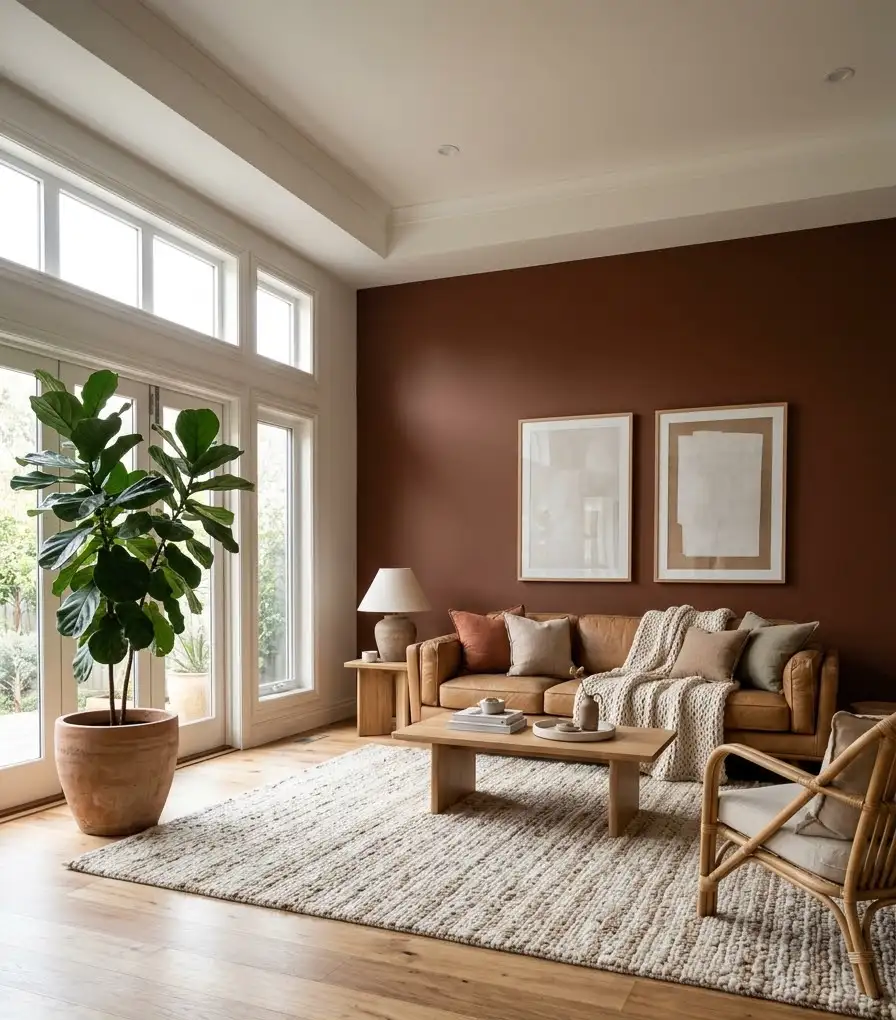
Rust sits in a sweet spot. It carries the warmth of orange and the depth of brown, so it reads as bold without shouting.
A cream wall behind a sofa looks fine. A rust wall behind that same sofa looks designed.
I also love how forgiving it is. Rust looks good in morning light, lamp light, and the weird gray light you get on a rainy Sunday. Few colors manage all three.
The mood it creates
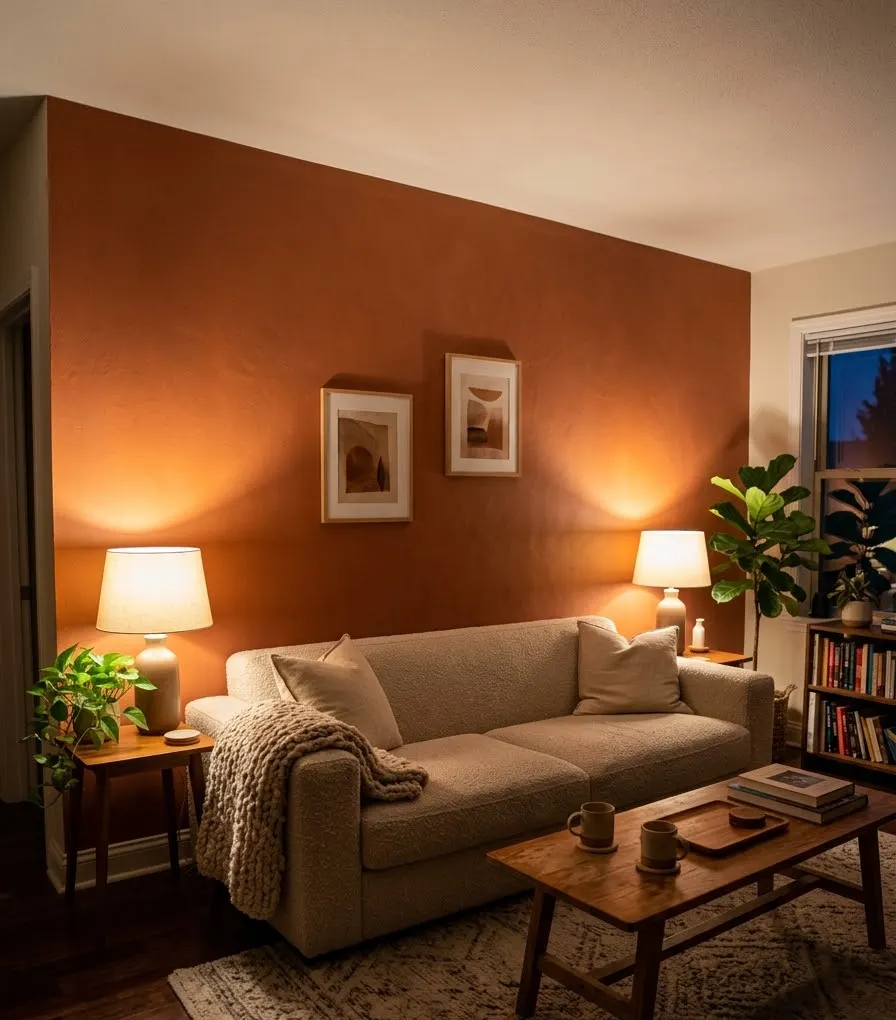
Warm earthy reds tend to make a space feel social and settled. Designers often reach for them in rooms where people gather, and a living room fits that description perfectly.
You’ll notice guests lingering longer, which is either a compliment or a sign you should serve fewer snacks.
Rust also pairs with nearly every natural material. Wood, linen, leather, brass, and woven jute all look better next to it.
That makes your shopping list shorter, and I’m a fan of anything that shortens my shopping list.
Rust vs terracotta vs burnt orange
People mix these names up constantly, and paint stores don’t help. Here’s how I sort them in my head.
| Shade | Undertone | Best for | Mood |
|---|---|---|---|
| Rust | Red-brown | Rooms with warm wood | Deep and grounded |
| Terracotta | Orange-pink | Sunny, airy rooms | Soft and sun-baked |
| Burnt orange | Bright orange | Modern, high-contrast spaces | Bold and playful |
| Brick red | Cool red-brown | Traditional or moody rooms | Rich and dramatic |
My honest take: rust is the safest of the four for a first-timer. Terracotta can turn peachy under certain bulbs, and burnt orange can look like a traffic cone if you pick wrong. Rust leans toward brown, which keeps it sophisticated.
Pick your shade before you buy a gallon
Here’s the part where I’ll save you $60 and a weekend. Test the color on your actual wall, in your actual light, for at least two days.
Paint chips lie. A swatch that looks like warm cinnamon under store lighting can turn muddy brown in a north-facing room. I learned this the expensive way.
Read your light first
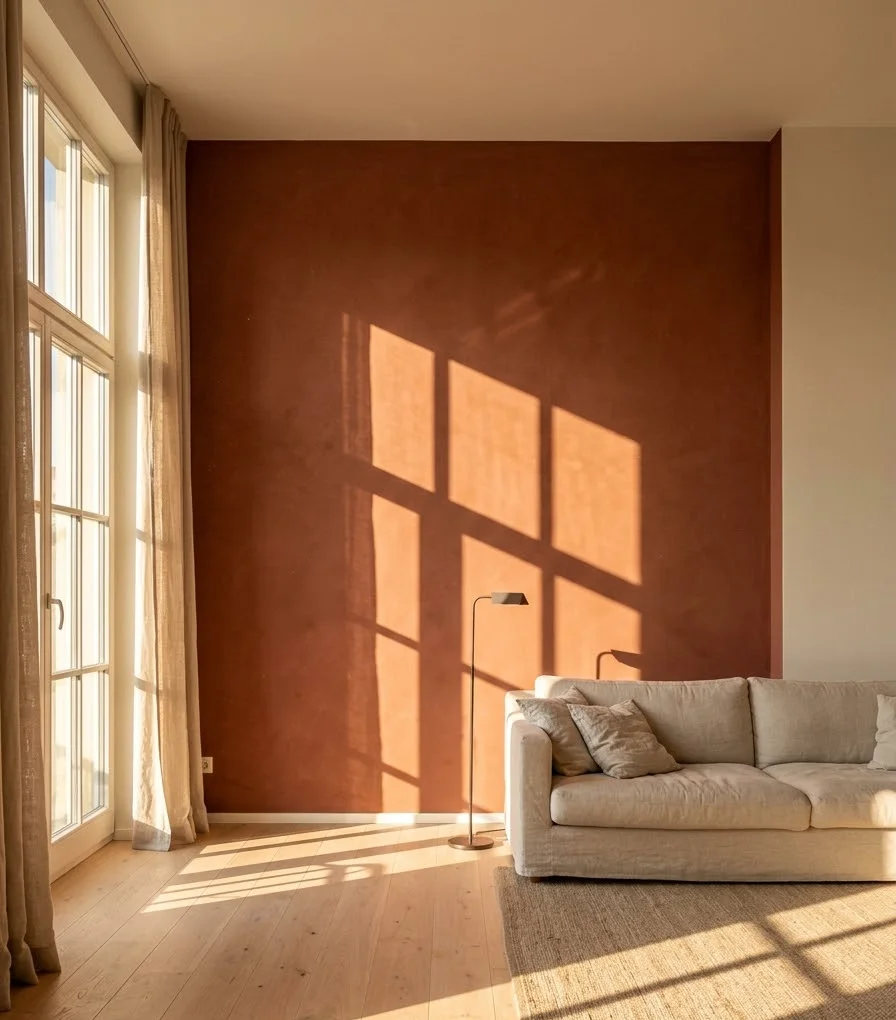
North-facing rooms get cool, bluish light, so they pull rust toward brown and make it feel heavier.
Pick a rust with more red or orange in it to compensate. South-facing rooms get warm light all day, so a deeper, browner rust holds its own without looking neon.
East-facing rooms glow in the morning and go flat by afternoon. West-facing rooms flip that script. If you can, look at your sample at 8 a.m., noon, and 7 p.m.
Shades worth testing
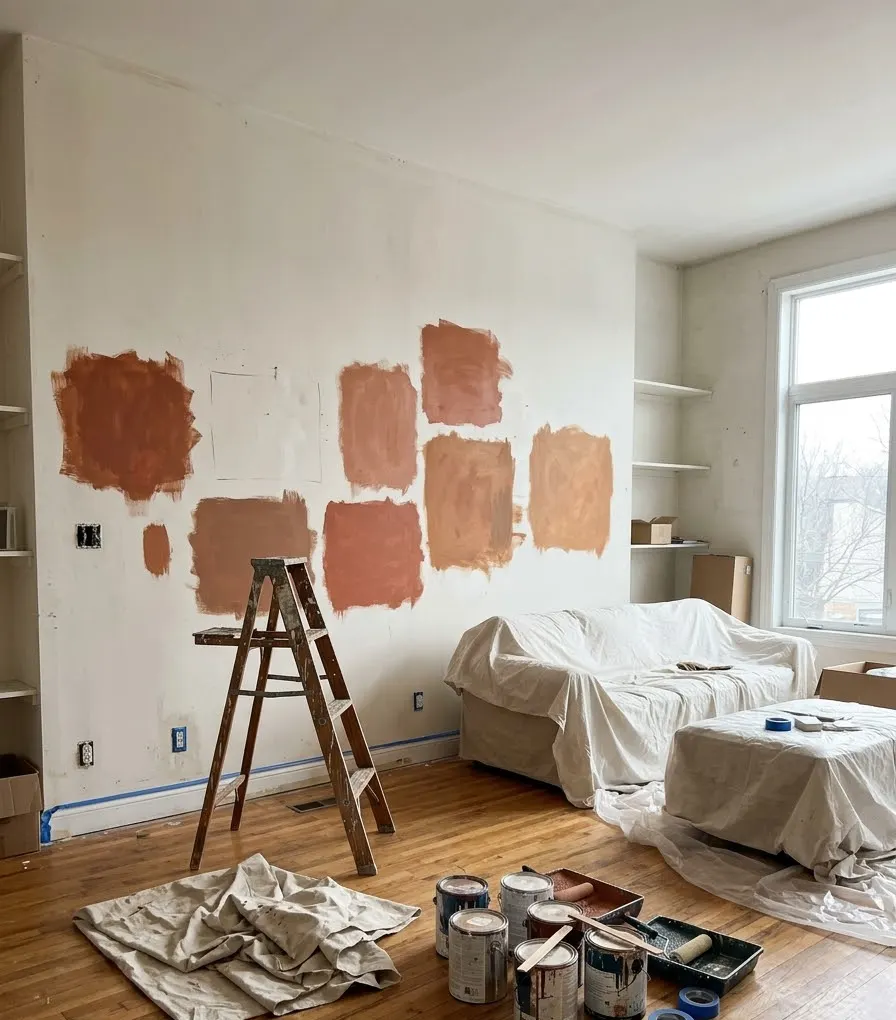
These are the ones I’d put on a wall first. Check the brand websites for current color codes, because names and formulas shift.
- Sherwin-Williams Cavern Clay (SW 7701): a soft, dusty rust with a sandy edge. I think it’s the easiest rust to live with.
- Sherwin-Williams Fired Brick (SW 6335): deeper and redder, great for a dramatic sofa wall.
- Sherwin-Williams Rookwood Terra Cotta (SW 2804): leans orange, so it suits sunny rooms.
- Farrow & Ball reds and earth tones: pricey, but the pigment depth shows up in person.
- Benjamin Moore offers a wide range of warm clays; ask for sample pots and test three side by side.
I’ll be blunt about one thing. I picked a shade from a screen once, and it arrived looking like a dried-out flowerpot. Always, always get a physical sample.
Which wall should wear the rust?
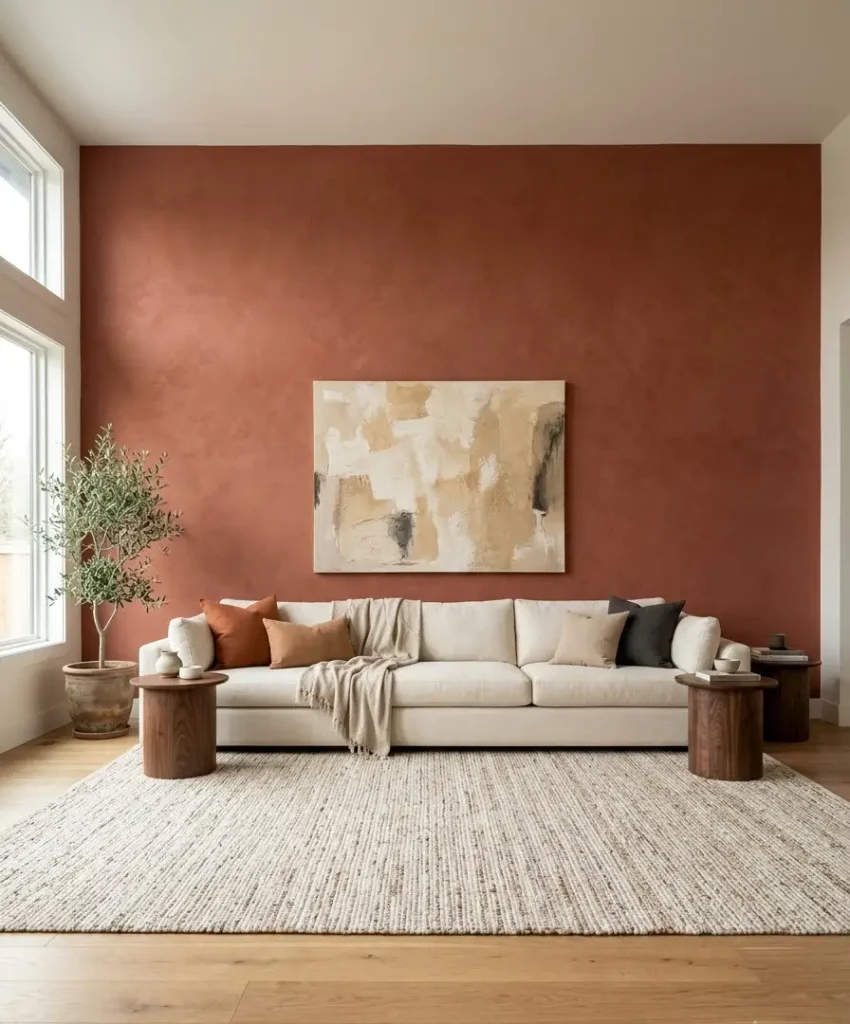
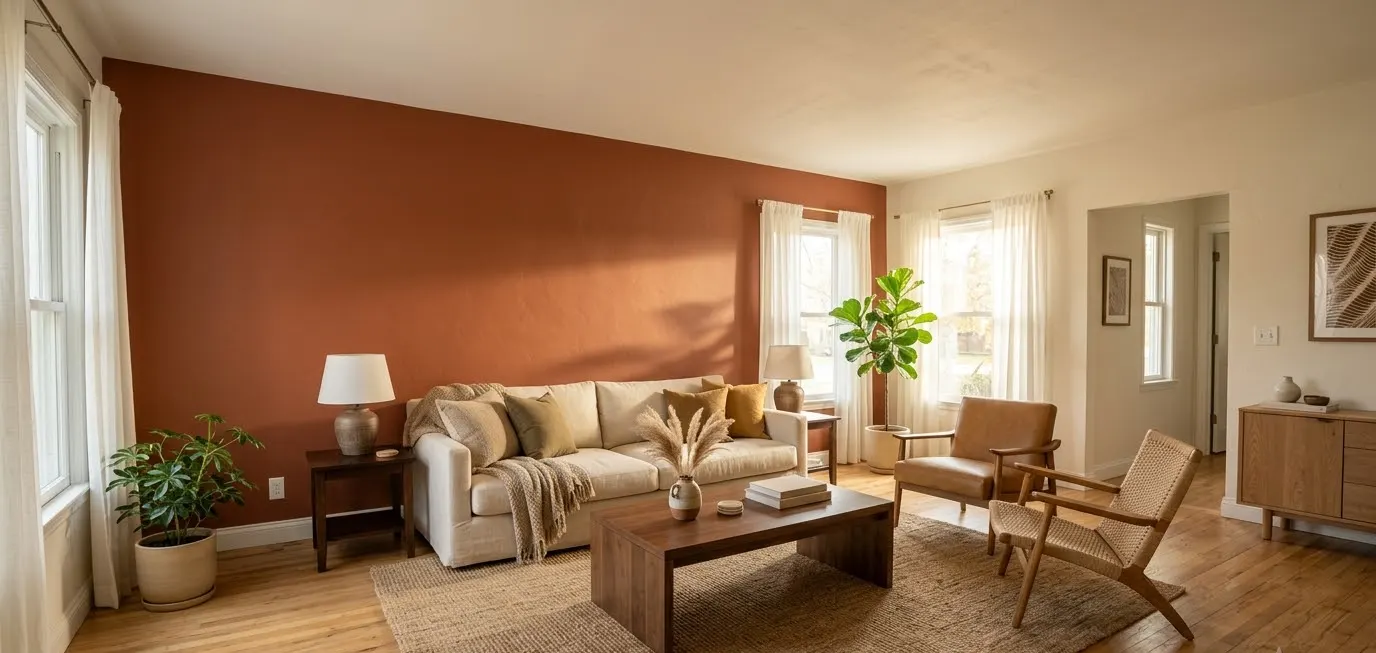
The wall behind your sofa wins most of the time. It anchors the seating area, and you’ll stare at it during every movie night. Your eye lands there naturally.
A fireplace wall also works beautifully, especially if you have a white or wood mantel to contrast. The color makes the fireplace look intentional instead of just present.
Walls to skip
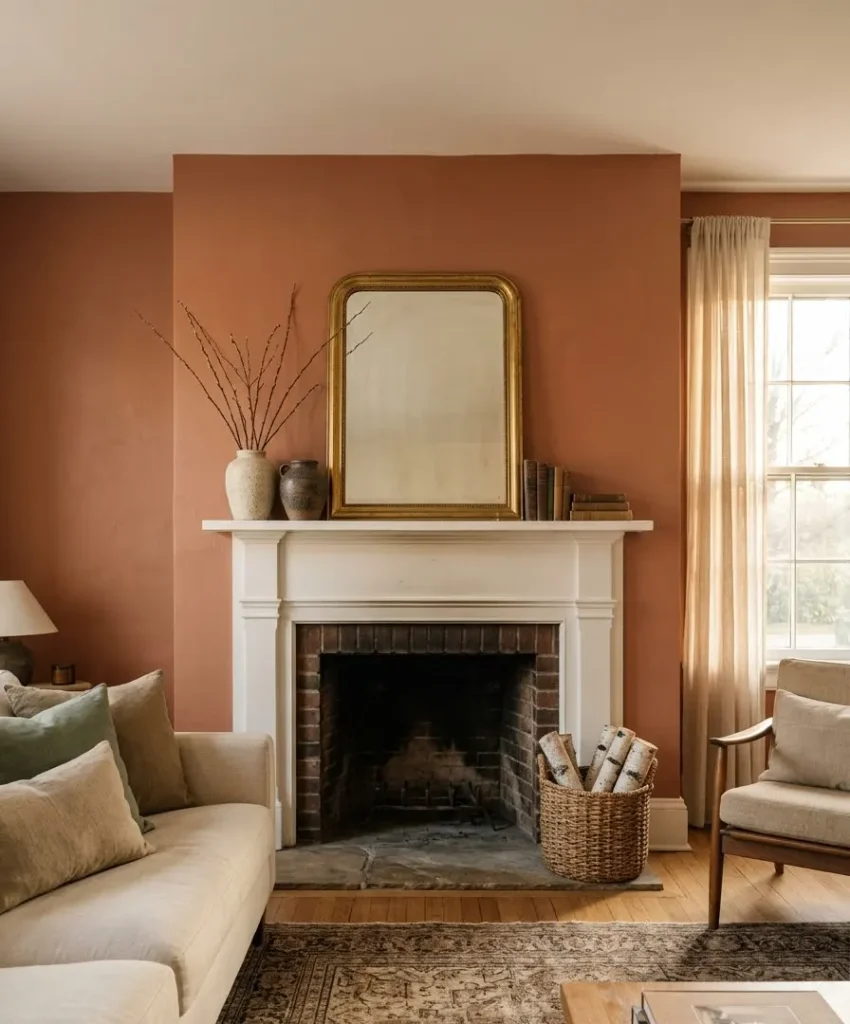
Skip any wall that holds your TV, unless you enjoy glare. Dark, saturated colors behind a screen create a harsh contrast that tires your eyes. I put a rust wall behind my TV once and moved the TV within a week.
Also skip the wall with the most windows. Rust needs surface area to look rich, and a wall chopped up by three windows loses its impact. A long, uninterrupted wall gives the color room to breathe.
Rust accent wall ideas that earn their Pinterest saves
You can treat the same color in six different ways, and each one changes the whole mood.
Here are the treatments I see saved and re-saved the most, plus my own take on each.
Classic flat paint
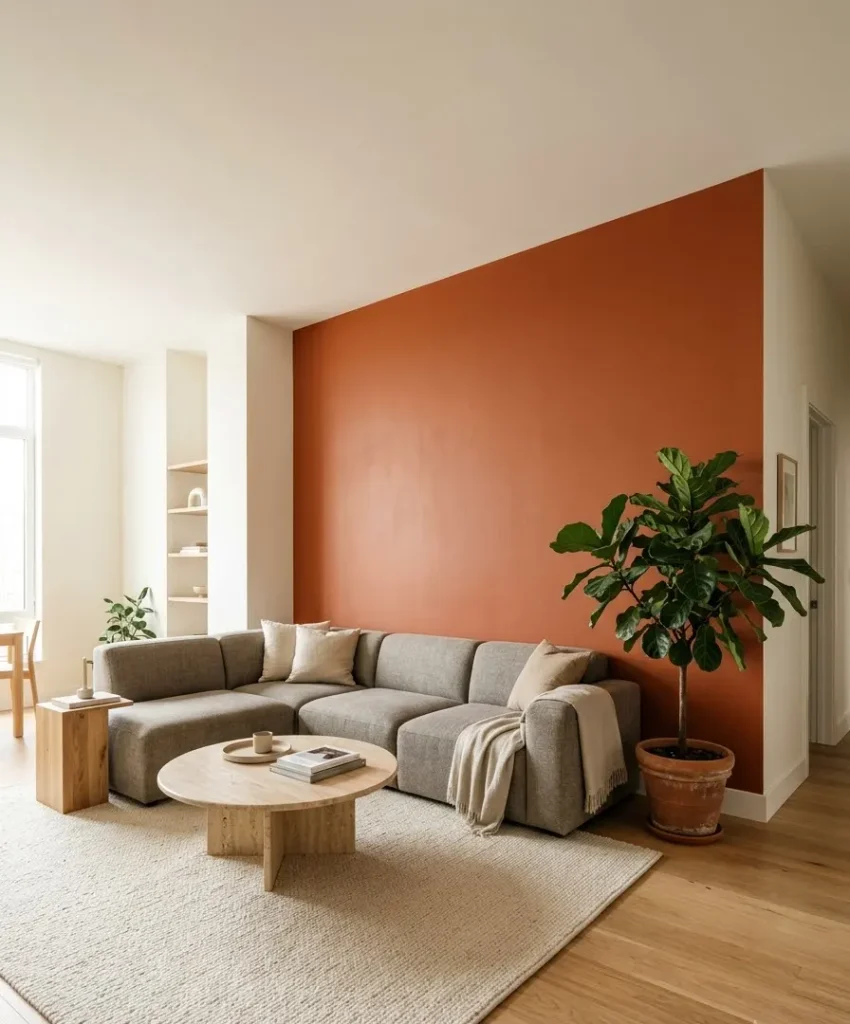
Matte or eggshell rust paint is the simplest route, and it photographs well. Matte hides wall flaws, which matters in older homes with wavy drywall.
I recommend two coats minimum, because rust pigments often look streaky after one.
Cost stays low here. A gallon runs roughly $40 to $80 depending on brand, and one wall usually takes less than a gallon.
Limewash for that soft, cloudy look
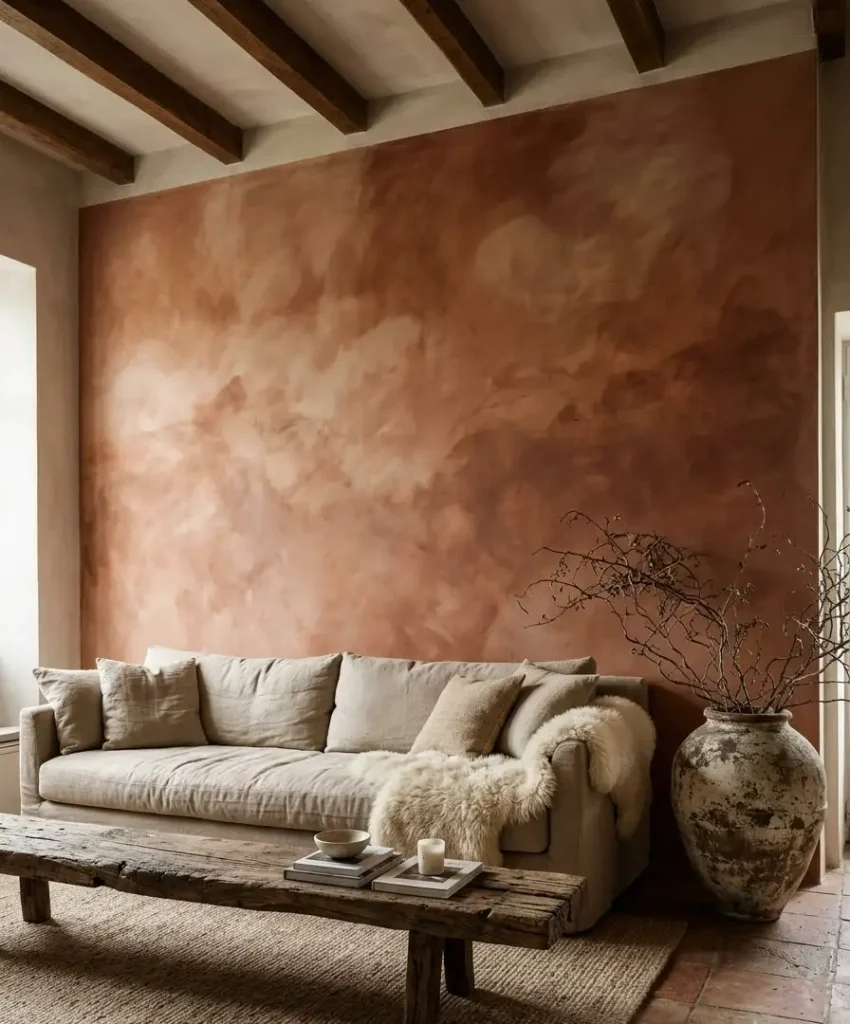
Limewash gives the wall movement, like an old Italian villa. The color shifts from light to deep across the surface,
so no two spots look identical. Wow, the first time I saw it in person, I stood there for a full minute.
Application takes a wide brush and some patience. You’ll cross-hatch the strokes instead of rolling smooth. Mistakes blend in, which makes it forgiving for beginners.
Wood slat or fluted panel
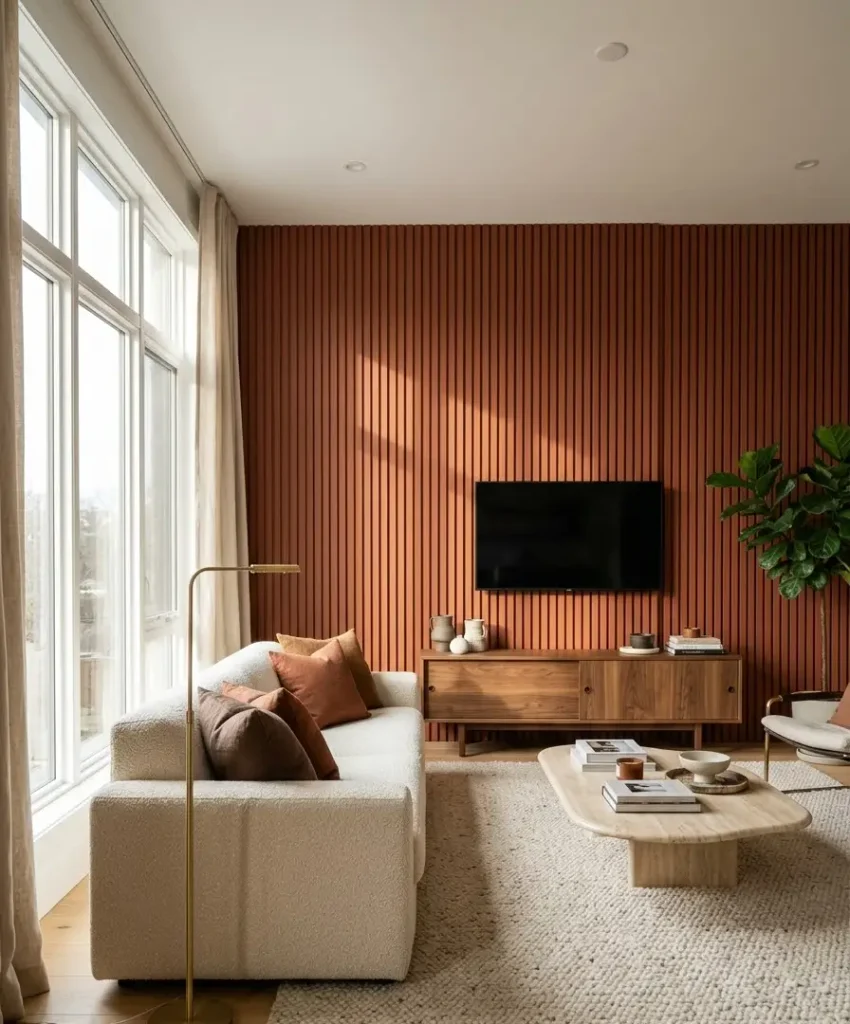
Painting vertical slats in rust adds shadow lines that change throughout the day.
This treatment looks expensive even when you build it with MDF strips and a nail gun. IMO, it’s the best way to add texture without clutter.
Paint the slats and the gaps the same shade for a rich, monochrome look. Or paint the slats rust and leave the backing a deeper brown for extra depth.
Arch or curved shape
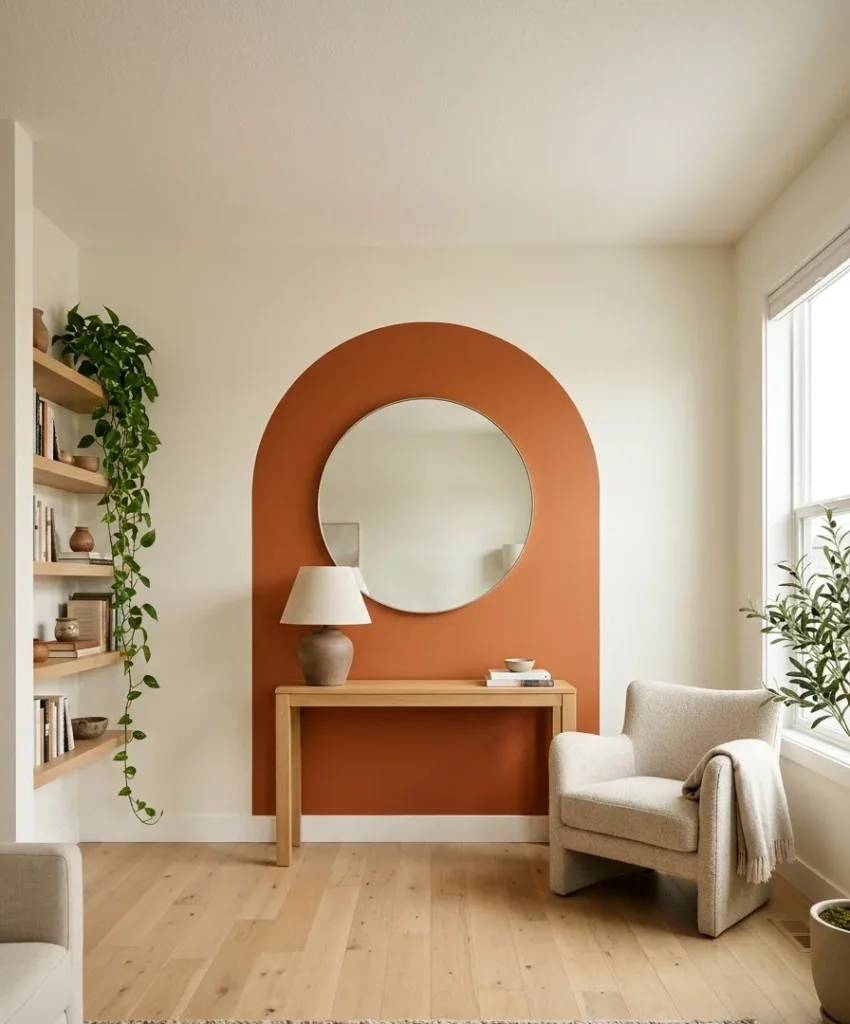
A painted arch behind a sofa or console table has taken over Pinterest, and I understand why.
It frames the furniture and gives a flat wall some personality. You can sketch it with a string, a pencil, and a nail.
I’d keep the arch simple. One shape, one color, clean edges. Painter’s tape and a steady hand do the job.
Plaster or Roman clay finish
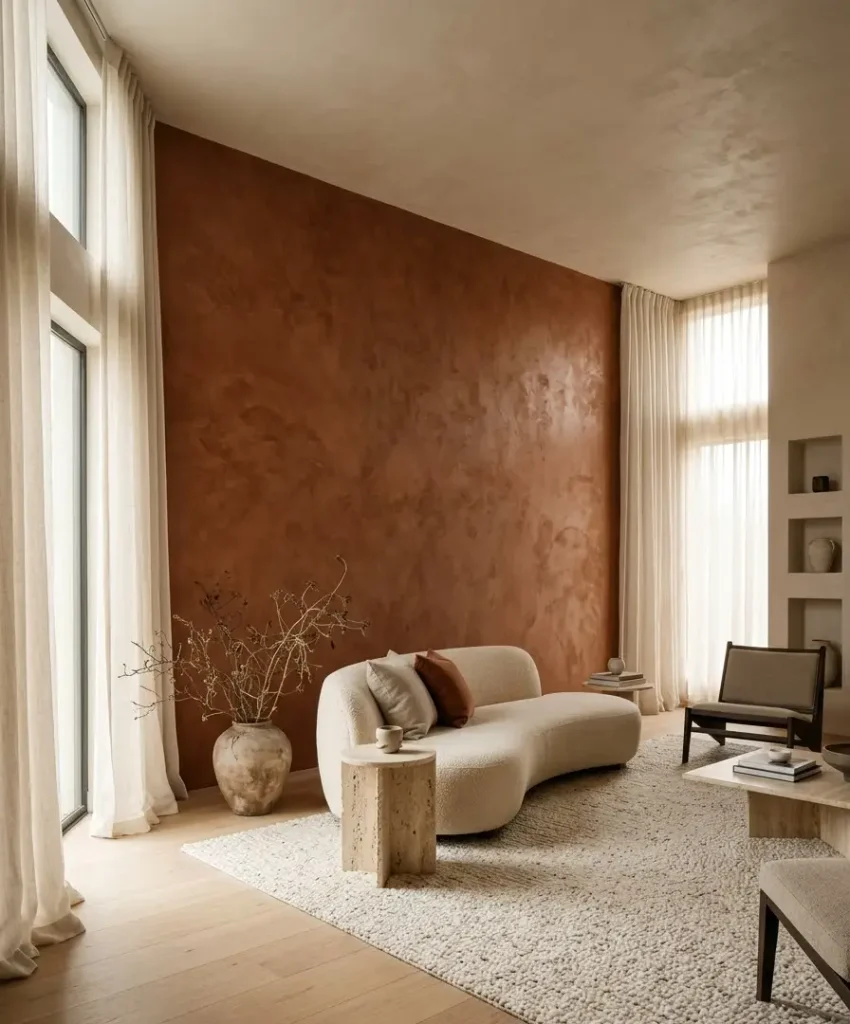
This is the splurge option. Roman clay creates a soft, stone-like surface with subtle variation, and it feels warm under your hand. Hiring a pro costs more, but the finish lasts years.
If you want a DIY shortcut, pre-mixed textured paints give a similar effect for far less money. They won’t match real clay, but they get you 80 percent of the look.
Rust wallpaper
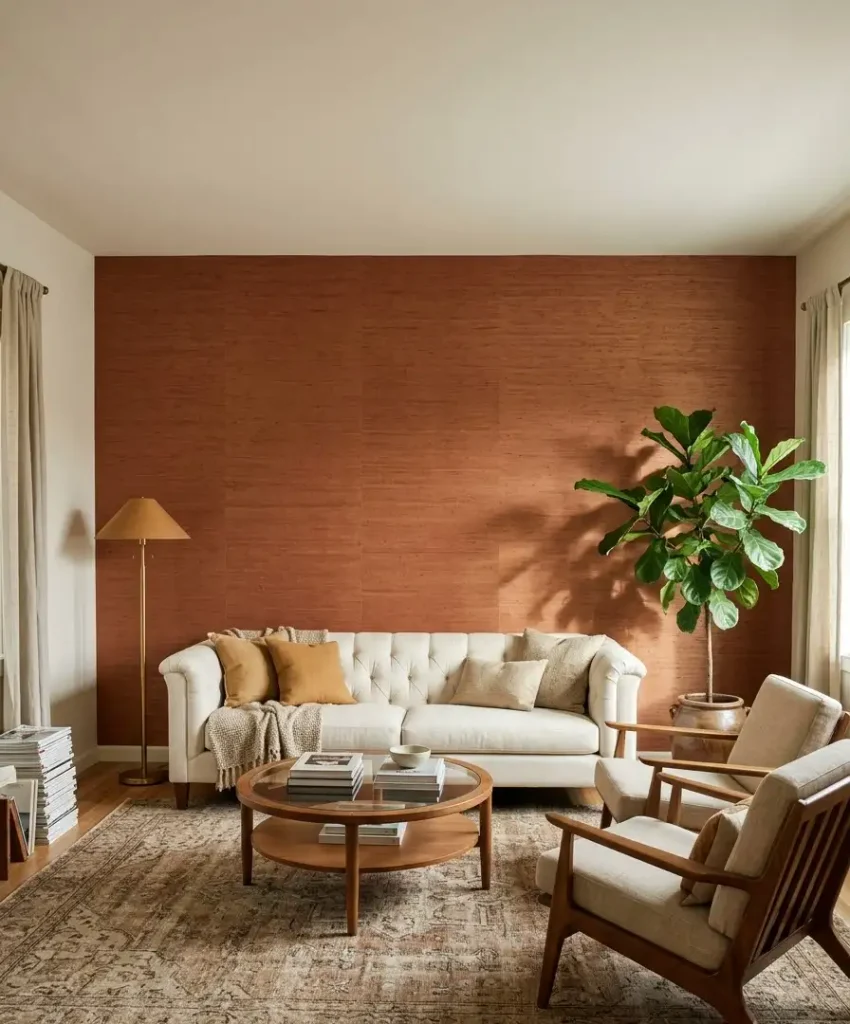
Wallpaper works when you want pattern. Look for botanical prints, subtle stripes, or grasscloth textures in rust tones.
Peel-and-stick options suit renters, and they come off clean if you pull slowly.
I’m a little picky here. Skip anything with a glossy sheen, because it fights the earthy mood.
Color pairings that make rust look better
Rust plays well with others, but some partners beat others. Think about the mood first, then pick the palette.
Warm neutrals for a cozy base
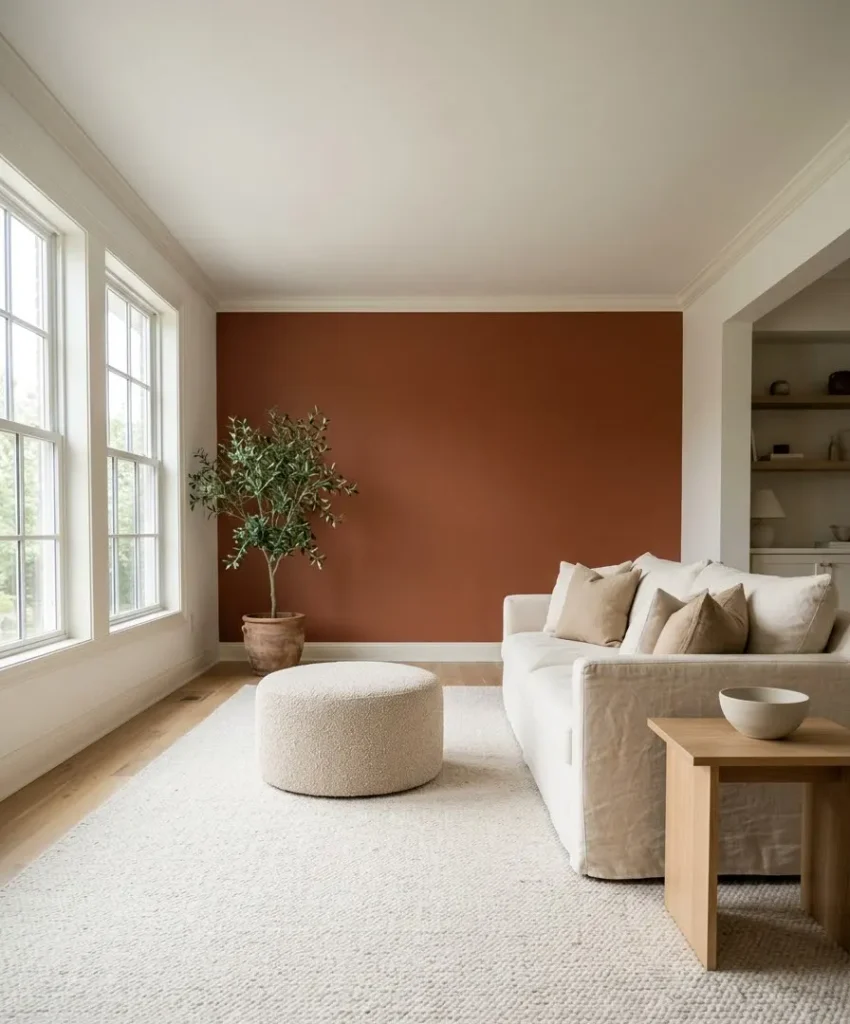
Cream, oatmeal, and soft beige let the rust take center stage. These colors feel quiet and calm next to something so rich.
A cream sofa against a rust wall is one of my all-time favorite combos.
Add a touch of warm white on your trim. Pure stark white can look icy next to rust and break the glow.
Deep greens and olive
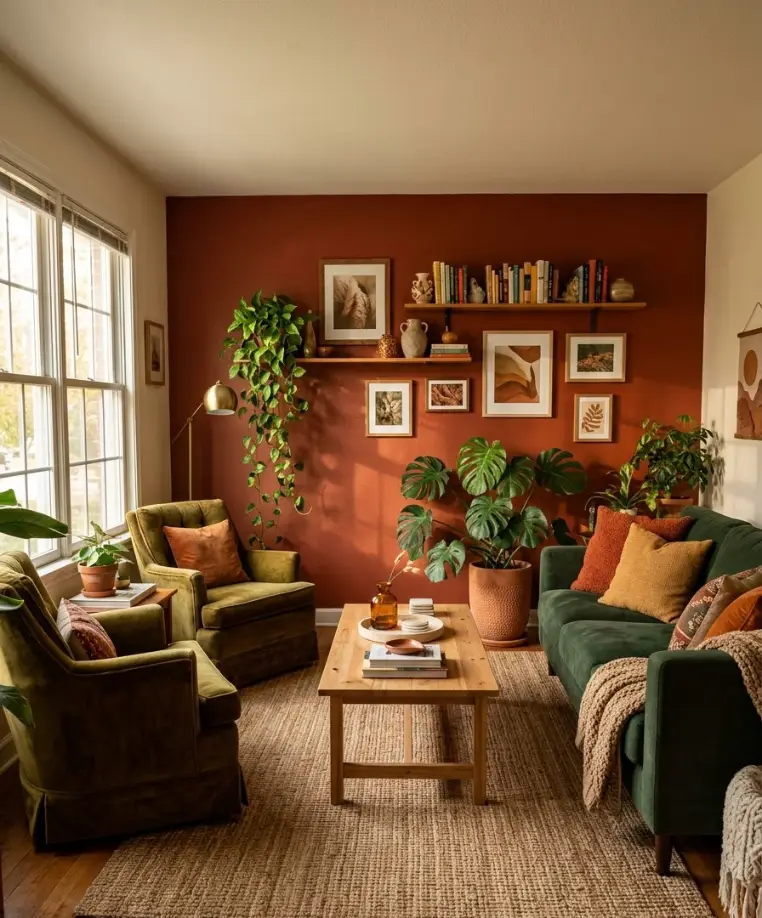
Green and rust sit across from each other on the color wheel, and they look natural together because nature does it constantly.
Think autumn leaves. An olive velvet chair or a few big leafy plants tie the room together fast.
I keep a trailing pothos on a shelf near my rust wall. It costs $12 and does more for the room than a $200 rug.
Navy and charcoal for contrast
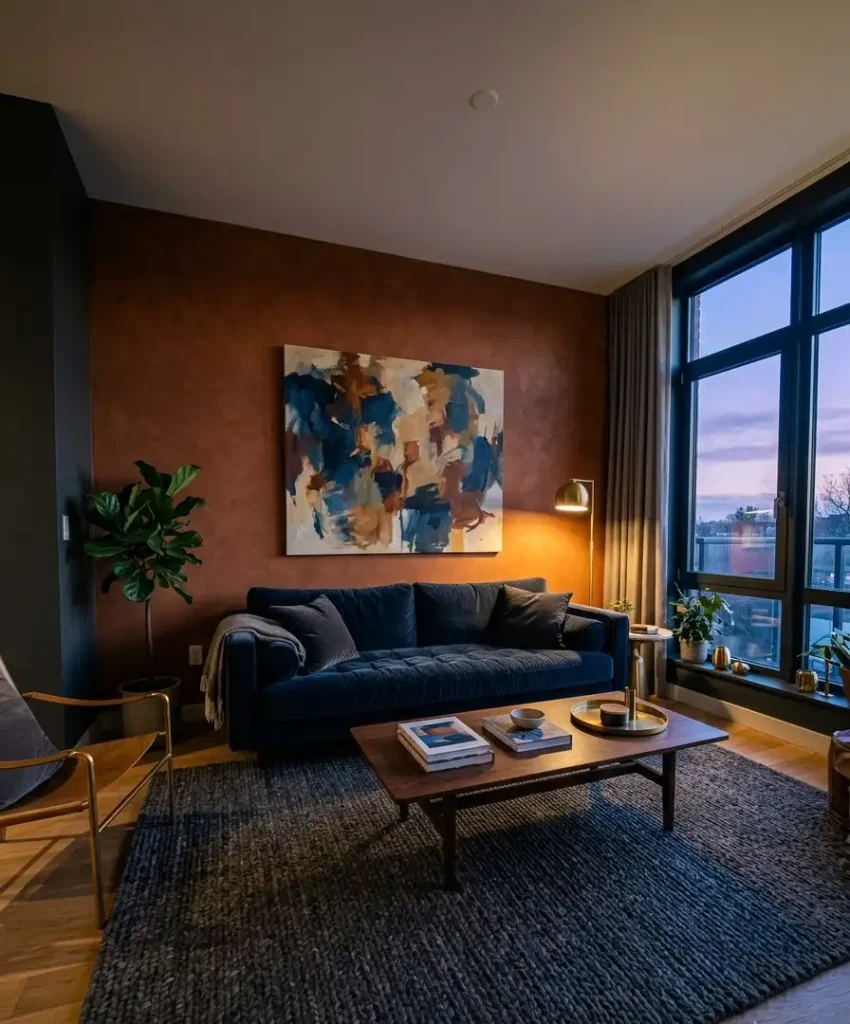
If you want a moodier room, pair rust with navy or charcoal. The cool tones calm the warmth and add some edge. A navy sofa against rust looks sharp and modern.
Keep the ratio in check, though. One dark partner is plenty.
Pairings I’d avoid
Skip bright turquoise unless you want a retro diner. Skip cool gray everywhere,
because it flattens the warmth you worked for. And skip matching every item to the wall, since a room that’s all rust looks like a clay pot.
Furniture and decor that suit a rust wall
The wall sets the stage, but furniture does the acting. Pick pieces that play off the color instead of copying it.
Sofas and seating
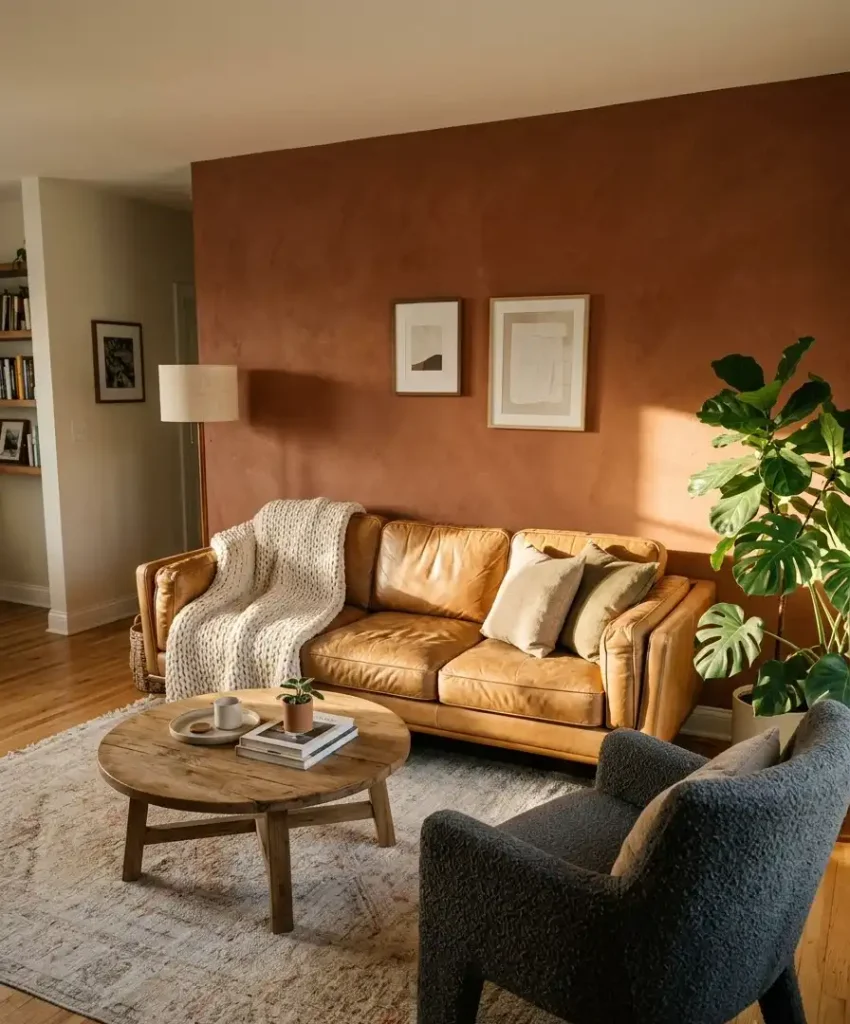
Here’s what I’ve tested in my own living room and with friends’ homes:
- Cream or oatmeal linen sofa: soft contrast, always looks fresh.
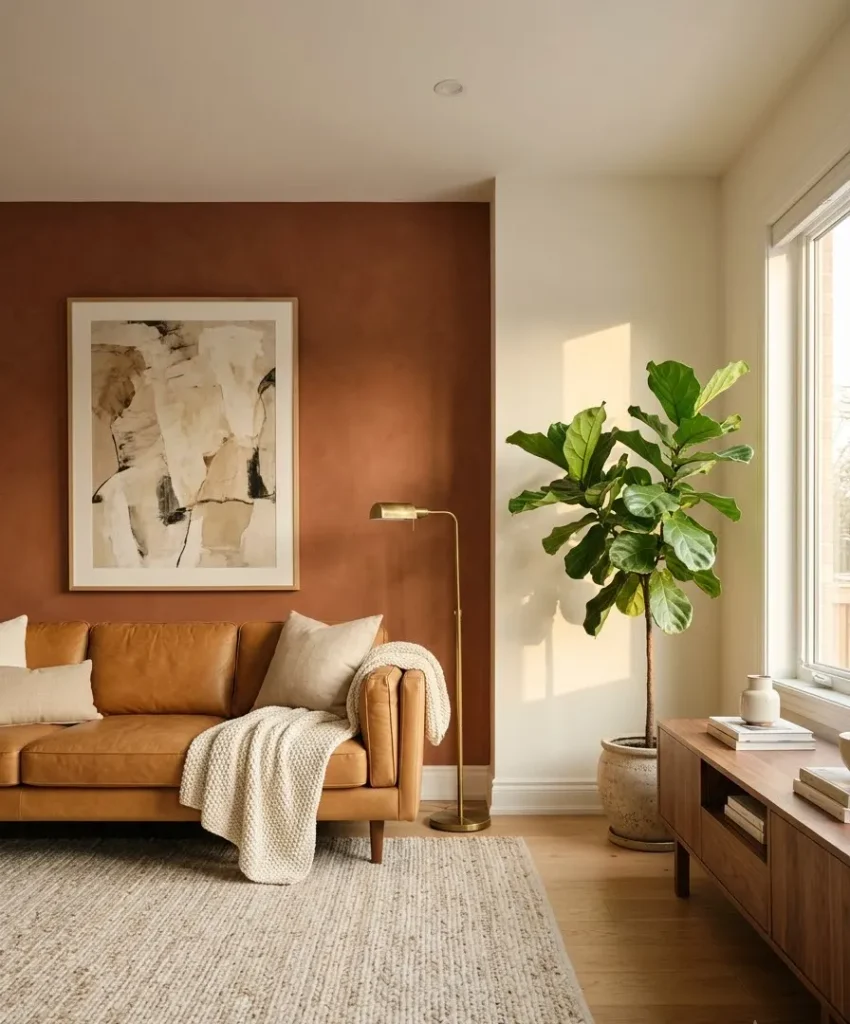
- Camel or tan leather: warm on warm, and it ages gorgeously. I’d choose this one if I could only pick one.
- Dark green velvet: rich and a bit dramatic.
- Charcoal bouclé: adds texture and grounds the color.
I’ll admit a personal bias. I think a rust wall with a camel leather sofa is nearly unbeatable. Your taste may differ, and that’s fine.
Wood tones
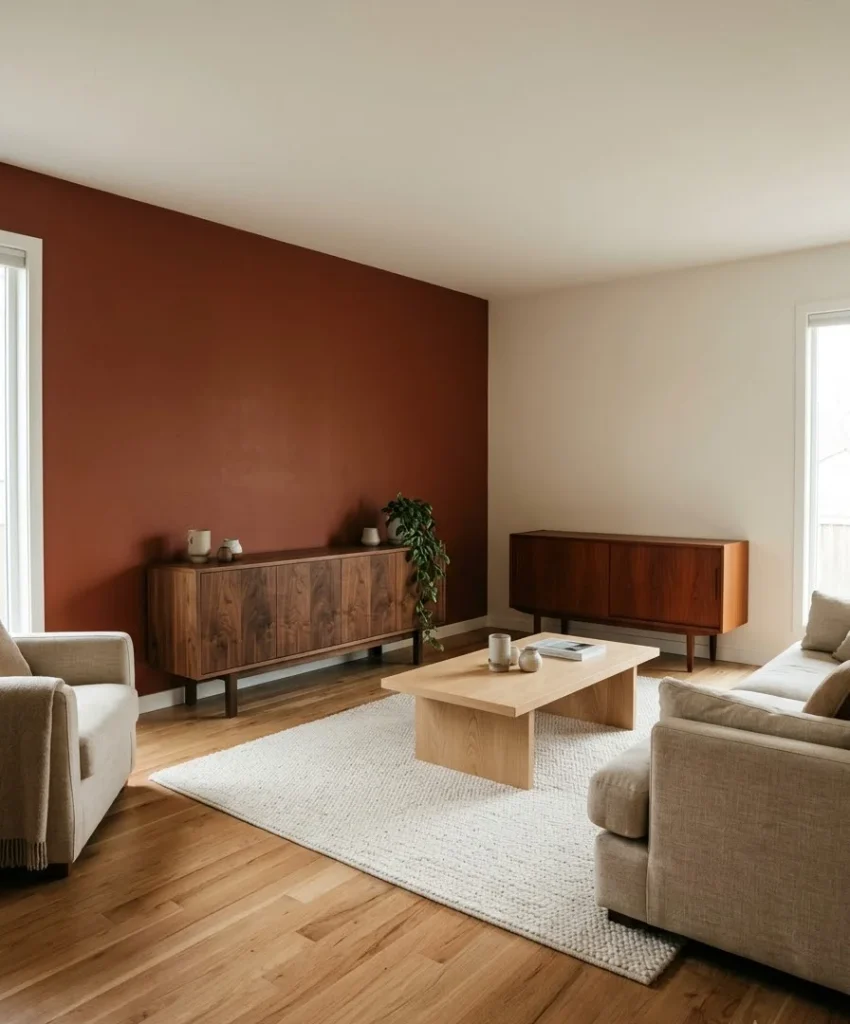
Wood is rust’s best friend. Walnut, oak, and teak all glow against it. A walnut console table or a light oak coffee table adds a natural layer that makes the wall look planned.
Mixing two wood tones keeps things from looking like a furniture showroom. Just keep the undertones warm.
Textiles
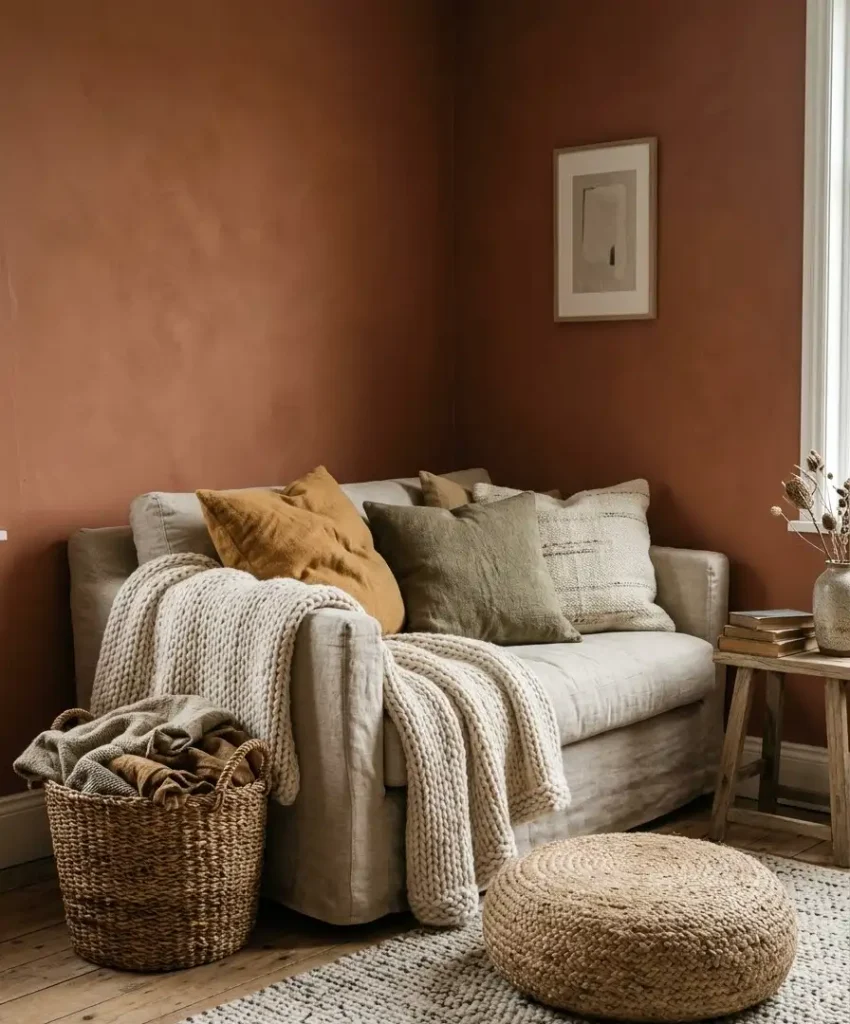
Layer a few textures: a chunky knit throw, a linen pillow, a wool rug. Stick to cream, ochre, olive, and soft brown.
I like adding one pillow with a small pattern, like a subtle stripe or geometric print.
Rugs matter more than people think. A jute or wool rug in a natural shade grounds the whole arrangement and keeps the wall from feeling like it’s floating.
Art and wall decor
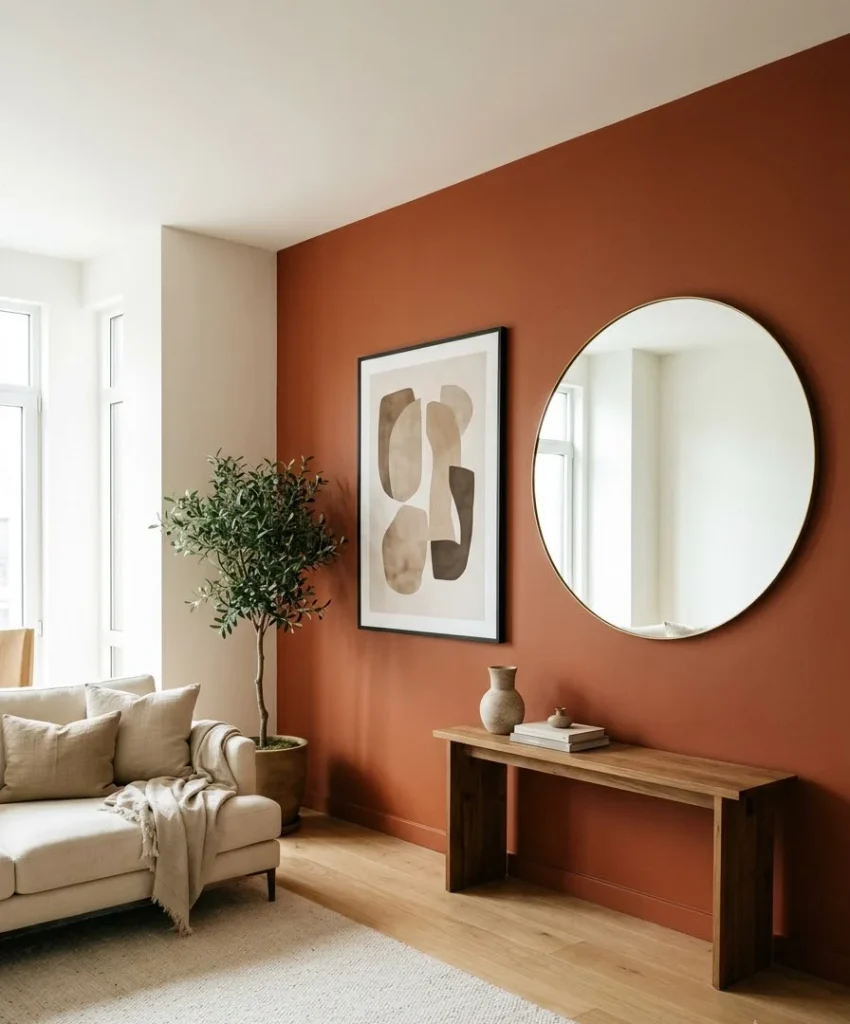
Frames in black, brass, or natural wood all work. Large pieces look better than a cluster of tiny ones, because rust is a strong backdrop.
Black-and-white photography looks stunning against it.
A big round mirror also does wonders. It bounces light across the wall and softens the intensity of the color.
Lighting makes or breaks the whole thing
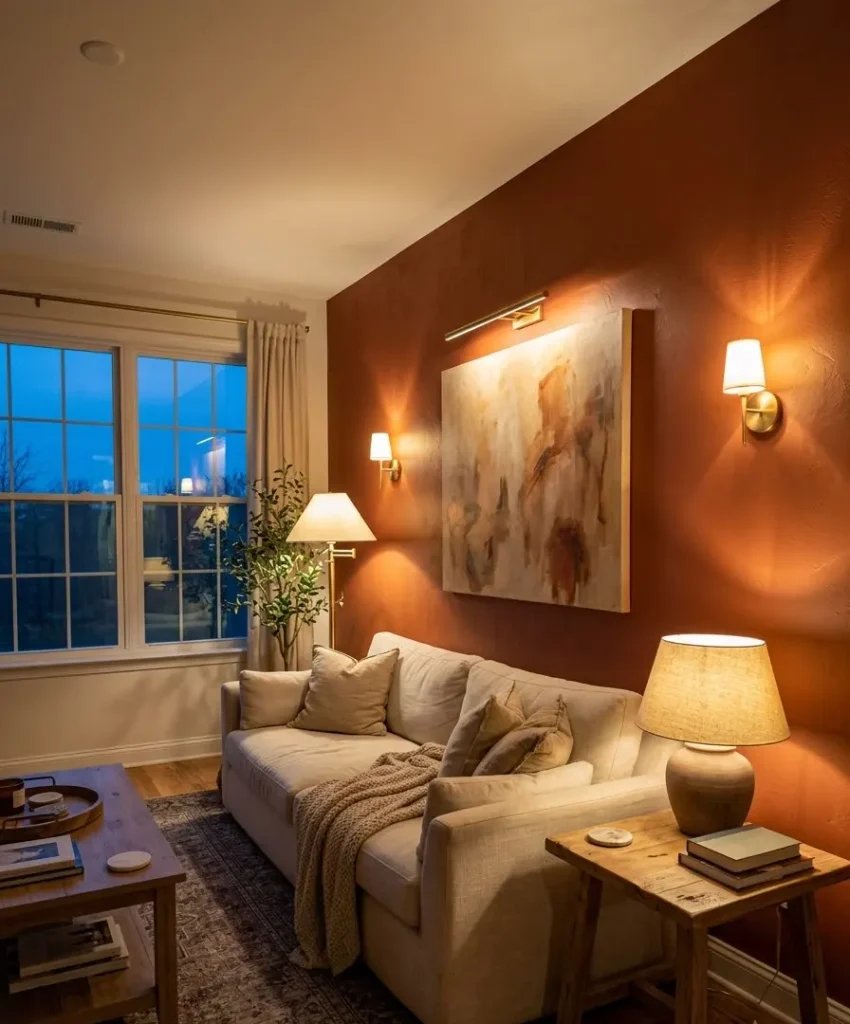
Rust is sensitive to light temperature. Under cold, blue-white bulbs, it can look dull and brown. Under warm bulbs, it glows.
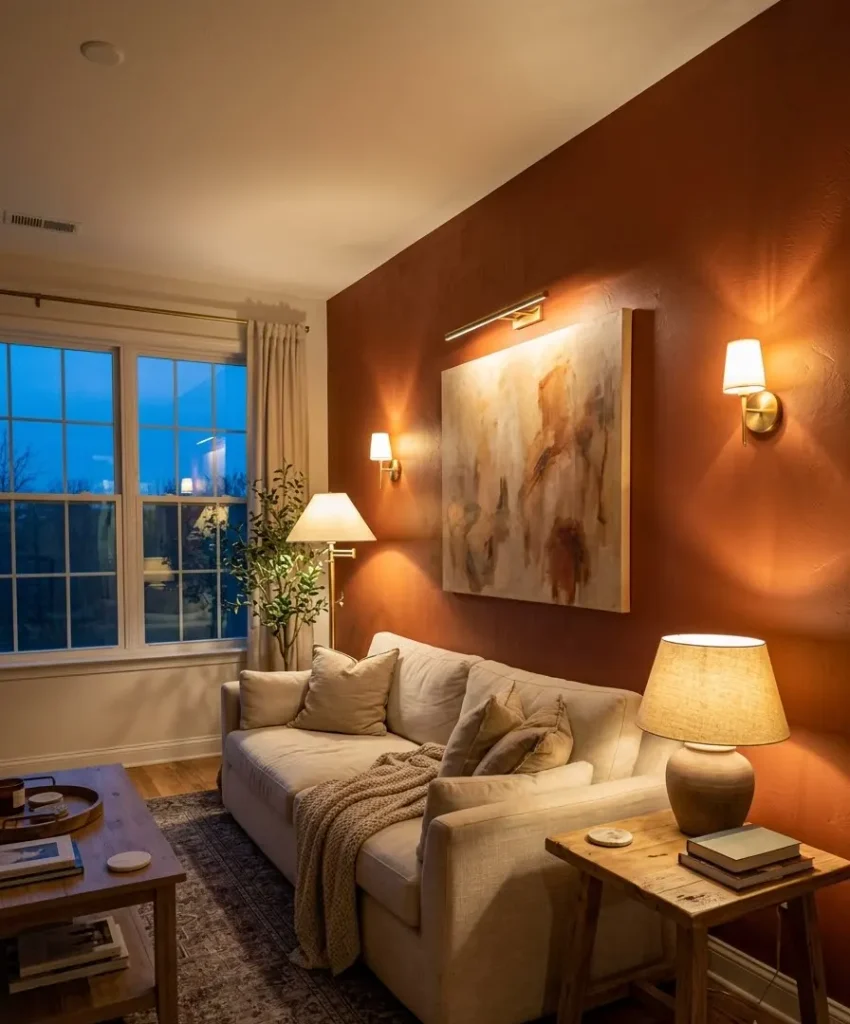
Use bulbs around 2700K. That warm white temperature brings out the red in the paint and gives the room that cozy, golden feel.
I swapped my bulbs after painting and the color changed completely. Why does nobody mention this? I have no clue, but I’m saying it now.
Layer your light
One ceiling fixture won’t cut it. Add a floor lamp near the sofa, a table lamp on a side table, and maybe a wall sconce or picture light above art. Layered light creates shadows that make the wall look deeper.
Brass or matte black fixtures both work. I lean toward brass because it picks up the warmth in the paint.
A quick off-topic thought
Side note: I once spent 40 minutes in a hardware store debating the word “matte” versus “flat” on a can. The guy behind the counter looked at me with pure pity.
Turns out they’re nearly the same thing, and I wasted a good chunk of my Saturday. Lesson learned, and I hope you laugh at me instead of copying me.
Rust accent walls in small living rooms
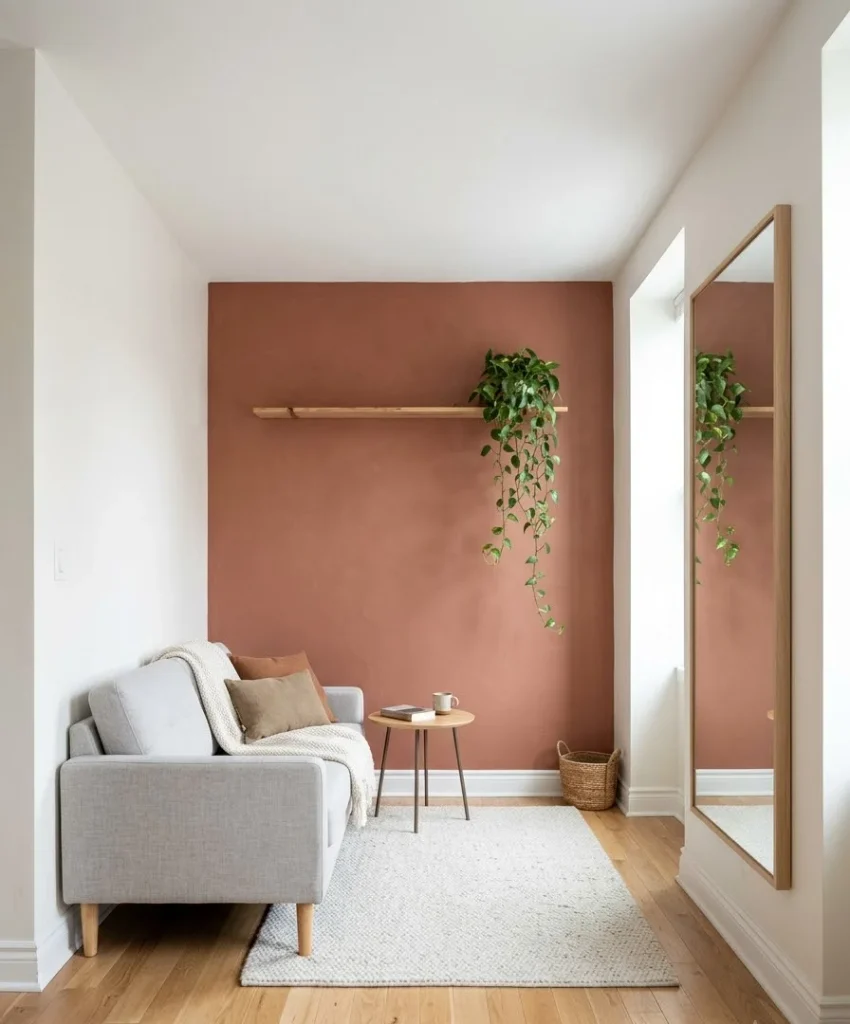
People assume dark colors shrink a room. Sometimes they do, but a rust accent wall in a small space can look cozy and intentional if you play it right.
Paint just one short wall, preferably the one at the far end of the room. Dark colors at the back of a space create depth, and your eye reads the room as longer. Keep the other walls light and warm.
Tricks I’d use in a tiny apartment
- Pick a lighter rust, like a dusty clay, so the wall doesn’t feel heavy.
- Hang a large mirror on the opposite wall to reflect light.
- Choose furniture with visible legs, because open space under pieces keeps things airy.
- Keep the ceiling and trim a soft white.
I tried a very deep rust in a 10-foot-wide room once. It looked amazing in photos and felt like a cave at 4 p.m. in winter. If you have limited natural light, go a notch lighter than your gut says.
Mistakes I see (and made myself)
I’ve collected a small list of rust wall regrets from friends, readers, and my own bad decisions. Save yourself the trouble.
- Skipping primer. Rust over a white wall often needs a tinted primer. Without it, you’ll paint four coats and still see patches.
- Picking the color at night. Evening light changes everything. Judge samples in daylight too.
- Forgetting the trim. Bright white trim can look harsh. I’ve started using a creamier white and I can’t go back.
- Overdoing the decor. A bold wall needs breathing room. I think three to five well-chosen items on a shelf beat fifteen random ones.
- Ignoring the floor. Cool gray floors can fight rust. A warm rug solves it fast.
Number five bit me hardest. My gray vinyl floors looked cold next to the wall until I laid a big wool rug over them.
What a rust accent wall costs
Budgets vary, so here’s a rough picture based on what I’ve spent and what friends have told me.
- Basic paint: $50 to $120 including rollers, tape, and primer.
- Limewash: $100 to $250 for materials, more if you hire help.
- Wood slats: $150 to $500 depending on wood or MDF.
- Plaster or clay finish: $500 to $2,000 or more with a pro.
- Wallpaper: $80 to $400 depending on brand and wall size.
If money’s tight, paint wins every time. You get 90 percent of the visual payoff for the price of a dinner out.
For more room inspiration across all budgets, browse Pinterest boards for terracotta living rooms, and check Houzz for real-home photos with budgets attached.
How I’d style it from start to finish
Let me give you a quick plan, since I know decisions pile up.
- Pick your wall, usually the sofa wall.
- Test three rust samples for two days.
- Prime, then paint two coats.
- Add warm 2700K bulbs.
- Bring in one wood piece, one plant, and one textured throw.
- Hang one large piece of art.
- Step back, sip something warm, and resist the urge to add more.
That last step is the hardest. I always want to add one more thing, and I’m usually wrong.
Quick FAQs
Does a rust accent wall make a living room look smaller?
It can in a dim room, but a lighter clay-toned rust on the far wall often adds depth. Pair it with light walls elsewhere and good lighting, and the room should feel cozy instead of cramped.
What color couch looks best against a rust wall?
Cream, camel leather, olive green, and charcoal all look great. I personally prefer camel leather for warmth and cream linen for a lighter feel.
Can I do a rust accent wall as a renter?
Yes. Peel-and-stick wallpaper in rust tones removes cleanly in most cases, and a large painted canvas or fabric panel can create a similar look without touching the wall. Always check your lease first.
Final thoughts
A rust accent wall costs little, changes a lot, and looks good in photos and in person.
Pick a shade you tested in your own light, pair it with warm woods and soft textiles, and keep the lighting cozy. Trust your eye more than the paint chip.
I still smile when I walk into my living room in the evening and see that wall glowing. It’s a small thing, but it makes the whole house feel like mine.
So which wall in your home would you hand over to rust first, and what color sofa will sit in front of it?