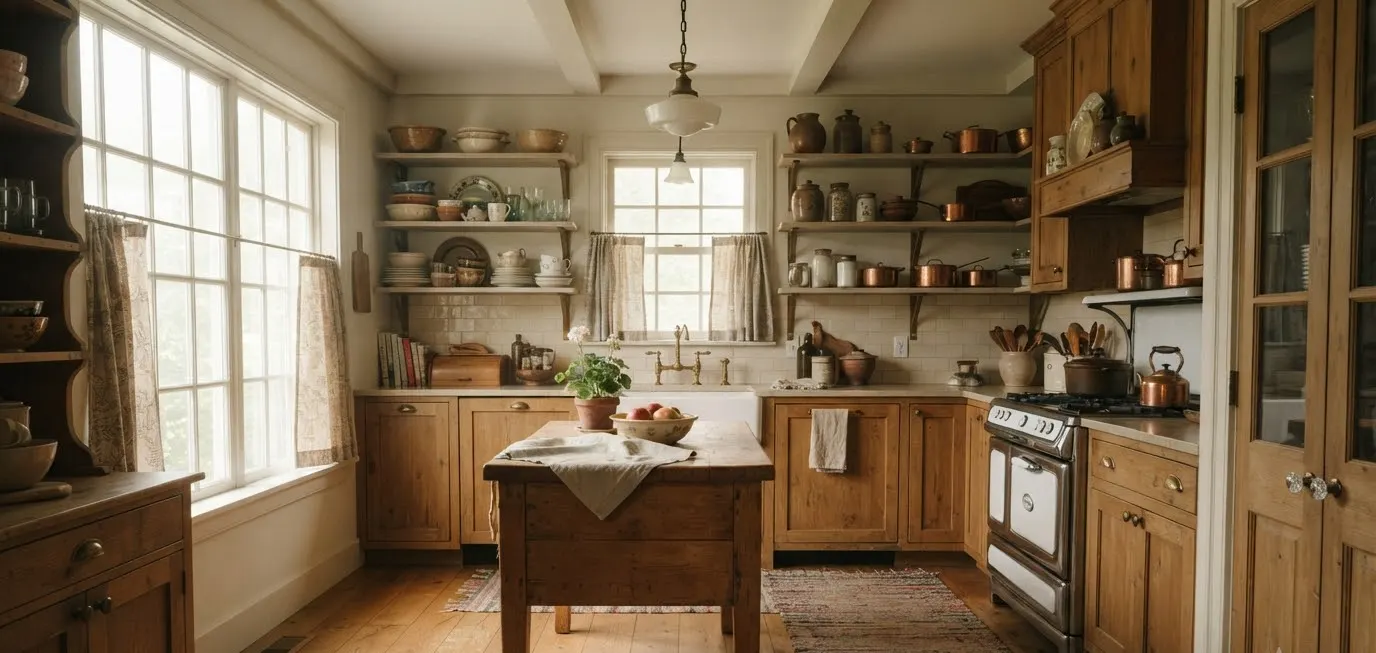
I redid my own kitchen three years ago, and I still catch myself standing in the doorway just looking at it.
Not because it’s perfect. Because it feels like somewhere people actually live.
That’s the whole point of a vintage cottage kitchen. It’s not a showroom. It’s not a magazine spread frozen in time.
It’s a room with a little wear on it, a few mismatched chairs, and a coffee stain on the counter that nobody’s in a rush to scrub out.
If you’ve been scrolling Pinterest for hours trying to figure out why some kitchens feel warm and others feel like a dentist’s waiting room,
I’ve got you. Below are 30 ideas that actually work, pulled from real renovations, real mistakes, and a few things I’d do differently if I started over.I should mention: I’m not an interior designer.
I’m someone who bought a 1938 house with a kitchen that hadn’t been touched since roughly the Carter administration, and I learned most of this the hard way.
So take these as tested advice from someone who’s made the expensive mistakes already, not theory from a textbook.
Start with what’s already old
Before you buy a single thing, look at what your kitchen already has going for it. Old houses hide good bones under decades of bad decisions.
1. Keep the original cabinets if they’re solid. A coat of paint and new hardware can save cabinets that would otherwise cost thousands to replace.
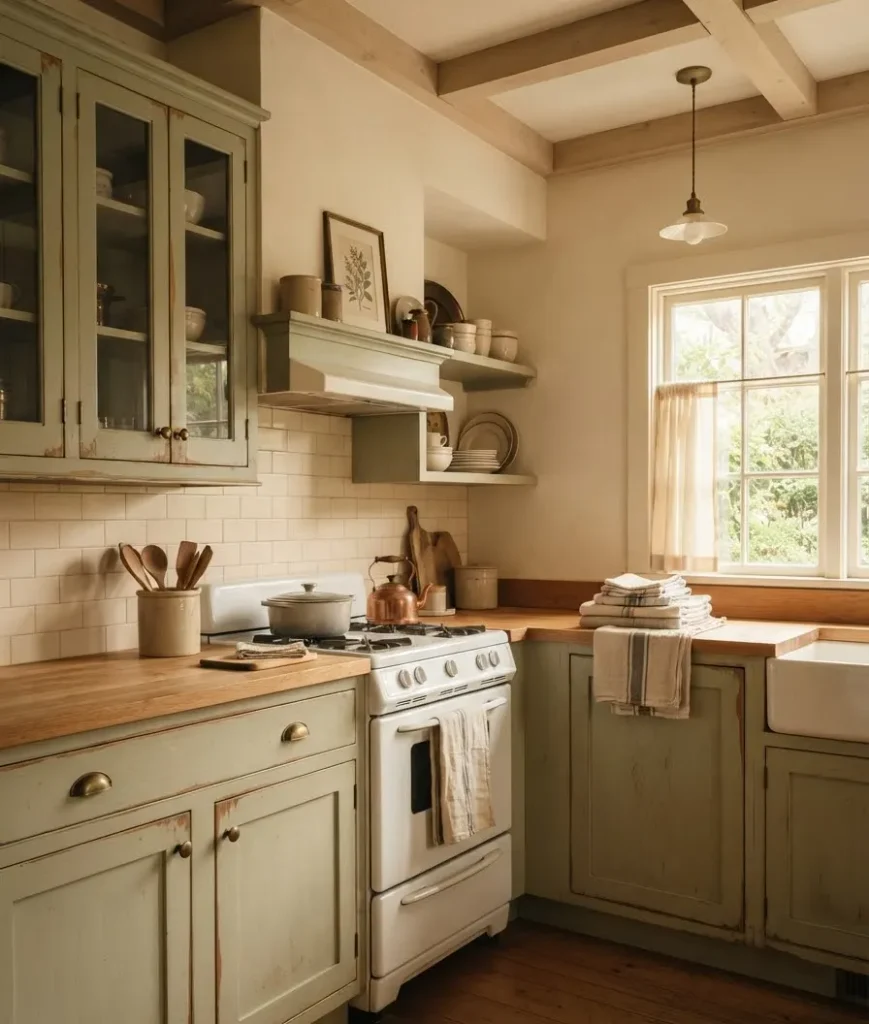
I kept mine, sanded the fronts down myself over a long weekend, and just swapped the hinges.
Total cost was under $200, and I still get compliments on them.
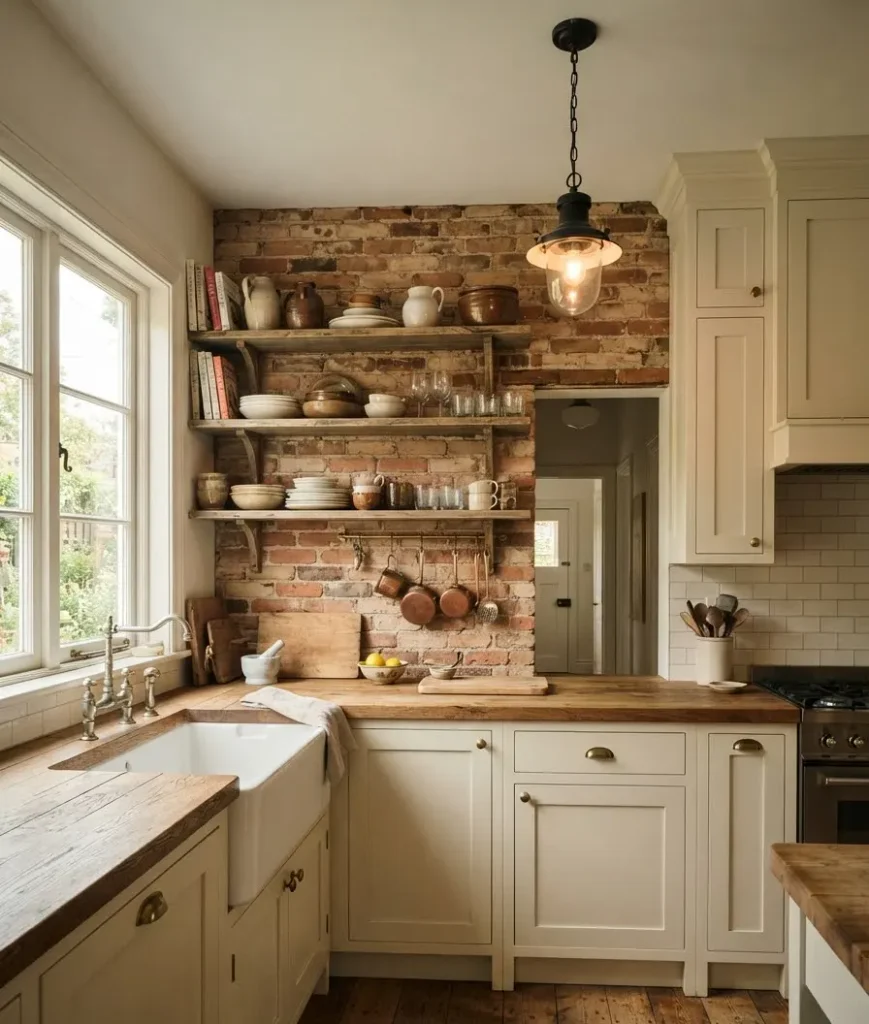
2. Expose a brick or stone wall if one’s hiding under drywall. This one’s a gamble,
IMO, since you won’t know what’s back there until you open it up. Mine turned out to be gorgeous, original 1930s brick with the mortar lines still crisp. My neighbor’s turned out to be crumbling mortar and a mouse hotel.
Get a contractor to peek behind an outlet cover first before you commit to a full demo.
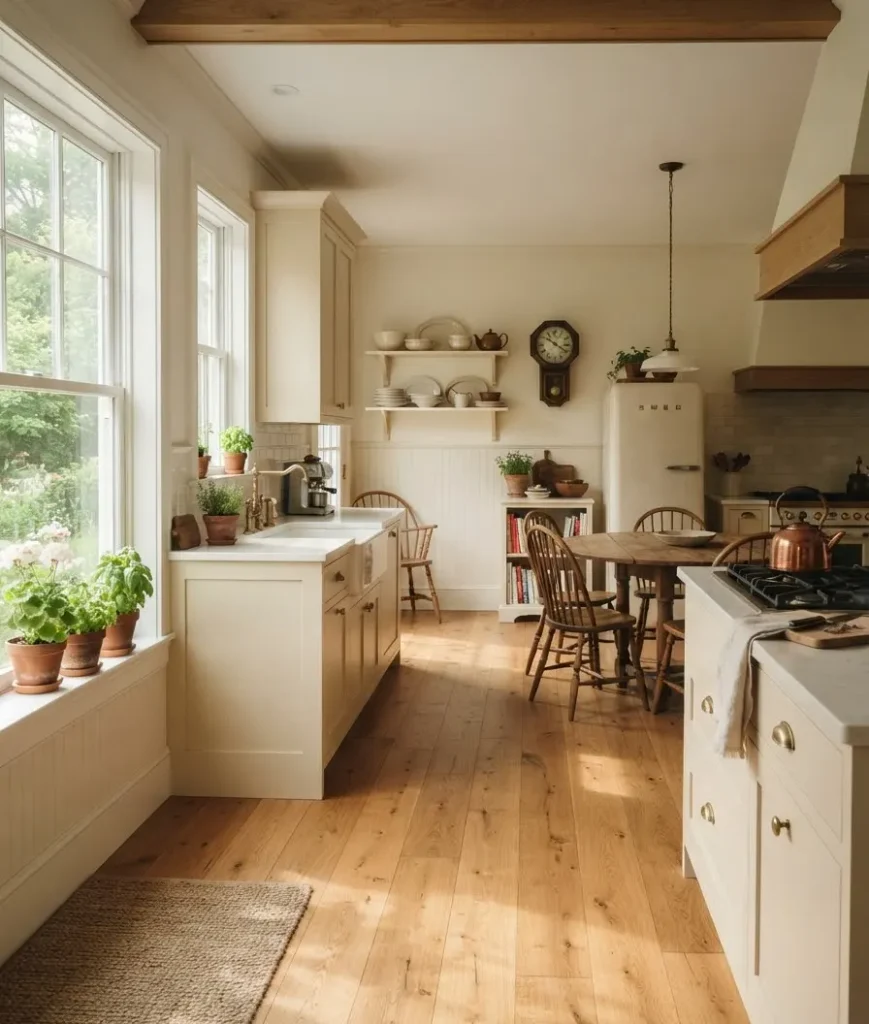
3. Refinish original hardwood instead of covering it. Scratches and gaps read as history, not damage, once you see the whole room together.
A light sand and a matte or satin finish, rather than high-gloss, keeps that old-house warmth instead of making the floor look plasticky.
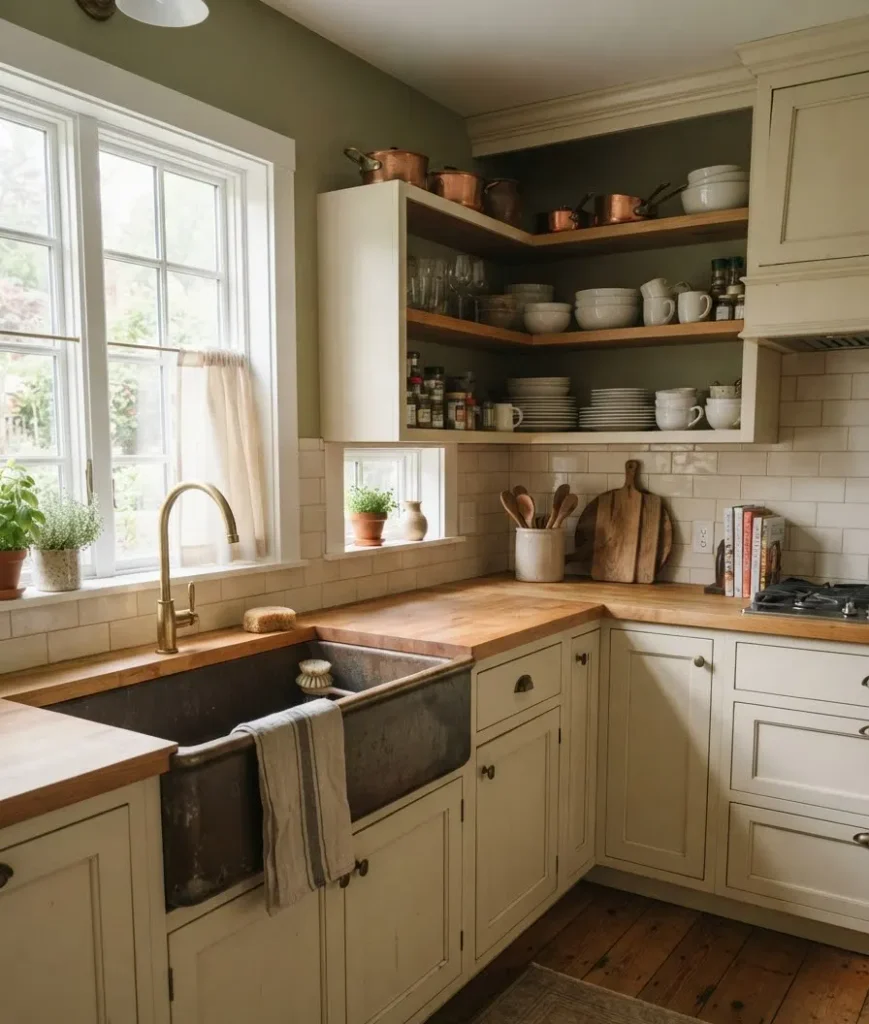
4. Save the old farmhouse sink if there is one. Cast iron sinks from the 1930s and 40s are heavier and often better made than what you’d buy new today.
Mine has a small chip near the drain that I’ve decided is charming rather than a flaw. Reglazing is also an option if the finish has really worn through.
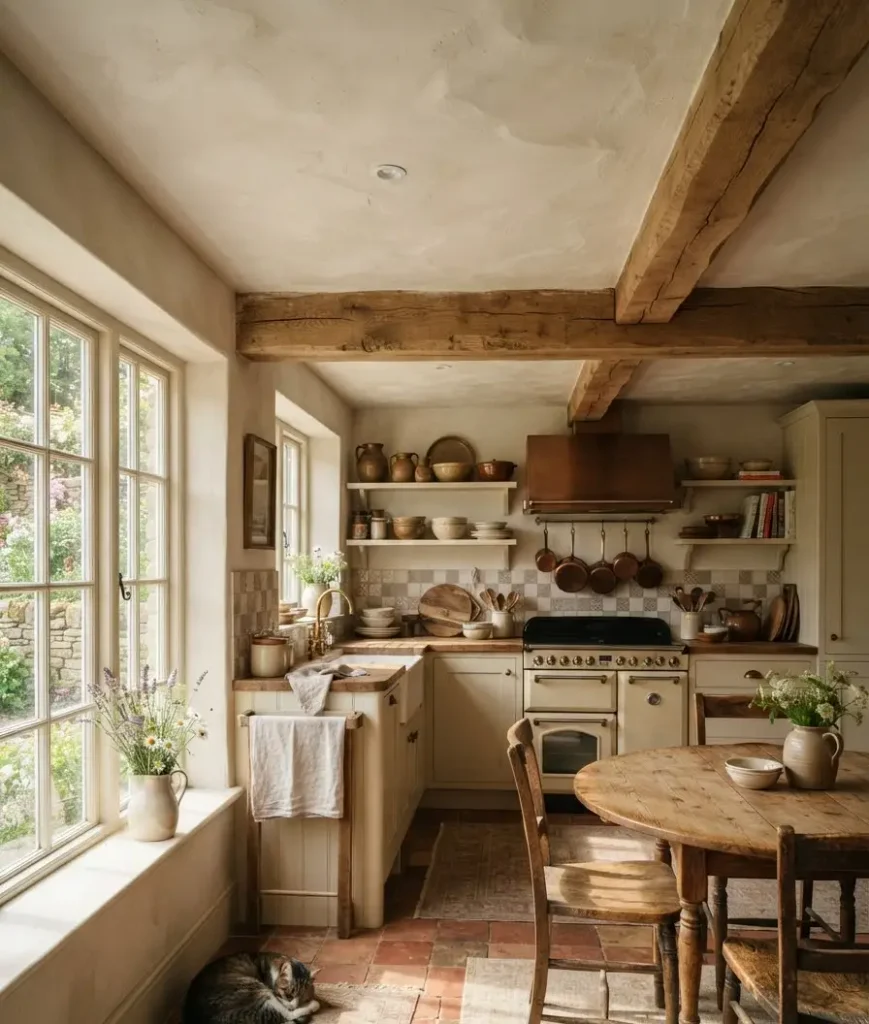
5. Leave a slightly uneven wall or ceiling alone. Perfectly straight lines make a cottage kitchen look staged.
A little wobble makes it look built by hand, because it usually was. I fought this one for months before I finally let it go, and the room looks better for it.
Bring in warm, worn wood
Wood does more work in a cottage kitchen than almost anything else. It’s the difference between “cozy” and “cold.”
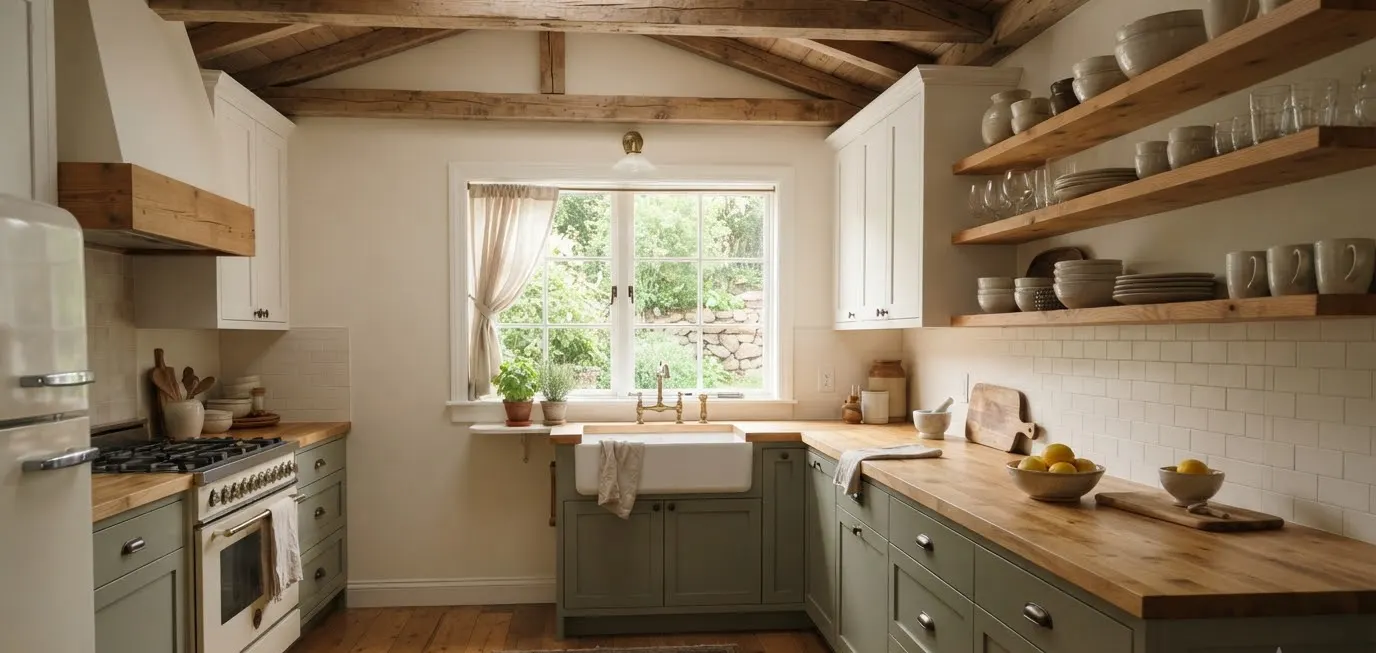
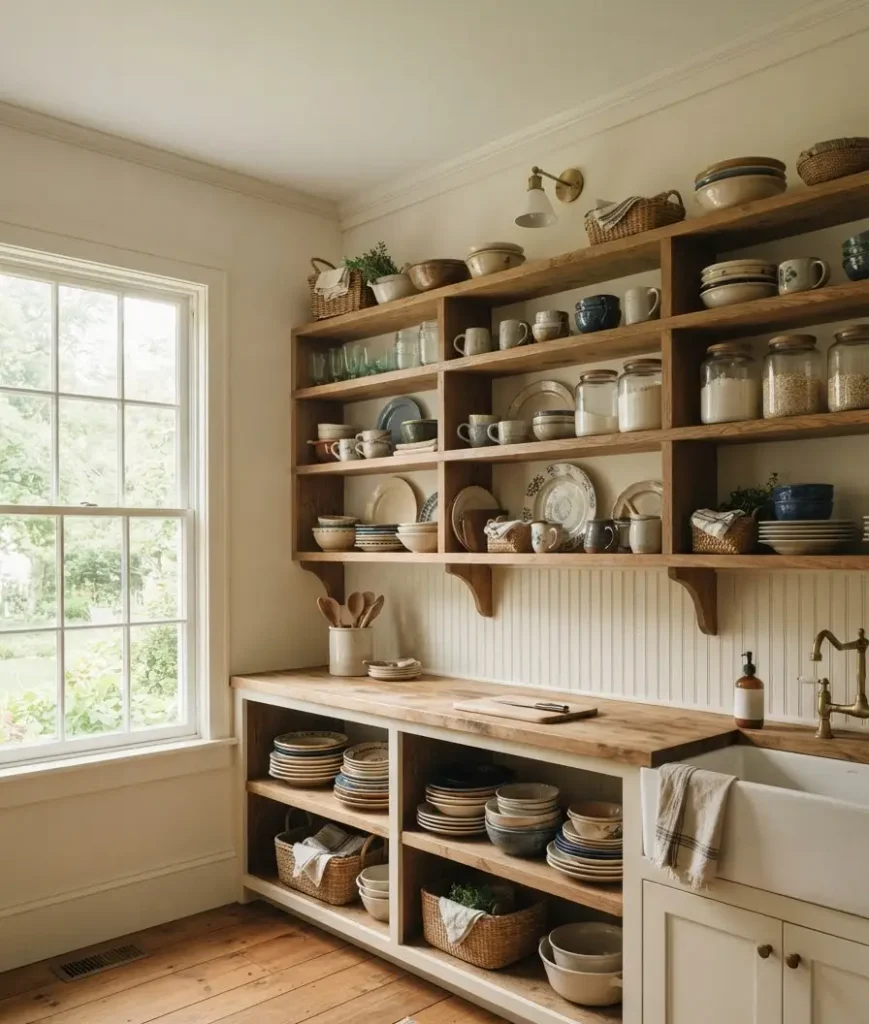
6. Add open wood shelving in place of upper cabinets. It forces you to keep things tidy, sure, but it also puts your favorite dishes on display instead of hiding them behind a door.
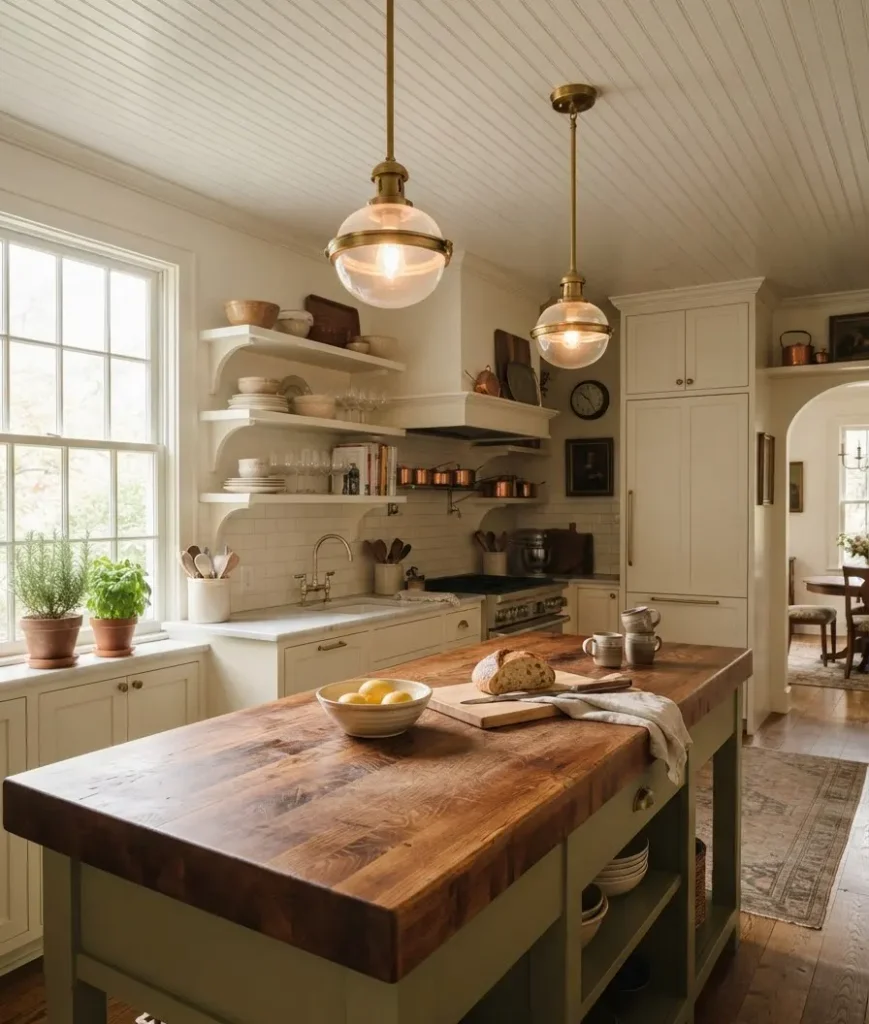
7. Use a butcher block countertop on at least one section. I did mine on the island only, and the shiplapandshells.com folks made a great case for this exact approach when they turned an old dresser into an island with a butcher block top. Genius, honestly.
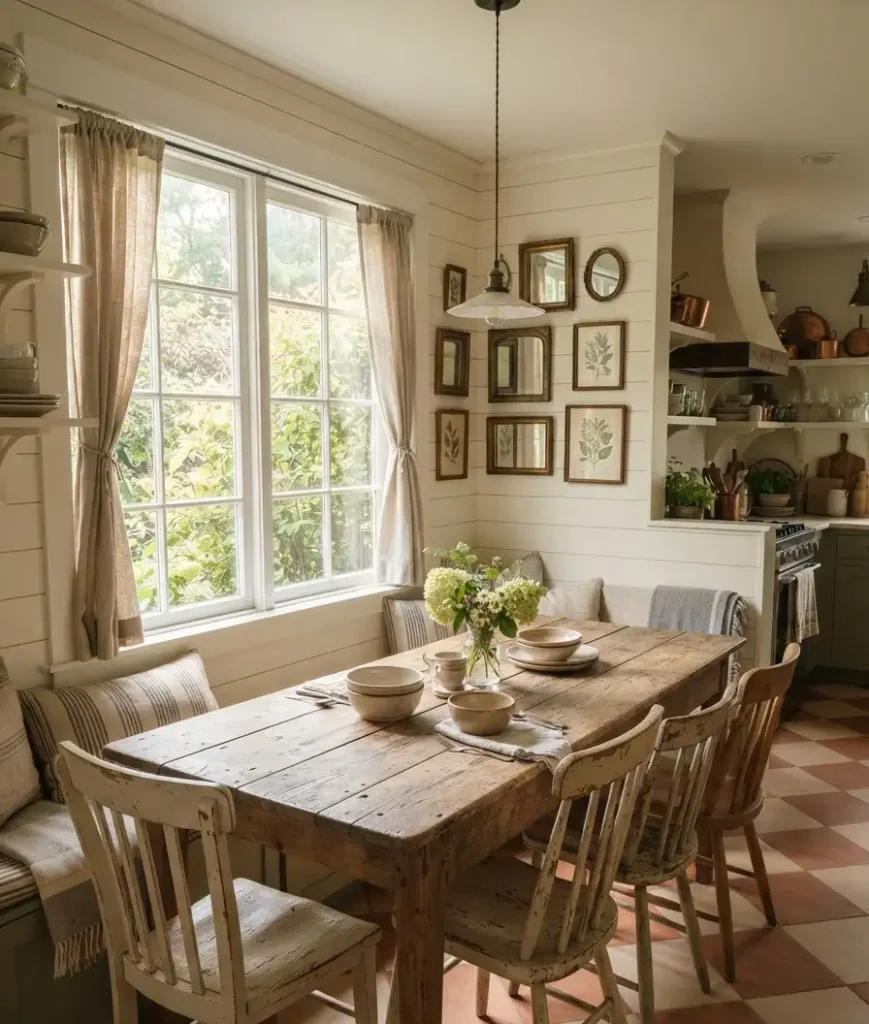
8. Choose a reclaimed wood table over a built-in banquette. Banquettes look nice in photos.
A real table with mismatched chairs looks like your family actually eats there.
9. Install beadboard on the lower cabinets or backsplash. It’s cheap, it’s easy to install, and it reads as instantly old-fashioned without trying too hard.
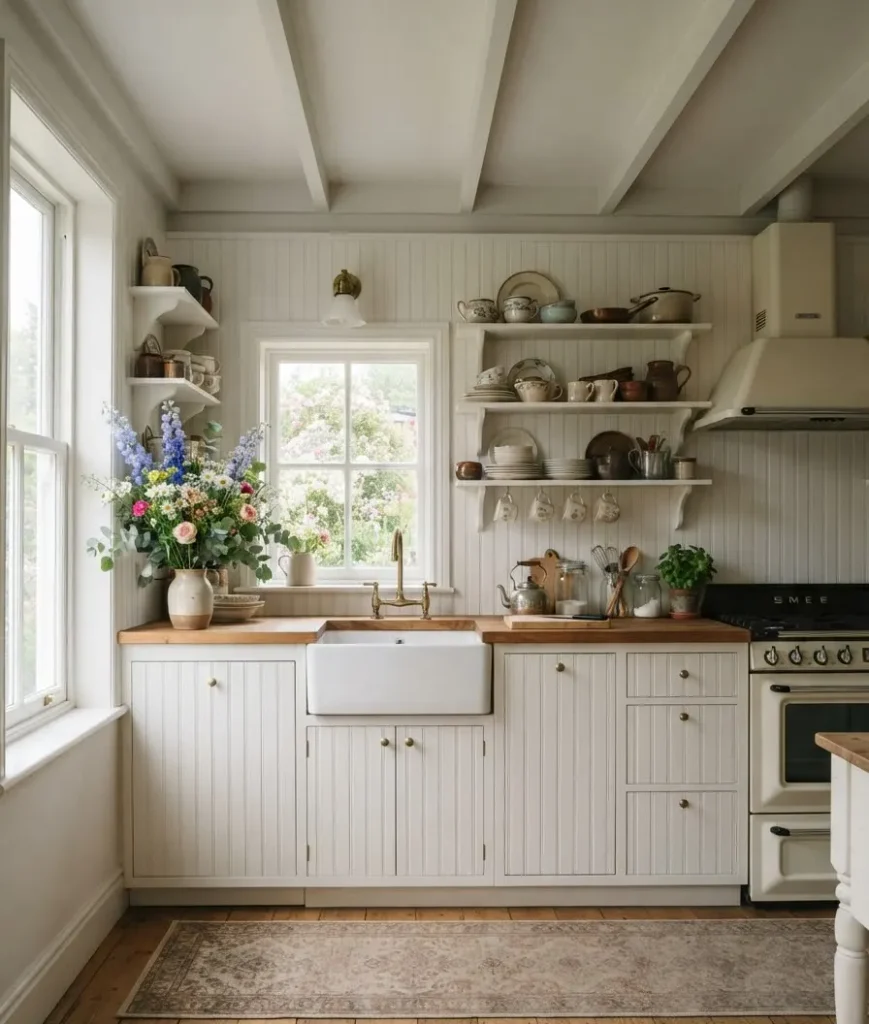
10. Pick warm-toned wood floors, not gray. Gray floors are having a moment everywhere else.
In a cottage kitchen, they fight the whole vibe. Go warm. Go honey, walnut, or aged oak.
I made this mistake in a guest bathroom once and regretted it the second I saw it next to the kitchen’s warm cabinetry.
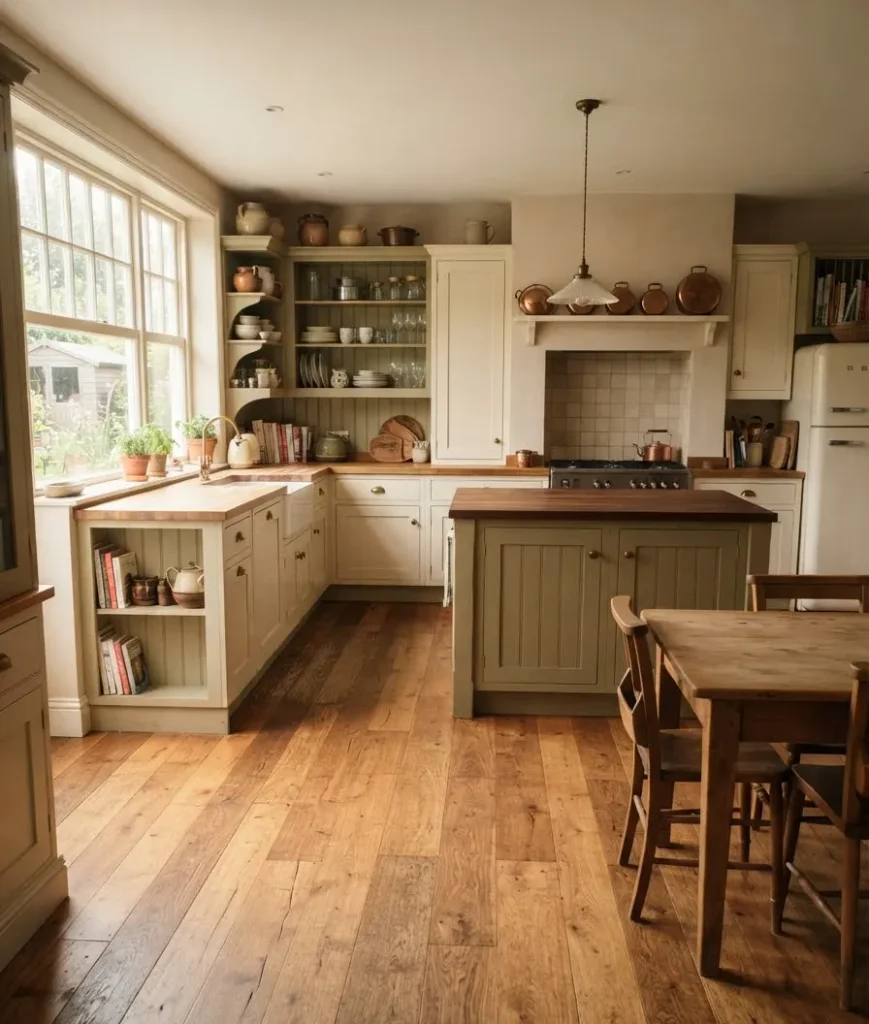
Wood grounds a room like nothing else can, and it ages in a way that actually improves with time.
Give it a decade, and the dings and worn patches near the sink will just look like proof that people cook there.
Play with color like you mean it
A lot of people default to white because it feels safe. White works, but a cottage kitchen earns its personality through color.
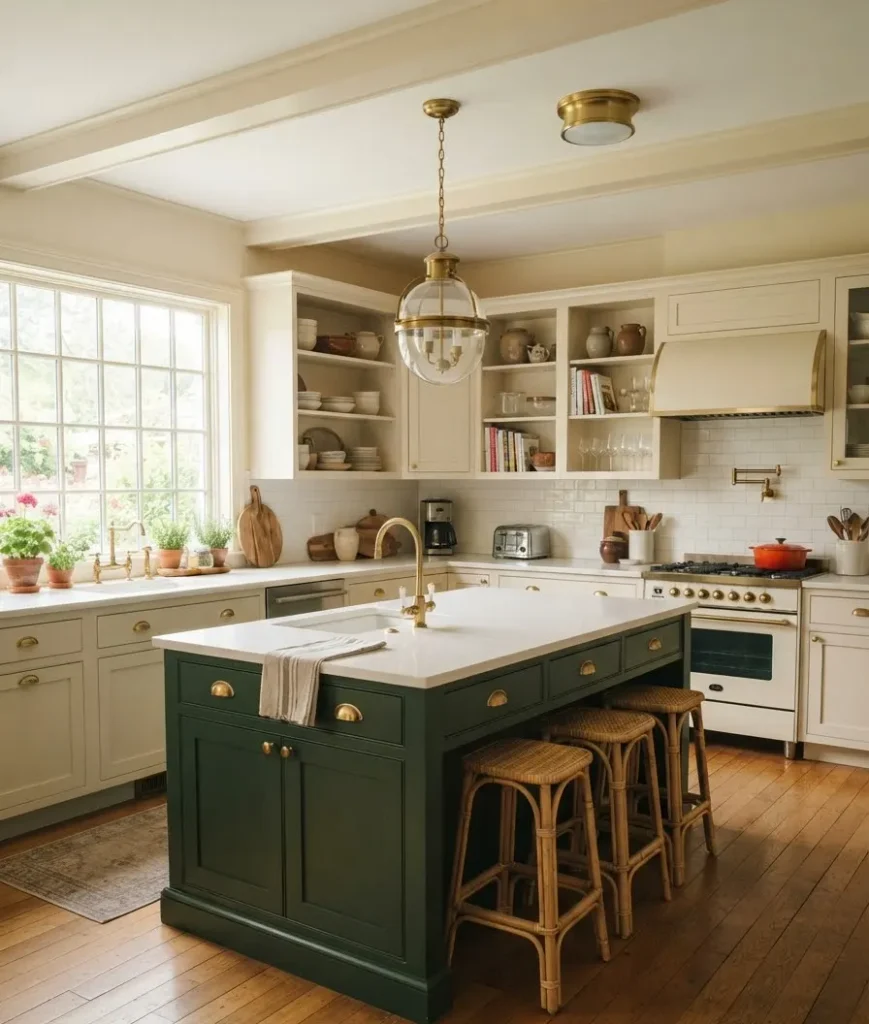
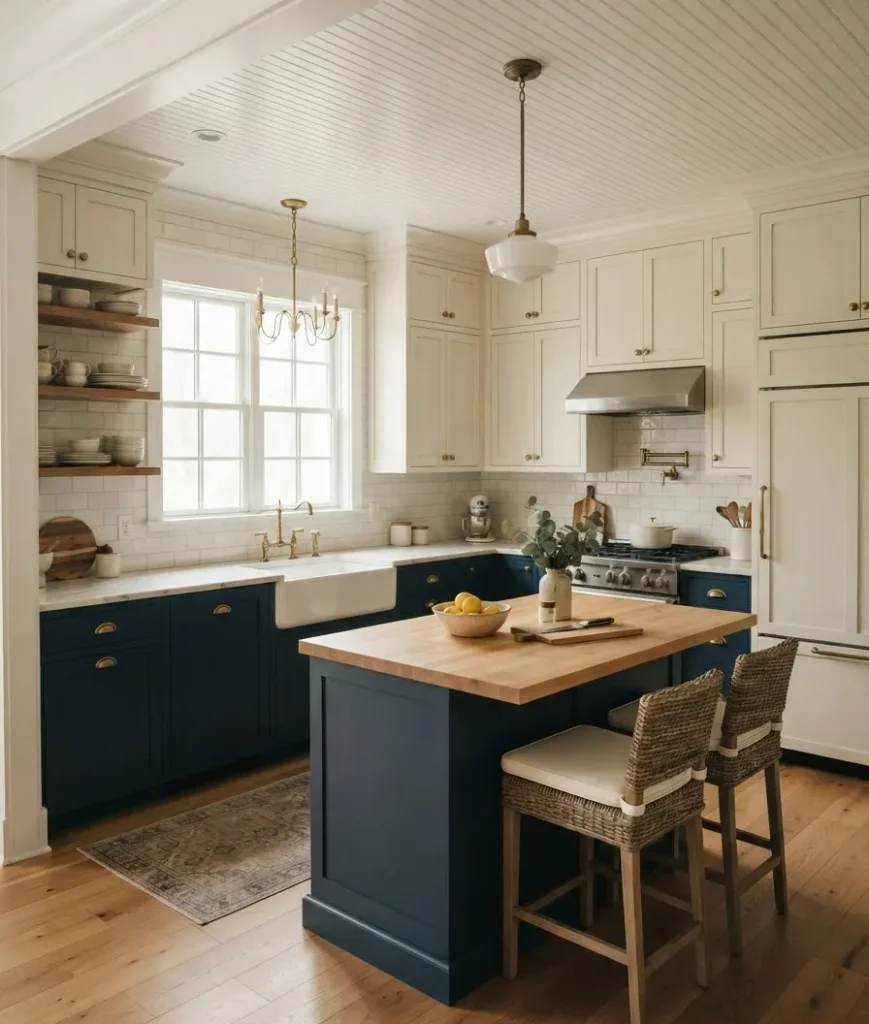
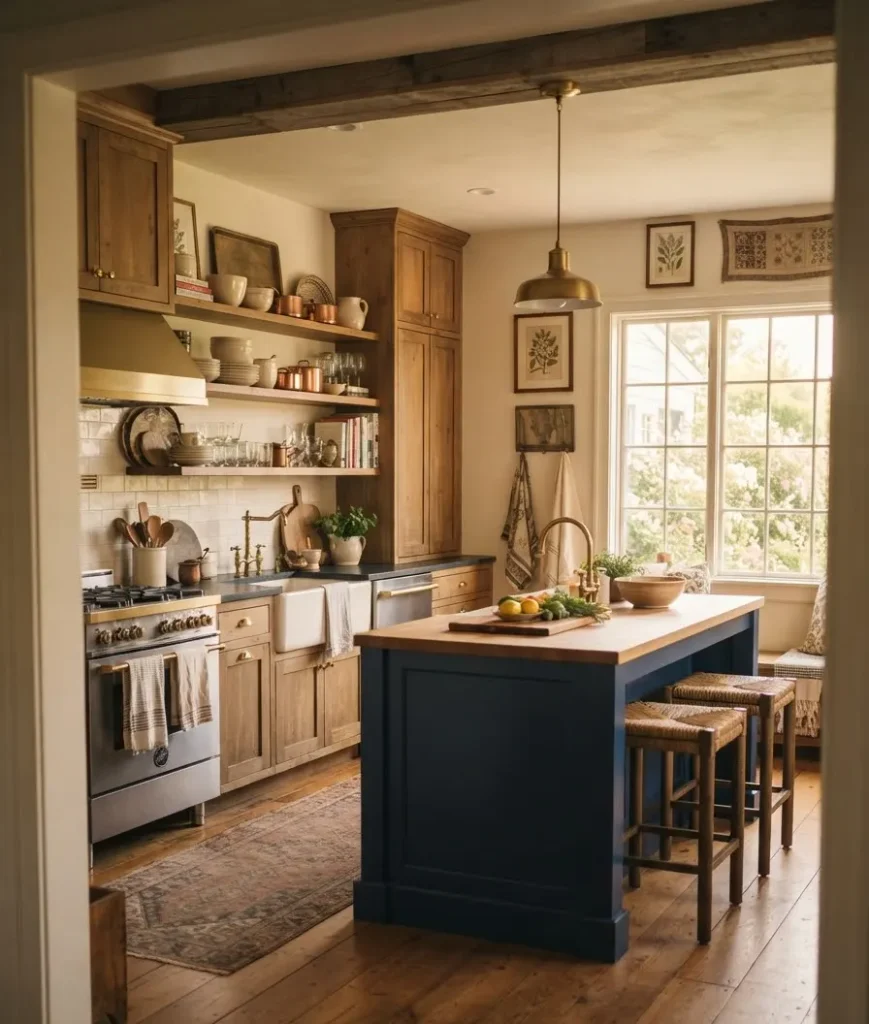
11. Paint the island a deep, saturated color. Navy, forest green, and plum all show up again and again in real cottage renovations, and for good reason: they anchor the room.
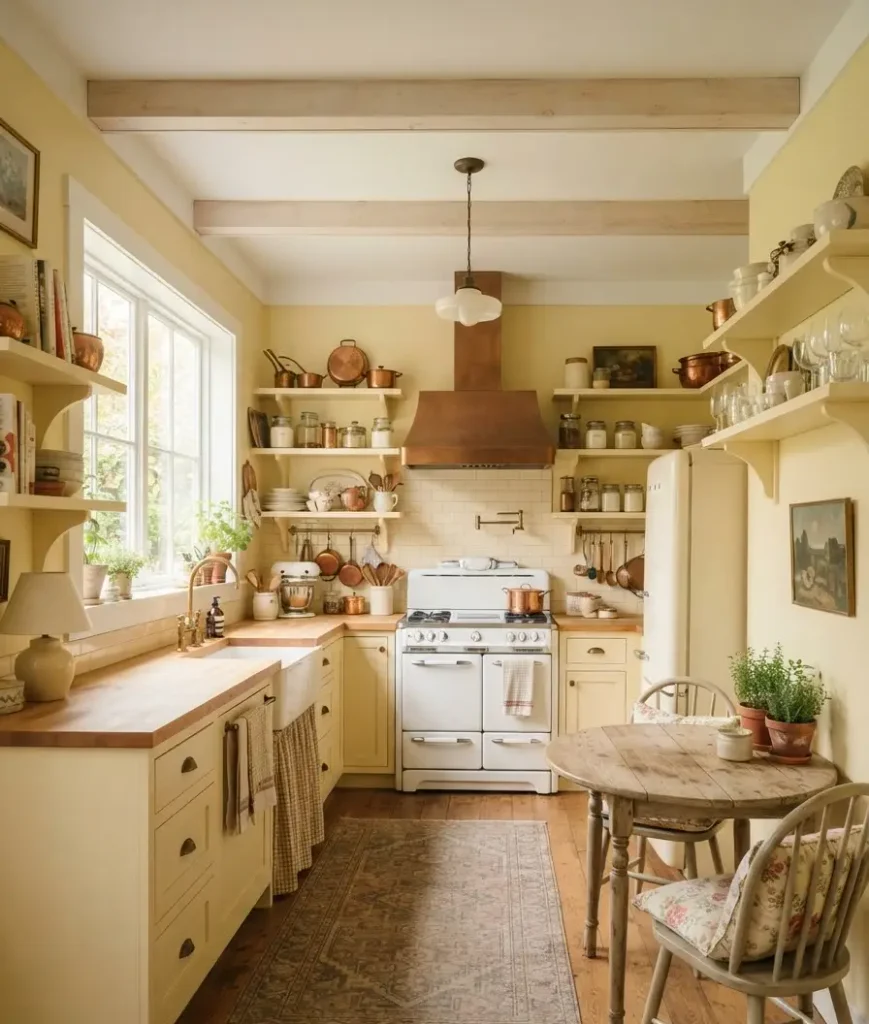
12. Use a soft pastel on the walls instead of stark white. Think butter yellow, sage, or dusty pink.
These colors read as vintage without pushing into theme-park territory.
13. Try two-tone cabinets. Darker on the bottom, lighter on top.
It’s not a new trick, but it’s a good one, and it hides scuffs near the floor better than an all-white kitchen ever will.
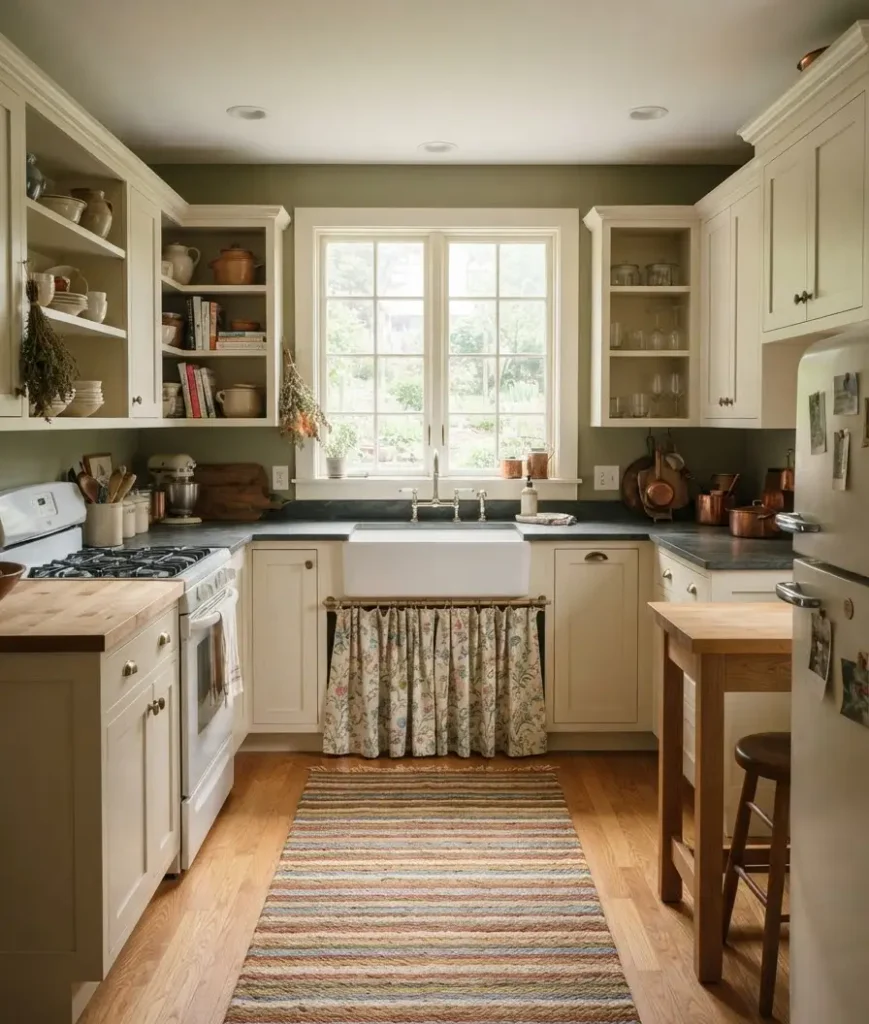
14. Add color through vintage textiles. A floral curtain under the sink or a striped runner on the floor brings in pattern without a full repaint.
15. Don’t be afraid of a bold backsplash tile. Checkerboard, scalloped, or hand-painted tile adds more character per square foot than almost any other single choice.
I went with hand-painted Portuguese tile behind my stove, and honestly, this is insane how much a 3-foot section of tile can change a whole room.
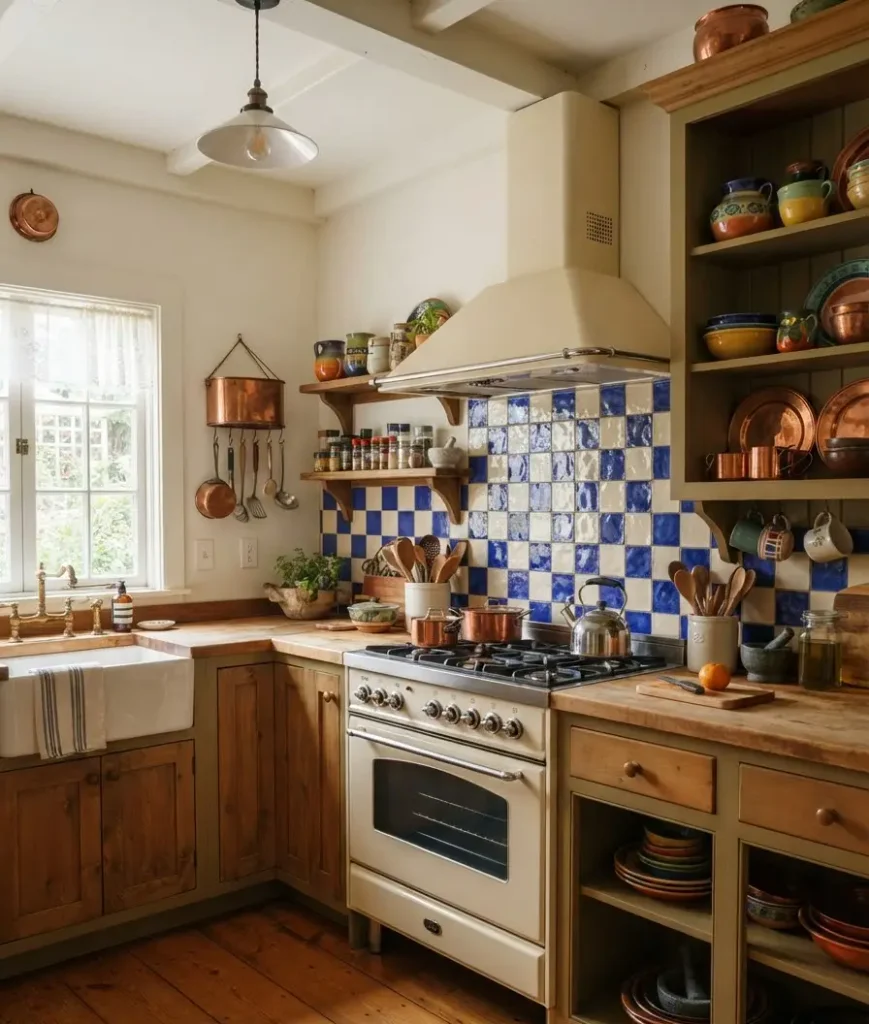
Color commitment scares people more than it should. A backsplash covers maybe 10% of your kitchen’s visible surface.
That’s a low-risk place to take a swing at something bold.
Let the details do the heavy lifting
This is where a lot of kitchens go wrong.
People spend their whole budget on cabinets and appliances and have nothing left for the small stuff that actually sells the look.
16. Swap in glass or ceramic cabinet knobs. Brass, black iron, and milk glass pulls cost very little and change the whole feel of a cabinet front.
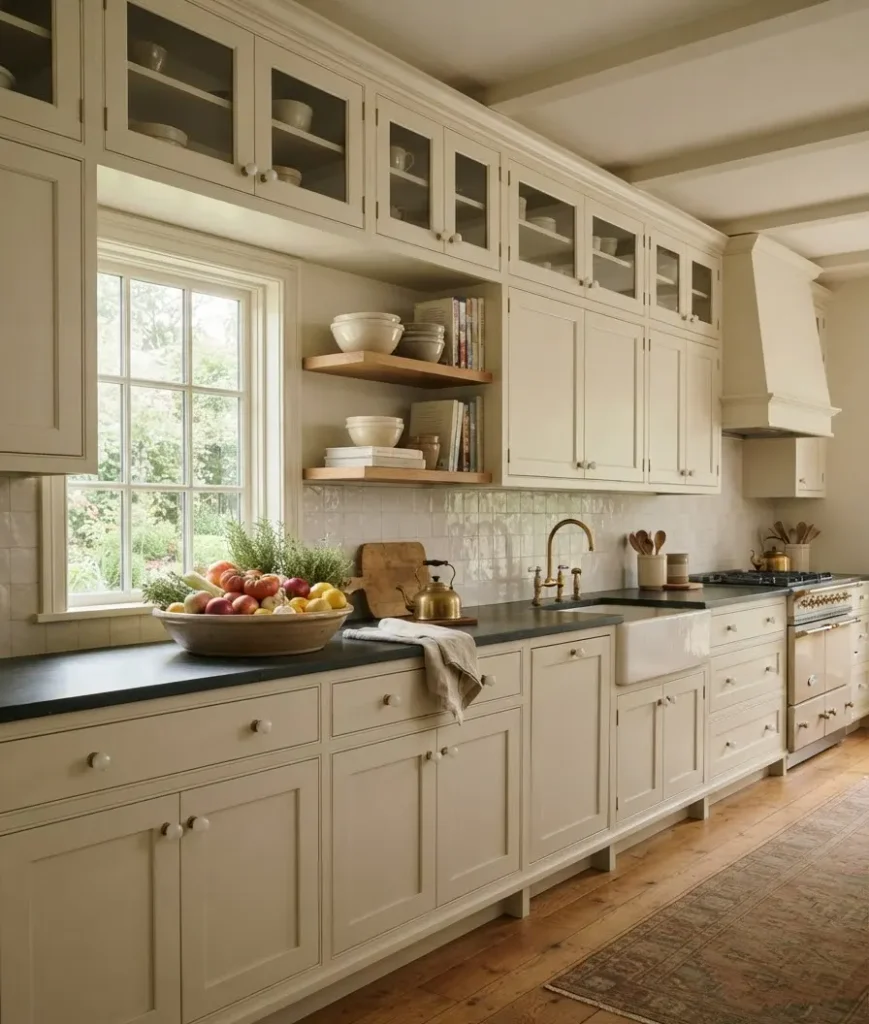
17. Hang a vintage-style pendant light over the sink or island. Something with a milk glass shade or a bit of patina beats a sleek modern fixture every time in this kind of space.
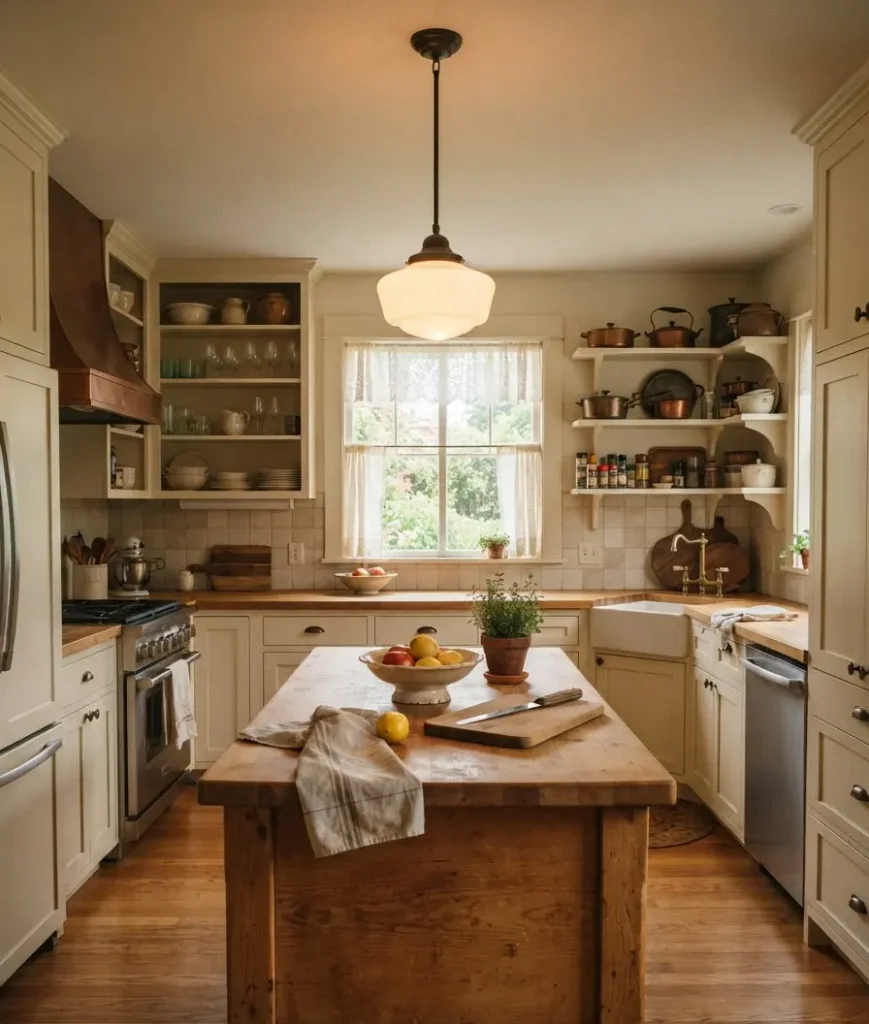
18. Display a collection of mismatched vintage plates on the wall. Thrift stores and estate sales are goldmines here. Don’t buy a matching set. Buy plates that look like they’ve traveled.
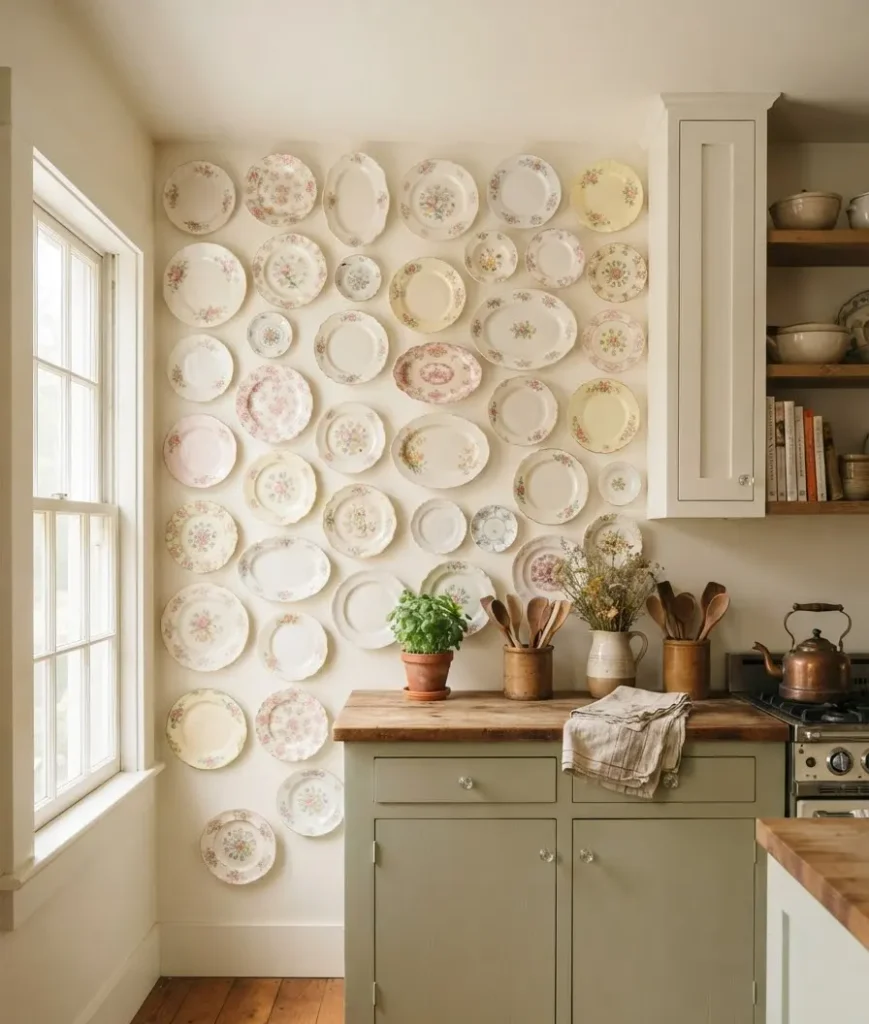
19. Use open jars for pantry staples. Flour, sugar, and pasta in glass jars on the counter look intentional, not messy, as long as you keep the labels simple.
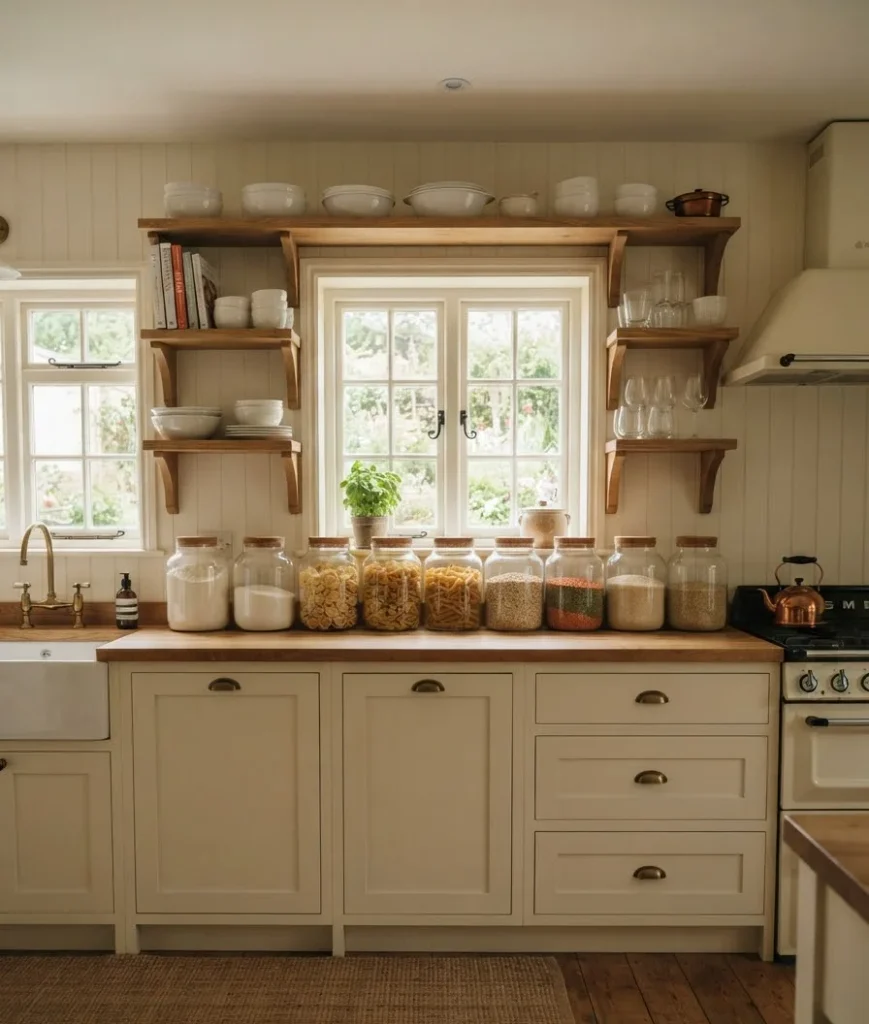
20. Bring in a vintage-style stove or a retro-look range. You don’t need the real 1950s appliance (repair costs are brutal, trust me).
A modern range with a retro shape gets you 90% of the look with none of the headaches.
I looked at an actual 1954 stove at an estate sale once, fell in love, and then found out replacement parts basically don’t exist anymore. Walked away, no regrets.
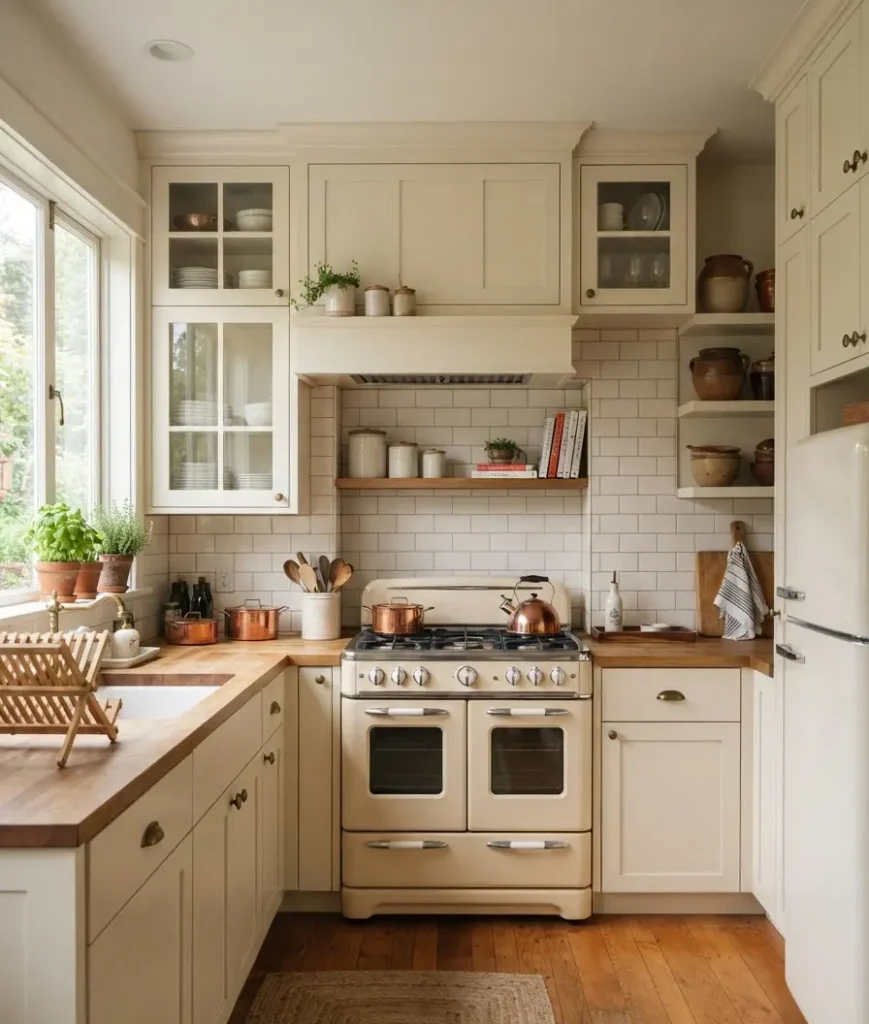
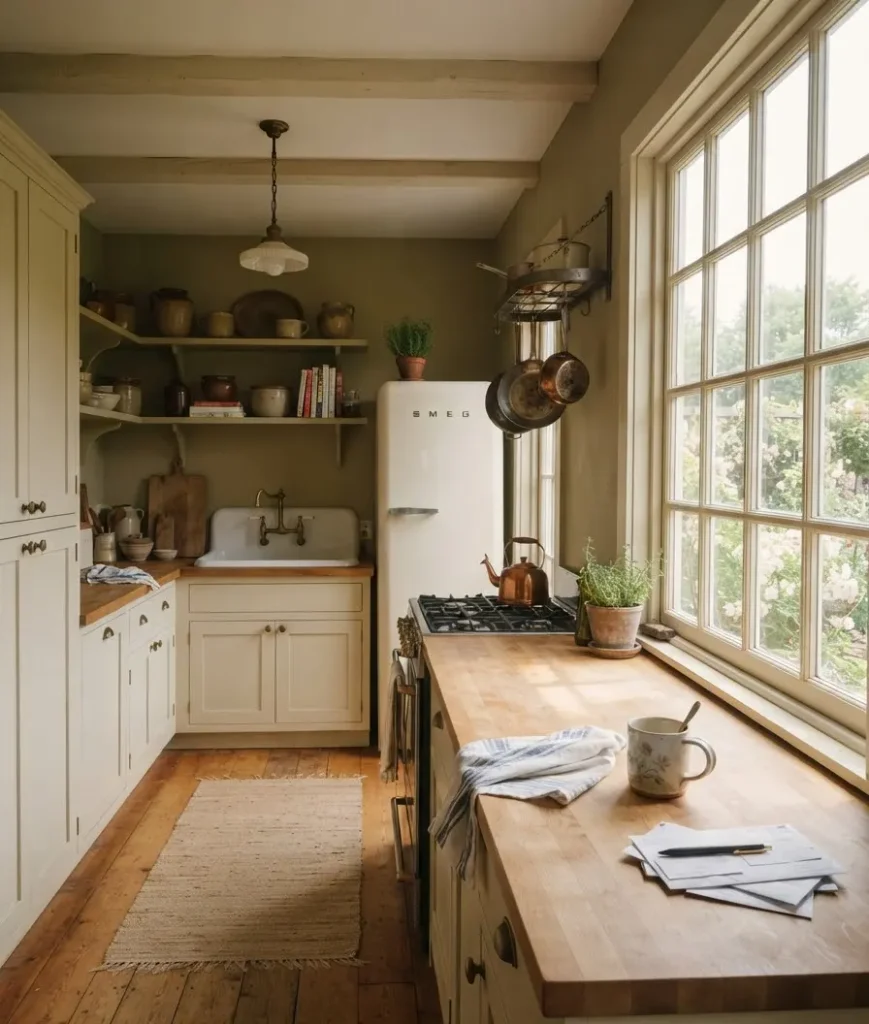
Brands like Smeg and Big Chill lean hard into this retro look while running on modern parts, which means you get the curved edges and chrome trim without praying every winter that the pilot light still works.
Add texture through fabric and greenery
A kitchen with hard surfaces everywhere feels sterile. Soft elements soften the whole room.
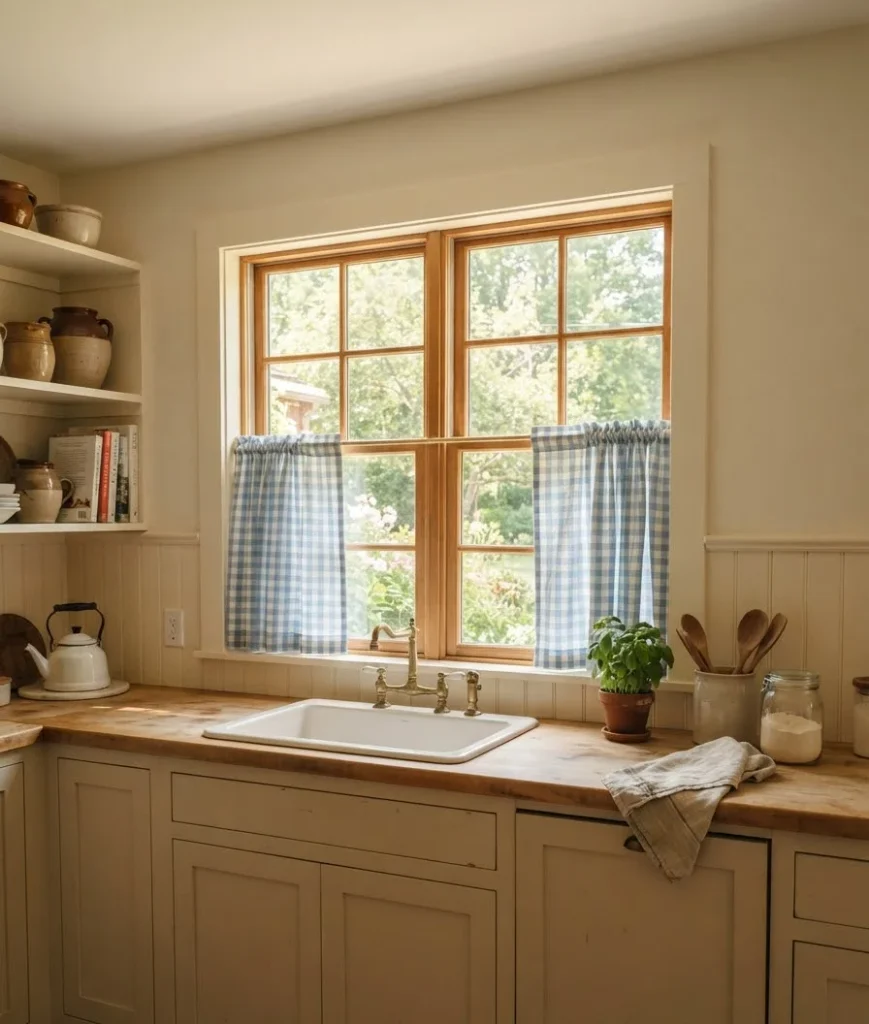
21. Hang simple curtains instead of blinds on the kitchen window. A gingham or floral cafe curtain does more for the cottage feel than any paint color.
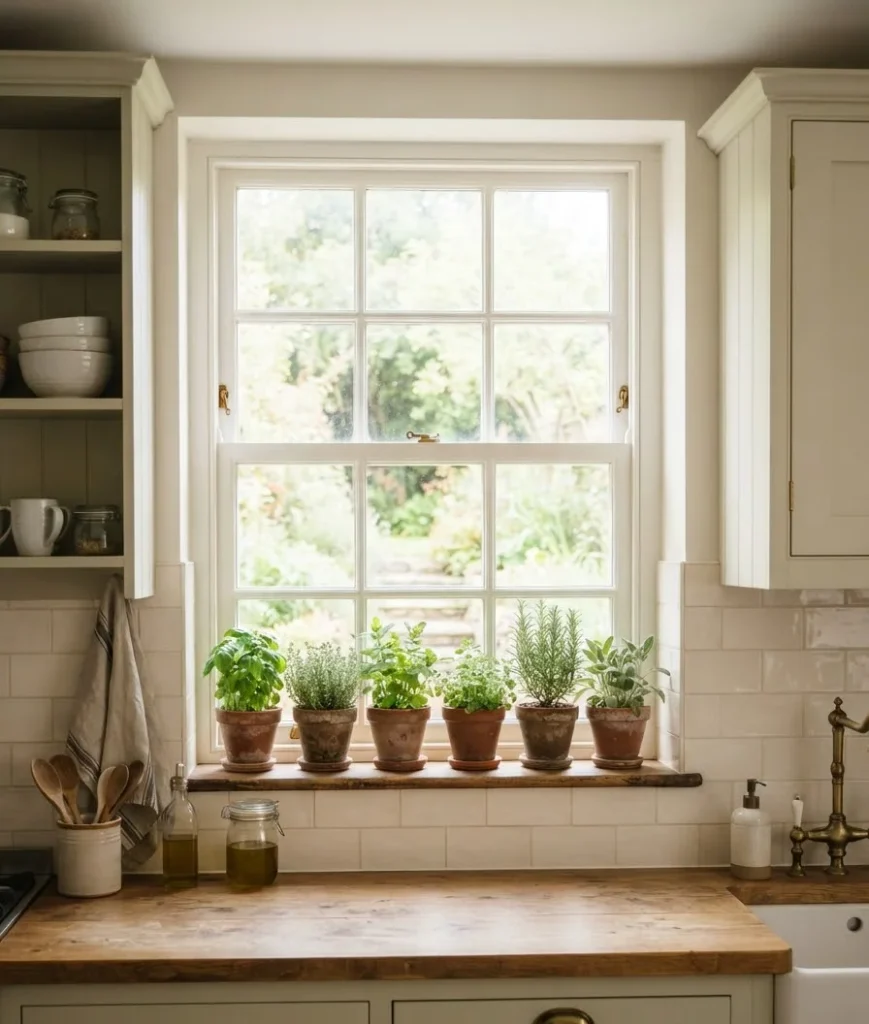
22. Keep fresh herbs on the windowsill. Basil, thyme, and mint in small terracotta pots look good and smell better, and you’ll actually use them.
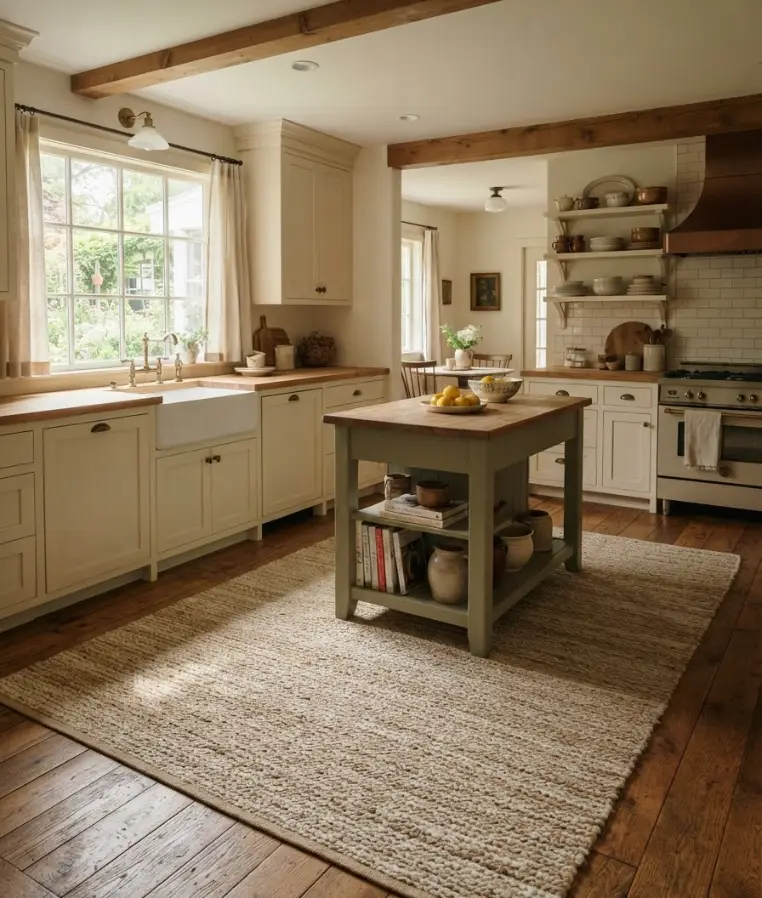
23. Layer a woven rug over the wood or tile floor. It softens the sound of the room too, which matters more than people expect once the kitchen’s full of guests.
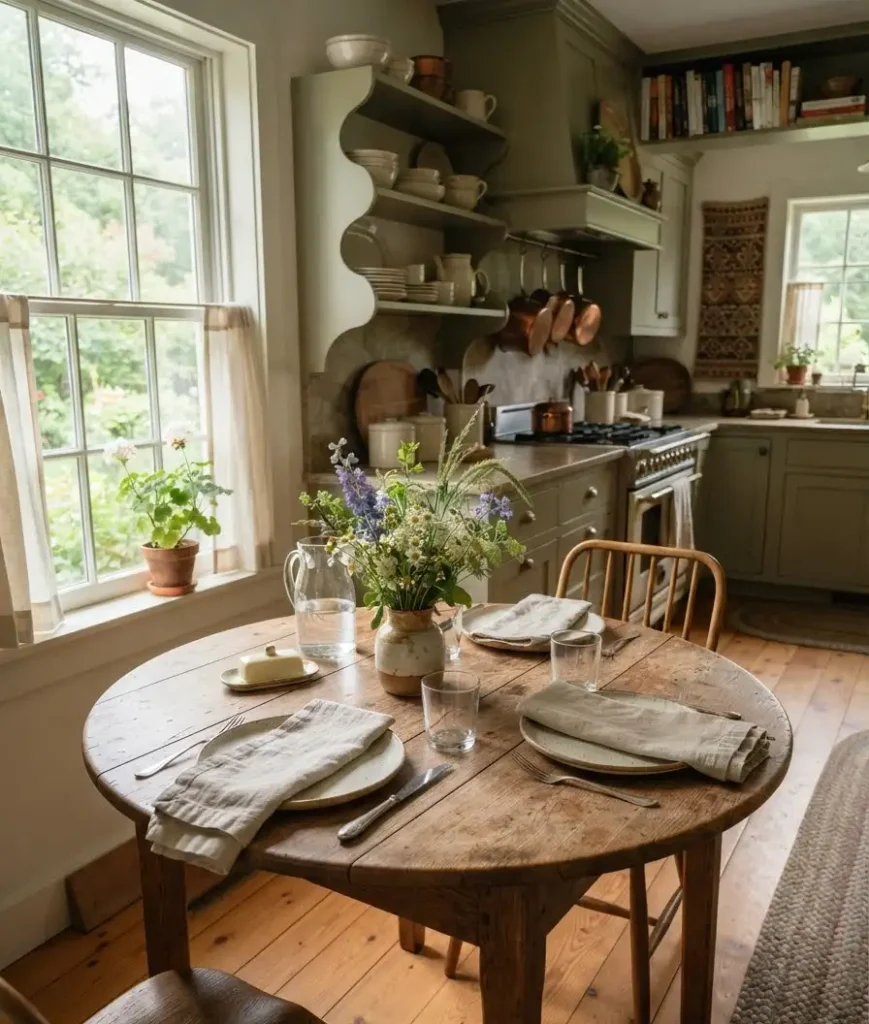
24. Use cloth napkins instead of paper. It’s a small thing. It’s also exactly the kind of small thing that makes a space feel lived-in rather than staged for a listing photo.
25. Add a hanging rack for pots and pans. Function and decoration in one move. Copper pots especially earn their keep here, since they age into a warmer color over time. Mine started out bright and shiny from a thrift store find, and two years of actual cooking use gave them a patina I couldn’t have faked with a single coat of anything.
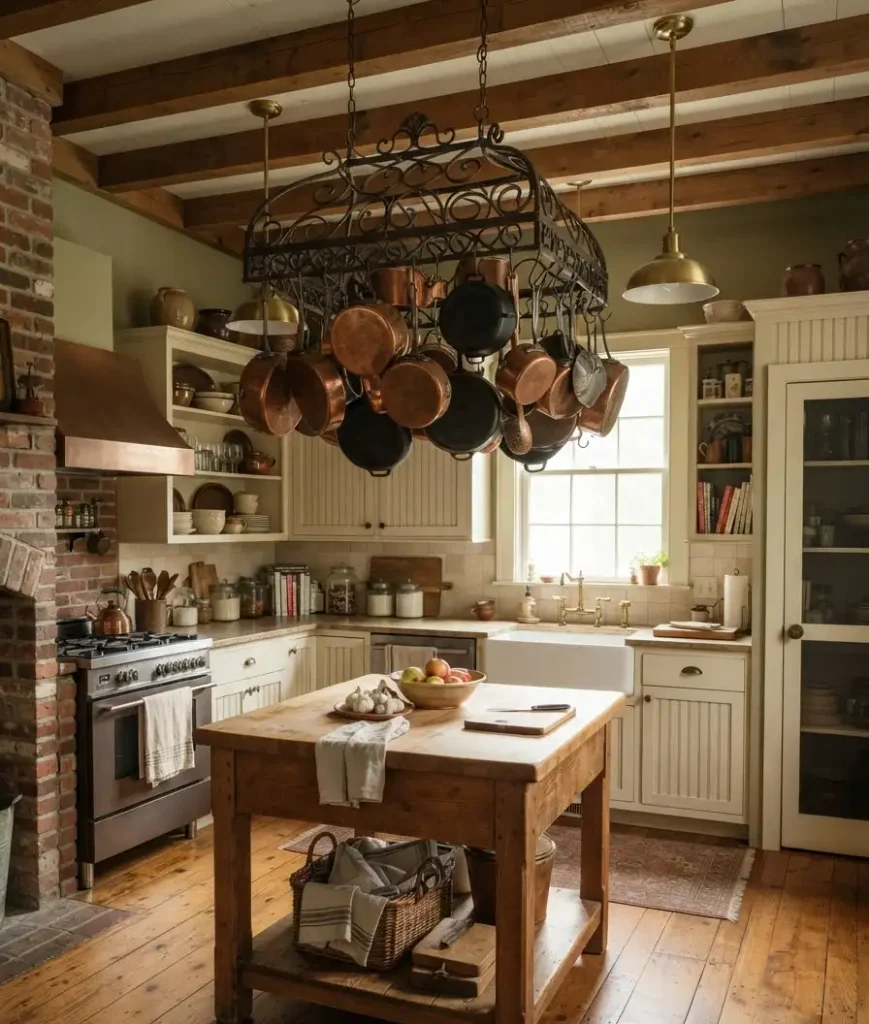
A word of caution though: a rack only looks good if what’s hanging on it is worth looking at.
Beat-up nonstick pans with peeling coating will drag the whole look down fast. Save the rack for the pieces you’d actually be proud to show off.
Don’t ignore how the room actually functions
A cottage kitchen can look perfect in photos and still be miserable to cook in if the layout fights you. Vintage charm and a working kitchen aren’t opposites, but they do take some balancing.
Old kitchens were often built for one cook, minimal counter space, and appliances a third the size of what we use now.
That’s fine to keep aesthetically, but a few practical fixes go a long way without ruining the look.
Widen the walkway near the stove if you can spare even a few inches. Add a second light source (task lighting under the upper cabinets works well) so the room isn’t relying on one central fixture.
And if your outlets are in awkward spots, get an electrician to add one or two rather than running an extension cord across the floor forever.
None of that shows up in a Pinterest pin, but you’ll notice it every single day you cook.
Finish with personal touches nobody can buy off a shelf
Here’s the part that actually matters most, and it’s the part most people skip because it can’t be ordered on a website.
26. Display family recipes, handwritten if you have them. A recipe card in your grandmother’s handwriting on the fridge does more for “cozy” than any decor item I’ve ever bought.
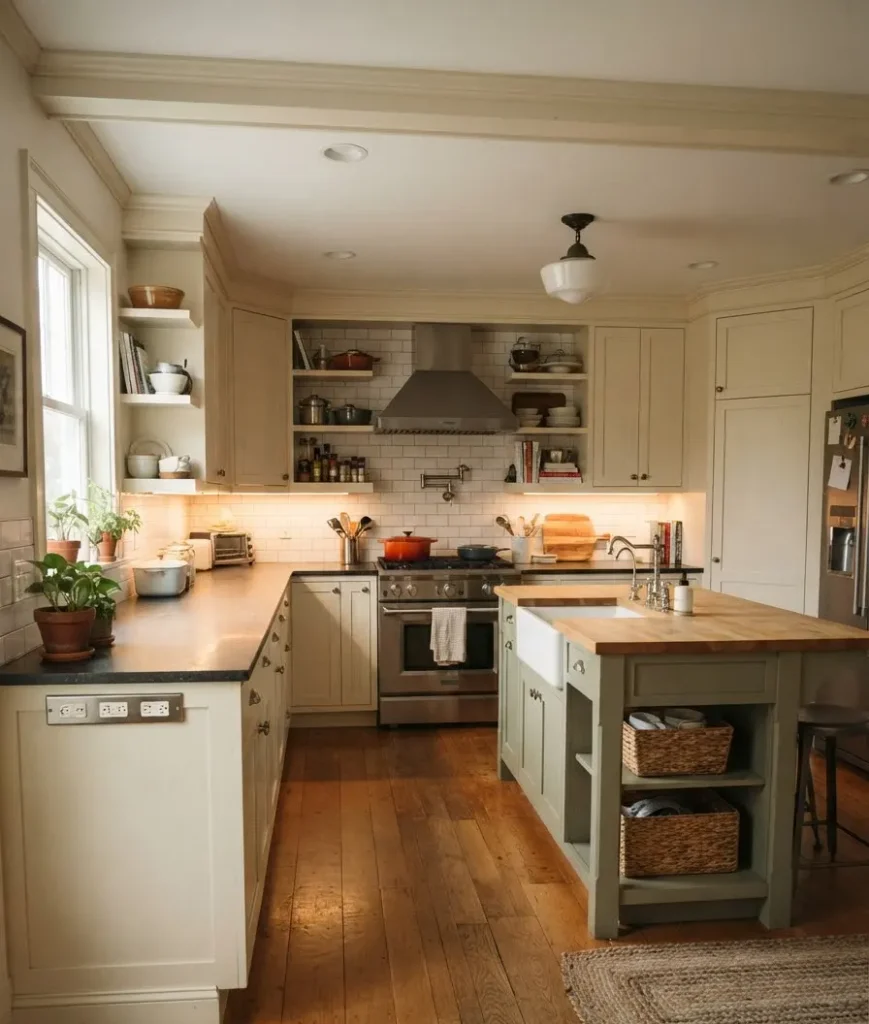
27. Keep a few imperfect, handmade items in view. A slightly lopsided pottery bowl or a hand-knit dish towel adds warmth precisely because it isn’t perfect.
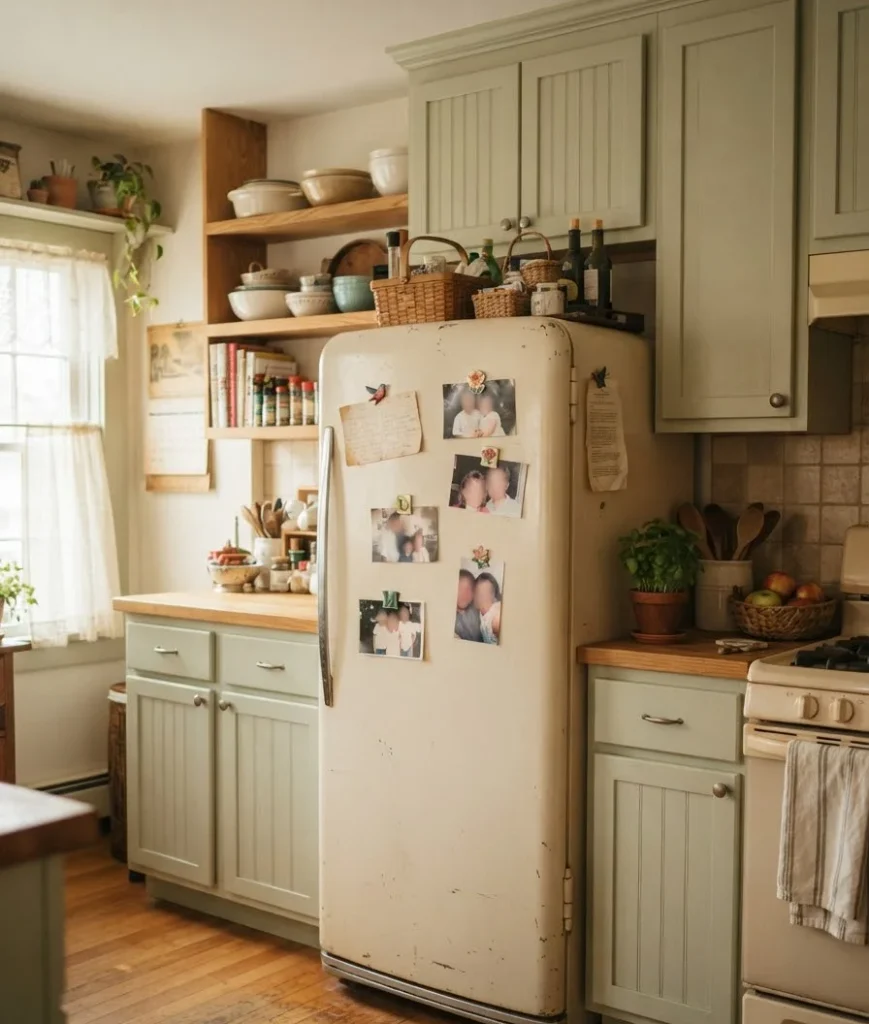
28. Use a vintage rug or runner with visible wear. New rugs styled to look “worn in” never quite land the same way. The real thing has a softness fabric can’t fake.
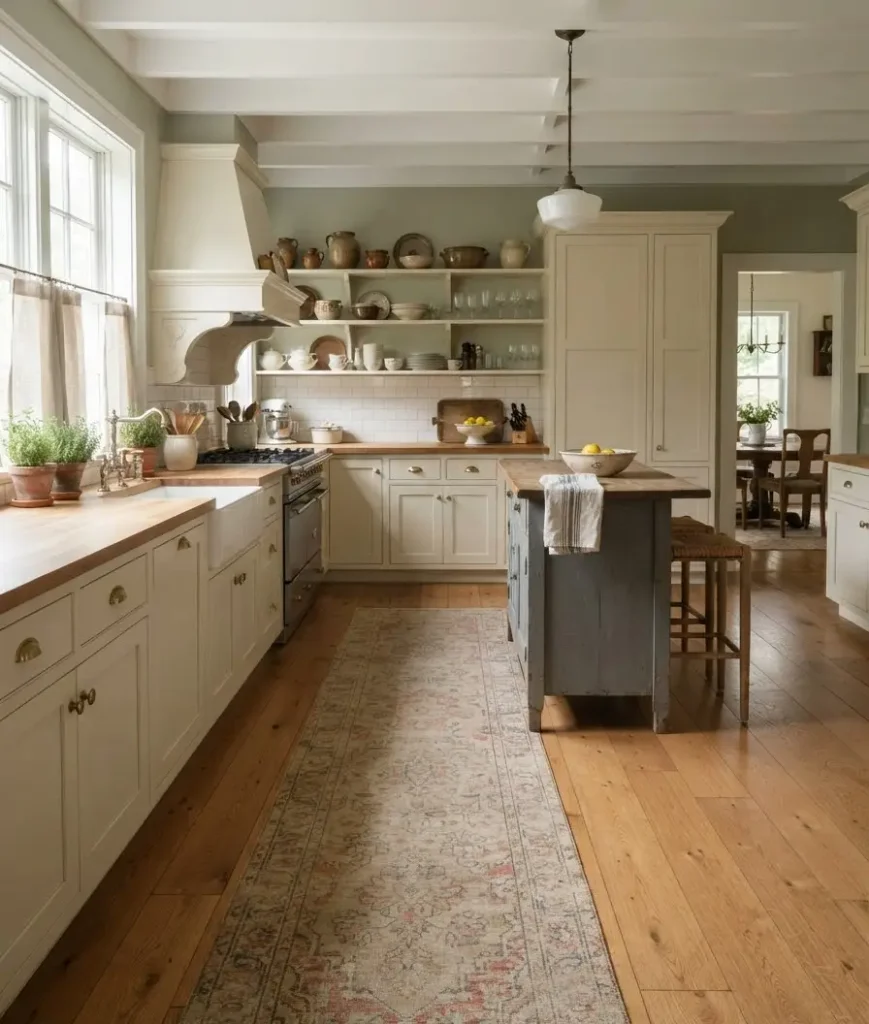
29. Add a small chalkboard or memo board for grocery lists. It’s practical, and it’s the kind of everyday clutter that makes a kitchen look used rather than untouched.
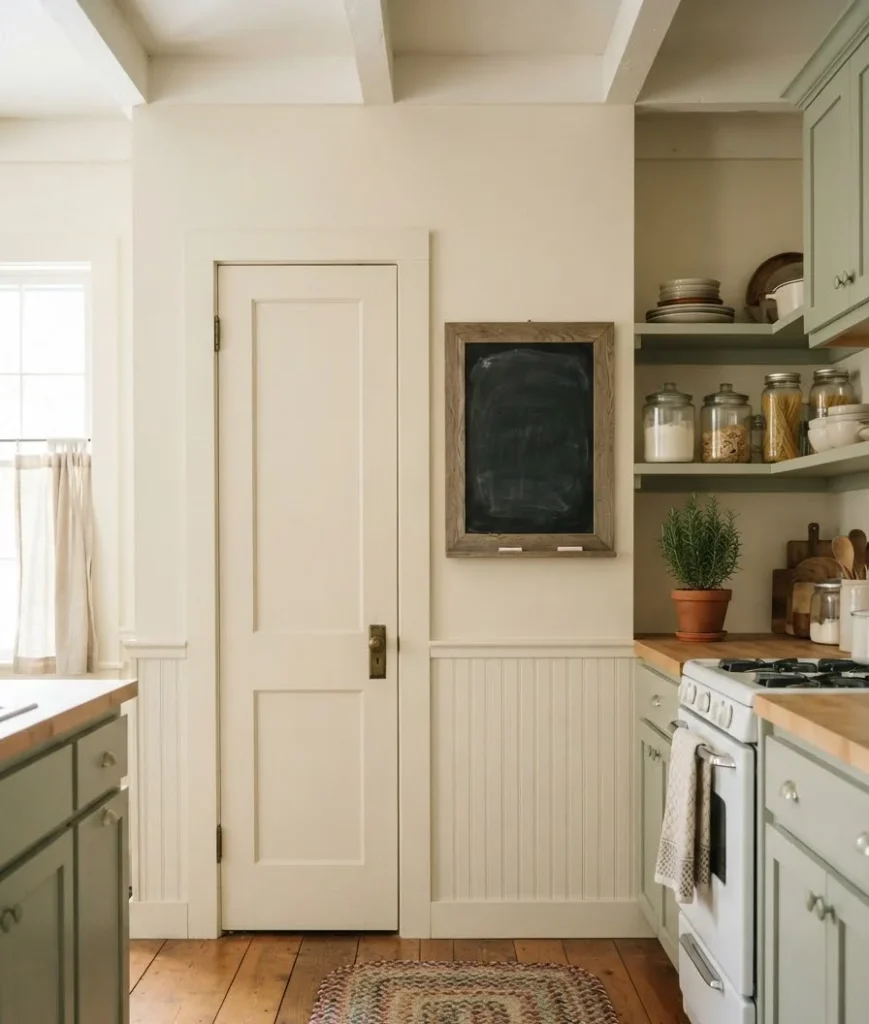
30. Leave a little room for mess. A single mismatched mug on the counter, a stack of mail, a dish towel that doesn’t quite match. Perfectly staged kitchens photograph well and feel like nobody’s home. Don’t chase that.
Random thought while I was writing this: I once spent an entire Saturday trying to find the “right” vintage doorknob for a pantry door, and by the time I found it, I’d forgotten why it mattered so much.
Sometimes the hunt for the perfect vintage piece becomes its own weird hobby. Anyway, back to the kitchen.
Quick reference: budget-friendly wins vs. bigger projects
| Idea | Effort | Rough cost |
|---|---|---|
| New cabinet hardware | Low | $30–$150 |
| Open shelving swap | Medium | $100–$400 |
| Butcher block countertop | Medium-high | $300–$900 |
| Retro-style range | High | $1,500+ |
If you’re just getting started, work down that table from top to bottom. You’ll see results fast, and momentum matters more than people admit when you’re renovating on weekends.
A note on getting the balance right
This is where a lot of vintage cottage kitchens fail, and I mean that gently: they go too far in one direction.
All-white with nothing warm feels clinical. All dark wood and clutter feels heavy and dated instead of charming.
The kitchens that work, the ones you’d actually want to cook in, mix old bones with a few modern conveniences (a real dishwasher, decent lighting, an outlet where you need it) and let the character come through in the details rather than the big-ticket items.
I’d also add: don’t try to nail every single one of these 30 ideas at once.
I’ve watched friends burn out halfway through a renovation because they tried to tackle the floors, the cabinets, the backsplash, and the lighting in the same month.
Pick a few, live with them for a bit, and let the next round of changes come from actually using the space.
A kitchen that evolves over a year or two almost always looks more genuine than one finished in a single sprint, and your wallet will thank you for spreading the cost out anyway.
One more thing worth saying: trends move fast, but vintage cottage style has stuck around for a reason.
It’s not chasing the newest countertop material or the trendiest cabinet color.
It’s borrowing from decades of kitchens that were built to be used hard, every day, by real families.
That’s probably why it keeps resurfacing on Pinterest boards year after year instead of fading out like so many other design fads.
For more visual inspiration, The Homestyle Cottage’s kitchen reveal is worth a look. It’s a real renovation, not a staged shoot, and you can see
How the vintage tile and open shelving work together in an actual working kitchen. If you want a broader range of styles to pin for later, Pinterest’s own kitchen inspiration boards are a rabbit hole in the best way.
FAQs
Do I need to gut my whole kitchen to get this look? No. Most of the ideas above (hardware, open shelving, paint, textiles) cost under a few hundred dollars combined. Save the full renovation for when the cabinets or plumbing actually need it.
What paint colors work best for a vintage cottage kitchen? Warm neutrals, soft pastels, and one saturated accent color (usually on an island or lower cabinets) tend to work best. Stark white alone often reads as modern farmhouse, not vintage cottage.
Where do I find real vintage pieces without spending a fortune? Estate sales, local thrift stores, and Facebook Marketplace beat most “vintage-style” retail options on both price and authenticity. Give yourself months, not days, to find the right pieces.
Final thought
A cottage kitchen isn’t about buying the right things. It’s about letting a room look like it’s been loved for a while, even if you moved in last spring. Pick five ideas from this list, start there, and let the rest fill in over time.
Which one are you trying first? Save this list, pin your favorites, and tell me in the comments what your kitchen’s missing right now.