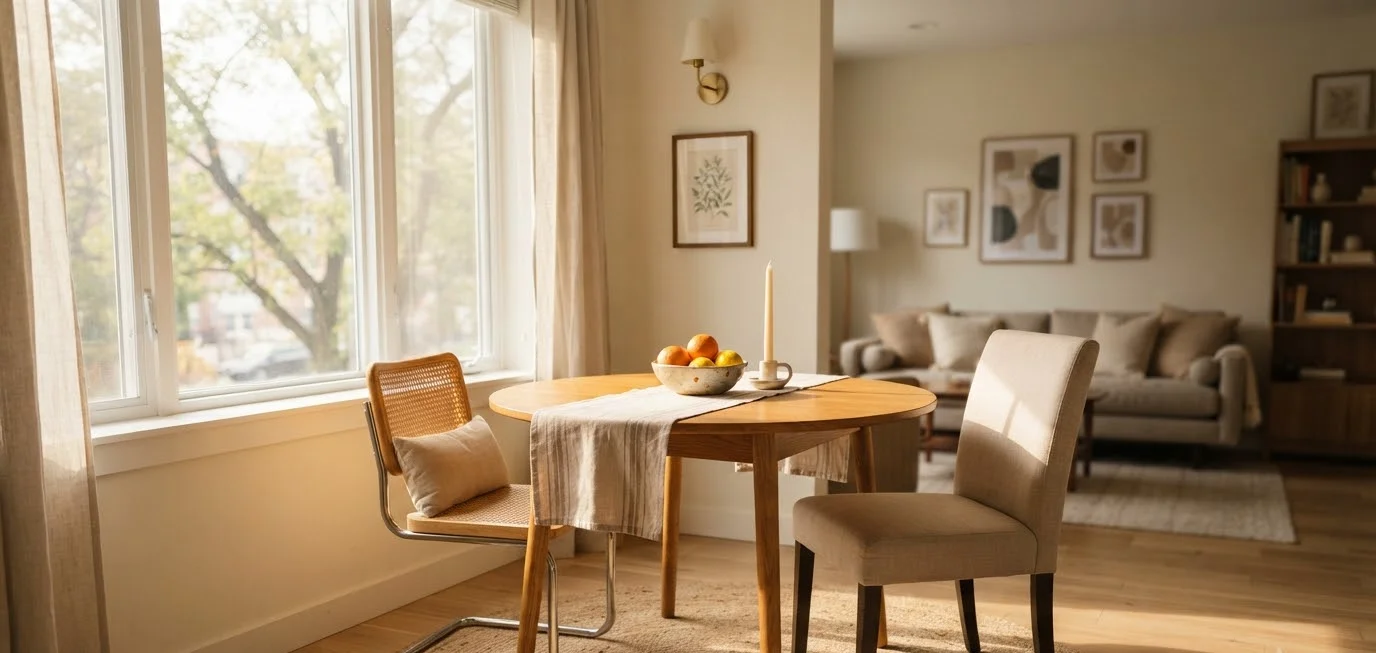
You don’t need a formal dining room to eat like you have one. I learned that the hard way, in a 620-square-foot one-bedroom where my “dining room” was technically a hallway with ambition.
If you’re staring at a corner, a nook, or a sliver of floor next to your kitchen and wondering how anyone turns that into a space people actually want to sit in, I’ve got you.
This is the stuff I wish someone had told me before I bought a table that was, in hindsight, way too big for the room (RIP, my shins).
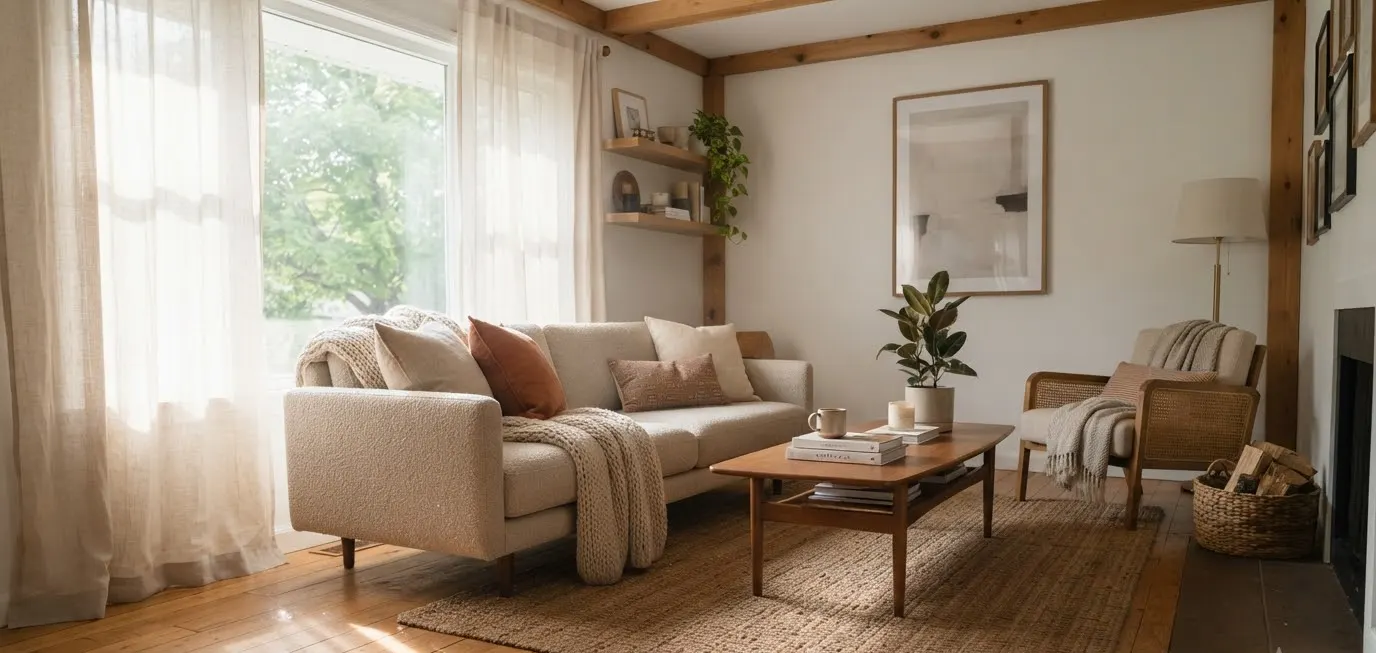
Why small dining rooms feel bigger than the tape measure says
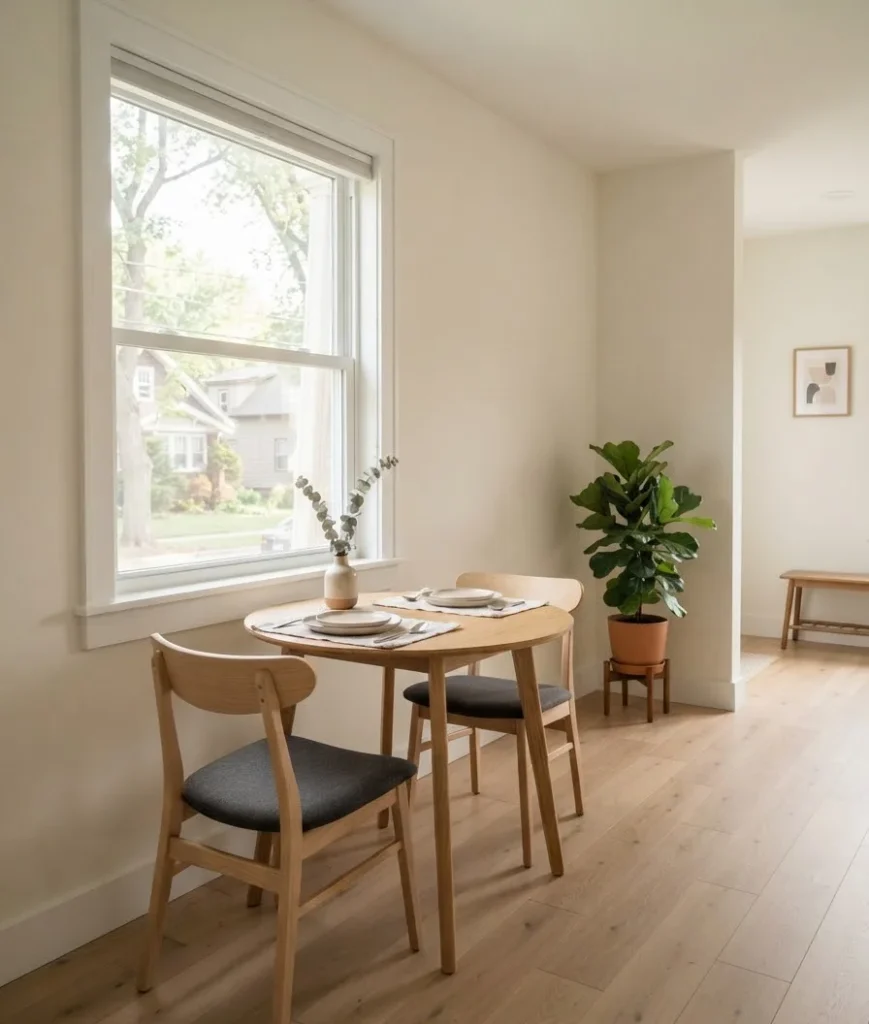
Here’s the thing about tiny eating areas: size is only half the story. Scale, light, and clutter control matter more than square footage.
A 6-foot table crammed against three walls will always feel like a hostage situation. A 4-foot round table with breathing room on every side? That reads as intentional, even generous.
I know it sounds a little woo-woo, but the room’s mood comes from how you use the edges, not the middle. Keep the perimeter clear.
Let the walls do some of the visual work instead of piling everything onto the table itself.
Start with the right table, because this decision makes or breaks everything
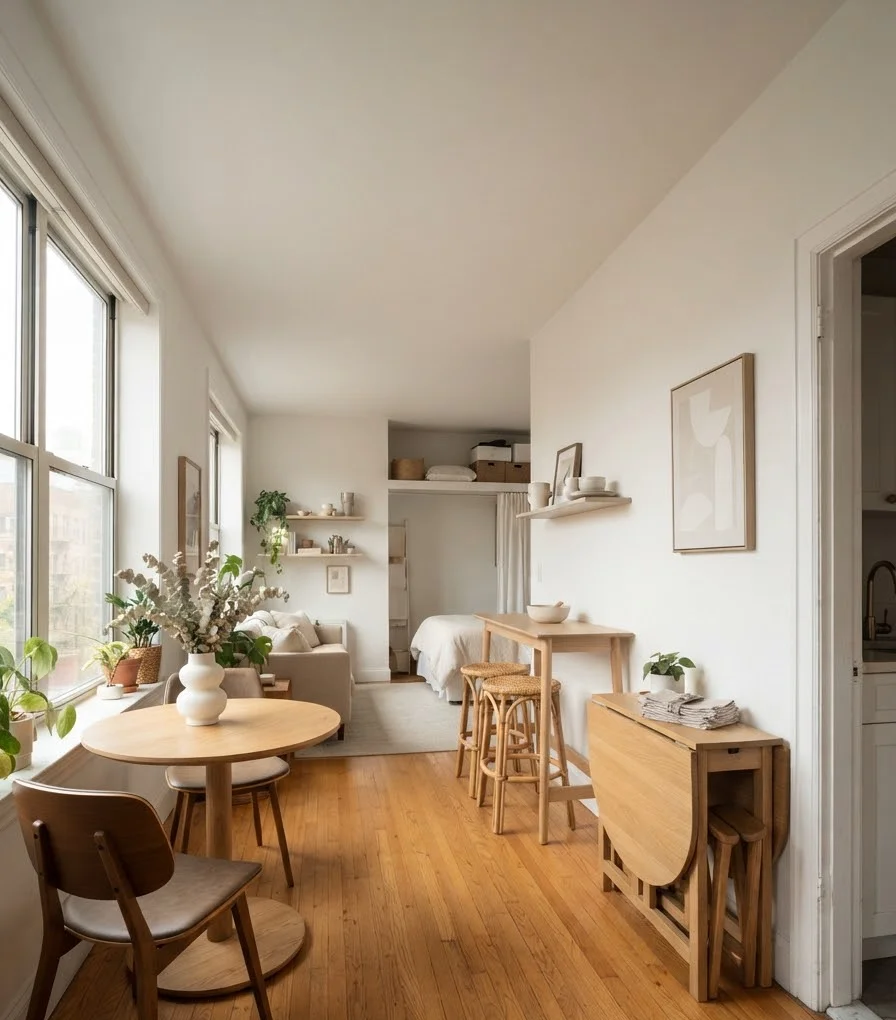
Table shopping for a small space is a different game than furnishing a house with a real dining room. You’re optimizing for flow, not for hosting Thanksgiving for fourteen people.
Round vs. rectangular vs. drop-leaf
I’ve lived with all three, and honestly, my opinion has changed over the years:
- Round tables are the best pick for tight corners. No sharp edges to bruise your hip on, and they make circulation around the table easier.
- Rectangular tables work if your space is a narrow galley shape, but only if you leave at least 36 inches of clearance on the walking side.
- Drop-leaf or extendable tables are the unsung heroes of apartment living. Fold it down for a Tuesday dinner, extend it when friends come over. Mine currently lives at 28 inches wide most days and I don’t think about it once.
IMO, the drop-leaf table is the single best upgrade for anyone dealing with under 100 square feet of eating space. It’s not glamorous. It just works.
Measure before you fall in love
Bring painter’s tape and outline the table footprint on your actual floor before buying anything.
It feels excessive. It has saved me from at least two expensive mistakes.
Seating that doesn’t eat your square footage
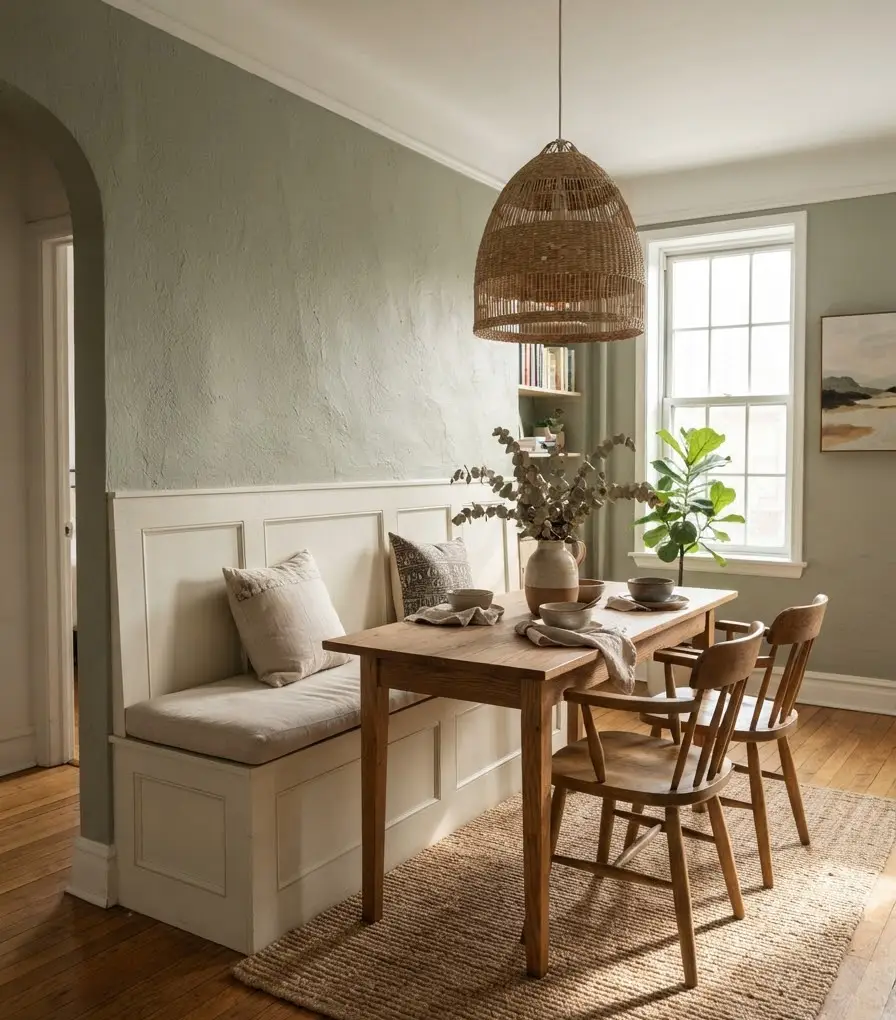
Chairs are where a lot of small dining areas go wrong. Four matching upholstered chairs look great in a catalog and terrible in a room where you need to squeeze past them daily.
A few seating swaps that actually free up space:
- Swap two chairs for a bench against the wall. Benches tuck flush and seat more people per linear foot than individual chairs.
- Go with armless chairs. Arms add width you don’t have to spare.
- Mix in a stool or two that can be pulled from elsewhere in the apartment when guests show up.
- Skip the bulky captain’s chairs at the ends unless you genuinely need the extra support.
Personally, I regret buying a set of four matching chairs with arms for my first apartment.
They looked sharp in the store and made my 8-by-9 room feel like a furniture showroom. Lesson learned: buy for the room you have, not the one in your head.
Mismatched chairs get a bad reputation they don’t deserve, by the way.
Two wood chairs from a thrift store paired with two upholstered ones from a big box store can look completely intentional if the finishes share a common thread, like a similar wood tone or a repeated color in the seat cushions.
It also solves a real problem: buying four of the exact same chair in a small apartment usually means hauling them up a narrow staircase one trip at a time, and nobody wants that.
Lighting rules that make small spaces feel intentional
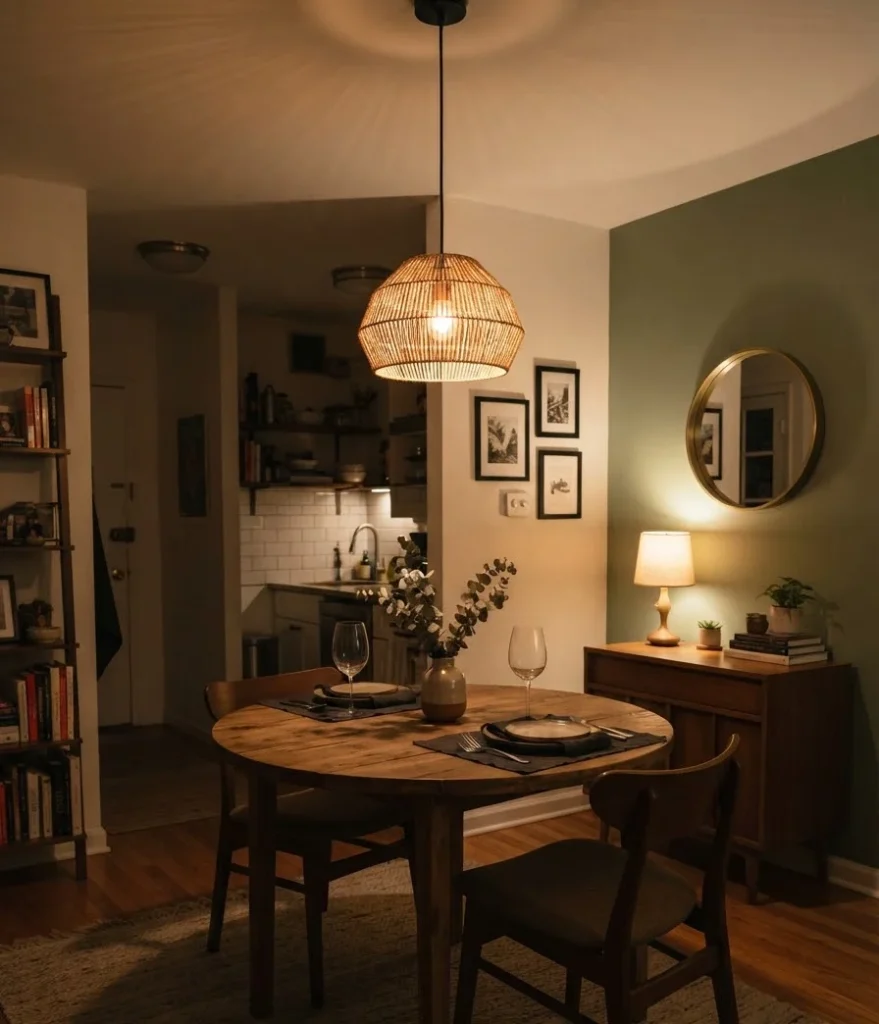
A dining area with bad lighting always reads as an afterthought, no matter how nice the table is. Get the light right and even a corner nook starts to feel like a real destination.
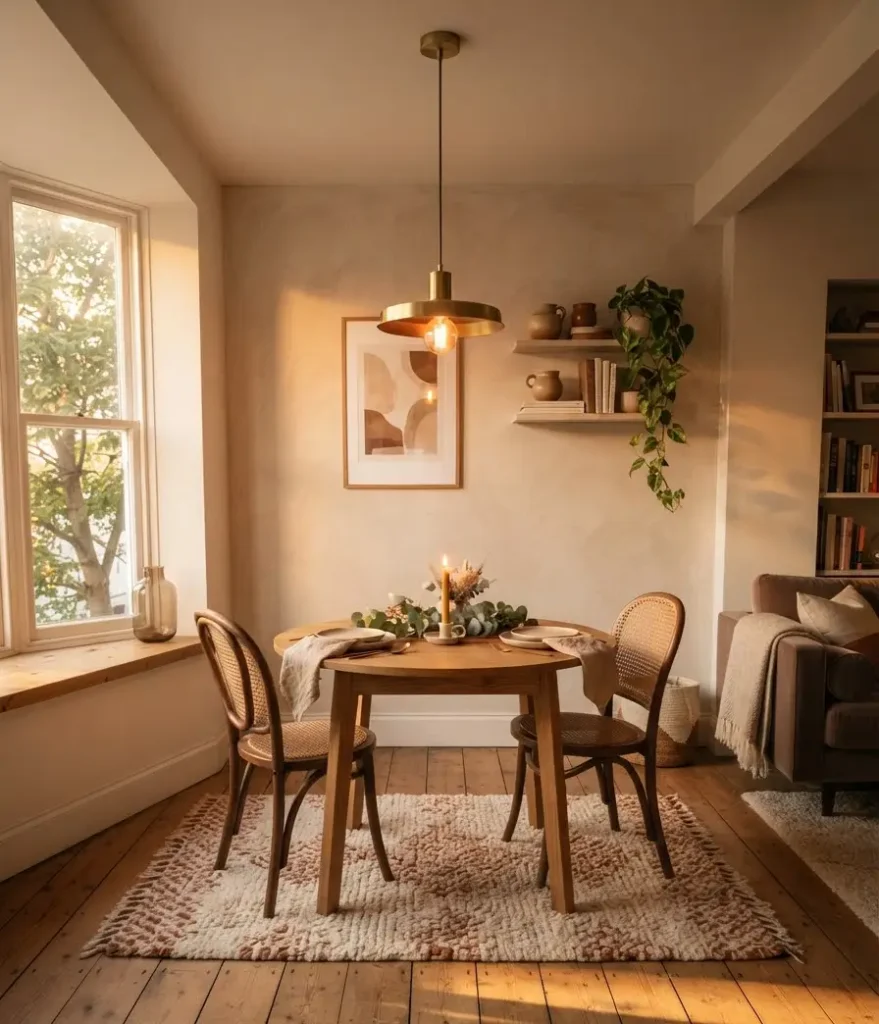
Pendant lights and small chandeliers do double duty here: they define the eating zone without taking up any floor space, which is exactly what you want in a tight room.
The general rule pros use is hanging the fixture roughly 30 inches above the tabletop, and choosing a fixture shape that echoes your table (round light over a round table, and so on), a principle laid out well in this HGTV dining room lighting guide.
A few things I’d add from experience:
- Go dimmable if your outlet setup allows it. Full brightness for weeknight dinners, low and moody for anything resembling a date.
- Avoid overhead-only lighting. A small table lamp on a sideboard adds warmth that a single ceiling fixture just can’t fake.
- If you’re renting and can’t touch the wiring, a plug-in pendant kit solves this in about twenty minutes. FYI, most of them clip right onto an existing outlet with zero electrician involved.
- Candles are underrated. A cluster of three different heights on the table adds ambient light without needing to touch a switch at all, and it makes even a frozen-pizza dinner feel a little more like an occasion.
I switched my main dining bulb to warm white about a year ago and the difference genuinely surprised me.
This is insane to admit, but I didn’t realize how much a cold, blue-tinted bulb had been draining the warmth out of that entire corner of my apartment until I swapped it out on a random Tuesday.
Rugs and layering tricks for a cozier footprint
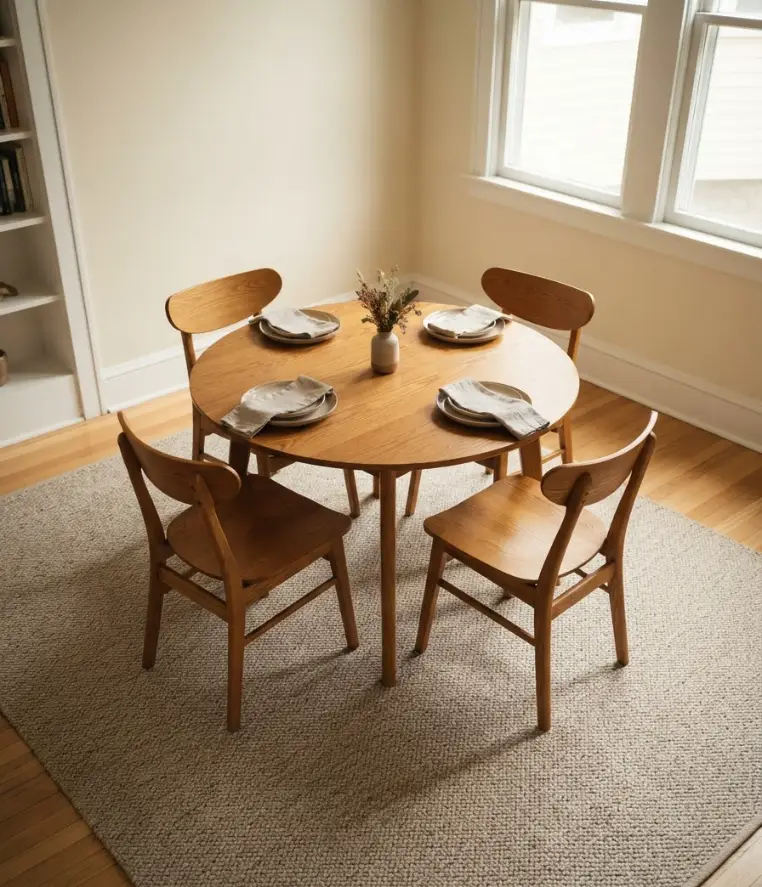
An area rug under a small dining table sounds counterintuitive (won’t it make the room feel more cramped?) but it actually does the opposite when sized correctly.
The rug needs to be big enough that all four chair legs stay on it, even when pulled out.
Skimp on size here and the whole layout feels segmented instead of grounded, a mistake designers call out constantly in pieces like this rundown of common dining room layout mistakes.
Here’s a rough sizing cheat sheet I keep coming back to:
| Table shape and size | Suggested rug size | Minimum overhang |
|---|---|---|
| Round table, 36–42 in | 6 ft round | 18 in on all sides |
| Rectangular, 4-seat (48 in) | 6 x 9 ft | 24 in per side |
| Rectangular, 6-seat (60–72 in) | 8 x 10 ft | 24–30 in per side |
| Drop-leaf, folded (28–30 in) | 5 x 7 ft | 15–18 in on all sides |
A flatweave or low-pile rug is the smart choice for a dining zone anyway. Crumbs and spills are inevitable, and shag pile plus red wine is a combination nobody needs.
Walls, mirrors, and vertical storage
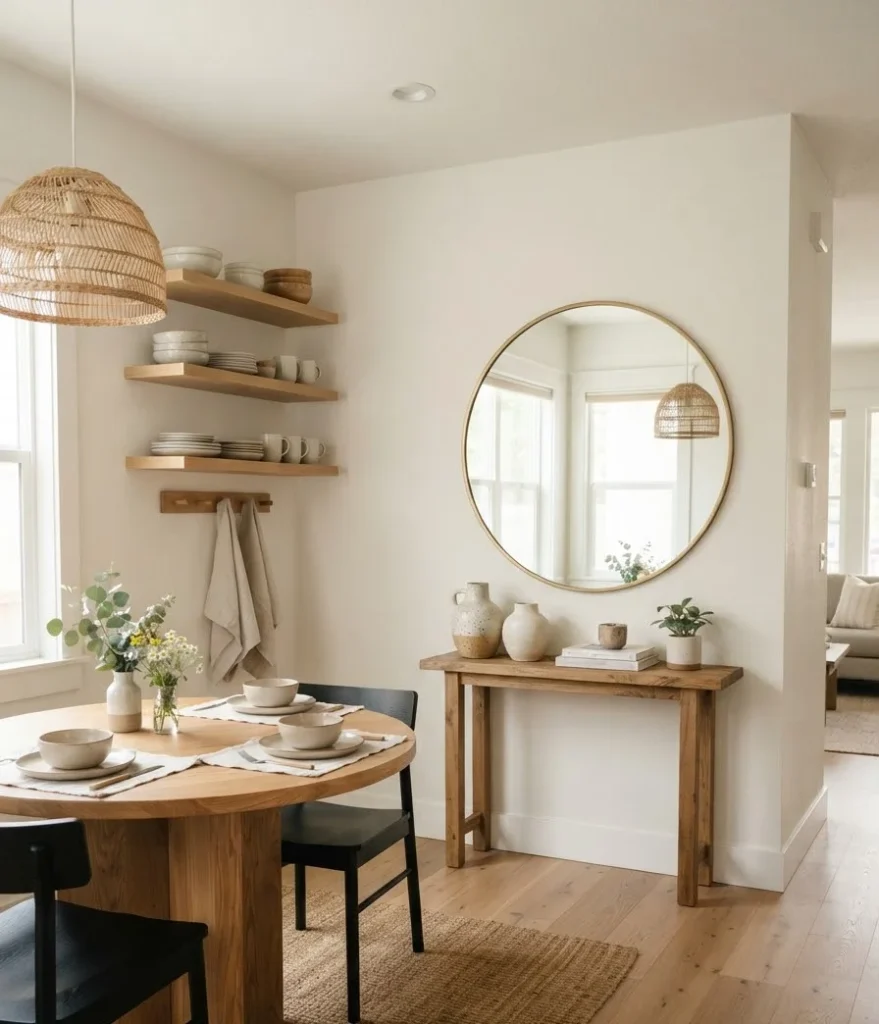
When floor space is nonexistent, the walls become your best real estate. This is the part people skip, and it’s honestly the highest-impact one.
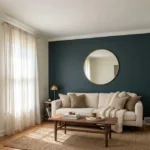
A mirror behind or beside the table bounces natural light around and makes the whole area feel less boxed in. It’s not a trick, it’s just physics, and it works every single time I’ve tried it.
Open shelving above a console or narrow buffet gives you storage for dishes and glassware without eating into your walking path.
Floating shelves in particular free up the floor completely, which matters a lot when your dining area doubles as a hallway (mine does, no shame).
Quick wall wins worth trying:
- Hang art at eye level from a seated position, not standing. It changes how the whole wall reads once people sit down.
- Use a narrow bar cart or console instead of a full sideboard if depth is tight.
- A wall-mounted plate rack adds personality and keeps dishes off the countertop.
Okay, random tangent: I once spent an entire Saturday rearranging thrifted plates on a wall rack instead of doing literally any of the errands I’d planned.
Zero regrets. Sometimes the apartment project wins.
Color and texture that make the space feel warm, not sterile
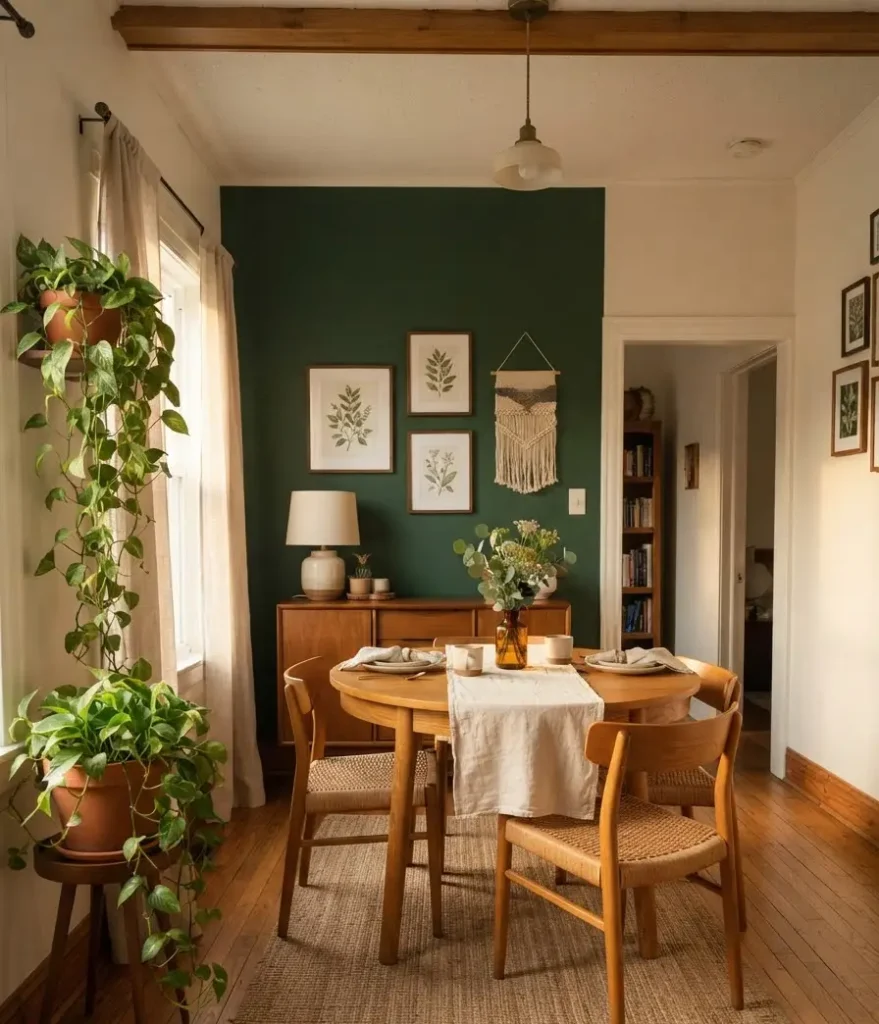
White walls and a blonde wood table are fine, but they’re not exactly cozy. Cozy comes from layering texture and warmth, not from adding more stuff.
A few low-effort, high-impact moves:
- Add a table runner in linen or a nubby woven fabric instead of a flat tablecloth.
- Mix wood tones slightly. A perfectly matched wood set actually looks more like a showroom than a home.
- Use warm-toned bulbs (2700K, if you want the exact number) instead of the cold white ones that make everything look like a dentist’s office.
- Bring in one plant, even a fake one if your thumb is more black than green. It softens hard edges instantly.
This is where personal taste really gets to show. IMO the biggest mistake in small dining decor isn’t clutter, it’s playing it too safe with color.
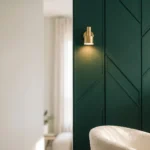
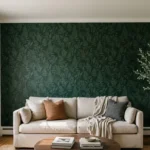
A deep green wall or a bold runner in a tiny nook reads as confident, not overwhelming, as long as the rest of the space stays simple.
Renter-friendly tricks for spaces you can’t drill into
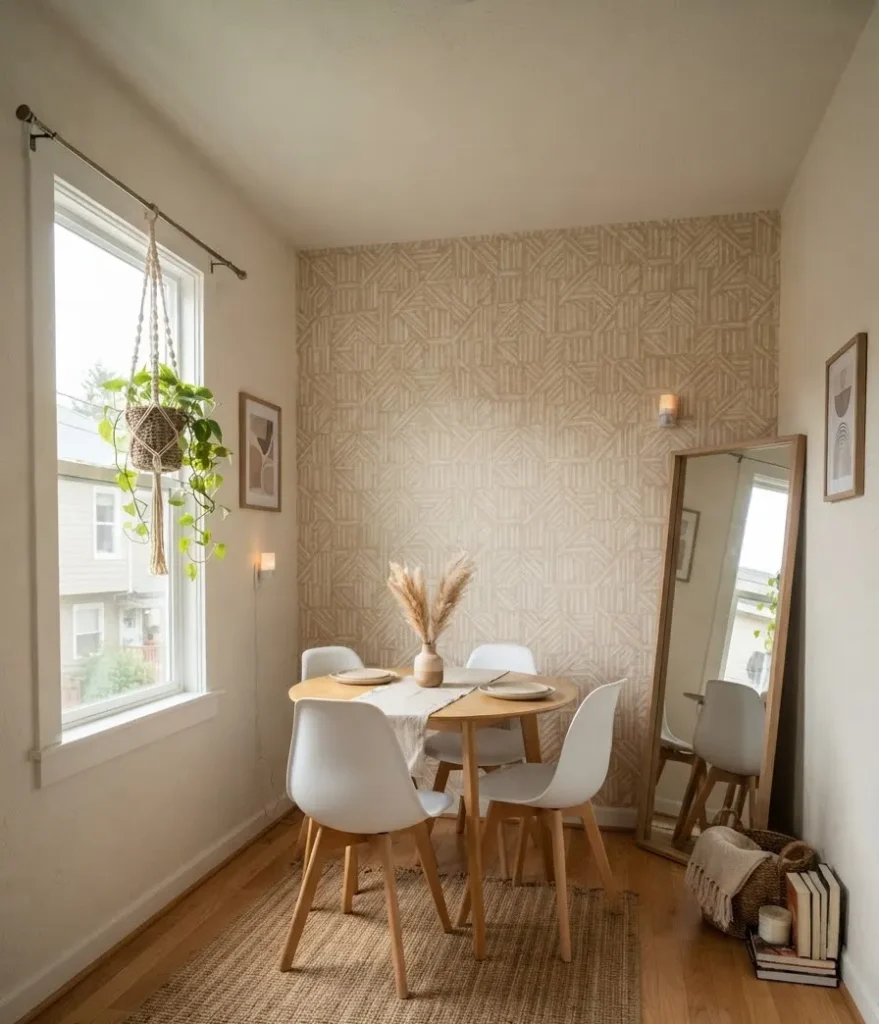
A good chunk of the people reading this are renting, and I get it. Landlords are not fans of spontaneous wall projects, and neither is your security deposit.
The good news: almost everything above still works without a single hole in the wall.
- Command strips and adhesive hooks hold lightweight art, plate racks, and even small floating shelves rated for a few pounds. Check the weight limit before you commit.
- Tension rods can mount a curtain or a lightweight hanging plant in a corner without touching the drywall at all.
- Peel-and-stick wallpaper on just the wall behind the table is a low-commitment way to add a focal point. I did this in a rental two years ago and got my full deposit back when I moved out, so it’s genuinely removable if you follow the instructions.
- Freestanding mirrors leaned against the wall do the same light-bouncing trick as a mounted one, and they move with you.
None of these require a landlord’s permission, and all of them punch way above their price point when it comes to making a rental feel like an actual home instead of a waiting room.
Styling the table itself, because an empty tabletop looks unfinished
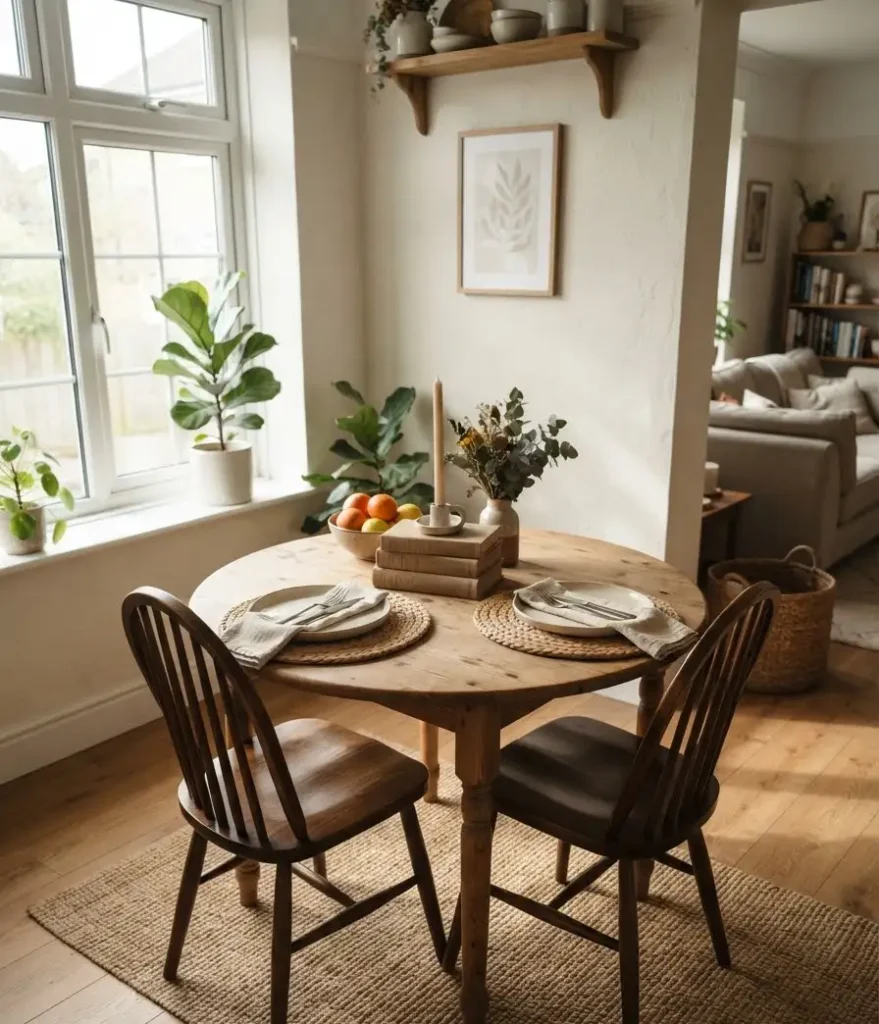
Once the big furniture decisions are locked in, the tabletop is where the personality really lives.
This is also the part that photographs best, so if you’re the type who likes a nice moody flat-lay for your feed, pay attention here.
A centerpiece doesn’t need to be complicated. A single ceramic bowl, a short stack of cookbooks with a candle on top, or a small vase of whatever’s in season all work.
The goal is height variation, not a florist-level arrangement.
Tabletop layering that photographs well and lives well:
- Stack two textures (a woven placemat under a matte ceramic plate, for example) rather than one flat surface.
- Keep the centerpiece low enough that people can see each other across the table. Anything taller than 10 to 12 inches tends to block sightlines on a small table.
- Rotate seasonal touches instead of buying new decor every few months. A bowl of citrus in winter, a small vase of wildflowers in summer, costs almost nothing and changes the whole feel.
- Use cloth napkins even for everyday meals. It’s a small habit that makes even a Tuesday dinner feel a little more deliberate.
This is honestly the part of small-space decorating that gets overlooked the most.
People spend all their energy on the table and chairs and then just… plop a candle down and call it done.
Give the surface the same thought you gave the furniture and the whole room reads as finished.
Layout mistakes worth avoiding entirely
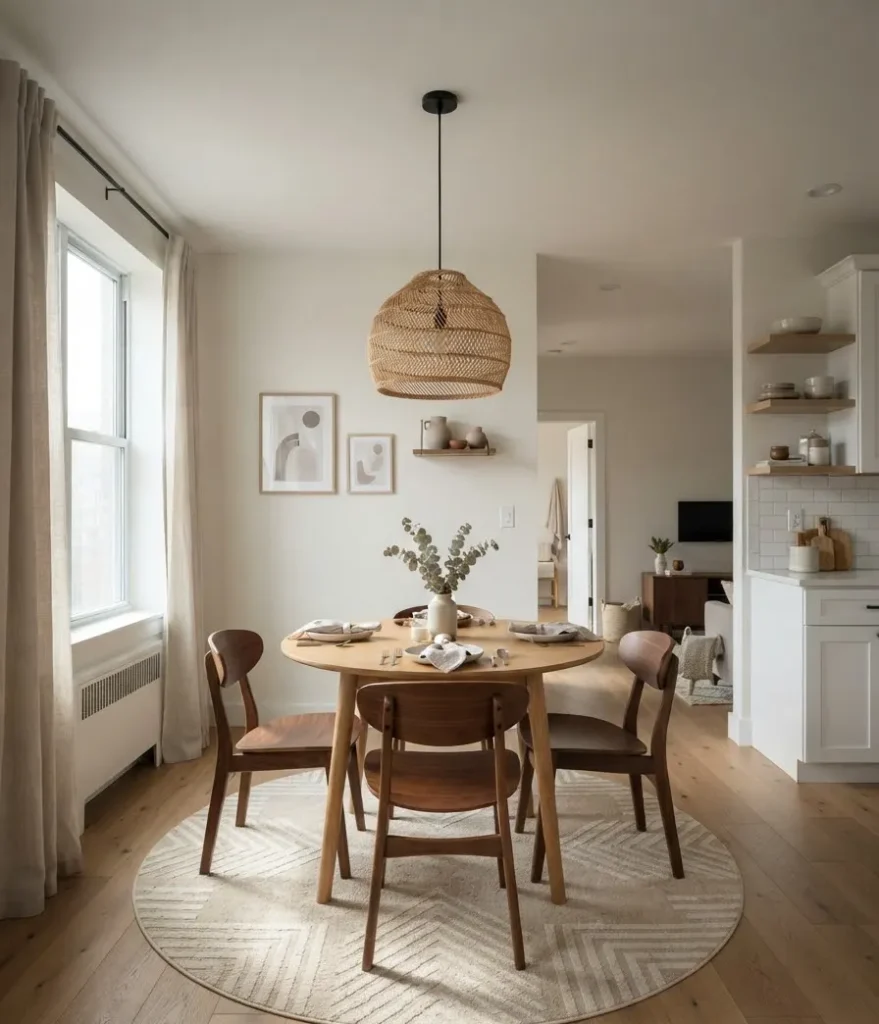
A few things I’ve watched go wrong (some in my own apartment, no judgment):
- Blocking the natural walking path. If you have to turn sideways to get to the kitchen, the table’s in the wrong spot.
- Undersized rugs, which we already covered, but it bears repeating because it’s the number one offender.
- Matching every single piece. A dining area furnished entirely from one collection loses personality fast.
- Ignoring the ceiling. A pendant that’s too small for the room disappears visually, and one that’s too big feels like it’s looming.
Small spaces also benefit hugely from a curated approach, something covered well across many of the small dining room design ideas that Apartment Therapy has collected from real apartment tours.
Seeing how other people solved the exact same square-footage problem is honestly one of the fastest ways to get unstuck creatively, which is also why Pinterest boards for this stuff are so addictive.
Wow, the amount of time I’ve lost scrolling “small space dining” pins is a little embarrassing.
Quick FAQ
Do I need a rug under a small dining table if the room already has carpet? Not usually. If wall-to-wall carpet is already down, skip the rug layer. It adds bulk without adding style in that case.
What’s the smallest table size that still comfortably seats four? A 42-inch round table or a 48-inch rectangular table can seat four if you go with armless chairs. Tight, but workable.
Should the dining light match my kitchen lighting? Not exactly, but they should feel like they belong to the same home. Matching metal finishes (brass, black, brushed nickel) is usually enough to tie the two areas together without making them identical.
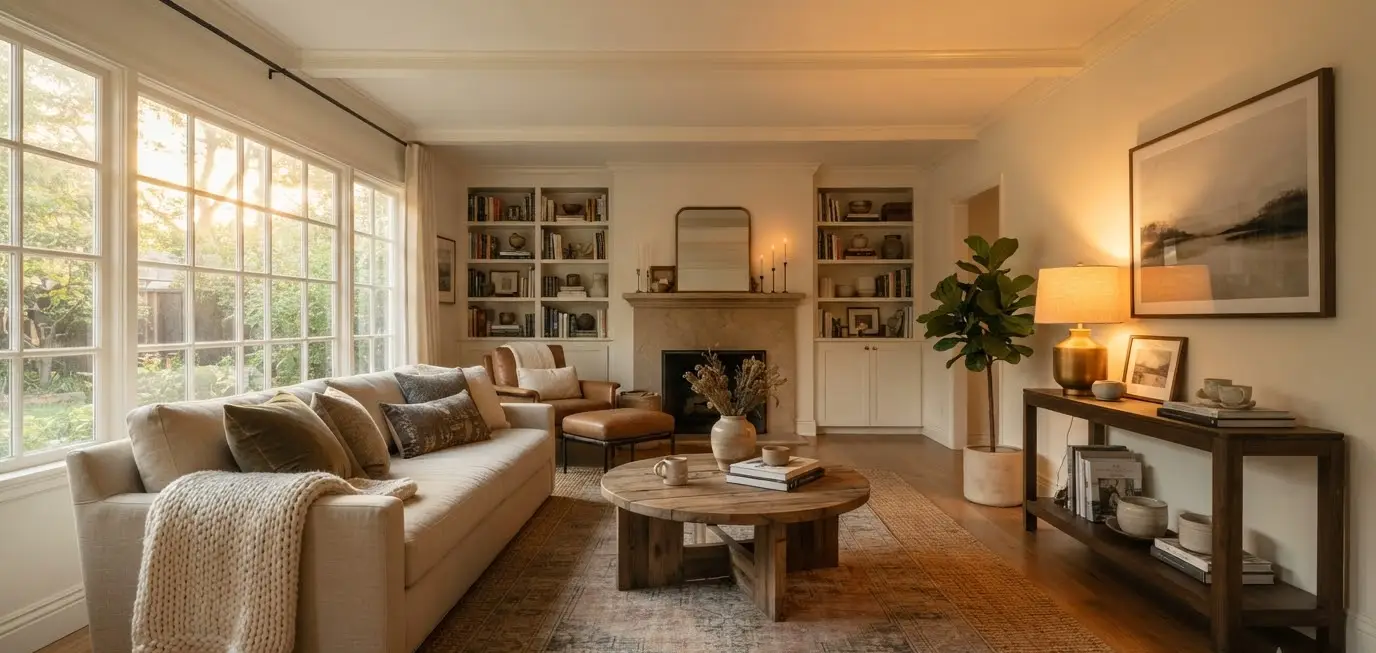
Can a small dining area work in an open-plan living room, or does it need its own defined space? It can absolutely work, and honestly most apartment dining areas exist this way. Use a rug, a pendant light, or even a slightly different wall color to signal where the living room ends and the dining zone begins. You don’t need walls to define a space, just consistent visual cues.
Final thought
A small dining area doesn’t need more stuff to feel finished. It needs the right stuff, sized correctly, lit well, and given a little breathing room. Start with the table, get the rug size right, and let the walls carry some of the personality instead of stacking it all on the tabletop.
What’s holding your space back right now: the table, the lighting, or just too much clutter on the walls? I’d genuinely love to know which one you’re stuck on.
1 thought on “Small Dining Room Decor Ideas: How to Style a Cozy Apartment Eating Area”