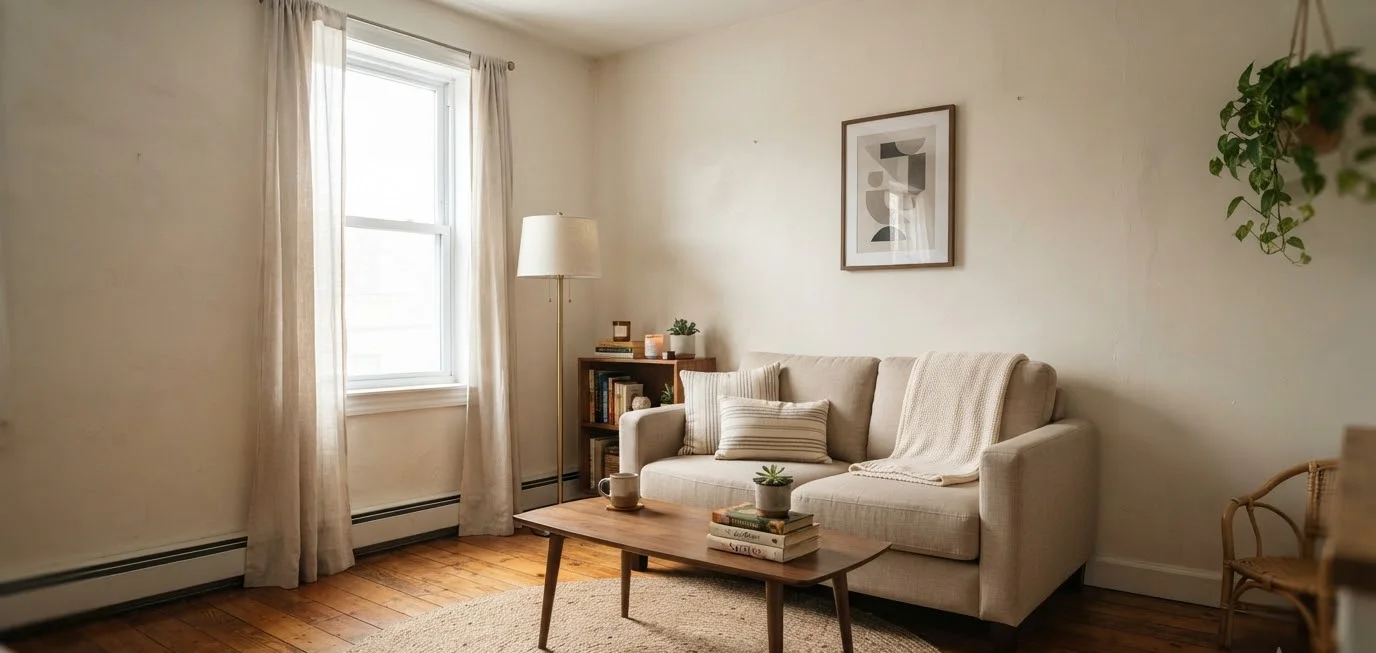
I moved into a 480-square-foot apartment three years ago and cried in the living room on move-in day.
Not from joy. From staring at a couch that took up half the floor and wondering where a coffee table was supposed to go.
If you’re pinning “small space inspo” boards at 11pm and feeling a little defeated, I get it.
This isn’t a theory piece. Everything here came from actually rearranging furniture until my knees hurt, returning a coffee table twice, and finally
landing on a layout that feels like a home instead of a storage unit.Let’s get into what actually works.
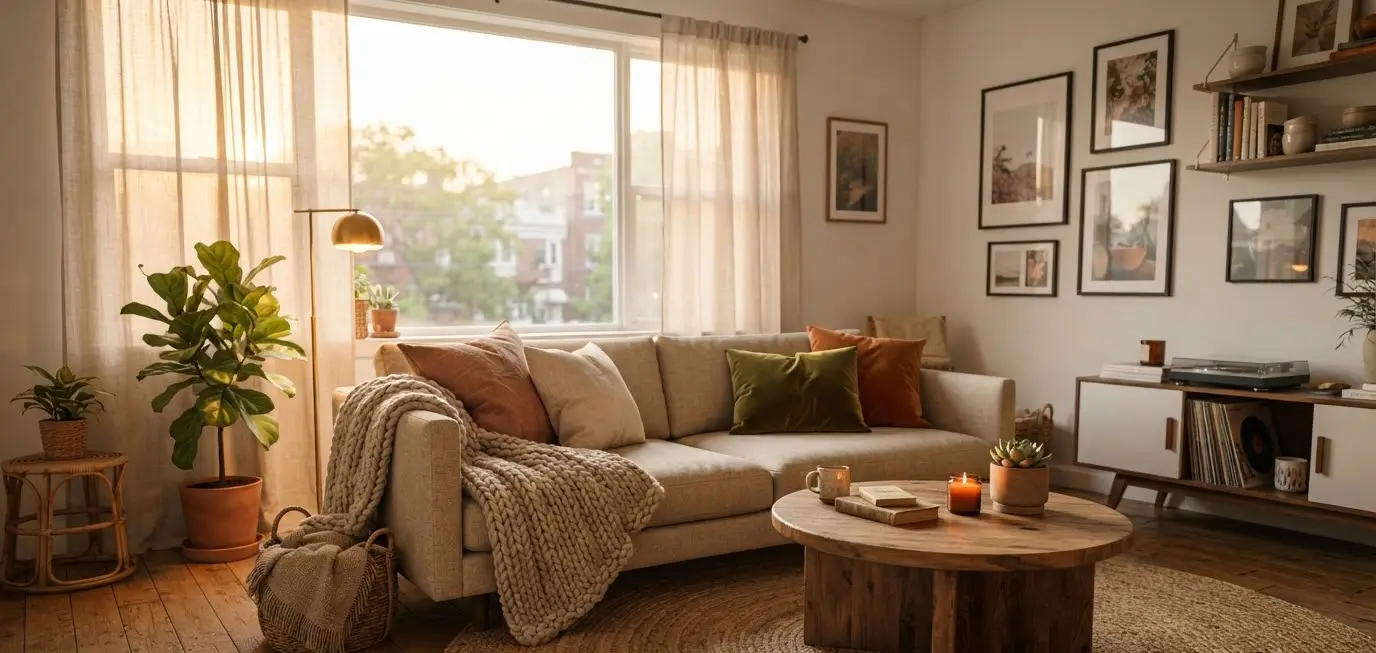
Start with the traffic flow, not the furniture
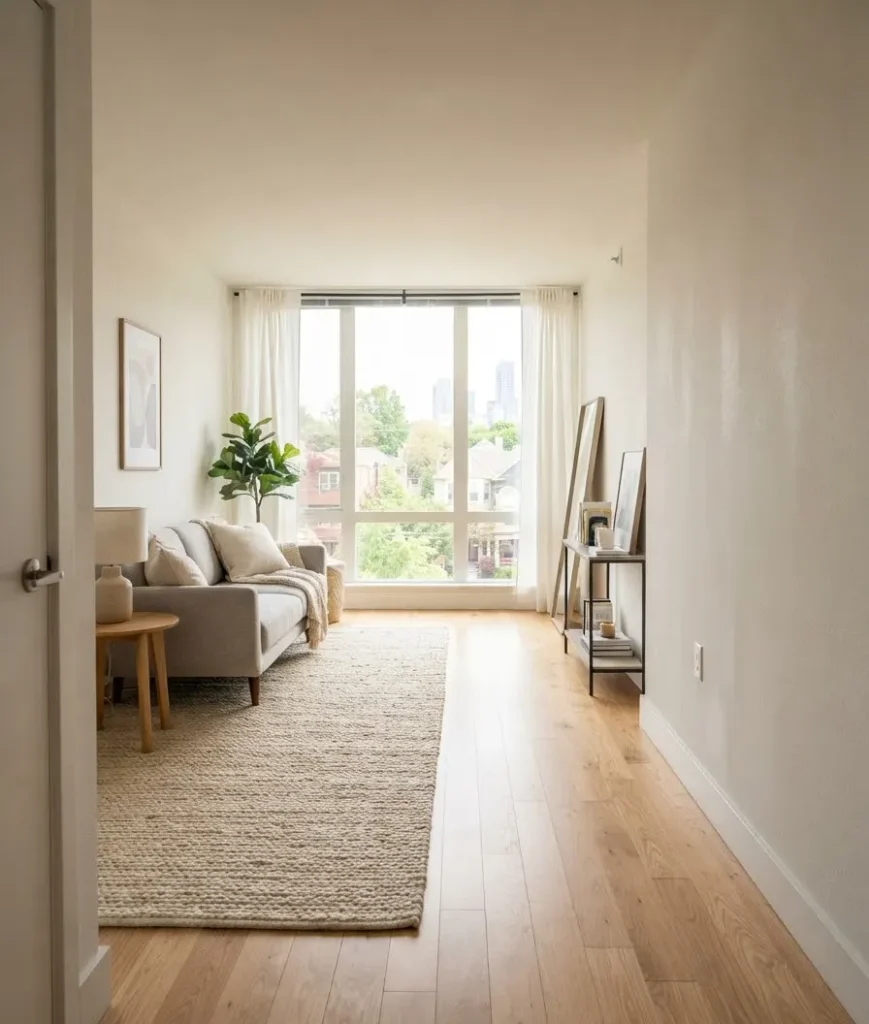
Before you buy a single throw pillow, walk your room. Literally walk it, from the door to the window to the kitchen.
Wherever your feet naturally go, that’s your traffic path. Never put a sofa or ottoman in the way of it, no matter how good it looks in the corner of your eye.
A room feels cramped less because of size and more because of blocked movement.
Float your furniture off the walls (yes, really)
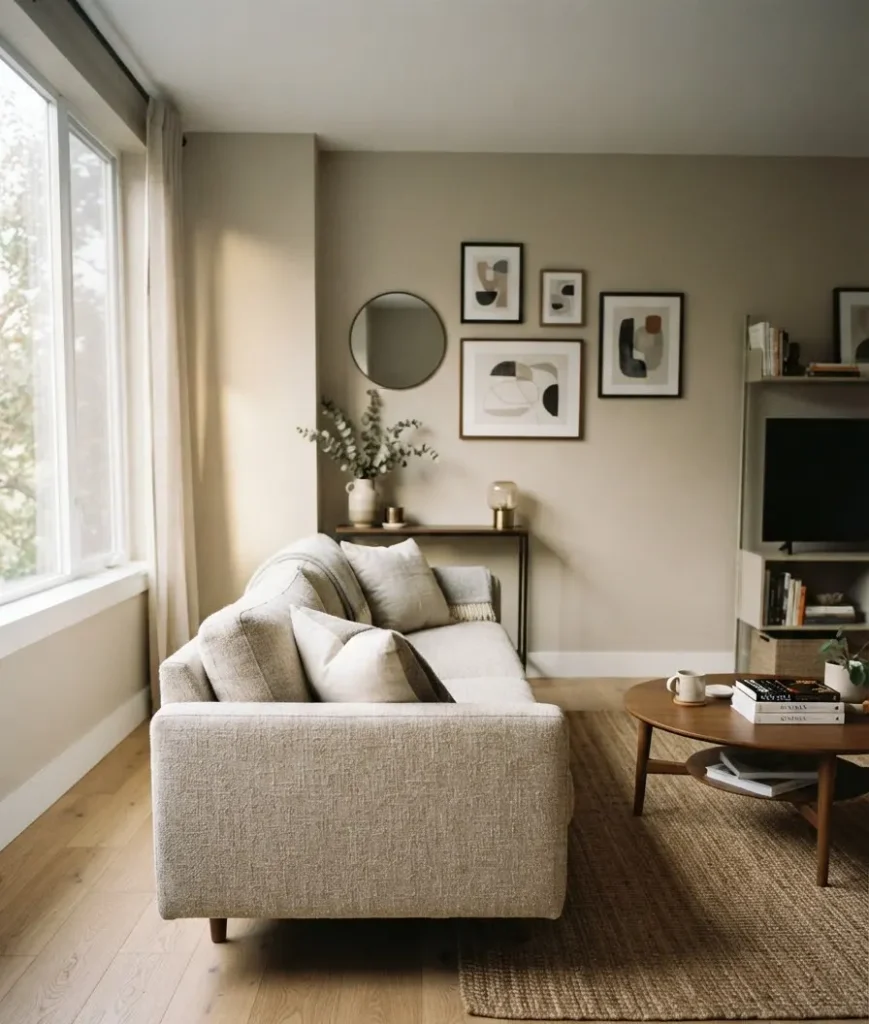
My rule: leave at least 24 to 30 inches of walking space around any major piece.
Less than that, and you’ll spend your life doing the sidestep shuffle past your own furniture.
For years I pushed everything against the walls because it seemed like the obvious space-saving move.
Turns out that’s one of the biggest small-room mistakes designers keep flagging.
Pulling a sofa even 6 inches off the wall creates a pocket of negative space that tricks the eye into reading the room as bigger. It sounds backwards. It works anyway.
One designer who reworked a client’s narrow living room made almost the opposite point too: sometimes the real fix isn’t repositioning the couch,
it’s rethinking the couch itself, since an oversized sectional can overwhelm a small footprint no matter where you place it.
Anchor the room with your sofa as a divider
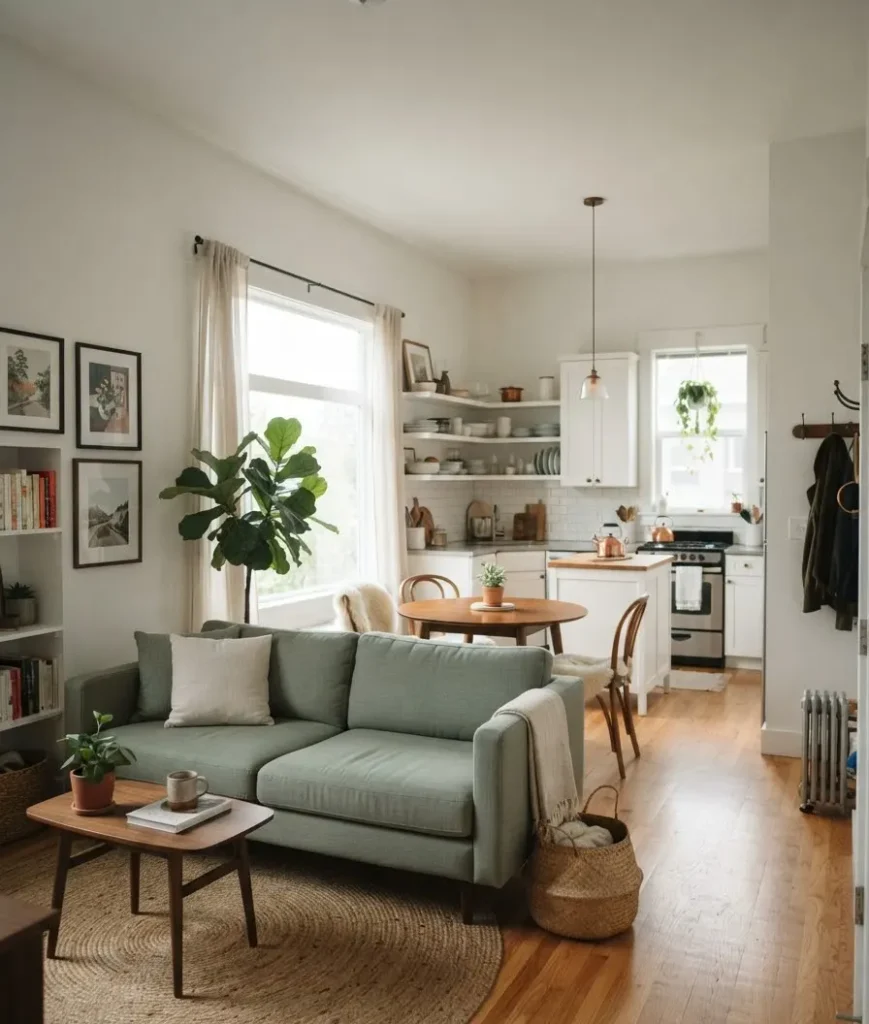
If your living room bleeds into your kitchen or entryway (classic studio problem), use the back of your sofa as a soft wall.
It splits the space visually without eating floor area the way an actual room divider would.
I did this in my own place and it changed everything about how the apartment “read.
” Suddenly there was a living room and a dining corner, not just one undefined blob of space.
Choose leggy furniture over boxy furniture
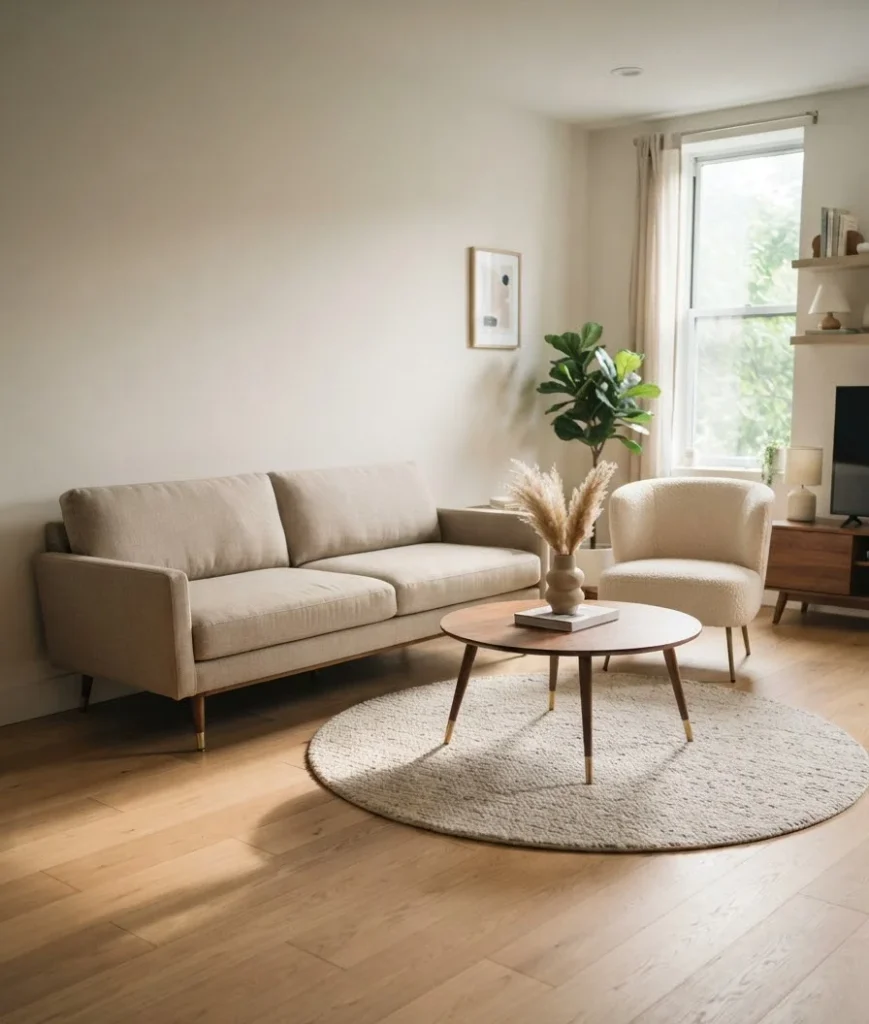
Here’s a detail that gets overlooked constantly: furniture with visible legs makes a room feel lighter than furniture that sits flush on the floor.
You can see the floor underneath it, and your brain registers that as open space.
A few swaps worth making:
- Trade a skirted sofa for one with slim wooden or metal legs
- Pick a coffee table with thin legs instead of a solid block base
- Choose dining chairs you can see through, not upholstered wingback types
IMO this is the single cheapest, highest-impact styling change on this whole list. You’re not buying new furniture, you’re just choosing smarter when you do.
Use a rug to define the zone
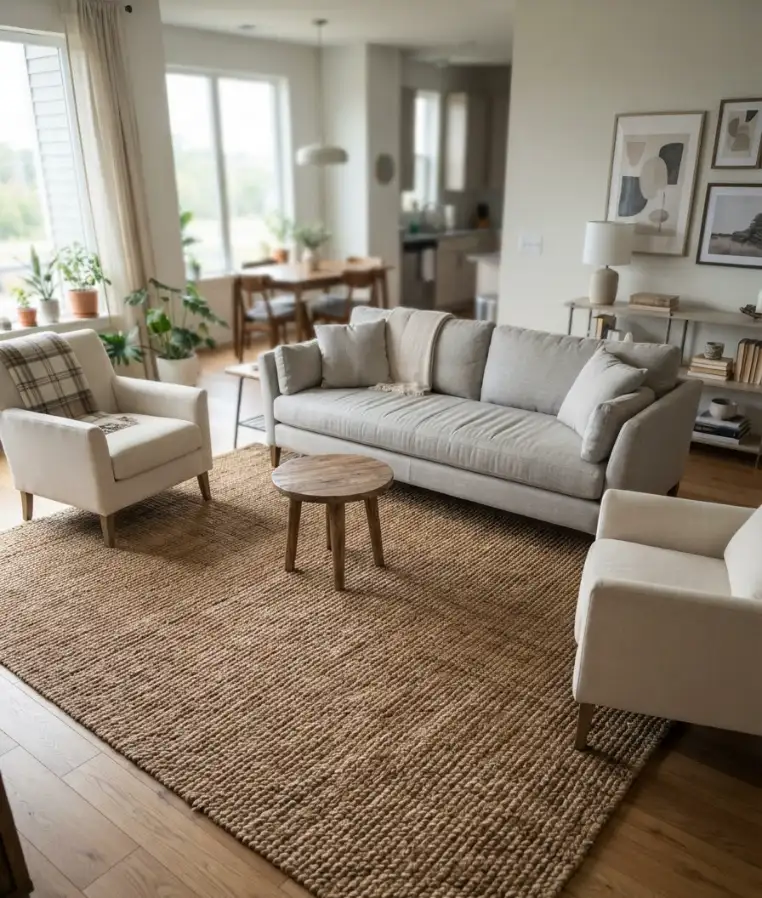
A rug isn’t decoration in a small space. It’s a boundary line.
Lay it under your seating area and it visually claims that section of the room as “the living room,” even if there’s no wall separating it from anything else.
Skip the mistake of buying a rug too small for the furniture on it.
A rug that only fits under the coffee table, with the sofa legs sitting outside its edge, makes the whole arrangement look like it’s floating in the wrong direction.
Quick rug math: the front legs of your sofa and chairs should sit on the rug, not hover off it.
Small space furniture cheat sheet
| Furniture piece | Small-space friendly choice | Skip this instead |
|---|---|---|
| Sofa | Loveseat or two accent chairs | Deep sectional |
| Coffee table | Nesting tables or a narrow bench | Oversized rectangular slab |
| Storage | Wall-mounted shelving | Floor-standing bookcase |
| Lighting | Floor lamp with a slim base | Table lamp cluttering surfaces |
Consider two chairs instead of a sofa
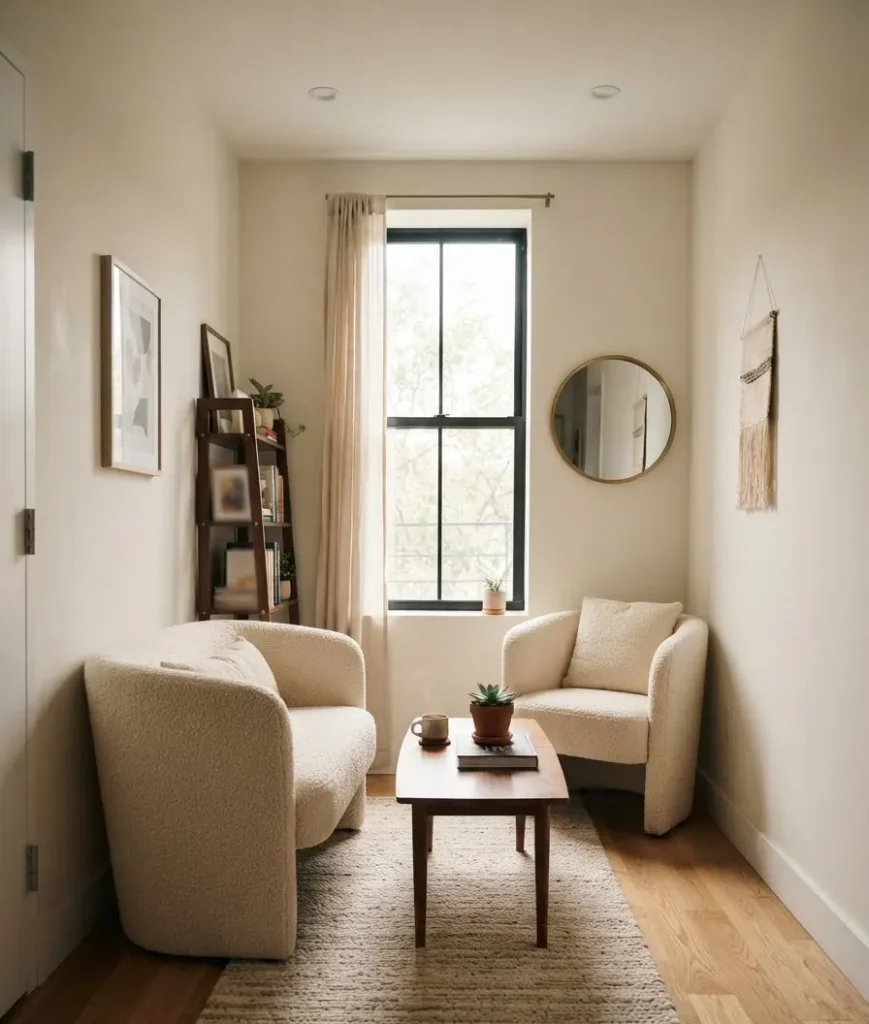
This one surprised me, but it’s become a genuinely popular move in tiny apartments: skip the sofa entirely and go with a pair of chairs facing each other.
It works especially well in narrow rooms where a couch would eat the whole width.
A New York studio dweller with 400 square feet pulled this off using two bouclé barrel chairs and a narrow coffee table between them, and the room reads far more spacious than a couch-and-chair combo ever would.
Is it right for movie nights with five friends? No. But for daily living and the occasional guest, it’s a smart trade.
Layer your lighting instead of relying on one overhead fixture
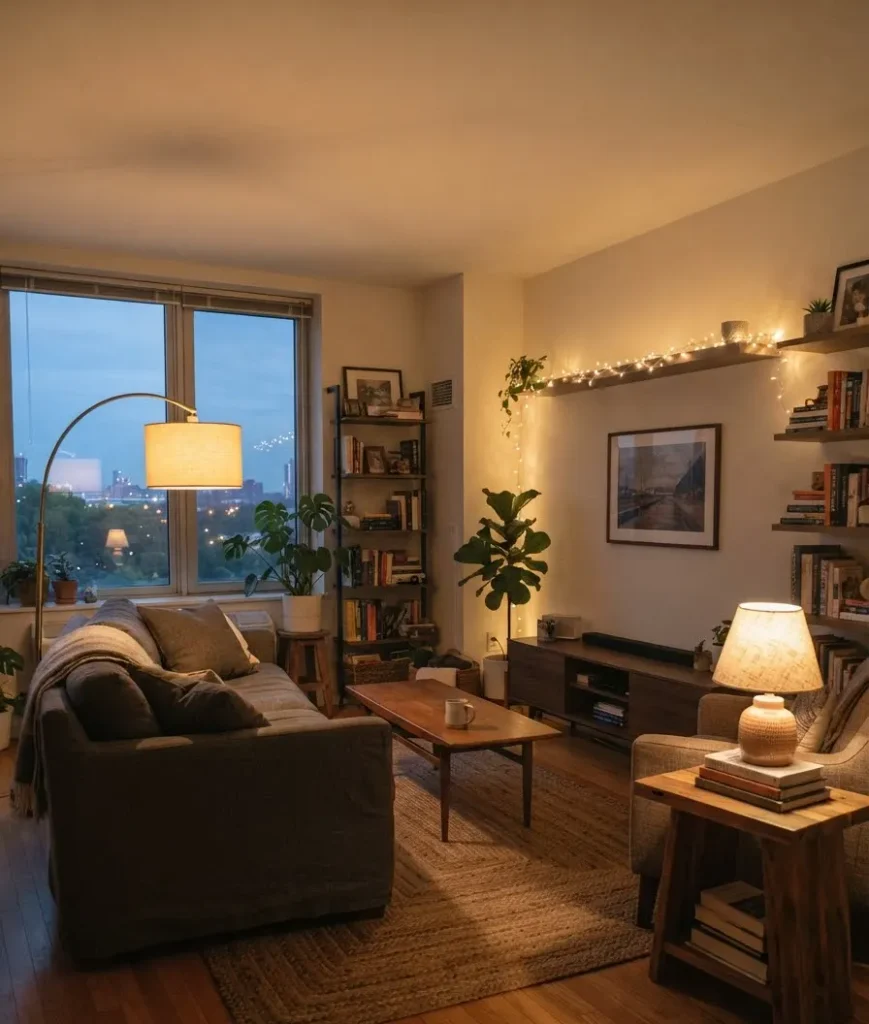
A single ceiling light flattens a small room and makes it feel more like an office than a home. Cozy comes from layers.
Aim for three light sources minimum:
- An overhead or ambient source for general light
- A floor or table lamp for evening warmth
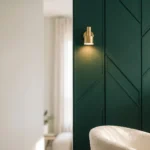
- A smaller accent light, like a plug-in sconce or string lights behind a shelf
Warm bulbs (look for 2700K on the packaging) make a bigger emotional difference than almost any other change on this list.
Cool white light in a small room reads clinical, and nobody wants their living room to feel like a waiting room.
Go vertical with storage
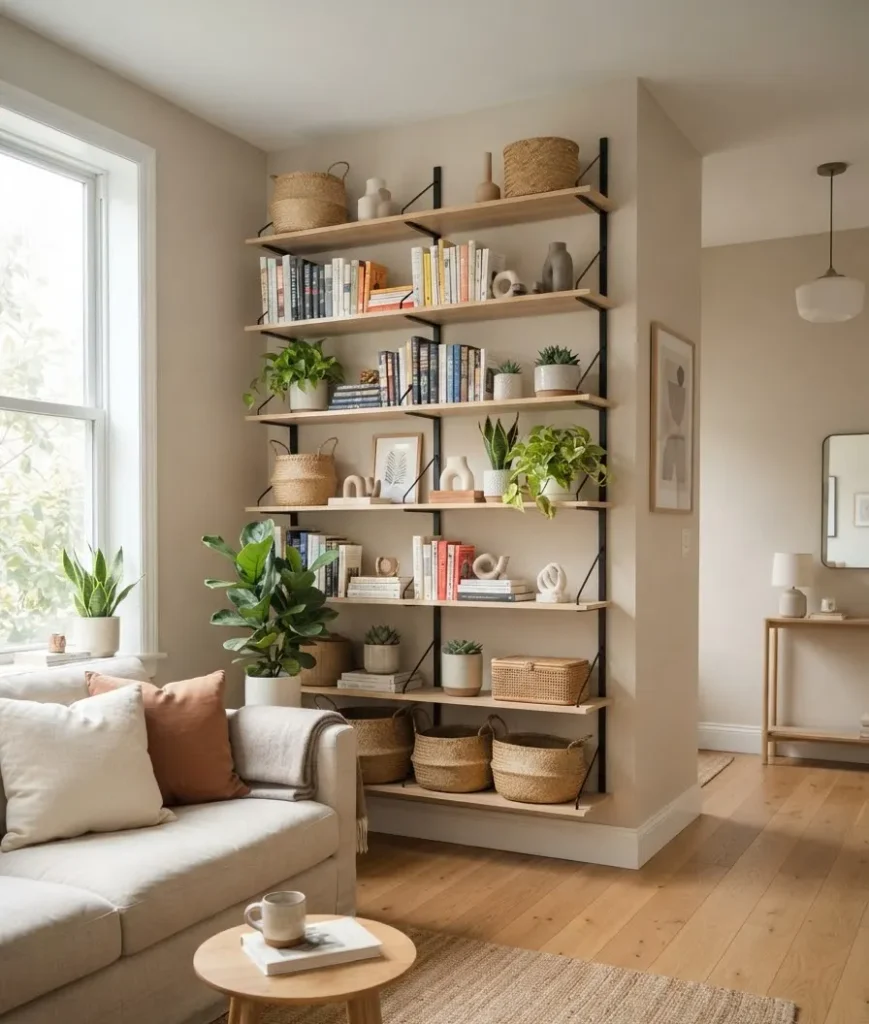
Floor space is precious. Wall space usually isn’t being used at all.
Floating shelves, tall bookcases, and wall-mounted cabinets pull clutter up and off the ground, which keeps your eye moving upward instead of stopping at a pile of stuff on the floor.
Vertical shelving is one of the most repeated tips across small-space design guides, and for good reason. It just works.
Mirrors: the cheat code nobody skips for a reason
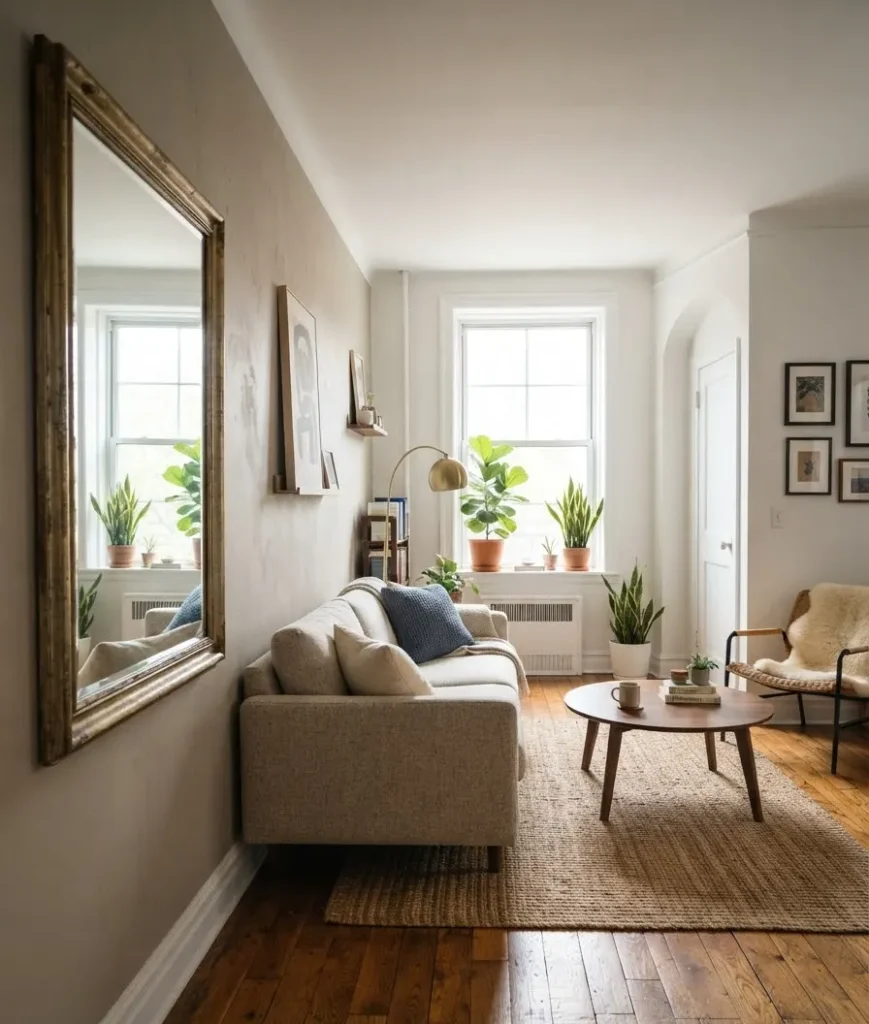
Yes, everyone says this. It’s still true.
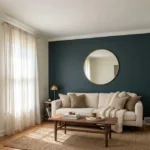
A well-placed mirror bounces light around the room and creates the illusion of depth where there isn’t any.
Position it across from a window if you can, so it reflects natural light back into the space.
Skip small decorative mirrors scattered around; one larger statement mirror does more work than five little ones.
Pick a focal point and build around it
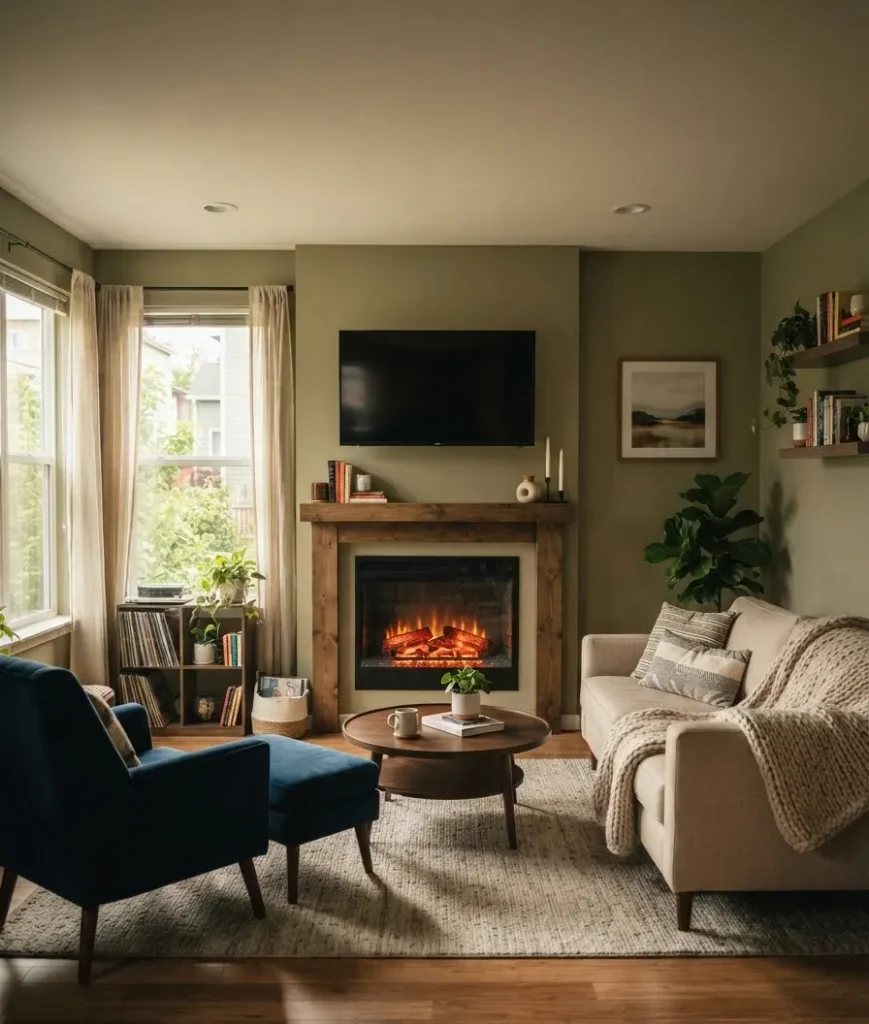
Every cozy room has a spot your eye lands on first. In a small apartment, you have to choose that focal point on purpose, or your furniture arrangement will feel directionless.
Common focal point choices:
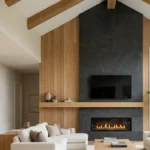
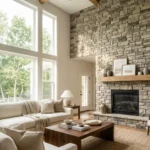
- A fireplace, real or electric
- A gallery wall behind the main seating
- A large window with a view worth framing
- A statement piece of art
Arrange your seating to face or frame that point. Everything else in the room supports it.
Use an accent wall to define the living zone
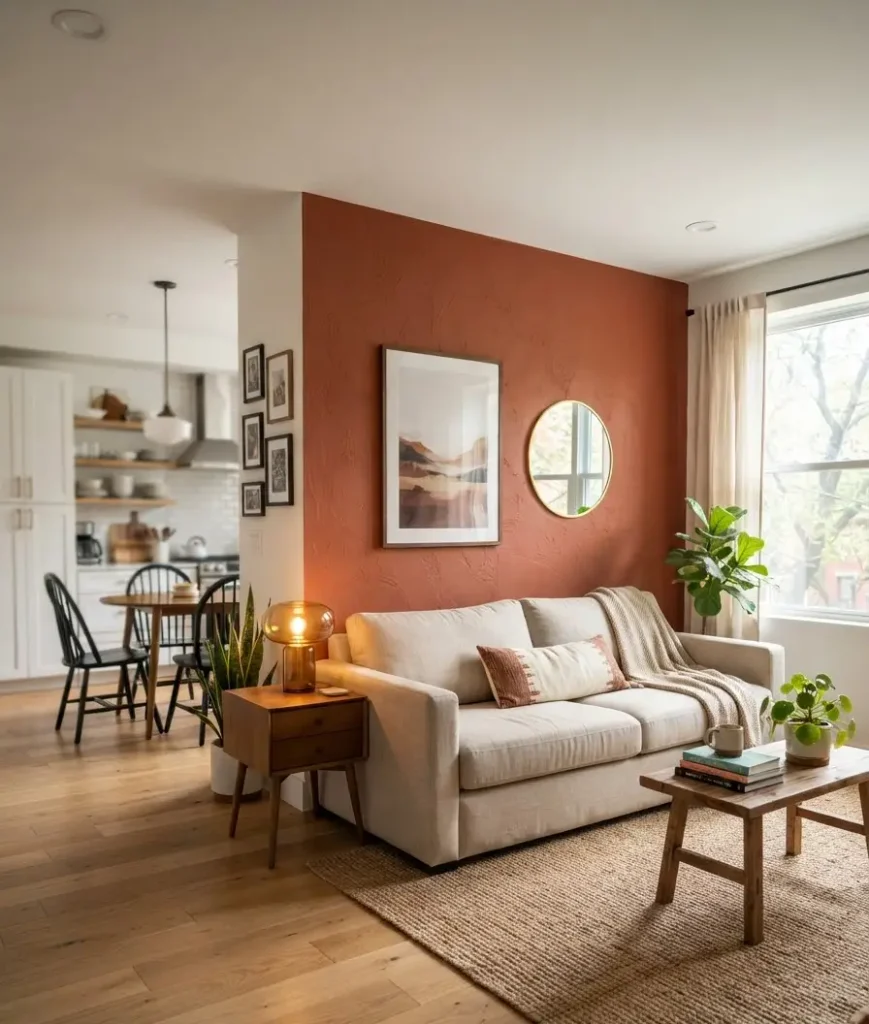
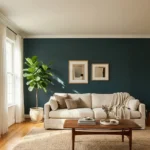
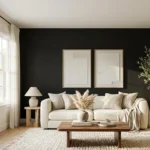
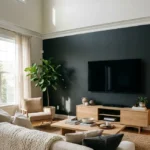
If your apartment has an open floor plan (studio life, basically), paint or wallpaper the wall behind your sofa.
It’s a low-cost way to visually carve the living room out of a bigger, undefined space, the same way a rug or sofa placement does.
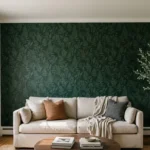
A deep, rich color like hunter green or a warm terracotta reads more intentional than a neutral, and it doesn’t require any actual construction.
Multipurpose furniture is non-negotiable
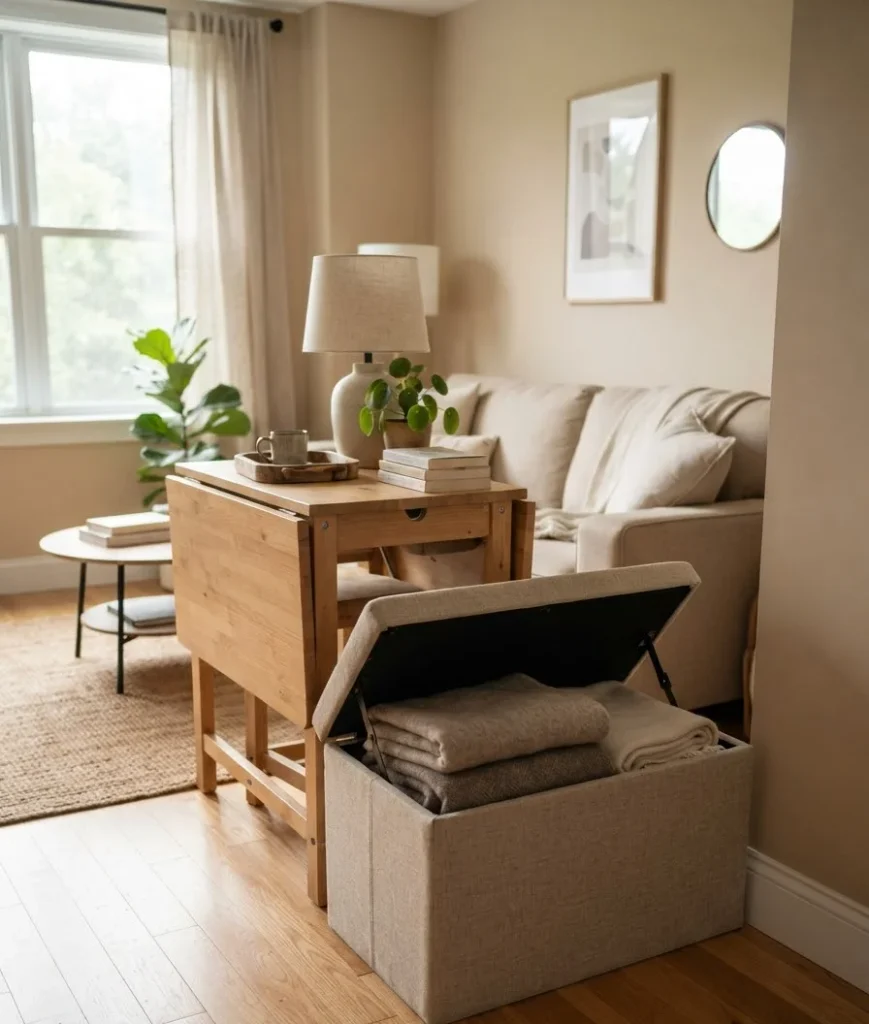
An ottoman that opens for storage. A console table that hides a fold-out desk. A bench with drawers underneath.
Every piece you buy for a small living room should be doing at least two jobs.
If it’s only doing one, ask yourself honestly whether you have the square footage to spare. Most of us don’t.
Keep the color palette tight
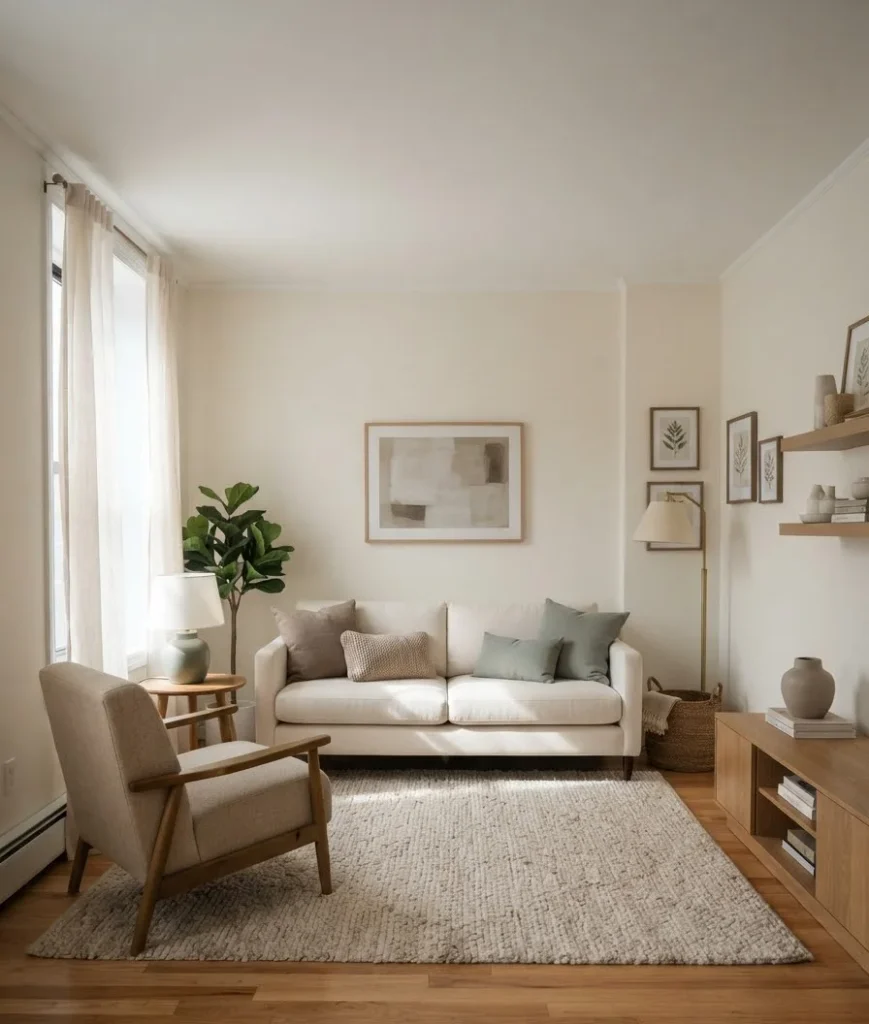
I know it’s tempting to go bold on every surface. Resist it, at least at first.
A tight palette, maybe two main colors and one accent, keeps a small room from feeling chaotic.
You can still be cozy and warm without turning every wall, textile, and accessory into its own competing statement.
Curate, don’t accumulate, your decor
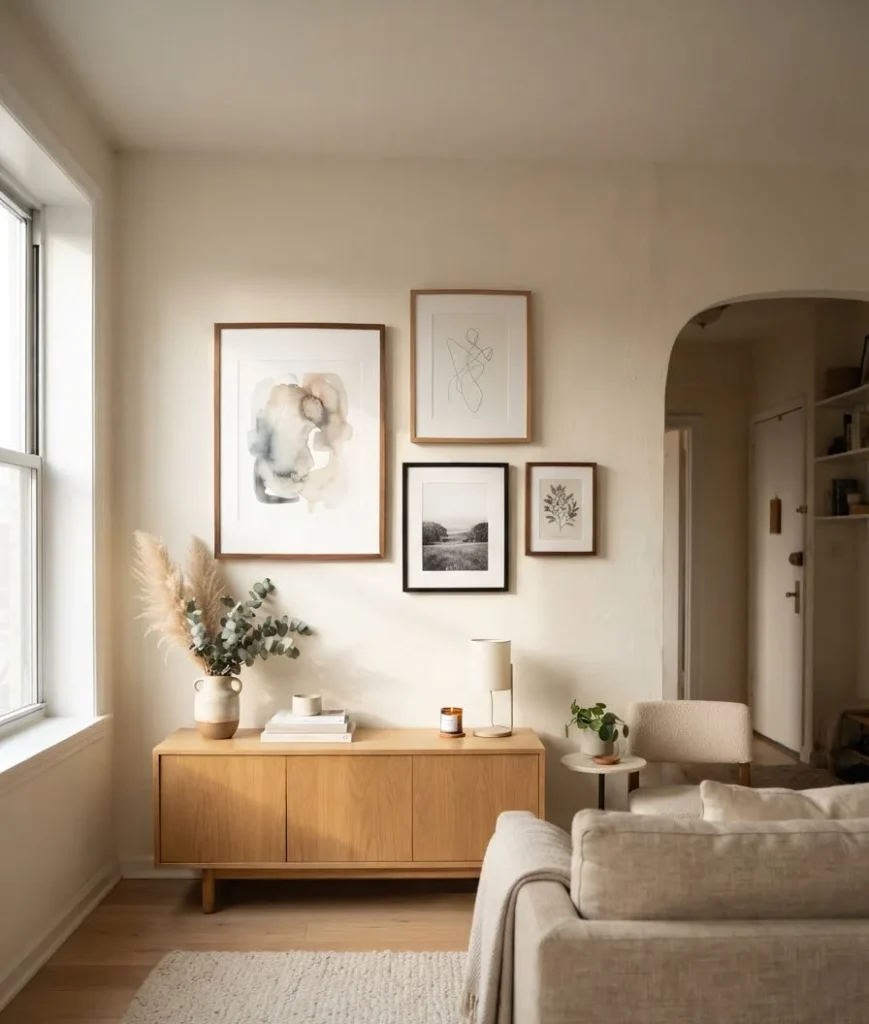
This is the part where I’ll admit something slightly embarrassing: I used to buy every cute thing I saw on sale, and my apartment ended up looking like a gift shop exploded.
A small room punishes clutter way more visibly than a big one does.
Pick fewer pieces and make sure each one earns its spot. A gallery wall works precisely because it’s curated, not because it’s crammed with every photo you own.
Use vertical curtains to stretch the ceiling
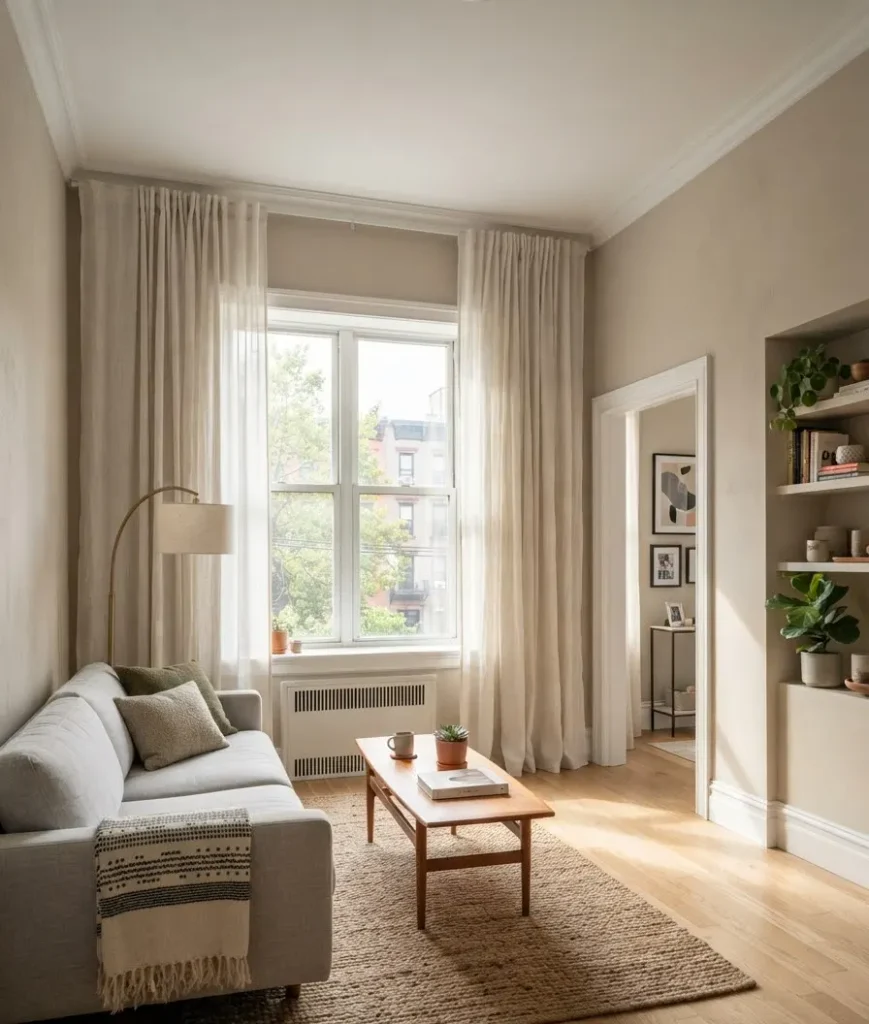
Hang your curtain rod close to the ceiling instead of directly above the window frame.
It’s a tiny adjustment that makes the whole wall look taller, which tricks the eye into perceiving more overall height in the room.
Let the curtains puddle slightly at the floor or hit right at the baseboard.
Curtains that stop short, floating a few inches above the ground, do the opposite of what you want here.
Swap the coffee table for something smaller (or skip it)
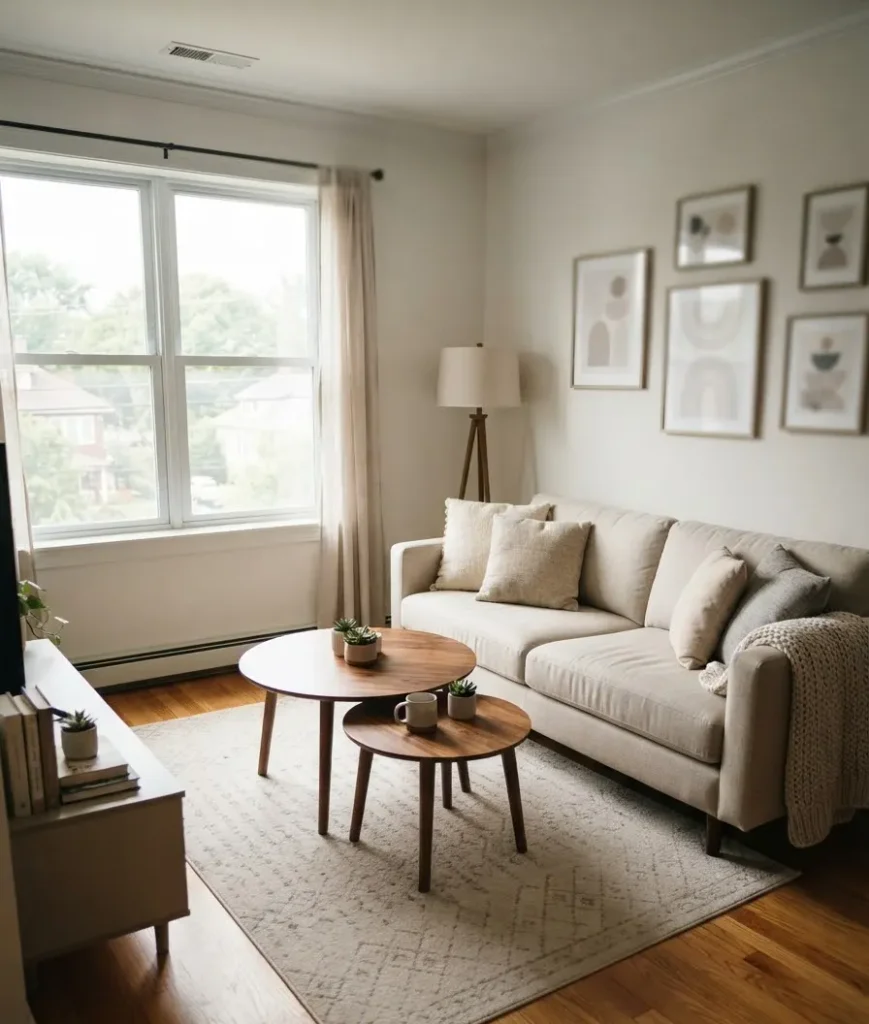
A big rectangular coffee table is often the single largest floor-space offender in a small living room. Consider:
- A round table instead of rectangular (easier to walk around)
- A set of nesting tables you pull out only when needed
- A pouf or ottoman that doubles as extra seating
Add texture through textiles, not more furniture
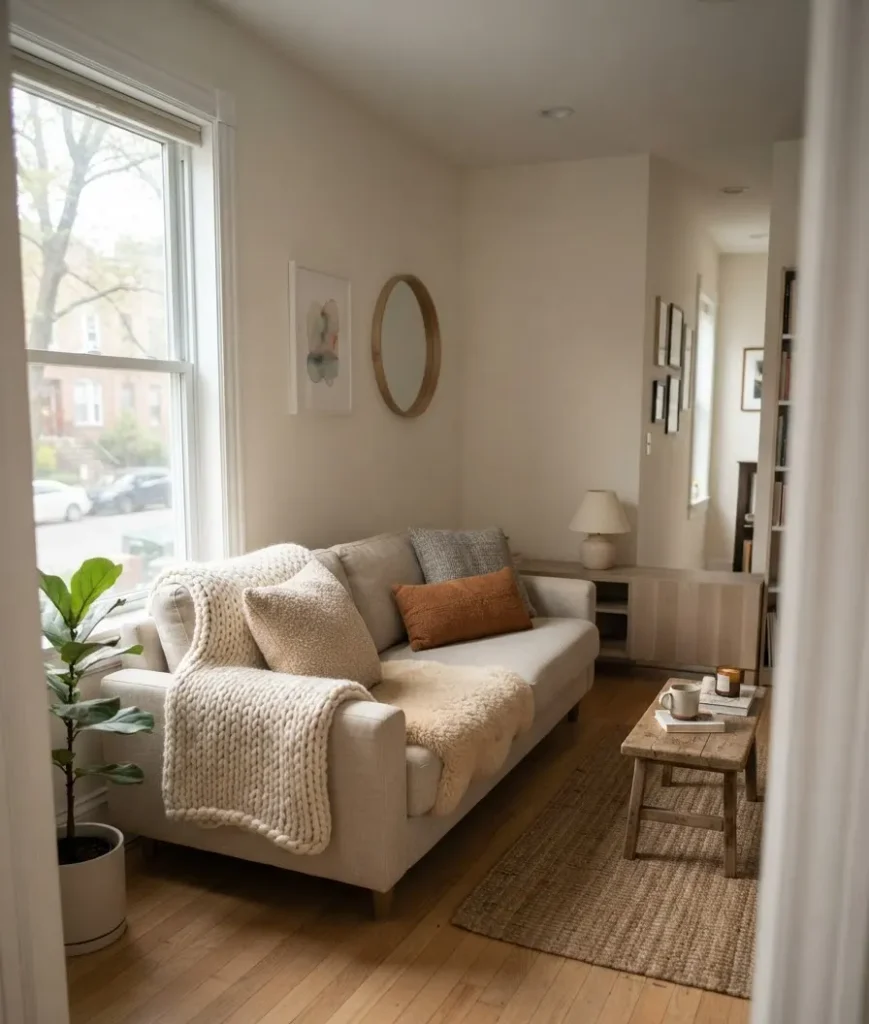
Cozy doesn’t have to mean more stuff. A chunky knit throw, a couple of textured pillows, a soft wool rug: these add warmth without taking up an inch of floor space.
This is honestly the easiest win on the whole list if your budget is tight this month.
Keep window treatments simple
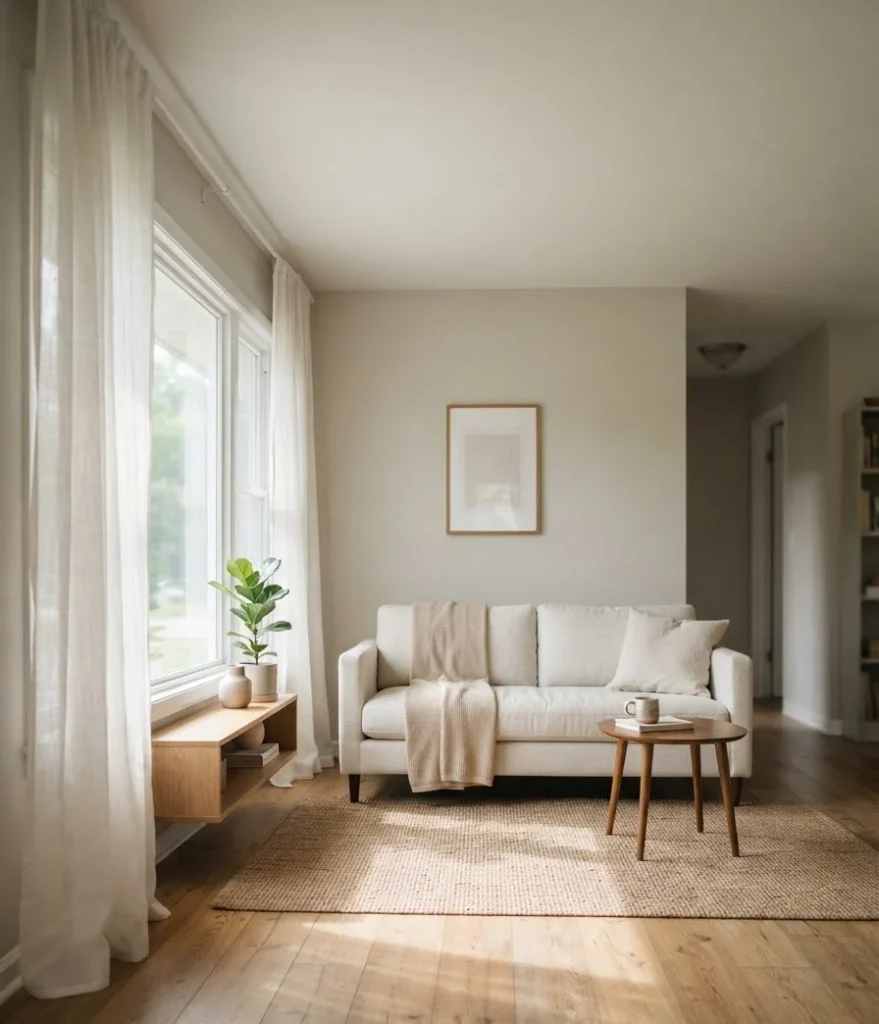
Heavy, fussy drapes in a small room can swallow the light and make the space feel smaller than it is.
Go with lighter fabrics that still offer privacy but let daylight filter through during the day.
Don’t be afraid of a slightly awkward layout if it’s working for you
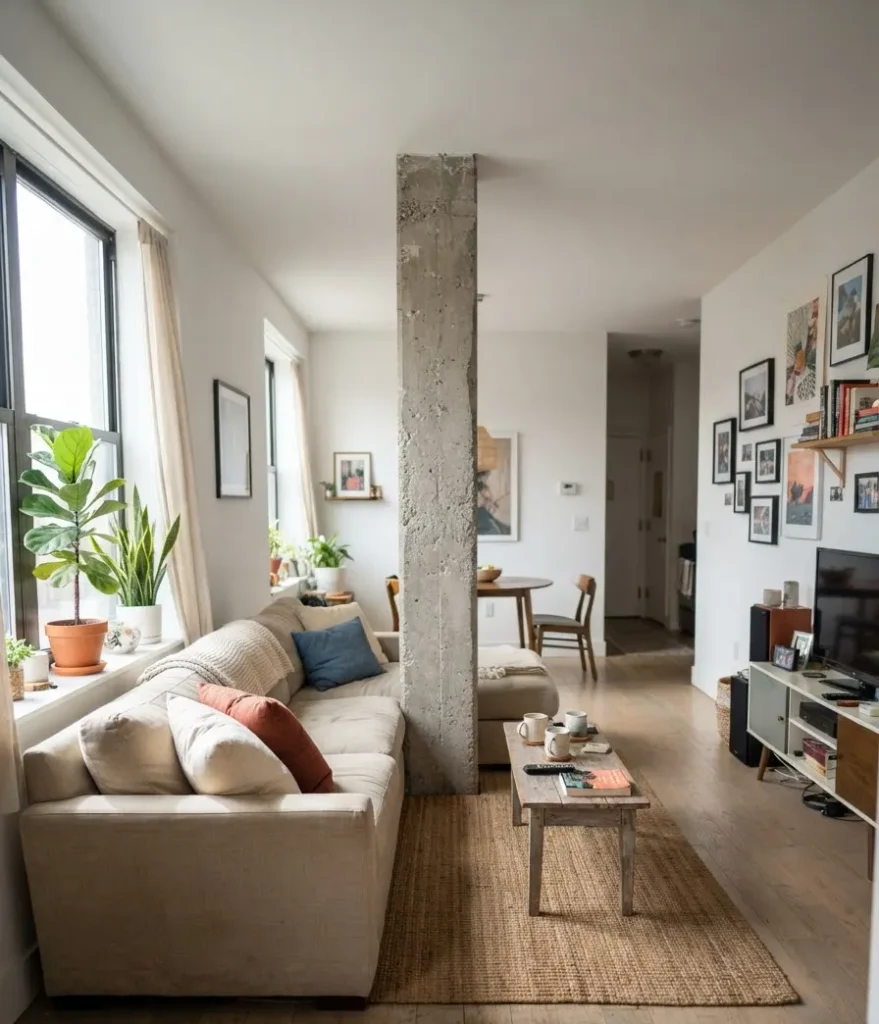
Real talk: not every small apartment fits the “ideal” layout you see pinned a thousand times. Sometimes the sofa has to go at an angle.
Sometimes there’s a weird pillar in the middle of the room (mine had one, and I named it, which probably says more about me than the apartment). Function beats symmetry every time.
Step back and edit ruthlessly
Once your layout is set, live in it for a week before adding more.
Small rooms fill up fast, and it’s much easier to notice what’s actually missing once you’ve used the space for a few days rather than guessing upfront.
A quick gut check before you commit
Ask yourself these three things before finalizing any small living room layout:
- Can I walk the main path without turning sideways?
- Does at least one piece of furniture serve two purposes?
- Is there a clear focal point my eye lands on first?
If you answered yes to all three, you’re in good shape. If not, that’s your starting point for adjustments.
Frequently asked questions
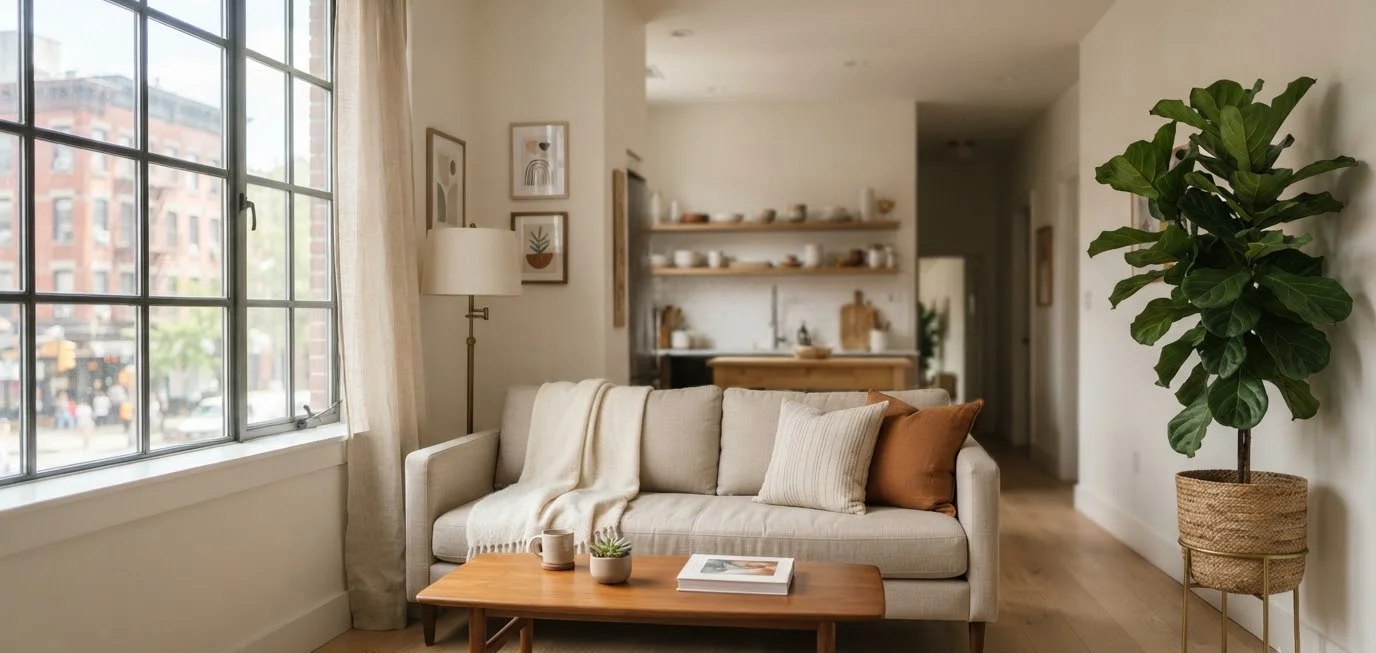
What is the best layout for a small living room? Float the sofa slightly off the wall, anchor it with a rug sized to fit all the furniture legs, and choose a single focal point like a window or accent wall to organize the rest of the seating around.
How do I make a small living room feel cozy without clutter? Lean on texture (throws, pillows, a soft rug) and layered lighting instead of adding more furniture. Warm bulbs and a curated, tighter color palette do a lot of the emotional work.
Is a sectional a bad idea in a small apartment? Not always, but it’s risky. A deep or oversized sectional can overwhelm a compact room and block natural walking paths. Two chairs or a loveseat are often a better fit for square footage under 500 feet.
How many pieces of furniture should a small living room have? There’s no fixed number, but fewer, better-chosen pieces almost always outperform a room packed with options.
A sofa or two chairs, one coffee table or side table, one storage piece, and a lamp is usually enough to feel complete without feeling crowded.
Don’t ignore the ceiling
Most people design a small living room from the floor up and stop thinking once they hit eye level. That’s a mistake. The ceiling is real estate too.
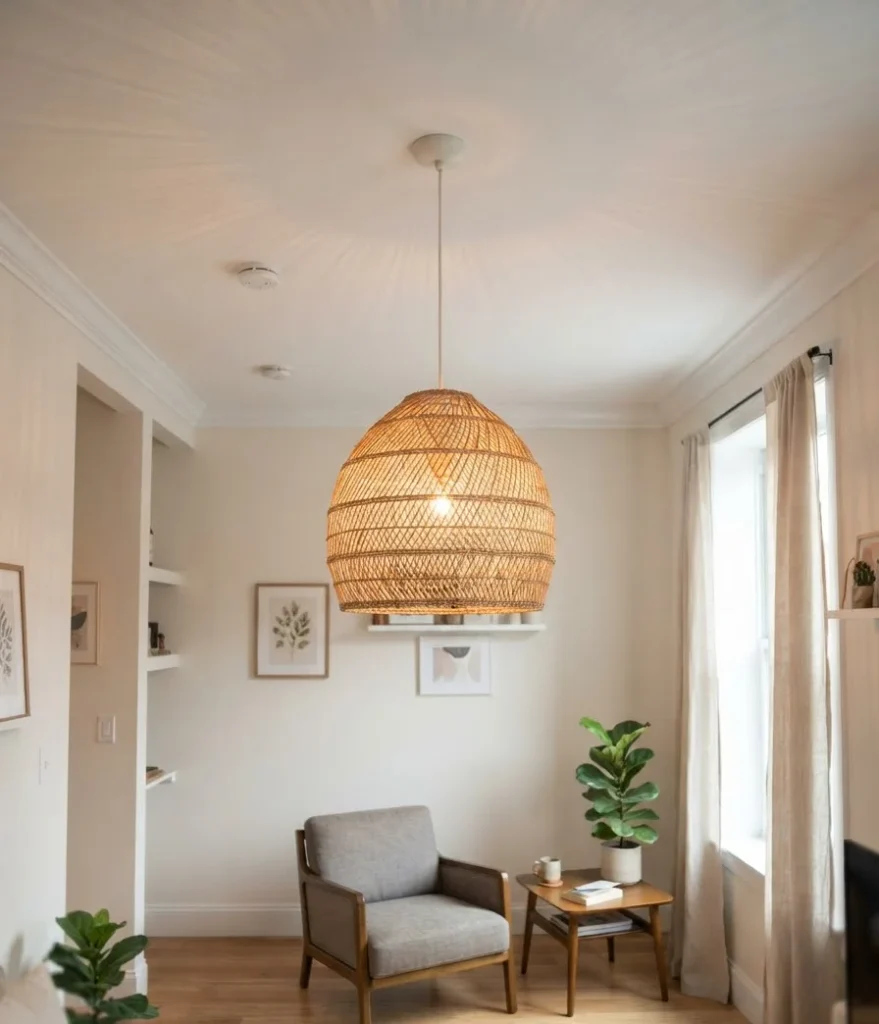
A pendant light with some visual weight, like a woven fixture or a cluster of small bulbs, pulls the eye upward and makes the whole room feel taller in the process.
It costs you zero floor space and does more for the “wow, this feels bigger” effect than another side table ever will.
Watch your scale, not just your square footage
I used to think small rooms needed small furniture across the board. That’s only half true, and getting it wrong in either direction backfires.
One oversized sofa can swallow a room. But five tiny, mismatched pieces scattered around create just as much visual noise, only now it’s chaotic instead of heavy.
Pick one or two slightly larger anchor pieces (a proper sofa or a substantial rug) and let everything else stay smaller and quieter around them.
Scale is about balance, not just shrinking everything down.
A slightly random thought on renting versus owning
Quick tangent, because this matters more than people admit: if you’re renting, you’re probably not repainting walls or mounting anything permanent without a fight with your landlord. That changes your whole toolkit.
Command strips, freestanding shelving units, and furniture-based room dividers become your best friends instead of paint and built-ins. This isn’t a downgrade, honestly.
Some of the most creative small-space solutions I’ve seen came from renters who couldn’t touch the walls and had to get resourceful with furniture placement instead.
Don’t skip the smell and sound of the room
This one rarely makes these lists, and it probably should. A cozy room isn’t only visual.
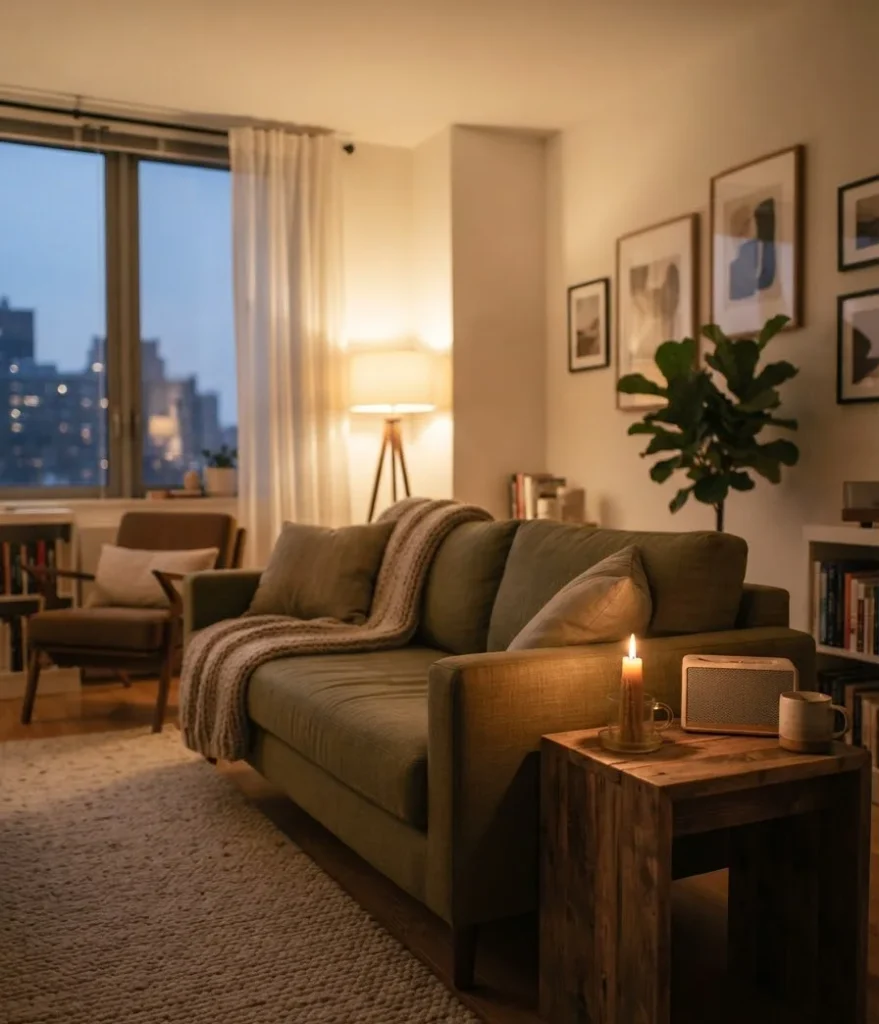
A softly scented candle, a small speaker playing something low in the background, even the sound of a fan for white noise: all of it shapes how “lived in” and comfortable a space feels the second you walk through the door.
Wow, it sounds like a small detail, but I noticed the difference the first week I started lighting a candle before guests came over.
The room felt finished in a way that no amount of extra throw pillows had managed.
Final thought
A small living room isn’t a problem to apologize for. It’s a puzzle with a solution, and once you find the layout that respects your traffic flow, gives you a real focal point, and leans into texture over clutter, it’ll feel more like your favorite room than your smallest one.
What’s the one thing in your current layout that’s driving you a little crazy right now? Pin this guide, try one tip this weekend, and see what shifts.

1 thought on “Small Apartment Cozy Living Room: 20 Practical Layout and Styling Tips”