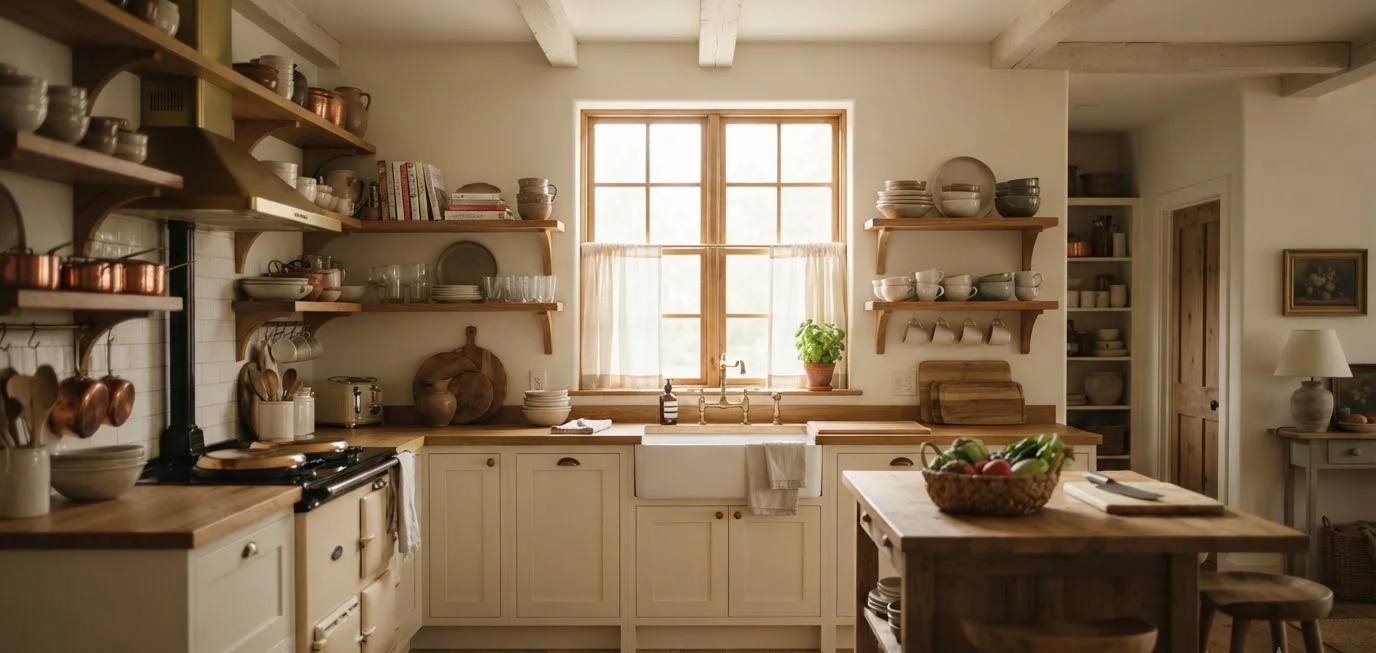
I redid my kitchen three years ago, and I still catch myself standing in the doorway just looking at it.
That’s the thing about an English cottage kitchen. It doesn’t just function. It makes you want to linger.
If you’ve been scrolling Pinterest at 1am hunting for that cozy, lived-in, “someone bakes bread here on Sundays” vibe, you already know the look I mean. Cream cabinets.
A big farmhouse sink. Open shelves stacked with mismatched mugs.
It’s warm, it’s a little imperfect, and honestly, it photographs better than half the kitchens I see on renovation shows.
I’ve pulled together 26 ideas that actually work, not just ones that look nice in a single styled photo shoot.
Some are big renovation moves. Others cost about $15 and an afternoon. Save this one, because you’ll want to come back to it when you’re picking paint chips.
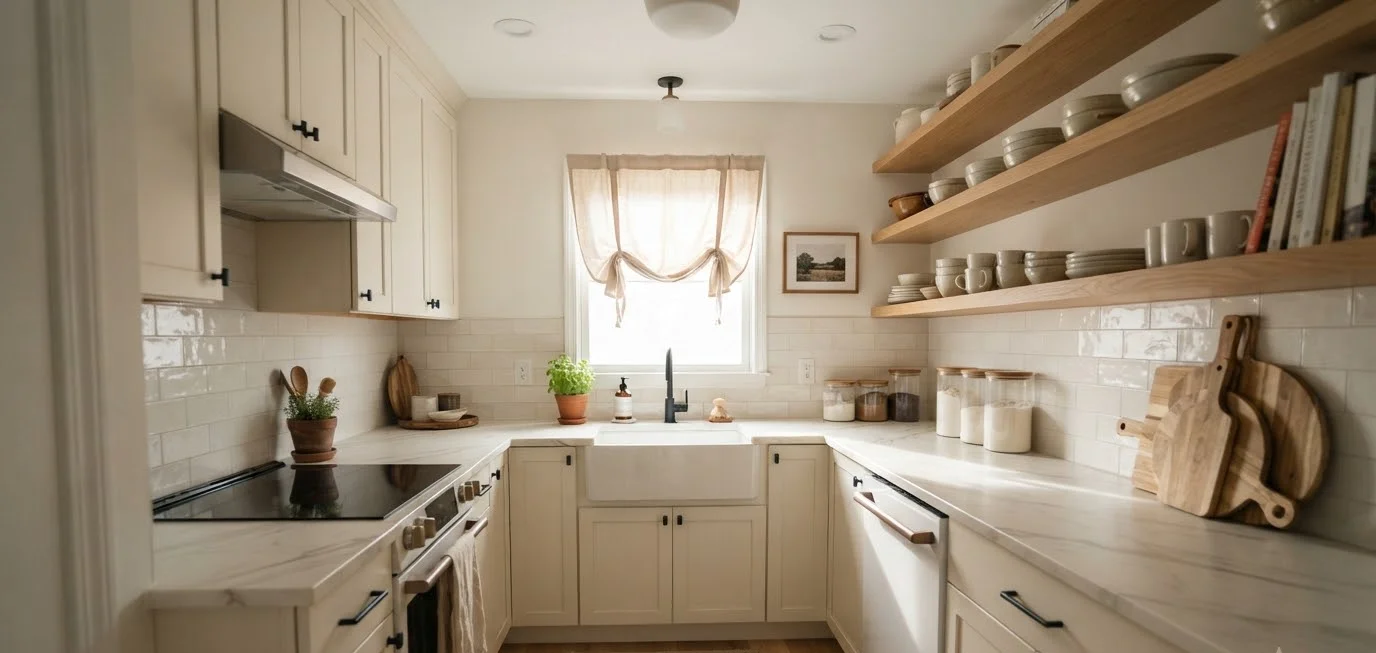
Modern Small Kitchen Inspiration Layouts That Make Compact Spaces Feel Huge
Click Here →What actually makes a kitchen feel “English cottage”
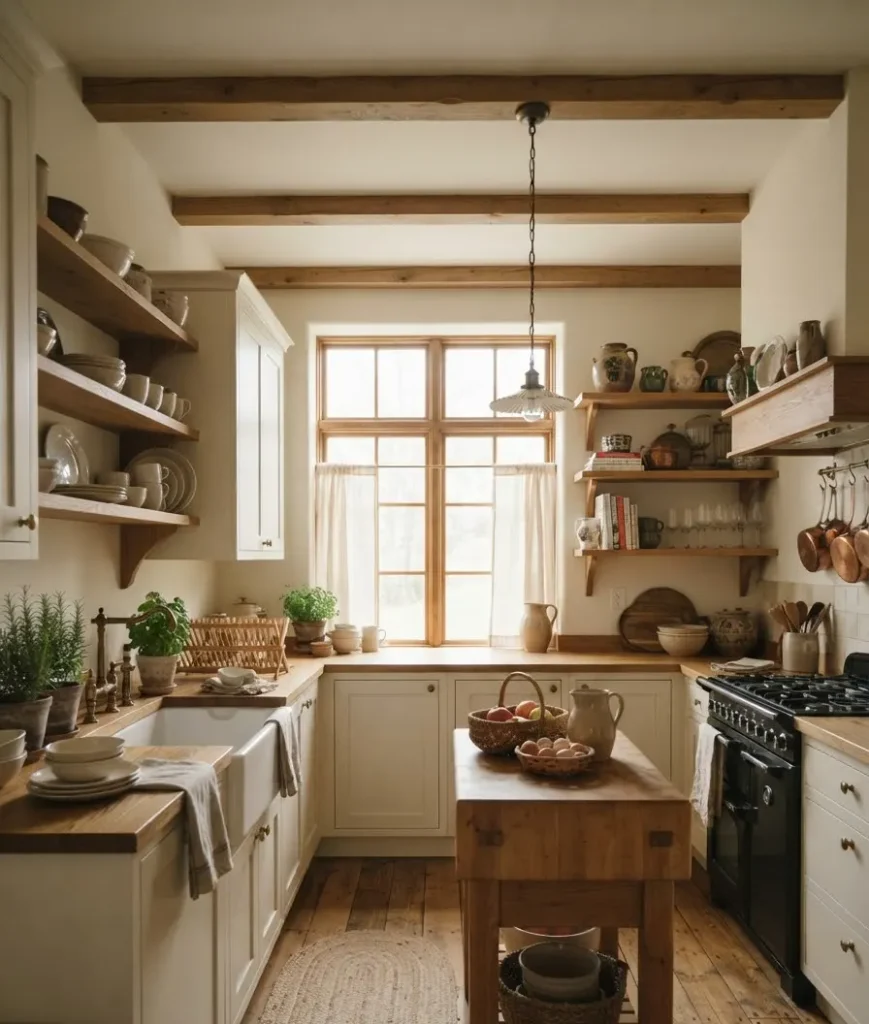
Before the idea list, it helps to know what you’re aiming for. An English cottage kitchen isn’t a strict rulebook.
It’s a feeling built from a handful of consistent choices.
Think soft, muted colors instead of stark white. Natural materials like wood, stone, and iron instead of glossy laminate.
And a general sense that things were collected over time rather than bought in one matching set from a showroom.
Traditional English country house interiors leaned heavily on this “gathered over generations” quality, and it’s exactly what modern cottage kitchens borrow.
I’d argue the single biggest mistake people make is trying to buy the look all at once.
A real cottage kitchen has texture because it wasn’t finished in a weekend.
Keep that in mind as you go through this list.
Color and wall ideas
1. Go with a soft, buttery cream instead of pure white. Stark white reads clinical. Cream feels warm and a little old-world, especially against natural wood.
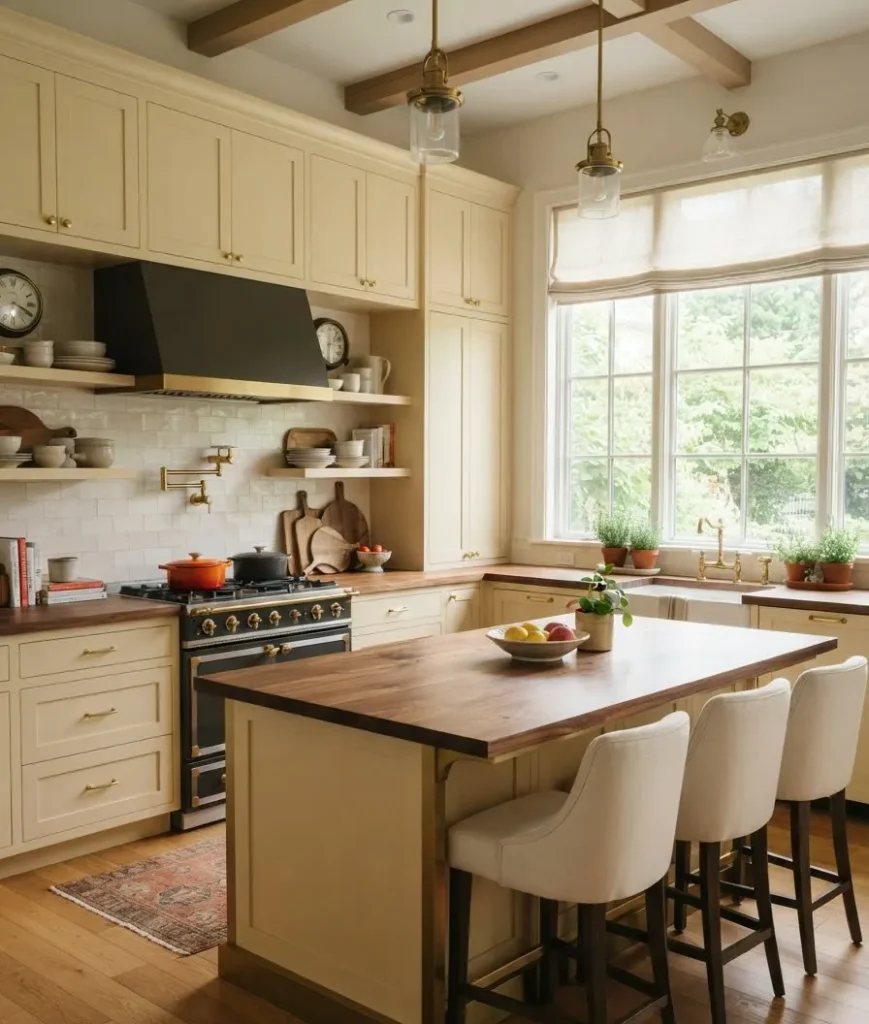
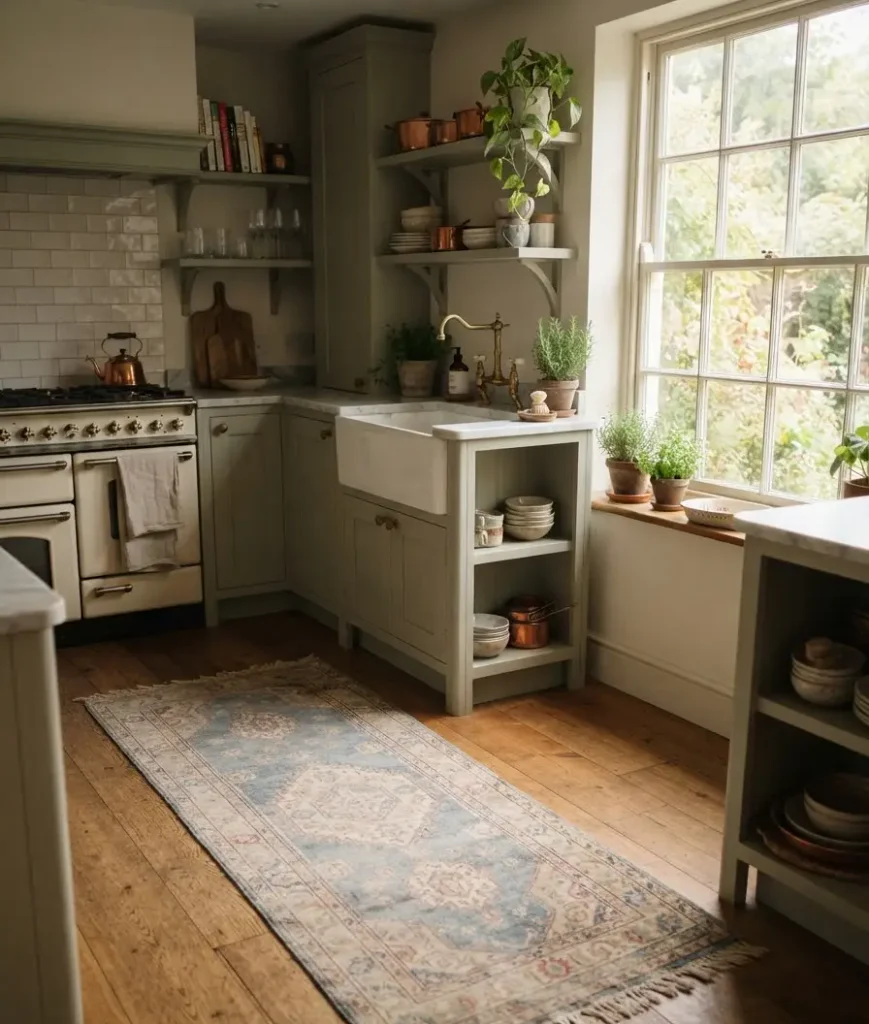
2. Try sage or muted olive green cabinetry. This has been everywhere the past few years, and for good reason. It’s the closest paint color to actual English countryside.
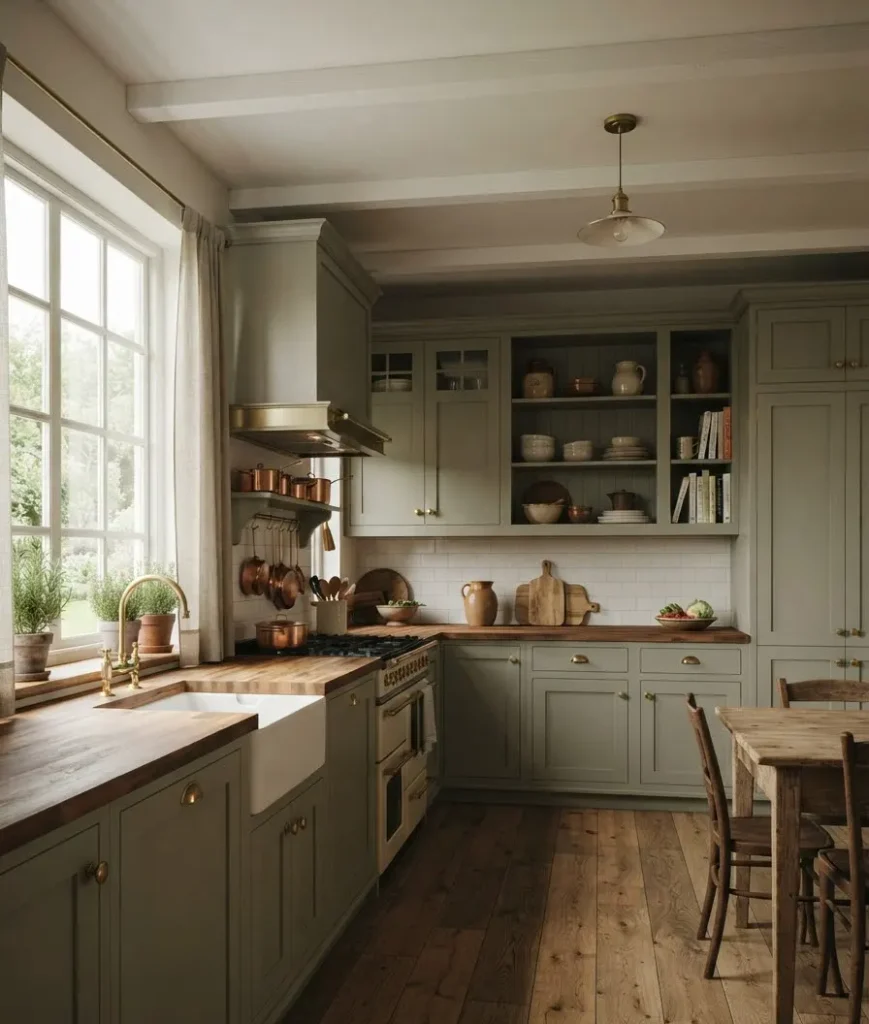
3. Paint just the lower cabinets and keep the uppers light. This two-tone trick adds depth without overwhelming a small room.
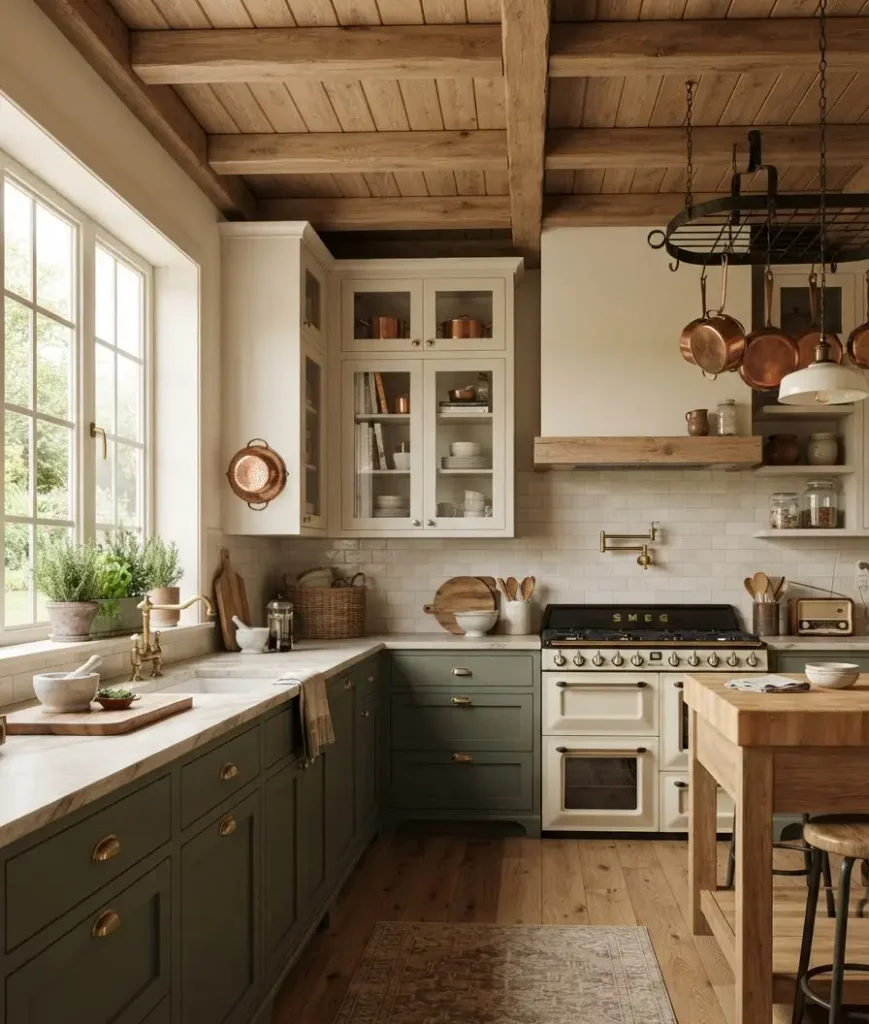
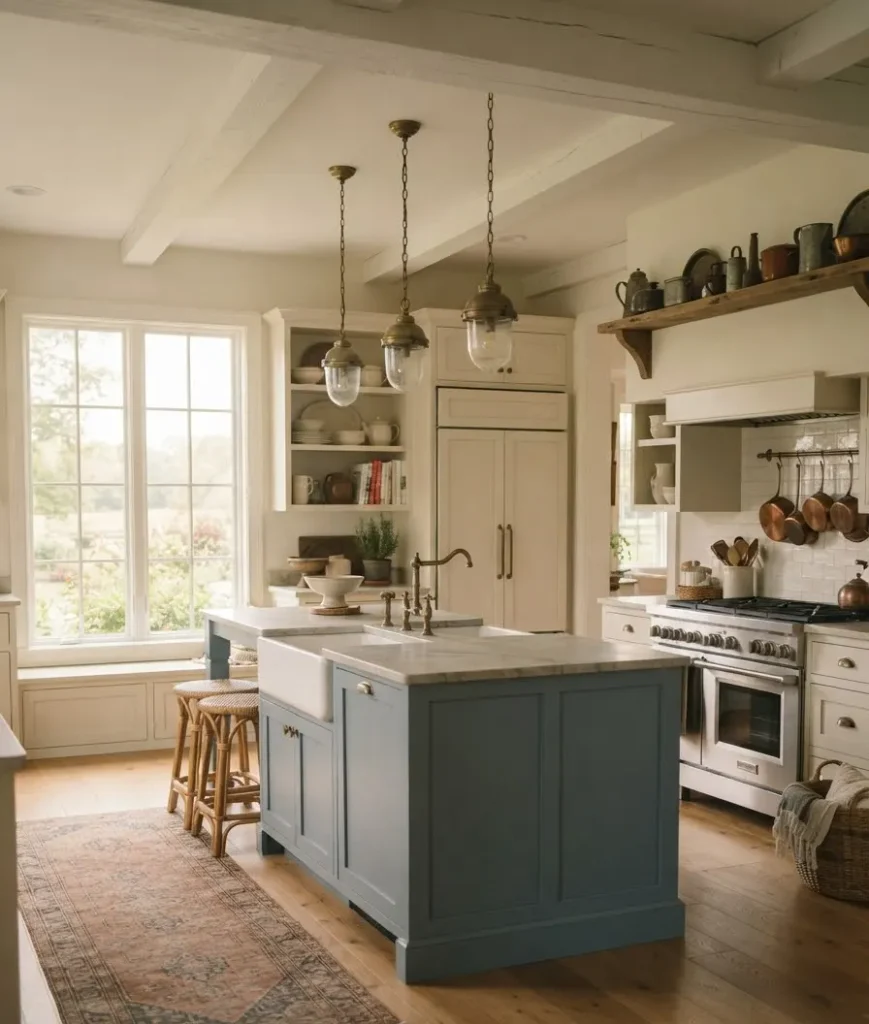
4. Use a dusty blue on an accent wall or the island. Something like a faded delft blue nods to old English pottery without looking costume-y.
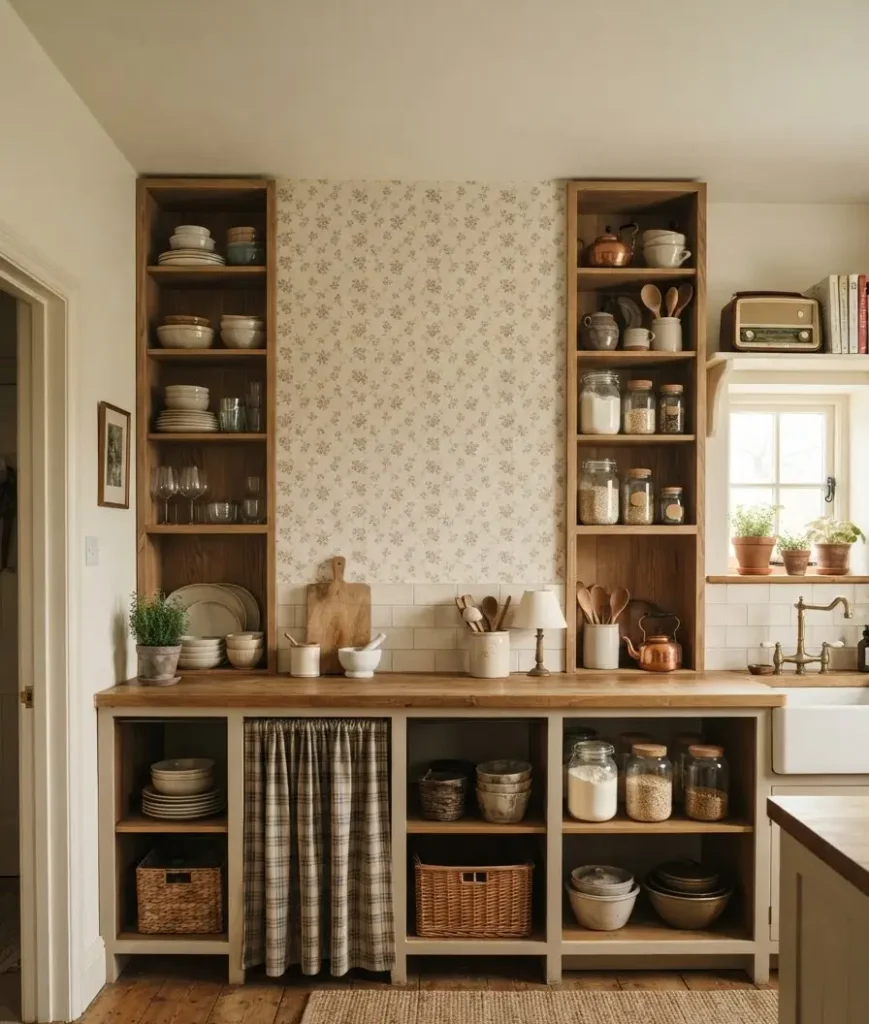
5. Add wallpaper above the counters, not just plain paint. Small florals or ticking stripes in the backsplash area do a lot of heavy lifting for very little cost.
- Muted, chalky finishes beat glossy ones every time in this style
- Warm whites (with a hint of yellow or grey) work better than cool, blue-toned whites
- If you’re nervous about color, start with the island only
Cabinetry and storage ideas
Cabinets set the tone for the whole room, so this is worth getting right. IMO this is where most people either nail the look or accidentally build a generic farmhouse kitchen instead.
6. Choose shaker-style doors with simple, recessed panels. They’re the backbone of the cottage look and they age well, unlike some of the more ornate raised-panel styles that can feel dated fast.
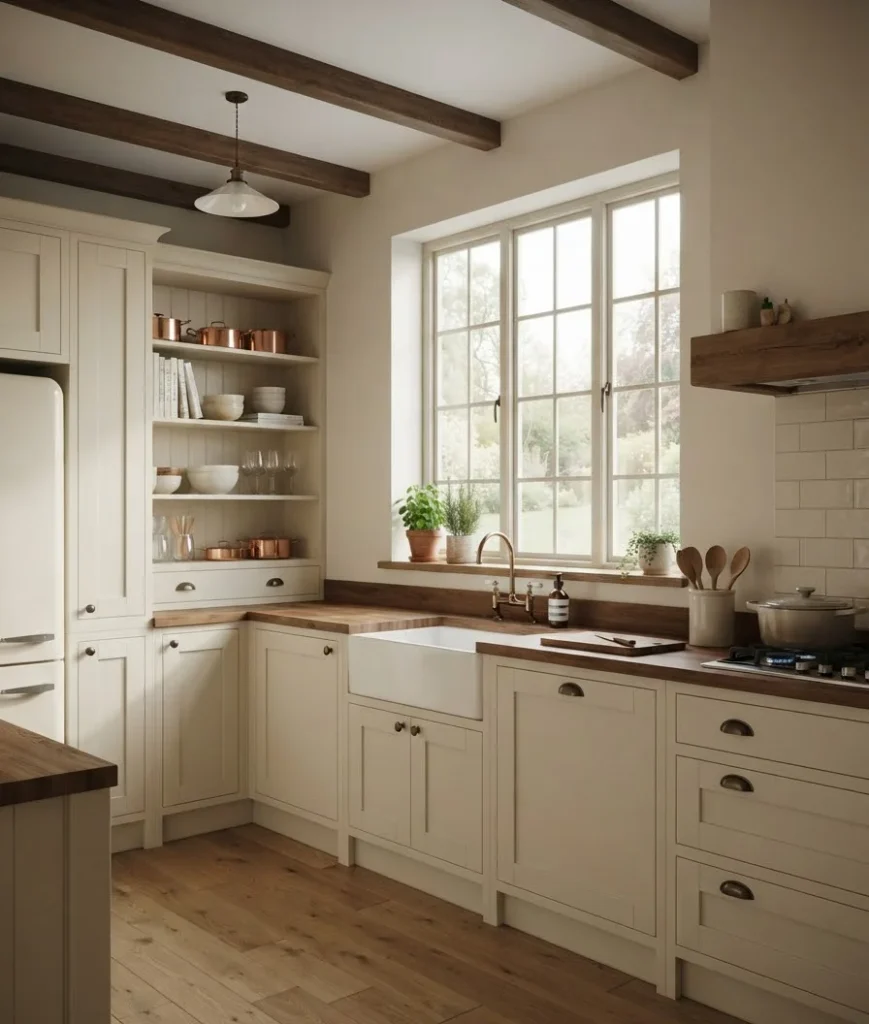
7. Mix a few glass-front cabinets into the upper run. Glass fronts let you show off stacked plates or glassware, which adds that “collected” feel I mentioned earlier.
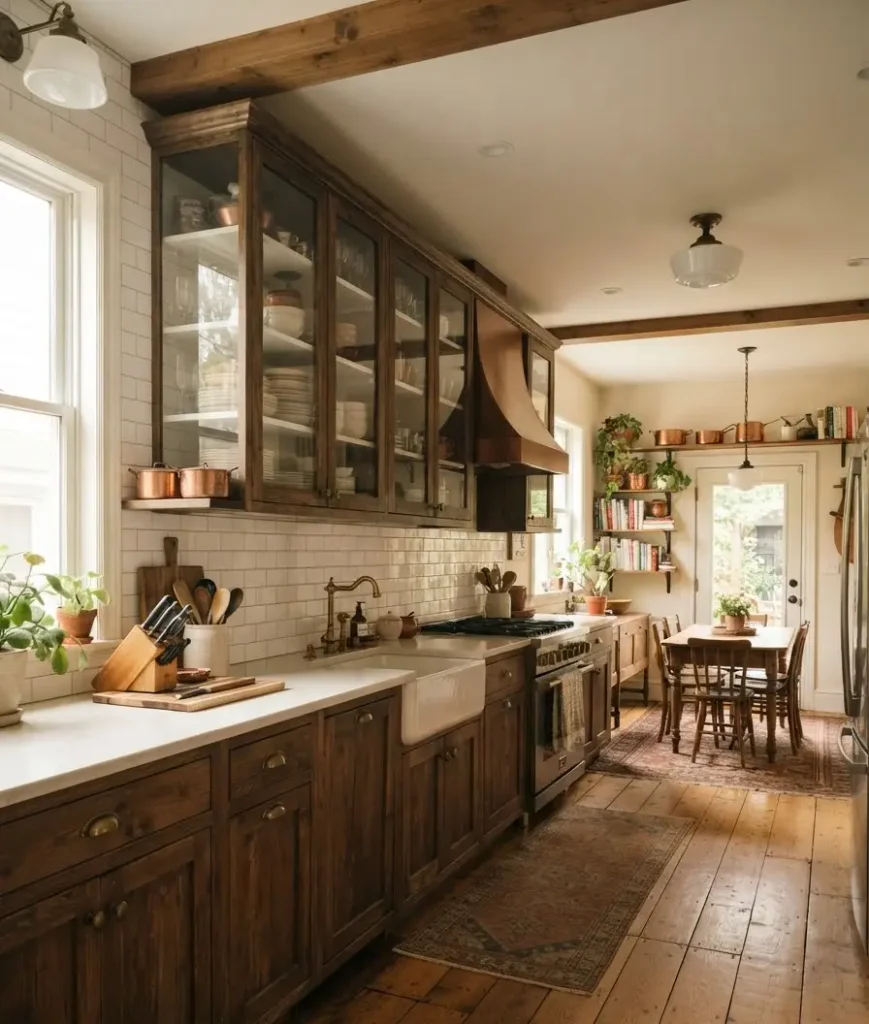
8. Build in a plate rack above the sink. This is a genuinely old feature, historically used to air-dry dishes, and it still works exactly the same way today.
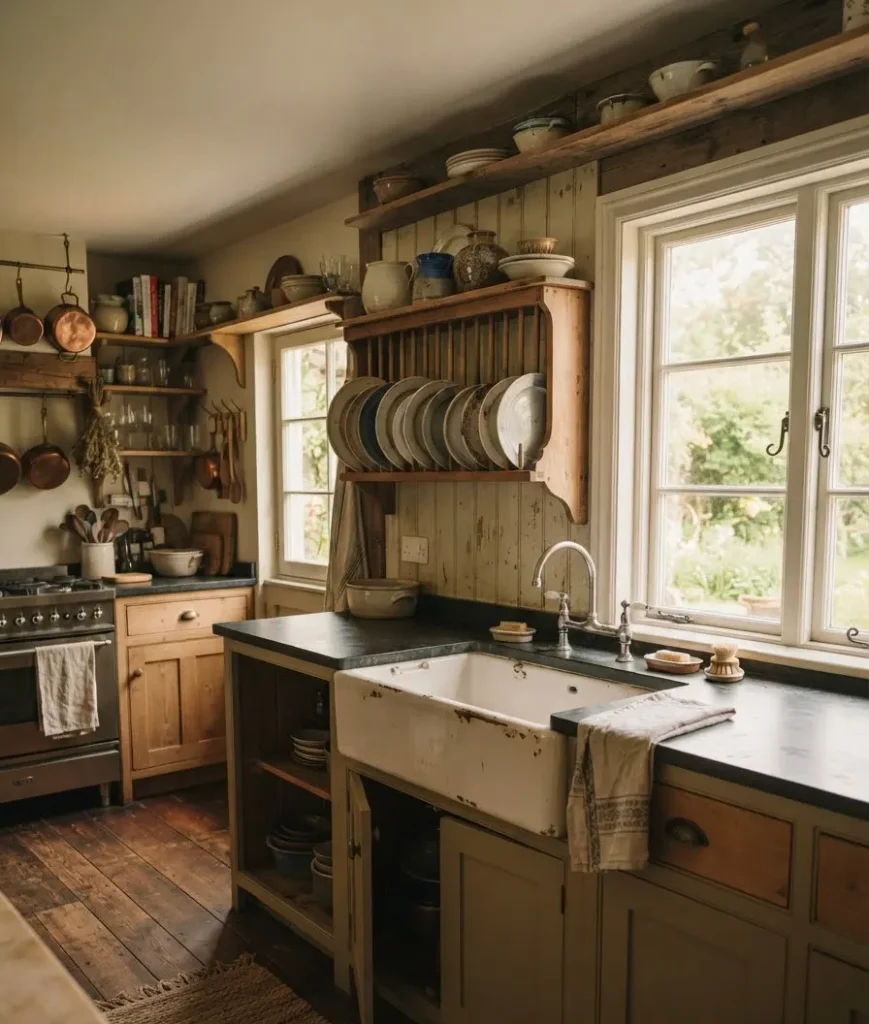
9. Add a freestanding hutch or dresser instead of built-in uppers on one wall. A piece of furniture, rather than a fitted cabinet, breaks up the “kitchen showroom” feel instantly.
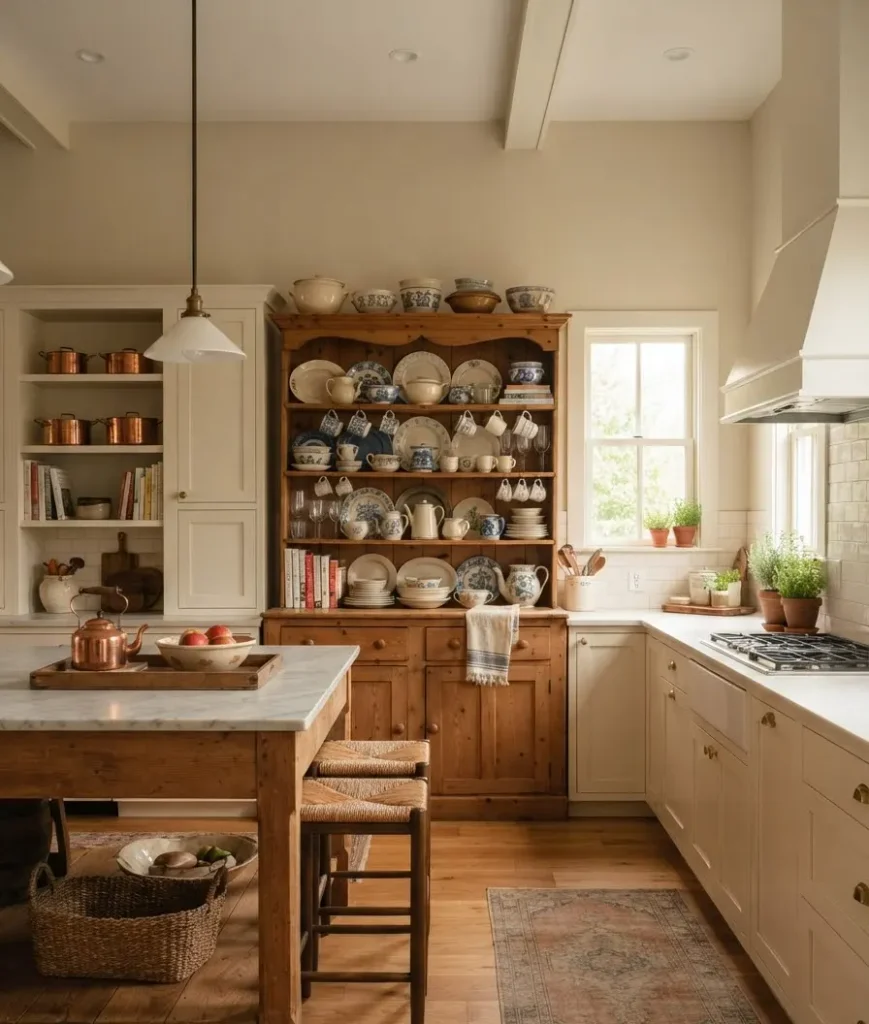
10. Use bin pulls or cup pulls instead of modern bar handles. Small detail, big impact. I switched mine out for about $80 total and it changed the whole feel of the room.
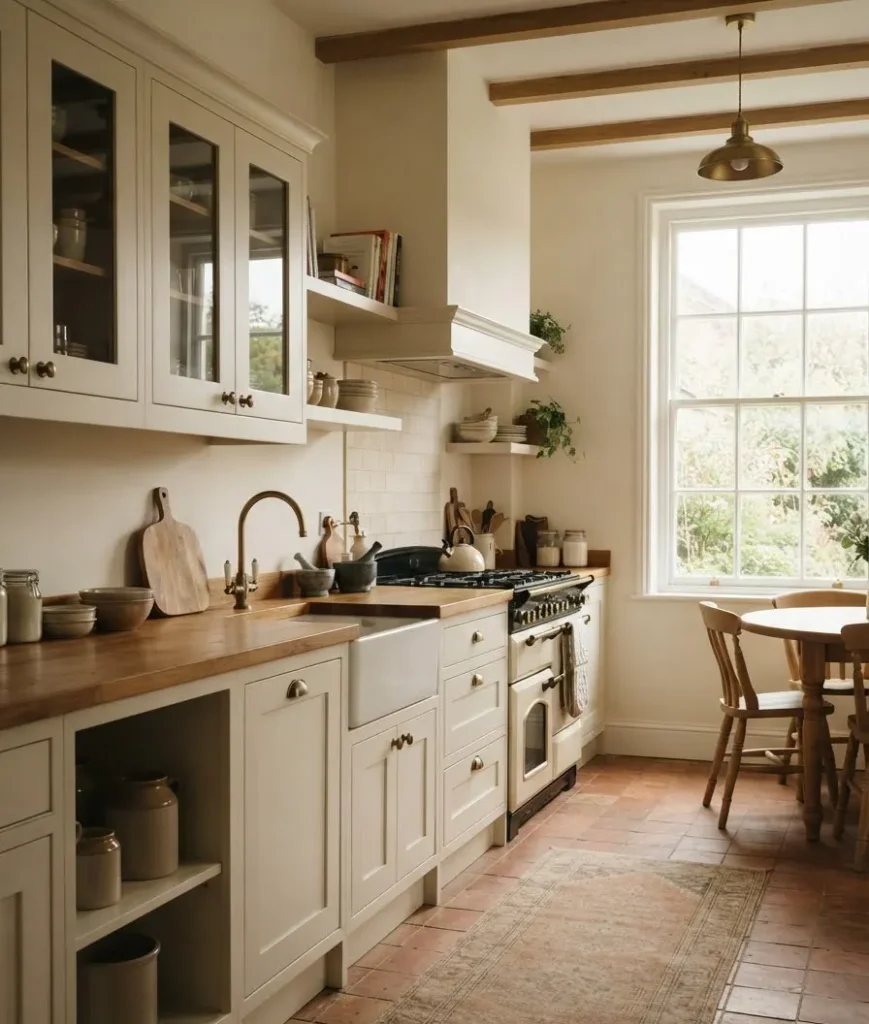
Countertops, sinks, and the workhorse features
11. Install a Belfast or farmhouse sink. The deep, apron-front Belfast sink is arguably the single most recognizable feature of this style. Mine is oversized on purpose. I wash roasting pans in it without a fight.
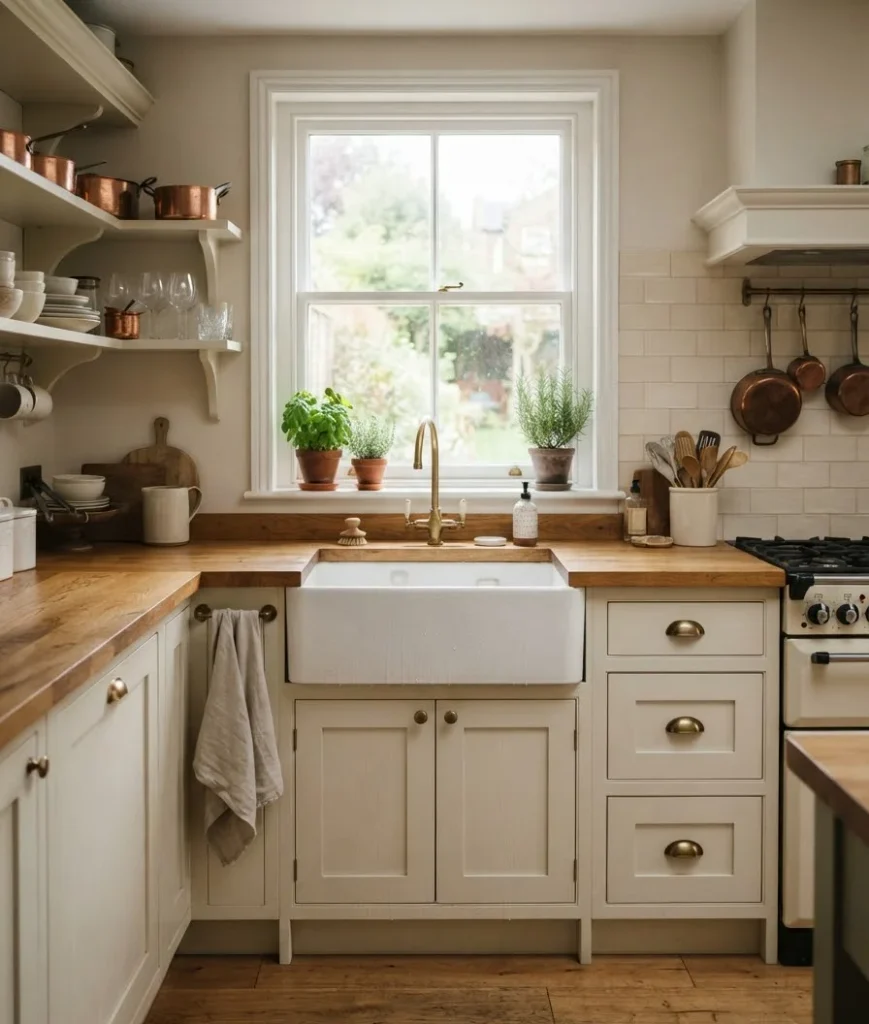
12. Choose butcher block or soapstone over bright white quartz. Quartz is practical, sure, but it can look a bit sterile here. Wood and soapstone both develop character with use.
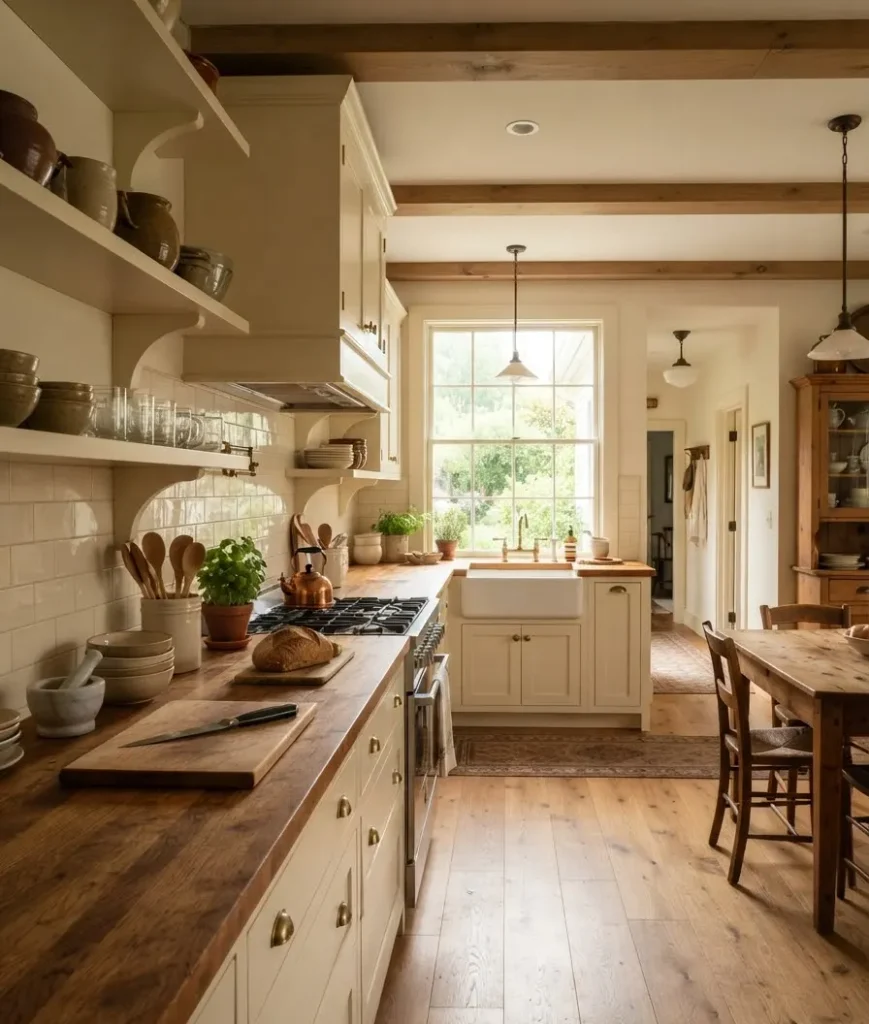
13. Leave a section of counter open for a small herb garden or fruit bowl. It sounds minor, but a bit of visible, real food does more for “cottage charm” than any decorative object you could buy.
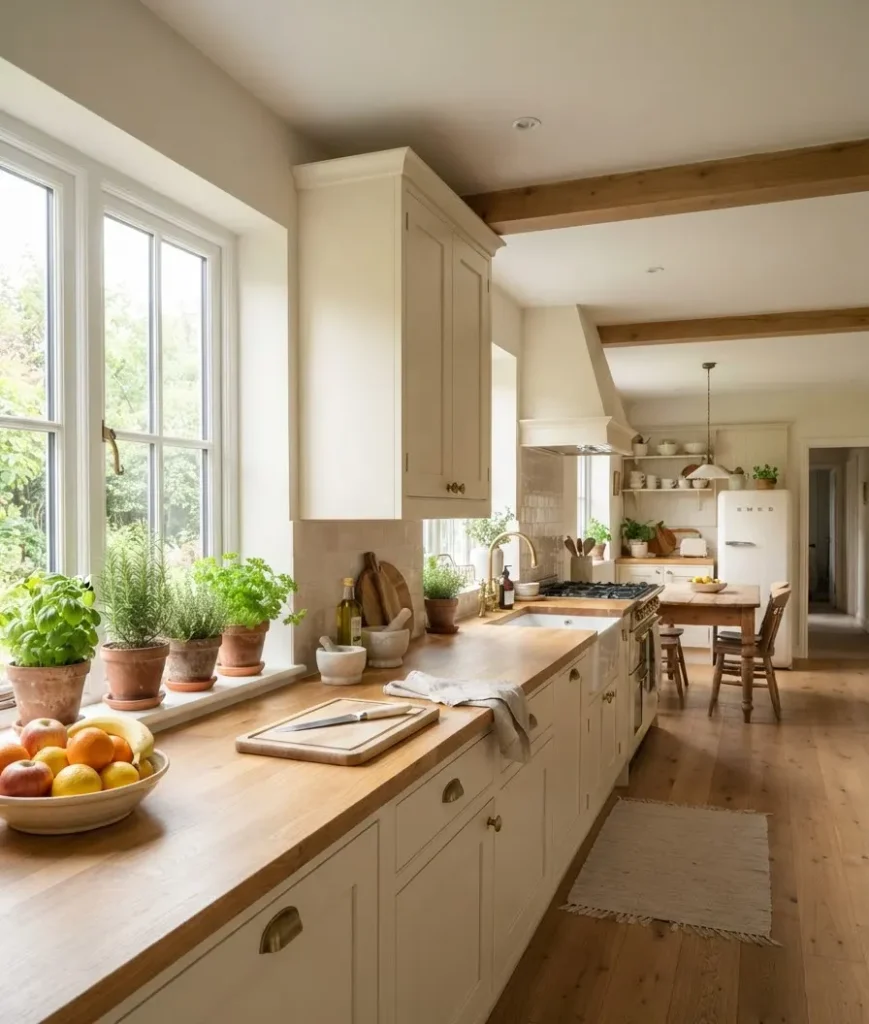
14. Consider a range cooker as your visual anchor. A traditional Aga cooker or similar range, even a modern version styled after one, gives the whole kitchen a focal point instead of a wall of matching appliances.
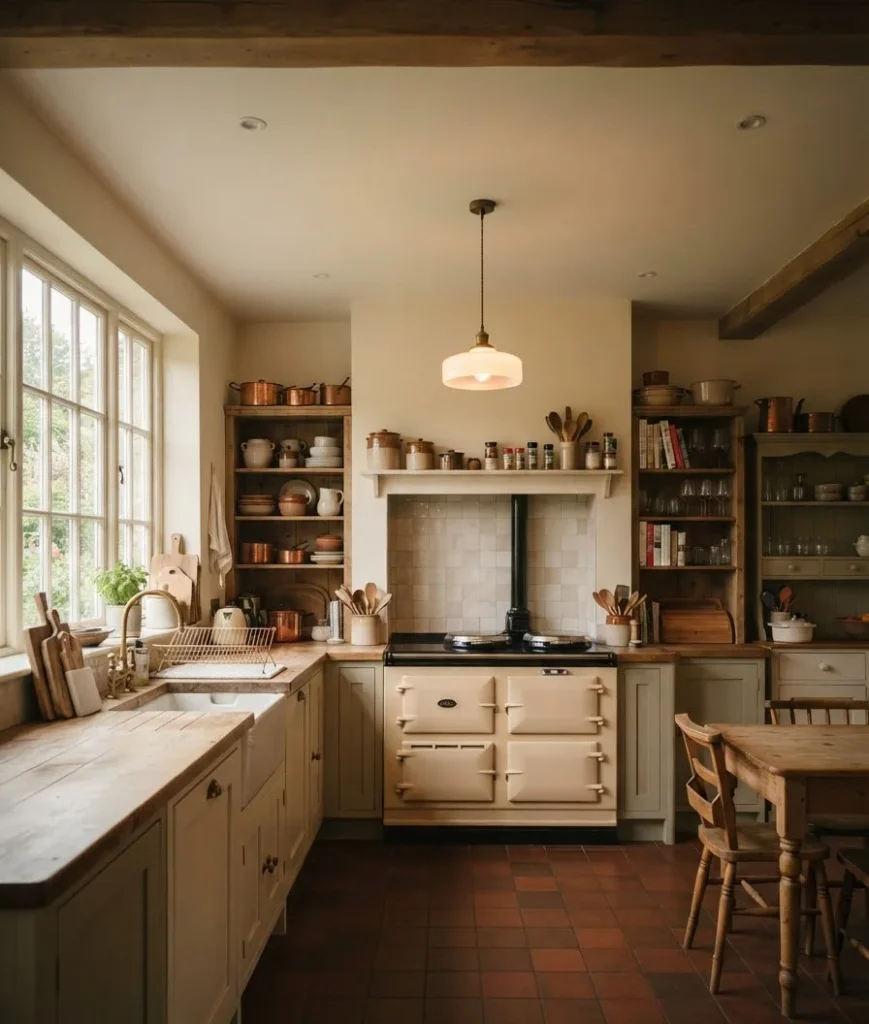
Here’s a quick side-by-side if you’re weighing your countertop options:
| Material | Look | Upkeep |
|---|---|---|
| Butcher block | Warm, rustic | Needs regular oiling |
| Soapstone | Soft matte grey, ages nicely | Low, but can scratch |
| Honed marble | Classic, slightly worn look over time | Stains if you’re not careful |
| Quartz | Clean, uniform | Very low, but reads modern |
Flooring that carries the whole room
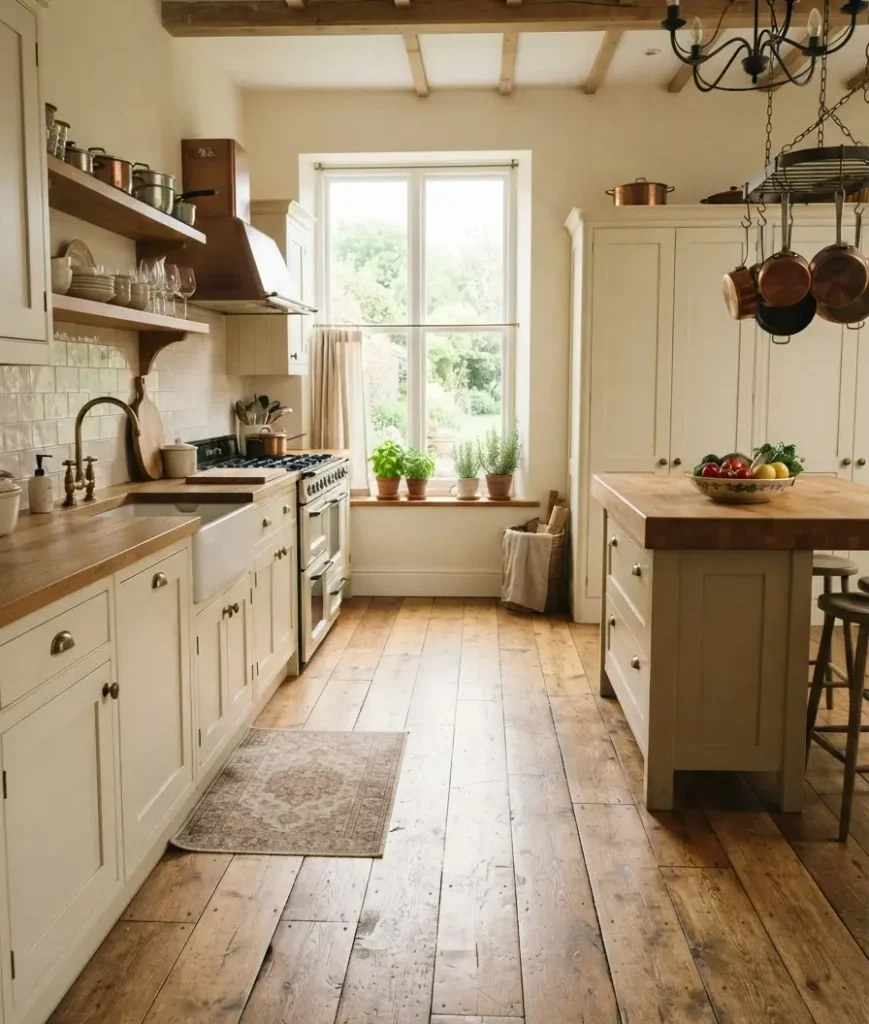
15. Lay reclaimed or reclaimed-look wood floors. Perfectly uniform flooring works against this style. You want some
grain variation and a few knots.
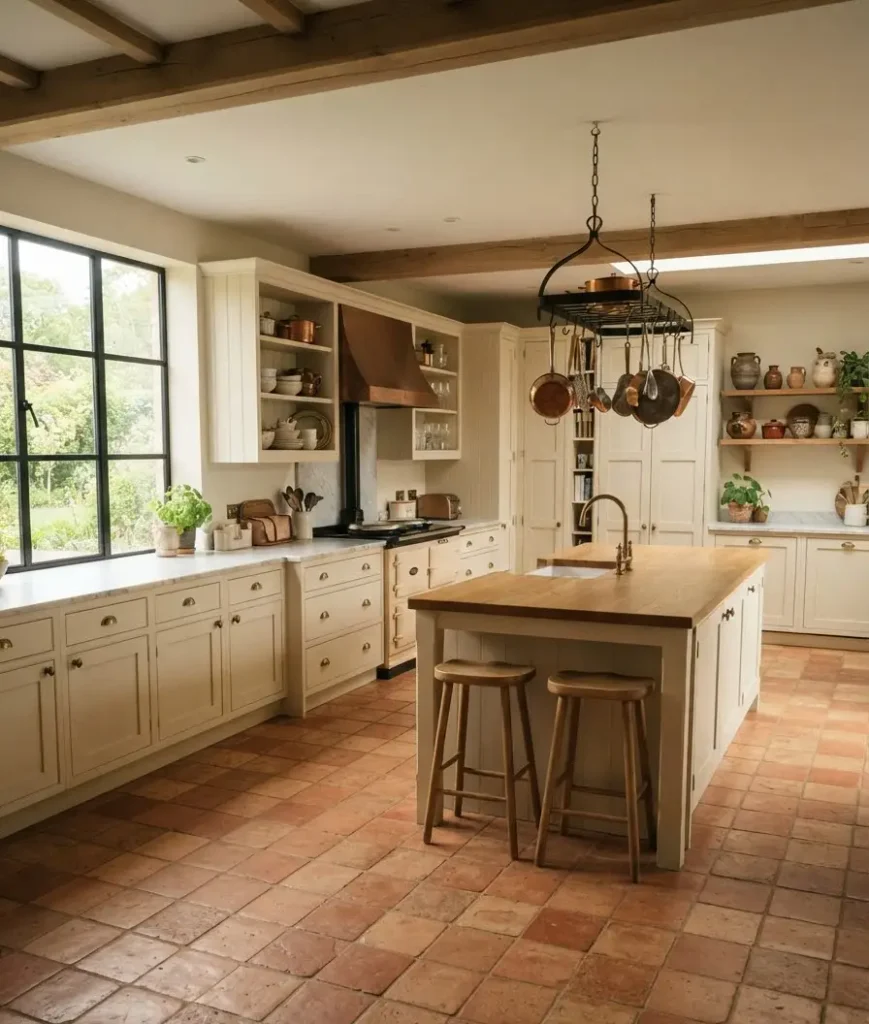
16. Use flagstone or terracotta tile if you’re going for a farmhouse-adjacent feel. It’s colder underfoot in winter, not going to lie, but the texture is unbeatable.
17. Add a checkerboard pattern in a muted color, not stark black and white. Think cream and sage, or cream and soft grey. It’s a classic English pattern that somehow never looks dated.
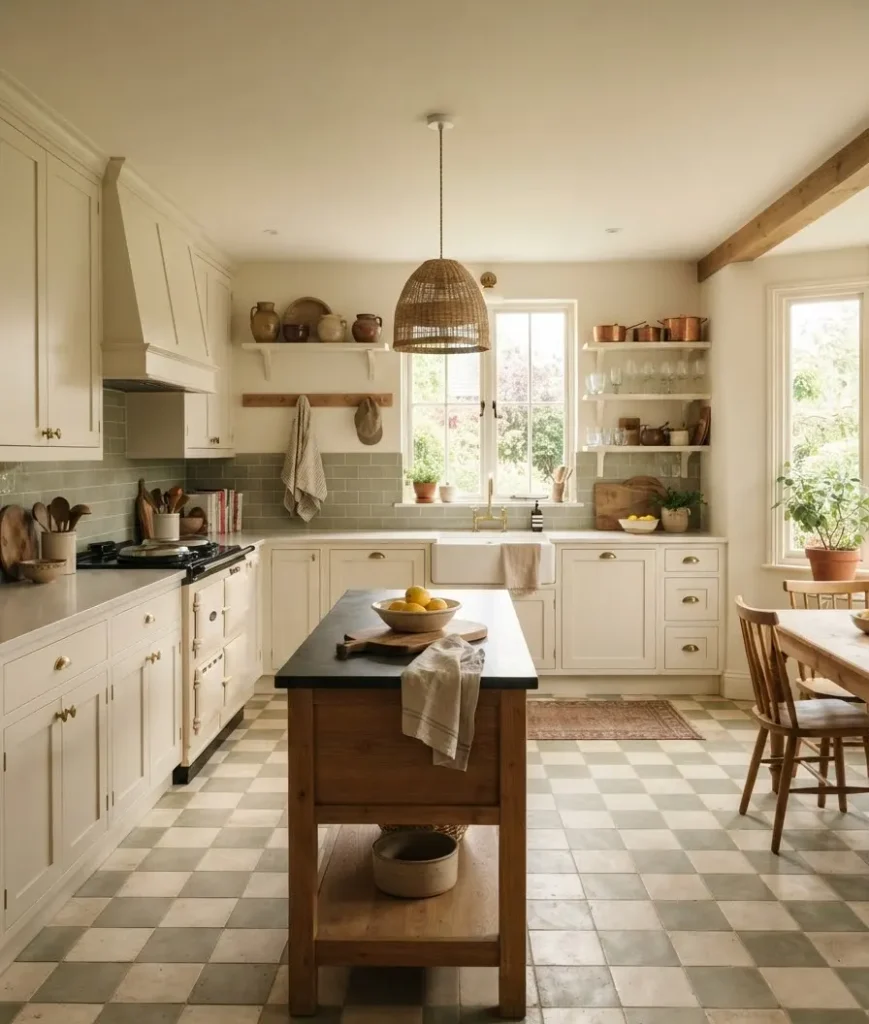
18. Layer a worn-looking runner rug in front of the sink. Standing at the sink is where you spend the most time, so this is a small comfort upgrade that also adds pattern to the floor.
Lighting that feels warm, not clinical
19. Swap out any recessed can lighting for pendant lights over the island. A single row of downlights can make even a beautifully designed kitchen feel like a dentist’s office. Harsh, I know, but true.
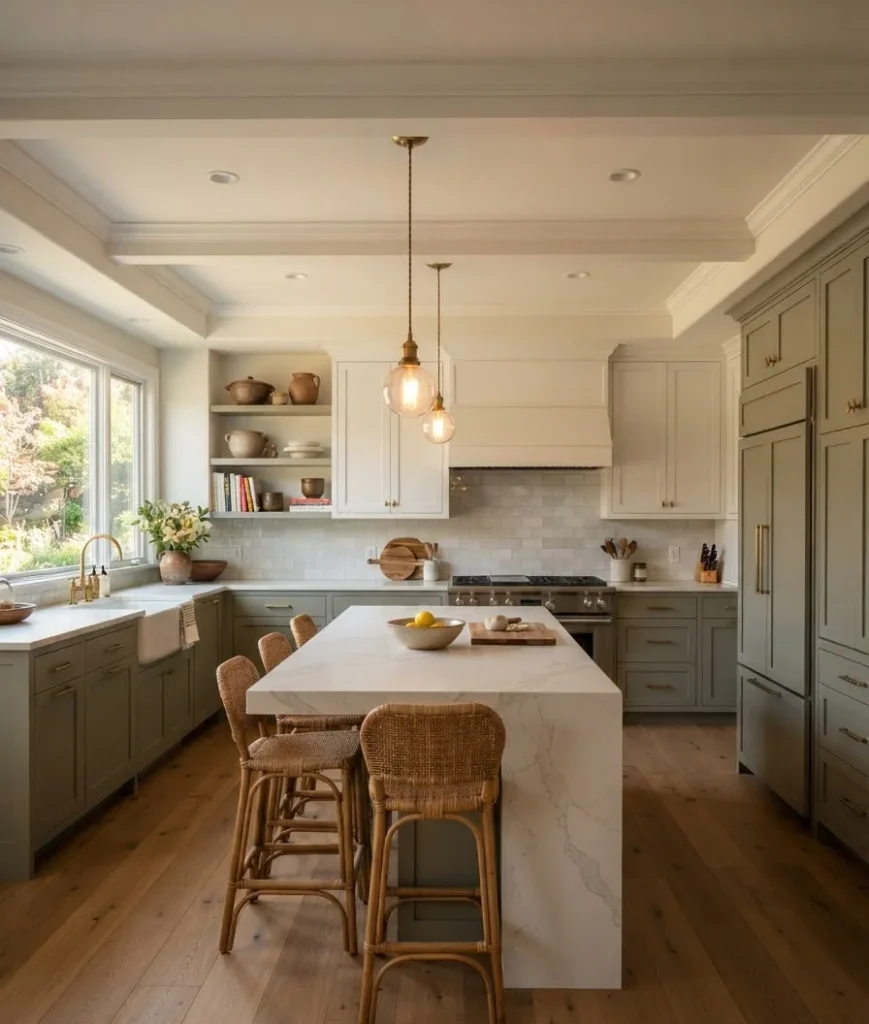
20. Use a mix of warm-toned bulbs (2700K or lower). This one detail changes everything about how the whole room reads in the evening.
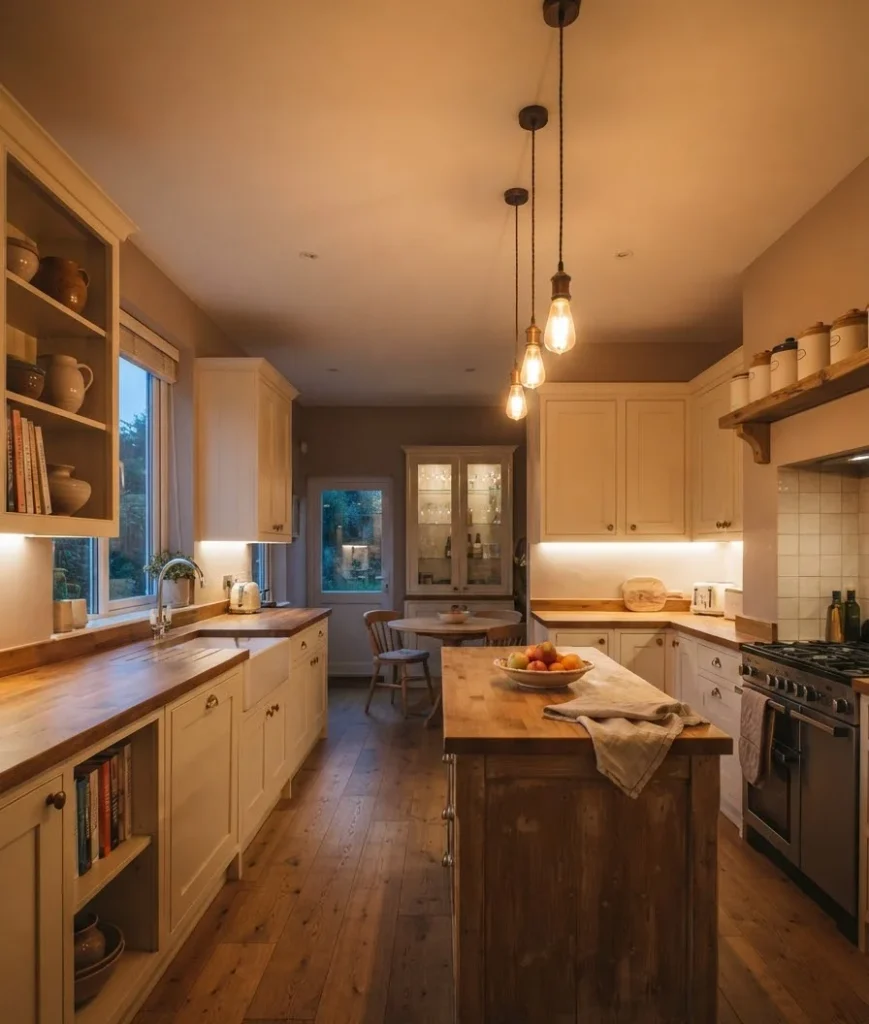
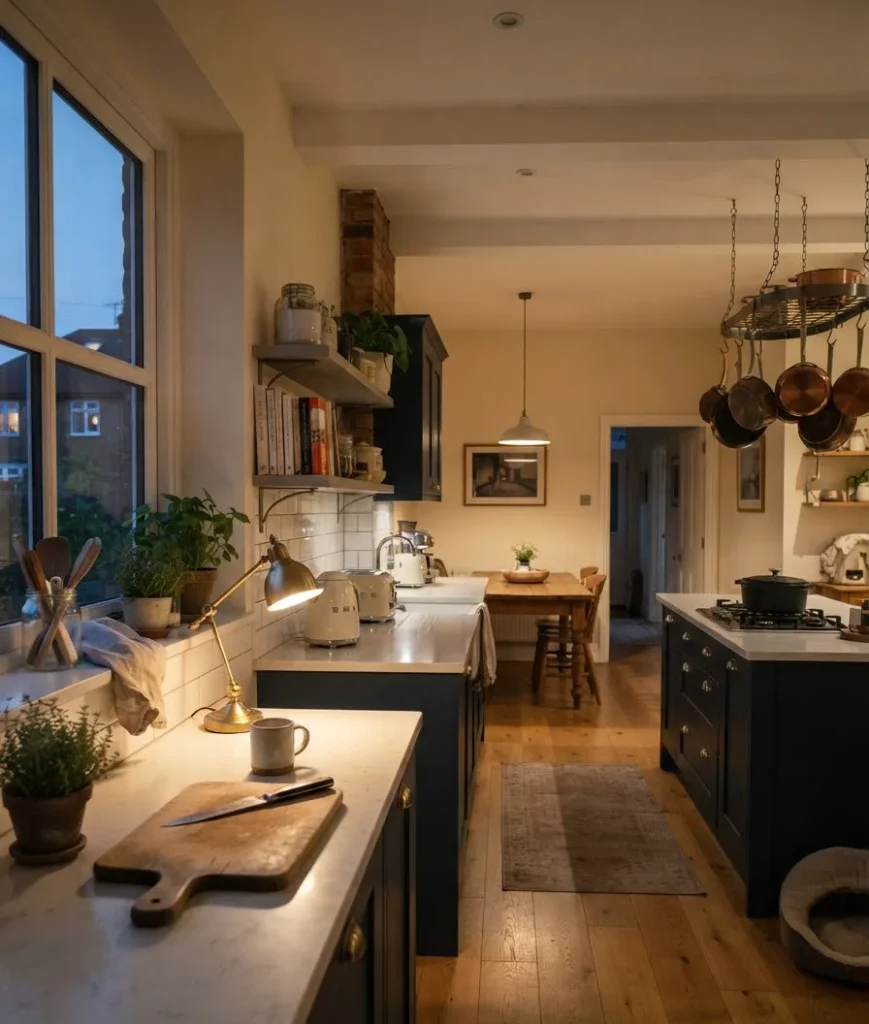
21. Add a small task lamp on the counter, not just overhead lighting. It’s a strange trick, but a single lamp on a kitchen counter instantly makes the space feel like a home instead of a showroom.
Textiles, hardware, and the small finishing touches
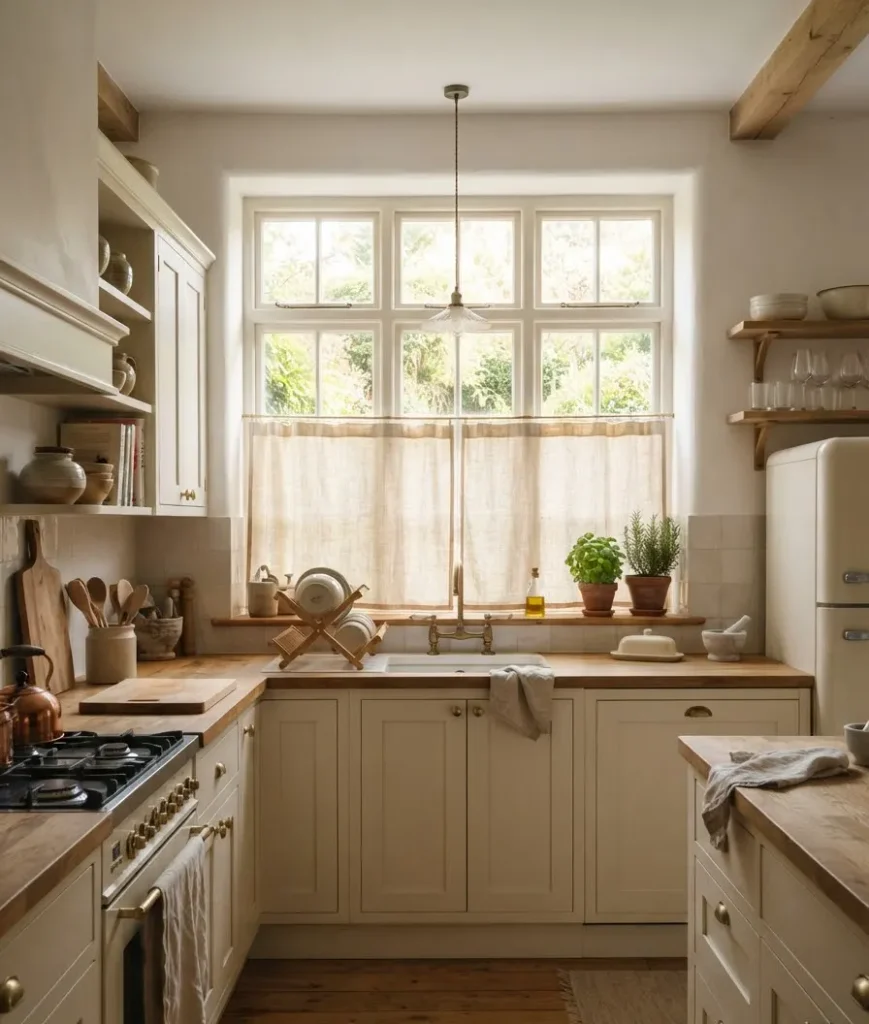
22. Hang simple café curtains instead of full-length drapes. They cover just the bottom half of the window, letting light in while keeping the look soft and unfussy.
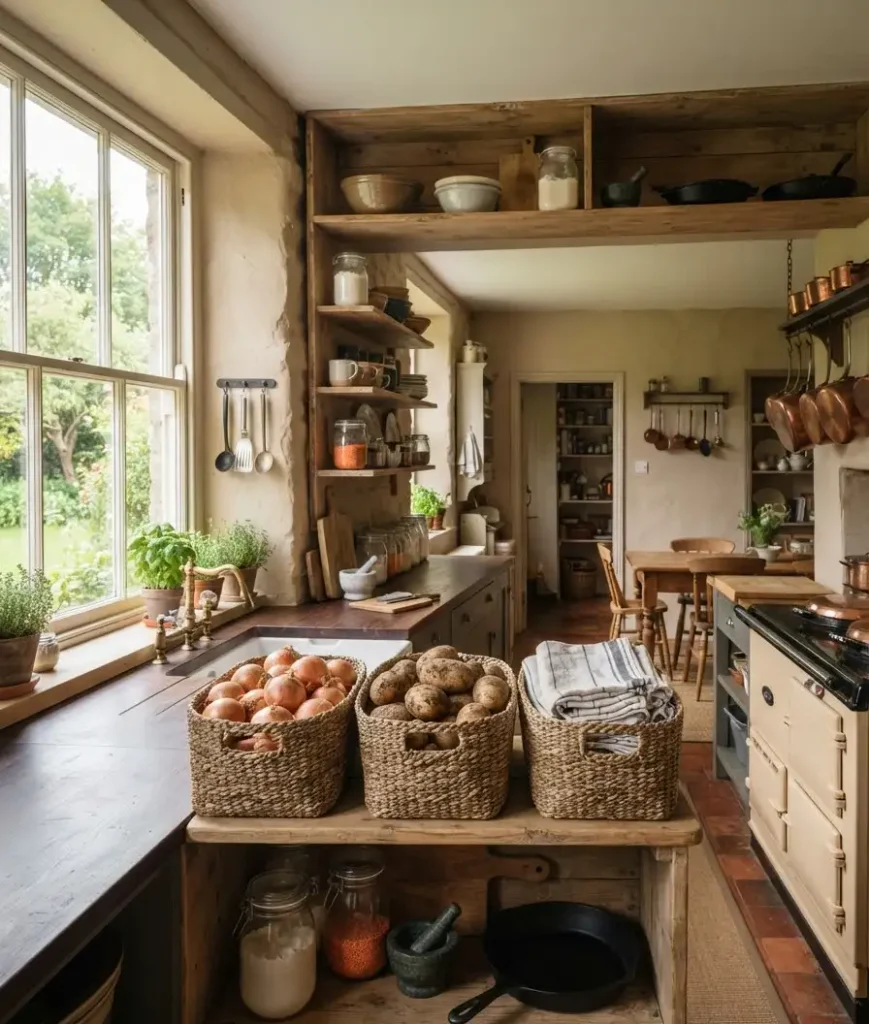
23. Use woven baskets for storage instead of plastic bins. Onions, potatoes, dish towels, whatever needs a home, a basket does the job better than anything from a big box store.
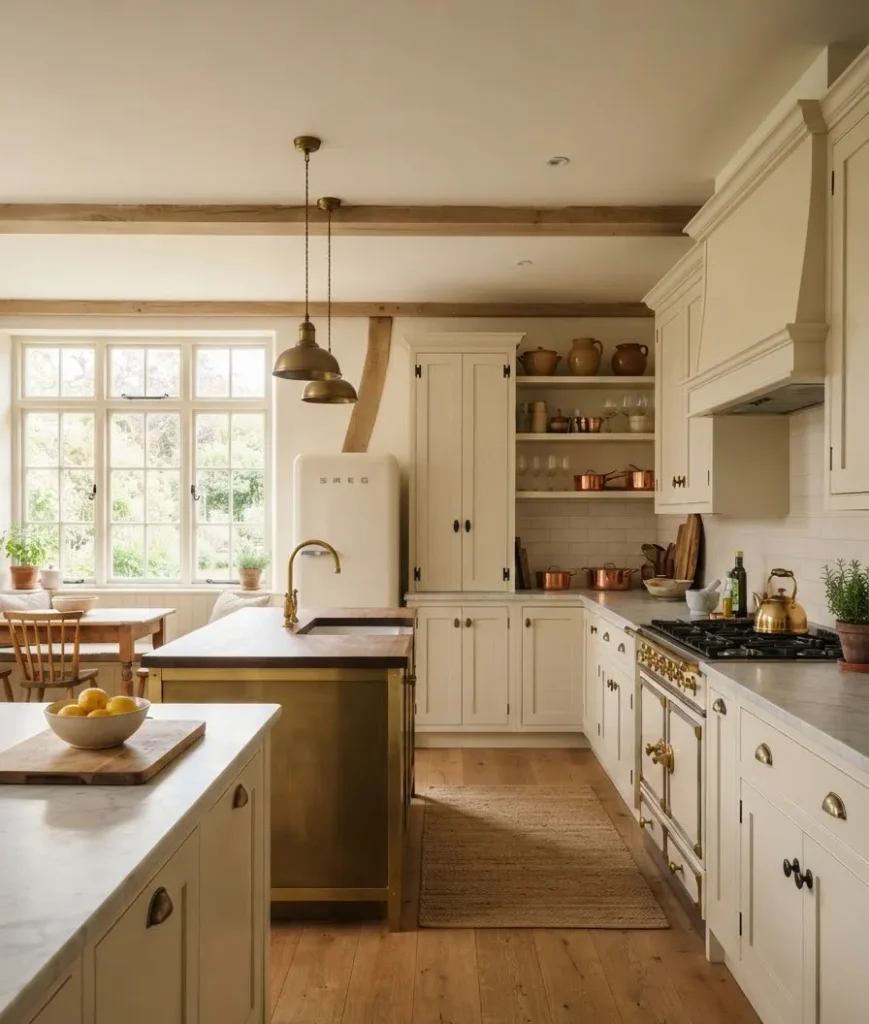
24. Add black iron or aged brass hardware throughout. Skip brushed nickel here. It reads too contemporary for this style.
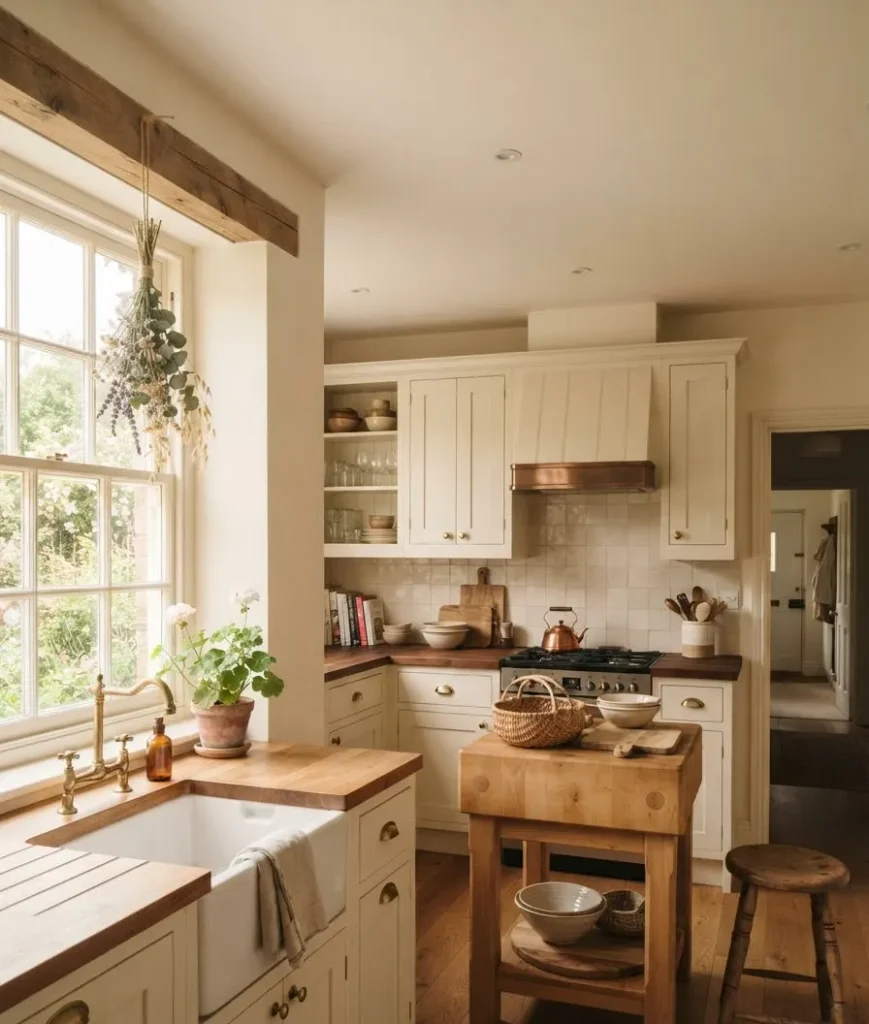
25. Bring in dried flowers or herbs hanging near a window. This is one of those tiny, almost free additions that photographs beautifully and genuinely smells nice too.
26. Display a few mismatched vintage plates on open shelving or a wall rack. I found three of mine at an estate sale for under $10 total, and they get more compliments than anything else in the room.
Honestly, it’s a little annoying how much attention three chipped plates get.
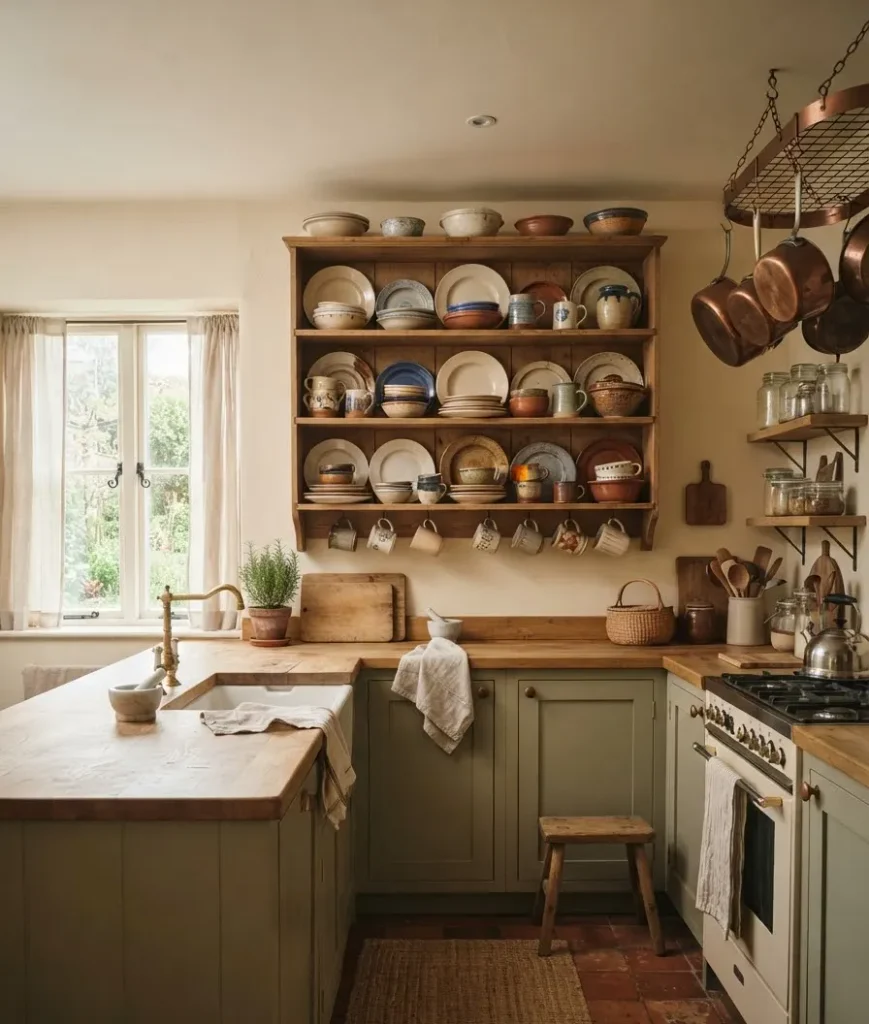
Random aside, but if you’ve never been to an actual estate sale looking for kitchenware, go once.
It’s chaotic, slightly stressful, and weirdly one of the best ways to find pieces with real history instead of factory-made “vintage style” reproductions.
A note on doing this on a budget
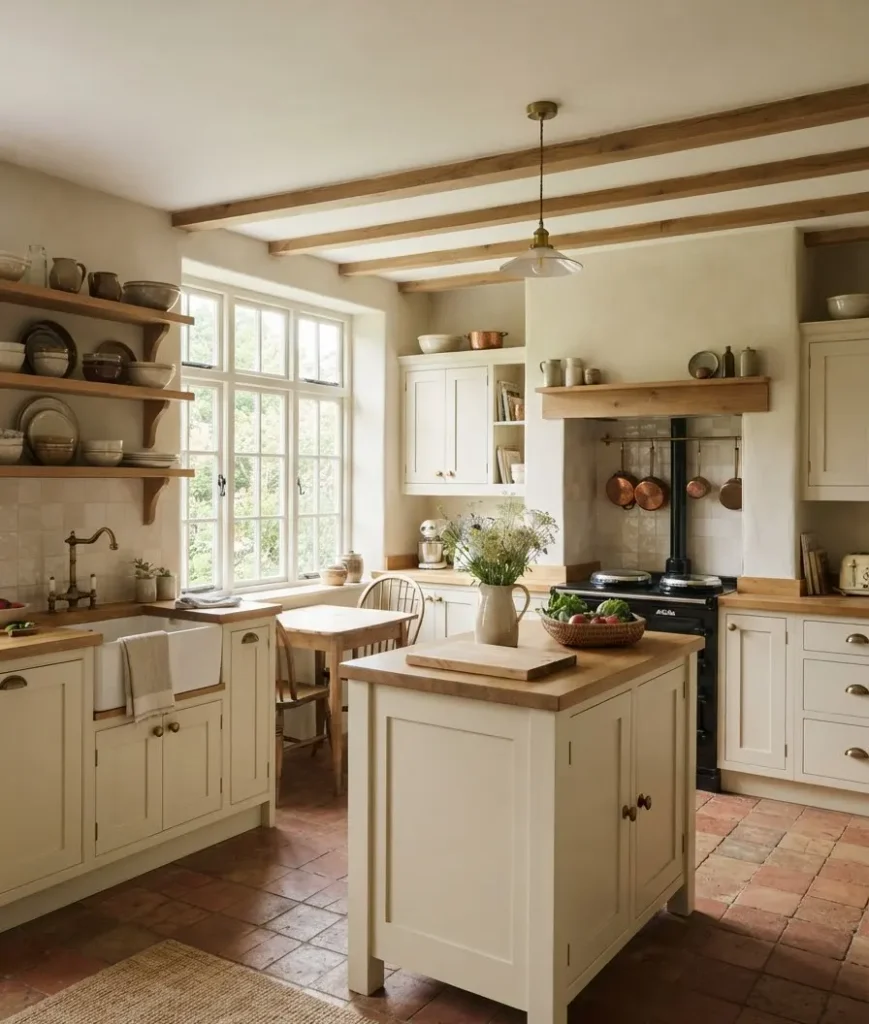
You don’t need a full renovation to get most of this look. Paint, hardware swaps,
open shelving, and a few secondhand finds cover a huge chunk of the ideas above, and none of them require a contractor.
If I had to prioritize with a tight budget, I’d start with paint color, then hardware, then lighting.
Those three changes alone reshape how a kitchen feels, and they’re all reversible if you change your mind later.
Worth noting: reversible changes are underrated when you’re renting or just not 100% sure about a big color commitment yet.
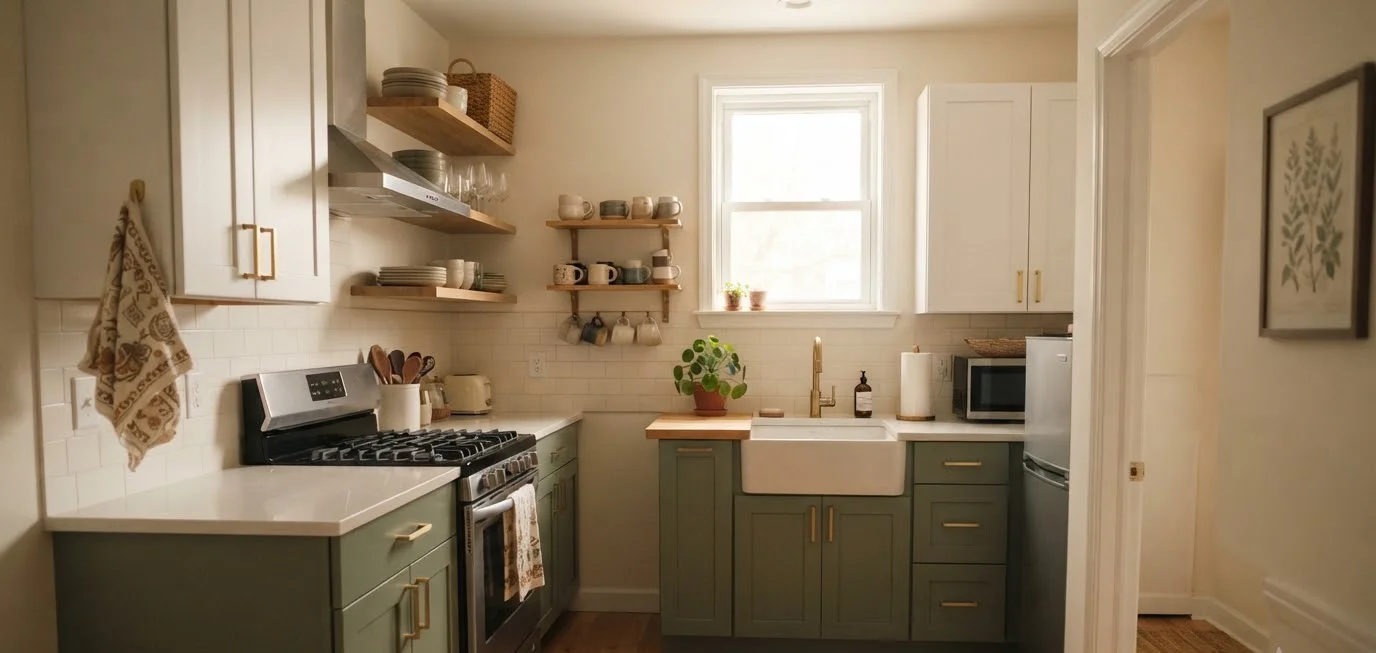
Small Kitchen Design Inspiration On A Budget 20 High End Looks For Less
Discover More →Quick FAQs
Does an English cottage kitchen have to be small? No. The style started in actual small cottages, sure, but the same colors and materials scale up fine in a larger kitchen.
Just add more open shelving and a bigger island so the room doesn’t feel sparse.
What’s the difference between English cottage and modern farmhouse style? Modern farmhouse leans heavier on black-and-white, shiplap, and industrial accents.
English cottage style is softer, more colorful, and pulls in more floral or vintage patterns rather than a stark black-and-white palette.
Is this style expensive to pull off? Not necessarily. A few of these ideas (paint, hardware, open shelving, secondhand dishware) cost very little.
The pricier moves, like a Belfast sink or a range cooker, are optional upgrades, not requirements.
Final thought
Twenty-six ideas is a lot, and you don’t need all of them. Pick three or four that genuinely excite you, start there, and let the rest come together over time.
That’s honestly how the real ones came together too.
Which idea are you trying first: the paint, the sink, or the plate rack?

1 thought on “English Cottage Kitchen Inspiration: 26 Charming Ideas to Recreate the Look”